India launched its first mission to Mars today at 15:08 local time from the Satish Dhawan Space Centre on the country’s east coast in Sriharikota, Andhra Pradesh. Built by the Indian Space Research Organisation (ISRO), the mission, dubbed Mangalyaan (Mars craft), is expected to “focus on life, climate, geology, origin, evolution and sustainability of life on the planet”, according to the ISRO. In doing so, Mangalyaan will attempt to shed light on one big unanswered question about Mars: whether the planet has a biosphere or even an environment in which life could have evolved.
The probe, which was launched on a polar-satellite launch vehicle, is expected to arrive at the red planet in September 2014 after a 300-day trip. Costing $100m, the 1350 kg craft will then be placed in a highly elliptical orbit in the Martian atmosphere when it arrives, being 500 km from the red planet at its closest approach and 80,000 km away at its most distant. The mission will carry five scientific payloads. Among them are a multi-spectral camera and spectrometers, as well as a highly sensitive methane sensor to assess if the gas is of “biological or geological origin”.
Mangalyaan, which was approved for launch only a year ago, follows hot on the heels of India’s successful maiden mission to the Moon – Chandrayaan-1 – that found evidence of water on the lunar surface in 2009. “This is our modest beginning for our interplanetary mission,” says ISRO spokesperson Deviprasad Karnik.
Asian space race
Reaching Mars is not easy – about 50% of missions do not succeed. But if the satellite successfully reaches Mars, India will become the fourth power – after the US, Russia and Europe – to launch a probe to the red planet. Indeed, India will also become the first country from Asia to reach Mars after China’s maiden mission to the red planet – Yinghuo-1 – crashed shortly after take-off when it was launched together with the Russian satellite Phobos-Grunt in November 2011. Although China and Japan have beaten India in other aspects of space development, including manned and Moon missions, Mars is seen as an area where India could now take the lead in the Asian space race.
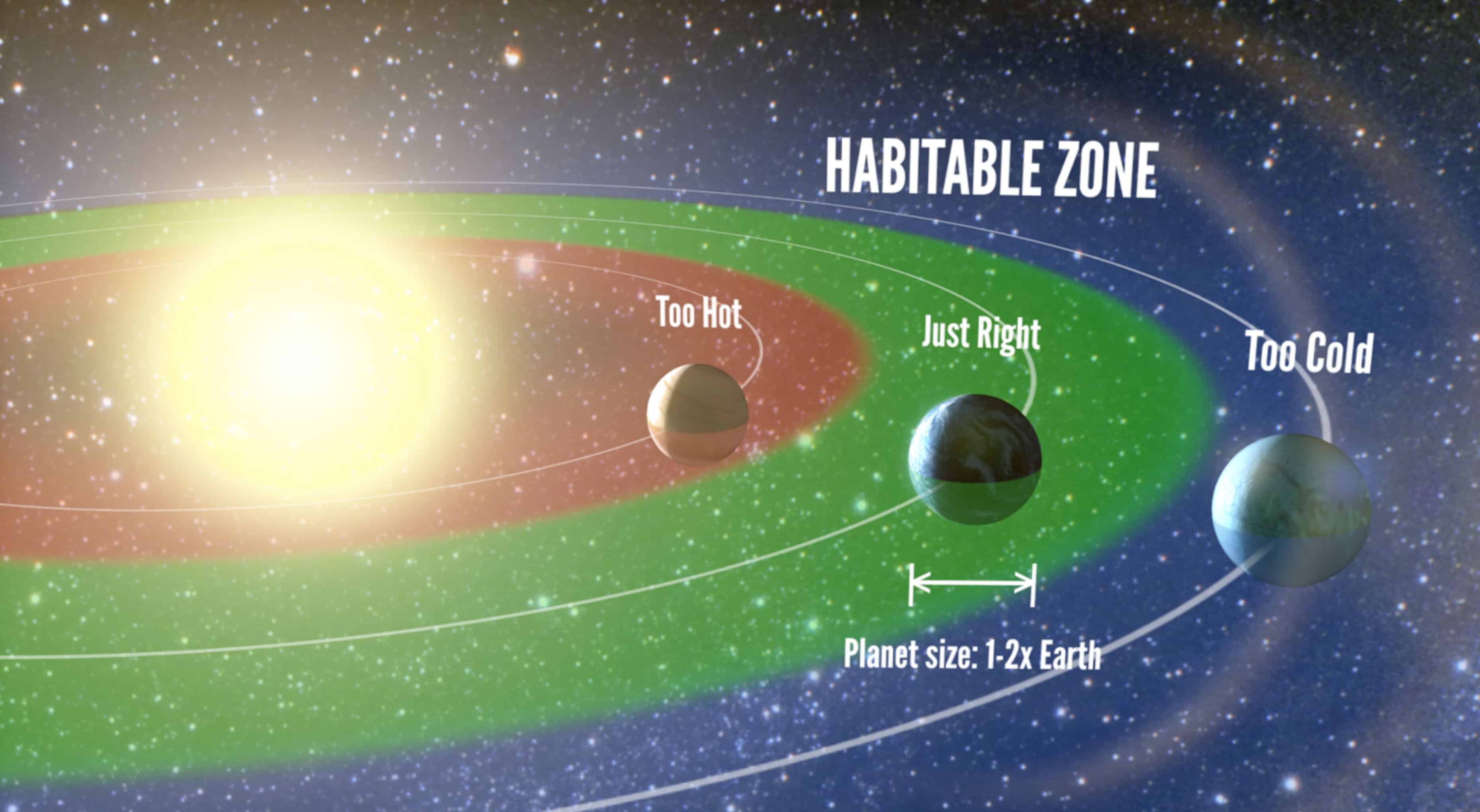
Are Earth-like planets very common? (Courtesy: Petigura/UC Berkeley, Howard/UH-Manoa, Marcy/UC Berkeley)
By Hamish Johnston
A decade or so ago it would have been reasonable to wonder if the universe contained any planets that resemble Earth. But now that astronomers have discovered more than 1000 planets orbiting stars other than the Sun, it seems perfectly sensible to think that the number of Earth-like planets could be huge. However, actually finding such planets remains a challenge.
How big must an ensemble of particles be before the exact number of individual particles becomes inconsequential and the entire system can be described using many-body theories? This is an important question in condensed-matter physics and one that has proved difficult to answer. Now, a group of researchers in Germany has observed the transition from “few” to “many” in an experiment using ultracold fermionic atoms. The results could help in modelling simple, few-body systems and to study mesoscopic quantum-mechanical systems.
Complex interactions
Studying systems with many particles can be challenging: while the microscopic behaviour of each particle by itself might be easy to determine, their combined macroscopic behaviour as they interact can become very complicated. Indeed, for systems with anything more than three particles it is often impossible to find analytical or numerical solutions. One of the ways of getting round this problem is to assume that the system is made up of an infinite number of particles. By doing so, the variables of the system go from being discrete to continuous and this makes the system much easier to study. But knowing exactly when this transition from discrete to continuous occurs can be tricky. In the past, experimental studies had been done with systems such as helium droplets but the results were inconclusive.
A drop in the Fermi sea
Now, Selim Jochim, Andre Wenz and colleagues at the University of Heidelberg and the Max Planck Institute for Nuclear Physics, both in Germany, have observed this crossover by studying a quasi-1D system of ultracold atoms using identical fermionic lithium atoms. The experiments look at how an increasing number of lithium atoms interact with a single “impurity” atom – a fermion that is in a different spin state from the rest. The impurity is used to probe the behaviour of the majority atoms. By measuring the energy of the system the team found that the atoms exhibited characteristics of a many-body system – which is known as a Fermi sea – when as few as four majority atoms were present.
In the experiment, the team uses a system made up of six lithium atoms – one of which is the impurity. The majority atoms themselves do not interact with each other because of the Pauli exclusion principle that dictates that no two identical fermions (particles with half-integer spin) can occupy the same quantum state simultaneously. However, as the impurity has a different spin, it is not affected by the exclusion principle and so can interact with all of the majority particles at the same time. Tuning the interactions between the majority atoms and the impurity – using a phenomenon known as “magnetic Feshbach resonances” – allows the team to explore the crossover from “few” to “many” at different interaction strengths. By studying samples with different particle numbers, the energy of the system is determined as a function of the number of majority atoms, for varying strengths of interparticle interaction. Initially, the system consists of the impurity (blue) and several majority atoms (green) without any interactions (see figure). Then, the researchers introduce an interaction between the blue and green atoms by applying a magnetic field. The energy of the system is then determined by changing the spin state of the impurity atom using a radio-frequency pulse. And it is this shift that acts as a probe – if the majority atoms were not already acting as a many-body system, the transition of the impurity atom with the pulse would occur at a particular frequency. In the presence of the majority atoms showing their collective behaviour, the frequency of this transition energy is shifted. “For a many-body system we know at which frequency this transition should occur and by comparing this with the experimental results we can find out whether the system has already reached the many-body limit,” says Thomas Lompe, another member of the team who is now at the Massachusetts Institute of Technology in the US.
Designer system
The researchers found that for weak and intermediate interactions, four atoms is sufficient to warrant the use of a many-body theory to describe the behaviour of the system. Wenz told physicsworld.com that the result was surprising and was not theoretically clear when the researchers began their studies. He also says that their “designer” ultracold system itself was an achievement – the system is “tunable” in the sense that the researchers can control its size on a single-particle level while maintaining full control over interparticle interactions. Wenz explains that such intermediate mesoscopic states – when a system has neither too few nor too many particles – are important and difficult to model. Studying them in a regime where one can control both the number of particles and their interactions was a key achievement. Also, theirs was the first system of ultracold atoms where only a single impurity interacted with few majority atoms – previous experiments in 2D and 3D systems with thousands of impurity atoms embedded in even larger clouds of majority atoms had been carried out. In terms of 2D and 3D few-particle systems, Wenz speculates that the minimum number of particles necessary for collective behaviour would probably be higher, but possibly 10 particles might suffice.
Currently, the team is doing condensed-matter lattice simulations using multiple traps filled with ultracold atoms, where each trap represents a fixed lattice point. In the long term, Wenz suggests that such few-particle systems are useful to study superfluidity, to better understand the behaviour of nucleons in atomic nuclei as well as to test the descriptions of finite physical systems, such as the dopants in the tiny transistors that are currently being used in computers.
This image of the Mona Lisa has been stabilized using technology developed by NASA to study solar flares. (Courtesy: Marblar)
By Hamish Johnston
The best thing about science fiction is that it is fiction, and nit-picking about scientific accuracy shouldn’t get in the way of telling a good story. That’s the theme of Roger Highfield’s review of the latest blockbuster Gravity. Writing in his old paper The Daily Telegraph, Highfield – who now works at London’s Science Museum – takes exception to a series of Tweets by the celebrity astrophysicist Neil deGrasse Tyson about the film. Among other things, the Tweets complain that Sandra Bullock’s hair should be wafting around in zero gravity, not hanging down as it would on Earth. Despite these and other “scientific holes big enough to fly a Saturn V rocket through” both Highfield and Tyson agree that Gravity is a film well worth seeing. The review is called “Gravity: how real is the science?“.
Well, despite all the excitement of last month’s special 25th-anniversary issue ofPhysics World, there’s been no let-up for us – we’ve been busy beavering away on the next issue of your favourite physics magazine, which is now ready for you to read in print, via our apps or online.
If you’re a member of the Institute of Physics (IOP), you can access the entire new issue free via the digital version of the magazine or by downloading the Physics World app onto your iPhone or iPad or Android device, available from the App Store and Google Play, respectively.
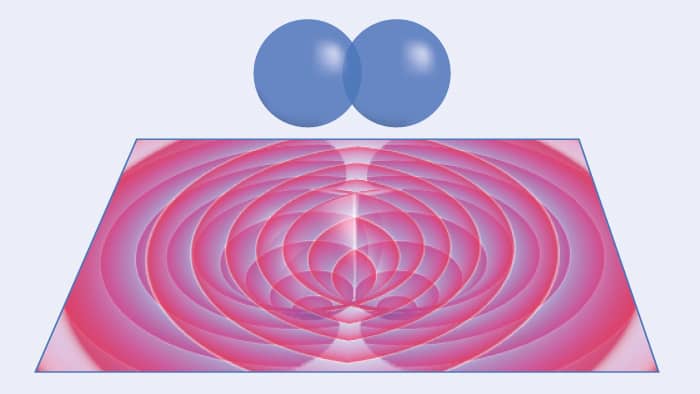
Our cover story this month is about a strange series of experiments, carried out by Yves Couder and Emmanuel Fort at Paris Diderot University, examining the behaviour of oil droplets vibrating on the surface of an oil bath. The droplets are classical in nature but also seem to show much of what would be expected of a quantum system, including interference patterns. So is this coincidence or not? Jon Cartwright investigates.
What is the meaning of Heisenberg’s analogy? (Courtesy: German Federal Archives)
A row has broken out among physicists over an analogy used by Werner Heisenberg in 1927 to make sense of his famous uncertainty principle. The analogy was largely forgotten as quantum theory became more sophisticated but has enjoyed a revival over the past decade. While several recent experiments suggest that the analogy is flawed, a team of physicists in the UK, Finland and Germany is now arguing that these experiments are not faithful to Heisenberg’s original formulation.
Heisenberg’s uncertainty principle states that we cannot measure certain pairs of variables for a quantum object – position and momentum, say – both with arbitrary accuracy. The better we know one, the fuzzier the other becomes. The uncertainty principle says that the product of the uncertainties in position and momentum can be no smaller than a simple fraction of Planck’s constant h.
When Heisenberg proposed the principle in 1927, he offered a simple physical picture to help it make intuitive sense. He imagined a microscope that tries to image a particle like an electron. When light bounces off the particle, we can “see” and locate it, but at the expense of imparting energy and changing its momentum. If less light is used, the less the momentum is perturbed but then the less clearly it can be “seen”. He presented this idea in terms of a trade-off between the “error” of a position measurement (Δx), owing to instrumental limitations, and the resulting “disturbance” in the momentum (Δp).
Not necessarily wrong
Subsequent work by others showed that the uncertainty principle does not rely on this disturbance argument – it applies to a whole ensemble of identically prepared particles, even if every particle is measured only once to obtain either its position or its momentum. As a result, Heisenberg abandoned the argument based on his thought experiment. But this did not mean it was wrong.
Then in 1988 Masanao Ozawa at Nagoya University in Japan argued that Heisenberg’s original relationship between error and disturbance does not represent a fundamental limit of uncertainty. In 2003 he proposed an alternative relationship in which, although the two quantities remain related, their product can be arbitrarily small.
Ozama then teamed up with Yuji Hasegawa at the University of Vienna and others in 2012 to see if his revised formulation of the uncertainty principle held up experimentally. Looking at the position and momentum of spin-polarized neutrons, they found that, as Ozawa predicted, error and disturbance still involve a trade-off but with a product that can be smaller than Heisenberg’s limit. (See “Neutrons revive Heisenberg’s first take on uncertainty”.)
Optical conformations
At much the same time, Aephraim Steinberg and colleagues at the University of Toronto conducted an optical test of Ozawa’s relationship, which also seemed to confirm his prediction. Ozawa has since collaborated with researchers at Tohoku University in another optical study, with the same result.
Now, Paul Busch at the University of York and colleagues have published calculations that defend Heisenberg’s position. Busch, Pekka Lahti of the University of Turku and Reinhard Werner of Leibniz University claim that Ozawa’s argument does not apply to the situation Heisenberg described. “Ozawa’s inequality allows arbitrarily small error products for a joint approximate measurement of position and momentum, while ours doesn’t,” says Busch. “Ours says if the error is kept small, the disturbance must be large.”
Johannes Kofler of the Max Planck Institute of Quantum Optics in Garching, Germany explains: “The two approaches differ in their definition of Δx and Δp, and there is indeed the freedom to make these different choices.” Kofler, who was not involved in this latest work, adds: “Busch et al. claim to have the proper definitions, and they prove that their uncertainty relation always holds, with no chance for experimental violation.”
Truer to Heisenberg?
The nub of the disagreement is which definition is best. Ozawa’s is based on the variance in two measurements made sequentially on a particular quantum state. Whereas that of Busch and colleagues considers the fundamental performance limits of a particular measuring device, and thus is independent of the initial quantum state. “We think that must have been Heisenberg’s intention,” says Busch.
But Ozawa feels Busch and colleagues are focusing on instrumental limitations that have little relevance to the way devices are actually used. “My theory suggests if you use your measuring apparatus as suggested by the maker, you can make better measurement than Heisenberg’s relation,” he says. “They now prove that if you use it very badly – if, say, you use a microscope instead of a telescope to see the Moon – you cannot violate Heisenberg’s relation. Thus, their formulation is not interesting.”
Steinberg and colleagues have already responded to Busch et al. in a preprint that tries to clarify the differences between their definition and Ozawa’s. What Busch and colleagues quantify, they say, “is not how much the state that one measures is disturbed, but rather how much ‘disturbing power’ the measuring apparatus has”.
‘Disturbing power’
“Heisenberg’s original formula holds if you ask about ‘disturbing power’ but the less restrictive inequalities of Ozawa hold if you ask about the disturbance to particular states,” says Steinberg. “I personally think these are two different but both interesting questions.” But he feels Ozawa’s formulation is closer to the spirit of Heisenberg’s.
In any case, all sides agree that the uncertainty principle is not, as some popular accounts imply, about the mechanical effects of measurement – the “kick” to the system. “It is not the mechanical kick but the quantum nature of the interaction and of the measuring probes, such as a photon, that are responsible for the uncontrollable quantum disturbance,” says Busch.
In part the argument comes down to what Heisenberg had in mind. “I cannot exactly say how much Heisenberg understood about the uncertainty principle,” Ozawa says. “But I can say we know much more than Heisenberg,” he adds.
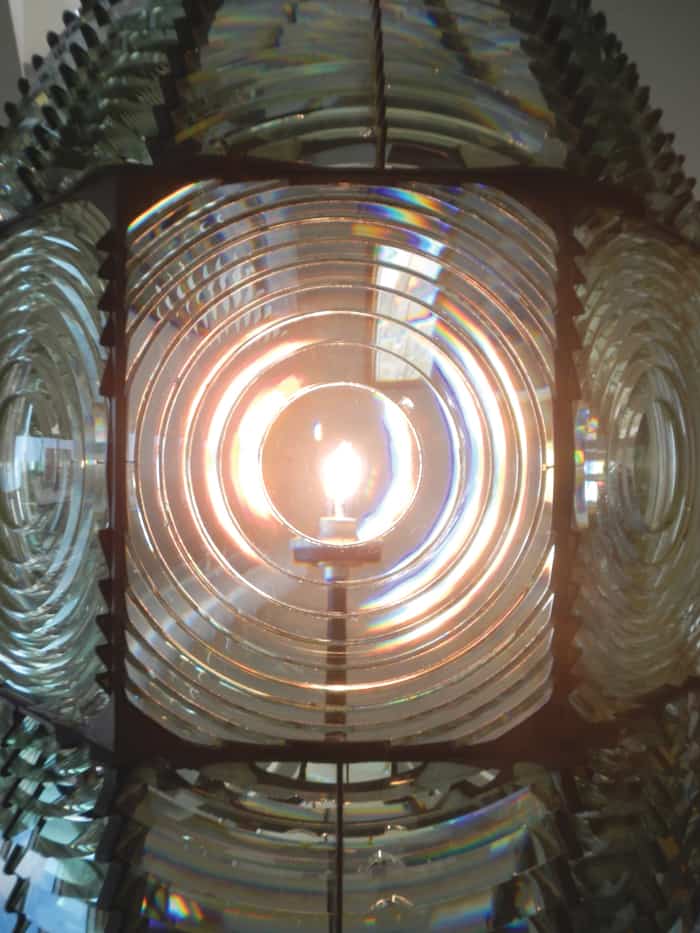
Light work: Fresnel lenses, such as this one made for a lighthouse in Fire Island, New York, are the subject of A Short, Bright Flash. (CC BY Jaro Nemcok)
A lens that made history
“I have often been annoyed when someone said they’re going to use some sort of thing or another as ‘a lens’ to view history,” writes the science historian Theresa Levitt in the preface to her book A Short, Bright Flash. “Lenses, after all, can do a lot of different things. They can magnify, telescope, invert, diverge, converge and correct, all while inevitably distorting the light that you see.” Her credentials as an optics geek thus established, Levitt goes on to argue that in this case, the phrase is appropriate, since her book really is about a lens, and its development really does reveal something important about history. The subject of A Short, Bright Flash is the Fresnel lens, which was designed by the French physicist Augustin-Jean Fresnel in the early 19th century and subsequently installed in lighthouses all over the world. Fresnel’s original lens was actually a complex arrangement of prisms that behaved like a single thin, convex lens with a very short focal length. Capable of capturing far more light than its predecessors and collimating it into a single, dazzling beam, the Fresnel lens was a revelation to sailors – but also to scientists, since the equations used to develop it relied on light having a wave-like character, rather than behaving like a particle as Newton had believed. Physicists will enjoy the first part of the book, which is effectively a mini-biography of Fresnel and is packed with interesting titbits about his life and career. Alas, Fresnel died so young that he barely makes it to page 100, and Levitt’s subsequent lengthy digression on the use of Fresnel lenses in US lighthouses will lose many readers from outside that country. The book does pick up again towards the end, when Levitt describes later modifications to Fresnel’s lights, but it never quite matches the short, bright flash of its beginning.
2013 W W Norton £14.99/$25.95hb 288pp
A rocketry pioneer’s story
The story of Mary Sherman is a fascinating one. Born to a poor farming family in a remote corner of North Dakota, US, she escaped an abusive childhood by running away to college, where she excelled in science. After her studies were interrupted by poverty, the Second World War and an unplanned pregnancy, she managed to secure a post-war job at a major US defence contractor, where she became the only woman in its 900-strong engineering department. During her relatively brief career, she was instrumental in developing a new type of rocket fuel called hydyne, which made history in January 1958 when it was used to launch the US’s first successful satellite. By then, however, Sherman had already retired to raise her children, and long before her death in 2004, her contributions had been all but forgotten. This is tempting stuff for a biographer, but unfortunately, poor record-keeping, the top-secret nature of Sherman’s work and her own obsessively private disposition made many details of her life difficult or impossible to verify. As a result, George Morgan decided to make his book Rocket Girl a work of “creative nonfiction” rather than a straight biography. It’s a brave decision and probably an essential one if Sherman is to get the credit she deserves. Unfortunately, it also hangs a giant question mark over the book’s accuracy, and for all Morgan’s admirable candour and his doggedness as a researcher, he is ill-placed to dispel it. The reason is that Morgan is Mary Sherman’s son (by her husband and fellow rocket scientist Richard Morgan), and at several points in the book, he reveals himself – perhaps intentionally – as someone with a huge axe to grind concerning his mother’s memory. Less forgivably, Morgan, a playwright at the California Institute of Technology, is also prone to the kind of florid language that made the novelist William Faulkner urge aspiring writers to “kill [their] darlings”. In one especially purple passage, young Mary has not merely fallen pregnant – no, she is “deceived by insincerity, duped by counterfeit promises and impregnated by the sperm cells of deception”. When we meet Morgan’s father for the first time a few chapters later, we are not told that he has red hair; instead, its colour is “a hirsute replication of youthful autumns spent in Vermont”. By comparison, inventing a few non-essential details seems positively virtuous.
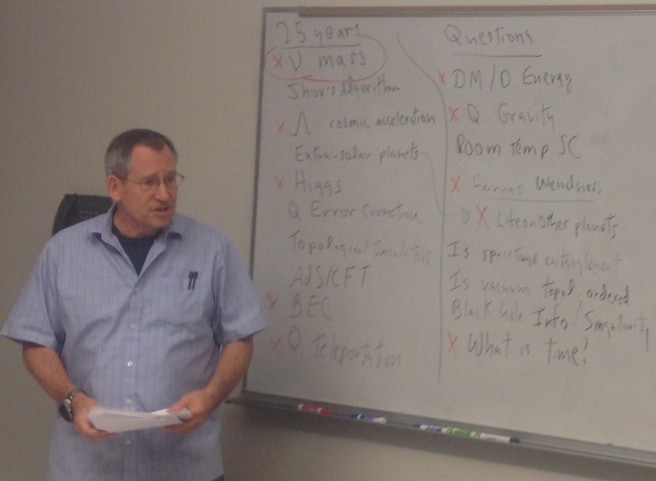
John Preskill at Caltech comparing his group’s choices with ours for the top discoveries of the last 25 years and the biggest unanswered questions. (Courtesy: IQI, Caltech)
By Louise Mayor
Unless you’ve been living under a stone or aren’t a regular reader, you’ll know that this month marked the 25th anniversary of Physics World – the member magazine of the Institute of Physics (IOP).
We pushed the boat out by turning our October issue into a celebration of all things physics – past, present and future – by picking our top five discoveries in fundamental physics over the last 25 years, the top five images during that period, the five biggest unanswered questions, the top five people changing how physics is done, as well as the top five spin-offs from physics that will improve people’s lives over the next quarter century.
The Large Underground Xenon (LUX) dark-matter detector at the Sanford Underground Research Facility in the US has failed to find any evidence for dark matter in the first three months of its operation. One of the world’s most sensitive dark-matter detectors, LUX has managed to put more stringent limits on what dark matter could be. In particular, the preliminary results suggest that previous hints of low-mass dark-matter particles reported by some other experiments might not be credible.
Dark matter is the name given to the substance thought to account for about 80% of matter in the universe. Its existence is inferred from a range of astrophysical measurements that suggest processes such as galaxy formation and dynamics are influenced by the gravitational forces exerted by dark matter. However, because dark matter does not appear to interact strongly with light and other electromagnetic radiation, astronomers have not been able to observe it directly.
Dark matter should pervade our galaxy and therefore it should be streaming constantly through Earth. As a result, physicists have built a number of detectors that look for the tiny interactions that could occur between dark matter and normal matter. While most detectors have not seen any such interactions, others have seen tantalizing hints of dark-matter particles.
Looking for WIMPs
Located 1500 m under the Black Hills in South Dakota to shield its sensitive detectors from cosmic rays and other background radiation, LUX is the latest such experiment to report results. The detector comprises a 2-m-tall titanium tank filled with 350 kg of liquid xenon that is cooled to –108 °C.
LUX is designed to detect hypothetical dark-matter particles called WIMPs – weakly interacting massive particles – which are expected to collide occasionally with xenon atoms in the tank. If this happens, the recoiling atom will create light and some free electrons. The electrons are accelerated upwards by an electric field, creating more light when they reach a thin layer of xenon gas at the top of the tank. Extremely sensitive light detectors collect the light signals at the collision point and the top of the tank and the energy of the interaction can be calculated from the intensity of the light signals. Detecting two signals from each event makes it easier to discriminate against light created by background radiation.
What dark matter is not
After analysing three months of data taken by LUX, physicists found no evidence for dark-matter collisions. However, because the experiment is the most sensitive yet to a range of WIMP masses, LUX has provided important new information about what dark matter is not. In particular, LUX is more than 20 times more sensitive than previous experiments when it comes to detecting low-mass WIMPs – those with masses of about 5–10 GeV/c2.
Earlier this year, the US-based CDMS dark-matter experiment – located deep underground in the Soudan Mine in northern Minnesota – reported the detection of three WIMPs with masses of about 8.6 GeV/c2. While this mass is much lower than most conventional theories predict, it seems to agree with somewhat weaker observations in several other experiments. The CDMS detection has a statistical significance of about 3σ: well below the gold standard of 5σ, which is considered a discovery in particle physics. As a result some physicists doubt the CDMS result, while others have tried to explain it by developing new theories of WIMPs.
Expected 1600 events
However, the CDMS WIMPs should have produced more than 1600 events in LUX. No such signals were seen, making it much less likely that low-mass WIMPs exist.
“Those ‘hints’ – which were at best controversial – motivated several theories to explain them, which in turn can lend undue credence to those results,” says Henrique Araújo who leads the LUX team at Imperial College London. “But LUX is by far the most sensitive instrument in this hunt, and our very clean data contradict that interpretation emphatically: there may well be other light WIMPs out there, but we are drawing a line under those existing claims.”
LUX is expected to run for two more years and the experiment’s co-spokesperson Dan McKinsey of Yale University is confident that it will continue to make an impact: “This is only the beginning for LUX,” he says. “Now that we understand the instrument and its backgrounds, we will continue to take data, testing for more and more elusive candidates for dark matter.”
Physicists working on LUX are already planning their next experiment at Sanford called LUX-ZEPLIN. It will involve about 20 times more liquid xenon than currently used by LUX and will be about 100 times more sensitive.
A preprint describing the results is available on arXiv.
Physics World‘s Matin Durrani visited the ZEPLIN-III dark-matter detector in the Boulby Underground Laboratory in Cleveland on the north-east coast of England. You can watch his exploits in this video.
If you know one thing about quantum mechanics, it is probably that quantum matter can be both here and there at the same time – it can be in a superposition. And if you know one thing about gravity, it is probably that matter attracts other matter – it has a gravitational field. So it seems that the gravitational field of quantum matter should also be both here and there at the same time. However, Albert Einstein’s general relativity, which describes gravity, is a classical theory. It has taught us a great many lessons and can do many things, but one thing it cannot do is describe gravitational fields in quantum superpositions. For this we need a quantized version of general relativity – a theory of quantum gravity.
And if you know one thing about quantum gravity, it is probably that no-one knows how it works.
We do, however, have requirements for the successful theory of quantum gravity.
What do we want from quantum gravity?
To begin with, a theory of quantum gravity should tell us how quantum matter gravitates, especially if gravity is strong. As long as gravity is weak, we could get away with quantizing it in the same way that we quantize other interactions. But this weak-field quantization stops making sense when gravity is strong, such as when highly energetic particles collide at energies so high that the particles themselves have a strong gravitational interaction.
Quantum gravity should also tell us what happened in the very early universe. According to general relativity, our universe started in a singularity. This unphysical result indicates that we need a more fundamental description of space and time back then. Since gravity was strong in the early universe, quantum effects of gravity cannot be neglected when describing this phase.
General relativity also predicts singularities when matter collapses into black holes, which leads to what is known as the black hole information loss paradox. It concerns the fact that black holes emit thermal radiation because of quantum effects, not including quantum gravitational effects. But when the black hole has completely evaporated, all that is left is thermal radiation, regardless of what formed the black hole. Information is destroyed in this irreversible process, but since irreversible processes cannot happen in quantum mechanics as we know it, this represents an inconsistency. Quantum gravity should explain what happens to the information in black holes.
Along with solving these thorny problems, the successful theory of quantum gravity must also be able to reproduce all achievements of general relativity and the Standard Model of particle physics. And it must make testable predictions that give us confidence that we have the right description of nature.
What have we learned so far?
Physicists are working on several approaches to quantum gravity: string theory and loop quantum gravity; causal dynamical triangulation and asymptotically safe gravity; causal sets; group field theory; emergent and induced gravity; and a few other comparably small research agendas. String theory currently has the highest score in addressing the above requirements, followed by loop quantum gravity and asymptotically safe gravity.
Why combine quantum mechanics and gravity? Quantum mechanics tells us that particles can exist in quantum superpositions, and general relativity tells us that particles have a gravitational field. But what is the gravitational field of a quantum superposition? This seemingly simple question is one we cannot currently answer. To do so we need to develop a theory of quantum gravity. (Courtesy: S Hossenfelder)
From the outside, research on any of these approaches to quantum gravity must be like watching the construction of a tunnel. For a long time, nothing much happens, except that occasionally a tool goes in and rubble comes out. But step inside and you will see a hive of activity. Recently, a lot of progress has been made in each of the approaches – progress that has considerably advanced our understanding of the problem. In the end though, a tunnel is only useful once a breakthrough is made.
While no breakthrough has yet been made, we are learning. We have learned that specific properties of quantum gravity appear in several of the approaches, if in different manifestations. The best known example may be holography – the encoding of information contained in a volume on the boundary of that volume. The existence of a minimal length scale is another such property that appears in different approaches. It seems that, ultimately, quantum gravitational fluctuations prevent us from resolving structures arbitrarily well. A more recent discovery is that the dimension of space–time seems to become smaller on short distances, a surprising behaviour that has also been found in different approaches.
I have little doubt that we will be able to unify quantum mechanics and gravity; some of my colleagues might even argue that we have already done so. But we are not looking for a theory of quantum gravity. We are looking for the theory of quantum gravity – the theory that describes the world around us. Making connections with observation is thus not only important, but also necessary for quantum gravity to be scientific.
What is next?
So far, we do not have any experimental evidence for quantum gravity. But during the last decade it has become clear that it is technologically possible, even in the absence of a fully fledged theory, to search for evidence of general properties expected of quantum gravity – like the ones named above, and more still, such as violations of certain symmetries. This can be done, and has been successfully done in some cases already, through the use of phenomenological models. Such models parameterize effects and make connections with observations. Observations can then be used to learn what properties the yet-to-be-found theory can have and which it cannot have. I think that this experimental guidance is essential to constructing the theory of quantum gravity, and is the route to making progress.
Since gravity is really a consequence of space–time being curved, we are looking for a theory of the quantum nature of space and time itself. It is the most fundamental of the currently open questions in the sense that it concerns the most basic ingredients of our theories. Next to revolutionizing our understanding of space, time and matter, quantum gravity will likely also significantly advance other areas. The nature of time and its uni-directional arrow are puzzles deeply interlinked with quantum gravity, and so is the physics of the early universe. Moreover, I believe we will learn a lesson about quantization that has the potential to improve our ability to manipulate quantum matter.
The tunnel’s construction site might not look like much, but rest assured: once a breakthrough is made, you will see heavy traffic on the new route.