New Journal of Physics seeks to expand its horizons

The New Journal of Physics (NJP) has long been a flagship journal for IOP Publishing. The journal published its first volume in 1998 and was an early pioneer of open-access publishing. Co-owned by the Institute of Physics, which publishes Physics World, and the Deutsche Physikalische Gesellschaft (DPG), after some 25 years the journal is now seeking to establish itself further as a journal that represents the entire range of physics disciplines.

New Journal of Physics

NJP publishes articles in pure, applied, theoretical and experimental research, as well as interdisciplinary topics. Research areas include optics, condensed-matter physics, quantum science and statistical physics, and the journal publishes a range of article types such as papers, topical reviews, fast-track communications, perspectives and special issues.

While NJP has been seen as a leading journal for quantum information, optics and condensed-matter physics, the journal is currently undergoing a significant transformation to broaden its scope to attract a wider array of physics disciplines. This shift aims to enhance the journal’s relevance, foster a broader audience and maintain NJP’s position as a leading publication in the global scientific community.

While quantum physics in general, and quantum optics and quantum information in particular, will remain crucial areas for the journal, researchers in other fields such as gravitational-wave research, condensed- and soft-matter physics, polymer physics, theoretical chemistry, statistical and mathematical physics are being encouraged to submit their articles to the journal. “It’s a reminder to the community that NJP is a journal for all kinds of physics and not just a select few,” says quantum physicist Andreas Buchleitner from the Albert-Ludwigs-Universität Freiburg who is NJP’s editor-in-chief.

Historically, NJP has had a strong focus on theoretical physics, particularly in quantum information. Yet another significant aspect of NJP’s new strategy is the inclusion of more experimental research. Attracting high-quality experimental papers to balance its content and enhance its reputation as a comprehensive physics journal, will also allow it to compete with other leading physics journals. Part of this shift will also involve attracting a reliable and loyal group of authors who regularly publish their best work in NJP.

A broader scope

To aid this move, NJP has recently grown its editorial board to add expertise in subjects such as gravitational-wave physics. This diversity of capabilities is crucial to evaluate submissions from different areas of physics and maintain high standards of quality during the peer-review process. That point is particularly relevant for Buchleitner, who sees the expansion of the editorial board as helping to improve the journal’s handling of submissions to ensure that authors feel their work is being evaluated fairly and by knowledgeable and engaged individuals. “Increasing the editorial board was quite an important concept in terms of helping the journal expand,” adds Buchleitner. “What is important to me is that scientists who contact the journal feel that they are talking to people and not to artificial intelligence substitutes.”

While citation metrics such as impact factors are often debated in terms of their scientific value, they remain essential for a journal’s visibility and reputation. In the competitive landscape of scientific publishing, they can set a journal apart from its competitors. With that in mind, NJP, which has an impact factor of 2.8, is also focusing on improving its citation indices to compete with top-tier journals.

Yet that doesn’t only just include the impact factor but other metrics that ensure efficient and constructive handling of submissions that will encourage researchers to publish with the journal again. To set it apart from competitors, the time taken to first decision before peer review, for example, is only six days while the journal has a median of 50 days to first decision after peer review.

Society benefits

While NJP pioneered the open-access model of scientific publishing, that position is no longer unique given the huge increase in open-access journals over the past decade. Yet the publishing model continues to be an important aspect of the journal’s identity to ensure that the research it publishes is freely available to all. Another crucial factor to attract authors and set it apart from commercial entities is that NJP is published by learned societies – the IOP and DPG.

NJP has often been thought of as a “European journal”. Indeed, NJP’s role is significant in the context of the UK leaving the European Union, in that it serves as a bridge between the UK and mainland European research communities. “That’s one of the reasons why I like the journal,” says Buchleitner, who adds that with a wider scope NJP will not only publish the best research from around the world but also strengthen its identity as a leading European journal.
Novel MRI technique can quantify lung function

Assessing lung function is crucial for diagnosing and monitoring respiratory diseases. The most common way to do this is using spirometry, which measures the amount and speed of air that a person can inhale and exhale. Spirometry, however, is insensitive to early disease and cannot detect heterogeneity in lung function. Techniques such as chest radiography or CT provide more detailed spatial information, but are not ideal for long-term monitoring as they expose patients to ionizing radiation.

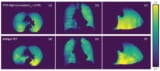
Now, a team headed up at Newcastle University in the UK has demonstrated a new lung MR imaging technique that provides quantitative and spatially localized assessment of pulmonary ventilation. The researchers also show that the MRI scans – recorded after the patient inhales a safe gas mixture – can track improvements in lung function following medication.

Although conventional MRI of the lungs is challenging, lung function can be assessed by imaging the distribution of an inhaled gas, most commonly hyperpolarized 3He or 129Xe. These gases can be expensive, however, and the magnetic preparation step requires extra equipment and manpower. Instead, project leader Pete Thelwall and colleagues are investigating 19F-MRI of inhaled perfluoropropane – an inert gas that does not require hyperpolarization to be visible in an MRI scan.

“Conventional MRI detects magnetic signals from hydrogen nuclei in water to generate images of water distribution,” Thelwall explains. “Perfluoropropane is interesting to us as we can also get an MRI signal from fluorine nuclei and visualize the distribution of inhaled perfluoropropane. We assess lung ventilation by seeing how well this MRI-visible gas moves into different parts of the lungs when it is inhaled.”

Testing the new technique

The researchers analysed 19F-MRI data from 38 healthy participants, 35 with asthma and 21 with chronic obstructive pulmonary disease (COPD), reporting their findings in Radiology. For the 19F-MRI scans, participants were asked to inhale a 79%/21% mixture of perfluoropropane and oxygen and then hold their breath. All subjects also underwent spirometry and an anatomical 1H-MRI scan, and those with respiratory disease withheld their regular bronchodilator medication before the MRI exams.

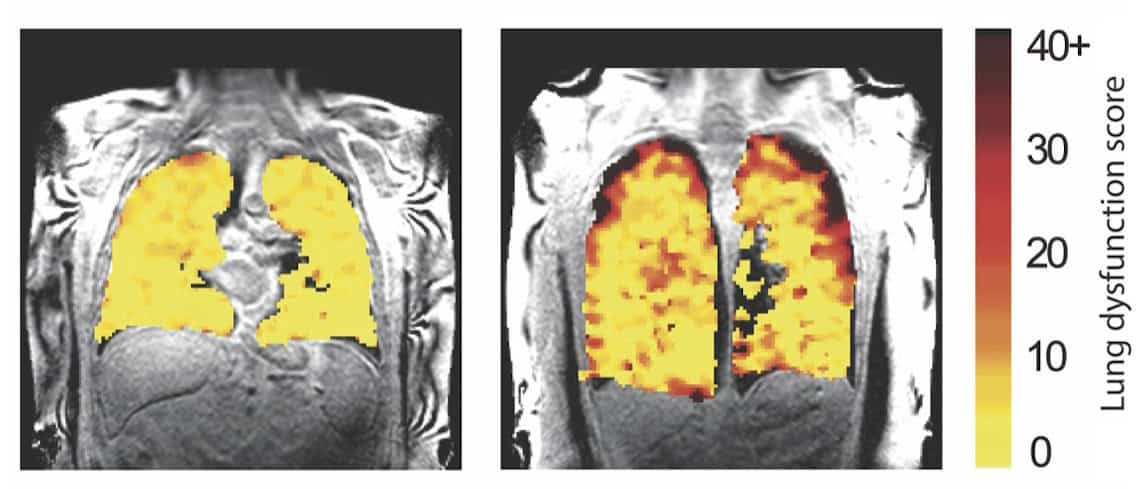
After co-registering each subject’s anatomical (1H) and ventilation (19F) images, the researchers used the perfluoropropane distribution in the images to differentiate ventilated and non-ventilated lung regions. They then calculated the ratio of non-ventilated lung to total lung volume, a measure of ventilation dysfunction known as the ventilation defect percentage (VDP).

Healthy subjects had a mean VDP of 1.8%, reflecting an even distribution of inhaled gas throughout their lungs and well-preserved lung function. In comparison, the patient groups showed elevated mean VDP values – 8.3% and 27.2% for those with asthma and COPD, respectively – reflecting substantial ventilation heterogeneity.

In participants with respiratory disease, the team also performed 19F-MRI after treatment with salbutamol, a common inhaler. They found that the MR images revealed changes in regional ventilation in response to this bronchodilator therapy.

Post-treatment images of patients with asthma showed an increase in lung regions containing perfluoropropane, reflecting the reversible nature of this disease. Participants with COPD generally showed less obvious changes following treatment, as expected for this less reversible disease. Bronchodilator therapy reduced the mean VDP by 33% in participants with asthma (from 8.3% to 5.6%) and by 14% in those with COPD (from 27.2% to 23.3%).

The calculated VDP values were negatively associated with standard spirometry metrics. However, the team note that some participants with asthma exhibited normal spirometry but an elevated mean VDP (6.7%) compared with healthy subjects. This finding suggests that the VDP acquired by 19F-MRI of inhaled perfluoropropane is more sensitive to subclinical disease than conventional spirometry.

Supporting lung transplants

In a separate study reported in JHLT Open, Thelwall and colleagues used dynamic 19F-MRI of inhaled perfluoropropane to visualize the function of transplanted lungs. Approximately half of lung transplant recipients experience organ rejection, known as chronic lung allograft dysfunction (CLAD), within five years of transplantation.

Lung function MRI

Transplant recipients are monitored frequently using pulmonary function tests and chest X-rays. But by the time CLAD is diagnosed, irreversible lung damage may already have occurred. The team propose that 19F-MRI may find subtle early changes in lung function that could help detect rejection earlier.

The researchers studied 10 lung transplant recipients, six of whom were experiencing chronic rejection. They used a wash-in and washout technique, acquiring breath-hold 19F-MR images while the patient inhaled a perfluoropropane/oxygen mixture (wash-in acquisitions), followed by scans during breathing of room air (washout acquisitions).

The MR images revealed quantifiable differences in regional ventilation in participants with and without CLAD. In those with chronic rejection, scans showed poorer air movement to the edges of the lungs, likely due to damage to the small airways, a typical feature of CLAD. By detecting such changes in lung function, before signs of damage are seen in other tests, it’s possible that this imaging method might help inform patient treatment decisions to better protect the transplanted lungs from further damage.

The studies fall squarely within the field of clinical research, requiring non-standard MRI hardware to detect fluorine nuclei. But Thelwall sees a pathway towards introducing 19F-MRI in hospitals, noting that scanner manufacturers have brought systems to market that can detect nuclei other than 1H in routine diagnostic scans. Removing the requirement for hyperpolarization, combined with the lower relative cost of perfluoropropane inhalation (approximately £50 per study participant), could also help scale this method for use in the clinic.

The team is currently working on a study looking at how MRI assessment of lung function could help reduce the side effects associated with radiotherapy for lung cancer. The idea is to design a radiotherapy plan that minimizes dose to lung regions with good function, whilst maintaining effective cancer treatment.

“We are also looking at how better lung function measurements might help the development of new treatments for lung disease, by being able to see the effects of new treatments earlier and more accurately than current lung function measurements used in clinical trials,” Thelwall tells Physics World.

Astrophysicists reveal huge variation in the shape of exocomet belts

Astrophysicists have released a series of images of exocomet belts and the tiny “pebbles” that reside in them.

Exocomets are boulders of rock and ice, at least 1 km in size, that exist outside our solar system. Exocometary belts – regions containing many such icy bodies – are found in at least 20% of planetary systems. When the exocomets within these belts smash together they can also produce small pebbles.

The belts in the latest study orbit 74 nearby stars that cover a range of ages – from those that are have just formed to those in more mature systems like our own Solar System. The belts typically lie tens to hundreds of astronomical units (the distance from the Earth to the Sun) from their central star.

At that distance, the temperature is between -250 to -150 degrees Celsius, meaning that most compounds on the exocomets are frozen as ice.

While most exocometary belts in the latest study are disks, some are narrow rings. Some even have multiple rings/disks that are eccentric, which provides evidence that yet undetectable planets are present and their gravity affects the distribution of the pebbles in these systems.

According the Sebastián Marino from the University of Exeter, the images reveal “a remarkable diversity in the structure” of the belts.

Indeed, Luca Matrà from Trinity College Dublin says that the “power” of such a large survey is to reveal population-wide properties and trends. “[The survey] confirmed that the number of pebbles decreases for older planetary systems as belts run out of larger exocomets smashing together, but showed for the first time that this decrease in pebbles is faster if the belt is closer to the central star,” Matrà adds. “It also indirectly showed – through the belts’ vertical thickness – that unobservable objects as large as 140 km to Moon-size are likely present in these belts.”

The researchers took the images using the Atacama Large Millimeter/submillimeter Array – an array of 66 radio telescopes in the Atacama Desert of northern Chile – as well as the eight-element Submillimeter Array based in Hawaii.

World’s darkest skies threatened by industrial megaproject in Chile, astronomers warn

The darkest, clearest skies anywhere in the world could suffer “irreparable damage” by a proposed industrial megaproject. That is the warning from the European Southern Observatory (ESO) in response to plans by AES Andes, a subsidiary of the US power company AES Corporation, to develop a green hydrogen project just a few kilometres from ESO’s flagship Paranal Observatory in Chile’s Atacama Desert.

The Atacama Desert is considered one of the most important astronomical research sites in the world due to its stable atmosphere and lack of light pollution. Sitting 2635 m above sea level, on Cerro Paranal, the Paranal Observatory is home to key astronomical instruments including the Very Large Telescope. The Extremely Large Telescope (ELT) – the largest visible and infrared light telescope in the world – is also being constructed at the observatory on Cerro Armazones with first light expected in 2028.

AES Chile submitted an Environmental Impact Assessment in Chile for an industrial-scale green hydrogen project at the end of December. The complex is expected to cover more than 3000 hectares – similar in size to 1200 football pitches. According to AES, the project is in the early stages of development, but could include green hydrogen and ammonia production plants, solar and wind farms as well as battery storage facilities.

ESO is calling for the development to be relocated to preserve “one of Earth’s last truly pristine dark skies” and “safeguard the future” of astronomy. “The proximity of the AES Andes industrial megaproject to Paranal poses a critical risk to the most pristine night skies on the planet,” says ESO director general Xavier Barcons. “Dust emissions during construction, increased atmospheric turbulence, and especially light pollution will irreparably impact the capabilities for astronomical observation.”

In a statement sent to Physics World, an AES spokesperson says they “understand there are concerns raised by ESO regarding the development of renewable energy projects in the area”. The spokesperson adds that the project would be in an area “designated for renewable energy development”. They also claim that the company is “dedicated to complying with all regulatory guidelines and rules” and “supporting local economic development while maintaining the highest environmental and safety standards”.

According to the statement, the proposal “incorporates the highest standards in lighting” to comply with Chilean regulatory requirements designed “to prevent light pollution, and protect the astronomical quality of the night skies”.

Yet Romano Corradi, director of the Gran Telescopio Canarias, which is located at the Roque de los Muchachos Observatory, La Palma, Spain, noted that it is “obvious” that the light pollution from such a large complex will negatively affect observations. “There are not many places left in the world with the dark and other climatic conditions necessary to do cutting-edge science in the field of observational astrophysics,” adds Corradi. “Light pollution is a global effect and it is therefore essential to protect sites as important as Paranal.”

  • Update 18/03/2025: on 17 March, ESO released an in-depth technical analysis of the impact the project would have on its facilities at the Paranal Observatory in Chile. The report found that the AES Andes project would increase light pollution above ESO’s Very Large Telescope by at least 35% and by more than 50% above the southern site of the Cherenkov Telescope Array Observatory.

Could bubble-like microrobots be the drug delivery vehicles of the future?

Biomedical microrobots could revolutionize future cancer treatments, reliably delivering targeted doses of toxic cancer-fighting drugs to destroy malignant tumours while sparing healthy bodily tissues. Development of such drug-delivering microrobots is at the forefront of biomedical engineering research. However, there are many challenges to overcome before this minimally invasive technology moves from research lab to clinical use.

Microrobots must be capable of rapid, steady and reliable propulsion through various biological materials, while generating enhanced image contrast to enable visualization through thick body tissue. They require an accurate guidance system to precisely target diseased tissue. They also need to support sizable payloads of drugs, maintain their structure long enough to release this cargo, and then efficiently biodegrade – all without causing any harm to the body.

Aiming to meet this tall order, researchers at the California Institute of Technology (Caltech) and the University of Southern California have designed a hydrogel-based, image-guided, bioresorbable acoustic microrobot (BAM) with these characteristics and capabilities. Reporting their findings in Science Robotics, they demonstrated that the BAMs could successfully deliver drugs that decreased the size of bladder tumours in mice.

Microrobot design

The team, led by Caltech’s Wei Gao, fabricated the hydrogel-based BAMs using high-resolution two-photon polymerization. The microrobots are hollow spheres with an outer diameter of 30 µm and an 18 µm-diameter internal cavity to trap a tiny air bubble inside.

The BAMs have a hydrophobic inner surface to prolong microbubble retention within biofluids and a hydrophilic outer layer that prevents microrobot clustering and promotes degradation. Magnetic nanoparticles and therapeutic agents integrated into the hydrogel matrix enable wireless magnetic steering and drug delivery, respectively.

The entrapped microbubbles are key as they provide propulsion for the BAMs. When stimulated by focused ultrasound (FUS), the bubbles oscillate at their resonant frequencies. This vibration creates microstreaming vortices around the BAM, generating a propulsive force in the opposite direction of the flow. The microbubbles inside the BAMs also act as ultrasound contrast agents, enabling real-time, deep-tissue visualization.

The researchers designed the microrobots with two cylinder-like openings, which they found achieves faster propulsion speeds than single- or triple-opening spheres. They attribute this to propulsive forces that run parallel to the sphere’s boundary improving both speed and stability of movement when activated by FUS.

Flow patterns generated by a vibrating BAM

They also discovered that asymmetric placement of the microbubble centre from the centre of the sphere generated propulsion speeds more than twice that achieved by BAMS with a symmetric design.

To perform simultaneous imaging of BAM location and acoustic propulsion within soft tissue, the team employed a dual-probe design. An ultrasound imaging probe enabled real-time imaging of the bubbles, while the acoustic field generated by a FUS probe (at an excitation frequency of 480 kHz and an applied acoustic pressure of 626 kPa peak-to-peak) provided effective propulsion.

In vitro and in vivo testing 

The team performed real-time imaging of the propulsion of BAMs in vitro, using an agarose chamber to simulate an artificial bladder. When exposed to an ultrasound field generated by the FUS probe, the BAMs demonstrated highly efficient motion, as observed in the ultrasound imaging scans. The propulsion direction of BAMs could be precisely controlled by an external magnetic field.

The researchers also conducted in vivo testing, using laboratory mice with bladder cancer and the anti-cancer drug 5-fluorouracil (5-FU). They treated groups of mice with either phosphate buffered saline, free drug, passive BAMs or active (acoustically actuated and magnetically guided) BAMs, at three day intervals over four sessions. They then monitored the tumour progression for 21 days, using bioluminescence signals emitted by cancer cells.

The active BAM group exhibited a 93% decrease in bioluminescence by the 14th day, indicating large tumour shrinkage. Histological examination of excised bladders revealed that mice receiving this treatment had considerably reduced tumour sizes compared with the other groups.

“Embedding the anticancer drug 5-FU into the hydrogel matrix of BAMs substantially improved the therapeutic efficiency compared with 5-FU alone,” the authors write. “These BAMs used a controlled-release mechanism that prolonged the bioavailability of the loaded drug, leading to sustained therapeutic activity and better outcomes.”

Mice treated with active BAMS experienced no weight changes, and no adverse effects to the heart, liver, spleen, lung or kidney compared with the control group. The researchers also evaluated in vivo degradability by measuring BAM bioreabsorption rates following subcutaneous implantation into both flanks of a mouse. Within six weeks, they observed complete breakdown of the microrobots.

Gao tells Physics World that the team has subsequently expanded the scope of its work to optimize the design and performance of the microbubble robots for broader biomedical applications.

“We are also investigating the use of advanced surface engineering techniques to further enhance targeting efficiency and drug loading capacity,” he says. “Planned follow-up studies include preclinical trials to evaluate the therapeutic potential of these robots in other tumour models, as well as exploring their application in non-cancerous diseases requiring precise drug delivery and tissue penetration.”

Sustainability spotlight: PFAS unveiled

Want to learn more on this subject?

So-called “forever chemicals”, or per- and polyfluoroalkyl substances (PFAS), are widely used in consumer, commercial and industrial products, and have subsequently made their way into humans, animals, water, air and soil. Despite this ubiquity, there are still many unknowns regarding the potential human health and environmental risks that PFAS pose.

Join us for an in-depth exploration of PFAS with four leading experts who will shed light on the scientific advances and future challenges in this rapidly evolving research area.

Our panel will guide you through a discussion of PFAS classification and sources, the journey of PFAS through ecosystems, strategies for PFAS risk mitigation and remediation, and advances in the latest biotechnological innovations to address their effects.

Sponsored by Sustainability Science and Technology, a new journal from IOP Publishing that provides a platform for researchers, policymakers, and industry professionals to publish their research on current and emerging sustainability challenges and solutions.

Want to learn more on this subject?

Jonas Baltrusaitis, inaugural editor-in-chief of Sustainability Science and Technology, has co-authored more than 300 research publications on innovative materials. His work includes nutrient recovery from waste, their formulation and delivery, and renewable energy-assisted catalysis for energy carrier and commodity chemical synthesis and transformations.

Linda S Lee is a distinguished professor at Purdue University with joint appointments in the Colleges of Agriculture (COA) and Engineering, program head of the Ecological Sciences & Engineering Interdisciplinary Graduate Program and COA assistant dean of graduate education and research. She joined Purdue in 1993 with degrees in chemistry (BS), environmental engineering (MS) and soil chemistry/contaminant hydrology (PhD) from the University of Florida. Her research includes chemical fate, analytical tools, waste reuse, bioaccumulation, and contaminant remediation and management strategies with PFAS challenges driving much of her research for the last two decades. Her research is supported by a diverse funding portfolio. She has published more than 150 papers with most in top-tier environmental journals.

Clinton Williams is the research leader of Plant and Irrigation and Water Quality Research units at US Arid Land Agricultural Research Center. He has been actively engaged in environmental research focusing on water quality and quantity for more than 20 years. Clinton looks for ways to increase water supplies through the safe use of reclaimed waters. His current research is related to the environmental and human health impacts of biologically active contaminants (e.g. PFAS, pharmaceuticals, hormones and trace organics) found in reclaimed municipal wastewater and the associated impacts on soil, biota, and natural waters in contact with wastewater. His research is also looking for ways to characterize the environmental loading patterns of these compounds while finding low-cost treatment alternatives to reduce their environmental concentration using byproducts capable of removing the compounds from water supplies.

Sara Lupton has been a research chemist with the Food Animal Metabolism Research Unit at the Edward T Schafer Agricultural Research Center in Fargo, ND within the USDA-Agricultural Research Service since 2010. Sara’s background is in environmental analytical chemistry. She is the ARS lead scientist for the USDA’s Dioxin Survey and other research includes the fate of animal drugs and environmental contaminants in food animals and investigation of environmental contaminant sources (feed, water, housing, etc.) that contribute to chemical residue levels in food animals. Sara has conducted research on bioavailability, accumulation, distribution, excretion, and remediation of PFAS compounds in food animals for more than 10 years.

Jude Maul received a master’s degree in plant biochemistry from University of Kentucky and a PhD in horticulture and biogeochemistry from Cornell University in 2008. Since then he has been with the USDA-ARS as a research ecologist in the Sustainable Agriculture System Laboratory. Jude’s research focuses on molecular ecology at the plant/soil/water interface in the context of plant health, nutrient acquisition and productivity. Taking a systems approach to agroecosystem research, Jude leads the USDA-ARS-LTAR Soils Working group which is creating an national soils data repository which coincides with his research results contributing to national soil health management recommendations.

About this journal

Sustainability Science and Technology is an interdisciplinary, open access journal dedicated to advances in science, technology, and engineering that can contribute to a more sustainable planet. It focuses on breakthroughs in all science and engineering disciplines that address one or more of the three sustainability pillars: environmental, social and/or economic.
Editor-in-chief: Jonas Baltrusaitis, Lehigh University, USA


String theory may be inevitable as a unified theory of physics, calculations suggest

Striking evidence that string theory could be the sole viable “theory of everything” has emerged in a new theoretical study of particle scattering that was done by a trio of physicists in the US. By unifying all fundamental forces of nature, including gravity, string theory could provide the long-sought quantum description of gravity that has eluded scientists for decades.

The research was done by Caltech’s Clifford Cheung and Aaron Hillman along with Grant Remmen at New York University. They have delved into the intricate mathematics of scattering amplitudes, which are quantities that encapsulate the probabilities of particles interacting when they collide.

Through a novel application of the bootstrap approach, the trio demonstrated that imposing general principles of quantum mechanics uniquely determines the scattering amplitudes of particles at the smallest scales. Remarkably, the results match the string scattering amplitudes derived in earlier works. This suggests that string theory may indeed be an inevitable description of the universe, even as direct experimental verification remains out of reach.

“A bootstrap is a mathematical construction in which insight into the physical properties of a system can be obtained without having to know its underlying fundamental dynamics,” explains Remmen. “Instead, the bootstrap uses properties like symmetries or other mathematical criteria to construct the physics from the bottom up, ‘effectively pulling itself up by its bootstraps’. In our study, we bootstrapped scattering amplitudes, which describe the quantum probabilities for the interactions of particles or strings.”

Why strings?

String theory posits that the elementary building blocks of the universe are not point-like particles but instead tiny, vibrating strings. The different vibrational modes of these strings give rise to the various particles observed in nature, such as electrons and quarks. This elegant framework resolves many of the mathematical inconsistencies that plague attempts to formulate a quantum description of gravity. Moreover, it unifies gravity with the other fundamental forces: electromagnetic, weak, and strong interactions.

However, a major hurdle remains. The characteristic size of these strings is estimated to be around 1035 m, which is roughly 15 orders of magnitude smaller than the resolution of today’s particle accelerators, including the Large Hadron Collider. This makes experimental verification of string theory extraordinarily challenging, if not impossible, for the foreseeable future.

Faced with the experimental inaccessibility of strings, physicists have turned to theoretical methods like the bootstrap to test whether string theory aligns with fundamental principles. By focusing on the mathematical consistency of scattering amplitudes, the researchers imposed constraints based on basic quantum mechanical requirements on the scattering amplitudes such as locality and unitarity.

“Locality means that forces take time to propagate: particles and fields in one place don’t instantaneously affect another location, since that would violate the rules of cause-and-effect,” says Remmen. “Unitarity is conservation of probability in quantum mechanics: the probability for all possible outcomes must always add up to 100%, and all probabilities are positive. This basic requirement also constrains scattering amplitudes in important ways.”

In addition to these principles, the team introduced further general conditions, such as the existence of an infinite spectrum of fundamental particles and specific high-energy behaviour of the amplitudes. These criteria have long been considered essential for any theory that incorporates quantum gravity.

Unique solution

Their result is a unique solution to the bootstrap equations, which turned out to be the Veneziano amplitude — a formula originally derived to describe string scattering. This discovery strongly indicates that string theory meets the most essential criteria for a quantum theory of gravity. However, the definitive answer to whether string theory is truly the “theory of everything” must ultimately come from experimental evidence.

Cheung explains, “Our work asks: what is the precise math problem whose solution is the scattering amplitude of strings? And is it the unique solution?”. He adds, “This work can’t verify the validity of string theory, which like all questions about nature is a question for experiment to resolve. But it can help illuminate whether the hypothesis that the world is described by vibrating strings is actually logically equivalent to a smaller, perhaps more conservative set of bottom up assumptions that define this math problem.”

The trio’s study opens up several avenues for further exploration. One immediate goal for the researchers is to generalize their analysis to more complex scenarios. For instance, the current work focuses on the scattering of two particles into two others. Future studies will aim to extend the bootstrap approach to processes involving multiple incoming and outgoing particles.

Another direction involves incorporating closed strings, which are loops that are distinct from the open strings analysed in this study. Closed strings are particularly important in string theory because they naturally describe gravitons, the hypothetical particles responsible for mediating gravity. While closed string amplitudes are more mathematically intricate, demonstrating that they too arise uniquely from the bootstrap equations would further bolster the case for string theory.

The research is described in Physical Review Letters.

Ceryx Medical: company uses bioelectronics to coordinate the heart and lungs

Heart failure is a serious condition that occurs when a damaged heart loses its ability to pump blood around the body. It affects as many as 100 million people worldwide and it is a progressive disease such that five years after a diagnosis, 50% of patients with heart failure will be dead.

The UK-based company Ceryx Medical has created a new bioelectronic device called Cysoni, which is designed to adjust the pace of the heart as a patient breathes in and out. This mimics a normal physiological process called respiratory sinus arrhythmia, which can be absent in people with heart failure. The company has just began the first trial of Cysoni on human subjects.

This podcast features the biomedical engineer Stuart Plant and the physicist Ashok Chauhan, who are Ceryx Medical’s CEO and senior scientist respectively. In a wide-ranging conversation with Physics World’s Margaret Harris, they talk about how bioelectronics could be used treat heart failure and some other diseases. Chauhan and Plant also chat about challenges and rewards of developing medical technologies within a small company.

UK launches first-ever industrial materials strategy

Increased collaboration between different areas of materials research and development will be needed if the UK is to remain a leader in the field. That is according to the National Materials Innovation Strategy, which claims to be the first document aimed at boosting materials-based innovation in the UK. Failing to adopt a “clear, national strategy” for materials will hamper the UK’s ability to meet its net-zero and other sustainability goals, the strategy says.

Led by the Henry Royce Institute – the UK’s national institute for advanced materials – the strategy included the input of over 2000 experts in materials science, engineering, innovation, policy and industry. It says that some 52 000 people in the UK work or contribute to the materials industry, adding about £4.4bn to the UK economy each year. Of the 2700 companies in materials innovation in the UK, 70% are registered outside of London and the South East, with 90% being small and medium-sized enterprises.

According to the 160-page strategy, materials innovation touches “almost every strategically important sector in the UK” and points to “six areas of opportunity” where materials can have an impact. They are: energy; healthcare; structural innovations; surface technologies; electronics, telecommunications and sensors; and consumer products, packaging and specialist polymers.

The strategy, which is the first phase of an effort to speed up materials development in the UK, calls for a more collaborative effort between different fields to help spur materials innovation that has “traditionally been siloed across sectors”. It claims that every materials-related job results in 12 additional jobs within “materials innovation business”, adding that “a commitment to materials innovation” by the UK could double the number of materials-specific roles by 2035.

Advanced materials hold the key to finding and delivering solutions to some of the most pressing national and global challenges of today and directly contribute billions to our national economy,” says materials engineer David Knowles, who is chief executive of the Henry Royce Institute. “But to unlock the full value of materials we must break down traditional long-standing silos within the industry. This strategy has kickstarted that process.”

Photonics West shines a light on optical innovation

SPIE Photonics West, the world’s largest photonics technologies event, takes place in San Francisco, California, from 25 to 30 January. Showcasing cutting-edge research in lasers, biomedical optics, biophotonics, quantum technologies, optoelectronics and more, Photonics West features leaders in the field discussing the industry’s challenges and breakthroughs, and sharing their research and visions of the future.

As well as 100 technical conferences with over 5000 presentations, the event brings together several world-class exhibitions, kicking off on 25 January with the BiOS Expo, the world’s largest biomedical optics and biophotonics exhibition.

The main Photonics West Exhibition starts on 28 January. Hosting more than 1200 companies, the event highlights the latest developments in laser technologies, optoelectronics, photonic components, materials and devices, and system support. The newest and fastest growing expo, Quantum West, showcases photonics as an enabling technology for a quantum future. Finally, the co-located AR | VR | MR exhibition features the latest extended reality hardware and systems. Here are some of the innovative products on show at this year’s event.

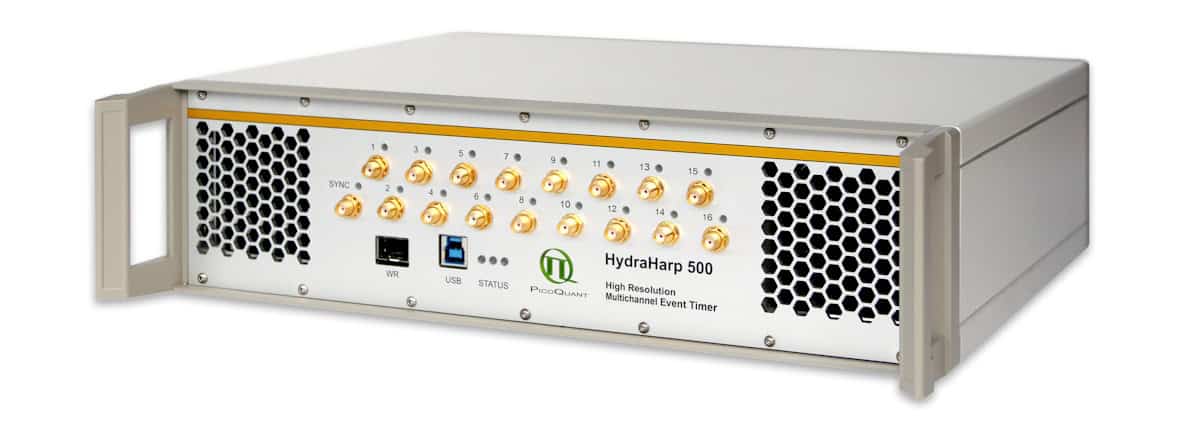
HydraHarp 500: a new era in time-correlated single-photon counting

Photonics West sees PicoQuant introduce its newest generation of event timer and time-correlated single-photon counting (TCSPC) unit – the HydraHarp 500. Setting a new standard in speed, precision and flexibility, the TCSPC unit is freely scalable with up to 16 independent channels and a common sync channel, which can also serve as an additional detection channel if no sync is required.

HydraHarp 500

At the core of the HydraHarp 500 is its outstanding timing precision and accuracy, enabling precise photon timing measurements at exceptionally high data rates, even in demanding applications.

In addition to the scalable channel configuration, the HydraHarp 500 offers flexible trigger options to support a wide range of detectors, from single-photon avalanche diodes to superconducting nanowire single-photon detectors. Seamless integration is ensured through versatile interfaces such as USB 3.0 or an external FPGA interface for data transfer, while White Rabbit synchronization allows precise cross-device coordination for distributed setups.

The HydraHarp 500 is engineered for high-throughput applications, making it ideal for rapid, large-volume data acquisition. It offers 16+1 fully independent channels for true simultaneous multi-channel data recording and efficient data transfer via USB or the dedicated FPGA interface. Additionally, the HydraHarp 500 boasts industry-leading, extremely low dead-time per channel and no dead-time across channels, ensuring comprehensive datasets for precise statistical analysis.

Step into the future of photonics and quantum research with the HydraHarp 500. Whether it’s achieving precise photon correlation measurements, ensuring reproducible results or integrating advanced setups, the HydraHarp 500 redefines what’s possible – offering
precision, flexibility and efficiency combined with reliability and seamless integration to
achieve breakthrough results.

For more information, visit www.picoquant.com or contact us at info@picoquant.com.

  • Meet PicoQuant at BiOS booth #8511 and Photonics West booth #3511.

SmarAct: shaping the future of precision

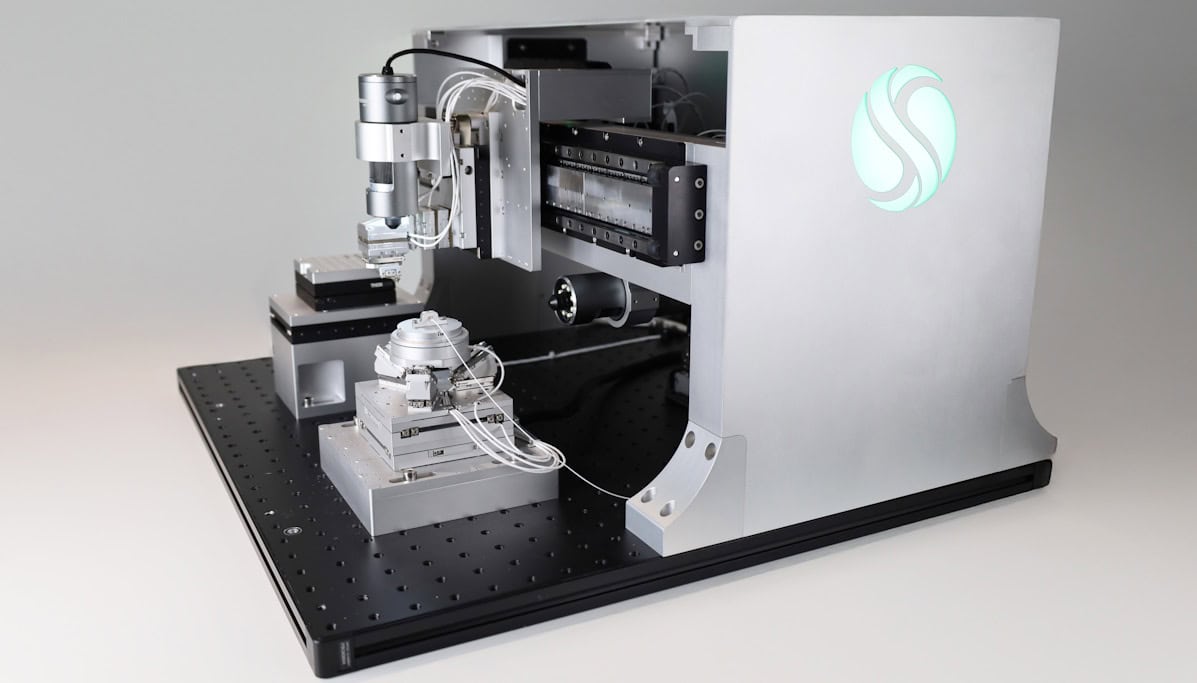
SmarAct is set to make waves at the upcoming SPIE Photonics West, the world’s leading exhibition for photonics, biomedical optics and laser technologies, and the parallel BiOS trade fair. SmarAct will showcase a portfolio of cutting-edge solutions designed to redefine precision and performance across a wide range of applications.

At Photonics West, SmarAct will unveil its latest innovations, as well as its well-established and appreciated iris diaphragms and optomechanical systems. All of the highlighted technologies exemplify SmarAct’s commitment to enabling superior control in optical setups, a critical requirement for research and industrial environments.

Attendees can also experience the unparalleled capabilities of electromagnetic positioners and SmarPod systems. With their hexapod-like design, these systems offer nanometre-scale precision and flexibility, making them indispensable tools for complex alignment tasks in photonics and beyond.

SmarAct’s advanced positioning systems

One major highlight is SmarAct’s debut of a 3D pick-and-place system designed for handling optical fibres. This state-of-the-art solution integrates precision and flexibility, offering a glimpse into the future of fibre alignment and assembly. Complementing this is a sophisticated gantry system for microassembly of optical components. Designed to handle large travel ranges with remarkable accuracy, this system meets the growing demand for precision in the assembly of intricate optical technologies. It combines the best of SmarAct’s drive technologies, such as fast (up to 1 m/s) and durable electromagnetic positioners and scanner stages based on piezo-driven mechanical flexures with maximum scanning speed and minimum scanning error.

Simultaneously, at the BiOS trade fair SmarAct will spotlight its new electromagnetic microscopy stage, a breakthrough specifically tailored for life sciences applications. This advanced stage delivers exceptional stability and adaptability, enabling researchers to push the boundaries of imaging and experimental precision. This innovation underscores SmarAct’s dedication to addressing the unique challenges faced by the biomedical and life sciences sectors, as well as bioprinting and tissue engineering companies.

Throughout the event, SmarAct’s experts will demonstrate these solutions in action, offering visitors an interactive and hands-on understanding of how these technologies can meet their specific needs. Visit SmarAct’s booths to engage with experts and discover how SmarAct solutions can empower your projects.

Whether you’re advancing research in semiconductors, developing next-generation photonic devices or pioneering breakthroughs in life sciences, SmarAct’s solutions are tailored to help you achieve your goals with unmatched precision and reliability.

Precision positioning systems enable diverse applications 

For 25 years Mad City Labs has provided precision instrumentation for research and industry – including nanopositioning systems, micropositioners, microscope stages and platforms, single-molecule microscopes, atomic-force microscopes (AFMs) and customized solutions.

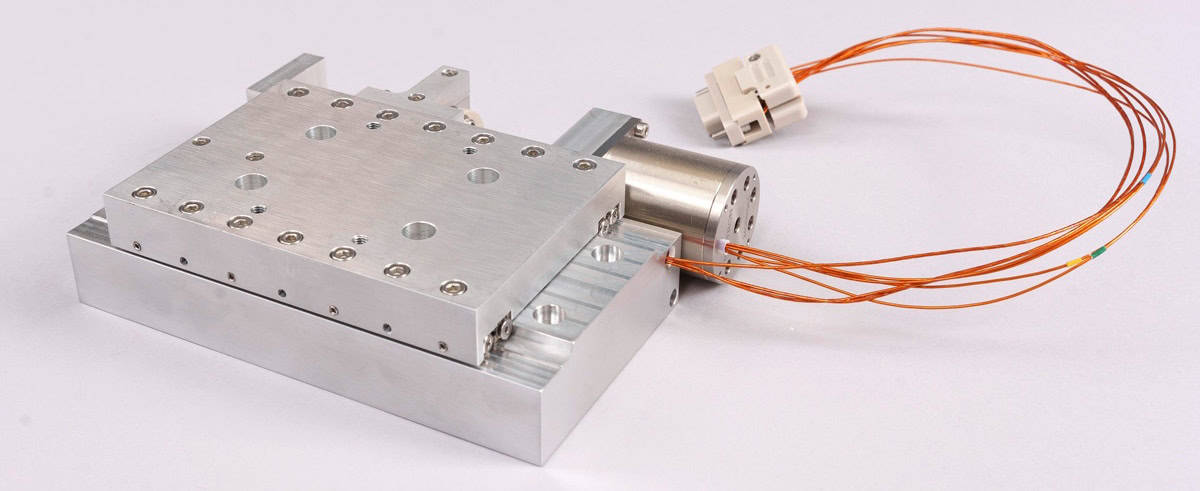
The company’s newest micropositioning system – the MMP-UHV50 – is a modular, linear micropositioner designed for ultrahigh-vacuum (UHV) environments. Constructed entirely from UHV-compatible materials and carefully designed to eliminate sources of virtual leaks, the MMP-UHV50 offers 50 mm travel range with 190 nm step size and a maximum vertical payload of 2 kg.

The MMP-UHV50 micropositioning system

Uniquely, the MMP-UHV50 incorporates a zero-power feature when not in motion, to minimize heating and drift. Safety features include limit switches and overheat protection – critical features when operating in vacuum environments. The system includes the Micro-Drive-UHV digital electronic controller, supplied with LabVIEW-based software and compatible with user-written software via the supplied DLL file (for example, Python, Matlab or C++).

Other products from Mad City Labs include piezo nanopositioners featuring the company’s proprietary PicoQ sensors, which provide ultralow noise and excellent stability to yield sub-nanometre resolution. These high-performance sensors enable motion control down to the single picometre level.

For scanning probe microscopy, Mad City Labs’s nanopositioning systems provide true decoupled motion with virtually undetectable out-of-plane movement, while their precision and stability yields high positioning performance and control. The company offers both an optical deflection AFM – the MadAFM, a multimodal sample scanning AFM in a compact, tabletop design and designed for simple installation – plus resonant probe AFM models.

The resonant probe products include the company’s AFM controllers, MadPLL and QS-PLL, which enable users to build their own flexibly configured AFMs using Mad City Labs’ micro- and nanopositioners.  All AFM instruments are ideal for material characterization, but the resonant probe AFMs are uniquely suitable for quantum sensing and nano-magnetometry applications.

Mad City Labs also offers standalone micropositioning products, including optical microscope stages, compact positioners for photonics and the Mad-Deck XYZ stage platform, all of which employ proprietary intelligent control to optimize stability and precision. They are also compatible with the high-resolution nanopositioning systems, enabling motion control across micro-to-picometre length scales.

Finally, for high-end microscopy applications, the RM21 single-molecule microscope, featuring the unique MicroMirror TIRF system, offers multi-colour total internal-reflection fluorescence microscopy with an excellent signal-to-noise ratio and efficient data collection, along with an array of options to support multiple single-molecule techniques.

Our product portfolio, coupled with our expertise in custom design and manufacturing, ensures that we are able to provide solutions for nanoscale motion for diverse applications such as astronomy, photonics, metrology and quantum sensing.

  • Learn more at BiOS booth #8525 and Photonics West booth #3525.


Copyright © 2026 by IOP Publishing Ltd and individual contributors