The transit of Venus – your pictures

By James Dacey

Earlier this week people all across the world were presented with an opportunity to witness one of the rarest predictable astronomical events, as our neighbouring planet Venus cut across the face of the Sun as viewed from the Earth. If you missed this chance to see Venus silhouetted against the solar surface then unfortunately it is almost certain that you will never see it live again – the next transit will not occur until December 2117.

Fortunately, though, there are many keen photographers around the world who realized the rarity of what they were seeing and managed to capture some stunning photographs. Here is a selection of the images submitted to the Physics World photo challenge group on Flickr.


Venus Transit 2012

This image was taken near Lake Lavon in northern Texas, in the US. It was submitted by Flickr member R Hensley who says the shot was captured directly through the lens without any kind of filter, so I hope his eyes are okay.


Venus Transit

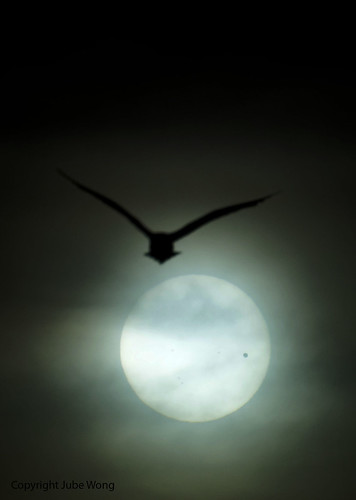
Patience and the ability to seize an opportunity when it arises are important traits for photographers to acquire. At least one of these traits is possessed by photographer Jube Wong who managed to capture this dramatic image of a seagull silhouetted against the backdrop of the transit of Venus.


_MG_4333, Transit of Venus

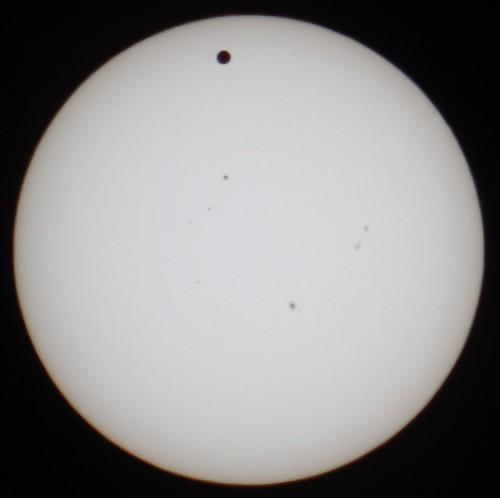
This image offers a more focused view of the transit itself and the level of detail is so crisp that you can also see some tiny sunspots where the solar surface is particularly volatile. It was taken in Kuwait by photographer Bron Gervais.


Transit of Venus

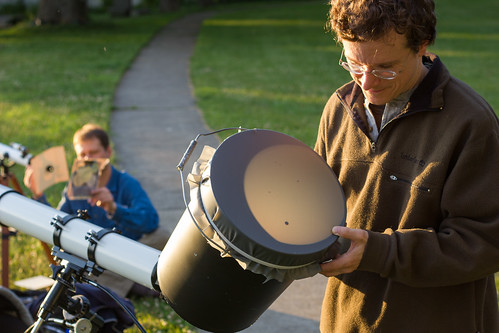
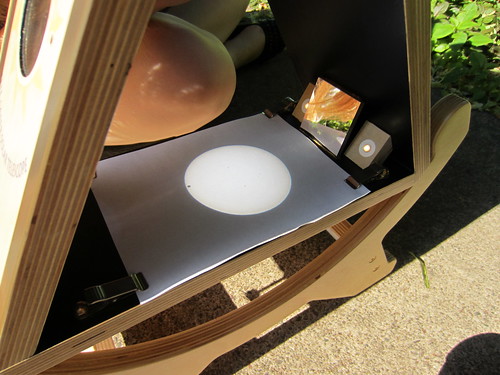
In addition to photos of the transit itself, we have seen a lot of great pictures of people experiencing the event and deploying a range of different strategies for observing the Sun without damaging their eyes. For instance, this image submitted by Judson Powers shows a man watching the transit on a home-made projector.


Then we have this image, taken by Bob McClure, in which we see three people watching the event in Arizona while wearing special glasses to filter out the harmful frequencies.


Start of the Transit of Venus

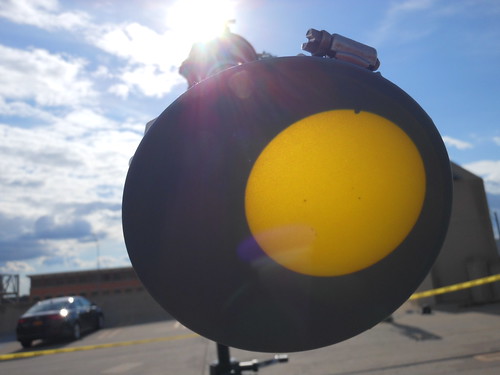
Many people around the world watched the event in special organized group viewings, such as this one at the Grand Rapids Public Museum in Michigan in the US. This image, submitted by Melter, shows the moment at which the transit began, as captured on a projector from the Michigan vantage point.


Transit of Venus

Peter Hoh submitted this image of another method for observing the transit by projecting it onto a piece of paper via a sunspotter.


Transit of Venus viewed in Wagga Wagga

Finally, we travel to Australia, one of the last places to witness the transit. This picture was taken by Flickr user Bidgee at Wagga Wagga in New South Wales.

Who is your favourite science-fiction author?

By James Dacey

hands smll.jpg
I must confess that throughout school and university I could never warm to science-fiction books. On the several occasions when I did attempt to read these stories, I found that I would quickly get bored, as I simply could not engage with the zany characters and situations that all seemed so cold and detached from my own everyday experiences. And in many cases I quickly became irritated by the tone of these authors, who to my mind seemed more intent on demonstrating how wickedly clever they were than actually bothering to craft a decent story. And then I discovered Ray Bradbury.

It was courtesy of my parents, who bought me The Illustrated Man as a Christmas present. My mum, a literature lover with no particular interest in science, told me that this was a great collection of short stories about people, which just happen to be set in distant places or futures. She was absolutely right and I was soon gripped by these imaginative tales with their familiar characters and surprisingly simple plots.

For instance, I loved “The Long Rain”, a story about some explorers who become stranded on Venus, a planet where it is never ceases to pelt down acidic rain. Their only hope of survival is to reach one of the man-made “Sun domes”, where they can take refuge before they are driven to insanity by the rain. In another story, “The Man”, a group of astronauts from Earth travels for years before landing on a distant planet. To the travellers surprise/disappointment they discover that this world has been paid a visit only the previous day by a Jesus-like character who has managed to enlighten the entire population. The story then becomes focused on the varying reactions of the astronauts to the situation.

In short, my experience of reading Bradbury transformed my view of science fiction. I now realize that it is a very broad genre that overlaps with other types of fiction that I knew I already enjoyed.

So with the sad news that Bradbury died this week, I thought it would be a nice idea to dedicate this week’s Facebook poll to science fiction, by asking you to select your favourite author from the genre. Now, despite my fairly recent change of heart, I’m still a very long way from being any sort of expert in the science-fiction field. So I asked a colleague here at Physics World with a passion for literature to draw up a list of some of the undoubted greats of the genre. This is what we have:

Isaac Asimov
Ray Bradbury
Arthur C Clarke
William Gibson
Robert A Heinlein
Stanislaw Lem
Larry Niven
Kim Stanley Robinson

Please vote for your favourite by visiting our Facebook page. And, of course, feel free to explain your choice or suggest an alternative author by posting a comment on the poll.

In last week’s Facebook poll we asked you to express your opinion on the recent announcement that the Square Kilometre Array (SKA) telescope will be constructed in both South Africa and Australasia. This “split-site” decision by the SKA committee came as a bit of a surprise, given that the past few years have seen South Africa and Australasia battling it out with independent bids to host the telescope.

The decision, however, is popular with the people who took part in our poll, as 93% of respondents selected the option “Yes, it is a good compromise”. Just 5% believe that SKA should be built exclusively in South Africa, and only 2% believe it should be built exclusively in Australia. Thank you for all your responses and we look forward to hearing from you again in this week’s poll.

Your guide to the nanotech world

By Matin Durrani

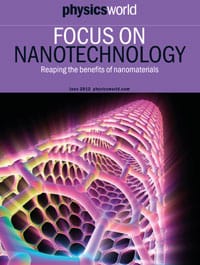
June 2012 cover
If you’re too busy to keep up to date with all the latest research findings in the ever-growing field of nanotechnology, then the latest Physics World focus issue is the place to get up to speed.

The focus issue, which can be read here, has been produced in association with our sister publication nanotechweb.org and examines some of the latest advances and applications in nanotechnology.

Published in addition to our monthly magazine, the focus issue includes our pick of the top 20 applications of graphene – the amazing carbon nanomaterial that led to the 2011 Nobel Prize for Physics.

There is advice for anyone thinking of founding a nanotech start-up, a look at the potential of using nanotubes to generate “thermopower waves” and a report on sculpting materials at the nanoscale.

It also includes a video filmed at the Manchester University lab of Andre Geim, where the Nobel-prize-winning graphene work was carried out, showing how this ultrathin 2D carbon material is made.

The message of the issue is clear: nanotechnology is swiftly moving beyond pure research and scientists are finally reaping the benefits of new nanomaterials.

As always, let me know your comments on any of the topics covered by e-mailing me at pwld@iop.org.

Click here to access the issue.

Quantum guidebooks

If you listened to the most recent Physics World books podcast, you will know that I have been collecting new tomes about quantum mechanics and the quantum world – and stacking them in a pile on my desk. The pile rises monthly, and is now more than two dozen high. But such popularizations of quantum mechanics are by no means new – they began in earnest way back in 1927, when Arthur Eddington delivered a series of popular lectures on “The nature of the physical world” just as the revolution that produced quantum mechanics was culminating with the formulation of the uncertainty principle.

Eddington’s lecture series, published in 1928, was followed by many others written by scientists attempting to explain the dramatic events and their meaning to the public. These authors, who included James Jeans and Bertrand Russell, were insightful people and excellent writers. Although they were writing at a time of fast-paced developments – and they occasionally made mistakes – even today I am often astounded by the clarity and inventiveness of their prose and images.

Quantum immigrants

Yet these books, evidently, did not slake our curiosity about the subject, which has only grown with time. Richard Feynman was being typically provocative when he quipped “nobody understands quantum mechanics”, but his comment underscores the famous difficulty and utterly counter-intuitive nature of the subject. Why, then, do people keep writing – and buying – books that try to help people understand it? A century on, we very much remain immigrants in quantumland – still behaving like newcomers seeking ways to make this quirky and mind-bending world familiar.

Guides to quantumland, as to anywhere, come in different genres depending on the nature and expectations of the audience. Is the guide aimed at tourists, who wish to visit and then depart, or for potential or existing settlers? Does the audience want to learn about the subject’s history, people, institutions or atmosphere – and in what detail? Let me take you on an opinionated tour of the books in my stack – a guide to the guides, if you will. What is clear is that they vary greatly in their coverage of history, mathematics and personalities, and in their originality and freshness.

Handbooks and anthologies

I’m fond of quick, no-frills handbooks. The best recent one is Lev Okun’s ABC of Physics: a Very Brief Guide (2012). Our current picture of the world, Okun writes, has a “solid quantum and relativistic foundation” that is easier to grasp in outline than many people think, and that should be made accessible even to those who will not become physicists. Okun aims his book at dedicated readers equipped with high-school mathematics. Barely more than 100 pages, it uses virtually no metaphors and consists of short, paragraph-long sections on key topics (“matrices”, “action”, “the Lamb shift” and the like) that will be helpful review material even for those in the field. It is like using Google Earth to zoom in on the complex metropolis that is quantum theory, providing a delightful and often surprising overview.

Another genre I like consists of anthologies of seminal articles – scientific versions of the Federalist Papers, the collection of 85 articles by the US’s Founding Fathers written in 1787 and 1788 that spelled out the logic of the US Constitution in an attempt to persuade New York State voters to accept it. One excellent anthology for quantumland is Sources of Quantum Mechanics (1968, reprinted 2007), edited by B L van der Waerden. The book includes 17 key papers from an early phase of quantum history, beginning with Einstein’s 1916 paper “Zur Quantentheorie der Strahlung“, which introduced a probability factor into the theory for the first time. Other key articles by Bohr, Heisenberg, Born, Jordan and Pauli follow, ending with Dirac’s seminal paper of January 1926, “Quantum mechanics and a preliminary investigation of the hydrogen atom”. Unfortunately, the book stops there, and does not include Schrödinger’s famous papers published later that year – although they can be found in Collected Papers on Wave Mechanics (1978).

The most disappointing book in my pile is Stephen Hawking’s The Dreams that Stuff is Made of: the Most Astounding Papers of Quantum Physics and How they Shook the Scientific World (2011). In his meagre three-page introduction, Hawking claims that the volume “employs original texts to trace the development of the revolutionary new concepts required to explain nature at and below the scale of atoms”. But some of its 33 entries are complete while others are extracts, and range from original documents with advanced mathematics to popularizations of questionable interest.

One terrible omission is the famous BKS (Bohr–Kramers–Slater) article of 1924 – a titanic, last-ditch effort of the “old” quantum theory to make sense of things that became one of the most influential “wrong” papers in the history science. (It is, though, in Van der Waerden’s collection.) Even worse, Hawking’s book devotes 137 pages to four of Schrödinger’s original papers on wave mechanics with all their difficult mathematics, while, bizarrely, only one page of his 1935 essay, “The present situation in quantum mechanics”, is reprinted – the two famous paragraphs outlining his over-the-top “cat” image.

That’s exasperating. To excerpt only that image from the essay is like a guide to Paris that includes only a drawing – and no other information – about the Eiffel Tower. In the essay’s far more interesting preceding parts, for instance, Schrödinger insightfully contrasts classical and quantum model-building. Hawking’s book is also sloppily assembled. Tomonaga’s name is misspelt in the table of contents and in the byline of the supposedly reprinted article.

Quantum biographies

I include biographies in my pile, for a founder’s life can provide a coherent narrative focus for telling a country’s story. Solid biographies already exist for almost all the quantum founders, but several excellent new ones have appeared. In The Strangest Man (2009), Graham Farmelo focuses on Dirac’s life, fleshing out the portrait Helge Kragh provided two decades ago in Dirac: a Scientific Biography. John Gribbin’s book Erwin Schrödinger and the Quantum Revolution (2012) highlights Schrödinger’s intellectual and social influences more than Walter J Moore’s 2003 book A Life of Erwin Schrödinger.

Lawrence Krauss’s scientifically oriented biography, Quantum Man: Richard Feynman’s Life in Science, which was named the Physics World Book of the Year 2011, complements James Gleick’s two-decades-old Genius: the Life and Science of Richard Feynman. My least favourite new biography is The Many Worlds of Hugh Everett III: Multiple Universes, Mutual Assured Destruction, and the Meltdown of a Nuclear Family (2010). Written by the investigative reporter Peter Byrne, it champions its biographical subject and his nutty idea (multiple universes), and is uncharitable to many other quantum founders and their ideas.

I tend not to like collective portraits, which tend to be sketchier the more people they include. In 2008 Manjit Kumar limited himself to two in Quantum: Einstein, Bohr, and the Great Debate About the Nature of Reality, which does a tolerable job of centre-staging the philosophical debate between these two strong personalities. Gino Segre’s Faust in Copenhagen: a Struggle for the Soul of Physics outlines the lives and contributions of seven physicists – Bohr, Delbrück, Dirac, Heisenberg, Meitner, Pauli and Ehrenfest – all but one of whom appeared at a gathering in Copenhagen in 1932. Sheilla Jones’s 2008 book The Quantum Ten: a Story of Passion, Tragedy, Ambition, and Science – the least satisfying group biography in my pile – profiles the lives of 10 leading physicists, all but one of whom were at the famous 1927 Solvay Conference.

Meeting it head-on

I’m fond of tour guides that confront the mysteries of the quantum world head-on, explaining the science without gimmicks or metaphors. The most ambitious is by the late John H Marburger – George W Bush’s former presidential science adviser – entitled Constructing Reality: Quantum Theory and Particle Physics (2011). Marburger, who once said that he thought about quantum mechanics almost every day of his adult life, had a deep and insightful appreciation for the quantum world, writing that “my overriding objective is to disclose the interconnectedness and internal logic” of quantum theories. “I have tried very hard to avoid saying what these theories are like, but rather to say what they are,” he says.

Brian Cox and Jeff Forshaw’s 2011 book The Quantum Universe: Everything That Can Happen Does Happen is easier to read but less satisfying, as the authors overextend themselves in trying to paint a sweeping panorama from the discovery of radioactivity and the atomic nucleus to the creation of the Standard Model and the idea of the Higgs boson.

The most serious history is by Guido Bacciagaluppi and Antony Valentini, Quantum Theory at the Crossroads: Reconsidering the 1927 Solvay Conference (2009), an exhaustive and detailed study of this key event in the development of quantum mechanics and the events leading up to it. Quantum Leaps by Jeremy Bernstein (2009) is a kind of travelogue; imagine the reminiscences of a seasoned observer whose tone is that of an imperious guide who is sure that anything he doesn’t show you isn’t worth seeing.

Gimmicks and twists

The most original approach of any book in my pile is taken in How to Teach Quantum Physics to Your Dog (2010), by Chad Orzel. Using man’s best and most patient friend as a foil allows the author to concoct creative explanations of difficult material without sounding patronizing. Louisa Gilder adopts another clever approach in The Age of Entanglement: When Quantum Physics Was Reborn (2008), highlighting the idea of entanglement through imagined conversations between key scientists. Anton Zeilinger, in Dance of the Photons: From Einstein to Quantum Teleportation (2010), addresses entanglement via the story of the fictional Dr Quantinger, who sets two students (Alice and Bob) to figure it out for themselves.

Jim Baggott, in The Quantum Story: a History in 40 Moments (2011), tells its tale through 40 “significant moments of truth or turning points in the theory’s development” – but breaking the story down this way doesn’t improve its digestibility much. Nor does 101 Quantum Questions: What You Need to Know About the World You Can’t See, by Kenneth Ford, which organizes explanations as responses to questions. The Amazing Story of Quantum Mechanics: a Math-Free Exploration of the Science that Made our World (2010), by James Kakalios, opts to leaven the diet with material from science-fiction magazines and comic books.

The critical point

With so many creative strategies to choose from, why do we still feel like quantum immigrants, a century on? One possible answer is that we cannot go native. We were evolutionarily adapted to the classical world as a species, we matured in it as individuals, and we are conceptually moored in it by how our minds process experience. This was Bohr’s Kantian approach. According to it, an unbridgeable difference separates the classical and quantum worlds, so we will always find the latter exotic and incomprehensible. The pleasure in learning about the quantum world is like that of a magic show, where we delight in, but accept, the mismatch between what we expect and what happens. The thrill will never wear off.

But there is another possibility: that the weirdness stems, not from the quantum world, but from us. Things are weird only in contrast with the familiar. If what we thought was familiar turned out to be a fantasy and to contain false assumptions – if our world is odder than we thought – the quantum world to which we contrast it would not seem so freakish. This suggests that our quest to learn about the quantum world might eventually have some sort of upside-down Wizard of Oz ending, in which we suddenly realize that what we thought was home was really only a dream, and our world was always a little Oz-like.

Then we’ll be natives.

Plasma road map navigates the field

It is by far the most common phase of matter in the visible universe by both mass and volume. Plasmas can be found in many places at many scales in nature, from bolts of lightning to the giant looping arcs of charged particles at the Sun’s surface. Scientists also generate plasmas artificially for technological applications such as plasma television screen and fluorescent lamps.

One researcher who has devoted his working life to the science of plasmas and their applications is Uwe Czarnetzki of the Ruhr-University Bochum in Germany. In this video interview with Physics World, Czarnetzki explains how plasmas are a key ingredient in many of the technologies that have helped to shape the modern world, including lighting and the production of computer chips.

Czarnetzki also describes his latest work in assembling a special collection of articles on plasma research for Journal of Physics D: Applied Physics, published by IOP Publishing (which also publishes Physics World). This collection is conceptualized as a road map to define the present state of the field and to help scientists, policymakers and funding agencies to guide its future direction.

In a second video, Czarnetzki showcases one of the wackier plasma applications: a plasma loudspeaker. Watch as he demonstrates his device playing a couple of well-known film soundtracks, as well as explaining how the device uses plasma to generate sound.

Yeast helps physicists forecast population collapse

Scientists believe that many complex systems – from financial markets to fish stocks – should produce warning signs just before they collapse. Well established in theory, this idea has now been demonstrated experimentally by a group of physicists in the US and the Netherlands, who have observed longer and more marked reactions to small external shocks in populations of yeast cells just before collapse. They say that their work may help to conserve fragile ecosystems.

The collapse of populations in nature has occurred numerous times in the past, such as the disappearance of cod stocks in Atlantic Canada in the 1990s. Populations can be vulnerable to sudden collapse when the rate at which individuals reproduce depends on the population density – with too high a density putting pressure on resources and too low a density making it hard to mate, hunt or fend off predators, for example. With a slight worsening of environmental conditions, such as an increase in fishing, the density drops below a critical value and numbers decline abruptly.

To gain a better understanding of this phenomenon, Jeff Gore of the Massachusetts Institute of Technology (MIT) and colleagues studied the common yeast Saccharomyces cerevisiae. To acquire energy, yeast cells break up sugar molecules in the surrounding medium, but they can only capture a small fraction of the resulting fragments. The addition of one or more neighbouring cells increases the concentration of sugar fragments available but also means that a greater fraction of these fragments is consumed. This boosts the per capita rate of energy consumption and with it the rate of reproduction. Beyond a certain cell density, however, there is less sugar to go round and the growth rate drops off.

Daily dilutions

The researchers began by charting the evolution of many samples of yeast cells, each with a different initial cell density, that were contained within a liquid medium containing 2% sugar. Each day they remove a certain fraction of the cells by diluting the samples. They found that populations starting below a critical density died out, while the rest survived and reached a common, stable density.

The researchers then repeated this exercise with a range of dilution factors, plotting the increase in critical density and the decrease in the upper fixed density as they increased the dilution. They found that at a certain dilution factor – the tipping point – the two densities coincided, which means that at higher levels of dilution a population is doomed to extinction no matter what its initial density. In terms of fish stocks, this would mean that too much fishing would inevitably destroy stocks no matter how plentiful they were initially.

Next, Gore and co-workers probed the resilience of their yeast populations – in other words, the yeast’s ability to avoid annihilation when below the tipping point but exposed to an external shock. In this case the shock was the addition of salt, which can damage and ultimately kill yeast cells. The researchers found that, as expected, samples even significantly below the tipping point can be wiped out. But they also found that for samples subject to lower dilutions, the size of the temporary drop in cell density and the time needed to recover back to the initial density both increased with increasing dilutions.

Early warning

Gore’s colleague Lei Dai, also at MIT, says that measurements of this density drop and recovery time – or surrogates of these – could warn of an impending tipping point. He points out that other scientists have observed similar variations in densities within real-life populations, but that they were not able to prove the existence of a tipping point within these populations. Foreseeing such tipping points in real-life systems, he says, would mean measuring fluctuations in the population density at suitable intervals over a sufficiently long time – perhaps once every few months for several decades in the case of fish stocks. Analysing the stockmarket, in contrast, might simply mean recording share prices every day over a period of several months.

Didier Sornette, a financial economist at ETH Zurich who trained as a physicist, says that, for him, “there is not much surprise” in the latest work, as it confirms what has already been “well understood theoretically”, although he adds that “it is always nice to find a new system in which theory applies”.

However, John Drake, a biologist at the University of Georgia, describes the research as “a brilliant experimental demonstration of a phenomenon that is expected to be widespread in nature”, adding that “ecology is greatly in need of experimental models that are simple enough to understand in detail while retaining the key features of natural systems”.

The research is reported in Science.

World set for the 2012 transit of Venus

Astronomers around the world are getting their telescopes ready for a very rare celestial event that will begin shortly after 2200 h Coordinated Universal Time (UTC) today. That is when the planet Venus will begin its passage across the face of the Sun as seen from Earth – an event that will not happen again until December 2117. Such “transits of Venus” always occur in pairs eight years apart – the last being in 2004 – with the gap between successive pairs alternating between 105.5 and 121.5 years.

It will take a little less than seven hours for Venus to cross the disk of the Sun, with the entire transit being visible at latitudes above the Arctic Circle as well as in much of the Pacific Ocean, Australia, and eastern and central Asia. People in many other parts of the world, meanwhile, will have the chance to observe at least some of the event. In Western Europe, the final hour or so of the transit will be visible after sunrise on 6 June, whereas observers in eastern North America will be treated to the first two or three hours of the celestial phenomenon before the Sun sets this evening.

Measuring the heavens

In addition to the novelty of rarity, transits of Venus have also played an important role in the development of astronomy. In particular, the transits of 1761 and 1769 famously allowed astronomers to estimate the absolute distance from the Earth to Venus, which could then be used to work out the distance to the Sun and hence to all other known planets in our solar system. “With this technique, the measurement [the astronomers] came up with was only 3% off the current measurement of the distance between the Earth and the Sun,” says astronomer Zoe Leinhardt of the University of Bristol in the UK, who explains the method in the above video.

Another notable feature of the 1761 transit, which took place on 26 May of that year, was that it led to the Russian polymath Mikhail Lomonosov controversially claiming to be the first person to observe the atmosphere of Venus. The atmosphere is visible when the planet first touches the Sun (“ingress”) and then when it finally leaves (“egress”), appearing as a glowing arc around the portion of the planet that does not cover the Sun. However, no-one else observing on the day of the 1761 transit noted such an arc, which has led some astronomers to claim that Lomonosov was merely seeing an artefact of the relatively primitive telescope he was using.

One astronomer who is convinced that Lomonosov did not see Venus’s atmosphere is Jay Pasachoff of Williams College in Massachusetts, US, who is a leading expert on the transit of Venus. Comparing Lomonosov’s reports with the observations taken from space during the 2004 transit that Pasachoff and Glenn Schneider studied, Pasachoff and William Sheehan have concluded that Lomonosov saw only artefacts. Writing in an article for Physics World, Pasachoff concludes that Lomonosov thought he had discovered Venus’s atmosphere simply because the Russian believed that all planets had atmospheres. “In the end, he had the right result, but without a proper train of measurement and reasoning,” says Pasachoff.

Black-drop effect

Pasachoff is one of many astronomers who will be studying the event today. “We want to get the most complete set of data possible, so that the astronomers of 2117 will think that their forebears way back in 2012 did a fine job even with their relatively primitive instruments,” says Pasachoff, who is observing the transit at the Mees Solar Observatory on Haleakala in Hawaii. Apart from focusing on the atmosphere of Venus, he and his colleagues are also studying the mysterious “black-drop effect” – a strange, dark band linking Venus’s silhouette with the sky outside the Sun that appears for about a minute starting just as Venus first enters the solar disc.

For many astronomers, the transit is also a unique opportunity to evaluate, in their own backyard, techniques that are used to study the atmospheres of exoplanets – planets that orbit stars other than the Sun. Astronomers have already made very preliminary studies of the atmospheres of several exoplanets that transit their own stars. As this takes place, some of the starlight passes through the atmosphere of the exoplanet, leading to light at specific wavelengths being absorbed by molecules in the atmosphere.

But although astronomers can get an idea of the chemical composition of the atmosphere by studying the absorption lines using a spectrograph, these exoplanet systems are so far away that the measurements are very difficult to make. Astronomers are therefore hoping that data from the 2012 transit of Venus will help them develop techniques for studying exoplanets. “By looking up close at transits in our solar system, we may be able to see subtle effects that can help exoplanet hunters when viewing distant suns,” says Pasachoff.

Safety first

Anyone wishing to observe the transit should, of course, remember not to look directly at the Sun. The phenomenon can best be seen using a pin-hole camera or through special glasses; NASA has produced a guide to safe viewing.

To find out when the transit will be visible where you live, Astronomers Without Borders have created an invaluable website.

And if you have any great photos of the transit, please add them to our photo challenge on Flickr, while if you have any stories about what you were doing during the 2012 transit, please comment below.

‘Schrödinger’s hat’ could spy on quantum particles

An international team of physicists has proposed a new device that could detect the presence of waves or particles while barely disturbing them. Called a “Schrödinger’s hat”, the device has not yet been built in the lab but the team believes that it could someday be used as a new type of sensor for quantum-information systems.

In the microscopic world of quantum mechanics, direct observation of the property of a particle – the position of an electron, for example – causes the collapse of the particle’s wavefunction. The result is that the particle that you set out to measure has been changed in a significant way.

In the early 1990s, physicists Avshalom Elitzur and Lev Vaidman at Tel Aviv University in Israel pointed out that it is not always necessary to observe particles directly to learn something of their nature. The researchers imagined a pile of bombs, each of which is designed to be triggered by the absorption of a single photon. Some of the bombs are duds; through these, photons pass unimpeded. One could check whether a bomb is working by firing a photon at it but, if the bomb were indeed to be working, it would be destroyed in the process. Would there be a way to weed out some of the working bombs without destroying them?

Interaction-free measurements

The answer is yes, say Elitzur and Vaidman. They considered an interferometer: a device through which a photon’s path is split into two arms, only to recombine at a set of detectors some distance away. To test a bomb, it would have to be placed in one arm of the interferometer. A dud bomb would have no effect on the photon, and the photon would pass through both arms, generating an interference pattern at the detectors. A working bomb, on the other hand, would force the photon to “choose” through which arm it passes. If it took the bomb’s arm, the bomb would, regrettably, be triggered. If the photon took the empty arm, it would reach the detectors unimpeded – but since the other arm was blocked, there would be no interference pattern. This lack of an interference pattern would reveal the existence of the working bomb without having triggered it.

In 1994 Anton Zeilinger of the University of Innsbruck, Austria, and colleagues demonstrated in a real experiment that such “interaction-free” measurements are indeed possible. Now, however, mathematician Gunther Uhlmann at the University of Washington in Seattle and colleagues may have come up with an easier way to perform such measurements – with a little help from the science of invisibility cloaks.

First demonstrated in 2006, invisibility cloaks can be understood through an analogy with Einstein’s general theory of relativity. This theory shows how very massive objects distort the underlying fabric of the universe, space–time. In the same way, certain man-made structures known as metamaterials distort an equivalent fabric, a virtual “optical space”. Metamaterials distort optical space through a spatially varying refractive index, the property that governs how light bends as it goes from one medium to another. By stretching out a hole in optical space, invisibility cloaks can shield a small object from light; the light rays pass around smoothly, as though the object were not there.

Unleashing a quasmon

In practice, however, not all the light passes around invisibility cloaks – often, a small amount will leak in. If the inside of the cloak had almost the same resonant frequency as that of the incoming light, say Uhlmann and colleagues, that wave’s energy would build up, forming a localized excitation. This excitation behaves much like a particle, which the group has dubbed a “quasmon”. This quasmon could then be released by making a slight alteration to the cloak’s resonant frequency, perhaps through the application of a weak magnetic field.

Matti Lassas, a member of Uhlmann’s group based at the University of Helsinki, explains that the team calls the modified invisibility cloak a Schrödinger’s hat because tiny “parts” of waves or wavefunctions can be secretly stored, rather like a magician’s hat, and detected. And the trick is that the rest of the wave would be scarcely changed. Outside the Schrödinger’s hat, says Lassas, the wavefunction would be “the old wavefunction multiplied by a constant, [which] may be very small”.

The potential of a Schrödinger’s hat can be seen in the example of an electron in a box. Although the electron’s wavefunction is spread throughout the box, a scientist may be able to guess the location of areas where it drops to zero. That scientist could then position a Schrödinger’s hat at such a location, with no fear of the electron “noticing” the sensor’s presence and collapsing into a definite state. If the experiment were to be repeated several times, the scientist might be able to map out where the electron definitely is not – and in doing so, learn something about where it actually is.

Useful, but difficult to make

Igor Smolyaninov at the University of Maryland, College Park, US, describes such a measurement as “an interesting proposal”. Smolyaninov – who was not involved in the research – says that “Measuring the quantum wavefunction without much perturbation would find important applications in many fields of basic science and, in particular, quantum computing.” He adds, however, that a Schrödinger hat will be difficult to make, since it will need properties that vary wildly in a very narrow region.

Ulf Leonhardt, a member of Uhlmann’s group based at the University of St Andrews in the UK, says that a device that works for microwaves could be made using circuit-board materials. A device for plasmons – waves of electrons in metals – could be made from metal and plastic rings. He thinks a Schrödinger hat could even be developed for sound – allowing its users to eavesdrop on sound without disturbing it.

The work will be described in an forthcoming paper in the Proceedings of the National Academy of Sciences.

Between the lines

Venus’s moment in the Sun

Transits of Venus are like buses: you wait ages for one, then two come along one after the other. Curiously, the same pattern seems to apply to books about the topic, two of which have just been published in the run-up to this year’s transit on 5–6 June (see “Venus: it’s now or never”). Both Mark Anderson’s The Day the World Discovered the Sun and Andrea Wulf’s Chasing Venus focus on the transits that occurred in 1761 and 1769, which were important for two reasons. First, in 1716 Edmond Halley had noted that astronomers could use a transit of Venus to calculate the then-unknown distance between the Earth and the Sun, via the relatively simple expedient of measuring how long the transit lasted when viewed from different places on Earth. Second, by the 1760s, transport networks and telescopes were advanced enough for European scientists to travel to far-flung locations and make decent observations once they got there. As Anderson and Wulf make clear, however, these expeditions were often very near-run things. Many observations were ruined by poor weather or instrumentation, and some of the more intrepid travellers faced astonishing risks during their journeys. Thanks to some excellent source material, both books are packed with suspense and tales of astronomical derring-do. In Wulf’s account, the unlucky French astronomer Le Gentil (who managed to miss both transits, then got stranded on an island on his way home) takes centre stage; Anderson, for his part, is particularly keen on Le Gentil’s fellow-countryman Chappe, whose expedition to a fever-ridden corner of Spanish Mexico proved both successful and fatal. On balance, though, Chasing Venus is the better of the pair, as Wulf leads the reader smoothly through a complex, multi-expedition narrative with a minimum of confusion and a maximum of style.

  • 2012 Da Capo Press £17.99/$26.00hb 288pp
  • 2012 William Heinemann/Knopf £18.99/$26.95hb 336pp

Getting inked for science

For biophysicist Tristan Ursell, it had to be Euler’s identity, e+ 1 = 0. Climate scientist Andrea Grant preferred Fourier transforms. Nuclear engineer Steven Bigelow went with a radiation trefoil, while Anastasia Gonchar, a chemical physicist, opted for pi orbitals. Welcome to the world of Science Ink, a fascinating and often beautiful collection of science-oriented body art compiled by the US science writer Carl Zimmer. Here, in glorious technicolour, is abundant proof that some people are willing to put up with a lot of pain – not to mention curious stares at the beach or gym – to advertise their devotion to science. Some of the tattoos shown in the book are simple and discreet, like the seismogram of the 1906 San Francisco earthquake that adorns the ankle of Julian Lozos, a PhD student in fault dynamics. Others are anything but: one anonymous molecular biologist, for example, chose to have a multicoloured montage of the golden ratio, carbon, glucose, Planck’s constant and the tree of life etched across his chest. At first glance, the book seems like just a bit of fun, but Zimmer’s thoughtfully written text does offer a few interesting messages. One is that the link between a scientific tattoo and a person’s own research is not always straightforward. It is relatively easy to see why an aerospace engineer would want satellites on his arms, but harder to understand why the nitrogen cycle meant so much to a political organizer that he had it drawn across his back. Another intriguing point is that while some people in Zimmer’s book regard their tattoos as a conversation-starter and a tool for scientific communication, others seem motivated by something altogether more primal. In many cultures, Zimmer observes, tattooing is an initiation ritual that symbolizes membership in a tribe. Can it really be a coincidence that so many of the scientists in his book got tattooed to celebrate the end of their PhDs? Zimmer clearly thinks not, but for the sake of the squeamish among us, let’s hope it never becomes a standard part of the viva.

  • 2011 Sterling £16.99/$24.95hb 288pp

World-changing maths

For the people who feature in Science Ink, Pythagoras’s theorem, the Schrodinger equation and the square root of minus one are probably all prime candidates for a new scientific tattoo. For University of Warwick mathematician and science writer Ian Stewart, however, they have something else in common: all three of them feature in his latest book, 17 Equations That Changed the World. Strictly speaking, of course, the square root of minus one is not an equation, and if you are the sort of person who objects to that, you should probably avoid this book (several other “equations” are similarly dubious – logarithms, for example, are represented by the expression log xy = log x + log y). Fortunately, the world-changing part of the title is true enough. It would be hard to overestimate the impact of, say, Maxwell’s equations on modern civilization, and although some others among the 17 are less well known (Euler’s formula for polyhedra is a prime example), Stewart’s lively essays on their origins, development and applications make a good case for their inclusion.

  • 2012 Profile Books £15.99pb 352pp

The June 2012 issue of Physics World is out now

By Matin Durrani

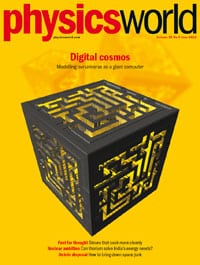
June 2012 cover
For any publication, it is never wise to spend too much time talking about itself. In the case of Physics World, our main aim is to reflect and report on the breakthroughs, events, personalities and issues in the global physics community – and to do so in a timely, accessible, accurate and entertaining way. Still, it seems churlish for me not to highlight the fact that Physics World has been named “best magazine” in the “professional association or royal college” category by MemCom – a UK-based organization that supports membership societies, charities and not-for-profit bodies.

As for the new issue, which is just out, my pick this month is the wonderfully written feature by Pablo Arrighi and Jonathan Grattage on the idea that our universe can be modelled as a giant computer. Their article is mind-boggling and certainly raises as many questions as it answers. You can read the article here but to enjoy the article and images in all their glory, remember that members of the Institute of Physics (IOP) can access the entire new issue online free of charge through the digital version of the magazine by following this link or by downloading the Physics World app onto your iPhone or iPad or Android device, available from the App Store and Google Play, respectively.

Here’s a rundown of other highlights of the issue.

India sticks to the thorium trail – A three-stage plan that will see India generate nuclear power from its vast reserves of thorium is gaining ground, but huge challenges remain ahead, as Matthew Chalmers reports.

The only woman in town – As the only female physics faculty member based at the University of Tokyo, Mio Murao talks to Michael Banks about the challenges Japan faces in getting more women into the subject.

Quantum guidebooks – Fresh from his appearance in the latest Physics World podcast, which examined the enduring popularity of books about quantum mechanics, Robert P Crease surveys the many tour guides to the quantum world.

Fixing the climate – While nations attempt to limit global warming by reducing carbon emissions, Colin Baglin argues that such actions will fail to solve the problem if geoengineering is not used in the short term.

Bringing down the trash – The density of junk orbiting the Earth is at or near a critical value beyond which this man-made debris will self-perpetuate, forming many smaller pieces that are even more of a problem. Stephen Ornes reports on the latest ideas about how to bring down the trash.

Now we’re cooking – From the very first oven to the foamed foods of modernist cuisine, physics has played a dominant role in food throughout history. But now the subject has the potential to solve a major global cooking issue, says Sidney Perkowitz.

Changing the Hamiltonian – Trained to understand particles rather than people, physicists who become managers often struggle with human-resources challenges such as motivating and developing employees. Properly applied, however, a knowledge of physics can be a management boon, not a burden, as Graham Boyd demonstrates.

Twin-tub theoryKevin McGuigan recalls his near-horror with his mam’s washing machine.

If you’re not yet a member, you can join the IOP as an IOPimember for just £15, €20 or $25 a year via this link. Being an IOPimember gives you a full year’s access to Physics World both online and through the apps.

Copyright © 2026 by IOP Publishing Ltd and individual contributors