Bacteria ‘wires’ conduct electrons over centimetre distances

A newly discovered bacterium living on the bottom of the sea transports electrons over centimetre distances so it can feed on hydrogen sulphide in low-oxygen environments. That is the claim of scientists in Denmark and the US, who have shown that thousands of the micro-organisms form a filament with one end embedded in ocean sediments and the other end poking out into seawater. Understanding just how this organism moves electrons could lead to alternative technologies for generating energy.

Biologists have known for some time that the Desulfobulbaceae family of bacteria power themselves by consuming sulphur compounds in ocean sediments. However, this produces hydrogen sulphide, which is toxic at high concentrations. While these bacteria can consume hydrogen sulphide, this must be done in the presence of oxygen in a reaction that involves the transfer of an electron.

Ocean sediments normally have very low oxygen levels and studies have shown that when Desulfobulbaceae are present, sulphide levels increase steadily. But then something unexpected happens – sulphide levels drop quickly as if the sediments have experienced a rapid influx of oxygen. The problem is that the drop is so fast that it cannot be explained by the diffusion of oxygen molecules from the seawater above. Instead, scientists had thought that the many different species of Desulfobulbaceae bacteria in the sediment were somehow working together to move electrons from oxygen-poor regions up to the seawater, where oxygen is plentiful.

Lone bacterium

Now a team that includes the physicist Mohamed El-Naggar and colleagues at the University of Southern California and Aarhus University have taken a closer look at the bacteria in the sediments and have made a startling discovery – the electron transport appears to be done by just one type of bacterium, which creates centimetre-long filaments that are made up of thousands of micro-organisms joined together end-to-end.

What is more, tests on the tiny filaments suggest that the electrons are conducted along special string-like structures within the bacteria.

The electrical properties of the filaments were first studied by doing “source–drain” measurements. The filamentous bacteria were deposited on an insulating surface of silicon oxide that also contained gold electrodes. The team focused on those filaments that happened to bridge two electrodes, which allowed them to apply a voltage along the filament and measure the electron current. But when voltages as high as 10 V were applied along the filaments, no measureable current was found. This led the team to conclude that the bacteria were not acting like bare conducting wires, but rather that the conduction process takes place inside an insulating sheath – much like an electrical cable.

Very high capacitance

To try to work out which internal parts of the bacteria are involved in electron transport, El-Naggar and colleagues used a technique called electrostatic force microscopy (EFM). This involves placing an extremely small electrode very near to the surface of a bacterium and measuring how the capacitance changes as the electrode is oscillated up and down. By scanning the tip over the surface, the team found that string-like structures just under the bacterium’s outer membrane have a very high capacity for storing charge. “This is very suggestive for their role in carrying charge, and will be the focus of future studies, El-Naggar told physicsworld.com.

The process by which the conduction occurs is still a mystery: “There are two points of view on the subject that stem from two completely different physical limits”. One school of thought is that conduction is similar to “band conduction” seen in metals and semiconductors – however, El-Naggar points out that the observed electron mobility is too low to support this idea. Instead, he favours a hopping model whereby charge jumps along the bacterium from one position to the next. “This is an incoherent process that takes place in multiple steps, somewhat like a bucket brigade.”

Beyond shining a light on ecosystems at the bottom of the sea, El-Naggar believes that gaining a better understanding of how this conduction occurs could lead to practical applications. “I think it is likely that long-range bacterial electron transfer will open the door to new environmental clean up and renewable energy technologies, by coupling these living processes to non-living electrodes,” he says.

The study is described in Nature.

Do you think physics employers have a subconscious bias towards male job applicants?

Facebook poll

By James Dacey

A nifty psychological study reported this week on physicsworld.com has found that a set of researchers assessing the employability of early-career scientists subconsciously favoured male students over females. The bias – if it indeed reflects reality – is thought to be a contributing factor towards the underrepresentation of women in physics.

The study, which you can read about here, involved the sending of a fake job application for a graduate-level lab-technician post to tenured scientists in the US. The professional scientists were asked to give feedback on the employability of the applicants, unaware that they were fictional. All applications were identical except for the fact that some were written by the fictional applicant “John” and the others by “Jennifer”.

From the scientists’ feedback John was deemed to be more competent and hireable than the identical female applicant, but the hirers would also have given the male student a higher starting salary. This bias was seen to exist in both male and female physicists and was exhibited by chemists and biologists.

In this week’s Facebook poll we want to know whether you think this bias does indeed exist in the real world.

Do you think physics employers have a subconscious bias towards male job applicants?
Yes
No

Take part by visiting our Facebook page and please feel free to post a comment to explain your response.

In last week’s poll we asked you about the trial of the seven scientists in Italy who were being charged with falsely reassuring the public ahead of the 2009 L’Aquila earthquake that left 308 people dead. We asked whether you think the L’Aquila trial will discourage scientists from being involved in public safety decisions. Since asking this question last Thursday all seven scientists have been sentenced to six years in prison for manslaughter – two years longer than even the prosecutors had demanded.

The sentencing on Monday has sent shockwaves through the science community, if you will excuse the pun. Bloggers and tweeters have been speaking out in furious condemnation of the Italian authorities for setting what they believe is an incredibly dangerous precedent of imprisoning scientists for “getting it wrong”. Earlier today the Royal Society and the US National Academy of Sciences issued a statement in support of the Italian geophysicists. “If it becomes a precedent in law, it could lead to a situation in which scientists will be afraid to give expert opinion for fear of prosecution or reprisal,” it states.

It seems that our Facebook followers also agree with this sentiment as 97% of responses were that “yes” the L’Aquila trial will discourage scientists involved in public risk tasks.

Thank you for your responses and we hope to hear from you again in this week’s poll.

Physicists entangle 100,000 photons

Pulses of light comprising around 100,000 entangled photons have been created by physicists in Germany and Russia. The pulses were made in the “squeezed-vacuum” state and the team found that the entanglement should become stronger as the number of photons in the pulse increases. Such pulses could find use in technologies such as quantum cryptography or metrology.

Entanglement is a quantum effect that allows particles such as photons to have a much closer relationship than predicted by classical physics. For instance, two photons can be created experimentally, such that if one is measured to be polarized in the vertical direction, a measurement on the other will reveal the same polarization. This occurs in spite of the fact that a measurement on a single photon will reveal a random value of polarization. While such a correlation can occur in the non-quantum world, quantum mechanics strengthens it to beyond what is expected from classical physics. This misfit between the quantum and classical worlds was described succinctly by the Northern Irish physicist John Bell in 1964 and was confirmed by a series of experiments done in the 1970s and 1980s.

Now Maria Chekhova and colleges at the Max Planck Institute for the Science of Light and Moscow State University have created quantum states containing as many as 100,000 photons, which are all entangled with each other.

Nonlinear crystals

The team’s experiment begins by firing a laser pulse at a polarizing beam splitter, which creates two pulses with different polarizations. These are fired at two nonlinear crystals and “pump” the crystals. Thanks to the nonlinear nature of the crystals, a photon in a pump pulse can decay into a pair of entangled photons with the same polarization – but with different energies (A and B). One photon is infrared and the other is in the visible range of the electromagnetic spectrum.

The initial decay in the crystal will occur spontaneously and as the first photon pair travels through the crystal it will stimulate the emission of other photon pairs. The ensuing cascade will produce a pulse of photons that are all entangled in what is called a “squeezed-vacuum” state. The pulse is squeezed because the numbers of photons in pulses A and B are more precisely correlated than in two typical laser pulses of equal energy. The vacuum part of the definition comes from the fact that the pulse began spontaneously with zero photons – the vacuum state.

Pulses of entangled photons from each crystal are then recombined in a second polarizing beam splitter to create a single pulse that is unpolarized. This pulse is manipulated using a “dichroic plate”, which rotates the polarization of photons of one energy – say A – by 90 degrees with respect to the polarization of photons with energy B. The result is an entangled pulse that is a “macroscopic singlet Bell state” – if the polarization of the A photon is measured as vertical, the polarization of the B photon will be horizontal and vice versa. This property of polarization correlation is valid for any choice of polarization states: if photon A is right circularly polarized, for example, photon B is left circularly polarized and so on.

Measuring entanglement

The next challenge for the team is how to show that the photons are indeed entangled. This is done by passing the pulse through a final polarizing beam splitter, which sends photons with horizontal polarization towards one detector and photons with vertical polarization towards a second detector.

The total number of photons in each pulse is counted by the detectors and the degree to which a pulse is entangled can be determined by determining the correlations between signals in the two detectors. The team was not able to test the entanglement using Bell’s inequality because the standard Bell’s inequality is only valid for photon pairs and is not applicable in this case. The derivation of a macroscopic Bell’s inequality still remains a challenge. However, the team was able to establish entanglement using the “separability condition” that applies to such systems. The analysis revealed that the pulses had a greater degree of correlation than allowed by classical physics and were therefore entangled.

More photons, more entanglement

The researchers also calculated a parameter of the pulse called the “Schmidt number”, which is a measure of the degree of entanglement within the pulses. They found that the number scales as the average number of photons in the pulse. According to the team, this means that brighter pulses are more entangled than their weaker counterparts.

Xiao-Qi Zhou of the UK’s University of Bristol described the set-up as “a very clever method to detect entanglement in such large photonic state”. He adds, “People knew that a big [squeezed-vacuum] state is entangled but didn’t know how to prove it experimentally.”

Zhou believes that the most promising application of the entangled pulse is “practical quantum metrology”. Examples include phase microscopy and optical gyroscopes.

Chekhova says that the pulses could also be used for quantum key distribution (QKD), which uses entanglement to allow two parties to exchange coded information in secret. “Quantum information can be encoded into the photon number, and then beams A and B would be distributed to the two users,” she explains. “This protocol would be similar to the well known Ekert [QKD] protocol, based on photon pairs, but here the alphabet will be larger,” she adds.

The research is reported in Physical Review Letters.

The science of Prometheus

For roughly the last half century, chemistry has perhaps been the most disparaged of the sciences. Among members of the public, the very word “chemical” has come to have opprobrious connotations, and some physicists (and even chemists) have argued that chemistry is reducible to physics, and thus not truly an independent science. But there is also a more subtle problem. In contrast to biology, which tells us about our organic origins and our nature, or physics, which traces and predicts our cosmic origins and destiny, chemistry has appeared to be the science with the least to say about the human condition, and therefore about the humanities and the arts.

Roald Hoffmann is trying to change that perception. One of the world’s most distinguished living chemists, Hoffman received a share of the 1981 Nobel Prize for Chemistry for his work on the structure of chemical reactions, but he also has an exhaustingly wide range of interests within the sciences and in virtually every area of cultural activity. In the essays in Roald Hoffman: On the Philosophy, Art, and Science of Chemistry he has used this enormous breadth of interest and knowledge to demonstrate connections and resonances between chemistry and extra-scientific domains, notably the humanities and arts. The result is a vibrant, stimulating and thought-provoking volume. In addition to its general appeal, Hoffmann’s reflections on the similarities and differences between the thought and practices of chemists and physicists should be of special interest to readers of Physics World.

The book comprises a set of 28 essays by Hoffmann and some collaborators (notably the chemist Pierre Laszlo), with publication dates ranging from 1988 almost to the present. Some of the essays are unpublished lectures, but most appeared in professional chemistry journals or in science-focused journals such as American Scientist and Scientific American, while a few were published in art journals – including one in an anthology on crafts that described, among other things, the similarities between craft and laboratory chemical practice. Editors Jeffrey Kovac and Michael Weisberg have organized these essays into five categories: chemical reasoning and explanation; writing and communication in chemistry; art and science; chemical education; and ethics in science. Although most of the essays are relatively short, this is not a book to be read quickly from cover to cover. Rather, each essay requires close reading and is then to be savoured and considered.

Is there an overarching theme or set of themes in these essays? I shall hazard an affirmative answer and quote from the book’s first essay, “What might philosophy of science look like if chemists built it?”:

“Chemistry always was the art, craft and business of substances and their transformation…With time, we’ve learned to look inside the innards of the beast, and reasoned out that in the macroscopic matter, static and undergoing transformation, there are atoms, and, much more interesting, persistent groupings of atoms which are molecules. So chemistry is also the art, craft, business and science of molecules and their transformations.” (p27)

What interests me as a historian of science about this passage is the way it describes the multiple and proliferating natures of chemistry. The discipline has always been about manipulating macroscopic material transformations to make things, but in more recent centuries, chemistry has also become “the science of molecules”. Its lifeblood nowadays is the representation and transformation of atomic arrangements in molecules, utilizing complex theory and sophisticated laboratory techniques – all while continuing to make things by means of molecular synthesis.

This quotation also implies that chemistry is a human activity, one that is deeply involved in and influenced by other human activities. Like the arts, Hoffmann argues, it is a highly creative pursuit; theoretical insights and laboratory discoveries are not readily captured by standard philosophical methodologies such as inductivism, Popperianism or covering-law models. It is also like the visual arts in its focus on molecular graphic representation.

Prometheus represents the element of design, the process of fruitfully taking advantage of chance creation

Many of these themes appear in each essay, and I shall use one of them as an exemplar. The point of departure in “How should chemists think?” is the central image of Plato and Aristotle in The School of Athens, a fresco by the Renaissance painter Raphael. Hoffmann uses this dichotomous image of the concrete (Aristotle) versus the ideal (Plato) to segue into a long meditation on chemical molecular synthesis. Such synthesis, he argues, is “a patently creative act” (p130), often involving complex syntheses of “natural” versus “unnatural” (human-created) molecules. Hoffman then describes some examples of modern chemical molecular synthesis, such as a complex antibiotic fabricated by chemists at Merck and an extraordinary assembly of ferric (iron) ions in a nearly circular ring held together by organic radicals. The structure of this “ferric wheel” was revealed by X-ray diffraction analysis in the 1990s and, unlike the antibiotic, it has, as yet, no known uses. Nevertheless, its beautiful form elicits a strong aesthetic response from Hoffmann; for him, he writes, “this molecule provides a spiritual high akin to hearing a Haydn piano trio I like”. A few pages earlier, Hoffmann had compared the laboratory fabrication of complex molecules to architecture, noting that “chemical synthesis is a local defeat of entropy, just as our buildings and cities are” (pp132–133).

Much else goes on in this short chapter, but I shall move to Hoffmann’s concluding meditation on the Greek myth of Prometheus. While Hoffmann does not neglect the unnatural (and dangerous) hubris associated with this bringer of fire from the gods, he argues that the Promethean figure is also a symbol of creativity. “Were chemical synthesis in search of a single icon,” he writes, “the outstretched hand of Prometheus bringing fire to humanity would serve well.” Noting that the name Prometheus means “forethought”, he adds that the figure “represents the element of design, the process of fruitfully taking advantage of chance creation…The hand of Prometheus is the symbol of creation – the hand of God reaching to Adam in Michelangelo’s fresco, the hands in contentious debate in Dürer’s Christ Among the Doctors, the infinite variety of hands that Rodin sculpted”. Hands, he concludes, can “bless, caress and hide, but most of all, they shape” (p140).

Another essay, on “Molecular beauty”, is likewise worthy of more extended discussion than this limited space allows. It originally appeared in the Journal of Aesthetics and Art Criticism, and its noteworthy features include the clear exposition of the chemistry of molecules that Hoffman regards as “beautiful” in structure. He elucidates what he means by “beautiful” in a very personal, yet sophisticated meditation. The book’s essays on chemical education and scientific ethics also contain much of great value and interest. In the former, Hoffman is insightful and eloquent on the importance to academic research chemists of teaching undergraduates; in the latter, his thoughts on the social responsibility of scientists and the need for “green” chemistry deserve a wider audience.

We live in a world where science – especially chemistry, if taken in its broadest definition to include molecular biology and perhaps solid-state physics – plays an enormous and ever-increasing role. It is also a world in which the humanities and the arts have been thrown on the defensive and forced to justify continued support. In such a world, it is imperative that the writings of people such as Hoffmann – who are capable of stimulating fruitful dialogues between the sciences and extra-scientific cultural domains – be read, contemplated and discussed. It is therefore a pity that almost none of these essays appeared in periodicals that naturally attract an educated non-scientific readership. The only exception was an essay that appeared in an art history journal, and even this has a very specialized and limited audience. I hope that the title of this book will intrigue scientists from all branches of the sciences and non-scientists from all domains of cultural activity, and thus secure and engage a wide-ranging readership.

Physicists show bias against female job applicants

A US study has found that researchers assessing the employability of early-career scientists subconsciously favour male students over females. The bias, which was seen to exist in both male and female physicists and was also exhibited by chemists and biologists, is thought to be a contributing factor towards the underrepresentation of women in physics.

Undertaken by psychologist Corinne Moss-Racusin and colleagues from Yale University, the study involved 127 tenured scientists across six universities in the US being asked to provide feedback on an excerpt from a job application for a graduate-level lab-technician post at another institution. The excerpt – developed by an academic panel – was designed to be as realistic as possible and was identical, except that 64 of the scientists were told the applicant’s name was Jennifer, while the other 63 were told the applicant’s name was John. The scientists were told that their feedback would help the applicant’s career development, unaware that both the candidate and the post were fictitious. The candidate was painted as promising but not exceptional.

The study found not only that the scientists rated the male applicant as significantly more competent and hireable than the (identical) female applicant, but also that the hirers would have given the male student a higher starting salary. “Male and female science-faculty members, including physicists, said they were more likely to hire the male student,” says Moss-Racusin. “They also offered to pay him about $4000 more per year on average and were more likely to offer him career mentoring, relative to the identical female student.”

Innate nature

The bias shown by the potential hirers was independent of their gender, age and seniority, indicating that even women show a subconscious bias against other women. The innate nature of the bias is thought to be evidence of the influence of a society-wide stereotype that men make more competent scientists, influencing even “very well meaning, very well trained scientists who emphasize objectivity and egalitarianism in their daily lives”, according to Moss-Racusin.

Amy Graves, a physicist from Swarthmore College, near Philadelphia, who specializes in gender studies in science, says she is “saddened, but not surprised” by the findings. “This study is so well done, because they created a résumé that was good, but not amazing,” says Graves. “If [the candidate] were an absolute standout, prior studies suggest that [the authors of the study] might not have seen this evidence of a genuine, unconscious bias.”

Mentoring needed

According to Moss-Racusin, having structured and transparent mentoring is one solution to the problem. She recommends guidelines to help standardize support across all students and the use of secondary mentors. “One of the biggest predictors of success and retention within academia, especially for women and racial-minority students, is identifying with a role model or a good mentor.”

Meanwhile, a pilot mentoring programme – Women in Technology Sharing Online – was launched last month by the Piazza online education platform and by Harvey Mudd College in Claremont, California. By introducing female students to mentoring, the sponsors hope to increase the retention of women in science.

The results are published in the Proceedings of the National Academy of Science.

Mini-mission will search for super-Earths

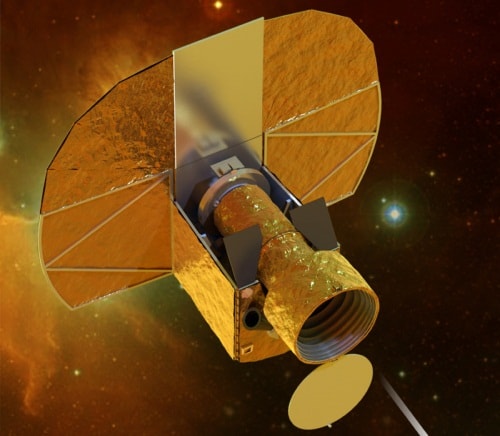
The ESA Cheops mission


Cheap as Cheops: the exoplanet hunter is the ESA’s first “quick-turnaround mission”. (Courtesy: ESA)

By Hamish Johnston

In 2017 the European Space Agency (ESA) will launch a space mission called Cheops, which will take a closer look at nearby bright stars that are already known to have exoplanets orbiting around them.

The mission will measure the brightness of the stars, looking for tiny dips associated with a transit – when an exoplanet passes in front of its star, blocking some of the light that reaches Earth.

“By concentrating on specific known exoplanet host stars, Cheops will enable scientists to conduct comparative studies of planets down to the mass of Earth with a precision that simply cannot be achieved from the ground,” said Alvaro Giménez-Cañete who is ESA’s director of science and robotic exploration.

“The mission was selected from 26 proposals submitted in response to the Call for Small Missions in March, highlighting the strong interest of the scientific community in dedicated, quick-turnaround missions focusing on key open issues in space science,” added Giménez-Cañete.

Cheops is an acronym – any guesses for what it stands for?

Its full name is “CHaracterising ExOPlanets Satellite”!

Silvery fish fool predators with their skin

Some fish appear to be less visible to predators because their silvery skin does not polarize reflected light, say researchers in the UK. The researchers studied three types of fish and found that their skins contain two types of “guanine crystal”, each with different optical properties. The team says that the mechanism could be easily applied to man-made optical devices that require non-polarizing reflectors to improve their overall efficiency.

Many fish have silvery iridescent skins and this has intrigued researchers for many years. “We have known that they try to be as silvery as possible to camouflage [themselves],” explains Nicholas Roberts of the University of Bristol. Roberts, along with other colleagues from the university, have been trying to understand the exact purpose of the silvery cloaks of fish such as the European sardine and Atlantic herring. When light reflects from a surface, it usually becomes polarized. It was thought that the fish’s skin would fully polarize light when reflected, so there would be a drop in overall reflectivity. This is disadvantageous to the fish because it would appear more visible to a predator.

Shiny cloaks

Fish skin is a layered construct – if you chip off the first layer that is made up of scales, the silver sheen remains. Underneath the scales is a tissue layer – known as the “stratum argenteum” – that consists of guanine crystals and cytoplasm. It is the guanine crystals that are interesting – they are of two types, each with different optical properties and each present in different ratios in the skin.

The two types of guanine crystal have optical axes that are either parallel to the long axis of the crystal or perpendicular to the plane of the crystal. And it is this arrangement that effectively neutralizes the polarization of reflection and makes the reflected light polarization-neutral across a range of angles, according to the researchers.

As the two types of crystal are present, light is reflected at every angle, and the drop in reflectivity usually caused by polarization is avoided, so their skin maintains its high reflectivity. Because it does not suffer from a drop in reflectivity, it no longer stands out from its surroundings. This polarization-neutrality must be especially handy for the fish because several aquatic animals are known to have vision that is not sensitive to colour but can detect differences in polarization, and they use this to their advantage while hunting their prey.

Following the fish…

This simple optical trick could prove of great use in man-made devices where high polarization independence is required, according to the team. Dielectric multilayer reflectors that are non-polarizing are already essential to optical devices and have many varied applications in optical fibres, dielectric waveguides and LED back reflectors. The reflective mechanism of the fish “is distinct from existing non-polarizing mirror designs in that, importantly, there is no refractive index contrast between the low-index layers in the reflector and the external environment. This mechanism could be readily manufactured and exploited in synthetic optical devices”, the researchers say in the paper.

In the months to come, Roberts and his colleagues are keen to look further into other aquatic animals that possess “polarization-sensitive vision” and to study their “intriguing optics”.

The work is published in Nature Photonics.

  • The upcoming November special issue of Physics World is devoted to “animal physics”. You can download a free PDF of the issue from physicsworld.com from Wednesday 7 November 2012.
  • David Hu from Georgia Institute of Technology’s laboratory for biolocomotion presents a special online lecture at 3.00 p.m. GMT on Thursday 8 November 2012, which you can view by registering here.

Guilty verdict for Italian earthquake scientists

Seven scientists have been found guilty of the manslaughter of some 308 people following the 6.3-magnitude earthquake that struck the city of L’Aquila in Italy on 6 April 2009. All seven have been sentenced to six years in prison for issuing false reassurances that a major quake would not necessarily follow the weaker tremors that the region had been experiencing.

The verdict comes after a year-long trial in the Italian city – about 100 km north-east of Rome – that ended last month. The scientists are members of a committee that provides a risk assessment of potential natural disasters and include Enzo Boschi, president of Italy’s National Institute of Geophysics and Volcanology, as well as Claudio Eva, an earth scientist at the University of Genoa.

Stayed indoors

The researchers were accused of incorrectly assessing the likelihood that a major quake could happen in L’Aquila given the large numbers of tremors in the region in the months before the deadly event. As a result of this assessment, argued the prosecutor Fabio Picuti, residents and officials failed to take steps that could have saved lives. In particular, he said that some residents remained indoors on the night of 5 April when the tremors returned – followed by the early-morning earthquake.

The ruling comes in spite of an open letter to the Italian president from 5000 international scientists saying that the charges are unfounded.

Academics and the other 96%

Climbing the academic pyramid

By Margaret Harris

Like most physics students, I initially thought that getting a PhD would lead me to a career in academia. But also like most physics students, that isn’t how it worked out. In fact, data collected by the Royal Society in 2010 show that more than 96% of PhD-qualified scientists pursue careers outside academic research, with most finding work in the wider, non-research economy, while a significant minority are employed in government labs or industrial R&D.

The implications of that 96% figure – including how it affects the prospects and plans of early-career researchers; what it says about advice and training for PhD students; and its likely effects on science as a whole – are the subject of an in-depth article in this month’s Physics World graduate careers focus. You can also download an entire special section on graduate careers (including more than 10 pages of adverts for jobs both inside and outside the university environment).

As I learned while researching the article, the real problem with that 96% figure is that it conflicts so sharply with another statistic: 46% of new physics PhD students want to work in a university. Put those two numbers together, and they add up to a lot of disappointed and frustrated early-career physicists. And let’s be absolutely clear: these are not, by and large, people who “couldn’t cut it” in a research environment; it’s just that, statistically, not everyone can climb to the top of the academic pyramid.

Opinions are, naturally, divided over what (if anything) should be done about the apparent oversupply of PhD physicists relative to the number of long-term jobs in academic physics. If you have suggestions or if you want to share your experiences, please do so via the article’s comments area.

Chip puts a twist on light

Physicists in the UK and China have produced silicon devices measuring just a few thousandths of a millimetre across that can endow light beams with a twistedness associated with orbital angular momentum. The researchers say that by varying this property over a range of values, such devices could increase the amount of bandwidth available for telecommunications and underpin extremely powerful quantum computers.

A light beam’s “spin angular momentum” is a familiar property associated with its polarization, the direction in which its electric field vibrates. But light can also possess orbital angular momentum (OAM), which causes a beam’s wavefront to change direction in time. Whereas an ordinary collimated beam has a wavefront that remains fixed at right angles to its direction of propagation, a beam with OAM will see its wavefront rotate around the propagation axis, creating a spiral or vortex. The greater the orbital angular momentum, the tighter the spiral.

Generating OAM involves varying a beam’s phase across a plane at right angles to its path. In contrast, a collimated beam has a uniform phase across this plane. Physicists have come up with a number of ways of doing this, such as placing asymmetric lenses or holograms in the path of a laser beam. This latter approach, pioneered by Miles Padgett at Glasgow University in the UK, involves using a computer to create a grating with many columns of pixels that split into a pitchfork shape at the centre of the grating.

Useful but bulky

These techniques have led to a number of specialized applications, such as using laser beams to rotate particles in devices known as optical spanners. But the components involved – such as lenses or hologram plates – are bulky. Greater exploitation of OAM will probably require smaller devices that can be integrated into chips, since many proposed applications require the generation of large numbers of closely packed vortices. Last year Christopher Doerr and Lawrence Buhl at Bell Laboratories in the US reported making a silicon-chip-based system containing a spoke-like arrangement of waveguides, with the phase between neighbouring waveguides offset slightly in order to emit light with OAM. But measuring 1.0 × 1.4 mm, the device was large by the standards of modern integrated circuits.

In the latest work, Siyuan Yu of Bristol University and colleagues have made silicon devices consisting of straight waveguides connected to modified micro-ring resonators. These resonators usually trap light in the same way that the whispering gallery in St Paul’s Cathedral in London confines sound waves. But Yu’s group carved out a series of tiny bumps on the inside surface of the rings, so creating circular diffraction gratings that allow light to escape the rings. Crucially, the researchers realized that by adjusting the distance between bumps, they could give light a twist. With that distance equal to the light’s wavelength, all the light rays should be emitted at right angles to the plane of the rings, so creating a planar wavefront. But if there is a mismatch, they reasoned, the emission angle should vary along the rings’ circumference, which creates the unevenness of phase needed for OAM.

To show they could in fact generate light with OAM, the researchers merged the light from a 15-μm diameter ring with a circularly polarized reference beam. The resulting interference pattern showed the hoped-for signature – a spiral pattern with the right number of arms, given the amount of OAM added to the light. “These spirals are exactly what theory predicts should be seen, so there is no ambiguity at all in our result,” says Yu.

The team then hooked up three such rings to a single waveguide and found that each ring produced spiral emissions with the same number of arms. This simultaneous emission is important, says Yu, because it shows that the rings are reproducible and can therefore potentially be made in large quantities.

“A very clever idea”

Padgett is enthusiastic about the work. He says that it “opens the way for OAM to be an integral part of integrated optics”. Doerr, who is now at the US company Acacia Communications, is also complimentary about the new device, describing its underlying principle as “a very clever idea”. He believes that the device’s compactness might make it suitable for 2D imaging of objects, such as biological cells, which can alter the OAM value of light passing through them. But he argues that, unlike his group’s chip, the Bristol design will not lead to a significant increase in optical-communication bandwidth because each OAM state would require a different wavelength.

Yu is addressing this shortcoming and says that he and his colleagues are working on changing the OAM values associated with a particular wavelength by varying the refractive index of the rings electrically. Indeed, he says that they aim to produce devices that can emit different OAM values at the same time. This, he claims, could enhance telecommunication bandwidth, by increasing the number of channels available, and boost the power of quantum computers – devices, still under development, that promise much faster data crunching by processing multiple quantum states simultaneously. “Currently, quantum computers rely on electron spin or photon spin, which only have two states, whereas OAM has many states,” he explains.

The new device is described in Science.

Copyright © 2026 by IOP Publishing Ltd and individual contributors