The Institute of Physics and Picnic Films have bagged a gong at this year’s Learning on Screen Awards for making four short films about the career opportunities open to those with qualifications in physics. The award was given for best video in the “General Education Non Broadcast” category.
Each clip lasts about 6 min and topics covered include how ultrasound is used at Wolverhampton Wanderers Football Club and how the laws of physics are applied to the creation of video games. The other two videos look at how physics can be applied to solar energy and architecture.
The clips are aimed at 14–16 year olds who are working towards their GCSE qualification in physics. By capturing the imagination of British teenagers, the Institute of Physics hopes that the films will encourage more people to choose to study physics at a higher level and ultimately choose a career in physics.
You can watch the video on solar energy above and the rest of the clips can be found here.
Researchers in the US have developed a new type of textured glass that they claim is glare free and could either be self-cleaning or highly anti-fogging. The surface of the material – described as “multifunctional” glass – has a nanotextured array of conical features that is coated in a surfactant, giving the glass its desirable properties. The researchers hope that in the future the glass can be cheaply manufactured so that it could be used in optical devices such as smartphone screens and televisions, solar panels, car windshields and even windows in buildings.
Rolling drops
Scientists already know that a superhydrophobic surface – a surface that repels water, such as a lotus leaf – arises from a combination of surface “roughness” and certain intrinsic chemical properties. Water drops bounce or roll easily off such surfaces, taking with them any dust and dirt, so cleaning the surface. It is known that such enhanced superhydrophobicity can be achieved by patterning a surface with a dense array of conical pillars with rounded caps. These shapes make the surface water-repellent, while the conical shapes give a greater resistance to a loss of superhydrophobicity.
Conical nano-forest
In this latest material, the surface pattern consists of tiny cones that are five times as tall as their base width of 200 nm. The researchers, led by George Barbastathis and colleagues from the Massachusetts Institute of Technology (MIT) in the US, fabricated the glass using coating and etching techniques adapted from the semiconductor industry. The process involves coating a silicon-oxide substrate with several thin layers of a surfactant, including a photoresist layer, which is then illuminated with a grid pattern and etched away to finally produce the dense conical array. Using one type of surfactant makes the surface highly superhydrophobic.
Interestingly, if the same conical structures are coated with a different surfactant, it promotes superhydrophilicity – it allows a continuous water film to grow over it. This makes it highly anti-fogging. Barbastathis tells physicsworld.com that “it is the nanocones that determine the optical properties, while the hydrophilic and hydrophobic nature of the glass is determined by the surfactant used, as they determine the wetting properties of the surface”. Although the capped nanocones look rather frail under a microscopic, the researchers say their calculations show that the cones should be resistant to a range of forces, from the impact of raindrops in a strong downpour, wind-driven pollen and grit or even human handling. However, further testing is necessary to see how well the surfaces survive over time in practical applications.
According to the researchers, the inspiration for their multifunctional glass came from nature – where many biological surfaces perform multiple specific tasks. For their work, they looked at everything from water-repellent lotus leaves to the Namib Desert beetle, which is capable of collecting water from fog on its hardened wings, and to moth eyes that helped develop anti-reflective coating.
The researchers point out that solar panels – which often lose efficiency becuase of dirt or dust layers – could be protected by a layer of the “self-cleaning glass”. Furthermore, the anti-reflective properties of the glass would be better at transmitting incident light, especially when the Sun’s rays are inclined at a sharp angle to the panel. Other applications could include using the glass in microscopes and cameras that are taken into humid environments, where both the anti-reflective and anti-fogging capabilities could come in handy.
An interesting application of using the glass with a different surfactant could be in building windows. “You could have superhydrophobic glass on the outside of the windows so that rainwater is washed off, and superhydrophyllic glass on the inside of the building so the windows do not fog up,” explains Barbasththis.
In a brief on the MIT news site, the researchers say that in the future, textured glass could be produced “simply by passing it through a pair of textured rollers while still partially molten; such a process would add minimally to the cost of manufacture”.
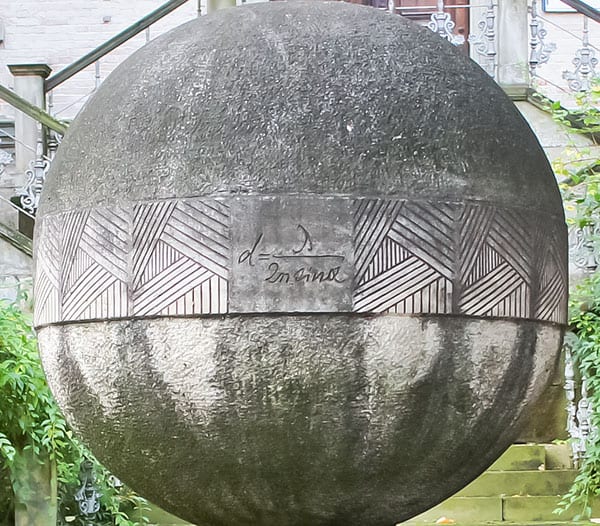
Ernst Abbe, one of the 19th-century pioneers of modern optics, has a concrete memorial sitting in the leafy grounds of the Friedrich Schiller University of Jena, Germany, engraved with a formula. Put simply, it describes a fundamental limit of all lenses: they cannot see everything. No matter how finely you grind and polish a lens, diffraction – the natural spreading of light waves – will always blur the smallest details.
Of course, theories should never be set in stone. At the turn of this century, physicists began to explore “superlenses” that could see past Abbe’s diffraction limit – that is, they could see features smaller than about half a wavelength of the light being used. Based on thin slabs of metal, these superlenses could bend light in unheard-of ways, counteracting diffraction so that an object’s features could be resolved into a perfect image. But there were problems: the lenses only worked if they were placed right next to an object and, even then, they were so lossy that their images were next to useless. Superlenses were not so super after all.
For many, that was a great shame. Biologists had been looking forward to imaging the tiniest parts of organisms in real time, which is almost impossible with current microscopy techniques. Perfect imaging could also have rebooted the computer-chip industry, allowing circuits and components to be etched smaller and more complex than before. Although other techniques exist that can see features smaller than half a wavelength – near-field scanning optical microscopy is one – they produce images by scanning a surface, which takes time. Only perfect imaging promised the ability to image objects at any resolution in a single snapshot.
Given the poor results of superlenses, some physicists have tried rehashing the blueprint in the hope that it can still offer practical applications. Others, however, have ditched the concept altogether, instead trying completely different approaches. These new approaches are in their nascent stages – most have not actually imaged anything, but only resolved point sources. Still, they are under high expectations, and could allow us to see more clearly than ever before.
Going negative
The superlens was a bold idea. First proposed in 2000 by theorist John Pendry of Imperial College, London, it hinges – as do all conventional lenses – on a property known as the refractive index. This describes the degree by which light bends as it enters a material – think how a stick dipped in water appears to bend towards the surface. As you would expect, a greater refractive index results in stronger bending. But Pendry’s insight came when he considered something radical: a negative refractive index.
To understand negative refraction, it is best to accept a little help from Albert Einstein. His general theory of relativity shows that very massive objects, such as stars or black holes, distort the underlying fabric of the universe – space–time – thereby bending the passage of light. Since refraction also bends light, one can picture it distorting an equivalent fabric – a virtual “optical space”. Negative refraction involves distorting optical space so much that it folds back on itself: a stick dipped in a negative-index substance would appear to bend the opposite way to usual.
Applying negative refraction to imaging, Pendry discovered a remarkable effect. Light rays usually defocus as they leave an object, but Pendry showed theoretically that negative refraction should cause these light rays to reconverge, creating an image of the object in perfect detail. Subsequent experiments proved him right, with superlenses achieving image resolutions of just a 20th of a wavelength – that is about 20 nm for visible light, and much smaller than Abbe’s limit of about half a wavelength. But limitations then surfaced.
One of these is to do with the negative-index materials, which are typically thin slabs of metal such as silver. Metals absorb light, particularly the part that carries the higher-resolution information. Another limitation is that superlenses must be sandwiched flush between the object being imaged and the detector. Only at this close range, in the so-called near field, can a superlens transfer all the information about the object to the image. So while in principle a superlens can produce images with unprecedented resolution, in practice it has limited use: it must be placed awkwardly close to the object, and even then the images appear grainy.
While in principle a superlens can produce images with unprecedented resolution, in practice it has limited use
These problems have not totally spelt the end for superlenses. One promising variation is the hyperlens, developed independently in 2006 by theorists Alessandro Salandrino and Nader Engheta at the University of Pennsylvania in Philadelphia, US, and Evgenii Narimanov, then at Princeton University in the US, and colleagues. Based on alternating layers of positively and negatively refracting material, the hyperlens can collect sub-diffraction-limited information from an object, just like a superlens can. Unlike a superlens, however, the hyperlens transfers this information to an image away from the near field into the far field. This means the hyperlens should be able to be integrated with more conventional optics, making it more attractive for practical applications.
The downside of the hyperlens is that, like its progenitor, it absorbs light, so reducing fidelity. “Loss is indeed an issue for all metal-related lenses,” says Zhaowei Liu, a physicist at the University of California, San Diego, US, who studies superlenses and hyperlenses. “But if you care about resolution more than transmission, then [superlenses and hyperlenses] are still okay. If things are really small, you can still see them – you just need to use really strong laser light.”
Back in time
Unfortunately, in many lines of research – biological imaging, say – intense laser light may not be an option, particularly if you want to avoid damaging your sample. But Geoffroy Lerosey, Mathias Fink and others at ESPCI ParisTech in France have shown that there is a way to achieve sub-diffraction-limited images without the drawbacks of superlenses or hyperlenses: so-called time reversal. So far, the group has demonstrated time reversal only for microwaves, which have fairly long wavelengths and are easier to manipulate than visible light. Nonetheless, at a conference in Barcelona, Spain, last year the researchers revealed numerical simulations suggesting that visible-light time reversal could also be a possibility.
So why does reversing time help beat the diffraction limit? The answer lies in evanescent waves: constituents of a normal wave that contain all the sub-diffraction-limited information. Evanescent waves usually peter out within a couple of wavelengths’ distance from an object – this is where the near field ends and the far field begins – which is why conventional lenses cannot see past the diffraction limit. It was only by effectively amplifying evanescent waves, using negative refraction, that Pendry showed superlenses were not restricted in this way. But Lerosey, Fink and others took a new tack to capture these fickle undulations: fooling emitted light into thinking it is going backwards, towards the source.
To see how this works, consider a demonstration performed by the researchers in 2007. The experiment consists of a group of antennas, each separated by a 30th of a wavelength – far less than the diffraction limit. One antenna in the group emits a microwave signal, which travels across a chamber to a second group of antennas. Upon receiving the signal, this second group of antennas – each of which is separated by half a wavelength – replays it backwards, like running a tape in reverse. As this time-reversed signal propagates, it interferes with itself in such a way that it converges towards the antenna in the first group that originally emitted it, almost as though it were travelling back in time (see box “A new way of seeing things”).
A new way of seeing things
Time-reversal imaging
A biological cell is placed near to a resonant metalens, a random collection of tiny oscillators. (a) Upon illumination, a cell shines through the metalens, which converts the evanescent light waves into propagating waves. This waveform reaches a sensor array (right). (b) If the waveform were simply recorded and re-emitted, it would spread out. (c) However, if the waveform is time-reversed before being emitted again, the waveform interferes with itself in such a way that it perfectly converges back to the source. But this last step does not have to be done in practice: an algorithm can predict what would happen were the time-reversed waveform to be emitted, creating a computer-based image with details smaller than the diffraction limit.
Maxwell’s fisheye
Maxwell’s fisheye is a flat lens with a spatially varying refractive index, which causes all light rays emitted from one point on the lens to meet at a point exactly opposite. In the design for a practical fisheye by Ulf Leonhardt and others (a), a mirror surrounds the lens, which enables an object to be placed not just on the surface of the lens but anywhere within it and still be imaged. In an experiment, Leonhardt’s group placed two microwave sources separated by a fifth of a wavelength on one side of the lens, and on the other side a bank of dissimilar microwave detectors separated by a 20th of a wavelength. (b) Only the detectors precisely opposite the two sources registered peak microwave signals. The researchers believe this is evidence that Maxwell’s fisheye can image beyond the diffraction limit.
Scattering-lens technique
The amount of light collected by a lens – defined by the lens’s numerical aperture – is key to imaging with higher resolution. According to Abbe’s formula, the greater the numerical aperture, the smaller the diffraction limit. (a) Even a large conventional lens struggles to collect much of the light emitted by an object – a lot passes by the sides. (b) A scattering layer placed before a lens captures light that would otherwise have been lost, thanks to the random path taken by light rays as they pass through the layer.
On its own, this process does not precisely focus the signal onto the antenna that originally emitted it. That is because the crucial evanescent waves never reached the second group of antennas – they would have already decayed. But here Lerosey, Fink and colleagues have another trick: they surround each antenna in the first group with a random collection of thin copper wires – a “resonant metalens”, in their terms – like a tuft of hair. This time, as an antenna in the first group emits a signal, the evanescent waves resonate with the wires and convert into propagating waves, which are detectable by the second antenna group. Now, upon time reversal, the signal focuses precisely back onto the source antenna and none of its neighbours, despite their being only a 30th of a wavelength away (Science315 1120). The fact that only the source antenna receives a signal shows that the imaging is truly sub-wavelength; if it were not, many neighbouring antennas – being closer to the source antenna than the diffraction limit – would also receive a signal.
Focusing a signal perfectly at its source would not be very useful for practical imaging – it only demonstrates that time reversal works. But in theory the focus point does not have to exist in the real world. To actually image something, you would only have to do a virtual time reversal – that is, record the incoming signal, calculate what the time-reversed waveform would look like, and then use software to predict the image that would have been produced. So unlike the image of a conventional lens, which is physically real, the time-reversed image would exist only in an algorithm’s output on a computer.
Let us say a biophysicist wanted to image a living cell. They would first place the cell within or near a resonant metalens and illuminate it with the necessary radiation – in this case, visible light. The signal from the cell, including the converted evanescent waves, would travel towards a bank of optical sensors, which would record it onto a computer. Then the computer would perform the time reversal and calculate the image that would be produced if the time-reversed signal were to propagate in real space.
Old idea
It is not yet clear whether the ESPCI researchers’ method will work in practice with visible light, for which record–playback time reversal will be much trickier. However, perhaps a simpler way to perform time reversal was dreamed up one morning in the early 1850s when James Clerk Maxwell, then a student at Cambridge University, was poking at his breakfast. According to legend, Maxwell was examining the kipper before him when he came up with the idea for a fisheye lens – a flat lens with a varying refractive-index profile that would cause light rays to travel in arcs, perfectly transferring all light rays emanating from one side to a point opposite.
Physicists had assumed Maxwell’s fisheye would not produce perfect images in practice, but in 2009 Ulf Leonhardt, a physicist at the University of St Andrews in the UK, predicted otherwise. Using Einstein’s equations of general relativity, Leonhardt showed that light rays emitted by an object on the surface of the fisheye would, in optical space, hug the surface of a sphere, travelling in great semi-circles that always meet at a point precisely opposite the starting point. This unique symmetry would mean that, on approaching the image point, the light rays would be acting as though they were travelling backwards in time towards the source. And this, said Leonhardt, meant perfect images.
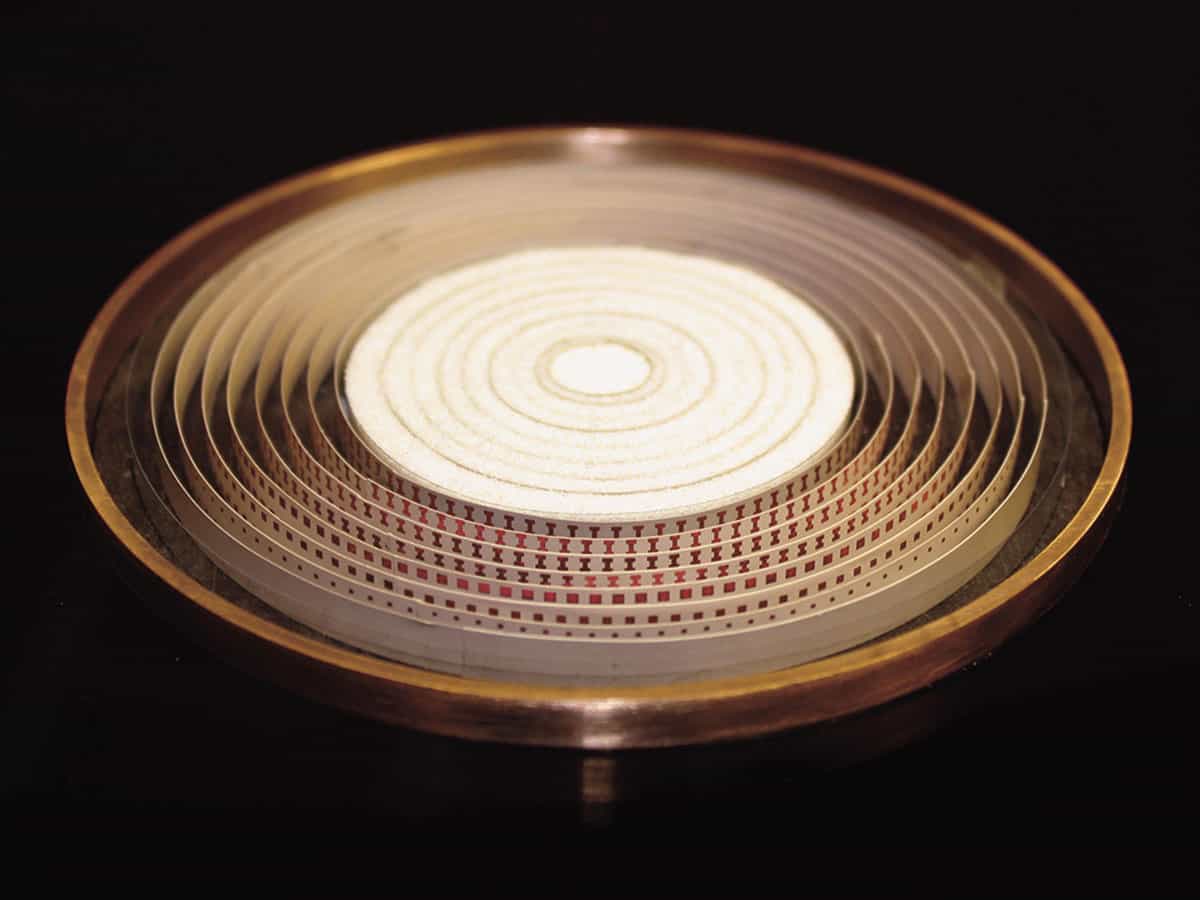
Proof perfect Ulf Leonhardt and Yun Gui Ma’s fisheye lens uses geometrical curves to mirror the curved universe of general relativity, but the device only works for microwaves. (Courtesy: Yun Gui Ma)
It was a controversial prediction, not least because it meant perfect imaging could be possible without negative refraction and, therefore, without loss – one of the main pitfalls of the superlens. But within two years Leonhardt – working with his student Yun Gui Ma, then at the National University of Singapore, and others – had experimental evidence that he was right. Their device used concentric rings of copper to achieve Maxwell’s refractive-index profile and, like the ESPCI researchers’ device, worked only for microwaves. Signals entered the fisheye via two sources a fifth of a wavelength apart and travelled across the device, into the far field, to a bank of 10 outlets a 20th of a wavelength apart.
If the fisheye did not exhibit perfect imaging, you would expect the output signal to be smoothed out over the outlets, because all 10 would span the diffraction limit of half a wavelength. Instead, the group found strong peaks at the two outlets that were precisely opposite the sources, separated by just a fifth of a wavelength (see box “A new way of seeing things”). For Leonhardt, this was sure evidence of imaging beyond the diffraction limit (New J. Phys.13 033016).
He has had to fight to convince others, however. One critic is Pendry, who believes the outlets record sub-wavelength features only because the outlets are “clones” of the source. Other sceptics go a step further and say that the signal peaks arise because of well-known field localization at the outlets, just as a lightning rod focuses electric fields around its tip. In December 2011 Richard Blaikie, then at the University of Canterbury in Christchurch, New Zealand, published results of a simulation in which a microwave source is contained within an empty mirrored cavity – that is, where there is no lens or refraction at all. He found that sub-wavelength focusing appeared when he added an outlet, or “drain” (New J. Phys.13 125006).
“The sub-wavelength field enhancement at or around the image point only occurs when the drain is present,” Blaikie writes. “The nature of the perfect imaging that has been the [cause] of much recent excitement is solely due to drain-induced effects.”
Leonhardt thinks his critics are missing the point. In his fisheye experiment there was not just one drain but 10. If Blaikie and others were right – that the perfect imaging is an artefact of the drains – then the field should have localized over each of them, since they were all spaced within the diffraction limit. Instead, the field localized only over the two drains precisely opposite the sources. Leonhardt believes the only way he will convince his sceptics will be to repeat the experiment in optics, a much more fiddly regime.
Beyond the limit
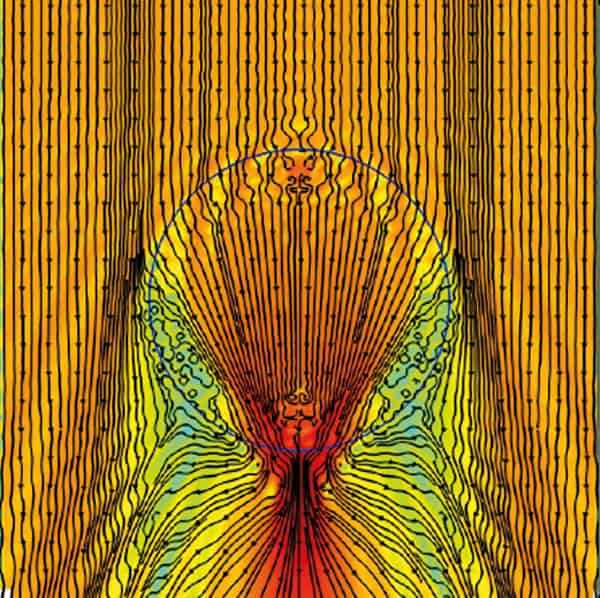
Virtual imaging The transparent microspheres employed by Zengbo Wang and others magnify the near-field light of an object (top of circle) so that it is big enough to be detectable (bottom of circle), thereby beating the diffraction limit. (Courtesy: Z Wang)
There are several other methods that have been shown to beat the diffraction limit. One of these, proposed in 2006 by Michael Berry and Sandu Popescu of the University of Bristol in the UK, involves so-called superoscillations. These are special types of wave, created in a hot-spot of many laser beams interfering with one another, that persist long enough for sub-wavelength information to transfer to the far field. In 2009 Fu Min Huang and Nikolay Zheludev of the University of Southampton in the UK showed experimentally that superoscillations could be used to focus light to a point as small as a fifth of a wavelength across. Unfortunately, the focus spot comes at a cost: an accompanying bright, unfocused halo of light, which might make imaging difficult in practice.
Another option was demonstrated last year by Zengbo Wang of the University of Manchester (now of Bangor University) in the UK and colleagues. Known as virtual imaging, it involves placing transparent spheres, each less than 9 µm across, onto an object, before shining white light up from beneath. The spheres essentially magnify the near-field light coming from the object to a size detectable by a camera above, offering a resolution of about 50 nm – about a quarter of the typical diffraction limit.
Finally, there is a way to see sub-wavelength details in the far field without using any special apparatus at all – just computer software. Developed by Mordechai Segev and colleagues at the Technion Israel Institute of Technology, it involves examining an image’s Fourier transform, which depicts wave components. For a diffraction-limited image, the Fourier transform would be incomplete. Segev and colleagues’ software therefore calculates the simplest wave components that would complete the Fourier transform and then adds them, essentially filling in the gaps by guessing what it expects to be there. The good news is unlimited resolution; the bad news is that – even in principle – it works only for sparse, technical images in which most pixels are blank. So if you were thinking of touching up your holiday snaps, think again.
Doing the opposite
Perhaps Leonhardt’s problem is that he is almost speaking a new language in optics. For example, he thinks the traditional distinction between the near field and the far field is a myth, particularly the notion that certain information is always lost in the far field. Yet among many sceptics, a few physicists think he might be onto something. “Leonhardt [is] one of the smartest people I ever met,” says Jacopo Bertolotti of the University of Twente in the Netherlands. “If he says Maxwell’s fisheye should work, he is saying it with many good reasons.”
In the meantime, Bertolotti, together with Allard Mosk and others at Twente, already has what may be the most impressive results yet for high-resolution imaging. Amazingly, though, the technique does not involve transferring light cleanly from source to image, but rather the opposite: scattering light in all directions (see box “A new way of seeing things”).
The reason for this counterintuitive approach is that Abbe’s diffraction limit depends not just on the wavelength of light being used, λ, but also on another property of the lens: the numerical aperture, nsinα, where n is the refractive index and α is the half-angle of the maximum cone of light that can enter the lens. In fact, the diffraction limit – the best resolution possible and the formula on Abbe’s memorial – is defined as λ/2nsinα. Similar to the aperture of a camera lens, the numerical aperture is a parameter that defines the range of angles over which a lens can collect light from an object. The greater the numerical aperture, the more light is collected – and the smaller the diffraction limit.
Set in stone Ernst Abbe’s memorial, engraved with his formula d = λ/2nsinα. (Courtesy: Jan-Peter Kasper/FSU)
Unfortunately, a big numerical aperture needs a big lens to collect lots of light. This is difficult for conventional lenses, which need a very high, well-tailored refractive index to bend light coming from the edges of an object back towards an image point. For these conventional lenses the biggest numerical aperture possible has a value of about 1, which is why the diffraction limit is usually about half a wavelength. A scattering lens offers a cheaper, easier way to achieve greater bending: light leaving the lens is sent randomly in almost all directions, which is good as it means some of it is bent through very large angles indeed. But the trouble is that the resultant image is a fuzzy, out-of-phase mess.
To avoid this problem, Bertolotti, Mosk and colleagues use a clever feedback mechanism that pre-adjusts the phase of the light reaching the scattering lens so that, once it passes through, it is in-phase again and not fuzzy. The light is pre-adjusted using a device known as a spatial light modulator, which is placed before the lens. To calibrate the modulator so that it changes the light’s phase by the right amount, a detector placed after the lens sends a test image to a computer, where it is analysed using an algorithm. The algorithm looks at the phase of the different parts of the test image and calculates how the spatial light modulator should compensate for the scattering by adjusting the phase of light going into the lens. Once the adjustment required is known, the modulator adjusts incoming light accordingly and any subsequent images taken using the scattering lens are in-phase and clear.
Last year, the Twente researchers tested their concept with a lens made from gallium phosphide, which they roughened on one side to scatter incoming light. They found that it could image, at a visible wavelength of 560 nm, gold nanoparticles with a resolution of just 97 nm (Phys. Rev. Lett.106 193905).
Praise for the Twente researchers’ work is high. “This is wonderful stuff,” says Leonhardt. “It is so non-intuitive. You make things worse to make things better.” Lerosey at ESPCI Paris Tech is also impressed, saying “It’s a good idea, it’s a nice group of concepts.” He adds that the field of view – the amount seeable by the lens – is not great, but then that is a practical hurdle that all these new techniques will have to overcome.
Of course, the catch with the scattering lens is that it does not actually beat the diffraction limit. The resolution may be nearly a sixth of the light’s wavelength, but it is within the confines of Abbe’s formula, which allows greater resolution so long as the numerical aperture increases – and in this case it is about 3. Conventional lenses cannot achieve sufficient apertures to resolve details finer than half a wavelength, but the scattering lens can – not with better quality optics, but with a neat use of computing technology.
So maybe there is a lesson to be learned. While there are now several promising approaches in addition to superlenses to smash Abbe’s diffraction limit, the best option for achieving sub-wavelength imaging in practice might well be to leave it intact. Setting the equation in stone was perhaps not such a bad idea, after all.
This article first appeared in the May 2012 issue of Physics World.
When it comes to scientific events that can get the whole world thrilled – researchers and non-scientists alike – astronomy wins hands down. Eclipses, comets or meteor showers, for example, are rare enough to get anyone with even a passing interest in science excited. But for true once-in-a-lifetime astronomical events, nothing can beat next month’s transit of Venus, in which our sister planet passes across the face of the Sun as viewed from Earth.
Transits of Venus occur in pairs eight years apart, with each pair separated by gaps of more than a century. The last transit occurred in 2004, meaning that the upcoming transit on 5–6 June will almost certainly be your only chance to see this rare astronomical alignment, as it will not occur again until 2117. For more on the science and history of this astronomical spectacular, don’t miss the fantastic feature “Venus: it’s now or never” by one of the world’s leading transit experts, Jay Pasachoff.
You can read the article here but to enjoy the article and images in all their glory, check out the May 2012 issue of Physics World. Members of the Institute of Physics (IOP) can read the new issue online for free right now through the digital version of the magazine by following this link or by downloading the Physics World app onto your iPhone or iPad or Android device, both available from the App Store and Google Play, respectively. The digital version lets you read, share, save, archive and print articles – either fully laid out or in plain-text view – and even have them translated or read out to you.
If you’re not yet a member, you can join the IOP as an imember for just £15, €20 or $25 a year via this link Being an imember gives you a full year’s access to Physics World both online and through the apps. To whet your appetite still further, here’s a quick summary of what else is in the new issue. And remember, let me know what you think of any of the topics by e-mailing me at pwld@iop.org.
• Atmospheric tales – Robert P Crease reveals why the discovery of Venus’s atmosphere is still so controversial.
• Quantum technologies: an old new story – Technologies based on the
properties of quantum mechanics have been around for many years, but Iulia Georgescu
and Franco Nori argue that we need a new definition for “quantum technologies”.
• Japan’s X-ray vision for the future – With the world’s first “compact” X-ray free-electron laser having opened its doors to users in March, Michael Banks travels to the remote SACLA facility in the mountains of western Japan to find out more about this ambitious new project.
• Fukushima fallout – Steven Judge and Hiroyuki Kuwahara report on efforts to monitor radioactive contamination in areas near the stricken Fukushima Daiichi reactor.
• Defeating diffraction – Once thought to offer imaging at unlimited resolution beyond that permitted by diffraction, superlenses never quite worked in practice. Now, physicists have a host of other ideas to make perfect images, but can these concepts succeed where superlenses failed? Jon Cartwright reports.
• Playing the game – Catherine Goode describes how a degree in physics and a childhood passion for computer and video games led her to a career in game design.
• Towards a Standard Model of finance – Andrew Aus looks at links between physics and finance in this month’s Lateral Thoughts column.
Apologies to our many Canadian readers, because this blog entry is not about that kind of curling – you can read about the physics of the winter sport here.
Instead, I’m blogging about how things like hair, plant tendrils and even red blood cells curl and uncurl. Despite these processes being all around us, it turns out that physicists have a relatively poor understanding of the dynamics of curling.
That’s why Andrew Callan-Jones of the University of Montpellier, France, and colleagues at the University of Paris have made a theoretical and experimental study of how a steel strip curls.
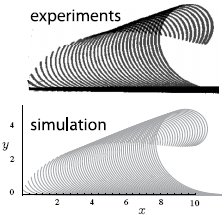
The experiment begins with a piece of steel that is 635 mm long, 9.5 mm wide and 0.13 mm thick. The strip is in a naturally curled state and is secured to a flat surface at one end. The strip is then flattened onto the surface and released so that it curls up again – a process that takes about 30 ms. The curling is captured by a fast camera at a rate of 7000 frames per second (above right).
The photographs reveal that the process begins at the free end of the strip, which lifts up and then bends over to complete the first few loops of the spiral. Then, a circular “spool” forms and some of the strip wraps tightly around this structure. Finally, the last few loops of the curl are wrapped very loosely round the spool.
One interesting observation by the team is that the radius of curvature of the spool is about twice that of the natural radius of curvature of the strip itself. This is illustrated by the fact that the free end of the strip forms a tighter curve inside the spool, with a radius of curvature that matches the material itself.
The physicists believe that the tight spool is formed as the curl spins rapidly – and this affects the radial forces that define the size of the spool.
This behaviour was successfully described by a mathematical model created by the team. These insights were then incorporated into a computer simulation of how a much longer strip would curl. This identified a third structure that emerges towards the end of the curling process – a large loosely wound region.
The researchers are now applying their new-found knowledge of curling to the bursting of red blood cells – which is caused by certain nasty bacteria and involves the curling back of the cell membrane.
The research is described in Physical Review Letters108 174302 and you can find the paper here.
Anyone lucky enough to be in the right place at the right time early next month will be in for a very rare treat – a sight of Venus passing across the face of the Sun. These fleeting astronomical events, known as “transits of Venus”, occur in pairs eight years apart, separated by gaps of more than a century. The fascination of these transits lies not only in their extreme rarity, but also in that they were once used to solve one of the biggest questions in astronomy: the distance between the Earth and the Sun. Yet one study of a particular transit of Venus remains controversial to this day.
It concerns the transit of 26 May 1761, as observed by the Russian polymath Mikhail Lomonosov. Using his four-and-a-half foot refracting telescope in St Petersburg, he claimed to have seen Venus’s atmosphere for the first time. “Venus”, he wrote shortly after the event, “is surrounded by a significant air atmosphere, similar to (if not even greater than) that which bathes our terrestrial globe.” Although we now know that Venus does indeed have an atmosphere, of the several dozen other people who saw the transit that day, none drew that explicit conclusion. Moreover, several current scientists still deny him the discovery (see “Venus: it’s now or never” by Jay Pasachoff).
The controversy is starkly displayed in the biography of Lomonosov published in 1937 by the chemist and historian Boris Menshutkin. Translated into English in 1952 by the US chemist Tenney Davis as Russia’s Lomonosov: Chemist, Courtier, Physicist, Poet, the book celebrates Lomonosov’s statement as a magnificent discovery. However, a footnote by the translator states equally authoritatively – the translator having consulted a US astronomer – that what Lomonosov saw had “nothing to do with the presence or absence of a Venus atmosphere and can in no case be regarded as a proof of its existence”.
So why does controversy still surround the discovery of Venus’s atmosphere more than 250 years later? What, if anything, can be done to resolve it? And what does this controversy tell us about the nature of scientific discovery itself?
Blisters and radiances
A polymath who contributed to many fields, including astronomy, Lomonosov (1711–1765) was the first Russian-born academician at the Russian Academy of Sciences. By the time of the 1761 transit, having notched up some 17 years’ experience making observations and inventing scientific instruments, he viewed the event from his house, a large dwelling with its own observatory.
“Having waited for Venus to enter on the Sun for about 40 min beyond the time prescribed in the ephemerides,” Lomonosov wrote, “[I] finally saw at last that the Sun’s edge at the expected entry had become indistinct and somewhat effaced, although before [it] had been very clear everywhere.” Thinking he was suffering from eye fatigue, Lomonosov looked away briefly, before returning to the eyepiece to find a small black spot joining the disc of Venus and the Sun. This was just after the moment of “first contact”, when the leading edge of Venus first touches the edge, or “limb”, of the Sun.
At second contact, when Venus was now entirely within the Sun and its trailing edge crossed the solar edge, Lomonosov noted that these two points were separated by “a hair-thin bright radiance”. Some six hours later as Venus’s leading edge approached the solar edge on its way outward from the Sun – what is dubbed third contact – the Russian wrote that “a blister appeared at the edge of the Sun, which became more pronounced as Venus moved closer to complete exit”. Not long afterwards, he saw fourth contact as “the blister disappeared, and Venus suddenly appeared with no edge”.
To support his conclusion that he had observed Venus’s atmosphere, Lomonosov cited the “loss of clearness in the [previously] tidy solar edge” at first contact, which he presumed to be caused by the “oncoming Venusian atmosphere”; as well as the “blister” at the third contact, which was, he said, caused by “refraction of solar rays in the atmosphere of Venus”. Lomonosov’s report, which also contained diagrams, was published in Russian on 17 July 1761 and in German a month later. Although other observers of the event mentioned a light radiance or aureole around Venus, none proposed a mechanism or explanation. So where is the controversy? Lomonosov said he had seen Venus’s atmosphere, described what he saw, produced a presumed mechanism, and published. Furthermore – spoiler alert – we know that Venus has an atmosphere.
Aureoles and artefacts
The controversy is sparked by two things: first, by how Venus’s atmosphere looks to contemporary Earth-bound instruments; and second, by what we now know about observational artefacts.
Historians know well the danger of “Whig history” – of judging the past from the perspective of the present. But science history can be different. Because laws and properties of nature are invariant, later observations can sometimes decisively correct previous ones. There are plenty of examples of wrong ideas being put right, not least Enrico Fermi’s detection of what he thought were transuranic elements in 1934, and Percival Lowell’s alleged detection of canals on Mars in the late 19th century. In the case of Venus, Jay Pasachoff from Williams College and his collaborator, the independent scholar William Sheehan, have written an article for the March/ April 2012 issue of the Journal of Astronomical History and Heritage (in press) pointing out that what we now know about the appearance of the refracted image of the Sun by Venus’s atmosphere, based on high-resolution observations of the 2004 transit, seems inconsistent with what Lomonosov reported in 1761.
Furthermore, modern observations have shed light on artefacts – products of instrument and observing imperfections rather than of the phenomenon being observed – that interfere with its perception. By far the most disruptive of these is the “black-drop effect”, which was first noticed by astronomers during the 1761 transit while trying to time the precise moment of second and third contacts. Nearly all observers saw, at second contact, a strange dark column or bridge linking Venus to the Sun, its precise appearance varying widely from one observation to another. Sometimes even being seen when Venus was as far as 3 arcseconds inside the solar disc, the bridge often thickened to make Venus’s disc look like an elongated droplet – hence the name. Another black drop affected the third contact, as Venus’s silhouette began to exit the solar disc. This effect – which was ascribed to a combination of factors, including the inherent optical limit of the telescope, physiological factors in the retina and atmospheric conditions – reduced the expected precision of 18th-century measurements of the Earth–Sun distance by about two orders of magnitude.
In space observations of the 1999 Mercury transit, Pasachoff and Schneider noted a black drop and found that an important contribution came from a hitherto largely overlooked effect: the extreme drop-off in brightness or “limb-darkening” at the Sun’s edge. In their article in the Journal of Astronomical History and Heritage, Pasachoff and Sheehan argue that Lomonosov observed not Venus’s atmosphere, but probably an artefact partly caused by this limb-darkening effect. Moreover, they suggest that Lomonosov was predisposed to assume that an atmosphere existed on Venus because of his belief in the plurality of worlds; in other words, because he was already convinced of the existence of an atmosphere, he may have been looking for effects that might reveal it. “Lomonosov arrived at the correct conclusion but on the basis of a fallacious argument,” they write.
The task of reconstructing what Lomonosov saw is extremely difficult because the words are ambiguous – and of course originally in Russian and German. It is like trying to recreate a photograph based on someone’s 250-year-old description in another language and then coming to conclusions regarding not one but several fine details about the item photographed. The Russian word translated into English as “blister”, for instance, is pupyr, which also means pimple. How can we confidently connect it with either an aureole or the notoriously variable black drop? What about the “hair-thin bright radiance”? Is that an aureole produced by the atmosphere or – as Pasachoff and Sheehan say – the first bit of solar disc visible limbward of Venus’s silhouette when the black-drop effect ended?
Lomonosov reported unusual effects at all four contacts, and argued that effects at the first, third and fourth contacts were caused by Venus’s atmosphere. Lomonosov’s description of the third contact seems to provide the firmest support – although Pasachoff and Sheehan dispute this, pointing out that in 2004 they saw the atmosphere for 20 min after the exit of the leading edge, and that Lomonosov writes that Venus had “no edge”.
Re-enactments?
Historians have discovered the danger of being overly confident about declaring that an experimentalist from an earlier era could not have seen a certain phenomenon, for such claims often short-change the abilities of antecedent scientists. A notorious cautionary tale involves the historian of science Alexandre Koyré, who in the 1950s confidently asserted that Galileo could not have deduced his law of falling bodies using such an inexact method as rolling balls down inclined planes and timing them with water clocks; surely Galileo must have deduced the laws first and cooked the data! This view was famously destroyed in 1961 by Thomas Settle, then a Cornell University history of science graduate student, who recreated the experiment in his room and managed to obtain precise enough data to deduce the law.
The rarity of Venus’s transits makes repetition problematic, but next month’s transit – the last until 2117 – seems to provide an outstanding if rare opportunity: pull out Lomonosov’s telescope and look.
However, this is not as simple as it sounds. First, we do not know which telescope Lomonosov used; we might only be able to deploy one of a similar kind. Second, there would be the non-trivial problem of securing permission to use a valuable and delicate historical instrument. Third, atmospheric conditions on transit day may not be identical. Finally, there’s the matter of experimental skill. Experiments are not automatic, and often involve pushing instruments to their limits. Knowing how such instruments can be trusted under which conditions is a mark of experimental skill, and often a function of how much an experimentalist has worked with the instrument. More skilled experimentalists can notice things that others miss with better equipment. A 21st-century observer using an 18th-century instrument is likely to lack this kind of skill.
The critical point
During the 1950s, one important fuel for passions surrounding the dispute over Lomonosov’s priority was Cold War rivalry; Western historians and scientists often attributed Soviet claims involving achievements of Soviet scientists as being propaganda. Such attitudes, however, are now long gone. But the issue still generates passions because the inability to resolve this issue points out the disturbing fact that some historical questions – and even some scientific ones – have hard-to-decide or ambiguous aspects.
Sometimes this is because the discoveries evolve in phases over an extended time; examples include the discoveries of oxygen and of dark energy. Who discovered Venus’s atmosphere would seem much easier to decide, for it has to do with what one astronomer observed at a precise instant looking at a specific event through a particular telescope. Yet because of the ambiguities of language, and of the impossibility of repeating the relevant conditions and deploying the necessary skills, this too may remain impossible to decide upon.
Teams of astronomers, both professional and amateur, hope to use antique telescopes to observe the coming transit – “experimental archaeologists”, as Sheehan calls them. He himself is planning to use a 19th-century 168 mm Brashear refractor at Mt Wilson, while others at Lowell Observatory plan to use the 152 mm Clark refractor that Percival Lowell took to Japan in 1892. What they find may shed some additional light on what earlier observers may have seen. Even so, the question of what Lomonosov saw is likely to remain forever open-ended.
One of the most exciting recent developments in astronomy has been our ability to detect planets orbiting stars other than our Sun. Astronomers have so far spotted more than 700 such exoplanets, which has made the eight planets in our solar system – 13 if you include the dwarf planets Pluto, Ceres, Eris, Haumea and Makemake – perhaps less special than we once thought. Most of these exoplanets are detected as they cross the face of – or “transit” – their parent stars. But spotting these planets from the faint dimming of their star’s light is a fiendish task because several things can, at least for a while, mimic this tiny dip. Indeed, of the thousands of additional possible planets we have seen, thanks in part to the French CoRoT and US Kepler spacecraft, some may just be sunspots.
What can aid our search for exoplanets, however, is studying examples of transits in our own solar system. Doing so not only yields an improved understanding of our own cosmic neighbourhood, but also verifies that the techniques for studying events on and around other stars hold true in our own backyard. In other words, by looking up close at transits in our solar system, we may be able to see subtle effects that can help exoplanet hunters when viewing distant suns. The snag is that, here on Earth, just two planets lie between us and the Sun – Mercury and Venus. And, moreover, they cross the Sun only very rarely.
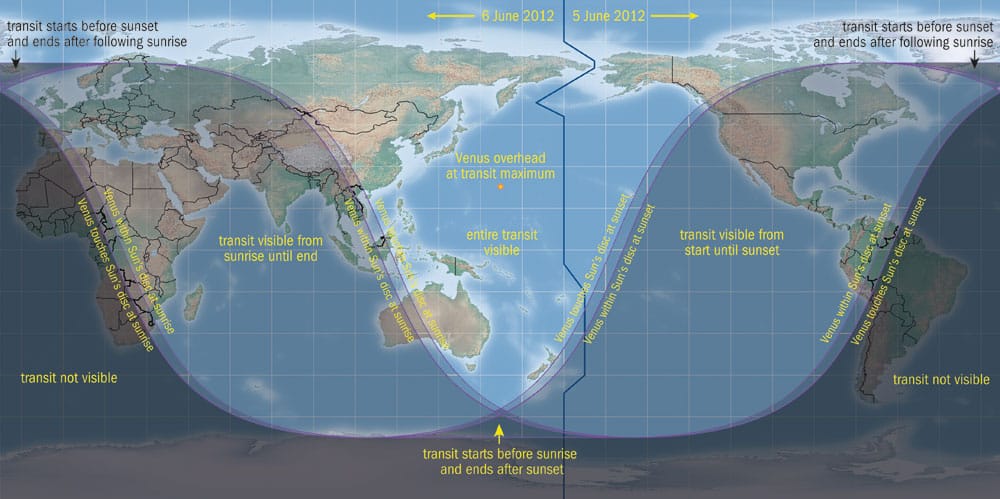
While transits of Mercury occur about 14 times a century, transits of Venus are even scarcer. They always take place in pairs eight years apart, with the gap between the second transit of one pair and the first transit of the next alternating between 105.5 and 121.5 years. In other words, the transits of 1631 and 1639 – around the time that Galileo was imprisoned by the Church – were followed, after a gap of 121.5 years, by a pair in 1761 and 1769, not long before the American Revolution. The next transits occurred 105.5 years later, in 1874 and 1882, and so, continuing this sequence, the transit of 2004 will be followed by another this year – on Tuesday 5 June in the Americas and Wednesday 6 June in Europe, Asia and Australia (figure 1). It will be an event well worth watching, as the next transit of Venus will not occur until December 2117, when most of us will be long gone.
Origins of a phenomenon
The notion that Venus could potentially pass across the face of the Sun, when viewed from Earth, can be traced back to the work of Nicolaus Copernicus, whose 1543 book De Revolutionibus held that only Mercury and Venus joined our Earth in orbiting around the Sun and thus could pass between those two bodies. In 1627 Johannes Kepler, best known for his three laws of orbits, published his Rudolphine Tables, which showed the superiority of the Copernican theory and allowed the positions of the planets in the sky to be calculated more accurately. This work led Kepler to predict that both Mercury and Venus would transit the Sun in 1631.
That year’s transit of Mercury was observed by the French scientist Pierre Gassendi, but that of Venus was not visible from Europe and so went unseen. (Although the Venusian transit could, in principle, have been observed in other parts of the world, it was only in Europe that astronomers had access to new-fangled “telescopes”.) A few years later, however, the English astronomer Jeremiah Horrocks, working in the village of Much Hoole in Lancashire, extended Kepler’s calculations and discovered that the next transit of Venus would occur in late November 1639. Horrocks informed one friend in London and another in Manchester, William Crabtree, of the prospective event.
On the afternoon of the big day, when Horrocks finally returned to Carr House in Much Hoole – having been delayed by a task that was no doubt to do with the local church on that Sunday – he found Venus already silhouetted on the surface of the Sun. Although it was much smaller than he had expected, by using a telescope to project the solar image, Horrocks was able to make careful drawings of what he saw. Crabtree, in Manchester, also saw the transit but was so excited to see Venus’s silhouette once the clouds had parted that he neglected to make any scientific observations. With clouds obscuring the view of Horrocks’ friend in London, it was Horrocks and Crabtree who therefore become the first two people in the world to see a transit of Venus.
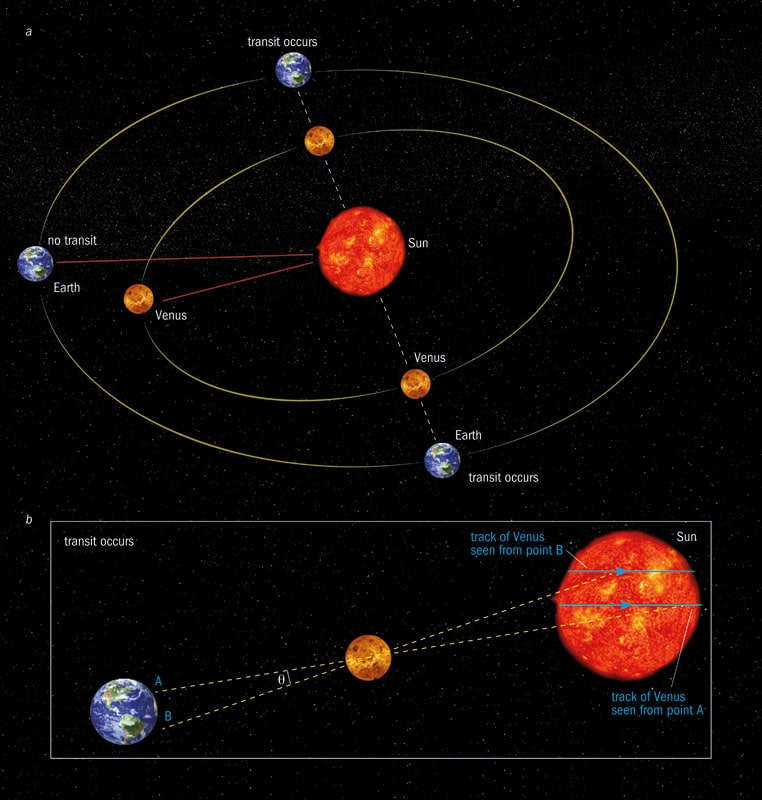
We now know that these transit pairs occur only when Venus’s orbital plane crosses the plane of the Earth’s orbit around the Sun, the two orbits being at a slight angle of 3.4° to one another (figure 2a). One can think of Venus’s path crossing the lower half of the Sun, then eight years later passing across the upper half of the Sun, before next time passing above the Sun (and so not being a transit). This process goes on for a further 100 years or so until the angle brings Venus around to the lower half of the Sun again.
Astronomical solution
But transits of Venus are much more than a curiosity. In 1716 Edmond Halley proposed using them to solve what George Airy – then Astronomer Royal – later called “the noblest problem in astronomy”: finding the distance between the Earth and the Sun, known as the astronomical unit (AU). At that time, distances in the solar system were known only proportionately – measured as fractions or multiples of an AU. Measuring the AU would mean that, for the first time, the absolute size and scale of the solar system could be determined.
Halley’s method relied on Kepler’s third law of orbits, which tells us that the square of the time it takes a planet to orbit the Sun (its period), P2, is proportional to the cube of the radius of the orbit, a3. Since we know how long it takes Venus and the Earth to orbit the Sun, then if it were possible to determine the distance to Venus, we could use Kepler’s third law to deduce all distances in the solar system, including the AU.
In practice, Halley’s method involved observing Venus from two different locations during a transit – one very far north on Earth and one very far south – and accurately determining when the planet first begins to cross the Sun “ingress”) and when it just leaves “egress”). A transit lasts about six hours and, if it were possible to time the duration to an accuracy of about 1 s, the distance to Venus could then be determined using the principles of triangulation (figure 2b). Later in the 18th century an alternative calculation involving accurate timing of only ingress or egress was developed by Joseph-Nicolas Delisle, although the method had its own problems, not least that it required knowing the longitude more precisely than was likely possible at that time.
With these methods in hand, hundreds of expeditions were sent all over the world to observe the 1761 and 1769 transits, including the ill-fated voyage undertaken by the French astronomer Guillaume le Gentil (see below). Perhaps the most famous was in 1769, when the British Admiralty entrusted a ship to a young lieutenant by the name of James Cook. Accompanied by former Greenwich astronomer Charles Green and others, Captain Cook took the Endeavour to the island of Tahiti in the South Pacific, where they successfully observed the transit under very clear skies at a site that is still called Point Venus. Having completed that task, which was the official reason for the voyage, Cook then opened a letter with secret orders that took him to explore farther south, searching for and mapping a “southern continent”, which turned out to be New Zealand and the east coast of Australia.
The black-drop mystery
Unfortunately, when Cook and Green looked through their telescope to time the precise moment of ingress – when Venus was just inside the outer edge (or “limb”) of the Sun – they ran into trouble. They noticed a dark band – linking the blackness of Venus’s silhouette with the blackness of the background sky outside the solar limb – that grew for about 1 min and then seemed, like pulled taffy, to pop. Now known as the “black-drop effect”, it meant that the accuracy of their timing was closer to 1 min than to 1 s, diminishing the accuracy of the calculated astronomical unit by about a factor of 60. Cook and Green mistakenly thought that Venus’s atmosphere was causing the uncertainty in the timing, but we now know that the atmosphere is much too small in diameter to cause much blurring.
The two transits of Venus in the 19th century – in 1874 and 1882 – were well observed all around the world. Photography was also used for the first time, although the black drop still foiled accurate attempts to measure the AU using Halley’s method, as it had done for the 18th-century transits. There having been no transits throughout the 20th century, Glenn Schneider of the University of Arizona’s Steward Observatory and I decided in 2001 – three years before the first transit of the 21st century – to try to solve the origins of the black-drop effect once and for all.
We sought to do this by analysing observations of the effect made by NASA’s Transition Region and Coronal Explorer (TRACE) spacecraft during the 1999 transit of Mercury. The black-drop effect, it turns out, has two different causes. One, which had been widely suspected, is down to the fact that no telescope is perfect and that even a point source will have a certain inherent fuzziness, known as the “point-spread function”. But the other cause, which had previously not been widely acknowledged, is the fact that the visible Sun is always darker near its edge, with the intensity falling off following roughly the path of a cosine curve. Indeed, the drop in brightness, known as “solar limb darkening”, is so severe in the final arcsecond or so at the edge of the Sun that the limb darkening merges with the point-spread function. Given that Mercury has no appreciable atmosphere and yet shows a black drop, our analysis showed that the black-drop effect need not have anything to do with the existence of a planetary atmosphere. Coupled with our current knowledge of the actual thickness of Venus’s atmosphere, we showed that Venus’s black drop cannot be caused by its atmosphere either.
With the next transit of Venus due to take place in June 2004, an International Astronomical Union symposium was scheduled to take place at Much Hoole, where Horrocks had observed the first transit all those years ago. Not wanting to take a chance on the notoriously capricious British weather, I took my colleagues and all our astronomy students from Williams College (with the help of a grant from the National Geographic Society, or NGS) to Greece, which lay deeper into the zone from which the whole transit would be visible. In the event, it was clear in Much Hoole after all, but from Greece we were able to observe the whole transit with telescopes and cameras, and I saw the black drop with my own eyes, which was an incredible experience.
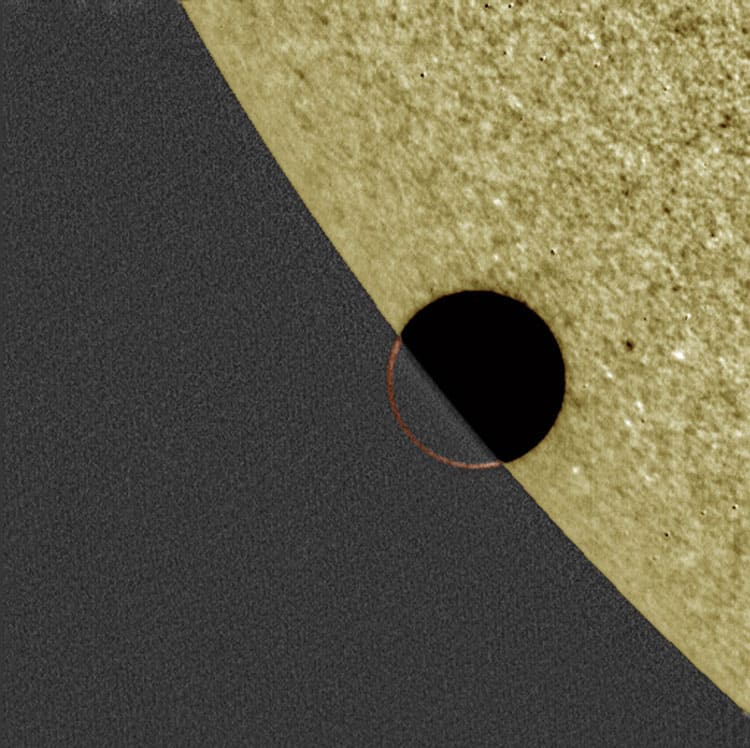
Earlier that year, while observing with Sweden’s 1 m Solar Telescope on La Palma, which itself went on to make successful observations of that year’s transit, I e-mailed the schedulers for TRACE to help them tailor their observations of the transit to meet our requirements. What we particularly wanted to do was to increase the rate at which photographs were taken of the black-drop effect at ingress and egress. But knowing that TRACE can only ever see about a sixth of the Sun at any one time, it was also vital that the craft was pointing in the right direction to see the edge of the Sun. Fortunately, when we got the results, we were relieved that everything had gone well. Moreover, while the planet was roughly halfway into the Sun at ingress, we were flabbergasted to see a bright rim appearing around Venus’s trailing edge that persisted and brightened asymmetrically (figure 3). It was, in fact, Venus’s atmosphere, which bent sunlight towards us. About six hours later, after Venus had traversed the Sun’s disc, we saw the same effect in reverse (2004 Proceedings IAU Colloquium 196 6 and 2011 Astronomical Journal 141 112).
What was also interesting about the 2004 transit was that it extended the study that Schneider and I carried out using measurements obtained by TRACE. William Sheehan and I had been intrigued by claims made by the famous 18th-century Russian scientist Mikhail Lomonosov that he had discovered the atmosphere of Venus after sighting a brief brightness at the edge of Venus during the 1761 transit (see “Atmospheric tales” by Robert P Crease). However, what Lomonosov reported did not match the 2004 observations studied by Schneider and me, and seemed more like the first appearance of the solar disc at the end of the black-drop effect. Sheehan and I therefore concluded that the Russian must have seen only artefacts and had not discovered Venus’s atmosphere itself. But because Lomonosov believed – as did many scientists of his era – that all planets had atmospheres, it is perhaps understandable that he thought he had discovered one around Venus. In the end, he had the right result, but without a proper train of measurement and reasoning.
The 2012 transit
For the upcoming transit of Venus this June we want to get the most complete set of data possible, so that the astronomers of 2117 will think that their forebears way back in 2012 did a fine job even with their relatively primitive instruments. On the ground, I will be at the University of Hawaii’s solar observatory on top of Haleakalā – a 3000 m-high dormant volcano – with a couple of my students, as well as Schneider and Bryce Babcock, all supported by a new NGS research grant. We will have several cameras, with the main aim of studying Venus’s atmosphere at ingress and egress, while also verifying our previous conclusion about the black-drop effect. Meanwhile, my former student Kevin Reardon of the Arcetri Observatory in Florence, Italy, will be at Sacramento Peak in New Mexico, using a giant imaging spectrometer on the vacuum tower of the Dunn Solar Telescope.
A major part of our research effort will be with telescopes in space, notably using NASA’s Solar Dynamics Observatory (SDO), which was launched two years ago as an improved replacement for TRACE. The SDO contains the Atmospheric Imaging Assembly, built by my colleague Leon Golub of the Smithsonian Astrophysical Observatory, which has pixels the same size as those of TRACE but can view the entire Sun at once. The other huge advantage of SDO is that it moves in a geosynchronous orbit and is always in view of a ground station in New Mexico, allowing it to send down eight individual filtered images six times a minute, 24 hours a day (with only a few minor 20 min outages each year when the Earth eclipses the Sun). We will also be co-ordinating our observations with those of colleagues at Stanford University, who run a second SDO instrument, the Helioseismic and Magnetic Imager, which has pixels of a similar size.
This summer Schneider and I will be working again with Richard Willson, who operates NASA’s Active Cavity Radiometer Irradiance Monitor satellite from California, in order to monitor the total brightness of the Sun as a way of studying the transit. It follows our successful collaboration in 2004, when we used the same craft to measure the tiny 0.1% drop in the total solar irradiance caused by Venus’s silhouette blocking that same fraction of the solar disc. Interestingly, two years later we were unable to detect the 0.003% drop in intensity from the 2006 transit of Mercury because the effect is smaller than the inherent uncertainty in the signal – information that should help exoplanet hunters to know what they might or might not be able to detect. This year’s collaboration will also involve Greg Kopp of the University of Colorado at Boulder, whose Total Irradiance Measurement instrument aboard NASA’s Solar Radiation and Climate Experiment spacecraft yields similar information.
Until recently we had thought that after June there would be no chance to observe any further transits of Venus until the 22nd century. But last autumn we discovered that David Ehrenreich of the Institut de Planétologie et d’Astrophysique de Grenoble, France, had won time on the Hubble Space Telescope to try to observe this June’s transit of Venus as it would be if viewed from the Moon. What he plans to do is to point Hubble at several areas on the Moon and monitor the extremely tiny fall in intensity of sunlight reflected off the Moon as Venus passes in front of the Sun. This is obviously harder than studying a transit directly because the intensities involved are so low. But the study is useful because it mimics the problems exoplanet hunters encounter, while still occurring in our solar system, where we know exactly what is happening.
But if Hubble could be used to detect the transit of Venus using the Moon, might it also be possible to observe transits of Venus by observing light reflected off the outer planets? After a meeting of the American Astronomical Society in Nantes, France, last October, my transit team met up with that of Ehrenreich to discuss that idea, along with Thomas Widemann of the Observatoire de Paris, Paolo Tanga of the Observatoire de la Côte d’Azur in Nice and Alfred Vidal-Madjar of l’Institut d’Astrophysique in Paris. Since then we have together submitted a proposal for time on Hubble to observe the transit of Venus using Jupiter on 20 September 2012. (If we miss this date, there will not be another transit of Venus from Jupiter until 2024 – long after Hubble’s demise.)
Another, even more exciting event will occur on 5 January 2014 when the Earth, as seen from Jupiter, will pass in front of the Sun. Although we cannot view the Earth directly from Jupiter itself, what we can do is to use Hubble to view the Earth indirectly by watching Jupiter’s clouds and studying how much of its light bounces off Jupiter’s main moon Ganymede. Detecting this transit and any spectral effect from the Earth’s atmosphere would be an astonishing feat – and a spectacular verification of our understanding of exoplanet transits.
If we can study transits via Jupiter, what about doing so with Saturn? As it happens, NASA’s Cassini craft is currently orbiting the planet and a transit of Venus, as seen from Saturn, is due to take place later this year on 21 December. Together with Phil Nicholson from Cornell University, we have obtained permission from the Cassini board to turn the craft towards the transit on that day, which will be our last chance to see a transit of Venus from Saturn until January 2028. We are fortunate in that we are truly living in a golden period of planetary transits and it is one of which I hope astronomers can take full advantage.
The strange tale of Guillaume le Gentil
There have been some intrepid journeys over the years to view transits of Venus, none more so than that of the 18th-century French astronomer Guillaume le Gentil. In 1761 he set out to observe that year’s transit from Pondicherry in south-east India, but the British held the area when he arrived and refused to let him land. Although he saw the transit in clear sky from his ship where he remained, his pendulum clock was useless on board. Le Gentil therefore decided that because the next transit was only eight years away, he would stay in Asia and wait for it to arrive.
Eventually, following spells in the Philippines and elsewhere, Le Gentil returned to Pondicherry for the 1769 transit. But after a promising day of good weather, disaster struck when, having waited eight years for the big day, Le Gentil’s view of Venus was spoiled by a cloud. To add insult to injury, on his return journey to Europe, he was shipwrecked and hospitalized for dysentery, before finding, on arriving in France 11 years after his departure, that his fiancée had married someone else and that he himself had been declared officially dead.
So incredible were Le Gentil’s efforts that the Canadian playwright Maureen Hunter dramatized them in a production called The Transit of Venus in 1998, which was later turned into an opera of the same name by the Canadian composer Victor Davies, with Hunter writing the libretto. Fortunately, Le Gentil’s tale had a happy ending, as he eventually regained his place in the French Academy of Sciences, got married and had children. He died in 1792 at the age of 73.
A new type of semiconductor laser that can be easily modified to create light over a range of different colours has been created by researchers in the US. The device is based on tiny particles called colloidal quantum dots (CQDs) that emit different colours of light according to their size – rather than their chemical composition.
Semiconductor lasers are found in a wide range of technologies, from DVD players to optical communications networks. While they are efficient and inexpensive to produce, their colour is defined by the electronic band gap of the semiconductor, which means that for every colour a different set of materials and structures is required. Integrating lasers of different colours into the same electronic device can therefore be very difficult.
What Arto Nurmikko and colleagues at Brown University in the US have managed to do is create a new type of semiconductor laser that, in principle, can produce light of different colours while being made of the same materials and design. The device is called a CQD vertical-cavity surface-emitting laser (CQD-VCSEL). The device is a variant of the VCSEL, which is a commercially available type of laser that uses a thin layer of compound semiconductor as its active optical medium.
Red, yellow and green
In Nurmikko’s prototype, the active material is a thin film of CQDs, which are nanometre-diameter spheres of the semiconductor cadmium selenide. In its studies, the team used CQDs with 4.2 nm diameters to create a red laser, 3.2 nm for green and 2.5 nm to produce blue light.
The CQDs are made using a wet-chemistry process, which creates a colloidal suspension of the spheres in a liquid. A tiny drop of this paint-like mixture is placed on the surface of a distributed Bragg reflector (DBR) – which is a special type of mirror used in VCSELs. A second DBR is then placed on top of the first and the drop is squeezed down to create a micron-thick active layer.
The team studied the devices by firing ultrashort pulses of light through the sandwich structures. This “pumps” the quantum dots into an excited energy state characterized by the presence of electron–hole pairs called excitons. An exciton can decay by emitting a photon, which can bounce back and forth between the mirrors and stimulate the emission of identical photons. As a result, the system will operate as a laser.
Too many excitons
But to excite enough of the quantum dots for this process to occur, a lot of power has to be delivered to the laser. This causes more than one exciton to occur in a dot and these are more likely to decay by emitting an electron (an Auger process) rather than a photon. This reduces the performance of CQD lasers, making them impractical.
To get around this problem, Nurmikko and colleagues coated cadmium-selenide quantum dots with an alloy of zinc, cadmium and sulphur. The team found that these latest quantum dots act as a laser when, on average, each dot has one or less excitons. This means that the laser requires a factor of 1000 less power to operate than previous devices based on uncoated cadmium-selenide quantum dots. This allowed the team to make the first working CQD-VCSEL.
“We have managed to show that it’s possible to create not only light, but laser light,” Nurmikko said. “In principle, we now have some benefits: using the same chemistry for all colours, producing lasers in a very inexpensive way, relatively speaking, and the ability to apply them to all kinds of surfaces regardless of shape. That makes possible all kinds of device configurations for the future.”
“Significant step”
Yury Rakovich of the University of the Basque Country in Spain described the work as “very well done and convincing”. He told physicsworld.com that Nurmikko and colleagues’ device is a significant step towards full-colour, single-material lasers. He said the next step in the development of practical devices is to determine whether the CQD-VCSELs will operate in continuous mode, rather than the pulsed mode studied by Nurmikko’s team. He also believes that researchers will have to gain a better understanding of the lasing processes that occur in such tightly packed films of CQDs – and in particular whether interactions between individual dots play an important role in the laser.
A new material made from several layers of graphene is an effective shield for terahertz and microwave radiation, while letting visible light through. So say researchers in the US, who have created thin films that can be engineered to strongly absorb radiation in a specific band of the electromagnetic spectrum. Shields made of the material could be used to reduce external electromagnetic interference in sensitive electronic equipment and the team also claims that the material could be used to create terahertz filters and polarizers. Such devices could prove useful in the emerging field of terahertz imaging.
Despite being just one atom thick, graphene is a strong absorber of electromagnetic radiation over a wide range of wavelengths – particularly in the far infrared and terahertz parts of the spectrum. This is extraordinary because conventional materials normally need to be thousands of atoms thick to be as effective. This high absorption is a result of graphene’s unusual electronic properties, which result in its electrons moving extremely fast and behaving like relativistic “Dirac” particles with virtually no rest mass.
Phaedon Avouris and colleagues at IBM’s TJ Watson Research Center in New York have created a film comprising alternating layers of graphene and an insulator. The team has shown that a film containing just five layers of each material can shield electromagnetic radiation in the terahertz and microwave ranges by up to 97.5%, while remaining transparent to visible light.
Discs and ribbons
What is more, by making films that contain arrays of tiny graphene discs or ribbons, the researchers have found that they can create tuneable terahertz filters and polarizers. The discs and ribbons are just a few microns across and absorb light by confining it to regions that are hundreds of times smaller than the wavelength of the light by exploiting plasmons – quantized collective oscillations of electrons inside the structures – that interact strongly with light.
The team began by stacking large graphene sheets alternately with thin insulating layers to form a five-layer structure. Then they used electron-lithography techniques to create patterned regions that measured 3.6 × 3.6 mm. Finally, they measured the electromagnetic transmission spectra of the sample in the terahertz and infrared regions using a Fourier-transform infrared spectrometer.
The active elements in such a device are the graphene layers, explains team member Hugen Yan, lead scientist of this project, and it is the plasmons in the material that absorb and enhance the reflection of terahertz and microwave radiation. Plasmons are quantized excitations of the conduction electrons in the material. The plasmons inside the discs and ribbons oscillate with the terahertz light and, at certain frequencies, the two oscillate in resonance. “It is at this resonance that the shielding efficiency reaches its maximum,” Yan explains.
“Graphene could be used as a transparent terahertz and microwave-shielding material and so help prevent external electromagnetic interference in high-accuracy electronic equipment,” he says. “Such a shield could even help protect people from radiation at these wavelengths, which are hazardous to human health, according to the World Health Organization.”
Patterned graphene could also be used to make terahertz frequency filters and polarizers for photonics and optoelectronics applications, he adds.
The team is now looking at how the patterned graphene nanostructures respond to terahertz frequencies under high applied magnetic fields. “We will also study graphene plasmonics over a broader frequency range, including mid-infrared regions,” says Yan.
One quirk of working for Physics World is that most staff members are assigned a British newspaper to skim each day in search of science news. The exact rationale determining which of us gets what paper is not entirely clear, but for whatever reason, I have ended up with that venerable mouthpiece of British conservatism, the Daily Telegraph.
As a result of this arrangement, I have become a connoisseur (if that’s not too flippant a word) of the Telegraph‘s obituaries page. My favourites are the obituaries of eccentric aristocrats straight out of P G Wodehouse, but the Telegraph‘s writers also have a nice line in honouring little-known heroes of World War II – and every now and then, I come across an obituary with a connection to physics.
Take yesterday’s entry on Sydney Wignall, an adventurer and marine archaeologist who died on 6 April at the age of 89. Wignall was best known for leading a 1955 expedition to the Tibetan Himalayas that ended with his capture and torture by Chinese troops, who suspected him (accurately, as it turned out) of being a spy. Later in life, however, he was instrumental in excavating two wrecked ships from the ill-fated Spanish Armada. In the course of this project, Wignall discovered that an inadequate understanding of materials science probably contributed to the Armada’s defeat.
To understand how, you first need to appreciate that when the Armada sailed in 1588, marine gunnery was still in its infancy. In fact, a proper science of ballistics would not appear until 150 years later, when a British military engineer, Benjamin Robins, began a systematic study of cannon-ball trajectories using Newtonian mechanics. To make matters worse, the stone, lead and iron shot available to 16th century gunners were anything but uniform. This non-uniformity meant that a cannon loaded in the same way, with the same amount of gunpowder (another notoriously non-uniform quantity), by the same people, elevated to the same angle and fired at the same point in the ship’s rolling motion would almost certainly not deliver its deadly package to the same place.
Wignall’s contribution was to show that Spanish gunners faced an extra difficulty. By performing X-ray analyses on shot brought up from wrecks on the sea floor, Wignall’s team was able to demonstrate that Spanish craftsmen had routinely poured cold water into the moulds after the shot was cast. This sped up the manufacturing process, but it also caused the outer layers of the shot to contract and become brittle. In addition, the archaeologists found that some of the Spanish 7-inch-diameter iron shot was partly composed of recycled 3-inch shot. These smaller metal spheres would melt only imperfectly during casting, which meant that the final product had a very non-uniform density and was unstable in flight.
It is probably for historians, not physicists or materials scientists, to determine how much this poorly made Spanish shot contributed to the Armada’s defeat. But it is pretty clear that it would have been, as a minimum, a source of immense frustration for the Spanish gun crews, who repeatedly watched their perfectly aimed shots veer away from their targets for no apparent reason – all for the want of better metallurgy.



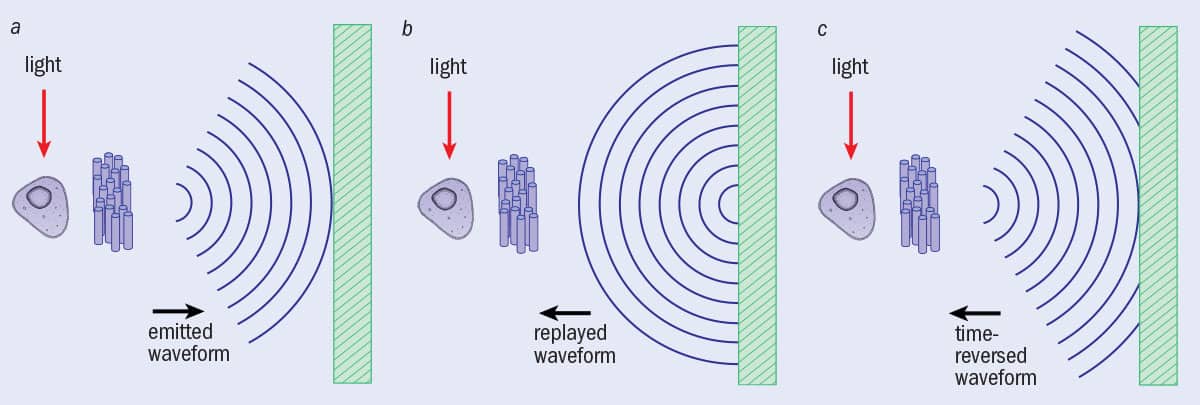 A biological cell is placed near to a resonant metalens, a random collection of tiny oscillators. (a) Upon illumination, a cell shines through the metalens, which converts the evanescent light waves into propagating waves. This waveform reaches a sensor array (right). (b) If the waveform were simply recorded and re-emitted, it would spread out. (c) However, if the waveform is time-reversed before being emitted again, the waveform interferes with itself in such a way that it perfectly converges back to the source. But this last step does not have to be done in practice: an algorithm can predict what would happen were the time-reversed waveform to be emitted, creating a computer-based image with details smaller than the diffraction limit.
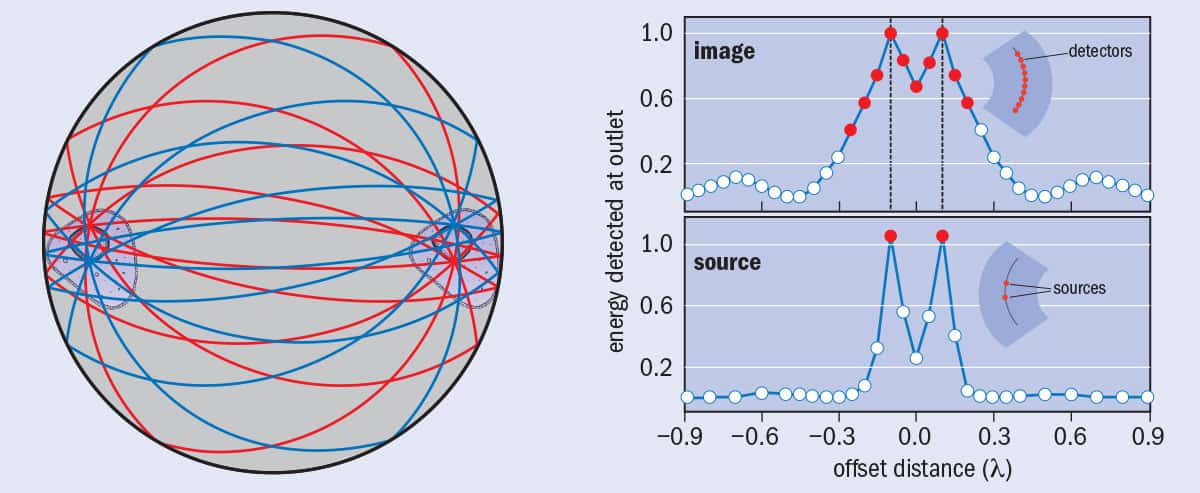 Maxwell’s fisheye is a flat lens with a spatially varying refractive index, which causes all light rays emitted from one point on the lens to meet at a point exactly opposite. In the design for a practical fisheye by Ulf Leonhardt and others (a), a mirror surrounds the lens, which enables an object to be placed not just on the surface of the lens but anywhere within it and still be imaged. In an experiment, Leonhardt’s group placed two microwave sources separated by a fifth of a wavelength on one side of the lens, and on the other side a bank of dissimilar microwave detectors separated by a 20th of a wavelength. (b) Only the detectors precisely opposite the two sources registered peak microwave signals. The researchers believe this is evidence that Maxwell’s fisheye can image beyond the diffraction limit.
 The amount of light collected by a lens – defined by the lens’s numerical aperture – is key to imaging with higher resolution. According to Abbe’s formula, the greater the numerical aperture, the smaller the diffraction limit. (a) Even a large conventional lens struggles to collect much of the light emitted by an object – a lot passes by the sides. (b) A scattering layer placed before a lens captures light that would otherwise have been lost, thanks to the random path taken by light rays as they pass through the layer.