With so much fascinating research going on in quantum science and technology, it’s hard to pick just a handful of highlights. Fun, but hard. Research on entanglement-based imaging and quantum error correction both appear in Physics World’slist of 2024’s top 10 breakthroughs, but beyond that, here are a few other achievements worth remembering as we head into 2025 – the International Year of Quantum Science and Technology.
Quantum sensing
In July, physicists at Germany’s Forschungszentrum Jülich and Korea’s IBS Center for Quantum Nanoscience (QNS) reported that they had fabricated a quantum sensor that can detect the electric and magnetic fields of individual atoms. The sensor consists of a molecule containing an unpaired electron (a molecular spin) that the physicists attached to the tip of a scanning-tunnelling microscope. They then used it to measure the magnetic and electric dipole fields emanating from a single iron atom and a silver dimer on a gold substrate.
Not to be outdone, an international team led by researchers at the University of Melbourne, Australia, announced in August that they had created a quantum sensor that detects magnetic fields in any direction. The new omnidirectional sensor is based on a recently-discovered carbon-based defect in a two-dimensional material, hexagonal boron nitride (hBN). This same material also contains a boron vacancy defect that enables the sensor to detect temperature changes, too.
Quantum communications
One of the challenges with transmitting quantum information is that pretty much any medium you send it through – including high-spec fibre optic cables and even the Earth’s atmosphere – is at least somewhat good at absorbing photons and preventing them from reaching their intended destination.
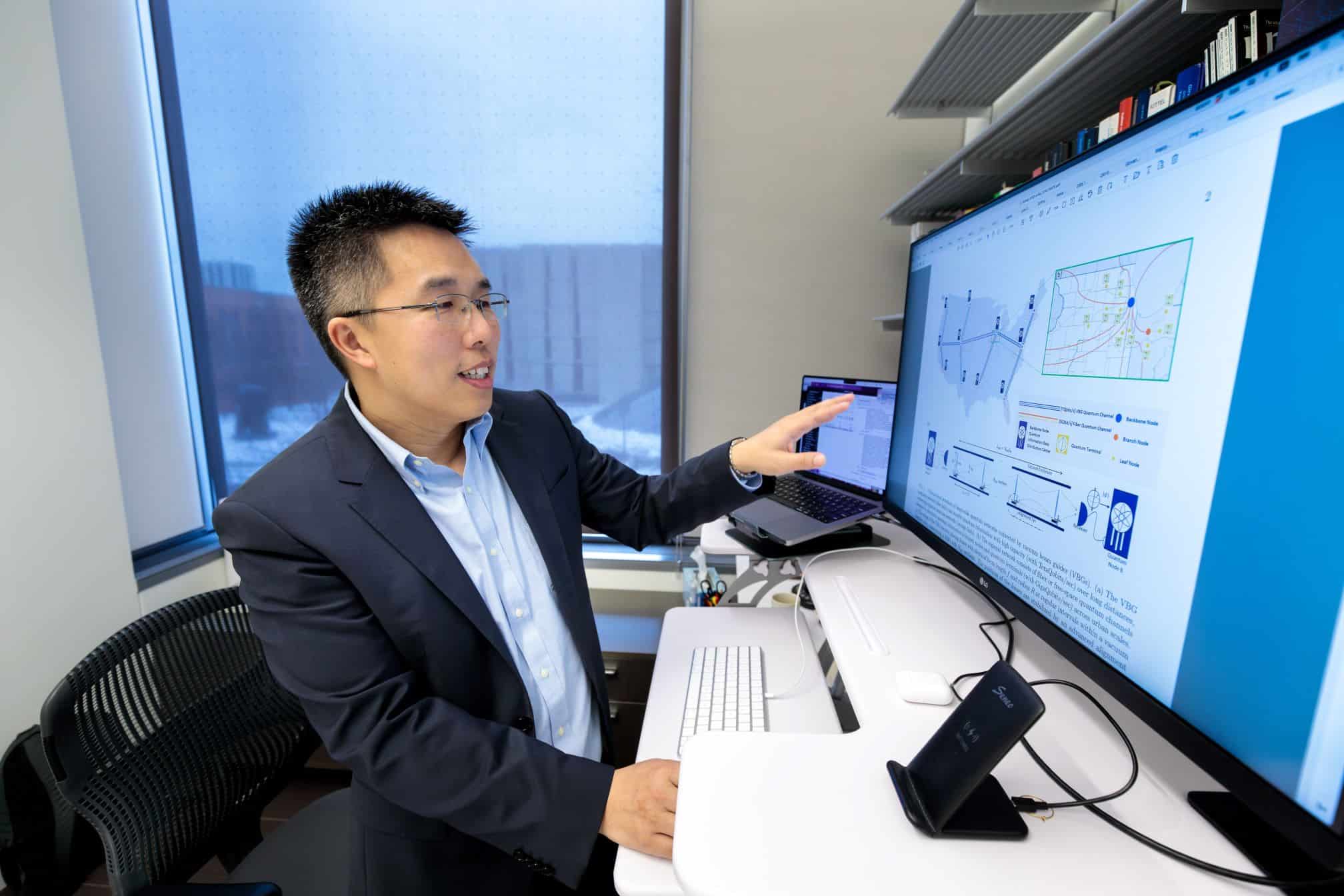
Networking: Liang Jiang reviews the proposed quantum network using vacuum beam guides, which would have ranges of thousands of kilometers and capacities of 10 trillion qubits per second. (Courtesy: UChicago Pritzker School of Molecular Engineering/John Zich)
In July, a team at the University of Chicago, the California Institute of Technology and Stanford University proposed a novel solution. A continent-scale network of vacuum-sealed tubes, they suggested, could transmit quantum information at rates as high as 1013 qubits per second. This would exceed currently-available quantum channels based on satellites or optical fibres by at least four orders of magnitude. Whether anyone will actually build such a network is, of course, yet to be determined – but you have to admire the ambition behind it.
Quantum fundamentals
Speaking of ambition, this year saw a remarkable flurry of ideas for using quantum devices and quantum principles to study gravity. One innovative proposal involves looking for the gravitational equivalent of the photoelectric effect in a system of resonant bars that have been cooled and tuned to vibrate when they absorb a graviton from an incoming gravitational wave. The idea is that absorbing a graviton would change the quantum state of the column, and this change of state would, in principle, be detectable.
Detecting gravity: Researchers have proposed an experiment that could detect the elusive graviton – a quantum of gravity – using quantum sensing. (Courtesy: Pikovski research group)
Another quantum gravity proposal takes its inspiration from an even older experiment: the Cavendish torsion balance. The quantum version of this 18th-century classic would involve studying the correlations between two torsion pendula placed close together as they rotate back and forth like massive harmonic oscillators. If correlations appear that can’t be accounted for within a classical theory of gravity, this could imply that gravity is not, in fact, classical.
Perhaps the most exciting development in this space, though, is a new experimental technique for measuring the pull of gravity on a micron-scale particle. Objects of this size are just above the limit where quantum effects start to become apparent, and the Leiden and Southampton University researchers who performed the experiment have ideas for how to push their system further towards this exciting regime. Definitely one to keep an eye on.
The best of the rest
It wouldn’t be quantum if it wasn’t at least little bit weird, so here’s a few head-scratchers for you to puzzle over.
From tumour-killing quantum dots to proton therapy firsts, this year has seen the traditional plethora of exciting advances in physics-based therapeutic and diagnostic imaging techniques, plus all manner of innovative bio-devices and biotechnologies for improving healthcare. Indeed, the Physics World Top 10 Breakthroughs for 2024 included a computational model designed to improve radiotherapy outcomes for patients with lung cancer by modelling the interaction of radiation with lung cells, as well as a method to make the skin of live mice temporarily transparent to enable optical imaging studies. Here are just a few more of the research highlights that caught our eye.
Marvellous MRI machines
This year we reported on some important developments in the field of magnetic resonance imaging (MRI) technology, not least of which was the introduction of a 0.05 T whole-body MRI scanner that can produce diagnostic quality images. The ultralow-field scanner, invented at the University of Hong Kong’s BISP Lab, operates from a standard wall power outlet and does not require shielding cages. The simplified design makes it easier to operate and significantly lower in cost than current clinical MRI systems. As such, the BISP Lab researchers hope that their scanner could help close the global gap in MRI availability.
Moving from ultralow- to ultrahigh-field instrumentation, a team headed up by David Feinberg at UC Berkeley created an ultrahigh-resolution 7 T MRI scanner for imaging the human brain. The system can generate functional brain images with 10 times better spatial resolution than current 7 T scanners, revealing features as small as 0.35 mm, as well as offering higher spatial resolution in diffusion, physiological and structural MR imaging. The researchers plan to use their new NexGen 7 T scanner to study underlying changes in brain circuitry in degenerative diseases, schizophrenia and disorders such as autism.
Meanwhile, researchers at Massachusetts Institute of Technology and Harvard University developed a portable magnetic resonance-based sensor for imaging at the bedside. The low-field single-sided MR sensor is designed for point-of-care evaluation of skeletal muscle tissue, removing the need to transport patients to a centralized MRI facility. The portable sensor, which weighs just 11 kg, uses a permanent magnet array and surface RF coil to provide low operational power and minimal shielding requirements.
Proton therapy progress
Alongside advances in diagnostic imaging, 2024 also saw a couple of firsts in the field of proton therapy. At the start of the year, OncoRay – the National Center for Radiation Research in Oncology in Dresden – launched the world’s first whole-body MRI-guided proton therapy system. The prototype device combines a horizontal proton beamline with a whole-body MRI scanner that rotates around the patient, a geometry that enables treatments both with patients lying down or in an upright position. Ultimately, the system could enable real-time MRI monitoring of patients during cancer treatments and significantly improve the targeting accuracy of proton therapy.
OncoRay’s research prototype The proton therapy beamline (left) and the opened MRI-guided proton therapy system, showing the in-beam MRI (centre) and patient couch (right). (Courtesy: UKD/Kirsten Lassig)
Also aiming to enhance proton therapy outcomes, a team at the PSI Center for Proton Therapy performed the first clinical implementation of an online daily adaptive proton therapy (DAPT) workflow. Online plan adaptation, where the patient remains on the couch throughout the replanning process, could help address uncertainties arising from anatomical changes during treatments. In five adults with tumours in rigid body regions treated using DAPT, the daily adapted plans provided target coverage to within 1.1% of the planned dose and, in over 90% of treatments, improved dose metrics to the targets and/or organs-at-risk. Importantly, the adaptive approach took just a few minutes longer than a non-adaptive treatment, remaining within the 30-min time slot allocated for a proton therapy session.
Bots and dots
Last but certainly not least, this year saw several research teams demonstrate the use of tiny devices for cancer treatment. In a study conducted at the Institute for Bioengineering of Catalonia, for instance, researchers used self-propelling nanoparticles containing radioactive iodine to shrink bladder tumours.
Cell death by dots Schematic illustration showing the role of graphene quantum dots as nanozymes for tumour catalytic therapy. (Courtesy: FHIPS)
Upon injection into the body, these “nanobots” search for and accumulate inside cancerous tissue, delivering radionuclide therapy directly to the target. Mice receiving a single dose of the nanobots experienced a 90% reduction in the size of bladder tumours compared with untreated animals.
At the Chinese Academy of Sciences’ Hefei Institutes of Physical Science, a team pioneered the use of metal-free graphene quantum dots for chemodynamic therapy. Studies in cancer cells and tumour-bearing mice showed that the quantum dots caused cell death and inhibition of tumour growth, respectively, with no off-target toxicity in the animals.
Finally, scientists at Huazhong University of Science and Technology developed novel magnetic coiling “microfibrebots” and used them to stem arterial bleeding in a rabbit – paving the way for a range of controllable and less invasive treatments for aneurysms and brain tumours.
December might be dark and chilly here in the northern hemisphere, but it’s summer south of the equator – and for many people that means eating ice cream.
It turns out that the physics of ice cream is rather remarkable – as I discovered when I travelled to Canada’s University of Guelph to interview the food scientist Douglas Goff. He is a leading expert on the science of frozen desserts and in this podcast he talks about the unique material properties of ice cream, the analytical tools he uses to study it, and why ice cream goes off when it is left in the freezer for too long.
Each year, the International Association of Physics Students organizes a physics competition for bachelor’s and master’s students from across the world. Known as the Physics League Across Numerous Countries for Kick-ass Students (PLANCKS), it’s a three-day event where teams of three to four students compete to answer challenging physics questions.
In the UK and Ireland, teams compete in a preliminary competition to be sent to the final. Here are some fiendish questions from past PLANCKS UK and Ireland preliminaries and the 2024 final in Dublin, written by Anthony Quinlan and Sam Carr, for you to try this holiday season.
Question 1: 4D Sun
Imagine you have been transported to another universe with four spatial dimensions. What would the colour of the Sun be in this four-dimensional universe? You may assume that the surface temperature of the Sun is the same as in our universe and is approximately T = 6 × 10³ K. [10 marks]
Boltzmann constant, kB = 1.38 × 10⁻²³ J K−1
Speed of light, c = 3 × 10⁸ m s−1
Question 2: Heavy stuff
In a parallel universe, two point masses, each of 1 kg, start at rest a distance of 1 m apart. The only force on them is their mutual gravitational attraction, F = –Gm1m2/r2. If it takes 26 hours and 42 minutes for the two masses to meet in the middle, calculate the value of the gravitational constant G in this universe. [10 marks]
Question 3: Just like clockwork
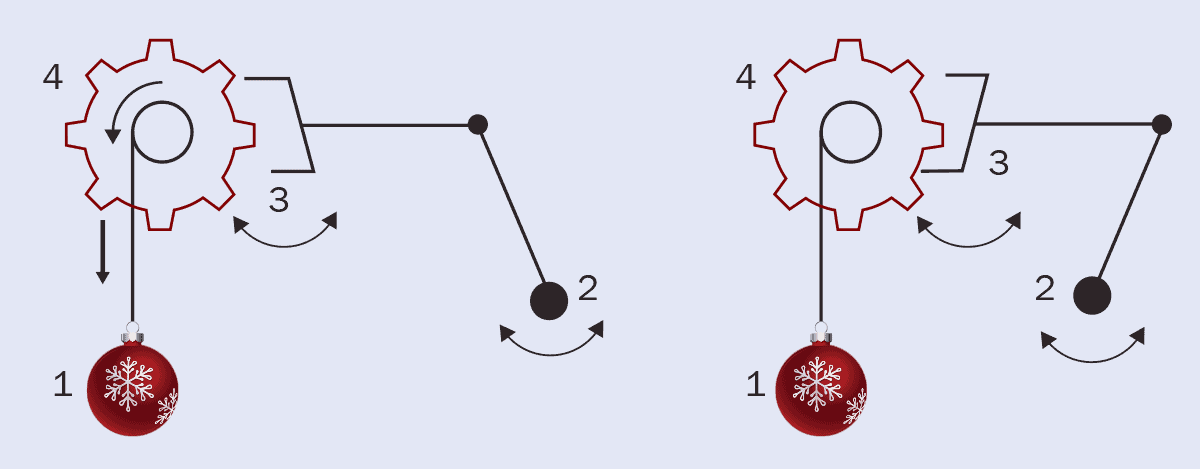
Consider a pendulum clock that is accurate on the Earth’s surface. Figure 1 shows a simplified view of this mechanism.
1 Tick tock Simplified schematic of a pendulum clock mechanism. When the pendulum swings one way (a), the escapement releases the gear attached to the hanging mass and allows it to fall. When the pendulum swings the other way (b) the escapement stops the gear attached to the mass moving so the mass stays in place. (Courtesy: Katherine Skipper/IOP Publishing)
A pendulum clock runs on the gravitational potential energy from a hanging mass (1). The other components of the clock mechanism regulate the speed at which the mass falls so that it releases its gravitational potential energy over the course of a day. This is achieved using a swinging pendulum of length l (2), whose period is given by
where g is the acceleration due to gravity.
Each time the pendulum swings, it rocks a mechanism called an “escapement” (3). When the escapement moves, the gear attached to the mass (4) is released. The mass falls freely until the pendulum swings back and the escapement catches the gear again. The motion of the falling mass transfers energy to the escapement, which gives a “kick” to the pendulum that keeps it moving throughout the day.
Radius of the Earth, R = 6.3781 × 10⁶ m
Period of one Earth day, τ0 = 8.64 × 10⁴ s
How slow will the clock be over the course of a day if it is lifted to the hundredth floor of a skyscraper? Assume the height of each storey is 3 m. [4 marks]
Question 4: Quantum stick
Imagine an infinitely thin stick of length 1 m and mass 1 kg that is balanced on its end. Classically this is an unstable equilibrium, although the stick will stay there forever if it is perfectly balanced. However, in quantum mechanics there is no such thing as perfectly balanced due to the uncertainty principle – you cannot have the stick perfectly upright and not moving at the same time. One could argue that the quantum mechanical effects of the uncertainty principle on the system are overpowered by others, such as air molecules and photons hitting it or the thermal excitation of the stick. Therefore, to investigate we would need ideal conditions such as a dark vacuum, and cooling to a few millikelvins, so the stick is in its ground state.
Moment of inertia for a rod,
where m is the mass and l is the length.
Uncertainty principle,
There are several possible approximations and simplifications you could make in solving this problem, including:
sinθ ≈ θ for small θ
and
Calculate the maximum time it would take such a stick to fall over and hit the ground if it is placed in a state compatible with the uncertainty principle. Assume that you are on the Earth’s surface. [10 marks]
Hint: Consider the two possible initial conditions that arise from the uncertainty principle.
Answers will be posted here on the Physics World website next month. There are no prizes.
If you’re a student who wants to sign up for the 2025 edition of PLANCKS UK and Ireland, entries are now open at plancks.uk
A reusable and biodegradable fibrous foam developed by researchers at Wuhan University in China can remove up to 99.8% of microplastics from polluted water. The foam, which is made from a self-assembled network of chitin and cellulose obtained from biomass wastes, has been successfully field-tested in four natural aquatic environments.
The amount of plastic waste in the environment has reached staggering levels and is now estimated at several billion metric tons. This plastic degrades extremely slowly and poses a hazard for ecosystems throughout its lifetime. Aquatic life is particularly vulnerable, as micron-sized plastic particles can combine with other pollutants in water and be ingested by a wide range of organisms. Removing these microplastic particles would help limit the damage, but standard filtration technologies are ineffective as the particles are so small.
A highly porous interconnected structure
The new adsorbent developed by Wuhan’s Hongbing Deng and colleagues consists of intertwined beta-chitin nanofibre sheets (obtained from squid bone) with protonated amines and suspended cellulose fibres (obtained from cotton). This structure contains a number of functional groups, including -OH, -NH3+ and -NHCO- that allow the structure to self-assemble into a highly porous interconnected network.
This self-assembly is important, Deng explains, because it means the foam does not require “complex processing (no cross-linking and minimal use of chemical reagents) or adulteration with toxic or expensive substances,” he tells Physics World.
The functional groups make the surface of the foam rough and positively charged, providing numerous sites that can interact and adsorb plastic particles ranging in size from less than 100 nm to over 1000 microns. Deng explains that multiple mechanisms are at work during this process, including physical interception, electrostatic attraction and intermolecular interactions. The latter group includes interactions that involv hydrogen bonding, van der Waals forces and weak hydrogen bonding interactions (between OH and CH groups, for example).
The researchers tested their foam in lake water, coastal water, still water (a small pond) and water used for agricultural irrigation. They also combined these systematic adsorption experiments with molecular dynamics (MD) simulations and Hirshfeld partition (IGMH) calculations to better understand how the foam was working.
They found that the foam can adsorb a variety of nanoplastics and microplastics, including the polystyrene, polymethyl methacrylate, polypropylene and polyethylene terephthalate found in everyday objects such as electronic components, food packaging and textiles. Importantly, the foam can adsorb these plastics even in water bodies polluted with toxic metals such as lead and chemical dyes. It adsorbed nearly 100% of the particles in its first cycle and around 96-98% of the particles over the following five cycles.
“The great potential of biomass”
Because the raw materials needed to make the foam are readily available, and the fabrication process is straightforward, Deng thinks it could be produced on a large scale. “Other microplastic removal materials made from biomass feedstocks have been reported in recent years, but some of these needed to be functionalized with other chemicals,” he says. “Such treatments can increase costs or hinder their large-scale production.”
Deng and his team have applied for a patent on the material and are now looking for industrial partners to help them produce it. In the meantime, he hopes the work will help draw attention to the microplastic problem and convince more scientists to work on it. “We believe that the great potential of biomass will be recognized and that the use of biomass resources will become more diverse and thorough,” he says.
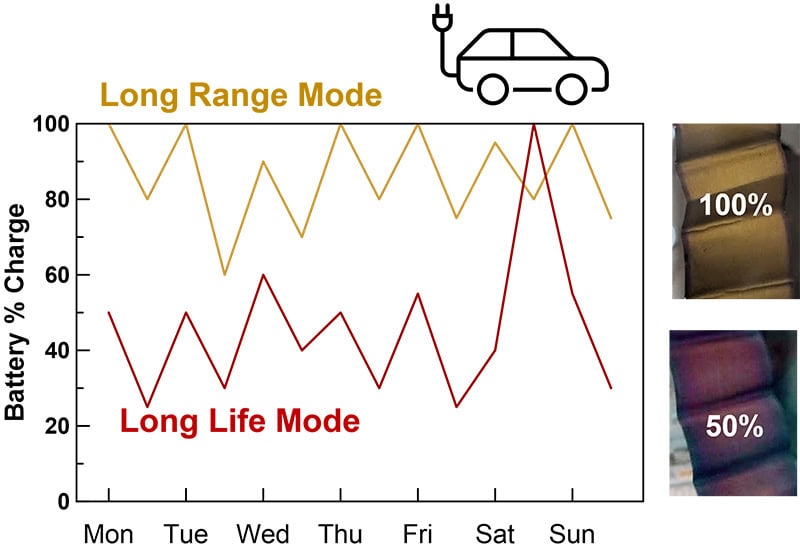
Lithium iron phosphate (LFP) battery cells are ubiquitous in electric vehicles and stationary energy storage because they are cheap and have a long lifetime. This webinar will show our studies comparing 240 mAh LFP/graphite pouch cells undergoing charge-discharge cycles over 5 state of charge (SOC) windows (0%–25%, 0%–60%, 0%–80%, 0%–100%, and 75%–100%). To accelerate the degradation, elevated temperatures of 40°C and 55°C were used. In more realistic operating temperatures, it is expected that LFP cells will perform better with longer lifetimes. In this study, we found that cycling LFP cells across a lower average SOC result in less capacity fade than cycling across a higher average SOC, regardless of depth of discharge. The primary capacity fade mechanism is lithium inventory loss due to: lithiated graphite reactivity with electrolyte, which increases incrementally with SOC, and lithium alkoxide species causing iron dissolution and deposition on the negative electrode at high SOC which further accelerates lithium inventory loss. Our results show that even low voltage LFP systems (3.65 V) have a trade-off between average SOC and lifetime. Operating LFP cells at lower average SOC could extend their lifetime substantially in both EV and grid storage applications.
Eniko Zsoldos is a 5th year PhD candidate in chemistry at Dalhousie University in the Jeff Dahn research group. Her current research focuses on understanding degradation mechanisms in a variety of lithium-ion cell chemistries (NMC, LFP, LMO) using techniques such as isothermal microcalorimetry and electrolyte analysis. Eniko received her undergraduate degree in nanotechnology engineering from the University of Waterloo. During her undergrad, she was a member of the Waterloo Formula Electric team, building an electric race car for FSAE student competitions. She has completed internships at Sila Nanotechnologies working on silicon-based anodes for batteries, and at Tesla working on dry electrode processing in Fremont, CA.
In my previous article, I highlighted some of the quantum and green-energy companies that won Business Innovation Awards from the Institute of Physics in 2024. But imaging and medical-physics firms did well too. Having sat on the judging panel for the awards, I saw some fantastic entries – and picking winners wasn’t easy. Let me start, though, with Geoptic, which is one of an elite group of firms to win a second IOP business award, adding a Business Innovation Award to its start-up prize in 2020.
Geoptic is a spin-out from three collaborating groups of physicists at the universities of Durham, Sheffield and St Mary’s Twickenham. The company uses cosmic-ray muon radiography and tomography to study large engineering structures. In particular, it was honoured by the IOP for using the technique to ensure the safety of tunnels on the UK’s railway network.
Many of the railway tunnels in the UK date back to the mid-19th century. To speed up construction, temporary shafts were bored vertically down below the ground, allowing workers to dig at multiple points along the route of the tunnel. When the tunnel was complete, the shafts would be sealed, but their precise number and location is often unclear.
The shafts are a major hazard to the tunnel’s integrity, which is not great for Network Rail – the state-owned body that’s responsible for the UK’s rail infrastructure. Geoptic has, however, been working with Network Rail to provide its engineers with a clear structural view of the dangers that lurk along its route. In my view, it’s a really innovating imaging company, solving challenging real-world problems.
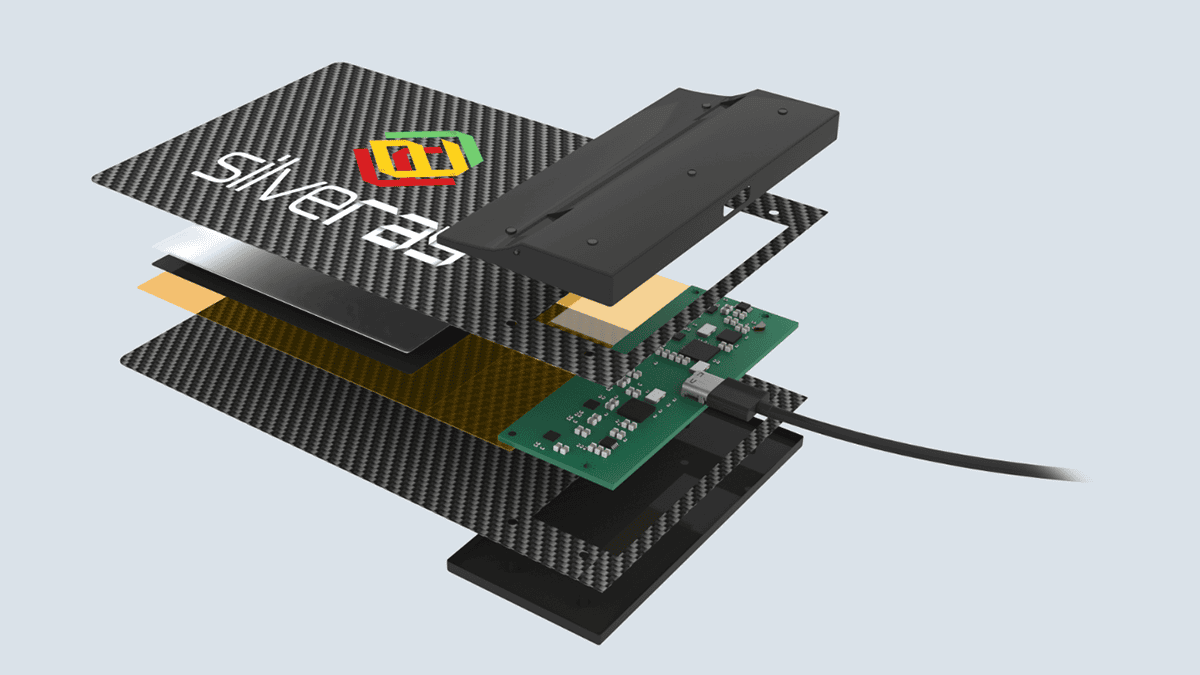
Another winner is Silveray, which was spun off from the University of Surrey. It’s picked up an IOP Business Start-up Award for creating flexible, “colour” X-ray detectors based on proprietary semiconductor materials. Traditional X-ray images are black and white, but what Silveray has done is to develop a nano-particle semiconductor ink that can be coated on to any surface and work at multiple wavelengths.
Visionary idea Silveray won an IOP Business Start-up Award for creating flexible, “colour” X-ray detectors based on proprietary semiconductor materials. (Courtesy: Silveray)
The X-ray detectors, which are flexible, can simply be wrapped around pipes and other structures that need to be imaged. Traditionally, this has been done using analogue X-ray film that has to be developed in an off-site dark room. That’s costly and time-consuming – especially if images failed to be recorded. Silveray’s detectors instead provide digital X-ray images in real time, making it an exciting and innovative technology that could transform the $5bn X-ray detector market.
Phlux Technology, meanwhile, has won an IOP Business Start-up Award for developing patented semiconductor technology for infrared light sensors that are 12 times more sensitive than the best existing devices, making them ideal for fast, accurate 3D imaging. Set up by researchers at the University of Sheffield, Phlux’s devices have many potential applications especially in light detection and ranging (LIDAR), laser range finders, optical-fibre test instruments and optical and quantum communications networks.
In LIDAR, Phlux’s can have 12 times greater image resolution for a given transmitter power. Its sensors could also make vehicles much safer by enabling higher-resolution images to be created over longer distances, making safety systems more effective. The first volume market for the company is likely to be in communications and where a >10 dB increase in detector sensitivity is going to be well received by the market.
Given the number of markets that will benefit from an “over an order of magnitude” improvement, Phlux is one to watch for a future Business Innovation Award too.
Medical marvel
Let me finish by mentioning Crainio, a medical technology spin-off company from City, University of London, which has won the 2024 Lee Lucas award. This award honours promising start-up firms in the medical and healthcare sector thanks to a generous donation by Mike and Ann Lee (née Lucas). These companies need all the support, time and money they can get given the many challenging regulatory requirements in the medical sector.
Crainio’s technology allows healthcare workers to measure intracranial pressure (ICP), a vital indicator of brain health after a head injury. Currently, the only way to measure ICP directly is for a neurosurgeon to drill a hole in a patient’s skull and place an expensive probe in the brain. It’s a highly invasive procedure that can’t easily be carried out in the “golden hours” immediately after an accident, requiring access to scarce and expensive neurosurgery resources. The procedure is also medically risky, leading to potential infection, bleeding and other complications.
Crainio’s technology eliminates these risks, enabling direct measurement of ICP through a simple non-invasive probe applied to the forehead. The technology – using infrared photoplethysmography (PPG) combined with machine learning – is based on years of research and development work conducted by Panicos Kyriacou and his team of biomedical engineers at City.
Good levels of accuracy have been demonstrated in clinical studies conducted at the Royal London Hospital. It certainly seems a much better plan than drilling a hole in your head as I am sure you can agree – making Crainio a worthy winner, with its non-invasive technology it should have a positive impact on patients globally. I hope the regulatory hurdles can be quickly cleared so the company can start helping patients as soon as possible.
As I have mentioned before, all physics-based firms require time and energy to develop products and become globally significant. There’s also the perennial difficulty of explaining a product idea, which is often quite specialized, to potential investors who have little or no science background. An IOP start-up award can therefore show that your technology has won approval from judges with solid physics and business experience.
I hope, therefore, that your company, if you have one, will be inspired to apply. Also remember that the IOP offers three other awards (Katharine Burr Blodgett, Denis Gabor and Clifford Paterson) for individuals or teams who have been involved in innovative physics with a commercial angle. Good luck – and remember, you have to be in it to win it. Award entries for 2025 will be open in February 2025.
Right now, I spend 95% of my time being a dean, and in that job the skill I use every day is problem-solving. That’s one of the first things we learn as physicists: it’s not enough just to know the technical background, you have to be able to apply it. I find myself looking at everything as systems of equations – this person wants this, this thing needs to go there, we need money to do that thing – and thinking about how to put them together. We do a really good job in physics of teaching people how to think, so they can take a broad look at things and make them work.
What do you like best and least about your job?
The thing I like best is the opportunity to have a wide impact, not just on the faculty who are doing amazing research, but also on students – our next generation of scientific leaders – and people in the wider community. We do a lot of public service outreach at UChicago PME. Outreach has had a big impact on me so it’s incredibly satisfying that, as dean, I can provide those opportunities at various levels for others.
The thing I like least is that because we have so much to do, figuring out who can do what, and how – within what are always limited resources – often feels like trying to solve a giant jigsaw puzzle. Half the time, it feels like the puzzle board is bigger than the number of pieces, so I’m figuring out how to make things work in ways that sometimes stretch people thin, which can be very frustrating for everybody. We all want to do the best job we can, but we need to understand that we sometimes have limits.
What do you know today that you wish you’d known at the start of your career?
I feel a little guilty saying this because I’m going to label myself as a true “in the lab” scientist, but I wish I’d known how much relationships matter. Early on, when I was a junior faculty member, I was focused on research; focused on training my students; focused on just getting the work done. But it didn’t take long for me to realize that of course, students aren’t just workers. They are twenty-somethings with lives and aspirations and goals.
Thankfully, I figured that out pretty quickly, but at every step along the way, as I try to focus on the problem to solve, I have to remind myself that people aren’t problems. People are people, and you have to work with them to solve problems in ways that work for everybody. I sometimes wish there was more personnel training for faculty, rather than a narrow focus on papers and products, because it really is about people at the end of the day.
Transcranial focused ultrasound is being developed as a potential treatment for various brain diseases and disorders. One big challenge, however, is focusing the ultrasound through the skull, which can blur, attenuate and shift the beam. To minimize these effects, researchers at Zeta Surgical have developed an algorithm that automatically determines the optimal location to place a single-element focused transducer.
For therapeutic applications – including, for example, thermal ablation, drug delivery, disruption of the blood–brain barrier and neuromodulation – the ultrasound beam must be focused onto a small spot in the brain. The resulting high acoustic pressure at this spot generates a high temperature or mechanical force to treat the targeted tissues, ideally while avoiding overheating of nearby healthy tissues.
Unfortunately, when the ultrasound beam passes through the skull, which is a complex layered structure, it is both attenuated and distorted. This decreases the acoustic pressure at the focus, defocusing the beam and shifting the focus position.
Ultrasound arrays with multiple elements can compensate for such aberrations by controlling the individual array elements. But cost constraints mean that most applications still use single-element focused transducers, for which such compensation is difficult. This can result in ineffective or even unsafe treatments. What’s needed is a method that finds the optimal position to place a single-element focused ultrasound transducer such that defocusing and focus shift are minimized.
Raahil Sha and colleagues have come up with a way to do just this, using an optimization algorithm that simulates the ultrasound field through the skull. Using the k-Wave MATLAB toolbox, the algorithm simulates ultrasound fields generated within the skull cavity with the transducer placed at different locations. It then analyses the calculated fields to quantify the defocusing and focus shift.
The algorithm starts by loading a patient CT scan, which provides information on the density, speed of sound, absorption, geometry and porosity of the skull. It then defines the centre point of the target as the origin and the centre of a single-element 0.5 MHz transducer as the initial transducer location, and determines the initial values of the normalized peak-negative pressure (PNP) and focal volume.
The algorithm then performs a series of rotations of the transducer centre, simulating the PNP and focal volume at each new location. The PNP value is used to quantify the focus shift, with a higher PNP at the focal point representing a smaller shift.
Any change in the focal position is particularly concerning as it can lead to off-target tissue disruption. As such, the algorithm first identifies transducer positions that keep the focus shift below a specified threshold. Within these confines, it then finds the location with the smallest focal volume. This is then output as the optimal location for placing the transducer. In this study, this optimal location had a normalized PNP of 0.966 (higher than the pre-set threshold of 0.95) and a focal volume 6.8% smaller than that without the skull in place.
Next, the team used a Zeta neuro-navigation system and a robotic arm to automatically guide a transducer to the optimal location on a head phantom and track the placement accuracy in real time. In 45 independent registration attempts, the surgical robot could position the transducer at the optimal location with a mean position error of 0.0925 mm and a mean trajectory angle error of 0.0650 mm. These low values indicate the potential for accurate transducer placement during treatment.
The researchers conclude that the algorithm can find the optimal transducer location to avoid large focus shift and defocusing. “With the Zeta navigation system, our algorithm can help to make transcranial focused ultrasound treatment safer and more successful,” they write.
Errors caused by interactions with the environment – noise – are the Achilles heel of every quantum computer, and correcting them has been called a “defining challenge” for the technology. These two teams, working with very different quantum systems, took significant steps towards overcoming this challenge. In doing so, they made it far more likely that quantum computers will become practical problem-solving machines, not just noisy, intermediate-scale tools for scientific research.
Quantum error correction works by distributing one quantum bit of information – called a logical qubit – across several different physical qubits such as superconducting circuits or trapped atoms. While each physical qubit is noisy, they work together to preserve the quantum state of the logical qubit – at least for long enough to do a computation.
Formidable task
Error correction should become more effective as the number of physical qubits in a logical qubit increases. However, integrating large numbers of physical qubits to create a processor with multiple logical qubits is a formidable task. Furthermore, adding more physical qubits to a logical qubit also adds more noise – and it is not clear whether making logical qubits bigger would make them significantly better. This year’s winners of our Breakthrough of the Year have made significant progress in addressing these issues.
The team led by Lukin and Bluvstein created a quantum processor with 48 logical qubits that can execute algorithms while correcting errors in real time. At the heart of their processor are arrays of neutral atoms. These are grids of ultracold rubidium atoms trapped by optical tweezers. These atoms can be put into highly excited Rydberg states, which enables the atoms to act as physical qubits that can exchange quantum information.
What is more, the atoms can be moved about within an array to entangle them with other atoms. According to Bluvstein, moving groups of atoms around the processor was critical for their success at addressing a major challenge in using logical qubits: how to get logical qubits to interact with each other to perform quantum operations. He describes the system as a “living organism that changes during a computation”.
Their processor used about 300 physical qubits to create up to 48 logical qubits, which were used to perform logical operations. In contrast, similar attempts using superconducting or trapped-ion qubits have only managed to perform logical operations using 1–3 logical qubits.
Willow quantum processor
Meanwhile, the team led by Hartmut Neven made a significant advance in how physical qubits can be combined to create a logical qubit. Using Google’s new Willow quantum processor – which offers up to 105 superconducting physical qubits – they showed that the noise in their logical qubit remained below a maximum threshold as they increased the number of qubits. This means that the logical error rate is suppressed exponentially as the number of physical qubits per logical qubit is increased.
Neven told Physics World that the Google system is “the most convincing prototype of a logical qubit built today”. He said that that Google is on track to develop a quantum processor with 100 or even 1000 logical qubits by 2030. He says that a 1000 logical qubit device could do useful calculations for the development of new drugs or new materials for batteries.
Bluvstein, Lukin and colleagues are already exploring how their processor could be used to study an effect called quantum scrambling. This could shed light on properties of black holes and even provide important clues about the nature of quantum gravity.
You can listen to Neven talk about his team’s research in this podcast. Bluvstein and Lukin talk about their group’s work in this podcast.
The Breakthrough of the Year was chosen by the Physics World editorial team. We looked back at all the scientific discoveries we have reported on since 1 January and picked the most important. In addition to being reported in Physics World in 2024, the breakthrough must meet the following criteria:
Significant advance in knowledge or understanding
Importance of work for scientific progress and/or development of real-world applications
Of general interest to Physics World readers
Before we picked our winners, we released the Physics World Top 10 Breakthroughs for 2024, which served as our shortlist. The other nine breakthroughs are listed below in no particular order.
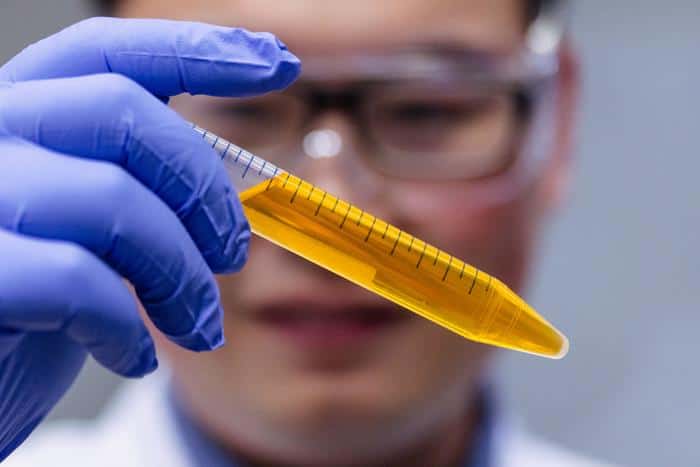
Achieving optical transparency First author Zihao Ou holds a vial of the common yellow food dye tartrazine in solution. By applying a mixture of water and tartrazine, Ou and colleagues made the skin on the skulls and abdomens of live mice transparent. (Courtesy: University of Texas at Dallas)
To a team of researchers at Stanford University in the US for developing a method to make the skin of live mice temporarily transparent. One of the challenges of imaging biological tissue using optical techniques is that tissue scatters light, which makes it opaque. The team, led by Zihao Ou (now at The University of Texas at Dallas), Mark Brongersma and Guosong Hong, found that the common yellow food dye tartrazine strongly absorbs near-ultraviolet and blue light and can help make biological tissue transparent. Applying the dye onto the abdomen, scalp and hindlimbs of live mice enabled the researchers to see internal organs, such as the liver, small intestine and bladder, through the skin without requiring any surgery. They could also visualize blood flow in the rodents’ brains and the fine structure of muscle sarcomere fibres in their hind limbs. The effect can be reversed by simply rinsing off the dye. This “optical clearing” technique has so far only been conducted on animals. But if extended to humans, it could help make some types of invasive biopsies a thing of the past.
To the AEgIS collaboration at CERN, and Kosuke Yoshioka and colleagues at the University of Tokyo, for independently demonstrating laser cooling of positronium. Positronium, an atom-like bound state of an electron and a positron, is created in the lab to allow physicists to study antimatter. Currently, it is created in “warm” clouds in which the atoms have a large distribution of velocities, making precision spectroscopy difficult. Cooling positronium to low temperatures could open up novel ways to study the properties of antimatter. It also enables researchers to produce one to two orders of magnitude more antihydrogen – an antiatom comprising a positron and an antiproton that’s of great interest to physicists. The research also paves the way to use positronium to test current aspects of the Standard Model of particle physics, such as quantum electrodynamics, which predicts specific spectral lines, and to probe the effects of gravity on antimatter.
To Roman Bauer at the University of Surrey, UK, Marco Durante from the GSI Helmholtz Centre for Heavy Ion Research, Germany, and Nicolò Cogno from GSI and Massachusetts General Hospital/Harvard Medical School, US, for creating a computational model that could improve radiotherapy outcomes for patients with lung cancer. Radiotherapy is an effective treatment for lung cancer but can harm healthy tissue. To minimize radiation damage and help personalize treatment, the team combined a model of lung tissue with a Monte Carlo simulator to simulate irradiation of alveoli (the tiny air sacs within the lungs) at microscopic and nanoscopic scales. Based on the radiation dose delivered to each cell and its distribution, the model predicts whether each cell will live or die, and determines the severity of radiation damage hours, days, months or even years after treatment. Importantly, the researchers found that their model delivered results that matched experimental observations from various labs and hospitals, suggesting that it could, in principle, be used within a clinical setting.
Epigraphene on a chip: the team’s graphene device was grown on a silicon carbide substrate. (Courtesy: Georgia Institute of Technology)
To Walter de Heer, Lei Ma and colleagues at Tianjin University and the Georgia Institute of Technology, and independently to Marcelo Lozada-Hidalgo of the University of Manchester and a multinational team of colleagues, for creating a functional semiconductor made from graphene, and for using graphene to make a switch that supports both memory and logic functions, respectively. The Manchester-led team’s achievement was to harness graphene’s ability to conduct both protons and electrons in a device that performs logic operations with a proton current while simultaneously encoding a bit of memory with an electron current. These functions are normally performed by separate circuit elements, which increases data transfer times and power consumption. Conversely, de Heer, Ma and colleagues engineered a form of graphene that does not conduct as easily. Their new “epigraphene” has a bandgap that, like silicon, could allow it to be made into a transistor, but with favourable properties that silicon lacks, such as high thermal conductivity.
To David Moore, Jiaxiang Wang and colleagues at Yale University, US, for detecting the nuclear decay of individual helium nuclei by embedding radioactive lead-212 atoms in a micron-sized silica sphere and measuring the sphere’s recoil as nuclei escape from it. Their technique relies on the conservation of momentum, and it can gauge forces as small as 10-20 N and accelerations as tiny as 10-7 g, where g is the local acceleration due to the Earth’s gravitational pull. The researchers hope that a similar technique may one day be used to detect neutrinos, which are much less massive than helium nuclei but are likewise emitted as decay products in certain nuclear reactions.
To Andrew Denniston at the Massachusetts Institute of Technology in the US, Tomáš Ježo at Germany’s University of Münster and an international team for being the first to unify two distinct descriptions of atomic nuclei. They have combined the particle physics perspective – where nuclei comprise quarks and gluons – with the traditional nuclear physics view that treats nuclei as collections of interacting nucleons (protons and neutrons). The team has provided fresh insights into short-range correlated nucleon pairs – which are fleeting interactions where two nucleons come exceptionally close and engage in strong interactions for mere femtoseconds. The model was tested and refined using experimental data from scattering experiments involving 19 different nuclei with very different masses (from helium-3 to lead-208). The work represents a major step forward in our understanding of nuclear structure and strong interactions.
To Jelena Vučković, Joshua Yang, Kasper Van Gasse, Daniil Lukin, and colleagues at Stanford University in the US for developing a compact, integrated titanium:sapphire laser that needs only a simple green LED as a pump source. They have reduced the cost and footprint of a titanium:sapphire laser by three orders of magnitude and the power consumption by two. Traditional titanium:sapphire lasers have to be pumped with high-powered lasers – and therefore cost in excess of $100,000. In contrast, the team was able to pump its device using a $37 green laser diode. The researchers also achieved two things that had not been possible before with a titanium:sapphire laser. They were able to adjust the wavelength of the laser light and they were able to create a titanium:sapphire laser amplifier. Their device represents a key step towards the democratization of a laser type that plays important roles in scientific research and industry.
To two related teams for their clever use of entangled photons in imaging. Both groups include Chloé Vernière and Hugo Defienne of Sorbonne University in France, who as duo used quantum entanglement to encode an image into a beam of light. The impressive thing is that the image is only visible to an observer using a single-photon sensitive camera – otherwise the image is hidden from view. The technique could be used to create optical systems with reduced sensitivity to scattering. This could be useful for imaging biological tissues and long-range optical communications. In separate work, Vernière and Defienne teamed up with Patrick Cameron at the UK’s University of Glasgow and others to use entangled photons to enhance adaptive optical imaging. The team showed that the technique can be used to produce higher-resolution images than conventional bright-field microscopy. Looking to the future, this adaptive optics technique could play a major role in the development of quantum microscopes.
To the China National Space Administration for the first-ever retrieval of material from the Moon’s far side, confirming China as one of the world’s leading space nations. Landing on the lunar far side – which always faces away from Earth – is difficult due to its distance and terrain of giant craters with few flat surfaces. At the same time, scientists are interested in the unexplored far side and why it looks so different from the near side. The Chang’e-6 mission was launched on 3 May consisting of four parts: an ascender, lander, returner and orbiter. The ascender and lander successfully touched down on 1 June in the Apollo basin, which lies in the north-eastern side of the South Pole-Aitken Basin. The lander used its robotic scoop and drill to obtain about 1.9 kg of materials within 48 h. The ascender then lifted off from the top of the lander and docked with the returner-orbiter before the returner headed back to Earth, landing in Inner Mongolia on 25 June. In November, scientists released the first results from the mission finding that fragments of basalt – a type of volcanic rock – date back to 2.8 billion years ago, indicating that the lunar far side was volcanically active at that time. Further scientific discoveries can be expected in the coming months and years ahead as scientists analyze more fragments.
Physics World‘s coverage of the Breakthrough of the Year is supported by Reports on Progress in Physics, which offers unparalleled visibility for your ground-breaking research.