Tevatron shuts down

Physicists and dignitaries are gathering at Fermilab on the outskirts of Chicago to mark the final day of collisions at the Tevatron particle collider. The shutdown procedure will begin today at 2 p.m. local time, marking the end of the facility’s 26-year lifetime.

The shutdown comes despite calls to extend operations for a further three years, meaning that the search for the elusive Higgs boson is now likely to become a one-horse race involving the Large Hadron Collider (LHC) at CERN.

Commissioned in 1985, the facility’s achievements include the discovery of the top quark in 1995. This helped the Japanese physicists Makoto Kobayashi and Toshihide Maskawa win the 2008 Nobel Prize in Physics for their prediction of the particle’s existence.

Discoveries kept coming

Other notable discoveries made at the Tevatron are the tau neutrino in 2000; the Bc meson in 1998 and the first sighting of a single top quark in 2009. The collider, which has a circumference of more than six kilometres, also played important roles in the study of CP violation, measuring the mass of the W boson – and more recently, placing constraints on the mass of the Higgs boson.

The Tevatron collides protons with antiprotons at energies as high as 1.96 TeV, which made it the world’s most energetic collider until it was usurped by the LHC in 2009. However, that did not stop physicists working on Tevatron’s two main experiments – CDF and DØ – from churning out interesting results. Earlier this year, for example, particle physicists were buzzing about a mysterious “bump” that was seen in CDF data and could be evidence for a completely new particle.

Tevatron was also a centre of development of new accelerator and detector technology. The collider was the world’s first major accelerator to use superconducting magnets – which allow particles to be accelerated to much higher energies than conventional magnets. During its life time, Tevatron physicists managed to boost the luminosity (collision rate) of the collider to more than 300 times that of the original design.

Accelerator innovations

Fermilab’s director of accelerator physics, Vladimir Shiltsev, puts this and other accelerator-related successes down to a number of key technological developments, including improvements to the Tevatron’s superconducting and permanent magnets; new ways of focusing and collimating the beams; and the development of new methods of high-intensity beam manipulations, which allow physicists to split one bunch of particles into a number of smaller bunches.

On the detector side, Tevatron physicists have pioneered the use of silicon vertex detectors in a hadron collider; played an important role in the development of the ring-imaging Cerenkov counter; as well as making improvements in systems that are used to track particles through the detector.

The Tevatron and its experiments produced about 1400 PhD theses and about one scientific paper per week during its 26 years. CDF and DØ are among the largest scientific collaborations ever, with a paper from either group listing more than 500 authors.

‘Physics by committee’

Although the groups’ successes show that big science can work, not everyone is convinced that “physics by committee” is a good thing. “I’d guess that thing about the Tevatron that captivates me is that no Nobel prizes will likely be awarded for research done at the facility,” says Michael Riordan, a historian of physics at the University of California, Santa Cruz (Kobayashi and Maskawa are theorists who were not involved in the experiments at Tevatron). “The top-quark discovery probably qualifies, but to what three physicists do you award it?” asks Riordan. “Doing physics by committee was a sharp break from what had occurred previously in the United States and had helped it dominate [particle] physics for three decades.”

Riordan is not the only person worried about the future of particle physics in the US. There are currently no plans for a US-based replacement for the Tevatron and all eyes are now on the LHC. While many American physicists are involved in experiments at CERN, the country is not a full member of the lab. As a result, US-based particle physics could be facing a few years in the wilderness. One hope is that the International Linear Collider (ILC) – which is expected to replace the LHC – could be located at Fermilab. However, the ILC promises to be extremely expensive and funding pressures in the US and other countries could mean that the project never gets off the ground.

Meanwhile, at Fermilab, the facility is gearing up for a post-Tevatron world. The ground will soon be broken for the new Illinois Accelerator Research Center, which will see scientists and engineers from Fermilab, Argonne National Lab and Illinois universities working with industrial partners to create new technologies for accelerators.

Audio interview

Chris Quigg speaks to physicsworld.com earlier this year about closing the Tevatron and the future of particle physics in the US:

So long, Tevatron

Tevatron breakthroughs

Tevatron triumphs that have been reported over the years in physicsworld.com:

Tevatron tightens its grip on the Higgs
Top result for Tevatron
Tau neutrino identified at last
Fermilab probes matter-antimatter transitions
New particles turn up in the US
CERN and Fermilab argue over “new” discovery

Big science in a big world

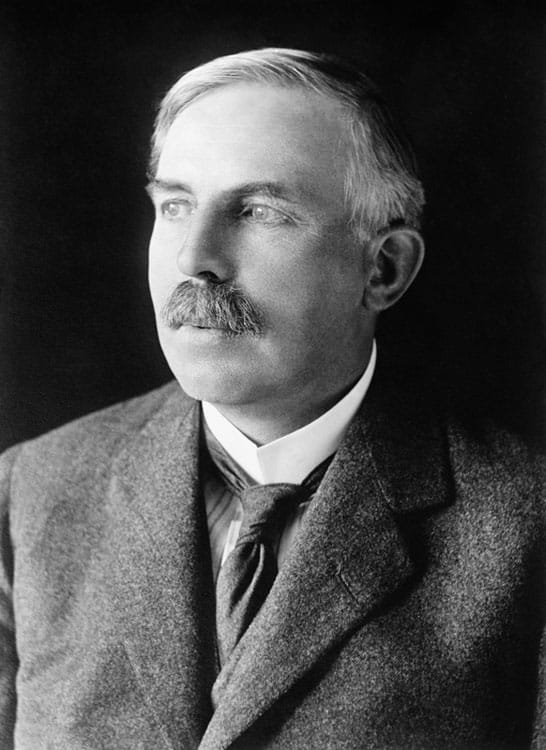
You wake up with an extreme pain in your stomach. Something is seriously wrong. After a fit of vomiting, you are rushed to the nearest medical clinic and, naturally, expect the best doctor straight on the scene. This is what happened to Ernest Rutherford on the night of Thursday 14 October 1937. But Rutherford, by then Lord Rutherford of Nelson, was in the unusual position of having risen so high up within the British establishment that the doctors could not touch him. He lay there in intense pain with a strangulated umbilical hernia, waiting for medical treatment despite being surrounded by some of the country’s best doctors. Why? Because as late as the 1930s, British peerage protocol dictated that only a titled surgeon could operate on a lord. The doctors at the Evelyn Nursing Home in Cambridge could do nothing but wait for the arrival of the knighted surgeon Sir Thomas Dunhill, travelling all the way from Harley Street in London.

The delay cost Rutherford his life. Dunhill arrived in Cambridge but was only able to perform the operation on Friday evening. Despite initial optimism, it was too late: the hernia, having cut off the blood supply to Rutherford’s bowel, ultimately proved fatal. The tissue death and shock of surgery were too much, and he died on 19 October 1937 aged 66.

The human details of this story are of course tragic and Rutherford’s death was mourned across the world. From his former student Pyotr Kapitsa in Russia to the prime minister of New Zealand, the international community was shocked and saddened by the death of this Nobel-prize-winning physicist. Indeed, this far-reaching reaction reflects one particular aspect of Rutherford’s life: that of an international scientist.

Lord Rutherford of Nelson was not born into a world of peerage protocol and titled surgeons. In fact, he was born, thousands of miles from his deathbed, into a very humble farming family in New Zealand. Yet he became the first person born outside of Britain to be interred at Westminster Abbey. This New Zealand boy, who used to milk cattle and dig potatoes for his parents, lies next to two titans of British science: Charles Darwin and Isaac Newton. Such recognition is a sign of how, at the start of the 20th century, science was becoming an increasingly global enterprise.

Following his death, Rutherford’s greatest scientific legacy was undoubtedly that of nuclear physics. In fact, this year marks the centenary of Rutherford’s announcement of the structure of the atom: that now-familiar model of a central positive nucleus surrounded by negative electrons. The birth of nuclear physics paved the way for “big science”, which we traditionally associate with enormously expensive projects such as the Large Hadron Collider or the development of nuclear weapons like those that came out of the Manhattan Project in the 1940s. However, it is also worth remembering the international collaborative world that big science came to nurture. Rutherford’s life and work is a testament to this. In fact, the very title that contributed to his death (“of Nelson”) is a reference to his home province of Nelson, New Zealand. It therefore seems fitting, in this anniversary year, to celebrate the global aspects of Rutherford’s life and work.

The highlights of Rutherford’s scientific career are easy enough to state. It began in Cambridge, where he arrived as a 23-year-old graduate research student in 1895, famously finding that radioactivity consisted of two types of rays that he named alpha and beta. Three years later he moved to McGill University in Montreal, Canada, where he developed the concept of a radioactive half-life, before moving back to Britain in 1907, to Manchester. It was here that Rutherford developed his eponymous model of the atom. But these bald facts miss the relevance, both scientifically and personally, of Rutherford’s origins in New Zealand.

No more potatoes

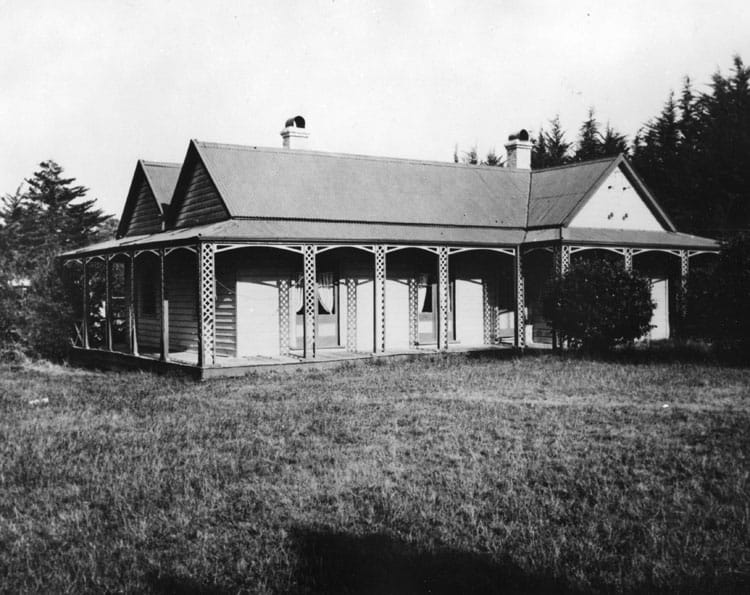
Born in Foxhill near Nelson on the South Island of New Zealand on 30 August 1871, Ernest was one of 12 children. Later, as Lord Rutherford, he would say that if he had not been a scientist, he would have been a farmer. He spent his early days chopping wood and shooting pigeons in the bush. It is unlikely that Rutherford’s experience on the farm influenced his later scientific discoveries (although he did experiment with a homemade camera and model watermill while a young boy). But nonetheless, his early academic work in New Zealand clearly had a great impact on his life.

By 1893 Rutherford had already earned two degrees: a BA and MA from Canterbury College in Christchurch, New Zealand, and, perhaps not quite ready to leave higher education, he began a BSc at the same institution the following year. As part of the BSc he began investigating the hottest topic of the moment: electromagnetic waves. Rutherford conducted his early research in a cold underground cellar lovingly referred to as “the den”. His other research lab (if you can call it that) was a narrow room dubbed “the shed”. In this dingy corridor, Rutherford transmitted and detected electromagnetic waves using coils of magnetized iron wire. (He would later repeat and develop these experiments, transmitting signals between the lofty spires of Cambridge colleges.) Despite the somewhat grim setting, Rutherford was developing into a keen researcher and later that year published his first research paper.

Rutherford certainly proved himself an impressive young experimentalist in New Zealand. That in itself might not seem so special, but thousands of miles away in England, impressive young researchers were hard to come by. Particularly in Cambridge, an extreme emphasis on formalized teaching and examination had led to a lack of practical research skills (arguably a worry for students and academics even today). In an effort to remedy this, the Royal Society in London offered scholarships to recruit researchers from all over the world, using the proceeds of the 1851 Great Exhibition of Nations. In these, we see the beginnings of truly international science.

Rutherford applied for a scholarship but ended up enduring an agonizing wait to hear of his success. Another candidate from Auckland University College had been nominated but, thankfully for science, pulled out after receiving an attractive job offer. (That or he bottled at the idea of an 11,000-mile journey.) Rutherford was at home when he received the news, digging potatoes for his mother. She rushed out to tell him and, on doing so, Rutherford reportedly quipped “That’s the last potato I’ll ever dig.”

Rutherford was able to avoid the tough farming life his family had been used to, but he was not without worries. Amusingly, Rutherford’s immediate concern upon his acceptance to Cambridge was that his new tutors might be old fuddy-duddies, referring to them as “fossilized”. As if to confirm his suspicions, J J Thomson, head of the Cavendish Laboratory at the time, invited Rutherford for a game of golf soon after his arrival. In a letter to his New Zealand fiancée Mary Newton, whom he would later marry in 1900, Rutherford revealed his private misgivings about the new world in which he came to inhabit: “I don’t think, however, I am quite old enough for golf yet – at any rate to take it up with much enthusiasm.”

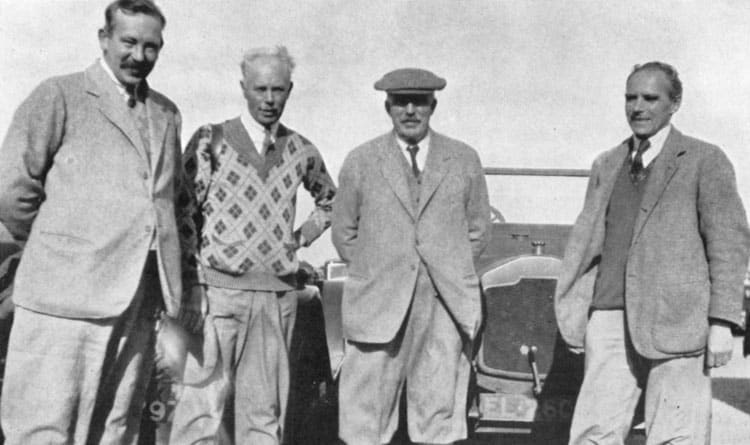
Of course, part of international science is dealing with such a clash of cultures. At first, Rutherford found things difficult. Other than trying to avoid becoming a fossilized professor, Rutherford sensed that not everyone he encountered at the Cavendish welcomed him, writing that “There is one demonstrator on whose chest I would like to dance a Maori war-dance.” Thankfully, Rutherford refrained from foot-stomping and soon got into the swing of things. Indeed, he later played golf regularly with his Cambridge chums, as part of what was loosely known as the “Trinity Circus”, reportedly with a great sense of humour (Physics World January 2006 p48, print edition only). In fact, during one round in the 1920s, Rutherford grew impatient waiting for physicist Ralph Fowler to line up his shot. Rutherford just could not resist and shouted “Get on, get on, correct to 1 in 1000!”

Science without borders

Over the next 30 years Rutherford enjoyed a truly distinguished career. He achieved a Nobel Prize for Chemistry (despite having famously stated that “all science is either physics or stamp collecting”), a knighthood, a peerage and presidency of the Royal Society (Physics World September 1998 pp35–40). Despite all this, it is arguably Rutherford’s students – including Hans Geiger of Germany and Niels Bohr of Denmark – who represent his greatest legacy, particularly in terms of international “big science”.

On Rutherford’s arrival at Cambridge in 1895, he was one of the first international graduate students at the university. By the time of his death, Rutherford had both taught and helped to develop students from all over the world, clearly conscious of the value of such an enterprise. In fact, as a fellow and later president of the Royal Society, Rutherford sat on the very committee awarding the 1851 Scholarships. Whenever anyone challenged the value of the scholarships, Rutherford was ready with what must have been the ultimate comeback: “You might remember that if there hadn’t been any overseas scholarships, you wouldn’t have had any Rutherford.” Through overseas scholarships the scientific community was able to draw on a new and diverse set of talent: those with a different outlook and a variety of research experience.

Rutherford’s favourite student is perhaps the best example of this. Pyotr Kapitsa (see right), like Rutherford, had enjoyed (and suffered) a life before coming to Cambridge. Kapitsa had trained as an engineer at the Polytechnic Institute in St Petersburg but in the early 1920s his wife and children had died in the midst of an influenza epidemic. In an attempt to get over his grief, Kapitsa left Russia as part of a scientific and trade mission, and in 1921 he arrived at the Cavendish Laboratory in Cambridge, of which Rutherford was now head, having returned there from Manchester in 1919.

It is worth remembering that, although Rutherford agreed to have Kapitsa conduct research at the Cavendish, he was still a bit suspicious of the Russian. Luckily, he did not dwell on this too much and simply told Kapitsa that “communist propaganda” would not be tolerated. (To be fair to Rutherford, it is now well documented that part of the mission to which Kapitsa was attached focused on promoting Soviet science policy – still, “propaganda” might have been a bit harsh.)

In any case, Kapitsa began work on observing alpha and beta particles, and in particular developed the use of electromagnets to alter their paths. But what Rutherford really liked about Kapitsa was his engineering background, later commenting that Kapitsa “had the brain of a physicist and the ability of a mechanic”. Then, as now, budgets were tight, and Kapitsa’s engineering and technical experience helped him to develop a method for experimenting with electromagnetic fields lasting only a fraction of a second. Prior to Kapitsa’s work, electromagnets would have to be left to reach a steady state, consuming energy and generating massive amounts of heat.

Kapitsa and the Kremlin

Now, you do not have to be born and raised in Russia to be a good mechanic, or physicist, but what international students such as Kapitsa did was to bring skills that were potentially lacking in Britain. Just as a previous focus on examination had led to a lack of skilled researchers, a later focus on pure research had left a gap in practical experimental skills. It was rare at the time to find someone at Cambridge with such a skilled background in engineering: something crucial for constructing an experiment.

As with all international students, Kapitsa never forgot his homeland. But, frustratingly for Rutherford, the Soviet Union did not forget Kapitsa either. During the mid-1920s, Kapitsa would occasionally return to Russia to visit family and meet with colleagues, continuing the tradition of international science to which both Rutherford and he belonged. On each occasion Kapitsa required a written statement from the Soviet authorities confirming that, following his visit, he would be allowed to return to Cambridge. Other than being a mild inconvenience, this rarely presented a problem. However, in the summer of 1934 things were not so simple, with the rise of Nazism prompting the Soviet Union to recall many of its scientists, including Kapitsa.

Rutherford was extremely upset by this slightly darker political side of international science. In an attempt to put pressure on the Soviet Union, he wrote to the Soviet ambassador in London, questioning Kapitsa’s detention. He also organized a petition, to be signed by prominent scientists, criticizing the Soviets’ move. In an almost spy-like twist, he arranged for the petition to be translated into French to obscure its Cambridge origins. (He was afraid the Soviet Union would equate Cambridge with the British establishment and reject the validity of the petition.) Rutherford then organized for his former pupil Bohr to circulate the petition among sympathetic academics on the continent. Unfortunately, the petition was never sent, most likely because of upheavals within the German university system during the late 1930s as the Nazi Party sought to quell Jewish influence.

In 1935 the Soviet Embassy in London finally released a statement, one that was hard to argue with: “Cambridge would no doubt like to have all the world’s greatest scientists in its laboratories in much the same way as the Soviets would like to have Lord Rutherford.” Although Kapitsa ultimately remained in Russia, this episode highlights just how international science had become. The scientific uproar surrounding this incident is indicative of an almost golden age: scientists really did expect to conduct their research without borders.

Despite the political kerfuffle, Kapitsa remained committed to the international view of physics embraced by Rutherford. On Rutherford’s death in 1937, Kapitsa’s thoughts turned to the variety of nationalities he had encountered at the Cavendish, referring in his eulogy to students from Chile, China, Denmark, France, Germany, India, Japan, Poland and his own Soviet Union.

On the anniversary of Rutherford’s discovery of the structure of the atom, it is worth remembering how the world of “big science” is not just about money and bombs. It is about bringing researchers from all over the world to collaborate, whether to peer into the depths of the atom or to gaze into the outer reaches of the cosmos. Rutherford championed this cooperation and, on his death, the prime minister of New Zealand made one simple yet poignant observation: “Lord Rutherford of Nelson. We knew him as Ernest and watched his wonderful career overseas.”

The challenges of ‘big science’

By Michael Banks

The world may be in the midst of an economic downturn, yet that has not stopped scientists from planning a whole host of next-generation “big-science” facilities as well as governments pledging billions of euros to build them over the next 10–15 years.

From the ITER fusion experiment currently under construction in Cadarache, France, to the European Spallation Source in Lund, Sweden, the coming decade look to be a boon for researchers seeking new subatomic particles that exist for only a fraction of a second or studying events that occur on the femtosecond timescale.

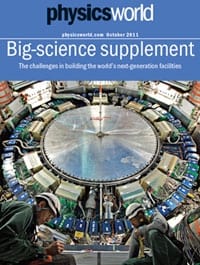
PW-big-science-2011 cover.jpg

In a special supplement accompanying the October issue of Physics World and available to download here, we take a look at the specific challenges of building and designing these facilities – from how to get them funded to the engineering and scientific issues that have to be met before construction can begin.

One facility that certainly fits the big-science mould is the Large Hadron Collider (LHC) at the CERN particle-physics lab near Geneva. With the LHC now on track hunting for new physics, researchers at CERN are not resting on their laurels but planning a major upgrade to their accelerator and detectors that will produce and track ever more collisions.

Indeed, detecting faster processes is also an integral part of the planned SuperB particle-physics experiment to be built near Rome by 2016, which will study the decay of quarks. As one article in the supplement explains, it may employ CMOS detector technology to take images at a rate of two million per second of the debris caused by particle collisions.

Other highlights in the supplement include the challenges that lie in store for the European X-ray Free Electron Laser in Germany – a new facility to detect ultrafast processes such as chemical reactions – that will use pioneering superconducting magnet technology to enable it to take “movies” of chemical reactions happening in real time. Magnets are also the name of the game at ITER, which will use thousands of tonnes of coils to hold a 150 million Kelvin plasma in place.

Big science also means big lasers and they are set to play a key role in a German-based collaboration using them to accelerate protons for medical application as well as at the European Extremely Large Telescope, planned for Chile, which will use lasers as an integral part of its novel approach to correcting for atmospheric distortions of light from distant objects.

I hope this supplement gives you a glimpse of the challenges that researchers face to surpass the possibilities of existing technology and make next-generation facilities happen. Download it here.

What topic will win this year's Nobel?

By Hamish Johnston

hands smll.jpg

It’s that time of year again…predictions are being bandied about coffee/tea rooms worldwide and worthy physicists are dusting off their ties and tails in anticipation of a trip to Stockholm to meet Carl XVI.

The 2011 Nobel Prize for Physics will be announced next Tuesday so we thought we would test the waters with a Facebook poll. Instead of asking who will win the prize, we’re more interested in the field that the winners will be from.

The options are:

Quantum information
Metamaterials and invisibility
Neutrino oscillations
Aharonov–Bohm effect and Berry’s phase
Exoplanets
Other

Have your say here.

What do I think? Well, this year I’m going for the Aharonov–Bohm effect and Berry’s phase – which means that the prize would be shared by Yakir Aharonov and Bristol’s very own Michael Berry.

Peter Rodgers (former editor of Physics World) adds Alain Aspect to Aharonov and Berry and suggests a prize for contributions to the fundamentals of quantum mechanics.

Last week’s poll focused on perhaps the most famous fictional physicist – Sheldon Cooper of TV’s Big Bang Theory. We asked you what you thought of this abrasive character as played by actor Jim Parsons.

“He’s an exaggerated version of a physicist for comic effect”, garnered the most support with about 73% of the vote. Only 5% see him as a grotesque parody of a physicist.

Interestingly, 7% of respondents answered “He’s got me down to a tee!”. This included one person who left a comment that included the following observation:

“I’m sure there are many who feel that he’s an accurate representation of some scientists, even of those most likely to be drawn to science, without believing they personally are like him.”

Nanoantenna separates light of different colours

Researchers in Sweden have invented a tiny antenna that can direct red and blue light in opposite directions. The device comes as a surprise because it relies on structures that are smaller than the wavelength of visible light – and therefore are not normally expected to manipulate light in this way. The work could lead to applications in optical sensing and help develop directional single-photon sources.

Being able to manipulate electromagnetic waves using metal devices that are much smaller than their wavelengths is technologically important. For example, we are all familiar with radio waves that have wavelengths on the order of metres being received by a small portable radio using a metal antenna. This concept also works in the optical part of the electromagnetic spectrum if the antennas are reduced to nanometre-sized dimensions.

Similar optical antennas that work on light will be a major tool for developing nanophotonics applications in the future. Such devices possess plasmonic modes – collective oscillations of the metal’s conduction electrons – that can be tuned to resonate with the electronic transitions in nearby light-emitting molecules. It is these plasmonic modes that increase the coupling between light emitted by the molecules and the antenna.

Gold and silver nanoparticles

This new device, developed by Mikael Käll’s team at Chalmers University, is a bimetallic nanoantenna consisting of two nanoparticles (gold and silver) placed about 20 nm apart on a glass surface. That the antenna contains two different metal particles is a first – and it is this pairing that allows the device to scatter light of different colours in opposite directions even though it is smaller than the wavelength of visible light itself.

Key to its success are the optical phase shifts that occur within the device, explains team member Timur Shegai. “The reason is that nanoparticles of gold and silver have different optical properties, and in particular, different plasmon resonances. This means that the free electrons in the nanoparticles oscillate strongly in pace with the frequency of the light applied to the device.”

Red light has a frequency right in between the plasmon resonances of gold and silver. This means that the nanoparticles oscillate out of phase with each other – which leads to the light being directed towards the gold particle. When blue light is used, the situation reverses and the light is directed towards the silver particle.

Universal concept

“The trick in our work is the built-in material asymmetry that helps to generate a wavelength-dependent optical-phase shift between the antenna elements,” Shegai says. “This asymmetry concept is universal and works not just for gold and silver nanoparticles but any nanometallic nanoparticle pair that supports plasmon resonances.”

For example, a device containing a pair of copper and aluminium nanoparticles would function in the same way, he adds. What is more, the antenna elements could be combined not just in 2D, as demonstrated in this work, but also in 3D. The shape of the elements is unimportant because rods, spheres, triangles, prisms, wires or any other shaped pair of nanofabricated objects exhibit the same behaviour, according to the researchers.

“Nanoplasmonics is a rapidly growing research field and involves controlling how visible light behaves at the nanoscale using a variety of metal nanostructures,” states Käll. “Scientists now have a whole new parameter – asymmetrical material composition to explore and control the light.”

Chemical sensors

Potential applications include highly sensitive optical sensors. “[Chemical] species absorbing on either of the antenna elements could modulate how the nanoantenna directs light and thus allow for tracking of these entities,” suggests Shegai. “Single biomolecules might even be detected, which would be useful in early disease diagnosis, for example.”

Single-photon sources, such as quantum dots or dye molecules, could be coupled to the nanoantenna as well, adds Käll. “This is a more classical antenna-type application – in the sense that it is similar to radio-frequency high-directivity TV antennas of the so-called Yagi-Uda type. These directional antennas could work both in transmission and reception modes while being subwavelength in size.”

Yutaka Kadoya of the University of Hiroshima, who was not involved in the work, is enthusiastic about the new research. “Using different kinds of materials allows for greater flexibility in the design of plasmonic devices,” he comments. “However, the core-shell structures proposed so far by many researchers are not easy to fabricate. The composite reported in this new work is much easier to assemble and the team has made a colour router by nicely combining it with a multi-element antenna (also found in Yagi-Uda structures).The idea is very versatile and useful for realizing various functions in future nanoscale plasmonics.”

The work is reported in Nature Communications 10.1038/ncomms1490.

Why do women earn less than men?

mary_cook.jpg

By Matin Durrani

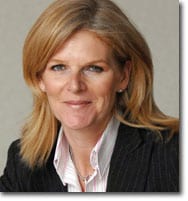
I went up to London yesterday (I’m never quite sure if one goes up or down to the capital but never mind) to attend a lecture at the Institute of Physics given by Mary Curnock Cook (right), who is chief executive of the University and Colleges Admissions Service (UCAS).

Entitled “Gender maps in education”, Cook’s presentation was this year’s memorial lecture given in honour of Elizabeth Johnson (1936–2003), a US-born condensed-matter theorist who did much to encourage women to pursue careers in science.

The memorial lectures always have women in science as their general theme and as head of UCAS – the centralized service in the UK for students applying to university or college – Cook had some fascinating data about how many women go to university and how well they do once they are there.

Cook’s starting point was that women who have a degree from a British university earn a total of £82,000 more over their lifetime than someone without a degree. Which sounds fantastic, until you realize that the equivalent “graduate premium” for men is a much larger: roughly £121,000.

So why the difference? Well, it’s complicated is the short answer – or, as Cook put it, “it’s the educational equivalent of a can of worms”.

But one reason is that more men than women study science, engineering, technology and medicine (STEM) subjects at university, which generally lead to jobs that have higher salaries than those jobs that don’t require a science degree.

However, the good news for women is that they are starting to catch up with men when it comes to pay: while men in their 40s earn quite a bit more than women of the same age, younger men who are currently in their 20s are on a par with women. We could, Cook speculated, have reached a tipping point: as those women get older, the overall differences in pay between the sexes – the “gender pay gap” – will even out.

What’s also interesting is that while some 40% of 18-year-old women in the UK go into higher education, just 32% of men of the same age go on to do degrees. On the other hand, men have a slightly better overall success rate of being accepted onto a course than women. That’s because men are more likely to study STEM subjects, which are generally less popular and hence easier to get into.

Cook was well aware that there’s a lot more one could say on this subject – and that a proper treatment would probably require a year-long academic study to get to the bottom of things. But the evening-out of the gender pay gap certainly sounds like a good thing.

Neutron target station takes the heat

When complete in 2019, the €1.48bn European Spallation Source (ESS) will be the most powerful source of neutrons in the world. With construction expected to start in 2013, and the facility fully open by 2025, the ESS will produce neutrons by accelerating protons in a linac to 2.5 GeV before smashing them into a seven-tonne target. The neutrons will then be cooled by a moderator and sent to 22 experimental stations to be used by researchers to probe the structure and physical properties of a wide range of solids, liquids and gases. The ESS will specialize in long wavelength, or “cold”, neutrons that suit experiments on large-scale structures such as polymers and biological molecules.

But one big problem for those designing the ESS is that this process of “spallation” will deliver so much energy – the proton beam will have a power of 5 MW – that the temperature of the target will jump by more than 100 °C in just 2.8 ms. Indeed, as the target becomes radioactive it will produce a decay heat of 35 kW even when there is no proton beam. Researchers at the ESS are therefore designing a proton target that can not only generate copious amounts of neutrons, but also be able to handle these extreme heat conditions.

Planning ahead

A neutron-rich material makes for a good proton target and ESS bosses are currently investigating two different options – a lead bismuth eutectics (LBE) alloy or tungsten. LBE is solid at room temperature but at the ESS’s operating conditions becomes liquid, which is similar to another possible target material – mercury. On the other hand, tungsten is solid up to 3000 °C and has a very high density of 19.25 g cm–3, giving it a high neutron yield. The material also has the advantage of longevity, with a life-span of three years or more, compared with six months for a lead–bismuth target.

As Physics World went to press, the ESS board was expected to decide which target to use, with tungsten the clear favourite having got the thumbs up from the ESS’s science advisory board in July. Indeed, tungsten is also already used at other neutron-scattering facilities including ISIS in Oxfordshire, which has a solid tungsten target about the size of a house brick. “The material is really the best you can pay for,” says Ferenc Mezei, head of the ESS’s target division. “There are other materials, iridium for example, that have a higher density but they are much more expensive.”

More power

There are some challenges to implanting a target given the heat created by the ESS’s huge proton-beam power of 5 MW, which will be around 20 times greater than that at ISIS. One proposed solution is to make the target rotate once every three seconds so that only a certain part is hit by the proton beam at any one time.

One design for the ESS’s target is to use a disc – 2.5 m in diameter and 13 cm high – made up of a solid inner hole and an outer ring. The beam will hit the disc edge-on, first encountering the outer layer, which is made up of around 10,000 small rods of tungsten each about 12 cm high and 1.5 cm in diameter. The beam then travels through the inner solid tungsten where it will lose energy so fast that it does not actually reach the centre of the disc. The advantage of using rods in the outer ring, rather than solid tungsten, is that in taking most of the proton beam, they distribute and reduce the stress of the whole target during its rapid rise and decrease in temperature.

The disc is made to rotate so that the 5 MW beam will be distributed such that a section of the disc sees – on average – about the same power density as that at ISIS. This allows that part of the target to cool down by 100 °C in around 3 s before it comes in contact with the beam again.

The sheer size of the target, and its activation, means that researchers cannot build a full prototype to test such high beam powers. However, in designing the ESS’s target, researchers can take solace from the fact that the technology has been tested before, for example at ISIS’s muon facility, which uses a small rotating graphite target to produce muons – heavier cousins of electrons.

“Rotating targets are around,” says Mezei. “So we are confident that this kind of technology will work”.

  • You can download a PDF of the October 2011 Physics World Big-Science Supplement here.

Open doors for physics graduates

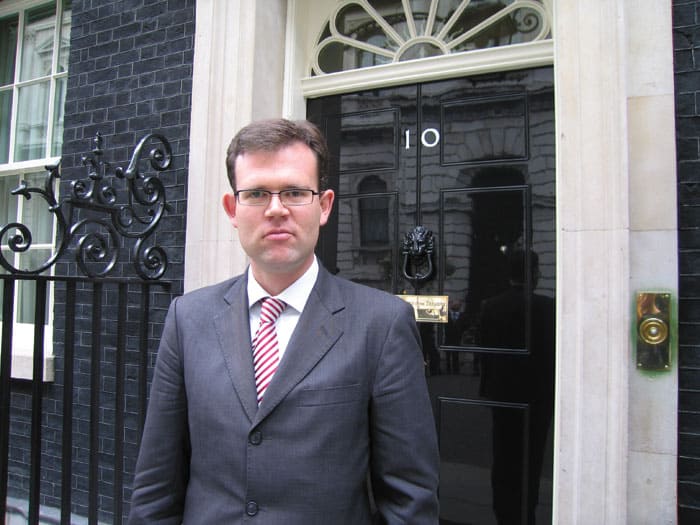
Jim Robinson

Studied: DPhil in semiconductor physics, University of Oxford, 2005
Now: senior policy adviser, UK Cabinet Office

I have always been interested in politics and current affairs, but I've also always loved physics. So after I obtained my MPhys from Oxford in 2002, I carried straight on with a DPhil, studying indium gallium nitride (InGaN) quantum dots for use in quantum-computing applications.

In the summer between finishing my MPhys and starting my DPhil, however, I also took part in a student-led summer programme that involved teaching English in China. This started me thinking about other possible careers, such as management. It also gave me a strong interest in Asia. I returned to the programme again in the summers of 2003 and 2004, and when an opportunity came to spend the final year of my DPhil at the University of Tokyo, I leapt at the chance to learn Japanese while also doing more research on InGaN.

Although I still enjoyed research, while I was in Japan it became clear that a career in science probably wasn't for me. There was the limited job security to consider, and sometimes it felt like only a handful of people in the world understood what I was working on. I felt I wanted to do something that would contribute to society in a more "hands on" way.

Quite a few of my friends were interested in the civil service, which linked to my interest in politics. So I applied to the civil service's "Fast Stream" programme – a graduate scheme that offers a series of varied one-year posts, combined with intensive training. After I was accepted, in early 2006 I was posted to the Department for Transport. I spent nearly five years there working on a variety of topics, including taking legislation to make bus travel free for the over-60s through Parliament, as well as plans for a new high-speed railway line from London to Birmingham. I also had a fascinating stint as a private secretary to the top civil servant in the department, a job that gave me an overview of everything from airports policy to vehicle safety.

Last year I moved to the Cabinet Office, the central department that works closely with the Prime Minister's office at Number 10 and co-ordinates policy across the government. I am based in the Office for Civil Society, which is taking the lead on the government's "Big Society" agenda. At the moment, I am working on a new way to deliver public services that involves using private investment to pay for early intervention, saving money for the public sector in the longer term. The job is fascinating. One day I might be briefing officials in Number 10, the next I could be working with local authority officers in the Midlands or talking to potential investors in the City of London.

My team's focus on "troubled families" meant that our profile was suddenly raised by the riots in August, and an announcement on our work later in the month got quite a bit of attention in the press. After weeks of building up to an announcement, it's always nice to see your work featured in the media, especially when linked to recent events.

Quite a few of my colleagues in the Cabinet Office are economists, but there are also a surprising number of physicists. Of course, I never use my experimental skills, but my more "generic" physics training tends to be quite useful for tasks such as understanding data, setting up spreadsheets and clearly explaining complicated concepts. Above all, I think my physics background helps me to understand how complicated systems fit together – the difference being that those systems are now in public policy. I do miss physics – and still read Physics World every month! – but I'm happy with the choice I've made.

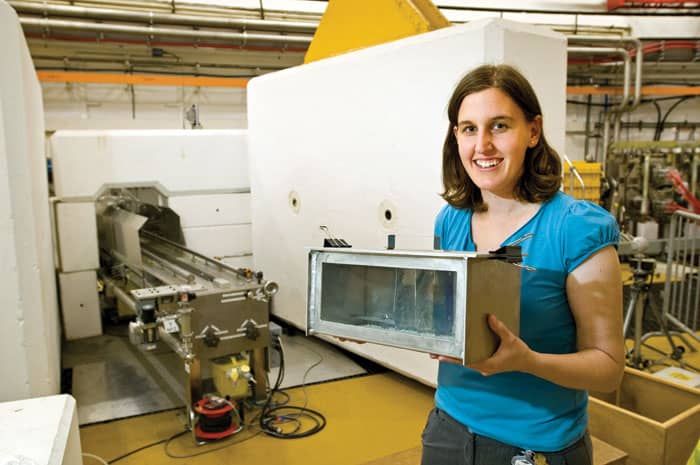
Hayley Smith

Studied: MPhys in physics with astrophysics, University of York, 2009
Now: accelerator physicist, ISIS Spallation Neutron Source, UK

I did not begin to consider my career options seriously until the start of my final year at university, when many high-profile companies begin hiring. This was because, unlike many of my peers, I had no firm ideas regarding my best move into the workplace. As I was still enjoying physics, I focused my efforts on science- or engineering-based roles. Quite soon, though, I decided that graduate schemes – which enable graduates to become established within their desired industry while receiving various training and development opportunities – seemed appealing. In fact, there were initially more than 30 that interested me, and it took me a while to narrow the field down to my current employer: the ISIS Spallation Neutron Source at the Rutherford Appleton Laboratory in Oxfordshire.

ISIS is operated by the UK Science and Technology Facilities Council, and it consists of a linear accelerator and synchrotron that combine to accelerate protons to 800 MeV. As an accelerator physicist I apply my physics knowledge every day. The work is varied: a mix of developing computer models/tools, and "hands on" operational duties in the ISIS synchrotron main control room. Development is a key factor in STFC's graduate scheme: there are many training opportunities to enhance non-technical skills – including the chance to sail a tall ship with fellow graduates for four days. Alongside being great fun, this also helped developed certain key competencies such as communication, teamwork and leadership skills. Travelling abroad for two accelerator physics courses, attending and displaying work at an international conference and being invited to spend a month working alongside colleagues at a similar facility in Japan have all contributed to my technical development and have been fantastic experiences.

After I complete my initial two years on the graduate scheme (which is accredited by the Institute of Physics, publishers of Physics World), I know I will continue to have opportunities at ISIS for challenging work and further personal development, including building the skills required to achieve chartered physicist (CPhys) status. People had always told me you could do a lot with physics, but I never really believed them. I do now: the variety is astounding!

My advice for current, or recent, physics graduates is to start researching early, because applications and assessment centres are time-consuming, requiring a lot of preparation. It is also good to take time to audit your skills and research all options thoroughly to find the ones that suit you best. One of the most useful exercises you can do is to identify your skills and match them to employer requirements. In my case, I gained relevant experience through the Summer Undergraduate Research Experience (SURE) programme at the University of Leicester, but I could also mention skills I had picked up in previous warehouse and clerical employment. After working on applications through the autumn term of my final year at university, I found myself in the very fortunate position of having two graduate scheme offers by Christmas. After choosing to go for STFC, I was able to concentrate fully on the remainder of my studies.

Ewan O'Sullivan

Studied: PhD in astronomy, University of Birmingham, 2002
Now: Marie Curie Fellow, University of Birmingham, UK

I really enjoyed my PhD and decided quite early on that I wanted to stay in academia when I finished. My career since then has been shaped by the fact that astrophysics is a very international field. The researchers I worked with as a PhD student at Birmingham all had international collaborators and regularly travelled to visit colleagues or use observatories in exotic locations – Hawaii, Chile, Australia. It was also clear that most UK astronomy groups expected candidates for long-term jobs to have worked overseas. I wanted to work in X-ray astronomy, which depends on satellite observatories because the atmosphere absorbs X-rays before they can reach the ground. I was lucky enough to finish my PhD just as two new satellites were being launched: NASA's Chandra X-ray Observatory and the European Space Agency's XMM-Newton. I applied for posts in the US and Canada, and was offered a postdoc position at the Harvard-Smithsonian Center for Astrophysics in Cambridge, Massachusetts – one of the world's leading centres for X-ray astronomy. Initially I expected to work there for two or three years, but I liked working at the centre and really enjoyed living in New England, so ended up staying for seven years.

A major benefit of working in the US was that I was able to apply for NASA funding for my own projects and fairly quickly found myself in a position to define my own research programme. Many postdocs are hired to work on a specific project and don't have much time for their own interests, but having my own funding meant that I was effectively my own boss, so I was able to try working in new areas, form new collaborations and decide for myself which scientific questions I wanted to explore. Living abroad also has its benefits. Quite apart from making friends I would never otherwise have met, I think I now have a much clearer view of how society works both in the UK and abroad, and of the place of scientists within it.

The downside is a lack of stability. Long-term jobs are scarce at the moment, and there is an expectation that you will be willing to move countries to take up a new post, which can be a problem if you have a partner or family. However, for me the benefits have been enormous. Thanks to a fellowship from the EU, I moved back to the UK in 2009, but next year I plan to take extended trips back to the US and also to India to learn low-frequency radio techniques.

Owen Dias

Studied: BSc in chemical physics, University of Bristol, 2006
Now: IT co-ordinator at a small electronics manufacturer, UK

I work for Danlers, a small Wiltshire-based firm that makes energy-saving electronic controls such as passive-infrared and time-lag switches. I actually started working for the company on a part-time basis when I was 16. My first job was building point-of-sale display boards to go in wholesalers, but in subsequent summers, I volunteered to build the company website. As time went on, I was given more and more responsibility for looking after IT for the company, and when I graduated in 2006 with a degree in chemical physics, I was offered a full-time post as the IT co-ordinator. I am now solely responsible for IT in the company, which means I have a wide variety of responsibilities, including setting up servers, technical support, staff training, IT purchasing and anything else you would file under IT.

While there aren't any obvious parallels between chemical physics and my work in IT, the thought process involved in problem-solving – not to mention the technical abilities needed to get various machines and simulations to work in experimental and theoretical environments – were all developed during my degree, and they have helped me immensely. Having a scientific degree has also opened doors for me to work on non-IT projects within the company's engineering department. This initially meant doing some lab work, including heat tests, electrical tests and tests aimed at finding product limitations – sometimes by blowing them up! Obviously, experimental technique and report writing plays a huge role in this. More recently, I have been project-managing the redesign of some of our products to take advantage of surface-mount technology, which allows us to use smaller mechanically placed components, which in turn means that we can make more compact and cost-efficient designs.

If any graduates are looking at small- to medium-sized enterprises (SMEs) for future employment, I would definitely recommend just getting a foot in the door, because opportunities are dependent on your skills and not on which department you are currently in. I really enjoy working in an SME environment because of the flexibility and variety of work that is available – I don't know any big business that would let people from their IT department blow stuff up in a lab!

Katherine Inskip

Studied: PhD in astrophysics, University of Cambridge, 2002
Now: postdoctoral researcher at the Max Planck Institute for Astronomy, Germany

When I was younger, I always knew I wanted to work abroad, and that I wanted to be both an astronomer and a mother. Today, I am doing all of those things...well, almost.

I am currently in the middle of my third post as a postdoctoral researcher, a mother to two young sons and living in Germany. Right now, I am on maternity leave for my second son. But for someone taking a career break, I am still surprisingly busy. I may have replaced the challenges of interpreting awkward data and assisting students with the challenges of interpreting an awkward baby and potty-training a toddler, but there is still science in my day-to-day life as well. There are papers to read (and write) and telescope observations to prepare for, although thankfully the observations will be done by observatory staff in "service mode", so I do not have to go to the Very Large Telescope in Chile myself. Weather permitting, the data should be delivered to me just in time for me to return to work. And there's always more work to be done, if you can find the time for it – but if I tried that, I think I would go crazy.

Combining a career with motherhood inevitably means making some sacrifices, especially when you have to put the needs of two small boys first. Conferences have become a particular difficulty. The networking and learning opportunities they present are marvellous, but without suitable childcare facilities, most of them are impossible for me right now. Even so, while I may not be keeping up with the literature as well as I would like, and my own research is temporarily on hold, thanks to the support of my colleagues, I hope I will not be too out of touch when I return to part-time work next year.

So what advice could I offer to my former student self on how to get where she wants to be in life? To be honest, I think she would have a thing or two to say to me instead – "What took you so long?" would probably sum it up. The best answer I can give is: don't be afraid to take risks. There is never a "good" time to start a family – if you want one, go for it. And don't stay in your comfort zone career-wise, either. Move institutes, move countries if possible – there's so much experience to be gained, in so many aspects of life. It's not an easy balancing act, to be sure, but it keeps me happy.

Chris King

Studied: PhD in semiconductor physics, University of Nottingham, 2008
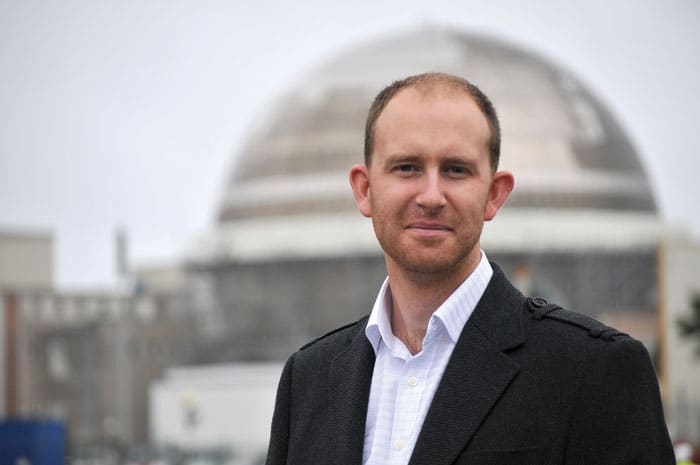
Now: technical adviser at Sellafield Ltd, UK

I completed my PhD in December 2008 and started on the Sellafield Ltd graduate scheme in October 2009. Sellafield's primary focus is the safe decommissioning of nuclear "legacy ponds and silos" – facilities that in some cases date back several decades and that contain an assortment of historical material. Understanding the physical contents of these facilities and their chemistry, plus figuring out how to safely remove and process that material, are enormous technical challenges. Sellafield is also involved in the reprocessing of spent civil nuclear fuel, to separate out the uranium, plutonium and radioactive waste products.

I chose to enter via the graduate scheme for a number of reasons, including the fact that the months between the end of my PhD and the start of the scheme gave me an opportunity to travel. However, the main reason was that I had decided to move from academia into industry, and I saw a graduate scheme as the best way to experience a range of roles to help set the foundation for my subsequent career path. I was pleasantly surprised to find that several other PhD-holders had made the same decision.

As a technical adviser, my role is to provide general technical and scientific knowhow on a variety of projects across the Sellafield site. Projects I have been involved in to date include: designing on-plant trials to investigate ways of improving performance; modelling material flows through the plant; reviewing laboratory analysis strategies; ensuring the calibration of equipment; doing calculations; and analysing raw data. My job also has less-technical aspects such as producing management procedures that ensure that Sellafield complies with its own policies, regulator requirements and customer specifications. I use specific physics from time to time, but it is the wider technical skills and knowledge I learned at university – both as an undergraduate and during my PhD – that are key to my job.

Although I am back in a technical role now, participating in the graduate scheme meant that I spent 12 months on a secondment to the nuclear safeguards department, where I managed a site-wide programme with the main function of providing feedback to national and international regulators. This is an opportunity that would have been difficult to come by as a direct entrant, and I feel that this experience of "stakeholder relations" will be of huge use in my future career.

But are you a physicist?

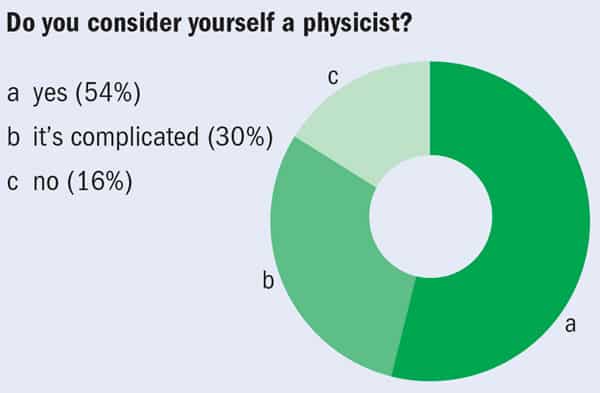
Do you need to have a job in physics to consider yourself a physicist, or is being a physicist more about training and habits of thought? With more than half of those who responded to the Institute of Physics' 2007 survey picking something other than research to describe the main function of their jobs, it seemed to be a relevant question – so we asked it. Below are some of the responses we received to a poll conducted on Facebook.

Yes

I joined a physics course despite everyone advising me to go for engineering; so yes, I'm obviously a physicist.
– Srikanth Suresh

I like to consider myself a physicist as I have the relevant training, read about it and think like it, but I fear since I haven't been in the lab for three years, my "physicistique" may have expired.
– Kate Oliver

It's complicated

If I were a quantum-mechanics guy, the best answers I could give you would be both "yes" and "no".
– Dan Lipford

I feel I can't call myself a physicist because I don't have anything hanging on the wall saying "Tom Sullivan is hereby a physicist".
– Tom Sullivan

Do I consider myself a physicist? Mmmm, well I'm pretty good at woodwork but I don't consider myself a carpenter, I'm pretty good with pipes and electricity but I wouldn't say I was a plumber or an electrician. I think to be a physicist you've got to specialize in it, rather than just be pretty good at it.
– Steve Douglas

No

I guess if you consider that everything we do is affected by physical laws and principles, then my answer would be yes, we're all physicists on that level. But ultimately I am not a physicist by trade, I am a law student. Shout out for the law of conservation of energy and for Bernoulli's principle, as they are my favourites!
– Amy Wheeler-Smith

I'm an archaeologist, a frustrated scientist in a sometimes deeply unscientific discipline. Physics is a hobby, and what a wonderful one it is.
– Rich McGregor Edwards

What physicists do: survey results

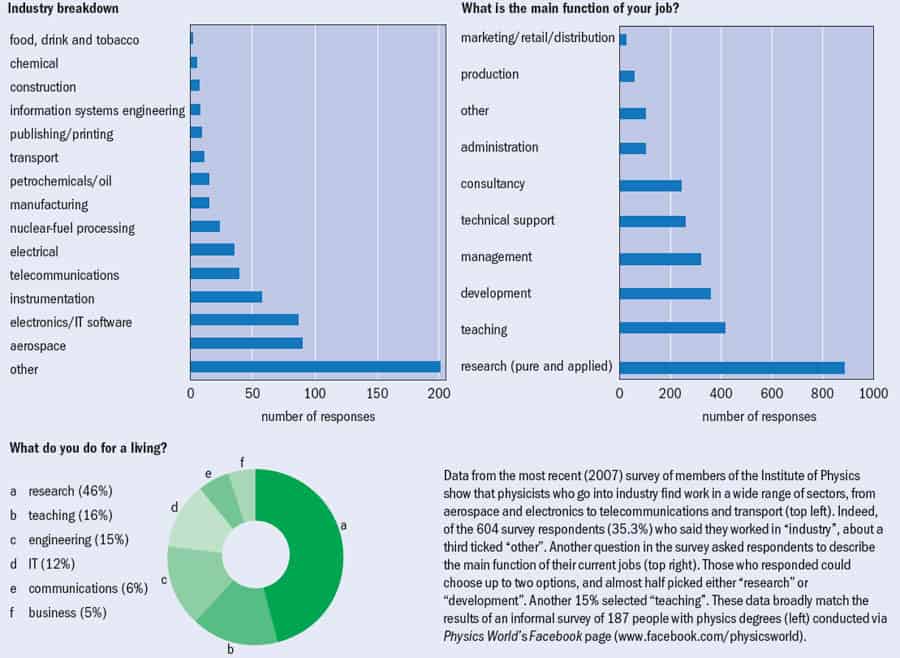
Data from the most recent (2007) survey of members of the Institute of Physics show that physicists who go into industry find work in a wide range of sectors, from aerospace and electronics to telecommunications and transport (top left). Indeed, of the 604 survey respondents (35.3%) who said they worked in "industry", about a third ticked "other". Another question in the survey asked respondents to describe the main function of their current jobs (top right). Those who responded could choose up to two options, and almost half picked either "research" or "development". Another 15% selected "teaching". These data broadly match the results of an informal survey of 187 people with physics degrees (left) conducted via Physics World's Facebook page (www.facebook.com/physicsworld).


How to make graphene

Graphene is the ultrathin form of carbon that was first discovered at the University of Manchester in 2004. It is often dubbed "the wonder material" on account of its incredible properties, which promise many applications – from ultrafast transistors to DNA sequencing. For discovering graphene and for their pioneering studies of the material, Andre Geim and Konstantin Novoselov shared the 2010 the Nobel Prize for Physics.

In this special video report, Physics World reporter James Dacey visits Geim and Novoselev's laboratory at the University of Manchester to learn how graphene is created and why it is so special. To begin, Dacey meets researcher Branson Belle who demonstrates the famous "Scotch tape" method for isolating graphene. This surprisingly simple technique involves placing a sample of graphite onto sticky tape and then folding and peeling the tape several times to create progressively thinner layers of graphite – eventually leading to a single layer of carbon.

Dacey then meets another graphene researcher, Aravind Vijayaraghavan, who places the sample under an optical microscope to explain how single-layer graphene is identified among thicker bits of graphite. "One of the nice things about graphene is that even though it's a two-dimensional material – the thinnest material in the world – we don't need an electron microscope to see it," explains Vijayaraghavan. Instead, by transferring the graphene to a silicon-based substrate, it creates the correct contrast to be able to identify thin sheets of carbon with a standard optical microscope. "With a bit of practise, you can just look at the screen and say 'right, that's a single layer'," he said.

Vijayaraghavan goes on to talk about some of the remarkable properties of graphene. "Despite the fact that it's the thinnest material that you can technically make it's also the strongest material – as in if you tried to rip it apart it takes more force than anything else," he said. Vijayaraghavan also talks about some of the unusual electrical and optical properties. "The electrons in graphene behave as if they are particles of light – so they don't get scattered".

The interview closes with Vijayaraghavan speculating about how these properties could lead to possible applications including ultrafast transistors and flexible electronic screens.

Magnet challenges for ITER

Generating power with nuclear fusion – slamming together hydrogen isotopes until they fuse into helium – has proved much harder to achieve than its nuclear-fission counterpart. But now, after more than 60 years of research, physicists hope they are on the home straight with the €16bn ITER experiment – a huge tokamak now under construction in Cadarache, France. The fruit of a worldwide collaboration involving China, the European Union (EU), India, Japan, South Korea, Russia and the US, ITER is a colossal machine that, once complete in 2019, will weigh as much as an aircraft carrier.

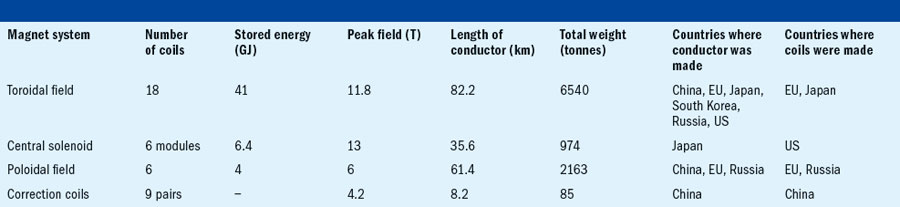
Fusion researchers hope that ITER will be the first tokamak to generate more power than is needed to keep it going – some 500 MW from a 50 MW input. Most of that input heats the fusion fuel – a 50:50 mixture of the hydrogen isotopes deuterium and tritium – to millions of degrees and applies a magnetic straightjacket to hold it in place while it burns. The magnets required to provide that field – 13 T at its strongest point – are now being built in factories across the globe (see table) and are proving to be a huge engineering challenge. They have to endure huge mechanical forces, thousands of current pulses, intense neutron bombardment and a thermal gradient that soars from 4 K to 150 million K across just a few metres. "It's the scale, not the science, that brings issues," says Neil Mitchell, head of ITER's magnet division.

When ITER was being designed back in the late 1980s and early 1990s, it was obvious that the reactor would have to use superconducting magnets because conventional magnets would need gigawatts of power to contain a plasma at a temperature of millions of degrees. A few tokamaks with superconducting magnets had been built before, such as France's Tore Supra, which began operating in 1988 and stores around 700 MJ of energy in its superconducting magnets. But none have been as big as ITER, which will have magnets that will store a whopping 50 GJ. Indeed, some of the coils are so large that they cannot be transported by road and so will be wound on site at a purpose-built plant.

Magnets in a spin

A tokamak such as ITER has several sets of magnets that perform different roles in confining the superhot plasma within the reactor vessel. The central solenoid is a coil positioned in the central hole of the torus. It acts as the "primary" of a giant transformer with the plasma itself being the "secondary" coil. Driving a current through the central solenoid induces the plasma to flow round the torus, creating a current. This current generates another magnetic field that then "pinches" the plasma current towards the centre and so keeps it away from the walls.

This pinching field is reinforced by "poloidal field" coils – six horizontal, circular coils around the outer edges of the tokamak similar to bands around a barrel. Then there are 18 "toroidal field" coils – huge D-shaped windings that wrap around the plasma. These generate a field parallel to the plasma current that gives it a twist so that the plasma spirals as it moves. This helps to stabilize the plasma and keep it away from the walls. Finally, there are sets of lower-energy "correction" coils that help to shape the plasma.

Despite the challenges of scale, Mitchell says that the magnet technology for ITER is "rather conventional" because it will use well characterized superconducting materials such as niobium tin (Nb3Sn) for the central solenoid and toroidal-field coils, and niobium titanium for the poloidal-field and correction coils. But making an ITER conductor is not just a matter of winding a few strands into a cable. Nb3Sn is a brittle material that must endure enourmous mechanical forces and 60,000 thermal cycles. "It's very much a challenge," says Chris Rey, the central-solenoid systems manager at the US ITER Office at the Oak Ridge National Laboratory in Tennessee. "It's expensive, so you can't make prototypes. You have to get it right straight out of the box."

Making the conductor starts with individual strands – each less than a millimetre across – composed of a mixture of niobium and tin that is encased in a copper shell. Three strands are then wound together to make a "triplet", and 32 triplets are bunched together make a "petal". Six petals arranged around a central pipe make a cable, roughly 4 cm in diameter, with the pipe allowing the flow of liquid helium to cool the cable to superconducting temperatures. The final part of the process involves encasing the cable in a metal jacket with a roughly square cross-section so that when the conductor is wound into a coil, the windings fit snugly together and cannot move. Prior to the ITER project, around 15 tonnes of this sort of superconducting cable were manufactured per year; ITER requires 400 tonnes – or around 80 km of cable.

To form magnets, the conductors are wound into a metal conduit in the required shape. The largest niobium–tin magnets are the toroidal-field coils that will be arranged vertically around the tokamak. Each one is 14 m tall and weighs 360 tonnes – roughly the mass of a jumbo jet. Once wound, the coils are heated to 650 °C for eight days so that the niobium and tin form the superconductor Nb3Sn.

Testing times

Despite their size, the coils still demand exquisite precision to create a perfect field for plasma confinement. The conductor must be carefully wound into an exact position in the conduit and then held there with an error of only a few millimetres. That sort of manufacturing control is made more difficult by the way that the ITER project is run. Because the seven members of the ITER collaboration all want a share of the industrial contracts, they agreed to divide up the manufacturing between them and each delivers their components to Cadarache "in-kind" without money changing hands. But this means, for example, that making the conductors for the toroidal-field coils has been split between six different member states and, because some of them have contracted more than one company to do the work, a total of 10 firms are involved. "Their grasp of the technology isn't even," says Mitchell. "There's a lot of negotiation and it's producing a lot of delay. The amount of testing we're doing is five times what was originally expected."

That testing threw up a problem earlier this year when a sample of Nb3Sn conductor made in Japan for the central solenoid failed in tests earlier than expected. The specification requires the conductor to survive 60,000 current pulses during the 20-year life of the reactor. However, this particular sample began to fail after only 6000 pulses. "The conductor absolutely works," says Rey, "it's the lifetime that's not understood." The ITER organization at Cadarache has set up a task force to look into the problem and it will report back later this year.

ITER insiders are playing down the significance of the failed test. It took place at the SULTAN facility at the Paul Scherrer Institute in Villigen, Switzerland, where straight sections of conductor a couple of metres long are subjected to high fields and currents. While this shows that the samples are working, according to Rey it "doesn't accurately represent the conditions in ITER". A second sample of the same conductor is now being tested and is reportedly performing much better. An ITER spokesperson says that if the second sample maintains its performance to the end of the test, the conductor is likely to be approved for production next year.

Cost concerns

Another tough decision is whether or not to test the completed coils. In an ideal world, once wound, each magnet would be cooled to 4 K and have high current put through it to see if it worked as expected. Such an approach significantly reduces risk because when the reactor is built, most of the coils cannot be removed for repair or be replaced. But cold-testing such huge magnets – the largest has a diameter of 24 m – also hugely increases cost because it would require a purpose-built facility, much power and a lot of time. There are other risks too: testing one coil in the absence of all of the others might be easier but it would not then experience the full magnetic field of the entire magnet system, and so would have different stresses that could potentially bend it out of shape.

Each ITER member state that is making the magnets must decide for itself whether to do full cold tests on completed coils – and the consensus seems to be that it is not cost-effective. Rey says that the US is planning to test its coils – the six modules of the central solenoid – at a factory in Tallahassee, Florida, by cooling them to 80 K with liquid nitrogen. At that temperature the coil experiences 90% of the thermal stresses that it would encounter at 4 K. Once cool, researchers can test for helium leaks and do a voltage test that stresses the conductors' insulation. "Most large superconducting magnets fail on their insulation," Rey says. US ITER managers calculate that it would be cheaper to do the 80 K tests than to ship a faulty module back from France for modification.

But a lack of money will likely persuade project members not to carry out 4 K high-current tests. The US ITER project is still mulling it over – its budget is under severe strain in the current financial climate. The EU, too, is struggling to find its 45% share of the construction cost. In the end, we may not know for sure whether ITER's magnets work as planned until the day they are switched on at the end of the decade.

  • You can download a PDF of the October 2011 Physics World Big-Science Supplement here.
Copyright © 2026 by IOP Publishing Ltd and individual contributors