TV's Sheldon bags Emmy

Big Bang Theory
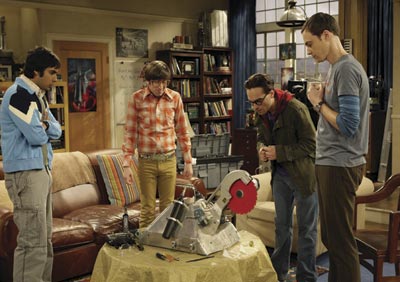
From left to right, Raj, Howard, Leonard and Sheldon build a robot to enter a fighting-robot competition. (Courtesy: Warner Bros Television Entertainment)

By Matin Durrani

Yes we know that physicsworld.com is probably not your first port of call for red-hot showbiz news, but congratulations to Jim Parsons for picking up an award for “outstanding lead actor in a comedy series” at last night’s Emmy Awards in Los Angeles.

Parsons, as you may well be aware (and if you’re not, then you really have been living under a stone), plays socially inept physics postdoc Sheldon Cooper on the hit CBS TV comedy show The Big Bang Theory.

Parsons, 38, bagged the same award last year, which marked the show’s first Emmy win. This time he beat his co-star Johnny Galecki, who plays fellow physicist Leonard Hofstadter.

On the show, a fifth series of which is set to start in the US on Thursday 22 September, the two physicists share an apartment together in Pasadena, with Leonard being what my colleague Tushna (who’s a self-confessed Big Bang nut) calls “a quintessentially cute geek”, who stoically puts up with Sheldon’s comical antics.

The appeal of the show lies partly in the relationships between Sheldon, Leonard and their two pals Raj (another physicist) and Howard (an engineer), but also in their interactions with “near-normal” neighbour Penny (Kaley Cuoco), who is the foil to the others’ actions.

But what’s made the show so popular with scientists – 2005 Nobel laureate Jan Hall told us it is just so damn funny – is that the show is peppered with references to physics, most of which are reasonably coherent, thanks in part to the contributions of the show’s science consultant – astrophysicist David Saltzberg from the University of California, Los Angeles.

I sat through about a dozen episodes on a long flight back to the UK from Australia a couple of months back and found the show moderately amusing – if not laugh-out-loud funny – and felt the writing was (like many other US sit-coms) a bit manufactured for my taste.

But, damnit, what do I know? Parsons has won an Emmy so he must be doing something right. And according to that trusted information source, Wikipedia, he, Galecki and Cuoco each earned $200,000 per episode in the last series, which is more than most postdocs earn in five years.

You can read more about the show in this great feature article we published last year, which includes interviews with Galecki, Saltzberg, Simon Helberg (who plays Howard) and the show’s creator, writer and executive producer Chuck Lorre.

Graphene bubbles could make better lenses

A tiny bubble of graphene could be used to make an optical lens with an adjustable focal length. That is the claim of physicists in the UK, who have shown that the curvature of such bubbles can be controlled by applying an external voltage. Devices based on the discovery could find use in adaptive-focus systems that try to mimic how the human eye works.

Graphene is a sheet of carbon just one atom thick and has a host of unique mechanical and electronic properties. It is extremely elastic and can be stretched by up to 20%, which means that bubbles of various shapes can be “blown” from the material. This, combined with the fact that graphene is transparent to light yet impermeable to most liquids and gases, could make the material ideal for creating adaptive-focus optical lenses.

Such lenses are employed in mobile-phone cameras, webcams and auto-focusing eye glasses, and are usually made of transparent liquid crystals or fluids. Although such devices work well, they are relatively difficult and expensive to make. In principle, graphene-based adaptive optics could be fabricated using much simpler methods than those used for existing devices. They could also become cheaper to produce if industrial-scale processes to manufacture graphene devices become available.

Tiny bubbles

Now Andre Geim and Konstantin Novoselov – who shared the 2010 Nobel Prize for Physics for discovery of graphene – have built tiny devices that show how graphene could be used in adaptive optical systems. Working with colleagues at the University of Manchester, the physicists began by preparing large graphene flakes on flat silicon-oxide substrates. When the air underneath the graphene cannot escape, a bubble of the material naturally forms. The bubbles are extremely stable and range in size from a few tens of nanometres to tens of micrometres in diameter.

To show that the bubbles could work as adaptive-focus lenses, the team made devices that contained titanium/gold electrodes contacted to the bubbles in a transistor-like arrangement. In this way, the researchers were able to apply a gate voltage to the set-up. They then obtained optical-microscope images of the structures while tuning the gate voltage from –35 to +35 V. As expected, they saw the shape of the bubbles go from being highly curved to more flat as the voltage changed.

Real, working lenses could be made by filling the graphene bubbles with a high-refractive index liquid or by covering the bubbles with a flat layer of this liquid, say the researchers.

So, what is next? “We have shown that controlling the curvature of these bubbles is an easy task,” says Novoselov. “We are now looking at performing other experiments where more complicated deformations in graphene would be created and controlled.”

The results are published in Applied Physics Letters 99 093103.

Bumper harvest of exoplanets found by HARPS…

Exoplanet
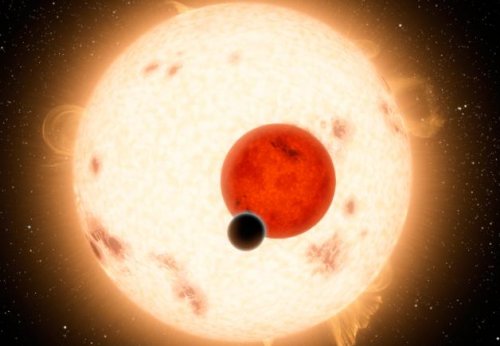
Where is the Death Star? Artist’s impression of a real-life Tatooine spotted by Kepler. (Courtesy: NASA)

By Hamish Johnston

It’s hard to believe that less than 20 years ago we didn’t know if stars other than the Sun had planets. Now it seems that such extra-solar planets (exoplanets) are just about everywhere we look in the heavens.

This week at the Extreme Solar Systems conference in the US, astronomers working on the HARPS instrument at the ESO’s La Silla Observatory in Chile announced the discovery of 50 more exoplanets. This puts the total of known exoplanets at about 680. The newcomers include 16 “super Earths”, which are up to 10 times more massive than Earth and expected to be rocky.

When astronomers first started looking for exoplanets, they tended to find gas giants like Jupiter in very close orbits around their stars – very different from our own solar system. However, it’s becoming clear that this was simply because such exoplanets were easier to find. Now that telescopes have improved, astronomers are finding much more familiar looking systems

Indeed, when HARPS looked at nearly 400 Sun-like stars, it found that about 40% of them have at least one planet less massive than Saturn. Furthermore, HARPS found that the majority of exoplanets of Neptune-mass or smaller existed in multiple-exoplanet systems.

When HARPS focused on 10 nearby sun-like stars, it found five super-Earths orbiting three stars. And one of these super-Earths is in the habitable zone of its star, where the conditions are just right for life – at least as we know it here on Earth

Given this rapid increase in our knowledge of worlds beyond ours, it can’t be very long before an exoplanet with signs of life is spotted. However, it won’t be extraterrestrial beings coming into view, but rather hints of liquid water and atmospheric gases such as oxygen that could be the by-products of life.

Also at the conference, astronomers working on NASA’s Kepler space telescope announced the first direct evidence of a “circumbinary” exoplanet – that is, a planet that orbits two stars.

Much comparison has been made to Tatooine, the circumbinary home planet of Luke Skywalker in the 1977 film Star Wars. Indeed, when the finding was unveiled at the conference, John Knoll of Lucasfilm, which made Star Wars, was on hand to comment. “Working in film, we often are tasked with creating something never before seen,” said Knoll. “However, more often than not, scientific discoveries prove to be more spectacular than anything we dare imagine.”

Quantum-Hall confirmation helps define kilogram

The kilogram is currently defined by a lump of metal in Paris – but now researchers in the UK, France and Sweden have confirmed a key assumption of a new method of defining the standard based on fundamental constants. Specifically, they have shown that the quantum Hall resistances measured in a semiconductor and in graphene are identical up to a relative uncertainty of 8.6 × 10–11. This resistance is given by the ratio of the Planck constant (h) to the square of electron charge (e) and can be used to define the kilogram.

The kilogram standard is made from platinum and iridium, and is housed at the International Bureau of Weights and Measures (BIPM) in Paris. Over the past 60 years, several comparisons of this kilogram with identical copies suggest that its mass is changing. As a result, scientists have been looking for a new way to define the kilogram using just fundamental constants.

The most popular way of trying to do this is with a “watt balance”, which compares the weight of an object with an electromagnetic force. Such a balance operates on the assumption that the ratio of h/e2 is independent of the material used to measure it. A watt balance uses this ratio along with a measurement of the quantum Hall resistance to define the kilogram in terms of h.

Drifting electrons

The Hall effect is the appearance of a voltage across opposite faces of a sheet of metal when a current passes along its length. The effect requires the presence of a magnetic field that is perpendicular to the sheet. The magnetic field causes the moving electrons to drift towards one face as they cross the sheet of metal. Ordinarily, the electron’s tendency to drift depends on factors such as the density of electrons in the material and the thickness of the sheet.

The quantum Hall effect occurs in sheets that are so thin that they appear 2D to the electrons. If such a sheet is subject to very low temperatures and high magnetic fields, the Hall voltage is quantized at discreet values that appear to be independent of the material used. When the Hall voltage is compared with the current running through the conductor, the resulting Hall resistance is simply h/Ne2, with N being an integer.

According to J T Janssen of the National Physical Laboratory (NPL) in Teddington, UK, there is no theory to explain why this should be the case; however, all experiments so far agree on this universal value for the quantum Hall resistance. If the redefinition of the kilogram is to rest on the quantum Hall effect, then the uncertainties in these experiments must be very stringent indeed.

Direct comparison

Now Janssen and colleagues at the NPL, Chalmers University and Linköping University in Sweden, the University Lancaster in the UK and the BIPM have made a direct comparison of the quantum Hall effect of two very different materials. These are a gallium–arsenide semiconductor doped to produce a 2D sheet of electrons, and graphene – which is a single layer of carbon atoms. Previous experiments have confirmed that two semiconductors exhibit the same quantum Hall effect, but this new work is the first to directly compare two materials with very different electronic properties. While the conduction electrons in gallium arsenide behave like particles with mass, the electrons in graphene behave like massless photons.

The researchers use a standard set-up that compares the Hall resistances of two samples held at temperatures within a couple of degrees of absolute zero. Identical currents are sent through the samples to create the Hall voltages. To see whether these voltages are different, another circuit connects the sides of the two samples with an extremely sensitive current detector. No current was measured, meaning that the voltages across the samples were identical.

Challenges remain

“This is the most precise measurement of the material independence of the quantum Hall effect,” says Janssen. However, there are still important challenges to be overcome in the design and operation of the watt balance. The most significant, according to Janssen, is the mechanical challenge of operating the balance. For example, the force produced by the magnetic coil and its velocity must be carefully aligned with gravity. And as the overall uncertainty is reduced, it gets ever harder to make these alignments.

“The redefinition of the kilogram standard now is the one of the main topics in metrology,” says Alexander Penin of the University of Alberta in Edmonton, Canada. Indeed, next week, metrologists will gather in Paris for the 24th General Conference on Weights and Measures to discuss the merits of the watt balance and other proposals for redefining the kilogram.

The work is described in New Journal of Physics 13 093026.

Janssen describes his work in the video abstract above.

‘Tug-of-war’ prompts chemical reaction

Researchers in the US have shown that mechanical force can bring about unique chemical reactions. Their experiment involved pulling on molecules in solution using ultrasound and suggests that mechanics could open up other new reaction pathways in chemistry. The discovery could also lead to the development of new technologies such as force-activated sensors or reversible adhesives.

Chemists have several ways to help chemical reactions along, such as adding heat or light. But broad additions of energy such as these can bring about unwanted by-products and waste valuable reactants. In other cases, heat and light simply do not work.

It has been known for decades that mechanical force is another way of promoting reactions – a field known as “mechanochemistry”. If you chew a piece of rubber, for example, some of the material’s covalent bonds will break, forming shorter polymers. Chemists have also used mechanical force to select and promote certain reactions, such as opening molecular rings or changing molecular structures. What they have not been able to do is use mechanical force to effect a chemical reaction that could not be driven in any other way.

Stubborn reaction

It is this feat that has now been demonstrated by Christopher Bielawski and colleagues at the University of Texas at Austin. Bielawski’s group focused on a ring-shaped functional group known as triazole (C2H3N3), which is often used in the biological research and materials science. Triazole – specifically the isomer 1,2,3-triazole – is formed during the cycloaddition of an azide (the N3 functional group) and an alkyne (hydrocarbons with a carbon–carbon triple bond) in the presence of copper. Once formed, however, the triazole is unaffected by almost all thermal, chemical and light treatments.

The researchers begin with triazole and then attach polymer chains to either side of the individual molecules. The sample is then put in solution and ultrasound is applied. This causes tiny bubbles to grow and collapse, pulling on nearby polymer chains. According to the team, this generates a tensile force along the polymer backbones that reaches a maximum in the centres – exactly where the triazole molecules are located. The force distorts the bonds, say the researchers, allowing triazole to break into its constituent azide and alkyne.

“The reported reaction [triazole into an azide and alkyne] is one of the very few transformations that is promoted only by mechanical force – the reactivity we describe cannot be achieved using other stimuli, such as heat or light,” says Bielawski.

Bielawski believes his group’s demonstration highlights how materials composed of triazoles could fail under certain mechanical stresses. But he also thinks the work could have practical applications. Biologists who already use triazoles to label biomolecules could now remove those labels, for instance. Meanwhile, physicists could help chemists explore the role mechanics plays in chemical bonding, deepening our understanding of chemical dynamics and, potentially, leading to discoveries of new chemical transformations.

Like “un-pouring concrete”

“It’s the chemical equivalent of un-pouring concrete once it is set,” says Stephen Craig, a chemist at Duke University in North Carolina, US. Craig believes that, in the construction of complex molecules, it might be possible to use mechanical force to protect certain functional groups by temporarily turning them into non-reactive groups, such as triazole. “It is important to protect valuable reactive groups by rendering them unreactive in the early stages of construction, so that they survive until they are needed in the late stages,” he adds.

Nancy Sottos, a materials scientist at the University of Illinois at Urbana-Champaign, US, calls the work “very exciting”, and thinks it could herald applications such as force-activated sensors. “Extrapolating into the future, it could provide a new platform for force-responsive materials,” she says. “Far-reaching possibilities might include polymers with reversible adhesion to a particular surface.”

The research is published in Science 333 1606.

Can ideas borrowed from physics lead us to financial recovery?

By Hamish Johnston

hands smll.jpg

Given the worsening economic conditions on both sides of the Atlantic, you might be surprised to hear that a telecoms company is spending $300m to shave 6 ms off the time it takes to make a transatlantic financial transaction. The current record is 65 ms.

Hibernia Atlantic has begun laying a 6021 km cable linking London to New York and the firm is confident it will earn its keep when it goes live in 2013.

The new cable will accelerate electronic trading based on computer algorithms that buy and sell without any human input. Indeed, an article in the Daily Telegraph claims that “a one millisecond advantage could be worth up to $100m (£63m) a year to the bottom line of a large hedge fund”.

Many of these algorithms will have been created by physicists who left academia to work in finance. But some in the industry blame these “rocket scientists” – and the techniques they borrowed from physics – for contributing to the economic crisis of 2008.

In this week’s Facebook poll we are asking “Can ideas borrowed from physics lead us to financial recovery?”. We’d like to hear what you think, so please feel free to explain your vote by posting a comment on the Facebook poll.

What do I think? I agree with Isaac Newton, who after losing a bundle in the South Sea Bubble apparently said “I can calculate the motions of heavenly bodies but not the madness of men”.

In last week’s poll we asked for your opinion of art–science collaborations. Nearly half said “I love them, they’re fantastic!”, whereas only 3% said “Who cares? They’re a total waste of time”. The other options were “Hmm, some are great, some are not”, which garnered 35% and “They can be okay, but I often don’t ‘get’ the point”, which appealed to 11%.

Pushing the boundaries

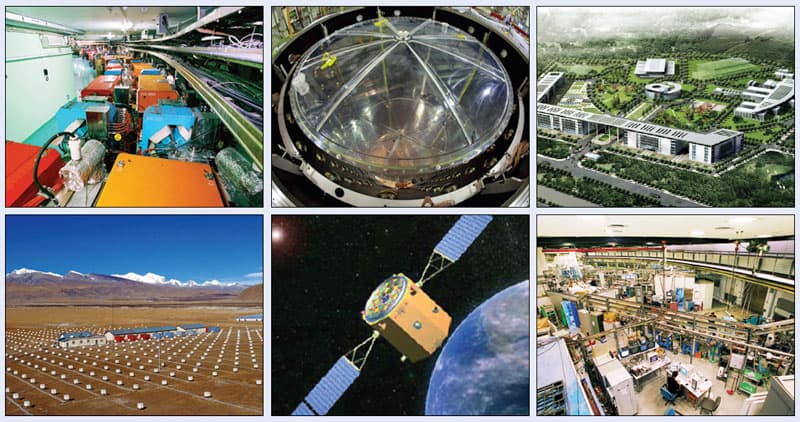
Over a cup of green tea at the headquarters of the Institute for High Energy Physics (IHEP) in Beijing, Hesheng Chen, who has been its director since 1998, takes me through a list of the institute’s many current and planned research facilities. It is an impressive tally, including a huge neutrino experiment that has just begun taking data, a spallation neutron source being built in Guangdon in the south-east of China, an observatory in Tibet to study ultrahigh-energy cosmic-rays, and a 5 GeV advanced light source that will start being built in 2016 (see below). China also recently gave the go-ahead for a new ‘hard’ X-ray telescope that will also be run by IHEP (Physics World June p8, print edition only).

The facilities are testimony to the huge investment that China is currently making in fundamental physics – and to the know-how and ingenuity of Chinese researchers. IHEP’s first and perhaps best-known facility is the Beijing Electron Positron Collider (BEPC). It was originally approved in 1983, just as China was emerging from the long isolation of the Cultural Revolution. Indeed, so significant was the facility to the resurgence of science in the country that its ground-breaking ceremony in 1984 was attended by then Chinese vice-premier Deng Xiaoping, who later returned in 1988 when the BEPC began its first electron–positron collisions.

Located at the IHEP headquarters in the west of Beijing, about 15 km from Tiananmen Square, the collider originally had a 240 m-long ring of magnets that accelerated a single bunch of electrons and a bunch of positrons in opposite directions, colliding them with a luminosity of 1031 particles per square-centimetre per second. The collisions produced particles containing a charm quark and an anticharm quark, which decayed rapidly into other mesons. Using the 500-tonne Beijing Spectrometer (BES) to measure the energy and momentum of this debris, IHEP researchers were able to pin down various properties of the parent charmed particles, including the J/ψ.

Not resting on its laurels, a major upgrade to the collider was completed in 2008. BEPC-II, as the facility is now known, has an additional ring that allows electrons and positrons to be accelerated separately. Up to 93 bunches can now be fitted into each ring, which has meant that researchers can produce collisions with, so far, a 65-fold increase in luminosity. ‘We now collect as many data in one day as in about 80 days before,’ says Chen, who underlines the fact that the upgrade was completed on time and within budget of ¥640m (about $100m). The facility has also benefited from a redesigned detector, dubbed BES-III, that uses stronger superconducting magnets to allow the energy and momentum of the collision debris to be measured with higher precision.

Spreading their wings

But BEPC-II is of interest to more than just particle physicists; for three months each year synchrotron radiation from the collider is siphoned off and sent along 14 beamlines for studies in everything from condensed-matter physics and nanotechnology to biomedicine and the life sciences. Chen says that researchers from some 100 institutions across China carry out more than 500 experiments each year at what is dubbed the Beijing Synchrotron Radiation Facility, which produces bright beams of light ranging from the ultraviolet to short-wavelength ‘hard’ X-rays. Medical scientists from the University of Shanghai, for example, have used it to study, at a molecular level, various aspects of traditional Chinese medicine, including why otherwise poisonous arsenic-containing compounds are used to treat leukaemia (Science 328 240).

Chen believes that the upgrade to the BEPC has helped IHEP’s researchers to really stretch their wings, as has the construction of the 2.5 GeV Shanghai Synchrotron Radiation Facility, to which they also contributed. ‘We have a good, capable and young team that I believe can develop still further,’ he says. One new project that is certainly keeping Chen’s staff busy is the Daya Bay Reactor Neutrino Experiment, which is currently being built in the mountains close to the Ling Ao and Daya Bay nuclear reactors in southern China about 55 km north-east of Hong Kong. A collaboration between 19 Chinese and 16 US universities, the experiment is designed to measure θ13 – one of three ‘mixing angles’ that characterize how neutrinos transform, or ‘oscillate’, from one type to another.

When fully complete next year, the new neutrino facility will consist of three experimental halls that contain identical neutrino detectors, each filled with 20 tonnes of gadolinium-doped liquid scintillator. When an electron antineutrino from the reactors strikes the liquid, a flash of light is produced that is then picked up by a bank of photomultiplier tubes around the liquid. The first experimental hall, which is around 300 m from the Daya Bay reactor, opened in August, while the second experimental hall – 500 m from the Ling Ao reactor – is expected to be finished by the end of this year.

Both halls are 100 m underground, where the overhead rocks shield them from unwanted cosmic rays, and each contains two so-called near detectors to characterize the beam of electron antineutrinos. A third hall, about 2 km away from both reactors and 300 m below ground, will be ready by June next year. Containing four neutrino detectors, it will measure the electron-antineutrino beam that has passed through the near detectors, so that any drop in the strength of the signal will be an indication of neutrino oscillation.

‘Among the current generation of reactor neutrino-oscillation experiments for measuring θ13, Daya Bay has the best sensitivity,’ says project co-spokesperson Kam-Biu Luk from the Lawrence Berkeley National La- boratory in the US. What also makes Daya Bay so special for physics in China is that it is the biggest scientific facility built in the country through a genuine international collaboration. Although China has enjoyed a formal collaboration with France on particle physics, accelerators and related technology since 2007, this time the US – through its Department of Energy – is actually stumping up cash to build something new on Chinese soil.

The US is paying $34m – about half the cost of the detector – with China paying the same and all of the civil-engineering costs. Indeed, Luk expects that the facility will prove to be a good testing-ground for more partnerships between the two countries. ‘Daya Bay provides a unique opportunity to join forces to tackle a burning question in neutrino physics and, more importantly, to learn how to work together,’ he says.

Talent seekers

With about 50 IHEP staff currently being dispatched south to Daya Bay for shifts lasting three to six months – and with the institute also working on so many other facilities – Chen admits that finding enough good-quality staff to fulfil the institute’s grand plans is not always easy. ‘No other particle-physics lab in the world has so many projects going on simultaneously, so we are under a lot of pressure,’ he says. ‘We do make some special offers to qualified Chinese physicists working overseas and many do return home, but it is not enough.’

And if all that was not enough, IHEP researchers are also contributing to a trio of other projects. One is the Franco–Chinese SVOM (Space-based multi-band astronomical Variable Objects Monitor) mission to detect gamma-ray bursts, which will launch in about 2016. A second involves research into using accelerators to reduce the half-life of radioactive nuclear waste via ‘nuclear transmutation’, while the third sees IHEP staff building an X-ray spectrometer that could go on China’s upcoming Chang’e 3 mission to the Moon, which is due to take off in 2012.

IHEP scientists are also involved in the Large Hadron Collider at the CERN particle-physics lab near Geneva, with about 20 staff and PhD students working on each of the ATLAS and CMS general-purpose detectors. ‘We have built many components for both detectors,’ says Chen, including ‘end-cap’ muon chambers, about a third of which were designed and constructed in Beijing. There is also a remote-operations centre in Beijing, where physicists are busy analysing the latest CMS data arriving from CERN.

Indeed, IHEP has long played a pioneering role in information technology in China, with the lab getting the country’s first Internet connection in 1986. In fact, until the mid-1990s, Chen recalls, many foreign companies and embassies in Beijing still used the IHEP Internet service to connect to the Web.

More money needed

Although heaping praise on the Chinese government for ‘significantly’ increasing its support for science and technology over the last 15 years, Chen points out that this was from a very low level – and that much more investment is needed. Indeed, China still ploughs only about 1.9% of its Gross Domestic Product (GDP) into research, which is less than the likes of Japan and France. That figure might not seem too bad, given that it is only slightly below the target of 2.0% that the country wanted to reach by 2010, but the absolute investment in science is relatively small for a country the size of China, given that, in terms of GDP per head of population, it is only about 100th in the world. ‘We still need to ask the government to increase its investment in basic research,’ says Chen.

One facet of China’s surge in scientific productivity has, however, left a sour taste in Chen’s mouth – the overemphasis on researchers publishing papers, many of questionable quality. ‘I am certainly not satisfied with the quality of papers in China,’ Chen admits. ‘The reasons for the focus on papers is complex, but it is not helped by the fact that every PhD student has to publish a paper before they defend their thesis – in fact the requirement in theoretical particle physics is that they publish two. I don’t think that is the right way to judge people. In accelerator science, for example, building a good component ought to be just as good as writing a paper.’ Although IHEP itself does not evaluate its staff on the number of papers published, Chen admits it is relatively unusual in that regard.

Looking ahead, one project that Chen categorically says will not be built on Chinese soil is the International Linear Collider (ILC), which is a blueprint for the next big accelerator project in particle physics after the LHC. (It is competing with a rival plan from CERN, known as CLIC.) ‘We have more than enough on our plates without building the ILC in China,’ laughs Chen, who is on the collider’s international steering committee, although interestingly IHEP does have about 10 people working on the ILC design. ‘Hosting the ILC would be very complicated and at the moment it’s not a high priority,’ he says. ‘I just don’t think in the near future that China can make what would be a huge investment.’

IHEP facilities

The Institute for High Energy Physics of the Chinese Academy of Sciences employs about 1300 staff, of whom about two-thirds are physicists and engineers, and in addition also has more than 500 PhD students and postdocs. It either runs or is building a range of scientific facilities, including the above.


Rutherford’s legacy to Manchester

Manchester at the beginning of the 20th century was already a scientific and industrial powerhouse. It was the epicentre of the industrial revolution and it had also been home to eminent scientists including John Dalton and James Joule.

But in 1911 the city’s legacy was about to be strengthened again thanks to the physicist Ernest Rutherford, who had recently taken up the chair of physics at the University of Manchester. It was in this year that Rutherford published his paper about the structure of the atom that was to revolutionize our understanding of matter.

To mark the 100th anniversary of this event, Manchester’s Museum of Science and Industry is hosting a special exhibition about Rutherford’s discovery and his legacy in the city of Manchester. In this video, Physics World reporter James Dacey visits the museum to meet the exhibition’s curator, Cat Rushmore, who describes what is on display. Among the exhibits is a collection of artefacts retrieved from Rutherford’s lab, including his desk and chair and a letter to Rutherford from Niels Bohr describing how much he admired the Manchester laboratory.

Rushmore also shares her thoughts on what Rutherford may have been like as a scientist and a colleague. “I think he was a strong personality, and I think without that strong personality you couldn’t have directed all those experiments and created such a stamp on the field as he did,” she says.

The special exhibition is scheduled to run until the end of November, but after that time visitors can still visit the museum’s permanent Rutherford display.

Towards a 'Year of Light'

Varenna
Varenna seen from Lake Como (CC BY-SA/Idéfix)

By Louise Mayor

One of the good things about being a science journalist is getting to travel to the same places as all the jammy scientists.

This week I’m heading over to Varenna – an idyllic town on the shores of Lake Como, Italy. If the name of the lake sounds familiar, that might be because it’s famous as a filming location for Casino Royale and Star Wars Episode II: Attack of the Clones, and it apparently has villas belonging to the likes of George Clooney, Sting and Richard Branson.

But I’m not going for the views, the laid-back atmosphere, the fabulous food and the wine – well okay, just a bit. This Friday 16 September, Varenna will host Passion for Light, an international workshop jointly arranged by the European and Italian physical societies (EPS and SIF, which will launch the idea of an International Year of Light (IYOL) in 2015.

Other recent “international years” with a scientific theme have included physics (2005), astronomy (2009) and chemistry (this year). Huge successes have been reported, with the International Year of Astronomy having at least 815 million participants in 148 countries.

But you needn’t be in Varenna to stay in the loop; on Friday you can tune in to a live, streamed video of the one-day event at the Passion for Light webpage.

Opening addresses will kick off at 9.30 a.m. (CEST) led by Luisa Cifarelli, president of EPS-SIF (previously interviewed in this physicsworld.com video.

The rest of the day sees an all-star cast of 11 scientists talking about the role of light in many diverse areas of physics, with speakers including Nobel-prize-winners Ted Hänsch and Claude Cohen-Tannoudji. The full line-up of scientific talks is available here.

Black holes act as galactic thermostats

The supermassive black hole at the centre of a massive galaxy or galaxy cluster acts as a furnace, pumping heat into its surroundings. But astronomers have struggled to understand how a steady temperature is maintained throughout the whole galaxy when the black hole only appears to interact with nearby gas. Now, researchers in Canada and Australia believe the answer could be a feedback loop in which gravity causes gas to accumulate around the black hole until its density reaches a tipping point. Then, the gas rushes into the black hole, temporarily turning up the heat.

Galaxies emit X-rays and this ongoing loss of energy should cool their gas so that it coalesces into stars. However, astronomers only see a fraction of the expected star formation in massive elliptical galaxies and galaxy clusters, which means that something must be heating the gas. The only major heat source is the supermassive black hole at the centre of the galaxy or cluster – also known as the active galactic nucleus (AGN). But such AGNs do not get feedback from most of the gas in a galaxy, which can be as far as 330,000 light-years from the AGN. So how does the AGN maintain the temperature of the whole galaxy?

Pressure drop

Edward Pope and Trevor Mendel, both of the University of Victoria in British Columbia, together with Stanislav Shabala of the University of Tasmania in Australia think they know how this feedback occurs. They argue that as the gas in the centre of the massive galaxy or galaxy cluster cools by emitting X-rays, it loses pressure, thereby allowing more gas from further out in the cluster to flow inwards. Eventually, the gas becomes so dense that it cannot support its own weight and it collapses suddenly, rushing in towards the black hole. The black hole swallows some of the gas and uses this energy to hurl the remaining gas outwards. The researchers believe that this outburst could be so energetic that some gas could even be ejected from an elliptical galaxy – but it is not energetic enough to evict gas from a cluster of galaxies.

The outburst would contain particles travelling at near the speed of light and would extend beyond the furthest reaches of even a massive galaxy. “Even though it is fuelled only by the central gas, the black hole can actually heat all of the gas in the galaxy,” says Pope. Such outbursts from an AGN can continue for 10 to 100 million years according to the researchers’ calculations, which they say match observations of giant bubbles of gas blown by AGN jets over similar timescales. Once the AGN settles down, the gas begins to cool once more, flowing toward the centre of the galaxy or cluster again.

The average rate at which the gas builds up is the key connection between the AGN outbursts and the temperature of the galaxy at large, Pope explains. It depends on the difference between the cooling rate of the whole galaxy plus the average heating rate by the AGN. Gas accumulates more quickly when cooling dominates, and more slowly when heating is stronger. “Consequently, you can see that this is a self-regulating loop – just like a thermostat,” says Pope.

Promising explanation

Andrew Benson of the California Institute of Technology in Pasadena says that the inclusion of periodic AGN outbursts in this explanation of how galaxies and clusters regulate their temperatures is promising “since we observe that AGN are ‘on’ for only a short time, followed by long periods of being ‘off’ ”. The amount of “on” time for an AGN depends on the amount of cooling it has to counteract, and the researchers say that observations bear this idea out: clusters that are brighter in X-rays are more likely to contain a jet-producing AGN than dimmer clusters.

David Rafferty of Leiden Observatory in the Netherlands says the idea is “quite appealing and could well be correct”. However, he cautions that “Its importance can only be judged after its predictions have been carefully tested.”

Benson is not entirely convinced that the inflow of gas to the black hole is truly periodic – for example, he says it is possible that gas could flow inwards along one direction while flowing outwards in another. However, he agrees that the researchers’ predictions, such as how the “on” time of the AGN scales with the mass of the black hole, make the theory testable “which is always the most important thing”.

The research will be described in an upcoming issue of the Monthly Notices of the Royal Astronomical Society and a preprint is available at arXiv:1108.4413.

Copyright © 2026 by IOP Publishing Ltd and individual contributors