Do you consider yourself a physicist?

By Margaret Harris

hands smll.jpg

A fortnight ago our weekly Facebook poll asked:

How often do you use physics at work?

The most common answer by far, with 62 out of 80 votes (about 78%) was “a lot – practically every day”.

Given our readership, such a response was hardly surprising, but a few of those who voted with the majority wondered if the poll even made sense. As a reader with the intriguing alias of “Grannie Cool” observed, “Everything is physics, so that’s a loaded question!” while Ahmed Al Bashir pointed out that even human behaviour seems to obey the laws of action and reaction. The most creative response came from the Twitter user @Timewrapper, who claimed that they use the principle of energy conservation every day – by sleeping all day long. Let’s hope their boss isn’t reading this.

Some of the minority responses were also interesting. We particularly liked the one from someone at a company that makes merino outdoor gear, who informed us that one of the company’s partners has an MPhys, “but on a day-to-day basis, it hasn’t much relevance”.

Which leads us nicely into this week’s poll, which is:

Do you consider yourself a physicist?

You can vote here and in the best Facebook tradition, the possible answers are “yes”, “no” and “it’s complicated”. (If you place yourself in the third category, we’d really like to know why!) We’ll discuss the answers next week, and they’ll also help inform our October special section on careers for physics graduates.

CERN seeks cultural renaissance

By James Dacey

When I visited CERN earlier this year, it was clear that in addition to all of the research there is also a strong focus on the arts. Strolling around the facilities, I stumbled across many works of art, including several pieces by the British sculptor Anthony Gormley. And various researchers told me that they love working at the lab because of all the opportunities to get involved with extracurricular activities, where they mix with people from all over the world.

Today, CERN has reaffirmed its commitment to the arts with the launch of a cultural policy for engaging with the arts, called “Great Arts for Great Science”. The policy outlines a selection process, which the lab will follow when deciding which arts programmes to approve. CERN is also seeking to form partnerships with leading international arts organizations.

I first heard about the policy while at CERN in April when I caught up with the lab’s cultural specialist, Arianne Koek. She told me that her vision was to cast science and art on an equal platform by encouraging more internationally renowned artists to collaborate with the lab.

“If you look at the whole history of the Renaissance, arts and science were absolutely on an equal level. And I think it’s absolutely time now to have a contemporary renaissance,” she said. You can see our full interview in the video below.

Vacuum technology breaks new ground

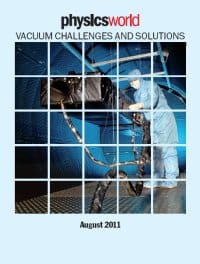
supp.jpg

By Hamish Johnston

While vacuum technology is common place in the research labs of wealthy countries, scientists in developing nations often lack access to the most basic surface-science facilities.

In Physics World‘s latest Vacuum Challenges and Solutions supplement, J J Pireaux explains how the international vacuum association IUVSTA is reaching out to developing countries. In an exclusive interview, IUVSTA’s president explains what the society is doing to attract new members from developing nations. Another key part of IUVSTA’s strategy is its World Transfer Program, which will soon be offering grants to early-career scientists so they can work in another lab for a short period of time.

Moving on to countries that have developed rapidly into top-tier economies, the supplement also has an article by Matthias Wiemer and Wannong Eckhardt that addresses the challenges of operating in the “BRIC” countries. According to Wiemer and Eckhardt, Pfeiffer Vacuum has seen a significant increase in demand for vacuum equipment in Brazil, Russia, India and China – as well as other countries in Asia. Writing in the supplement, the pair argue that simply shipping vacuum kit to BRIC nations is not enough. Instead firms must create “well-established service networks close to customers”.

Going from the “second world” to “out of this world”, Giles Case of the Rutherford Appleton Laboratory explores how vacuum systems are used to test satellite components – and even entire satellites – before they are sent into space.

The supplement also allowed me to put my vacuum experience to good use in researching and writing an article about the reuse and recycling of vacuum equipment. I interviewed people from businesses ranging from industry giant Oerlikon Leybold Vacuum to the four-person outfit PSP Vacuum – and discovered that the used-equipment business keeps on growing.

You can download a free PDF of the supplement here.

Coming soon to a field near you

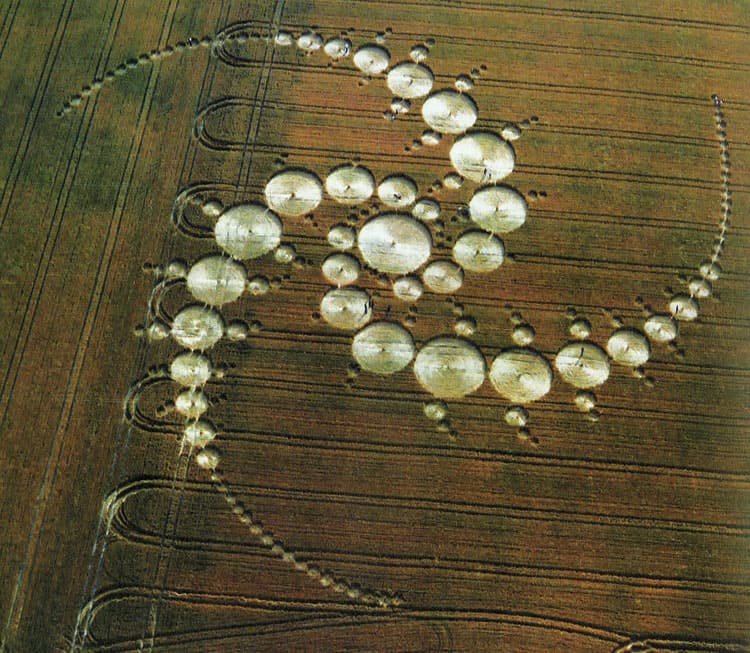
One evening in July 1996 I was staying above a country pub near Avebury in Wiltshire, enjoying a week’s holiday drive around the prehistoric sites of southern England. In the middle of the night, I awoke to the hushed sounds of three men talking in the car park below. They were huddled around a large sheet of paper, and after 15 minutes of furtive discussion, they sped off down a country lane. That same evening, 194 “crop circles” spanning a total of 115 m appeared in a nearby field at Windmill Hill. Their pattern, which was derived from an equation developed by Gaston Julia in 1918, consisted of circles that defined three intertwined fractals (figure 1). This “Triple Julia” pattern is mathematically complex: as late as the 1980s, even the best computers lacked the processing power needed to generate it on screen. Had those three men managed to physically imprint the same pattern into a wheat field during the short hours of that midsummer night? And if so, how did they do it?

Some 15 years on, scientists still do not know the answer. With more than 10,000 patterns documented over the years, crop formations remain a major scientific mystery, one that plays out in our fields – and thus in our food supply – at the rate of one event worldwide every summer evening. Physicists who have conducted serious research on the techniques of crop-circle artists have come away with fascinating insights, including some that have led to practical advances, such as a patented technique for accelerating crop growth. With recent announcements that climate change has suppressed crop growth by 3%, such advances offer clear potential rewards for society. Yet crop-circle research is not for the faint of heart, because physicists who enter it must deal with media manipulation, hate-mail, conspiracy theories, supposed alien collaborations and new-age nonsense – not to mention the risk of being viewed as “less than serious” by their colleagues.

Devils, aliens, whirlwinds and hoaxers

Speculation over the origin of crop circles has raged since they were first reported in England in the 1600s, with rolling hedgehogs, urinating cattle, romping romantic couples and the actions of a “mowing devil” all offered as early explanations. In 1678 a series of circles in Hertfordshire was attributed to the devil because the manufacture appeared to be beyond human capabilities. According to a report in a 1678 issue of News Out of Hartfordshire, the devil “placed every straw with an exactness that would have taken up above an age for any man to perform what he [the devil] did that one night”. More prosaically, the woodcut print that accompanies the report also indicates that the stalks within the circle were flattened rather than broken – a practice that continues today.

The first scientific explanations of crop circles focused on cyclonic winds. In 1686 the British scientist Robert Plot discussed crop-circle formation in terms of airflows from the sky. Similarly, observations of the night sky by another scientist, John Capron, in 1880 revealed a wind-induced “auroral beam” above the “circular spots” of flattened crop (Nature 22 290). However, as the phenomenon gathered momentum, and more elaborate, multi-circle shapes appeared in crop fields, most observers concluded that these symbols of mathematical precision had to be the work of intelligent beings. In the waning decades of the 20th century, this conclusion ignited a heated aliens-versus-humans debate, with “UFOlogists” looking to outer space for the circles’ artistic creators, while “cereologists” concentrated on hunting for terrestrial hoaxers. This debate was complicated by the fact that the creators (whoever they were) were clearly science-savvy. In particular, one formation that appeared next to Chilbolton Observatory in Hampshire appeared to be a reply to a “search for extraterrestrial intelligence” signal beamed into space 30 years earlier.

As the debate raged, some scientists continued to seek alternative natural explanations. One of the most prominent was Terence Meaden, then a meteorologist and physicist at Dalhousie University in Canada. In 1980 Meaden refined Capron’s theory, proposing that the curvature of hillsides in southern England affected the local airflow, allowing whirlwinds to stabilize their positions long enough to define circles in the crop fields.

Such scientific speculations received a severe blow in 1991 when, to the glee of the British media, two unassuming men in their sixties declared that they had been creating crop circles for more than 25 years. Their hobby had begun one summer evening in the mid- 1970s, when artist Douglas Bower recounted a story to his friend David Chorley about an Australian farmer who had reported a UFO rising into the sky and leaving behind a circular “saucer nest”. As Bower and Chorley strolled home from the pub through the English countryside, they created their first imitation nest.

In the process, the pair unintentionally triggered a 15-year duel between art and physics. Bower and Chorley were trying to start a UFO hoax, so when Meaden’s meteorological theories of crop-circle formation showed signs of catching on, the pair increased the number of circles in their formations, hoping to demonstrate that they were not weather-related. Meaden, however, proved an inventive (albeit unwitting) opponent. By the time Bower and Chorley went public, Meaden had moved on from mere weather patterns to an electromagneto-hydrodynamic “plasma vortex”, which purported to explain not only the elaborate multi-circle designs, but also the flat farm tractor batteries and eerie lights that coincided with their formation!

Today, with the benefit of hindsight, such explanations sound rather contrived. At the height of the debate, though, no less a physicist than Stephen Hawking was prepared to accept some version of Meaden’s theory. When a spate of circles appeared in the countryside near his Cambridge home in 1991, Hawking told a local newspaper that “crop circles are either hoaxes or formed by vortex movement of air”.

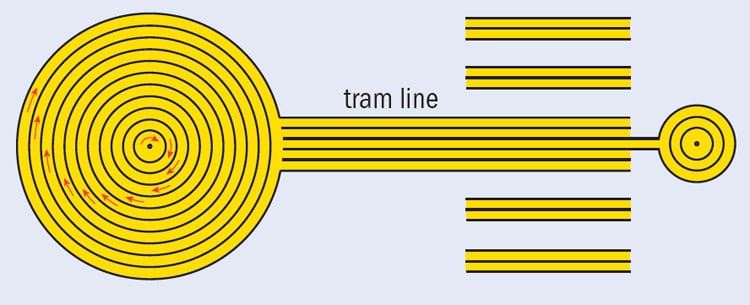
Frustrated, the artists countered by producing a pattern that included two circles and five rectangles (figure 2). At this point, even Meaden conceded that these straight-line designs, labelled “pictographs” by researchers, were man-made, although he stressed that simple circles could still be a consequence of atmospheric phenomena. After all, even after Bower and Chorley confessed to making 250 formations, that still left more than 1000 other formations unaccounted for. But the addition of straight lines did more than just rule out natural causes for their designs. It also signalled a turning point in the 400-year history of crop formations.

Creating mathematical patterns

After Bower and Chorley announced their hoax, the pictographs they created inspired a second wave of crop artists. Far from fizzling out, crop circles have evolved into an international phenomenon, with hundreds of sophisticated pictographs now appearing annually around the globe. Although up to half of each year’s crop circles are in England, formations also occur elsewhere in Europe, as well as in North and South America, Russia, Australia, Japan and India.

Artists who readily admit to having made crop circles in the past say they do not know who is responsible for all of today’s masterworks. This is partly because many crop-circle artists have followed the conventions established by their predecessors: creating their pictographs anonymously, under cover of darkness, and leaving the scene free of human traces. But although the new artists are traditionalists in this sense, in other respects their craft has moved on considerably. Today’s artists, for example, have access to computers, GPS equipment and lasers to help map out their patterns, whereas Bower had to create his straight lines using a “sight” that consisted of a circular wire attached to his cap.

Scientists who are curious about the mathematics of crop circles and how they are planned have two options: they can stake out the car parks of rural pubs late at night in the hope of catching artists in action; or they can apply pattern-analysis techniques to the results. History has shown that the stake-out option is risky. Attempts to capture mapping techniques on film have fuelled a cat-and-mouse game between artist and researcher, in which the stealth of the former has usually resulted in public embarrassment for the latter. In 1990, for example, a prominent circles researcher and engineer, Colin Andrews, co-ordinated the infamous Operation Blackbird, in which a region near Westbury, Wiltshire, was put under surveillance by the BBC and patrolled by officials from the Ministry of Defence. Despite such precautions, the dawn of the second day revealed that artists had crept in under the cover of night, performed their craft and left unhindered. Overenthusiastic researchers were dealt another humiliating blow in 1996, this time at the hands of the media, when a sensational film clip called Oliver’s Castle Crop Circle (available online) hoaxed a pattern materializing in a crop field.

Perhaps not surprisingly, most scientists have preferred to forgo stake-outs and instead analyse the patterns left behind by these cunning artists. The pioneering research published in 1996 in Science News (150 239) by Gerard Hawkins (who was then an astronomer at Boston University, US) examined crop circles formed during 1978–1988. The 25 formations he analysed consisted of single circles, multiple circles and circles with concentric rings. Yet even for these primitive patterns, Hawkins found a hidden artistic language: he discovered that all of the formations were built using hidden “construction lines” that were used at the design stage but did not appear in the final pattern. Examples are shown in blue in figure 3, along with the yellow patterns of the resulting circles.

Hawkins used these construction lines to demonstrate that crop circles are much more than arbitrarily sized and randomly positioned patterns in fields. Instead, the construction lines dictate their relative sizes and positions with precision and lead to some highly exotic properties. In particular, ratios of various diameters and areas within the designs were found to cluster around the “diatonic ratios” for the white keys on a piano. These ratios are the frequency ratios of notes: “middle D” to C, for example, is 297/264 Hz = 9/8. The idea that crop formations possess a fundamental geometric harmony analogous to musical chords has inspired musicians to use computer algorithms to convert formations into melodies. The best-known “translator” is Paul Vigay, and samples of his music are available at http://bit.ly/lbUJQq.

Today’s crop-circle designs are more complex than ever, featuring up to 2000 individual shapes arranged using intricate construction lines that are invisible to the casual observer. The increase in available computing power has also meant that iterative equations are now frequently used to generate fractal shapes such as the Triple Julia design, which reappeared in Switzerland last year. Other famous fractal icons such as the Mandelbrot set, the Julia set and the Koch snowflake have also popped up regularly in crop fields since 1991.

Making a crop circle

Even the preliminary stage of crop-circle construction – mapping the proposed design – is not an easy task. The appearance of the first Triple Julia formation in July 1996 was pre-empted by a single Julia formation several weeks earlier. This “warm-up” design took a team of 11 surveyors five hours just to measure out, and a surveying company later estimated that one of its engineers would have required at least five days to map out each of the three intertwining patterns. But once their maps are complete, crop-circle artists face a still more difficult problem: how do you imprint patterns in crops that are a challenge even to draw on paper?

Traditional circle-makers employed “stompers” (wooden planks attached to two hand-held ropes), string and garden rollers, plus bar stools to allow artists to vault over undisturbed crops. Despite their primitive appearance, stompers are a surprisingly efficient tool for flattening crops, especially when driven by skilled hands. However, modern designs have evolved beyond the traditional requirement that stalks be flattened rather than broken: formations now feature stalks that are carefully sculpted to create intricate textures within the geometries. For example, the stalks in each of the circles of the Triple Julia pattern formed a spiral. Multiple layers of bent stalks can also be woven together, creating shadowy textures that evolve over days in the sunlight due to the stalks’ phototropic responses.

Hence, to imprint their vast pictographs before sunrise, today’s artists have to work in co-ordinated teams. One such team is known as the Circlemakers, and when – in a rare breach of secrecy – it allowed BBC filmmakers to document its construction of a 100-circle roulette pattern in 1998, team members were observed physically implanting circles at the remarkable rate of one every minute. Circlemaker Will Russell summarized their motivation: “To push the boundaries of what people think is humanly possible”, while his colleague Rod Dickinson stressed that this rate was sufficient to imprint the Triple Julia pattern in one night.

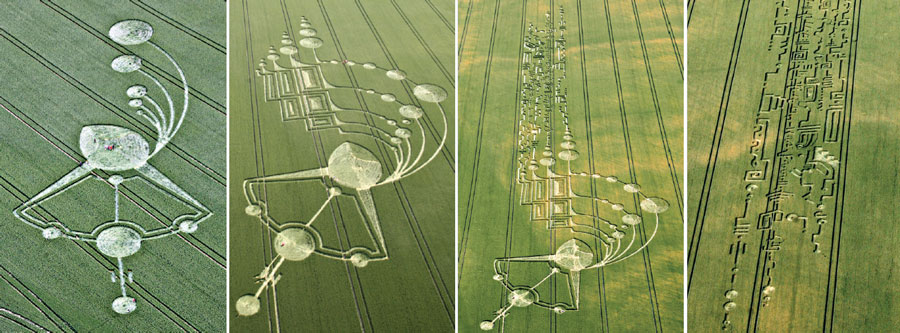
Despite such claims, the larger scale and higher precision of the Triple Julia design would have made it significantly more challenging to create than the Circlemakers’ roulette. There are further signs that traditional physical imprinting techniques are reaching their limits. One of 2009’s pictographs required three nights to complete, and its pattern progression is shown in figure 4. If artists want to maintain the movement’s secrecy and anonymity, it is clear that they will need to exploit more efficient construction methods.

Biophysical speculations

Intriguingly, experiments carried out by biophysicists raise the possibility that some circle-makers may already be changing their methods. Independent studies published in 1999 and in 2001 reported evidence consistent with what you would expect to see if the crops had been exposed to radiation during the formation of patterns. The patterns studied date back to the mid-1990s, and include the original Triple Julia. Figure 5 shows the results of an investigation of “pulvini”, the visco-elastic joints that occur along wheat stalks. Eltjo Haselhoff, a medical physicist, found that pulvini on bent stalks within a 9 m-wide circle were elongated compared with undamaged crops in the same field. Although several well-understood factors can cause pulvini to swell, including gravitropism (the directional growth of stalks in response to gravity) and “lodging” (bending of stalks caused by wind or rain damage), Haselhoff dismissed them based on the magnitude of the increase, and its symmetric fall-off from the circle’s centre to its edge.

Haselhoff’s findings built on the earlier research of William Levengood, a biophysicist at a Michigan-based crop-seed consultancy called Pinelandia Biophysics Laboratory. Levengood, who found similar results on 95% of 250 crop formations in seven countries, proposed that the elongated pulvini were a result of superheating from electromagnetic radiation. Such radiation, he theorized, would cause stalks to fall over and cool in a horizontal position. He found further evidence for superheating in changes in the crop’s cellular structure and in the numerous dead flies stuck to seed heads in the formations.

Levengood and Haselhoff both followed up their work by removing crop seeds from the field and placing them in growth chambers controlled for light, humidity and temperature. They found that while seeds taken from the surrounding crop grew at normal rates, seeds from the formations grew up to four times slower in 90% of the measured formations.

Although both researchers’ findings were published in Physiologia Plantarum (W C Levengood 1994 92 356 and 1999 105 615; E H Haselhoff 2000 1 124), a peer-reviewed journal dedicated to the science of plant growth, their results failed to bring the crop-circle debate to a close. The authors’ own speculations did not help matters: Levengood interpreted his results as evidence of Meaden’s plasma vortex theory, while Haselhoff proposed that the sources of radiation were the mysterious balls of light that some observers have reported hovering over formation sites. Under the circumstances, scientists’ reluctance to explore such controversial findings has outweighed their curiosity, and neither Levengood nor Haselhoff’s work has ever been reconfirmed or disproved by subsequent studies.

Consequently, their research merely fuelled the long-running discussions about human hoaxers, atmospheric effects and, of course, extraterrestrial artists. Last June I entered the debate by suggesting in Nature (465 693) that terrestrial artists would not need to bend any laws, but they would need mathematical skills to plot today’s epic designs and scientific awareness to exploit technological advances. This suggestion was met with anonymous hate-mail from UFOlogists and others accusing me of spreading misinformation as part of a massive cover-up operation. I surfed the conspiracy websites to find out who I was supposedly conspiring with and found that the most likely culprit was a collaboration between the UK, German and US secret services!

Although aliens and government conspiracies cannot be excluded with 100% surety, Occam’s razor (which states that explanations involving the fewest assumptions are the most likely) supports the human-artist scenario. Might some artists therefore be supplementing physical implantation techniques with microwaves?

Intriguingly, a group of crop-circle enthusiasts called the BLT Research Team claims to be able to replicate the observed changes to pulvini using 30 s exposures to microwaves generated by magnetrons from readily available microwave ovens. Today’s magnetrons are small and light, and some require only 12 V battery power supplies. Haselhoff and Levengood used the Beer–Lambert principle, which relates the absorption of radiation to the properties of the material, to model the radial dependence of the pulvini swelling. For a typical 9m circle, Haselhoff’s model indicated a radiation point source placed 4 m above the circle’s centre. Once superheated with this source, the stalk orientation could be readily sculpted, speeding up circle creation. Although this appealing hypothesis fits the published facts, biophysicists will clearly need to expand on these preliminary experiments if such speculations are to become accepted.

Still seeking solutions

Determining the technology behind crop-circle making has implications beyond mere curiosity and art appreciation. Traces of some patterns (“ghost formations”) can still be seen in the subsequent year’s crop, suggesting long-term damage to the crop field consistent with Levengood’s observations of stunted seed growth. Crop formations are harvested every year, and so these damaged crops are entering our food chain. Intriguingly, Levengood’s results showing stunted growth came from crop circles that appeared early in the season in immature crops prior to anthesis (flowering). However, he also reported that if the seeds were instead removed from circles etched in mature crops, then the growth rate was increased fivefold. This observation led Levengood to develop and patent Molecular Impulse Response technology, which accelerates crop growth by applying electrical pulses.

Crop-circle artists are not going to give up their secrets easily. Researchers studying modern pictographs have to take to the air to photograph the latest patterns before they disappear forever under the harvester’s blades. This summer, unknown artists will venture into the countryside close to your homes and carry out their craft, safe in the knowledge that they are continuing the legacy of the most science-oriented art movement in history. Can you unlock the secrets to their success?

At a glance: Crop circles

  • Crop circles are patterns formed within crop fields and represent the work of the most science-oriented art movement in history
  • First reported in the 1600s, these patterns appear around the world at a rate of one every evening
  • The patterns, which can feature up to 2000 individual shapes, are often built using hidden mathematical relationships such as diatonic ratios
  • Biophysicists have interpreted swollen stalks as evidence that the crops were exposed to microwaves during formation of the circles, leading to patented techniques for accelerated crop growth

More about: Crop circles

S and K Alexander 2010 Crop Circle Year Book 2010 (Temporary Temple Press)
E H Haselhoff 2001 The Deepening Complexity of Crop Circles (Frog Publishing, Berkeley)
R Irving and J Lundberg 2006 The Field Guide of Crop Circle Making (Strange Attractor Press, London)


Trojan collision may have shaped the Moon

Differences between the near and far sides of the Moon could be the result of a collision between the Moon and a “Trojan” companion that occurred billions of years ago. That is the conclusion of geophysicists in the US and Switzerland who have done computer simulations on how the Moon would be affected by such a massive impact.

Ever since the Luna 3 space mission ventured behind the Moon in 1959, we have known that the nearside and farside of the Moon are different. The nearside (which always faces the Earth) is dominated by relatively smooth basalt plains called “maria”, while the farside is mountainous and deeply pitted with craters. The two sides are also believed to be different beneath the surface, with the nearside crust appearing much thinner than the crust on the farside.

Scientists have several theories for why the two sides are so different. These include tidal heating of the Moon by the Earth’s gravitational field or a piling up of debris from the huge impact crater at the Moon’s south pole.

Now, Martin Jutzi and Erik Asphaug of the University of California, Santa Cruz have done computer simulations that suggest that the lunar farside is the remnant of a collision between the Moon and a smaller companion moon.

Low-speed crash

According to the pair, the companion moon could have been formed at the same time as the Moon – when a Mars-sized planet collided with the Earth shortly after the solar system was formed. This kicked up a vast ring of debris that then orbited our planet, and much of this material is believed to have coalesced rapidly into the Moon. According to Asphaug, it is also possible that one or more smaller moons also formed at stability points within the ring. Such a moon could then have settled into a Trojan orbit, trailing or leading the Moon by 60°. However, this orbit is expected to last only about 100 million years and end with the companion moon crashing into either the Earth or Moon at a relatively low velocity.

It is this latter scenario that Jutzi and Asphaug have modelled using computer simulations. The pair assumed that the companion was about 3% of the mass of the Moon and the two bodies collided at about 2.4 km s–1 or about 8600 km h–1. This velocity is expected in the decay of the Trojan orbit. One important consequence of this slow collision is that the two moons stick together rather than blow apart. “It does not form a crater, but splats material onto one side,” explains Asphaug.

The collision velocity is also much slower than the speed of sound in the rocks that make up the moons, which means than the heat generated by the collision is dissipated efficiently and therefore not much melting of rock occurs.

Instead, the simulations suggest that in the aftermath of the collision a new layer of crushed and fragmented rock was deposited that covered one hemisphere of the Moon. The model suggests that the extent and thickness of this layer is consistent with what we know about the surface of the farside of the Moon. What is more, the simulation also predicts that the collision would push much of the Moon’s magma interior towards the nearside – something that is consistent with lunar temperature measurements.

GRAIL’s gravity map

The researchers now plan to look for clues of a Trojan collision in new data from the Moon. The pair is particularly interested in the gravity map of the Moon’s interior that will be produced by NASA’s GRAIL mission, which is scheduled to launch in September. GRAIL will determine the thickness and structure of the Moon’s crust, which can then be compared with specific predictions of Jutzi and Asphaug’s model.

The researchers are also interested in comparing the ages of rocks from the near and farside. If their theory is correct, then rocks on the farside should be older because they formed on the smaller moon – which would have solidified before the much large Moon.

The research is described in Nature 476 36.

Science in the media 'almost always biased', finds poll

By James Dacey

hands smll.jpg

Here in the UK over the past few weeks the media have been going through a spell of reflection, following revelation after revelation about phone hacking at the now defunct weekly newspaper, News of the World. So the time seemed ripe to use our weekly Facebook poll to ask readers a question relating to the media and our particular patch of the media landscape: science. We asked:

On the whole, how do you find the media’s coverage of science?

Impartial
Occasionally biased
Frequently biased
Almost always biased

And it seems that the majority of respondents take a pretty bleak view of the media in terms of their scientific balance. 59% of respondents feel that the media are almost always biased in their handling of science stories. 29% believe that the media are frequently biased and 12% said that they are occasionally biased. Not a single person felt that the media are never biased in covering science.

One responder who voted for almost always biased, Liam Cresswell, believes that the problem could be related to the culture and hierarchies among media outlets. He commented that, “While there are a small number of decent science journalists: as soon as anything that is deemed major comes up, said science journalists are undermined (by their news establishment) and a generic, high profile, news journalist is put in control of the story.”

Another respondent who cast his vote in the same way, Nigel Deacon, singles out climate science as an area in which the media are particularly bad. “The mainstream media’s coverage of climate science seems to be aimed, in the main, at a juvenile or uninformed audience,” he said. “To read anything approaching a reasoned discussion, one has to go to the Internet. The BBC’s bias is particularly obvious.”

The question that we posed to readers was inspired by a recently published review of the BBC’s science coverage. This concluded, for the large part, that the corporation’s content is accurate and impartial. The findings, published by the BBC Trust, consisted of an independent report from geneticist and popular-science author Steve Jones and a content analysis carried out by Imperial College London.

Jones did, however, warn of instances where scientific debates have been misrepresented in an attempt to create balance or conflict. He refers to climate research as a subject that has only a minor presence in the science literature as a whole, but is heavily over‐represented in news coverage.

In specific reference to man-made climate change, Jones warns that an “over-rigid” application of the corporation’s editorial guidelines on impartiality has created a false debate. This, he concludes, fails to take into account what he regards as the “non-contentious” nature of some stories and the need to avoid giving “undue attention to marginal opinion”. Though he did suggest that the problem could be resolved in part by new BBC guidelines, published in 2010, that incorporate consideration of “due weight” in relation to impartiality.

Thank you for taking part in the poll and for taking the time to provide comments. Check our Facebook page tomorrow for a poll relating to physics careers.

Photons tune in and shape up

Physicists in the US have created a device that can emit single photons of the right shape and colour for use in quantum information. The advance is another step in the development of practical quantum-computing and quantum-cryptography systems.

Quantum computing exploits the peculiar laws of quantum physics to process certain calculations much faster than any of today’s computers, whereas quantum cryptography uses those laws to prevent eavesdropping on secure communications. Both rely on the transmission of quantum information, and one of the best media for transmitting quantum information is single photons.

However, photons also come with some practical difficulties. Transferring quantum information over long distances requires telecommunications optical fibres, which work most efficiently at infrared wavelengths. Storing quantum information involves devices called quantum memories, which prefer photons at visible or near-visible wavelengths and with a certain “shape” or intensity profile. As a result, researchers have been trying to develop devices that convert telecommunications-band photons to photons that are compatible with quantum memories.

The past several years has seen a number of research groups come up with methods to manipulate either a single photon’s shape or its wavelength. Now, however, Matthew Rakher and others at the National Institute of Standards and Technology (NIST) in Gaithersburg, Maryland, have devised a way to do both at once. “Our work provides a method to take telecommunications-band single photons, which are ideal for transmission, and change their wavelength and shape so that they can be stored in visible-wavelength quantum memories,” says Rakher.

Stronger and faster

To release single photons, Rakher and colleagues use a quantum dot, which is a semiconductor version of a single atom. A quantum dot has discrete energy levels and can reliably emit a single photon every time it is excited, usually with infrared wavelengths of about 1300 nm. The NIST researchers collect these photons in a fibre optic and direct them to a crystal, where they are combined with a stronger and faster laser pulse that has a wavelength of about 1550 nm. This prompts a process known as sum-frequency conversion, which translates the photon’s wavelength to a visible 710 nm. What is more, the single photons adopt the laser pulse’s tighter shape.

Wolfgang Lange at the University of Sussex in the UK praises the results of the NIST researchers, but notes that more work needs to be done. “In particular, the efficiency of the source should be enhanced,” he says. “But [their demonstration] is a very important step forward on the way to the perfect single-photon source, bridging the gap between quantum dots and devices for transferring, processing and storing quantum information.”

Rakher thinks that the next step for his group is to change the wavelength and shape of the single photons to specifically match the requirements of quantum memory. “This will be a crucial step in developing quantum-dot single-photon sources for use in quantum-information applications,” he says.

The research is due to be published in Physical Review Letters.

Stealing quantum keys the easy way

A straightforward and effective way for eavesdroppers to copy secret keys from quantum cryptographic systems has been tested by physicists in Germany. The technique does not require intercepting the quantum code itself, but merely sending a series of well timed weak light pulses to blind the receiver’s detectors and then listening to a public, unencrypted message between sender and receiver. The researchers, however, have also put forward a relatively simple way to counter the loophole.

The hacked system involves the sender (Alice) encrypting a confidential message using a key that she shares with the receiver (Bob). The key is encoded using the polarization states of a series of single photons, with each photon polarized in one of four ways – horizontally, vertically or in one of two diagonal directions. In theory the scheme is secure against eavesdropping attacks by a third party called Eve because any attempt to copy the key while en route from Alice to Bob – who has one detector for each polarization – will be exposed by the effect it has on Bob’s measurements.

This approach is used in a number of commercial encryption devices, and has been used in a limited number of financial and administrative transactions. However, while uncrackable in principle, it has been shown by various research groups to be vulnerable in practice, particularly because of limitations of Bob’s single-photon detectors. Last month, for example, Christian Kurtsiefer of the National University of Singapore and colleagues used bright light to “blind” the avalanche photodiodes within the detectors, allowing them to manipulate Bob’s measurements and steal the key without revealing their presence.

“Dead time” interception

Like a number of other eavesdropping techniques, the one developed by Kurtsiefer’s group involves intercepting the key sent by Alice and then resending it on to Bob, which is quite a complex operation. However, the new research, carried out by Henning Weier of Ludwig Maximilians University in Munich and colleagues and the firm qutools, does not require such an interception. This is because it exploits avalanche photodiodes’ “dead time” – the time it takes to recharge a photodiode once it has detected a photon, or the minimum time between two successive single-photon measurements, which is generally at least 50 nanoseconds.

The idea is that Eve injects a pulse of light, polarized in any one of the four directions measured by Bob, into the communication channel shortly before Alice sends each of her single photons. Above a certain minimum intensity, each pulse should trigger three of Bob’s detectors – those corresponding to the polarization assigned by Eve and the two, non-orthogonal states. If the delay between each pulse and single photon is much less than the photodiodes’ dead time, these three detectors will be unable to detect Alice’s photons.

This leaves only the orthogonal detector free to make detections. This means that Bob will only detect the photons sent by Alice that have a polarization which happens to be at right angles to that chosen by Eve for the corresponding pulse. When Bob then tells Alice over an open channel which photons he has detected, Eve simply notes the polarization of the corresponding pulses and the resulting sequence of orthogonal polarizations is equal to the secret key.

Less than 18 photons needed

To test the scheme, the team set up standard Alice and Bob instruments in the lab, communicating through about 1 m of free space. Eve was a second transmitter that was timed to send pulses 200 ns ahead of each photon from Alice. This is within the deadtime of 500 ns. By inserting appropriate filters in front of Eve, the researchers found that, as expected, the match between Eve’s stolen key and that recorded by Bob improved as the intensity of the blinding pulses increased. However, the minimum intensity needed to create a good match was not very high.

In fact, containing an average of just 16.5 photons provided Eve with a key that had a 98.8% overlap with that of Bob. As illustrated in the figure above, the high overlap provided a pretty accurate decryption of an image of the emblem of the University of Munich.

The researchers have also proposed a simple countermeasure to their hacking scheme. The solution, according to Weier, is to ensure that all four of Bob’s detectors are continuously active and able to respond to a single photon. This, he says, can be done by adding “just a bit more electronics”.

“Simple and elegant”

Vadim Makarov, a member of Kurtsiefer’s group, describes the Munich hacking technique as “simple and elegant”. But he points out that it does have a weakness – by blocking off three out of every four photons that Bob should receive it reduces the bit rate to one quarter of its normal value. “It may be difficult for Eve to trick Alice and Bob into believing the reduced bit rate is normal,” he added.

Makarov also points out that commercial quantum key distribution systems manufactured by ID Quantique and MagiQ Technologies are immune to this kind of attack. But he says that many research systems are vulnerable. “It is very useful that this paper is published and everybody can see how to design their systems properly,” he added.

The research is published in New Journal of Physics 13 073024.

Between the lines

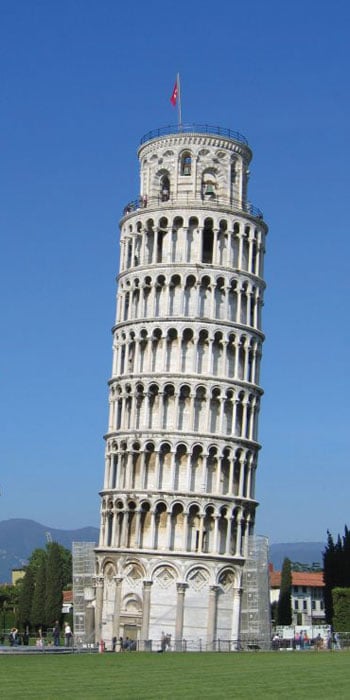
Photo of Tower of Pisa

Busting scientific myths

Galileo disproved Aristotle by dropping lead balls off the Tower of Pisa. Darwin deduced evolution by observing differently shaped beaks in Galapagos finches. J J Thomson discovered the electron. All three stories are commonly presented as fact but, according to University of Texas historian Alberto Martínez, they are actually myths. In his fascinating and thought-provoking book Science Secrets: the Truth About Darwin’s Finches, Einstein’s Wife, and Other Myths, Martínez traces how such scientific myths developed. In a chapter on Thomson and the electron, for example, he shows that, while Thomson certainly performed important experiments on cathode rays, he owes his “electron discoverer” status in part to his former students, who helped spread what Martínez calls a “narrow, simplistic discovery tale”. Other myths are more complex. In Galileo’s case, we know that he wrote about the motion of falling objects and that, unlike Aristotle, he correctly predicted that a light object and a heavy one will land simultaneously if dropped from the same height at the same time. However, Galileo’s preserved writings contain no hint that he ever performed experiments to prove it, and the first secondhand account of him doing so was not published until almost 70 years after his death. Worse, several of Galileo’s contemporaries who did perform the experiment got the wrong answer – the heavier object appeared to land first. Over the centuries, Martínez writes, this ambiguous incident has been repeatedly enhanced until it has become a turning point in the history of science. Intriguingly, Martínez suggests that such myth-making is both inevitable and not entirely bad. Scientific myths, he writes, “function as a marker, an apparent milestone to punctuate and orient our historical imagination”, and vivid stories may even attract young children to study science. Still, he argues, it is important to understand how such myths are made, in order to avoid the “powerful urge to ever-so-slightly misread and misrepresent”.

  • 2011 University of Pittsburgh Press £21.95/$24.95hb 344pp

Dreams or nightmares?

Anyone writing a book about black holes, supersymmetry, dark energy or any other topic from the extremes of physics has the advantage of dealing with fundamental ideas. But for books that seek to explain more everyday physics, the challenge is to find an angle that will make the reader care. The approach taken by Roberto Piazza in Soft Matter: the Stuff that Dreams are Made Of is to look at seemingly ordinary materials like polymers, colloids, gels and soaps and show how much interesting condensed-matter physics they contain. Piazza, a physicist at the Politecnico di Milano in Italy, is an enthusiastic and knowledgeable guide whose book will be the perfect starting point for a new graduate student in the field. Topics like the random-walk nature of a polymer chain are tackled delightfully and much soft-matter “lore” is contained here. Unfortunately, Piazza’s target readers – the elusive educated non-scientist sought by all popular-science writers – will find his plod through topic after topic, with no over-arching narrative, hard to digest. Yes, there is much in common between milk and paint, but simply asking “what would we do without colloids?”, as Piazza does, is unlikely to be much of a motivation. In fact, many potential readers will be put off by the preface alone, where Piazza clumsily imagines a day in the life of “a gentle lady” going about her shopping, cleaning and cooking to show the impact of soft matter in the modern world. It is embarrassing and cringeworthy. The author is not helped by an overly chatty style – translated from the original Italian – that quickly starts to grate. The formula for making soft-matter physics interesting to a non-physicist remains, it seems, a distant dream.

  • Springer 2011 £22.99/$24.95pb 279pp

The shoulders of giants

Three hundred and fifty years ago last November, a group of scientifically minded gentlemen met in London to establish a “College for the Promoting of Physico-Mathematical Experimental Learning”. To keep the discourse polite, these first members of what is now the Royal Society banned all talk of God, politics and any news not connected with natural philosophy. Fortunately, that still left them plenty to discuss. In Seeing Further: the Story of Science, Discovery and the Genius of the Royal Society, a collection of scientists, writers and historians reflect on the work of the Royal Society and its role in shaping both scientific and popular culture. After a brief foreword by editor Bill Bryson, science writer James Gleick deftly illustrates the breadth of members’ interests in the society’s early days. So little was then known about the natural world that the new society was interested in everything from monstrous heads to the Northern Lights. At one point, it even voted to send enquiries to Iceland regarding “what is said there concerning raining mice”. Seeing Further, however, is as much about the present and future as it is about the past, as a suite of essays near the end on climate change and the Royal Society’s role in studying it shows. The final word goes to the Cambridge astrophysicist (and former Royal Society president) Martin Rees, who speculates on what issues may occupy the society in 2060, its 400th anniversary.

  • 2010 HarperCollins £18.99/$35.00hb 496pp

Extraterrestrial life could be extremely rare

Just because life emerged early on Earth does not mean that this is likely to occur on other Earth-like planets, says a pair of US astrophysicists. The researchers’ new mathematical model says that life could just as easily be rare – putting a damper on the excitement surrounding the recent discovery of Earth-like planets orbiting stars other than the Sun.

Estimates of the prevalence of life in the universe suffer from a severe lack of data. Indeed, they only have one data point – Earth – to support them. We are not even certain about whether our nearest neighbour, Mars, ever hosted colonies of microbes. Still, going on the Earth alone, it appears that life arose within a few hundred million years after the seething magma settled into a habitable planet. That seems early, considering that life then evolved for something like 3.8 billion years and looks likely to continue until the Sun balloons into a red giant about around five billion years from now.

“The rapid appearance of life on Earth is probably the best data we have to constrain the probability of life existing elsewhere in the universe, so it deserves to be squeezed as much as possible,” says Charley Lineweaver, an astrophysicist at the Australian National University.

Built-in ignorance

Scientists take this one piece of information from the Earth and try to say something about the probability that living organisms will appear elsewhere in a certain amount of time, provided that conditions are favourable. Previous models did not explicitly consider the effect of researchers’ prior beliefs on the outcome of these statistical studies. For example, some previous work tried to express ignorance by giving equal weight to every rate at which life could arise. But David Spiegel and Edwin Turner of Princeton University in New Jersey have now shown that this assumption actually dictates the outcome of the analysis.

They used a Bayesian method to reveal the effect of data on models that predict the probability that life arises. The theorem, developed by the 18th-century mathematician Thomas Bayes, combines a theoretical model with “prior” assumptions and data in order to draw conclusions about the probability of certain outcomes.

Because of our ignorance about what conditions are important to spark life, Spiegel and Turner modelled its origin as a “black box”. The probability that life arose on a given planet is represented by a Poisson distribution – the same type used to describe radioactive decay – and it depends on the constant probability per unit time that life will arise, and for how long life has had the opportunity to get started.

Thinking about biases

Without at least 3.8 billion years for evolution, humans would not have been around to pose the question of whether life is common in the universe. This biases sentient creatures such as humans towards existing on a planet where life started earlier. The researchers expressed this in the probability that life emerges, adding a dependence on the longest possible delay, that still leaves enough time for humans to appear, between the beginning of habitability and the advent of life.

The key to the prior term in the Bayesian analysis is the rate at which life arises. Giving each rate an equal probability in the prior, the model concluded that life is likely to emerge even without considering the Earth’s data. Conversely, by giving each possible delay period between the habitability of a planet and the onset of life the same probability, the model concluded that life rarely arose. Although both priors seem to represent ignorance, they determine the outcome of the calculation, say the researchers. Indeed, the priors build in an unwanted scale, making large rates – or large delay periods – seem more likely.

To get rid of the scale problem, Spiegel and Turner instead gave the logarithm of each rate an equal probability, and they found that the model was much more responsive to data. They considered a variety of possible scenarios for the Earth. For instance, life could have appeared 10 million years after the planet first became habitable, or 800 million years later. If life emerged in less than about 200 million years, then it seems more likely that the rate at which life arises is high. In general, however, the pair’s analysis suggests that life is “arbitrarily rare in the universe”.

Better fossil data needed

Lineweaver calls the work an “important advance”, agreeing that giving all emergence rates an equal probability is “probably too prescriptive on the result”. Still, he believes that the approach would benefit from a more sophisticated prior and alternative data. “The result is very sensitive to exactly how rapidly life formed on Earth once it could,” he says. He notes that the sparse fossil record gives only the latest limit for when life arose, not an estimate of when life emerged.

Searches for biomarkers, chemicals only known to be produced by living things, in the atmospheres of planets around distant suns could provide more data for these analyses. “The abundance of life in the universe is one of greatest questions of our time,” says Don Brownlee, an astrophysicist at the University of Washington in Seattle. “People have probably always pondered this question, but at the present time we actually have tools in hand to gain great insight into its answer.”

This research has been submitted to Proceedings of the National Academy of Sciences USA and a preprint is available at arXiv:1107.3835.

Copyright © 2026 by IOP Publishing Ltd and individual contributors