Conference report: 25 years of EPL

The Bavarian Academy of Sciences and Humanities in Munich was the setting last month for a special event to mark 25 years of the research journal EPL. The academy, which is housed in one wing of the grand Residenz complex, was an appropriate and symbolic venue for the conference. Just as the Residenz buildings were entirely rebuilt after the Allied bombing of the Second World War, so EPL is playing its own part in restoring European physics to its former glory.

Originally known as Europhysics Letters (it was rebranded in 2007), EPL was set up to promote and showcase the very best of European physics research by publishing short “letter” articles exploring the frontiers of physics. To mark the anniversary, the organizers invited a string of top speakers and flew in more than 100 students and postdocs from across Europe to create a lively, international feel. The video above includes soundbites from seven delegates, speakers and those involved in journal itself.

  • Katherine Richardson, University of Copenhagen, Denmark
  • Elinor Bailey, University College London, UK
  • Ivan Gnesi, University of Turin, Italy
  • Angela Oleandri, Italian Physical Society
  • Marcel Hoffmann, Gymnasium Höchstadt an der Aisch, Germany
  • Jonathan Payne, University College London, UK
  • David Lee, European Physical Society

Don’t miss the shots of the conference dinner, which was held in one of Munich’s best known restaurants – the atmospheric Hofbräukeller – which included a fabulous four-course buffet. You will spot the familiar cracking open of a Bavarian beer barrel to launch the dinner, which was performed by Martin Huber, chairman of the EPL Association’s board of directors. Who says physicists have it tough?

Physicists create a living laser

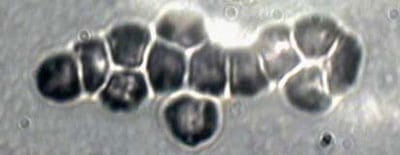
To date, lasers have been built from inanimate materials, such as purified gases, synthetic dyes or semiconductors. But now physicists in the US have shown how to induce lasing in a single living biological cell. By shining intense blue light onto fluorescent protein molecules in a cell, the team made the molecules generate intense, monochromatic, directional green light. This phenomenon could potentially be used to distinguish cancerous cells from healthy cells, claim the researchers.

The material used in the latest work is the green fluorescent protein (GFP), which is found in the jellyfish Aequorea victoria and has been used to image live cells since the 1960s. By combining the gene that encodes GFP with the DNA of any other protein, the GFP can be attached to that protein. The light it gives off can then be used to track the protein in living cells.

The natural fluorescence of GFP is incoherent, just like the light emitted by a normal light bulb. But physicists Malte Gather and Seok Hyun Yun, at the Massachusetts General Hospital and Harvard Medical School in Boston, thought it might be possible to amplify the protein’s light and so build a biological laser. A tantalizing prospect because almost any organism, from a bacterium to a cow, can be programmed to synthesize GFP.

Between two mirrors

Gather and Yun put human embryonic kidney cells into a Petri dish and then added the DNA that encodes for GFP to the cells. They then attached a drop of solution containing these re-programmed cells onto a mirror with a diameter of about 3 cm. They placed another, equal-sized, mirror above the solution, leaving a gap of about 200 μm between the mirrors. They then focused nanosecond-long blue laser pulses onto the space between the mirrors and moved the mirrors around, with the aid of a microscope, until they were able to shift a single cell into the beam’s focus.

With the cell in place, the researchers gradually increased the power of the blue laser and watched how the green fluorescence changed as a result. Above a certain threshold – when the blue pulses had an energy of about 1 nJ – the energy of the emitted green light increased sharply and its spectrum narrowed to just a few well-defined peaks. This, the researchers say, is a clear signature of lasing because above this threshold there are enough protein molecules in an excited state to generate stimulated rather than spontaneous emission. The emitted green light is amplified as it bounces back and forth between the mirrors, as occurs in a conventional laser cavity.

Gather says that, to the best of his knowledge, this is the first time that a laser has been made from a living material. He mentions that scientists have previously mixed dead tissue with inorganic laser materials and seen coherent emission from the composite. But this latest material is made entirely from living tissue, and this remains alive even after emitting hundreds of laser pulses.

Searching for cancer

Gather believes that the latest work could eventually have important practical applications. Conventional machines, called cytometers, that analyse large numbers of cells usually provide just one parameter for each cell – brightness. More can be learned by studying cells under a microscope, but the long exposures required mean that this is a time-consuming process. In the GFP cell-laser, variations in intercellular structure, which introduce slight changes to the refractive index of the cell, alter both the spatial output of the laser light and its spectrum. Gather says that this additional information “might make it easier to distinguish between a cancerous cell and a benign cell, or a cell that has become infected with a virus”.

The next step, says Gather, is to shrink the mirror cavity so that it is small enough to fit inside a cell, the typical diameter of which is between 10 and 20 μm. This may then allow imaging of cell-lasers inside a living animal, rather than having to extract cells for investigation in the lab. In this case the pumping laser could be supplied either from the outside by shining it through the body or by injecting light through optical fibres inserted into the body.

However, Gather emphasizes that it is difficult to predict precisely what applications could follow and adds that the motivation for the experiment was “largely basic scientific curiosity”. The researchers were trying to answer the basic question, why do lasers not exist in nature? “Some astronomers claim there are star clusters that produce coherent light,” Gather says, “but as far as I know, there is nothing on Earth that does so.”

Writing in a “News and Views” commentary piece to accompany the paper, Steve Meech, a chemist at the University of East Anglia in the UK, says that “it is currently unclear what applications lie in store for cellular lasers”. But he adds that “whatever the eventual applications, the advent of GFP in photonics certainly marks an exciting new avenue of research for this extraordinarily versatile protein”.

The research appears on the website of Nature Photonics.

D0 fails to reproduce CDF's mysterious bump

By James Dacey

In April the CDF collaboration at the Tevatron triggered excitement and frantic speculation when it announced the discovery of a mysterious bump in its data that could not be explained by the Standard Model of particle physics. But alas, it appears that this mysterious bump will now fade into the night, following the announcement today by the D0 collaboration – CDF’s sister experiment – that it has failed to reproduce the result.

Two months ago the CDF collaboration reported the unexplained signal, which was spotted in a study of W and Z boson pairs that are created when protons and antiprotons collide in Fermilab’s Tevatron collider. The researchers noted a bump between 120 and 160 GeV /C2 in the jets of W bosons with a statistical significance of about “three sigma”.

Within days, speculation surrounding CDF’s bump was rife. People quickly ruled out the possibility that this was the elusive Higgs boson, but some were suggesting that it could be explained by a kind of hybrid force dubbed “technicolour”. A separate theory, proposed by Dan Hooper at Fermilab, was that the excess of events could be explained by a new force responsible for interactions between dark matter and normal matter.

And excitement grew even stronger last week when further analysis by the CDF collaboration saw the significance of its result upgraded to almost five sigma. In everyday terms, this means that there was just a one-in-a-million chance of the bump being due to a statistical fluke.

But earlier today, the D0 collaboration may have killed the party following its analysis of a similar data selection. Publishing a related paper on their website and on arXiv, the researchers report that they find no evidence for the same rare boson production in the mass range 110–170 GeV/c2.

In a statement published on Fermilab’s website, D0 co-spokesperson Dmitri Denisov is quoted as saying: “Our data for collisions that produce a W boson plus two jets are in agreement with the predictions from the Standard Model.

“We have looked among two hundred trillion particle collisions, and we don’t see the excess reported by CDF.”

The D0 collaboration will report its result and the details of its analysis at 4 p.m (CDT). today at a seminar at Fermilab. You will be able to watch a live webcast.

So is this the end of the bump? I’m not sure but it will be very interesting to hear what CDF makes of the developments.

Graphene integrated circuit is a first

IBM researchers have made the first graphene circuit in which all of the circuit elements are integrated on a compact single chip. The new circuit is another important step forward for graphene-based electronics and potential applications include wireless communications and amplifiers.

Despite much progress in recent years and the fact that scientists have already made some high-performance graphene-based devices, it still remains challenging to integrate graphene transistors with other components on a single chip. This is mainly because graphene does not adhere very well to the metals and oxides traditionally used in semiconductor-manufacturing processes and because there are no reliable and reproducible techniques yet to make such circuits.

Integrated inductors

Now, Phaedon Avouris and colleagues at IBM’s T J Watson Research Center in Yorktown Heights, New York, may have overcome this problem with their new integrated circuit that consists of a graphene transistor and a pair of inductors compactly integrated on a silicon carbide (SiC) wafer. The wafer-scale fabrication process the team developed is compatible with conventional semiconductor-fabrication methods and can be used to produce circuits in high yields.

The researchers synthesized their graphene by thermal desorption of silicon from SiC wafers to form uniform graphene layers on the insulating SiC surface. They then defined the transistor channel using electron-beam lithography, removing graphene outside of channel regions with an oxygen plasma. Inductors were defined by electron-beam lithography and formed by depositing micron-thick aluminium metal onto the wafers. Finally, a 120 nm thick layer of silicon dioxide, deposited by electron-beam evaporation, was used to isolate the inductor loops from the underlying metal interconnects.

The circuits operate as radio-frequency “mixers” up to 10 GHz, says team member Yu-ming Lin. As the name suggests, mixers produce output signals with mixed frequencies and are fundamental components of many electronic communications systems. In their device, the researchers apply two high-frequency signals to the gate and the drain of the graphene circuit. The graphene transistor is modulated by both signals and produces a drain current that contains the mixed frequencies.

Wireless communications

“The circuit, as it stands, could already be used for wireless communications,” Lin told physicsworld.com. “And by further optimizing the performance of the graphene transistors, it might be used as an amplifier.”

The importance of the work goes beyond the actual circuit demonstrated and other circuits can be made using the same technique, he adds. It could also be applied to different types of graphene materials, including chemical vapour deposited (CVD) graphene films created on metal films. Most importantly, it could be used on silicon and other semiconductors to form hybrid circuits with new functionalities.

The team is now busy working on improving the performance of the transistors by optimizing device structure, graphene quality and the gate dielectric. “We are also developing more complex graphene circuits for even more sophisticated devices,” says Lin.

The work is detailed in Science 332 1294.

Why 13 and 25 are magic numbers for physicists

If you think that adding ever more researchers to your group can only be a good thing, think again. Two physicists have, for the first time, quantified how the increasing size of research groups in physics affects the quality of the work it can produce. They conclude that the best group size for experimental physicists is around 25 researchers, while in theoretical physics the number is 13. Adding more researchers to the group over these sizes does not result in an increase in research quality.

Ralph Kenna from the University of Coventry and Bertrand Berche from the University of Nancy, France, used data collected for the UK’s 2008 Research Assessment Exercise (RAE). The RAE was designed to deduce the quality of research being performed at all UK universities based on researchers submitting detailed data about their research groups, including their size and the output of each individual.

Although this information is usually used to rank the quality of the groups’ research, which then dictates how much government funding they receive, what Kenna and Berche have done is to see what impact a group’s size has on the quality of its research. They plotted quality against quantity and fitted the data into a model that treats research groups as a complex system that takes interactions between researchers into account (Scientometrics 86 527).

Quality stays flat

The model indicates that research quality initially increases linearly with group size. However, above a certain limit – known as the upper critical mass – rather than continuing to increase, the dependency of quality on quantity stays flat. The upper critical mass is the maximum number of colleagues with whom a researcher can interact, so that when a group’s size increases beyond this level – 25 for experimental physicists and 13 for theorists – it starts to fragment. “If I was going to build a department from scratch, I would use this result to make sure research groups within it are of this size,” says Kenna.

The research also reveals a lower critical mass of seven for the theorists and 13 for experimental physicists.

In an analysis for Physics World, the researchers found that 69% of UK physics departments have groups that are above the upper critical mass, while 89% of researchers who work in UK physics departments are in such large groups. “According to our study, physics in the UK is in a healthy condition,” says Kenna. “This means that researchers have more than enough colleagues to interact with.”

The researchers most recent work is available at arXiv:1102.4914v2

If Einstein met Confucius

einsteinsml.jpg

By James Dacey

An exhibition about the life and work of Einstein will no longer appear in Shanghai following a fracas between Chinese and Swiss museums. The exhibition has been touring China as part of a celebration of 60 years of diplomatic relations between Switzerland and China.

According to the Associated Press, the show’s organizers from the Historical Museum of Bern were unhappy with plans of Shanghai’s Science and Technology Museum. The would-be hosts had apparently wanted to merge the Einstein show with a separate exhibit of comparable size about the great Chinese philosopher Confucius who lived more than 2000 years earlier.

With the Historical Museum of Bern yet to issue a public statement, the precise details of the disagreement remain somewhat hazy. But the developments have left me pondering what the great physicist himself would think about having an exhibition of his life’s achievements lined up alongside those of Confucius.

Indeed, Einstein was clearly far more than a great physicist. He was also a man deeply engaged in the social issues of his time, which was no doubt influenced by his own position – being a Jewish scientist living in Europe during the rise of Nazi Germany.

Although Einstein’s guiding principle seems to have been the wonder of science, it is hard not to think that he would have admired some of the ideas of Confucius. For instance, I’m sure that Einstein would have shared some of Confucius’ ethical concerns, especially his idea that individuals should strive towards moral perfection.

confucius.jpg

Einstein said as much in 1950 during a conversation with Reverend C. Greenaway, a minister in New York. “The most important human endeavour is the striving for morality in our actions. Our inner balance and even our very existence depend on it. Only morality in our actions can give beauty and dignity to life.”

Where the two men may have disagreed, however, is their view of humanity and collective human behaviour. Confucianism holds that through communal endeavour, humans are mouldable and perfectible. Einstein, on the other hand, appears to have taken a more hardened outlook, perhaps influenced by some of the events of his time.

“I don’t believe that humanity as such can change in essence, but I do believe it is possible and even necessary to put an end to anarchy in international relations,” he said in 1919 to Hedwig Born, the wife of Max Born, when talking about how individual states may have to give up their autonomy.

So I’m not saying that Einstein’s reflections on social philosophy and morality should overshadow his scientific achievements. But I just don’t think the idea that a Chinese museum would merge a showcase about his life with an exhibit about Confucius is such a weird idea. This is especially so given the influence Confucianism has had on political life in China.

New type of supernova outshines the rest

A new type of supernova that shines up to 10 times brighter than any previously recorded has been discovered by an international team of astronomers. However, the team has yet to explain the exact mechanism that drives this new type of exploding star, with existing models failing to reproduce the radiation emanating from this new class of violent events.

Supernovae – highly energetic events caused by the explosion of a star – can often shine brighter than an entire galaxy for a brief period of time. To date, three mechanisms have been used to explain the vast amount of associated radiation observed by astronomers during these events. However, a team led by Robert Quimby at the California Institute of Technology in the US has identified a batch of six supernovae with radiation properties that cannot be explained by any of the three mechanisms.

The first cause discounted by Quimby was radioactive decay. During the highly energetic explosion of a supernova the temperature skyrockets. This allows heavy elements, including 56Ni, to be synthesized. Their subsequent radioactive decay produces gamma-rays that slow down the rate at which the supernova fades away. Crucially, the explosions observed by Quimby were too short-lived. “These supernovae faded about three times as quickly as those driven by radioactive decay,” he explains.

Glowing hydrogen

A second possibility is that surrounding hydrogen-rich material is heated by the energy of the explosion, causing it to radiate light. This hydrogen could have been blown off the stars at an earlier time by stellar winds. However, Quimby could not find any evidence of hydrogen. “No traces were found when we analysed the spectral lines of these supernovae. This meant we were able to rule out an interaction with hydrogen-rich circumstellar material,” he says.

The elimination of hydrogen also discounted the third conventional mechanism. In this scenario the hydrogen in the atmosphere of the star is ionized as the explosion tears through it. This fog of ionized hydrogen is opaque to radiation. Over time the hydrogen recombines, the fog clears and the radiation streams outwards. But again, as no hydrogen was observed, this cannot easily explain Quimby’s pool of six supernovae.

Instead, this latest research puts forward two alternatives that could explain the sextet. The first is a similar process to the heating of hydrogen-rich material surrounding the star. “Some very massive stars, around 100 times more massive that the Sun, could throw off shells of carbon and oxygen instead,” Quimby explains. “If a supernova explodes within a shells, it would heat the shell up.” As the shells expand and cool, the supernova gradually fades away.

Rotating neutrons

Quimby’s second suggestion invokes magnetars. When a massive star dies in a supernova, it can leave behind a superdense, rapidly rotating bundle of neutrons – a neutron star. If this neutron star is highly magnetized, then it is called a magnetar. The interaction of the intense magnetic field with the surrounding ionized material could be behind the mystery supernovae. “The interaction acts as a brake, slowing down the spinning of the magnetar – a process that releases some of its rotational energy into the supernova ejecta,” Quimby says. “This could supply an additional source of energy that would make it brighter than a normal supernova.”

However, Quimby does not believe he has everything wrapped up just yet. “These ideas are brand new; they didn’t exist 10 years ago. We definitely need to do more work to figure this out,” he says. Rubina Kotak, a supernova expert at Queen’s University, Belfast, who was not involved in the research, also believes it is tricky. “It is really difficult to say what is powering these explosions as we’ve only seen a handful of them and we don’t have complete observations over the whole event,” she told physicsworld.com. “We are all waiting for the next one, which hopefully we can catch early enough to monitor all aspects of it.”

Meanwhile, Quimby is using the Hubble Space Telescope (HST) to probe the known supernovae further. “I am using the HST to look at their ultraviolet spectra,” he explains. “Hopefully, we can get a better idea of what materials are in the ejecta and place better constraints on how the events evolve over time. This could allow us to work out which of our models is applicable.”

The research is published in Nature 10.1038/nature10095.

Magnetic fields reduce blood viscosity

Researchers in the US claim that exposing a person to a magnetic field could reduce their risk of a heart attack by streamlining the flow of blood around their body. While the work currently remains just a proof-of-principle, the researchers believe that their technique could ultimately provide an alternative to drugs in treating a range of heart conditions.

Heart attacks and stokes can strike for a variety of reasons. But research suggests that all such vascular conditions are linked by one common symptom – high blood viscosity. Drugs such as aspirin are frequently prescribed to help lower blood viscosity, but these can have unwanted side effects often related to irritation of the stomach. Now, an alternative to drugs may be at hand following recent work by Rongjia Tao at Temple University and his colleague Ke Huang at the University of Michigan.

In their experiment, Tao and Huang showed that applying a 1.3 T magnetic pulse to a small sample of blood can significantly reduce it’s viscosity. About 8 ml of blood with a viscosity of 7 centipoises (cp) – above healthy limits – was contained at body temperature (37 °C) in a test tube. The tube formed part of a device called a capillary viscometer used to measure viscosities. The sample was then exposed to a magnetic field applied parallel to the direction of flow of blood via a coil around the edge of the test tube. After one minute of exposure to the field, the blood’s viscosity had been reduced by 33% to 4.75 cp. With no further exposure to the field, the viscosity had only risen slightly to 5.4 cp after 200 min, which is still within healthy limits.

In a paper accepted for publication in Physical Review E, the researchers describe how the effect is probably caused by the response of red blood cells. These iron-rich cells are the most common type of blood cell and they play the leading role in transporting oxygen around the body. In the presence of a strong magnetic field, the red blood cells form chains that align themselves with the field lines where convoys of red blood cells line up behind a leading cell. This process could enable the cells to pass through the blood in a more streamlined fashion, thus reducing the blood’s viscosity.

Towards clinical trials

Tao says that patients can safely be exposed to magnetic fields of up to 3 T. He intends to develop the work further by testing blood flow under a magnetic field in capillary tubes that are similar in size to blood vessels. He also plans to apply for a research grant from the US National Institutes of Health to allow clinical trials to be carried out.

Kalvis Jansons, a mathematician at University College London, believes that the researchers may be onto something “very interesting”. “If the effect really does exist, it would appear to me that it would not be difficult to use it in a clinical setting,” he says. But he also believes that a lot of work would need to be done to show that the process is safe. “Could it lead to blood clots, for example?” he asks.

Giacinto Scoles, a materials scientist at Princeton University who develops medical applications, believes there is a “tremendous thirst” in the medical community for this kind of physics-based innovation. “I believe the work has raised a lot of interesting questions and that a new field of investigation has been opened up,” he says.

But the medical community will still need to be convinced about the need for the new technology and about its safety. Tammy Ustet, a medical doctor who carries out rheumatology research at the University of Chicago, believes that the main focus should remain tackling the causes of vascular conditions. “Treating symptoms is extremely important, but treating the root cause is the best way to relieve symptoms,” she says.

Name that element, part 2

By Michael Banks

Unobtanium, collossium and fibonaccium. Those were just some of your suggestions for the name of element 112 following its confirmation two years ago.

In the end researchers, led by Sigurd Hofmann and his group at the Centre for Heavy Ion Research (GSI) in Darmstadt, Germany, went for copernicium, which was finally approved by the International Union of Pure and Applied Chemistry (IUPAC in July 2009.

Now we want your suggestions for two new elements – 114 and 116 – after they were added to the periodic table following a three-year review by the IUPAC, which develops standards for naming new elements and compounds.

Currently element 114 is known as ununquadium with element 116 named ununhexium.

The elements were spotted by researchers at the Joint Institute for Nuclear Research (JINR) in Dubna, Russia, back in 2004, but only confirmed last year by scientists at the Lawrence Berkeley National Laboratory in California and the GSI lab.

Researchers at the JINR will now get the chance to name the new elements. They will submit their suggestions to the IUPAC who will then publish them on its website for six months giving scientists and the public time to scrutinize and comment on the new name.

So physicsworld.com readers what are your suggestions?

Future is bright for CERN antimatter physicists

Last month physicsworld.com reported that physicists from CERN’s ALPHA experiment had trapped 309 atoms of antihydrogen for 1000 s – smashing their previous record of 38 atoms trapped for one-fifth of a second. Now we can reveal that the team’s success has brought it extra funding that, in part, will allow two new antimatter experiments to be built, as well as a new source of antiprotons.

The study of antimatter such as antihydrogen is important in developing our understanding of the universe and in finding out why it contains so much more matter than antimatter. Speaking to physicsworld.com, ALPHA spokesperson Jeffrey Hangst explains that the team’s next task is to study the structure of antihydrogen – an antiproton bound to an antielectron – using microwaves. “We will use the microwave frequency to flip the spin of the antimatter atoms. Then we may be able to detect the resonant interaction and look at their structure. This would be a modest first step towards actually understanding antimatter,” says Hangst. Differences between the structures of hydrogen and antihydrogen are not predicted by the Standard Model of particles physics and could point towards new physics.

Hangst told physicsworld.com that the ALPHA team is in the process of building a new detector called ALPHA 2 that will be capable of spectral analysis. Unlike the current experiment, ALPHA 2 will include the lasers necessary to study the spectra of the anti-atoms. “We knowingly did not add lasers to the current ALPHA design as initially we wanted to just be able to create and hold the antimatter,” explains Hangst. The team wants the new device to be up and running by 2012, so that the researchers can gather data before CERN’s Large Hadron Collider shuts down for an upgrade in 2013 – which will also affect ALPHA 2.

A new source called ELENA

ALPHA’s recent success has also encouraged CERN to go ahead with a new antiproton source called Extra Low Energy Antiprotons or ELENA. ELENA was proposed several years ago but stalled because of a lack of funding. But now, jubilant CERN boss Rolf-Dieter Heuer told physicsworld.com that he has given the go-ahead for the ELENA source. The current source decelerates antiprotons to 5 MeV before supplying them to ALPHA and other experiments at CERN. ELENA will deliver antiprotons at about 100 keV, which will provide ALPHA with a larger number of usable antiprotons and will also increase efficiency.

With the new ELENA source in place, Hangst hopes that a further update could be made to the ALPHA experiment, dubbed ALPHA 3. This next-generation experiment would allow the team to further cool trapped samples of antiprotons and allow the researchers to study gravitational effects on antimatter. “Laser cooling for hydrogen is difficult but it can be done,” says Hangst, who believes that all these updates could occur during the next 10 years. “Just in time for me to retire!”

All in all, exciting times lie ahead for antimatter research in the coming years. “All the current news is good and encouraging. We know that our approach is the right one,” says Hangst.

Take a look at the video below – it is an interview conducted by Channel 4 News in the UK with CERN director-general Rolf-Dieter Heuer, where he talks about ALPHA’s recent advances. Listen out for a mention of Physics World towards the end, when Heuer recalls that we made ALPHA’s previous antimatter study our Breakthrough of the Year for 2010.

Copyright © 2026 by IOP Publishing Ltd and individual contributors