How to spot a multiverse

How can we tell if another universe has collided with our own? Physicists in Canada and the US believe they have the answer – it would leave “a unique and highly characteristic” imprint in the microwave background that pervades the cosmos. The physicists claim that the prediction can be tested using existing and future space telescopes, which contradicts a widespread view that the existence of a multiverse is untestable.

Chuck Bennett, an astrophysicist at Johns Hopkins University in Maryland, US, who was not involved with the study, believes the prediction helps bring multiverse theory into the realms of conventional, falsifiable science. “Science relies on being able to falsify ideas through experiment or observations of nature,” he says. “The fact that these potentialities exist enables us to call this ‘science’. That, to me, is a significant statement.”

The possibility of a multiverse comes from both string theory and inflation theory, the idea that our universe underwent a rapid expansion just after the Big Bang. Inflation theory does a good job of explaining why space is fairly smooth on large scales, but researchers can’t explain what started the expansion and what stopped it. These problems have led physicists to consider the possibility that inflation could occur at other places and times, generating new universes in addition to our own.

Metaphysical problem

The idea of a multiverse is highly controversial. One problem is metaphysical: the universe seems big already, without having to contend with a potentially infinite number of others. Yet perhaps a bigger problem is scientific. If observations are limited to our own observable universe, how can scientists test whether a bigger multiverse exists? The answer to that has been that, from time to time, another universe in the multiverse might collide through ours, leaving a “wake” in its path. But figuring out precisely what such a wake would look like hasn’t been easy.

Now, however, Kris Sigurdson of the University of British Columbia in Vancouver and others say they have calculated the detailed features of a cosmic wake. They have considered the possibility that our universe collided with another before our inflation period, because, they say, the latter would have erased the wake’s evidence. Even though this happened more than 13 billion years ago, the wake would have been preserved in the cosmic microwave background (CMB), which was formed some 380,000 years into the universe’s existence.

Look for a ‘double peak’

The focus of the prediction is in the polarization of photons in the CMB. Photons have two transverse polarization states, and any that come from a certain region in the CMB might be mostly in the same polarization state, or in a mix of both. Sigurdson and colleagues calculate that, providing the wake was big enough, it ought to imprint the CMB with a characteristic “double peak”: two close rings where the photons sway towards a single polarization state.

The prediction is not strictly the first to arise from multiverse theory. In 2007 researchers at the University of California at Santa Cruz, US, also suggested that a cosmic wake could imprint itself on the CMB; then, earlier this year, a group led by Hiranya Peiris of University College London found hints that this prediction was true. But these predicted features were too vague, say Sigurdson and colleagues, and might have existed in the CMB anyway.

Evidence for string theory?

“[Our] features represent the first verifiable prediction of the multiverse paradigm,” write Sigurdson and colleagues in their preprint, which they uploaded to the arXiv server last month. “A detection of a bubble collision would confirm the existence of the multiverse, provide compelling evidence for the string theory landscape, and sharpen out picture of the universe and its origins.” Physics World was unable to speak to the researchers about their preprint because they are submitting it to a journal that employs an embargo policy.

If the prediction is correct, it should be possible to test it in upcoming data from the European Space Agency’s Planck space observatory and future CMB missions, say the researchers. Yet Bennett, the principal investigator on NASA’s Wilkinson Microwave Anisotropy Probe, another CMB space observatory, thinks the detection of a cosmic wake would nonetheless be “extremely unlikely”. He says the amplitude of a wake would have to be just right: too small and we wouldn’t see it; too big and it would probably have had severe consequences for our universe’s structure. The number of collisions would also have to be “fine-tuned”, he says.

Infinite number of wakes

“The claim seems to be that we might see one or two wakes in our sky, but why one or two?” he adds. “Why not none or an infinite number? In fact, if bubble collisions were common we would not be alive to discuss the question.”

Cosmologist Arjun Berera at the University of Edinburgh, UK, also thinks the idea of a multiverse – and by extension Sigurdson and colleagues’ prediction – is speculative. But he notes that a positive detection would be “spectacular”. “Such a case would offer suggestive evidence in support of string theory,” he says. “On the other hand, no evidence in the CMB data for a collision between two universes would not rule out string theory, it would simply extend the widely held belief in the field that string theory is unfalsifiable.”

The research is described in arXiv:1109.3473.

Nobel topics: the people's choice

nobel.jpg
By Hamish Johnston

It’s all hands to the pumps here at physicsworld.com HQ in the run up to the physics Nobel prize announcement, which will be made this morning at (or after) 10.30 a.m. BST.

Last week we asked our Facebook followers what field of physics they thought this year’s prize would honour – and now I can reveal the results.

Nearly half of you thought that this year’s prize will go for quantum information. While it’s tough to single out three people who should be awarded the prize, I would think Anton Zeilinger, Dave Wineland and Alain Aspect would be in the running.

In second place with about 29% of the vote is neutrino oscillations, which would put my fellow countryman Art McDonald of SNOLAB in the running along with two researchers from the Super-Kamiokande experiment in Japan.

Less than two hours to go…

Watt set for £50 note

£50banknote.jpeg
By Matin Durrani

Quiz question: name a scientist who has appeared on a banknote.

Thanks to the powers of Google (other search engines exist) and this informative but possibly out-of-date webpage from University of Maryland physicist Edward Redish, I see that those who have graced various currencies include Bohr (Danish 500 kroner), Marie and Pierre Curie (French 500 franc), Einstein (Israeli five pound note), Kelvin (Scottish pound), Marconi (Italian 2000 lira), Rutherford (100 New Zealand dollar), Schrödinger (Austrian 1000 schilling), Tesla (er, 10 billion Yugoslav dinar) and Volta (Italian 10,000 lira).

Now, a decade after Michael Faraday was ditched in favour of Edward Elgar on the Bank of England’s £20 note, science makes a reappearance in England with James Watt set to appear alongside his Birmingham-based business partner Matthew Boulton on the bank’s new £50 note, which is to enter circulation on 2 November 2011 (see above).

Born in Scotland in 1736, you don’t need me to remind you that Watt made his name by designing a new kind of more efficient and powerful steam engine, which he commercialized with Boulton (1728–1809). Their invention pretty much kick-started the industrial revolution, offering as it did cheap quantities of power. Watt, of course, is also honoured through the SI “derived unit” of power.

Boulton and Watt were both fellows of the Royal Society, prompting current president Sir Paul Nurse to call it “wonderful” that they were being celebrated in this way. “Science and engineering have long driven improvements in our knowledge and in our day to day lives,” he added. “At a time when the UK is trying to rebalance its economy, Watt and Boulton are also a reminder of how science and engineering can be the basis of economic growth for the UK.”

Sadly I haven’t actually got one of the lovely new notes to describe in glowing detail what it looks like, so if anyone from the Bank of England would care to supply one, I’d be delighted.

Active galactic nuclei measure the universe

A common type of active galactic nuclei (AGN) could be used as an accurate “standard candle” for measuring cosmic distances – according to astronomers in Denmark and Australia. AGNs are some of the brightest objects in the visible universe and the technique could allow astronomers to determine much larger distances than is possible with current techniques, the scientists say.

Standard candles are distant objects with known brightness that give astronomers a very accurate measure of cosmic distances – the dimmer the candle appears to us, the farther away it must be. Studying these candles is crucial to our understanding of the age and energy density of the universe. Indeed, the use of supernovae and Cepheids as standard candles turned our understanding of the cosmos on its head through the discovery of the acceleration of the expansion of the universe and the introduction of dark energy.

‘Reverberation mapping’

However, reliable measurements of distances greater than redshift of about 1.7 are beyond the current capabilities of known standard candles. Now, Darach Watson and colleagues at the University of Copenhagen and the University of Queensland have shown that a tight relationship between the luminosity of an AGN and the radius of its “broad-line region” can be used to measure cosmic distances. The radius is found using “reverberation mapping”, an established technique for studying the inner structure of AGNs, to gauge their mass. However, until this latest work, the method had not been considered in the search for new standard candles.

According to Copenhagen astronomer Kelly Denney, the approach works using type-1 AGNs – those with broad-line emissions in the visible spectrum. These objects have a dense area of gas and dust surrounding the black hole called the broad-line region. The region is so-called because light emitted by the gas has much broader line widths than light from most other astronomical sources.

Heart of the matter

Much closer to the black hole is the accretion disc where matter falling into the black hole collects, causing a great deal of light to be produced. As this light travels outwards, it ionizes gas in the broad-line region, causing it to emit light with the distinct broad line widths because the gas is moving at many thousands of kilometres per second due to the gravity of the black hole, and the Doppler shifts associated with this motion causes the broadening. However, the amount of light produced in the accretion disc is not constant. By carefully comparing the time at which the light is emitted from the accretion disc and the time at which the ionized light is re-emitted from the broad-line region, astronomers can measure a time lag between the light arriving from the two sources. This delay is proportional to the radius of the broad-line region divided by the speed of light. This radius correlates tightly with the luminosity of the AGN. The luminosity in turn is used to calculate the distance because they are inversely related.

The technique, however, is difficult and it wasn’t until 2009 that Denney – then working with Bradley Peterson’s group at Ohio State University – vastly improved the accuracy of the data from the radius-luminosity relationship such that it would allow a precise distance to be calculated. When Darach Watson came across the result, he wondered why this was not being used as a distance indicator already. “The simple answer was ‘Huh, well, I don’t know!’ Everyone in the AGN community typically wants to know why no-one has thought of this before!” said Denney.

Candle in the wind

To confirm the technique’s ability to give the distance of an AGN, Watson and colleagues looked at a sample of 38 AGNs at known distances. They found that reverberation mapping gave a reasonable estimate of the distance to the AGNs. Kenney quipped, “This almost makes the notion of AGNs as standard candles an oxymoron, since it’s their variability that makes the method work!”

Currently, the AGN technique is not as reliable as those based on Cepheids or supernovae. However, unlike a supernova – which lasts for a relatively short time – an AGN can be observed over long periods, reducing observational uncertainties. Also, AGNs exist at all redshifts, so astronomers can pick and choose which ones to study.

In the coming months, the researchers aim to reduce the scatter in their current data and work on higher redshift reverberation mapping experiments. “One drawback of the method is that, due to time-dilation effects, the monitoring time required to measure time delays can become very long, especially for high-redshift sources. We are investigating ways to reduce this time, such as working in the UV, where the time delays are shorter.” says Denney.

A preprint of a paper about the work is available on arXiv.

Between the lines

Exoplanet extravaganza

In March 2009 an article in Physics World (“Brave new worlds”) noted that scientists had discovered more than 300 planets outside our own solar system. By the end of that year, the number of confirmed exoplanets had exceeded 400; as this review is written, the tally stands at 669; by the time you read it, the number will be higher still. Such rapid progress means that any book about exoplanets will quickly become out of date, but the shelf-life of Strange New Worlds should be longer than most. The main reason is that its author, Ray Jayawardhana, is an exoplanet insider. In the late 1990s he was among the first scientists to image dusty protoplanetary discs around young, far-off stars; more recently, as an astronomer at the University of Toronto, Canada, he has written extensively about the field for a general-science readership. Jayawardhana puts all this to good use, sprinkling his book with accounts of conversations with other astronomers. In the wrong hands, this could degenerate into a clumsy citation-fest, but Jayawardhana gets the balance right: readers learn about a few of the people behind the research, but are not distracted by a new name every other sentence. It is worth remembering that the field was once considered a graveyard for promising astronomy careers. One cautionary example in the book is the US astronomer Thomas Jefferson Jackson See, who suggested in 1895 that he had discovered a planet in the 70 Ophiuchi binary system. When two others published work contradicting his claim, he wrote such a vitriolic letter of complaint to the Astrophysical Journal that its editor permanently banned him from its pages. He went on to have a nervous breakdown and finished his career as a relentless critic of Einstein’s theory of relativity. Thankfully, the current generation of exoplanet astronomers has fared better; the field underwent a complete turnabout in the mid-1990s, when a flurry of confirmed planets transformed its reputation. Strange New Worlds offers an excellent introduction to these successes, as well as insights into the field’s future.

  • 2011 Princeton University Press £16.95/$24.95hb 288pp

Mathematical thoughts

Every weekday morning, the flagship news programme Today on BBC Radio 4 includes a brief segment called “Thought for the Day”, in which religious leaders from different faiths deliver mini-sermons on current events. In recent years, some secularists have demanded that the programme offer an equivalent slot to non-religious commentators. So far, the Beeb has not agreed, but should it ever do so, Göran Grimvall’s Quantify!: a Crash Course in Smart Thinking would make an excellent source for these “secular sermons”. The book is divided into about 80 short essays, loosely grouped by theme and mathematical content, and there is much fascinating material here – including an explanation of why Ohm’s law is not a law at all, and why holding the Olympics at high altitude helps triple-jumpers more than shot-putters. An emeritus professor of physics at Sweden’s Royal Institute of Technology, Grimvall is also a good writer, and his clear, gentle prose renders his book an almost effortless read. Unfortunately, the same brevity that makes his essays easy to digest also gives them an annoying tendency to end just when they seem about to shift up a gear. Grimvall’s discourse on exponentials and doubling, for example, includes a topical reference to pyramid schemes and the disgraced financier Bernard Madoff. Rather than digging into the mathematics behind Madoff’s con, however, he merely observes that “pyramid schemes are illegal in many countries, but the case of [Madoff] shows that people may never learn”. With its often frustrating lack of depth, the book actually shares one of the faults that religious critics have ascribed to “Thought for the Day”: namely, that the sermons are too short and innocuous to make much of an impact. The comparison is a harsh one, for there is much to like about Quantify! Still, we cannot help wishing that Grimvall had chosen fewer topics, and probed them a bit deeper.

  • 2010 Johns Hopkins University Press £13.00/$25.00pb 232pp

Tevatron shuts down

Physicists and dignitaries are gathering at Fermilab on the outskirts of Chicago to mark the final day of collisions at the Tevatron particle collider. The shutdown procedure will begin today at 2 p.m. local time, marking the end of the facility’s 26-year lifetime.

The shutdown comes despite calls to extend operations for a further three years, meaning that the search for the elusive Higgs boson is now likely to become a one-horse race involving the Large Hadron Collider (LHC) at CERN.

Commissioned in 1985, the facility’s achievements include the discovery of the top quark in 1995. This helped the Japanese physicists Makoto Kobayashi and Toshihide Maskawa win the 2008 Nobel Prize in Physics for their prediction of the particle’s existence.

Discoveries kept coming

Other notable discoveries made at the Tevatron are the tau neutrino in 2000; the Bc meson in 1998 and the first sighting of a single top quark in 2009. The collider, which has a circumference of more than six kilometres, also played important roles in the study of CP violation, measuring the mass of the W boson – and more recently, placing constraints on the mass of the Higgs boson.

The Tevatron collides protons with antiprotons at energies as high as 1.96 TeV, which made it the world’s most energetic collider until it was usurped by the LHC in 2009. However, that did not stop physicists working on Tevatron’s two main experiments – CDF and DØ – from churning out interesting results. Earlier this year, for example, particle physicists were buzzing about a mysterious “bump” that was seen in CDF data and could be evidence for a completely new particle.

Tevatron was also a centre of development of new accelerator and detector technology. The collider was the world’s first major accelerator to use superconducting magnets – which allow particles to be accelerated to much higher energies than conventional magnets. During its life time, Tevatron physicists managed to boost the luminosity (collision rate) of the collider to more than 300 times that of the original design.

Accelerator innovations

Fermilab’s director of accelerator physics, Vladimir Shiltsev, puts this and other accelerator-related successes down to a number of key technological developments, including improvements to the Tevatron’s superconducting and permanent magnets; new ways of focusing and collimating the beams; and the development of new methods of high-intensity beam manipulations, which allow physicists to split one bunch of particles into a number of smaller bunches.

On the detector side, Tevatron physicists have pioneered the use of silicon vertex detectors in a hadron collider; played an important role in the development of the ring-imaging Cerenkov counter; as well as making improvements in systems that are used to track particles through the detector.

The Tevatron and its experiments produced about 1400 PhD theses and about one scientific paper per week during its 26 years. CDF and DØ are among the largest scientific collaborations ever, with a paper from either group listing more than 500 authors.

‘Physics by committee’

Although the groups’ successes show that big science can work, not everyone is convinced that “physics by committee” is a good thing. “I’d guess that thing about the Tevatron that captivates me is that no Nobel prizes will likely be awarded for research done at the facility,” says Michael Riordan, a historian of physics at the University of California, Santa Cruz (Kobayashi and Maskawa are theorists who were not involved in the experiments at Tevatron). “The top-quark discovery probably qualifies, but to what three physicists do you award it?” asks Riordan. “Doing physics by committee was a sharp break from what had occurred previously in the United States and had helped it dominate [particle] physics for three decades.”

Riordan is not the only person worried about the future of particle physics in the US. There are currently no plans for a US-based replacement for the Tevatron and all eyes are now on the LHC. While many American physicists are involved in experiments at CERN, the country is not a full member of the lab. As a result, US-based particle physics could be facing a few years in the wilderness. One hope is that the International Linear Collider (ILC) – which is expected to replace the LHC – could be located at Fermilab. However, the ILC promises to be extremely expensive and funding pressures in the US and other countries could mean that the project never gets off the ground.

Meanwhile, at Fermilab, the facility is gearing up for a post-Tevatron world. The ground will soon be broken for the new Illinois Accelerator Research Center, which will see scientists and engineers from Fermilab, Argonne National Lab and Illinois universities working with industrial partners to create new technologies for accelerators.

Audio interview

Chris Quigg speaks to physicsworld.com earlier this year about closing the Tevatron and the future of particle physics in the US:

So long, Tevatron

Tevatron breakthroughs

Tevatron triumphs that have been reported over the years in physicsworld.com:

Tevatron tightens its grip on the Higgs
Top result for Tevatron
Tau neutrino identified at last
Fermilab probes matter-antimatter transitions
New particles turn up in the US
CERN and Fermilab argue over “new” discovery

Big science in a big world

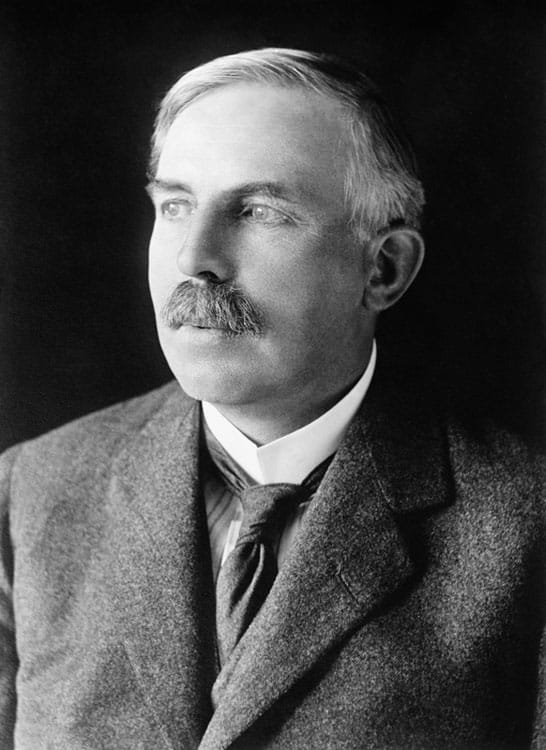
You wake up with an extreme pain in your stomach. Something is seriously wrong. After a fit of vomiting, you are rushed to the nearest medical clinic and, naturally, expect the best doctor straight on the scene. This is what happened to Ernest Rutherford on the night of Thursday 14 October 1937. But Rutherford, by then Lord Rutherford of Nelson, was in the unusual position of having risen so high up within the British establishment that the doctors could not touch him. He lay there in intense pain with a strangulated umbilical hernia, waiting for medical treatment despite being surrounded by some of the country’s best doctors. Why? Because as late as the 1930s, British peerage protocol dictated that only a titled surgeon could operate on a lord. The doctors at the Evelyn Nursing Home in Cambridge could do nothing but wait for the arrival of the knighted surgeon Sir Thomas Dunhill, travelling all the way from Harley Street in London.

The delay cost Rutherford his life. Dunhill arrived in Cambridge but was only able to perform the operation on Friday evening. Despite initial optimism, it was too late: the hernia, having cut off the blood supply to Rutherford’s bowel, ultimately proved fatal. The tissue death and shock of surgery were too much, and he died on 19 October 1937 aged 66.

The human details of this story are of course tragic and Rutherford’s death was mourned across the world. From his former student Pyotr Kapitsa in Russia to the prime minister of New Zealand, the international community was shocked and saddened by the death of this Nobel-prize-winning physicist. Indeed, this far-reaching reaction reflects one particular aspect of Rutherford’s life: that of an international scientist.

Lord Rutherford of Nelson was not born into a world of peerage protocol and titled surgeons. In fact, he was born, thousands of miles from his deathbed, into a very humble farming family in New Zealand. Yet he became the first person born outside of Britain to be interred at Westminster Abbey. This New Zealand boy, who used to milk cattle and dig potatoes for his parents, lies next to two titans of British science: Charles Darwin and Isaac Newton. Such recognition is a sign of how, at the start of the 20th century, science was becoming an increasingly global enterprise.

Following his death, Rutherford’s greatest scientific legacy was undoubtedly that of nuclear physics. In fact, this year marks the centenary of Rutherford’s announcement of the structure of the atom: that now-familiar model of a central positive nucleus surrounded by negative electrons. The birth of nuclear physics paved the way for “big science”, which we traditionally associate with enormously expensive projects such as the Large Hadron Collider or the development of nuclear weapons like those that came out of the Manhattan Project in the 1940s. However, it is also worth remembering the international collaborative world that big science came to nurture. Rutherford’s life and work is a testament to this. In fact, the very title that contributed to his death (“of Nelson”) is a reference to his home province of Nelson, New Zealand. It therefore seems fitting, in this anniversary year, to celebrate the global aspects of Rutherford’s life and work.

The highlights of Rutherford’s scientific career are easy enough to state. It began in Cambridge, where he arrived as a 23-year-old graduate research student in 1895, famously finding that radioactivity consisted of two types of rays that he named alpha and beta. Three years later he moved to McGill University in Montreal, Canada, where he developed the concept of a radioactive half-life, before moving back to Britain in 1907, to Manchester. It was here that Rutherford developed his eponymous model of the atom. But these bald facts miss the relevance, both scientifically and personally, of Rutherford’s origins in New Zealand.

No more potatoes

Born in Foxhill near Nelson on the South Island of New Zealand on 30 August 1871, Ernest was one of 12 children. Later, as Lord Rutherford, he would say that if he had not been a scientist, he would have been a farmer. He spent his early days chopping wood and shooting pigeons in the bush. It is unlikely that Rutherford’s experience on the farm influenced his later scientific discoveries (although he did experiment with a homemade camera and model watermill while a young boy). But nonetheless, his early academic work in New Zealand clearly had a great impact on his life.

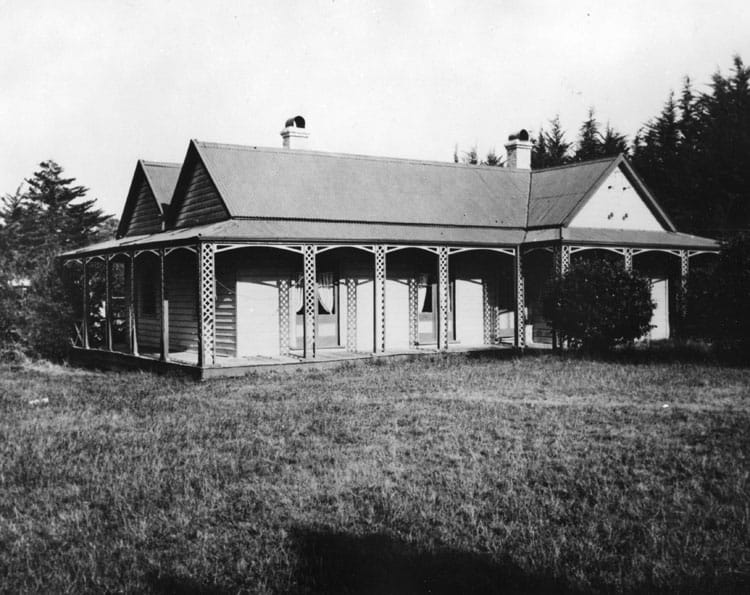
By 1893 Rutherford had already earned two degrees: a BA and MA from Canterbury College in Christchurch, New Zealand, and, perhaps not quite ready to leave higher education, he began a BSc at the same institution the following year. As part of the BSc he began investigating the hottest topic of the moment: electromagnetic waves. Rutherford conducted his early research in a cold underground cellar lovingly referred to as “the den”. His other research lab (if you can call it that) was a narrow room dubbed “the shed”. In this dingy corridor, Rutherford transmitted and detected electromagnetic waves using coils of magnetized iron wire. (He would later repeat and develop these experiments, transmitting signals between the lofty spires of Cambridge colleges.) Despite the somewhat grim setting, Rutherford was developing into a keen researcher and later that year published his first research paper.

Rutherford certainly proved himself an impressive young experimentalist in New Zealand. That in itself might not seem so special, but thousands of miles away in England, impressive young researchers were hard to come by. Particularly in Cambridge, an extreme emphasis on formalized teaching and examination had led to a lack of practical research skills (arguably a worry for students and academics even today). In an effort to remedy this, the Royal Society in London offered scholarships to recruit researchers from all over the world, using the proceeds of the 1851 Great Exhibition of Nations. In these, we see the beginnings of truly international science.

Rutherford applied for a scholarship but ended up enduring an agonizing wait to hear of his success. Another candidate from Auckland University College had been nominated but, thankfully for science, pulled out after receiving an attractive job offer. (That or he bottled at the idea of an 11,000-mile journey.) Rutherford was at home when he received the news, digging potatoes for his mother. She rushed out to tell him and, on doing so, Rutherford reportedly quipped “That’s the last potato I’ll ever dig.”

Rutherford was able to avoid the tough farming life his family had been used to, but he was not without worries. Amusingly, Rutherford’s immediate concern upon his acceptance to Cambridge was that his new tutors might be old fuddy-duddies, referring to them as “fossilized”. As if to confirm his suspicions, J J Thomson, head of the Cavendish Laboratory at the time, invited Rutherford for a game of golf soon after his arrival. In a letter to his New Zealand fiancée Mary Newton, whom he would later marry in 1900, Rutherford revealed his private misgivings about the new world in which he came to inhabit: “I don’t think, however, I am quite old enough for golf yet – at any rate to take it up with much enthusiasm.”

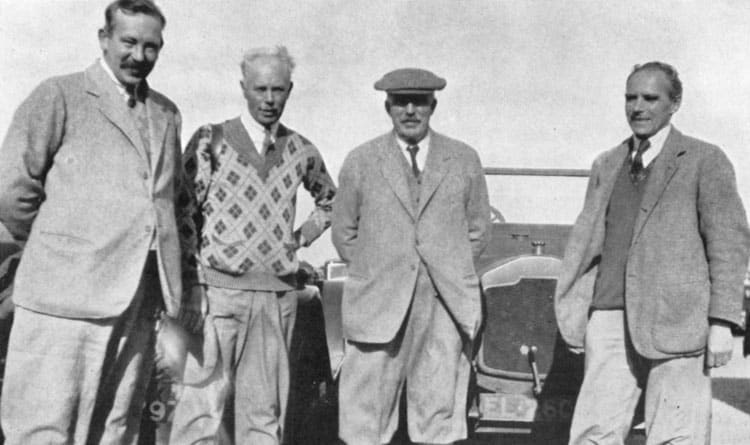
Of course, part of international science is dealing with such a clash of cultures. At first, Rutherford found things difficult. Other than trying to avoid becoming a fossilized professor, Rutherford sensed that not everyone he encountered at the Cavendish welcomed him, writing that “There is one demonstrator on whose chest I would like to dance a Maori war-dance.” Thankfully, Rutherford refrained from foot-stomping and soon got into the swing of things. Indeed, he later played golf regularly with his Cambridge chums, as part of what was loosely known as the “Trinity Circus”, reportedly with a great sense of humour (Physics World January 2006 p48, print edition only). In fact, during one round in the 1920s, Rutherford grew impatient waiting for physicist Ralph Fowler to line up his shot. Rutherford just could not resist and shouted “Get on, get on, correct to 1 in 1000!”

Science without borders

Over the next 30 years Rutherford enjoyed a truly distinguished career. He achieved a Nobel Prize for Chemistry (despite having famously stated that “all science is either physics or stamp collecting”), a knighthood, a peerage and presidency of the Royal Society (Physics World September 1998 pp35–40). Despite all this, it is arguably Rutherford’s students – including Hans Geiger of Germany and Niels Bohr of Denmark – who represent his greatest legacy, particularly in terms of international “big science”.

On Rutherford’s arrival at Cambridge in 1895, he was one of the first international graduate students at the university. By the time of his death, Rutherford had both taught and helped to develop students from all over the world, clearly conscious of the value of such an enterprise. In fact, as a fellow and later president of the Royal Society, Rutherford sat on the very committee awarding the 1851 Scholarships. Whenever anyone challenged the value of the scholarships, Rutherford was ready with what must have been the ultimate comeback: “You might remember that if there hadn’t been any overseas scholarships, you wouldn’t have had any Rutherford.” Through overseas scholarships the scientific community was able to draw on a new and diverse set of talent: those with a different outlook and a variety of research experience.

Rutherford’s favourite student is perhaps the best example of this. Pyotr Kapitsa (see right), like Rutherford, had enjoyed (and suffered) a life before coming to Cambridge. Kapitsa had trained as an engineer at the Polytechnic Institute in St Petersburg but in the early 1920s his wife and children had died in the midst of an influenza epidemic. In an attempt to get over his grief, Kapitsa left Russia as part of a scientific and trade mission, and in 1921 he arrived at the Cavendish Laboratory in Cambridge, of which Rutherford was now head, having returned there from Manchester in 1919.

It is worth remembering that, although Rutherford agreed to have Kapitsa conduct research at the Cavendish, he was still a bit suspicious of the Russian. Luckily, he did not dwell on this too much and simply told Kapitsa that “communist propaganda” would not be tolerated. (To be fair to Rutherford, it is now well documented that part of the mission to which Kapitsa was attached focused on promoting Soviet science policy – still, “propaganda” might have been a bit harsh.)

In any case, Kapitsa began work on observing alpha and beta particles, and in particular developed the use of electromagnets to alter their paths. But what Rutherford really liked about Kapitsa was his engineering background, later commenting that Kapitsa “had the brain of a physicist and the ability of a mechanic”. Then, as now, budgets were tight, and Kapitsa’s engineering and technical experience helped him to develop a method for experimenting with electromagnetic fields lasting only a fraction of a second. Prior to Kapitsa’s work, electromagnets would have to be left to reach a steady state, consuming energy and generating massive amounts of heat.

Kapitsa and the Kremlin

Now, you do not have to be born and raised in Russia to be a good mechanic, or physicist, but what international students such as Kapitsa did was to bring skills that were potentially lacking in Britain. Just as a previous focus on examination had led to a lack of skilled researchers, a later focus on pure research had left a gap in practical experimental skills. It was rare at the time to find someone at Cambridge with such a skilled background in engineering: something crucial for constructing an experiment.

As with all international students, Kapitsa never forgot his homeland. But, frustratingly for Rutherford, the Soviet Union did not forget Kapitsa either. During the mid-1920s, Kapitsa would occasionally return to Russia to visit family and meet with colleagues, continuing the tradition of international science to which both Rutherford and he belonged. On each occasion Kapitsa required a written statement from the Soviet authorities confirming that, following his visit, he would be allowed to return to Cambridge. Other than being a mild inconvenience, this rarely presented a problem. However, in the summer of 1934 things were not so simple, with the rise of Nazism prompting the Soviet Union to recall many of its scientists, including Kapitsa.

Rutherford was extremely upset by this slightly darker political side of international science. In an attempt to put pressure on the Soviet Union, he wrote to the Soviet ambassador in London, questioning Kapitsa’s detention. He also organized a petition, to be signed by prominent scientists, criticizing the Soviets’ move. In an almost spy-like twist, he arranged for the petition to be translated into French to obscure its Cambridge origins. (He was afraid the Soviet Union would equate Cambridge with the British establishment and reject the validity of the petition.) Rutherford then organized for his former pupil Bohr to circulate the petition among sympathetic academics on the continent. Unfortunately, the petition was never sent, most likely because of upheavals within the German university system during the late 1930s as the Nazi Party sought to quell Jewish influence.

In 1935 the Soviet Embassy in London finally released a statement, one that was hard to argue with: “Cambridge would no doubt like to have all the world’s greatest scientists in its laboratories in much the same way as the Soviets would like to have Lord Rutherford.” Although Kapitsa ultimately remained in Russia, this episode highlights just how international science had become. The scientific uproar surrounding this incident is indicative of an almost golden age: scientists really did expect to conduct their research without borders.

Despite the political kerfuffle, Kapitsa remained committed to the international view of physics embraced by Rutherford. On Rutherford’s death in 1937, Kapitsa’s thoughts turned to the variety of nationalities he had encountered at the Cavendish, referring in his eulogy to students from Chile, China, Denmark, France, Germany, India, Japan, Poland and his own Soviet Union.

On the anniversary of Rutherford’s discovery of the structure of the atom, it is worth remembering how the world of “big science” is not just about money and bombs. It is about bringing researchers from all over the world to collaborate, whether to peer into the depths of the atom or to gaze into the outer reaches of the cosmos. Rutherford championed this cooperation and, on his death, the prime minister of New Zealand made one simple yet poignant observation: “Lord Rutherford of Nelson. We knew him as Ernest and watched his wonderful career overseas.”


The challenges of ‘big science’

By Michael Banks

The world may be in the midst of an economic downturn, yet that has not stopped scientists from planning a whole host of next-generation “big-science” facilities as well as governments pledging billions of euros to build them over the next 10–15 years.

From the ITER fusion experiment currently under construction in Cadarache, France, to the European Spallation Source in Lund, Sweden, the coming decade look to be a boon for researchers seeking new subatomic particles that exist for only a fraction of a second or studying events that occur on the femtosecond timescale.

PW-big-science-2011 cover.jpg

In a special supplement accompanying the October issue of Physics World and available to download here, we take a look at the specific challenges of building and designing these facilities – from how to get them funded to the engineering and scientific issues that have to be met before construction can begin.

One facility that certainly fits the big-science mould is the Large Hadron Collider (LHC) at the CERN particle-physics lab near Geneva. With the LHC now on track hunting for new physics, researchers at CERN are not resting on their laurels but planning a major upgrade to their accelerator and detectors that will produce and track ever more collisions.

Indeed, detecting faster processes is also an integral part of the planned SuperB particle-physics experiment to be built near Rome by 2016, which will study the decay of quarks. As one article in the supplement explains, it may employ CMOS detector technology to take images at a rate of two million per second of the debris caused by particle collisions.

Other highlights in the supplement include the challenges that lie in store for the European X-ray Free Electron Laser in Germany – a new facility to detect ultrafast processes such as chemical reactions – that will use pioneering superconducting magnet technology to enable it to take “movies” of chemical reactions happening in real time. Magnets are also the name of the game at ITER, which will use thousands of tonnes of coils to hold a 150 million Kelvin plasma in place.

Big science also means big lasers and they are set to play a key role in a German-based collaboration using them to accelerate protons for medical application as well as at the European Extremely Large Telescope, planned for Chile, which will use lasers as an integral part of its novel approach to correcting for atmospheric distortions of light from distant objects.

I hope this supplement gives you a glimpse of the challenges that researchers face to surpass the possibilities of existing technology and make next-generation facilities happen. Download it here.

What topic will win this year's Nobel?

By Hamish Johnston

hands smll.jpg

It’s that time of year again…predictions are being bandied about coffee/tea rooms worldwide and worthy physicists are dusting off their ties and tails in anticipation of a trip to Stockholm to meet Carl XVI.

The 2011 Nobel Prize for Physics will be announced next Tuesday so we thought we would test the waters with a Facebook poll. Instead of asking who will win the prize, we’re more interested in the field that the winners will be from.

The options are:

Quantum information
Metamaterials and invisibility
Neutrino oscillations
Aharonov–Bohm effect and Berry’s phase
Exoplanets
Other

Have your say here.

What do I think? Well, this year I’m going for the Aharonov–Bohm effect and Berry’s phase – which means that the prize would be shared by Yakir Aharonov and Bristol’s very own Michael Berry.

Peter Rodgers (former editor of Physics World) adds Alain Aspect to Aharonov and Berry and suggests a prize for contributions to the fundamentals of quantum mechanics.

Last week’s poll focused on perhaps the most famous fictional physicist – Sheldon Cooper of TV’s Big Bang Theory. We asked you what you thought of this abrasive character as played by actor Jim Parsons.

“He’s an exaggerated version of a physicist for comic effect”, garnered the most support with about 73% of the vote. Only 5% see him as a grotesque parody of a physicist.

Interestingly, 7% of respondents answered “He’s got me down to a tee!”. This included one person who left a comment that included the following observation:

“I’m sure there are many who feel that he’s an accurate representation of some scientists, even of those most likely to be drawn to science, without believing they personally are like him.”

Nanoantenna separates light of different colours

Researchers in Sweden have invented a tiny antenna that can direct red and blue light in opposite directions. The device comes as a surprise because it relies on structures that are smaller than the wavelength of visible light – and therefore are not normally expected to manipulate light in this way. The work could lead to applications in optical sensing and help develop directional single-photon sources.

Being able to manipulate electromagnetic waves using metal devices that are much smaller than their wavelengths is technologically important. For example, we are all familiar with radio waves that have wavelengths on the order of metres being received by a small portable radio using a metal antenna. This concept also works in the optical part of the electromagnetic spectrum if the antennas are reduced to nanometre-sized dimensions.

Similar optical antennas that work on light will be a major tool for developing nanophotonics applications in the future. Such devices possess plasmonic modes – collective oscillations of the metal’s conduction electrons – that can be tuned to resonate with the electronic transitions in nearby light-emitting molecules. It is these plasmonic modes that increase the coupling between light emitted by the molecules and the antenna.

Gold and silver nanoparticles

This new device, developed by Mikael Käll’s team at Chalmers University, is a bimetallic nanoantenna consisting of two nanoparticles (gold and silver) placed about 20 nm apart on a glass surface. That the antenna contains two different metal particles is a first – and it is this pairing that allows the device to scatter light of different colours in opposite directions even though it is smaller than the wavelength of visible light itself.

Key to its success are the optical phase shifts that occur within the device, explains team member Timur Shegai. “The reason is that nanoparticles of gold and silver have different optical properties, and in particular, different plasmon resonances. This means that the free electrons in the nanoparticles oscillate strongly in pace with the frequency of the light applied to the device.”

Red light has a frequency right in between the plasmon resonances of gold and silver. This means that the nanoparticles oscillate out of phase with each other – which leads to the light being directed towards the gold particle. When blue light is used, the situation reverses and the light is directed towards the silver particle.

Universal concept

“The trick in our work is the built-in material asymmetry that helps to generate a wavelength-dependent optical-phase shift between the antenna elements,” Shegai says. “This asymmetry concept is universal and works not just for gold and silver nanoparticles but any nanometallic nanoparticle pair that supports plasmon resonances.”

For example, a device containing a pair of copper and aluminium nanoparticles would function in the same way, he adds. What is more, the antenna elements could be combined not just in 2D, as demonstrated in this work, but also in 3D. The shape of the elements is unimportant because rods, spheres, triangles, prisms, wires or any other shaped pair of nanofabricated objects exhibit the same behaviour, according to the researchers.

“Nanoplasmonics is a rapidly growing research field and involves controlling how visible light behaves at the nanoscale using a variety of metal nanostructures,” states Käll. “Scientists now have a whole new parameter – asymmetrical material composition to explore and control the light.”

Chemical sensors

Potential applications include highly sensitive optical sensors. “[Chemical] species absorbing on either of the antenna elements could modulate how the nanoantenna directs light and thus allow for tracking of these entities,” suggests Shegai. “Single biomolecules might even be detected, which would be useful in early disease diagnosis, for example.”

Single-photon sources, such as quantum dots or dye molecules, could be coupled to the nanoantenna as well, adds Käll. “This is a more classical antenna-type application – in the sense that it is similar to radio-frequency high-directivity TV antennas of the so-called Yagi-Uda type. These directional antennas could work both in transmission and reception modes while being subwavelength in size.”

Yutaka Kadoya of the University of Hiroshima, who was not involved in the work, is enthusiastic about the new research. “Using different kinds of materials allows for greater flexibility in the design of plasmonic devices,” he comments. “However, the core-shell structures proposed so far by many researchers are not easy to fabricate. The composite reported in this new work is much easier to assemble and the team has made a colour router by nicely combining it with a multi-element antenna (also found in Yagi-Uda structures).The idea is very versatile and useful for realizing various functions in future nanoscale plasmonics.”

The work is reported in Nature Communications 10.1038/ncomms1490.

Copyright © 2026 by IOP Publishing Ltd and individual contributors