Beetle beauty captured in silicon

Researchers in Canada have created a new material that mimics the brilliant iridescent colours seen in beetle shells. As the eye-catching effect can be switched off with the simple addition of water, the researchers believe their new material could lead to applications including “smart windows”.

Structural colours, such as those on beetle shells and butterfly wings, differ from traditional pigments because the colour results from the interaction of light with periodic structures on the surface of the material. In certain biological materials, including the shells of scarab beetles, these exoskeletons take on a twisted or “chiral” structure, which causes reflected light to emerge circularly polarized.

Kevin Shopsowitz, working with colleagues at the University of British Columbia and FPInnovations, has now succeeded in mimicking this effect in a silica film. The breakthrough occurred with a certain degree of serendipity as the researchers were working with their industrial partner to develop forms of porous silica that could be used to store gases such as hydrogen. They were using nanocrystalline cellulose (NCC) as a template in silicon, which was then burned away to leave gaps within the silica.

Twist and shout

But when Shopsowitz had forged the material, he discovered that is appeared to be iridescent. Analyzing the material with polarized optical microscopy (POM) revealed that the surface of the silica film had taken on a fingerprint-like texture during evaporation, with its associated spiralling pattern. Further analysis using transmission electron microscopy (TEM) confirmed that the individual nanocrystalline cellulose rods had organised into a “chiral nematic” structure.

“The eureka moment occurred when Kevin [Shopsowitz] discovered that the materials were iridescent,” Mark MacLachlan, one of the researchers at the University of Columbia, told physicsworld.com. “Although NCC by itself forms iridescent films, we never thought it could be retained in the silica material.”

Silica is usually a colourless material but modifying the surface in this way caused these films to reflect light at specific wavelengths. The researchers demonstrated that by changing the conditions of the synthesis, they could control how tightly wound the helix is (the pitch) and hence the wavelength of light that is reflected. In this way, they produced films that were a range of different colours.

Smart windows

What is more, Shopsowitz’s team show that the iridescence can be turned off by the simple addition of water, before returning again when the material is dried out. They claim that this ability to switch between iridescent and colourless films, combined with the ability to control the pitch of the spirals, could be used to develop smart windows that respond to environmental conditions.

“It’s fascinating research inspired by bio-mimetics,” says Nicholas Roberts, a biologist at the University of Bristol, who specializes in neurobiology and sensory systems in nature. Roberts notes that liquid crystal chiral structures have been known for over 100 years and the similarities between cholesteric liquid crystals and beetle cuticles where noticed in the 1920s. “However, cholesteric liquid crystals are ordered fluids and the innovation here is to get the same self assembled structure be locked into something solid,” he says.

The evolutionary significance of this ability of beetles is still not fully established. Writing in an article for the print edition of Physics World in August, zoologist David Pye of the University of London, UK, believes that – in the case of scarab beetles – it could be a tactic for improving communication within the species. It is widely accepted that these beetles take on bright colours to camouflage themselves within their forest environment: green for leaft backgrounds and metallic colours to imitate dappled sunlight. But if the eyes of these beetles have evolved to see polarized light, this would provide a system for these creatures to break the camouflage while remaining hidden.

This latest research is described in a paper in this week’s Nature.
Penrose claims to have glimpsed universe before Big Bang

Circular patterns within the cosmic microwave background suggest that space and time did not come into being at the Big Bang but that our universe in fact continually cycles through a series of “aeons”. That is the sensational claim being made by University of Oxford theoretical physicist Roger Penrose, who says that data collected by NASA’s WMAP satellite support his idea of “conformal cyclic cosmology”. This claim is bound to prove controversial, however, because it opposes the widely accepted inflationary model of cosmology.

According to inflationary theory, the universe started from a point of infinite density known as the Big Bang about 13.7 billion years ago, expanded extremely rapidly for a fraction of a second and has continued to expand much more slowly ever since, during which time stars, planets and ultimately humans have emerged. That expansion is now believed to be accelerating and is expected to result in a cold, uniform, featureless universe.

Penrose, however, takes issue with the inflationary picture and in particular believes it cannot account for the very low entropy state in which the universe was believed to have been born – an extremely high degree of order that made complex matter possible. He does not believe that space and time came into existence at the moment of the Big Bang but that the Big Bang was in fact just one in a series of many, with each big bang marking the start of a new “aeon” in the history of the universe.

Big Bang all over again

Central to Penrose’s theory is the idea that in the very distant future the universe will in one sense become very similar to how it was at the Big Bang. He says that at these points the shape, or geometry, of the universe was and will be very smooth, in contrast to its current very jagged form. This continuity of shape, he maintains, will allow a transition from the end of the current aeon, when the universe will have expanded to become infinitely large, to the start of the next, when it once again becomes infinitesimally small and explodes outwards from the next big bang. Crucially, he says, the entropy at this transition stage will be extremely low, because black holes, which destroy all information that they suck in, evaporate as the universe expands and in so doing remove entropy from the universe.

Penrose now claims to have found evidence for this theory in the cosmic microwave background, the all-pervasive microwave radiation that was believed to have been created when the universe was just 300,000 years old and which tells us what conditions were like at that time. The evidence was obtained by Vahe Gurzadyan of the Yerevan Physics Institute in Armenia, who analysed seven years’ worth of microwave data from WMAP, as well as data from the BOOMERanG balloon experiment in Antarctica. Penrose and Gurzadyan say they have clearly identified concentric circles within the data – regions in the microwave sky in which the range of the radiation’s temperature is markedly smaller than elsewhere.

Seeing through the Big Bang

According to Penrose and Gurzadyan, these circles allow us to “see through” the Big Bang into the aeon that would have existed beforehand. The circles, they say, are the marks left in our aeon by the spherical ripples of gravitational waves that were generated when black holes collided in the previous aeon. And they say that these circles pose a problem for inflationary theory because this theory says that the distribution of temperature variations across the sky should be Gaussian, or random, rather than having discernable structures within it.

Julian Barbour, a visiting professor of physics at the University of Oxford, says that these circles would be “remarkable if real and sensational if they confirm Penrose’s theory”. They would, he says, “overthrow the standard inflationary picture”, which, he adds, has become widely accepted as scientific fact by many cosmologists. But he believes that the result will be “very controversial” and that other researchers will look at the data very critically. He says there are many disputable aspects to the theory, including the abrupt shift of scale between aeons and the assumption, central to the theory, that all particles will become massless in the very distant future. He points out, for example, that there is no evidence that electrons decay.

The research is described at arXiv: 1011.3706.

Information converted to energy

Physicists in Japan have shown experimentally that a particle can be made to do work simply by receiving information, rather than energy. They say that their demonstration, which uses a feedback system to control the electric potential of tiny polystyrene beads, does not violate the second law of thermodynamics and could in future lead to new types of microscopic devices.

The experiment, carried out by Shoichi Toyabe of Chuo University in Tokyo and colleagues, is essentially the practical realization of a thought experiment proposed by James Clerk Maxwell in 1871. Maxwell envisaged a gas initially at uniform temperature contained in a box separated into two compartments, with a tiny intelligent being, later called “Maxwell’s demon”, controlling a shutter between the two compartments. By knowing the velocity of every molecule in the box, the demon can in principle time the opening and closing of the shutter to allow the build-up of faster molecules in one compartment and slower ones in the other. In this way, the demon can decrease the entropy inside the box without transferring energy directly to the particles, in apparent contradiction of the second law of thermodynamics.

Among the many responses to this conundrum was that of Leó Szilárd in 1929, who argued that the demon must consume energy in the act of measuring the particle speeds and that this consumption will lead to a net increase in the system’s entropy. In fact, Szilárd formulated an equivalence between energy and information, calculating that kTln2 (or about 0.69 kT) is both the minimum amount of work needed to store one bit of binary information and the maximum that is liberated when this bit is erased, where k is Boltzmann’s constant and T is the temperature of the storage medium.

Spiral staircase

Toyabe and colleagues have observed this energy-information equivalence by varying an electric field so that it represents a kind of spiral staircase. The difference in electrical potential between successive steps on the staircase is kT, meaning that a thermally fluctuating particle placed in the field will occasionally jump up a step but more often than not it will take a step downwards. What the researchers did was to intervene so that whenever the particle does move upwards they place the equivalent of a barrier behind it, preventing the particle from falling beyond this point. Repeating the process allows it to gradually climb the staircase.

The experiment consisted of a 0.3 µm-diameter particle made up of two polystyrene beads that was pinned to a single point on the underside of the top of a glass box containing an aqueous solution. The shape of an applied electric field forced the particle to rotate in one direction or, in other words, to fall down the potential-energy staircase. Buffered by the molecules in the solution, however, the particle every so often rotated slightly in the opposite direction, allowing it to take a step upwards.

By tracking the particle’s motion using a video camera and then using image-analysis software to identify when the particle had rotated against the field, the researchers were able to raise the metaphorical barrier behind it by inverting the field’s phase. In this way they could gradually raise the potential of the particle even though they had not imparted any energy to it directly.

Quantifiable breakthrough

In recent years other groups have shown that collections of particles can be rearranged so as to reduce their entropy without providing them with energy directly. The breakthrough in the latest work is to have quantified the conversion of information to energy. By measuring the particle’s degree of rotation against the field, Toyabe and colleagues found that they could convert the equivalent of one bit information to 0.28 kTln2 of energy or, in other words, that they could exploit more than a quarter of the information’s energy content.

Processes taking place on the nanoscale are completely different to those we are familiar with, and information is part of that picture Christian Van den Broeck, University of Hasselt

The research is described in Nature Physics, and in an accompanying article Christian Van den Broeck of the University of Hasselt in Belgium describes the result as “a direct verification of information-to-energy conversion” but points out that the conversion factor is an idealized figure. As he explains, it regards just the physics taking place on the microscopic scale and ignores the far larger amount of energy consumed by the macroscopic devices, among them the computers and human operators involved. He likens the energy gain to that obtained in an experimental fusion facility, which is dwarfed by the energy needed to run the experiment. “They are cheating a little bit,” joked Van den Broeck over the telephone. “This is not something you can put on the shelf and sell at this point.”

However, Van den Broeck does believe that the work could lead to practical applications within perhaps the next 30 or 40 years. He points out that as devices get ever more miniature the energy content of the information used to control them – kT at room temperature being equivalent to about 4 × 10–21 J – will approach that required to operate them. “Nobody thinks of using bits to boil water,” he says, “but that would in principle be possible at nanometre scales.” And he speculates that molecular processes occurring in nature might already be converting information to energy in some way. “The message is that processes taking place on the nanoscale are completely different from those we are familiar with, and that information is part of that picture.”

A D:Ream reunion!

By James Dacey

He may be more famous as the University of Manchester particle physicist and the face of popular science through his role presenting the BBC series Wonders of the Solar System.

But in a previous life, professor Brian Cox was the keyboardist for D:Ream, the British pop group who had a number of hits in the early-to-mid 1990s. The band are perhaps best known for their number one hit “Things can only get better”, which became associated with the wave of euphoria that surrounded the rise of Tony Blair and New Labour as the party adopted the song for their 1997 election campaign.

After D:Ream went their separate ways in 1997, Cox was able to focus full time on his other love – physics. He received his doctorate from the University of Manchester the following year and has since gone on to work on the ATLAS experiment at the Large Hadron Collider (LHC) at CERN.

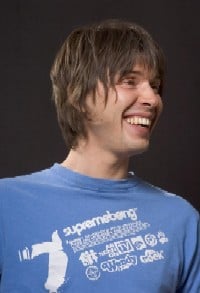
cox3.jpg

Alongside his research, however, Cox has continued to crave the stage making regular appearances on popular science programmes. His presenting career has really kicked off this year as he hosted Wonders of the Solar System, a five-part series in which he travels the globe explaining various phenomena in our solar system. He has also begun filming on the follow-up series, Wonders of the Universe, to be broadcast in the UK in early 2011.

But Cox is clearly a man who likes to keep busy, and this morning he revealed via Twitter that he is returning to the studio with his old group to record a couple of new tracks. The band reformed in 2008 with two of the band’s main members singer – Peter Cunnah and DJ Alan Mackenzie – and the pair are currently working on a new album, In Memory Of… scheduled for release in March 2011. It is not yet clear whether Cox will join the band for the tour that will accompany this release.

And it seems that Cox is far from alone in being a professional physicist with a passion for music. Cox’s colleagues at the ATLAS collaboration are planning to release a double album, covering a range of popular styles, under the scientists’ own record label, Neutralino Records. I’m just waiting for the day that D:Ream team up with Kate Mcalpine and her crew who made the headlines back in 2008 when they recorded the “Large Hadron Rap” to coincide with the switch-on of the LHC, which has now attracted more than six million hits on youtube.

Are you a highly skilled worker?

By Margaret Harris

UK government proposals to cap the numbers of skilled non-EU immigrants could seriously hurt the country’s science departments and hi-tech industries. That, at least, is the message in an editorial in this week’s Nature, which goes on discuss how such a cap could make it hard for UK institutions to recruit and retain the best overseas scientists.

But I think there’s an unexplored question here, which is this: how hard is it to qualify for a highly skilled worker visa to the UK under current rules? Would a typical postdoc make the cut? How about a more senior scientist? And, for that matter, how about you?

In the interests of finding out, I paid a visit to the UK Border Agency’s Points-Based-System calculator. The calculator allows you to see how many points you’d earn under the current system based on various attributes like income, age and qualifications.

(more…)

Reflections on a complete life in physics

By James Dacey

What is it that makes a dedicated scientist out of a kid with an everyday background? This is how Roy Glauber opens his autobiography on the Nobel Prize website, having shared the award in 2005 for his pioneering theoretical work on quantum optics. I recently caught up with Glauber to interview him for physicsworld.com to discover a bit more about his remarkable life in physics.

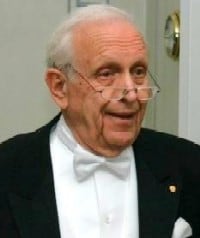
glaubface2.jpg

Glauber described how he developed an early interest in astronomy, which led him to build his own reflecting telescope before he went to high school. Once he started at the Bronx High School for Science, Glauber’s interest in mathematics was inspired by a teacher who encouraged the promising student to learn calculus by lending him an introductory textbook.

Having begun study at Harvard in the early 1940s, Glauber’s physics education was then rapidly accelerated when a stranger appeared in the physics department in 1943 asking if Glauber would like to join him to come and work on an interesting new project “out west”. That turned out to be the Manhattan Project where Glauber would join the likes of Hans Bethe and Richard Feynman in developing the fundamental science to create the atomic bomb.

Before accepting the post at Los Alamos, Glauber had not realized what the project was working towards. “It took some months to grow accustomed to the idea, and the wish to put an end to the long sequence of massive air raids first over Britain and then over Germany played an important role,” he says. In terms of his development as a physicist, however, Glauber was in awe of the project leaders and took a lot of inspiration from them. “Both Fermi and Bethe were extraordinarily effective in zeroing in on the essential points and wasting no time on affectation of any sort”.

You can read plenty more of Glauber’s fascinating reflections in my interview, which has just appeared on physicsworld.com.

Roy Glauber – from the Bronx to the Nobel


How did it feel to win the Nobel Prize for Physics and in what sense has it changed your life?

It was quite a surprise receiving the phone call that morning. It might have been less of a surprise some years earlier, but it was very gratifying nonetheless. Having received the prize does in one way or another consume a fair amount of one’s time. One becomes in a sense a proxy for a great many colleagues. If one takes up the responsibilities implicit in that role it could become very difficult to continue creative work. That is a kind of threat to the careers of younger recipients. There is something merciful in receiving the prize later in life.

There is something merciful in receiving the prize later in life.

Are you surprised by all of the research and applications that have sprung from your work on quantum optics?

It’s always impressive to see applications spring from one’s work. They frequently take off in directions one would never have anticipated. What has been most fascinating has been the development of sensitively controlled ways of generating special quantum states involving one or a few photons. The “entangled” states in particular show exciting promise as a basis for quantum computation.

What do you think are the most important unanswered questions in quantum mechanics?

Quantum mechanics doesn’t seem to contain many mysteries anymore, now that we have truly learned to answer its questions and to live with it. But I can’t believe we won’t have still deeper lessons to learn in the future when theory is unable to cope with the results of experiments. The most obvious place for that to happen is in the less explored areas of high-energy physics. To find such suggestions in low-energy physics will evidently require unprecedented accuracy.

Can you describe how you developed an early interest in science, particularly through your experiences at the Bronx High School for Science?

I had an early interest in astronomy, which led me to grind the mirror for a reflecting telescope and then to build a number of optical instruments before I went to high school. The New York high schools of that era had benefited from the depression years by being able to hire as teachers a whole generation of capable young people who seemed to have no future in other occupations after their own college educations.

Do you still remember your teachers?

My interest in mathematics was raised considerably by a teacher called Samuel Altwerger who encouraged me to learn calculus halfway through high school. He was convinced that the subject was far less formidable than it was reputed to be. He was right. Doing that saved me about two years of college math, and made it possible for me to skip the intermediate physics courses in college and proceed to the graduate courses directly. That’s how I was able to work at Los Alamos during the war before I had graduated.

How did you feel about being involved in the Manhattan Project at such a young age?

The organization of the Manhattan Project must have had a desperate time finding people not yet engaged in war work who were willing to relocate to the middle of New Mexico. Being 18 and having taken most of the graduate courses was a real advantage in those respects. It was a strange feeling being part of a mature theoretical division under Hans Bethe, but very few people on the project were as old as its leaders, who were almost all under 40.

Were you aware of the project’s goal when you signed up, and how did you feel when you found out?

The nuclear projects were kept as dark secrets during the war. The best evidence I had on what was being done was the absence of any open mention of fission after 1940. My guess, based on that and a couple of scattered hints, some of them incorrect, was that they were trying to get a chain reaction to work. In fact they had already accomplished that over a year earlier. I hadn’t guessed that Los Alamos was working to build a bomb, and I was quite taken aback to learn that when I arrived.

It took some months to grow accustomed to the idea, and the wish to put an end to the long sequence of massive air raids first over Britain and then over Germany played an important role. It seemed clear that the Germans could be developing their own bomb, and that too added to the motivation. I can’t remember hearing any talk at all of Japan as a threat in that connection.

I hadn’t guessed that Los Alamos was working to build a bomb, and I was quite taken aback to learn that when I arrived.

Of all the great physicists you have worked alongside, who was the most inspirational?

It’s awfully difficult to say who I admired most among the leaders. Both Fermi and Bethe were extraordinarily effective in zeroing in on the essential points and wasting no time on affectation of any sort. They seemed, as mature scientists, to have little patience with elegant ways of deriving their conclusions, and to regard those as a waste of effort. As an immature scientist, I’d have to admit to deriving joy from a particularly neat bit of mathematics or way of arriving at a result. Fermi had started out in life as a mathematician, and must have learned to resist that strong temptation.

You have had a lot of involvement with the Ig Nobel prizes – do you think it’s important for scientists to keep a sense of humour about their work?

The Ig Nobel ceremonies are an annual bit of fun and a pin prick to inflated personalities. Their awards are often clever and frequently funny, though those categories don’t always overlap. I do find that some features of the presentation have become a bit ritualistic over the years, particularly those that have least relation to what is going on in contemporary science.

Antihydrogen trapped at CERN

Physicists at CERN in Geneva are the first to capture and store atoms of antimatter for long enough to study its properties in detail. Working at the lab’s ALPHA experiment, the team managed to trap 38 anti-hydrogen atoms for about 170 ms. The next step for the researchers is to measure the energy spectrum of the atoms, which could provide important clues as to why there is much more matter than antimatter in the universe.

Antihydrogen is the antimatter version of the hydrogen atom and comprises a positron – or antielectron – and an antiproton. According to the Standard Model of particle physics, the energy levels of antihydrogen should be identical to those of hydrogen. Any deviations from this could help physicists identify new physics – and explain why there is much more matter than antimatter in the universe.

Although creating positrons and antiprotons is relatively easy, making antihydrogen is much harder. This form of antimatter was not isolated until 1995 – also in experiments at CERN. Making it stick around for long enough to study in detail is even more difficult. But in being able to trap antihydrogen atoms for 170 ms, the members of ALPHA, who come from 14 institutions in seven different nations, can now look forward to studying its atomic energy levels.

Colliding clouds

The experiment begins by making a cloud of positrons and a cloud of antiprotons. The antiprotons are created in an accelerator by smashing high-energy protons into a stationary target. The antiprotons are then slowed down and cooled in a series of steps involving a storage ring and electromagnetic traps. The positrons are produced by a radioactive source and then accumulated and cooled in a special trap.

The clouds are injected into a superconducting magnetic trap, where they mix for about 1 s to create antihydrogen. The charged positrons and antiprotons are then ejected from the trap, leaving behind neutral antihydrogen. While most of this antihydrogen is moving too quickly to be trapped, atoms with very little kinetic energy are held by a magnetic field gradient.

ALPHA researchers then detected the atoms by switching off the trap and setting the antihydrogen free to annihilate with surrounding matter. This created several charged particles including pions, which were spotted by a bank of detectors surrounding the trap. In total, the team has managed to see 38 annihilation events that are consistent with the release of antihydrogen that had been trapped for 170 ms.

Looking for CPT violation

The next step for the researchers is to use the antihydrogen to study a fundamental quantum transformation known as the charge-parity-time (CPT) operation. When the CPT transformation is applied to a physical system, three things happen: every particle is converted to its antiparticle; each spatial co-ordinate is reflected so that left becomes right, up becomes down and forward becomes backward; and time is reversed.

There is currently no experimental evidence that the CPT symmetry is violated, but it could show up as a slight difference in the frequency of certain atomic transitions in hydrogen and antihydrogen atoms. The discovery of such a violation could also help physicists understand why there is much more matter than antimatter in the universe.

“For reasons that no one yet understands, nature ruled out antimatter. It is thus very rewarding, and a bit overwhelming, to look at the ALPHA device and know that it contains stable, neutral atoms of antimatter,” said ALPHA spokesperson Jeffrey Hangst of Aarhus University in Denmark. “This inspires us to work that much harder to see if antimatter holds some secret.”

The work is described in Nature doi:10.1038/nature09610.

Optical transistor in silicon is a first

Researchers claim to have fabricated the first all-optical transistor on a silicon chip. This device allows the transmission of light emitted by one laser to be governed by the intensity of another.

This novel transistor was made by researchers at EPFL in Lausanne, Switzerland, and the Max Planck Institute for Quantum Optics in Garching, Germany. According to the team, the device promises to provide another building block for constructing all-optical integrated circuits. Such circuits could dramatically improve the efficiency of telecommunication networks because they would eliminate the need to convert optical information to electrical pulses – which can be processed easily – and then back to light.

The team employed standard nanofabrication methods to make the transistor, a taper consisting of a silicon dioxide disc with a rimmed edge sitting on a silicon pillar. The ability to make devices in silicon is important because the material is widely used in the electronics industry.

To operate the device, the frequency of one laser beam (the “probe”) is tuned to an optical resonance of the silicon dioxide structure. The result is that the structure behaves like an optical cavity, with the incident light bouncing endlessly around its rim. “No light is transmitted through the taper since all the light is lost in the optical mode of the cavity,” explains Tobias Kippenberg from EPFL.

The beat goes on

A second “control” beam at a different frequency is then directed at the taper. Interaction between the two beams results in a beat frequency that also resonates with the disc and creates a mechanical oscillation. Interference between these three light fields results in the cancellation of the probe beam within the cavity.

“The presence of the control beam allows the probe beam to be transmitted through the taper as if it was not coupled anymore to an optical cavity. This is the optomechanically induced transparency effect,” explains Kippenberg.

Cranking up the intensity of the control beam increases transmission of the light from the probe laser through the structure, but it is impossible to realize complete transmission – this would require an infinitely powerful control laser.

Kippenberg and his colleagues selected silicon dioxide for building their tapers, because this material combines very high transparency with very low optical losses.

“However, the optomechanically induced transparency effect can be realized in various optomechanical platforms that have been developed in recent years, based on many different materials such as silicon nitride and calcium fluoride.”

Quantum control could be next

Kippenberg believes that the optomechanically induced transparency effect might be able to control the quantum state of the transistor. “This would be a very important step towards the realization of quantum experiments on large-scale objects and tests of decoherence on unprecedentedly large systems.”

The next goal for the team is to cool the mechanical oscillator into its quantum ground state using the optomechanical interaction. Kippenberg says that this will be a first step towards the preparation and control of a mesoscopic object in various quantum states.

The team’s all-optical device joins a growing band of variants on the conventional electronic transistor, including one that converts an electrical input into an electrical and a laser output. Co-inventor of this “transistor laser”, Milton Feng from the University of Illinois Urbana Champaign, is not particularly impressed by the all-optical variant built by the European team: “It is science, but it will never make it in the real world of integrated circuits like the semiconductor transistor did.”

The research is reported at Science DOI: 10.1126/science.1195596.

Einstein makes Obama's top 13

SDC11489_2.JPG

Of Thee I Sing: A Letter to my Daughters Barack Obama (2010)

By James Dacey

To me, observing from the UK, American politics often seems to resemble a fairy tale in which heroes and villains battle it out to win the hearts of the American public, spurred on by a big zealous Fox and resting only for the occasional Tea Party.

So I wasn’t particularly surprised to hear the news yesterday that Barack Obama was embracing the strong narrative that surrounds his presidency by releasing a children’s book. Of Thee I Sing: A Letter to my Daughters, written before he came into office, is a 31-page illustrated work celebrating the lives of 13 great Americans, including, for instance, the patriotism of George Washington and the artistry of Georgia O’Keeffe.

I was slightly surprised, however, to see the inclusion of Albert Einstein: not because of his undoubted inspiration, but because the vast majority of his groundbreaking work was carried out before he took US citizenship in 1940. Einstein “turned pictures in his mind into giant advances in science, changing the world with energy and light,” writes Obama.

In fact Einstein’s relationship with the land of opportunity is a fascinating debate in itself, as documented through the great man’s razor-sharp one-liners. Before moving to the US, Einstein had a pretty negative view of American culture, as he explained after returning to Europe in 1932 in a letter to Austrian-born physicist, Paul Ehrenfest: “For the long term I would rather be in Holland rather than America… Besides having a handful of really fine scholars, it is a boring society that would soon make you tremble,” he wrote.

After taking citizenship, however, Einstein’s feelings began to change and he found a strong affinity with certain American values. “America is today the hope of all honourable men who respect the rights of their fellow men and who believe in the principles of freedom of justice,” he stated in “Message for Germany”, which was dictated over the telephone to a correspondent on 7 December 1941, the day that Pearl Harbor was bombed.

Until his death in 1955, it seems Einstein had a love-hate relationship with American society, which became particularly strained during the McCarthy era. This was apparent in a letter Einstein wrote in 1950 to Gertrud Warschauer, the widow of a Berlin rabbi. “I hardly ever felt as alienated from people as I do right now… The worst is that nowhere is there anything with which one can identify. Brutality and lies are everywhere,” he wrote.

I could go on, but Einstein said an awful lot of quotable things.

Copyright © 2026 by IOP Publishing Ltd and individual contributors