Exciting structures

Mark Denny’s latest book, Super Structures, is designed to help non-scientists share and enjoy the way that we scientists view and think about the world of physical structures. My first step in reviewing it, therefore, was to try it out on my non-scientist friends. Without exception, they were intrigued and wanted to read more.

The book is organized in a logical way, from basic theory to applications, and benefits from the author’s decision to focus on just one structural element: the truss. This is not, as Denny points out, a medical device, but an arrangement of beams and struts designed for mechanical stability. Concentrating on the truss is a neat idea, and it works. In the design of different types of truss, the balance of tensile and compressive forces that underlies successful structural engineering is seen at its simplest and most understandable. The author takes full advantage of this simplicity by first describing the balance of forces and then showing how it can be used to understand the stability of structures that range from Moorish arches and the Eiffel Tower to massive concrete dams.

In addition to these lofty structures, Denny also uses homelier illustrations to drive home his points. He describes, for example, the annual “spaghetti bridge” competition run by Johns Hopkins University, in which competitors build bridges from sticks of dry spaghetti glued together. The bridge that supports the greatest load is the winner, while, to make things more difficult, the bridge itself must weigh no more than 750 g. One recent winner designed a bridge on the truss principle that supported an impressive 56 kg, but this was far from a record: in a worldwide competition run by Okanagan College in British Columbia in 2009, a spaghetti bridge designed by the Hungarians Aliz Totivan and Norbert Pozsonyi supported a load of 443 kg despite weighing less than a kilogram itself.

Such illustrations catch the eye, but they do not really stand comparison with the masterly descriptions in J E Gordon’s Structures: Why Things Don’t Fall Down. Published in 1978, Gordon’s book set the benchmark for books on structural engineering, and few popular-science or engineering writers have yet matched his prose style. Consider Gordon’s description of the stresses in a pressure vessel: after explaining that in the wall of a cylindrical pressure vessel, the circumferential stress is twice the longitudinal stress, he notes that “One consequence of this must have been observed by everyone who has ever fried a sausage. When the filling inside the sausage swells and the skin bursts, the slit is almost always longitudinal.” It is a lovely example – simple, easily understood and vivid.

What Denny’s book lacks in this respect, however, it at least partly makes up for through its relative abundance of illustrations. These add considerably to the interest and clarity of the book, and encourage the reader to look at structures in a new way, recognizing that aesthetics resides as much in the balance of forces as it does in the actual shape. My favourite illustration (as a diagram accompanied by a practical example) shows how two barrel vaults intersect to give an intrinsically stronger groin vault – something that is not easy to put into words.

The real point of the book is to get the non-scientific reader thinking about structures in a new and scientific way. The profusion of illustrations certainly helps, and so does Denny’s undoubted mastery of the short description (even if it never quite rises to Gordon’s level). Almost every paragraph contains some point of interest that encourages the reader to keep reading, no matter where the book may have fallen open.

I confess to finding Denny’s approach somewhat patronizing at times. At the start, for example, I did not need to be told that the author “hope[s] that the title, Super Structures, gets across the subject that we will tackle”. However, non-scientists to whom I have shown the book have been impressed by its clear simplicity. Above all, they have been pleased by the absence of equations, which are confined exclusively to an appendix. Equations, it seems, are still a barrier to sales.

To his credit, Denny does a lot to overcome their absence by getting the reader to consider the balance of forces in a visual, “back of the envelope” way, and presents many interesting examples that are designed to get readers thinking. He points out, for instance, that if we could fit the Eiffel Tower neatly into a giant cylindrical box, the air in the box would weigh more than the tower. This example, as with many of his others, may be familiar to scientists and engineers, but to my non-scientist friends they were an exciting and original revelation.

Ultimately, books intended to make science and engineering more accessible have their greatest value when they not only explain the basic ideas and their applications, but also share the satisfaction and excitement that we scientists gain from understanding how things work. This is true whether those things are physical structures, biological organisms or the universe itself. If we are to succeed in making science an integral part of our wider culture, then we need more books that perform this task. Denny’s new book is perfused with this sense of excitement, which adds greatly to the enjoyment of reading it. On this account alone, as well as the clarity with which it is written, it is to be recommended.
Holographic video comes up to speed


Researchers at Massachusetts Institute of Technology (MIT) have demonstrated the highest frame rate yet for a dynamic hologram that can recreate evolving 3D scenes. The breakthrough means that holographic television is now tantalizingly close to industry frame rates at a time when 3D cinema is fully back in vogue.

A big appeal of holograms over established 3D image projection is that the viewer can see the effect unaided. They do not need to wear special glasses where each lens creates a slightly different image by letting through light polarized in different directions. Instead, holographic displays emit light in such a way that it produces many perspectives that allow the viewer to see the “object” from multiple angles.

In November, a group of researchers based at the University of Arizona and Nitto Denko Technical Corporation in California made the headlines when they unveiled the world’s first “telepresence” system capable of reproducing a changing 3D scene every 2 seconds. The system worked by surrounding an object with 16 cameras and writing these images into a polymer-based screen, which can project when illuminated with LEDs.

Filming deep scenes

Now, a group at MIT’s Media Lab under the leadership of Michael Bove Jr has raised the bar once again by creating a system that can reproduce a 3D scene 15 times every second. And the MIT system uses a novel design that only requires one camera – a commercially available range-finding camera that can record both the luminance and depth of a scene.

Bove’s team takes this footage and sends it via the internet to a PC that has been fitted with three graphics processing units. The units have been programmed with an algorithm that can compute the diffraction patterns needed to reproduce the moving 3D images. These patterns are then recreated on a projection screen using arrays of components known as “wafels”, which can control the intensity of light emitted in all directions.

Bove tells physicsworld.com that, having only started developing the latest version of the technique during the week after Christmas, the research has progressed at breakneck speed. “It was literally only last Wednesday that we managed to improve the performance from 7 frames per second to 15.” He says that he is confident that his team can boost this rate even higher to the 24 frames per second of feature films or the 30 frames per second of television.

Webcam hologram

Bove believes that, within the next few years, his group’s method of creating dynamic holograms could become available commercially at the scale of standard laptop screens. It could be used by scientists and other professionals to visualize data in 3D, as well as for communications and videogaming. “There’s something very compelling for me about the idea of having a hologram coming out of a computer, with images coming via webcam, for instance,” he says.

The group is looking to develop alternative versions of the diffraction screen at lower costs, and is seeking to design a laptop-scale screen that retails at around $200 (approximately £125). More difficult, however, will be scaling up the devices to the size of cinema screens, because it is difficult to generate complicated diffraction patterns on larger scales.

The idea of real-time telepresence has captured the imagination ever since the 1970s when the special effects used in the first Star Wars film included a hologram of Princess Leia making a distress call after her ship had fallen under attack by the Empire. Bove and his team recreate this scene in a demonstration of their technology, as can be viewed in the video above.

Bove is currently presenting his group’s holography system at Consumer Electronics Show, which is taking place this week in Las Vegas, US.

Physicists assemble spin ensemble


An international research group claims to have taken an essential step towards silicon-based quantum computing by entangling 10 billion identical quantum bits, or “qubits”, inside a silicon crystal. This is the first time that “ensemble entanglement” has been demonstrated in a solid-state device, they claim.

Where conventional computers store data as “bits” with value 1 or 0, in quantum computing data is stored as “qubits”, which can hold more than one value at the same time. Qubits are quantum states stored in photons or particles that can become “entangled” with other quantum states, allowing them to transfer information instantaneously regardless of their separation distance.

The upshot is that quantum computers could potentially store and process huge amounts of data at unprecedented speeds. This could enable them to tackle problems beyond the scope of even the most powerful modern computers, including simulating complicated biological processes and strange phenomena from the quantum world itself.

One promising approach to quantum computing is to dope silicon with impurities, which can donate single electrons to the silicon. In this way, quantum information can be stored in the spin state of both the electrons and the dopant nuclei and these particles can be entangled to become qubit pairs. A big advantage of this approach is that silicon is already used by the computer industry so many of the manufacturing processes are already in place.

High fidelity

Stephanie Simmons at the University of Oxford and an international team have now demonstrated the principle of this approach by producing qubits by doping a silicon crystal with phosphorous atoms. By cooling their material to 3 K and exposing it to radio and microwave pulses, Simmons and her colleagues were able to create 1010 pairs of entangled electrons and phosphorous nuclei in what they call a “spin ensemble”. They confirm the entanglement to a fidelity of 98% through the emission of microwaves from the silicon crystal.

“We are effectively creating billions of copies of the same quantum information where all spins behave in the same way,” Simmons told physicsworld.com. She says that part of the advantage of creating so many copies is to amplify the quantum information to make it easier for researchers to confirm that the particles are in fact entangled.

Jeremy O’Brien, a quantum information researcher at the University of Bristol, agrees that this is an important development. He adds that it will be important to demonstrate the same capability with a single phosphorous nuclear-electron spin system. “Individual control and readout will be essential to quantum computing, as will the ability to entangle many spin systems with one another,” he says. “You want the state of one spin system to affect the state of another to be able to really harness the power of quantum computers”.

Simmons says that her group is currently investigating ways of transporting information and that one approach is to send controlled electric pulses through the material to physically move electron qubits. She says that she is personally motivated by the possibility of quantum computing and the improved efficiency it could bring to scientific studies such as the study of protein folding – a key process is many biological interactions.

This research is published in Nature.

Physicists craft Luneburg lens from silicon

Physicists in the UK have created a Luneburg lens – a lens able to focus light from all directions equally well – on a silicon chip. The device could one day find applications in on-chip Fourier optics, which are used by the telecoms industry to perform tasks from noise reduction to data compression.

Most practical lenses have aberrations, which means that their ability to focus light deteriorates when the incident light is off-axis. But in the Luneburg lens, proposed over 60 years ago, focusing is equally good wherever the light comes from.

But creating Luneburg lenses has proved tricky. They require the refractive index – the property that governs how light is bent by a lens – to vary throughout the device, with a maximum √2 (roughly 1.4) greater than the minimum. With today’s technology it is impossible to dope a material with impurities to achieve this level of refractive-index contrast. Researchers have tried to make approximate versions in the past, but they haven’t been totally successful.

‘Delightful achievement’

Now, Ulf Leonhardt and colleagues at the University of St Andrews have created a Luneburg lens for infrared light with a silicon waveguide. “It was thought to be impossible to build a Luneburg lens in the visible spectrum, or nearby, at a reasonable cost,” says Juan Miñano, an optics researcher of the Technical University of Madrid, who was not involved with the research. “Fortunately Leonhardt is not stopped by any well-accepted thought and is delighting us with this achievement.”

Leonhardt and colleagues’ device is a microscopic piece of silicon, shaped like a contact lens and sandwiched in the middle of two larger polymer and silica layers on a substrate. When the researchers shine a light beam at a wavelength of 1575 nm onto the device, it hugs the interface between the polymer and silica until it reaches the lens, at which point it becomes strongly confined. Indeed, the geometry of the lens waveguide creates an effective refractive index profile that varies from 1.4 to 2.8, focusing the beam to a spot 3770 nm in diameter.

For an ideal Luneburg lens, this focused spot would be half the wavelength, or some 800 nm – almost five times smaller than Leonhardt and colleagues’ measured value. Leonhardt says the discrepancy is due to limitations with the optics, and that a beam covering the entire lens, rather than just part, would produce the best resolution.

More work needed

Igor Smolyaninov, a researcher at the University of Maryland, US, who has also done work on novel lenses, thinks the waveguide Luneburg lens is an “important result”. But he notes that “much more work is needed” before perfect imaging can be obtained.

Indeed, since Leonhardt’s group posted its preprint on the arXiv preprint server, another group has found a route to a Luneburg lens. In a paper due to be published in Nature Nanotechnology (available at arXiv:1101.2493), Xiang Zhang of the University of California at Berkeley and others deliver a Luneburg lens that can focus surface plasmons – waves of electrons in metals.

“What the recent works of these two groups show is that, by using the recipes of transformation optics, the design of devices for doing Fourier optics is much easier and cleverer,” says Francisco Garcìa-Vidal, an optics researcher at the Autonomous University of Madrid. “It is an important step forward in a long-lasting subject.”

The research is reported at arXiv:1101.1293.

Integrating electronics with the human body

By Louise Mayor

We’ve come a long way in the fields of both electronics and medicine. But the possibility of intimately combining these – integrating electronics with the human body – has so far remained in the minds of creators of cyborg characters such as the Terminator and Star Trek‘s Seven of Nine.

And there’s a reason for this, which I found out while recording this video interview with John Rogers from the University of Illinois at Urbana-Champaign. As Rogers explains, all known forms of biology are soft, elastic and curvilinear, whereas all known forms of electronic technologies are rigid, planar and brittle. “As a result,” he continues, “if you want to integrate electronics with biology – with human skin or tissue – you have severe challenges in a mechanics mismatch and a geometrical form mismatch.”

But this limitation is now being broken by Rogers and his team, who are developing electronics in formats that are much more tissue-like in their geometry and mechanical properties.

LED_pencil.jpg
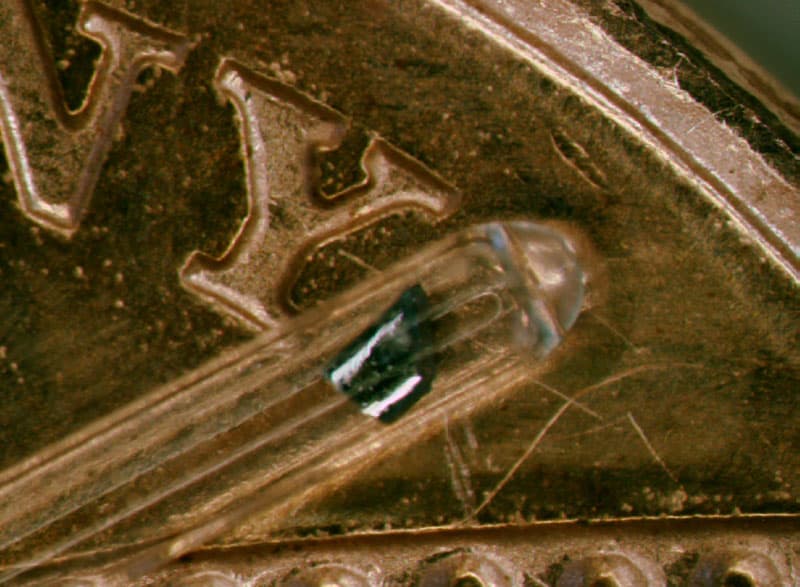
LED array stretched over the tip of a pencil for scale. (Courtesy: John Rogers)

One specific type of device they’re developing is bio-integrated light-emitting diodes (LEDs), and as proof of principle they have already implanted an LED array under a mouse’s skin.

But does glowing skin bring anything to the table other than futuristic-looking tattoos? In the video, Rogers explains that they can be a diagnostic tool when used for spectroscopy – combining an LED array with sensors allows tissue to be diagnosed based on how it reflects and absorbs light.

But there are therapeutic uses too: Rogers is also interested in putting LEDs in the body along with certain classes of drugs that can be photoactivated. “So you introduce them into the body in an inactive form, and then you can activate them locally by exposing them to light,” he says, adding that there is also evidence emerging that phototherapy – simply irradiating tissue with light – can actually accelerate the wound-healing process.

The above video forms one of a four-part series filmed at the MRS Fall Meeting in Boston. In the video below, Amy Moll – MRS’s head of public outreach – explains why spreading the word about research like this is so important.

We also accosted conference delegates to hear their take on materials science, and had a more in-depth chat with incoming director of the National Science Foundation’s Division of Materials Research, Ian Robertson, about how the agency might allocate their 2011 budget of $320m.

Sun provides Earth with less energy than we thought

Researchers in the US claim to have the most reliable estimates yet of the amount of energy that the Sun provides to Earth – and it is less than previously thought. The findings will give scientists more robust solar data to feed into climate models, though much more work needs to be done to fully understand the relationship between the Sun and the Earth.

Historical and geological records reveal that the Sun has remained relatively stable for the past 250 years, with the total solar irradiance (TSI) fluctuating by less than 1% over the roughly 11-year solar cycle. And since the first space-based radiometers were launched in the late 1970s, scientists have been able to measure this irradiation directly. But to date, these space measurements have remained uncalibrated – researchers had to assume that their instruments function in the same way in space as they do on Earth.

Greg Kopp of the Laboratory for Atmospheric and Space Physics (LASP) in Boulder, Colorado, and Judith Lean of the Naval Research Laboratory in Washington DC say they have acquired a more reliable estimate of solar activity. They analysed data collected by NASA’s Solar Radiation and Climate Experiment (SORCE), a satellite launched in 2003 to investigate why solar variability occurs and how it affects Earth’s atmosphere and climate.

Simulating space on Earth

Crucially, Kopp and Lean were able to calibrate data collected by the Total Irradiance Monitor (TIM) instrument aboard this craft at a new calibration centre at LASP. This facility in Boulder enables researchers to verify their findings by recreating the conditions of interplanetary space with vacuum operations and high solar power levels. Kopp and Lean find that the TSI during the last solar minimum in 2008 was 1360.8 ± 0.5 W m–2, which is roughly 5 W m–2 less than the accepted value used in climate models.

“Although it seems small, this level of difference is very large for the instruments acquiring these measurements,” Kopp tells physicsworld.com. He says that while the latest finding is purely an improvement in instrument accuracy, it can help to inform climate studies about the influence of the Sun.

“The major climate models agree that the majority of climate change over the last century is caused by changes in greenhouse gases, while the Sun’s influence is responsible for about 15% of the observed warming over this time,” he says. “Prior to the 1900s, the Sun was responsible for much more of the changes in Earth’s climate.”

Little Ice Age

Indeed, geologists agree that over the course of Earth’s history, variations in the Sun’s energy output are likely to have influenced the climate on Earth. The “Little Ice Age”, for instance, which extended from the 16th to the 19th century, is often linked with a roughly 70-year stretch beginning in 1645 known as the Maunder Minimum when the Sun was particularly weak.

Friedhelm Steinhilber, a geologist at the Swiss Federal Institute of Aquatic Science and Technology, near Zurich, agrees that Kopp and Lean’s measurements of TSI are the most accurate to date. But he warns that the significance of the lower value is far from fully understood.

“The Sun’s influence on Earth’s climate is not so much the absolute value. It is the relative variation”. Steinhilber believes that the significance of solar fluctuations is only really felt over longer time periods, like that observed during the Maunder Minimum.

These findings are presented in a paper in Geophysical Research Letters.

Water isomers separated by spin

Physicists in Israel have used a modern version of the Stern-Gerlach experiment to separate out water molecules according to the relative spin of their constituent hydrogen atoms. This ability to generate a sample of water with a well-defined nuclear spin could, say the researchers, significantly increase the sensitivity, and hence applicability, of nuclear magnetic resonance (NMR).

Water molecules come in two varieties, or isomers, depending on how the spins of their two hydrogen atoms are oriented relative to one another. When the spins are parallel the molecules are known as “ortho” and when antiparallel they are called “para”. Scientists would like to know more about how the two isomers differ physically and also how they convert from one form to another. To do this, you must first separate the two isomers – something that has proven very difficult.

In 2002 Russian researchers brought water vapour into contact with a substrate and found that ortho-water tended to stick less well to the surface, so leaving the vapour rich in that isomer. However, other groups couldn’t reproduce the experiment, putting the result in doubt. Alternative approaches, such as using strong electric fields or lasers to separate out the isomers, have yet to bear fruit.

Stern-Gerlach revisited

The latest work, carried out by Gil Alexandrowicz and colleagues at the Israel Institute of Technology in Haifa, instead uses the principle exploited by Otto Stern and Walter Gerlach in their pioneering experiment of 1921. Stern and Gerlach were able to separate out a beam of silver atoms into two groups, according to what would come to be understood as the atoms’ spin, or intrinsic angular momentum. To do this they passed the beam through a magnetic field whose strength varied along an axis perpendicular to the beam – being stronger on one side of the beam than the other – meaning that the atoms were forced to one side or the other depending on whether they were spin up or spin down.

This latest experiment is a little more sophisticated, because the spin states of water molecules are slightly more complex than those of silver atoms. The spins of the two hydrogen atoms in each nucleus can combine in four different ways, leading to an ortho “triplet” with total spin 1 and a para “singlet” with total spin 0.

Through a hexapole

To distinguish between these different states, the Israeli group sent a beam of water molecules through a “hexapole” magnetic field, whose gradient, instead of becoming gradually stronger across the beam, goes to zero in the middle of the beam and increases linearly with radius. This arrangement works like a lens, focusing molecules with a total spin of 1 and a “spin projection” of 1 to a point a finite distance from the magnet while leaving the others (those with either a total spin of 1 and a spin projection of 0 or –1 or a total spin of 0) to follow diverging paths.

The team also had to find a way to slow down the beam such that the water molecules had time to be deflected significantly as they passed through the magnet. This the researchers did by mixing 3% water vapour with 97% krypton gas, the heavier krypton atoms having a lower velocity and tending to slow down the beam as a whole. They then placed a 0.5 mm-wide aperture at the expected focus of the beam, about 2 m away from the source, and scanned the aperture across the beam, recording how the water make-up varied as a result. Their measurements showed a focused beam with a diameter of about 1.5 mm, which contained about 97% ortho-water and just 3% para-water.

According to Alexandrowicz, this filtering of water molecules according to their spin could make NMR much more sensitive. NMR uses a powerful magnetic field to align the spins of magnetic nuclei, such as the protons in water, and then exposes these nuclei to radio pulses. Measuring the frequencies at which the nuclei precess around the field direction then provides information on the physical and chemical environment of the nuclei.

Surface NMR possible?

Unfortunately, however, even with a very strong field only a small fraction of the nuclei can be made to initially align, which means that the output signal is weak. So making measurements of a water sample in which almost all of the nuclear spins lie in the same direction would result in a far stronger signal. This, says Alexandrowicz, could expand the use of NMR, allowing it, for example, to be used in surface science – currently, only bulk water contains enough molecules to generate a measurable signal.

Alexandrowicz adds that the spin-selected beam would probably not be applicable to medical magnetic resonance imaging (MRI), because of both the small quantities of ortho-water that it produces and the fact that the spin polarization (isomer separation) is likely to be short-lived. He says that his group will now investigate exactly how long this spin polarization persists in thin layers of water molecules deposited on a surface using the magnetically focused beam, and will then look to carry out ultra-sensitive NMR studies in the near future.

The results are reported in Science 331 319.

There's something in the air

atmosphere.jpg
Thin blue line: BBC Radio explores our atmosphere (Courtesy: NASA)

By Hamish Johnston

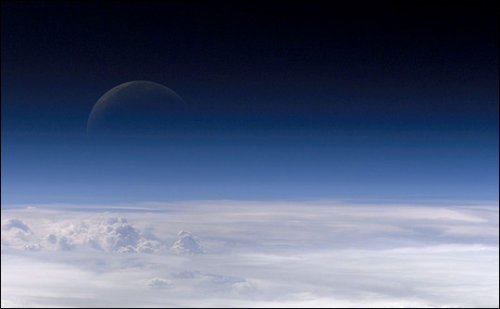
Last night I listened to the second instalment of BBC Radio’s Thin Air, a three part series that looks at the wondrous properties of the Earth’s atmosphere.

In part two science journalist Gabrielle Walker looks at the various gases that make up air. What I found particularly fascinating is the account of how the atmosphere has evolved over billions of years to become what it is today.

Oxygen, for example, was initially a toxic waste-product of life rather than a life giver. For a long time it was absorbed by rocks, allowing early life to flourish, but then the rocks could take no more. The subsequent build-up of oxygen in the atmosphere is described as the worst pollution incident in the history of the planet by James Lovelock, who is one of the scientists interviewed on the programme.

The first episode looks at the atmosphere as a whole, weighing the air in the Albert Hall and discovering that blood boils above a certain altitude.

You can listen to the first instalment here.

The second episode can be found here, but only for six more days.

After that, the second (and eventually third) programme should be found here.

Single molecules probe tiny hotspots

Researchers in the US are the first to use single fluorescent dye molecules to probe the local electromagnetic fields inside nanoscale “hotspots” on metal surfaces. The imaging technique can identify structures as small as just 15 nm across with a resolution of less than 2 nm – which is much smaller than conventional optical microscopes can achieve.

When light is shone onto nanostructured metallic surfaces, such as those made from gold or silver, hotspots of concentrated light can appear where the electromagnetic field is very intense. Scientists have known about this surface enhancement for over 30 years and have used the effect in techniques like surface-enhanced Raman spectroscopy to image very small samples of molecules and even single molecules. Despite the success of the method, however, scientists struggled to measure the size of these hotspots and how they enhanced spectroscopic measurements.

There are two challenges when it comes to probing the hotspots. First, a hotspot is randomly located on the surface of a metal and is therefore very difficult to find. Second, a hotspot is smaller than the wavelength of visible light and so cannot be detected by an ordinary optical microscope, which normally cannot focus light to a spot smaller than half the wavelength of light – something known as the diffraction limit. More sophisticated imaging techniques, like near-field scanning optical microscopy (NSOM) and electron energy loss spectroscopy (EELS) are not up to the job either because they are limited by the size of their probes.

Ideal probes

Now, Xiang Zhang and colleagues at the University of California at Berkeley have overcome these problems by using single molecules, which the team believes are ideal probes for getting inside hotspots because they are smaller than a nanometre across.

The scientists begin by putting a sample – a rough metal film or metal nanoparticle clusters deposited on a quartz surface – in a fluorescent dye solution and allow the dye molecules to randomly adsorb onto the surface of the sample. The molecules disperse naturally in this way via Brownian motion. When the sample is then illuminated with a laser beam, many hotspots appear on the surface as expected.

By adjusting the concentration of the dye, the researchers ensure that, on average, only one dye molecule arrives at a hotspot at a time. When a single dye molecule binds to a hotspot, its fluorescence is greatly increased and it appears as a bright spot whose intensity can be measured to calculate the level of light enhancement. In this way, the team can obtain an image of the fluorescent enhancement profile of a single hotspot as small as 15 nm across with an accuracy of 1–2 nm. The team found that the light’s field strength decays exponentially from the hotspot peak. This result had been predicted by simulations before but never directly measured in an experiment until now.

‘Perfect tool’

“Our technique could be used to study light–matter interactions in a variety of nanostructures and materials, including nanoparticles, films and wires,” team member Hu Cang said. “It is the perfect tool to help design nano-optics devices and materials to control the flow of light at the nanoscale.”

He added that the hotspots could also be used to boost the sensitivity of biosensors, for example in single-molecule DNA sequencing by focusing the light to a single molecule and substantially suppressing the background noise. “They might also help to improve the efficiency of solar-energy devices by concentrating light to the nanometre-sized active sites in these devices where light is converted into chemical energy or electricity.”

The team says that it would now like to correlate its measurements with the morphology of the metal film and nanoparticle clusters measured using electron microscopes. “With the help of computer simulations, we hope to figure out how these hotspots defy the diffraction limit of light and concentrate light energy into such a small space.

Looking for a lower limit

And last but not least, no theory has yet predicted how small these hotspots can be so the researchers are busy examining other materials like silicon and titanium oxide in the hope of finding even smaller ones.

“Single-molecule imaging – or super-resolution fluorescence microscopy – was named ‘method of the year’ in 2008 by the journal Nature Methods. It has so far been used to primarily image biological samples, but we have shown that it can easily and successfully be extended to other areas,” added Cang.

The results are published in Nature 469 385.

US university settles religious discrimination case

A settlement has been reached in a case brought against the University of Kentucky by astrophysicist Martin Gaskell over his claim that the university illegally denied him a staff position on the basis of his evangelical Christian faith. The settlement now requires the university to pay $125,000 to Gaskell and his lawyers, who claimed that the decision meant Gaskell lost income and caused him “emotional distress”. The university admits no wrongdoing in the case, which was due to go to trial on 8 February. Meanwhile, Gaskell has taken a job at Chile’s University of Valparaiso, which he will start in March.

The case centred on Gaskell’s application in 2007 to become founding director of the University of Kentucky’s then-planned MacAdam Student Observatory. The controversy surrounding his candidature focused mainly on concerns, expressed in e-mails shared among University of Kentucky astronomers and biologists, that his statements indicated a belief in creationism or intelligent design rather than evolutionary theory.

Both sides agreed that Gaskell was a leading candidate for the job, but they disagreed on the reasons for his rejection in favour of astronomer Timothy Knauer, who is currently the observatory’s director. Gaskell asserted that he was rejected because of his faith and what he says was a misreading of his views on evolution. The university claimed, however, that the decision rested on issues of personality and communication skills.

“As the settlement makes clear, the university believes its hiring processes were, and are, fundamentally sound,” says University of Kentucky lawyer Barbara Jones, who adds that members of the university “all appropriately worked through the hiring process in a manner completely consistent with other positions”.

Gaskell’s lawyer Francis Manion says that the case has “shed some much-needed light” on a problem that is not just limited to the University of Kentucky. “It is simply untenable to think that an avowed Christian, evangelical or otherwise, or any other scientist of religious faith, is somehow incapable or less capable of performing his or her job in science education, research or outreach,” he says.

A matter of faith

Born in the UK, Gaskell describes himself as “a non-denominational evangelical”. His research focuses on supermassive black holes in quasars and active galactic nuclei. He has also lectured and written about the relationship between modern astronomy, the Bible, and creation. “I am not a creationist. The correct label for someone like me is ‘theistic evolutionist’,” Gaskell told Physics World. “I have never given a lecture on evolution or biology in my life. I’ve not published research papers on evolution, either.”

University of Kentucky faculty members saw the situation differently. Michael Cavagnero, head of physics and astronomy at Kentucky, claims that Gaskell gave a public talk on the University of Kentucky’s campus in 1997 “that contained, according to members of the university’s biology department, inaccurate and pejorative statements about contemporary scientific culture and its “hidden atheistic assumptions”, including erroneous statements concerning the theory of evolution by natural selection”. “I came to the conclusion that, while a talented astronomer, Dr Gaskell is a lousy biologist,” says Cavagnero.

Cavagnero adds that Gaskell’s “religious views played no role in the decision” not to appoint him. “Timothy Knauer’s personality and talents were ideally aligned to the staff position,” Cavagnero says.

Copyright © 2026 by IOP Publishing Ltd and individual contributors