Romantic science on the London Underground

DACEY london underground.jpg
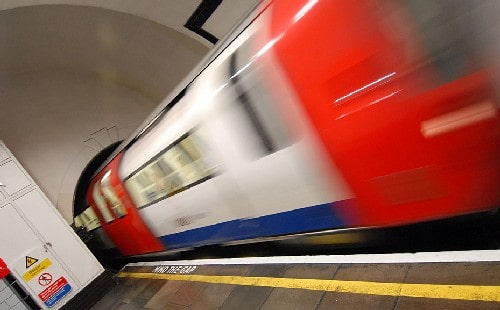
A tube speeding into a station Photograph: Transport for London

By James Dacey

It may be convenient, but the London Underground can be a dark, uninspiring place at times. That is why we should welcome this new project by the Royal Society that is decorating London tubes with poetry inspired by scientific discovery and the changes it has brought to our society. The project is part of the 350th anniversary of the Royal Society, and is one of a number of projects and events taking place this year.

Works by William Blake and Alfred Lord Tennyson feature in a collection of six poems that appear in tube carriages across all London Underground lines. The collection also contains more modern pieces including, my personal favourite, a poem called Out There by Jamie McKendrick. The 20th century British poet manages to bring a sense of humour to the, often cold, images evoked by human space travel:

Nostalgia for the earth and its atmosphere
weakens the flesh and bones of cosmonauts.
One woke to find his crewmate in a space suit
and asked where he was going. For a walk.

The project is the brainchild of American writer, Judith Chernaik, who launched the original Poems on the Underground back in 1986. I caught up with her to see what inspired the selection of this particular set of poetry.

“I was looking for poems and poets that crossed boundaries. Tennyson was an obvious choice as he writes so much about the romance of discovery, as did many others during the Victorian period,” she told me.

With more than 3 million people using the London Underground every day, the project will certainly expose scientific discovery to a very diverse audience.

These 6 poems will remain on the tubes until the end of March.

Earth’s magnetic field older than we thought

Earth’s magnetic field, which shields us from the Sun’s deadly rays, emerged from the planet’s core even earlier in Earth’s history than we previously thought. While this field, 3.45 billion years ago, was not yet strong enough to shelter life on Earth, new findings also suggest that the young planet was significantly wetter than it is today. That is according to a group of researchers who have discovered an ancient magnetic field frozen into rocks in South Africa.

John Tarduno at the University of Rochester in the US, and his team, detected the field in a sample of volcanic rocks collected in the Barberton Greenstone Belt. When these rocks solidified, a number of tiny magnetic inclusions – trapped inside the molten rock – aligned themselves with Earth’s magnetic field. In this way, the volcanic rocks acted like recording devices, capturing the strength and configuration of the ancient field.

Super SQUID

First, the team needed to create a device capable of measuring the faint magnetic field inside the rocks, and for this the researchers opted for a superconducting quantum interface device or SQUID magnetometer. Standard SQUIDs lack the required sensitivity so Tarduno and his team customized their device by reducing the diameter of the sensing zone to just 6 mm.

Using their new SQUID, the researchers were able to confirm that the 3.5 billion year old silicate crystals had recorded a magnetic field originating from Earth’s core. The oldest record of Earth’s magnetic field prior to this research is 3.2 billion years detected in a separate outcrop of volcanic rocks in South Africa.

Another challenge the researchers faced was to locate rock samples that had not suffered too much alteration over the past three and a half billion years. The magnetic inclusions, contained within single silicate crystals, are prone to structural and chemical changes as a result of mountain building in this region. “It is a bit of a Goldilocks scenario, where we needed enough magnetic particles to make a recording but not too much as to distort results,” says Tarduno.

Life protector

Earth’s magnetic field is generated by the swishing of molten iron deep in the planet’s outer core – the coriolis force helps to create a convection pattern in this zone, leading to a geodynamo. Today the field extends out into the magnetosphere, which stretches to 60,000 km, or 10.7 Earth radii, on the sunward side of Earth and much further on the other side. The magnetosphere terminates at the magnetopause, which represents a “stand-off” between Earth’s magnetic field and high-energy winds from the Sun – life on Earth depends on this.

The researchers found that Earth’s field was significantly weaker 3.5 billion years ago than it is today. What is more, they employ an established solar model to infer that, at the same time, the Sun was shedding material at a rate of about 100 times the average observed today. Combined, these two factors mean that the magnetopause was half as close to Earth as it is today.

Tarduno says that these conditions would have stripped away vast quantities of water vapour before the water cycle became stabilized. For this reason, he concludes that the very young planet, prior to the onset of a magnetic field, would have contained more water than previously thought, and significantly more than it does today.

This research appears in Science.

CERN celebrates International Women's Day

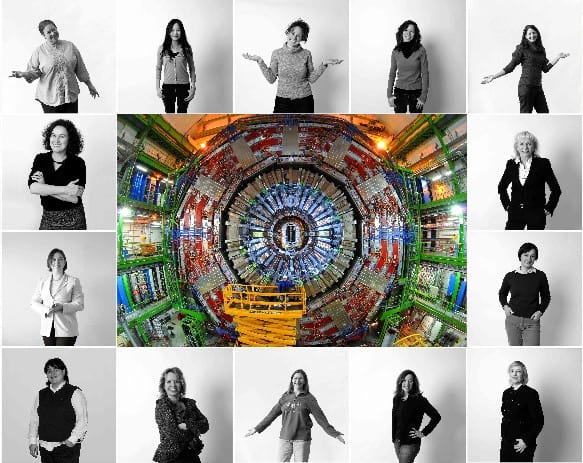
Mayor - cern females.jpg
Taken from an official <a href="http://internationalwomensday.web.cern.ch/internationalwomensday

“>CERN poster

By Louise Mayor

When an e-mail popped into my inbox about CERN celebrating International Women’s Day (today), my first reaction was to barely suppress a groan. Just that morning I had been grumbling to colleagues about how patronizing I find it when women in physics are given special recognition, the entry requirement being that you are female and the reward being a pat on the head to say, “WELL DONE… you managed all this and you don’t have balls.”

Thankfully, my gut reaction was soon eased upon further reading. The emphasis that CERN are putting on this day impressed me: their objective is “to send a clear message to any young women interested in science and engineering that this is a field for them”. No pats on the head, no patronizing, just an example to inspire young women who might otherwise be deterred from this career by the popular and largely true perception that men dominate science and engineering.

Today, CERN has put more women on shifts in the control rooms than usual and you can see some of them live at work, here. It is refreshing to hear, as well, that half of the engineers who operate the Large Hadron Collider are women anyway.

On the same web page you can also watch video interviews, including one featuring graduate student, Laura Jeanty, who works at the ATLAS detector. Jeanty explains why she is supporting International Women’s Day and why she thinks that more women are needed in the particle physics community.

See 'Einstein's masterpiece' for yourself

gr poster.jpg

By Hamish Johnston

If you happen to be in Jerusalem over the next two weeks you might want to contact Rivka Gabriel at the Israel Academy of Sciences and Humanities to arrange a guided tour that includes a viewing of the original manuscript of Albert Einstein’s general theory of relativity.

Written in 1916, the 46 page document was donated by Einstein to the Hebrew University of Jerusalem in 1925 — but had never been exhibited to the public. The work is on show along with explanatory notes until 25 March to celebrate the fiftieth anniversary of the Israel Academy of Sciences and Humanities.

The exhibition poster describes Einstein’s theory as “a revolution in how we think about space, time and gravity”.

The poster goes on to say the theory “led to a new understanding of the structure and development of the universe and predicted the existence of black holes. But its significance is not only theoretical: It instigated technological developments of tremendous importance, including our capabilities to determine a position anywhere on the planet by means of a GPS device and to track the movements of distant spaceships.”

The tours last about an hour and you can telephone Rivka Gabriel on 02-5676222.

RHIC nets strange antimatter

Physicists working in the STAR collaboration at the Relativistic Heavy Ion Collider (RHIC) at the Brookhaven Laboratory in the US have detected antimatter nuclei containing strange quarks for the first time. The antihypertriton – consisting of an antiproton, an antineutron and an antilambda particle – is the heaviest antinucleus yet produced and opens up a new realm of strange antinucluei. It could also shed light on a number of problems in astrophysics and cosmology, including the dominance of matter over antimatter in the universe.

RHIC collides gold ions at high energies, recreating what are believed to have been the conditions in the universe just a few microseconds after the Big Bang. The enormous energy density that existed at that time would have kept quarks separate from one another, in what theory predicts would have been a very hot gas of free quarks, antiquarks and gluons known as a quark–gluon plasma. As the plasma expanded and cooled these quarks would have bound to one another to form a range of different hadrons, including protons and neutrons (consisting solely of up and down quarks), hyperons (which contain strange quarks) and all of the associated antiparticles.

Introducing antihypertriton

With further expansion a small fraction of these hadrons would then have combined to form light nuclei and their antiparticles. Physicists have previously generated antiprotons, anti-deuterium, anti-tritium and anti-helium-3 in particle collisions but the STAR collaboration, led by Declan Keane at Kent State University in the US, Jinhui Chen of the Shanghai Institute of Applied Physics in China and Zhangbu Xu of Brookhaven, have seen the first ever antimatter hypernucleus: antihypertriton. In addition to an antiproton and an antineutron, this nucleus contains an antilambda hyperon, which is made up of an up quark, a down quark and a strange quark.

Identifying the new particle required painstakingly sifting through the debris of some 100 million collisions. All of the charged particles within this debris left their mark by ionizing the gas inside RHIC’s time projection chamber but the antihypertritons revealed themselves through a unique decay signature – the two tracks left by a charged pion and an antihelium-3 nucleus, the latter being heavy and so losing energy rapidly with distance in the gas.

Below the N-Z plane

One of the collaboration members, Lee Barnby of the University of Birmingham in the UK, says that this result “opens up a new area of study” because it shows that “any very light bound nucleus or antinucleus can be formed in heavy-ion collisions”. Indeed, the discovery extends graphically our knowledge of the nuclear terrain. Physicists represent this terrain by placing each kind of nucleus on a three-dimensional graph with the three axes being Z, the number of protons in a nucleus; N, the number of neutrons; and S, the degree of strangeness. Each of these three axes has positive and negative sections, allowing for the representation of both particles and antiparticles. As illustrated in the diagram, this latest result extends the nuclear terrain below the N–Z plane for the first time.

The STAR collaboration’s production of hypernuclei could also help us better understand the structure of the massive-star remnants known as neutron stars. That is because the kind and extent of strange-matter content within these stars depends on how strongly hyperons interact with nucleons (protons and neutrons), and this interaction strength in turn can be worked out by measuring the lifetime of hypernuclei. The current experiment yielded a value of around 2 × 10–10 s for hypertritons.

Why more matter than antimatter?

The findings may also help us understand why the universe appears only to contain matter, whereas equal quantities of matter and antimatter were believed to have been created in the Big Bang. Quarks and antiquarks are generated in equal measure by the heavy-ion collisions at RHIC and this equal abundance of matter and its antimatter partner is observed to persist as the hot gas cools.

The research is a tour-de-force of analysis and highlights the immense power of modern particle physics detector technologies and techniques Mike Charlton, Swansea University

In addition, the number of hypertritons and antihypertritons produced in the RHIC collisions (about 160 and 70 respectively) very closely matched the number of helium-3 and antihelium-3 nuclei generated. Mike Charlton of Swansea University in the UK, who is not a member of the STAR collaboration, points out that this implies that the hot gas must have contained similar amounts of strange quarks and up and down quarks. This, he says, is an indication that the gas is indeed a true quark–gluon plasma, as physicists believe. “The research is a tour-de-force of analysis and highlights the immense power of modern particle physics detector technologies and techniques,” he adds.

The STAR collaboration has restarted its antimatter observations at a higher collision rate, hoping to increase their collected data by a factor of 10 over the next few years. Keane says that this should allow them to discover yet heavier antinuclei, both strange and non-strange.

The work is described in Science DOI: 10.1126/science.1183980.

Superconductors could simulate the brain

Electronic components that exploit the phenomenon of superconductivity could allow us to study the collective behaviour of large numbers of neurons operating over long timescales. That is the finding of scientists in the US, who have shown how networks of artificial neurons containing two Josephson junctions would outpace more traditional computer-simulated brains by many orders of magnitude. Studying such junction-based systems could improve our understanding of long-term learning and memory along with factors that may contribute to disorders like epilepsy.

The human brain consists of some 100 billion nerve cells known as neurons, each of which receives electrical inputs from a number of its neighbours and then sends an electrical output to others – a process known as “firing” – when the sum of its inputs exceeds a certain level. The connections between neurons are known as synapses and it is the relative weighting of these that determines how the brain processes information.

One way to simulate the workings of the brain is using software. For example, the Blue Brain project at the Ecole Polytechnique Fédérale de Lausanne in Switzerland involves simulating in precise biological detail the 10,000 neurons that make up the neocortical column – the building block of the cerebral cortex, or grey matter.

Lack of speed a problem

One fundamental drawback with such an approach is speed. The neurons and their connections exist in computer code, which means that they must be simulated sequentially. This requires significant computing power and means that simulations take far longer to run than actual brain processes. The alternative is to create a physical analogue of the brain, making artificial neurons and connecting them up in parallel. One way to do this is to build up neurons using transistors and then exploit existing microchip fabrication techniques to create large neural networks. Unfortunately transistors lack the nonlinearity between current and voltage that characterizes neurons, and reproducing this behaviour means connecting up at least 20 transistors for each neuron.

Josephson junctions, on the other hand, are inherently nonlinear and much quicker than transistors – responding to a changing input on a timescale of around 10–11 s rather than the 10–9 s typical of transistors. The junctions consist of two superconducting layers separated by an insulating gap, which is thin enough to allow charge-carrying Cooper pairs to tunnel across and couple the wavefunctions of the two superconductors. Small currents lead to no voltage across the gap (this is the “supercurrent” that encounters no resistance), whereas higher currents result in progressively greater voltages. Crucially, intermediate currents cause a short-duration voltage pulse, which is the equivalent of a neuron firing.

Now Patrick Crotty, Dan Schult and Ken Segall of Colgate University in the US have worked out the mathematics of an artificial neuron consisting of just two Josephson junctions and three inductors, joined to an artificial synapse consisting of an inductor, a capacitor and a pair of resistors.

Three vital characteristics

The two junctions correspond to two different ion channels in a neuron, with one responsible for initiating the voltage pulse while the other restores the neuron to its resting potential. Crotty and colleagues have shown that this system shares three vital characteristics of an actual neuron. In addition to firing, the firing only occurs when the current exceeds some minimum value. Also, the artificial neuron, like a real neuron, must rest for a certain length of time after firing before it can fire again.

The team worked out how much more quickly such a Josephson-junction-based neuron could fire than the neurons reproduced in a number of different software models, assuming that these models are run on a computer that can carry out a billion floating point operations per second. It found that for individual neurons the device should fire some 100 times more rapidly than the simplest kind of digital neuron. But this advantage, the researchers say, would become much more pronounced when large numbers of neurons are hooked up to one another in a network. They calculate that for 1000 interconnected neurons their approach would be at least 10 million times quicker.

Planning experiments

The current work is purely theoretical but the group is starting to design networks of Josephson-junction neurons for some initial prototyping experiments. Segall says that it should eventually be straightforward to fabricate chips with some 10,000 Josephson-junction neurons (enough for a neocortical column), given that similar circuits with twice as many junctions have already been produced. Putting a number of such chips together should then allow researchers to study certain collective neural phenomena, such as how large groups of neurons fire in step, or synchronize, which might prove useful in combating epilepsy given that this condition is caused by unwanted synchronization.

The existing design does not permit learning since the weighting of connections between synapses cannot be changed over time, but Segall believes that if this feature can be added then their neurons might allow a lifetime’s worth of learning to be simulated in five or ten minutes. This, he adds, should help us to understand how learning changes with age and might give us clues as to how long-term disorders like Parkinson’s disease develops.

Henry Markram, the biologist who heads Blue Brain, says that the American group’s work “may have interesting applications for artificial neural networks” but believes that it is less well suited for reproducing real brain circuitry. This, he says, is partly because the Josephson-junction neurons lack the dendrites and axons that connect real neurons together. He also points out that it would be far harder to monitor individual neurons than it is in computer simulations, limiting this approach to those phenomena that can be characterized by the values of the system as a whole, such as data from electroencephalogram measurements.


UK physicists welcome research council reforms

Leading physicists have come out in support of plans by the UK’s science minister Lord Drayson to make a series of structural changes to the running of one of the UK’s main research councils.

Drayson was forced to review the operation of the Science and Technology Facilities Council (STFC) after it announced in December that the UK would pull out of 25 leading international projects in astronomy, nuclear physics, particle physics and space science. The withdrawals were the result of a £40m shortfall in STFC funding that will lead to a 25% cut in the number of STFC studentships and fellowships over the next five years, as well as a 10% reduction in support for “future exploitation grants”.

The cuts led to an outcry in the physics community, which feared that the UK would be perceived as an untrustworthy partner in global projects and a potential brain drain of the best UK scientists to positions overseas.

Foreign currency fluctuations

Responding to these concerns Lord Drayson announced that he, together with Michael Sterling, the STFC’s chairman, would address the STFC’s structure in terms of how foreign currency fluctuations affect its subscriptions to international bodies such like CERN and the European Space Agency (ESA), which have been putting pressure on grants to scientists.

I think he could not have gone any further in the current economic climate Paul Crowther, University of Sheffield

In his announcement today, Lord Drayson says that the Department for Business Innovation and Skills (BIS) will provide the STFC with a “level of protection similar to that which has been provided this year and last in respect of the additional costs of international subscriptions”. After 2011, BIS will then look at “options” to manage the risks of currency fluctuation on the STFC’s budget.

Also from 2011, Research Councils UK – the umbrella organization for the seven major UK research councils – will seek new ways to help the STFC to fund large facilities such as the ISIS neutron scattering facility and the Diamond synchrotron, which are used by other research councils. This could mean other research council being billed for their usage of central facilities.

The announcement also proposes that a UK space agency will handle the STFC’s subscription to ESA. “The minister’s decisions will enable STFC to move forward with greater financial confidence, removing the risk of foreign exchange impacts, and securing a longer term funding arrangement for our big science facilities,” says Sterling.

Long term plan

“There is no doubt that STFC faced a difficult situation. A lot of work has gone in to finding ways of preventing such pressures rearing their heads again in future,” says Drayson. “The better management of international subscriptions through measures to manage exchange rates, and longer-term planning and budgeting for large domestic facilities will allow STFC’s grant-giving functions to be managed with a higher degree of predictability.”

“I welcome the announcement by Lord Drayson,” says astronomer Paul Crowther from the University of Sheffield. “I think he could not have gone any further in the current economic climate.” Crowther also praises Drayson who he says has gone to “extra lengths” to fix the problem he inherited with the STFC.

“It’s a first step in the right direction,” says particle physicist Brian Foster from Oxford University, who submitted evidence to Drayson’s review of the STFC. “But we still need to get more money into the STFC and solve remaining issues in the STFC management.”

In a joint statement, Dame Jocelyn Bell Burnell, president of the Institute of Physics (IOP), which publishes Physics World, and Prof. Andrew Fabian, president of the Royal Astronomical Society (RAS) said: “Today’s announcement demonstrates that the problem has now been recognized and we look forward to seeing how it will be addressed. IOP and RAS trust that the Treasury will recognize the importance of science by taking responsibility for currency fluctuations.”

Avalanche photodetector breaks speed record

Scientists at IBM have used nano-engineering techniques to make the world’s fastest “avalanche photodetector”. Such devices are used in telecommunications networks and the work is an important advance in the field of optical communications. The photodetector is made using germanium, which is compatible with silicon-chip-making technology and could therefore find use in next-generation high-performance computer systems.

Computer processors communicate with each other over millions of tiny copper wires. Scientists would ideally like to use pulses of light instead of electrical signals because enormous amounts of information could then be sent between processors using much less power. Such architecture relies on the rapid conversion of optical pulses to electrical signals and back again – but current technologies for doing this tend to be slow, noisy and incompatible with silicon processing.

Turn down the noise

One promising solution is the avalanche photodetector, which converts relatively weak optical signals into robust electrical pulses. In such a device, an incoming light pulse strikes a semiconductor, freeing a few charge carriers. These carriers are accelerated by an electric field and in turn impact-ionize (or free) other charge carriers, and so on. This creates an avalanche of carriers that is then extracted as the amplified signal. However, this process occurs over a finite distance and time and is therefore subject to random fluctuations in numbers of carriers produced. This phenomenon is known as amplification noise and it degrades the performance of the photodetector.

Although it suffers from amplification noise, germanium is widely used in photodetectors because (unlike silicon) it can detect light in the infrared part of the electromagnetic spectrum – an important frequency range for optical communications. Now, Solomon Assefa and colleagues at T J Watson Research Center in New York have come up with a new way of removing noise from germanium-based photodectectors.

Very high electric fields

The new design relies on the team’s ability to control the electrical and optical fields in their devices over very short distances. This is done by equipping the device with silicon and germanium waveguides that concentrate incoming light at the germanium detector. The germanium itself is only 30 nm thick, which means that it can support very high electric fields when biased by only a volt or two. The result is an avalanche that occurs much faster and over shorter distances than conventional devices – leading to a 50–70% reduction in noise caused by random fluctuations.

The device is the fastest of its kind, converting optical signals at 40 Gbps (40 billion bits per second) – about four times faster than the best conventional detectors. What is more, its small size means that it operates with just a 1.5 V power supply, compared with the 25 V of previous devices.

“This invention brings the vision of on-chip optical interconnections much closer to reality,” comments T C Chen, vice-president of science and technology at IBM Research. “With optical communication embedded into the processor chips, the prospect of building power-efficient computer systems with performance at the exaflop (1018 flops) level might not be a very distant future.”

Reducing the dark current

The IBM team would now like to reduce the “dark current”, or unwanted leakage current, in its device and increase “responsivity” (efficiency in generating charge carriers when photons hit the photodetector). “We also hope to obtain further signal amplification while maintaining the ultralow power and ultrafast performance,” added Assefa. “Although there are many technical challenges in making these improvements, none are fundamental barriers.”

“We are now working on integrating all of our devices onto a microprocessor alongside transistors,” revealed Assefa.

The work was reported in Nature 464 80.

I want to break animals free

hunting.jpg
Don’t Stop Me Now May is concerned that the UK hunting ban could lift under a new government

By James Dacey

First he was a physicist, then he turned rock star, then he penned some popular science books, so what next for Brian May?

Well, according to the Independent, Queen’s legendary guitarist is in the process of refiguring himself as an animal rights activist.

The newspaper report today that May has been lobbying the Conservatives, the UK’s main opposition party, over the issue of hunting. The Conservative leader, David Cameron, has allegedly said that he will repeal the Hunting Act of 2004 if his party win this year’s General Election.

“I’ve decided to take on a lot of work with animals this year,” May told the Independent.

May would not be the first rock star to speak out over animal rights. The particularly vocal include: Chrissie Hynde, lead vocalist in The Pretenders, and Morrissey of The Smiths.

In the world of professional science, clearly, animal rights issues are more relevant to the medical and bioscience communities, but I have done some digging around to see if any celebrated physicists have ever spoken out on the topic. All I could find is that, according to the Animal Liberation Front, Newton, Einstein and Edison all supported the idea of veganism.

Draw your own conclusions with that, but it would be interesting to know if any physicists have ever encountered these issues in their work.

Leading site chosen for Europe’s superscope

armazonesfromparanal_cc.jpg
The best site for Europe’s superscope?

By Michael Banks

It has a dome that will be about the size of a football stadium, it will be around 80 m high and have a diameter at its base of about 100 m.

These are the dimensions of the €1bn European Extremely Large Telescope (E-ELT that will be the largest optical/near-infrared telescope once it is completed at the end of the decade.

Today, the leading site emerged to host the E-ELT, which is a project by the European Southern Observatory (ESO.

Five sites were under review including La Palma in Spain and four sites in Chile: Armazones, Ventarrones, Tolonchar and Vizcachasand.

The E-ELT’s site selection advisory committee chose Cerro Armazones, near Paranal as its preferred site. The site was selected, the committee says, because it has the “best balance of sky quality across all aspects and it can be operated in an integrated fashion with the existing ESO Paranal Observatory.”

E-ELT will aim to study the earliest stars and galaxies, and track down Earth-like planets in habitable zones around other stars using its 42 m in diameter primary mirror, which is made from 984 smaller segments that are each 1.45 m wide. It will also try to probe their atmospheres using low resolution spectroscopy.

ESO’s council will now make a decision on the E-ELT site, which will take into account the recommendations of the committee.

If Cerro Armazones is chosen, then the E-ELT will join ESO’s Very Large Telescope, which contains four separate 8.2 m telescopes.

Copyright © 2026 by IOP Publishing Ltd and individual contributors