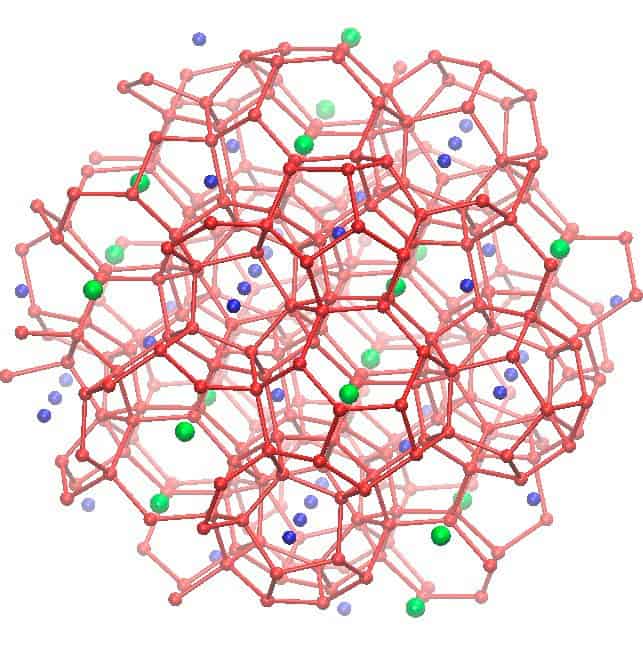
2009 in pictures


Back in January, Nobel-prize winning physicist Steven Chu was sworn in as secretary of the US Department of Energy, making him the first working scientist to head the department since it was created in 1977.

2009 was the International Year of Astronomy, and with all the festivities came another gallery of awe-inspiring images. In February, a group of researchers in Japan released this gravitational map of the Moon using data obtained from the SELENE mission, which was launched in 2007.

More than 400 exoplanets – that is, planets orbiting stars other than our Sun – are now officially catalogued and new planets are being discovered all the time. In February, the French CoRoT space telescope detected the first solid exoplanet CoRoT-7b. The rocky, and therefore “Earthlike”, nature of the planet was confirmed in a paper published in September.

2009 was also “Darwin Year” in celebration of the 200th anniversary of the birth of the evolutionary biologist and 150th anniversary of the publication of On the Origin of Species. Biophysics is now a field of research in full blossom as physicists continue to cultivate our understanding of the natural world. These spinning circles are Volvox algae – imaged by researchers in Finland and the UK – that are locked in a dance to increase their chances of fertilization (Phys. Rev. Lett. May).

In May, astronauts carried out a series of spacewalks to upgrade NASA’s Hubble Space Telescope. By September the 19-year old instrument had already returned a new bunch of breath-taking images including the Butterfly Nebula 3800 light-years away (left), and the Jet in Carina 7500 light-years away (right).

“From his wheelchair, he has led us on a journey to the farthest and strangest reaches of the cosmos. In so doing, he has stirred our imagination and showed us the power of the human spirit.” These were the words of Barack Obama as he presented the Medal of Freedom to Stephen Hawking at a ceremony at the White House in August. The US president described Hawking as “an agent of change”, and someone who “saw an imperfect world and set about improving it, often overcoming great obstacles along the way”.
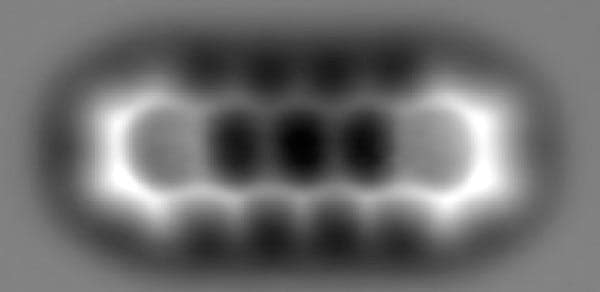
Physicists in Switzerland and the Netherlands unveiled a new form of atomic force microscopy (AFM) capable of identifying individual atoms within a molecule. In a paper published in August they revealed this image of a pentacene molecule where the hexagonal shapes of the five carbon rings are all clearly resolved for the first time.

Despite all the hot air, the world’s leaders have failed to cobble together any meaningful climate deal as negotiations broke down at the UN climate conference in Copenhagen earlier this month. If binding emission targets cannot be agreed in the coming year then governments may look increasingly to a “third way” – engineering the climate such as removing carbon dioxide from the atmosphere. In September, the UK’s Royal Society published a report that looks at different geoengineering options, including constructing giant sunshades in space that can reflect the Sun’s rays and introducing iron into the world’s oceans to rapidly increase the amount of phytoplankton that consume carbon dioxide.
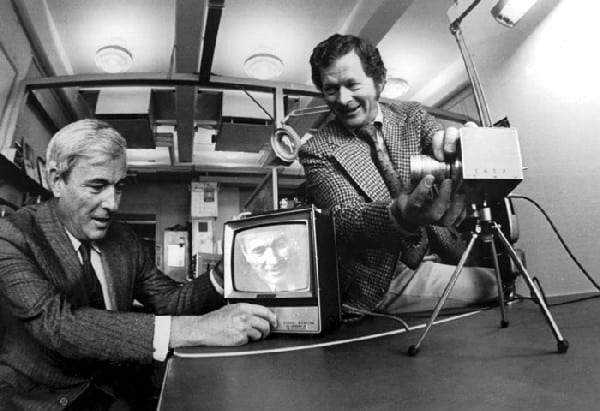
Nearly half a century after their pioneering work, three optics researchers shared this year’s Nobel Prize for Physics, announced in October. Charles Kao from the Chinese University of Hong Kong won his share for his work on the transmission of light in optical fibres, which has allowed a revolution in telecommunications. The other half of the SEK10m prize money was split between Willard Boyle and George Smith, both from Bell Laboratories in the US, who won for inventing the charge-coupled device (CCD) – an imaging semiconductor circuit that forms the basis of digital cameras.

Working with a cartoonist, a group of physicists in Switzerland and Denmark produced this graphic to represent their new device – a Cooper-pair splitter. They created a “Y-junction” from a tiny piece of superconducting material that can split a pair of entangled electrons – particles that share a much closer relationship than is possible in classical physics. The device should pave the way for tests of the so-called non-locality of quantum mechanics in the solid state.

After beginning 2009 in disrepair, the Large Hadron Collider (LHC) completed a dramatic turn-around this year by becoming officially the world’s most energetic collider. Beams of protons were carefully re-injected in November and the energies were raised. Then, on the evening of 8 December, the LHC achieved for the first time 2.36 TeV collisions thus breaking the record previously held by the Tevatron at Fermilab in the US.
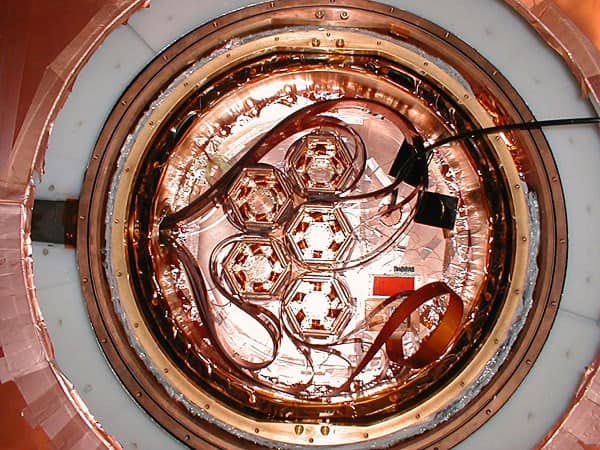
For weeks the bloggers speculated feverishly.Then, last Friday the results were finally released – had the CDMS-II experiment made the first bona fide detection of dark matter? . Well, frustratingly, we’re still not quite sure. In a preprint submitted to the arXiv preprint server last Thursday, the US collaboration claim to have detected two “events” that are characteristic of dark-matter constituents known as weakly interacting massive particles, or WIMPs. However, they point out that there is a one-in-four chance that these events could be background noise. This will surely be one of the debates that shapes the landscape of fundamental physics in 2010.

What’s in store in 2010?


As we stand on the threshold of a new decade – the teens, the tens, call it what you will – physics is primed, in the immortal words of Charles Dickens, for the best of times and the worst of times. The good news is that collisions have already begun at the Large Hadron Collider (LHC) – the world’s biggest ever physics experiment – which is back in action following the magnet disaster of 2008.

With the first high-energy (10 Tev) collisions due by the end of the year – and maximum-energy 14 TeV collisions likely in 2011 – the stage is set for a stream of thrilling new discoveries. Before long we could see clear signs of the Higgs boson (or not) or perhaps even supersymmetry, extra dimensions or other “new physics”.

Those findings may have to wait until next year and probably beyond, but you can be sure that the particle-physics world will be abuzz with rumour and counter-rumour. And if the US Congress gives the nod to a request from the Department of Energy, the Tevatron collider may even continue for an extra year beyond retirement into 2011, ensuring that there is a real trans-Atlantic race for the Higgs, for a year at least.

There is also plenty to get excited about in astrophysics and cosmology, particularly following last week’s announcement by members of the Cryogenic Dark Matter Search in the Soudan mine in the US that they had tantalizing hints of the first direct detection of dark matter in the form of weakly interacting massive particles. Although the findings are by no means certain, a clear and convincing sign of the nature of dark matter could be imminent. When that comes – as it may do next year – it will be a huge breakthrough for physics.

Down to Earth

Next year should also see interesting findings from the Fermi gamma-ray space telescope. We can also expect plenty of coverage of the end of the space-shuttle era, which is due to come to a close in September with a final flight form the Discovery craft.

But it is not just in “big science” that exciting new physics is taking place. If 2009 is anything to go by, you can expect plenty of further exciting developments in metamaterials, graphene, spintronics and other areas of condensed-matter physics. Much more progress can also be expected in quantum information.

Indeed, we have selected as our own “breakthrough of the year” work carried out by physicists led by Jonathan Home at the National Institute of Standards and Technology (NIST) in Colorado, US, who created the first small-scale device that can be described as a ‘quantum computer’. The device, which performs a sequence of 15 logical operations with an overall accuracy of 94%, is a key step towards the development of a practical universal quantum computer.

Lasers will also be centre stage in 2010, which marks the 50th anniversary of their invention by Ted Maiman on 16 May 1960 at Hughes Research Laboratories in California, when he generated coherent pulses of laser light from a fingertip-sized lump of ruby illuminated by a flash lamp. In doing so, he beat a number of other physicists to the goal, including Charles Townes, who had earlier developed the maser – the microwave forerunner of the laser.

Key events to mark the golden laser jubilee are taking place around the world, including a special session at SPIE’s Photonics West meeting in San Francisco at the end of January, as well as at CLEO in San Jose in May. As you might expect, we will be marking the anniversary with a special issue of Physics World magazine in May and a series of video interviews with leading laser physicists and engineers as part of the physicsworld.com video series.

Speaking of lasers, 2010 will also see researchers at the huge new National Ignition Facility in the US beginning experiments to focus the energy of its 192 giant laser beams onto a tiny target filled with hydrogen fuel. There is a strong possibility that researchers will be able to reach “ignition” this year – the moment at which the device will produce more energy from fusion than is required to start the reaction. When that happens, it will be the culmination of more than 50 years of research, although releasing that energy in a form that could actually be used by a country’s electricity grid is another thing altogether.

Down down

But despite the great progress in physics, researchers in the UK and Japan are still coming to terms with savage cuts to research programmes. In the UK, the Science and Technology Facilities Council (STFC), which has a shortfall of £40m in its budget, is set to tear into its programmes in astronomy, particle physics and nuclear physics.

The council will be axing its funding for over 25 different projects, including the ALICE experiment at CERN, and slashing studentships by over a fifth. Worst of all, these are cuts to high-profile projects that get the public interested in physics in the first place. For the want of £40m they could do irrevocable damage to UK physics at the worst possible time.

The situation is not much better in Japan, where research funds could be cut in half – or possibly even terminated – following the government’s decision to slash over $35bn from the 2010 budget. The Spring-8 synchrotron in Hyogo and the B-meson factory at the KEK particle-physics lab in Tsukuba are among those facilities that could be hit, as could the Superkamiokande neutrino experiment at J-PARC as well as Japan’s involvement in the Subaru optical and infrared telescope in Mauna Kea, Hawaii. Negotiations will now take place in the ministry of finance with a finalized budget for 2010 set to be made at the end of December.

But let’s not end the noughties on too downbeat a note. Physicists in the US appear set for brighter times, with plenty of funds for energy research in particular following President Obama’s “recovery and reinvestment” bill. Work on two big Europe-based projects – the European Spallation Source and the ITER fusion experiment – continues apace, while the European Space Agency is due to launch its CryoSat2 mission to measure the thickness of the Earth’s ice sheets in February. And with football’s World Cup taking place in South Africa in June, you can be sure that sports physicists will be putting the finishing touches to their latest papers on the aerodynamics of footballs.

Roll on 2010!

Top 10 books for 2009

10. The Physics of Rugby by Trevor Davis (Nottingham University Press).
Unlike cricket and football, which I follow avidly, I haven’t managed to get my head around rugby despite living in the UK for the past six years. The fact that I still really enjoyed this book is a tribute to Davis’ enthusiasm and clear writing. From the kinematics of tackling a gazelle-like fly half to the Brownian motion of a zig-zagging runner, his book offers plenty for dedicated enthusiasts and armchair players alike.

9. First Principles: The Crazy Business of Doing Serious Science by Howard Burton (Key Porter Books).
Written by its founding director, this gossipy account of how Canada’s Perimeter Institute of Theoretical Physics came into being is not without its flaws. The author’s breathless “Who, me? Run an institute?” persona quickly wears thin, and as our reviewer Sir Peter Knight noted, Perimeter is not quite as ground-breaking as Burton makes out. Yet a book that tackles the messy process of scientific management is a rarity, and one that manages to do so in an entertaining way is about as common as a free quark. Kudos to Burton for doing something different.

8. Oliver Heaviside: Maverick Mastermind of Electricity by Basil Mahon (Institute of Engineering and Technology).
Heaviside may not be as well known as his 19th century contemporaries Maxwell and Lord Kelvin, but when we talk about Maxwell’s equations today, it is Heaviside’s tidy vector formulation we mean, not Maxwell’s ponderous 20-variable original. This biography of the brilliant-but-odd electromagnetism pioneer, who gave journal editors nightmares by speckling his papers with libellous attacks on his opponents, is a great introduction to an often-overlooked figure.

7. Atomic: The First War of Physics and the Secret History of the Atom Bomb by Jim Baggott (Icon Books).
There are a lot of books about the atomic bomb. Did we really need another? Yes, argued our reviewer Jeff Hughes: thanks to a flood of specialist histories based on recently released archival material, he wrote, “there is now a place, even in such a crowded field, for a book that brings some of this fresh information together into a good, accessible general history”. Atomic fills this niche admirably, incorporating new revelations about different nations’ atomic programmes to tell a story that felt fresh and engaging despite its familiarity.

6. Lives in Science by Joseph C Hermanowicz (University of Chicago Press).
On the “forewarned is forearmed” principle, anyone contemplating a career as an academic physicist should read this book. Hermanowicz, a sociologist, began following US physicists’ careers 15 years ago, examining how different kinds of academic institutions shape their attitudes and levels of job satisfaction. His latest book – which he summarized in Physics World‘s September careers section – is a dense and sometimes jargon-filled read, but its conclusions are troublingly clear: academic physicists are a dissatisfied bunch, and the more elite their university, the more likely they are to be unhappy at the end of their careers. Not exactly holiday cheer, but food for thought nonetheless.

5. 13 Things That Don’t Make Sense by Michael Brooks (Profile Books).
Brooks caught a lot of critical flak for including homeopathy in his “13 things”, along with the likes of cold fusion, the Pioneer anomaly and dark energy. Interestingly, about half of the people criticizing his book thought he’d been horribly unkind to homeopathy, while the other half savaged him for not being unkind enough. That’s balance of a sort, I guess, but whatever you think about Brooks’ conclusions and priorities, this was one of the most intriguing books of the year.

4. Deciphering the Cosmic Number: The Strange Friendship of Wolfgang Pauli and Carl Jung by Arthur I Miller (W W Norton).
Early in his career, the quantum pioneer Wolfgang Pauli experienced a personal crisis. Like many other troubled residents of 1930s Zurich, he went to consult the city’s most eminent psychiatrist, Carl Jung. The unlikely friendship that developed between these two impressive intellects is the subject of this book: a fascinating and, in places, almost mystical journey through both physics and psychology.

3. Perfect Rigor by Masha Gessen (Houghton Mifflin Harcourt).
The brilliant, reclusive Russian mathematician Grisha Perelman declined a Fields Medal in 2006 for proving the Poincaré conjecture, and subsequently cut himself off from the world. A fascinating subject for a biography, you might think – and, judging from this book, you’d be right. Excellent writing and some fantastic detective work from the author in researching such a difficult subject make this one of my top picks for the year.

2. Plastic Fantastic: How the Biggest Fraud in Physics Shook the Scientific World by Eugenie Samuel Reich (Palgrave Macmillan).
It’s tempting to describe this book as a whodunit, such is the flair of its writing and the suspenseful nature of its story. Yet “howdunit” might be a better word: after all, we learn right away that the culprit was a young physicist called Jan Hendrik Schön, who fabricated data on a massive scale and was eventually fired from Bell Labs as a result. What makes the story interesting is Reich’s description of how it happened – how Schön fooled his colleagues, how competitors struggled to replicate his results, how the review process at prestigious journals failed to stop him. Top-notch stuff.

1. The Strangest Man: The Hidden Life of Paul Dirac, Quantum Genius by Graham Farmelo (Faber and Faber).
This landmark biography of Dirac has attracted praise from all quarters since its publication in January, and has even made the shortlist for best biography in the UK’s Costa Book Awards, which are among the country’s most prestigious literary prizes. Our reviewer, Sir John Enderby, joined the chorus of commendations, recommending the book “to professional physicists and to laypersons interested in fundamental physics, as well as to anyone who finds the interaction between personality and intellectual endeavour fascinating”. That description sounds like physicsworld.com readers to us, so we’ll second Sir John and wish Graham luck in the Costa awards. He – and we – will find out on 5 January 2010. Meanwhile, don’t forget that you can listen to a physicsworld.com online lecture by Graham Farmelo all about the life and times of Dirac via this link.

Finally, some honourable mentions: 137 Films’ The Atom Smashers and Mark Devlin’s BLAST! are films rather than books, but they’re so good they deserved to be in here somewhere. The Atom Smashers is a compelling and oddly moving documentary about life at Fermilab in the months before CERN switched on the LHC. BLAST! chronicles the bumpy road to success for a balloon-borne telescope that very nearly ended up halfway down an Antarctic crevasse. I watched both of them late last year, and I still can’t get them out of my head.

Evanescent waves bring new window into the nanoworld

Researchers at Caltech in the US have invented a new type of imaging technique that merges the best qualities from electron and light microscopy. The hybrid technique, dubbed “photon-induced near-field electron microscopy” can image nano-objects with femtosecond time resolution. It could be used to directly visualize ultrafast events that occur on tiny length scales.

Nanotechnology is now firmly established as an important area of research and increasingly scientists need to be able to image nanostructures in more fine detail. The new imaging technique, devised by Ahmed Zewail’s team, combines the nanoscale spatial resolution of electron microscopy with the femtosecond time resolution of ultrafast light pulses.

Efficient interaction

The researchers illuminate the nanostructure to be imaged (for example, a carbon nanotube or silver nanowire) by firing it with a femtosecond laser pulse to create an “evanescent wave”. Unlike ordinary, free light, evanescent waves exist only near a surface and because of this they interact efficiently with surface electrons.

Zewail and colleagues exploit this fact by focusing a pulse of electrons onto the nanostructure being imaged while simultaneously firing light pulses at it. In this way the electrons gain energy from the light field which are then detected. The researchers create an image of the nanostructure by selecting only accelerated electrons and the number of collected electrons is proportional to the strength of the evanescent field.

The electrons used in the new microscopy technique travel at 70% of the speed of light. This is why they only spend a fraction of a femtosecond near the surface of a nano-sample. To increase electron-light interactions at such short time intervals, the researchers need to magnify the light fields. They do this by using two synchronized femtosecond light pulses.

Snapshots of evanescence

By varying the time delay between the exciting light pulses and the imaging electron pulses, it is possible to obtain “snapshots” of the evanescent field as it evolves over a matter of femtoseconds. According to the scientists, using even shorter pulses should allow them to track the ultrafast processes that occur in photonic and plasmonic devices, for example.

The electrons probes are also relatively “clean”, comments F Javier Garcia de Abajo at the Institute of Optics in Madrid, Spain – who was not involved in the research. “Moderate electron beam intensities cause only marginal perturbations in the sample, thus allowing faithful imaging.”

Propagating light fields along nanostructure surfaces are important in nanophotonic devices that carry and process optical signals, he adds. The new technique could be further improved to study such propagations, thus opening up a new way to study the nanoworld.

The work was published in Nature.

CDMS gives possible evidence for dark matter

For weeks physicists have been speculating whether the CDMS-II collaboration based in the US has detected the first direct evidence for dark matter, one of the universe’s most mysterious entities. Now the evidence is out in the open – although it’s not quite a strong as some had hoped.

In a preprint submitted to the arXiv server yesterday, the CDMS-II team claim to have detected two “events” that are characteristic of dark-matter constituents known as weakly interacting massive particles, or WIMPs. However, they point out that there is a one-in-four chance that these events could be background noise.

“Scientists have a set criteria for determining whether a new discovery has been made, in essence that the ratio of signal-to-background events must be large enough that there is no reasonable doubt,” they write in a summary. “Typically there must be less than one chance in a thousand of the signal being due to background…so we can make no claim to have discovered WIMPs.”

Where are the WIMPs?

While invisible, dark matter is thought to make up some 85% of all gravitating mass in the universe. The most popular candidates for its makeup are WIMPs, hypothetical particles that could be heavier than atomic nuclei.

Located half a mile underground in a disused mine in Soudan, Minnesota, the CDMS-II experiment was designed to detect WIMPs using 30 detectors made of germanium and silicon cooled near to absolute zero. The hope was that, as the Earth sweeps through clumps of dark matter in our galaxy, these detectors would spot charges generated by occasional interactions between the germanium and silicon atoms and WIMPs. Although radioactive decays or cosmic rays could also produce signals, those of the right size and timing would be evidence of WIMPs.

CDMS-II’s first run starting in 2003 failed to find any evidence, but the same cannot be said of the latest run from 2007–2008. In this data set, which is roughly double the size of all previous sets, there are two events that fit a WIMP. The probability that these could be radioactive decays or cosmic rays is 23%.

Reactions are mixed in the particle physics community. “It is a tantalising hint of what might be,” says Alexander Murphy, a physicist at the University of Edinburgh, UK, who works on the ZEPLIN-III dark-matter experiment. “As a community we have been hearing rumours for weeks and this is almost unbearably exciting. If correct, then the next generation of experiments are destined for and perfectly placed to capitalize and make the true discovery, finally determining what the universe is made of, and we’ll even be able to start to tell some of the properties of the stuff.”

Mirko Boezio at Italy’s National Institute for Nuclear Physics told physicsworld.com, “As a detection of dark matter, while the two events are intriguing, I would be reluctant to interpret them as evidence for WIMP interactions.” Boezio, who is a member of the PAMELA collaboration that claimed indirect evidence for dark matter last year added, “The probability for [the events] to be background is too large for a significant claim.”

‘Electroweak’ stars predicted

Physicists in the US claim that there may be “electroweak” stars lurking in the universe. Such stars are, the researchers say, what certain heavy stars could become once they have consumed their nuclear fuel supply and before they collapse into a black hole. This theoretical prediction suggests that our current understanding of stellar evolution may be incomplete.

Conventional stars exist as stable bodies because the outward radiation pressure of the energy released by their nuclear fusion reactions balances the inward gravitational force of the stellar matter. Once a star has burnt up all of its nuclear fuel it then implodes gravitationally. What happens next depends on how massive the star is. Stars below a certain mass collapse to form a neutron star, in which almost all protons are converted into neutrons. With electrostatic repulsion gone the star becomes incredibly dense. However, Pauli exclusion between neutrons prevents the ultimate collapse of lighter stars.

Relatively heavy neutron stars do eventually become black holes, but some scientists believe that on their way to infinite density these objects evolve into “quark stars”, in which neutrons break up into their constituent quarks. Glenn Starkman of Case Western Reserve University, together with De-Chang Dai and Dejan Stojkovic of the State University of New York in Buffalo and Arthur Lue of the Massachusetts Institute of Technology, have now studied what might happen to such stars as their quark matter is compressed to ever greater densities and pressures.

Conversion to leptons

The researchers say that the behaviour of the quarks should change fundamentally if the temperature of the star exceeds that at which the electromagnetic and weak forces effectively become one single force. Once above the electroweak temperature, quarks can convert into leptons, releasing huge amounts of energy in the process because the neutrinos emitted can drain away the energy from the core of a star. The ultimate collapse to a black hole would be stalled by this burning of quarks.

“This is a process predicted by the well tested Standard Model of particle physics,” says Starkman. “At ordinary temperatures it is so incredibly rare that it probably hasn’t happened within the visible universe anytime in the last 10 billion years, except perhaps in the core of these electroweak stars and in the laboratories of some advanced alien civilizations.”

If we believe in the Standard Model, we cannot escape this phase in stellar evolution of massive enough stars, Dejan Stojkovic, SUNY Buffalo

Stojkovic points out that stellar collapse can be viewed as the inverse of the expansion that took place after the Big Bang. He says that because massive quarks were created at electroweak temperatures as the universe expanded, so too must they be destroyed as stars reach these temperatures from the other direction. “If we believe in the Standard Model,” he adds, “we cannot escape this phase in stellar evolution of massive-enough stars.”

In their paper the researchers investigate how long a star can exist in such an “electroweak” state. Just as a star in its normal state avoids gravitational collapse by burning nuclear fuel, so in its electroweak state it would resist implosion by burning quarks. The team calculated the rate at which quark matter could pass from a star’s outer layers into its super-hot and dense core, and they found that the burning could last for up to 10 million years. This, they say, is long enough to consider such a star a distinct object in its own right – an electroweak star. In fact, says Starkman, if the burning process is efficient enough, such as star might consume sufficient mass that it never becomes a black hole at all.

Questions remain

Starkman admits that many questions remain. For example, he says, it is possible that a star’s electroweak phase may be highly unstable and might in fact last for no longer than a second. He also points out that observing such an object could be extremely tricky. Most of the energy emitted would be carried away by neutrinos, but given the inertness of neutrinos it is unlikely that any experiment could be made sensitive enough to detect them. Some energy is also likely to be removed by photons, but this fraction would be small. As a result, working out the likely electromagnetic signature of an electroweak star will require a detailed understanding of the outer layers of the star and how the photons pass through these layers, an understanding that the researchers do not yet have.

Pavel Kroupa of the University of Bonn in Germany says that this research “appears to be a beautiful application of standard physics” that “if true would mean the existence of an entirely new type of star”.

However, Paolo Gondolo of the University of Utah believes “it highly implausible that such an electroweak star would exist”. He maintains that the radiation pressure exerted by the burning quark fuel would be so strong that it would blow the outer layers of the star away.

The paper has been submitted to Physical Review Letters and has been posted on the arXiv server.

Closing in on dark matter

By Matin Durrani

The physics blogosphere has been wild with rumour in recent days that researchers in the Cryogenic Dark Matter Search (CDMS) in the US may have obtained the first direct evidence for dark matter in the form of Weakly Interacting Massive Particles.

The CDMS group gave simultaneous lectures at SLAC and Fermilab late on Thursday evening UK time that would, or would not, announce major new findings, depending on whose blog you read.

My colleague Michael Banks has been listening in to the webcasts and e-mailed me to say that “the outcome is that it is not conclusive evidence of dark matter, but they did have two events on a background of 0.5… so some signal, but not the five events needed for a discovery”.

An arXiv paper on the new results should be there by early morning.

It appears, Michael tells me, that the first event was detected on 27 October 2007, with a recoil energy of roughly 12 keV, and the second was seen earlier that year at roughly 15 keV. A third event lies just outside their box with recoil of 12 keV. Apparently this gives the lower bound on the WIMP mass for these recoil energies as roughly 0.5 GeV.

CDMS has a neat summary here. This is the key sentence: “We estimate that there is about a one in four chance to have seen two backgrounds events, so we can make no claim to have discovered WIMPs.”

We’ll have more on this later in our news channel so stay tuned. In the meantime,
Cosmic Variance has been doing a live blog, which has lots of as-it-happens stuff to get stuck into to.

Atomic spins measure ultracold temperatures

Physicists in the US have developed a new kind of thermometer that can measure down to as low as one billionth of a degree above absolute zero and has the potential to reach just a few trillionths of a degree. The ability to measure such chilly temperatures could allow scientists to use ultracold gases to simulate condensed-matter systems that are otherwise very hard to study – such as high-temperature superconductors.

In several labs around the world, ultracold gases can be cooled to temperatures of just a few nanokelvin (10-9 K) and the current record low just under a nanoKelvin. However, physicists would like to cool atoms even further to around a picoKelvin (10-12 K). Such atoms could be used to mimic how electrons interact in high-temperature superconductors, for example, by holding the atoms in a lattice of potential wells created by the interference of multiple laser beams. Then, the interactions between atoms and the depth and spacing of the wells could be varied by adjusting the lasers or an applied magnetic field.

In such a laser lattice, however, the interaction energy between atoms would be the equivalent to a thermal energy that is much lower than room temperature. In order to see the effects of the interactions, the atoms must be cooled to very low temperatures – but before that can happen, physicists need an effective way of measuring such low temperatures.

Caught in the ‘dimples’

A common way of measuring the temperature of an ultracold gas is to determine the size of the trapped atom cloud. At low temperatures, an image of the trap will show all of the atoms concentrated in a central region. At higher temperatures, however, the atoms spread out, resulting in a visibly larger cloud of atoms.

David Pritchard of the Massachusetts Institute of Technology (MIT) in the US compares the atoms to a collection of ball bearings in a shallow bowl with small dimples to represent the lattice. “If they didn’t have any thermal energy the ball bearings would collect in the dimples at the bottom of bowl,” he says. “But once they acquire energy and start to shake, some would have the energy to climb into dimples higher up the sides of the bowl.”

While this approach works well at relatively high temperatures, when the atoms are quite independent of one another, it does not work at lower temperatures when interactions between atoms prevents further shrinkage of the cloud.

Spin separation

Now, Pritchard, David Weld, Wolfgang Ketterle and colleagues at MIT have devised an alternative method that works better at lower temperatures. The team begin with a laser lattice loaded with a collection of rubidium-87 atoms in two different spin states – up and down. The atoms are then exposed to a magnetic field gradient, which separates the atoms by sending ups and downs to opposite ends of the trap

At extremely low temperatures, the up and down atoms would be separated by a sharp dividing line – and a plot of the mean spin of the atoms along the magnetic field gradient shows a steep transition. However, as the temperature is increased the atoms have more thermal energy and therefore increasingly mix with one another, resisting to some extent the magnetic gradient. This mixing results in a more gradual shift in spin across the trap.

According to Pritchard, in their experiment the conventional technique permits temperature measurements down to about 100 nK, whereas this new approach can get down to about 1nK. He says this is significant because the interaction energy of two rubidium atoms in a lattice site is equivalent to about 40 nK. At a temperature of 100 nK, most of the atoms would therefore have enough thermal energy to tunnel across the lattice and share a site with another atom, whereas at 1 nK they would not. Being able to cool the sample down to 1 nK therefore ensures that each site is occupied by one atom, as intended.

Down to 50 pK

Pritchard says that the new thermometer may be able to measure down to about 50 pK, unless it is limited by a different kind of tunnelling effect. However, reaching such temperatures requires a weaker magnetic gradient to increase the distance between spin-up and spin-down atoms to where it can be resolved. But this can’t be done without reducing stray magnetic fields, vibrations, and unevenness in the laser lattice. “To get down to ever lower temperatures we have to very carefully re-engineer all of these potential interferences,” he says. “We don’t yet know how to reach such low temperatures. But we know how to measure them once we get there.”

The work is reported in Physical Review Letters.

Paper battery could boost energy storage

Many of the great ideas to have shaped the modern world have been communicated on paper. The beauty of this humble medium is that it can record information in such an enduring fashion. Now, paper itself is at the centre of a technological innovation that could play a part in the 21st-century quest for green-energy solutions.

The great recording power of paper, which has been refined over the centuries, results from the interaction of ink with the 3D porous structure of the fibres in the paper. In addition, well-controlled electrical charges and reactive chemicals on the surface help paper to cling onto its ink. Perhaps not surprisingly, researchers are already exploring options for applying paper to bourgeoning research fields such as flexible electronics and microfluidics.

Diverse tubes

New experiments by Yi Cui and colleagues at Stanford University in the US show that paper could also be used as a cheap and effective option for energy storage. They coated an ordinary piece of paper with a mixture of ink, single-walled carbon nanotubes (SWNTs) and silver nanowires before heating to seal the coating.

SWNTs – which can be thought of as rolled-up single sheets of carbon – possess a diverse range of electronic properties that have already been utilized for simple electronic devices such as transistors. Cui and his team realized that, in addition to being highly conductive, SWNTs can also adhere well to the pores in paper due to their small diameters.

In a series of tests, the researchers showed that these two properties combine to give their sheets a resistance as low as 1 Ω for a coating that was just 500 nm thick. Moreover, they demonstrated that the material has a specific capacitance of 200 F per gram, which is maintained over 40,000 charging cycles. These electrical properties as well as the robust nature of their coated paper would make it suitable for improving the performance of lithium-ion rechargeable batteries and supercapacitors, they claim.

Flexible options

The researchers also report that electrical conductivity is maintained at the same level even when the paper is folded or rolled up into a narrow tube – a flexibility that could lead to a diverse range of applications. “If I want to paint my wall with a conducting energy-storage device, I can use a brush,” Cui says.

The researchers cite electric and hybrid cars as applications that could benefit from a flexible supercapacitor. They also predict that the biggest impact may be in the electricity grid. Excess electricity generated at night, or by renewables such as wind and solar, could be held in large-scale storage for use during periods of high demand.

This research was published in Proc. Natl Acad. Sci. USA.

Storing carbon dioxide in water cages

Gas storage plays an essential role in both carbon sequestration and hydrogen-fuelled cars, two of the most touted green technologies. To date, however, most proposed methods for storing gases in these applications have been dismissed as too inefficient, or impractical because of the extreme physical conditions they require. Now, new research in Europe and the US could pave the way for a promising solution that would involve locking gases away in an ice-like structure known as a “hydrate”.

Channelling vast quantities of carbon dioxide into deep underground bunkers may sound like a rather crude way of meeting international emissions targets, but many governments around the world are investing significant resources in trying to develop this technology. Indeed, Steven Chu, the US Energy Secretary, has recently called for carbon capture and storage (CCS) to be ready for widespread deployment within 10 years. Another technology that requires gas storage is the automobile powered by hydrogen.

Current techniques cost too much money and require too much energy to be practical for these applications.

Like (but not the same as) ice

Felix Lehmkühler at the TU Dortmund and his colleagues are exploring an alternative approach to gas storage that could solve some of these problems. They are interested in storing gas by combining it with water to form a hydrate – a solid similar to ice.

Unlike standard ice, a hydrate crystal offers cavities where other atoms or molecules can be stored and then easily released when the substance is heated. These cavities are abundant but limited in size, thus only small molecules such as hydrogen (H2) or carbon dioxide (CO2) can be guests. Researchers have long since noted the potential of hydrates for gas storage but the high pressures and low temperatures required for their formation has prevented their application.

In recent years, Lehmkühler and a number of other researcher groups have come to realize that stability of hydrates can be held at much lower pressures if other substances are added to the water cage. In particular, a hydrate holding both an organic liquid known as Tetrahydrofuran (THF) and hydrogen (H2) can remain stable at 50 bar, whereas a pure hydrogen hydrate can only remain stable when the pressure is 2000 bar.

Take it to the synchrotron

In this latest research, Lehmkühler and his team study the formation process of gas hydrates at the molecular level, as the fundamental science is still poorly understood.

“Despite over 150 years of hydrate research, the microscopic mechanisms of hydrate formation from the gas-aqueous-ice phases are still not clear,” says Saman Alavi, a hydrate researcher at the Steacie Institute for Molecular Sciences in Canada, who was not involved in this latest research.

In a series of experiments carried out at the European Synchrotron Radiation Facility (ESRF) in France, they investigated the formation of THF hydrate. The intense X-ray beam provided the researchers with a tool to examine the formation of hydrates using the method of X-ray Raman scattering. What they found is that the hydrate formation process differs significantly from nucleation of standard ice. “A detailed knowledge of the hydrate formation process on molecular length scales can help tune hydrates for storage,” says Lehmkühler.

“This research provides fundamental understanding of the processes leading to hydrate formation,” says Carolyn Koh, a hydrates researcher at the Colorado School of Mines in the US. “The combination of theory, simulation, and experiment is important in advancing our understanding of hydrate nucleation, which is a key step towards the synthesis and manufacture of hydrate storage materials.

Experiments have already been performed where liquid carbon dioxide – pumped to the ocean floor – forms hydrates but it is not clear how stable these structures are due to our lack of basic understanding. What is more, changes in water temperature – e.g. due to climate change – may accelerate the hydrate breakdown and release of carbon dioxide back into the atmosphere.

Copyright © 2026 by IOP Publishing Ltd and individual contributors