Skip to the content

Free weekly newswire

Sign up to receive all our latest news direct to your inbox.

Physics on film

physicsworld.com's multimedia channel features exclusive video interviews with leading figures in the physics community.

Visit our multimedia channel to see the latest video.

Share this

Blog

2.36 TeV collisions at LHC?

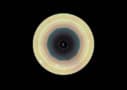
ATLAS collisionsjp.jpg
ATLAS collisions

By Hamish Johnston

According to several physics bloggers (and backed up by the above image) physicists at the ATLAS experiment have managed to collide 1.18 TeV bunches of protons to achieve the highest energy yet — 2.36 TeV.

This makes the Large Hardron Collider the most energetic particle collider, beating the Tevatron’s previous record of 1.96 TeV.

The LHC became the world’s most energetic accelerator ten days ago, when proton pulses were first boosted up to 1.18 TeV.

There hasn’t been an official statement from CERN about this — we’ll keep you updated.


TrackBack

TrackBack URL for this entry:
http://www.iop.org/mt4/mt-tb.cgi/3528

Comments (11)

  • 1 stephan Dec 9, 2009 10:24 AM

    woohooo! go LHC!

    can you see the mini-black hole in the image above? OMG! its gonna eat the earth

  • 2 J Jaim Dec 9, 2009 10:24 AM

    The news on CERN's web site since the 30th November 2009.
    http://press.web.cern.ch/press/PressReleases/Releases2009/PR18.09E.html
    JJ

  • 3 Harsh Dec 9, 2009 2:26 PM

    What are you saying? Has Physicsworld been sleeping all along.

    CERN set that record on 11/30, and have it all over their website too. They also issued a press release which seems to have reached everyone else other Physicsworld.

    Wake up guys !!!

  • 4 Harsh Dec 10, 2009 7:02 AM

    Hamish,

    Please check this url out ...

    http://public.web.cern.ch/public/

    Also, the press release on cern.ch is on the url

    http://press.web.cern.ch/press/PressReleases/Releases2009/PR18.09E.html

    The press release mentions, amongst other things, the following

    Geneva, 30 November 2009. CERN’s Large Hadron Collider has today become the world’s highest energy particle accelerator, having accelerated its twin beams of protons to an energy of 1.18 TeV in the early hours of the morning ...

    So it mentions "having accelerated its twin beams of protons to an energy of 1.18 TeV in the early hours of the morning". Obviously, its talking about 2.36 TeV

    If you have read the full release, you would have noticed that it mentions LHC setting the world record after beating Tevatron's existing record.

    Harsh

  • 5 Kasuha Dec 10, 2009 2:26 PM

    On Nov 30 they just ramped up both beams but AFAIK it was just one bunch per beam and they probably didn't even meet at any of experiments. Recently they started using 4-bunch beams (one bunch pair for each experiment) and are already colliding them at base energy (450 GeV) for experiment calibration (almost) regularly. Yesterday they were tuning acceleration with 4-bunch beams so it's possible some collisions occurred. No accelerated collisions were planned yet so it's possible it was just luck.

  • 6 D Lincoln Dec 11, 2009 4:14 AM

    I'm here at CERN. Here's the deal. The accelerator was brought to 2.4 TeV a while ago and there could have been some incidental collisions even then. But a couple of nights ago (remember the time zone swap), the accelerator had two beams in the machine for about 9 minutes. For 2-3 minutes, the beams were steered in such a way as to possibly collide in both CMS and ATLAS. (Maybe the other two as well, I'm not sure.)

    During this time, CMS recorded a few tens of events. Upon inspection, none of the events "look" like collisions. This isn't surprising, given that the beams are (intentionally) outrageously weak to protect the equipment. I don't know how many events ATLAS recorded, but it is possible that they got lucky and caught a collision.

    Currently the beams are running at low energy so each experiment can gather about 1,000,000 collisions. From an experimental point of view, this is more important than a handful of high energy ones. With that kind of statistics, we can do calibration and analysis over the winter shutdown.

    I believe it still to be the plan to provide the experiments a longer period of 2.4 TeV beam before the shutdown, but I am not part of that decision making process and it will clearly be determined by the people who are tasked to doing it safely.

    That said, I predict a "longish" run at 2.4 TeV within the next 10 days or so. It will be long enough for at least ATLAS and CMS to say that they have definitely recorded lots of collisions.

  • 7 D Lincoln Dec 11, 2009 9:35 AM

    P.S. the beam brightness last night was the highest it's ever been and it was 100,000,000 times weaker than design. And remember that this was at low energy. The high energy beams are (intentionally) even weaker.

    So, if that is a real collision event at 2.36 TeV (and it may well be), ATLAS got exceedingly lucky.

    The accelerator experts will soon start to rise beam brightness. Indeed, last night's beam was much higher than previous times.

  • 8 Vincent Zenaitis Dec 12, 2009 1:35 AM

    Where is the SCSC now that we need it? Growing mushrooms !

  • 9 jjeherrera Dec 15, 2009 7:07 PM

    I'm confused D. Lincoln. What were the collisions reported by the ALICE group about?