Visiting Asia's oldest observatory

DSCN1476.jpg
The Cheomseongdae observatory

By Michael Banks

Being the International Year of Astronomy, what better time than to go and see Asia’s oldest surviving observatory.

The Cheomseongdae (star-gazing tower) observatory in Gyeongyu, South Korea, dates back to the seventh century and was built during the reign of Queen Seondoek of Silla.

The Silla dynasty began in 57 BC and reigned for almost 1000 years. It was one of the three kingdoms that ruled in Korea, but by 660 AD it had occupied the other two kingdoms – Baekje and Goguryeo — to rule most of the Korean peninsula.

The observatory is around 9m high and is built by 356 stones representing each day in the year. Seemingly everything about the construction of the observatory has some meaning. The observatory has 27 layers of stones as it is thought that Queen Seondoek was Silla’s 27th ruler. Then, above and below the opening is 12 layers of stone for every month in the year.

The Queen’s astronomer would climb to the top of the observatory every day to take a view the sky. Using a ladder, he would clamber through the opening in the observatory and then climb to the top. There he would give information to the Queen about weather patterns and the timings of any solar eclipse.

A shining light in Korean science

DSCN1436.jpg
The Pohang Accelerator Laboratory

By Michael Banks

The number of synchrotrons in the world seems to be increasing with every month that passes by. Indeed, only a few months ago the Shanghai Synchrotron Radiation Facility China started experiments, closely followed by the PETRA III light source in Hamburg, Germany – adding to the 50 or so light sources operational worldwide.

Synchrotrons are used by researchers for a range of experiments in everything from condensed-matter physics to biomedicine by providing radiation from the infra-red to hard X-rays that can be used to solve protein structures and study quantum dots.

I visited South Korea’s only synchrotron, the $270m Pohang Accelerator Laboratory (PAL), which is on the Pohang Univeristy of Science and Technology (POSTECH) campus located in the South East of the country.

Opened in 1995, PAL is a 2.5 GeV light source that can house up to 27 beamlines around its 200m circumference.

DSCN1427.jpg
A public-private initiative. On the left is POSTECH’s first president, Hogil Kim, and on the right is the former chairman of POSCO, Tae-Joon Park.

Interestingly, I learned that PAL was built with both public and private funding. A local company, POSCO, which is now the world’s second largest steel manufacturer, funded the synchrotron with $190m, with the remainder coming from the Korean government.

PAL is open to scientists from other countries, but most of the experiments are carried out by scientists in Korea. Research carried out at the synchrotron now leads to over 8000 published papers every year with around 60% of them in international journals.

Researchers at POSTECH, which operates and owns PAL, are now hoping to upgrade the synchrotron to increase the number of beamlines as well as increasing its energy to 3 GeV. If the Korean government funds the upgrade it will begin construction late next year

South Korea also has other ambitious plans for an X-ray free electron laser facility — so-called fourth generation light source — that is only just in the proposal phase. If it is built then it would be situated next to PAL on the POSTECH campus making Pohang a leading centre for research in East Asia.

Happy 50th, Oxford Instruments

castle.jpg
Highclere: they don’t build them like they used too

By Hamish Johnston

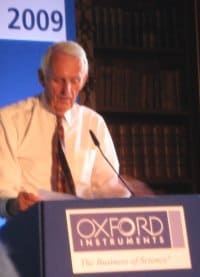
If you ask a British physicist to name a successful university spin-out, chances are they will say Oxford Instruments.

The company was founded 50 years ago by Martin and Audrey Wood — and has become a “household name” in physics labs throughout the world.

Yesterday I was invited to a series of lectures in celebration of the firm’s golden anniversary at the magnificent (and I don’t use that word lightly) Highclere Castle near Newbury.

Highclere is home to the Earl of Carnarvon, whose great-grandfather — along with Howard Carter — discovered the tomb of Tutankhamen. Under the house is a small museum dedicated to King Tut, and we were given a personal tour of the collection by the present Earl. Upstairs in the grand rooms one can also admire several family portraits by Joshua Reynolds.

But enough about Highclere…I was there to learn how a firm founded around a kitchen table in 1959 — and used a garden shed as its first manufacturing facility — has grown to employ over 1500 people in 25 offices worldwide.

wood opic.jpg
Sir Martin Wood

As its name suggests, the firm had its origins at Oxford University’s physics department, where Martin Wood’s day job involved designing and building lab equipment — including high-field magnets, which the Woods realized that they could make and sell.

According to Audrey Wood, who is also the firm’s historian, the early success of the company can be traced back to the 4th of November, 1961 and a decision made on a New York subway train. The Woods were in town for a physics conference and became convinced that they should wind magnets using superconducting wire.

Although superconducting magnets are more expensive than their copper counterparts, they can deliver extremely high magnetic fields without the need for large and very expensive power supplies.

At the time there were only about 10 facilities worldwide that had the need for — and could afford running — Oxford’s high-field magnets. By switching to superconducting magnets, the Woods figured this would rise to 10,000 potential users.

They were right…and soon the magnets were so popular that the users were struggling to buy enough liquid helium to cool them. This led to another crucial decision by the Woods — to buy a helium liquefier in order to supply its customers. This signalled the beginning of a cryogenics business group that became famous for its commercial dilution refrigerators — which can cool samples to below 2 mK.

But the biggest boost to the company’s fortunes came in the 1980s with the development of magnetic resonance imaging (MRI) systems for medical use. In order to keep pace with the demand for MRI magnets, the company was floated on the London stock exchange in 1983.

Martin Wood was knighted in 1986 for his services to science. At Highclere he described how being treated shabbily at his first job — making farm machinery at the the age of 15 — left him wanting to start a company that would thrive by treating its employees with respect. He certainly seems to have done that.

Science fiction on science journalism

ryman.jpg
He loves a good metaphor

By James Dacey

Science reporting should make more use of metaphors in order to explain difficult technical concepts. That is the opinion of Geoff Ryman, an award-winning science fiction writer, voiced at the World Conference of Science Journalists in London yesterday.

Ryman, who is also a lecturer at the University of Manchester, subscribes to the “mundane” school of sci-fi – rejecting “sexy” ideas like flying saucers and tentacled aliens in favour of more down-to-Earth, preferably “human” concepts. In 2006 he won the Arthur C. Clarke award for Air, a novel based on the idea of a successor to the internet which connects people’s brains via an invisible substance… known as Air.

Ryman’s line of argument – and it’s a well-trodden one – is that the general public only tend to engage in science and technology writing when it is presented to them in everyday concepts. “The best science writing tells a human story,” he said and, as a science fiction writer, he places himself amongst the “lay readers” drawing inspiration from ideas that touch him on an emotional rather than an abstract level.

According to the author, science journalism need not be any different from his approach, other than the fact that it’s obviously “limited” by scientific truths.

Sitting there yesterday, I thought Ryman did make some good points and he certainly delivered them in an eloquent way. But it also seems to me that he holds a very narrow view of science and scientists, painting them as abstract entities, disconnected from the rest of everyday life. This is simply not true.

I reckon that the distinction between good science and good fiction is a lot muddier than this because clear communication is absolutely integral to both. Many of the great scientific ideas have been presented with a devastating clarity through striking metaphors. Take Darwin’s Tree of Life, take String Theory, take the Big Bang… and I’m sure there’s plenty more. Anyway, the survival of these ideas has – in my opinion – been aided by their ability to reduce the complexity of nature into simpler, everyday concepts… just like a work of great fiction.

Let me know what you think…

Canada and Japan threaten global climate deal, warns prominent policy-maker

king.jpg
Countdown to Copenhagen

By James Dacey

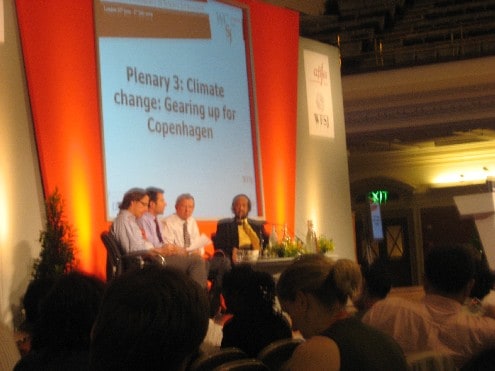
Canada and Japan pose a serious threat to achieving a planet-saving deal in Copenhagen this December, warned Sir David King, former Chief Science Advisor to the UK government, speaking yesterday at the World Conference of Science Journalists that is taking place in London this week.

He was, of course, referring to the UN Climate Change Conference, which is set to thrash out a successor to the Kyoto protocol when it reaches the end of its first stage in 2012.

The latest report of the Intergovernmental Panel on Climate Change (IPCC concluded that global greenhouse-gas emissions will need to be cut by 80% of 1990 levels by 2050 if we are to ensure that global temperatures do not rise more than 2 degrees by the end of the century.

Over the course of two weeks in the Danish capital, officials from 192 nations will gather to address four main objectives:

1) Legally-binding targets – on carbon emissions;
2) Clarity on how developing countries should be expected to act;
3) Financing – how we going to cover the economic cost of maintaining acceptable living standards in low carbon societies; and
4) Governance structure – how the international community will work together to take the deal forward.

Yesterday in the UK capital, Sir David King urged the developed nations to “show their cards” now so we they can begin to formulate mitigation and adaptation plans in the lead up to December. “The debate has moved on – it is no longer a question of whether man-made climate change is happening but what to do about it”.

The former professor of physical chemistry at Cambridge University then went on to warn of a worrying shift in the positions of the Japanese and Canadian governments. King accused these nations of waning interest in tackling climate change, and attributed this to the recent scrapping of the role of chief scientist in both nations.

But when asked about the viability of mitigating climate change through large-scale geoengineering projects, King played his own cards surprisingly close to his chest:
“I am yet to be convinced that any of the existing options would be worth investing in, but I would like to see more research in this area.”

However, when pressed for his course of action in the event of an unsatisfactory result in Copenhagen, King did reveal a couple of back-up plans:

Plan B look for legal avenues that could stall the protocol from being implenented
Plan C lobby for a strong bilateral agreement between China and the US that could have the international clout to bring about a revision of the agreement.

“Obviously, I am a bit reluctant to discuss these options because it will appear that I am losing faith in plan A – which is by far the most desirable option,” he said.

Single molecule switches light

Since the first lasers appeared nearly 50 years ago, scientists and engineers have dreamed about creating all-optical circuits in which electrons are replaced by photons. While information is easily transmitted via light using optical fibres, switching and processing the information still rely on converting photons to electrons and then back again — which is a slow and power hungry process.

Unfortunately we are still far from seeing all-optical — or “photonic” — circuits in desktop computers and other everyday applications because these circuits require light to be manipulated in nanometre-sized spaces, something that is very difficult to do. Moreover, the efficient all-optical switching of light beams, which allows energy from one beam to amplify another, usually requires large photonic crystals.

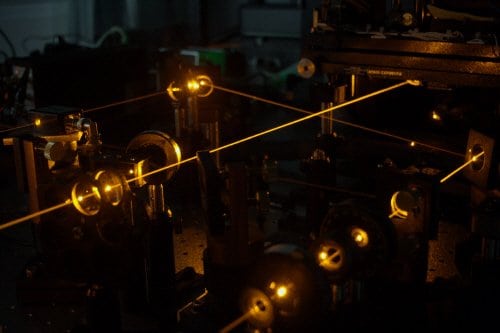
Now, Vahid Sandoghdar and colleagues at ETH Zurich have made what they say is the world’s smallest optical transistor ever — from a single dye molecule. The device, which works by weakening or amplifying a “source” laser beam depending on the power of a second “gating” beam, could bring all-optical circuits and optical computing a step closer.

‘Simple’ operation

“By controlling the degree of attenuation and amplification via the power in a second gating laser beam, we have demonstrated the smallest optical transistor to date,” Sandoghdar said.

The operating principle is simple, he says: when the molecule is placed in an excited state by the gate beam, it can emit a photon, therefore amplifying the source beam.

The key to making the new optical transistor is the tight focusing of light onto a single molecule at ultra-low temperatures. This focusing provides strong light-molecule coupling that allows the molecule to affect the laser light.

Although strong coupling has been achieved before, it had taken place in optical cavities, in which interactions can be enhanced. However, even the smallest optical cavities are larger than about a micron in size, which means that devices cannot be made any smaller than this.

High-density packaging

By contrast, the cavity-free ETH Zurich experiments could lead to high-density packaging of nanometre-sized all-optical transistors. Theoretical calculations by the team also show that it should be possible to build complex circuits where many single emitters are coupled to tiny waveguides that carry optical signals on a chip.

“And although our experiment was performed with conventional laser beams, the set-up also works for non-classical light beams at the single photon level,” explained Sandoghdar. “This means that quantum information processing will be possible.”

The work was reported in Nature .

Between chance and necessity

Stuart Kauffman argues that physics cannot explain biology, and he is right. However, I am willing to grant him this not because his book Reinventing the Sacred makes a clear case, but because I already agreed with its central premise, which is that the reductionist approach to science — the idea that physics explains chemistry, chemistry explains biology, and so forth — has its limits. The book nevertheless provides much food for thought; indeed, its chief merit is that it makes the reader ask fruitful questions. However, it falls short of making an argument that might overturn an entrenched position.

In addition to his central theme of reductionism and what might replace it, Kauffman — a complexity theorist and professor of both biology and physics at Calgary University in Canada — has two further aims for his book. One is to present to the non-expert some fascinating areas of science such as chemical-reaction networks, evolution and graph theory. The other is more ambitious: it aims to reassess in a positive way those areas of human life normally called sacred or spiritual, but from a point of view that does not accept supernatural theism.

Kauffman is at his best when writing about what he knows: complexity theory applied to theoretical biology, and some philosophy. Complexity theory deals with systems that typically involve feedback, non-linearity and structure at many scales; such systems turn out to share patterns of behaviour. Physics has made great strides in describing deterministic behaviour on the one hand and randomness on the other, but “critical behaviour” lies right on a fascinating borderline between these two regimes, and it deserves the widespread attention that Kauffman invites.

His introduction to Boolean networks is clear and stimulating, and their application to the cell’s genetic control machinery is both beautiful and striking. While reading this chapter, it suddenly became obvious to me why a mere gene count is a completely inadequate measure of the complexity of the associated organism. The fact that the human genome is shorter than some, such as the lungfish, should not have surprised anyone.

Kauffman’s treatment of the philosophy of mind is not as careful as a technical treatise would need to be. Still, it is sound and avoids the woefully inadequate statements that have sometimes appeared in connection with neuroscience in otherwise serious scientific journals — particularly claims that demonstrating a correlation between physical brain activity and particular thoughts resolves the mind–body problem or proves the absence or presence of God.

Another strength of the book is that Kauffman maintains reasonably clear lines of demarcation between speculation and knowledge. Within that proper constraint, the text makes some bold and useful speculations, such as the idea that quantum coherence could extend far enough from the surface of protein molecules in the cell to link one protein to another via aligned water molecules. Such speculations are useful because they are both testable and (just) feasible.

Because of these strengths, I would recommend Reinventing the Sacred as a healthy read for anyone who thinks that reductionism is the whole story of science. Reductionism is a good slave but a poor master; in other words, it is the right model for almost all the science we have discovered so far, but it is not necessarily the whole story. Cracks in the reductionist edifice include quantum entanglement, emergent phenomena, criticality and the oldest one of all: human free will, without which it is debatable whether any reasoning, and therefore any science, is possible.

On balance, this is a useful book. However, it also contains some glaring errors and omissions. The chapter on the quantum brain, for example, overinterprets the concept of decoherence, misapplies the word “acausal” and misses out entanglement altogether. The book is also repetitive, and sometimes unpersuasive or overblown. Take, for example, Gödel’s incompleteness theorem, which states that any large enough, finite system of axioms and rules of deduction must give rise to propositions the truth of which cannot be decided within the system. This theorem is relevant to Kauffman’s argument because it shows that not even formal logic can be reduced to a finite number of ideas; mathematics is a rich tapestry of concepts, not a pyramid. Kauffman briefly sketches Gödel’s theorem no less than four times, but he never describes it sufficiently well for a reader unfamiliar with it to follow the argument. On the other hand, if readers are already familiar with Gödel, they do not need repeated incomplete sketches.

Moreover, the central argument is unconvincing when the book implies that a case has been proven when it has not. Concerning the animal heart, for example, an early chapter promises “the organization of the heart arose largely by natural selection, which, as we will see, cannot be reduced to physics”, and in due course some relevant evidence is given. However, when later the text says things like “…as we have seen, this cannot be reduced to physics”, it leaves the reader feeling that something was missing in the middle. The evidence offered is that the emergent complexity of the biosphere may exceed the capacity of any compact description available beforehand to capture it. This and other arguments provide telling evidence for the case against reductionism, but it is, I think, premature to claim that we can prove the case sufficiently well to make reductionism clearly untenable.

The single greatest problem with this book is not in the science, however, but in the reasoning about the sacred. I am encouraged that Kauffman is willing to address questions of meaning and purpose, and his approach is surely preferable to pseudo-scientific statements along the lines of “the purpose of human life is to replicate genes”. His aim is valid and worthy: to draw people together around shared values. With a view to this, the book argues for a kind of pan-theism in which the word “god” is applied to the emergent creativity that exists in the universe.

Kauffman is welcome to promote this idea, but he should recognize that this type of thinking has a very long history and its shortcomings have been carefully thought through. For example, it does not adequately address our most basic hunches, such as the value of individual people above grand impersonal systems, and the need for justice or forgiveness. I would encourage him to explore instead those threads of religious thinking that are willing to seek answers beyond physicality, but that take physical evidence seriously.

Darwin’s legacy

Charles Darwin was no theoretical physicist, and I am no biologist. Yet, as a theoretical physicist, I have found much to think about in Darwin’s legacy — and in that of his fellow naturalist Alfred Russell Wallace. Darwin’s style of science is not usually thought of as theoretical and certainly not mathematical: he was a careful observer of nature, kept copious notes, contributed to zoological collections; and eventually from his vast repertoire of observation deduced the idea of natural selection as the origin of species. The value of theorizing is often dismissed in the biological sciences as less important than observation; and Darwin was the master observer.

I think that view misses something essential, namely the great formal beauty and almost mathematical inevitability of Darwin’s ideas. Like Einstein’s greatest ideas, the theory of evolution is based on a simple gedankenexperiment: start with a very simple reproducing organism, add Mendel’s laws of heredity and mutability, and follow the system as it inescapably branches out into a tree of life.

Darwin was not particularly interested in astronomy or physics, yet his impact on cosmology was enormous but in a way subconscious. In successfully explaining the origin of species, he eliminated superstition and set a new standard for what an explanation of nature should be like. As I wrote in my book The Black Hole War (Little Brown, 2008), Darwin’s masterstroke was to have “ejected God from the science of life”.

True, Darwin was not the first scientist to cast out supernatural beliefs. Two centuries earlier, Newton — another great Cambridge scientist — had done so more than anyone before his own time. Inertia (mass), acceleration and a universal law of gravitation replaced the hand of God, which was no longer needed to guide the planets. But as historians of 17th-century science never tire of reminding us, Newton was a Christian and a passionate religious believer at that. He spent more time, energy and ink on Christian theology than on physics.

For Newton and his peers, the existence of an intelligent creator must have been an intellectual necessity: how else could you explain the existence of man? Nothing in Newton’s vision of the world could explain the creation, from inanimate material, of so complex an object as a sentient human being. Newton had more than enough reason to believe in a divine origin.

But what Newton failed to do, two centuries later the ultimate (and unwilling) subversive Darwin succeeded at. Darwin’s idea of natural selection — combined with the subsequent discovery by James Watson and Francis Crick (also at Cambridge) of the double-helix structure of DNA — replaced the magic of creation with the laws of probability and chemistry.

In other words, before Darwin, even the greatest physicists had little alternative to a supernatural explanation of the origin of life, and therefore of nature itself. It was the success of Darwinism that forced the issue and set the standard for future theories of origins, whether it be it of life or of the universe. Explanations must be based on the laws of physics, mathematics and probability — and not on the hand of God.

Rejecting the watchmaker

Early in his life, Darwin was deeply impressed by the arguments of the Reverend William Paley (1743–1805), a cleric who had argued for what we would today call “intelligent design”. Paley imagined finding a pocket watch lying on the ground, perhaps while walking in the woods. He might have wondered how such a complex, fine-tuned object came into existence. One possible answer is that it might have been the result of a random accident; a large number of molecules of various types combining by good fortune to form the watch. Paley rightly said that this was too unlikely to be taken seriously. There must be another explanation. The only one that made sense was that the watch had been made for some particular purpose by a skilled craftsperson — the watchmaker.

Paley pursued the thought further. We find in nature certain incredibly complex mechanisms, called human beings, that are capable of far more complex operations than the pocket watch. By analogy Paley argued that accidental creation is too unlikely and that human beings must have been created by an intelligent creator for some purpose.

How and why Darwin came to reject Paley’s compelling argument is well known, but what is less noted is that physics and cosmology pose very similar questions, such as why the universe seems so incredibly fine-tuned for the existence of life. The only explanation, if we can call it an explanation, is that if it were less fine-tuned, intelligent observers like ourselves would have been impossible. I am, of course, referring to the cosmological constant, L. Theoretically, one would expect L to be unity in natural Planck units. But if it were anything bigger now than it is known to be — 10–123 — it would have prevented the evolution of galaxies, stars and us. Like Paley, we encounter what appears to be an extremely unlikely occurrence.

Most physicists reject a supernatural explanation — a cosmic watchmaker — to account for this fact of fine-tuning. But if not a watchmaker, then what? Until recently, most physicists would have said that it was accidental, a numerical coincidence. The ambition of theoretical physics was to discover a unique mathematical explanation, having nothing to do with our own existence, for all the constants of nature. It would be just a lucky accident that they happened to fall into the narrow range where intelligent life can exist. But as Paley might have complained, accidents involving 123 decimal places are too unlikely.

Enormity of the landscape

Over the last decade a new view has been taking shape, a view that in certain ways has common features with biological evolution. Darwin and Wallace emphasized mutability and natural selection as the main drivers of evolution, but there is something even more basic. Mutability and natural selection would have been powerless to create a human being if it were not for one central fact: the enormity of the landscape of biological designs.

Biological designs are encoded in DNA molecules, which contain two polynucleotide chains twisted around each other to which with four different based pairs (A, G, C and T) are attached. In a complex creature each of these DNA molecules can contain many millions of base pairs. The possible arrangements of those base pairs define the biological landscape, and the number of possibilities is tremendously large. One hundred million base pairs, for example, can be arranged in 4100 000 000 ways.

Suppose for a moment that there were only a thousand possible designs, or even a million. What would be the likelihood that any of them would make an intelligent life-form? Completely negligible. But even if such fortunate designs are extremely rare, given 4100 000 000 combinations there will be a very large number of them. The first principle of biological evolution — even more fundamental than natural selection — is the enormity of the landscape of biological designs.

The second principle is mutability: the fact that while reproducing, the instructions coded in DNA can discretely jump to new configurations. Natural selection is of course important, but without the mutable landscape nothing interesting would come of it.

The emerging paradigm for explaining the special properties of our universe is, in a sense, an attempt to live up to the standard set by Darwinian evolution: to provide a natural (as opposed to supernatural) non-accidental explanation for the apparently very unlikely specialness of the universe and its laws. Surprisingly, it involves the same two central principles: an enormous landscape of possibilities and random mutation. It even involves a mechanism similar to DNA.

Darwinian standards

Let us begin with the DNA of a universe. What is it and why do we believe such a thing makes sense? String theory is the key. It supposes that at extremely small distances space is a complicated higher-dimensional manifold with many — typically six — tiny “extra” dimensions in addition to the three we see in everyday life. If we could look at the universe through a super-powerful microscope, we would see that it is composed of “Tinkertoy” elements called fluxes, branes, moduli, orientifolds (and more) all arranged on a tiny knot of higher-dimensional space called a Calabi–Yau manifold. The Calabi–Yau manifold is like the basic spine of the DNA molecule, and the other elements can be arranged and rearranged in a huge variety of ways; perhaps as many ways as a real DNA molecule.

Just as the details of DNA determine the biological details of a living organism, so the details of the fluxes, branes and other elements determine the properties of the universe. Again, the numbers are so staggering that even if the world as we know it seems extremely unlikely, there will be many ways of arranging the elements to make the constants of nature consistent with life. In particular, there will be many configurations in which the cosmological constant will be fine-tuned to 123 decimal places.

What about reproduction and mutability? Here is where the inflationary theory of cosmology comes into play. There is much evidence that during the earliest epoch of the universe space itself expanded exponentially. Inflation was a process in which space grew like the surface of an inflating balloon, but instead of thinning out, as the rubber of the balloon would, new bits of space were created to fill the gaps.

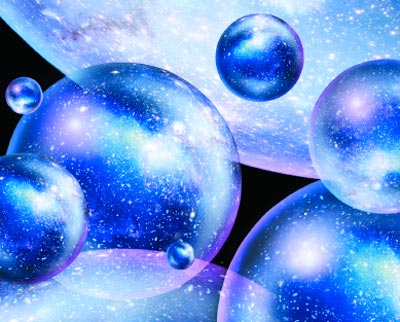
For the most part, the new bits of space had the same DNA as the regions surrounding them, but every so often a mutation occurred. A bit of space with new properties, new constants and a new value for the cosmological constant was created. According to standard general relativity, that tiny bubble grew and eventually became a new inflating universe, reproducing and mutating. This whole process is called eternal inflation and it produced a grand multiverse as rich and varied as the tree of life, each with its own laws of physics, constants of nature and elementary particles. Here and there a very rare branch was created that had the special properties that would allow complex life.

Whether string theory with its huge landscape, and eternal inflation with its reproducing pockets of space, will prove to be correct is for the future to decide. What is true is that as of the present time, they provide the only natural explanation of the universe that lives up to the standard set by Darwin.


How physics can inspire biology

In July 1997 Adrian Parsegian, a biophysicist at the National Institutes of Health in the US and a former president of the Biophysical Society, published an article in Physics Today in which he outlined his thoughts about the main obstacles to a happy marriage between physics and biology. Parsegian started his article with a joke about a physicist talking to his biology-trained friend.

Physicist: “I want to study the brain. Tell me something helpful.”
Biologist: “Well, first of all, the brain has two sides.”
Physicist: “Stop! You’ve told me too much!”

Parsegian went on to list a few areas in biology where input from physicists is particularly welcome. But his main conclusion was that physicists must really learn biology before trying to contribute to the field. He also warned that it may not even be enough for a physicist to have a biologist friend to act as an “interpreter” to translate a problem into the language of physics.

Despite being gentle and elegantly written, the article provoked a stormy reaction from Robert Austin, a physicist at Princeton University, who accused Parsegian of forbidding physicists from tackling the big questions in biology. My view lies somewhere between those of Parsegian and Austin, and, in my opinion, the relationship between physicists and biologists has improved on some fronts in the 12 years since Parsegian’s article first appeared. However, I believe that those relationships are still being poisoned by a number of misguided beliefs that are preventing physicists and biologists from working closer together.

More than beliefs?

Back in the early 1970s, when I was a first-year PhD student at the Frumkin Institute in Moscow, I used to attend theoretical seminars chaired by Benjamin Levich — a former pupil of Lev Landau — who was widely regarded as the founding father of physical-chemical hydrodynamics. Whenever an overly enthusiastic speaker would tell us with 100% confidence how, say, electrons and atoms behave in a solvent near an electrode, Levich would spice up the seminar by joking “How do you know? Have you been there?”

Almost four decades on, physicists now have plenty of experimental tools to “go there”. For example, modern X-ray synchrotron sources allow researchers to look at how crystals form, to discover how biological samples mutate and even to pinpoint where ions adsorb on DNA; while techniques such as the fluorescence imaging with nanometre accuracy (FIONA) allow the motion of proteins such as myosin or kinesin to be traced in real time. But although these techniques often produce fascinating results, they may not be enough without a deep theoretical analysis of what one is actually “seeing”. So, the first of these misconceptions is that “seeing is believing”. A pretty picture may have a beguiling charm, but on its own it is not enough.

The second belief hampering collaboration is that the formalism of a biological theory must be simple — it should not contain more than exponential functions and logarithms (no Bessel functions, please!). Otherwise, the job should be left for computers to do. This point of view was advocated by Rob Philips of the California Institute of Technology, who came to his new love — biology — from solid-state theory. I strongly disagree with that view, however, and I used to argue with him about it when we were both on sabbatical at the Kavli Institute for Theoretical Physics in Santa Barbara. As I used to point out, James Watson and Francis Crick could never have deciphered the structure of DNA from the X-ray scattering patterns obtained by Rosalind Franklin and Maurice Wilkins had they not had the mathematical tools developed by Crick, William Cochran and Vladimir Vand a year earlier (1952 Acta. Crystollograph. 5 581). Indeed, Bessel functions were at the heart of that analysis.

The third belief is that biologists will never read scientific papers containing mathematical formulas. As Don Roy Forsdyke, a biochemist at Queen’s University in Ontario, Canada, once told to me, “The biological literature is vast. Biologists have too many papers to read and too many experiments to make. They will leave aside any reading that looks difficult.” If this is true, and I think it is, physicists are in big trouble.

This brings us neatly to the next belief, which is that it is impossible for physicists to publish a serious theoretical paper in a biological journal. Theorists need mathematical derivations to validate their findings, but any paper containing derivations will be rejected. If you then publish the article in a physics journal, it will not be read by those to whom it is addressed. Actually, good papers of that kind are still sometimes published and read, but this remains a difficult issue.

DNA revolution

Physicists want to simplify and unify things, as much as possible, whereas biologists resist the reductionist approach and are happy with diversification and complexity. So, the biologists’ fifth belief is that physicists are too ignorant about diversity to offer them anything useful. Biologists admit that physicists can provide, say, a new spectroscopic technique or apparatus for measuring forces, but that is about it. In their view, biology should be left to the professionals.

The final belief is that biologists think physicists made one big breakthrough — elucidating the structure and function of DNA — but that a similar revolution is unlikely to ever happen again. However, the key to that discovery was the “chemistry” between Watson (a biologist) and Crick (a physicist), which helped them to find a common language and gave rise to the idea of DNA replication and the subsequent principles of molecular biology.

I believe that we can expect other breakthroughs of this sort because physics and mathematics have a long history of revolutionizing not only science but our lives too.

Meaningful collaborations

In spite of all this, my feeling is that physicists and biologists are getting on better. For example, last month, together with Parsegian and Wilma Olson of Rutgers University, who is another former president of the Biophysical Society, I organized a conference entitled “From DNA-Inspired Physics to Physics-Inspired Biology”. Attended by some 140 researchers, the meeting was held at the International Centre for Theoretical Physics (ICTP), in Trieste, Italy, and sponsored by the ICTP and co-sponsored by the Wellcome Trust. But the conference was not just for physicists interested in biology. It was also aimed at biologists who were interested in learning what new physical methods and existing knowledge could offer them, as well as pinpointing for physicists the subjects that biologists think could benefit from input from physics.

The conference included over 60 talks — demonstrating the interplay between physics and biology — on everything from DNA mechanics, structure, interactions and aggregation to DNA compaction in viruses, DNA-protein interaction and recognition, DNA in confinement (pores and vesicles) and smart DNA (robotics, nano-architectures, switches, sensors and DNA electronics). More details are available online.

Taking Rutherford’s famous saying that there is physics and everything else in science is stamp collecting, Paul Selvin, a physicist at the University of Illinois, recently said that if Rutherford were alive today, he would have said that “all science is either biology or tool-making for biology or not fundable”. Today, in general, the arrogance is rarely on the side of physicists. But to overcome the barrier of scepticism, physicists need to demonstrate (or, even better, inspire biologists to show) that insights from physics do not just apply in model systems in the lab but work equally well inside the real world of the cell.

Crick not only had a great mind and was very serious about biology but he was also lucky to meet the right collaborator in Watson. Many of us seeking to do important work in biology will not be able to do so alone unless we too find the right match. The future is far from hopeless — and meetings such as the one held in Trieste last month may well make the difference. As the Cambridge physicist Stephen Hawking once said, “The greatest discoveries of the 21st century will take place where we do not expect them.” Likewise, I am convinced that great surprises and discoveries in biology will come from physics.

In praise of Darwin

Charles Darwin, who was born 200 years ago, is rightly being celebrated as the founding father of modern biology with a series of events around the world this year. Just as Einstein revolutionized physics, so Darwin changed our understanding of life. He came to realize that “natural selection” could account for the huge diversity of life, with more-efficient groups — arising from random variation — always replacing less-efficient groups in a particular environment as a result of competition. After publishing his seminal book On the Origin of Species in 1859 — exactly 150 years ago — Darwin, like Einstein, became the most noted scientist of his time.

But Darwin was no physicist and Physics World is not the place for an in-depth analysis of his achievements. Indeed, he had no particular interest in physics — or astronomy for that matter. Darwin did, however, approach science in a way that will be familiar to many physicists. As a result of spending five years on board the HMS Beagle from 1831 to 1836, he painstakingly obtained a welter of information about animals — notably different finches — on the Galápagos Islands off the coast of Ecuador. Darwin’s resulting theory of evolution, although not in any way mathematical, was based squarely on firm scientific evidence and careful thought. And like any good physicist, Darwin acknowledged the theory’s limitations — he could not, for example, explain exactly why natural selection came about — and was in no doubt that future observations could overturn it. As it turns out, evolution has stood the test of time and is today a thriving field of study in biology.

But while Darwin himself had no formal links with physics, there have been many fruitful collaborations between physicists and biologists over the years — most famously in elucidating the structure of DNA and in developing techniques for medical imaging. Less successful has been physicists’ long-cherished hope that quantum mechanics could offer a new framework for understanding living systems. As Paul Davies reminds us in opening this special issue, Erwin Schrödinger published his famous book What is Life? as far back as 1944. But although no clear “quantum life principle” has yet emerged, there is, Davies argues, clear and accumulating evidence that quantum mechanics plays a key role in biology (see “The quantum life”). Elsewhere in this issue, Jochen Guck shows how physics is needed to explain, for example, how light passes through the “glial” cells on the way to the retina (see “Do cells care about physics?”), while Sam Wang looks at how physicists are helping to understand how the brain is wired and processes information (see “Postcards from the brain”).

Ironically for someone with little interest in physics, Darwin’s ideas of reproduction and natural selection actually crop up in some areas of modern physics. In particular, the theorist Lee Smolin has suggested that a collapsing black hole can give birth to another universe with slightly different fundamental constants, with the universe geared so that the production of black holes is maximized. Whether those Darwinian ideas play a role in cosmology or not, Darwin’s greatest legacy for physics is that in rejecting the need for a supernatural explanation for life and the universe, he — as Leonard Susskind concludes this issue (see “Darwin’s legacy”) — set the standard for what any explanation of nature should be like.

Copyright © 2026 by IOP Publishing Ltd and individual contributors