Galactic link to climate change in doubt

Some physicists believe that changes to the Earth’s climate can be explained in large part by variations in the flux of cosmic rays reaching the Earth. These occur as the solar system pass in and out of our galaxy’s spiral arms — passages that seem to correlate closely with the timing of ice ages. However, new research based on a recent model of the structure and motion of the spiral arms finds there is no such correlation.

In 2003 physicists Nir Shaviv and Ján Veizer reported a close correlation between the motion of the solar system through the Milky Way and changes to the Earth’s climate. They found that the solar system passes through one of the galaxy’s four spiral arms about once every 140 million years, and these intersections correspond with both the peaks of successive ice ages and fluctuations in the abundance of oxygen-18 in fossils — which is related to temperature. Both climatic variables also vary with a period of about 140 million years.

To explain such a link, the researchers note that higher rates of local supernovae should lead to greater fluxes of cosmic rays as the solar system passes through the Milky Way’s spiral arms, which are higher-density regions of stars and gas within the galaxy. Physicist Henrik Svensmark has proposed that the secondary particles created by these cosmic rays as they pass through the atmosphere can help the formation of condensation nuclei for clouds, with the increased formation of low clouds blocking more sunlight and hence cooling the Earth. This hypothesis has proved controversial, given its implications for our understanding of global warming.

Now, physicists Adrian Melott and Andrew Overholt of the University of Kansas and Martin Pohl of Iowa State University in the US have carried out a new study of the supposed link between the solar system’s galactic motion and climate change and have found that the correlation does not exist.

New view of the Milky Way

They base their work on a new model of the galaxy produced last year by astronomer Peter Englmaier, who used the distribution of carbon monoxide molecules throughout the Milky Way, as revealed in infrared data collected by NASA’s Spitzer mission, to trace out the structure of the spiral arms. Englmaier found that the arms branch off at varying angles to one another and that the galaxy therefore has quite an asymmetrical shape.

In using this model to work out when the Sun intersects the galactic arms, Melott’s group also needed to know how quickly the spirals move (the speed of the solar system itself is well known). The spiral pattern propagates through the galactic material much as a sound wave propagates through air, and its speed of propagation is found out by measuring the speed with which newly born star clusters move away from the spiral arms where they are created.

Combining this speed data with the asymmetric position of the spirals in Englmaier’s model, the researchers found that the distance and therefore time between successive intersections of the solar system with spirals was not constant, and that there was therefore no correlation with ice ages on Earth. They discovered that this result held up across a wide range of pattern propagation speeds.

What about the galactic plane?

Pohl points out that, strictly speaking, this research only rules out a correlation between climate and spiral-arm passages, and that there has been speculation that the motion of the Sun in and out of the galactic plane could have effects on Earth.

Svensmark, however, believes the spiral–arm correlation itself still stands. He says the analysis by Melott and co-workers has problems in determining the location of spiral arms and also wrongly assumes that the whole spiral-arm pattern moves with a single speed. ““This latest work does not make me reconsider the link between galactic dynamics and the climate on Earth,” he added.

The research is reported on arXiv.

What Gina says about the String Wars

gina.jpg

By Hamish Johnston

“Gina is very curious about science blogs”, writes Gil Kalai in his book Gina Says: Adventures in the Blogsphere String War .

“Can they be useful for learning about, or discussing science? What happens in these blogs and who participates in them?

Kalai, who is a mathematician at the Hebrew University of Jerusalem, tried to answer these questions by entering the fray of the “String Wars” — a sometimes heated online debate about the scientific merits of string theory that kicked off in 2006.

His first post as the fictional “Gina” was on Not Even Wrong — the blog of Peter Woit, an outspoken critic of string theory who has written a book with the same title.

“Peter, is it possible to state the main points for the case against string theory — with 4-5 sentences on each? This will be very helpful. Please consider doing it…”

50 days and many postings later, Gina was “expelled” from the discussion for apparently contributing to the “noise” on Woit’s blog. Fair dues, you might think, because she wasn’t exactly up front about her intentions. However, I couldn’t help feeling sorry for Gina as she tried to ingratiate herself back into the conversation.

Gina also conversed online with Lee Smolin — who, like Woit, had just published a book highly critical of string theory. She asked Smolin to address 16 specific objections to his book The Trouble With Physics and the ensuing discussion accounts for a large chunk of the book.

String theorists Clifford Johnson (Gina’s favourite blogger) and Jacques Distler also put in appearances via their respective blogs

So what did Kalai learn from his undercover adventure? He told me that he was disappointed by what he thought was the low scientific content of the debate — he believes that it quickly turned into a political argument. “90% of the issues discussed had nothing to do with string theory”, he said.

And what about the bloggers — are they upset to discover the real identity of Gina? Peter Woit seemed rather pleased, you can read his comments here.

Foundation gives Canadian physics a boost

Two of Canada’s best known physics facilities are expanding thanks in part to separate grants from the Canada Foundation for Innovation (CFI). The Sudbury Neutrino Observatory Laboratory (SNOLAB) in Ontario has bagged C$10.6m, to be spent on the ongoing expansion of its underground facilities. Meanwhile, the Perimeter Institute for Theoretical Physics in Waterloo, Ontario has received C$10.0m to double the size of its facility.

DEAP SNO in Sudbury

Located in a former nickel mine more than 2 km underground, SNOLAB is undergoing a facelift, with two new underground chambers completed earlier this year. Securing the CFI money will allow the lab to start building two new experiments — DEAP-3600 and SNO+ — which could be up and running in about two years.

SNO+ will study the properties of neutrinos as well as search for neutrinos from supernovas. It is a major refurbishment of the original SNO experiment, which stopped taking data in 2006. Switched on a decade ago, SNO was source of a major physics breakthrough in 2001, when data from its underground detectors confirmed that neutrinos have mass.

DEAP-3600, meanwhile, will use a 3.6 tonne liquid-argon detector to search for weakly interacting massive particles, or WIMPS. These hypothetical particles interact only via the weak nuclear force and gravity, and are a prominent candidate for dark matter.

Expanding the Perimeter

The Perimeter Institute was founded in 1999 by Mike Lazaridis, chief executive of Research in Motion — the company that makes Blackberry wireless handheld devices. Home to more than 60 resident researchers, the Institute focuses on areas such as cosmology, particle physics, quantum gravity and quantum computing. Residents include quantum gravity specialist Lee Smolin and cosmologist Neil Turok — who is also director.

Built in 2002, the institute’s existing building has won several architectural awards and is now fully occupied. As well as boosting individual and group research spaces, the new CFI cash will also be spent on new teaching facilities — the institute will join forces with the University of Waterloo and take on 25 students in August when its Perimeter Scholars International MSc programme begins.

Plans for the expansion have been drawn up and the institute’s communications coordinator Angela Robinson told physicsworld.com, “The groundbreaking is expected soon, with construction taking about two years”.

Physicists watch as sand forms droplets

Fire a squirt-gun skywards and the liquid stream will start to break up into smaller droplets due to surface tension. Intriguingly, this same behaviour is also observed in flows of sand even though granular matter is thought to be collection of grains that exert no forces on each other. Now — with the help of their $80,000 video camera — physicists in the US have developed an explanation for this puzzling similarity.

John Royer and colleagues at the University of Chicago attribute this behaviour to the roughness of individual grains of sand. They propose that coarse surfaces lead to a combination of van der Waals interactions and capillary forces, causing grains to become attracted. Although this corresponds to a surface tension that is 100, 000 times weaker than in liquid, these interactions closely resemble droplet formation in water jets, say the researchers.

Recent studies have revealed instabilities in the flow of granular materials but the minuteness of the forces involved have rendered the clusters too short-lived to observe. Royer and his team avoided this problem by combining high-speed photography with sensitive measuring of forces. By “dropping” the camera alongside a stream of sand, they were able to capture high-quality images at 1000 frames per second and record the sand dynamics as it fell a metre in less than a second. “We now have a magnetic release, though at first I literally held it up by and then let go,” John Royer told physicsworld.com.

Glassy free fall

In the experiment, glass spheres were fed through a funnel and began to accelerate under gravity. Almost immediately, the stream began to elongate and, after a metre of free fall, thin bridges of just a few grains wide begin to appear in the stream. By two and a half metres, these bridges had started to rupture as the clusters continue to separate.

To determine the strength of this cohesion, the researchers recorded the forces between individual grains by bringing them into contact and pulling them apart with an atomic force microscope. The grains were typically 150 µm in diameter and forces were of the order µN, or 100, 000 times smaller than an equivalent surface tension in water droplets.

These findings constitute the latest in a series of fluid experiments by Royer and his colleagues using their high-speed camera. Some other recent examples include the splashing of liquid droplets impacting a solid surface and the pinch-off of a bubble underwater.

The University of Chicago physicists intend to now develop this research by studying the flow of different materials including highly charged grains. They hope that an improved understanding of clustering dynamics and how it varies between materials could eventually lead to a sensitive tool to study cohesive interactions in grains and powders. “These findings could be very relevant to numerous industries that handle powders and grains, including the pharmaceutical and chemical processing industries,” said Royer.

These findings are published in the latest edition of Nature (Nature 459 1110).

100 DVDs on one disc within three years?

Researchers at General Electric claim to have made a key breakthrough in optical data storage that could lead to commercial discs holding the equivalent of 100 DVDs within three years. The new technology is based on the physics of holograms, which enable information to be packed far more densely than with established recording formats. A new device will be needed to play these discs but this will be compatible with established formats like CDs, DVDs and Blu-ray discs, say the US-based team.

Invented over 50 years ago, holograms are now widely deployed as authentication tags, and can be found everywhere from credit cards and passports to cosmetics and pharmaceuticals. These futuristic surfaces can be generated in photosensitive materials by applying two coherent light beams: an “object” beam carrying information about a material’s structure; and a reference beam that records the desired pattern on the hologram. The resulting 3D interference pattern is usually stored as changes in refractive index of the recording material, which can be viewed when the material is illuminated by daylight.

In recent years, holography has also been proposed as an attractive technique for storing large quantities of data. Unlike “conventional” storage technologies that record one data bit at a time, holography could record and read more than a million bits of data with a single flash of light. The idea is to represent data bits as microscopic-sized holograms dispersed throughout the body of a suitable optical material.

Quality control problems

Early attempts at creating these storage devices have used linear materials such as photopolymers, but these materials have shown significant limitations. Firstly, the micro-holograms tend to have larger dimensions than the beam that is producing them and this leads to errors in data transfer. Secondly, in recording multiple layers of holograms, the earlier layers suffer degradation due to repeated exposure to the recording beam and this again reduces the quality of recording.

Now, Victor Ostroverkhov and his colleagues at the General Electric Global Research Center near Albany, New York have overcome this problem by crafting a bespoke recording medium. The researchers use a special “thermoplastic” that can be “melted” and “frozen” numerous times without significant damage to its internal structure. In this way, they create a material that only alters its refractive index near the waist of the focussed writing beam and doesn’t inflict damage on the plastic above and below where the bit is being stored.

“We’re focused on introducing them to professional archival storage market in 2012, followed soon after to consumers,” said Todd Alhart, media relation manager at General Electric. “GE has been working in holographic storage for the last 6 years and would be interested in seeing the broadest possible adoption across the industry. To help drive that, we would look to partner across the value chain to enable manufacturers from materials and media to drives and manufacturing equipment.”

The research is described in the Japanese Journal of Applied Physics

Benford’s law and the Iranian election

By Michael Banks

What do street house numbers, death rates and election results have in common?

They all follow a law, devised by physicist Frank Benford in 1938, which states that in a list of numbers from real-life data there are more entries that start with the digit “1” than any other number.

According to Benford’s law, numbers that begin with “1” occur almost 30% of the time in a list of numbers that are distributed logarithmically, such as house numbers. The higher the number the less it occurs, to the point where numbers that begin with “9” occur less than 5% of the time.

This law also turns out to be useful for checking fraudulent behaviour, for example, finding out if people have made up number on their tax return forms.

Now, however, cosmologist Boudewijn Roukema, from the Nicolas Copernicus University in Poland, has used this law to test the results from the recent Iranian election.

On 12 June it was announced that Mahmoud Ahmadinejad, the current Iranian president, had won the election beating main rival Mir-Hossein Mousavi. Protests then broke out in Iran disputing the results.

Then on 14 June the Iranian Ministry of the Interior released the results of the 2009 Iranian election for 366 voting areas giving Mahmoud Ahmadinejad over 24 million votes and Mir-Hossein Mousavi around 13 million votes.

Roukema noticed a strange anomaly in the votes for Mehdi Karroubi from the National Trust Party, who came in third place. He found that the number seven occurs as a first digit more often than would be expected by Benford’s law.

He found that this anomaly occurs in three of the six largest voting areas and, moreover, that Mahmoud Ahmadinejad had a greater proportion of votes in these three areas than the others.

Roukema concludes that this could suggest an error in the official count of around one million votes.

However, he says that applying Benford’s law may not be able to find every “anomaly” in the election results – meaning the difference could be more significant.

“The fact that use of the first digit detected a significant anomaly in this particular case only indicates that this anomaly somehow failed to be hidden,” says Roukema. “It certainly doesn’t guarantee it’s the only anomaly.”

Meanwhile, Elham Kashefi and Vincent Danos from Edinburgh University have started collecting signatures for an appeal to call for fresh elections and to oppose violence against protesters.

Tiny ratchet could lead to ‘cancer traps’

Scientists in the US have built a tiny device that can separate some types of cancerous and non-cancerous cells. Resembling a ratchet, the device exploits the fact that different cells use different strategies to squeeze their way through narrow passages. The team believes that similar ratchets could be used to trap “metastatic” cancer cells, which can spread the disease throughout the body.

Metastasis is the process by which cancer cells break away from a tumour and move through the body — creating more tumours and often decreasing a patient’s chance of survival. Understanding how these cells move could lead to new medical treatments that stop metastasis — or even the development of “cancer traps” that remove cancer cells from circulation.

Now the physical chemist Bartosz Grzybowski and his colleagues at Northwestern University in Chicago have shown that it is possible to sort different types of cells according to how the cells move through tiny ratchet-like structures.

The team created the ratchets by etching channels into a flat gold surface. Their first design resembled a series of triangles, each about 50 μm across. One triangle funnels into the next and so on (see Moving along a ratchet).

The team studied the behaviour of three different types of cells — two that are involved in cancer metastasis, and one that is not. In all cases they found that the cells moved through the ratchet in the direction of the funnels but not in the opposite direction.

Anchors away

To understand this unidirectional behaviour, the team studied a series of microscope images that revealed how a cell’s cytoskeleton — internal filaments that define the shape of the cell — changes as it moves along the ratchet. A cell introduced into a triangle first adopts the triangular shape of its surroundings by pushing filaments of the protein actin into the three corners. The cell then “realizes” that it can squeeze through only one corner of the triangle, and does so by stretching an actin protrusion into the next triangle.

The protrusion “anchors” against the back side and corners of the next triangle and pulls the rest of the cell along with it. The process, which can take several hours to complete, then repeats itself. While cells did occasionally send out protrusions in the opposite direction along the ratchet, these found nowhere to anchor.

Although all three types of cell used this technique to move thought the ratchet, the team noticed that the non-cancerous cells tended to send out much longer protrusions than the cancer cells — often extending two triangles forward. With this in mind, the team designed a second ratchet that sends cancer cells in one direction and non-cancerous cells in the other direction.

This second ratchet contains a series of barbs (each about 30 μm long) on alternating sides of a channel (see Grabbing hold of a barb). The broad and relatively short protrusions of the cancer cells cannot “grab and pull” as they did in the triangular ratchet. Instead, the cells simply squeeze through the ratchet in one direction. The longer and thinner protrusions of the non-cancerous cells extend further along the ratchet — allowing them to anchor onto a barb and pull these cells in the opposite direction.

Permanent traps

We could have a very new and very powerful tool for fighting metastasizing cancer — with a physical principle Bartosz Grzybowski, Northwestern University

The team believes that this effect could be exploited in devices they have dubbed “cancer traps” — concentric arrangements of ratchets that draw cancer cells to a central region where they are trapped permanently. Grzybowski told physicsworld.com that someday such ratchets could be implanted close to tumours to selectively fish out and trap metastatic cells. “We could have a very new and very powerful tool for fighting metastasizing cancer — with a physical principle”, he says.

Jane Hill, who studies the mobility of single-cell organisms at the University of Vermont, welcomed the research. “Cell mobility in confined geometries was not an area most biologists considered important — mostly because in the past our biochemical point of view has not considered the influence of a cell’s physical environment,” she says. Hill also points out the work could provide insight into whether there are geometries in the body that favour the migration of one cell type over another.

The research is reported in Nature Physics

High-flying physicists ranked like WWI fighter pilots

german ace2.jpg
German aces Credit: Bernie Hengst

By James Dacey

How does one compare the achievements of Nobel Prize winning physicists?

Well, a couple of researchers at University of California, Los Angeles (UCLA) believe it can be done – look a physicist’s cyber-presence.

Mikhail Simkin and Vwani Roychowdhury open their arXiv paper by dismissing the two “standard” measures of scientific achievement:

Number of published papers – journals publish all sorts of nonsense.
Number of citations – “multiplicate by mere copying”.

They go on to propose a third way based on a previous study of theirs…

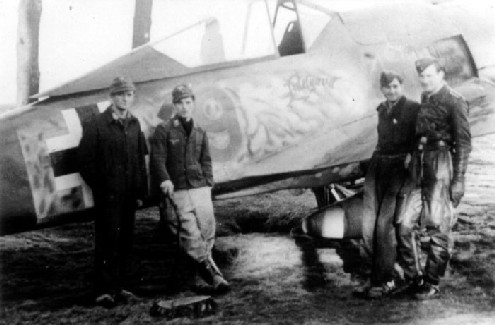
Back in 2006, these two electrical engineers published a paper demonstrating that fame of German World War I fighter pilots (measured as number of Google hits) grows exponentially with their achievement (number of victories).

In this latest arXiv paper Simkin and Roychowdhury have turned their method on its head by measuring scientific ‘achievement’ by the number of Google hits a physicist receives.

They ran Google searches for all 45 pre-WWII Nobel Laureates in Physics, and translated this into achievement using a simple logarithm.

Unsurprisingly, Einstein is the biggest cyber celeb – his 22,700,000 Google hits give him an achievement score of “1 Einstein”. Second was Max Planck whose 10,600,000 rate his achievement as 0.911 Einsteins. Third was Marie Curie scoring 0.850 Einsteins.

Just missing out on the top ten is the UK’s Paul Dirac whose 255,000 hits give him a web presence just 1% that of Einstein’s but this rates his achievement as 0.48 Einsteins.

To round things up, Simkin and Raychowbury argue that their findings are backed up by the “recent attention given to studies where very many non-expert opinions lead to estimates agreeing with reality as good or better than expert opinions”.

Hmmm… that’s a little bit vague isn’t it! And aren’t they assuming that there is an absolute measure of scientific achievement?

So, readers of physicsworld.com, a question for you to ponder:

Can you think of a better / fairer / more useful way of comparing physicists’ achievements?

NASA launches two missions to the Moon

Is there water on the Moon — and where is the best place to build a lunar base? These and other questions about our nearest neighbour could soon be answered by two unmanned missions that blasted off yesterday from Cape Canaveral in Florida.

NASA’s Lunar Reconnaissance Orbiter (LRO) and Lunar Crater Observation and Sensing Satellite (LCROSS) took off at 17:32 local time aboard the same Atlas V rocket. Both probes are expected to reach lunar orbit on 23 June.

The LRO is a $500m satellite that will produce maps of the Moon’s surface with the highest resolution yet. Costing $80m, LCROSS should crash into the Moon on 9 October in order to study its composition.

The missions are important precursors to NASA’s Constellation programme, which aims to send astronauts to the Moon and to create a lunar outpost as a stepping stone for a trip to Mars. As well as determining if water or other useful substances can be found on the Moon, the missions could help identify possible sites where a future manned mission could land.

Unseen details

We probably won’t be able to see the [US] flag. But we should be able to image what the Apollo astronauts left behind Richard Vondrak, NASA

The LRO will orbit 50 km above the lunar surface. It will have seven onboard instruments, including a camera that will map the Moon with a resolution of about 50 cm, revealing previously unseen details. “We probably won’t be able to see the [US] flag,” says Richard Vondrak, project scientist on the LRO and deputy director of NASA’s solar system exploration division. “But we should be able to image what the Apollo astronauts left behind, including the landing zones.”

To produce the lunar maps, the camera will be aided by an altimeter that will measure the gradients of slopes using five lasers beams. Also in preparation for future manned missions, a cosmic–ray telescope will measure the radiation exposure that crew members would receive once they had arrived at the Moon.

In order to remain in orbit, the LRO will need a short boost from its fuel tank every two weeks to stop it from crashing into the lunar surface. Once the fuel runs out after 15–18 months, the LRO will go to a higher orbit where it will operate for a further three years. “With more funding we could even continue doing measurements in a high orbit for up to 10 years,” says Vondrak.

Cold traps?

The remaining four instruments on board the LRO are all dedicated to finding water on the Moon. A radiometer will measure the temperature of the lunar surface to identify cold traps where water ice could exist. An instrument to measure the surface in the ultraviolet will search for surface frost in the polar regions, which is thought to be the best candidate location for water ice to be found. The third is a neutron detector and the only foreign-based instrument on board, having been built at the Russian Space Institute in Moscow. It will create a map of hydrogen deposits on the Moon with a resolution as fine as 10 km. The final instrument is a radar to image the polar regions.

“With these instruments, we will be able to detect hydrogen deposits down to a depth of 2 m,” says Vondrak, “possibly revealing, for example, if it is possible to extract the material and use it as propellant or fuel for a lunar base.”

LCROSS, will also try to discover whether the Moon has water. But while the LRO will enter a circular orbit around the Moon, LCROSS and the Centaur upper stage of the launch rocket will separate off and go into a highly elliptical orbit, initially moving away from the Moon and taking four months to return.

Best crash sites

This will give the LRO time to roughly map the best possible crash sites in the polar regions that could harbour water before LCROSS arrives back. When that happens, the Centaur will crash into the Moon four minutes before LCROSS arrives. As the Centaur hits the surface, it will gouge a 20 m crater into the lunar surface, throwing up a plume of dust that LCROSS will travel through.

With its three spectrometers, three cameras and radiometer, the mission will measure the dust for water content and transmit the data back to Earth before it too smashes into the surface. Although other missions have already found evidence for water ice, as yet there is no smoking gun.

Aerosol cooling overestimated, says new study

The effect of aerosols on modulating the sun’s radiation has been one of the biggest uncertainties in understanding climate change — with satellite data showing more aerosol cooling than computer models. New research reconciles the two different approaches and shows that official estimates of aerosol cooling have been too large, suggesting that any masking of overall warming will be smaller than previously thought.

Aerosols are small particles suspended in the atmosphere that either scatter or absorb solar radiation, a combined phenomenon known as the direct aerosol effect. Aerosols that scatter — such as sulphates, nitrates and organic carbon — tend to cool the Earth by sending some incoming radiation back into space, while absorbing aerosols, such as black carbon (formed from the incomplete burning of fossil fuels), heat up the Earth’s atmosphere.

Scientists know that scattering outweighs absorption, and therefore the direct aerosol effect leads to an overall cooling of the climate. Indeed, it may have contributed to a drop in global temperature around the middle of the 20th century. It may also have masked some of the current warming caused by increased greenhouse gas emissions, which could amplify future warming as strict controls on aerosol emissions come into effect.

Large margin of error

In its report of 2007, the Intergovernmental Panel on Climate Change (IPCC) estimated that the direct aerosol effect has a radiative forcing, or net cooling, of -0.5  Wm-2, which would offset warming due to anthropogenic carbon dioxide by almost a third. However, the margin of error was large – from -0.9 to -0.1  Wm-2.

This uncertainty was mainly caused by differences in the way that the direct aerosol effect is calculated. One option is to use computer modelling, which estimates emissions of the pollutants that produce aerosols and then models aerosol production and the absorption and scattering processes. The alternative is to use satellite measurements of the quantity of aerosols in the atmosphere combined with ground-based measurements of the relative strength of aerosol scattering to absorption. Satellite observations give larger estimates for the cooling.

Now, however, Gunnar Myhre of the Center for International Climate and Environmental Research in Oslo has used the Oslo CTM2 global aerosol model and measurements from the Moderate Resolution Imaging Spectroradiometer onboard NASA’s Terra and Aqua satellites together with data from the ground-based Aerosol Robotic Network of solar photometers to show that there are two main reasons for the discrepancy.

More black carbon

The first of these is the fact that calculations based on satellite measurements assume that the relative concentrations of different aerosols in the atmosphere have remained constant throughout the industrial age. This is a problem because calculating the cooling effect of anthropogenic aerosols involves subtracting the effect of aerosols naturally present in the atmosphere, in other words working out the relative strength of scattering and absorption before the industrial era. It turns out, in fact, that emissions of black carbon have increased by more than a factor of six whereas output of the various scattering aerosols has gone up by a factor of only three or four.

The second reason is that satellites have not been able to gather data on aerosol scattering above bright surfaces — such as polar ice caps — because light scattering from the surfaces themselves is so strong. This has tended to overstate global cooling because there are far lower densities of aerosols over the icecaps.

By bringing the two approaches into line, Myhre calculates a new best estimate of -0.3 Wm-2 for the cooling of the direct aerosol effect. He says that this will tend to reduce future projections of global warming. This is because the expected drop in aerosol production will not lead to as large a temperature rise as previously thought. Indeed, he estimates that the direct aerosol effect offsets only 10% of global warming. However, he points out that there is still some uncertainty in the vertical distribution of aerosols within the atmosphere, which is significant in so far as absorptive aerosols have a much greater effect when located above a cloud than when below.

Myhre also points out that the direct aerosol effect is smaller than another phenomenon known as the “indirect” effect, in which aerosols enhance scattering through cloud formation. The IPPC’s estimate for the indirect effect is -0.7  Wm-2, ranging from -1.8 Wm-2 to -0.3  Wm-2. Edwin Cartlidge

Copyright © 2026 by IOP Publishing Ltd and individual contributors