Vox pops: the spin on electronics

The physicsworld.com camera crew was at the Royal Society in London for a discussion meeting on spintronics. We asked a wide range of attendees what excites them most about electron spin.

In the video, spintronics guru and meeting organizer Stuart Parkin of IBM Almaden describes how a racetrack memory works; Ian Appelbaum of the University of Maryland explains why humble silicon could be the material of choice for future spintronics circuits; and Theo Rasing of Radboud University in the Netherlands talks about his lab’s recent successes in flipping spins very quickly using laser light.

They’re just a few of the experts in the video – and if you are considering a career in spintronics, you can hear several PhD students explain why they find the field so exciting.

Spin doctors caught on film

By Hamish Johnston

Three new video interviews with top physicists are now available on our multimedia page. This month’s theme is spintronics and I had the pleasure of speaking with two leaders in that field — Albert Fert and David Awschalom — at the Royal Society’s recent “The Spin on Electronics!” discussion meeting. We’ve also produced a selection of video “vox pops” with physicists at the meeting.

If you are new to spintronics — or if you are wondering what all the excitement is about — David Awschalom of the University of California, Santa Barbara provides a fantastic introduction to the field and explains how electron spin could be harnessed to create extremely dense computer memories and perhaps even quantum computers.

Awschalom also outlines the challenges that must be overcome before we see the next generation of spintronics devices and explains how he is addressing some of these in his lab.

Albert Fert of Université Paris-Sud, Orsay shared the 2007 Nobel Prize for Physics for his discovery of giant magnetoresistance and is not content to rest on his laurels. He tells me about his current research projects, which include the development of spintronics-based tuneable microwave sources that could someday be exploited in mobile phones and other consumer electronics.

If you store lots of multimedia on your computer, Fert is one person you should thank. He also explains how his research in pure and applied physics was commercialized by IBM to create highly sensitive read heads for hard drives.

Vox pops

And last, but by no means least, we’ve made a “vox pop” video of short interviews with a wide range of people at the meeting.

For example, spintronics guru and meeting organizer Stuart Parkin of IBM Almaden describes how a spintronics racetrack memory works; Ian Appelbaum of the University of Maryland explains why humble silicon could be the material of choice for future spintronics circuits; and Theo Rasing of Radboud University in the Netherlands talks about his lab’s recent successes in flipping spins very quickly using laser pulses. And if you are considering a career in spintronics, you can hear several PhD students explain why they find the field so exciting.

Finally, a plug for the Royal Society, which kindly allowed us to film in its fantastic London premises.

If you are in easy reach of London, I would keep an eye on the Royal Society’s series of Discussion Meetings. I have been to two so far – the first was on the cross fertilization between cosmology and condensed matter physics, and the most recent on spintronics. Both meetings included talks by top physicists from around the world — and best of all, anyone can attend for free (but you must register online ahead of time).

The next physics-related meeting looks like a real humdinger: The detection of extra-terrestrial life and the consequences for science and society on 25-25 January 2010. Confirmed speakers and chairs include Lord Martin Rees, Catherine Cesarsky, Paul Davies and Colin Pillinger.

Hmm, I might go to that one myself!

‘Mini lasers’ illuminate dark molecules

A new microscopy technique that turns molecules into “mini lasers” has been developed by researchers in the US. The new method could help scientists to study biological samples containing “dark molecules”, which are invisible to today’s advanced fluorescence microscopes.

Fluorescence microscopy is the technique of choice for obtaining high-resolution images of biological samples. It works by tagging molecules in the sample with fluorophores – molecules that emit light shortly after being illuminated with light of a shorter wavelength. However, some important biological molecules such as haemoglobin cannot be tagged in this way, rendering them invisible to such microcopes.

The new method is called stimulated emission microscopy and was developed at Harvard University by Wei Min, Sijia Lu, Sunney Xie and colleagues. It is a classic “pump-then-probe” measurement that involves firing two different laser pulses at the sample. Each pulse is about 200 femtoseconds long and the two are separated by less than a picosecond.

Energy from the first (pump) pulse is absorbed by a molecule of interest, placing it in an excited energy state. The energy of the photons in the second (probe) pulse is set at precisely the difference between the molecule’s excited and ground states. This stimulates emission of photons from the excited molecules, which boosts the amplitude of the probe pulse by a factor of 1+10–4 to 1+10–8.

Mini lasers

Xie told physicsworld.com that this is the same process involved in the production of laser light – in effect the molecules are acting as mini lasers.

To extract this tiny signal, which is much smaller than noise in the probe laser, the team switched the train of pump pulses on and off at about 5 MHz and used a lock-in amplifier to eliminate low-frequency noise. An image can be built up in a matter of minutes by scanning the pulses across the sample and repeating the measurement.

By adjusting the energies of the pump and probe lasers, the Harvard group were able to image a number of biological samples containing hitherto dark molecules. They could, for example, see individual red blood cells in a sample of mouse tissue as well as measure the distribution of a certain drug in a similar sample.

Watching quantum dots

In addition to biological samples, Xie believes that the technique could prove useful for characterizing a wide range of organic and inorganic materials with so-called “dark states” – including quantum dots.

Xie said that he hopes to “test the interest of microscope manufacturers” with regards to the commercialization of the technique.

The research is reported in Nature and, in a commentary in the same issue of the journal, Stefan Hell and Eva Rittweger of the Max Planck Institute for Biophysical Chemistry in Heidelberg describe the work as “a bold step towards unveiling details of live cells and tissues that would otherwise be left uncharted”.

String theorist takes over from Hawking

String theorist Michael Green has been announced as the next Lucasian Professor of Mathematics at Cambridge University. Green, 63, will succeed Stephen Hawking who held the chair from 1980 before retiring last month at the age of 67 and taking up a distinguished research chair at the Perimeter Institute for Theoretical Physics in Canada.

Green is currently the John Humphrey Plummer Professor of Theoretical Physics at Cambridge, a position he had held since 1993. Green obtained his BA and PhD from Cambridge and later spent time as a postdoc at Princeton, Cambridge and the University of Oxford. In 1978 he joined Queen Mary, University of London before heading back to Cambridge in 1993.

The Lucasian chair was created in 1663 as a result of a gift from the then Member of Parliament for the university, Henry Lucas. Green is the 18th person to hold the chair and follows a long line of influential figures including Isaac Newton, who held the post from 1669 to 1702, and Paul Dirac, who was Lucasian professor form 1932 to 1969. Hawking stepped down from the position last month because the post must be vacated when the holder is 67, according to Cambridge rules.

Superstring revolution

Green, a fellow of the Royal Society, is regarded as one of the founding fathers of string theory. In 1984, in what is deemed the first superstring revolution, he developed the Green–Schwarz mechanism – a major discovery that led to the realization that string theory may be able to describe all the elementary particles and the interactions between them – together with John Schwartz from the California Institute of Technology. String theory became the first theory in physics to predict the number of space–time dimensions and in 1984 went from being a fringe activity to mainstream theoretical physics

Green has been awarded the Dirac and Maxwell Medals of the Institute of Physics, UK, and the Dirac Medal from the International Centre for Theoretical Physics in Trieste, Italy.

Green takes up the position of Lucasian professor on 1 November.

“Professor Green is certainly a worthy successor to Hawking,” says Robert Bruen, who maintains the website lucasianchair.org and has studied the history of the professorship. “[This is] a great day and well deserved.”

Ask a Nobel laureate

mather2.jpg
Questions please

By Hamish Johnston

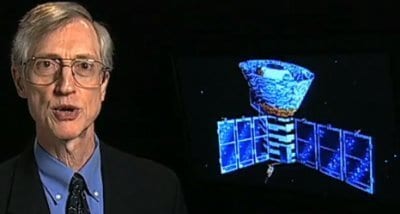
Would you like to ask Nobel laureate John Mather a question?

Maybe you want to know why he decided to study the temperature distribution of the cosmic microwave background — which won him a share in the 2006 prize for physics

Or perhaps you want to ask him what it the most important challenge facing cosmologists today?

Or you could ask him how he spent his prize money!

The Nobel Foundation has joined forces with YouTube to allow you to upload a video of your question — and Mather will answer a selection of queries on video. You can find out more here.

The deadline for questions is 30 October, and you can post as many questions as you like.

Electrons reveal DNA without destroying it

The recent winners of this year’s Nobel Prize for Chemistry join a famous lineage of scientists who have shed light on the biomolecular world by using X-ray crystallography. However, new research published this week unveils an alternative to this famous technique that could reveal the structure and properties of biomolecules in much finer detail. According to its creators in Switzerland, the new method has the potential to revitalize biophysics, biochemistry and molecular biology.

Award-winning research

Developed by physicists, X-ray crystallography determines the structure of crystalline materials by scattering a beam of X-rays from the electrons within a material and measuring the diffraction pattern that results. James Watson and Francis Crick at the University of Cambridge, with the help of Maurice Wilkins and Rosalind Franklin at King’s College London, famously used this technique to determine the double-helix structure of DNA molecules. Similarly, this year’s Nobel Prize for Chemistry was awarded to the trio of biophysicists who used X-ray crystallography to determine the atomic structure of ribosome – the sites in cells where proteins are produced.

Despite all its successes, however, the ultimate limitation of this technique is that it works by averaging over millions of molecules in a crystal. This inevitably means that some of the finer details of the molecular world could remain undiscovered. Moreover, there are many protein molecules that are very difficult or impossible to crystallize.

The obvious technological solution for researchers is to replace their X-ray crystallography with high-energy electron microscopes, which physicists are already using to peer into the inanimate, atomic world. The trouble is that biological matter can be very delicate and so the radiation used in these techniques can damage or destroy the biomolecules under observation.

Electrons slow down

Now, Hans Werner-Fink and his team at the University of Zurich have suggested a way around this problem by creating a form of microscopy that utilizes lower-energy electrons. To demonstrate their new technique, the researchers isolated a strand of DNA and exposed it to a beam of low-energy electrons over the course of 70 min. By tracking the electrons that are scattered elastically, the researchers were able to build up holographic images of the DNA.

Underlying the new technique is the fact that, at certain energies, the electron radiation causes no damage to the DNA. In this way, Fink and his colleagues report successful imaging at a number of discrete energy points up to 230 eV. They admit that they do not fully understand why these “energy windows” exist but they conclude that elastic scattering must dominate at these frequencies.

Fink told physicsworld.com that, although the holography technique is simple in principle, there have been a number of technical challenges to overcome in realizing the technology. The researchers are now working with industrial partners in Germany to improve the design of their electron detector as well as their miniaturized electron lens. “We are convinced that our technique has the potential to offer the most detailed images yet of single biomolecules,” Fink said.

The related research paper is currently under review for publication in Physical Review Letters and an advance copy is available on the arXiv preprint server.

Canadian theory institute honours Stephen Hawking

The Perimeter Institute for Theoretical Physics in Waterloo, Canada, has announced that a major new extension to the building will be known as the Stephen Hawking Centre. The extension, which is currently being built, is due to open in 2011 and will double the size of the institute. It will also provide a home for the institute’s Master’s students, the first of whom joined the Perimeter Institute this autumn as part of its Perimeter Scholars international programme.

The announcement was made on 17 October at a special ceremony in the institute’s auditorium, held to mark the theory centre’s 10th anniversary. The ceremony was attended by Mike Lazaridis, who founded the institute in 1999 using money that he had made from Research in Motion – the Waterloo-based firm that makes Blackberry handheld devices. Although Hawking himself was unable to attend as intended, he did provide a video-recorded message.

“Theoretical physics has been the most successful and cost-effective in all of science,” said Hawking. “Many great challenges lie ahead. Where this new understanding will lead is impossible to say for sure. What we can say with confidence is that expanding the perimeter of our knowledge will be the key to our future.”

10 new distinguished research chairs

The Perimeter Institute has also announced 10 new distinguished research chairs, in addition to the 10 who were unveiled earlier this year. They will be Dorit Aharonov (quantum computing), Patrick Hayden (quantum communication), Leo Kadanoff (complex systems), Chris Isham (particle theory), Renate Loll (quantum gravity), Malcolm Perry (strings), Sandu Popescu (quantum fundamentals), Bill Unruh (gravitational physics), Guifre Vidal (quantum information) and Mark Wise (particle theory). The chairs will visit the Perimeter Institute for about a month each year.

The Perimeter Institute’s research chairs are the idea of the institute’s director Neil Turok, who took over last year. Turok was previously based at Cambridge, where he was a colleague of Hawking in the Department of Applied Mathematics and Theoretical Physics. Turok told physicsworld.com that Hawking, whom he last saw in September, appeared to be recovering well from the flu that he had suffered from earlier in the year. Hawking said in his pre-recorded message that he looked forwarding to visiting the Perimeter Institute in summer 2010.

More than just wonderland

I’ve been here at the Perimeter Institute for Theoretical Physics for four days now and I felt it was time I should visit the special “tent” containing hands-on displays and exhibits for the public as part of the Quantum to Cosmos festival .

First up inside is a full-scale model of NASA’s Mars Science Laboratory rover, which is due to take off in autumn 2011 and land on the red planet in summer 2012.

Round the corner were exhibits explaining quantum computing, superconductivity, polarization and more.

In the centre of the tent, meanwhile, was a 3D movie containing simulations of galaxy collisions, black-hole mergers and the early universe, with a voice-over from Stephen Hawking.

There was also face-painting corner for children, with special paint that only shows up under ultraviolet light.

Visitors could also watch a great series of one-minute cartoons about quantum mechanics, featuring two characters called Alice and Bob.

All good stuff – but the question is whether such events will persuade young people to study physics.

Many pupils, and most importantly their parents, decide what to study based on the career opportunities that their chosen field will provide. Somehow we need to show pupils that physics isn’t kids’ stuff – but a decent career move too.

Blackboards and Blackberries

By Matin Durrani

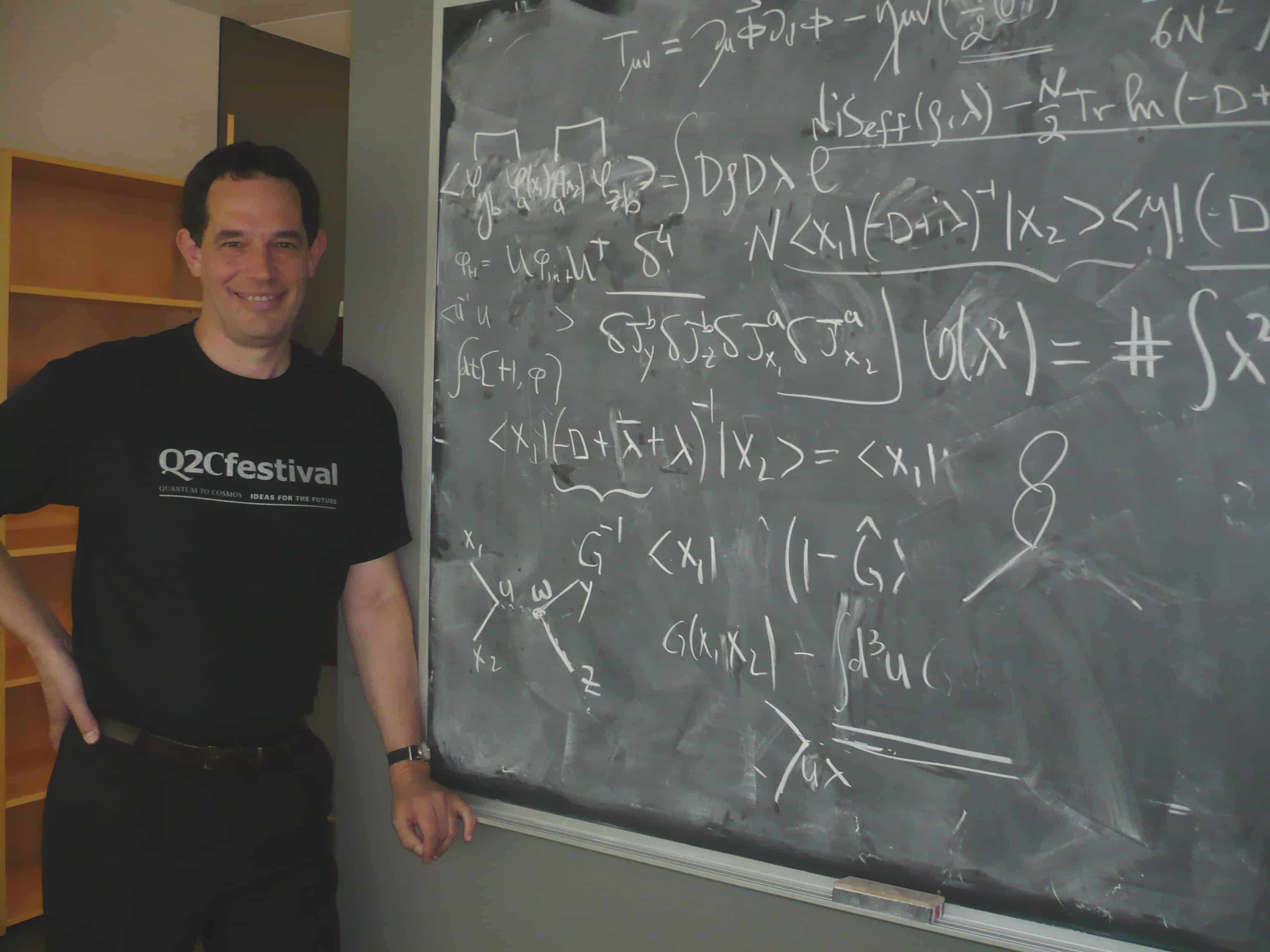
turok.jpg
Perimeter Institute director Neil Turok with one of its many blackboards

This is my first visit to the Perimeter Institute for Theoretical Physics in Waterloo, Canada.

Physics World has been following the progress of the institute since it first began in 1999 so I knew what the ethos of it would be like – it encourages staff to work on unorthodox areas that are outside the mainstream, it strives for excellence, and it provides a supportive environment where nothing is taken for read.

There are no big shots whose views cannot be called into question and postdocs are given lots of freedom to pursue the ideas they are most interested in – to do pretty much what they want.

The founders of the institute also knew that a key factor would be the building itself. After spending its first few years in a temporary home — a former red-brick Victorian post office — the Perimeter Institute moved into a brand new building in 2004.

It was specially constructed, and is filled with lots of comfy, low sofas where people can stop and discuss weighty matters. The offices all have glass walls so that you can see if someone is in, and the corridors are deliberately narrow so that people are forced to stop and talk. (And in an amusing in-joke, there are seminar rooms known as the Alice Room and the Bob Room, named after the two people used in thought experiments on quantum cryptography.)

Free coffee is on tap. There are pool tables, stripped floorboards, lots of natural light, real log fires, and blackboards everywhere.

I’d heard about the blackboards. But what it is interesting is that they are actually used. So too are the Blackberries that all staff are given: the institute was founded by Mike Lazaridis, whose company Research in Motion makes these hand-held devices.

What was also nice to see was that the institute’s director, Neil Turok, did not see it beneath himself to make me a cup of tea before sitting down for an interview for an article I will be writing for the December issue of Physics World magazine.

I can’t imagine most lab bosses would pesonally make tea for their visitors. He even washed the cups out beforehand.

I just wish I understood what was on his blackboard.

The art of guestimation

By Matin Durrani

Enrico Fermi was a real lover of back-of-the-envelope “guestimation” calculations and was fond of posing them to his would-be PhD students.

q2cpicture.jpg
The Quantum to Cosmos festival is on now in Waterloo, Canada

He famously asked how many piano tuners there are in Chicago and in July 1945 calculated the strength of the first atomic-bomb test blast by dropping pieces of paper before, during and after the explosion.

It is that ability of physicists to make rough “ball-park” estimates, off the cuff, of various quantities that inspired today’s “Art of Guestimation” event at the Quantum to Cosmos festival in Waterloo, Canada.

Holed up in the Princess Twin cinema were three young physicists – Sarah Croke and Robin Blume-Kohout from the Perimeter Institute for Theoretical Physics and Robert McNees from Loyola University in Chicago — who were given 10 minutes to answer various “Fermi questions” put to them by the audience before the gong went.

We had time for five questions, which are listed below, along with the panel’s answers. As with all these things, there are no right or wrong solutions. The point of the session was to show the logical way that physicists think when they want approximate solutions.

How much memory would an individual person need to store everything they could see in a lifetime? About 1 exobyte – on the assumption that the eye works like a movie film, storing visual information at about 30 frames a second, with each frame being stored in high definition (1920 x 1080 pixels) and with each pixel needing 32 bits to store colour. (The panel ignored what happens when you sleep, which would only open another can of worms.)

How many humans have ever lived since Homo Sapiens first walked on the planet? This question has been asked before – it’s about a hundred billion. Very roughly speaking, there as many people alive now as have ever lived.

How many “eh”’s would a typical Canadian say in a lifetime? (Bit of a silly one this – the “joke” is that Canadians say “eh” a lot.) The panel’s answer was seven million, assuming Canadians talk for three hours a day, that each sentence lasts five seconds and one in 10 sentences include the word “eh”. Eh?

How many Loonies are there in circulation? (No, we’re not talking mad people, but Canadian one-dollar coins.) This got the panel really stuck – their final answer was between two and four hundred million before the gong went.

How much salt is there in the Atlantic Ocean? The critical point was knowing how much salt there is in a litre of sea water. Just multiply that number by the volume of the ocean to give, ooh, about 10 to the power 19 kg.

The session was a lot of fun. Although I am not sure if this kind of event has ever been done before, I reckon it could be a winner at other science festivals too. It certainly got the audience involved, which has to be a good thing.


Copyright © 2026 by IOP Publishing Ltd and individual contributors