Two Cultures: 50 years down the line

snow.jpg
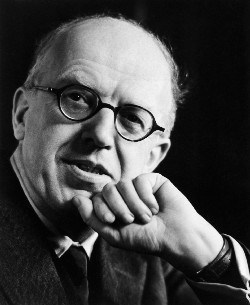
CP Snow saw a dangerous void in culture

By James Dacey

Fifty years ago this month, academics filed into a packed lecture theatre at Cambridge University to hear the English physicist and novelist CP Snow deliver his now famous talk about “The Two Cultures”, which was later published as a book.

Snow’s central argument was that there exists a dangerous gulf in the modern world between top level “scientists” and the “literary intellectuals” of the humanities.

In the main, Snow blamed this on the snobbery of literary intellectuals who unfairly characterized scientists as uncouth and lacking in culture.

As an anecdote Snow described his experience of dinner parties where literary intellectuals were quick to scoff at a scientist who could not recall Shakespeare but bristled at the suggestion that they should be acquainted with the 2nd Law of Thermodynamics.

Snow warned that this lack of cohesion between science and the humanities was leaving society ill-equipped to tackle some of the complex problems the world was facing, including the widening gulf between the rich north and the poor south, driven by industrialization.

Over the past fifty years, Snow’s lecture has received as much criticism as praise, mainly for its informality, stereotyping and vague definition of culture. However, the fact that the Two Cultures debate still resonates in 21st Century academia, is probably testament to Snow’s great insight.

Tonight, in London, the Royal Society is hosting a public debate to revisit the Two Cultures argument and to discuss how it applies to our situation today.

The event will be hosted by the nation’s favourite polymath Melvyn Bragg, and panellists will include John Denham, Secretary of State for Innovation, Universities and Skills, and Marcus du Sautoy, the Simonyi Professor of the Public Understanding of Science.

For a more detailed look at Snow’s lecture and its impact over the past 50 years, take a look at Robert Crease’s article in the latest print edition of Physics World .

UK research council backtracks on funding ban

A leading UK research council has backtracked from controversial plans to ban scientists from applying for grants for a whole year as part of an attempt to reduce the number of grant applications it receives.

The Engineering and Physical Sciences Research Council (EPSRC) announced on 12 March that it would introduce the new plan to reduce the pressure on its peer-review system for reviewing grant applications, which it says is overburdened with proposals.

The rule, which would have come into effect on 1 June, said that scientists would not be able to apply for funding for 12 months if, in the past two years, they have had three or more proposals ranked in the bottom half of a prioritization list and have less then 25% of all their proposals funded in that time.

The EPSRC said the introduction of this rule would exclude up to 250 researchers, or around 10% of the total applicants, from applying for funding. The excluded researchers were to have been contacted this month to be told they cannot apply for funding for a further 12 months and encouraged to take part in a “mentoring programme” at their university.

Cause for concern

The plan caused outrage in the UK scientific community and led to over 1900 people signing a petition on the UK government’s website demanding that the policy be reversed. Researchers were particularly furious that the new rule would have been retrospective, which meant that the EPSRC would have used the previous two years of applicant’s performance even though the rule was not active then.

Although the EPSRC originally said it would review the rule in 12 months’ time, it has now watered down its plans. The new policy will not ban scientists from applying in the future, but will limit the amount of proposals they can submit to one per year for the 12-month period. The rule will also not be retrospective but begin from 2010.

“I’m delighted to see that EPSRC has made the exclusion procedure rather less draconian and that it has responded positively to the very strong response of the community,” says Philip Moriarty, a condensed-matter physicist at the University of Nottingham. “However, I am still concerned that there remains the implication that there is a direct correlation between the quality of a proposal and where it is placed on a ranked list at panel.”

The Daily Show does CERN

oliver-cms.jpg
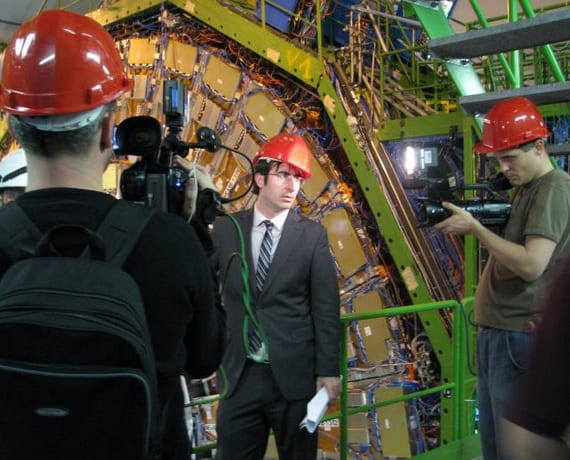
Daily Show correspondent John Oliver at CERN (credit: Matthew Searle)

By Michael Banks

One of my favourite political satire shows is the US programme The Daily Show starring Jon Stewart.

So when Daily Show correspondent John Oliver went to the CERN particle-physics lab near Geneva to do a piece on the Large Hadron Collider (LHC), I couldn’t wait to see their take on it.

The six minute piece aired on the 30 April edition of the show (you can watch it here, and it didn’t disappoint.

The first person Oliver met was “the pioneering particle physicist” John Ellis, who, according to Oliver, was “clearly an evil genius up to something.”

“Nobody with expertise in physics or astrophysics thinks there is the slightest risk of any danger,” says Ellis, after Oliver asks him what is the likelihood that the LHC will destroy the world.

Cue Walter Wagner, a high-school physics teacher, who infamously filed a federal lawsuit in the US District Court in Honolulu last year to prevent the LHC from starting up. He told Oliver there is a one in two chance that the LHC will destroy the world.

The funniest part is when Oliver asks Wagner to give more details about the “50/50” chance of survival.

“Well, if you have something that can happen and something that won’t necessarily happen, it’s going to either happen or it’s not going to happen, and… so the best guess is 1 or 2,” says Wagner. To which Oliver says to a slightly bemused looking Wagner, “I am not sure that’s how probability works Walter.”

Richard Breedon, a particle physicist at CERN, falls into a similar trap laid by Oliver. As they stand in the CMS cavern Oliver asks how safe is the collider.

“This place is perfectly safe,” says Breedon confidently. “So why are we wearing hard hats,” Oliver quips. The taken aback Breedon stumbles and then answers, “it is safe for safety” – “checkmate”, says a voiceover from Oliver.

The segment ends with Wagner and Oliver in a bunker where Oliver says they may as well try and breed if the world is about to end and they are the only two people left. “It’s worth a shot”, says Oliver, “there is a 50% chance it might work.”

Is Googlespeak killing creativity?

wolf.jpg
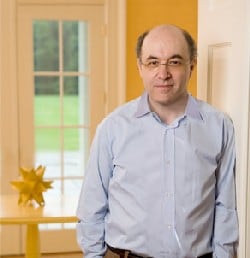
Stephen Wolfram: creator of much-discussed new web tool

By James Dacey

Ludwig Wittgenstein, the mathematician, philosopher and infamous black swan of 20th century academia, argued that words – in themselves – are meaningless. Words, according to Wittgenstein, only pick up significance from their use in “language games” – the rules of which are governed by culture.

Fast-forward to 2009 and the way language is used is changing at an ever-increasing pace. Undoubtedly, one of the key drivers of this change is the Internet, which has brought about a revolution in the way knowledge is stored and communicated.

Now, British-born physicist Stephen Wolfram – of Mathematica fame – is about to alter the way knowledge is shared even further. He has created the world’s first “web-based question answering system”, which he says will remove the “linguistic fluff” of other search engines and “make expert knowledge accessible to anyone, anywhere, any time”.

Basically, it will enable you to instantly attain facts using an economy of words. For example, type: “proton mass” and immediately receive your answer in MeV and kg.

Wolfram Alpha will launch this month and, according to a BBC news report, some industry experts are saying it will become as important as Google.

In other news yesterday, the UK Government announced large reforms to the education system that will drag the internet right into the heart of schooling. One of the implications is that web tools, like Wolfram Alpha, could start to replace dusty old text books in the classroom – from physics to history classes.

Already, the proposals have sparked some criticism. Writing in The Times today, John Sutherland, Emeritus Professor of Modern English at UCL, argues that the increasing use of computers in the curriculum is leading to a lexical poverty amongst students.

“Many skills have been enhanced by the computer but vocabulary, I suspect has been shrunk, rigidified and deadened,” he writes.

So what are we to make of all this – is the internet squeezing out creativity from education?

It seems quite reasonable for Sutherland to warn against losing the creativity that the ebb and flow of language can inspire in students.

However, whilst the English professor’s sentiment is important, it’s all a bit predictable from someone in his position.

Of course, the other side of the argument is that by removing the “dust and fluff” of stayed educational materials, we can free up pupils to develop a creative, varied approach to learning that will prepare them well for the 21st century workplace.

As always, I’m sure the solution will be a compromise between the two positions.

One thing has become crystal clear though. Like it or not Internet culture is moving ever deeper into the heart of education and tools, like Wolfram Alpha, will start to take a more active role in the language games that take place there.

Rolled-up metamaterial could act as hyperlens

Physicists in Germany have devised a new way to make metamaterials that could be used to boost the resolution of optical microscopes. The technique involves depositing alternating layers of semiconductor and metal on a flat surface and then rolling up the layers into a tube that resembles a hollow Swiss or jelly roll.

Preliminary measurements and computer simulations suggest that the rolls could be used to create a hyperlens — a device that can image objects much smaller than is possible using an optical microscope.

Novelty structures

Metamaterials are specially engineered structures that respond to light and other electromagnetic radiation very differently than conventional materials. They have been used to create not only hyperlenses but also other novel devices such as invisibility cloaks and superlenses.

The problem is that it is difficult to make metamaterials for visible light. This is because the structures in the metamaterials must be about the same size as the wavelength of the radiation — and for light this is hundreds of nanometres.

Thanks to ongoing innovations in the semiconductor industry, however, it is fairly easy to make nanometre-sized features. Unfortunately, these tend to be flat and an effective lens must have the appropriate curvature in 3D.

Roll me up

Now, Stefan Mendach, Stephan Schwaiger, Markus Broell and colleagues at the University of Hamburg have worked out a way to make a flat metamaterial “self-roll” itself into a tube that could be used as a hyperlens.

The team begins with a gallium arsenide (GaAs) substrate that has a 40 nm coating of aluminium arsenide. Then a sequence of three layers — indium gallium arsenide (InGaAs); GaAs; and silver — is laid on top several times over. Each layer is about 20 nm thick.

The InGaAs and GaAs layers have slightly different atomic spacings, which means that the layers are strained. When the aluminium arsenide layer is chemically removed, the structure — in an attempt to relieve the strain — automatically rolls up into a tube with an outer radius of about 2 μm. The rolling-up process takes about 30 seconds.

Radial focusing

The team made several different tubes with different silver layer thicknesses. They then placed a tiny source of light inside the centre of each tube and measured how much light is transmitted through the wall as a function of frequency. This allowed the team to measure the plasma frequency of the metamaterial.

The permittivity of the metamaterial — its ability to transmit electromagnetic waves — is related to its plasma frequency. The researchers found that the plasma frequency — and hence the permittivity — can be changed over a broad range from green light to the infrared simply by adjusting the ratio of the thicknesses of the metal and semiconductor layers.

Because the metamaterial is a cylinder, the path taken by light moving outward along a radius of the tube (and therefore the permittivity) is very different the path taken by light moving tangentially to the layers. For light at the plasma frequency radial light experiences a relatively large permittivity, while light moving tangentially experiences a relatively small permittivity. As a result, the light is focussed into the radial direction.

Capturing evanescence

This means that the tube could be used as a hyperlens, which captures “evanescent” light from tiny objects and focuses it into an image that can be further magnified by conventional optics. Evanescent light can resolve features much smaller than wavelength-limited conventional optics — however it does not travel far from the surface of the object and cannot be seen by a conventional microscope.

Mendach told physicsworld.com that the magnification of the tubes was not great enough to confirm that they could be used as hyperlenses. Instead, they fed their optical measurements into computer simulations, which suggested that they could.

According to Mendach, the magnification can be boosted by creating tubes with a greater ratio of outer and inner diameter — something that the team are working on, along with an invisibility cloak.

Mendach believes the hyperlenses could be used to create imaging systems in which tiny amounts of fluid containing living cells are pumped into tubes, which would image the cells. He also said that the tubes could be used to focus a laser beam to a tiny spot, which could be handy in performing space resolved spectroscopy.

The work was published in Physical Review Letters .

More than wishful thinking

The great vision of fusion power — harnessing the energy source of the stars for the good of people on Earth — is and has always been a highly attractive one. The history of fusion research is full of interesting tales, from its discovery to the recent completion of the US National Ignition Facility (NIF), now the world’s largest laser (see Physics World March p7). Unfortunately, a new popular account of this history, Sun in a Bottle, mostly retells old stories of notable fusion failures, from mysterious early devices in Argentina through the cold-fusion debacle of the late 1980s. As a scientist who has devoted his career to plasma physics and fusion, I am — at least according to author Charles Seife – part of a community of researchers “unable to rid themselves of their intemperate self-deception”. Having read it, I appear to be faced with a choice: am I a fraud or an incompetent?

The book begins with a rehash of the early development of nuclear weapons in the US. It continues with a series of events and a progression of characters that represent many of the lowlights of the history of fusion. Words from the chapter titles such as “sunshine units”, “baloney bombs”, “cold shoulder” and “secrets” provide a flavour of this account. The proliferation of schemes for fusion plasma confinement; scientists’ growing dismay as they began to understand the multitude of mechanisms by which plasmas can lose energy; the admittedly bad track record of expensive new devices that failed to keep their original promises – all these are described in detail.

Seife, a journalism professor at New York University, is very well read and writes a good phrase. Most of the history in the book has, however, been described better in earlier works, such as Richard Rhodes’ The Making of Atomic Bomb and Dark Sun: The Marking of the Hydrogen Bomb or Joan Lisa Bromberg’s Fusion: Science, Politics, and the Invention of a New Energy Source. Anyone a bit familiar with the field will find little surprising in this book, although someone who has never read about fusion or plasmas might be interested and amused by the stories in it. The idea of using nuclear bombs for giant civil-engineering projects; the media circuses surrounding announcements made by fringe scientists from Argentina to Utah about fusion breakthroughs; the clear explanations of magnetic and hydrodynamic instabilities that have plagued the field — all of these will be interesting to the uninitiated. And the chapter on electrochemical fusion (the original “cold fusion” advocated by Stanley Pons and Martin Fleischmann 20 years ago) tells a complete version of the story as it happened at the time, although it misses the rich thread of fanatical posting on this subject that can still be found on the Internet.

The narrative does pick up as it becomes more personal in the chapter entitled “Bubble trouble”. Here, Seife tells the story of how a team at the Oak Ridge National Laboratory led by Rusi Taleyarkhan claimed to have observed neutron emission from sonoluminescence in deuterated acetone. The team’s reports were published in 2002 in Science magazine, where Seife was working as a journalist. The telling of this story is new, and the author’s unique and close viewpoint makes it interesting to read. Unfortunately, Seife has to admit that he failed to ask the right questions in his investigations at the time, and he is never able to reveal which scientists originally recommended publication of the results, which have not been reproduced. And Seife does not report on the belief still held by a handful of researchers that the imploding bubbles can actually reach thermonuclear temperatures.

There have certainly been low points in fusion research, and I do not disagree that “wishful thinking” is common among we who share the vision of fusion. In fact, I am fond of saying that all proposed fusion schemes require at least one miracle to succeed; however, we should not criticize concepts for needing miracles, but rather judge them on the number and magnitude that are required.

But there have been highlights in fusion’s rich history as well. The venture-capital-fuelled plasma research in southern California may have produced some, shall we say, “interesting” detours in fusion from the 1950s to the present day, but it also saw the birth of General Atomics, a highly successful and productive technology company doing great research in fusion and other fields. The neutron-producing experiments at the Tokamak Fusion Test Reactor at Princeton University in the early 1990s were a great success, and I was proud to be involved in them. There is also the wonderful story of the US-led Tokamak Transport Task Force that set off in 1988 on a decade-long quest to control turbulent transport in plasmas. In the beginning nearly all thought the quest quixotic. But by 1997, the application of reversed-shear velocity profiles — a process in which the flow of material changes magnitude and even direction across the plasma — made confinement no longer the major problem of magnetized fusion.

Among the lowlights and wrong turns, I would have enjoyed some new journalistic research into many of the stories that have never been told. The “blacklight process” tapping into the latent energy of the hydrogen atom, involving fractional quantum numbers; anomalous microwave absorption and the resulting heat from carbon nanotube plasmas – both of these would have been fascinating areas to cover. Some of these stories continue to this day in the hearts and minds of zealots around the world. This “tail” of ideas that refuse to go away could have been a rich subject of this book, but is not.

And what of the future of fusion? In March this year, the world’s largest laser became a reality with over a megajoule of laser light on target at NIF. At the risk of being intemperately self-deceiving, I would also argue that neutrons from fusion can be used to reduce the nuclear waste or improve the proliferation resistance of fission systems. The technical constraints on the plasma physics of such “hybrid” systems are different to the requirements to produce energy from pure fusion (see Physics World March p9). Many researchers are actively examining the technical possibilities of these systems, in the hope that they will help reduce carbon emissions into the atmosphere. And I am continually pleased to see the inventiveness of my fellow fusion scientists in discovering and developing new ideas and technologies to overcome the barriers that nature has created before the promise of fusion. These are all interesting untold stories that would have provided a more balanced and up-to-date narrative.

So, yes, the history of fusion has been “strange”, as all science is. And I admit to “wishful thinking”, for a strong and exciting vision always helps focus and drive effort. Readers of this book will certainly see fraud or incompetence. But there is a better story to be told, and most of it is a success story of scientific progress. I am proud to be part of the community telling it.

Once a physicist: Nick Horvath


How did you get into basketball?

That’s an easy one: I was tall. I had zero interest in sport at a young age and was pushed into basketball against my will when I was about eight. I hated it. The next year, however, I was so much taller than everyone else that in my first game, even though I had no idea what I was doing, I could simply hold the ball above my head and shoot over everyone. I fell in love with basketball after that first game. If I had played badly that day, it is likely that I would not have played again in my entire life.

Why did you choose to study physics?

Neither of my parents were athletes. The only thing they stressed as I was growing up was the importance of education. My father was a chemist and science-lover, and while I was in high school, he and I read a whole pile of physics books by the likes of Carl Sagan, Richard Feynman, Stephen Hawking, Paul Davies and Timothy Ferris. My favourite was In Search of Schrödinger’s Cat by John Gribbin; I have great memories of walking the trails through the woods near my house reading that book and talking about the marvels of physics with my father. Therefore, going into university, I had a love of physics (at least in theory) even though I had only taken one class in physics in high school. I enjoyed physics at Duke University tremendously. No-one in the basketball programme thought it was possible to do a physics degree while playing basketball, but I never got to a point where I thought I would not be able to do it, even when I was studying quantum mechanics. I will admit, however, that trying to fit in hours of physics homework while playing basketball and studying English at the same time was a huge time-management challenge.

How did you balance the time pressures?

English has always been my real love. I have been a voracious reader and writer since I was eight years old — I read all 1200 pages of Stephen King’s The Stand when I was nine. So at Duke, doing the English work was easy; physics, more difficult; basketball, incredibly taxing physically, mentally and emotionally. I enjoyed losing myself in my academic work as an escape from the pressure and spotlight of basketball. I had time management down to an art form, and used the free tutors afforded me through my scholarship almost daily. The only time I ever had trouble getting my work done was when the basketball season was over — I had so much free time on my hands I could not force myself to do any work.

What did you do after your degree?

I did not plan on playing basketball after Duke, but when my senior season was over, I realized I did not want to retire from it. Therefore, I got an agent, trained hard during the summer of 2004 and finally ended up getting a two-week trial for the West Sydney Razorbacks in Australia. I had a great first year and have been playing there ever since. There is also a short season in New Zealand that does not overlap with the season in Australia and I have played in that league for four years now as well. My wife is a New Zealander and we will probably end up living here for rest of our lives. I never planned on physics as a career simply because I did not enjoy working in a lab. I have found that I like physics theory much more than the grind of true physics work.

How does your physics help you now?

There is not much direct correlation between physics and professional sport. In the past, I tried to explain to a coach the physics involved in trying to box out a player who outweighs me and who is crashing the offensive boards at a full sprint. Coaches want to hear no such thing. They do not care if it is physically impossible, they just want you to get the ball — laws of physics be damned. Indirectly, knowing how the world around me works is something that will always be beneficial and that I will always enjoy.

Do you keep up with any physics?

I have a continued interest in physics and love reading about new breakthroughs. My father is an amateur astronomer and we use his telescope when I visit. He is always sending me articles about new discoveries in astronomy and cosmology, and anything else physics-related. Occasionally, I have the urge to work through some equations. I find a deep satisfaction in slogging through a difficult physics problem and coming up with the correct solution, but I do it purely to keep the gears of my brain greased — and to prove that I still can.

What do you plan to do next?

I have always wanted to teach and write. For the last 10 years I have been an English (or possibly physics) teacher trapped in a basketball player’s body. In truth, I am one of the few athletes I know who is looking forward to retirement from sport so that I can move on to another facet of my life. I plan on teaching in high school and writing novels (and most likely a basketball memoir).

Riding the red dragon

Imagine a climate like that of the Canary Islands, a lab overlooking a golden beach, and a dramatic mountain coastline dotted with pagodas and forests of new skyscrapers. It sounds incredible, but in December 2008 I swapped the grey, winter skyline of the UK for just that. In the space of a few short days, I found myself leaving Nottingham for a job as a postdoc more than 5000 miles away at Xiamen University in Fujian province, China.

The cause of my rapid transition to Xiamen, which is located just across the straits from Taiwan, was a two-year Science and Technology China Fellowship that I was awarded by the European Union (EU) in October 2008, coupled with a two-month fellowship funded by the UK Department for Innovation, Universities and Skills (see box). These are relatively new programmes – they were founded in 2004 and 2008, respectively – and their common aim is to promote links between EU- or UK-based researchers and Chinese institutions. Xiamen specializes in the study of surface science, and I am now doing research on enhancing the power output of biofuel cells using nanomaterials.

As in other countries, postdoc positions in China normally last for two years. This is generally long enough to get a good feel for a place, but since China is such a dynamic and fast-moving environment, the desire to explore its fascinating history and diverse culture may mean you will want to stay longer. One appealing feature of such a fellowship is the opportunity to learn a new language while simultaneously conducting your research and adding to your publication record. Other benefits of collaborating with researchers in China lie in the alternative (and, to me, welcome) perspective that their academic training can bring to a project. I have found that working at Xiamen allows me additional career privileges and freedoms that I would have struggled to gain in an “ordinary” postdoc. For instance, my Chinese colleagues are keen for me to design and deliver my own lecture courses, are quick to assign Masters-degree project students to help me, and are willing to give me a lot of freedom to design my own experiments. My work is highly multidisciplinary, and, as a foreigner, I am given the flexibility I need to work between groups, as well as privileged access to facilities (such as electron microscopes and facilities for fabricating micro-electrical-mechanical systems) to complete the project. And of course, international fellowships are a great incentive for scientists like me who really enjoy the opportunity to travel.

Travelling the world

My interest in China began when I visited friends in Shanghai in 2003, but my desire to travel overseas is even more deep-rooted. After I graduated from Hull University in 1998 with a degree in physics, I spent almost a year studying Russian and physics at the Urals State University in central Russia before returning to Hull to do a PhD in physical chemistry. But then, after I finished my PhD, I was disappointed to find that employers in industries such as medical physics and pharmaceutical science often saw my broad educational background as evidence that I was either overqualified or lacked staying power.

Faced with this reality, I decided to switch fields by doing a Masters degree in exploration geophysics at the University of Leeds with support from Shell. This professional qualification led to a job as an offshore geophysicist with Veritas DGC (now known as CGG Veritas), a firm that provides seismic data to the oil and gas industries, and I spent part of 2005 prospecting for oil off the north-western coast of Australia. But after about six months, I realized that such jobs do not require a PhD, and I moved back to Hull.

The first significant step towards my goal of working in China came in 2006, when three Chinese academics visited Hull University from Xiamen after an invitation to collaborate. At that time, no-one had yet made the reverse journey from Hull to Xiamen, so in 2007 (following discussions with those visiting academics) I decided to remedy the situation by going to Xiamen twice: first on an exploratory visit, then to discuss a framework for research collaboration.

My work at Xiamen is on a project aimed at generating electricity directly from blood glucose and oxygen, and using it to power implanted microelectronic devices. With current technologies, batteries in applications such as pacemakers need to be changed at regular intervals, which involves surgery, so a “perpetual battery” would be a significant medical breakthrough. I have found that Xiamen provides all the right technical ingredients for developing the physics and engineering of this technology, rather than just improving the chemistry, which others have already done.

Practical considerations

A typical salary for a researcher in China working for a Chinese institution is around 2500 renminbi per month, or about £250. However, this can be considerably higher — about £1500 per month, tax free — if you obtain a fellowship. In addition to the programme with which I am involved, new changes to the EU’s Marie Curie Fellowships, which enable early-career researchers to work abroad (Physics World December 2004 pp50— 51), mean that EU citizens will soon be able to apply for Chinese funding under a recently negotiated joint EU— China reciprocal agreement. I was told during a meeting with several commissioners in Brussels that the funding levels for this new programme will be equivalent to salary levels in the EU.

Pay is also higher for researchers working at those Western universities that have an established “satellite” campus in mainland China. Examples of such partnerships include the University of Nottingham, which established its Ningbo campus near Shanghai in 2004, and the University of Liverpool, which partnered with the existing Xi’an Jiaotong University in Suzhou to form a new joint institution in 2006. Note, however, that as the Nottingham Ningbo campus is an independent university (unlike Xi’an Jiaotong-Liverpool), it does not receive central-government funding, which means that it is currently a teaching-only institution with little research activity. On the other hand, the private status of the Ningbo campus does allow academics to freely develop their own curriculum outside of the government model. Researchers who are thinking about spending time in China must carefully consider how much research and teaching they will be required to do at their host institution, compared with a similar appointment in the West.

I initially had some concerns about what I could realistically expect to achieve during a two-year fellowship, due to my lack of familiarity with some Chinese-made equipment and with how the Chinese university system operates (for instance, how money for consumables is administered or where you procure research materials). However, as a state-designated “key laboratory” in surface chemistry, Xiamen University receives regular annual funding from both of China’s main funding bodies (see box) and hence has a modern infrastructure and among the most up-to-date facilities in China for doing surface science.

Within these new labs there is state-of-the-art equipment — often procured from Japan and western countries — that allow research of an international standard to take place. This, along with the many friendly and supportive colleagues I have met, has made me feel much more confident that the original project aims can be met.

Goals and guanxi

From talking with the 30 other EU Science and Technology China fellows in my 2008 “class”, it is clear to me that working in a Chinese university gives you a lot of flexibility in developing your career. This is partly due to the open and multidisciplinary approach to research that flourishes in many institutions here. The keen demand for academic English also opens doors — although sometimes it can be hard to refuse requests to check colleagues’ academic papers. Consequently, one learns a lot about time management and guanxi, which means “personal relationships”. If you dare venture here, be prepared for a fully hands-on and action-packed two years!

If staying in academia after a foreign assignment is not for you, it is still likely that a stint overseas will open other doors. True, Western companies generally will not employ foreign, highly skilled labour to work in China when they can employ locals at a fraction of the cost, but there are exceptions to this if you bring significant skills and experience to the job. Postdoctoral researchers who have worked in China and can speak the language well will, I suspect, be highly sought after by Chinese and foreign firms. In addition, according to statistics from the Organisation for Economic Co-operation and Development, there are 1160 foreign-owned R&D centres in China, where large Western companies such as Siemens, Pfizer, Merck and many others are already using China’s cheap, graduate labour market.

So, if you are a physicist with the drive for new experiences, the determination to succeed and willingness to try, then I believe that working in China can be a life-changing experience. As a minimum, you will become a more independent scientist with a more international perspective of your work. At best, it will make you fluent in Mandarin, and open up opportunities to carve out a good career in Chinese academia or back in the West.

The dragon’s den: Chinese research funding

Navigating an unfamiliar university system can be a challenge to any researcher working outside their home country. For researchers in China, however, the problem is compounded by the country’s sheer size. China now has more than 1700 higher- education institutions, but funding is concentrated in the top 100 universities, known as “211 Project” schools (the “21” refers to the 21st century, while the “1” refers to the 100 schools). These institutions train four-fifths of China’s PhD students, two-thirds of graduate students and a third of all undergraduates. There is also a supplementary programme, launched in May 1998 by then-President Jiang Zemin, which focuses on the top 30 universities. This “985 Project” (named for the year and month it began) provides funds for academic exchange programmes, such as allowing Chinese academics to participate in overseas conferences and bringing foreign lecturers to China.

In terms of research, China’s Ministry of Science and Technology (MOST) operates three different types of state-funded laboratories: National Laboratories, State Engineering Research Centres (SERCs), and State Key Laboratories (SKLs) like the one for surface science at Xiamen University (my institute). The six national laboratories focus on multidisciplinary research, while the others are more discipline specific, with the SERCs focusing more on applied topics and the SKLs on basic research. The 200 or so SKLs are designed as platforms for carrying out research at an internationally competitive level, and they are also attracting outstanding scientists who are returning to China after spending time abroad (Physics World August 2008 pp14—15).

Although China is a developing country with many financial commitments, the investment in research infrastructure has been significant over the past 10 years, and the country plans to pump 2.5% of its GDP into R&D by the year 2020. This figure currently stands at about 1.5% GDP. If we keep in mind that China has set a goal to treble its total GDP between 2005 and 2020, this would mean roughly €10bn of extra funding each year. Although the current economic crisis may force the authorities to revise their predictions downwards, this is likely to remain unchanged certainly until 2010, which marks the end of the current 11th five-year plan.


‘Two cultures’ turns 50

Half a century ago this month, the physicist and author Charles Percy Snow (1905—1980) delivered the annual Rede Lecture in the Senate House of the University of Cambridge. (Usually referred to as C P Snow, he was later made a life peer and enjoyed appearing in the House of Lords as Baron Snow, despite being a self-professed socialist.) Its title — “The Two Cultures” — referred to a gulf Snow diagnosed between “literary intellectuals” and “natural scientists”, and it elaborated themes he had mentioned in the New Statesman three years earlier. The talk was published in Encounter in June and July 1959, and then as a book.

Soon after the book appeared, critics attacked Snow’s abilities as a writer, his achievements as a scientist, the rigour of his concepts, the legitimacy of his characterizations and the validity of his claims. Yet the book remains in print, and its famous phrase continues to describe the gulf still perceived to exist between the arts and sciences.

Snow’s book indeed seems flawed. His style is informal: his conception of “culture” is vague, and he appeals to anecdotes, personal recollections and what he calls “subterranean back-chat”. His most famous piece of evidence is his tale of parties he attended at which literary intellectuals not only could not describe the second law of thermodynamics, but bristled at his suggestion that a cultured person ought to be able to do so.

A second flaw is stereotyping and naivety. Snow characterized scientists as predominantly lower class, progressive, optimistic and forward-looking; and literary intellectuals as largely upper class, conservative, pessimistic and content with the status quo. He naively asserted that education could overcome the divide between the two cultures, that “technology is rather easy”, and that the gap between rich and poor would vanish by 2000.

Snow’s tone, too, is occasionally disturbing. Resentment is detectable in his descriptions of literary culture, and in the New Statesman article he exhibits some of the casual homophobia of the time when he describes scientists as “steadily heterosexual”, lacking the “feline and oblique” character which, he implied, was found in the literary world.

Scandalous synecdoche

But few of Snow’s detractors — who included the American critic Lionel Trilling and the British critic F R Leavis — seem to have read him carefully. Snow freely acknowledged that he was using “culture” loosely. Furthermore, a public address calls for insight and reflection — even provocation and entertainment — rather than scholasticism, and here Snow triumphed. The second-law anecdote was brilliant: the law is not a mere bit of information, but the expression of a key structure of our world, knowledge of which checks humanity’s deeply ingrained but dangerous fantasies. Snow used this example to expose a scandalous synecdoche in the literary world, in which its culture is equated with the whole of culture.

Few critics, too, appreciate that Snow used language differently from literary critics. He was neither advancing claims nor outlining a theory; he was using the anecdotes to call something to our attention for us to see ourselves. Philosophers call such use of language “formal indication”. It is indicative, for it aims only to point at something rather than paint it in detail, knowing that we would experience it differently. It is formal, for it provides enough clues so that we can identify it nevertheless.

Snow’s indications allow us to recognize the two-culture gap half a century later in a different world. At a dinner recently, I sat across from a mathematician who felt perfectly comfortable asserting that his professional work was located in a special, ideal mathematical world that it took years to master and from which I was excluded – but who expected that my professional work as a philosopher ought to be fully explainable to him in a few sentences, and who mocked me when I said it could not. I also recognize the two-culture gap in the attitude of historians, novelists and philosophers who deride the idea that they need to incorporate science when thinking through humanity’s “important questions”; a condition that I named — with less flair than Snow — “anosognosia” (Physics World September 2005 p19 and February 2006 p18).

Finally, most critics fail to notice that Snow’s ultimate concern was moral. It was not with the two cultures as such, but with the Venetian shadow. In its last half-century, the Venetian Republic was powerful, lucky and wealthy; its leaders patriotic, tough and pragmatic. Yet they could not stop the republic from sliding into decline, due to entrenched habits that prevented them from mobilizing their vast resources. The Venetian shadow still haunts us, Snow thought. To banish it, we must overhaul our overspecialized educational system — and that’s why the two cultures matters.

The critical point

The flood of responses inspired by the book led Snow to compare himself to the sorcerer’s apprentice. Its continuing popularity is indeed surprising, given that Snow’s expectations were unrealistic, his description of culture simplistic and his characterizations stereotyped.

The number of literary intellectuals who know the second law is probably slightly higher than in Snow’s time, thanks to writers like Thomas Pynchon and Tom Stoppard, who have incorporated it into their work. And certain new scholarly fields, such as science and technology studies, span the two cultures. Yet these are small developments that leave the two poles essentially intact. The pertinence of the phrase “two cultures” continues; the science kids and the humanities kids, as it were, still sit at different tables in the lunchroom. Anosognosia still afflicts them both, as well as the shameless asymmetry in which “culture” is associated mainly with humanities education. Most disturbingly, however, the nagging continued relevance of Snow’s phrase should force us to rethink our intended solutions to today’s moral concerns, including energy policy, global warming, and genetic engineering.

Web life: Hyperphysics


So what is the site about?

Hyperphysics is a network of cross-linked articles on topics from acceleration to the Zeeman effect — essentially an online physics encyclopedia. Unlike some sites featured in this column, Hyperphysics is far from new. In fact, by Web standards, it is positively ancient; when it was launched back in 1998 as a “hyperphysics exploration environment”, the search engine Google was still based in a California garage. Today, Google’s algorithms place Hyperphysics entries near the top of results pages for most physics-related search terms — it receives some three million hits per year — and some readers may already have stumbled across the site while searching for physics information on the Internet.

Can you describe a typical entry?

In addition to basic information, diagrams and relevant mathematical expressions, some pages also contain boxes that calculate numerical answers to questions using values typed in by the user. The main page devoted to the Schrödinger equation, for example, begins by explaining how the equation’s potential- and kinetic-energy terms differ from their classical equivalents. Further down the page is a section describing how to calculate the energy of the nth quantum state for a particle in a box — a standard “first problem” in many undergraduate quantum-mechanics courses. A link to “applications of the Schrödinger equation” brings up a map of interrelated subjects such as quantum tunnelling and the hydrogen atom. Such maps appear frequently on the site to illustrate how various subtopics can be traced back to common principles.

Who is it aimed at?

According to its creator Rod Nave, a physicist at Georgia State University in the US, Hyperphysics grew out of a summer course in “conceptual physics” for prospective science teachers. The course was originally meant to give biology and chemistry specialists a basic exposure to physics, but when Nave realized that many of them would actually be teaching physics (due to a severe shortage of physicists), he decided to build something to support them after the course was over. Now, most e-mails he gets about the site come from physics students, who use it to supplement their main course materials, or engineers, who rely on it for general background information.

How often is the site updated?

Hyperphysics is always considered to be a work in progress,” Nave tells Physics World, and it is updated “almost continuously”. One of the site’s current goals is to incorporate more topics from disciplines like chemistry and biology, so that users can explore the physical principles that underlie them. In addition to this formal programme of updates, Nave says he receives hundreds of e-mails a year containing corrections, suggestions for new topics, and queries about his approach. “The helpfulness of users has been one of the really inspiring things about the project,” he says.

Why should I visit?

Despite its unflashy graphics, Hyperphysics remains one of the Web’s finest and easiest-to-use physics resources. The main topics are listed in an index, and a dense web of links between them allows users to explore a subject in as much or as little depth as they choose. It is not difficult to start off looking for a specific piece of information — the Boltzmann constant, say — and emerge an hour later, newly knowledgeable about both the original question and about apparently distant topics like ionic bonding and the electron affinity of chlorine.

Copyright © 2026 by IOP Publishing Ltd and individual contributors