UK physicist takes key fusion post

Former CERN boss Chris Llewellyn Smith has taken up a key role in the €10bn ITER fusion experiment that is about to be built at Cadarache in the south of France. The 65-year-old theoretical physicist was voted chair of ITER council at its first meeting on 27 November.

The council has overall responsibility for the budget and organization of ITER . The project is an international collaboration between the European Union, the US, Japan, China, Russia, South Korea and India and aims to demonstrate the feasibility of fusion as an energy source.

Llewellyn Smith is currently director of the United Kingdom Atomic Energy Authority (UKAEA), which runs the UK’s fusion programme and operates the Joint European Torus (JET) in Culham, Oxfordshire. A long-standing advocate of an international programme to show that fusion can be used to generate electricity, Llewellyn Smith was influential in the lengthy negotiations to build ITER, which was first proposed over 20 years ago.

Before becoming director of the UKAEA in 2003, Llewellyn Smith was head of physics at Oxford University from 1987 to 1992. In 1994 he became director general at CERN for four years, before becoming president and provost of University College London from 1999 to 2002.

“My appointment as chair is a reflection of the prominent role that Europe plays in international fusion research, as we work towards a safe, clean solution for the world’s future energy needs,” he said.

Future energy needs

ITER will use powerful magnetic fields to confine a plasma of deuterium and tritium within a doughnut-shaped device known as a tokamak. The nuclei will fuse to form helium nuclei and neutrons, with the excess energy of the neutrons being converted into electricity. The facility is planned to be operating within the next 10 years.

Supersensitive Coulomb test proposed

Physicists in the US have devised a new way to test Coulomb’s inverse-square law that is 10,000 times more sensitive than previous measurements. The experiment, which the team is currently building, involves looking for small violations of the law by carefully monitoring charged particles as they pass through a metal tube. If discovered, any deviation from Coulomb’s law could have profound implications on theoretical physics.

Coulomb’s inverse-square law states that the force between two electric charges is inversely proportional to the square of the distance between the charges. The law is a cornerstone of electromagnetic theory and if it were found not to hold, Maxwell’s equations and the Standard Model of particle physics would have to be modified. Another important consequence of a violation is that the photon would have a non-zero mass — something for which there is no experimental evidence.

The last significant test of Coulomb’s law was made in 1983, when Richard Crandall at Reed College in the US measured the electric fields between conducting shells. He concluded that the inverse square relationship (as defined by the deviation from the exponent “-2”) is correct to about one part in 1017.

Now Dallin Durfee and colleagues at Brigham Young University in Utah have proposed a much more sensitive experiment based on a new technique called “charged-particle matter-wave interferometry” (Phys. Rev. Lett. 99 200401). It will involve sending a beam of atoms down a three-metre long metal tube (see figure). A laser ionizes the atoms, leaving them with a positive charge. This ion beam is then split into two parallel beams by mirrors and an optical grating. The two beams are then recombined at the other end of the tube.

If Coulomb’s law is violated, each beam will experience different electric fields when an oscillating voltage is applied to the tube. These differences in electric field will affect the relative phase of the two ion beams, which can be measured by observing how the two beams interfere when recombined.

The test challenges an important consequence of Coulomb’s law: that the electric fields inside a conducting shell must be independent of any voltages applied to the shell. As a result, any change in phase will show that a violation has occurred.

According to calculations done by the team, their experiment should be sensitive to deviations from the inverse-square law as small as about one part in 1022. Durfee’s experiment should also be able to tell if the photon has a mass at the level of about 10-49g, which is about 100 times better than current limits on the mass.

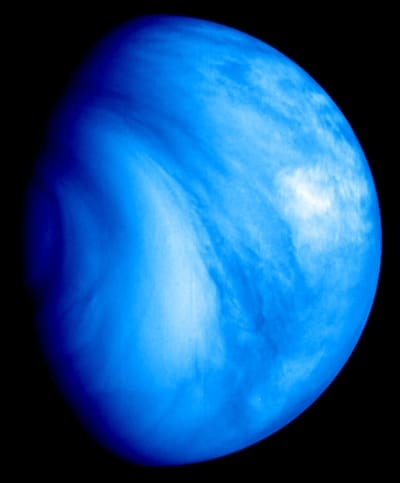
Probe likens young Venus to Earth

The first results from ESA’s Venus Express give weight to the popular theory that our planetary twin once had a similar climate to Earth’s, only for it to evolve into the hell-like place it is today. Among the results is proof that Venus has been steadily losing water as the result of a runaway greenhouse effect, and the first concrete piece of evidence that the planet is home to bursts of high-altitude lightning.

Formed at roughly the same time, orbiting closer than any two Solar System planets and possessing the same radius to within 5%, it is hardly surprising that Earth and Venus are often referred to as twins. But Venus’s barren surface coupled with temperatures reaching 450°C — higher even than Mercury — makes its present climate a far cry from cool, wet Earth.

Just under two years ago, ESA launched the Venus Express probe to survey the planet’s atmosphere. The reason was to see if, as scientists’ models suggest, Earth and Venus shared similar climates as young siblings and then evolved along diverse routes. Now, after the first year of analyses since the probe arrived at Venus in April 2006, scientists are confident that these models are correct.

Losing water

Although the sunlight at Venus is twice as intense as it is at Earth, its pervasive clouds of sulphuric acid reflect most of it away. The models of Venus’s evolution predict that the planet’s heat can only be a result of the huge amounts of atmospheric carbon dioxide — which, unlike on Earth, did not dissolve into water and then precipitate into limestone. This caused a “runaway” version of the greenhouse effect, increasing the temperature until all of the oceans had boiled off. Sunlight then split the resulting water vapour into its constituents oxygen and hydrogen.

On the one hand we have a freezing Mars and the other a boiling Venus — how lucky we are to be in a habitable zone

In the late 1970s, NASA’s Pioneer mission found only trace amounts of hydrogen compared with the heavier deuterium isotope, hinting that much hydrogen had managed to escape into space and therefore that the runaway greenhouse effect was a good model. Now, a group led by Jean-Loup Bertaux at the University of Pierre and Marie Curie in France has analyzed spectrometer data from Venus Express to confirm the high hydrogen-to-deuterium ratio (Nature 450 646).

Fred Taylor, another Venus Express scientist, told physicsworld.com that although Earth does not have anywhere near the levels of carbon dioxide as Venus, the greenhouse-effect mechanism is essentially the same. “Earth is moving along the curve that connects it to Venus,” he said. “Of course, it will be all over for humanity long before we get there!”

In another study, Stas Barabash at the Swedish institute of Space Physics and colleagues give another reason why Venus is so dry. They have taken data from Venus Express’s plasma analyser to show that the Sun’s magnetic field is dragging hydrogen and oxygen ions away from Venus in almost precisely the 2:1 ratio they are found in water (Nature 450 650).

Stormy weather

The results from Venus Express have also resolved controversy over whether, like Earth, the planet experiences lightning storms. A group led by Christopher Russell from the University of California in Los Angeles, US, having analyzed data from the probe’s magnetometer, discovered that the region around Venus’s north pole produces brief, low-frequency electromagnetic waves or “whistlers” — proof of an electrical discharge (Nature 450 661).

“The clouds on Venus are about 50 km above the surface and the atmosphere is thick, so it is very unlikely to have cloud-to-ground lightning,” Russell told physicsworld.com. “Thus I would expect most lightning strikes would go from the cloud deck to the ionosphere. This path is relatively rare on earth.”

Speaking at the ESA results conference today, Dmitry Titov, science coordinator of the Venus Express mission, concluded by highlighting the differences between the terrestrial planets. “On the one hand we have a freezing Mars and the other a boiling Venus,” he said. “How lucky we are to be in a habitable zone…We cannot yet answer the question [of why Earth and Venus’s atmospheres are presently dissimilar], but Venus Express is bringing us closer than ever before.”

Proto-galaxies tip cold dark matter

Astronomers have spotted some of the first galaxies ever to form. These so-called proto-galaxies existed over 11 billion years ago and their discovery supports the “cold dark matter” model of how the universe evolved after the Big Bang.

In all, 27 proto-galaxies were found by an international team using the Very Large Telescope in Chile. Data from the observation should help astrophysicists refine models of galaxy formation.

The first galaxies are believed to have formed about one billion years after the universe was created in the Big Bang – which itself happened nearly 14 billion years ago. Astrophysicists believe that around this time, cold dark matter – invisible stuff that accounts for 95% of the mass of the universe – began to gather in small clumps under its own gravitational attraction. These clumps joined together to create larger clumps, which in turn combined to make even larger clumps and so on.

The first stars

Astrophysicists believe that normal matter such as hydrogen simply tagged along with the dark matter because of its gravitational attraction. Eventually, these clumps of matter and dark matter became proto-galaxies – structures about 1000-times smaller than our Milky Way galaxy – which contained the first stars. These galaxies are then believed to join together to form the galaxies we know today.

The new observations confirm theoretical research proposing that galaxies like our own have formed by the amalgamation of small proto-galaxies

In principle, proto-galaxies should still be visible because the light from some of these very distant structures is only now reaching Earth. However, this light is very faint and astronomers have struggled to detect it – and instead they have had to infer the existence of proto-galaxies from their apparent ability to block radiation from even further away.

The astronomers discovered the proto-galaxies in a small patch of sky using the European Southern Observatory’s Very Large Telecsope (VLT) (arXiv 0711.1354v1). The observations were made between 2004 and 2006 for a total of 92 hours, which allowed the team to resolve extremely faint and distant objects.

Damped Lyman alpha system

The galaxies were identified by their distinct ultraviolet light – called Lyman alpha light – that is given off by hydrogen gas when it is ionized by radiation from a star. Proto-galaxies are expected to contain large amounts of gaseous hydrogen at relatively high densities, which gives the Lyman alpha light the spectral characteristics of a “damped Lyman alpha system” (DLAS). DLAS light was spotted coming from 27 distant objects and the shifts in wavelength of the DLAS light confirmed that the galaxies existed about 2 billion years after the Big Bang.

“The new observations confirm theoretical research proposing that galaxies like our own have formed by the amalgamation of small proto-galaxies early on in the history of the Universe”, said Andy Bunker of the Anglo-Australian Observatory in Sydney, who is one of the leaders of the study.

According to team member Cedric Lacey, who is an astrophysicist at Durham University in the UK, the VLT data will allow astronomers to work out how many stars each proto-galaxy contains. This and other parameters extracted from the observations will then be used to improve current models of galaxy formation.

Lacey also told physicsworld.com that there is “nothing special” about the part of the sky where the proto-galaxies were found. “It’s an average bit of the sky”, he said, “which means that we should see [proto-galaxies] in all directions”.

As is often the case with scientific discoveries, the proto-galaxies were found by mistake. The team were actually looking for evidence of Lyman alpha fluorescence, whereby radiation created shortly after the Big Bang interacts with hydrogen throughout the universe, causing it to glow in the ultraviolet. According to Lacey, the team also saw evidence of this fluorescence and have asked for more time on the VLT to study it in more detail.

Tiny fridge thinks it’s a motor

Physicists have unveiled plans for a tiny machine that uses the random thermal motion of molecules in a gas to turn an axle. The device, known as a “Brownian motor”, could also be run backwards to function as a refrigerator. Although the device has not yet been built, thousands of them could be one day be integrated onto a chip to cool computers and other electronic devices.

The random thermal motion of tiny particles in a fluid was first reported by Robert Brown in 1827 and ever since researchers have tried to devise machines that convert this Brownian motion into useful work. However, interest in Brownian motors and refrigerators has intensified in the last 10 years thanks to the growing focus on nanotechnology and bioengineering — two fields in which such devices could be used.

In 2004, for example, Christian Van den Broeck and colleagues in Belgium and the US carried out molecular-dynamics simulations to show that Brownian motion could be used – at least in principle – to drive a tiny rotating machine that is in contact with hot and cold baths. Van den Broeck later showed that Brownian motion could also be used to create tiny refrigerators that could transfer heat from a cold region to a warm region using a specially shaped paddle that is moved along a track.

Snail-shaped rotors

Now, however, Van den Broeck and Martijn van den Broek of Hasselt University in Belgium have devised a rotary machine that can operate either as a Brownian motor or as a refrigerator (arXiv:0711.1758v1). Their device consists of two snail-shaped spiral rotors that are attached to an axle and separated by a thin membrane (see figure). One rotor sits in a warm dilute gas, while the other is in a cooler gas.

When operating as a motor, molecules in the warm gas collide with the rotor, giving it some of their kinetic energy. Some of this energy is transferred via the axle to the other rotor, which then imparts some of its kinetic energy to molecules in the cold gas. Because the spirals on the two rotors point in opposite directions, this exchange of energy can exert a tiny torque on the device, causing it to rotate. Calculations suggest that the motor could rotate at up to a thousand times a second, depending upon the temperature gradient across the membrane.

However, if an external power source is used to run the device backwards, it can then operate as a heat pump, with kinetic energy from the cold gas transferred to the warm gas via the rotors. This, according to Van den Broeck, is a significant improvement over his previous refrigerator, because the rotary design would allow the refrigerator to be fixed in one place and operated continuously.

In their numerical simulations, the pair investigated a number of different shapes and sizes of rotors that were between 4-10 nm thick and about 5-12 nm across. Van den Broeck told physicsworld.com that the biggest challenge in designing the motor was getting the shape right, which was done using computer simulations.

Design trade-off

Their spiral-rotor design is a trade-off between the need for the rotors to have asymmetric “chiral” shapes, which tend to boost their ability to harness Brownian motion, and the need to minimize the friction encountered by the rotating device, which would reduce its efficiency both as a motor and refrigerator.

According to Van den Broeck, carbon nanotubes could be used to make the machines, and thousands of tiny rotors could be integrated onto a chip that could be used to cool computer chips or other electronic devices. He also believes that the rotors could be very useful in creating bio-engineered systems in which the careful control of temperature would be needed to ensure that certain biochemical reactions occur at the desired rates.

TASER is easy on the heart

A study of the effect of TASERs on human and animal hearts suggests that he weapons are unlikely to harm the human heart. The work was done by researchers in the UK and involved laboratory experiments and computer simulations. The team concluded that the jolt from the weapon is not enough cause the heart to beat irregularly.

The TASER is a battery-operated electrical incapacitation weapon that works by firing two tethered barbs at a person — and then sending pulses of high-voltage electricity through the tether wires. While this causes involuntary muscle contraction and intense pain in the unfortunate target, the TASER is used by many police forces as a less-lethal alternative to firearms. However, several people have died after being struck by a TASER, leading to some controversy and concern regarding the potential negative effects of the device on the heart.

Now, a multidisciplinary research collaboration led by the UK Defence Science and Technology Laboratory (Dstl) has examined the possibility that the strike from two commercial TASERs: the M26 and X26 can cause the human heart to beat irregularly – a condition called cardiac arrhythmia. To do this, the researchers applied the TASER waveforms to a digitized human-body representation and modelled the current flow within its heart. These simulated currents were then applied to a guinea-pig heart in vitro (Phys. Med. Biol. 52 7193 ).

Shock results

The TASERS under investigation produce damped sinusoidal waves: the M26 generates a 50 kHz waveform with a current of 10-12 A, a peak voltage of nearly 1000 V and a 50 µs pulse duration; the X26 generates a 120 kHz wave with a peak voltage of around 300 V and a pulse duration of 120 µs. The research team applied these waveforms to the anterior chest wall of a numerical model of a human body using a dart separation of 225 mm – the distance that caused the highest current density on the heart.

By employing computational electromagnetic modelling, the team determined that the M26 TASER induced a peak absolute current density of 0.66 mA/mm2, spread over a circular region of approximately 25 mm in diameter on the right ventricle (beneath the upper probe). For the X26 TASER, the highest peak absolute current density was 0.11 mA/mm2, spread across a similar region.

The team then determined whether the TASER pulses could disrupt a beating guinea-pig heart. The choice of guinea-pig heart was partly based on the similarity of its electrocardiographic-wave configurations to those generated by a human heart.

The heart, which had been removed from the animal, was beating spontaneously. The M26 and X26 waveforms were applied to the surface of the heart using an electrode. At the maximum current densities predicted by the human model (0.66 and 0.11 mA/mm2), the pulses did not cause the heart to beat erratically. Indeed, the current densities of both devices had to be increased by at least a factor of 60 before erratic heartbeats were seen.

As a result of the simulations and experiments, the team concluded that there is a wide safety margin between the intensity of a TASER strike and the level at which a human heart would beat irregularly. The team did, however, caution that factors such as the consumption of alcohol or some drugs, or an existing heart condition could reduce this safety margin in some individuals.

“This paper provides an important first step in determining the bioelectric effects of TASERs on the heart,” said Brad Roth, associate professor in the department of physics at Oakland University in Rochester, Michigan. “I have many concerns about TASERs, but the induction of a cardiac arrhythmia appears to be less of a problem than I would have initially guessed.”

“Given the controversy surrounding the use of the TASER, there has been astonishingly little research into its safety,” said Kenneth Foster, professor of bioengineering and electrical engineering at the University of Pennsylvania. “We could have guessed that the risks of cardiac events are rather low, since TASER International markets the weapon by sending them to police conventions and by now, hundreds of police officers have tased themselves without mishap. It is nevertheless reassuring see good studies being done that support this conclusion.”

Software tracks ‘monster waves’

“Monster” waves in the open ocean were often dismissed as fishermen’s yarns until a 25-m tall wave hit a North Sea oil platform 12 years ago. Now, physicists in Spain and Germany have developed software that can track the progress of these deadly waves, and might serve as an early warning system for sailors or other seafarers.

Big waves are known to form, for example, when smaller waves move into a strongly opposing current near shore. However, scientists have been unable to explain why monster waves, which can tower over 30 m higher than surrounding waves, sometimes appear in the open ocean.

Although their origin cannot be predicted, Jose Nieto Borge from the University of Alcala in Madrid, Spain, together with a team led by Wolfgang Rosenthal at the GKSS research centre in Germany, has designed software that can predict a monster wave’s likely course. Their software interprets radar images taken at time increments to monitor the evolution of monster waves in time and space, and so might supplant existing techniques using buoys, which can only monitor wave height at fixed points in the ocean.

Complex signals

Radar signals from the ocean’s surface do not give a one-to-one map of wave height, but depend on several factors including sea surface roughness and wave tilt. To remove these unwanted contributions, Nieto Borge and colleagues’ software uses a computer “3D Fourier transform” to convert the raw, time-evolving radar data into a spectrum of frequency and wavenumber.

According to the theory of fluid dynamics, there should be a dependency between frequency and wavenumber for waves, known as the dispersion relation. By checking the validity of this relation for each component, an algorithm extracts only the contributions from real waves. In the final step, an inverse 3D Fourier transform converts the spectrum back into a time-evolving map, which is calibrated by comparing the energy of the waves with the background noise.

The software is currently being commercialized by OceanWaveS, a spin-off company of GKSS. Ina Tränkmann, project manager at OceanWaveS, told physicsworld.com that it should be ready for sale next year. But the software may not limited to tracking monster waves — Nieto Borge is now looking at how it could be used to predict the trajectory of oil spills.

High-Tc superconductors plug ‘terahertz gap’

Electromagnetic radiation in the terahertz range has a host of potential applications, from detecting explosives to diagnosing cancer. But sandwiched between microwaves and the infrared, terahertz radiation is not easy to generate — its frequencies are too high to be produced by semiconductor devices, yet too low to be produced by solid-state lasers. Researchers from the US, Turkey and Japan, however, have shown that this “terahertz gap” could be filled by exploiting the in-built Josephson junctions present in high-temperature superconductors.

Josephson junctions, which comprise two superconductors separated by a thin insulator, are well known for displaying odd quantum effects. In particular, applying a fixed voltage across a junction sets up an oscillating supercurrent, causing the junction to emit photons at a frequency matching the superconductor’s energy gap. In other words, Josephson junctions can produce electromagnetic radiation.

Unfortunately the energy gap in lab-made Josephson junctions, based on conventional superconductors such as niobium, is too small to produce terahertz radiation. Worse still, individual junctions do not generate much power. Researchers have tried rigging up arrays of junctions to boost the power, but it is difficult to synchronize the junctions to make a coherent beam of radiation in which all wavelengths are in-phase.

Layered structure

Ulrich Welp at Argonne National Laboratory and colleagues now claim that both of these problems can be solved with high-temperature superconductors. Unlike conventional superconductors, high-temperature superconductors do not need to be made into Josephson junctions because they naturally contain them throughout a unique layered structure. They also have comparatively large energy gaps that lend to producing radiation well into the terahertz range.

Crucially, however, Welp’s group have discovered a simple way to synchronize the phase of these “intrinsic” Josephson junctions in high-temperature superconductors to emit milliwatts of power (Science 318 1291). “A wide variety of sensing and imaging applications can be envisioned for terahertz radiation in this power range,” said Welp.

A wide variety of sensing and imaging applications can be envisioned for terahertz radiation in this power range

The researchers worked with the high-temperature superconductor Bi2Sr2CaCu2O8, also known as BSCCO, which has stacks of intrinsic Josephson junctions formed between interspersed layers of superconducting CuO2 and insulating BiO and SrO. Applying a voltage across a BSCCO sample makes all of these intrinsic junctions emit electromagnetic radiation at a certain frequency — but not necessarily in-phase.

Similarly to a laser, the trick making the emission in-phase is to vary the voltage until the emitted frequency matches the resonant frequency of the cavity. At this frequency, the electric field cancels itself out in all but the in-phase mode, so that the junctions are “encouraged” to be synchronized. At first only a few junctions emit in-phase, but as more latch on the radiation intensifies, causing yet more junctions to resonate until finally the whole stack is in-phase.

Welp and colleagues fabricated samples of BSCCO with a height of about 300-µm. Such dimensions give a stack of some 200,000 intrinsic Josephson junctions, generating 0.5 µW of radiation at frequencies up to 0.85 THz. Welp told physicsworld.com that by optimizing the technique he hopes the power can be increased to 1 mW. This level of power could be used, for example, in airports to search for the spectral “fingerprints” of explosives, although he admitted that commercial devices using his group’s emitters are some way off. “Generally, the higher the available power, the better the signal-to-noise ratio is and the faster and more reliable active imaging and screening of people could be performed,” Welp said.

Berry’s phase seen in solid-state qubit

An international team of physicists is the first to show how information can be stored and manipulated in a solid-state quantum bit using “Berry’s phase” – an esoteric geometrical property of a quantum system.

The team controlled the Berry’s phase of paired electrons in a tiny piece of superconductor by exposing it to pulses of microwave radiation. The breakthrough could help physicists overcome a major barrier to practical quantum computing – the tendency of quantum bits to lose their quantum information content rapidly over time.

If a classical particle such as a stone undergoes a cyclic process – it is heated slightly and then cooled to its original temperature, for example – there is no way of telling from the cooled stone how it was heated, or even if it was heated at all. However, the same does not apply to quantum particles such as electrons, which retain some “memory” of the path taken in a cyclic process. This memory is in the form of a difference in phase between the initial and final quantum states and was first proposed by Michael Berry in 1984.

Berry’s phase is a “geometrical” effect that occurs in the abstract space defined by the orthogonal quantum states of a system. A key property of Berry’s phase is that it is not dependent on the path taken through this space, but only on the area enclosed by the loop. It turns out that this could be very useful to those designing quantum computers in which data are stored and processed in terms of quantum bits (or qubits) of information.

This is because phase plays an important role in quantum information, and manipulating the phase of a qubit corresponds to performing a logical operation. By cycling the system around a closed loop, Berry’s phase, and hence geometry, can be used to perform calculations.

A shaky hand

The manipulation of any qubit requires contact with the outside world. No matter how carefully this is done, the qubit is subjected to small amounts of noise, which could eventually destroy the quantum nature of the qubit, rendering it useless. However, the effect of noise on manipulating the Berry’s phase of a qubit can be likened to drawing a circle with a shaky hand – as long as the curve joins up and encloses the correct area, the manipulation of the qubit will be sound.

Quantum operations based on Berry’s phase have already been achieved in nuclear magnetic resonance and trapped-ion systems. However, these are large and unwieldy technologies and many physicists believe that it will be difficult to assemble them into practical quantum computers. However, solid-state qubits based on superconductors could, in principle, someday be miniaturized and mass-produced.

Now, Peter Leek and colleagues at ETH Zürich along with researchers in Canada and the US have demonstrated the first solid-state qubit based on Berry’s phase. Their results are reported today in Sciencexpress .

Aluminium qubit

The team’s qubit is a micrometre-sized piece of aluminium, which is a superconductor at very low temperatures. In its lowest energy state the superconductor contains a certain number of paired electrons and its first excited state contains that number plus one pair.

The aluminium was placed at the centre of a millimetre long superconducting wire that functioned as a microwave resonator. The resonant frequency of the resonator was set to be very different from the transition frequencies of the qubit – which served to isolate the qubit from its surrounding environment. However, the resonant frequency changes slightly depending upon the state of the qubit, allowing the researchers to monitor the state of the qubit by injecting a single microwave photon into the resonator.

The team then applied a number of different microwave signals to the resonator. Each signal caused the qubit to follow a path that enclosed a different area. This resulted in a number of different angles of Berry’s phase, which were measured using the single-photon technique.

“This is important research and I am very happy that it has been done”, said Jiannis Pachos of the UK’s University of Leeds, who is a proponent of Berry’s phase for quantum computing. Pachos told physicsworld.com that the next step is for physicists to build a solid-state two-qubit logic gate based on Berry’s phase – something that has already been done for ion-trap qubits.

This, however could prove difficult: “The control of solid-state two-qubit systems is lagging behind other systems”, said Pachos. Peter Leek told physicsworld.com that the team “are thinking of ways to do this at the moment”.


Uranium gives opal its shine

The beautiful optical properties of the gemstone opal are the result of tiny amounts of uranium present when the stones were formed, say researchers in Australia. They claim that their work could lead to the production of artificial opal and have already shown that the gamma rays given off by the uranium and its radioactive daughters can lead geologists to new underground deposits of the gem.

Opal is made of amorphous silica and this makes it very difficult to find because the gem is usually surrounded by other rocks made of the same material. “Precious” opal differs from the much less valuable common opal in that it contains spheres of silica about 200 nm in diameter that are arranged in a regular superlattice. This gives the gem its famous “play of colour” — different colours that appear when opal is viewed from different angles — which is caused by the diffraction of light in the superlattice.

Now, geologist Brian Senior and physicist Lewis Chadderton have discovered that the superlattice of spheres forms because of the presence of tiny quantities of uranium and its decay products. Using analytical techniques such as electron microscopy and neutron activation analysis along with theoretical models of sedimentation processes, the team have shown that some of the very heavy elements that are made when uranium decays act as a “seeds” for the formation of the silica spheres during sedimentation.

Gamma-ray logging

The uranium also makes precious opal much more radioactive than surrounding silica-based rocks, which tend to have low levels of radioactivity. With this in mind, Senior and Chadderton have adapted a standard tool of oil exploration called gamma-ray logging to create a technique for finding precious opal.

Their technique involves boring a minimum of three holes in a region where the gem is thought to occur. A sodium iodide gamma ray detector is lowered by a winch into each hole and readings are taken every 15 cm. Data are collected on a laptop computer and the system is installed in the back of a four-wheel drive vehicle. If high levels of gamma rays are detected, the data from the three bores are triangulated to locate the centre of the deposit.

The team have used their technique to find new deposits at several locations in Australia. Senior, who runs his own consulting company, believes that the technique could be a boon to Australia’s opal mining industry — which, despite producing over 90% of the world’s precious opal, he describes as a “cottage industry”.

Chadderton, who is at the Australian National University in Canberra, told physicsworld.com that the team are using their insight into opal formation to create artificial gems. As well as being used in jewellery, Chadderton believe that such opals could be engineered to be photonic crystals. These materials can be used to control light in much the same way as semiconductors are used to control electrical currents — something that could make them very useful in fibre-optical communications systems. Senior and Chadderton will report their results in an upcoming issue of The Australian Gemmologist .

Copyright © 2026 by IOP Publishing Ltd and individual contributors