Whole blood contains red and white blood cells that are suspended in watery fluid called plasma. These constituents are separated out from donated blood because a patient may only need one component at any one time. Separation also plays an important role in the analysis of blood cells for the diagnosis and treatment of diseases.
The most common way to separate the components is by spinning blood samples at high speeds in a centrifuge. However, it can take about 20 minutes to process a test-tube sized sample, which is a problem if the components are needed immediately. This new method could take just a few minutes to separate an equivalent quantity of blood, claims Furlani.
Furlani’s design proposal involves placing an array of soft magnets next to a microfluidic channel (see figure “Magnetophoretic microsystem”). A sample of deoxygenated blood would be placed inside the channel and a external magnetic field applied to the system. The cells are separated by magnetophoresis, a technique that uses magnetic fields to move particles according to their magnetic properties.
According to Furlani’s calculations, the red blood cells will move in one direction inside the channel and the white blood cells in the opposite direction. This occurs because red blood cells are paramagnetic and therefore are attracted to the array of magnets, while white blood cells are diamagnetic and therefore repelled away from the magnets. However, the technique will only work if the red cells are deoxygenated (contain no oxygen), because ordinary, oxygenated red cells are diamagnetic.
According to Furlani, his technique could be used to create a portable, low-power and easy-to-manufacture device capable of processing small volumes of blood in emergency situations. Furlani intends to build a prototype device to test his design.
Laser pulses lasting tens of femtoseconds (10-15s) are used to manipulate the electrons involved in chemical reactions and have provided a wealth of knowledge of how these reactions occur. While shorter laser pulses should yield an even deeper understanding of chemical processes, problems arise when the duration of the pulse is so short that it only incorporates a few cycles of the light wave. Such pulses could begin with the light at maximum amplitude, minimum amplitude, or somewhere in between. The relative position of the waveform within the pulse envelope — called the carrier-envelope phase (CEP) – can have a significant effect on how the pulse interacts with electrons and therefore it must be controlled accurately.
In 2003 researchers in Austria and Germany developed a technique for locking the CEP of femtosecond laser pulses. However, making accurate measurements of the CEP had remained elusive, until now.
John Tisch and colleagues at Imperial College measured the CEP by firing an 8.5 femtosecond laser pulse into a gas, which responds by emitting an x-ray pulse that is up to 10 times shorter than the original laser pulse. The researchers found that they could reconstruct the waveform of the original femtosecond laser pulse from information contained within the x-ray pulse.
The researchers used an imaging spectrometer to collect spatial and spectral information on the x-ray pulse and this data was processed to determine the position of the waveform peak to a precision of 50 attoseconds (50 x 10-18s). A key feature of this new technique is that it determines the phase of individual pulses rather than the average of many pulses – making it a powerful tool for characterizing the output of femtosecond lasers.
Knowing the CEP with attoscale precision is important because this is the timescale associated with the motion of the electrons involved in chemical reactions. This could allow physicists to steer electrons with greater precision and control processes such as the emission of light and chemical reactions.
Electron microscopes have better resolution than optical microscopes because high-energy electrons have a much shorter wavelength than light. The resolution can be further improved by using coherent electron wavepackets, which can contain as few as one electron. The wavelengths of these packets are much smaller than the space between individual atoms and can be brought to a very sharp focus, allowing objects to be imaged with atomic-scale resolution. The packets are of extremely short duration and this can be exploited to take “snapshots” of atoms as they undergo structural or chemical transitions.
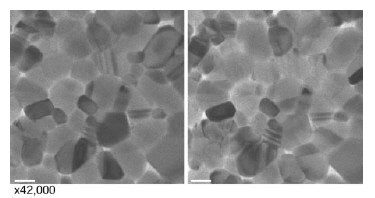
In 2005, Zewail and colleagues used coherent electron packets to take single snapshots of a number of materials and biological samples. Now the researchers have further refined their technique to take a time sequence of images that allowed them to watch vanadium and oxygen atoms rearrange themselves in a process that can take as little as 100 femtoseconds ( 10-13 seconds).
The timing sequence is generated by femtosecond laser pulses as illustrated in the figure “Ultrafast microscope”. Each pulse is split into two pulses – one is used by the microscope to create the electron pulse and the other is used to heat the sample. According to Zewail, the crucial and most difficult part of the technique is coordinating the arrivals of the laser and electron pulses at the sample with an accuracy of just a few femtoseconds. This is particularly difficult because the laser pulse travels at the speed of light, while the electron pulse lags behind at about two thirds the speed of light.
The coincident laser pulse is used to heat the sample and drive a transition from a low-temperature crystal structure to a high-temperature structure. By changing the delay between the laser and electron pulses in regular time steps, the researchers were able to take snapshots of the atoms at different sample temperatures.
Zewail and colleagues found that vanadium oxide undergoes a “first-order” phase transition from a low-temperature “monoclinic” phase to a high-temperature tetragonal “rutile” phase at around 67°C. This result is a breakthrough in itself because the precise nature of this transition has been a mystery since the material was discovered almost a century ago.
The team now plans to try their technique on other materials; “the scope is very wide from semiconductors and metals to organics and biological assemblies,” says Zewail.
The search for water on Mars — and the implications that its discovery would have for the planet’s ability to sustain life — has long captivated planetary scientists and amateur space enthusiasts alike. While the Martian landscape contains gulley-like structures that could have been made by flowing water, scientists have never seen direct evidence of liquid water on the planet. Indeed, the only water detected on the planet thus far is frozen solid.
Malin’s team studied images of thousands of gullies taken over nine years by the Surveyor’s Mars Orbital Camera and found before-and-after evidence that water has flowed through two gullies within the past few years. When photographed in 2004-05, both gullies contained brightly-coloured streaks with “finger-like” endings (see figure: “Alluvial flow”). These streaks were not present in images taken in 1999 and 2001, which the researchers claim is clear evidence that water flowed down the gullies some time in the intervening years (see figure “Before and after”).
“The shapes of these deposits are what you would expect to see if the material were carried by flowing water,” said Malin. “They have finger-like branches at the downhill end and [the flow is] easily diverted around small obstacles.”
Malin and co-workers believe that the water wells up from beneath the ground through cracks created by meteor impacts, rather like springs here on Earth. The researchers estimate that the amount of water flowing down one gully was about five to ten swimming pools’ worth. Both gullies were located in Mars’ southern hemisphere at about 37 degrees latitude, where daytime temperatures could go above zero degrees Celsius making liquid water possible. However, the water would also evaporate and freeze as it flows in Mars’ thin atmosphere and often very cold temperatures.
Earlier analyses of images from the Mars Orbital Camera led Malin’s team to suggest that liquid water had flowed on Mars early on its history. “We can now honestly start talking about water flowing on Mars today,” said Philip Christensen of Arizona State University at a press conference at NASA headquarters in Washington, DC. Other scientists, like James Rice, also at Arizona State, are more cautious: “I’m not convinced we’re seeing modern fluid flow”, he said.
Optical clocks are based on a specific transition between atomic energy levels that involves the absorption of laser light at a very precise frequency. A laser is used to stimulate the transition and, once absorption begins, a feedback mechanism stabilizes the laser light at the precise absorption frequency. A device called a “femtosecond comb” is then used to measure the frequency, which is the ticking of the clock.
Unfortunately this process can be easily disturbed by the motion of atoms, which is a key challenge facing designers of optical clocks. Jun Ye and colleagues at JILA at the University of Colorado have now managed to reduce these motion-related effects by trapping strontium atoms in a one-dimensional optical lattice — a periodic structure of atoms that are held in place by interfering laser beams.
According to Ye, the optical lattice allows the probing laser light to interact coherently with the atoms for a longer period of time. “We are the first group to demonstrate that coherent interactions can last for nearly one second”, he says.
The clock operates at 430 THz and up to 4.3 × 10¹⁴ cycles can be counted during one measurement, which boosts the precision of the measurement. Ye’s clock has a precision of 2 Hz in 430 THz, or about five parts in 1015. This makes it less precise than a mercury ion atomic clock created by NIST in the US and state-of-the-art atomic clocks — both of which can achieve one part in 10 15 precision.
However, an important feature of this new clock is that it can deliver a strong and stable signal. This could open the door to measurements longer than one second, which could ultimately push the precision to one part in 1017. Atomic clocks currently measure over about one day and have reached their practical limit at about one part in 10 15 precision.
As most readers will know, 2005 was the International Year of Physics, marking the centenary of Einstein’s five great papers on relativity, light and atoms. Far fewer will realize that we are now drawing to the end of “Maxwell Year”, which has been organized to recognize the scientific genius of James Clerk Maxwell, who was born 175 years ago. One reason for Maxwell’s obscurity (see “James Clerk Maxwell: a force for physics”) is that he died in 1879 aged just 48, and so did not live to see the impact of his work on relativity and quantum mechanics. In contrast, Einstein benefited from being thrown into the media spotlight when general relativity was dramatically confirmed by Eddington in 1919. Had Maxwell lived to see the day in December 1901 when Guiglielmo Marconi made the first transatlantic radio communication – using the very waves that Maxwell’s equations had predicted – perhaps his fame would be far greater today.
The pulses are produced in binary star system called LS 5039, which is a well-known source of x-rays. Located in the constellation Scutum, LS 5039 comprises a massive “blue” star that is about 20 times larger than the Sun and an unknown compact object that could be a black hole or neutron star. The two objects are locked in a highly eccentric orbit (see figure “Orbiting objects”).
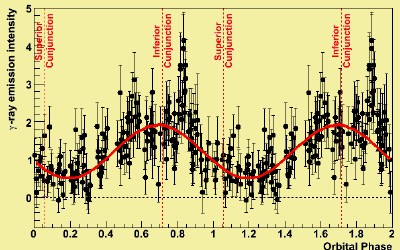
The gamma-ray signal is periodic, repeating every 3.9 days, which is the time that it takes the compact object to complete one orbit of the star. The signal is strongest when the compact object is between the star and Earth and weakest when it is behind the star (see figure “Oscillating gamma rays”). The researchers believe that the signal is low when the compact object is behind the star because the gamma rays are being absorbed by light from the star.
The discovery was made using the High Energy Stereoscopic System (HESS) array of telescopes in Namibia. HESS focuses on the short flashes of blue light called Cerenkov radiation that are produced when the gamma rays interact with Earth’s atmosphere. This light is collected by four telescopes and is used to create images of astronomical objects as they appear in the gamma-ray region of the electromagnetic spectrum.
Gamma rays with energies greater than 1011 eV (100 GeV) are very rare indeed. On Earth they can only be produced in leading-edge particle accelerators such as the Tevatron at Fermilab. Extraterrestrial sources are thought to include supernovae, pulsars and quasars but these gamma rays only interact with the Earth’s atmosphere at a rate of about one event per month per square metre of atmosphere.
The researchers believe that the LS 5039 gamma rays are produced by the violent interaction of the compact object with the stellar wind, which is a plasma of charged particles that flows from the blue star at supersonic speeds. Some of these particles are accelerated to TeV (1012 eV) energies as they near the compact object and produce gamma rays by processes that are not yet fully understood. The researchers hope to get a better understanding of these processes by studying how the average energy of the gamma rays changes as the compact object moves through its orbit.
The team now plans to try and pierce through the star’s “photon fog”, which absorbs the gamma rays and so weakens the signal received on Earth. “We will then be able to directly see the particle acceleration mechanism at work,” explained HESS team member Guillaume Dubus from the Astrophysical Laboratory of Grenoble in France.
In simple systems, the atomic origin of friction is fairly well established. But in more complex systems, such as the movement of a computer’s read/write head over a rapidly spinning hard disk, a generalized understanding of friction at the nanoscale has so far remained out of reach. The friction depends on numerous factors, including roughness, lubrication, contact geometry, speed and vibration.
Now a team of researchers at electronics giant Hitachi have looked at what happens when the corner of a tilted oblong slider moves over a rotating carbon disk coated with polymeric lubricant. In their experiments, the team spun the disk under the slider at speeds of up to 12 m/s and measured the amount of friction using a strain gauge mounted on the slider’s suspending arm. Curiously, the team found that the friction opposing the spinning of the disk is greater when the disk moves “away” from the tilted slider rather than “towards” it (see figure: “Liquid friction”).
Most people would naturally assume friction to be greater in the latter case, thinking that the pointed edge of the slider would “dig” into the surface. In fact, the lubricant not only prevents this from happening, but it also adds its own friction where it builds up as a meniscus in front of the slider. When the disk is spinning towards the slider this preceding meniscus so small that it has just a negligible effect, but in the opposite direction it is large enough to significantly hinder the disk’s rotation.
However, this counterintuitive friction could also manifest itself on surfaces where there is no applied lubricant. When the team reduced the amount of “mobile” molecules in the lubricant (in other words, the slipperiness of it) from 50% in the original experiment down to less than 10%, they discovered again that friction was still greater for the disk moving away from the slider. And this low mobility of lubricant, they say, would be comparable to the trace amounts that reside even on surfaces supposedly considered to be “dry”.
Physics, like Physics World, is an international endeavour. In this age of rapid global communication, it is essential for all physicists to know what their colleagues around the world are doing. No physicist could possibly build a successful career by only talking or listening to people in their own country. From CERN’s Large Hadron Collider to the ITER fusion experiment, and from blogs to online journals, physics is a truly global subject.
Imagine, then, that you are a bright, young physics student in Africa. Your university probably has only a couple of full-time physics professors, and they are unlikely to have ever met the leaders in their field. Internet connections are unreliable and you are physically and intellectually isolated from the rest of the world. Hampered by poor tuition and with few career prospects, many African students not surprisingly head to the West as soon as they can.
The African Institute for Mathematical Sciences (AIMS) in South Africa, however, offers a lifeline to many of the continent’s best young minds (see p10 print version only). Since it was set up in 2003, it has proved outstandingly successful, providing intensive postgraduate tuition to over 170 physics and maths students covering everything from astrophysics to quantum information. The hope is that the graduates will use their scientific know-how to boost the continent’s languishing economy.
AIMS is a shining example of international co-operation in science: lecturers are hand-picked from a pool of over 300 academics around the world who have expressed an interest in teaching at the institute. For the students at AIMS, who are desperate to become part of the international scientific community, that contact with the best minds in science is a chance of a lifetime. There are now ambitious plans to set up a network of such centres across Africa. But physicists from the West need to do far more to help scientists in Africa, although that is easier said than done. Corruption is rife, while travel is difficult and expensive. Still, progress is possible: one Irish physicist has developed a simple and cheap technique to purify drinking water using sunlight that has recently secured funding from the European Union (see p11 print version only). His contribution is an example worth following.
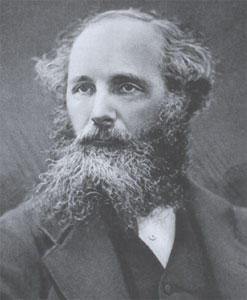
Deserving recognition This month sees the end of Maxwell Year, which has been held to bring James Clerk Maxwell’s scientific achievements to wider public attention. (Image: AIP Emilio Segrè Visual Archives)
Unless one is a poet, a war hero or a rock star, it is a mistake to die young. James Clerk Maxwell – unlike Isaac Newton and Albert Einstein, the two giants of physics with whom he stands – made that mistake, dying in 1879 at the age of just 48. Physicists may be familiar with Maxwell, but most non-scientists, when they switch on their colour TVs or use their mobile phones, are unlikely to realize that he made such technology possible. After all, in 1864 he gave us “Maxwell’s equations” – voted by Physics World readers as their favourite equations of all time – from which radio waves were predicted.
Suppose Maxwell had lived one year beyond the biblical three score and ten. He would then have been alive on 12 December 1901, the day when Guglielmo Marconi, in St John’s, Newfoundland, received the first transatlantic radio signal from a transmitter in Cornwall, UK, designed by Maxwell’s former student Ambrose Fleming. Or consider relativity: mention it and everyone thinks of Einstein. Yet it was Maxwell in 1877 who introduced the term into physics, and had noticed well before then how the interpretation of electromagnetic induction was different depending on whether one considers a magnet approaching a wire loop or a loop approaching a magnet. It was from these “asymmetries that do not appear to be inherent in the phenomena” that Einstein began his work on special relativity.
Had he not died so young, Maxwell would almost certainly have developed special relativity a decade or more before Einstein. Moreover, it was through reading Maxwell’s article “Ether” in the ninth edition of the Encyclopaedia Britannica that Albert Michelson came to invent the interferometer – a new kind of instrument that he and Edward Morley used in 1887 to discover that the speed of light is the same in all directions.
So what impression of Maxwell would you have gained if you had met him in his prime, as a young Scottish undergraduate Donald MacAlister did in Cambridge in 1877? You would surely have been charmed, but perhaps also surprised to meet – as MacAlister put it – “a thorough old Scotch laird in ways and speech”. As the proprietor of an 1800 acre Scottish estate, Maxwell had all the qualities of the better kind of Victorian country gentleman: cultivated, considerate of his tenants, active in local affairs, and an expert swimmer and horseman too.
A taste of genius This cake, displaying Maxwell’s great equations, was specially baked to mark Maxwell Year.
Few would have guessed that this “Scotch laird”, so disarmingly old-fashioned even in 1877, was a scientist whose writings remain astonishingly vibrant in 2006 and the greatest mathematical physicist since Newton. In addition to his work on electromagnetism, Maxwell also contributed to eight other scientific spheres: geometrical optics, kinetic theory, thermodynamics, viscoelasticity, bridge structures, control theory, dimensional analysis and the theory of Saturn’s rings. He also worked on colour vision, producing the first ever colour photograph (see box “A colourful tale”).
Even if his achievements are somewhat overshadowed in the public’s eye by those of Einstein, whose successes were marked by a great series of events last year, it is a measure of Maxwell’s standing that 2006 – the 175th anniversary of this birth – has been dubbed Maxwell Year.
From Glenlair to Edinburgh
James Clerk Maxwell was born on 18 June 1831 to Frances Cay and John Clerk – a lawyer who was the younger son of James Clerk. The Clerks were one of the most distinguished and wealthiest families in Edinburgh and both of Maxwell’s parents were steeped in the city’s culture. Yet Maxwell spent the first 10 years of his life on a country estate, Glenlair in south-west Scotland, which was then a region of extreme isolation, even lawlessness, with no nearby school. How did this happen and why do we refer not to Clerk’s equations but to Maxwell’s equations?
The answer lies in a long blood-feud between the Maxwell family and another Scottish family – the Johnstones – that dates back to the 16th century. The feud included the execution in 1613 of the eighth Lord Maxwell for the murder of the chief of the Johnstones in revenge for their killing of his father. Lacking legitimate children, Lord Maxwell bequeathed land to his illegitimate son, John Maxwell, who was himself murdered in 1639. The marriage of two of the latter’s heiresses to members of the Clerk family resulted, following complex legal settlements, in the 7000 acre Clerk estate near Edinburgh being handed down in 1798 to George Clerk (James Clerk Maxwell’s uncle) and the Maxwell name and estate to John Clerk (Maxwell’s father).
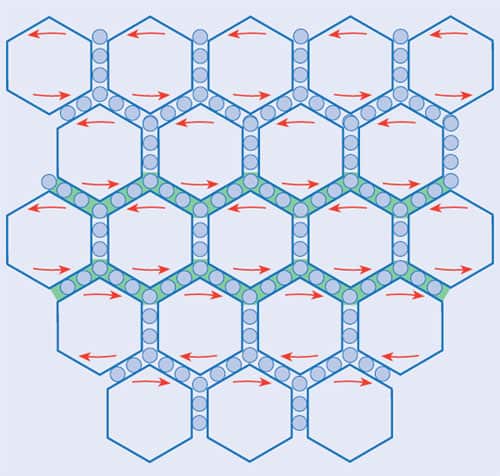
Mechanical model To help understand electromagnetism, Maxwell pictured the ether as consisting of tiny, rotating molecular vortices meshed with smaller gearwheel particles.
After Maxwell’s parents got married, they began developing the estate at Glenlair. But with no schools nearby and only one child to look after, his mother doubled as his schoolteacher. Her death when he was eight affected Maxwell deeply and, after two unhappy years with a private tutor, he was sent to Edinburgh Academy, where his weird accent and weirder shoes (hand made by his father) won him the nickname “Dafty”. Maxwell was also involved in a tug-of-war between two aunts over who should bring him up. Despite these setbacks, Maxwell survived and soon began to enjoy Edinburgh’s marvellous culture, especially after his father made time to come from Glenlair.
Maxwell’s first scientific paper appeared when he was just 14, which suggests that he was a terrifying mathematical prodigy. In fact, Maxwell was a very clever boy but by no means exclusively scientific. Indeed, a poem of his was published in the Edinburgh Courant six months before his first scientific paper. He wrote the latter after meeting the decorative artist D R Hay, who was searching for a way to draw ovals. The 14-year-old Maxwell generalized the definition of an ellipse and succeeded in producing true ovals identical to those studied in the 17th century be René Descartes. Maxwell’s father showed the method to James David Forbes, an experimental physicist at Edinburgh University, who realized that it was correct. Forbes then presented the paper on Maxwell’s behalf at a meeting of the Royal Society of Edinburgh – a remarkable achievement for someone so young.
Student days
Maxwell began his studies at Edinburgh University in 1847 at the age of 16. He moved to Cambridge in 1850 to take the mathematical Tripos, which lasted for three years and a term. This unusually long undergraduate career, which resulted from the different ages at which students in England and Scotland then went to university, proved entirely beneficial for Maxwell. At Edinburgh he gained a broad education centred on philosophy, while Cambridge gave him an excellent training in applied mathematics and the most gruelling examination system the wit of man has devised. At both, he encountered first-class minds.
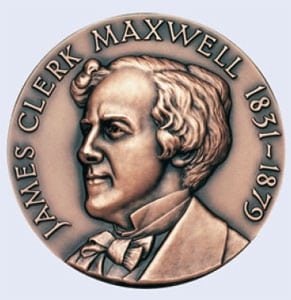
In his honour The Maxwell medal awarded by the Institute of Physics.
Apart from Forbes, who gave Maxwell the run of his laboratory and encouraged his interest in colour, Edinburgh boasted Sir William Hamilton, professor of logic and metaphysics. (He should not be confused with the Irish mathematician William Rowan Hamilton.) Hamilton was a man of formidable learning, a genius at enlivening young minds, and who was famous for his teachings drawn indirectly from Kant on “the relativity of human knowledge”. However, he and Forbes were enemies; only in one place did they meet well – and that was in the mind of the young Maxwell.
Cambridge, meanwhile, was home to William Hopkins – a great teacher who became Maxwell’s private tutor – as well as the world’s leading authority on optics, George Gabriel Stokes. There was also William Whewell, the supreme historian and philosopher of science who invented the word “physicist”. As one Cambridge friend recalled, Maxwell was “acquainted with every subject upon which the conversation turned. I never met a man like him. I do believe there is not a single subject on which he cannot talk, and talk well too, displaying always the most curious and out of the way information.”
Like many clever undergraduates, Maxwell worked hard while pretending not to. However, in 1854 he just missed the coveted position of “senior wrangler” in the mathematics examination, coming second to E J Routh. Two years later Maxwell was made a fellow of Trinity College, Cambridge, before returning to Scotland in 1856 as professor of natural philosophy at Marischal College, Aberdeen, at the age of just 25. It was here that he married Katherine Mary Dewar, daughter of the principal of the college.
In 1860 Aberdeen’s two colleges – Marischal and King’s – merged and Maxwell was one of the professors let go, with a pension of £40 a year. This was not a huge sum in those days, but he did have a private income of about £2000 a year from his estate so it was nothing to worry about. Maxwell moved south to King’s College, London, before “retiring” in 1865 to enlarge Glenlair House, write his Treatise on Electricity and Magnetism and become a Tripos examiner for Cambridge. In 1871, however, he returned to Cambridge full time as the first professor of experimental physics. It was here, with funding from the seventh Duke of Devonshire, that he created the Cavendish Laboratory, which opened in 1874. Under J J Thomson, Ernest Rutherford and their successors, the Cavendish was to become one of the greatest research centres in the world.
A colourful tale
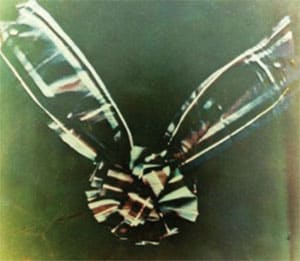
Few people will be aware that James Clerk Maxwell produced the first ever colour photograph (left, of a tartan ribbon). But Maxwell had a life-long interest in optics and colour vision, beginning in 1849 when the Edinburgh University physicist David James Forbes spun a top with three adjustable coloured sectors. Both men knew that red, blue and yellow are primary colours. However, no combination of those colours produced grey. (Thomas Young knew this years earlier but that fact had been forgotten.)
What was needed were red, blue and green. Improving Forbes’ top, Maxwell determined “colour equations”, which give quantitative measurements of the ability of the eye to match real colours. But since light conditions vary for different observers, Maxwell realized that a more sophisticated instrument than a top was needed, which led to him inventing an ingenious “colour box”. With it, he and his wife carried out detailed measurements of the variations of colour register across the retina for hundreds of observers – an achievement unmatched until the 1920s. On 17 May 1861 Maxwell gave a lecture on colour at the Royal Institution in London, during which he projected through red, green and blue coloured filters three photographs of a tartan ribbon taken through the same filters. This first-ever colour photograph was a surprisingly faithful reproduction of the original.
The first grand unification
On 5 January 1865, while at King’s, Maxwell ended a letter to his cousin Charles Cay about his latest scientific work with the casual remark, “I have also a paper afloat containing an electromagnetic theory of light, which, till I am convinced to the contrary, I hold to be great guns.” The judgment was correct. More than a new theory, this was a new kind of theory that entailed completely new views of scientific explanation, unifying as it did three different realms of physics – electricity, magnetism and light. This unification of nature’s basic forces is a goal that physicists are still working on today.
Before Maxwell there had been huge progress in optics and electromagnetism but troubling questions remained in both fields. The wave theory of light, originated by Thomas Young and Augustin Fresnel, was in one sense a marvellous success, leading to a flood of new discoveries. But in another way it was a worrying failure. At least 11 alternative theories existed, each of which tried to explain Fresnel’s and other formulae in terms of an underlying ether, but, as Stokes proved devastatingly in 1862, every one of them was flawed. Part of the miracle of Maxwell’s theory was that it almost magically swept the troubles with those theories away.
A different issue hampered electromagnetism, which had been discovered by the Danish physicist Hans Christian Oersted in 1820. Oersted had found that a compass needle brought near a current-carrying wire pointed at right angles to the direction of the current, which involved a twisting motion that could not be explained by any other force. Two explanations emerged. Ampère sought to reinterpret the twisting as an attraction of a more complex kind, while Faraday, who had shown that magnetism, the electric current and the resultant force on a body act perpendicularly to each other, took Oersted’s finding as an irreducible new fact.
Faraday saw the “lines of force”, which are revealed by sprinkling iron filings on a sheet of paper held over a magnet, not only as geometrical lines but also, more daringly, as physical lines rather like stretched elastic bands with an extra sideways repulsion. For him, these physical stresses could be used to explain magnetic force. Maxwell developed both aspects of Faraday’s thinking, devising in his second paper in 1861 an “ether” full of tiny “molecular vortices” aligned with the lines of force. Like tiny spinning Earths, Maxwell reasoned, each vortex shrinks axially and expands sideways, giving just the stress patterns that Faraday had hypothesized (see image “mechanical model”). To explain how the vortices rotate, Maxwell envisioned smaller “gearwheel particles” meshing with the vortices.
While emphasizing that this idea, especially the gearwheel particles, was speculative and not a real physical model, he nevertheless saw it as a useful way to understand electromagnetism. In a wire, the particles are free to flow and form an electric current. In space, they serve as counter-rotating idle wheels between vortices to make successive ones turn in the same direction. This machinery gave the right result; Maxwell had “explained” magnetic force in Faraday-like terms.
Maxwell addressed the electric force – the crux of his discussion – after submitting two papers on the magnetic force for publication. The key issue was where the energy resides. Previous theories had assumed that the energy was located at or on magnets or electrically charged bodies. In Maxwell’s theory, however, the magnetic energy was in the surrounding space, or “field”, as he called it. The energy was, in other words, the kinetic energy of the vortices.
Drawing on insights from William Thomson (the future Lord Kelvin), Maxwell proceeded to make his ether elastic, with the electric force being the result of the potential energy needed to distort the ether. Intrigued by the fact that an elastic ether ought to transmit waves, Maxwell decided to calculate the speed at which they would move in terms of electric and magnetic forces, doing the calculations while at Glenlair.
On returning to London, he looked up the ratio for magnetic to electric forces, which had been determined experimentally in 1858 by the German physicist Wilhelm Weber. Weber had measured the ratio because it played an important, but not well understood, part in his own theory of electromagnetism. A velocity appeared in his theory also, but with a different numerical value that had no obvious physical meaning. Maxwell plugged Weber’s force ratio into his equations and discovered to his utter astonishment that the velocity exactly equalled the speed of light, which was then known experimentally to an accuracy of 1%. With excitement manifest in italics, he wrote, “We can scarcely avoid the inference that light consists in the transverse undulations of the same medium which is the cause of electric and magnetic phenomena.”
Having made this epoch-making discovery, Maxwell moved from his visionary model to hard fact. In a paper that has a good claim to be the foundation of dimensional analysis, in 1863 he proved that the ratio of the magnetic and electric forces indeed contains a velocity that equals the speed of light, c. The importance of this result to physics is hard to overstate. Before Maxwell, c was just one velocity among many. Now it was privileged, pointing the way forward to Einstein and relativity.
Maxwell’s vortex-ether began as an attempt at a mechanical explanation of Faraday’s magnetic stresses. Another person might have been tempted to improve and refine it. Maxwell saw that no such effort was necessary. He had by now assembled a series of equations relating electric and magnetic quantities; he could deduce wave propagation from them. Instead of explaining electromagnetism or light, he had connected these two apparently different classes of phenomena using equations that took two forms. The first, which appeared in his 1865 paper and again in his Treatise, consisted of eight groups of equations. The second, in 1868, contains the four equations that we now know as “Maxwell’s equations”. The differences are somewhat technical: the eight equations include the concept of a “vector potential” and the incorrectly named “Lorentz force law”. (Devotees of Ockham’s razor should notice a remark by Maxwell in his Treatise that “to eliminate a quantity which expresses a useful idea would be a loss rather than a gain in this stage of our inquiry”.)
Maxwell’s theory predicted many new phenomena, such as radiation pressure. But its most remarkable consequence – as Maxwell at once realized – was that it pointed to the existence of an electromagnetic spectrum. This “great storehouse of nature” might contain other radiation of higher and lower frequencies, a thought that was vindicated over the next 30 years with the discovery of radio waves, X-rays and gamma radiation. As for relativity, Maxwell introduced Hamilton’s word, in the way that physicists now understand it, in his small book Matter and Motion of 1877. Poincaré read the work; Einstein learned of it from Poincaré; and the rest is history.
From Saturn to glaciers and gases
Maxwell’s unification of electricity and magnetism was his greatest contribution to physics. But his longest ever paper concerned a different topic altogether: the nature of Saturn’s rings. In this paper, which Maxwell spent four years working on between 1856 and 1860, he showed that the rings of Saturn are not solid, liquid or gaseous but instead consist of vast numbers of independent particles. But why did he devote so much time to this particular topic?
The answer is that while Maxwell was a gentleman, he did not lack competitive drive. Coming second to Routh in the Tripos examination of 1854 was a blow, so Maxwell immediately turned his attention to another prestigious award called the Smith’s prize, which several other second wranglers, including Kelvin, had won. However, for the first time in its 84-year history, the prize that year was divided, with Routh and Maxwell bracketed equal. Maxwell therefore decided to enter the recently established Adams’ prize, awarded once every three years and open only to Cambridge graduates.
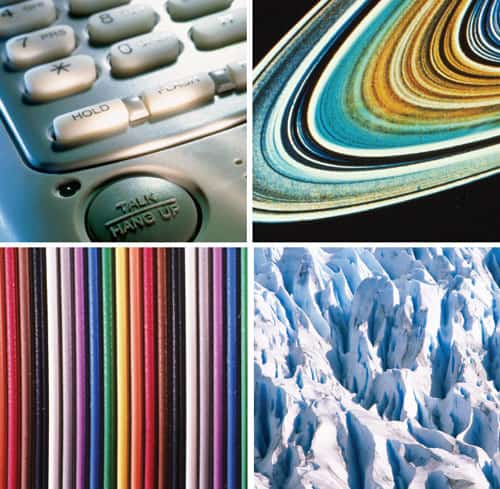
A man for all science Maxwell was a visionary thinker whose work paved the way to wireless communication. He also studied Saturn’s rings, linked glaciology to the behaviour of gases and studied the properties of light and colour.
The topic for the 1856 award was the structure and stability of Saturn’s rings. It took Maxwell four years to solve the problem, but his dedication succeeded. He won the Adams’ prize with an essay that caused a stir and was a strong factor in his becoming a Tripos examiner himself six years later. Moreover, Maxwell became fascinated by the problem of dynamical stability in general. Indeed, in 1868 he decided to investigate the stability of a “speed governor” – a device that controls a motor’s rate of rotation – his paper on which was the first in the now vast field of control theory.
Then came delicious irony. Maxwell was appointed examiner of the 1877 Adams’ prize, the topic was dynamical stability and the winner was Routh, who derived, amid much else, a fundamental stability condition now known as the Routh–Hurwitz criterion.
Maxwell, together with Ludwig Boltzmann and Willard Gibbs, also created the science of statistical mechanics. His work in this area began in 1859, when he read a highly original paper by Rudolf Clausius on colliding gas molecules. However, Maxwell went much further, first obtaining a statistical law governing the distribution of velocities in the gas and then determining many properties of gases that previously were impossible to calculate. One was viscosity, which he found should remain constant over a wide range of pressures. This unexpected result was confirmed by Oskar Meyer and by Maxwell and his wife, she doing nearly all of the experimental work. In particular, she discovered that viscosity increases almost linearly with temperature, rather than as the square root of temperature as the original theory predicted.
In attempting to understand this puzzle, Maxwell made one of the most spectacular intellectual leaps in physics, which took him from gases to glaciers and back. Rudolf Clausius, picturing molecules as billiard balls, had assumed that they travel a certain average distance, known as the “mean free path”, between collisions. But that picture turned out to be too simple. In practice, longer-range forces act between molecules, accounting for the different temperature dependences. A new approach was needed. Maxwell recalled that Forbes, while climbing in the Alps, had made extensive measurements of glaciers that showed that they move like liquids over long periods of time.
Maxwell seized on this idea and introduced into physics, engineering and glaciology a far-reaching new concept known as the “relaxation time”: a glacier behaves like a solid at times shorter than the relaxation time, but like a liquid at longer times.
Maxwell then showed mathematically that molecules in a rarefied gas bouncing from wall to wall also act like a solid. In other words, as pressure increases, a gas begins to behave like a fluid and has a relaxation time that increases with pressure. Clausius’ characteristic distance could therefore be replaced by a characteristic time, and Maxwell was able to develop the theory on a firm mathematical footing, which was later extended by Boltzmann.
Present throughout, alas, was a problem. In his first paper on this subject, Maxwell had proved a neat theorem that stated that the average rotational and translational energies of molecules are equal. When used to predict the specific heats of gases, however, the theorem gave results that flatly disagreed with experiment. Deeply alarmed, Maxwell said in a lecture at Oxford in 1860 that this finding “overturns the whole theory”. Although this was not true, he had discovered the first breakdown of classical mechanics.
Worse was to follow. When Boltzmann extended the theory, he established a much wider principle, equipartition, that applied to all modes of motion, internal and external, of molecules. A student at Cambridge in the 1870s vividly recalled Maxwell saying that “Boltzmann has proved too much”, explaining his remark with the observation that equipartition would apply to solids and liquids as well as gases. Only with the arrival of quantum mechanics was that anxiety transformed from difficulty to triumph.
The issue of equipartition steadily worsened. In a review written in 1877 Maxwell examined and demolished every evasion advanced up to that time, concluding that nothing remained but to admit “the thoroughly conscious ignorance that is the prelude to every real advance in knowledge”. The answer – and new questions – came in 1900 with Planck’s quantum of action. Some 40 years after Maxwell’s alarming discovery of 1860, the prediction of the specific heat of gases and much else was explained by the fact that the energy is quantized. At the atomic and subatomic levels, equipartition does not hold.
Maxwell’s legacy
When Einstein visited Cambridge in the 1920s, someone remarked, “You have done great things but you stand on Newton’s shoulders.” His reply was, “No, I stand on Maxwell’s shoulders.”
He was correct, but much else in modern physics also rests on Maxwell. It was after all Maxwell who introduced the methods that underlie not only Maxwell–Boltzmann statistics but the quantum-mechanical Fermi–Dirac and Bose–Einstein statistics governing photons and electrons. It was even he, in two innocent-seeming discussions in the 1870s, who first emphasized what we now call the “butterfly effect” – the fact that tiny differences in initial conditions can produce huge final effects, the starting point of chaos theory. In a similar vein, Maxwell’s scientific contributions have had dramatic effects on the future course of physics, notably the quest to unify nature’s fundamental forces. Sadly Maxwell died of cancer on 5 November 1879 and never lived to see the applications of radio or the demystifying of equipartition. But the power of his scientific insights lives on.
At a Glance: James Clerk Maxwell
• James Clerk Maxwell was born 175 years ago, in recognition of which 2006 has been dubbed Maxwell Year
• A child prodigy, he studied at Edinburgh and Cambridge universities and was appointed professor at Marischal College, Aberdeen, 150 years ago, aged just 25
• In 1865 Maxwell wrote down his famous equations, which related – or “unified” – electricity, magnetism and light for the first time
• He played a key role in the development of statistical mechanics, paving the way for the development of quantum mechanics
• Maxwell was a cultivated man who could speak on almost any intellectual topic, yet he also took a keen interest in the local affairs of his Scottish estate
More about: James Clerk Maxwell
S G Brush, C W F Everitt and E Garber (ed) 1983 Maxwell on Saturn’s Rings (MIT Press)
S G Brush, C W F Everitt and E Garber (ed) 1986 Maxwell on Molecules and Gases (MIT Press)
C W F Everitt 1975 James Clerk Maxwell: Physicist and Natural Philosopher (Scribner)
E Garber, S G Brush and C W F Everitt (ed) 1995 Maxwell on Heat and Statistical Mechanics (Lehigh University Press)
P M Harman (ed) 1990–2002 The Scientific Letters and Papers of James Clerk Maxwell (three vols) (Cambridge University Press)
B Mahon 2004 The Man Who Changed Everything: The Life of James Clerk Maxwell (Wiley)