Electronic devices based on single molecules

The field of molecular electronics has made steady progress in recent years and components made from single molecules have the potential to overcome the limits of silicon-based microelectronics. However, it is important to establish that single molecules, rather than the contacts, are responsible for the phenomenon observed in experiments.

Van Ruitenbeek and co-workers showed that a single hydrogen molecule can form a stable bridge between two platinum electrodes. Moreover, the bridge was found to have a conductance that was close to the value of the fundamental quantum unit of conductance, 2e2/h where e is the charge on the electron and h is Planck’s constant.

In the break-junction technique a knife is used to make an incision in a macroscopic metal wire which is then mounted inside a vacuum container and cooled to 4.2K. The sample wire is then bent, which causes it to break at the notch. The freshly exposed fracture surfaces are then brought back into contact. The separation of the two electrodes can be adjusted with a piezoelectric element.

“The importance of the experiment is that the system is simple and allows for detailed comparison with calculations,” van Ruitenbeek told PhysicsWeb. “Once we agree with theory on this simple model system, we have better hopes for understanding the more complicated molecular devices. It will get really interesting as soon as we come to molecules that have intrinsic diode characteristics or non-linear properties.”

The group now plans to look at the combination of hydrogen with different types of metal electrodes, including ferromagnetic and superconducting contacts.

Deconstructing rainbows

“A single ray of light has a pathetic repertoire, limited to bending and bouncing (into water, glass or air, and from mirrors). But when rays are put together into a family – sunlight, for example – the possibilities get dramatically richer. This is because a family of rays has the holistic property, not inherent in any individual ray, that it can be focused so as to concentrate on caustic lines and surfaces. Caustics are the brightest places in an optical field. They are the singularities of geometrical optics. The most familiar caustic is the rainbow, a grossly distorted image of the Sun in the form of a giant arc in the skyspace of directions, formed by the angular focusing of sunlight that has been twice refracted and once reflected in raindrops.”

This explanation of the rainbow, given by Descartes in 1637, was both a pioneering exercise of computational theoretical physics and the culmination of several millennia of what Raymond Lee and Alastair Fraser call “the slow and convoluted evolution of physical reasoning about the rainbow”.

We learn, for example, how Aristotle – in about 350 BC – understood the rainbow as redirected sunlight, but misunderstood the redirection as mirror reflection from clouds. We learn how Qutb al-Din in Persia and Theodoric in Freiberg, in about 1300, understood the importance of reflection and refraction within individual raindrops but were unable to explain why the light is concentrated near the rainbow angle.

Equally “slow and convoluted” was our understanding of a rainbow’s colours, which culminated (at least at the level of ray optics) with Newton’s incorporation of the spectral dispersion of water into Descartes’ theory. An original feature of the book is the detailed quantification of the colours of several natural rainbows, depicted as curves in the diagram of chromaticity co-ordinates representing hue and saturation. This exercise has the unexpected and startling result that the range of rainbow colours is tiny – less than 5% of the gamut of colours on a TV screen.

Yet this miserable smudge of wan and unsaturated colour “sticks in the popular imagination as a paragon of color variety”. Moreover, although “popular imagination” also envisages the rainbow’s colours as a pure prismatic sequence, Newton’s theory predicts a more complicated pattern, incorporating light far from the caustic and smoothed over the finite angular size of the Sun’s disc.

The Descartes-Newton picture explains much, but fails at a fundamental level by ignoring the wave nature of light. Often the interference fringes in rainbows are obscured by decoherence, but they can sometimes be seen as one or more “supernumerary bows” – a “faintly reproving name, one that has persisted long after we know that they are an integral part of the rainbow, not a vexing corruption of it”.

Lee and Fraser explain in detail how, through Thomas Young’s 1803 analysis in terms of interference, “the supernumerary rainbows proved to be the midwife that delivered the wave theory of light to its place of dominance in the nineteenth century”. Sadly, the authors do not include the celebrated photograph by Roy Bishop that shows a rainbow over the house in Woolsthorpe where Isaac Newton was born. The magnificent irony is that this rainbow shows a clear supernumerary, magnifying the inadequacy of Newton’s theory for all to see, and showing how its ray optics must be replaced by the completely different concepts of wave physics.

Young’s interference theory was itself an approximation. The full diffraction theory of light near a rainbow caustic was developed more than 30 years later by George Airy. I would have liked to see more discussion of this, in particular how the “Airy integral” has proved seminal throughout wave physics – for example in nuclear, atomic and molecular rainbows in quantum scattering involving spherically symmetric interaction potential fields of massive particles. The simple Airy theory gives the canonical description of waves very close to a caustic but incorrectly predicts the positions for the supernumeraries far from the rainbow angle; however, in a development not described here, mathematics from the 1950s enables the Airy integral to be adapted to apply everywhere.

Even Airy’s theory is not the last word, because it neglects polarization effects, which require a full vector-wave analysis based on Maxwell’s electromagnetic equations. This was provided by Gustav Mie’s exact calculation in 1908 of the scattering of light by a homogeneous refracting sphere. Extensive developments by Moyses Nussenzveig in the 1960s uncovered the Airy integral concealed in the intricacies of Mie’s mathematics.

However, as the authors wisely point out, the deeper theories do not necessarily give superior explanations of the natural rainbow. The reason is that their distinctive predictions (for example of the delicate interferences “marbling” the bow) are obscured in practice by the width of the Sun’s disc and by the range of different sizes of raindrops in a shower.

As the book’s title implies, the authors’ ambitions extend well beyond the physics of rainbows. They are aware of at least 150 myths and contradictory religious invocations in which the rainbow is sometimes benign, sometimes ominous. They catalogue the struggles of artists over the centuries to depict the rainbow realistically, often painting the arch in oblique perspective because it was misconceived as an object rather than an image, and – in what seem simple failures of observation – with the elusive colours of this “chameleon of the air” in reverse order.

Lee and Fraser are masters of prose, and their book is sumptuously produced and abundantly illustrated. They are to be congratulated for producing not only a definitive rainbow scholarship but also a gorgeous work of cultural synthesis.

Did Picasso know about Einstein?

On the wall of Arthur I Miller’s office at University College London is a graph drawn by Charles Joseph Minard that illustrates Napoleon’s advance into Russia in 1812. Starting at the Polish-Russian border, the graph shows the losses suffered by Napoleon’s army as it marched towards Moscow, and then retreated in the bitterly cold winter. It captures, Miller estimates, six or seven “dimensions” – time, space and temperature among others – on a 2D surface. The graph also illustrates Miller’s own interests in the interactions between physics and art, the visual representation of ideas and, one might even argue, his own journey from mainstream physics to the interface between science, history and art.

Particle theory and beyond

A physics graduate of the City College of New York, Miller gained his PhD from the Massachusetts Institute of Technology and started his career in particle theory. After further research at the University of Massachusetts, he moved to Harvard, where he switched disciplines to study the history and philosophy of science. “It was unknown territory for me at the time,” he recalls. “I wasn’t even aware that the field existed.”

So why did be change track? “I was always interested in why things happen,” he says, “so I thought I’d look into it.” As a historian and philosopher of science, Miller studied the works of Einstein, Poincaré, Bohr and Heisenberg, and published and edited books on the history of relativity and quantum theory. A major breakthrough came in Paris in 1976 when he discovered Poincaré’s letters and manuscripts in the possession of Poincaré’s grandson. The papers, which had been missing since the great French mathematician’s death in 1912, showed how his research interests reflected his philosophical views.

Miller has since moved away from conventional history of science, having become interested in visual imagery through reading the German-language papers of Einstein, Heisenberg and Schrödinger – “people who were concerned with visualization and visualizability”. Philosophy was an integral part of the German school system in the early 1900s, Miller explains, and German school pupils were thoroughly trained in the philosophy of Immanuel Kant.

According to Kant, visualizations are abstractions of phenomena that we have actually witnessed, while visualizability refers to the properties of an object that exist whether or not we look at it or take measurements of it. In Newtonian physics, visualization and visualizability are synonymous, but in quantum mechanics they are not.

Einstein and Schrödinger never fully accepted the highly abstract nature of Heisenberg’s quantum mechanics, says Miller. They agreed with Galileo’s assertion that “the book of nature is written in mathematics”, but they also realized the power of using visual imagery to represent mathematical symbols.

Heisenberg, however, went further than this, and his subsequent research laid the groundwork for Feynman diagrams – visual representations that marry intuition and imagery. Here the visual imagery is generated by the mathematics of quantum mechanics, rather than being abstracted from phenomena that we have actually seen.

Einstein and Picasso

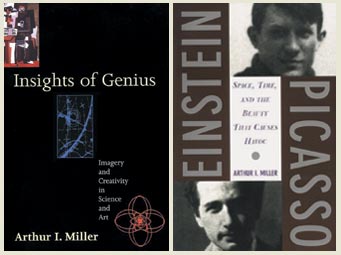
It was Miller’s research into visual imagery in physics that led him into the world of art. The thread running through his 1996 book Insights of Genius: Imagery and Creativity in Science and Art is that the human mind is the ultimate instrument in both art and science (Physics World August 1997 p51). The book explores the interrelations between intuition, aesthetics, visual imagery and representation, as scientists and artists attempt to “read” nature.

Arthur I Miller's books

In his most recent book, Einstein, Picasso: Space, Time and the Beauty That Causes Havoc (2001 Basic Books), Miller argues that Poincaré is the link between relativity and Cubism. Both Einstein and Picasso, he claims, were influenced by Poincaré’s non-Euclidean approach to geometry and his speculations on simultaneity – Einstein directly through reading a German translation of Poincaré’s La Science et l’hypothèse,. and Picasso indirectly through a circle of friends and acquaintances known as “la bande à Picasso”. Miller’s argument is that Einstein and Picasso were both working on the same problem, the nature of simultaneity – temporal simultaneity for Einstein and spatial simultaneity for Picasso – and that for both of them there were no preferred reference frames in which to view phenomena.

Many historians of art have felt that relativity somehow influenced the development of Cubism, but they have never believed that there was a direct link between the two. What prompted Miller to delve into the topic in such detail? “I always had an interest in art, and Picasso particularly, and Cubism even more particularly,” he says. “It seemed to me that there was more science in there than met the eye and had been investigated before. The roots of science are not even in science,” he continues, “so why should the roots of Cubism be just in art? Maybe it is, but I really doubt it. There’s too much science in what Picasso was doing.”

Miller regards Cubism as a “research programme” in which Picasso, like Einstein, discovered a new aesthetic – the reduction of forms to geometrical representations. This involved simultaneously representing, on a single canvas, many different viewpoints. “That had to have something to do with science,” says Miller, “so I looked into it in great detail. I reviewed all the newspapers Picasso had read and looked back into what was going on at that time in literature as well.” Although Einstein and Picasso were unaware of each other, the avant-garde movement in the first decade of the 20th century encouraged them both to question the traditional understanding of space and time.

The question of whether Picasso was fluent in French has been much debated in art circles. Many argue that he could barely read a newspaper, let alone study Poincaré’s book, but Miller believes that there may have been more direct links. “What I did was to get the sources that were written as close as possible to 1907, when Picasso painted Les Demoiselles d’Avignon, and put together a story where mathematics really did matter,” he says.

Miller discovered someone in Picasso’s circle – an insurance actuary called Maurice Princet – who studied advanced mathematics as a hobby. Princet had read and lectured on Poincaré to Picasso and his friends. “Princet was in Picasso’s atelier at the time that Picasso was having a great deal of trouble with Demoiselles,” he explains. “My hypothesis is that just at that point, Picasso realized the importance of what Princet was discussing concerning geometry.” However, Miller is careful to point out that we will never know for sure how much Picasso was influenced by the work of Poincaré.

Miller’s book has, on the whole, been well received. Writing in the Irish Times, the novelist John Banville called it “learned, inspired and daring… a fine and stimulating book that makes breath-taking connections across the gap between the so-called two cultures of science and art”. The New York Times Book Review said that Miller had written a “double detective story [and] an intellectual thriller” in which he manages to “quantum tunnel into art history from the history of science, appearing suddenly on the other side of the barriers without showing the usual signs of strain”.

Back to basics

Miller is currently writing a book about black holes. There are lots of “gee whiz” books on black holes, he says, but the intense struggles that took place between Eddington and Chandrasekhar in the 1930s, concerning the collapse of stars, have never been analysed in depth. “There was also a fear of things disappearing, and many people, including Einstein, didn’t understand the mathematics,” says Miller. “So until the 1960s black holes were considered theoretical monstrosities that couldn’t actually exist – an ugly solution to the most beautiful theory ever created.”

“Today,” Miller continues, “black holes have taken their place in the fabric of nature and have become symbols of its frightening beauty.” In addition to covering the physics and mathematics of black holes in a way that can be understood by non-specialists, the book will, he says, address the differences in outlook of astrophysicists and physicists, other cultural conflicts and the Cold War. “The whole episode”, says Miller, “sheds light on what science is, how it works and where it can go wrong.”

Back in the present, Miller says that computers are having an immense impact on scientific creativity. “This is the real rapprochement between art and science,” he says. “Progress has been impeded by primitive computer architectures, but it will be amazing when it really gets going.”

In the matter of J Hendrik Schön

“The physicists have known sin,” J Robert Oppenheimer is famously said to have remarked on the occasion of the first nuclear explosion. Sin in the form of faking scientific data seemed to be restricted to biology and related sciences, not physics. I used to think I understood why.

“There are three danger factors in scientific misconduct,” I would lecture to my classes in research ethics and anyone else who would listen. Not that misconduct in research happens whenever these factors are present. They are often present and misconduct in science is very rare. But these factors were present in every case I’ve studied.

The first factor that can trigger misconduct is that the scientist is under career pressure. That’s not much of a discriminator, because all scientists are under career pressure all the time, but it does point up the fact that this kind of misconduct is not motivated by simple monetary gain.

Second, the perpetrators always think they know the right answer. In other words, faking data is never done with the intention of inserting a falsehood into the body of scientific knowledge. The intent is always to insert a truth without bothering to go to the trouble of doing the experiment properly. This kind of misconduct is always a violation of the scientific method, never purposely a violation of scientific truth.

Finally, the work is always in a field where reproducibility is not expected to be very precise. For example, if you take two organisms that are as nearly identical as you can make them – say, two transgenic mice – and expose them to the same carcinogenic agent, you don’t expect them to develop the same tumour at the same time in the same place. So biologists who might be inclined to cheat generally don’t have to fear that someone will quickly prove them wrong by repeating the experiment. That, I would conclude, is why faking data occurs in biology, not physics.

Misconduct exposed

Now two high-profile cases of cheating in physics have suddenly surfaced. One involves the announcement and later retraction of the discovery of elements 116 and 118 at the Lawrence Berkeley National Laboratory (LBNL). The other involves a young researcher at Bell Labs named Jan Hendrik Schön. These cases promise to pose a severe test for my theory.

Unfortunately, as in many cases of scientific misconduct, little is known to the outside world about the LBNL case. An investigation took place, and a physicist, Victor Ninov, was fired as a result (Physics World August p7, p13). But, at the time of writing, the report of the investigation has not been made public.

Quite the opposite is true in the Schön case (Physics World June p5, p15). In a rare instance of openness in the murky field of scientific misconduct, the management of Bell Labs made it clear from the outset that it intended to make the results of its investigation public. It has now done so.

The general outlines of the case have been widely reported. Schön seemed to be a brilliant young condensed-matter experimentalist heading straight for a Nobel prize. His field was organic or carbon-based semiconductors, and Schön appeared able to grab every holy grail in the business.

Many of the samples were fabricated at Bell Labs, but they were rendered into devices and the measurements were made at the University of Konstanz in Germany while Schön was waiting for a visa to join Bell Labs. He managed, for example, to use field-effect doping – the use of very large electric fields to change the electron concentration in his samples – to induce such remarkable phenomena as superconductivity and the quantum Hall effect. Other researchers had been unable to reach high enough fields to detect these miraculous effects because of electrical breakdown in the insulating layers that are essential for such experiments. But Schön, using a humble apparatus in Konstanz, had managed to produce aluminium-oxide films of unprecedented resistance to breakdown.

In the period from 1998 to the summer of 2001, he produced research papers at an average of one every eight days, together with a total of 20 collaborators – the most prominent of whom were Bertram Batlogg and Christian Kloc. A blazing superstar of physics had been launched (see “Organic research goes into overdrive” Physics World January 2001 p9).

Then the wheels started to come off. Late last year Schön announced that he and his collaborators had produced a single-molecule transistor – the logical end point of Moore’s law, which, crudely, says that the number of transistors that can be crammed onto a computer chip grows exponentially. The news triggered the beginning of an unsuspension of disbelief. Anomalies were pointed out. The data were too perfect, different experiments had identical noise, and so on. This May, Bell Labs appointed a committee, chaired by Malcolm Beasley of Stanford University, to investigate. The committee’s report was released to the public, as promised, on 25 September.

The report detailed some 24 specific allegations that the committee had investigated, and found that scientific misconduct by Schön had occurred in at least 16 of them. Schön had done all of his experiments alone, he kept no laboratory notebooks, all his raw data files had been erased from his computer, and all of his original samples had been destroyed or discarded. With only the slightest of misgivings, the report exonerated all of Schön’s collaborators. Schön was immediately fired by Bell Labs.

Lessons to be learned

The case raises a number of issues. Firstly, I find it amazing that, when it arose, Bell Labs had no formal policy on how to handle cases of research misconduct. All US universities that accept federal research funds are required to have such policies, but Bell Labs, which is owned by Lucent Technologies, does not receive federal funds. The attitude there seems to have been one that was common in universities a couple of decades ago: it couldn’t happen here, so why do we need such a policy?

The Beasley committee resolved this dilemma by choosing to follow the federal policy that guides the universities. That, for example, established the level of proof of guilt required. Not, as in a criminal case, beyond a reasonable doubt, but rather that a preponderance of the evidence would be sufficient. I imagine that Bell Labs and other industrial laboratories will now get the message and put appropriate policies in place.

A more difficult issue concerns the responsibility of the other authors. The report defines this as an issue not of scientific misconduct but of professional responsibility. It goes on to say that “no clear, widely accepted standards of behaviour exist”, because it is an issue that “the scientific community has not considered carefully”. In fact the issue here is trust among scientists. Collaborations take place precisely because different scientists bring different skills to the table. If we are responsible for looking over the shoulders of our collaborators, collaborations will fall apart, and much damage will be done to science. Still, it makes one uneasy that there were so many collaborators who never suspected wrongdoing.

What about my theory – those three danger factors I wrote about? In this case they seem to hold up pretty well. Was Schön under career pressure? You bet he was, as is everyone at a place like Bell Labs – or my own institute for that matter. Perhaps that pressure was made all the more severe by the intensely competitive nature of the field he was in, and the unyielding pressure to stay ahead of the curve on Moore’s law.

Did he believe he knew the right answer? He still does. In a response attached to the Beasley report, Schön admits mistakes, but writes: “I have observed experimentally the various physical effects…such as the quantum Hall effect [and] superconductivity in various materials…I believe that these results will be reproduced in the future.”

Finally, is it a field in which results are not easily reproduced? Yes. Results in this field are notoriously sample-specific. That is, they depend crucially on the skill and luck of the person who prepares the sample. Failure to reproduce any given result in any given sample is not considered proof of anything. Nobody could prove that Schön had cheated just by demonstrating that a given result he had reported does not show up in a particular sample. So my theory survives to be disproved another day.

Catching the cheats

The Schön case has put scientific misconduct back on the front pages of the newspapers, and this time it is physics that is in the firing line. Inevitably, there will be much debate and soul-searching about what to do. Whatever we decide, we must remember this. Science is a marketplace of ideas, where good ideas must be proven wrong in order to be replaced by better ones. Being wrong, then, is an essential part of progress in science. To the public, it is easy to confuse being wrong with being guilty. We cannot allow that to happen. If scientists start to fear being accused of misconduct when they are wrong, enormous damage will be done to the enterprise of science.

In this case, the system worked. Science is self-correcting, as it is supposed to be. But we must not be complacent. If this kind of misconduct were to become commonplace, science would cease to be self-correcting and would be no better than any other belief system. Rooting out scientific misconduct in a sensible way will always be a grave responsibility for all of us.

Introducing the little Higgs

The Standard Model of particle physics is tremendously successful because it can accurately predict the outcomes of experiments from the atomic scale (about 10-10 m) all the way down to the shortest distances that can be probed in the laboratory (about 10-18 m). However, particle theorists are deeply dissatisfied with the model and are racking their brains to find a theory that can go beyond it. Why are they doing this and what is wrong with the Standard Model?

First let us review the Standard Model. In many ways it is analogous to the periodic table of the elements in that the known fundamental particles of matter – the six quarks and the six leptons (i.e. the electron, muon, tau particle and the associated neutrinos) – can be arranged in a table according to their various quantum numbers such as electric charge, colour, flavour and spin.

However, the Standard Model goes much further than the periodic table because it can describe exactly how the quarks and leptons interact with each other through the exchange of “gauge bosons” (i.e. gluons for the strong force, W and Z bosons for the weak force and photons for the electromagnetic interaction). A feature of the model is that the matter particles – the quarks and leptons – all have “spins” of h-bar/2, where h-bar is Planck’s constant divided by 2φ, whereas the particles that carry forces have spins of h-bar. This means that all the fundamental matter particles are fermions, while the particles that carry forces are all bosons.

Since the top quark was discovered in 1995, three complete “families” of quarks and leptons and all the different gauge bosons have been seen in experiments. Moreover, their interactions have been measured very precisely and everything is in perfect agreement with the theory.

Let there be mass
The final ingredient of the Standard Model – the Higgs mechanism – describes how the fundamental particles obtain their masses. This mechanism, which is named after Peter Higgs of Edinburgh University, was discovered independently in 1964 by Francois Englert and Robert Brout, and by Gerald Guralnik, Dick Hagen and Tom Kibble. Higgs and the others – building on earlier work by Julian Schwinger and Phil Anderson – showed how electroweak symmetry could be broken, thus allowing particles to have mass. The photon, however, is massless because the symmetry of the electromagnetic force is not broken in nature. (Note that most of the mass of particles that are not fundamental, such as neutrons and protons, comes from the binding energy of the strong force that holds the quarks together, and not from the masses of the quarks themselves.)

According to the Standard Model, the vacuum in which all particle interactions take place is not actually empty, but is instead filled with a condensate of Higgs particles. The quarks, leptons, and W and Z bosons continuously collide with these Higgs particles as they travel through the “vacuum”. The Higgs condensate acts like molasses and slows down anything that interacts with it. The stronger the interactions between the particles and the Higgs condensate are, the heavier the particles become.

The Higgs mechanism is an essential part of the Standard Model. Without it the quarks and leptons – and also the W and Z bosons – would all be massless and the world as we know it could not exist. However, the physics behind the Higgs mechanism is the least tested aspect of the Standard Model. Although we have much circumstantial evidence for the Higgs particle, given that fundamental particles have masses that are consistent with the Higgs mechanism and from indirect measurements at CERN and Stanford (so-called precision electroweak data), Higgs particles have never been directly produced and observed in collider experiments.

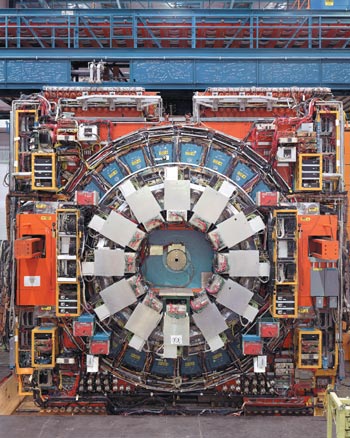
Nevertheless, this is not the reason why theorists are dissatisfied with the Standard Model. In fact, most theorists are actually convinced that the Higgs will be discovered in this decade either at the Tevatron at Fermilab or at the Large Hadron Collider (LHC) at CERN.

This prediction – which implies that the Higgs is light enough to be produced in collisions at the Tevatron or the LHC – can be understood as follows. Like quarks and leptons, the Higgs particle also derives its mass from coupling to the Higgs condensate. Furthermore, precision electroweak measurements indicate that the strength of the Higgs’ coupling to the condensate is not much larger than the corresponding coupling of the top quark. Therefore the Higgs particle cannot be much heavier than the top quark (which has a mass of 174.3 ± 5.1 GeV). More precisely, we expect it to have a mass above 114 GeV – as masses below this level have been ruled out by experiments at CERN – and below a few hundred GeV. By comparison, the mass of the proton is approximately 1 GeV.

The hierarchy problem
So what is the problem? The issue concerns the internal consistency of the theory – the Higgs sector of the Standard Model contains an instability that arises from quantum-mechanical interactions. In addition to the mass it acquires from interactions with the condensate, the Higgs particle can also gain mass as a result of interactions with virtual particles. The uncertainty principle of quantum mechanics allows pairs of short-lived virtual particles to “appear” from the vacuum and then disappear again. Although they have extremely short lifetimes, these virtual particles can have a significant impact on the properties of real particles.

Unfortunately for the Standard Model, these contributions grow with the energy of the virtual particles, and since virtual particles with arbitrarily large energies are allowed in quantum mechanics, it seems that quantum corrections make the mass of the Higgs particle arbitrarily large as well. This is clearly in contradiction with the requirement that the Higgs be lighter than a few hundred GeV. This is often called the “hierarchy problem”. (This issue only afflicts the Higgs because it has zero “spin”: it is not a problem for particles with non-zero spin, such as the gauge bosons.)

How can this problem be solved? The hierarchy problem tells us that we must modify the Standard Model into a new theory that takes over at energies of about 1000 GeV or 1 TeV. At first this might seem like bad news, but it is not because the Standard Model has only been experimentally tested at energies below about 1 TeV, so we have no real reason to believe that it provides a valid description of particles with higher masses and energies.

Any new theory must contain new particles beyond those in the Standard Model, and also new interactions that will somehow conspire to cancel the exceedingly large quantum corrections to the Higgs mass that are caused by the particles in the Standard Model. This conclusion by itself is very important and exciting: the hierarchy problem predicts that there is new physics beyond the Standard Model that is likely to be within the energy reach of the LHC. Thus not only can we expect to see Higgs particles produced at the LHC, we are also likely to discover the new particles that we need to solve the hierarchy problem.

What are these new particles? Well, nobody knows, and that is why we need to do experiments. However, it is interesting to speculate. Using the hierarchy problem as a guide, we can try to infer properties of these new particles. At energies above 1 TeV, calculations of the quantum corrections to the Higgs mass will include contributions from virtual particles from the Standard Model and also from particles in the new theory. We know that the contribution from the particles in the Standard Model grows with energy and quickly becomes too large. Since we do not know what the new particles are, we cannot compute their contributions. However, we know that in order to solve the hierarchy problem, the particles must precisely cancel the corrections due to the Standard Model particles.

For a long time the only known example of a theory in which this cancellation takes place was supersymmetry. Supersymmetry relates each Standard Model particle to a “superpartner” with opposite spin statistics – the superpartner for a fermion is a boson and vice versa. When computing quantum corrections to the Higgs mass in supersymmetry one discovers an amazing result: each Standard Model particle and its superpartner give equally large contributions, but they are opposite in sign and so cancel each other out exactly! Unfortunately, no superpartners have been observed in experiments, which implies that supersymmetric particles – if they do exist – must be heavier than the current experimental bound, which is of the order of 100 GeV.

Given this absence of experimental evidence for supersymmetry, some particle theorists have returned to the drawing board in a search for alternatives. Last year, in a major theoretical breakthrough, Nima Arkani-Hamed of the University of California at Berkeley, Andrew Cohen of Boston University and Howard Georgi of Harvard University discovered a new class of theories with the desired cancellation of quantum corrections (www.arXiv.org/abs/hep-ph/0105239). A significant number of theorists are now working on this new approach.

Enter the little Higgs

Similar to supersymmetry, these “little Higgs” theories – so-called because they generate a Higgs particle with a relatively small mass – also predict new particles with masses near 1 TeV. However, little-Higgs theories are based on a different symmetry principle and predict new particles with quantum numbers that are different to those predicted by supersymmetry.

Contrary to what happens in supersymmetry, in little-Higgs theories the cancellation of the quantum corrections occurs between fields of the same spin: fermions cancel fermions and bosons cancel bosons. Consequently, the new particles in the theory include fermionic partners for quarks and leptons, and also bosonic partners for gauge bosons.

One might wonder why it was so difficult to construct such models. The answer lies in the fact that it is not sufficient to simply postulate partners for each Standard Model particle in order to be able to obtain a precise cancellation. Moreover, there needs to be some reason for the quantum corrections from Standard Model particles and their partners to be of the same magnitude with the opposite sign: in other words a symmetry is required.

In little-Higgs theories this symmetry, the analogue of symmetry between bosons and fermions in supersymmetric theories, is a so-called nonlinearly realized symmetry. The importance of similar nonlinear symmetries for the cancellation of mass contributions was discovered in 1961 by Jeffrey Goldstone of the Massachusetts Institute of Technology. However, Arkani-Hamed, Cohen and Georgi are the first theorists who have been able to successfully incorporate these symmetries into an extension of the Standard Model and solve the hierarchy problem. In this theory a nonlinear symmetry unifies the Standard Model particles with heavy new particles. This unification relates the couplings of virtual particles to the Higgs in such a way so as to ensure that the quantum corrections cancel.

Little-Higgs models have only recently been discovered and the hunt for the simplest and most elegant little-Higgs model is still going on. In addition, particle theorists are beginning to investigate detailed experimental signatures. While the precise masses and other properties of the new particles in the little-Higgs theories are model dependent, some robust predictions can be made. First, little-Higgs theories predict one or several Higgs particles with masses at or below a few hundred GeV. Second, they predict at least one new heavy fermion particle with a mass of less than about 2 TeV – this particle is needed to cancel the very large quantum correction to the Higgs mass caused by top quarks. Third, they also predict new gauge bosons with TeV-scale masses that cancel the Higgs-mass corrections from weak and electromagnetic interactions.

It is impossible to tell from theory alone which new model – little Higgs, supersymmetry or something completely different altogether – will prove successful in the long run. Experiment has to decide. Fortunately, these experiments will be carried out. With luck, hints of these new particles may soon be discovered at Fermilab, but we will probably need to wait for the LHC to see the particles themselves. Construction of the LHC is scheduled to be completed by 2007 – a date that is eagerly awaited by theorists and experimentalists alike.


Physics meets art and literature

Art is meeting science all around us. Every month brings word of some new exhibition, competition, collaboration or example of art and science interacting. These can range from the modest – such as the appearance of a scientist in a minor subplot in a novel – to major initiatives such as the Signatures of the Invisible exhibition or the play Copenhagen.

The interactions go both ways – many university science departments have writers and artists in residence, for example, while the Institute of Contemporary Arts in London has a scientist in residence. But how meaningful are these collaborations? Can scientists gain anything from their interactions with art and artists? Do artists and writers do anything more than use science as raw material? And does it matter?

The many faces of art and science

This special issue of Physics World explores some of these issues. The focus on the science side is, naturally, on physics and cosmology. Art is interpreted in its broadest sense to cover the visual arts, the written word and various types of performance. The emphasis, for the most part, is on fairly recent interactions for reasons of practicality rather than prejudice – there are simply not enough pages available to do justice to a topic that is as old as the subjects of art and science themselves.

Unfortunately it is impossible to be exhaustive even within this shorter timeframe. The journal Interdisciplinary Science Reviews recently devoted almost 90 pages to the subject of science and theatre alone, so there are sure to be gaps in the coverage that follows. Poetry is an obvious omission from the topics covered, as are music and cinema. The use of science to examine classic paintings – the subject of the Art in the Making exhibition that is currently running at the National Gallery in London – is also excluded, as is science fiction. And if you want to read about the “two cultures” debate, look elsewhere.

In “Did Picasso know about Einstein?” Ciara Muldoon writes about what may have been the greatest art-science interaction of all time. Einstein published his special theory of relativity – which completely overhauled our ideas about space and time – in 1905. Around the same time Picasso was developing cubism, a completely new direction in art. Are the two events somehow connected?

We also look at the increasing number of plays and modern novels that are about science or scientists. Most of the works discussed are examples of artists borrowing from science – “raiding it for metaphors” as the novelist Ian McEwan has said – but there is also evidence of an increasing trend to view books by scientists as “literature”.

Many of the more formal collaborations between science and art have taken place in the field of visual art, and in “A brief history of art and science” we examine how physicists and artists have worked together.

Within physics, advances in technology have allowed researchers to present their results with ever-increasing visual impact. We have selected three of these images – the Eagle Nebula, entangled photons and the quantum mirage – as “Iconic images” and describe how they were created. What all three images have in common – in addition to their visual impact and the novel physics they reveal – is that they are composites of two or more sets of data.

Something for everyone

Given the growing number of interactions between artists and scientists, is it realistic for us to expect the arts to have any impact on science beyond providing epigraphs for books or words like “quark”? Michael Frayn’s play Copenhagen has had a major impact on the history of physics, but we could find no examples of art or literature having a direct influence on other areas of research in physics.

There are, however, similarities between the arts and science – the need for inspiration, creativity and hard work, the willingness to experiment and be brave, and the conviction that you are searching for or creating work that says something meaningful about the world or nature. Robert Crease explores some of these ideas in “More than pretty pictures” (see Physics World November 2002 p19, print version only). In purely practical terms, thinking about something other than physics can be good for a physicist. One eminent researcher told us: “I have had some of my best ideas in concerts.”

There are also, of course, major differences between science and the arts. No one but Shakespeare could have written the sonnets, the story goes, but someone would have developed relativity even if Einstein had not. But we should celebrate these differences rather than bemoaning them. If the interactions between art and science can benefit either side – either in the giving or receiving, in science supplying the raw material for art, or in books and plays bringing science to a new audience – then that is enough.

Sharing out the Nobel prize

The average age of the winners of this year’s Nobel Prize for Physics is 78 – higher than at any time in the past 20 years. That is not the fault of the winners, of course, and the Nobel committee is not entirely to blame either. The neutrino experiments of Ray Davis Jr, who is now sadly in the early stages of Alzheimer’s disease, and Masatoshi Koshiba involved a lifetime’s work: it is only recently that their true importance – they provided the first evidence that neutrinos can “oscillate” and must therefore have mass – has been confirmed. Riccardo Giacconi, on the other hand, could have been recognized for his contributions to X-ray astronomy a decade ago, but he has had to wait until the floods of data from the Chandra and XMM-Newton observatories made his case irresistible. That said, the decision to award the prize to astrophysics – only the fourth time this has happened – is to be applauded.

The neutrino experiments recognized by the Nobel committee actually have curious links with particle physics. Koshiba built the Kamiokande experiment in an effort to detect proton decay. Grand unified theories had predicted that this extremely rare process would have a half-life of 1032 years or more. Proton decay has still not been detected, but by lowering the threshold energy of his experiment, Koshiba was able to detect solar neutrinos instead. Meanwhile Davis had to present his experiment to Maurice Goldhaber, his boss at Brookhaven, as an experimental check on a surprising prediction concerning a transition from the ground state of the chlorine-37 nucleus to an excited state in argon-37. Davis’s long-time collaborator John Bahcall described the meeting with Goldhaber as follows: “As Ray had hoped, Maurice was much interested in the nuclear-physics ideas and tests, and, perhaps incidentally, also approved the solar-neutrino experiment.”

Mention of Bahcall raises the question of how many people can share the prize. The Nobel statutes allow a maximum of three people to receive the prize. If Giacconi had been honoured previously, Bahcall would surely have shared the prize with Davis and Koshiba for this theoretical work on solar neutrinos – without his predictions there would not have been a solar-neutrino problem to solve.

Is there a case for awarding the prize to more than three people? The Nobel Peace Prize was shared by Joseph Rotblat and the Pugwash movement in 1995: might a collaboration or laboratory share the physics prize in the future? There is much to be said for not diluting the prize, but it is also true that many great physicists who deserve a prize die without receiving one. At the very least the committee should continue its practice of recent years and recognize the current maximum of three physicists every year.

Physics World and Jan Hendrik Schön
Physics World does not publish original research findings. However, we do publish articles about research papers that have been published in peer-reviewed research journals. We are therefore alerting readers to three Physics World articles about papers by Jan Hendrik Schön, the physicist who has been fired by Bell Labs following an investigation into scientific misconduct.
“The fractional quantum Hall effect goes organic” (Physics World October 2000 pp26–27) was based on J H Schön et al. 2000 Science 288 2338. This paper has now been retracted.
“Organic research goes into overdrive” (January 2001 p9) discussed results from a series of papers that Schön et al. published in 2000. These papers have now been retracted.
“Pumped up buckyballs” (October 2001 p3) was based on J H Schön et al. 2001 Science 293 2432. This paper has now been retracted.
For more information see Bell Labs physicist fired for misconduct and In the matter of J Hendrik Schön.

Iconic images

Eagle Nebula

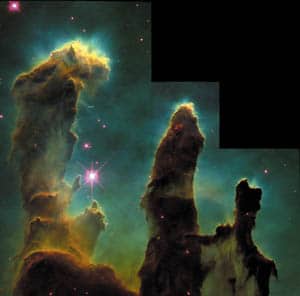
This image of Eagle Nebula has appeared on numerous magazine covers and posters, and was one of four images chosen for a special set of US stamps to mark the 10th anniversary of the Hubble Space Telescope. The enormous popular appeal of this image of the Eagle Nebula was highlighted recently when the readers of Sky and Telescope magazine voted it the second “most influential astrophoto of the 20th century” – beaten only by the famous “Earthrise” photograph taken during the Apollo 8 lunar mission. The Eagle Nebula image has also appeared on numerous magazine covers and posters, and was one of four images chosen for a special set of US stamps to mark the 10th anniversary of the Hubble Space Telescope. “We knew when we took the picture that it was a corker,” says Paul Scowen of Arizona State University, who obtained the image with colleague Jeff Hester in 1995. “However, the degree to which it became so popular was surprising.”

Eagle Nebula

The Eagle Nebula (M16) is a large star-formation complex in the constellation Serpens, some 7000 light-years from Earth, and the image shows evaporating gaseous globules emerging from pillars of molecular hydrogen gas and dust. The giant pillars – which are 11 trillion miles high – are so dense that the gas inside them contracts gravitationally to form stars. The intense radiation from the bright young stars causes low-density material to boil away at the end of each pillar, exposing the globules (J J Hester et al. 1996 Astronomical Journal 111 2349).

The unusual shape of the image was dictated by the field of view of the WFPC-2 camera on the Hubble telescope. “The three columns are of different lengths and to get them in the picture, the camera and the observatory had to oriented just so to make it work,” recalls Scowen. Hester and Scowen also combined images taken with filters at three different wavelengths to create the final image. For instance, the blue areas in the image are very hot and rich in doubly ionized oxygen atoms, whereas the red areas are quite cool in comparison and rich in singly ionized sulphur.

Scowen points out that the photograph is a false-colour image and that the Eagle nebula would actually look mostly green if we could see it. “This is because the human eye is most sensitive in the mid-green area,” he explains, “and that is where the oxygen emission is strongest.” Although the false colours are undoubtedly eye-catching, Scowen stresses that they are chosen for scientific reasons rather than principles of realism or aesthetics. For instance, hydrogen is coloured green in the image, even though it is really red, because sulphur is also red and astronomers need some way of telling them apart.

The widespread visibility of stunning images like that of the Eagle Nebula is one of the reasons for the popularity of astronomy with the general public. “We are working with some of the most gorgeous images humankind has ever seen,” says Scowen. However, he is also keen to convey the science behind the photograph. “I have given enough talks to the public to have a pretty good feel for what works and what doesn’t,” he says, “but I always try to highlight the scientific value of the images as well, so that the public sees more than the simple ‘gee whiz’ factor.” Indeed, some astronomers have recently questioned if evaporating gaseous globules play a major role in star formation – still one of the least understood processes in astrophysics – but there can be little doubt about the lasting impact of this image.

Entangled photons

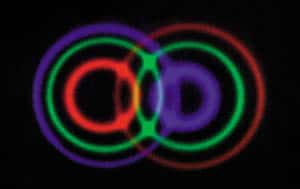
Entanglement is one of the most puzzling phenomena in quantum mechanics, and also one of the most difficult to illustrate, which could help explain why this image of entangled photons has proved so popular. The photograph was created by Paul Kwiat and Michael Reck at the University of Innsbruck in Austria in 1995.

Entangled photons

To produce the entangled photons, the Innsbruck team shone an ultraviolet laser beam at a crystal of beta barium borate. About one in ten billion of the photons were “down-converted” into two lower-energy photons, which were emitted on opposite sides of the ultraviolet beam along two cones. The photons on one cone were vertically polarized, while those on the other were horizontally polarized. Under certain conditions, the polarizations of the photons were entangled – in other words the correlations between them were stronger than any correlations allowed by classical physics.

The photograph is unusual in that it was obtained without a lens, with the down-converted light from the crystal falling straight onto the photographic film. The image shown is actually a false-colour composite of three images – each requiring a 40 minute exposure – taken with different filters in front of the film: the blue rings correspond to light with a wavelength of 681 nm, green is 702 nm and red is 725 nm. Entanglement was observed for 702 nm photons travelling in directions that correspond to where the green circles overlap (P G Kwiat et al. 1995 Phys. Rev. Lett. 75 4337). About 1 in 500 of the down-converted photon pairs are entangled, which means that fewer than 1 in 1012 of the original ultraviolet photons result in entangled photons.

The long exposure time meant that Kwiat and Reck had to keep any stray light awat from the film. The photographic company the researchers used also managed to ruin the first roll of film and Kwiat and Reck had to repeat everything again. However, the firm is acknowledged in the original paper for developing the second roll at night to ensure optimum conditions.

According to Kwiat, who is now at the University of Illinois at Urbana-Champaign, he and Reck did not pay particular attention to the aesthetic appearance of the image, although they wanted the colours to be easily distinguishable. They also deliberately chose red for the longest wavelength photons and blue for the shortest. Any other aesthetic considerations were purely subconscious, says Kwiat: “We weren’t particularly thinking ‘Ha! Now this would look good on wallpaper’.”

Kwiat is interested in the interplay between physics and art, but he admits that the two communities often have different ideas about beauty: “There’s nothing like seeing a good sine wave on your oscilloscope at 2.00 a.m. when you’ve been searching for it for months and months – it’s really beautiful.” He also sees many similarities in the way that physicists and artists work. “Artists often look at the same object from many different perspectives – from different angles and using different media to represent them,” he says. “Physicists do the same, whether we’re solving something using Maxwell’s equations or quantum mechanics or quantum electrodynamics, working in different co-ordinate systems and so on.”

There are further similarities between artists and scientists, according to Kwiat: “The other thing that artists do – not just for physicists but for everyone – is to have a real appreciation of beauty in the world and in nature, and how we interact with that. I think that it’s important for everyone to maintain this. It is even more important for scientists, so that we don’t become too abstracted away from the fact that what we really are is natural philosophers – we’re trying to understand nature, to unravel the mysteries of the universe as it were.”

Quantum mirage

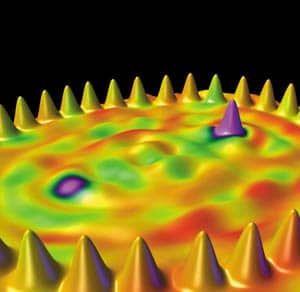
Since it first appeared on the cover of Nature in February 2000, the “quantum mirage” has featured on posters, calendars, websites and the covers of various books and magazines. The image – which was obtained using a scanning tunnelling microscope – shows the electronic wavefunctions inside an elliptical “quantum corral” made of cobalt atoms on a copper surface. It was created by Hari Manoharan, Christopher Lutz and Don Eigler of the IBM Almaden Research Center in California.

Quantum mirage

Eigler has a track record of producing iconic images. In 1990, working with Erhard Schweizer, he spelt out the letters “IBM” using 35 xenon atoms. And three years later, working with Lutz and Michael Crommie, he released the first images of the “quantum corral”, which have also been reproduced in numerous places. However, Eigler admits that he has been surprised by the widespread popularity of the quantum mirage. “I don’t have much of a feel for what excites and interests other people,” he told Physics World. “I did not think that the image of the quantum mirage would be of broad interest.”

To create the image Manoharan, Lutz and Eigler first used a scanning tunnelling microscope (STM) to position 36 cobalt atoms in an elliptical ring (the orange peaks), and then placed another cobalt atom at one of the two focal points of the ring. Next they used the STM to measure the Kondo effect (the purple peak) caused by the magnetic properties of the lone cobalt atom (2000 Nature 403 512). They also detected a much weaker Kondo effect at the other focal point (the purple patch on the left), even though it did not contain a cobalt atom – hence the name “quantum mirage”.

Hari Manoharan, who is now at Stanford University, chose the colours for the image, which is actually constructed from two data sets. The first set contains topographic data and the second the magnetic information. “Both data sets share the same x-y co-ordinates,” he says, “so the challenge was to illustrate a 4D data set in a 3D surface.” Manoharan represented the topographic data as height and the magnetic information (i.e. the Kondo effect) as colour, so the peaks in the image show where the atoms are located, while the colours represent the magnetic data, with purple corresponding to the strongest Kondo effect and green to the weakest.

Eigler, who is married to an artist, confesses that he does not like the colour scheme. “But,” he adds, “there’s no accounting for taste – my taste, Hari’s taste or the public’s – is there?” However, he says that he is “vitally interested” in the interaction between physics, aesthetics and art. This applies to his work and to his hobby – restoring and customizing cars. “Usually I pull art into my physics world, either in how I handle an image, or in the appreciation or design of some laboratory gizmo. I also apply my skills as a physicist – design, fabrication, electronics, welding – in my car restoration/customization pursuits.”

So does Eigler think that physicists have anything to offer artists, or vice versa? “I am sure of it,” he says, “but I am also sure that it is serendipitous.” He also paints a vivid picture of the parallels between art and science: “long hours, commitment, passion, beauty, style, cliques, superstars and unknowns. But the most important one, I think, is the spark of creativity.”

Old star sheds light on creation of elements

The chemical composition of the earliest stars reflects the composition of the gas from which they were made. Since stars themselves generate all of the elements in the Universe except hydrogen, helium and a small amount of lithium, the oldest stars should contain very little of the heavier elements (known collectively as metals). Some of these stars should still be observable but have eluded astronomers for decades.

The star investigated by Christlieb and co-workers, called HE0107-5240, is part of the Milky Way’s halo. It was identified as a possible metal-deficient star by a spectroscopic survey of the southern sky carried out by a collaboration between the University of Hamburg and the European Southern Observatory (ESO). This survey is more sensitive and some ten times larger than earlier surveys.

Christlieb’s group carried out more refined spectroscopic measurements of the star at the 2.3m Siding Spring Observatory in Australia and on one of the 8m telescopes at ESO’s Very Large Telescope in Chile. These results showed that the star is indeed metal deficient. It contains only 1/200 000th of the amount of metal in the Sun and even its strongest metallic spectral lines are extremely faint.

The team is currently using the Siding Spring Observatory to investigate other metal-deficient candidate stars from the Hamburg/ESO survey. Such stars should provide important information about star formation and may also lead to an improved estimate of the age of the Universe.

“Finding more metal-poor stars should help us understand the epoch of the first star formation, since these stars are our best direct ‘witnesses’ of this epoch,” says Christlieb.

First glimpses inside an anti-atom

The anti-hydrogen atoms were produced from antiprotons from CERN’s Antiproton Decelerator and positrons from a radioactive sodium-22 source. The positrons, which were trapped between sets of antiprotons in a “Penning” trap, cooled the antiprotons. When both reach a similar temperature some combine to form anti-hydrogen atoms, consisting of a positron orbiting an antiproton nucleus. These anti-atoms, which are electrically neutral, drift out of the trap. Any anti-hydrogen atoms moving along the axis of the apparatus traverse a strong electric field that removes the positron from the anti-atom. This “field-ionisation” technique allows the resulting negatively charged antiprotons to be trapped and counted.

Using this technique the researchers were able to produce nearly 170 000 cold anti-hydrogen atoms. This means that a remarkable 11% of the antiprotons in the Penning trap formed anti-hydrogen atoms. This compares well with previous experiments performed at CERN, by researchers on the ATHENA collaboration, using a similar trapping technique they produced about 50 000 anti-hydrogen atoms two months ago.

ATRAP’s field-ionisation technique also gives information about the internal states of the anti-hydrogen atoms, showing that the principal quantum number n is between about 43 and 55 (where n=1 corresponds to the ground state). By changing the strength of the ionising electric field the researchers hope to discover more about the internal state of the anti-hydrogen atoms, and to learn how to de-excite them to the ground state. This knowledge will be essential because hydrogen atoms and anti-atoms can only be trapped if they are in their ground state.

This high rate of production, and the fact that the anti-atoms are formed in highly excited states, suggests that the anti-hydrogen atoms are formed in three-body collisions between two positrons and an antiproton.

The ATRAP collaboration, which includes researchers from the US, Switzerland, Germany and Canada first demonstrated the cooling of antiprotons with positrons in a Penning trap last year. Since then they have carried out more detailed studies of this cooling process to ensure that the antiproton loss observed during positron cooling is indeed due to the formation of anti-hydrogen and not other mechanisms. The team is confident that every recorded event comes from the production of an anti-hydrogen atom and that their measurements are free of background.

The ultimate goal of the experiments will be to trap cold anti-hydrogen atoms and study their spectra in detail. Comparing the spectra of anti-hydrogen with hydrogen, and studying the transition from the n=2 to the n=1 state in particular, will give researchers new insights into the differences between matter and antimatter.

Copyright © 2026 by IOP Publishing Ltd and individual contributors