So how can physicists and biologists work together? Progress would seem possible on two broad fronts – conceptual and experimental. Physicists have contributed to major conceptual leaps in biology before, but it is important for today’s physicists to realize that their predecessors who won Nobel prizes for physiology or medicine – such as Max Delbrück and Francis Crick – did not just dabble in biology or make major discoveries by accident. Rather they immersed themselves in their new subject. Similarly, today’s biologists have adopted a plethora of techniques and instruments from physics – such as synchrotron radiation and nuclear magnetic resonance – and are doing very nicely, thank you. They are not just looking for any old physics technique but for those that will make a real difference to their research.
For instance, biologists need to be able to follow events inside cells, such as the replication of chromosomes and the folding of proteins, in real time. Physicists have already made tremendous progress in exploring the mechanics of single molecules of DNA, but repeating this inside a living cell is much more difficult. And there are still major challenges in mature areas of biology – many proteins are difficult or impossible to crystallize, and the “phase problem” has still not been solved in X-ray crystallography. But the flow is not all one way from physics into biology: DNA is a remarkable material that is being explored by increasing numbers of physicists; and there is some interesting physics at work inside the ear (see article).
Physicists and biologists differ most in their attitudes to theories of everything. While the majority of physics researchers are not directly involved in the search for a unified theory of all the forces, they are united in their belief that the physical world can be described by general laws and universal principles, and that these are more important than the detail. Biologists and biology are different: with the exception of evolution, there are few general principles and the detail is all important. However, the conceptual approach favoured by physicists could yield dividends when applied to specific problems in biology (such as protein folding).
Robert May, the physicist-turned-biologist who is now president of the Royal Society, once said that the biggest challenges in biology, such as understanding the genome, are still in a “Tycho Brahe phase” of describing and cataloguing phenomena. The challenge was, he said, to move first into the Keplerian era – which is characterized by a phenomenological approach – and then on to a deeper understanding in a “Newton phase”. Physicists who choose to join in this effort face a steep learning curve and a barren period with few, if any, publications. But by working with the right biologists, it could well be worth the effort.
Here we go – again
Is it really only four years since the captain of the Brazilian football team graced the cover of Physics World? With the 2002 World Cup approaching – and with new data on how the drag force on the ball varies with velocity – we revisit the vexed question of the physics of the banana kick (see summary). Goalkeepers beware!
In his new book Meselson, Stahl, and the Replication of DNA, science historian Frederic Holmes recounts the story of what one researcher called “the most beautiful experiment in biology”. The so-called Meselson-Stahl experiment, which was carried out in 1957, confirmed that DNA replicates in the way predicted by the then recently discovered double-helix structure. When Holmes asked five researchers why this particular experiment was so beautiful, their answers included simplicity, precision, cleanness and strategic importance.
Holmes’s book naturally made me wonder about the most beautiful experiment in physics, and what criteria one would use to make the judgment. I asked Holmes which physics experiments he thought beautiful. He replied that he was reluctant to appraise physics, but did mention Helmholtz’s 1850 measurement of the velocity of the nerve impulse, though admitted that this was more in the field of physiology.
Beautiful science
So what makes for beauty in science? In A Mathematician’s Apology, G H Hardy proposes that the essential criteria for beauty in his field are unexpectedness, inevitability and economy – although he also mentions that depth, or how fundamental a proof is, is relevant. I’m also fond of those passages in Michael Faraday’s The Chemical History of a Candle, in which he says that a candle’s beauty is not prettiness of colour or shape, but rather something else: “Not the best-looking thing, but the best-acting thing.” In Faraday’s eyes, a candle taps all of the known laws of the universe.
The heat of the flame melts the wax and draws up currents of air to cool the wax at the periphery, thus creating a cup for the molten wax, which remains horizontal thanks to gravity – “the same force of gravity which holds worlds together”. Capillary action draws the melted wax up the wick from cup to flame, while the flame’s heat triggers a chemical reaction in the wax that sustains the flame.
But what about beautiful experiments? I asked physicist Samuel Devons of Columbia University – an old hand at re-enacting historic physics experiments – for his thoughts. A beautiful experiment has to make an important discovery, he said. “It can’t be a demonstration of what’s in the textbooks, or a check on the theory – it has to change what people knew and believed.” A beautiful experiment must be “not too complicated, not too expensive and not more accurate than it needs to be”. Finally, he told me, it must be within reach of students – a criterion that fails both the otherwise beautiful 1922 Stern-Gerlach experiment demonstrating electron spin, and the 1887 Michelson-Morley experiment on the propagation of light.
Devons’ candidates for beautiful experiments include Cavendish’s work during the 1770s to measure how electric charge distributes itself on a hollow sphere and to measure the force between electric charges. Cavendish found that the force varies with the inverse square of the distance between the charges. Devons’ other choices include Weber and Kohlrausch’s 1856 experiment establishing the relationship between electrostatic and electrodynamic charge. But he also mentioned several series of experiments, by scientists such as Franklin, Faraday and Volta, that he would call beautiful.
My candidates for beautiful experiments include the 1956-7 parity-violation experiment led by Chien-Shiung Wu at Columbia University and colleagues at the National Bureau of Standards in Washington. I would also choose Maurice Goldhaber’s 1957 experiment in which he established that neutrinos have a “negative helicity” – in other words, that their intrinsic angular momentum or “spin” is in the opposite direction to their momentum (see The origin of neutrino mass (summary), pp35-39 print version).
Neither one is a student experiment. But Wu and colleagues overturned at one convincing stroke one of the most fundamental and firmly held assumptions in physics, while Goldhaber’s experiment was so fiendishly ingenious that most physicists at the time did not even think it was possible in principle. In most scientific discoveries, one feels that even if the actual discoverers had missed the boat, the discoveries themselves would still have been made eventually. But this one is different. One physicist later wrote that, had Maurice Goldhaber not existed, “I am not sure that the helicity of the neutrino would ever have been measured”.
I also think of the 1919 British expeditions demonstrating the gravitational bending of starlight, confirming Einstein’s 1915 prediction. But neither the eclipse (a familiar natural event) that made it possible, nor the determination of stellar positions (a familiar astronomical technique), was extraordinary. So can beauty lie solely in an experiment’s dramatic consequences?
Finally, I think of Archimedes, pondering a problem while sitting in a bath. Though today’s science historians are dubious, the ancient source tells us that he noticed that “the amount of water which flowed over by the tub was equal to the amount by which his body was immersed [which] indicated to him a method of solving the problem” – causing him to run through the town yelling with joy. Can an inadvertent discovery transform a routine event into a beautiful experiment?
The critical point
Most discussions of beauty in physics – including Graham Farmelo’s new book It Must Be Beautiful: Great Equations of Modern Science (Top equations add up to beauty, Physics World March p47) – focus almost entirely on beauty’s role in theory and explanation. I find this amazing, even perverse. The term beauty is usually applied to things made by human beings that are material (rather than intellectual and abstract) and that reveal something about nature with clarity, simplicity and depth in a way that transforms our perspective of it. But isn’t this what happens when scientists stage a great experiment?
What, then, is the most beautiful experiment in physics, and what is the connection between its beauty and its scientific value? Is beauty merely a subjective experience, or an objective property of good science – icing on the cake, or essential ingredient? I invite you to submit your candidates and suggestions at the Web site indicated below. In a future column, I shall list the candidates and talk about the connection between beauty and science.
What is the most beautiful experiment in physics, and what makes it beautiful? Send your answers to Robert P Crease at the address or e-mail given below, or by fax to +1 631 632 7522. You can also enter your response via the Brookhaven National Laboratory Web site at www.bnl.gov/bnlweb/physq/.
We naturally think of our ears as receivers for sound, so it came as a major surprise when, in 1979, David Kemp of University College London found that ears can also emit sounds. A sensitive microphone placed close to the eardrum typically records a faint hum, but in many human subjects clear whistles can be picked up on top of the background buzz. In rare pathological cases, these sounds can be loud enough to be heard by passers-by!
Kemp’s experiments clearly showed that something within the ear was vibrating, and they heralded a new era of hearing research. Since then, researchers have thought of the ear as an active receiver. This research is now entering an exciting phase. An understanding of the cellular basis of the ear’s power source is emerging, and the fundamental physics of active-signal detection is being worked out.
The occurrence of “otoacoustic emissions” was not a complete surprise to everyone, however. As long ago as 1948 Tommy Gold, a young researcher then at Cambridge, had foreseen that the ear employs an active process. He pointed to a problem with the classical theory of hearing that had been formulated by the German physicist Hermann von Helmholtz in the middle of the 19th century.
Helmholtz believed that the ear responded to sounds in much the same way that a harp string resonates when a singer hits the right note. He supposed that the inner ear contained a set of “strings”, each of which vibrated at a different frequency. We now know, however, that the detection apparatus resides within the cochlea, a fluid-filled duct that is coiled like a snail’s shell. Given the microscopic size of the putative strings, the viscous damping of the fluid would prevent the build up of a resonant response.
Gold argued that an active process must somehow counteract the friction, so that sharp frequency tuning and high gain can both be achieved. Without these capabilities, the ear would not be able to distinguish similar frequencies or to hear faint sounds. He therefore proposed that the ear operates rather like a regenerative radio receiver. Invented by the radio pioneer Edwin Armstrong, this device works by adding energy at the very frequency that it is trying to detect. It was clear to Gold that such a mechanism must be very delicate, however, as it would require a positive feedback of precisely the right magnitude to cancel the damping. Any less and the ear would be insensitive; any more and it would ring spontaneously.
Wave mechanics
Elegant though it was, Gold’s hypothesis fell on deaf ears. No doubt disenchanted by the inertia of scientific thought, he turned to cosmology, where the inventiveness of his ideas was better appreciated. The attention of hearing researchers shifted, instead, to the fluid mechanics of the cochlea, attracted by the results from a series of remarkable experiments conducted in the 1930s and 1940s by Georg von Békésy at the laboratories of the Hungarian Post Office.
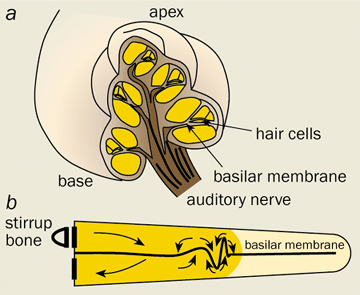
With great technical prowess, Békésy succeeded in imaging the minute displacements of the “basilar membrane”, the flexible partition that extends along almost the entire length of the cochlea, dividing it into two separate channels (figure 1). He discovered that a sound stimulus entering the inner ear causes a wave-like distortion to propagate along the basilar membrane. As the wave advances, its amplitude increases and its wavelength decreases until it reaches a place of maximal disturbance, after which it decays rapidly. Crucially, the location of the maximum depends on the frequency of the stimulus, with high frequencies peaking near the base of the cochlea and lower frequencies travelling further towards the apex.
1 The cochlea
(Courtesy: IOP Publishing)
(a) The spiral duct of the cochlea is divided into two channels by the flexible basilar membrane and is filled with fluid (yellow). The inner hair cells, which sit on the membrane, connect directly to the auditory nerve.
(b) When sound enters the cochlea (here shown uncoiled) it agitates the fluid, causing a ripple to travel along the basilar membrane. This movement (which is grossly exaggerated here) is detected by sensory hair cells, supported on the membrane.
Békésy’s observations suggested that a simple “place code” might be used to convey information about the pitch of a stimulus to the brain. The movement of the basilar membrane is monitored by sensory hair cells, which produce neural spikes in the auditory nerve when they are displaced. Information about the major frequency components of the stimulus can therefore be gleaned from the location of the nerve cells that fire most rapidly.
The basic physics of the travelling wave can be described by a simple one-dimensional transmission-line model – an approach instigated by Josef Zwislocki in a thesis that was published the same year as Gold’s hypothesis. A sound stimulus rattles the tiny hammer, anvil and stirrup bones that lean against the oval window at the entrance to the cochlea, thus setting the cochlear fluid in motion (figure 1b). Owing to the incompressibility of the fluid, variation in the longitudinal flow must be accompanied by lateral motion of the basilar membrane. This movement is caused by the pressure difference that develops between the two channels as a result of the fluid flux. These mutual interactions between the fluid and the membrane generate a slow wave that travels from the base towards the apex.
The most striking feature of the basilar membrane is its elasticity. As it has very little longitudinal rigidity, adjacent sections of the membrane can move almost independently of one another, being coupled only through the fluid. Moreover, the membrane’s lateral stiffness varies greatly along its length, decreasing by about two orders of magnitude from the base to the apex of the cochlea. This changing stiffness means that the wave propagation is “dispersive”. As the wave advances, its wavelength decreases and it slows down.
In regions where the damping is negligible (i.e. near the base) the wave must grow in amplitude to conserve the flow of energy. At some point, however, the motion of the basilar membrane becomes fast enough for viscous drag to become significant. This characteristic place is near the base of the cochlea for higher frequencies. Beyond this point, the damping steals energy from the wave and its amplitude quickly declines.
Mystery of the ear’s acuity
A major problem with this view of cochlear mechanics is that it gets nowhere near to explaining the ear’s astonishing performance, which exceeds even that of our visual system. The quietest sounds that we can hear impart no more energy per cycle than thermal noise does and, according to Békésy’s results, would displace the basilar membrane by only a fraction of an ångström.
At the same time, the ear can cope with a vast range of sound levels; loud noises that cause pain carry over 12 orders of magnitude more energy than the faintest whispers. In addition, the cochlea is an excellent frequency analyser; we can distinguish two tones that differ by a few per cent in frequency if they are played simultaneously, and a fraction of a per cent if they are played successively. The place code is far too coarse a mechanism to account for this acuity. How, then, does the ear achieve the remarkable feat of distinguishing semitones and hearing both cries and whispers?
2 Cochlear tuning curve
(Courtesy: IOP Publishing)
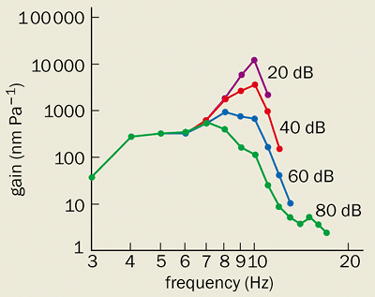
The response of the basilar membrane at a particular location can be measured using laser Doppler interferometry. These data collected by Mario Ruggero and co-workers at Northwestern University show that the resonance is nonlinear: the gain and the sharpness of the tuning both increase as the level of the sound diminishes (see Robles and Ruggero in further reading).
Békésy’s discovery of the travelling wave merited the 1961 Nobel Prize for Physiology. But we now appreciate that the cochlea operates in a much subtler way than his experiments revealed. Békésy made his measurements on cadavers and, in order to obtain a detectable response, he had to blast sound at 140 decibels – enough to make the dead jump out of their skins.
Even before Kemp’s discovery of otoacoustic emissions, the relevance of Békésy’s data was called into question by a remarkable experiment by William Rhode at the University of Wisconsin. In 1971 Rhode succeed in making measurements on a live cochlea for the first time. Using the Mössbauer effect to measure the velocity of the basilar membrane, he made a significant discovery. The frequency tuning was far sharper than that reported for dead cochleae. Moreover, the response was highly nonlinear, with the gain increasing by orders of magnitude at low sound levels. The ear’s sensitivity had finally been revealed, although its physical origin remained unclear.
It took another decade to repeat these delicate experiments, but in recent years much more accurate measurements obtained using laser interferometry have confirmed Rhode’s findings (figure 2). There is an active amplifier in the cochlea that boosts faint sounds, leading to a strongly compressive response of the basilar membrane. When the power supply of the ear is interrupted, this amplification ceases. Stone dead equates to stone deaf.
What is the source of the activity? Potential candidates began to appear in the 1980s, as a result of careful experiments that measured the properties of individual cells in the living ear. The first evidence of active movement was found right at the heart of the detection apparatus, in the hair bundles that act as mechanical sensors.
3 Hair bundles
(Picture credit: Carole M Hackney/Keele University)
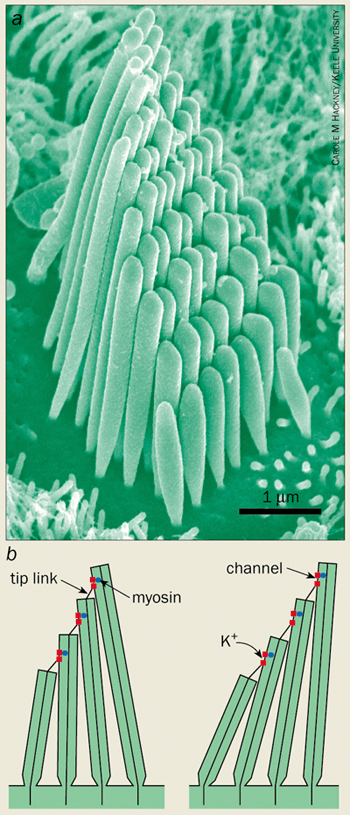
Hair bundles are the ear’s detectors. (a) The bundle in this hair cell from a turtle is a pyramidal structure composed of stereocilia, which are connected by tip links.
(b) When the bundle is displaced, the tip links get stretched and pull open the transduction channels, thereby generating an electrical signal due to positively charged ions. Myosin motor proteins attached to the channels may be involved in active amplification. (see Fettiplace et al. in Further Reading)
A hair bundle is an appendage measuring a few microns across that sticks up above the surface of every hair cell. It is composed of a bundle of columnar “stereocilia”, which slope up against one another. The tip of each hair is connected to the next by a fine filament called a “tip link” (see figure 3). Shear flow in the cochlear fluid causes the whole bundle to deflect, with each stereocilium pivoting at its base so that the tip links get stretched. Each tip link connects directly to a tension-gated “transduction channel” in the cell membrane of the stereocilium, which admits potassium ions. So the deflection leads to a change in the ionic current that, in turn, alters the cell potential.
This very direct mechanism for converting motion into electrical signals was established by numerous researchers in the 1980s and 1990s. Jim Hudspeth, now at Rockefeller University, and David Corey of Harvard University made particularly important contributions by developing methods to manipulate frog hair bundles with microneedles and measure the transduction current.
In 1985 Andrew Crawford and Robert Fettiplace, then at Cambridge University, discovered that hair bundles in turtle ears could oscillate spontaneously. That same year, William Brownell and colleagues at Baylor College of Medicine in Texas discovered a second source of motion that is particular to the mammalian cochlea. In addition to the inner hair cells, mammals also have a second source called the outer hair cell, which is also crowned by a hair bundle. Brownell and his co-workers found that outer hair cells are electromotile; when a voltage is applied, the whole cell body contracts longitudinally by a few per cent. Subsequently Jonathan Ashmore, then at Bristol University, measured the speed of the outer-hair-cell motor and showed that it could respond to oscillating voltages at several kilohertz.
Hopf resonators
Experimental investigations into the cellular basis of the active amplifier in the ear have stimulated theoretical physicists to revive Gold’s ideas and develop them further. Two groups, one based at Rockefeller University and the other involving researchers at the Institut Curie in Paris and Cambridge University, including the author, have proposed models based on the theory of dynamical systems. Both groups argue that the inner ear contains a set of motile systems – most likely the hair bundles themselves – each of which is capable of generating oscillations at a particular frequency (see Camaletet al. and Eguiluz et al. in further reading).
When one of these nonlinear dynamical systems is on the verge of vibrating, it is especially sensitive to periodic disturbances at frequencies close to its characteristic frequency. The onset of spontaneous oscillations corresponds to what is known as a “Hopf bifurcation” in the language of dynamical-systems theory. This is a critical point at which the behaviour of the system suddenly changes from still to vibrating.
Critical points also exist in equilibrium phase transitions, such as vaporization. Near these points, the behaviour of the system is universal and does not depend on the microscopic details. The same is true of dynamical transitions. This means that the response of the cochlea can be characterized without any detailed knowledge of the physical apparatus that generates the oscillations.
A critical Hopf oscillator acts as a nonlinear power amplifier, boosting weak signals much more than strong ones. In fact, the displacement of the oscillator varies as the cube root of the stimulus force, so the gain grows indefinitely as the signal falls to zero. This compressive nonlinearity explains how the ear manages to cover such a large dynamic range. The 120-decibel variation in sound levels that we can comfortably hear can be detected by displacements of hair bundles that vary by only a factor of 100.
The Paris-Cambridge team has gone on to describe how these motile systems can be set up so that they are poised on the brink of an oscillatory instability. The researchers demonstrated how a simple feedback control mechanism could automatically adjust each system to its critical point, where its response is most sensitive.
Such a self-tuning mechanism provides a natural explanation for spontaneous emissions of sound from the ear. Normally, the low-amplitude vibration of the self-tuned critical oscillators would produce a faint hum. But if one of the motile systems were to have a faulty control mechanism, it might oscillate wildly, generating a shrill whistle.
According to this theoretical work, a choir, rather than a harp, is a better analogy for the way the ear operates. One can think of the cochlea as containing many “voices”, each of which is ready to sing along with any incoming sound that falls within its own range of pitch.
Location of the motor
Hearing researchers are now working hard to establish the physical basis of dynamical oscillators and to understand the nature of the self-tuning mechanism. After all, it is perfectly plausible that different organisms use different apparatus to implement the same general strategy.
Several researchers tried to recreate Crawford and Fettiplace’s experiment with frog hair cells in vitro, with little success. Indeed, it has always been tricky to reproduce spontaneous bundle oscillations in dissected specimens. The situation changed when Pascal Martin and Jim Hudspeth at Rockefeller succeeded in making preparations in which the extracellular ionic concentrations were carefully adjusted to correspond to physiological conditions. Following this breakthrough, they discovered that low-amplitude spontaneous oscillations could be observed quite readily. Their work confirmed that the motile system resides within the hair bundle (in frogs, at least) and provided evidence that a feedback control mechanism involving calcium ions adjusts the system close to the oscillatory instability.
What might be generating the oscillations? One potential source, suggested by Yong Choe, Marcelo Magnasco and Hudspeth at Rockefeller, is the transduction channels themselves, which can displace the hair bundle as they open and close to admit potassium and calcium ions. A second obvious candidate is the molecular motor myosin – a variant of the protein molecule that drives our muscles. These molecules, which are attached to the transduction channels, have long been implicated in the bundle’s ability to adapt to changing conditions because movement of the motors resets the tension in the tip links. However, myosin molecules are also in a perfect position to shake the bundle.
Molecular motors generate force and motion by continually binding and breaking down energy-releasing molecules at a rate of about 100 molecules per second. One objection that had been raised in the past is that this rate is too slow for motors to cause oscillations at audio frequencies. However, Frank Jülicher and Jacques Prost at the Institut Curie have demonstrated that if a number of motors work together, they can collectively generate oscillations at frequencies much faster than their individual rates.
4 How hair bundles respond
(Courtesy: IOP Publishing)
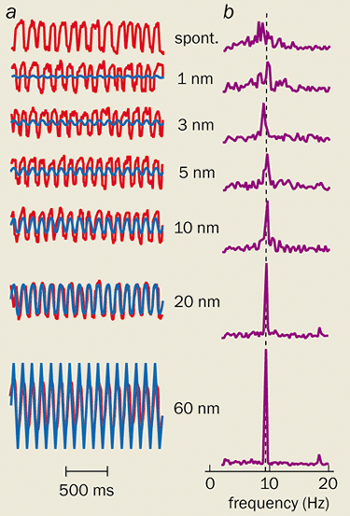
(a) When a frog hair bundle is shaken using a microneedle, its response (red) is characteristic of a noisy Hopf oscillator. The applied force, which is related to the amplitude of the displacement of the needle (blue), progressively increases down the figure. When the bundle is shaken gently, the Hopf oscillator’s gain – its response divided by the input stimulus – is large.
(b) The Fourier transform of the bundle displacement has a peak at the stimulus frequency. The height of this peak grows as the cube root of the applied force, indicating that the gain increases as the force decreases (data courtesy of Pascal Martin and Jim Hudspeth).
The most convincing evidence to date that hair bundles act as Hopf oscillators comes from a recent experiment by Martin (who is now at the Institut Curie) and Hudspeth. Using a microneedle to shake a bundle, they measured its response to a sinusoidal force. What they found bore all the hallmarks of the Hopf resonance (see figure 4).
Their observations also support the arguments of the Paris-Cambridge theorists about how the ear detects signals below the threshold for thermal noise. Even though such weak stimuli are too feeble to increase the amplitude of the bundle’s noisy motion, they do make the oscillations slightly more regular. This “phase-locking” is apparent in the timing of the potential spikes in the auditory nerve. It appears that a great deal of information about frequency must be encoded by the time intervals between spikes, and that this “time code” might be at least as important as the place code.
In the mammalian cochlea, the outer hair cells are widely believed to power the movement of the basilar membrane. It remains unclear, however, whether the outer-hair-cell motor is itself a Hopf oscillator, or whether it is simply an additional linear amplifier that boosts oscillations generated by the hair bundle. Spontaneous oscillations of an outer hair cell have never been observed. Nevertheless, great strides have recently been made in understanding the physical basis of its electromotility.
Arguing that the cell membrane must contain a large quantity of molecular motors, Peter Dallos and his colleagues at Northwestern University looked for genes that are abundantly, but exclusively, “expressed” in outer hair cells. Such genes would be translated into the right type of protein. Dallos and co-workers found a gene that, when introduced in cultured kidney cells, caused the cells to change their shape in response to voltages.
The identification of this gene product, which they named prestin in honour of the rapidity of the outer-hair-cell motor, opens new avenues for research into the mechanism of electromotility. One possibility is that extensive arrays of the prestin protein act as piezoelectric elements that change the surface area of the cell, driving its expansion and contraction.
Cochlear waves and sound processing
The realization that outer hair cells pump the basilar membrane is also leading to a revised theory of cochlear mechanics. A decade after proposing the existence of quarks, theorist George Zweig of the California Institute of Technology turned his talents to hearing research and discussed how sound energy can be transported to a localized place in the cochlea without any reflection taking place. In the 1980s his theoretical analysis of the cochlear travelling wave was extended by James Lighthill of University College London.
Essentially, the group velocity of the wave must fall to zero at that location, dropping in such a way that there is sufficient time for the damping to dissipate all of the wave’s energy before it gets to that point. Zweig and Lighthill showed that this could happen if each section of basilar membrane responds as a lightly damped oscillator. However, as Gold pointed out, the magnitude of the viscous forces is likely to forbid this possibility.
In a model of the active cochlea devised by Jülicher and the author, the membrane is considered to be an excitable medium driven by a set of “self-tuned” critical oscillators (which probably correspond to individual outer hair cells). By exactly cancelling the friction at just one place – the location where the oscillator frequency matches the sound frequency – the active oscillators cause the wave to stop at that point. The resulting active travelling wave has a very sharp peak, the amplitude of which grows as the cube root of the sound level. An alternative model that combines the action of a travelling wave and the Hopf resonance has been proposed by Magnasco at Rockefeller.
Theoretical analyses such as these, coupled with ongoing experiments, should help to establish the physical basis of the cochlear tuning curve shown in figure 2. A fascinating new tool that promises to help in this task is a miniature microphone built by Elizabeth Olson at Princeton University, which permits the pressure wave in the cochlear fluid to be measured precisely.
Another fruitful area of research concerns the way in which the ear processes complex sound signals. For example, what is the relative importance of place coding and time coding? A better understanding of how frequency and volume are represented in the auditory nerve would help to improve the design of cochlear implants, which bypass the impaired hair cells of the profoundly deaf and stimulate the nerve directly with electrodes.
While the Hopf resonance is ideal for detecting a single frequency, its intrinsic nonlinearity causes two or more tones to interfere with one another in the cochlea. Jülicher at the Institut Curie and the author’s group in Cambridge have investigated the Hopf response to two tones and have shown that it accounts for the two main physiological manifestations of interference. The first of these is called two-tone suppression: the presence of one tone tends to diminish the response of the cochlea to a second tone of similar frequency.
The second type of interference is the generation of distortion products. When two tones are played simultaneously, the response of the basilar membrane includes a whole spectrum of frequencies: the two original frequencies f1 and f2 are present, but so are all frequencies equal to f1 + n(f1 – f2), where n is an integer. These distortion products become increasingly important as the two frequencies approach one another.
A number of perceived or psychoacoustic effects may be directly associated with these nonlinearities. For example, the 18th-century violinist and composer Giuseppe Tartini was the first to remark that the pitch 2f1 – f2 could be heard when two notes are played simultaneously, even though that frequency is absent in the sound waves. This auditory illusion is probably caused by the most prominent of the distortion products that the cochlear amplifier generates.
Music to our ears
Even our notion of musical harmony might be attributable to the physical nature of the ear’s detection apparatus. Pythagoras famously discovered the enigmatic relation between the “consonance” of musical intervals, which forms the basis of musical scales, and the ratios of small integers. Harmonies are most pleasing when the frequencies of the notes are simply related, while non-integer ratios sound grating or dissonant. (The notes in a perfect fifth, for example, have a frequency ratio 3:2.)
Pythagoras’s disciples considered this to reflect a greater harmony in the universe. But Helmholtz claimed that consonances are simply less-jarring dissonances – an explanation that chimes better with our modern sensibilities. He ascribed the sensation of dissonance to the close mismatches in frequency that occur between harmonics when notes are played on a musical instrument. If the fundamentals are in integer ratios, such mismatches are fewer and the sound is sweeter.
But why should two tones with slightly different frequency sound rough? The active amplifier may be the reason. By creating pronounced distortion products, it makes the hair bundle oscillate in a complex manner with an amplitude that is modulated by non-sinusoidal beats. This makes it difficult for the brain, which has only the spike timings to go on, to deduce the original frequency components of the sound.
Such an interpretation coincides with the composer Arnold Schoenberg’s view that “what distinguishes consonance from dissonance is not a greater or lesser degree of beauty, but a greater or lesser degree of comprehensibility”. Had not the ear evolved to capture the crack of a twig beneath a predator’s paw, our appreciation of music might have been very different.
LCDs are used in a broad range of displays, from those in watches and calculators to computer displays and flat-screen televisions. In 2000 almost two billion LCDs were made by an industry worth $20bn. But existing manufacturing techniques are relatively expensive and restrict the size and shape of the displays. In contrast, the method used by Broer and co-workers is potentially cheaper and more versatile. It could lead to larger, thinner displays that could be “painted” onto almost any surface.
A liquid crystal flows like a liquid but is made up of rod-shaped molecules that line up in a particular direction. In a conventional LCD, an electric field is applied across a layer of liquid crystal, changing the alignment of the molecules and altering their light-transmitting properties. The glass substrates are coated with a layer of conducting material.
Instead, the Philips’ group coated a single piece of glass with a thin film containing a mixture of liquid crystal, a monomer – a polymer building block – and an ultraviolet-absorbing dye. The mixture was first exposed to ultraviolet light with a wavelength of 400 nm through a mask. The light caused the monomer molecules to join together to form a solid polymer, a process known as polymerization. This created a network of polymer walls within the film, corresponding to the pattern on the mask.
The mask was removed and the mixture was then exposed to ultraviolet radiation at 340 nm. This led to polymerization on the surface of the mixture, but not further down where the intensity of the light was lower due to its absorption by the dye. The effect of this step was to separate the polymer and liquid crystal into distinct layers, and the combined steps resulted in a network of polymer boxes each enclosing a small amount of liquid crystal. Each box measured 500 by 500 µm square and 10 µm deep, with a lid about 10 µm thick. The walls, which hold the display together, were about 100 µm wide.
However, Broer and colleagues admit that there are hurdles to overcome before their technique could be used commercially. Since all of the electrodes needed to power the LCD must be on a single substrate, the resulting electric field exists within the plane of the liquid crystal layer, rather than across it. This impedes the alignment of the liquid crystal molecules. But more importantly, polymers are more permeable than glass to atmospheric contaminants such as water and oxygen. This means that paintable LCDs are likely to have shorter lifetimes than conventional devices.
Superconductors are materials that lose their electrical resistance below a certain ‘transition temperature’. In most superconductors, the current consists of electrons that have overcome their mutual repulsion to form pairs. These pairs are propelled through the material without resistance by vibrations of the crystal lattice known as phonons.
Theories of superconductivity say that the proximity effect occurs when these pairs of electrons leak from a superconductor into a metal, and single electrons flow from the metal into the superconductor. This process lowers the transition temperature of the superconductor and reduces its ‘superconducting gap’ – the energy needed to split the electron pairs. Meanwhile, the metal takes on some properties of the superconductor.
But Dynes and colleagues suspected that this effect would be reversed if a superconductor was put in contact with a metal in which the electrons are strongly bound to each other. They tested their idea by coating thin films of lead – which act as superconductors – with silver, in which electrons interact strongly with each other.
The researchers studied twelve lead films ranging in thickness from 0.9 to 3.2 nm. Samples of these films were coated with layers of silver up to 0.7 nm thick. When the team measured the transition temperatures of these films, they found that it was higher when a layer of silver was present, as they predicted. The biggest jump in the transition temperature – from below 1.6 K to over 1.9 K – was seen in a lead film 1.1 nm thick coated with a layer of silver 0.26 nm thick.
To establish whether this inverse proximity effect altered the ‘superconducting gap’ of the lead films, Dynes’ team measured the conductance of the films at 1.65 K. The researchers found that the conductance of the films fell as the silver became thicker. The largest increase in the superconducting gap was a hike of 20% – seen in a lead film 0.9 nm thick with a silver layer 0.2 nm thick – compared with a similar film with no silver coating.
According to Dynes and co-workers, these effects can be explained by the flow of strongly bound complexes of electrons – or ‘quasi-particles’ – from the silver layer into the lead film. They believe that these quasi-particles reduce the electrostatic repulsion between electrons in the superconductor, making it easier for them to pair up and contribute to the superconducting current. They also suggest that the electron pairs in the lead film are more tightly bound when the lead is thinly coated with silver.
Dynes speculates that his team’s discovery could lead to new applications for superconductor devices – such as Josephson junctions – which exploit the conventional proximity effect. High-temperature superconductors also have strongly interacting electrons, but these have not been extensively studied. Dynes says that his team plans to study these materials next.
Many organic polymers emit light when a voltage is applied to them. This effect arises from the ‘conjugated’ structure of these polymers – that is, the alternate single and double bonds that link the carbon atoms in their ‘backbones’. In these compounds, electrons are ‘delocalized’ from their parent atoms and form two ‘molecular orbitals’ of different energies, which act as a valence band and a conduction band.
When a voltage is applied to such a material, electrons enter the conduction band and positive holes enter the valence band. An electron and a hole from these bands can bind together to form a neutral – but excited – entity known as an exciton. The exciton falls to its ground state when the electron and the hole recombine, and light can be emitted.
But light is only emitted by ‘singlet’ excitons, formed when the spins of the electron and the hole add up to zero. ‘Triplet’ excitons – formed when the spins add up to one – emit no light. This means that a polymer LED will emit more light if more singlet excitons are produced. But physicists long thought that the rules of quantum mechanics allowed just one singlet exciton to be produced for every three triplet excitons, limiting the quantum efficiency of polymer LEDs to 25%. But recent experiments have reached efficiencies of up to 63%.
In order to understand these high efficiencies, Vardeny and colleagues compared the proportion of singlet and triplet excitons produced in polymers ranging in length from just a few polymer units to hundreds of polymer units. The team used techniques known as photo-induced absorption (PA) and PA-detected magnetic resonance to study films of the materials.
The researchers found that the proportion of singlet excitons produced was much larger in longer polymer chains, irrespective of the shape of the polymer molecule. Earlier studies had found some evidence for such a link, but team member René Janssen says that he was still very surprised by the discovery. “In particular, the fact that polymers of different chemical natures appear on the same curve was very unexpected,” he told PhysicsWeb.
Vardeny and colleagues speculate that this effect could arise from the wavefunctions of the singlet and triplet excitons. They suggest that the wavefunction of a singlet exciton is spread over the whole length of the polymer, while that of the triplet exciton is localized. This would mean that the singlet and triplet wavefunctions are similar in small molecules but very different in longer molecules. But the researchers say they need to do more work to understand how the wavefunctions affect the production of singlet and triplet excitons.
“Our discovery is good news for LED research – especially for polymer LEDs – because it means that efficiencies may not have reached their theoretical limits,” says Janssen.
Most cosmologists believe that the universe began with the big bang about 14 billion years ago, and has been expanding ever since. Many astronomical studies – including observations of receding galaxies and the cosmic microwave background – support this view. But this ‘standard theory’ has a glaring shortcoming: it cannot explain the big bang itself, or the conditions that created it.
Theories of ‘bouncing’ or cyclic universes, however, do not predict a beginning or an end of time, and therefore do not need to explain them. Early advocates of a cyclic model thought that the universe must shrink into a singularity – a point of infinite density and temperature – before exploding in a new big bang. But this idea proved too difficult to explain, and most theorists rejected the concept of a cyclic universe.
Now Steinhardt and Turok say that – according to ‘M-theory’ – the universe need not pass through a singularity between a big crunch and a big bang. Supported by most cosmologists, M-theory says that space–time has eleven dimensions, of which we perceive four: three in space and one in time. Our four-dimensional ‘brane’ – short for membrane – is moving among the remaining dimensions or branes, which are hidden at very small or very large length scales.
The theory says that the matter we see in the universe is confined to our local brane and that matter also exists in other branes. Steinhardt and Turok believe that a big crunch/big bang occurs when two such branes collide. They say that the density of matter is perfectly finite during such a collision, and that a singularity only occurs in the sense that the dimension that separated these branes disappears briefly during the collision.
The effect of gravity on matter in different branes could explain why galaxies behave as though they contain more matter than we can detect – a phenomenon that led to the concept of ‘dark matter’.
The researchers also say that their theory depends upon ‘dark energy’, another concept that is not explained by the standard model. Dark energy is a kind of repulsive gravitation, which was proposed to explain recent observations that show the universe is expanding at an accelerating rate. In the new cyclic model, dark energy is needed to dilute entropy during periods of cosmic expansion.
“If our conjecture is correct, it transforms cosmology because the big bang isn’t the impenetrable barrier it once seemed,” Turok told PhysicsWeb. He admits that the theory needs more work to solve several important technical problems, but says “philosophically, the model is so appealing that I think it will be here to stay for some time.”
Carbon nanotubes – tiny rolled sheets of graphite – have a host of unusual electronic and mechanical properties, which are the focus of research in Ajayan’s group. During an experiment, de la Guardia tried to photograph single-walled nanotubes using a conventional flash, which has a spectrum similar to that of sunlight, but without the ultraviolet light.
Ajayan’s team – which included researchers working in Mexico, France and UK – repeated this process on single- and multiwalled nanotubes. After packing samples of nanotubes to different densities, they exposed them to light pulses with a range of intensities and recorded the results on video. They later used an electron microscope to inspect the remains of the nanotubes.
Immediately after a flash, the researchers found that ‘hot spots’ appeared on the single-walled nanotubes and then spread through the sample until it was completely burnt. Samples packed to higher densities needed a more powerful flash to ignite them because the samples contained less oxygen, which supports combustion. The multiwalled nanotubes did not burn at all.
The team also tried the experiment in different environments. When the nanotubes were exposed to the flash in air, the carbon they contained burnt and escaped as carbon monoxide and carbon dioxide, leaving a residue of oxidized nickel and iron, which are used in the production of nanotubes. But when the nanotubes were ‘flashed’ in an atmosphere of helium – which does not support combustion – the team found that the carbon rearranged itself into single-layered structures with conical tips, known as ‘nanohorns’.
An intriguing property of carbon nanotubes is their ability to harbour heat. Scientists know that nanotubes oxidize at temperatures of around 900 kelvin, but Ajayan and colleagues believe that the ‘hot spots’ seen in their experiment must have reached about 1800 kelvin to produce such dramatic changes in the structure of the nanotubes.
When the link between light and combustion is better understood, Ajayan believes that the effect could be used in devices such as remote triggers. “Combustion reactions could be started by adding nanotubes to the reaction mixtures and exposing them to light,” he told PhysicsWeb.
De le Guardia – who is now doing a Masters degree at Rensselaer – was very surprised by his discovery. “I’m glad that I was alert and curious, and that I called Professor Ajayan right away,” he told PhysicsWeb.
Born in 1908 in Vienna, Austria, Weisskopf studied in his home city until 1931, when he took his PhD at the University of Göttingen in Germany. His research then took him to the University of Berlin, where he worked with Schrödinger for the next six years. In 1933, he moved to the University of Copenhagen in Denmark to work with Niels Bohr.
Weisskopf emigrated to the US in 1937 as Nazism emerged in Europe. After working as an assistant professor at the University of Rochester for six years, he became a US citizen in 1943. The following year he joined the Los Alamos National Laboratory, where he became involved in the Manhattan Project. In 1946, a year after witnessing the detonation of the first atomic bomb in New Mexico, Weisskopf joined the Emergency Committee of Atomic Scientists, which was chaired by Einstein. He went on to co-found the Federation of Atomic Scientists, which campaigned for the peaceful use of atomic energy.
Later that year, Weisskopf was appointed professor of physics at the Massachusetts Institute of Technology (MIT), where he worked until 1960. During a leave of absence between 1961 and 1965, he was director general of CERN, the European Laboratory for Particle Physics. He took the decision to build the intersecting storage rings that produced CERN’s first collisions between protons in 1971. Returning to MIT in 1965, Weisskopf continued his research and became head of the department of physics, before retiring in 1973.
Weisskopf’s achievements earned him a host of awards and medals, including the French Légion d’Honneur and the German Pour le Mèrite. He was also an honorary fellow of the Institute of Physics. He died on 21 April.
Cosmic rays were first detected in 1912 but there is still no consensus on where they are produced or how they are accelerated to such high energies. Scientists have speculated that supernovas – the huge explosions produced by collapsing stars – could be responsible. This is because the combined energy of cosmic rays in our galaxy is a significant fraction of the total energy released by galactic supernovae. In addition, the mechanism by which this energy could be transferred – through the shock waves generated by supernovae – can account for the observed energy distribution of the cosmic rays that reach the Earth.
The observations by Enomoto and colleagues support this theory. Using the CANGAROO telescope in Australia, they detected showers of optical photons resulting from gamma-rays hitting the Earth’s upper atmosphere with energies of about 1012 eV (1 TeV), from the direction of the supernova remnant RX J1713.7-3946. Such gamma rays could result from the decay of short-lived particles called pions, which are produced by the interaction of protons – the main constituent of cosmic rays – with the interstellar gas surrounding a supernova remnant.
Gamma rays with energies of the order of 1 TeV have previously been detected from two other supernova remnants. But in these cases the gamma rays could have been produced by high-energy electrons that scattered and energized photons from the microwave radiation left over from the big bang, the so-called cosmic microwave background. In contrast, the energy spectrum of the gamma rays detected by Enomoto and colleagues closely matches that expected from the radiation produced by protons rather than electrons.
In a related discovery, Diego Torres of Princeton University and Elihu Boldt and colleagues at NASA’s Goddard Space Flight Center have found that four elliptical galaxies relatively close to Earth may be responsible for cosmic rays with energies of at least 1020 eV. These ultra-high-energy cosmic rays must originate from within 200 million light years of Earth, otherwise their energy would be diminished by interactions with the cosmic microwave background. At a press conference earlier this week the scientists announced that these cosmic rays appear to arrive on Earth from the direction of these galaxies.
But in order to generate cosmic rays, the supermassive black holes known to exist at the cores of these galaxies must spin. Torres and colleagues admit that they do not know if this is the case, but point out that at least one supermassive black hole in the universe is known to spin.