There has been a growing awareness in the scientific community – and to some degree among the reading public – that the Sun is a marvellously variable and mysterious object about which we have only a limited understanding. The standard theoretical model of the solar interior has now been verified through helioseismology to an accuracy of 0.2% – a major triumph. However, the internal convection generates magnetic fields that drive the Sun through a variety of regular and irregular cycles of activity. The accumulated records show that the various magnetic moods of the Sun drive the Earth’s climate into warm and cool phases from one century to the next by means that are not fully understood.
This growing appreciation of the Sun and of the Sun-Earth connection has fostered both ground- and space-based observations of our nearest star. Pushing towards ever better resolution of the Sun from radio wavelengths to gamma rays, our eyes have been opened to the underlying small-scale magnetic activity, and it appears that we may not have reached the bottom of the mysteries yet. It is therefore gratifying to see these two excellent new books that tell us what is known – and not yet known – about the Sun.
Nearest Star is the second collaboration between Leon Golub and Jay Pasachoff, following The Solar Corona (1997 Cambridge University Press), which remains the most up-to-date textbook available on the solar corona and its outward extension into the solar wind. In Nearest Star the authors stand back from the forest of details and take a descriptive look at the Sun, its variability, the effects of its magnetic activity on terrestrial climate, and the creation of the weather in space around the Earth.
Golub and Pasachoff begin the narrative with a brief discussion of the formation of the Sun and planets in the early universe, and of the life of the Sun in the present universe. They describe the fascinating historical development of major concepts such as the ice ages, global warming and the interior structure of the Sun – none of which became clear without extensive scientific investigation and lengthy debate. The presentation is well balanced and provides the relevant background physics in those areas that are clearly understood. There are mathematical equations in two or three places where they are deemed to be appropriate, but the accompanying text carries the narrative adequately.
The mystery of why the number of solar neutrinos that reach the Earth is so much less than the number predicted by theory is described clearly and assumes only that the reader knows that matter is composed of protons, neutrons and electrons. In the past year, while the book was in press, it has been determined experimentally that neutrinos do – as conjectured – ‘oscillate’ from one type (or ‘flavour’) to another as they travel from the Sun. This result, which explains the mystery, proves that the neutrino has a rest mass and opens up a whole new field of physics (Physics World July 2001 p5).
The authors then take the reader into the deep interior of the Sun, which has now been sounded with acoustic waves (helioseismology). This research has revealed the remarkable interior rotation of the Sun and, as already noted, accurately affirmed the theoretical models of the static Sun. The small-scale magnetic fields, which collectively produce the magnetic activity of the Sun, are part of the story, and the reader is provided with a well balanced review of the solar mysteries. The book concludes with a description of present and future space missions to study these mysteries, particularly the crucial fine structure of the magnetically active regions.
Nearest Star is authoritative, as one would expect from two such accomplished authors, and it is as free from typographical errors and misstatements as any book can be. One of the most ‘serious’ errors, however, is the statement on page 51 that it takes 105 years for heat to leak out of the core to the surface of the Sun, whereas 107 would be a better estimate. On page 64, meanwhile, the authors should have said that the abundance of helium in the Sun is determined from spectroscopic observations of prominences, rather than from the solar wind, in which the helium abundance is very low and variable.
Now if Nearest Star catches the reader’s interest, as I am sure it must, the reader will surely enjoy the more detailed Cambridge Encyclopedia of the Sun, and vice versa. The encyclopedia is a self-contained narrative of the Sun from beginning to end, commenting along the way on the place of the Sun in the universe and the eventual fate of the Sun and our planet.
The encyclopedia is well written, with a narrative that progresses through the different aspects of the active Sun. Relevant physics and maths are placed in ‘boxes’ set aside from the main text and there are an extensive index and glossary. I suppose that if one were to read the text of the encyclopedia, there would be no need to read Nearest Star, although that would deprive the reader of the pleasure of its somewhat different emphasis. I am happy to have had the chance to read both.
The encyclopedia carries the neutrino puzzle into the next generation of neutrino detectors, which are designed to attack some of the puzzles presented by the first generation of neutrino observations of the Sun. The new experiments can measure the energies of the individual neutrinos, thereby providing a statistical picture of their origins in the diverse nuclear interactions in the Sun. The experiments are sensitive in varying degrees to all three known flavours of neutrino so that they study neutrino oscillations directly.
The encyclopedia also covers the Sun’s control of our climate on Earth – from the little ice age to global warming – and includes the remarkable past climatic variations determined from ice cores from the polar regions. It illustrates the complexity and mystery of the present warming trend, which has arisen in response both to the more active and brighter Sun, and to the increase in carbon dioxide in the terrestrial atmosphere. It must be appreciated, however, that with the warming of the ocean surface water, the recent increase in carbon dioxide is not merely due to the burning of fossil fuels.
The final sections provide a concise review of ground- and space-based telescopes and instruments for studying the Sun. Throughout the encyclopedia there are pictures showing the crucial aspects of the observations and the puzzles. The great effort that the author has put into collecting so many diverse glimpses of the Sun and the universe is to be commended.
As with Nearest Star, I admire the high level of accuracy with which this encyclopedia has been written. There are only a few errors, one of which occurs on page 70, where it is stated that the 0.05 eV mass of the neutrino is a five-billionth – rather than five-billionths – of the mass of the proton.
Nevertheless, these two books should certainly go a long way towards introducing the reading public to the fascinating mysteries of the Sun.
In 1924 the Indian physicist Satyendra Nath Bose sent a paper to Einstein in which he derived the Planck law for black-body radiation by treating the photons as a gas of identical particles. Einstein arranged for Bose’s paper to be translated into German and published. He also extended Bose’s calculations to particles with mass and showed that, at sufficiently low temperatures, they would all condense into the same quantum ground state. And for the next 70 years physicists struggled to make a Bose-Einstein condensate – which is sometimes called the fifth state of matter – in the laboratory.
Then, in 1990, Carl Wieman of the University of Colorado hired Eric Cornell to work on the problem at the JILA laboratory in Boulder, which is jointly operated by the university and the National Institute of Standards and Technology (NIST). Finally, at 10.54 a.m. on 5 June 1995, Cornell, Wieman and co-workers managed to achieve Bose-Einstein condensation (BEC) in a gas of ultracold rubidium atoms.
The discovery made headlines all over the world and launched a period of intense research into the creation and properties of this unique state of matter. Over 30 groups have since made condensates and new breakthroughs are reported every month.
In August 1995 Randall Hulet’s group at Rice University in Texas reported inconclusive evidence for a condensate in a gas of lithium atoms – which they confirmed a year later – and in September 1995 Wolfgang Ketterle and co-workers at the Massachusetts Institute of Technology created a condensate in sodium atoms. Last month the Swedish Academy of Sciences awarded the 2001 Nobel Prize for Physics to Cornell, Ketterle and Wieman – a relatively quick award by recent standards.
Bose-Einstein basics
In a Bose condensate the de Broglie wavelength of the atoms is comparable to the average interatomic spacing, which causes the atoms to condense into the same quantum ground state. All the atoms in the condensate are described by the same quantum wavefunction, and this gives it many unusual properties (see “Bose-Einstein condensation” by Christopher Townsend, Wolfgang Ketterle and Sandro Stringari in Physics World March 1997 pp29-34).
Since the initial breakthroughs, Bose condensates have been used to produce atom lasers – laser-like beams in which photons are replaced by atoms – and to study fundamental physical processes. “BEC is now branching out into different directions, including atom optics and many-body physics such as superfluidity,” says Ketterle.
Atoms can either be bosons or fermions – the latter are particles that obey the exclusion principle and cannot therefore gather in the same quantum state – depending on their intrinsic angular momentum or “spin”. The fundamental constituents of matter – quarks and electrons – are all fermions, but atoms are bosons if they contain an even number of quarks and electrons.
The challenge when producing a Bose condensate is to cool a gas such that the average distance between the atoms becomes very small without the atoms forming molecules or the gas changing into a liquid. The Boulder team managed to achieve this in rubidium-87 by first cooling the gas with lasers – using techniques that were rewarded by the 1997 Nobel prize – and then using “evaporative” cooling in a magnetic trap. Their original condensate consisted of 2000 atoms cooled to 20 nK. The first MIT condensate contained 500 000 sodium atoms, and in late 1996 Ketterle and colleagues observed interference between two expanding condensates – clear evidence that all the atoms can be described by the same wavefunction.
While the Boulder and MIT groups led the way in exploring the properties of condensates, other groups achieved BEC with hydrogen, helium-4, rubidium-85 and potassium-41. In 1999 another group in Boulder, led by Deborah Jin, observed “quantum degeneracy” – the fermionic equivalent of Bose condensation – in a gas of potassium-40 atoms.
Reactions and applications
“The prize has certainly gone to the correct people,” says Mark Edwards, who runs the BEC Homepage at Georgia Southern University. “Eric Cornell and Carl Wieman’s original experiment will probably go down in history as one of the classic experiments of the 20th century. Wolfgang Ketterle deserves the prize because he and his co-workers, more than any other group, have performed experiments that have explicated the properties of condensates.”
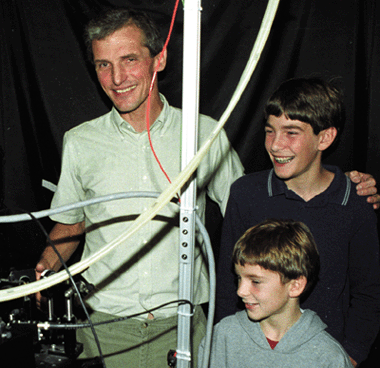
Ketterle clan Wolfgang Ketterle with his sons Jonas and Holger (Picture credit: Donna Coveney/MIT)
Cornell, Ketterle and Wieman are the “correct choice” agrees Keith Burnett of Oxford University. “They worked with great determination, skill and courage to obtain the first condensates.”
So what is the ultimate Bose-Einstein experiment and what are the applications? “One great experiment would be a BEC atom interferometer on a chip, another one would be the study of BEC in lower dimensions,” says Ketterle. “Mid-term applications will be in precision metrology, and long-term they will be in nanotechnology. Speculative applications include quantum computers.”
Cornell, who is 39, received his PhD from MIT and is currently a senior scientist at NIST. Ketterle was born in Germany in 1957, received his PhD in Munich and is now professor of physics at MIT. Wieman, who was born in 1951, received his PhD at Stanford and is professor of physics at Colorado. The prize is worth 10 million Swedish kroner – about £730,000 – and the three will receive their Nobel medals in Stockholm on 10 December.
Further reading
Physics World and PhysicsWeb have published many articles on Bose-Einstein condensation. See:
On 10 December this year the Nobel Foundation will celebrate the 100th anniversary of the award of the first Nobel prizes. As the winners of this year’s physics prize – Eric Cornell, Wolfgang Ketterle and Carl Wieman – gather in Stockholm and Oslo, along with the rest of the 2001 prize winners and numerous laureates from previous years who are taking part in the celebrations, it is easy to forget that they represent only the most visible part of the Nobel institution. Since only a maximum of three people can share each prize, one can count scores of unlucky candidates who naturally will not have been invited.
That the Nobel prizes tower above all other prizes in science and medicine is, in large part, due to their long history. The prizes were not even ten years old when one American journalist wrote: “The history of modern science might be written without going outside the names of the Nobel prizes for beneficent discoveries in physics, chemistry and medicine.” One may disagree with this assessment – arguing, for instance, that the physics prizes of the past century have been restricted to atomic and nuclear physics, omitting most of geophysics, astrophysics and mathematical physics. Nevertheless, one can fairly say that most of the great physicists of the past century have been rewarded with a Nobel prize.
In 1974 the Nobel Foundation changed its statutes so that material in the Nobel archives – those of the Royal Swedish Academy of Sciences for the prizes in physics and chemistry – would become available to historians of science 50 years after an award was made. This rule means that records are released after a full 50 years have elapsed. Archive material related to the 1951 prizes, for example, will be made available on 1 January 2002.
The change in the statutes has, of course, made it possible for historians of science to study how specific individuals won prizes. But these studies have in fact gone far beyond the prize winners themselves. Historians have also looked at what might be termed the “Nobel population”, that is all those – prize winners, nominators and unlucky candidates alike – who have taken part in the prize-awarding process.
For the purposes of this article, we shall include both physicists and chemists as members of our “Nobel population”. The reason is that as far as the Nobel committees were concerned, what is usually considered physics – radioactivity, for instance – sometimes became chemistry. After all, the 1908 and 1935 chemistry prizes were awarded to Ernest Rutherford and to Frédéric Joliot and Irène Joliot-Curie, respectively, for their work in this field.
Male, white and university based
The backbone of the Nobel population consists of those people who were nominated for the prizes in physics, chemistry – or sometimes in both disciplines – by specially invited nominators. A list of who can make nominations is given below. Between 1901 and 1950, some 598 individuals were proposed, 104 of whom – roughly one in six – went on to win a prize. Who were these candidates?
One thing is clear. They were predominantly (99%) male. There were just eight women candidates, of whom three became prize winners. They were Marie Curie, who was awarded the physics prize in 1903 and the chemistry prize in 1911, Irène Joliot-Curie (chemistry 1935) and Dorothy Hodgkin (chemistry 1964).
Although there were few women candidates, they received proportionately more nominations (an average of ten per candidate) than the men (seven per candidate). This disparity was mainly due to the large number of nominations for the Austrian physicist Lise Meitner, who never actually won a prize. (She received a total of 20 nominations for the physics prize and 21 in chemistry – over half of those garnered by all women candidates between 1901 and 1950.) Having been forced to flee Nazi Germany shortly before the discovery of nuclear fission in December 1938, her share in the finding was discounted by the Nobel committees for physics and chemistry, and in 1945 it was Otto Hahn alone who was awarded the Nobel Prize for Chemistry. The other unlucky women candidates were the German chemist Ida Noddack, the British-American mathematician and biochemist Dorothy Wrinch, and the Austrian atomic physicists Marietta Blau and Hertha Wambacher.
Candidates between 1901 and 1950 also came from a very narrow range of countries. Of the 2416 nominations in physics, three-quarters were for scientists from only four nations: Germany (25%), the US (21%), France (16%) and Britain (13%). Germany in particular did very well early on (see figure). The rest were mainly distributed among other European countries, notably Scandinavia, eastern Europe, the Netherlands and Italy. Candidates from other continents – Latin America (Peru and Brazil) or Asia (India and Japan) – accounted for less than 2% of nominations. Africa was completely absent from the Nobel map.
The vast majority of nominations in physics (67%) were for candidates based in university teaching departments and laboratories. The second largest group of nominees (10%) worked in institutes of technology – anything from technical schools to universities of technology. A few nominees worked in independent research institutes and government labs, such as James Dewar of the Royal Institution in London and Friedrich Kohlrausch of the German Bureau of Standards, although neither won a prize. Industrial physicists were also few and far between. Guglielmo Marconi, who shared the 1909 physics prize for his development of wireless telegraphy, was a rare example. The rest of the nominees included physicists such as Oliver Heaviside and William Crookes who had “no affiliation” and worked in laboratories that they had set up at home – a practice that was not uncommon at the start of the 20th century.
So how representative of their disciplines were the candidates who were nominated for the physics and chemistry prizes? The answer depends on the period in question. It has been estimated, for example, that of the 1000 or so physicists who were active in Europe and North America in the early part of the 20th century, between a quarter and a third probably figured either as candidates or as nominators for the physics prize. Indeed, the Nobel institution before the First World War came closest to embodying the ideal of an “international republic of science”.
1 Germany’s rise and fall At the start of the 20th century, most physicists who were nominated for a Nobel prize came from just four nations: Britain, France, Germany and the US. However, after Hitler came to power in 1933, he passed a law that prohibited German citizens from receiving a Nobel prize. This led to a sharp decline in the number of nominations for German physicists, with the few that remained coming from outside Germany. The data also reveal the spectacular growth of the US as a scientific power. (Courtesy: IOP Publishing)
The rise of fascism and the Second World War, however, led to the splitting of international science into “national” sciences. A direct result of Hitler’s coming to power was the break between nationalist Germany and the internationalist Nobel institution. Enraged by the awarding of the 1936 Nobel Peace Prize to the left-wing, anti-fascist pacifist Carl von Ossietzky, Hitler passed a law that prohibited German citizens from receiving a Nobel prize. Through a form of self-censorship, German scientists applied the law to nominations as well. Between 1937 and 1945, therefore, the only German scientists to be nominated were those put forward by researchers from other countries.
The decline of Germany as a major scientific player following the Nazis’ rise to power in 1933 is clearly revealed by data from the Nobel archives (see figure 1). The data also show the spectacular growth of the US as a significant scientific force. In the early 1900s American physicists received only a tiny fraction of the nominations garnered by their colleagues in Germany, France and Britain. But by the end of the Second World War, they were receiving more nominations than physicists from these three countries put together. This was just the start of US hegemony within the Nobel institution. In the past ten years, for example, 15 out of the 24 physicists who have either won or shared the physics prize have been from the US.
Nominators for prizes in physics and chemistry
1 Swedish and foreign members of the Royal Swedish Academy of Sciences.
2 Members of the Nobel committees for physics and chemistry.
3 Scientists who have been awarded a Nobel prize by the Royal Swedish Academy of Sciences.
4 Permanent and assistant professors in physics and chemistry at universities and institutes of technology in Sweden, Denmark, Finland, Iceland and Norway, as well as the Karolinska Institutet – the medical faculty of the University of Stockholm.
5 Holders of corresponding chairs in at least six universities or university colleges selected by the Royal Swedish Academy of Sciences with a view to ensuring the appropriate distribution over the different countries and their seats of learning.
6 Other scientists from whom the academy may see fit to invite proposals.
Nominators in the categories 1 – 4 have permanent nominating rights. Those in categories 5 and 6 are invited in a given year. More than 500 individuals were invited to nominate for the physics and chemistry prizes of 1950. Nowadays they probably number in their thousands. See the Nobel Web site for more details.
Winners and losers
Since the Nobel population is made up of both winners and losers in the Nobel sweepstakes, we can examine the differences between the winning and the non-winning candidates. In total there were 278 candidates for the physics prize between 1901 and 1950, of whom some 55 – or about one in five – were successful (including a few who were awarded the chemistry prize). The differences between winning and losing are, of course, much more subtle than the quantitative data alone suggest. In particular, much depended on the scientific merits of the candidates and the Nobel committees’ appraisal of their abilities.
There are also other, more nebulous, considerations, such as the committee members’ stance toward theoretical, rather than experimental, physics. It is significant that the earlier resistance to the rewarding of theorists was broken after the First World War when Carl Wilhelm Oseen – a theoretical physicist at Uppsala University in Sweden – was elected to the Nobel Committee for Physics. The first out-and-out theoretical physicist to be rewarded was Max Planck, who won the 1918 physics prize for his development of quantum theory. Albert Einstein and Niels Bohr followed three years later. Such changes in committee policy can only be appreciated through a close study of the documents in the Nobel archives. Also vital is a knowledge of the scientific interests of the five Swedish scientists who then – as now – make up the committee.
Although a quantitative analysis of the Nobel population reveals how many nominations each physicist received, nominations for the Nobel prize should not be likened to “votes”. As the statutes point out, just one nomination is sufficient to be considered for a prize. A large number of nominations does not necessarily imply a greater chance of winning. For example, the Swedish inventor Nils Dalén was awarded the physics prize in 1912 for his development of the automatic light buoy even though he had received just one nomination that year and none at all before then. Dalén was an extreme case, however, since most other candidates – winners and losers – received many nominations over several years.
The Nobel archives can also be used to draw up a “hit parade” of the 40 most nominated physicists between 1901 and 1950 (see table). It contains 22 candidates who received a physics prize, three who won a chemistry prize (although their nominations for the physics prize were more numerous) and 15 who failed to win a prize of any kind.
The non-winners on the list illustrate the three major difficulties that faced all candidates. The first – and most common – difficulty was if a candidate worked in a field that had no representatives on the Nobel Committee for Physics. This was the case with the French mathematician and mathematical physicist Henri Poincaré, who received 51 nominations over the years yet never won a prize. It was also true for the Norwegian meteorologist Vilhelm Bjerknes (48 nominations and no prize), and the American astrophysicist George Ellery Hale (33 nominations without luck).
Another barrier was if the candidates’ achievements – although of a high scientific quality – prevented the committee from awarding the prize. In particular, the Nobel statutes state that prizes must be awarded for a specific discovery, rather than for a life’s work. This obstacle is illustrated by the “missing prizes” for good “all-round” physicists such as Arnold Sommerfeld (81 nominations), Robert Williams Wood (38) and Paul Langevin (25). Indeed, Sommerfeld has the dubious honour of being the most nominated physicist in the period 1901 – 50 never to win a prize.
The final challenge in winning a prize is for nominators to decide how long to run a campaign for a particular candidate. It seems that candidates generally did better if their nominators waged a major voting “offensive”, rather than a long, drawn-out “war of attrition”. This is clearly shown by the fact that less than five years elapsed between first nomination and prize for James Chadwick, Enrico Fermi, Werner Heisenberg, Ernest Lawrence and Erwin Schrödinger. And even though Planck and Einstein had to wait 12 years for their prizes – because the physics committee regarded quantum physics and relativity with scepticism – the build-up of their support also resembles a victorious offensive. In contrast, there were lengthy and ultimately futile campaigns for non-winners such as Paul Langevin (36 years between first and last nominations), Aimé Cotton (34 years), Arnold Sommerfeld (33) and Robert Williams Wood (24).
Notes
1. Prize awarded 1944.
2. Prize awarded 1919.
3. Prize awarded 1922.
4. Anderson also received 14 nominations for a second physics prize.
5. Prize awarded 1933.
6. Rutherford also received eight nominations for a second prize, this time in physics.
7. Arnold Sommerfeld must be the unluckiest man in physics. Best known for modifying Niels Bohr’s atomic model to include elliptical (rather than circular) electron orbits, he also has the dubious honour of being the most-nominated physicist in the period 1901 – 1950 never to win a Nobel prize. He received a total of 81 nominations between 1917 and 1950 but was never once successful. He also came to an untimely death in 1951 after being run down by a car.
Listed above are the 40 physicists who received the most nominations between 1901 and 1950, along with the number of nominations and the years in which they were nominated for the first and last time. Also included is the year in which their prize (if any) was won, the prize that they were awarded and their “working nationality”. This definition refers to the country of the institution with which the candidate was associated at the time of nomination. For those scientists who moved around a lot – as was common in the 1930s and 1940s – they are assumed to have retained their original nationality for up to seven years. If they stayed in a particular country for eight or more years, they are deemed to have acquired the nationality of their new homeland retroactively from the time of arrival.
Nationalism and internationalism in the nominations
Anyone who submits a nomination for a Nobel prize should, in principle, follow the dictum in Nobel’s will that “no consideration whatever shall be given to the nationality of the candidate”. In practice, however, the nationality of a candidate has always played a major role in two key ways. The first has been the tendency for nominators to propose candidates from their own country – what I term “own-country” nominations. The other is for the constellation of nominations from “own” or “other” countries for a particular candidate to influence the decision over the award of a prize. I shall discuss each of these in turn.
If we restrict our analysis to the four major scientific powers of Germany, France, Britain and the US – who together accounted for three-quarters of nominations and a third of nominators between 1901 and 1950 – we find major differences in the level of participation of physicists from these countries in the nominating process. German physicists were the most active, putting forward 34% of the total nominations. The Americans were second with 28%, followed by France (21%) and Britain (17%). These variations cannot be traced to differences in the number of invitations to nominate sent to each country – at least as far as France, Britain and the US are concerned. Only Germany had a slight upper hand in the nominating game, mainly because it already had more laureates than the other three nations. The differences are more to do with the attitudes of the scientists in each country to the act of nominating itself, and tell us something about the scientific culture within each country.
Just over half (51%) of the nominators in the four countries taken together favoured their compatriots, although their propensity to do so varied for each country and also with time. Between 1901 and 1950, the French were the most chauvinistic, with some 60% of nominations going to other French scientists. The British were the fairest, with just 35% of nominations for their fellow countrymen and women. The Germans and the Americans fell between these extremes with 53% and 49%, respectively.
However, all four countries saw an upsurge in own-country nominations during and after the two world wars. This trend was particularly strong during the Second World War in France, Britain and the US, and was probably due as much to patriotism as it was to the country’s scientists being isolated from colleagues abroad. The absence of German nominators from 1937 to 1945 that resulted from Hitler’s vendetta against the Nobel institution means, of course, that there are no corresponding figures for Germany during this period.
The differences between the French and British attitudes to nomination are, however, more complex than they may first appear. For example, when it was discovered that no British scientist or author had been included among the prize winners in 1901, an acrimonious debate broke out in the letters page of The Times. Some correspondents maintained that the absence of a centralized body to co-ordinate the British nomination process was a disadvantage – particularly against France where, it was thought, the highly organized system of academies performed this function. But while it is true that many of the campaigns for French candidates centred on the Academy of Sciences in Paris, it is doubtful if they or the academy were well served by this approach. Indeed, it is significant that there are no unsuccessful British candidates on the physics top 40 but four from France: Poincaré, Cotton, Langevin and Weiss.
The differences in the French and British nomination strategies are shown most clearly in the area that matters the most – the Nobel prizes actually won. As we have seen, French nominators were more active than their British colleagues. Largely as a result of the high proportion of French “own-country” nominations, French candidates received almost a third more nominations than British candidates. This numerical advantage did not, however, make much difference. In physics, for example, France won just seven prizes between 1901 and 1950, compared with 13 for Britain, 12 for the US and 10 for Germany.
There are, of course, many other reasons for British success in terms of the number of Nobel prizes actually won. These can only be discussed in very general terms, for the circumstances and opportunities that would produce a prize were, if not fortuitous, often unique to a particular prize. However, the fact that British candidates, despite the laid-back attitudes of British nominators, attracted influential support – especially from other countries – was certainly important. So was the breadth, intensity and originality of British research in atomic and nuclear physics, the areas favoured by the Nobel Committee for Physics during the first half of the 20th century. The committee members also had much stronger ties with British science – probably on a par with those that bound them to Germany – than they did with their colleagues in France, whose language and scientific culture often felt alien to them. In the period after the Second World War, committee members’ affinities to Germany, and to some extent to Britain, were largely replaced by American ones.
The mainly nationalist predilections of the nominators did not, however, actually dictate the prize decisions. Consciously or unconsciously, the prize committees used their prerogative as final arbiter to even out the decisions in favour of internationalism. A crude measure of this mechanism in action can be obtained by comparing the nominations received by winners and non-winners for both physics and chemistry between 1901 and 1933. Whereas the prize winners received 83% of their nominations from countries other than their own, non-winners received half as many nominations (43%) from foreign scientists. When limited to the major powers, the corresponding figures are 53% for the winners and 40% for the non-winners. These figures probably depend as much on the desire of the prize givers to support internationalism in science as they did on the fact that candidates who enjoyed such support received more “votes” than those whose reputations were restricted to home turf. “Going international” proved to be a real advantage in the Nobel sweepstakes.
The archives from 1951: pure speculation
After the slump in nominations caused by the Second World War, the annual number of nominations in physics rapidly climbed back its pre-war level of between 50 and 75. As the archives for the 1950s and 1960s open up, we can expect the Nobel population to grow at an even faster rate – and eventually number several hundred per year.
Because the Nobel population offers so many opportunities for studies not just of the Nobel institution but of the international physics community more generally, it will remain a valuable resource to historians of science long after the hullabaloo surrounding the Nobel centenary has subsided. Such studies will be enriched by the data concerning publications and citation rates that started to ensnare the scientific community – and especially its financial backers – in the 1950s and beyond. All this is for the good – provided that researchers remain acutely aware of the limitations in these kinds of quantitative data. Nevertheless, historical studies based on the Nobel archives are the closest we will ever get to knowing how prize winners are selected. Everything else is pure speculation.
Earlier this year a group of some 70 scientists spent an intense week in the foothills of the Rocky Mountains in Colorado reviewing the current understanding of the radiation budget of the atmosphere. The meeting, the latest in the series of Chapman Conferences organized by the American Geophysical Union, focused on the so-called anomalous absorption of solar radiation in the atmosphere.
Evidence gathered over the past 20 years has increasingly shown that the absorption of solar radiation predicted by models is significantly less than the absorption measured experimentally. Current models predict that, on a global average, the atmosphere absorbs about 65 W m-2, whereas observations from the top of the atmosphere and the Earth’s surface show that the actual absorption is 95 W m-2. This mismatch of some 30 W m-2 corresponds to about 10% of the globally averaged incoming solar radiation, suggesting that some extra anomalous absorption needs to be added to the models.
In the November issue of Physics World, Ahilleas N Maurellis of the Space Research Organization Netherlands explores the implications for climate modelling and the evaporation and condensation of water on a global scale.
Over the last 50 years, a number of techniques have been developed to analyse surfaces, near-surface layers and interfaces. Each technique has its own peculiar characteristics, and offers a different view of surface phenomena. Positron-annihilation spectroscopy has unique capabilities for detecting vacancy-like defects, ranging from individual missing atoms to micro-voids.
Over the last 20 years, positrons have increasingly been used as a tool for investigating solids in the lab. The entire field has progressed enormously in the last 10 years, in particular with regard to the extraction of information for industrial use. Now Gottfried Kögel’s group at Bundeswehr University in Munich, Germany, has reported the first lifetime measurements with a scanning positron microscope (A David et al. 2001 Phys. Rev. Lett.87 67402).
In the November issue of Physics World, Antonio Zecca and Grzegorz Karwasz of the University of Trento, Italy, describe the development of the positron microscope, which is a much more complex instrument than an electron microscope.
If, in this season of bonfires and fireworks, you find yourself holding a sparkler, you might like to consider the remarkable chemical reaction that is taking place before your eyes. You are actually witnessing a self-propagating high-temperature synthesis reaction – one in which the energy generated by the reaction of magnesium and oxygen to form magnesium oxide is enough to overwhelm the usual reluctance of the reactants to burn. The process leads to a chain reaction that sees a “solid flame” make its way down the length of the sparkler.
Self-propagating high-temperature synthesis (SHS) reactions like this are rather special. They are very fast and very hot – temperatures in excess of 1000 °C are routinely achieved at the reaction wavefront – and can be used to make a wide range of ceramics.
But there is a twist on the process. In the November issue of Physics World, Quentin Pankhurst and Ivan Parkin describe the discovery by their group at University College London that applying an external magnetic field during the reaction can dramatically alter the structure, microstructure and properties of both the intermediate and the final products.
The global market for ferrites is huge, and intense effort has gone into controlling their magnetic properties, almost always by introducing different atoms into the crystal structures. By providing another method of tailoring the microstructure and magnetic properties, their group are opening the way to a myriad of new materials that could be specially tuned for particular applications.
When the author Michael Frayn spent two years writing Copenhagen, he had no idea how successful the play would become. He doubted that audiences would sit through a historical drama about a war-time meeting between Werner Heisenberg – head of Germany’s nuclear programme – and his old mentor Niels Bohr in the Nazi-occupied Danish capital in 1941. But Frayn’s efforts paid off. Audiences and critics alike have thrilled at the way the award-winning play probes the historical uncertainty that surrounds the encounter.
Was Heisenberg fishing for information about the Allies’ atomic plans – or was he trying to recruit Bohr for Germany’s bomb programme? Did Heisenberg want to suggest that the Germans were close to finishing a bomb so that the Allies would make peace with Hitler? Maybe he was simply seeking approval from Bohr for his own atomic work. There is also a moral debate: did Heisenberg know how to build a bomb, but decided not to – or did he want to build one, but got his calculations wrong?
Unfortunately, no-one was there to record or observe the encounter and we cannot know for sure what was said or implied between the two men. All we do know is that the pair dined together and took a short walk – and that the incident damaged Bohr and Heisenberg’s friendship forever. To piece together what happened, historians of science have had to rely on Heisenberg’s post-war recollections – which have been ambiguous and contradictory – along with scraps of evidence from secondary sources.
History and reality
Now, however, new light could be shed on the meeting following a decision by the family of Niels Bohr to release previously secret documents that he either wrote or dictated to others about the meeting. A total of 11 documents will be released, including various attempts that Bohr made to formulate letters to Heisenberg about what happened in 1941. Bohr was a stickler for writing down everything he worked on, and he may not have intended to send the drafts at all.
The documents have until now been locked up in the vaults of the Niels Bohr Archive in Copenhagen, where they have been accessible only to members of the Bohr family. Finn Aaserud, director of the archive, is part of a group who will transcribe Bohr’s notoriously difficult handwriting and translate the Danish into English. He plans to have the documents ready by the end of this year.
The decision to release the material was announced at a conference on drama and the history of science that was held in Copenhagen at the end of September, exactly 60 years after the war-time meeting. The Bohr family originally intended to release the documents in 2012 – 50 years after Bohr died – but they hope that doing so now will avoid any further “misunderstandings regarding their contents”.
One controversy concerns the suggestion, first proposed by the journalist Robert Jungk in his 1958 book Brighter Than a Thousand Suns, that Heisenberg submitted a secret plan to Bohr at the meeting. The plan, Jungk claims, was to prevent the development of an atomic bomb through a mutual agreement between German and Allied physicists. Jungk’s assertion, which Heisenberg repeated in several of his own post-war accounts of the meeting, implies that the building of a bomb was a moral issue for Heisenberg.
That no such plan came to pass could be interpreted as a failure on Bohr’s part. Indeed, the characters in Frayn’s play – Bohr, Heisenberg and Bohr’s wife Margrethe – debate the fact that Bohr later worked on the Manhattan atomic-bomb project, which led to the deaths of thousands of people, whereas Heisenberg did not contribute to the loss of a single life.
Aaserud, however, believes that the documents will confirm what Aage Bohr briefly noted in a paper in 1963 about his father’s war years. “According to Aage Bohr,” explains Aaserud, “Heisenberg did give Niels Bohr the impression that the Germans were working on an atomic bomb. But Heisenberg did not propose any secret plan for physicists on both sides to prevent such research by mutual agreement. This is Aage Bohr’s account of the matter, and to a large extent I agree with that.” Indeed, Aaserud is convinced that Aage Bohr had seen the documents when he wrote the paper.
Andrew Jackson, a theoretical physicist who chairs the board of directors of the Niels Bohr Archive, agrees that releasing the documents will help to clear the air. “It’s not just a question of respecting the interests of Bohr – but also those of his family,” he says. “They do not want Bohr’s reputation to be sullied by unwarranted uncertainty regarding his role during the war. They want to make it clear that there is nothing to hide.”
History and drama
Another person who has seen one of Bohr’s letters is Gerald Holton, a historian of science at Harvard University. Holton was originally shown the letter in 1985 by Bohr’s son, Hans, but refused to reveal any details because of the Bohr family’s embargo. Having read some of the material, Holton believes that Frayn’s play gives too much credence to the views expressed by the journalist Thomas Powers in his 1993 book Heisenberg’s War.
“Powers took the tale of moral compunction to its logical extreme,” noted Holton in the Los Angeles Times last year. “Heisenberg’s failure [to build a bomb] was [seen by Powers] an act of conscious sabotage – that Heisenberg understood what had to be done but, in the name of principle and moral virtue, secretly misled his co-workers and subverted the German [programme].” Other historians, such as Paul Rose from Penn State University, agree that there can have been no moral dimension to Heisenberg’s visit. After all, he was in Copenhagen as an official representative of the Nazi government and had made at least ten other high-level visits to German-occupied nations during the war.
Of course, this arcane dispute might not matter, were it not for the fact that audiences might leave the play – as Holton puts it – thinking that they have a “knowledge” of what really happened on that day in 1941. “People may end up questioning Bohr’s morality, while seeing Heisenberg as morally upright,” says Robert Marc Friedman, a historian at the University of Oslo.
But whatever the Bohr documents eventually reveal, they are unlikely to diminish the status of Copenhagen as drama. “What people say about their own motives and intentions is always subject to question,” writes Frayn in the preface to the published version of Copenhagen. “Thoughts and intentions, even one’s own, remain shifting and elusive. There is not one single thought or intention that can ever be precisely established.”
One of the most challenging problems in modern physics is the application of quantum theory to the universe as a whole. Progress in this area has been plagued by two types of problem: conceptual and technical. The conceptual problems arise from the old difficulties of interpreting quantum theory. The standard interpretations require that the measuring instruments and observers are outside the quantum system described by the wavefunction. In the late 1950s, however, Hugh Everett proposed an interpretation of quantum theory that might apply to systems that include the observers and measuring instruments, but the adequacy of such interpretations has remained controversial to this day.
The technical problems are no less severe or fundamental. Ever since the pioneering work of Bryce DeWitt, Charles Misner and others in the 1960s, quantum cosmology has basically been studied by applying quantum theory to simple models of the universe. These models typically assume that the universe is completely homogeneous. As a result they only have a few degrees of freedom – the radius of the universe and the value of one or more matter fields. One then makes a quantum-cosmological model by quantizing these simple descriptions of the universe.
Many interesting results related to, for instance, inflation and the initial state of the universe have been obtained from these simple models. However, it has remained very controversial whether any of the results would apply to a real quantum theory of gravity, in which all the many degrees of freedom of the gravitational field are treated quantum mechanically.
A number of authors, including Karel Kuchar, have shown that, in general, there is no reason for results concerning such simple models to apply to a real theory. They argue that quantizing a simplified version of a theory that is restricted only to homogeneous solutions would neglect the real physics. For example, if the theory of strong interactions was restricted this way, then much of the physics concerning quarks and hadrons would be missed.
Technical advances
Recently there has been very significant progress on both the technical and conceptual sides of quantum cosmology. On the technical side it is clear that the right thing to do is to study cosmological solutions of a full quantum theory of gravity. If one is interested in a quantum-mechanical system that has some symmetries, such as a molecule or a solid, it is clear one should quantize the whole system first and then study the symmetric states of the resulting theory.
Because of progress over the last decade towards a theory of quantum gravity, it is now possible to do exactly this. The progress is based on the development of a subject called “loop quantum gravity” (also sometimes called “quantum geometry”) that can be used to study the quantization of theories, such as general relativity and supergravity, without approximations. (Supergravity is an extension of general relativity that has additional symmetries that mix bosons, particles with an integer value of “spin”, and fermions, particles with a half-integer spin.) In spite of this progress, many open questions remain that are being addressed by other approaches to quantum gravity, including string theory.
Contrary to many people’s expectations, it has been found that loop quantum gravity theories are well defined quantum mechanically, and many results have been obtained relating to physics at the so-called Planck scale where quantum gravity effects are important. These results could not have been reached by old-fashion techniques, such as perturbation theory, that make the mistake of studying only the quantum physics of weak gravitational waves around symmetric solutions.
Among the results found in loop quantum gravity are that areas and volumes are discrete, in the same sense that the energy of the hydrogen atom is quantized. According to the theory, the only possible values that any measured area or volume can have come from a certain discrete spectrum. These exact spectra have been computed in general relativity and supergravity, and they have implications for real experiments in which cosmic rays and photons from gamma-ray bursts are used to probe the structure of space-time at the Planck scale. This is because the discrete geometry is expected to modify energy-momentum relations at very high energies, thereby affecting the propagation of particles and photons over cosmological distances.
Thus, it is of interest to see if the techniques of loop quantum gravity can make it possible to study quantum cosmology without making the drastic approximations of earlier approaches to the subject. Now Martin Bojowald of Pennsylvania State University in the US and Chopin Soo of the National Cheng Kung University in Taiwan, have independently shown that this is indeed the case.
Striking predictions
In a series of important papers, Bojowald has shown that one can study quantum states that are exact solutions of the full theory of quantum gravity and have the observed symmetries of our universe (Phys. Rev. Lett. 2001 87 121301). These states behave semiclassically when the universe is much older than the Planck time (10-43 s), and therefore agree with all that is known in classical cosmology. But they also reveal striking new predictions concerning the nature of the universe at Planck times.
In particular, Bojowald has discovered that there is never an initial singularity (i.e. a point where the curvature of space-time becomes infinite) and therefore no first moment to time, as Alex Vilenken and others have hypothesized. Nor is there any excursion into a domain in which the universe has a boundary in “imaginary time”, as hypothesized by Jim Hartle, Stephen Hawking and others. Instead the universe continues back before the moment classical cosmology predicts that it began, to a phase where it was previously expanding. This behaviour has been called a “bounce”; it suggests that the big bang arose from an event in a previous universe, either through the collapse of a black hole in that universe or from the collapse of the whole universe.
The hypothesis that the big bang arose from such a bounce is old – it was suggested by Richard Tolman as early as the 1930s, and has been studied in string theory by Gabrielle Veneziano and collaborators under the name of “string cosmology”. (In string theory, matter is constructed form loops of string 1020 times smaller than an atomic nucleus.) However, this is the first time that the replacement of the initial singularity by a bounce has been shown to be a necessary result of an exact quantum theory of gravity.
Bojowald has made other important discoveries, and it appears that much of the established work in quantum cosmology, based on the application of ad hoc hypotheses to simple models, can now be re-examined using the exact theory.
Another topic of much current interest in cosmology is the role of a cosmological constant – an energy density that can be attributed to empty space (see “Quintessence” by R R Caldwell and P J Steinhardt Physics World 2000 November pp31-37). So one can now ask whether loop quantum gravity has anything to say about quantum cosmology in the presence of a cosmological constant. Another important question is whether the new exact approach to quantum cosmology can predict the spectrum of fluctuations observed in the cosmic microwave radiation.
Results on both of these questions have been reported in a recent paper by Soo. He makes use of an old observation by Hideo Kodama that when the cosmological constant is non-zero, one can find an exact quantum state that solves the equations of quantum gravity. This Kodama state has a semiclassical interpretation that predicts a spectrum of quantum fluctuations in space-time. It also has a precise Planck-scale description, which makes use of very elegant mathematics connected to the invariants of graphs and knots. Soo also finds that this state can be used to predict fluctuations of the gravitational field, which may be observed in the microwave background and the distribution of galaxies.
Conceptual advances
Progress on the conceptual side has been no less dramatic. It is based on a new approach to the problem of how to produce a quantum theory for a closed system, such as the universe, in which the observer must be considered part of the system. The key idea, proposed about 10 years ago by the mathematician Louis Crane, is that the quantum state of the universe should be replaced by a whole array of states. There should be one state for each way of dividing the universe into two regions, one containing the observer and the other containing what the observer sees.
This idea has given rise to what are called “relational” approaches to quantum cosmology. The conceptual structure of these approaches was further developed by Carlo Rovelli and others, while their mathematical structure has been clarified by Christopher Isham, Jeremy Butterfield, Fontini Markopoulou and collaborators. They have given relational quantum cosmology an elegant formalism in terms of a mathematical structure called topos theory. Butterfield and Isham have also shown how an approach to quantum cosmology called “consistent histories” – originally applied to quantum cosmology by Murray Gell-Man and Hartle plus others – may be consistently reformulated as such a relational quantum theory.
Further progress was made by Markopoulou, who showed that the different regions associated with the different states can be specified in terms of the causal structure of a space-time. Basically the outcome is that the array of different states proposed by Crane are connected by the flow of quantum information through the quantum universe.
These ideas may seem abstract, but they have been applied to several important questions. For example, Neil Turok has applied the basic idea that a quantum state is associated with an observer’s past to make progress on the no-boundary proposal for quantum theory. Meanwhile, Tom Banks and Willie Fischler have argued that the same idea may be used to study string theory and M-theory in expanding universes.
There remain many open questions, but it is already clear that, on both the conceptual and technical side, quantum cosmology is waking up from a long period in which it consisted mainly of models that were proposed many years ago.
Modern techniques from quantum gravity, field theory and mathematics are already leading to new predictions concerning the very early universe, and are greatly clarifying what theorists are doing when they apply quantum theory to the universe as a whole.
Six years on, all that has changed. Now it is possible to watch the chair of the Nobel physics committee announce the winners live over the Web, and sites like PhysicsWeb – the Web site of Physics World – race to be first with the news. Last month was a particularly busy month for PhysicsWeb: not long after an article about the Nobel prize was uploaded and e-mailed to regular users, the site was completely redesigned, complete with a much improved PhysicsJobs service.
Since it was first launched at the end of 1997, PhysicsWeb has been one of the most popular physics sites in the world. Every day thousands of users visit physicsweb.org to find out about the latest news in physics, to check out job opportunities, or to take advantage of one of the largest collection of physics links and resources on the Web. Other attractions include the virtual laboratory, a business directory, the conference list, and selected articles from Physics World, including the annual indexes from 1997 onwards. The enhancements to PhysicsJobs mean that job seekers can now post their CVs on line, where they can be searched by employers looking for new staff, as well as viewing vacancies.
Another recent Web development at the Institute of Physics is www.physics.org. This “one-stop shop for any question on physics” is aimed at school students, teachers and anyone else who has ever complained that there is too much physics information on the Web. The site uses a powerful natural language programme to provide answers to questions, and can tailor its output for different types of user.
The Nobel Foundation now has a magnificent Web site that has information about all the prize winners right back to 1901, when Wilhelm Conrad Röntgen won the first physics prize for the discovery of X-rays. The Bose-Einstein community also has an excellent site at Georgia Southern University with links to over 70 BEC research groups worldwide. We hope that you are equally impressed with the new-look PhysicsWeb.
Trouble at CERN
All is not well at the birthplace of the Web. In June the CERN particle-physics laboratory was issuing press releases headlined “1745 days to the LHC and counting”. By the end of September PhysicsWeb was running stories headlined “Collider costs shake CERN”. It is now obvious that the lab has substantially underestimated the cost of its flagship project – the Large Hadron Collider – by some SwFr 850m. The final cost to the lab is now expected to be almost SwFr 3.7 bn (see page 7, print version). CERN’s member states are understandably angry.
In recent years CERN has done much to expand its programme beyond a core of conventional high-energy physics, and it would be a shame if these programmes were cut back to pay for the LHC, as seems inevitable. Similarly, an organization that receives over SwFr 1000m of tax-payers money every year has a duty to make its research accessible to the public, and this work should be protected despite the LHC problems. However, the lab has only paid lip-service to calls to transfer the technology it develops to the wider world. In the past CERN staff have disdained such commercial activities, but right now they could do with the money.
John Greenhough and colleagues in the space and astrophysics group at Warwick kicked off by analysing the scores of 13 000 English top division games and 5000 FA Cup matches between the 1970/71 and 2000/01 seasons. They found that the scores were closely fitted by either Poisson or negative binomial distributions. Probability distributions can be characterized by their mean value and their standard deviation: for a Poisson distribution the mean is equal to the square of the standard deviation, while for a negative binomial distribution it is less.
The appearance of such distributions in football scores was first noted in the 1960s. However, when the Warwick team looked at the number of goals scored by the home and away teams in over 135 000 games in 169 countries since 1999, they found that both the Poisson and negative binomial distributions were inadequate when either team scored more than six goals, or when the total number of goals was more than nine.
Greenhough and colleagues then changed tactics and switched to extremal statistics, which are used to describe rare events in many different branches of science. They found that a so-called Fréchet distribution could describe the distribution of goals scored by the home and away teams, while a Gumbel distribution was better for the total number of goals. Football fans will not be surprised to learn that the home team tends to win, but the average margin of victory – 0.51 goals per game – may come as a surprise.
The Warwick team finished with a statistical nugget for football fans everywhere: ‘a total goal score above 10 occurs approximately once in every 10 000 English top division matches (once every 30 years) but in worldwide domestic matches such a score is seen once in 300 games which amounts to about once every day!’