What is your main priority as director of Berkeley Lab?
The most important thing I do every day is listen carefully to the issues and problems preoccupying research leaders across the lab. I help them deal with any blockers that might be impeding the progress of their research and the development of our people, especially early-career scientists and engineers. Management’s role is to accelerate research, discovery and innovation across our four principal areas: discovery science; clean energy; healthy earth systems; and future science. We have spectacular views from Berkeley Lab and if my schedule permits I also do a campus “walk-around” — the exercise and the hills keep me fit. I run into lots of people – not just scientists – and learn stuff that I might not hear about just by sitting in my office.
You describe your remit as “stewardship of the laboratory”. What does that entail?
It’s about sustaining the high impact of our research, so that we’re as strong in 20 years’ time as we are now. That means co-ordinating strategic initiatives for different research areas into an integrated research strategy – ultimately, encouraging and fast-tracking cross-disciplinary collaboration within the lab.
Do you have any examples of this?
One is the Materials Project, a multi-institution, multinational effort to compute the properties of all inorganic materials and provide the data and associated analysis algorithms free of charge. To get there, we’re harnessing supercomputing and open web-based access to compute information on known and predicted materials as well as developing powerful analysis tools to design novel materials. This democratization of science could only be possible at a national laboratory.
What’s next on Berkeley Lab’s roadmap?
Federal funding for Berkeley Lab is $1.45bn this year – up from around $800m just seven years ago. World-class research requires world-class facilities and so we have a $600m upgrade to the Advanced Light Source (ALS-U), which will position our synchrotron user facility at the frontier of soft X-ray research for the next 30 years. I supervise the ALS-U project directly, given my experience running big accelerator projects when I was at Fermilab. Significant funds are also being invested in resilient infrastructure – electrical mini-grids, for example, and high-performance fibre-optic networks – as well as state-of-the-art administrative buildings and conference facilities. Berkeley Lab is being reimagined in front of our eyes.
Dark skies: the Mayall 4-Meter Telescope (tallest structure), which is home to the Dark Energy Spectroscopic Instrument (DESI), at the Kitt Peak National Observatory in Tucson, AZ. (Courtesy: Marilyn Chung)
What other physics-based projects are turning heads at Berkeley Lab?
I’ll pick out three – though there are many more. The Berkeley Lab Laser Accelerator Center (BELLA), for example, focuses on the development of compact laser-wakefield plasma accelerators with potential applications in high-dose-rate radiotherapy and, ultimately, high-energy physics. Our Accelerator Technology and Applied Physics division, meanwhile, has an ongoing collaboration with the SLAC National Accelerator Laboratory in Stanford to further increase the power and capacity of SLAC’s Linac Coherent Light Source, the US’s leading X-ray laser facility. Then there is the Dark Energy Spectroscopic Instrument (DESI), which is measuring the effect of dark energy on the expansion of the universe. The DESI research is half-way to completion, generating optical spectra for tens of millions of galaxies and quasars to eventually construct a 3D map spanning the nearby universe out to 11 billion light years.
How do you attract and ensure a diverse workforce?
We have more than 3500 full-time staff and my biggest concern is keeping hold of our best researchers and recruiting the next generation of rising stars. I want Berkeley Lab to be the place where researchers come to establish and accelerate their careers; where individual ambition aligns with diverse opportunities. While we can’t compete on remuneration with many nearby technology companies in Silicon Valley, the research teams at Berkeley Lab contribute to the nation’s biggest challenges. With this in mind, we prioritize an inclusive and supportive working environment, offering mentorship and professional development at all career stages. We continue to make progress in this regard: today, we have 10 women in our top 28 research leadership positions compared with four women in those roles seven years ago.
What does Berkeley Lab offer that isn’t possible elsewhere?
If you want to work on the biggest challenges in science then Berkeley Lab is the place to do it. We build cross-disciplinary teams to tackle some of the nation’s most pressing R&D problems – everything from energy storage and the circular water economy to quantum science, next-generation computing and the search for dark matter and dark energy. We’re able to address these challenges at a scale that is hard to match in a university setting thanks to our leading-edge experimental facilities and our breadth of scientific expertise.
How do you co-ordinate activity with other US national labs?
I meet with US government officials on a regular basis as well as with other DOE national laboratory directors at our quarterly retreats and on monthly Zoom calls where we’ll explore common challenges and opportunities for collaboration.
How is Berkeley Lab optimizing its engagement with industry?
We need scientists and engineers who engage closely with industry to know what industry needs – and, specifically, how our research priorities deliver wider societal and economic impact. Berkeley Lab’s National Energy Research Scientific Computing Center (NERSC) is a case in point, collaborating extensively with high-performance computing companies and suppliers. Elsewhere, the lab’s clean hydrogen R&D programme has close links with US trucking consortia, while the Joint BioEnergy Institute has yielded six bioeconomy start-ups to date. Then there’s our Cyclotron Road initiative, which offers entrepreneurial scientists and engineers a two-year fellowship programme. This is a funded path for early-stage start-ups in “hard tech” — physical hardware rather than software — to fast-track development of their applied research innovations.
If you want to measure an everyday object, you might use a ruler – a piece of material with a fixed length and regularly-marked divisions. Thanks to a new device called a PicoRuler, the same measurement principle can now be applied to tiny objects such as cells and molecules. Developed by researchers at Julius-Maximilians Universität (JMU) Würzburg in Germany, the miniscule measuring stick works in biological environments and could be used to test the ability of super-resolution microscopy techniques to image objects less than 10 nm long.
Super-resolution microscopy based on fluorescence imaging has developed rapidly over the past 20 years. It is now routine for such methods to resolve structures as small as a few nanometres – far below the diffraction limit for conventional visible-light microscopy.
To push these techniques further, researchers need reference structures to calibrate their microscopes’ performance. The main calibration method currently in use relies on artificial DNA origami structures. These can be synthesized to carry several fluorophores at well-defined positions less than 10 nm apart, allowing them to act like rulers for sub-10 nm imaging. The problem is that DNA origami is highly negatively charged and thus cannot be used in real-world biological cellular imaging media.
Clicking into place
Led by biotechnologists Markus Sauer and Gerti Beliu, the JMU team developed a biocompatible alternative based on a three-part protein called proliferating cell nuclear antigen (PCNA). By introducing synthetic amino acids onto this protein at precisely defined positions spaced 6 nm apart, they made it possible for fluorescent dye molecules to chemically “click” onto it in an efficient way. This new structure allowed them to test the resolution of a technique known as DNA-based points accumulation for imaging in nanoscale topography (DNA-PAINT) down to 6 nm. Sauer says it could also be important for other techniques such as direct stochastic optical reconstruction microscopy (dSTORM), MINFLUX or MINSTED.
“These advanced microscopy techniques can achieve spatial resolutions in the range of a few nanometres, and the new ruler will serve as a calibration tool to verify and enhance their accuracy,” he says.
Exploring cell structure from within
The researchers are now looking to optimize their ruler for use in various biological environments, including living cells. Another direction for development, Sauer says, could be to deliver PicoRulers directly into the cells themselves through techniques like microinjection or functionalization with cell-penetrating peptides. The devices could thus be used to explore the structure of a cell from within, gaining knowledge that might advance cellular biology and bring a better understanding of diseases and pathways to drug development.
“Our team is also focusing on expanding the range of biomolecules that can be used as PicoRulers,” Sauer tells Physics World. “To this end we will be looking into different proteins and other biological complexes. We are convinced that the development of our PicoRuler marks a significant step forward in the field of super-resolution microscopy, offering a valuable tool for exploring cellular and molecular structures at unprecedented resolutions.”
The US should explore building a muon collider and pursue “aggressive” research and development into the technologies required for such a facility. That is the conclusion of a high-profile committee of US and international particle physicists following a year of meetings to discuss the future of US high-energy physics research. The scientists acknowledge, however, that significant technical challenges would have to be overcome to build a muon collider.
The potential development of a muon facility is part of a long-term, 20-year vision for particle physics that was released in early December by the Particle Physics Project Prioritization Panel, or P5 (see box below). Since 2003 the P5 has met every decade to evaluate large- and medium-sized physics research projects. It then passes its recommendations to funding agencies such as the US Department of Energy (DOE) and the National Science Foundation.
Following the discovery of the Higgs boson in 2012 at CERN’s Large Hadron Collider, particle physicists began planning to build a so-called Higgs factory that would collide electrons with positrons to allow more detailed investigation of the properties of the Higgs boson and other particles. Some of these designs call for a 90 km-long tunnel that would first collide electrons with positrons in the mid-2040s before being repurposed later this century as a 100 TeV proton–proton machine to search for new physics.
Yet moving to these energies – and potentially even higher – is complicated. At energies approaching 1 TeV in a circular accelerator, electrons lose lots of energy through synchrotron radiation. This is not such a problem for protons, but reaching higher energies than 100 TeV requires an even larger ring than 90 km and would probably need new technologies too. One alternative option is to collide muons – cousins of electrons that are 200 times heavier. Given that muons are much heavier than electrons, energy loss would be less of an issue in a muon collider.
Daniel Schulte, study leader of the International Muon Collider Collaboration, who was not on the P5 committee, says that synchrotron radiation is “reduced by a factor of more than a billion” in a muon collider. “[Muons] are interesting because they could replace [electrons and positrons] directly and having a 10 TeV muon collider is roughly equivalent to having a 100 TeV proton collider in terms of physics reach,” says Schulte whose collaboration consists of more than 60 institutes, including CERN, that are drawing up a blueprint for an advanced muon facility. Any future muon facility could potentially be much more compact and perhaps cheaper to build – a muon collider with the same reach as a 100 TeV proton collider would fit on Fermilab’s existing site, for example.
Referring to it as “our muon shot”, the P5 committee states that a muon accelerator programme would fit with the US’s ambition to host a major international collider facility, allowing it to lead global efforts to understand the fundamental nature of the universe. The P5 panel now recommends that the US builds major test and demonstrator facilities for such an advanced collider within the coming decade. The report also recommends that the US participate in the International Muon Collider Collaboration and “take a leading role in defining a reference design”.
Karsten Heeger, a physicist at Yale University who co-chairs the P5, told Physics World that the muon collider recommendation came from a desire to think about the long-term future of particle physics in the US, beyond the current crop of planned and developing projects. According to Heeger, this research and development recommendation has generated “a lot of excitement” in the US particle-physics community, particularly among younger scientists. “They feel that being able to pursue R&D to think about a future collider facility is really exciting, especially if we might be able to host it in the US,” he adds.
Challenges ahead
A muon collider, however, faces major technical challenges and it would be decades before any decision to build one could be made. One problem with muons is that they decay in barely 2.2 microseconds during which they would need to be captured, cooled and accelerated. “It is really pushing the technical frontiers in all elements,” says Heeger. “The magnet development, the acceleration technology, the beam focusing; all of these things are going to be critically important, and they have to be improved over where things are right now,” he adds.
Schulte agrees that if it were not for the muon’s limited lifetime, a muon collider would be “straight forward”. He says that one of the biggest challenges will be developing the required magnet technology. For instance, once the muons have been produced by proton collisions, high-temperature superconducting magnets will be needed to cool and slow them down. And this technology will need to be squeezed into a tiny space to reduce muon loss. High-speed magnets that can be cycled very fast will then be needed to accelerate the muon beam.
The trouble is, much of this technology does not yet exist or is in its infancy. Despite these challenges, Heeger is confident a muon collider could be built: “Particle physicists and accelerator physicists have shown incredible ingenuity over recent years and decades, and so I am optimistic,” he says. But even if such a facility is not feasible, working towards it would build on current US strengths in particle physics and feed into improvements in proton and neutrino beam facilities. It would also likely have broad benefit to society including medical isotope production, materials science and nuclear physics, so Heeger believes it would be an “investment well spent”.
The development of high-temperature superconducting magnets, for example, would have important implications beyond particle physics. They could be useful for nuclear fusion reactors and may improve the performance of wind turbines. Schulte also believes that working towards a muon collider will offer substantial benefits when it comes to training the next generation of scientists. “This is a great project because things are new, there is room for inventions, for creativity, the spirit is very different from a project that is re-doing something that we did in the past in a bigger way,” he adds.
Plotting the future course of US particle physics
The P5’s report – Pathways to Innovation and Discovery in Particle Physics – builds on the output of a Snowmass conference, which gathered particle physicists and cosmologists from around the world in Seattle for 10 days in July 2022 to discuss research priorities and future experiments. The P5 report aims to create a research portfolio that studies nearly all the fundamental constituents of the universe and their interactions, covering both the cosmic past and future.
In terms of existing projects, the P5 committee’s top priority is the completion of the High-Luminosity upgrade at CERN’s Large Hadron Collider as well as the first phase of the Deep Underground Neutrino Experiment (DUNE) in Lead, South Dakota, which will study a high-energy beam of neutrinos produced at Fermilab as they travel 1280 km through the Earth. DUNE is due to begin operating around 2030. Other recommended priorities include Fermilab’s Proton Improvement Plan II and the Vera Rubin Observatory in Chile, which is expecting first light in 2025 and will conduct a 10-year survey of the southern sky.
Other recommendations include the CMB-S4 experiment – an array of ground-based telescopes, located at the South Pole and in the Chilean Atacama Desert that would observe the cosmic microwave background to probe the physical processes in the universe immediately after the Big Bang. The P5 also recommends that the US collaborates with international partners on a Higgs factory; a next-generation dark-matter direct-detection experiment; and the IceCube-Gen2 observatory, which will provide a 10-fold improvement in sensitivity to cosmic neutrinos over the current IceCube observatory at the South Pole.
“We tried to strike a balance between running the current programme, starting new projects and laying the groundwork in terms of R&D for the future,” says P5 co-chair Karsten Heeger. He adds that it was important to consider what comes after projects like the Higgs factory and completing DUNE for particle physics as well as for the next generation of scientists in the US. “If we fully focus right now just on executing the projects that are under way then we might find ourselves in 10–15 years not having laid the groundwork for what comes beyond,” he says.
This year’s Photonics West kicks off on 27 January with its unique combination of scientific conferences, industry symposia, and world-class technical exhibits. The opening weekend will focus on BiOS, the world’s largest event for biophotonics and biomedical imaging, which features almost 50 parallel conference tracks, an industrial exhibition, and the popular and dynamic Hot Topics session.
During the week the main Photonics West event will take centre stage, with scientific conferences on lasers and optics, a dedicated industry programme, and a technical exhibit featuring more than a thousand companies. Plenary sessions for the OPTO and LASE conferences include presentations on silicon photonics, neuromorphic devices, and electrically-controlled metasurfaces, while Ahmed Diallo, program director for ARPA-E (Advanced Research Projects Agency-Energy), will share his vision for fusion energy projects supported by the agency.
This year’s programme also sees an expanded remit for Quantum West. Several conference sessions will be complemented with a two-day industrial exhibit and the inaugural Quantum West Business Summit, in which industry leaders will examine the opportunities and challenges for commercializing novel quantum technologies.
Other high-profile industry events during the week include the popular Start-Up Challenge, as well as the co-located AR | VR | MR conference on hardware solutions for augmented and virtual reality. Meanwhile, the main exhibition floor will be open from Tuesday to Thursday, allowing delegates to connect with suppliers and learn about the latest innovations in components, instruments and systems. Some of the latest advances are highlighted below.
Precision equipment targets applications across diverse industries
For 25 years Mad City Labs has provided precision instrumentation for research and industry, including nanopositioning systems, micropositioners, single-molecule microscopes, atomic-force microscopes (AFMs), and customized solutions.
New for 2024 is the MadAFM, a sample-scanning AFM that supports multiple microscopy modes for diverse applications in materials characterization and the life sciences. Simple to install with a compact table-top design, the microscope exploits the company’s closed-loop nanopositioning systems for precise movement of the sample and probe.
Simple and intuitive The MadAFM from Mad City Labs is ideal for materials characterization and applications in the life sciences. (Courtesy: Mad City Labs)
These piezo nanopositioners feature the company’s proprietary PicoQ sensors, which provide ultralow noise and excellent stability to yield sub-nanometre resolution. When used with AFMs, the nanopositioning systems provide true decoupled motion with virtually undetectable out-of-plane movement, while their precision and stability yields high positioning performance and control. These attributes make Mad City Labs’ nanopositioners not only suitable for AFMs, but also ideal for a range of applications in astronomy, photonics, metrology and quantum sensing.
The MadAFM joins the company’s existing line-up of instruments for AFM and near-field scanning optical microscopy. Both optical deflection and resonant probe AFMs are available, with the latter designed to provide a flexible configuration for applications such as quantum sensing and scanning nitrogen-vacancy magnetometry.
Other products include the RM21 single-molecule microscope, which offers direct optical pathway access, high stability, and precision alignment. Meanwhile, the unique MicroMirror TIRF system offers multi-colour total internal-reflection fluorescence microscopy with an excellent signal-to-noise ratio and efficient data collection, along with an array of options to support multiple single-molecule techniques.
In addition to turnkey instruments, Mad City Labs offers standalone micropositioning products such as optical microscope stages, compact positioners for photonics, and the Mad-Deck XYZ stage platform. These products employ proprietary intelligent control to optimize stability and precision. The micropositioning products are compatible with the high resolution nanopositioning systems enabling users to develop solutions tailored to their applications.
Find out more at BiOS booth #8430 and Photonics West booth #3430
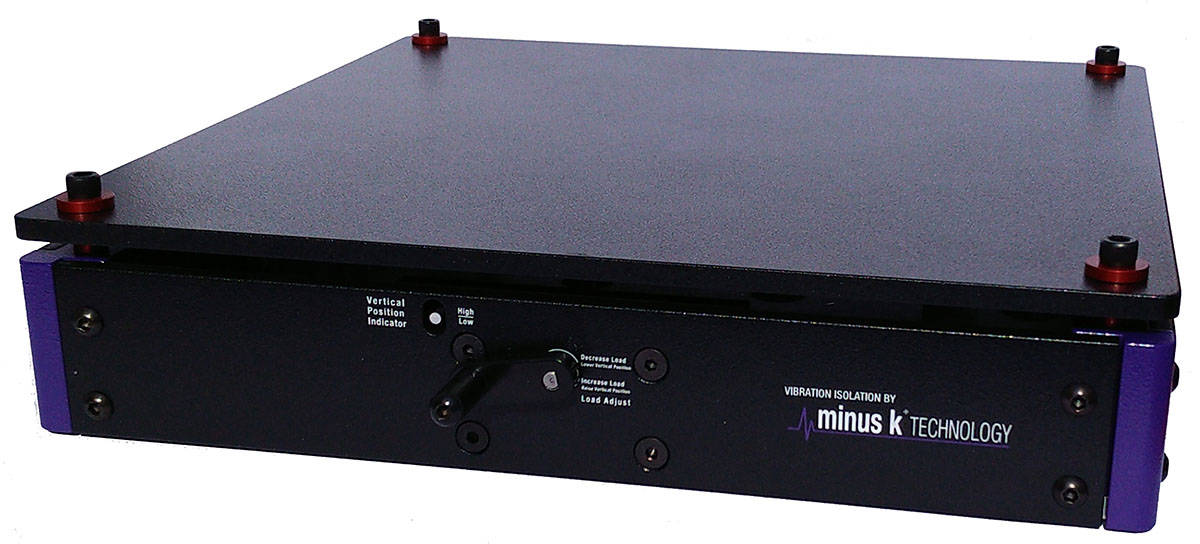
Vibration isolation platform adapts to space constraints
The new CT-10 passive isolator from Minus K Technology is the industry’s thinnest vibration isolation platform, making it ideal for applications in microscopy, metrology and photonics systems. With a footprint of 320 x 320 mm and a height of just 68 mm, the CT-10 platform is also capable of isolating vibrations down below 1 Hz.
The completely passive unit exploits a series of mechanical isolators to deliver a vertical natural frequency of 0.5 Hz, and around 1.5 Hz for horizontal natural frequencies – considerably better than can be achieved with air tables or active systems. “Vibration isolators for small microscopes, especially AFM, have typically been much larger than needed,” said Erik Runge, the company’s vice-president for engineering. “The CT-10 offers the signature 0.5 Hz vertical performance we have become known for, but in a much smaller package.”
Better isolation The new CT-10 vibration isolator from Minus K Technology offers a more compact solution for microscopy applications. (Courtesy: Minus K Technology)
The CT-10 platform achieves a high level of isolation in multiple directions, and also offers the flexibility to tailor the vertical resonant frequency to meet the needs of the application. When adjusted to a vertical natural frequency of 0.5 Hz, the platform achieves an isolation efficiency of around 93% at 2 Hz, 99% at 5 Hz, and 99.7% at 10 Hz.
The passive design does not require electrical power or compressed air. There are no motors, pumps or chambers, and no need for regular maintenance. The tabletop solution can also be easily moved between locations for extra flexibility.
For more information, visit Photonics West booth #1065 or watch the video from last year’s event
Laser engine extends its reach
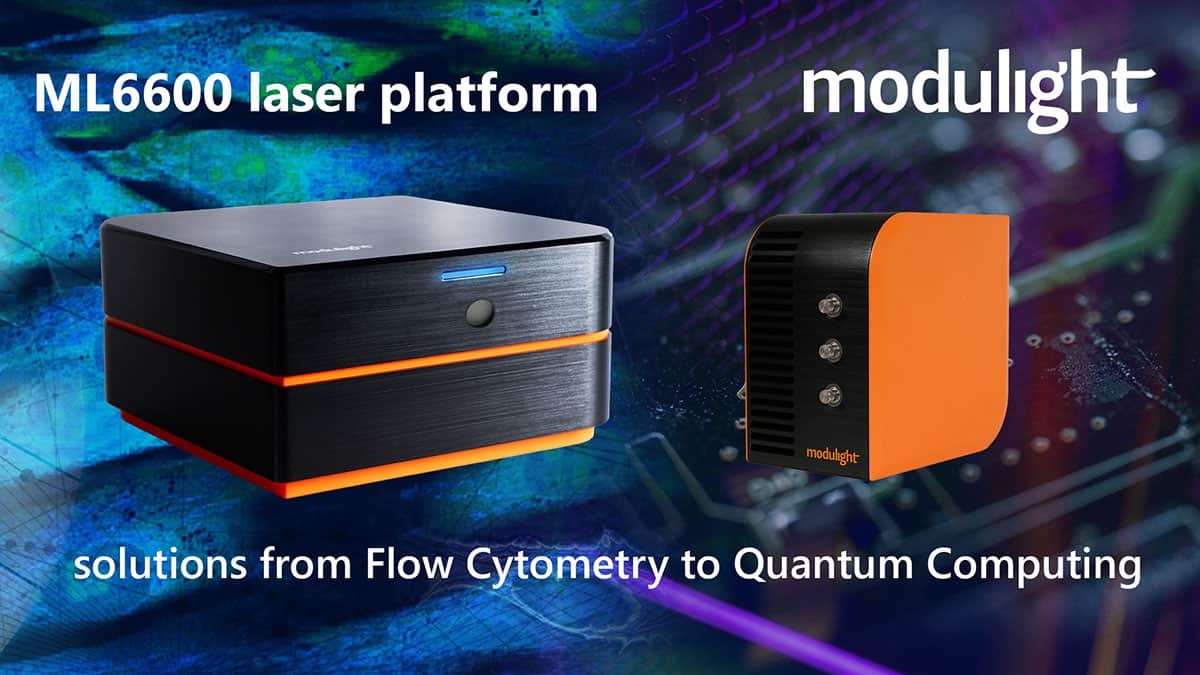
Modulight has added new application-specific capabilities to its established ML6600 laser solution. This advanced laser platform exploits predictive analytics and machine learning algorithms to enable preventative maintenance as well as automated beam alignment, reducing the need for equipment manufacturers to make site visits for system adjustments.
In a system specifically designed for flow cytometry, the ML6600 laser engine provides focused, noise-free, and monochromatic output at four different wavelengths: 405 nm (violet), 488 nm (blue), 561 nm (yellow), and 638 nm (red). The output beams have flat-top profiles and are pre-configured into a beam ladder, while the system has a built-in CCD camera to enable easy beam monitoring.
Powerful and versatile The ML6600 laser engine from Modulight supports the needs of applications ranging from flow cytometry to quantum computing. (Courtesy: Modulight)
“The most unique feature of ML6600 for flow cytometry is the automatic AI-based active beam alignment system, which enables active steering of each beam,” says Tommi Hakulinen, product manager at Modulight. “We have heard the main concern of OEM integrators: repeated service visits to realign the laser beams are a major cost item and delay the actual work.”
For applications in quantum computing, the company has also released a number of single-frequency laser diodes that can be used with the ML6600 platform. Based on distributed Bragg reflectors that lock the emission to a single frequency, the laser diodes operate at 760 nm, 780 nm, 795 nm, and 935 nm.
The lasers have been designed to emit light with a narrow linewidth of 500–1000 kHz and a power of several hundred milliwatts, which can be increased to the watt-level through the use of a tapered amplifier. VECSEL devices operating at 493 and 553 nm have also been added for trapped-ion applications that exploit barium, offering a narrow linewidth, watt-level power output, and excellent beam quality.
To find out more, visit Modulight at Photonics West booth #1267 or contact sales@modulight.com
External-cavity diode lasers deliver precision, resilience and flexibility
DRS Daylight Solutions has launched Stretto, a family of high-precision lasers operating from ultraviolet wavelengths through to the infrared. Drawing its name from the intricate overlapping of musical notes, Stretto exploits precision and sophistication in laser technology to provide best-in-class performance across a wide range of wavelengths.
The Stretto system has been engineered to provide a versatile product platform that can easily be expanded while also maintaining a uniform footprint and interface. This design philosophy enables straightforward integration into OEM systems, and is ideal for industries and applications that demand high precision and reliability.
Into the blue New from DRS Daylight Solutions is the Stretto range of high-precision lasers. (Courtesy: DRS Daylight Solutions)
An efficient and semi-automated manufacturing process ensures that the external-cavity diode lasers used in the Stretto family are robust, compact and lightweight. The semiconductor devices are designed to endure harsh environmental conditions, including humidity, dust and extreme vibrations, allowing them to be used in rugged and long-life applications.
The Stretto family of lasers also provides the precision, flexibility and resilience needed in the rapidly evolving field of quantum technology. The devices are resistant to temperature and pressure fluctuations, stable under extreme conditions, and offer an extensive mode-hop-free tuning range. With unmatched precision and control, Stretto provides the reliability and adaptability needed for pioneering quantum applications.
To find out more, visit DRS Daylight Solutions at BIOS booth #8240, Photonics West booth #3240, or Quantum West booth #7300
New lasers tackle emerging applications
HÜBNER Photonics will be showcasing an array of high-performance lasers that have been specifically developed for applications in nonlinear imaging, Raman spectroscopy, and quantum technology.
For the life sciences, the next generation of VALO femtosecond lasers, the Tidal, offers market-leading pulse durations of typically 40 fs with an output power of 2 W. The exceptional peak power, combined with the integrated dispersion pre-compensation unit, makes these lasers ideal for nonlinear applications such as high-harmonic imaging, broadband Terahertz generation, and nonlinear wafer inspection.
Also new for the life science market is the Cobolt 06-DPL 594 nm laser, which provides a continuous power output of up to 100 mW, direct modulation capabilities, and a compact footprint. The laser is easy to integrate into laser combiner options such as the C-FLEX, and as a standalone device it is particularly useful for exciting red fluorescent proteins.
Emerging science New Cobolt lasers from HÜBNER Photonics have been designed for demanding applications in Raman Spectroscopy and quantum technologies. (Courtesy: HÜBNER Photonics)
For Raman spectroscopy, the new Cobolt Disco 785 nm single-frequency laser delivers up to 500 mW in a perfect TEM00 beam. This new wavelength extends the Cobolt 05-01 Series platform, and features an innovative design that delivers the performance needed for high-resolution Raman spectroscopy measurements, including excellent wavelength stability, a linewidth of less than 100 kHz, and spectral purity better than 70 dB.
HÜBNER Photonics will also showcase a range of lasers for applications in quantum technology. The Cobolt Qu-T Series is a family of compact, single-frequency, tunable lasers operating at wavelengths of 707 nm, 780 nm and 813 nm. With a course tunability of 2–5 nm, narrow mode-hop-free tuning of below 5 GHz, a linewidth of less than 100 kHz and powers of 500 mW, the Cobolt Qu-T Series is ideal for quantum experiments based on atomic transitions and for generating entangled photon pairs through spontaneous parametric down-conversion.
Meanwhile, the new Ampheia Series of high-power fiber amplifiers are ideal for atom trapping experiments, boasting ultralow noise and single-frequency capability while also delivering 10 W, 20 W, and 50 W at 1064 nm in a perfect beam.
For more information, visit HÜBNER Photonics at BiOS booth #8567 or Photonics West booth #3567
Cryogenic stages target quantum applications
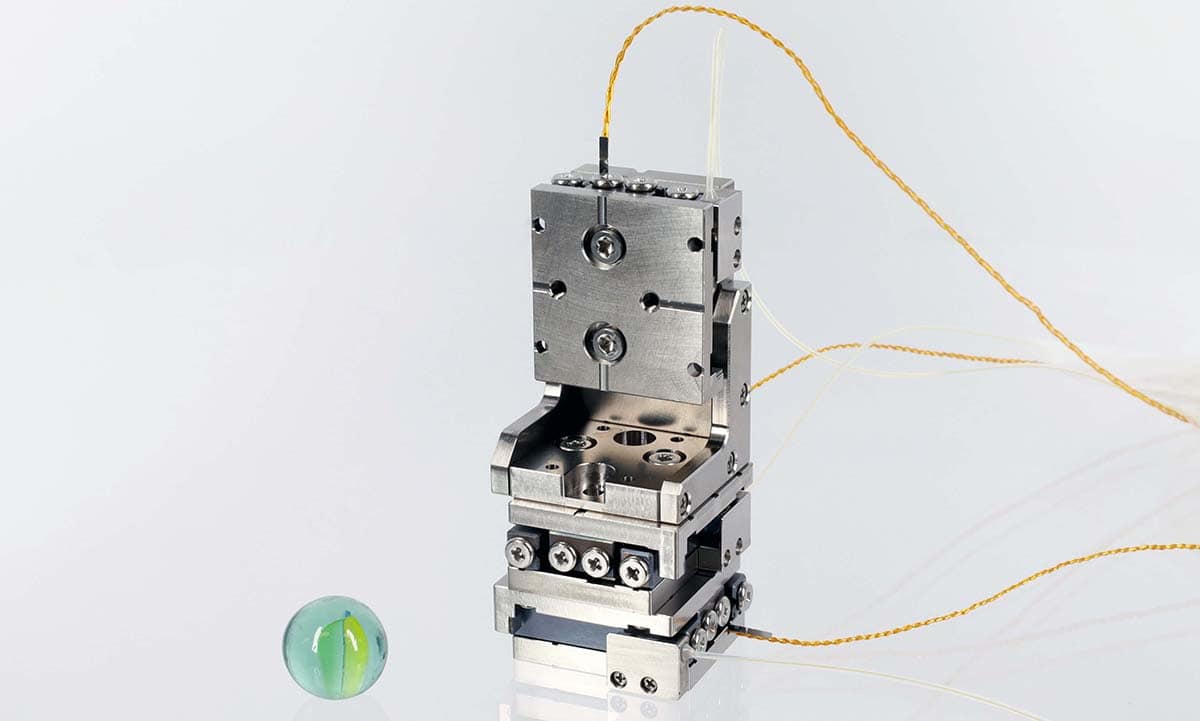
SmarAct will be showcasing a series of closed-loop cryogenic stages that offer the precision and stability needed for quantum applications and fundamental research, particularly in ultralow temperature environments. Several models are available, each one optimized to meet specific requirements for travel, accuracy and mechanical strength.
The smaller stages are particularly suitable for more specialized positioning tasks, or where space is limited. However, these compact models maintain the same characteristics as larger stages in the series, including high accuracy, vacuum compatibility, and optional non-magnetic properties, which are critical for sensitive quantum experiments and applications.
Cold comfort Closed-loop cryogenic stages from SmarAct offer precision and stability for quantum applications. (Courtesy: SmarAct)
Each model in the series provides excellent closed-loop positioning performance under cryogenic conditions, including unidirectional repeatability in the nanometer range and resolutions of less than 0.5 nm. Such precise control is critical for experiments in 2D materials science, low-temperature quantum technologies, and other research fields where nanoscale positional adjustments are needed to achieve the desired experimental results.
While ideal for use in scientific research, positioning stages from SmarAct are also suitable for a variety of industrial and technological sectors. The range of sizes and capabilities ensures that one of the stages in the series will match the needs of the application, from small-scale laboratory experiments to larger industrial processes.
To find out more, visit SmarAct at BiOS booth #8538 and Photonics West booth #3538
Non-invasive low-frequency focused ultrasound (FUS), delivered in combination with intravenously administered microbubbles, can temporarily open the blood–brain barrier (BBB) and enable drugs that combat Alzheimer’s disease to enter the brain and reach their therapeutic targets. The combination of an amyloid-beta plaque-reducing drug followed by FUS is proving to be safe and more effective in reducing plaque deposits in the brain than drug therapy alone. While not curing Alzheimer’s disease, reduction of plaque can reduce the disease’s cognitive impact and slow its progression.
Initial findings from a small first-in-human clinical trial, performed at WVU Rockefeller Neuroscience Institute and reported in the New England Journal of Medicine(NEJM), stimulate hope that this combined treatment may someday become standard of care. In fact, 60 Minutes, a popular CBS television news magazine, aired a lengthy profile of the pioneering research of neurosurgeon Ali Rezai earlier this month, which included an interview with one of the three participants in this Alzheimer’s clinical trial.
Rezai and colleagues are using a focused ultrasound device (the Exablate Model 4000 Type 2) to disrupt the BBB in patients, starting within two hours following intravenous infusion of aducanumab. Aducanumab and lecanemab (which will also be tested in the trial) are US Food and Drug Administration (FDA)-cleared monoclonal antibody therapies that can reduce amyloid-beta plaques. However, the BBB impedes most of these antibodies from entering the brain.
The proof-of-concept clinical trial included three participants with mild Alzheimer’s disease. The objective was to evaluate the safety and feasibility of combining aducanumab with FUS to open the BBB and enhance drug delivery and amyloid removal.
For the FUS procedure, patients were fitted with a hemispherical helmet containing 1024 independently controllable ultrasound sources. These sources emit ultrasound waves directed onto targets under real-time MRI guidance. During the sonications, a suspension of phospholipid-encapsulated perfluoropropane bubbles is infused intravenously. The team used scattered signals from these microbubbles to determine the appropriate acoustic power levels that will safely open the BBB.
Upon completion of the FUS procedure, the researchers used T1-weighted MRI with gadolinium contrast enhancement to determine opening of the BBB in the targeted locations, repeated 24 and 48 h later to confirm that the BBB had closed. They also performed follow-up MRIs 30 days and one year after completion of the combined treatment.
Trial participant A patient with mild Alzheimer’s disease undergoes focused ultrasound treatment. (Courtesy: WVU Rockefeller Neuroscience Institute)
Participants received six monthly treatments of intravenous aducanumab with dose escalation (from 1 mg/kg of body weight up to 6 mg/kg), followed by FUS. The researchers explain that in this phase of the clinical trial, they restricted FUS application to one brain hemisphere, in regions of the frontal lobe, temporal lobe or hippocampus with high levels of amyloid-beta plaque. Corresponding brain regions in the contralateral hemisphere that were not exposed to FUS served as controls. During the follow-up phase, patients received a monthly infusion of 10 mg/kg of aducanumab without FUS.
To quantify amyloid-beta levels, the team performed 18F-florbetaben PET scans at baseline, at three, 11 and 19 weeks during the treatment, and at 26 weeks and one year in the follow-up phase. Rezai reports that for all three patients, 18F-florbetabin PET scans showed that after 26 weeks, amyloid-beta plaques were reduced by an average of 32% (measured via the standardized uptake value ratio) in brain regions where the BBB had been opened, compared with corresponding regions in the untreated hemisphere.
The reduction in centiloid value, a scale used to standardize PET-based amyloid burden measurements, was 48%, 49% and 63% for the three participants, respectively. Rezai notes that the clinical trial did not quantify monoclonal antibody penetration because it was not designed for this purpose.
Patients are now being recruited for the second phase of the clinical trial, which will use lecanemab as the monoclonal antibody therapy. “We are limited by the FDA to treat up to 40 cc of the brain,” explains Rezai. “FUS will be administered only once a month for six months, comparable to the methods for aducanumab, with patient 1 BBB opening of up to 10 cc; then the following patients will have BBB opening up to 20 and 40 cc respectively.”
In the 60 Minutes interview, 61-year-old patient Dan Miller, whose wife first noticed behavioural changes four years previously, said that viewing the final MR images of his brain showing plaque reduction “was surreal”. He still exhibits occasional unusual behaviour, but there has been no further visible progression. Miller and his wife are hopeful for the future.
In an accompanying NEJM editorial, another pioneer in the clinical use of FUS, Kullervo Hynynen of Sunnybrook Research Institute in Toronto, notes that “expanding treatment to clinically significant volumes on both sides of the brain is crucial for assessing its efficacy in slowing disease progression. Additional studies are needed to establish long-term safety and efficacy, and cost-effective treatment devices that are not reliant on online MRI guidance must be developed for broader accessibility.”
The cosmologist Arno Penzias, who discovered the cosmic microwave background (CMB) with Robert Wilson, died on 22 January at the age of 90. He shared a half of the 1978 Nobel Prize for Physics with Wilson, with the other half awarded to Pyotr Kapitsa for his work in low-temperature physics.
Penzias was born in Munich, Germany, on 26 April 1933. At the age of six, Penzias and his family fled Nazi Germany, first to England before settling in New York in 1940. In 1954 Penzias graduated in physics from the City College of New York before serving as a radar officer in the US Army Signal Corps until 1956.
He then moved to Columbia University’s radiation laboratory working on microwave physics, earning a PhD in 1962 under the guidance of maser inventor Charles Townes.
Penzias then took a position at Bell Labs, New Jersey, developing microwave receivers for radio astronomy. There he worked with Wilson on a 6 m-diameter horn-reflector antenna with a 7 cm ultra-noise receiver. In 1964 the pair came across an excess source of radiation at 3 K that they could not eliminate.
Initially, they thought the hiss of radio waves at a wavelength of 7.35 cm had a terrestrial origin, given that it was approximately uniform in all directions on the sky. They even famously wondered if it was caused by pigeon excrement on the antenna.
In fact, what they had stumbled upon was the cosmic microwave background radiation, which had first predicted been by cosmologists Ralph Alpher and Robert Herman in the late 1940s.
Penzias and Wilson published their experimental findings in the Astrophysical Journal (142 419) alongside a paper by Robert Dicke (142 414), who had earlier calculated that the universe should be filled with a relic blackbody radiation at a minimum temperature of 10 K. Dicke interpreted the noise that Penzias and Wilson had measured as a signature of the CMB.
A hot, dense state
At the time there were two main competing theories about the universe. The “steady-state theory” stated that the universe is constantly expanding but with a fixed density. Then there was the “Big-Bang” theory, which envisioned the universe beginning at a single point and then expanding and stretching as it grows.
The discovery of the CMB provided the first direct evidence that the universe began in a hot Big Bang. The CMB was later found to have a temperature close to a blackbody of 2.7K and theorists realized that the low temperature is the result of the expansion of the universe.
Penzias and Wilson shared the 1978 Nobel Prize for Physics for the discovery and since then the CMB has provided researchers with swathes of information about the universe, including the discovery in the 1970s that the CMB is not purely isotropic, but has tiny anisotropies.
As well as the Nobel prize, Penzias was awarded the Henry Draper Medal in 1977 from the US National Academy of Sciences and the American Physical Society’s George Pake Prize in 1990.
In a statement, Thierry Klein and Peter Vetter from Bell Labs say that Penzias will be “sorely missed”. “Arno represented far more than his many accomplishments. He embodied the Bell Labs approach to innovation,” they write. “Arno, like all his colleagues at Bell Labs, was an applied scientist, seeking answers to the technical challenges of communications. But in the course of his research, he uncovered bigger challenges and learned bigger truths.”
Flared trousers, light-up dance floors and John Travolta’s infamous dance moves.
What else could we be talking about but disco – a dance genre and subculture that emerged in the 1970s, and has made comeback after comeback ever since. Even in recent years artists have been making retro albums, #DiscoTok has a growing presence on social media, and multiple documentaries about the genre and its history have aired, from Love to Love You, Donna Summer to the BBC’s Disco: Soundtrack of a Revolution docuseries.
And adorning much of the media surrounding disco are pictures of the most emblematic object of the era: the disco ball.
Aside from their musical associations, these ornaments speak to our love of dancing light – also evident in everything from sun catchers to firework displays. And, although they may not be obviously related to astronomy, a new study says that these glitzy globes could in fact help us to view the universe’s own natural light shows (Phys. Educ.59 025012).
Disco balls are simply spheres covered in tiny mirror fragments, which, if small enough, can work as “pinhead mirrors”. To understand the effect, it’s useful to think about the much better-known pinhole camera, or camera obscura. These simple optical devices, documented as early as 500 BCE, are essentially closed boxes with a tiny hole in one side.
They work by restricting light; a ray from any point on an object will only get through the aperture if it is incident at the correct angle, so the light rays are kept “in order” to produce an inverted image of the object. Similarly, a tiny mirror will only receive a small number of rays from any point. Those rays are reflected, rather than transmitted, but they also produce a recognizable image.
Robert Cumming, astronomer and communications officer at Onsala Space Observatory in Sweden, chanced upon the effect after hanging up a disco ball he’d bought for a New Year’s Eve celebration. “I got a text from home saying: ‘the flat looks like this!’” he recalls. “The ball was illuminated and the place looked magical. I realized that each bright patch on the walls was an image of the Sun.”
Inspired by this serendipitous encounter, Cumming and an international team of astronomers with an interest in public outreach decided to test the ornaments’ potential for helping people engage with astronomical events. Their results are compelling. They successfully observed the partial solar eclipse of 25 October 2022, during which the disco ball clearly projected a changing crescent shape as the Moon’s shadow swept over the Earth. They also demonstrated a strong effect using other obstacles, such as tree leaves.
On the theoretical side, the scientists’ study outlines why disco-ball mirrors are the right size to work. As with the aperture in a pinhole camera, the optimum size for a pinhead mirror is a compromise between getting too much light from the wrong places if it’s too large, and getting diffraction patterns if it’s too small. The best size therefore depends on the wavelength of light and the distance of the imaging surface from the reflector.
Typical disco balls can have mirrors as small as 4 mm and, taking the average wavelength of visible light to be 550 nm, the optimum imaging distance is 15 m. That might sound like a large distance for projecting an image inside a room, but, as the results show, perfect focus is not necessary to offer a clear enough picture. In fact, the researchers were even able to produce images of the solar disc with a few discernible sunspots at just 6 m from the disco ball.
From an outreach and education perspective, the astronomers point out that disco balls have several advantages. Besides being unexpected – and therefore intriguing – objects to associate with astronomy, they are also cheap and widely available. Like other methods of indirectly viewing the Sun, the images are safe for our eyes; but unlike most, a disco ball projects multiple images around a room, enabling a group of people to experience an eclipse collectively rather than having to take turns. And of course, as Cumming says, “A disco ball adds a bit of celebratory sparkle to anything!”
“The [pinhead mirror] phenomenon tends to get rediscovered every decade or so, and the pinhead mirror was even patented for a while,” notes Alexander Pietrow, co-author and solar physicist at the Leibniz-Institut für Astrophysik Potsdam in Germany. “Still, our paper is the first to describe the effect as an educational eclipse viewing tool.” Excitingly the solar eclipse of April this year offers a timely chance to see it in action.
Furthermore, according to the scientists’ calculations, the disco-ball effect should be strong enough to display a transit of Venus, although they couldn’t check this out, because the last visible transit occurred in 2012, and the next one isn’t until 2117. We can’t possibly know if disco music will be going through another renaissance in 93 years but hopefully there will be some disco balls on hand to bring some sparkle to that spectacle.
Online shopping boomed during the pandemic, but it remains vulnerable to scams involving both buyers and sellers. Quantum communication could, in principle, add another layer of security, but verifying a transaction securely, rather than simply communicating it, requires a “signature” consisting of thousands of quantum bits (qubits) for a single bit of message.
For today’s noisy, imperfect quantum systems, that’s a very high bar, but researchers at China’s Nanjing University, Renmin University and the Beijing National Laboratory for Condensed Matter Physics found a way of lowering it. By using a mathematical technique called one-time universal hashing that generates shorter secure “keys”, the researchers substantially reduced the number of qubits required to verify an e-commerce transaction. They also considered different realistic source flaws based on a scheme that is independent of the measurement devices used, thereby avoiding the need for perfect signals to distribute the information.
From QKD to QDS
Quantum communication rests on the principle that anyone who tries to intercept a message encoded in quantum states will inevitably interfere with these states in a way that is easily detected. This principle is already used in quantum key distribution (QKD), but on its own, QKD cannot guarantee e-commerce security because it only provides a secure communication channel. It does not enforce other important e-commerce objectives such as integrity, authenticity or nonrepudiation (repudiation is where one party rejects the contract).
One possible way of fulfilling these other objectives involves a more complex method known as quantum digital security (QDS). This method uses the secure transmission of quantum states in QKD and the mathematics of information theory to generate unique keys for signing a contract and paying.
Ultra-secure protocol
The researchers’ QDS protocol involves three parties: a merchant, a client and a third party (TP). It begins with the merchant preparing two sequences of coherent quantum states, while the client and the TP prepare one sequence of coherent states each. The merchant and client then send a state via a secure quantum channel to an intermediary, who performs an interference measurement and shares the outcome with them. The same process occurs between the merchant and the TP. These parallel processes enable the merchant to generate two keys that they use to create a signature for the contract via one-time universal hashing.
Once this occurs, the merchant sends the contract and the signature to the client. If the client agrees with the contract, they use their quantum state to generate a key in a similar way as the merchant and send this key to the TP. Similarly, the TP generates a key from their quantum state after receiving the contract and signature. Both the client and the TP can verify the signature by calculating the hash function and comparing their result to the signature. Payment can be made from the client to the TP if both verify the signature. If either of them cannot verify the signature, the contract is automatically aborted.
Quantum retailer
The researchers experimentally verified this protocol using optical fibres as quantum channels and a pulsed laser modulated in both phase and intensity to produce the quantum states for key generation. To eliminate the need for perfect devices, they characterized the source flaws of this system and combined the key generation process with a method called four-phase measurement device–independent QKD. This method uses the phase of the optical pulses at the intermediate interference measurement to obtain a secure key even if the intermediary that performs the measurement cannot be trusted.
To test the system’s functionality, the team used it to sign a file containing 428 kB of data, which is approximately the size of an Amazon Web Services customer agreement. They were able to perform this signature 0.82 times per second, and the system worked even with the equivalent 100 km distance between the client and the merchant.
Team member Hua-Lei Yin, a quantum communications expert at Renmin, says the work shows it is possible to use non-repudiation features to perform e-commerce as efficiently and practically as private communications. The next step will be to demonstrate the technique in practical scenarios using real metropolitan quantum networks. “We hope to collaborate with more research groups to further develop quantum technology (including high-precision phase locking and phase tracking techniques) to improve the corresponding rates and transmission distances”, he tells Physics World.
Qin Wang, an IT and networking expert at the Nanjing University of Posts and Telecommunications who was not involved in the research, says the quantum e-commerce scheme based on QDS offers enhanced security and practicality compared to corresponding classical schemes. The team’s biggest achievement, she says, is to extend QDS to a useful scenario within e-commerce, thereby demonstrating its potential applications in daily life. She is, however, critical of Sagnac-type optical setup used in the experimental demonstration, which she says could be vulnerable to “Trojan horse” type hacks.
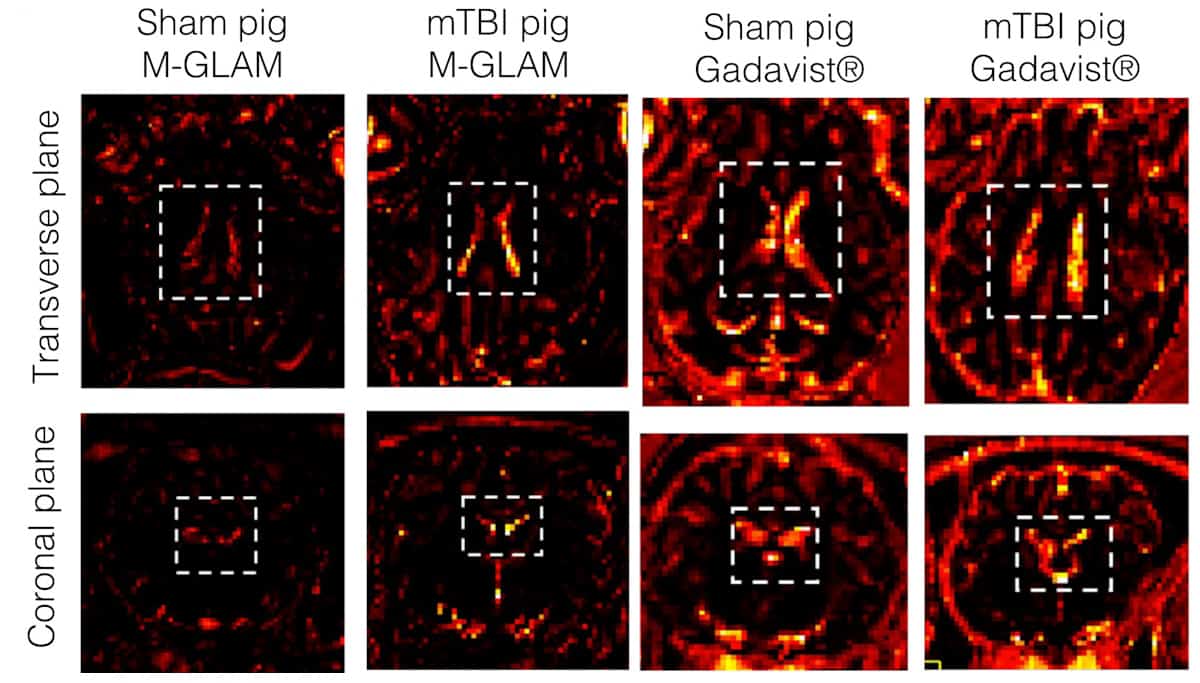
Comparing the contrast Representative MRI maps of control pigs and pigs with mild traumatic brain injury (mTBI) injected with M-GLAMs or the commercial contrast agent Gadavist. The dotted square indicates the lateral ventricle and choroid plexus, which form the region-of-interest. (Courtesy: Wang et al. Sci. Transl. Med. 16 eadk5413 (2024))
A “living contrast agent” could help diagnose mild traumatic brain injury (TBI) when conventional magnetic resonance imaging (MRI) doesn’t show structural changes, say researchers at Harvard University’s School of Engineering and Applied Sciences.
The researchers loaded gadolinium, a standard MRI contrast agent, into hydrogel-based micropatches that attach to immune cells, and in preclinical studies visualized inflammation in pigs with mild TBI. Ultimately, they anticipate that the technology will increase the number of diagnosed mild TBI cases and improve patient care.
“If somebody falls or has a mild head impact, there may not be a detectable change in brain structure, but the brain might still have suffered significant damage which can manifest over time. Suspected TBI patients are told that it looks fine, only to find out that adverse effects show up [later],” says Samir Mitragotri, whose lab conducted the study. “So that was the motivation – can we develop a more sensitive way to detect mild TBI?” The development of the technology was led by Lily Li-Wen Wang, a graduate student in the Mitragotri Lab. MRI expertise was provided by Rebekah Mannix from Boston Children’s Hospital and her team.
Hitchhiking with the immune system’s professional eaters
Since the immune system knows that the brain has been injured, even with “minor” traumas, the researchers sought a contrast agent that could be used to detect immune cells. They homed in on macrophages, white blood cells that are abundant, mobile and, among their other functions in the immune system, are recruited to sites of inflammation and engulf microorganisms.
“Macrophages are notorious for eating whatever binds to them – these are professional eaters,” Mitragotri explains. “We put a label on the macrophage so that the macrophage can be seen on MRI.”
The researchers dubbed the technology macrophage-adhering Gd(III)-loaded anisotropic micropatches, or M-GLAMs. As their name suggests, M-GLAMs attach to macrophages and hitch a ride into the injured brain. Because GLAMs are tagged with gadolinium, the researchers can use MRI to see where the macrophages show up in the brain.
“The macrophage will localize wherever the inflammation is in the brain, so you can see the location of the inflammation. The primary objective, though, is to see if there is inflammation; the secondary question is where, because most of the time in the case of mild TBI, even the first question is not answered,” says Mitragotri.
The researchers tested the contrast agent by injecting GLAMs in mice and pigs at a dose of one or more GLAMs per macrophage. Unlike Gadavist, a commercial gadolinium-based contrast agent, M-GLAMs didn’t cause adverse reactions or toxicity and persisted in animals’ bodies for more than 24 h before being cleared by the liver and kidneys. In a porcine brain injury model, they observed M-GLAMs in the choroid plexus, a region of the brain that helps recruit immune cells through the blood–cerebrospinal fluid barrier. Gadavist, which clears from the body rapidly, did not localize to sites of brain inflammation.
The concentration of gadolinium ions in GLAMs is high enough that in animal studies, the researchers were able to use a 500- to 1000-fold lower dose of gadolinium relative to that in Gadavist. They acknowledge that M-GLAMs should be tested in more animals and that M-GLAMs could migrate to sites of inflammation unrelated to mild TBI.
Preparing and characterizing GLAMs
Gadolinium works as an MRI contrast agent where there is contact with water (T1 MRI signals require water proton–Gd(III) interactions). So unlike most polymers used for biomedical applications, which are hydrophobic and non-porous, a GLAM is porous and hydrophilic – a disc-shaped hydrogel that binds to a macrophage when the macrophage tries to eat hyaluronic acid in the hydrogel.
The macrophage fails in this endeavour because the GLAM is disc-shaped (that macrophages cannot eat disc-shaped and other anisotropic particles was discovered by the researchers in the course of another study). Ultimately, GLAMs bind to macrophages without impacting macrophage migration or other functions.
“The actual process [of fabricating GLAMs] turned out to be quite involved,” says Mitragotri. “Our team worked quite diligently for a few years to get the method of preparation all milled out.” The current fabrication protocol involves mixing modified gadolinium and hyaluronic acid, pouring the liquid into a wafer with wells in it, and spinning the wafer to uniformly fill the moulds. Shining UV light on the spun moulds crosslinks the polymer chains and forms a solid GLAM.
Future work includes detailed kinetic and dose response studies of M-GLAMs in the brain and advancing the technology in humans, where applications include diagnosis and possibly even treatment of mild TBI, cancers and autoimmune conditions.
In the latest Physics World Stories podcast, astrophysicist Emma Chapman is in conversation with host Andrew Glester about the history of radio astronomy. It’s a field that has always maintained a do-it-yourself ethic, with valuable contributions from people outside the established academic community.
Chapman, an astrophysicist at the University of Nottingham in the UK is the author of the popular-science book First Light: Switching on Stars at the Dawn of Time. Alongside her research, Chapman regularly visits amateur radio astronomy clubs and admires the technical expertise she encounters among members.
Cold War boom
Using much of the same technology as radar, radio astronomy evolved rapidly in the post-war period and took on strategic importance during the Space Race. Indeed, the Lovell Telescope at the Jodrell Bank observatory in northern England was the only facility in the Western world that could track Sputnik 1, launched by the Soviet Union in 1957.
One reason that radio astronomy attracts public interest is that its facilities are ground-based: they’re tangible and accessible. Sites such as the Arecibo Observatory in Puerto Rico have iconic status in popular culture. That status looks set to grow thanks to the SKA Observatory being constructed at sites across Australia and South Africa – a truly global project, epic in scale.