RSNA 2023 showcases AI in radiology

RSNA 2023, the annual meeting of the Radiological Society of North America (RSNA) takes place this week in Chicago, showcasing recent research advances and product developments in all areas of radiology. This year’s event includes numerous papers, posters, courses and education exhibits focused on artificial intelligence (AI) and machine learning applications. Here’s a small selection of the studies being presented.

Ascertaining ADHD traits from brain MRI scans

Attention deficit hyperactivity disorder (ADHD) is a common condition that affects a person’s behaviour. Children with ADHD may have trouble concentrating, controlling impulsive behaviours or regulating activity. Early diagnosis and intervention are key, but ADHD is difficult to diagnose and relies on subjective self-reported surveys.

Now, a research team at the University of California San Francisco (UCSF) has used AI to analyse MRI brain scans of adolescents with and without ADHD, finding significant differences in nine brain white matter tracts in individuals with ADHD.

The researchers employed brain imaging data from 1704 individuals in the Adolescent Brain Cognitive Development (ABCD) Study, including subjects with and without ADHD. From the diffusion-weighted imaging (DWI) data, they extracted fractional anisotropy (FA) measurements, a measure of water diffusion along the fibres of white matter tracts, along 30 major tracts in the brain.

They used FA data of from 1371 individuals as inputs to train a deep learning AI model, and tested the model on 333 patients, including 193 diagnosed with ADHD and 140 without. The AI model found that in patients with ADHD, FA values were significantly elevated in nine white matter tracts.

“These differences in MRI signatures in individuals with ADHD have never been seen before at this level of detail,” says Justin Huynh, from UCSF and the Carle Illinois College of Medicine at Urbana-Champaign. “In general, the abnormalities seen in the nine white matter tracts coincide with the symptoms of ADHD. This method provides a promising step towards finding imaging biomarkers that can be used to diagnose ADHD in a quantitative, objective diagnostic framework.”

Identifying non-smokers at high risk of developing lung cancer

Lung cancer is the most common cause of cancer death worldwide. In the USA, lung cancer screening using low-dose CT is recommended for current or recent cigarette smokers, but not for “never-smokers” – those who never smoked or smoked very little. Around 10–20% of lung cancers occur in such never-smokers, however, and cancer rates in this group are increasing. And without early detection through screening, never-smokers often present with more advanced lung cancer than those who do smoke.

Risk prediction from chest X-ray

Aiming to improve this situation, a team at the Cardiovascular Imaging Research Center (CIRC) at MGH and Harvard Medical School is testing whether a deep learning model could identify never-smokers at high risk for lung cancer, based on routine chest X-rays. “A major advantage to our approach is that it only requires a single chest-X-ray image, which is one of the most common tests in medicine and widely available in the electronic medical record,” says lead author Anika Walia.

The researchers developed their CXR-Lung-Risk model using 147,497 chest X-rays of 40,643 asymptomatic smokers and never-smokers from the PLCO cancer screening trial. They validated the model in a separate group of never-smokers who had routine chest X-rays. Of 17,407 patients in the study, the model classified 28% as high risk. In six years of follow-up, 2.9% of the total cohort developed lung cancer. Those in the high-risk group far exceeded the 1.3% six-year risk threshold at which screening is recommended.

The team note that after adjusting for age, sex, race and clinical factors, patients in the high-risk group still had a 2.1 times greater risk of developing lung cancer than those assigned to the low-risk group.

Eliminating racial bias in breast cancer risk assessment

Researchers at Massachusetts General Hospital (MGH) have developed a deep learning model that accurately predicts both ductal carcinoma in situ (DCIS) and invasive breast carcinoma using only biomarkers from mammographic images. Importantly, the new model worked equally well for patients of multiple races.

Screening mammography exam

Traditional breast cancer risk assessment models exhibit poor performance across different races, likely due to the population data used to create the model. “Several of the commonly used models were developed on predominantly European Caucasian populations,” explains lead author Leslie Lamb. But according to the American Cancer Society, Black women have the lowest 5-year relative survival rate for breast cancer among all racial and ethnic groups – highlighting the essential need for risk models without racial bias.

In a multisite study, Lamb and colleagues assessed the model’s performance in predicting invasive breast cancer and DCIS, which is early-stage breast cancer, across multiple races. They included 129,340 routine bilateral screening mammograms performed in 71,479 women, with five-year follow-up data. The study group included white (106,839 exams), Black (6154 exams) and Asian (6435 exams) women, as well as those self-reporting as other races (6257 exams) and those of unknown race (3655 exams).

The new model consistently outperformed traditional risk models in predicting the risk of developing breast cancer, showing a predictive rate of 0.71 for both DCIS and invasive cancer across all races. The model achieved an area under the ROC curve (AUC) for predicting DCIS of 0.77 in non-white patients and 0.71 in white patients, while for predicting invasive cancer, the AUC was 0.72 in non-white patients and 0.71 in white patients. The team notes that traditional risk models exhibited AUCs of 0.59–0.62 for white women, with much lower performance for those of other races.

“The model is able to translate the full diversity of subtle imaging biomarkers in the mammogram, beyond what the naked eye can see, that can predict a woman’s future risk of both DCIS and invasive breast cancer,” says Lamb. “The deep learning image-only risk model can provide increased access to more accurate, equitable and less costly risk assessment.”
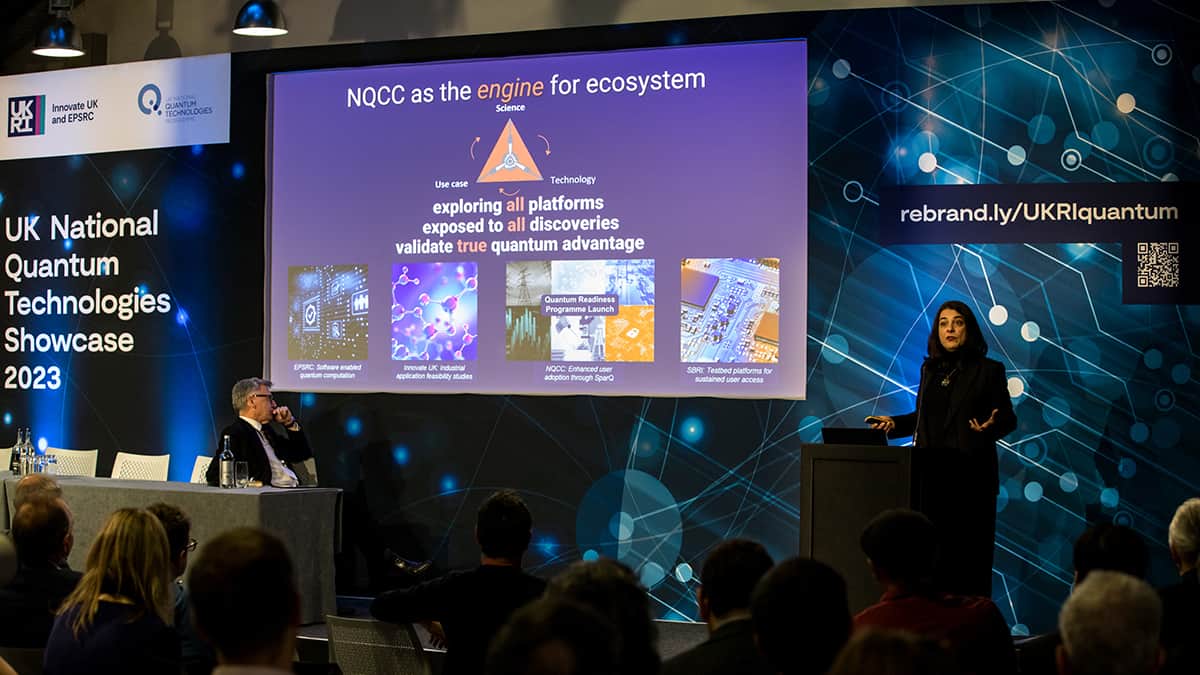
Partnerships push for quantum advantage

One of the many factors that have contributed to the success of the UK’s National Quantum Technologies Programme (NQTP) has been its emphasis on the power of collaboration. At its inception in 2014 the NQTP established four research hubs that enabled academic groups from across the UK to share knowledge and resources, accelerating the development of novel quantum technologies and catalysing the development of a thriving start-up sector.

That culture of collaboration has been fully embraced at the National Quantum Computing Centre (NQCC), launched in 2020 as a flagship initiative of the NQTP. With a diverse programme of activities spanning technology development, infrastructure provision and end-user engagement, the national lab has been forging strategic links with both industrial and academic partners to deliver its headline objective of demonstrating quantum advantage – the point at which a quantum computer can solve a specific problem faster than its classical counterpart – by 2025.

In one notable development, announced in November 2023, an agreement with IBM Quantum will provide the NQCC and its collaborators with cloud-based access to the computing giant’s entire fleet of quantum computers. Among them are multiple machines with 127 qubits, delivering what the company terms “utility-scale” quantum computing.

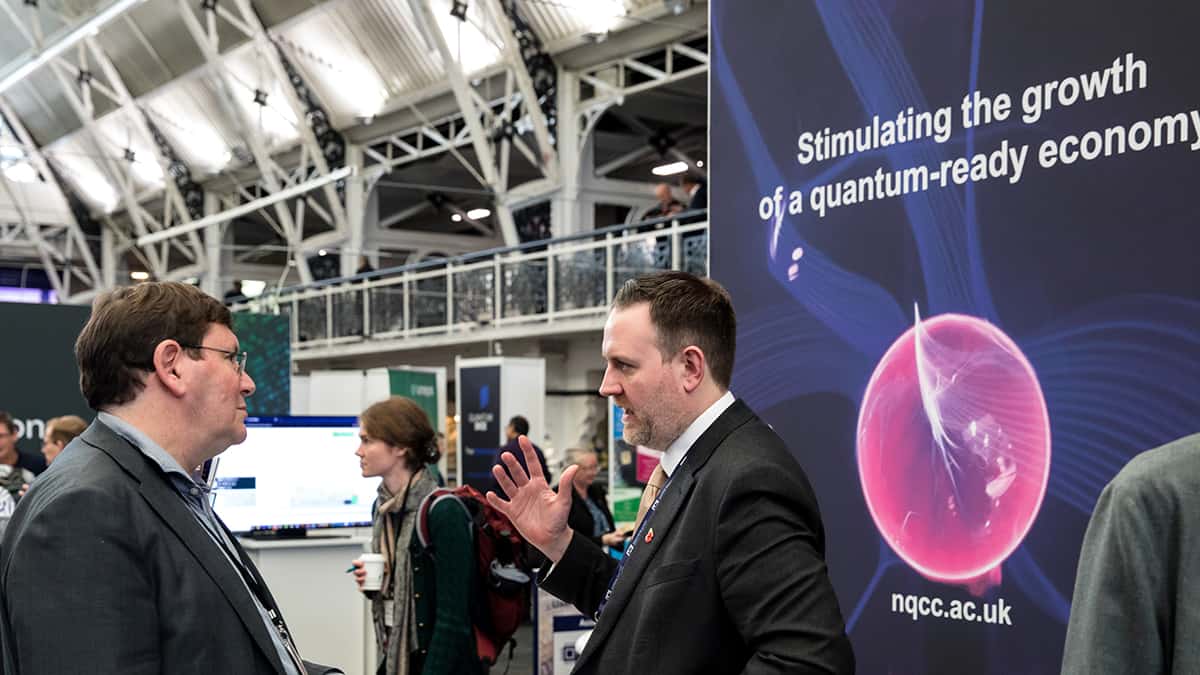
“Quantum developers have been using small numbers of qubits for a long time, but they also need to work with larger scale machines to demonstrate how quantum computers have become useful tools for solving classes of problems beyond brute-force classical simulation of quantum mechanics,” explained IBM’s Adam Hammond, speaking at the annual National Quantum Technologies Showcase in London at the beginning of November. “Our focus at IBM is to bring forward the day when quantum computers can do work that is difficult to achieve with classical computers, and eventually to deliver a clear advantage in use cases that benefit industry and advance science.”

While access to the quantum hardware will be provided as a commercial service, the agreement will also enable the NQCC to join IBM’s Quantum Network, which brings together around 250 organizations from around the world. “We encourage collaborations between members of the network and with us, looking at things like algorithm development and the application of quantum computing to practical use cases where we think we can reach quantum advantage first,” explained Hammond. “We are just at the beginning of our partnership with the NQCC, and we are keen to explore how we can grow that partnership by working together and sharing our knowledge and experience.”

Adam Hammond of IBM Quantum in conversation with Simon Plant from NQCC

This latest collaboration builds on an existing technology agreement with Oxford Quantum Circuits, which provides access to its Lucy quantum processor for projects funded through the NQCC’s user engagement programme, called SparQ. At the same time the NQCC is establishing a capability in quantum emulation, a technique that enables a classical computer to run quantum circuits in the same way as a quantum machine. In this case the NQCC is leveraging a powerful software program created at the University of Oxford, called the Quantum Exact Simulation Toolkit (QuEST), and is currently working with one of the original developers to optimize its capabilities for use on the high-performance compute cluster at the Harwell Campus.

Meanwhile, a more established partnership with the National Physical Laboratory (NPL) extends from standards development through to technology collaboration. In one new initiative, also announced at the beginning of November, the two national facilities will be cornerstone members of a pilot network for quantum standards in the UK. “The NQCC will bring their skills and knowledge in quantum computing, as well as their connections with the start-up community, ” explains John Devaney, the NPL’s quantum standards manager. “We can share our expertise in standards development, while also keeping track of international initiatives that might influence our approach here in the UK.”

The Quantum Standards Network Pilot will also include representatives from government bodies, the BSI standards organization and UKQuantum, an industry association that aims to provide a single voice for companies developing quantum technologies. The aim of the pilot is to kickstart a conversation around standards and accreditation for emerging quantum platforms, find the best model for effective collaboration between key stakeholders in the UK, and make the case for a longer term focus on developing standards that support the growth of the UK’s quantum ecosystem.

“Standards are all about opening up markets and promoting innovation, but there is also a risk of standardizing too early or too narrowly,” says Devaney. “The pilot network will provide a forum for people to share information and discuss ideas, plus we will run workshops focused on particular industry sectors so that quantum developers can talk to potential customers about the assurances they will need to be confident that the technology will work for them.”

Devaney points out that the first step towards standards development is to establish proper test and evaluation protocols for diverse quantum technologies, something that NPL has been working on for many years.  “We already collaborate with start-up companies and research organizations to provide independent measurements and characterization of their prototypes,” he says. “By working with the NQCC we will be able to translate those test and measurement procedures into standards that are appropriate for the UK’s quantum computing community.”

NPL’s expertise in quantum test and measurement will also help the NQCC’s technical teams as they establish experimental platforms based on ion traps, superconducting circuits and, in the most recent addition, neutral atoms. Beyond the characterization of these emerging computing platforms, NPL has also been developing similar quantum technologies for applications in metrology, including ion-trap devices that were originally developed for time and frequency measurements.

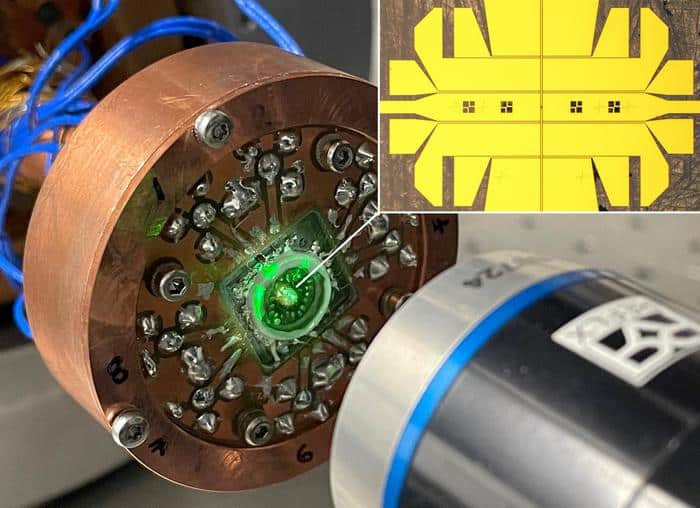
The two organizations have now secured funding to transfer an ion-trap chip originally developed at NPL to the NQCC for further development and scale-up. “This device could be really useful for quantum computing, but we do not have the resources or the infrastructure to take the technology forward,” says Guido Wilpers, a senior scientist at NPL. “The NQCC is the best place to explore and expand its capabilities for quantum computing, while we will be able to share our knowledge of the device and collaborate on future test and measurement strategies.”

Indeed, the first ion-trap platform to be built at the NQCC exploits a device that emerged from research at the University of Oxford, showing how pioneering work within the UK’s academic sector can enable the NQCC’s technical teams to focus on scaling up the technology rather than designing and building new devices from scratch. Over the last year quantum researchers at the NQCC have also been visiting leading academic groups in the UK to understand current best practice, make informed experimental design decisions, and explore the possibilities for future collaborations – with the ion-trap team already involved in several joint projects with academic and industrial partners.

Meanwhile, the NQCC’s new partnership with the Quantum Software Lab (QSL) at the University of Edinburgh is already opening up exciting new opportunities for engaging with industry on applications development. The first project in the pipeline, announced in early November, will see QSL and NQCC researchers work with high-street bank HSBC and technology provider Rigetti to develop quantum machine-learning approaches to tackle the growing problem of money laundering.

This collaboration aligns with the NQCC’s ambitions of exploring impactful early applications of quantum computing, showcasing the potential of the technology, stimulating user adoption, and shaping the UK’s quantum computing user community

Elham Kashefi, director of the QSL and the NQCC's chief scientist

HSBC already exploits classical machine learning to detect anomalies in financial transactions that could indicate criminal behaviour, and believes that a quantum-enabled solution could reduce risk and improve its anti-fraud services. “The growing rates of financial crime globally means it is imperative that we find an enhanced way to stop people becoming a victim of fraudsters,” commented Martin Brown, a specialist in fraud analytics at HSBC. “Quantum computing has the potential to be a game changer in this arena.”

As part of the project, QSL will take the lead on the development of quantum machine-learning algorithms, which will then be run on Rigetti’s 24-qubit platform. But the project partners are already working closely together to develop an optimal and practical solution. “We have project meetings every two weeks to ensure that the algorithms we are developing make best use of the capabilities of the hardware,” explains Ross Grassie, the QSL’s technical programme manager. “HSBC is also really keen to to learn more about quantum machine-learning approaches, and having their involvement right from the start will help us to create a practical solution that meets their needs.”

For Elham Kashefi, director of the QSL and the NQCC’s chief scientist, the project shows how industry and academia can work together to accelerate innovation and develop quantum-enabled solutions that meet a clear commercial need. “This is one of the very first projects of the QSL and we are eager to use it as a working model for other projects to come,” she says. “This collaboration aligns with the NQCC’s ambitions of exploring impactful early applications of quantum computing, showcasing the potential of the technology, stimulating user adoption, and shaping the UK’s quantum computing user community.”

Elham Kashefi


Terahertz laser induces room-temperature superconducting phase in a fullerene compound

An organic material in a metastable phase behaves a little like a room-temperature superconductor when excited with laser light. Though this behaviour fades almost as quickly as the laser pulse that induces it, the team behind the discovery say that with the right light source, it might be possible to keep the material in its superconducting-like state continuously.

Scientists have known for a while that shining light at terahertz and mid-infrared frequencies on certain materials is a good way to manipulate their properties. In some cases, this method can even be used to create non-equilibrium material phases that have no analogue under normal conditions.

“Our group has been studying how to use coherent light fields to amplify or otherwise enhance superconductivity – a state that is generally obtained from the spontaneous formation of electronic coherence (the pairing up electron pairs),” explains Andrea Cavalleri, a physicist at the Max Planck Institute for the Structure and Dynamics of Matter (MPSD) in Hamburg, Germany who led the research effort. “In the past, we found that in a number of materials (the cuprates [copper oxides] and some organic materials like K3C60), this effect appears to be possible.”

In the new work, which is described in Nature Physics, Cavalleri and colleagues showed that photoexciting the material with a light source tuned to 10 THz is much more efficient at producing the effect in K3C60 than previous techniques. Indeed, the researchers found they could generate the same superconducting state as in earlier studies with a 100-fold lower laser fluence. This non-equilibrium superconducting state lasts for nanoseconds and appears at room temperature, making the discovery “especially significant”, Cavalleri says.

New optical source

Frequencies in the few-terahertz range are particularly difficult for ultrashort pulsed lasers to produce, and the latest result was made possible by developing a new optical source. This source is based on chirped pulses, and the MPSD researchers fabricated it using a combination of techniques. In a follow-up work published in Nature Communications, they additionally showed that they could integrate the source onto a chip, which they say could lead to a wider range of opto-electronic applications.

source can be integrated onto a chip

According to the researchers, a light source with a higher repetition rate – that is, a shorter duration between consecutive laser pulses – could allow the metastable superconducting state to last longer. “If we could deliver each new pulse before the sample returns to its non-superconducting equilibrium state, it may be possible to sustain the superconducting-like state continuously,” explains team member Edward Rowe.

Cavalleri is even more optimistic. “We are reaching a regime that is not far off from one in which you could imagine driving superconductors with continuous wave sources to obtain steady state room temperature operation,” he tells Physics World. “We could envisage driving this effect in steady state with only a few watts of power.” The main bottleneck, he adds, is the shortage of continuous-wave light sources available at 10 THz.

The MPSD team now plans to characterize the metastable superconducting-like state to the same level of precision that is possible at equilibrium, with the aim of better understanding the microscopic mechanisms behind photoinduced superconductivity. Among other quantities, they hope to measure the state’s magnetic and electrical properties, atomic structure and perhaps quantum phenomena such as electron tunnelling, proximity effects and other related phenomena. “It will also be interesting to think of new potential applications for such system in quantum optoelectronics,” Cavalleri says.

Ireland publishes national strategy for quantum research

The Irish government has published a national strategy for quantum research in the country. Many of the top technology companies have operations in Ireland and the report – Quantum 2030 – A National Quantum Technologies Strategy for Ireland – describes Ireland as being ideally situated to capitalize on quantum for industry, noting the potential for quantum technologies in computing, communication, simulation and sensing.

“This initiative is a brilliant step in the right direction, says quantum physicist J C Seamus Davis from University College Cork. “We need to increase training through research for scientists, engineers, mathematicians, electrical engineers and for what in future will be called quantum engineers.”

The report says that nine of the top ten global software companies and three of the top four internet companies have significant operations in Ireland.

“What we need is for some of those companies to open quantum technology research labs in Ireland and begin to recruit young Irish scientists,” says Davis.

Yet Ireland currently trails similarly sized countries in Europe in quantum technologies. “We have a long way to go if we want to have an Irish company building or selling quantum computers or their components,” adds Davis. “We’re not at a scale to be competitive with the Netherlands, Denmark or Finland.”

Ireland set to join the CERN particle-physics lab

The Irish government has finally applied to join the CERN particle-physics laboratory near Geneva as an associate member. The application will be considered at CERN’s next council session in mid-December.

CERN has 23 full member states with Cyprus, Estonia and Slovenia applying for that status too. Member countries pay costs towards CERN’s programmes and have representation on the CERN council. The lab currently has seven associate member countries, with Brazil on track to become the next associate member and Chile in the early stages of applying.

In announcing its application to join CERN, the Irish government says that associate membership will open doors for Ireland’s researchers and technicians, making them eligible for staff positions and fellowships at CERN, as well as for training schemes. Irish companies will also have greater access to CERN procurement programmes.

The cost of full membership for Ireland would be around €15.9m each year, with associate membership set at a minimum of 10% of that, or €1.59m per year. Ireland may, though, recoup some of that cost through industry contracts, CERN positions and through training and education. The Irish government also approved an additional €300,000 per year for Irish researchers and teachers to participate in CERN programmes.

Ireland has long debated whether to join CERN, with scientists in Ireland already playing a part in CERN experiments such as LHCb, CMS and ISOLDE, the lab’s isotope mass separator facility. A turning point towards joining the lab came in 2019 when a cross-party Irish parliamentary committee recommended the move. It warned that Ireland’s attractiveness to hi-tech companies and its claims to be a “knowledge economy” could be damaged by its absence from CERN.

This sends a strong message about the government’s intentions to invest in fundamental science

Lewys Jones

Sinéad Ryan, a theoretical physicist in Trinity College Dublin and leading advocate for membership, believes that Ireland’s membership will be “transformational” for science and particle physics in the country. “The associate membership track allows you to dial up your commitment and dial it back down again as you need to,” she says, adding that previous involvement with CERN for scientists in Ireland relied on informal relationships and “the generosity of colleagues outside of Ireland”.

Enda McGlynn, a particle physicist at Dublin City University, who previously worked at ISOLDE, says that physicists from Ireland always had to partner with groups from member states to participate in lab activities. This, he says, made it difficult “to create a sustained research agenda that we could pursue ourselves”. McGlynn hopes that associate membership will now give fresh impetus for improved fundamental research funding in the country.

The wider Irish physics community has welcomed the news too. “This sends a strong message about the government’s intentions to invest in fundamental science,” says Lewys Jones, a physicist at Trinity College Dublin.  “It demonstrates a welcome shift in ambition for a small country to contribute to this big project.”

CERN is likely to send a task force to Ireland early next year with accession then being considered by CERN’s council in mid-2024. If all goes well, the process could be complete by the end of 2024.

Yet any hopes that CERN will become a fully fledged member may have to wait. A spokesperson for Ireland’s department of science, innovation and education told Physics World that the government will review membership status after five years from taking it up “to determine Ireland’s future relationship with CERN”.

Iron atoms in Earth’s inner core are on the move

Iron atoms at the centre of the Earth move much faster than was previously thought, say researchers in the US and China. The findings, which are based on machine-learning-assisted simulations of conditions in the Earth’s solid inner core, could shed fresh light on the core’s seismic and geodynamic properties, which are not fully understood.

The Earth’s inner core is mainly composed of solid iron, and it has several intriguing characteristics. For one, the velocity of shear waves – elastic waves that move through the body of a material – in the core is exceptionally low. The core also has an extremely high Poisson’s ratio, which is a measure of how easily it expands in a direction perpendicular to the direction of compression; at 0.45, the core’s Poisson’s ratio is closer to that of a liquid or a stretchy material such as rubber (0.5) than it is to steel or cast iron (0.21-0.31).

Artificial-intelligence-assisted approach

To uncover the physical mechanisms responsible for these unusual features, researchers led by Jung-Fu Lin at the University of Texas at Austin’s School of Geosciences began by using machine-learning calculations to simulate the behaviour of tens of thousands of iron atoms under the extremely high temperatures and pressures that prevail in the inner core. This artificial-intelligence-assisted approach allowed them to reliably predict the movement of the iron atoms under these conditions.

Next, they corroborated these simulations with a series of experiments that recreated the extremely high temperatures and pressures of the Earth’s inner core. By firing a fast-moving projectile onto a small iron plate and measuring the resulting shock waves, they were able to calculate the velocity of sound in iron atoms under inner-core conditions.

Collective iron atom motion

Although irons atoms in the inner core are thought to be arranged in a repeating hexagonal close-packed pattern, the researchers found that groups of iron atoms in their model systems can still move rapidly, changing their place in the metallic lattice while maintaining the overall hexagonal structure. According to the team, this collective motion could explain why seismic measurements of the inner core reveal an environment with a much lower shear wave velocity and a higher Poisson’s ratio that would be expected at such high temperatures and pressures.

“The big discovery that we’ve found is that solid iron become surprisingly soft deep inside the Earth because its atoms can move much more than we ever imagined,” explains team member Youjun Zhang of Sichuan University. “This increased movement makes the inner core less rigid [and] weaker against shear forces.”

As well as explaining the exceptionally low shear wave velocity and ultrahigh Poisson’s ratio of the inner core, the result, which is described in PNAS, could also shed light on how the inner core helps power the Earth’s geodynamo. The energy from this dynamo generates our planet’s magnetic field – an essential component for making it habitable, since it protects life from harmful ionizing radiation in space.

The researchers now plan to extend their study to recently discovered exoplanetary interiors. “We also aim to investigate the effect on collective atom motion on a range of other properties that are essential to our understanding of the deep Earth,” Lin tells Physics World.

The cost of excellence: top scientists on the brutality of the academic system

I always carry a notebook with me, in case I should happen upon an interesting fact or idea for an article. You might argue that a notetaking app on my smartphone would be more efficient for creating a permanent record and you’d be right, when it comes to digital memory. But personally, I find that something about the act of writing on paper allows me to commit a kernel of knowledge to my memory far more robustly, whereas digital notes are often doomed to obscurity. More than that, the act of writing slows me down enough that I have time to think and question.

Nowadays, our ever-present smartphones have ensured that we, as adults, never find ourselves in the situation where we must resort to writing on our skin. But I remember constantly having to scrub ink off the back of my hand while at school, and I often find out more about my daughter’s day from covertly reading the Roblox usernames and party dates tattooing her arms. There is something wonderfully youthful and innocent about writing notes or doodling hearts with initials for anyone to see, on your hands.

In the book Fascination of Science: 60 Encounters with Pioneering Researchers of Our Time, German photographer and author Herlinde Koelbl (translated by Lois Hoyal) takes this idea of playfulness and challenges 60 scientists to draw or write the essence of their research on one of their own hands. Koelbl seeks to condense how researchers think about their work, capturing their portraits close-up and with their palm held up to the camera. Each scientist’s portrait is followed by an interview, which consists of a mix of personal, scientific, and sometimes bizarre questions (“Do you sometimes think about death?”; “Are you already rich?”).

Some of the artwork is self-explanatory. There are cartoons: a marine biologist light-heartedly draws a schooner sailing on deep seas containing smiling fish and an octopus; while a “good” bacterium smiles next to a glowering “bad” one on the hand of a grinning microbiologist. Then there are unadorned words of advice, “Learn from failures”, and life goals such as “Make malaria history”. It is the equations and plots, however, that tended to hold my interest the most – each summing up a lifetime of work, if not a Nobel prize. The “Laughlin wavefunction” appears across the palm of the eponymous physicist Robert Laughlin, while a graph of two overlapping peaks demonstrates the faster way to create novel enzymes as discovered and presented by biochemist Frances Arnold. These are often inaccessible without an explanation of the symbols and, while guessing the research field is a fun game, I found it frustrating that there was no caption or reference in the text to explain what the plot or equation represented.

Strife and sacrifice

Along with exploring how her subjects think, the author aims to present inspirational role models. In the first she succeeds, but in doing so, I fear she has sacrificed the latter goal. Koelbl is able to draw out a comprehensive picture of the path each researcher took to achieve greatness in their field, eliciting fascinating accounts that are nonetheless often difficult to read. This is because these scientists make no secret of the sacrifices they have made along the way, and the brutality of the academic system in general. They describe themselves as necessarily aggressive, victorious only because they strived to be the best and be first.

Psychologist Onur Güntürkün informs us that he “acquired more scars in the struggle for survival in academic life than in being in a wheelchair”, while Arnold is happy to defend her arrogance, saying “If I weren’t, I wouldn’t survive.” Indeed, survival is a recurring theme in the academic lifestyle of “publish or perish”, often requiring one to relinquish any appreciable personal time. Eighty-hour weeks are seemingly the norm, and sleeping for more than five hours a night seems to be a lofty ambition among this set of high achievers.

Koelbl’s questioning comes off as so purposefully intent on drawing out the toxic nature of academic life, that I find it hard to believe her aim is purely to inspire the next generation. Rather, it feels like she has an agenda, and not a bad one, to expose the downright unpleasant business of being the best. She asks the women how they managed to have children and keep their jobs (answer: invent gene-editing techniques while changing diapers) and probes the men as to their family involvement (“I don’t have a close relationship with them. My wife took care of the kids”).

I can only feel sorry for the wife of Nobel-prize-winning physicist Klaus von Klitzing, who admits to neglecting his family, but is trying to make up for it now by taking his wife to conferences with “nice side-activities”. The interview leaves him making plans to see his grandchildren when his diary is next clear – in two years. Indeed, Obsession with Science would be a more fitting title for this book, as the interviewees share an all-encompassing passion for science that they cannot switch off. They have no work–life balance because their work is life, inseparable from their identity.

The book does include a lot of valuable advice about how a scientist should expect to fail the majority of the time and learn to fail with grace as early as possible. Chemist David Avnir learned this valuable lesson at three years old when, tired of food rations, he attempted to grow another chicken by planting a feather in the ground and watering it. Geneticist Paul Nurse talks about almost losing out on a knighthood because the government had the wrong postal address. These moments of vulnerability and humour carry the book and prevent the reader from becoming too breathless with imposter syndrome.

Two black-and-white photos of people holding one palm up

A willingness to fail goes hand in hand with a second common theme: the need for curiosity. Sadly, academia is not simply a playground for the curious, free of the constraints of societal ills. Koelbl does not shy away from asking both male and female interviewees why women are under-represented in their fields; sometimes asking what they have personally done about it and clearly wrong-footing a few. These comments are all snippets of a far more nuanced discussion, and it is up to the reader to decide who is demonstrating that they are part of the problem and who is simply the messenger highlighting the inertia, or impossibility, of change.

The chemist Peter Seeberger remarks that, of his female graduates, “very few wanted a professorship” due to how academic work-culture makes combining career and family “biologically more difficult” for them. Men, meanwhile, can afford to “catch up with family” later. I would class “not wanting” a professorship purely because it disallows one time off before they are infertile as an enforced reaction to a discriminatory system, as opposed to a choice, free of gender barriers. Nobel-prize-winning materials scientist Dan Shechtman defends his views that women are less competitive by commenting that he “usually” trusts women and, “To give you an example, I have an administrative aide who is trustworthy. I trust her to take good care of all my travels and all my communication.”

As a gender-equalities campaigner, I know how hard it is to change a culture. I am pragmatic about the timescale of real change and celebrate even the tiniest victories. But I still find it saddening to read the words of Nobel-prize winner Laughlin stating that “Women also just have to accept that it’s a male thing they have to conquer…women don’t want to be seen as fighters; it doesn’t come naturally to them.”

Ethical quandary

Fascination of Science spotlights a dilemma I face every time I speak to children, especially girls, intent on pursuing a research career. I have faced discrimination, sexism and harassment on the track to tenure, and slipped into burnout more than once. But I still tell children I have the best job in the world, that I can’t believe someone pays me for it, echoing every one of the 60 scientists interviewed. Am I encouraging people through the door to academia where they will find a twisted version of their dream, an environment that actively selects against them? How does one balance the need for honesty with the need to attract under-represented groups to enter academia and be the change that is needed? Do I tell them that having a family life became possible for me only after I made my peace with not being the best, not being the first, in my career?

As a profile of elite academics, this is a truly fascinating book exposing the savage side of academia with such honesty it could act as an equality, diversity and inclusion activist’s to-do list for what needs to change

Reading this book also reignited my imposter syndrome, and I’m an academic, so I definitely wouldn’t use it as the intended resource to inspire children. As a profile of elite academics, though, this is a truly fascinating book exposing the savage side of academia with such honesty it could act as an equality, diversity and inclusion activist’s to-do list for what needs to change. Was this Koelbl’s clandestine intention? I’m not sure. I imagine many might read this book and revere the single-minded obsession as pure dedication, and who am I to criticize the way someone chooses to live and work? If others aren’t forced to follow the example, I’d say, “as long as it makes them happy”. Except that’s not always the case – for example, electrical engineer and Nobel-prize winner Shuji Nakamura tells us, “Unhappiness is an important engine for me.”

I am not on the Nobel-prize track, and the closest I get to pulling all-nighters is when my kids are sick. I adore science, but I love sleep more. Reading Fascination of Science, I can’t help but respect the devotion on display, but if this is truly what it takes to be the best, I’ll graciously take a place in the minor leagues.

  • 2023 MIT Press 392pp £32.38pb

Flexible optical fibres deliver light to nerves for optogenetic pain inhibition

Soft, implantable optical fibres that move and stretch with the body have been developed by researchers from the US for use in optogenetics studies. The tool will help scientists identify the mechanisms underlying nerve pain and other peripheral nerve disorders in animal models and help to develop new treatments.

Peripheral nerve pain is a condition that occurs when nerves outside of the brain and spinal cord become damaged. Its symptoms can include not only physical pain, but also tingling and numbness in the affected limbs. It is estimated that around 2.4% of people worldwide live with some form of peripheral neuropathy.

When it comes to studying nerve conditions in the brain, scientists can turn to optogenetics. This is a technique in which nerves, mainly in animal models, are genetically engineered to respond to light. By either activating or inhibiting a given nerve, researchers can gain information on how it works and interacts with its surroundings. In fact, optogenetics has already helped to trace the neural pathways underlying a variety of brain disorders, including those affecting mood and sleep, as well as addiction and Parkinson’s disease. The technique has also helped in the development of targeted therapies against these conditions.

To date, optogenetics has largely been confined to the brain, where rigid devices can be implanted relatively painlessly thanks to the lack of pain receptors – and where tissue movement is limited. In contrast, peripheral nerves experience near-constant pulling and pushing from the surrounding muscles and tissues.

As Siyuan Rao, a biomedical engineer at the University of Massachusetts at Amherst, explains in a press statement: “Current devices used to study nerve disorders are made of stiff materials that constrain movement, so we can’t really study spinal cord injury and recovery if pain is involved.” Rigid optogenetic implants also increase the risk of tissue damage. To make optogenetics more practical for nerves located outside of the brain – and potentially also safer within it – Rao and colleagues looked to develop a more flexible form of implant that could move with the body.

Their solution is a soft, stretchable, transparent fibre made from hydrogel, a biocompatible mix of polymers and water. By fine-tuning the ratio of these ingredients, the team created jelly-like solutions peppered with nanoscale polymer crystals. They used two of these materials – each with a specific refractive index – to fashion the core and outer cladding layers of their optical fibre.

To test the design, the researchers implanted their fibres into mice whose nerves had been genetically modified such that they are activated by blue light and inhibited by yellow light. The team found that the mice were far less sensitive to pain when yellow laser light was sent along the fibre, with such illumination significantly inhibiting sciatic pain in the rodents.

The mice were able to run quite freely on a wheel with the fibres in place, with one end fixed to the skull and the other running down the leg, attached to the sciatic nerve via a flexible cuff structure. Furthermore, the implants remained robust and functional even after two months of running (more than 30,000 deformation cycles), overcoming the limitations of traditional hydrogels.

“Our fibres can adapt to natural motion and do their work while not limiting the motion of the subject. That can give us more precise information,” Rao notes. Co-author Xinyue Liu, now at Michigan State University, adds: “Now, people have a tool to study the diseases related to the peripheral nervous system, in very dynamic, natural and unconstrained conditions.”

“Light serves as a versatile tool for in vivo sensing, imaging and biomodulation. However, the significant optical attenuation in tissues has limited its applicability in various scenarios,” comments Seok-Hyun Andy Yun, a bio-optics expert from Harvard University who was not involved in the study. “The use of minimally invasive hydrogel fibres shows tremendous potential to overcome this limitation, paving the way for expanded applications of optical techniques in animal studies.”

“The novelty of this approach is the relative ease of use, as well as its efficacy and plasticity of usage, adds neurobiologist Federico Iseppon of University College London. “The limitation I would see in this technology is that, even if it surely is an easier approach than wireless implants for peripheral neuroscience studies, it still retains difficult challenges and requires specific technical expertise both in the production of the fibres and their surgical delivery to the tissues of interest.”

With their initial study complete, the researchers are now working to scale up their fibres for use in larger animals, and to couple optogenetic control of nerves with the ability to record neural activity.

“We are focusing on the fibre as a new neuroscience technology. We hope to help dissect mechanisms underlying pain in the peripheral nervous system,” Liu added. She concluded: “With time, our technology may help identify novel mechanistic therapies for chronic pain and other debilitating conditions such as nerve degeneration or injury.”

In future, the team says, it may also be possible to use the same approach beyond peripheral nerves, targeting mobile organs like the heart and the gastrointestinal system.

The study is described in Nature Methods.

Bridging minds and computers through physics

Brain–computer interfaces (BCIs) have enabled paralysed people to operate computers by thought alone. They have also been used to restore speech after it has been lost due to a stroke, and have shown promise for restoring sight to the blind. As applications expand, BCIs are even starting to be used for real or perceived mental augmentation.

This video explains how knowledge from physics and materials science is helping to improve BCIs – to make them safer, more durable and widely available. Learn more on this topic in the recent article ‘Plug me in: the physics of brain–computer interfaces’.

Did natural erosion help carve Egypt’s Great Sphinx?

Much of the body of Egypt’s Great Sphinx could have been created by the natural erosion of a rock formation, according to researchers at New York University. The team used clay models to show that when outcrops of inhomogeneous rock are weathered by airborne sand, they can begin to resemble sitting lions. The research suggests that one of these landforms could have been modified by the ancient Egyptians to create the famous Sphinx.

The Great Sphinx is a monumental statue depicting a sitting lion with a human head thought to be that of a pharaoh. Taller than four double-decker buses, it is one of the most famous sculptures on the planet and was built four and a half thousand years ago. Whereas the nearby pyramids were built from stone blocks that were transported across the desert, the Sphinx was carved in one piece from a spur in the limestone bedrock.

Fierce debates continue to rage over whether geological processes played a part in the initial shaping of the iconic monument. This is because the abrasive wind in deserts like the Sahara can carve rocks into complex structures known as yardangs, which often look like animals or humans. In their study,  Leif Ristroph, Samuel Boury and Scott Weady had the initial aim of studying the fluid mechanics of yardang formation. Ristroph says that they discovered the potential link to the Sphinx by accident.

Connection “screamed out”

“It was through work on erosion that we came upon yardangs as interesting test subjects. From there, it was really the lab experiments themselves that screamed out the possible connection to the Sphinx.“

Yardangs are formed from landforms that contain both soft and hard rock – which means that these structures erode in an inhomogeneous manner. As a result, the shape of the rock evolves continuously as well as the size and this makes it difficult to understand the conditions that cause yardangs to form.

To investigate the riddle of yardang formation, the researchers designed an experiment that would allow them to observe decades of erosion in just a few hours. The yardangs were modelled by clay mounds and weathering by the desert wind was represented by flowing water.

To simulate inhomogeneous erosion, the team embedded a squat plastic cylinder in the top of the mound, facing the incoming fluid. This cylinder stood in for a hard piece of rock. The researchers were surprised to see that once the cylinder was uncovered by erosion, the fluid sculped what looked like a neck, paws, and an arched back from the surrounding clay, with the cylinder forming a head (see figure). The final form bore a distinct resemblance to the Sphinx.

“Unexpected directions”

“I’m always excited by the unexpected directions that research takes us, and this project is a perfect example.” says Ristroph. The link to the Sphinx is supported by evidence that the top part of the Egyptian statue, which forms the head, is made from harder limestone than the neck.

Inspired by their initial results, the researchers did an additional experiment to understand how fluid mechanics sculpted their Sphinx-like object. They built a clay-covered plastic model from 3D scans of the eroded object and used fluorescent dye to create streamlines of fluid. They observed that the plastic cylinder funnelled the water downwards, concentrating the erosion below the head and carving out the neck of the sphinx, leaving the lower part of the model to form the paws.

Commenting on the research, Alban Sauret, a fluid mechanics expert at University of California, Santa Barbara told Physics World that the study does not prove that the Sphinx was carved by nature. However, Sauret, who was not involved in the research, says, “Definitely they show that complex fluid patterns could lead to very intriguing formations. So, in itself, that’s a beautiful study.”

The team does not claim to have definitively solved the mystery of the Sphinx. But it does speculate that whether or not the creature’s body was sculpted by erosion, Sphinx-like structures would have formed in conditions common in Egypt. The work introduces the intriguing possibility that inspiration for the famous monument could have come from the desert itself.

The research is described in Physical Review Fluids

Copyright © 2026 by IOP Publishing Ltd and individual contributors