What the movie Oppenheimer can teach today’s politicians about scientific advice

One of the scariest moments in Robert Oppenheimer’s career was not shown in Oppenheimer, the recent blockbuster movie. That moment occurred during the contentious hearing on his security clearance, which concerned Oppenheimer’s role on a committee to advise the US government on nuclear weapons. Ostensibly about his loyalty to America, the hearing also revealed deeper concerns about his left-wing sympathies and opposition to an early project to build a hydrogen bomb.

Near the end of the hearing is a moment not included in the movie but whose terrifying implications still reverberate

Oppenheimer never regretted his leadership of the Manhattan Project, which built the atomic bombs that were dropped on Hiroshima and Nagasaki in 1945. But he feared that without international control of atomic weapons, developing the (much bigger) hydrogen bomb would trigger an arms race. Political enthusiasts of the hydrogen bomb then revoked his clearance, prompting the hearing, in which the experienced and unscrupulous attorney Roger Robb was appointed to interrogate Oppenheimer.

All this is skilfully depicted in the movie. Near the end of the hearing, however, is a moment that is not included and whose terrifying implications still reverberate. It’s when Robb, in an apparent non sequitur, suddenly quizzes Oppenheimer about John Ericsson, the Swedish-American naval architect who designed ships for the US government during the American Civil War almost a century earlier. Robb asks Oppenheimer whether the fact that Ericsson had designed and built the Monitor, the first ironclad battleship, qualified him to plan naval strategy.

Flummoxed by the bizarre twist, Oppenheimer says “No”. Robb then springs his trap. “Doctor” – superficially appearing to show respect for Oppenheimer’s credentials – “do you think now that perhaps you went beyond the scope of your proper function as a scientist in undertaking to counsel in matters of military strategy and tactics?” Robb was sly, smoothly but falsely equating Ericsson’s qualifications to “plan” military strategy with Oppenheimer’s to “counsel” it, implying that both were equally invalid.

At that moment, Robb was not out just to silence Oppenheimer as a government adviser. That wasn’t necessary; Oppenheimer’s consultancy contract could have simply been cancelled or left to expire – which, ironically, it did at the end of June 1954, one day after his security clearance was stripped at the end of the trial. Robb was after bigger game, which was to prevent any scientist from advising politicians on government policy.

Robb was effectively saying that Ericsson knew how to make boats and Oppenheimer knew how to build bombs – but only politicians and military leaders know how to use them. Keeping the two separate is, Robb believed, the right way for the government to run things.

Though the hearing was a kangaroo court, Oppenheimer could easily have challenged Robb’s argument

Robb had rewritten history, for Ericsson had in fact both build boats and advised how to use them. Ericsson had advised the Secretary of the Navy on strategies for using “little” and “big” ironclads. He wrote of strategies for defending cities on the Atlantic coast and for future wars. He wrote to President Abraham Lincoln and testified before Congress. Sometimes his advice was taken and sometimes not, but the Union benefitted from it.

Though the hearing was a kangaroo court, Oppenheimer could easily have challenged Robb’s argument. In fact, he had started to craft a response on the hearing’s first day, mentioning that an obstacle to scientific advisers was that politicians tended to regard them as academics who were “pleading a special interest”. As Oppenheimer added: “We did plead a special interest, but we believed it to be in the national interest, too.”

But he did not get to develop this question of how a nation’s interests can profit from scientists’ special interests because  his interrogation was quickly switched to his associations, honesty and loyalty. Had Oppenheimer done so, he would have outlined a plan to have scientifically sensitive politicians and politically sensitive scientists mutually evaluate potential courses of action. There’s no magic trick to make this happen, but arguing why it’s necessary is a start.

Oppenheimer thought that it would happen in America; Robb was out to make sure it wouldn’t. He was afraid that scientific advisers would attempt to intimidate politicians, giving them rules to follow. Scientists develop tools, politicians use them, Robb insisted. Politicians have the right to ignore scientific advice and decide courses of action based solely on their own interests.

The critical point

Today, almost 70 years after that exchange, we need to make the case that Oppenheimer was never able to. Our adversaries of scientific advice charge scientists not with disloyalty but conspiracy, and are captivated not by big bombs but fossil-fuel interests. Some not only admit that they are ignoring scientific advice but campaign on it. We have no magic tricks either, only elections. But without such advice, politicians are blindfolding themselves, discharging weapons without any clear idea of what they are shooting or hitting.

Robb’s dangerous vision is that claimed by many politicians today – that they have the right to ignore things such as what climatologists have to say about global warming or what epidemiologists have to say about pandemics. It’s understandable why the makers of Oppenheimer did not include that moment, for that movie is a drama. Ours is a horror show.

Belly flop mechanics, crickets calls, the universe in full colour

If you have ever attempted to do a clean dive into a pool and get it all wrong, the result can be a painful belly flop. But what makes it so unpleasant?

Previous work had focussed on a rigid body impacting the water, but Daniel Harris from Brown University and colleagues wanted to explore what happens if the body can deform.

They therefore carried out experiments that involved dropping a cylinder into a body of water. To simulate a change of shape, they added a soft “nose” to the cylinder, which contained several springs, acting like a car’s suspension.

Harris thought such a system would soften the impact, but when the springs were stiff, his team measured a higher impact force. That’s because the body not only feels the impact of the slam but also the vibrations of the body itself, compounding the slamming force.

“The whole back corner gets a little bit wet when I’m doing the experiments,” admits John Antolik from Brown.

Call of the crickets

Crickets use their wings to make calls or chirps to attract mates. Yet a few species, such as tree crickets, make their calls louder by carving out holes in leaves to create sound-amplifying baffles. But if this technique is so handy, why do only a few of the 6000 species of cricket use it?

Researchers from Western Univeristy in Canada took data from over a hundred species and used computer models to simulate the singing. Finding that all species could benefit from baffles, they went back to their computer models to make them more realistic.

Turns out that the ground or other flat surface could increase the volume and reach of the calls 10-fold. The team thinks that other animals and insects can boost their communication by using the ground in this way.

“The physics says what we discovered about crickets should hold true for all animals,” adds Erin Brandt, who now works at the University of Chicago. “This study has the potential to make us rework textbooks about animal communication.”

And finally, not to be outdone by this week’s spectacular images from the €1.4bn Euclid craft, NASA and partners have released a new image (see image above) of the galaxy cluster MACS0416, which lies some 4.3 billion light-years away from Earth. The image combines visible and infrared light taken by Hubble and the James Webb Space Telescope.

Ask me anything: Sally Oey – ‘Understanding the universe just a little bit better is the whole reason why I’m doing this’

Sally Oey

What skills do you use every day in your job?

Thinking is number one, and the reason I’m mentioning it is that with these new generative AI tools, I am very concerned that thinking is not going to be something that will be used as much in the future. I do a lot of thinking – just plain thinking.

Time management is another everyday skill – choosing what to prioritize, finishing things that need to be finished, trying to be efficient. And communication is also important. Both communicating ideas and communicating logistics are a part of teaching.

What do you like best and least about your job?

I love having the freedom to think about problems I find interesting. It’s an incredible luxury to be able to investigate these fascinating questions and hopefully solve them, or at least start making headway. For example, sometimes we observe massive stars all by themselves, far away from clusters. How they get there is a mystery I’ve been working on for the last 12 years or so, and over the last few years we’ve concluded that they’ve essentially all been ejected from clusters. A lot of these massive stars are binary stars, and they get ejected when the other star in the binary pair explodes in a supernova. Having some of those little pieces of the cosmic puzzle come together is very satisfying. Understanding the universe just a little bit better is the whole reason why I’m doing this.

I like my job a lot, but there are a bunch of things I don’t like. Failed grant proposals might be my least favourite thing because you spend so much time working on them and then you don’t get it. Another thing I don’t like is not having enough time. There’s just so many things that we’re expected to do, and that we want to do, and there aren’t enough hours in the day.

What do you know now that you wish you’d known when you started your career?

I worried about discrimination when I was young. I identify as LGBTQIA+, and I’m also a woman of colour, so I was worried that I would face a lot of issues. I’ve definitely encountered a bunch, but it hasn’t been as bad as I feared, at least in my personal experience. The scientific community – and the academic community in particular – is more welcoming than I expected. And that’s been wonderful. I wish I’d known that at the beginning because I wouldn’t have stressed about it as much.

Detection of exosomes, universal nano-sized disease sensors of the future

Want to learn more on this subject?

Exosomes are a class of extracellular vesicles (EVs) that are unique nano-sized cargo-bearing biological vesicles, secreted by almost all normal and cancer cells into the extracellular space. These are the smallest of extracellular vesicles (in the range of 30–150 nm) present in all body fluids, making them suitable for liquid biopsy.

This webinar covers an introduction to exosomes and the development of different sensing platforms for detection using nanoparticle integrated plasmonic platforms. Platforms include nanometal-polymer composite films integrated with inorganic nanoparticles dispersed into a polymer matrix. Nanoparticles such as gold and silver are used for their strong localized surface plasmon resonance in visible spectrum, which originates from the excitation of plasmons by incident light. This property makes noble metal-polymer nanocomposites particularly adequate for sensing and biosensing applications. Furthermore, association of Au and Ag nanoparticles of various shapes with poly(dimethyl siloxane) (PDMS), allows the use of nanocomposite materials for microfluidic-based biosensing as well.

Also included is a discussion of the in situ synthesis of nano-PDMS nanocomposites both at the macroscale and inside the channel of a microfluidic chip. The nanocomposite has been used successfully for sensing different biological entities including exosomes. Breast-cancer detection using exosomes in lab-on-chips is demonstrated.

An interactive Q&A session follows the presentation.

Want to learn more on this subject?

Muthukumaran Packirisamy, PhD, PEng, is a strong promoter of innovation in Canada in bio microsystems. He is professor and research chair on optical-bio microsystems at Concordia University. As director of Concordia’s Micro Nano Bio Integration Center and Optical Bio Microsystems Laboratory, he studies nano integrated microsystems for cancer diagnosis, green-energy harvesting, lab-on-chip, bio microsystems, and micro-nano integration.

Muthukumaran received his BS from the University of Madras, MS from the Indian Institute of Technology Madras, and PhD from Concordia University. He is a member, Royal Society of Canada College (MRSC)I; and fellow of the U.S. National Academy of Inventors (FNAI), Indian National Academy of Engineering (FINAE), Engineering Institute of Canada (FEIC), Canadian Academy of Engineering (FCAE), American Society of Mechanical Engineers (FASME), Institution of Engineers India (FIEI), and Canadian Society for Mechanical Engineering (FCSME). He received the CSME I. W. Smith Award; Concordia University Research Fellowship, Distinguished University Researcher, and Gina Cody Research and Innovation Fellowship; Petro-Canada Young Innovator Award, and ENCS Young Research Achievement Award. Author of the textbook, BioMEMS: Engineering and Science Perspectives, and six book chapters, Muthukumaran has also produced some 450 articles published in journals and conference proceedings. He has delivered 49 invited talks, obtained around $16 million in grants, and supervised around 180 HQP. Among his 30 inventions, his recent inventions on energy harvesting from the photosynthesis of blue green algae and direct sound printing received more than 400 citations and were covered in media and countries around the world.


Bound antimatter ejects molecular ions from crystals

Strong evidence that positrons can exist in short-lived bound states within solid matter has been found by researchers in Japan. By analysing experiments using new theoretical models, Takayuki Tachibana and colleagues at the Tokyo University of Science showed how the exotic states are involved in the emission of molecular ions from ionic crystals that are being bombarded with low-energy positron beams.

Positrons are the antimatter counterpart to electrons and are produced by the radioactive decay of isotopes such as sodium-22. The antiparticles have a wide range of scientific and technological uses including studies of fundamental physics, materials engineering and medical imaging.

One especially intriguing area of research focuses on the exotic systems created when positrons briefly become integrated within normal matter. This has famously led to the creation of positronium, which is an unstable “atom” in which a single electron briefly orbits a single positron, before the two annihilate each other.

Other positronic compounds have also been observed in which positrons are bound to atoms, molecules, and ions.

Intriguing compounds

“Positronic compounds represent an intriguing aspect of positron-matter interactions and have been studied experimentally via observations of positron annihilation in the gas phase,” Tachibana describes. “However, the experimental production of these compounds in solid crystals has so far proven challenging.”

A possible route towards making and studying solid positronic compounds is the bombardment of ionic crystals with low-energy beams of positrons.

When this bombardment is done with electrons, rather than positrons, atoms on the crystal surfaces can be ejected as positive ions. Sometimes, negative ions are also produced by this process.

In their new study, Tachibana and colleagues bombarded a lithium fluoride (LiF) crystal with both low energy electrons and positrons and compared what happened.

Spectroscopic analysis

“We irradiated the surface of an ionic LiF crystal with a positron or electron beam, then detected the positive ions desorbed from the surface using spectroscopic analysis, allowing us to identify the composition of the ions,” Tachibana explains.

“We found that positron irradiation led to the desorption of molecular ions, such as F2+ ions, whereas electron irradiation enabled the desorption of monoatomic ions, such as Li+ and F+ ions.”

To explain the origins of these molecular ions, the team developed a new desorption model which included the interaction of lattice ions with both electrons and positrons. Their model predicts that when positron beams are injected into the LiF lattice, some of the antiparticles will return to the surface – losing energy through inelastic collisions with the ions.

Auger decay

These positrons can then attract pairs of negative fluorine ions in the surrounding lattice to form an unstable positronic compound. In certain cases, the positron will annihilate upon contact with an inner-shell electron in one of the fluorine atoms. That atom can then undergo a process called Auger decay, whereby the vacancy left by the annihilated electron is filled by an outer-shell electron. The energy released in this process can result in the ejection of an outer shell electron. This loss of an electron can then lead to the production of an F2+ molecular ion.

The team’s model also showed how the desorption of molecular ions from LiF is more sensitive to temperature than the atomic ions produced through electron bombardment.

Overall, the result provides robust new evidence for the existence of positronic compounds. Tachibana and colleagues now hope it could provide new inspiration for future experiments. “Our study’s findings could further our understanding of matter–antimatter interactions,” he says. “Furthermore, the positron injection may pave the way for the future generation of novel molecular ions that cannot be achieved using other methods.”

The research is described in Physical Review Letters.

New director looks to the future of the UK’s national labs

This episode of the Physics World Weekly podcast features a wide-ranging interview with Dave Newbold, who is Executive Director, National Laboratories Science and Technologies for the UK’s Science and Technology Facilities Council (STFC).

Newbold spent two decades as an experimental particle physicist before joining the STFC. I spoke to him at the Harwell Science and Innovation Campus in Oxfordshire, which is home to the STFC’s Rutherford Appleton Laboratory. This includes the Diamond Light Source synchrotron; the ISIS Neutron and Muon Source; and the Central Laser Facility. The STFC also operates major facilities at Daresbury in Cheshire and the Boulby Underground Laboratory in Yorkshire.

Newbold, who took up his post earlier this year, talks about the challenges of developing strategies for the UK’s national labs and the present and future opportunities for British science. He also explains the importance of international collaborations and why researchers from around the world are keen on using the UK’s scientific facilities.

Future of particle physics

We also spoke about the future of particle physics, and the roles that next-generation colliders and precision experiments will play in our exploration of physics beyond the Standard Model.

Neutral-atom quantum computers are having a moment

In the race for the quantum computing platform of the future, neutral atoms have been a bit of an underdog. While quantum bits (qubits) based on neutral atoms have several attractive characteristics, including the ease of scaling up qubit numbers and performing operations on them in parallel, most attention has focused on rival platforms. Many of the largest machines are built with superconducting qubits, including those developed at IBM, Google, Amazon, and Microsoft. Other companies have opted for ions, like Honeywell and IonQ, or photons, like Xanadu.

In the past few weeks, though, several eye-catching developments have pushed neutral atoms towards the front of the pack. One of them came from a start-up called Atom Computing, which announced in late October that it will soon have a 1000-qubit neutral-atom machine ready for customers – the first commercial quantum device to pass this milestone. The others came from three teams of researchers who published separate studies in Nature describing neutral-atom platforms with low noise, new error mitigation capacities and strong potential for scaling up to even larger numbers of qubits.

For any qubit platform, the biggest barriers to robust quantum operations are noise and the errors it causes. “Error correction is really the frontier of quantum computing,” says Jeff Thompson, a physicist at Princeton University, US who led one of the three studies together with Shruti Puri of Yale University, US. “It’s the thing that’s standing in between us and actually doing useful calculations.”

The reason error correction is so important is that it makes computations possible even if the underlying hardware is prone to noise. Classical computers use a simple error correction strategy called a repetition code: store the same information multiple times so that if there’s an error in one bit, the “majority vote” of the remaining bits will still point to the correct value. Quantum error correction algorithms are essentially more complex versions of this, but before a platform can benefit from them, their hardware must meet some minimal fidelity requirements. For traditional quantum algorithms, the rule of thumb is that the error rate for the minimum unit of quantum computation – a quantum gate – should be below 1%.

Bringing down the noise

Researchers led by Mikhail Lukin of Harvard University, US, are now reporting that their neutral-atom quantum computer has met that threshold, achieving an error rate of 0.5%. They reached this milestone by implementing two-qubit gates in a way pioneered by teams in Germany and France, and their machine, which they developed with colleagues at the neighbouring Massachusetts Institute of Technology (MIT) and QuEra Computing, works as follows.

First, a vapour of rubidium atoms is cooled to just above absolute zero. Then, individual atoms are captured and held by tightly focused laser beams in a technique known as optical tweezing. Each atom represents a single qubit, and hundreds are arranged in a two-dimensional array. The quantum information in these qubits – a zero or one or a quantum superposition of the two – is stored in two different energy levels of the rubidium atoms.

To perform a two-qubit gate, two atoms are brought near each other and simultaneously illuminated by a laser. The illumination promotes one of the atom’s electrons to a high energy level known as a Rydberg state. Once in this state, atoms easily interact with their near neighbours, making the gate operation possible.

To improve the fidelity of the operation, the team used a recently developed optimized pulse sequence for exciting the two atoms to the Rydberg state and bringing them back down. This pulse sequence is faster than previous versions, giving the atoms less chance to decay into the wrong state, which would break the calculation. Combining this with other technical improvements allowed the team to reach 99.5% fidelity for two-qubit gates.

Although other platforms have achieved comparable fidelities, neutral-atom quantum computers can do more computations in parallel. In their experiment, Lukin and his team applied their two-qubit gate to 60 qubits at once simply by illuminating them with the same laser pulse. “This makes it very, very special,” Lukin says, “because we can have high fidelities and we can do it in parallel with just a single global control. No other platform can actually do that.”

Erasing errors

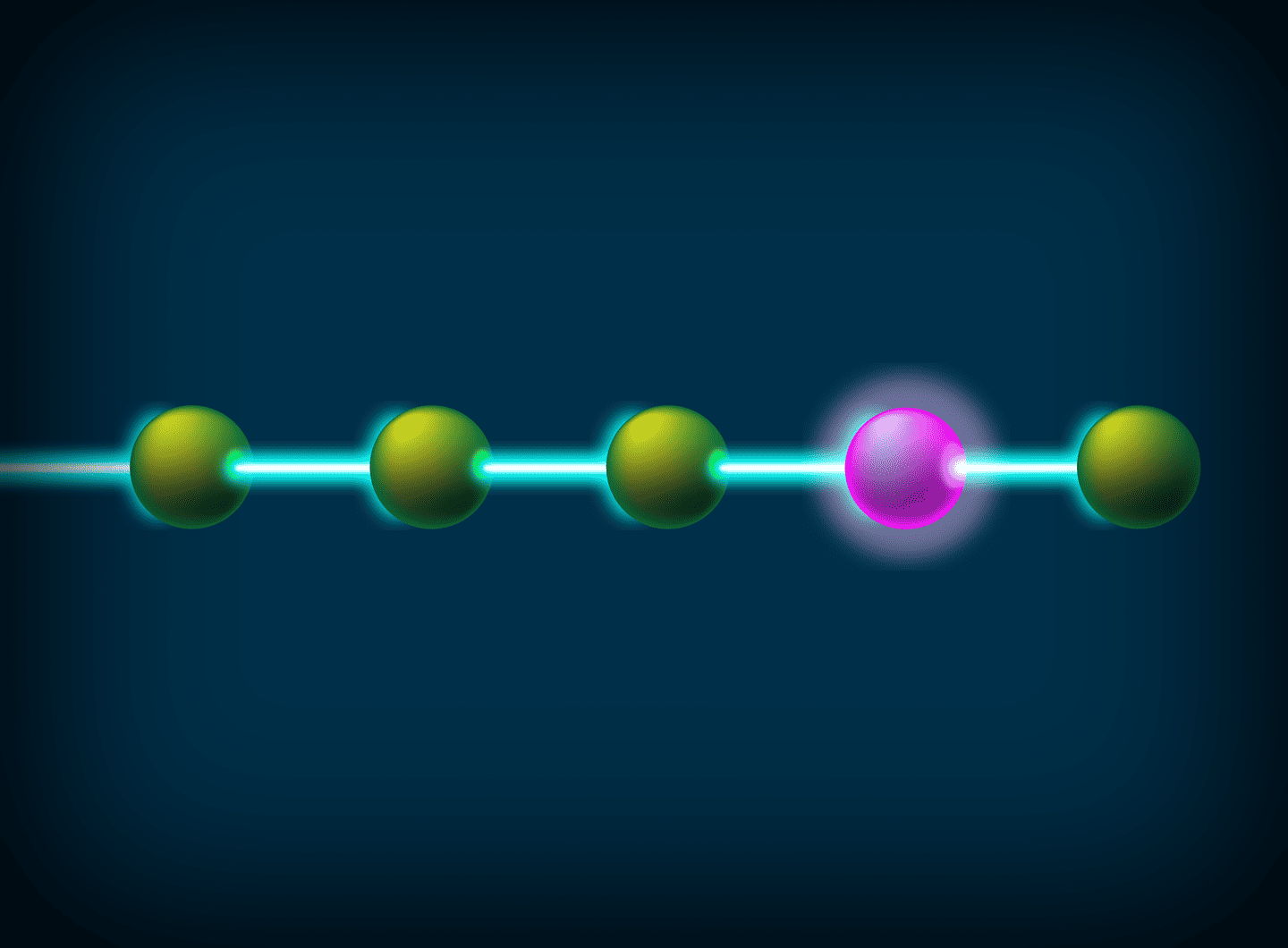
An artist's drawing of five spheres in a line. The spheres represent atoms; four of the atoms are yellow, while one of them glows pink

While Lukin’s team optimized their experiment to meet the fidelity threshold for applying error correction schemes, Thompson and Puri, together with colleagues at the University of Strasbourg, France, found a way to convert certain kinds of errors to erasures, removing them from the system altogether. This makes these errors much easier to correct, lowering the threshold for error-correction schemes to work.

Thompson and Puri’s setup is similar to that of the Harvard-MIT team, with individual ultracold atoms held in optical tweezers. The main difference is that they used ytterbium atoms instead of rubidium. Ytterbium has a more complicated energy-level structure than rubidium, which makes it more difficult to work with but also provides more options for encoding quantum states. In this case, the researchers encoded the “zero” and “one” of their qubits in two metastable states, rather than the traditional lowest two energy levels. Although these metastable states have shorter lifetimes, many of the possible error mechanisms would bump the atoms out of these states and into the ground state, where they can be detected.

Being able to delete errors is a big boon. Classically, if more than half the bits in a repetition code have errors, the wrong information will be transmitted. “But with the erasure model, it’s much more powerful because now I know which bits have had an error, so I can exclude them from the majority vote,” Thompson explains. “So all I need is for there to be one good bit left.”

Thanks to their erasure conversion technique, Thompson and colleagues were able to detect about a third of the errors in real time. Though their two-qubit gate fidelity of 98% is less than that of the Harvard-MIT team’s machine, Thompson notes that they used almost 10 000 times less laser power to drive their gate, and increasing the power will boost the performance while also allowing a larger fraction of errors to be detected. The error erasure technique also lowers the threshold for error correction to below 99%; in a scenario where almost all errors are converted to erasures, which Thompson says should be possible, the threshold could be as low as 90%.

Multiplexing error erasure

In a related result, researchers at the California Institute of Technology, US (Caltech) also converted errors to erasures. Their strontium-based neutral atom machine is a more restricted kind of quantum computer known as a quantum simulator: while they can excite atoms up to the Rydberg state and create entangled superpositions between the ground and Rydberg states, their system has only one ground state, which means they cannot store quantum information long-term.

However, they created these entangled superpositions with unprecedented fidelity: 99.9%. They also made a huge superposition consisting of not just two atoms, but 26, and improved the fidelity of doing so by erasing some of the errors. “We basically show that you could meaningfully bring this technique into the realm of the many-body,” says Adam Shaw, a PhD student in Manuel Endres’ group at Caltech.

Together, the three advances show off the capabilities of neutral-atom quantum computers, and the researchers say their ideas can be combined into a machine that works even better than the ones demonstrated thus far. “The fact that all these works came out together, it’s a little bit of a sign that something special is about to come,” Lukin concludes.

The automation era: enhancing speed and precision in radiotherapy

Radformation

The prime motivation for any radiotherapy clinic is to provide the best possible care to each individual patient, while also ensuring that this highly effective cancer treatment can be offered to anyone who needs it. Those guiding principles have underpinned the development of an expanding suite of automation solutions from Radformation, which have been designed not only to streamline the clinical workflow but also to help healthcare professionals to make better informed treatment decisions.

“Since implementing Radformation’s tools into our treatment planning process we have reduced the time from a patient’s initial consultation to their first treatment from around eight days to an average of five days,” says Ryan Pennell, Chief Physicist at Weill Cornell, an academic medical centre in New York, US. “The quality of the plans we produce has also improved, avoiding the need for work to be repeated or for treatments to be delayed because something wasn’t quite right with the plan.”

Radformation offers several different automation solutions to aid the treatment planning process. First to market was ClearCheck, which interrogates the data in the treatment planning system to provide a fast and reliable verification tool. “Without ClearCheck we would need to review the dose constraints for each organ-at-risk (OAR) on an individual basis, which can take a long time for treatment sites like the lung or the head and neck,” explains Pennell. “Now the software checks all the constraints for all the OARs in just a few seconds, and red flags anything that might be problematic.”

ClearCheck is used across NYP/Cornell’s clinical team, with dosimetrists using it to verify the quality of their treatment plans, physicians reviewing the plan against their clinical goals, and physicists then making a secondary check and ensuring there will be no technical issues when it comes to delivering the plan. What sets ClearCheck apart from other automated approaches, says Pennell, is its seamless integration with the treatment planning system deployed at NYP/Cornell, in this case Varian’s Eclipse. Indeed, the software is compatible with most of the main treatment planning systems, and it also provides support for almost all treatment modalities.

“ClearCheck operates within our main working environment, which makes it easy to use and avoids the need to import and export data from a separate software platform,” explains Pennell. “That data transfer might only take a few minutes each time, but it really adds up when the information we want is needed multiple times for each patient. The integration of ClearCheck has really allowed us to improve our efficiency and our workflow.”

At Kantonsspital Aarau (KSA) in Switzerland, meanwhile, Mauricio Leick and a team of medical physicists and dosimetrists have been using ClearCheck for around three years. Leick’s main objective was to streamline and standardize the daily peer review of treatment plans produced by the KSA team. “We might have 10 doctors in these review meetings discussing around 10 cases, and each doctor would come with their own requirements for the constraints and dose limits,” he says. “There was no clear, objective or standard way to analyse the plans, but now we have an agreed set of treatment planning constraints that the software checks against.”

For Leick, one key benefit is the ability to organize all the relevant data into a single display, allowing the physicians to focus on specific issues where the plan does not meet the pre-defined criteria. “The doctors have detailed clinical protocols for treating different types of cancer, and the information we provide in the checking tables has been matched to each of those protocols,” he explains. “Every time we present a plan the doctors can clearly see all the constraints and the OARs, and see which limits are passing and which are not. It’s a much a better solution.”

Over the last few years Pennell has introduced other automated tools into Weill Cornell’s treatment planning workflow, including EZFluence for field-in-field planning and AutoContour for generating contours using deep-learning techniques. After some initial validation studies with the hospital’s physicians, this AI-powered software is now routinely used by the dosimetrists to contour the OARs from the patient’s initial CT scan. Critically, however, AutoContour makes it easy for the dosimetrist to quickly review each contour, make any necessary adjustments, and approve the final output.

“At that point the physician will check all the contours before approving the plan, and then as part of our checks in physics we also ensure that all the contours are correct and appropriate,” explains Pennell. “That means that the contours produced by the algorithm are checked at least three times, plus we have chart rounds once a week where all the finalized plans and contours are presented to the entire clinical team.”

Radformation

The combination of these three automation solutions has enabled Weill Cornell to cut the time needed for treatment planning by almost 60%, while Pennell points out that the quality of the plans has also improved. “Before we implemented these tools, almost 15% of our plans needed to be redone because someone had spotted a problem,” he says. “We have now reduced that to around 5%, which equates to 10 or 20 plans per month that we no longer need to redo.”

Outside of the treatment planning process, that combined focus on quality and efficiency is also apparent in ChartCheck, which enables clinical teams to automatically monitor and document their ongoing treatments. Pennell says that it could take at least at the two hours per day to collate the data for his weekly checks, but the automated solution reduces that time to just 15 minutes while also providing more rigorous verification. “It is checking things that we didn’t look at before,” says Pennell. “Sometimes when you improve efficiency you have to sacrifice something else, but in this case we have also achieved a dramatic improvement in the quality of our weekly chart checks.”

Pennell also uses QuickCode to automate the notoriously tedious billing process, and is currently evaluating RadMachine – the company’s first product dedicated to machine quality assurance (QA). At KSA, meanwhile, Leick will shortly be introducing EZFluence to automate the planning of the field-in-field technique for treating breast cancer. “All of these tools save time,” he says. “The people at Radformation have previous experience as clinical physicists, which means that they understand the weak points in the workflow and where their tools can make a difference.”

Both Pennell and Leick have been impressed with the robustness and reliability of the software, and how easy it has been to use and install. “There is no need for any specialized training because the software is very intuitive to use,” says Leick. “The software can be installed directly from a download link, so you don’t need to be an IT expert to integrate it into the treatment planning system.”

Installing new software is slightly more challenging for Pennell, since Weill Cornell operates strict security protocols across its IT infrastructure. “Many of our suppliers find it difficult to comply with the security requirements, but Radformation has been able to implement their software within our security systems,” he says. “Out of all the vendors I’ve ever worked with, the support and service they provide is without doubt the best.”

Leick has also been impressed with the ongoing support provided by the company, as well as its focus on continuous improvement. “When we first started using ClearCheck we were able to talk directly to a physicist at Radformation,” he says. “They are always quick to respond to any feedback, and they send out regular upgrades to fix any problems and enhance the software.”

For Pennell, who has been working with Radformation and its automation tools for many years, each new addition to its product line brings extra benefits to the clinical workflow. “These tools have freed up my time and maximized my team’s efficiency, particularly as our treatment plans have become more complex,” he says. “I have been thoroughly impressed with all their products, and how the company has evolved to provide reliable and effective solutions from the initial patient consult through to physics QA and billing.”

  • Readers can learn more about automation in Radformation’s upcoming webinar:

AI-Driven Solutions for Smart Departments: Automation from Start to Finish

14:00 CET, Wednesday 22 November 2023

Dr Robert Kaderka, a medical physicist at the University of Miami, US, will share his experiences with using automated solutions in a clinical setting. Ana Rato, Radformation’s Clinical Success Manager – EMEA, will join the Q&A session to share her expertise in implementing Radformation solutions across different treatment machines.

Register now

Please note that Radformation’s products are not available in all markets.

Energy-efficient transistor enables AI analysis of health data within wearable devices

A new type of transistor could transform personal health monitoring by enabling artificial intelligence (AI) to analyse data inside wearable devices – without relying on cloud computing for help.

The “mixed-kernel heterojunction” (MKH) transistors were developed by researchers at Northwestern University, along with colleagues from the University of Southern California (USC). Unlike conventional transistors, they are not silicon based. Instead, their p-type material is semiconducting carbon nanotubes, while the n-type material comprises a monolayer of chemical vapour deposition-grown molybdenum disulphide.

The researchers used their MKH transistors to create a nanoelectronic AI system that can implement personalized machine learning (ML) algorithms, known as kernels. They showed that the device can classify large datasets – for example, identifying different types of arrhythmia (irregular heartbeats) in electrocardiograms (ECGs) – with high accuracy.

Categorizing data in this way using conventional electronics would require at least 100 silicon-based transistors. By contrast, just two of Northwestern’s MKH transistors are needed. Not only does this dramatically reduce the hardware footprint, it also requires far less power, enabling the system to be incorporated into consumer electronics such as smart watches.

“Our devices are 100-fold more energy efficient than conventional silicon electronics for ML classification such as detecting arrhythmia in electrocardiogram data. Because our devices are so efficient, they can be implemented directly with the sensors in wearable electronics, thus allowing ML classification to occur directly on wearable devices,” says Mark Hersam, from Northwestern’s McCormick School of Engineering, who co-led the project along with Han Wang from USC and Vinod Sangwan at Northwestern.

Fitting this MKH transistor-based electronics into smart watches and fitness trackers would also eliminate the need for remote processing of such data in power-hungry cloud data centres.

“AI and ML algorithms are energy-inefficient when implemented using conventional silicon electronics,” Hersam tells Physics World. “This energy inefficiency gets worse as the amount of data increases, which implies that AI/ML is on an unsustainable path towards consuming a significant fraction of the grid’s energy. We are hoping to solve this problem by developing new electronic devices that can more efficiently implement AI/ML.”

In a study reported in Nature Electronics, the researchers showed that their device could identify with 95% accuracy six different types of heartbeat – normal rhythm and five arrhythmias including atrial premature beat and premature ventricular contraction – from a dataset of 10,000 ECG tests.

Such precise results were achieved because the new transistors can “faithfully mimic mixed-kernel support vector machines for enhanced ML classification accuracy,” Hersam explains. Mixed-kernel support vector machines are a type of AI that can classify complicated, multi-dimensional datasets such as biological data with many different features. This makes it ideal for analysing ECGs and other personal health data.

In addition, the ability to reconfigure these MKH transistors by strongly modulating the current flow through them enables the AI accuracy to be optimized for each specific patient. This opens the way for real-time personalized results that could improve health outcomes by enabling earlier medical intervention when problems arise. Users would also benefit from enhanced security for their sensitive health information because there is no need to pass their data to and from the cloud for analysis.

The team now aims to develop mass production methods and expand the range of potential uses for their transistors.

“Our MKH transistors have been demonstrated at the lab scale. Large-scale deployment in wearable devices will require the development of scalable manufacturing methods, which could occur in a few years with suitable investment. In the future, we will be working on scalable manufacturing of our MKH transistors. In addition, we will be generalizing our MKH transistors for other AI/ML applications,” says Hersam.

Wearable optical device could detect postpartum haemorrhage

A new wearable imaging device that monitors changes in blood flow in a patient’s hands, feet or arms could be used as an early warning system for postpartum haemorrhage – a relatively common complication of childbirth that accounts for over 30% of maternal deaths each year. The laser-based sensor, which has been successfully tested in simulated tissues and in pigs, is now being trialled in healthy human volunteers.

Postpartum haemorrhage is the leading cause of maternal mortality worldwide, and it is currently diagnosed either by simple observation or by monitoring standard vital signs such as heart rate and blood pressure. These techniques often underestimate the severity of blood loss because the body responds to haemorrhage by redirecting blood flow to vital organs and restricting it in peripheral areas such as hands, feet and arms. The result – vasoconstriction in peripheral areas, coupled with normal or near-normal blood flow in the body’s core – means that vital signs can remain unchanged until a lot of blood has been lost. Being able to detect peripheral vasoconstriction in real time would therefore alert clinicians to blood loss earlier, enabling them to begin potentially life-saving treatments.

Measuring blood flow

The new device, developed by Christine O’Brien and colleagues at Washington University in St Louis, US, uses a technique called laser speckle contrast imaging to measure blood flow. Laser light from the wrist-worn device shines into tissue and is then scattered back to a camera, or detector. The result is a characteristic laser speckle pattern that forms when the light interacts with blood cells passing through the patient’s circulatory system.

“The pattern produced changes over time and the rate at which it changes is directly related to blood flow,” explains Francesca Bonetta-Misteli, the lead author of a study in Biomedical Optics Express describing the new device. “We can capture these changes on video and then apply an algorithm that generates a single value per frame of video that directly correlates with blood flow.”

The researchers initially tested their device by placing it on a tissue-mimicking platform with a hollow channel containing a milk-like liquid. When they modified the flow rate of this blood-simulating liquid, they observed a nearly perfect linear response to changes in flow. Importantly, they found that the signal measured from the device, known as the laser speckle flow index (LSFI), was more strongly correlated with the amount of blood loss than standard vital signs such as blood oxygenation levels. Further tests in live, sedated pigs undergoing blood loss produced similarly promising data.

“This result indicates that the device can accurately monitor changes in perfusion in the wrist occurring as a result of blood loss in vivo,” O’Brien tells Physics World. “What is more, the device out-performed the vital sign metrics that are the current standard for haemorrhage detection postpartum.”

“Immense clinical applications”

The work is the first step in the development and proof-of-concept testing of the initial device prototype, she adds. “The technology has immense clinical applications as a blood flow monitor in any setting (hospital, birthing centre or rural setting). Labouring patients can wear the device during delivery and postpartum to continuously measure changes in blood flow and detect both internal and external bleeds.”

Beyond haemorrhage, the technology could also be used to monitor the effect of medication on haemodynamics or to study cardiovascular health, she adds.

The Washington University team is now working to improve the design of the device (making it smaller, for example) and to develop methods for calibrating the LSFI, which would make readings more comparable between different test subjects. The researchers would also like to increase the device’s battery life and add other sensors that would give a more comprehensive picture of a patient’s condition.

“We plan to perform the same measurements with nonpregnant and pregnant patients too to study the known haemodynamic changes that occur during pregnancy,” says O’Brien. “We also want to monitor peripheral blood flow in patients who are delivering both vaginally and by caesarean to confirm that the device is able to detect postpartum haemorrhage in both cases in humans.”

Copyright © 2026 by IOP Publishing Ltd and individual contributors