Electrons accelerated by firing lasers into nanophotonic cavities

Laser-driven particle accelerators on silicon chips have been created by two independent research groups. With further improvements, such dielectric laser accelerators could be used in medicine and industry – and could even find application in high-energy particle physics experiments.

Accelerating electrons to high energies is normally done over long distances at large and expensive facilities. The electron accelerator at the heart of the European X-ray Free Electron Laser in Germany, for example, is 3.4 km long and the Stanford Linear Accelerator (SLAC) in California was 3.2 km long.

As a result, the use of electron accelerators for practical applications in medicine and industry is severely restricted. Size and cost are also factors in accelerator-based particle physics, where facilities are getting bigger and more expensive as they reach for higher collision energies.

Surfers on a wave

In a conventional accelerators, microwave oscillations of electric fields in metallic cavities accelerate electrons like surfers on a travelling wave. The maximum acceleration gradient is typically a few dozen megavolts per metre, and is defined by the maximum electric field that can exist between metallic components in a cavity.

“Nobody knows exactly what’s happening at the [metallic] surface and this is still an active field of research…but when the fields get too large something like tiny little pyramids grow on the surface, and then electrons spray out and the field just breaks down,” says Peter Hommelhoff of Friedrich-Alexander University Erlangen-Nürnberg in Germany.

The cost and technological challenges of conventional accelerators mean that researchers are keen on developing alternative acceleration methods. In this latest research, the oscillating electric fields are created by firing laser pulses into tiny optical cavities made from silicon nanostructures.

Hommelhoff says it took almost thirty years before physicists realized that electron acceleration could also be achieved using nanophotonic cavities driven by optical-frequency light. Using optical light helps scale down the device because the wavelength of the radiation is much shorter than that of microwaves.

No metal required

Hommelhoff points out another important benefit of this approach: “When you drive these frequencies with laser light, you don’t need metal structures”. He adds, “It suffices if you just use regular glass…and you can generate the same mode that you can generate with microwave cavities and microwave fields”.

As the cavity is an insulator, high concentrations of charge do not appear at points on the surface. As a result, the only limit to the acceleration gradient is the electrical breakdown field of the material.

In principle, this allows for the nanophotonic integration of a particle accelerator, producing bunches of electrons in a tiny, precisely-focused beamline. However, there are practical challenges. The electrons in each bunch repel each other and holding a bunch together requires focusing by external forces. Moreover, compression of a bunch in one direction causes it to spread in other directions.

Repulsion problem

In previous work, researchers including Hommelhoff and Olav Solgaard of Stanford University in California have demonstrated that this repulsion problem could be mitigated using alternating phase focusing. In this technique, electrons are alternately confined in one direction and then the other, producing an oscillating field distribution.

Now, new work on these accelerators has been done by two independent research groups. One was led by Hommelhoff at Friedrich-Alexander University. The other group was a collaboration between Stanford scientists led by Solgaard and researchers at TU Darmstadt in Germany led by Uwe Niedermayer. Both teams created nanophotonic dielectric laser accelerators that boosted the energy of electron bunches without the bunches breaking up. Solgaard and Niedermeyer’s team fabricated two accelerators – one designed at Stanford and one at TU Darmstadt. One accelerator boosted the energy of 96 keV electrons by 25% over a distance of just 708 μm. This is about ten times the thickness of a human hair.

“I think that I have put more force on an electron than anybody else ever,” says Solgaard.

The Hommelhoff group’s device worked at lower energies, accelerating electrons from 28.4 keV to 40.7 keV over 500 μm. This presented its own challenges, as Hommelhoff explains. “When you want to accelerate electrons that are non-relativistic – in our case they only travel with one third of the speed of light – it’s not so easy and it’s less efficient to generate the optical mode that co-propagates with the electrons.”

Higher breakdown fields

The researchers are now looking to achieve even higher field gradients by fabricating devices in materials with higher breakdown fields than silicon. They believe that in the near term their acceleration schemes could find applications in medical imaging and in searches for dark matter.

Solgaard says he “might be in a very small minority thinking this is going to play a role in high-energy physics,” but that the technology should be usable in materials such as quartz, whose breakdown field is almost 1000 times that of a traditional accelerator. “Our millimetre becomes a metre,” he says; “by the time we get to a metre we should match SLAC in energy…Think about having an accelerator sitting in my office that matches SLAC.”

“I think these [two teams] have demonstrated an important new step towards a real accelerator on a chip,” says accelerator scientist Carsten Welsch of the University of Liverpool in the UK. However, he cautions that much remains to be done in terms of beam control and miniature diagnostics. In terms of applications, he says:  “I share their optimism for catheter-like medical applications, bringing electrons to where they are needed, and in particular for mini-light sources where personally I see the biggest potential. The combination of a high quality electron beam and light could really open completely new research opportunities and applications.”

However, Welsch remains unconvinced about applications such as particle colliders, pointing to the required high luminosity and high beam quality needed in such machines. “The next Large Hadron Collider will not be a dielectric laser accelerator,” he concludes.

Hommelhoff and colleagues describe their work in Nature. Solgaard, Niedermeyer and colleagues describe their work on arXiv.

Proton therapy on an upward trajectory while FLASH treatment schemes get ready to shine

While proton therapy has well and truly arrived as a mainstream treatment option in radiation oncology – there are currently 42 operational proton facilities in the US and a further 13 centres under construction – it’s evident that the clinical innovation is only just getting started when it comes to at-scale deployment of protons for the treatment of cancer. That’s one of the key take-aways to emerge from a dedicated conference session – Innovative Radiation Therapy Approaches: Benefits, Challenges, Global Perspective – at the ASTRO Annual Meeting in San Diego, CA, earlier this month.

In terms of precision targeting, the case for proton therapy versus conventional radiotherapy is clear enough. Think similar tumour-killing properties as photons, but with markedly decreased dose to normal tissue. All of which helps the radiation oncology team treat tumours close to organs-at-risk (OARs), with the potential for decreased side-effects and complications along the way.

“Protons release all their energy at a point and then they stop,” explained James Metz, chair of radiation oncology at the University of Pennsylvania (UPenn) and executive director of the OncoLink cancer education service. That means no radiation dose beyond the target as well as far less dose deposited in front of the target compared with photon and electron irradiation.

James Metz

As such, clinicians are able to target the tumour layer-by-layer with pencil-beam-scanned proton delivery. “We take a tumour, divide it up voxel-by-voxel into 5 mm3 volumes and take this pencil beam and treat [complex structures] spot-by-spot with absolutely no exit dose,” Metz noted. “Protons give us the opportunity to reduce dose to normal structures, to combine with chemotherapy and immunotherapy, and to increase [radiation] doses going forwards.”

Notwithstanding the ongoing roll-out of proton therapy systems across the developed world – clinical uptake is similar for the US, Europe and Asia, although currently there’s only one proton treatment centre in sub-Saharan Africa – it’s apparent that “gold-standard” evidence for the clinical efficacy of protons is still a work-in-progress. “We need to systematically evaluate the clinical potential and define it through rigorous science – quantifying the benefits versus investment,” argued Metz. “After all, substantial resource and infrastructure are needed to support a proton therapy centre.”

The evidence is coming – and sooner than later. A number of randomized phase III clinical trials are accruing data or have recently closed for diverse cancer indications (including lung, oesophageal, liver, head-and-neck and brain). Meanwhile, pragmatic trials are also accruing well and evaluating proton treatments in routine clinical practice for patients with breast cancer and prostate cancer.

FLASH the disruptor

Metz, for his part, is one of the clinical pioneers of proton therapy, having led the development programme for the Roberts Proton Therapy Center in Philadelphia – a facility that has treated thousands of cancer patients using protons since it opened its doors in 2010. Clinical innovation being what it is, however, attention is already turning to what’s being touted as the “next big thing” in particle therapy: FLASH proton therapy.

For context, FLASH is an experimental treatment modality that involves ultrahigh-dose rate delivery (above 60–80 Gy/s) of ionizing radiation (electron, photon or proton) over very short durations (less than 1 s). Preclinical studies have shown that FLASH radiotherapy is less toxic to normal tissues and as effective as conventional radiotherapy at destroying tumours. If broadly validated, FLASH treatment schemes therefore have the potential to revolutionize radiotherapy – such that higher doses could be delivered safely to tumours or established doses be given with reduced toxicity to OARs.

In short, FLASH proton therapy is shaping up as a future disruptor in radiation oncology, argued Metz, “bringing together biology and technology in new ways…and turning radiobiology on its head a bit”. The upsides are already coming into view.  For starters, FLASH proton therapy could significantly compress radiation treatment times, such that radiotherapy becomes more like a surgical procedure.

That’s good news for the patient along several coordinates – opening a path to improved quality-of-life, reduced toxicity and side-effects, as well as much less time spent in the clinic. At a more fundamental level, FLASH irradiation can also trigger different immune pathways and gene expression, creating novel opportunities for drug and radiation combinations.

Yet while FLASH has the potential to upend treatment paradigms and many current assumptions about radiation delivery, Metz concluded on a cautionary note: “I would say FLASH proton therapy is not yet ready for prime-time…[and] not ready to be deployed further than a few highly resourced centres that can complete the appropriate research and clinical trials.”

Clinical innovation: it’s all about outcomes

Alongside the clinical opportunities afforded by proton therapy, the ASTRO session on Innovative Radiation Therapy Approaches covered plenty of other bases. Tamer Refaat, professor of radiation oncology at Loyola University in Chicago, Illinois, kicked off with a status report on MR-guided radiotherapy (MRgRT).

“The big deal [with MRgRT] is real-time adaptation,” Refaat told delegates. In other words, personalized, daily-adapted radiotherapy that’s based on real-time and on-table patient anatomy, allowing the clinical team to maximize dose to the target volume and minimize dose to OARs.

As for MRgRT innovations to watch, Refaat highlighted the commercial and clinical roll-out of cine-gating functionality to enhance the treatment of upper abdominal tumours on a single phase of breathing. “The radiation beam turns on whenever the target is within the tracking boundary and turns off when outside,” he explained (adding that the downside is longer time on the treatment table for the patient).

Tamer Refaat

Incorporation of functional MRgRT into the MR-Linac workflow also came under the spotlight, with Refaat citing researchers at MD Anderson Cancer Center (Houston, Texas) among the early-adopters seeking to identify radioresistant tumour subvolumes and escalate dose to those subvolumes accordingly.

Another hot topic centred on the combined-modality synergies of integrating immunotherapy and radiotherapy cancer treatments. The speaker, Silvia Formenti, a radiation oncologist at Weill Cornell Medicine in New York, is one of the main-movers behind a paradigm shift in radiobiology, her efforts elucidating the role of ionizing radiation on the immune system while demonstrating the efficacy of combined radiotherapy–immunotherapy regimes in solid tumours.

Formenti highlighted the pivotal role played in this regard by the ImmunoRad Radiation Oncology-Biology Integration Network (ROBIN). A multidisciplinary R&D collaboration between US and European cancer centres, ROBIN is seeking to better understand the interaction of radiation therapy and the immune response – as well as nurturing the talent pipeline of early-career scientists into the field. Right now, noted Formenti, the bigger picture is clouded by “financial toxicity”, with the cost of immunotherapy proving prohibitive for most low- and middle-income nations – as well as many Americans.

The focus on collaborative clinical research was echoed by Stephen Harrow, a consultant clinical oncologist at the Edinburgh Cancer Centre in Scotland. In the final talk of the session, he discussed the application of stereotactic body radiotherapy (SBRT) for oligometastatic disease.

Post-pandemic, Harrow highlighted how the Scottish Oligomet SABR Network (SOSN), aided by £1 million of Scottish government funding, has enabled Scotland’s five cancer centres to offer a joined-up SBRT treatment service to patients across the country (not just the highly populated central belt encompassing Glasgow and Edinburgh).

The goal of SOSN, he explained, is to “build a network of physicians, physicists and radiographers so that we’re all agreed on patient selection [criteria for SBRT] and we have equity for patients across the country”. What’s more, he added, “the evidence is definitely building that you can influence patient outcomes with SBRT for oligomet disease.”

Multi-eye-component imaging could help diagnose ocular disease

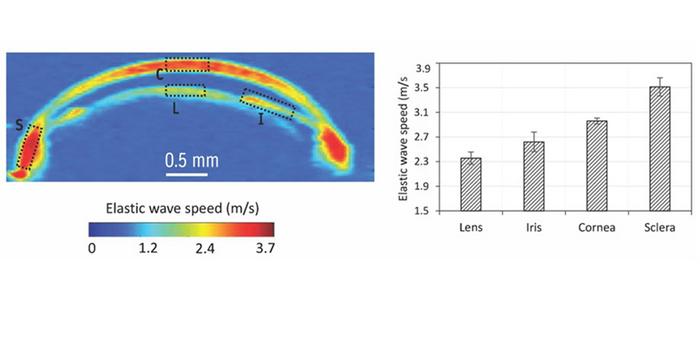
a technique called reverberant optical coherence elastography (RevOCE) measures the elasticity or stiffness of eye structures with high resolution

A new technique evaluates the biomechanical properties of the eye with much better elastic resolution than current methods, raising hopes for more effective diagnostics and therapies. The new approach, put forward by researchers from the University of Houston in Texas in the US, goes by the name of multifocal acoustic radiation force reverberant optical coherence elastography, and might also improve our understanding of how different eye components function.

Eyes are extremely complex organs made up of several types of specialized tissue that help maintain intraocular pressure and thus allow us to see clearly. This normal biomechanical function is disrupted, however, in diseases such as keratoconus and glaucoma. Understanding how these changes happen is vital for diagnosing and treating ocular pathologies, but for that to be possible, clinicians need to be able to assess biomechanical properties such as stiffness. Current methods of doing this have important limitations. Magnetic resonance imaging (MRI), for example, is costly and requires patients to remain still for long periods. This includes not moving their eyes, since even small movements can lead to errors in measurements.

Creating 2D or 3D elasticity maps

In the new study, researchers led by biomedical engineer Kirill Larin employed a technique called reverberant optical coherence elastography (RevOCE) to measure the elasticity or stiffness of eye structures with high resolution. RevOCE involves using a low-power light source to scan a specific volume of the eyeball and then detecting the complex interference patterns produced by vibrating mechanical waves that subsequently propagate through the eye tissue. These patterns are then used to create 2D or 3D elasticity maps of the region studied.

The drawback is that the complex interference patterns of mechanical waves are difficult to generate, and the usual methods of doing so require the source of the waves – a mechanical shaker – to contact eye tissues directly. This can be very uncomfortable for the patient.

Larin and colleagues’ innovation was to generate reverberant shear waves with RevOCE in a much less invasive way, without compromising on resolution. Their new system comprises a multifocal acoustic radiation (ARF) system with an ultrasound generator coupled to an array of acoustic lenses. These lenses focus the ultrasound waves to produce three distinct ARF beams spaced a few millimetres apart. These beams are then sent through a target area within the eye, where they induce vibrating shear waves that can be detected by an optical coherence tomography device and post-processed to reconstruct a 3D elastography map of the entire eyeball.

Comprehending overall eye function

The researchers tested their technique on ex vivo mouse eyeballs and confirmed that it could produce shear wave speed maps within different structures of the eye, including the cornea, iris, lens, sclera and retina. They found that the speeds of the waves were different in eye components such as the apical region of the cornea and the pupil of the iris. That is perhaps not surprising, but they also found that the wave speeds differed within different regions of the same component, such as the apex and periphery of the cornea. This implies that apparently uniform structures in the eye have non-uniform biomechanical properties – something that may be important for their healthy function.

“Our technique provides valuable insights into how different components of the eye maintain their relative stiffness,” Larin says, “and the insights we have obtained will aid in developing a detailed understanding of how these components interact with each other.” Indeed, he adds that the information garnered during this work, which is detailed in the Journal of Biomedical Optics, could help researchers and clinicians analyse the biomechanical relationships within individual ocular components and among different component. This will be important for understanding overall eye function in healthy eyes, as well as for diagnosing and monitoring pathologies.

“Many eye diseases and conditions, such as glaucoma, affect multiple ocular components simultaneously,” he tells Physics World. “By assessing the biomechanical properties of the whole eyeball, as in our approach, it becomes possible to detect these diseases in their early stages, even before symptoms manifest in specific components. Early detection can lead to more effective treatments and preservation of vision.”

What is more, monitoring how the biomechanical properties of the entire eyeball change over time is essential for tracking disease progression. “Some diseases may affect one component first before impacting others,” Larin says. “By evaluating the entire eyeball, clinicians can better assess disease evolution and make timely adjustments to treatment plans.”

The University of Houston team now plans to further refine and validate its modified RevOCE technique. This will involve conducting in vivo studies and exploring applications in monitoring disease progression and treatment outcomes in different animal models, and, eventually, in humans. “We are also interested in expanding its use to other areas of the body in addition to the eye – for example, for non-invasively evaluating the biomechanical properties of deep tissues,” Larin reveals.

Victoria Grinberg: the astrophysicist sharing her love for science

Describing herself as a “dentist for stars”, the X-ray astronomer Victoria Grinberg is interested in some of the most violent environments in the universe – the regions around black holes and neutron stars. Having  originally studied physics the Ludwig Maximilians University in Munich, Germany, Grinberg went on to do a PhD in astrophysics in Erlangen and a postdoc at the Massachusetts Institute of Technology in the US. In 2017 she joined the European Space Agency (ESA), working at its European Space Research and Technology Centre (ESTEC) in Noordwijk, Netherlands.

After a brief spell back in Germany at the University of Tübingen, Grinberg returned to ESTEC in 2021, where she now works as ESA’s first “liaison scientist”, based in ESTEC’s science directorate on the Dutch space campus in Noordwijk. The directorate also has staff in Madrid, Spain, and a smaller group of in Baltimore in the US, working on the James Webb Space Telescope (JWST) and the Hubble Space Telescope.

What does your job as liaison scientist involve?

The title “liaison scientist” always confuses people. Obviously, the “scientist” part simply says “I’m doing science”. The “liaison” part means I’m the link between ESA’s science directorate and the scientific community. My job is to show astronomers what ESA can do for them, whether it’s using data produced by our telescopes, using our archives or proposing science missions to ESA.

But I’m also there to channel information in the other direction. What does the community need from ESA? In what format do they need their data? And what kind of future missions do they want? I’m the first person to hold this job – it didn’t exist before I started. But when I saw it advertised, I thought “Wow, this is exactly what I want to be doing.” I love doing science, but I also love to enable other people to do science.

So you still have plenty of time for fundamental research?

Yes, it’s very much part of my job because I need to be connected to the community. If I want to understand what researchers want, I need to be an active scientist myself. Although we don’t have PhD students at ESA because we’re not a university or a PhD-granting institution, I still have one PhD student back at in Tübingen. Otherwise, I mostly collaborate with people outside ESA.

You’re also a spokesperson for the US and EU-based X-Wind collaboration. What are its aims?

X-ray astronomers often look at X-ray binaries, which consist of a black hole or a neutron star that is gravitationally bound to a normal star. Material from that star is accreted onto the black hole or neutron star, producing X-rays. The companion star is quite often a massive star with very strong stellar winds, and X-ray astronomers looking at these winds tend to think: “Oh my god, it’s so complicated: there’s all this additional absorption, it’s super annoying.”

An artist's impression of the X-ray binary system IGR J17252-3616, which consists of a neutron star and a blue supergiant star

But at the same time, the winds are a really cool way to learn more about the stars if you are interested in stellar physics. I sometimes compare myself to a “dentist for stars”. When a dentist puts an X-ray machine in your mouth and looks at your teeth, that’s kind of what we’re doing with the stellar winds. We use the X-ray source – the black hole or neutron star – to learn more about the structure of the stellar wind.

The X-ray source is essentially a kind of backlight and we need the stellar wind to pass in front of the X-ray source to really study its structure. So the idea behind the X-Wind collaboration is to bring together X-ray astronomers and people working on stellar winds, who are two very distinct scientific communities. It’s not a big collaboration, like LIGO, but just a loose group of people who want to break boundaries between different parts of astrophysics.

What specific research projects have you got on the go?

I’ve been working with one colleague who does simulations of stellar winds, to develop a way to use the variability of the X-rays from a system to learn more about stellar winds. Imagine you have a lamp and lots of insects flying in front of the it, causing the light to flicker. It’s the same here – you have the stellar winds that are all clumpy, flying in front of the X-ray source.

By looking at the flickering, we can learn more about the stellar winds, how they’re structured, and how much mass the bigger star is losing. X-Wind is also thinking about future missions – such as the Japanese Aerospace Exploration Agency’s X-ray Imaging and Spectroscopy Mission (XRISM), which took off recently and will let us do even more exciting science.

You’re also a co-founder of Astronomers for Planet Earth. How did that begin and what are you trying to do?

I’ve always been interested in the environment and one day in 2019 found myself at a conference of the European Astronomical Society (EAS) in Lyon in the middle of a heat wave. It was over 40 °C, there was no air conditioning and everybody was complaining about the heat. It was really frustrating but then we started asking if maybe we were part of a problem, given we’d flown in from all over the world. A group of us got together but then we realized some folks in the US had already started something similar.

So we brought the Americans and the Europeans together to form Astronomers for Planet Earth. We’re trying to bring awareness of sustainability into astronomy, and to use astronomy to tell the world about the climate crisis. We’re a grassroots organization. There’s not one leader standing out in front: we’re a collection of astronomers at different stages of their careers as well as teachers and journalists – basically anybody connected to astronomy professionally.

You recently co-wrote a paper comparing the greenhouse-gas emissions of in-person and virtual conferences. What were the main conclusions?

The idea for the paper (Nature Astronomy 4 823) came to us during that conference in 2019 where we realized that if we wanted to tell people it’s not very sustainable, we needed numbers. So we got information for about one-sixth of the participants, asking them where they came from and how they had travelled there. We estimated that the CO2 equivalent for this conference was 1850 tonnes of CO2, which is about the same order of magnitude as the annual emissions from an astronomy research institute.

The virtual event had more than 1000 times less CO2 than the in-person event. It wasn’t surprising, but it’s good to have hard numbers

Originally, we were only going to present those findings but then COVID happened and the next EAS conference – in 2020 – was fully remote. Online conferences aren’t entirely carbon free. Every laptop connected to the Internet causes some emissions and then you have to take into account the Zoom servers. Overall, we reckoned the virtual event had about 580 kg of emissions, which is more than 1000 times less CO2 than an in-person event. It wasn’t surprising, but it’s good to have hard numbers.

In the paper, you suggest emissions from international conferences could be cut by running several regional events at the same time. How would that work?

There are some conferences where people just want to tell each other about the science they’ve done over the last couple of years. Remote conferences are fine for that. But for younger folks –PhD students or new postdocs – conferences are also about networking and forming collaborations. For them, it’s really important to meet in person. So I think concurrent regional conferences are a good balance. The idea would be to have have all the talks online so everyone can listen and ask questions. But you’d have an additional in-person component in local hubs, where people can socialize and discuss ideas during breaks.

Of course, some conferences that consist only of discussions don’t work remotely at all, but maybe we can use virtual reality (VR) for them at some point. Some solid-state physicists have already tried VR meetings and summer schools and been happy with the outcome, but astronomers have so far been hesitant to have a go, which we should.

What are most astronomy conferences currently like: is there any progress towards the goals you’ve mentioned?

Right now, a lot of conferences are back to how they were pre-pandemic – they’re mostly in person. There are some hybrid components to them, but we’re still struggling to find a good way to mix real and online. Part of the problem is that hybrid events aren’t cheap. You need recording devices, you need technicians and possibly professional camera people. Lots of conference centres don’t have the right hardware so they slip back to in-person events because it’s easier. As somebody interested in sustainability, I’m not too happy about that.

You also do a lot of science outreach, bringing astronomy to the wider public. What do you like most about that kind of activity?

My favourite thing is giving public talks in observatories or at events like Astronomy On Tap. It’s amazing to interact with an audience, to see people excited about astronomy and ask questions. I love seeing people’s eyes light up when you show them pictures of the sky and explain that those are X-ray photons that came from a black hole 6000 light-years away. But I also try to reach out to younger audiences. A colleague and I recently went to a summer school for high-school students in Germany where we talked about our research and what it’s like to be a scientist. That’s great as the audience could ask questions, which isn’t possible if they’re just watching a scientist on TV.

What aspects of astronomy do you find the public are most interested in?

People love black holes, exoplanets and everything related to the planets in our solar system. But what I find people are most interested in – even if they didn’t know it beforehand – is how astronomy is actually done. People often don’t realize that most big space telescopes – and many ground-based observatories for that matter – are international projects that can involve thousands of astronomers from all over the world working together. Once you start talking to people about the human side of astronomy, it really touches them.

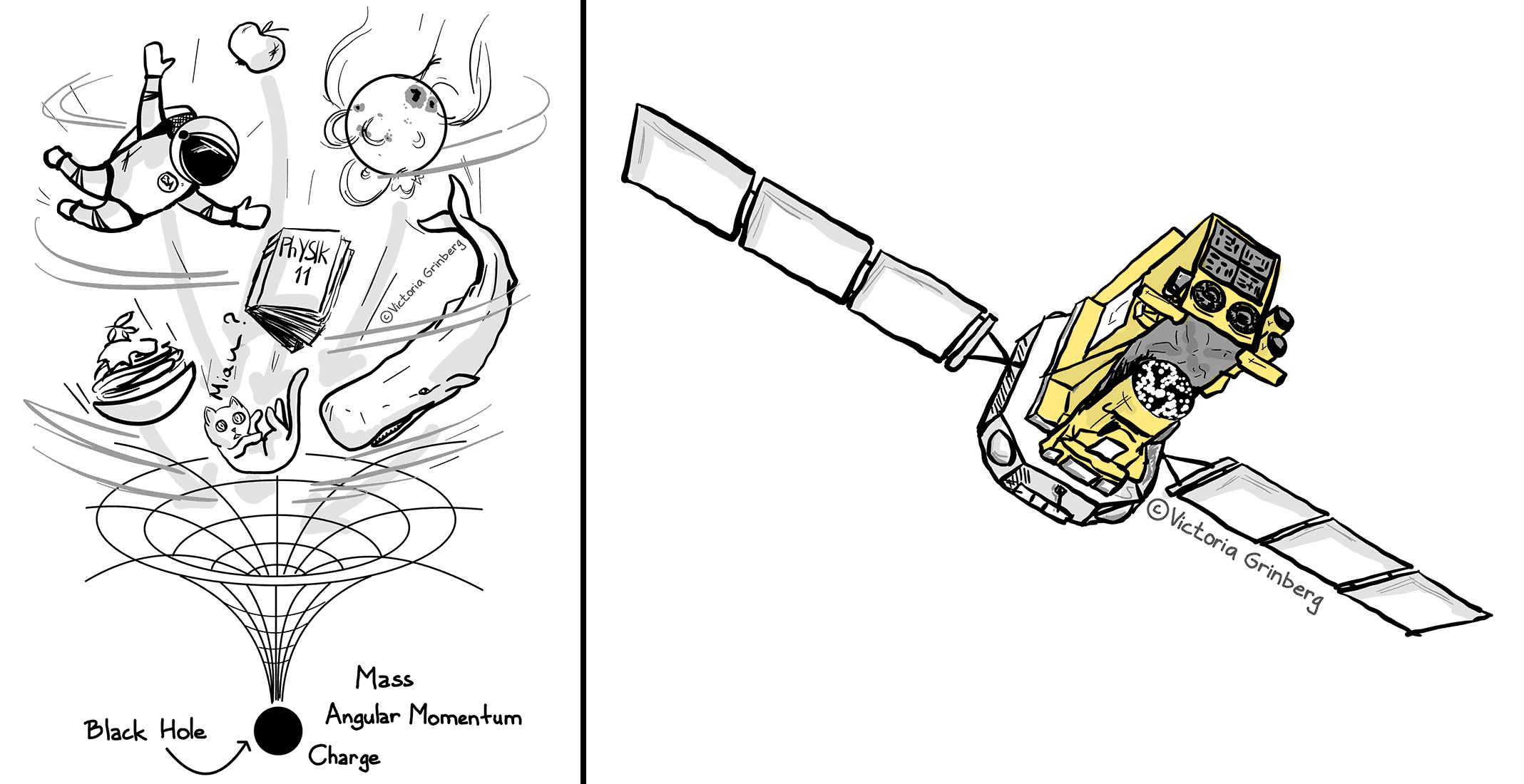
Pair of line drawings – an illustration of things being sucked into a black hole, and an illustration of ESA's INTEGRAL X-ray/gamma-ray space telescope

You also do scientific illustrations: how did that come about?

I loved art as a kid. I was really good at drawing and, in fact, went to art school when I was around 10 or 12. Then I discovered physics so stopped the art, though I always missed it. But when I tried to restart, I found I was terrible at it, which was frustrating. Then I got an iPad and realized I can do digital art on that. Now I mostly do cartoons to poke fun at academia or to communicate my science.

So what’s your take on the future of astronomy? What challenges and opportunities lie in store for astronomers?

One big challenge is the climate crisis. If things get worse, as they probably will, how can we still do astronomy? It’s both about justifying doing astronomy – given the challenges the world is facing – and also about the negative impact some current scientific practices have on the climate itself.  Another challenge is handling the flood of data from space missions and observatories, such as Euclid, the Large Synoptic Survey Telescope and the Square Kilometre Array. In astronomy, we’re moving away from individuals sitting at their laptops looking at single data sets and more towards big collaborations, where we need to use data science and artificial intelligence (AI) to really understand what’s going on. Sure, there’s a danger because AI and a lot of algorithms are sometimes black boxes. So we need to be sure that we really understand the tools that we are using.

When you’re doing science outreach, do you find people support astronomy or are they more concerned about the costs?

It’s hard to tell because people who come to outreach events have an innate interest in astronomy. But if, say, I’m on a train and people see my ESA sticker on my laptop and ask me what I do, they’re pretty supportive. Astronomy is definitely more in people’s minds than other parts of physics because everybody knows what the sky is, they can still see the Milky Way, and they’ve heard about the Hubble Space Telescope, and seen amazing images of space. People perhaps don’t always realize how complex astronomy is. But I do feel they’re aware it’s a fascinating subject and a way to learn about our place in the universe.

• To listen to an extended interview with Victoria Grinberg, listen to the 21 September 2023 edition of the Physics World Weekly podcast.

Could a different approach have saved the Superconducting Super Collider?

Thirty years ago this month, the US Congress voted to terminate the Superconducting Super Collider (SSC) after some $2bn had been spent on its design and construction. At the time, nearly a third of its 87 km tunnel had already been completed, but congressional opponents insisted the SSC be “spiked” so that it could not later arise Lazarus-like from the dead. The vertical shafts from tunnel to surface (see photo) were filled as much as possible with drilling spoils, and then it was allowed to fill with groundwater.

Now, 30 years later, the world high-energy physics community is hoping to construct a comparable collider, eventually able to achieve proton–proton collisions at energies well above 15 TeV. Detailed designs exist for such colliders at CERN and in China but the all-important political will and international accord needed to proceed are increasingly rare in a splintered, deglobalizing world.

If we learned one lesson from the failure of the SSC and the success of the Large Hadron Collider (LHC), it is that broad international collaboration is mandatory at the many-TeV scale of proton collision energies. These enormous, costly projects adopted very different approaches. In the SSC case, US physicists tried to seize the leadership baton in the hope that other nations would follow, building the supercollider at a new “green-field” site in Texas.

The LHC project was instead a genuinely international effort, led by European physicists and built at CERN, a world-renowned high-energy physics laboratory – attracting contributions from Canada, India, Japan, Russia and the US. But that process occurred in the post-Cold War era, when many Eastern Bloc nations were trying to democratize and join a globalizing world economy.

The tortoise and the hare

CERN’s conservative two-phase approach to the construction of the Large Electron Positron (LEP) collider and later the LHC proved crucial. Physics research began on LEP in 1989, while the more difficult tasks of designing and fabricating the LHC’s powerful, sophisticated superconducting magnets proceeded in parallel. Consequently, CERN was able to employ the advanced “two-in-one” superconducting magnet designs that had been dropped from consideration on the SSC as (then) too immature and risky a technology.

In hindsight, such a two-phase approach would have served SSC builders much better than the road taken – of simultaneously digging an enormous tunnel and developing magnets to fill it. There would have been plenty of physics research that could have been done on an electron–positron collider in the same tunnel.

In fact, experiments on such a collider might even have discovered the Higgs boson before the turn of the century and done years of follow-up research on its behaviour while the then-onerous superconducting magnet problems were addressed and resolved.

When the SSC was being designed in the 1980s, however, few theorists thought that it would occur at a mass of merely 125 GeV. Most figured it had to show up by 1 TeV. Hence the pressing need to collide proton beams with energies of 10–20 TeV, to be certain of discovering the particle – or whatever phenomenon was responsible for elementary particle masses.

It was only after the mid-1990s discovery of the top quark at Fermilab’s Tevatron, with a mass of 175 GeV, that theorists began to recognize that such a light Higgs boson was indeed possible, if not probable. According to former CERN director-general Chris Llewellyn Smith, who led the lab from 1994 to 1998, they even thought its mass could be near 100 GeV and might be discovered at LEP.

Thus it’s unfortunate that the SSC tunnel was spiked after 1993. Building a Higgs factory there today would be relatively straightforward, requiring only completing the tunnel, installing room-temperature magnets, and constructing at least a pair of large particle detectors. It would give the high-energy physics community a viable, economical path to achieving such a facility – one that does not face the geopolitical and funding challenges as do the other two circular designs today.

And with added hindsight, a more conservative, multi-phase approach to reaching the TeV scale – as was pursued at CERN – probably would have succeeded in discovering the Higgs boson at Fermilab. For when CERN was preparing to announce its discovery in July 2012, Fermilab chimed in with a three-sigma result in the B-meson decay channel, using years-old data from what was only a 2 TeV proton–antiproton collider.

When a distinguished panel of scientists led by Stanford University physicist Stanley Wojcicki was assessing the future of US high-energy physics in 1983, Fermilab proposed constructing a 4–5 TeV Dedicated Collider entirely within lab boundaries. In retrospect, that would have been sufficient to discover the Higgs boson, especially if even more powerful superconducting magnets could eventually have been installed.

That approach would have kept project management in the hands of an accomplished team of accelerator physicists, instead of ceding control to engineers from the US military-industrial complex, as happened at the SSC.

The story of the LHC and the SSC is a classic example of Aesop’s famous fable, The Tortoise and the Hare. The tortoise won this race as well. But had US particle physicists pursued more conservative, cost-effective approaches to reaching the TeV energy scale – rather than trying to “leapfrog” their European colleagues with a crash, multibillion-dollar Texas project to re-establish US leadership in the field – the history of high-energy physics might have been very different.

Photonic crystals formed over time in ancient Roman glass

A distinctive iridescent patina on an ancient Roman glass fragment stems from a photonic crystal structure that formed naturally within the material over time, say researchers in Italy and the US. The unusual crystal contains alternating layers of high- and low-density silica layers that resemble reflectors known as Bragg stacks, and their presence makes the fragment’s surface shine like a gold mirror. As well as revealing the nanoscale characteristics of ancient glass, the discovery is an example of naturally-nanofabricated complex photonic architecture – something that could inspire new strategies for producing different glass compositions by artificially ageing them.

Ancient glass artefacts often have iridescent patinas that form gradually by corrosion. This natural process involves the silica particles in the glass repeatedly dissolving and reprecipitating out. The final composition and structure of the patina depends on two factors: reactions between the original constituents in the glass and chemicals in the water-laden soil, and the pH of the water. These reactions restructure the glass into nanometre- to micron-thick layers, or lamellae, that are formed by nanoparticles with regularly alternating packing density. It is these lamellae that give the patina its shine.

In their study, Giulia Guidetti of Tufts University’s Silklab and Roberta Zanini and Giulia Franceschin at the Italian Institute of Technology’s Center for Cultural Heritage Technology (CCHT) chose to analyse a fragment of Roman glass recovered near the ancient city of Aquileia, which is about 100 km northeast of Venice. Thanks to chemical analyses obtained using laser ablation mass spectroscopy, they confirmed the glass was made of silica-soda-lime (which is typical of glass produced in the Roman empire) and dated the sample to between the first century BCE and the first century CE. They then used optical and electron microscopy to characterize the composition of the millimetre-thick patina and found that it shines brightly and reflects light over a broad range of wavelengths.

High-reflectivity Bragg stacks

The researchers say these properties come from stacks of highly ordered nanostructured domains in the patina that individually behave like high-reflectivity Bragg stacks. The collective behaviour of these domains implies that the originally amorphous material has transformed into well-organized photonic crystals through long-term corrosion processes and self-assembly of the silica nanoparticles in the glass. Indeed, apart from the patina, the bulk of the glass remains in its original form and is dark green in colour.

“It is remarkable that such a sophisticated nanostructure, something that photonics researchers and engineers spend a lot of time and effort manufacturing in clean rooms, has formed by being buried in soil for thousands of years,” says Fiorenzo Omenetto, a biomechanical engineer and head of Silklab. “Scientifically, speaking, this process of corrosion may be an inspiration for a different approach to grow ‘structural colours’ and mirrors, provided that the glass transformation was significantly accelerated, of course.”

Above all, though, he highlights “the joy of making such an unexpected discovery. This sample was literally sparkling on a shelf, and attracted our attention as we walked past.”

The researchers, who report their work in PNAS, are now working on identifying other ancient glass artefacts with similar characteristics. “While iridescent patinas on ancient glass are relatively common, this particular fragment, characterized as a photonic crystal, presents a unique case,” CCHT director Arianna Traviglia tells Physics World. “Our objective is to further study this phenomenon and understand the environmental conditions that facilitate its occurrence.”

Surprising link discovered between fast radio bursts and earthquakes

Researchers in Japan have found striking similarities between the statistical behaviour of repeating fast radio bursts (FRBs) and earthquakes.

FRBs are brief, intense bursts of radio waves from outside our galaxy. Whilst these bursts typically last a few milliseconds, astronomers have also found bursts a thousand times shorter.

FRBs are broadly split into two categories: repeating FRB sources and “one-off” FRBs, which have not yet repeated. Whether all FRB sources repeat remains an open question.

In their study, astrophysicists Tomonori Totani and Yuya Tsuzuki from the University of Tokyo used a dataset of 7000 bursts from three repeating sources. The data was taken by radio astronomers using the Arecibo observatory in Puerto Rico and Five-hundred-metre Aperture Spherical Telescope in south-west China.

One of these sources – FRB20121102A – lies over three billion light-years away and was the first discovered FRB repeater.

The duo found that the arrival times of bursts from FRB20121102A showed a high degree of correlation, with many more bursts arriving within a second of each other than would be expected if the generation of bursts were completely random. This correlation faded away at longer timescales, with bursts separated by over a second arriving completely at random.

They drew similarities with this behaviour to how earthquakes produce secondary aftershocks in the hours or days following a tremor, but then become completely unpredictable once an episode of aftershocks passes.

Moreover, they found that the rate of these FRB “aftershocks” follows the same Omori-Utsu law that characterises the occurrence of earthquake aftershocks on Earth. The law states that shortly after a large earthquake, the rate of aftershocks remains constant over a brief period of minutes to hours, after which the aftershock rate drops, decaying as roughly the inverse of the time since the main shock.

They found that each burst had a 10-50% chance to produce an aftershock, depending on its source. This likelihood remained constant, even when the FRB-activity suddenly increased in a given episode. Earthquakes show similar behaviours, their aftershock rates stay constant even if the overall earthquake activity changes within a region.

There is, however, one major difference between FRBs and earthquakes. While earthquake aftershocks tend to be systematically weaker than the main shock, time-correlated FRBs have completely uncorrelated energies. This means that for FRBs there exists essentially no difference between a “preshock” and an “aftershock”, because the main shock does not stand out.

In a galaxy far, far away

Totani points out, however, that this could be due to the limited dynamic range in FRB data compared to earthquakes: most FRBs are very faint, being only slightly above the detection limit.

Out of the many theories explaining the origin of FRBs, magnetars – neutron stars with exceptionally strong magnetic fields – have become one leading option.

This is because the solid crust of neutron stars, which surrounds a superfluid core, can suddenly releases built-up stresses by starquakes that then lead to FRBs, just like tectonic plates produce earthquakes as they shift around Earth’s liquid mantle. And so, “It was rather natural to compare repeater FRBs and earthquakes,” Totani told Physics World.

The work also adds to previous findings from astronomers in China in 2018 who showed that the Gutenberg-Richter earthquake-law could be applied to the energy distribution of FRBs. The law expresses a relationship for the total number of quakes expected above a certain energy within a given time and place.

Indeed, while FRBs may seem innocuous events compared to earthquakes, they are anything but innocuous. The weakest FRB ever detected still released over a billion times more energy than the 9.5 magnitude 1960 Valdivia earthquake in Chile – the most powerful earthquake on record.

There also exist FRBs that are another 10 million times stronger, as Australian radio astronomers reported on Wednesday when they discovered a FRB that took some eight billion years to reach Earth – the furthest burst ever detected.

Totani now plans to apply mathematical models from earthquake studies to FRB data, hoping to tease out hints about the properties of nuclear matter in neutron stars.

The research is described in Monthly Notices of the Royal Astronomical Society.

Physicist makes 1000th outreach visit, pioneering Japanese physicist’s time in the UK is celebrated

Congratulations to University of Hull physicist Brad Gibson who this week celebrated his 1000th visit to a school in the region.

Gibson began doing schools outreach in 2016, focusing on those that have a significant proportion of children who grew up in deprivation.

On Wednesday, Gibson travelled to Thoresby Primary School – the seventh time he has visited the west Hull school since 2019 – marking his 1000th visit to a school. In that time, he estimates to have reached some 70,000 pupils through his space talks.

“I really like it when I manage to maintain a relationship with a school because you get to see children progress and you can really help build their imaginations and knowledge,” notes Gibson. “It is critical to give children access to opportunities they wouldn’t otherwise have in society. I try and show them that science can be an exciting career.”

Stopped in the street

He says he is often stopped in the street by students or parents who thank him for sharing his passion for science.

And the enthusiasm seems to have rubbed off. In 2016 around 15% of students studying physics at Hull came from a college that the university had a connection with. That percentage is now at 50%.

In 1963 Fumiko Yonezawa arrived at the UK’s Keele University as a research student. Yonezawa was from Suita in Japan’s Osaka Prefecture and she was the first Japanese student to attend Keele, which opened the previous year.

Yonezawa spent two years at the university working with the theoretical chemist and physicist Roy McWeeny. She then returned to Japan, where she had a distinguished career in theoretical physics. In 1981 she was a founding member of Keio University’s department of physics, where she led a team that did computer simulations and visualizations of amorphous materials.

Pioneering president

In 1996 Yonezawa became the first woman to be President of the Physics Society of Japan and in 2005 she won the L’Oreal-UNESCO Award for Women in Science for her “pioneering theory and computer simulations on amorphous semiconductors and liquid metals”.

Yonezawa died in 2019 aged 80 and in 2020 the Physical Society of Japan created the Fumiko Yonezawa Memorial Award, which is given to “honour and encourage” female members of the society.

Now, a plaque honouring Yonezawa has been unveiled at Keele University by her daughter Rumiko. “The plaque is not just a celebration for my mother and the family but the whole community of female scientists, and also the connection between Japan, Keele and the UK,” she said.

Yonezawa travelled to the UK in 1963 because her husband was studying at the London School of Economics and Political Science. She wrote to the vice chancellors of 30 British universities asking for a scholarship to study physics at the postgraduate level. Two universities made offers and she chose Keele, which covered Yonezawa’s tuition, accommodation and meal fees and gave her a monthly scholarship.

Exciting memories

“She had lots of interesting and exciting memories she used to tell me about,” said Yonezawa’s daughter. “One time her mother-in-law sent her a big box of dried instant ramen noodles and she cooked those for her friends in her halls and everybody loved them.”

Quantum-computing protocol avoids targeting individual atoms in an array

Quantum bits (qubits) based on cold atoms are increasingly attractive candidates for quantum computing. However, targeting single atoms in an array with lasers to manipulate them individually for processing quantum information remains a challenge. Now,  Hannes Pichler at Austria’s University of Innsbruck and Francesco Cesa, who was visiting from Italy’s University of Trieste, have designed a new protocol for quantum computation that does not rely on targeting individual atoms. Other researchers are now trying to implement the protocol in the lab.

Quantum computers should be able to perform some calculations that are beyond the capability of even the most powerful conventional supercomputers. However, the technology is still in an early phase of development and it is not clear what type of qubits are best. Today, qubits based on superconducting circuits are the most advanced – but qubits based on arrays of cold ions have also found success.

More recently, there has been increasing interest in using arrays of ultracold neutral atoms as qubits.  Atoms are attractive because they are stable, scalable, identical in nature and controllable thanks to advances in laser technologies. Atoms can be excited to Rydberg states, allowing the atoms to interact and become entangled – which is a key process in quantum computing.

Quantum adjustments

In atomic arrays, lasers form regularly-spaced optical tweezers to hold the atoms in place. Other lasers are used to adjust the quantum states of the atoms by either exciting them; nudging them to release energy and return to their ground state; or leaving the atom in a superposition of energy states. Superposition being useful for quantum computing.

The lasers that manipulate the states of the atoms typically illuminate the entire array, which makes it difficult to process quantum information held in individual atoms. However in 2022, a team of researchers in the US and UK demonstrated the targeting of single atoms with laser beams. Also that year, a team that included Pichler took a different approach by moving single atoms within an array out to target with a laser before restoring to the array.

“I am a big fan of that approach,” Pichler tells Physics World, but he adds that there could be benefits to an approach that does not require so much control of individual atoms.

Cesa agrees, “Indeed, current results on local addressing are very promising – and very exciting – but that remains one of the most delicate aspects of computation with Rydberg atoms”. He adds, “It is understood that one would prefer to use such a delicate tool as little as possible, and mostly rely on global controls”.

Strung along

In their new protocol, each qubit is a string of atoms called a wire. Each wire can exist in one of two quantum states or in a superposition of the two. Cesa explains, “at each step of the computation, the information is stored in a subset of the atoms” in each wire. This subset comprises  “interface atoms” that lie between two sections of wire made up of atoms that are ordered differently in terms of their excited and ground states. In a standard configuration, the atoms on one side of an interface alternate between the ground and excited Rydberg states and the atoms on the other side are all in the ground state.

Within a wire, an atom cannot be excited when it is within a certain distance from another excited atom – a distance called the “Rydberg blockade radius”. This means that an incident pulse will only excite the atoms on one side of the interface. Whether the first atom after the interface atom changes state depends on the state of the interface atom. In this way the interface and the information it encodes can move up the wire as the system is pulsed – or back down the wire if the pulses are inverted.

So far, the information moving up and down the line is unchanged. Change occurs when the interface atom encounters “superatoms”. These are clusters of atoms at or in-between certain sites in an array of wires that can change the state of the qubit. This effectively processes quantum information held within an array.

“You can see it as either encoding the algorithm in the [configuration of the] superatoms or in the pulse sequence that moves around your information,” Pichler explains. He adds, “I think it’s beautiful that it connects natural dynamics of quantum many body systems to quantum information processing in a very transparent way”.

Complementary protocols

Pichler points out that their protocol could complement techniques that target individual atoms “as an additional knob in designing quantum processors”. Certain processes could use the targeted approach, while other subroutines may be achieved efficiently by globally addressing the entire array. “By employing our ideas, one can drastically reduce the calls to individual atom control, and judiciously decide when to use it,” adds Cesa.

Mark Saffman at the University of Wisconsin in Madison is an expert on targeting single atoms. He describes the new protocol as an “unexpected solution for achieving universal quantum computation with globally controlled arrays of Rydberg interacting atoms”.

He told Physics World that the requirement for controlling the position and quantum state of individual atoms “puts a heavy burden on the requirements of the optical control system. The global approach by Cesa and Pichler removes that requirement, which may make the path to scalability shorter.” However, he also points out that that the “architecture does not yet incorporate error correction, which will undoubtedly be needed to reach quantum advantage for the most demanding applications”.

Pichler and Cesa agree, and they see error correction as the next key task. “This is a new way of quantum processing and it requires a new way of thinking about how to suppress errors,” says Pichler. He notes that since each qubit uses a string of atoms – not just one atom – the process might naively be considered more susceptible to errors. However, the effects of errors remain to be seen.

Cesa and Pichler have already identified features that can be exploited to help with error correction, pointing out that most of the atoms in each wire qubit do not have information associated with them. “You don’t need fully fledged quantum error correction to correct errors on this sort of idle atom,” Pichler explains.

Pichler and Cesa suggest that the protocol could also benefit other quantum-computing platforms such as those based on superconducting circuits.

The protocol is described in a paper that will appear in Physical Review Letters and in a preprint available on arXiv.

Superconductivity ‘damaged’ as researchers look to move on from retractions

Update 07/11/2023: The Lu-N-H paper (Nature 615 244) has since been retracted by the journal.

“I’m going to introduce a new material for the first time.” So said the condensed-matter physicist Ranga Dias to a packed conference room at the March meeting of the American Physical Society in Las Vegas earlier this year. The material in question was nitrogen-doped lutetium hydride, or Lu-N-H, and Dias went on to describe measurements claiming to have seen evidence for superconductivity at a remarkable 294 K (a balmy 20 °C) under a pressure of 1 GPa (10 kbar).

Based at the University of Rochester in the US, Dias claimed to have observed many signatures of superconductivity such as the electrical resistance dropping to zero at a particular transition temperature and the material expelling magnetic field lines. He and his colleagues also measured the sample’s specific heat, which showed a characteristic response at the transition temperature.

Their finding appeared to mark the culmination of a century-long quest in condensed-matter physics: the search for materials that superconduct under ambient conditions. Yet following the talk no-one spoke a word and there was no wild celebration. Dias simply finished his talk and passed the microphone over to the next speaker.

A member of the audience asked if there would be questions. “We don’t have time,” responded session chair Minta Akin from the Lawrence Livermore National Laboratory, her reply greeted with an audible groan from the room.

The atmosphere seemed very different from a previous APS March meeting in 1987 – the famous “Woodstock of physics” in New York City that took place just after the first high-temperature superconductors had been discovered.

Back then the physicists Georg Bednorz and Alex Müller had set the world of condensed-matter physics alight after discovering the year before that a material containing copper oxide, lanthanum and barium became superconducting at around 35 K. This was some 50% higher than the previous record of 23 K that had been achieved more than a decade earlier in niobium-germanium (Nb3Ge).

The new “cuprate” materials caused such a buzz because they were not metals but insulators and they offered the possibility of finding new stoichiometries and compounds that could potentially reach even higher transition temperatures.

A room-temperature superconductor was the holy grail, holding out the hope for a wide-range of applications from ultra-efficient energy grids to medical applications that require powerful magnets.

Bednorz and Müller later won the 1987 Nobel Prize for Physics for the discovery and in the decades that followed researchers created new cuprate-based compounds that reached transition temperatures of 133 K at ambient pressure and 166 K at a pressure of around 30 GPa.

From cuprates to hydrides

While the cuprates had been the de facto superconducting kings for the past couple of decades, that all began to change in the mid-2010s. In 2015 Mikhail Eremets and colleagues at the Max Planck Institute for Chemistry and the Johannes Gutenberg University Mainz, both in Germany, observed superconductivity at 203 K in a sample of hydrogen sulphide.

Although the material needed to be squeezed to 150 GPa (Nature 525 73), in 2018 a group led by Russell Hemley, then at George Washington University in the US, reported superconductivity at 260 K in lanthanum superhydride, albeit still under pressures of over 180 GPa, work that was published in 2019 (Phys. Rev. Lett. 122 027001).

That same year Eremets’ team reported superconductivity at temperatures up to 250 K  in lanthanum hydride at 170 GPa (Nature 569 528).

Work on these so-called binary hydrides – compounds that contain hydrogen and one other element such as hydrogen sulphide – sparked a “gold rush” in the search for high-temperature superconductors.

But what was most exciting is that they were predicted entirely from first-principles calculations, with theory agreeing almost perfectly with experiment.

Dias’ inconsiderate behaviour has harmed the reputation of the field and it may take a few years to repair the damage

Lilia Boeri

“The hydrides have probably been the single most exciting discovery in superconductivity after the cuprates, and an amazing success story of the interplay between theory and experiment,” says theoretical physicist Lilia Boeri from the University of Rome La Sapienza.

Dias and colleagues entered the high-temperature superconductivity game in 2020. Using his experience squeezing hydrogen to high pressure (see box below), Dias’s group published a paper on carbonaceous sulphur hydride that claimed to show superconductivity at 288 K under a pressure of about 260 GPa (Nature 586 373).

Around the same time Dias co-founded a company — Unearthly Materials — to commercialize room-temperature superconductors and that year the work was awarded a 2020 Physics World Breakthrough of the Year.

In 2021 Dias was even named as a TIME100 Next innovator for his work. “Let’s be clear: hoverboards, magnetic levitation trains and resistance-free power lines are not coming this year or next,” noted Time magazine. “But thanks to Ranga Dias, they’re closer than they ever were.”  

But not everything was as it seemed. In 2021 concerns were raised by researchers about some of the data processing in the paper, in particular the manner in which a background had been subtracted from the resistance measurements to show the sample falling to zero resistance after the transition temperature.

Then, in September 2022, the group’s Nature paper was retracted. “We have now established that some key data processing steps – namely, the background subtractions applied to the raw data used to generate the magnetic susceptibility plots – used a non-standard, user-defined procedure,” noted an editorial update written by the authors of the original paper.

All nine authors on the paper disagreed with the decision by Nature to retract, although the University of Rochester began three internal inquiries, two of which were completed in May 2022, and another after the retraction. Rochester announced that the investigations had found no evidence of misconduct but have not released full details of the inquiries.

Dias was undeterred and, after giving his talk at the APS meeting this year, his team’s work on Lu-N-H was published, again in Nature (615 244).

In April, a patent listing Dias as the inventor was published (although filed in April 2022) for a lutetium hydride material that can superconduct at room temperature. No details of the material’s exact stoichiometry were, however, given. But just as with the 2020 Nature paper, questions were raised around the background subtraction in the new study.

There were also concerns that the stated success rate of measuring superconductivity at high temperatures in Lu-N-H samples was only about 35%, when one would hope that all samples made to a certain recipe would be superconducting to aid reproducibility.

I still feel that hydride superconductivity has a good chance of eventually providing a superconductor at ambient conditions

David Ceperley

And when other researchers tried to reproduce the findings, they failed. Di Peng from the Institute of Solid State Physics in Hefei, China, and colleagues, for example, found some signs of a transition at about 240 K, but suggest they are not indicative of superconductivity (arXiv:2307.00201).

Theorists who tried to explain the high-temperature superconductivity found themselves struggling too. Boeri and colleagues recently showed that not only could they not identify a single compound in the Lu-N-H phase diagram that could explain Dias’ extraordinary claims, but also that Lu-N-H hydrides are intrinsically low-temperature superconductors (Nature Commun. 14 5367). “There is no single theoretical paper that finds a plausible explanation for Dias’ results,” she says.

Support for Dias’s work, however, came from Hemley, who is now at the University of Illinois Chicago. Having been given material prepared by Dias’ team, Hemley and colleagues measured the electrical resistance of the samples under various pressures, finding evidence for superconductivity as high as 276 K at 15 kbar (arXiv:2306.06301).

“Our measurements are in excellent agreement with what’s reported in the Nature paper,” Hemley told Physics World. “Moreover, the magnitude of the drop is even larger than that of the earlier data.”

Hemley says that theoretical analysis he and colleagues have carried out show that the electronic structure of Lu-N-H is ”remarkable” (arXiv: 2305.18196).

“With these continued discoveries, the pursuit of superconductors that function at or even above room temperature, together with the quest for stabilizing these materials near ambient pressure, remains very exciting,” he adds.

But there was further bad news in store for Dias. On 1 September 2023 Nature published an editor’s note alerting readers that Dias’ Lu-N-H paper is being investigated.

“The reliability of data presented in this manuscript is currently in question,” Nature said. “Appropriate editorial action will be taken once this matter is resolved.”

According to a report in the Wall Street Journal in late September, eight of the 11 authors of the Lu-N-H paper had written to Tobias Rödel, a senior editor at Nature, requesting that the paper be retracted, claiming that Dias “has not acted in good faith in regard to the preparation and submission of the manuscript”.

Apparently, Rödel replied to them within a few days noting: “We are in absolute agreement with your request that the paper be retracted.” So far, the only researchers to stick to their findings are Dias and two of his current PhD students.

David Ceperley from the University of Illinois, who penned a News & Views article for Nature about the Lu-N-H results, says he is “disappointed” that Nature did not do a better job of reviewing the paper in the first place.

“We were only provided with the accepted manuscript and not the data files or referee comments,” he says. “It was only after the paper came out that we learned of some the problems that could have been found earlier.”

Allegations rack up for Ranga Dias

Originally from Sri Lanka, Ranga Dias graduated with a degree in physics from the University of Colombo in 2006. He then moved to the US, obtaining a PhD in 2013 from Washington State University studying materials under high pressure before doing a postdoc at Harvard University on metallic hydrogen with Isaac Silvera. Dias moved to the University of Rochester in 2017, where he began working on superconductivity in hydrides under high pressures. Apart from the controversial hydride papers (see main text), there have also been accusations of plagiarism and misconduct in other areas of his work, with James Hamlin at the University of Florida concluding Dias plagiarized as much as a fifth of his PhD thesis (Science 380 227). A spokesperson for Dias has told Science that Dias is “addressing the issues directly with his thesis adviser”. Then in August Physical Review Letters retracted a study from Dias that it had published in 2021 (127 016401) describing the electrical properties of manganese disulfide, which included a large reduction in electrical resistance under pressure. The retraction notice said that an internal investigation by four independent experts revealed “serious doubts about the origins of three of the low-temperature resistance curves”. The statement was signed by all authors except Dias, who said he “does not agree with the retraction”.

Moving on

What will happen regarding Dias’ group is unknown. In August the University of Rochester announced it is investigating Dias’ work again, although when that investigation will be complete is unknown. “Unfortunately, Dias’ inconsiderate behaviour has harmed the reputation of the field and it may take a few years to repair the damage,” says Boeri.

That view is backed by condensed-matter physicist James Hamlin from the University of Florida, who examined some of Dias’ group’s work. “I do think the whole saga is damaging to science in general, and superconductivity research more so and more broadly it’s fuel for anti-science types,” he told Physics World. “It could have an impact on funding for high pressure research and that would be unfortunate given that it’s been such a fruitful area with so many exciting recent developments.”

Hamlin also thinks that scientific research journals should broaden their communications to include all authors of the paper rather than just the corresponding author when potential research misconduct is raised. “All authors are subject to potential reputational harm from a misconduct allegation, so all authors should be privy to the relevant communications from editors from the very beginning,” he adds.

Despite these issues, work on the hydrides is progressing. In July Guangtao Liu of Jilin University, China, and colleagues found superconductivity up to 110 K at a pressure of 80 GPa in the ternary hydride LaBeH8 (Phys. Rev. Lett. 130 266001).

Although this temperature is not that high, these ternary compounds are exciting because they have a wider potential variety of structures than their binary cousins, which could expand the materials available for high-temperature superconductivity. “The field [of hydride research] is healthy and has the potential to yield many more ground-breaking results in future,” adds Boeri.

Ceperley agrees. “I still feel that hydride superconductivity has a good chance of eventually providing a superconductor at ambient conditions, which would have vast technological applications,” he notes. “The space of possible compounds and fabrication methods is so vast it may take some time to find them.”

As for Dias, he declined to comment for this article although in previous media comments he said he stood by his results.

In July Physics World even offered to publish an interview with Dias and sent a set of written questions to him via 30 Point, a US-based PR agency acting on Dias’s behalf. Despite having agreed to answer the questions, Dias later pulled out of the interview.

Physics World has since learned that 30 Point no longer works with Dias.

Copyright © 2026 by IOP Publishing Ltd and individual contributors