If you stir a colloidal solution containing nanoparticles, you might expect the particles to disperse evenly through the liquid. But that’s not what happens. Instead, the particles end up concentrated in a specific region, and may even clump together. This unexpected result is an example of Einstein’s tea leaf paradox, and the researchers at Tongji University in China who discovered it – quite by accident – say it could be used to collect particles or molecules for detection in a dilute solution. Importantly, it could also be used to make aerogels for technological applications.
We usually stir a liquid to evenly disperse the substances in it. The phenomenon known as Einstein’s tea leaf paradox describes a reverse effect in which the leaves in a well-stirred cup of tea instead become concentrated in a doughnut-shaped area and gather at the bottom centre of the cup once stirring ceases. While this paradox has been known about for more than 100 years and is understood to be caused by a secondary flow effect, there are few studies on how it manifests for nanoparticles in a stirred solution.
Liquid “squeezing”
Researchers led by Ai Du of the School of Physics Science and Engineering at Tongji University in Shanghai have now simulated how gold nanoparticle spheres dispersed in water move when the solution is stirred. When they calculated the flow velocity distribution of the fluid, they found that the rate at which the particles move appears to follow the fluid’s flow velocity.
“Interestingly, by dividing the whole container into several sectors, we also observed that the high-velocity region driven by the stirrer was also the region in which the particles aggregated,” explains Du. “We think that this phenomenon is probably due to direct ‘squeezing’ of the liquid created by the stirrer and comes from the mass differences between the nanoparticles and the liquid phase.”
Du says that he and his colleagues discovered the effect quite by accident – thanks to a pack of Longjing tea leaves that Du received from a friend as a present. “I drink this tea in my office almost every working day,” Du recounts. “In China, we have many different ways of making tea, but I chose the simplest method – that is adding hot water to a mug containing the loose tea. While I really enjoy the tea moment, cleaning the mug is less pleasant. You can’t throw the tea leaves directly into the sink as this would block the drains so I add some water into my mug and then quickly pour the contents out into a tea trash can with a mesh. I have to repeat this process several times since some tea leaves always end up sticking to the inside surfaces of the mug. This is a waste of water and my time.
“One day I remembered Einstein’s tea leaf paradox,” he tells Physics World, “so I tried rotating the tea leaves and water mixture by rapidly rotating the mug. In this way, I succeeded in getting rid of all the leaves and the water in one go.”
Speeding up gelation
Du spoke about this episode – and the associated theory – with one of his PhD students, Zehui Zhang, who, by coincidence, was having trouble with an experiment in which he was trying to prepare high-purity gold aerogels by dispersing gold nanoparticles in an aqueous chlorine solution. Zhang had chosen a simple technique to prepare the aerogel that did not involve any surfactants, but this approach meant he had to wait almost a week for the gold nanoparticles to sediment out. Heating the solution did not significantly accelerate aggregation either.
“He found that by stirring the solution, the gelation occurred in just 20 minutes,” says Du. “We discussed the mechanism and concluded that it was probably caused by Einstein’s tea leaf paradox. This prompted us to study the effect in more detail.”
Du says the new method, which is detailed in Science Advances, could help make other aerogels in the future and he and his colleagues have already starting preparing different kinds of metal and oxide aerogels to test their technique. “The localized concentration effect in laminar flow may also be used to collect particles or molecules from a dilute solution, which could be used for trace detection in life sciences in environmental engineering,” he says.
Physicists working on the ATLAS experiment at CERN have observed entanglement between pairs of top quarks for the first time. The finding demonstrates that entanglement can occur at energies more than 12 orders of magnitude higher than is typical for laboratory entanglement experiments. They also show that particle-physics facilities such as CERN’s Large Hadron Collider (LHC) can be used to study quantum mechanics and quantum information.
Entanglement is one of quantum mechanics’ strangest features. Dubbed “spooky action at a distance” by Albert Einstein, it creates an invisible connection between two objects that share a joint quantum state, such that measuring the state of one object – the spin of a particle, for example – immediately gives the state of the other, regardless of the distance between them. Many objects have been entangled, including photons, atoms and molecules as well as larger objects such as macroscopic diamonds.
Measurements of entanglement between another of nature’s building blocks – quarks – have remained elusive, however. This is because neither the up and down quarks that make up protons and neutrons (and therefore constitute most of the matter around us), nor heavier cousins like the top quark that are only generated in high-energy collisions in particle accelerators, can ever be observed as free particles.
Heavy stuff
Despite these difficulties, the top quark is in some respects an ideal candidate for measuring entanglement. It has a spin of ½ and is the heaviest known fundamental particle, with a mass about 184 times that of the proton. This huge mass makes it highly unstable, and it decays within about 10-25 seconds. Crucially, though, its spin is transferred to its decay products, including leptons such as electrons and neutrinos. This preservation of spin occurs because other limiting processes, such as spin decorrelation or the formation of hadrons (the bound states of quarks, such as protons or neutrons) from quarks and gluons, take several orders of magnitude longer. As a result, the top quark’s spin can be inferred by measuring the decay products.
The ATLAS physicists studied top/anti-top quark pairs that form when protons are accelerated to relativistic speeds inside the LHC ring and smashed into each other. What sets this experiment apart from previous top quark experiments is that the team focused on pairs at their so-called production threshold – the point at which the energy is just sufficient to produce top-quark pairs. At this point, the top quarks are expected to be maximally entangled. The degree of entanglement can then be deduced from the angular separation between the charged leptons that form in the collision.
Top quality
Using data recorded by ATLAS from proton–proton collisions at 13 TeV between 2015 and 2018, the team compared angular separations recorded close to the production threshold with the situation when no entanglement could be expected. This enabled the team to calculate the degree of entanglement between the top-quark pairs to an extent that meets the “gold standard” of particle physics: a statistical significance above the 5σ mark.
Yoav Afik, a physicist from the ATLAS analysis team who is also affiliated with the University of Chicago in the US, says the result, which was announced an ATLAS collaboration conference and has not yet been peer reviewed, shows that high-energy colliders such as the LHC can serve as a laboratory for studying foundational problems in quantum mechanics. One possible future direction, he adds, would be to study other quantum information concepts, such as Bell inequalities, quantum discord and quantum steering, using top quarks. Another might be to perform similar measurements in other systems, such as Higgs bosons. A final opportunity for interdisciplinary collaboration is that some techniques derived from quantum information could be helpful in searching for physics beyond the Standard Model.
Martijn Mulders, a member of CERN’s CMS team who was not involved in the ATLAS research, calls it an “original and beautiful result”, adding that the analyses are complex and not easy to perform. He adds that the extremely short timescale and distances (many times smaller than the diameter of a proton) over which the entangled top quark states were measured are the precise opposite of typical quantum entanglement experiments, which focus on long-distance and long-term entanglement. Mulders notes, however, that the 5σ aspect of the result has sparked some “healthy discussions” among particle physicists because modelling the behaviour of top quark pairs – especially close to threshold – is new territory and therefore challenging.
This article was amended on 12/10/2023 to clarify the nature of the collisions involved in the measurement.
Keen Nobel watchers – myself included – were not altogether surprised by this year’s Nobel Prize for Physics. We’d long suspected that a trip to Stockholm could be in store for those who’d developed techniques to create attosecond pulses, which can capture the fleeting movement of electrons in atoms. The big question, though, was who would win, with the 2023 prize eventually going to Pierre Agostini, Ferenc Krausz and Anne L’Huillier.
Particularly welcome is the recognition for L’Huillier, who becomes only the fifth female physicist to win a Nobel prize after Marie Curie, Maria Goeppert-Mayer, Donna Strickland and Andrea Ghez. She pioneered attosecond physics back in the 1980s, shining infrared laser pulses through noble gases to create ultraviolet harmonics, which interfere to make much shorter pulses. Agostini later developed techniques to create trains of pulses, while Krausz worked out how to extract pulses one by one.
However, for anyone who wins a Nobel prize, carrying out the award-winning research is only part of the battle. To be in the running, you have to be proposed by the scientists whom the Royal Swedish Academy of Sciences approaches for nominations. That means being influential and well known enough in the community, which in turn means you’ve had to battle for funding, lab space, publications and students. Before then, you’ll have needed support from teachers and tutors all the way back to school level.
Those are hurdles faced by all physicists, of course, but they’re often higher and tougher for women. That’s why it’s important that the nominations process for prizes is as thorough and open as possible so that the right candidates – not just those with the right connections – succeed. The Institute of Physics, which publishes Physics World, has already done that with its own prizes, which are now advertised in a greater number of venues and allow people to nominate themselves.
The same is true even in the seemingly murky world of national public-honours systems, which in the UK is organized through 10 independent honours panels, including one in science, technology and research. The atomic physicist Keith Burnett, who is the incoming president of the Institute of Physics, sits on the science panel, which recently held an in-person and online event outlining how the UK honours system works, how people can nominate, and what the benefits are.
The message is clear: unless the right people are nominated for prizes and awards, the right people won’t win.
Microplastic flow: this diagram illustrates how tiny fibres of plastic move within the environment. (Courtesy: Shuolin Xiao et al/Nature Geoscience)
Researchers in the US have shown that the shape of microplastic fibres allows them to travel further in the air than spherical beads. In a new study, the team at Cornell University and Utah State University modelled turbulent airflow around microplastic particles and found that the range of these pollutants in the atmosphere is highly sensitive to their shape. Working backwards from atmospheric models and field observations, their results suggest that the ocean is a larger source of microplastics than previous models have shown.
Microplastic particles released by industrial processes and the degradation of objects like bottles have been found in almost every part of the ocean, including the deep sea. Recently, microplastics have also been found on land in supposedly pristine environments including the French Pyrenees mountains. However, compared to the ocean, the transport of microplastics in the air has not been studied extensively. Whilst the impacts are not fully known, there is concern that the accumulation of microplastics could disrupt soil and plant processes and act as a vector for harmful chemicals.
This project was led by Shuolin Xiao, a postdoc in Qi Li’s group at Cornell University. Xiao and his colleagues wanted to know how the shape and size of microplastic particles affect their atmospheric transport across the globe. Xiao chose this problem because microplastics are long fibres, but current approaches model them as spheres. “It imposes both theoretical and modelling challenges to track these on a large scale,” says Xiao.
Turbulence enhanced transport
As well as the breakdown of consumer products, microplastics can enter the atmosphere from roads and industrial processes. It has also been suggested that wind, waves and sea spray at the ocean surface may transfer microplastics to the atmosphere.
How quickly a particle falls out of the air depends on the balance of aerodynamic and gravitational forces. Fluid flow around slender objects like microplastic fibres has been widely studied, but the turbulence of the atmosphere poses an additional challenge. Turbulent flow exerts torques on the fibre, so its orientation, and therefore its sedimentation velocity, changes constantly. The interplay between the turbulent forces and the inertia of the plastic fibre determines how much it rotates. By implementing torque into the fluid flow model, the researchers developed a prediction for how long a given microplastic fibre would remain in the air.
The model found that microplastic fibres stayed in the air longer than spherical particles of the same volume. In addition, flat fibres fell to the ground up to four and a half times more slowly than round fibres. When a fibre is very thin, it is difficult to accurately determine the cross-sectional shape, and the researchers highlight that this could introduce significant errors to models of atmospheric transport.
The researchers combined their results with large-scale modelling and measurements to understand how microplastics can be transported to remote areas. Field data were taken in protected areas in the US. In each place, the size, shape, and deposition rate of microplastics were measured. Sources of microplastics were identified using data on wind, sea spray, soil moisture and land use. This information, and the shape-dependent settling, were added to an existing model of atmospheric air circulation. This was fit to the observational data, resulting in a prediction of which sources contribute the most to the large-scale transport of airborne microplastics.
The research suggests that most of the microfibres in the collected samples came from the ocean. Though there are uncertainties in the model, this contrasts with a previous study that assumed spherical particles and identified roads as the largest contributor.
This work shows that even with sophisticated climate models, theories of the atmospheric transport of microplastics require an accurate treatment of microscale processes. Li says that she hopes that the role of the atmosphere in the life cycle of plastics will be further investigated. “We think that the ocean is the ultimate sink. But maybe they are in the air, they’re everywhere.”
Magnets might not be something on most people’s minds, but they are essential for the burgeoning “green economy”, lying at the heart of motors for electric vehicles and generators in wind turbines. Demand is rising particularly for the powerful, permanent magnets made from alloys of “rare-earth” elements. But with uncertainty over the continued supply of rare earths, the search is on for alternative magnets that perform as well but are completely made from other elements.
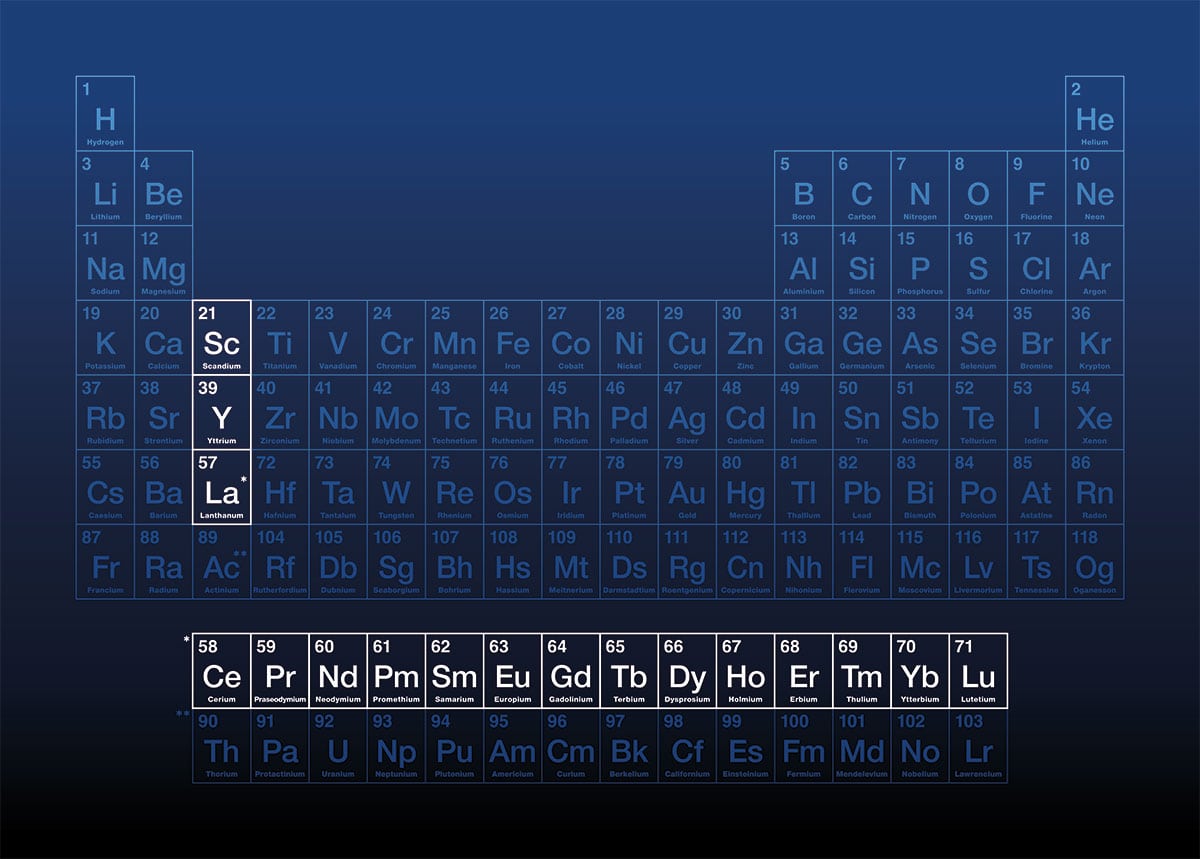
In case you’ve forgotten your chemistry, rare-earth elements consist of the lanthanides, which are in the long horizontal part of the periodic table, along with the non-lanthanides yttrium and scandium in group 3. When it comes to magnets, of most interest are neodymium, samarium and cerium as well as the “heavy” rare earths – dysprosium, terbium and ytterbium. The strongest and most used permanent magnets, however, are alloys of neodymium, iron and boron (NdFeB) and samarium cobalt (SmCo).
Materials that matter Permanent magnets are alloys of rare-earth elements, which consist of the lanthanides (those with atomic masses between 57 and 71) along with scandium and yttrium in group 3 of the periodic table. (Courtesy: Shutterstock/Peter Hermes Furian)
Rare earths are relatively abundant, with over 160 minerals known to contain them. Trouble is, they occur in such minuscule concentrations that only four minerals are mined for their rare earths, the others being too expensive to recover. Bastnäsite is the principal source of rare earths – accounting for 94% of supply – and is the world’s main source of neodymium magnets. Laterite clays, meanwhile, are the main commercial source of heavy rare earths.
Separating and refining rare earths is also difficult because they are chemically very similar. It’s environmentally costly too, although that hasn’t stopped demand for permanent magnets from surging. A report from Magnetics & Materials suggests that by 2030 the world will need 55,000 more tonnes of neodymium magnets than are likely to be available. Indeed, the overall magnet market, which was worth $29.3bn in 2021, is set to grow by almost 6% a year to 2030, according a recent analysis from Grand View Research.
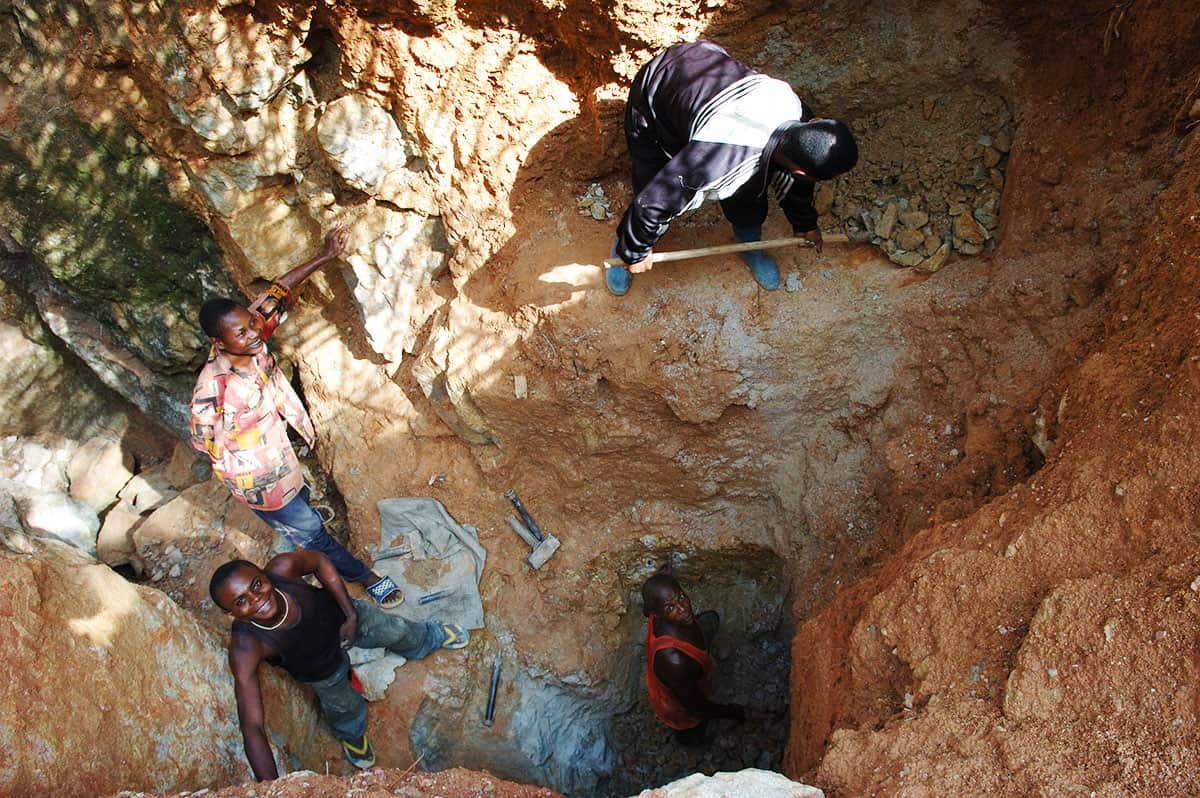
Deadly pursuit Men and boys dig with shovels in the Democratic Republic of Congo, which has the world’s largest reserves of cobalt. Most of the cobalt is either processed in the country by Chinese firms or exported to China for use in samarium cobalt (SmCo) permanent magnets. Conditions for workers in the mines have been criticized by, amongst others, Amnesty International. (Courtesy: Julien Harneis /Wikimedia Commons/CC BY-SA 2.0)
Demand for SmCo magnets is rising too, despite ethical and environmental concerns over how cobalt is mined in the Democratic Republic of Congo, which has the world’s largest reserves of the element (most samarium comes from China). A new report from Amnesty International, for example, says that the expansion of cobalt and copper mining in the country has led to communities being forcibly evicted along with human rights abuse “including sexual assault, arson and beatings”.
Many of the challenges of finding and making non-rare-earth magnets were discussed at the REPM23 conference held at the University of Birmingham in the UK in September. Known officially as the 27th International Workshop on Rare Earth and Future Permanent Magnets and their Applications, the meeting featured the great and the good from academia and industry from around the world. As I discovered, there is a huge amount of exciting and important research and technology going on in the field.
Seeking performance
From a physics point of view, the beauty of permanent magnets is that they store lots of energy, which allows small and highly efficient devices to be made from them. In general, the higher the magnet performance, the higher the motor efficiency. So even though high-performance magnets are expensive, it’s worth the extra cost because less money needs to be spent on other parts of the system in which they’re used. A more efficient motor, for example, means that the expensive battery in an electric vehicle doesn’t need to be quite so large.
Up and away Demand for powerful, permanent rare-earth magnets is surging in part because they are used in the generators in wind turbines, which are a growing source of “green energy”. (Courtesy: iStock/Oscar Gutierrez Zozulia)
The overall performance of a permanent magnet is therefore vital, with the key figure of merit being the amount of energy you can store in the material. Known as the “maximum energy product”, or BHmax, it is roughly 38 kJ/m3 for ferrite (BaFeO), which is the cheapest magnetic material at about $3–6 per kilogram. But for high-performance neodymium magnets, which cost about $40–80 per kilogram, the BHmax is a much larger 410 kJ/m3.
But being cheap and having a high energy product isn’t everything. Companies designing motors or generators also want a magnet that can generate a large magnetic field (i.e. with a big “remanence”). In addition, the magnet needs to have a high “coercivity”, which is essentially a measure of how much energy is needed to demagnetize it. Coercivity depends on how the magnet is made and the additives used to “toughen the material”. If the coercivity is too low, the magnet will lose its energy, demagnetize and make the motor or generator useless.
Another vital factor is a magnet’s Curie temperature (Tc), above which its magnetism is lost. Neodymium magnets have a relatively low Tc of about 210 oC, which is fine for most applications. But samarium cobalt has a Tc of up to 800 oC, making these magnets great in motor sport and other applications where high temperatures are commonplace. AlNiCo – an alloy of aluminium, nickel and cobalt – is the only mainstream material with a Tc higher than samarium cobalt (1000 oC) and a BHmax better than ferrite (at 310 kJ/m3), but its coercivity is so poor that it’s of limited use, especially now that higher coercivity magnets exist.
People in the magnet community have therefore long been seeking a magnet that sits in the gap between ferrite and neodymium in terms of price and performance. Everyone would love a super-cheap magnet that outperforms neodymium but these “god-like” materials don’t currently exist – in fact, some say they never will. Still, every time the price of neodymium spikes, there’s a resurgence of interest in new magnets. In fact, I was shocked to learn at the Birmingham meeting just how many potential magnet materials are in the running.
To me at least, it seems that the challenge isn’t in making new materials per se. What’s difficult is optimizing the material and the production process, which can literally take decades. As the Japanese scientist Masato Sagawa – the inventor of neodymium magnets – pointed out in the opening plenary at REPM, it has taken 40 years of heroic effort for these materials to reach their current BHmax, which is about 90% of its theoretical maximum value, and to achieve high coercivity and high performance.
A matter of choice
One cheaper alternative to neodymium is cerium, which is dug up and refined at the same time. It could partially replace the neodymium in NdFeB magnets, reducing costs but with a drop in performance. However, there are some other promising types of magnet that are much less polluting and use no rare earths altogether. If we can get these going, we’d really be turning base metals into modern-day “green gold”.
One of the most promising and well backed seems to be iron nitride (FeN). Based on just two materials – iron and nitrogen – that are cheap and in plentiful supply, it has a BHmax of 1150 kJ/m3 and a Tc of 540 oC. Firms like Niron in Minnesota, US, are already investing substantially in the area, employing a large and growing number of materials scientists to fine-tune its properties and production.
Another contender is manganese aluminium carbon (MnAlC), which was originally commercialized in the 1980s before being abandoned as neodymium magnets came to the fore. Materials physicists at Sheffield University, including Elizabeth Davis-Fowell, have even recently shown that MnAlGa, which replaces the carbon in MnAlC with gallium, could be better still.
Then there’s tetrataenite – a magnetic material found in meteorites. Containing iron and nickel (FeNi) in a tetragonal crystal structure, it’s formed in nature after having cooled incredibly slowly at just a few degrees over millions of years. With a theoretical BHmax of 335 kJ/m3, it looks promising especially as iron and nickel are so cheap. In 2022 researchers in the UK and Austria fabricated it for the first time here on Earth by adding phosphorus (Adv.Sci.10 2204315). What’s more, they made the tetrataenite in just a few seconds – between 11 and 15 orders of magnitude faster than in nature. It’s not clear what coercivity could be achieved and it’s early days for this material.
If you can cope with a less expensive rare earth, then SmFeN, which consists of samarium, iron and nitrogen, is a well-proven material system and offers excellent coercivity. Nichia – a Japanese company not to be taken lightly – is already pursuing this technology. Samarium is much cheaper and in less demand than neodymium so could be a good alternative.
Attractive future
Which of these materials will succeed is not clear – and there are many others I haven’t mentioned. In the short term – over the next five years or so – neodymium magnets will continue to dominate the market it seems. Indeed, we have plentiful reserves of rare-earth elements, with big economic deposits in Vietnam, Russia, India, Australia and Europe.
The concern, though, is that China has a 80–90% market share (the exact figure depends on how you look at the supply chain) and there are big geopolitical questions over supply and control. What happens, for example, if tariffs were ever introduced or if products containing magnets from China were one day banned from sale.
From home soil Owned by MP Materials, the Mountain Pass rare-earth mine and processing facility site is the only active and scaled rare-earth mining and processing facility in the US. The country is currently trying to restore its ability to produce its own rare-earth magnets and therefore reduce its dependence on supplies from China and elsewhere. (Courtesy: Tmy350/Wikimedia CC BY-SA 4.0)
Such issues are naturally of great concern to companies making motors and generators, which is one reason why the US has been restoring its capabilities in rare-earth magnets. The Las-Vegas-based firm MP Materials, for example, is building a new processing facility for permanent-magnet materials at the Mountain Pass mine, which lies in California, near the border with Nevada. My view is that if the US manages to fully restore its own production of this material, concerns over supply will disappear entirely.
Longer term, though, the most promising alternatives are the “hard” ferrites, which are a much more environmentally friendly magnet and have the beauty of being available right here, right now. That, at least, seemed to be the consensus of the people I spoke to at the Birmingham meeting, with materials manufacturer Proterial (previously known as Hitachi Metals) having already built a 100 kW prototype ferrite magnet motor that’s suitable for electric vehicles.
Future freedom Advances in the design of “induction” motors, which don’t have magnets at all, could eliminate the need for rare earths entirely. (iStock/surasak petchang)
There is also the tantalizing prospect that we might not even need magnets for motors. Until recently, it was generally assumed that permanent magnetic motors were about 10% more efficient than conventional designs. But developments in power electronics and advances in the design of “induction” motors, which don’t have magnets at all, have closed this gap. In fact, some induction motors are on a par with those with permanent magnets, and although they are bigger and heavier, who knows what advances lie in store.
In the meantime, those same advances in motor design and electronics mean that cheaper, less powerful magnet materials can be used. At the Birmingham meeting, everyone was talking about the latest master plan issued earlier this year by Tesla Motors, which contemplated eliminating rare earths entirely from its future permanent magnet motors. For the time being, though, with the help of advances in motor and generator design, the hard ferrites, I’d say, are the most promising alternative to rare-earth magnets.
A world entirely free of rare earths is, however, still a long way off.
Researchers at QuTech in the Netherlands have developed a way of controlling a large array of quantum dots with a relatively small number of control lines. The technique is an important step towards the development of scalable quantum systems for quantum computing and other quantum technologies.
Quantum dots are nanoscale collections of atoms that can store quantum information in the form of quantum bits, or qubits, which form the basis for quantum computers. At present, however, each qubit requires its own control line, or electrostatic gate, to manipulate its quantum state. Since a fully functional quantum computer will require millions of qubits to work, this implies the need for millions of control lines. This is not very practical and is one of the stumbling blocks to scaling up quantum technologies.
The QuTech researchers, led by Menno Veldhorst, adopted a “shared-control” approach inspired by classical random-access computing architectures in which millions of transistors are operated with a just a few thousand lines. In their technique, they made a quantum chip hosting a 16-quantum-dot system in a 4×4 chessboard-like array. “The quantum dots of the array are addressed collectively using a few shared control voltages and allow us to confine unpaired (hole) spins in each site,” explains Francesco Borsoi, a postdoctoral researcher at QuTech and the first author of a study in Nature Nanotechnology on the work.
A ratio similar to those in conventional computer chips
“In this way, the scaling of the control lines with the quantum dot number is sublinear, obeying a ‘Rent rule” with an exponent of 0.5,” Borsoi continues, citing a power-law pattern observed by the IBM scientist E F Rent for classical computing in the 1960s. “In other words, and by stretching the concept further, we can imagine controlling one million qubits with only around one thousand control lines.”
Although much more work needs to be done before this number can be reached, this figure would correspond to a ratio similar to those in conventional computer chips, he says.
“Our architecture has the advantage of being scalable as defined by a Rent’s factor that has proven to be scalable in classical technology,” he tells Physics World. “Crossbar arrays of this type could thus perhaps be employed as unit cells of larger structures and connected to form a network of quantum computing registers.”
The researchers now plan to focus on ways of tuning such large quantum dot arrays in a reliable fashion. This may involve machine learning methods that could enable scalable and autonomous tuning of the quantum dots and their interactions. “We also plan to investigate how to perform selective quantum operations in such arrays while minimizing signal crosstalk and develop very uniform material platforms that facilitate all the above challenges,” Borsoi says.
Since the discovery of graphene, 2D materials have impacted almost all areas of scientific and technological research. The amazing properties of 2D materials such as large surface area, high electronic conduction, efficient charge transfer, high mechanical strength, transparency, and flexibility, among others, have generated a number of exciting applications in electronics, healthcare, sensors, biomedicine and sustainable materials.
In this webinar, presented by Mildred Quintana, we will understand where the properties of 2D materials derive from, we will describe van der Waals interactions, how 2D materials are obtained, as well as some strategies to integrate them into composite materials and new applications.
Finally, we will mention the limitations in 2D materials production and the broad spectrum of exciting prospects around them.
Mildred Quintana is professor at the Faculty of Science and Researcher at the Center for Health Sciences and Biomedicine of the Autonomous University of San Luis Potosi (UASLP), Mexico. She obtained her BSc in chemistry and her PhD in surface science at the Universidad Autónoma Metropolitana-Iztapalapa (UAM-I), Mexico. After a postdoc at the University of Trieste, Italy, she joined UASLP in 2011. Mildred is responsible for the High-Resolution Microscopy Facility, the Multifunctional Nanostructures Laboratory and co-ordinator of the institutional PhD in engineering and materials science. Her work has focused on graphene and 2D materials, in particular, application-oriented materials processing. Her scientific work has been awarded with national and international distinctions such as the Research Award of the Mexican Academy of Sciences (2018), the National System of Researchers (SNI 3-CONACyT), the Marcos Moshinsky Chair (IF-Universidad Nacional Autónoma de México), the COMPETE recognition to technological development, innovation and scientific activity, as Chair Congress in the IMRC 2020-2021, the UASLP Award to the best young researcher. He has presented more than 70 international invited lectures.
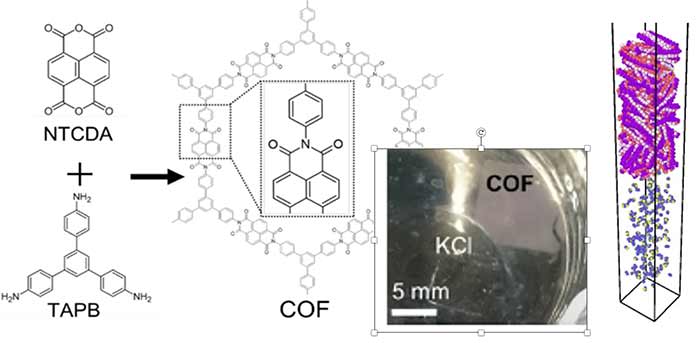
In this webinar, you will learn about an emerging material, covalent organic framework (COF), which can be prepared by vacuum deposition polymerization and can be used as a nanoporous metarial for gas separation membranes including CO2.
We will start from various CO2 separation technology – absorption and release in liquid amine etc, separation membrane composed of porous materials, and electrochemical pumping. We will then introduce COFs and their preparation techniques, and present our improvement of vacuum deposition polymerization technique that enabled us to produce 50nm-thick neat films with cm2 areas. The method to evaluate the CO2 separation performance will be explained. Finally, CO2 and other gas separation mechanisms by various materials will be analysed with the aid of molecular dynamics simulations.
Tom (Toshihiro) Shimada is professor at the Division of Applied Chemistry, Hokkaido University, Japan. He obtained his degree in chemistry at the University of Tokyo, Japan, and finished his PhD. He took a position of assistant professor there after the graduation, and was an associate professor before moving to Sapporo, Hokkaido, Japan. He became a full professor of Hokkaido University since 2010. His activities have been related with thin films and nanomaterials, especially of 2D materials and organic semiconductor. He enjoys collaboration with industry and designed new analytical instruments and processes for materials synthesis. He also enjoys various computer-based techniques including molecular dynamics, electronic structure calculation and informatics. Tom has published approximately 250 journal papers and many patents. He is a member of various academic societies in Japan and helped organize many international conferences.
The recent coupling of infrared spectroscopy with atomic force microscopy (AFM-IR) overcomes the weak spatial resolution of the usual infrared microscopy and achieve a resolution around 10 nm. The AFM-IR allows recording spectrum and absorption mapping of many sample (proteins, cells or even tissue). This new technique will be described and results on amyloids will be presented.
In Alzheimer’s disease, we observe amyloid plaques in the brain that are made of aggregated forms of amyloid b peptide. We study the aggregation of the peptide alone and follow changes in the structure of isolated amyloid fibrils. Some AFM-IR results were also obtained on neurons and brain sections. The AFM-IR provides molecular information at nanoscale resolution and can be applied on various samples. It will help to better understand diseases related to protein structural changes, especially in the field of protein aggregation.
Jehan Waeytens, post-doc Université libre de Bruxelles, obtained a BSc in chemistry at Institut Paul Lambin in 2011. After that, he worked for five years at ExxonMobil in the Advanced Characterization Group (mainly on SEM, FTIR and NMR). Jehan also obtained a mMaster’s in chemistry at ULB in 2016 with a master thesis on nanospectroscopy for polymer, and then obtained his PhD in 2022 on the infrared nanospectroscopie on amyloid beta peptide. Currently, he is a post-doc, continuing his research on amyloid beta but with biofunctionalized AFM tip. The focus of the lab is the biophysical characterization of protein (soluble and membrane) and with a strong focus and experience on infrared spectroscopy.
Clothing is something most of us would struggle to live without. As well as serving practical functions, what we choose to wear is also an important part of expressing our identities. Unfortunately, the fashion industry is also responsible for 10% of global carbon dioxide emissions, requires vast amounts of water, and can release chemicals into the environment.
This short video looks at a more sustainable type of textile being developed by Finnish company Spinnova, which involves transforming wood fibre into textile fibre. The mechanical process – inspired how a spider spins its strong and tensile silk into webs – results in fibres that are recyclable and biodegradable, have a significantly smaller carbon footprint and require 99.5% less water.









 In this webinar, you will learn about an emerging material, covalent organic framework (COF), which can be prepared by vacuum deposition polymerization and can be used as a nanoporous metarial for gas separation membranes including CO2.