Sand that flows uphill, handwritten LEDs

Although it seems like a mundane material, the rich and varied behaviour of sand has long fascinated physicists – from the creation and motion of mighty dunes to the patterns of tiny ripples that appear on beaches.

Now, researchers at Lehigh University in the US have put a new magnetic twist on the dynamics of sand. Their sand comprised polymer spheres called microrollers, which have one hemisphere coated with a magnetic material.  When a magnet was rotated beneath a container holding the microrollers, they began to flow uphill.

The team reckons that this bizarre behaviour is related to how the particles interact with each other in the magnetic field. They found that the field caused the particles to rotate and briefly stick together to form “doublets” that then break up.

Negative coefficient of friction

The result is a granular material that has a negative angle of repose. The angle of repose is the largest angle possible for a conical pile of sand, beyond which pile will collapse. This negative angle, say the researchers, is a result of a negative coefficient of friction between the particles.

“Up until now, no one would have used these [negative] terms,” says team member James Gilchrist,  adding, “They didn’t exist”.

According to the team, these strange properties allow the particles to work together to do counterintuitive things such as flow up walls and climb stairs. The researchers believe the curious phenomenon could be harnessed in a wide range of applications, including microrobotics.

You can watch the magnetic sand in action in the above video, and read about the research in Nature Communications.

LED ink

How would you like to receive a handwritten birthday or Christmas card that lights up in different colours? Some readers might find this amusing, while others might see it as the height of bad taste. But regardless of your views, handwritten LEDs are now a real thing, thanks to researchers at Washington University in Saint Louis and colleagues.

Writing in Nature Photonics, they describe how they created a set of four pens that are used to deposit layers of different materials to create glowing LEDs on substrates such as paper.

The materials deposited by the pens were designed to have similar properties as the ink used in pens, so the LEDs can be drawn by hand. Because the LEDs can be drawn on flexible materials, the technology could be used to create wearable electronics.

You can read more in this article in Physics by Sarah Wells.

Percentage of disabled physicists in the UK has halved in one year, finds survey

The percentage of people with a disability in UK physics has halved in recent years, according to an analysis by the Lightyear Foundation – a charity that helps children with disabilities to engage with technical subjects. The finding, which was based on statistics obtained via a freedom of information request by the foundation, also shows that the representation of people with disabilities is lower in physics than it is in the chemical or biological sciences.

According to data from the 2021 UK census, 17.8% of people in England and Wales have some form of disability. But separate data from the UK’s Office for National Statistics (ONS) indicate that just 7.7% of those working in the physical sciences have a disability – almost half the 14% reported in 2020. The ONS data also indicate that 8.4% of people working in the chemical sciences and 9.7% in the biological sciences have a disability.

Although the census and ONS data come from different sources, the ONS says the same definitions were used so the figures should be comparable. But why so few people with disabilities work in the physical sciences is not clear. It has been suggested that the term “physical sciences” is simply off-putting for people with physical disabilities. The need to do fieldwork or labwork could be other reasons.

While further research is needed to establish the cause of this apparent decrease, physicist Claire Malone, who is STEM Lead at Lightyear, speculates that the COVID-19 pandemic may have reduced one-to-one support from teachers and supervisors. “This is particularly a problem for disabled students and scientists who require additional assistance to complete their studies,” she says. “I have experienced this first-hand in environments with limited wheelchair access that prevented me from directly collaborating with my peers.”

Diverse voices

To combat the under-representation in physics, Lightyear has teamed up with the Planet Possibility campaign, run by the Institute of Physics and the educational charity Future First, to launch the Role Models programme.

It is creating written profiles and video interviews of disabled “role models” to share with schools. The programme also highlights the challenges that disproportionately affect disabled people in academia, from underfunding and a culture of overworking to stress around frequent relocations, as well as strengthen accessibility and inclusivity efforts among the wider scientific community.

Since many disabilities are hidden, the physics role models are calling for others to be understanding and not assume that everyone will find situations equally manageable. “It’s so important for young disabled people to see people like them in [science] so they know these roles are just as much for them too,” says Hamied Haroon, a physics role model at the University of Manchester. “When I was growing up, the late and great Stephen Hawking made me proud to be disabled – although, unfortunately, not everyone has the privileges and support he had.”

The Role Models programme also highlights the unique advantages that disabled people can bring to science. “Problem solving is most effective when you have wide and diverse voices contributing to the discussion,” says Sara Fletcher, a physics role model who works at the ISIS Neutron and Muon Source in Oxfordshire. “People with disabilities can have a lifetime of experience in finding alternative ways to do things, we can bring a new perspective, ask different questions and challenge things other people take for granted.”

Estimates of water ice on the Moon get a ‘dramatic’ downgrade

New estimates by planetary scientists in the US suggest that the Moon contains significantly less water ice than was previously thought. As well as providing insights into the Moon’s history and composition, the findings have implications for plans to establish a long-term human presence on the lunar surface or use the Moon as a base for crewed missions to other solar-system bodies.

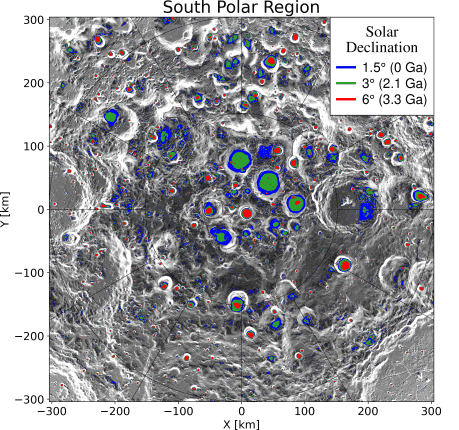
Unlike Earth, the Moon is not crowned by ice caps at each pole. Instead, water from comet impacts and other sources accumulates in permanently shadowed regions (PSRs) that lie inside thousands of large and small craters. These PSRs are some of the coldest places in the solar system, and they are concentrated at the Moon’s poles, where sunlight strikes the lunar surface at a shallow angle of just 1.5 degrees.

Billions of years ago, though, the Moon’s axis was far more tilted – perhaps by as much as 77 degrees. This extreme axial tilt exposed the poles to harsh sunlight, eliminating PSRs and causing any previously-accumulated ice to sublimate into gas.

The cause of the Moon’s tilt, and the reasons why it disappeared, are relatively well-understood. “The Moon formed close to the Earth 4.5 billion years ago by a collision of a small planet with the early Earth, and has since migrated outward,” explains Norbert Schörghofer, a senior scientist at the Planetary Science Institute in Hawaii and co-author of a paper in Science Advances on the research. “Early on, it was more under the influence of tidal forces from the Earth, but now the tides from the Sun play a larger role, and this transition forced a reorientation of the lunar axis.”

The main unanswered question was when this transition happened. An early date would mean that some of the water the Moon gained or outgassed during its formation might still be there, locked away in craters. A later one would imply that nearly all this early water was lost to space.

New evidence, new picture

Until recently, the history of the Earth-Moon distance was not known well enough to estimate the transition date with any certainty. In 2022, however, astronomers at France’s Observatoire de Paris resolved longstanding discrepancies between geochemical data and physical models of tidal interactions. Their improved model allowed Schörghofer and co-author Raluca Rufu of the Southwest Research Institute in Boulder, Colorado to plot the lunar tilt as a function of time – and that, together with surface height measurements from the Lunar Orbital Altimeter Laser (LOLA), enabled them to calculate how much ice exists in today’s PSRs.

These calculations reveal that the oldest PSRs formed no more than 3.94 billion years ago, making water ice on the Moon considerably younger and thus much less extensive than previous studies suggested. “The overall estimates for the amount of water ice that can be expected have to be revised downward dramatically,” Schörghofer tells Physics World. He adds that Kevin Cannon, a geologist at the Colorado School of Mines who maintains a list of promising lunar mining and landing sites, has already started to update estimates of the Moon’s water ice based on the new findings. According to him, Schörghofer says, “deposits of nearly pure ice tens to hundreds of metres thick are no longer expected”.

The outlook for would-be lunar water prospectors isn’t entirely negative, though. “We now have more accurate maps for where the largest concentrations of ice can be expected on the Moon,” Schörghofer notes. “This can be extremely helpful for the selection of landing sites.”

Schörghofer adds that in a previous study, he, Paul Hayne of the University of Colorado, Boulder and Oded Aharonson of Israel’s Weizmann Institute of Science found that PSRs were more widely distributed than expected. While the new work with Rufu shortens the maximum age of PSRs, it also shows that PSRs as young as 0.9 billion years – which are typically smaller than older PSRs due to the smaller size of the craters that harbour them – can still contain ice. “Overall, we expect less ice, but at more places,” he concludes.

In the future, Schörghofer and colleagues hope to refine their ice estimates by calculating the exact temperatures in shadowed craters such as Cabeus, which NASA’s Lunar Crater Observation and Sensing Satellite (LCROSS) crashed into in 2009. These calculations can be done using models that incorporate how light bounces around inside craters that receive no direct sunlight, but Schörghofer thinks it will take a few years to get reliable results.

Origami-inspired strain sensors could enhance disease diagnostics

A team of researchers at the University of Southern California (USC) has created stretchable strain sensors that accurately measure large and dynamic deformations – paving the way for implantable devices to detect deformations in organs, as well as a range of potential applications in wearables and soft robotics.

The origami-inspired sensors, described in Science Advances, feature foldable 3D electrodes that alter their shapes under deformation. These changes lead to changes in capacitance, allowing observers to accurately measure local deformation. The resulting sensors possess a large strain range, ultralow hysteresis and fast responses – a unique combination of three sensing characteristics in a single device.

Stretchable sensors can stretch up to three times their original size

According to the paper’s corresponding author Hangbo Zhao, the project was motivated by conversations with colleagues working in the area of soft robotics, who “expressed the need for sensors to accurately measure the deformations in their soft, highly deformable robots”.

“Although there has been a lot of work done in this area, we identified an important gap, which is the development of strain sensors that can measure large deformations with high accuracy under repeated use. We came up with a new sensor design to overcome this challenge using 3D small-scale electrodes for capacitive sensing,” he says.

Zhao notes that the sensors have other attractive features, such as small dimensions and directional strain responses, all highly desirable in strain sensing. “They are also small and soft – and you can stick a sensor to a target object easily, similarly to sticking a bandage, to measure the deformation at the sensor location,” he explains.

Organ function

As part of their research, the team used the sensors to monitor the deformations of soft continuum arms – representations of soft robotic arms – by adhering several of them onto individual arms and measuring responses. By analysing sensor responses, the researchers were able to distinguish several different modes of deformation. Because the sensors can accurately measure large and fast deformations, the team envisage a wide range of potential applications, particularly in medicine and healthcare.

“These sensors can potentially serve as wearable or implantable biomedical devices for healthcare monitoring. For instance, they can be used to track joint movements or observe the dynamic activities of different organs,” says Zhao.

Another significant potential application is the monitoring of organ function, for example the detection of overactive bladder syndrome – a condition characterized by a frequent and sudden urge to urinate. By implanting the strain sensors, Zhao says that clinicians could continuously monitor the bladder’s expansion and contraction patterns, offering detailed insights into its behaviour throughout the day.

“These data can be critical in diagnosing the severity of the condition and in developing personalized treatment plans, thereby enhancing the management of overactive bladder syndrome significantly as compared to current intermittent assessment methods,” he explains. “Such detailed, real-time data could potentially revolutionize the approach to managing conditions like these.”

Implantable devices

Ultimately, Zhao says, the sensors could be modified to meet biocompatibility and hermeticity requirements, and used as implantable devices attached to organs. One potential advantage of using them for such applications is the fact that they are soft and stretchy, meaning they can measure large organ deformations accurately with minimal discomfort.

The sensors can also measure deformations continuously to provide information on the functional states of organs – whereas existing approaches mostly rely on imaging techniques such as ultrasound, for example, which is only available in hospital settings.

“Implantable sensors are still mostly in the research stage, especially sensors for measuring organ deformation. Our current sensors are not suitable for use in organs yet, but it’s possible after some modifications,” says Zhao.

The team is now optimizing sensor performance to make the devices more reliable for practical use in diverse environments. This includes, for example, making them more mechanically robust against contact forces or electromagnetic interference. “We are also looking into how to modify the sensors for implantable applications so that the sensors can function reliably in the environment of bodily fluids,” Zhao adds.

Astrophysicist uses X-rays to explore the universe, heat pumps could prevent potholes  

This episode of the Physics World Weekly podcast features a wide-ranging conversation with the astrophysicist Victoria Grinberg, who is a liaison scientist at the European Space Agency (ESA).

Based at ESA’s European Space Research and Technology Centre in the Netherlands, Grinberg explains how X-ray observatories are being used to study some of the most violent environments in the universe – the regions around black holes and neutron stars. She also chats about her enthusiasm for science communication and how she has revived her childhood love of drawing by doing scientific illustrations.

Grinberg is also a winner of the Röntgen Prize, which is given for outstanding work on basic research in radiation physics and radiation biology. The €15,000 prize is awarded by Germany’s Justus Liebig University Giessen and it sponsored by Pfeiffer Vacuum and the Ludwig Schunk Foundation.

Also in this episode, the civil engineer Benyi Cao explains how ground-source heat pumps could soon be used to prevent potholes from forming on British roads. Based at the UK’s University of Surrey, Cao describes how potholes form and how controlling the temperature of roads could reduce the number of potholes on major roads. He also describes a pilot scheme that could soon be rolled out in Surrey.

Sponsor logo

This episode is sponsored by Pfeiffer Vacuum.

Pfeiffer Vacuum provides all types of vacuum equipment, including hybrid and magnetically-levitated turbopumps, leak detectors and analysis equipment, as well as vacuum chambers and systems. You can explore all of its products on the Pfeiffer Vacuum website.

Concussion monitoring headset identifies when it’s safe to return to play

Sports-related concussions that cause mild traumatic brain injury are receiving much attention worldwide, due to the potential risk of developing long-term neurological issues including behavioural and cognitive changes. There may also be risk of neurodegenerative disease. For example, repetitive head injuries have been associated with chronic traumatic encephalopathy, which can only be diagnosed post-mortem.

The most significant problem in managing concussion, especially for youth, is deciding when it is safe for an athlete to resume sports. Most organized sports teams, from school teams through to professionals, use return-to-play (RTP) protocols to determine when it is safe for an athlete who has suffered a concussion to resume physical activities. In addition to the number of days since injury, RTP protocols are based on clinical examination and symptom reports, but not objective measurements of brain injury and recovery.

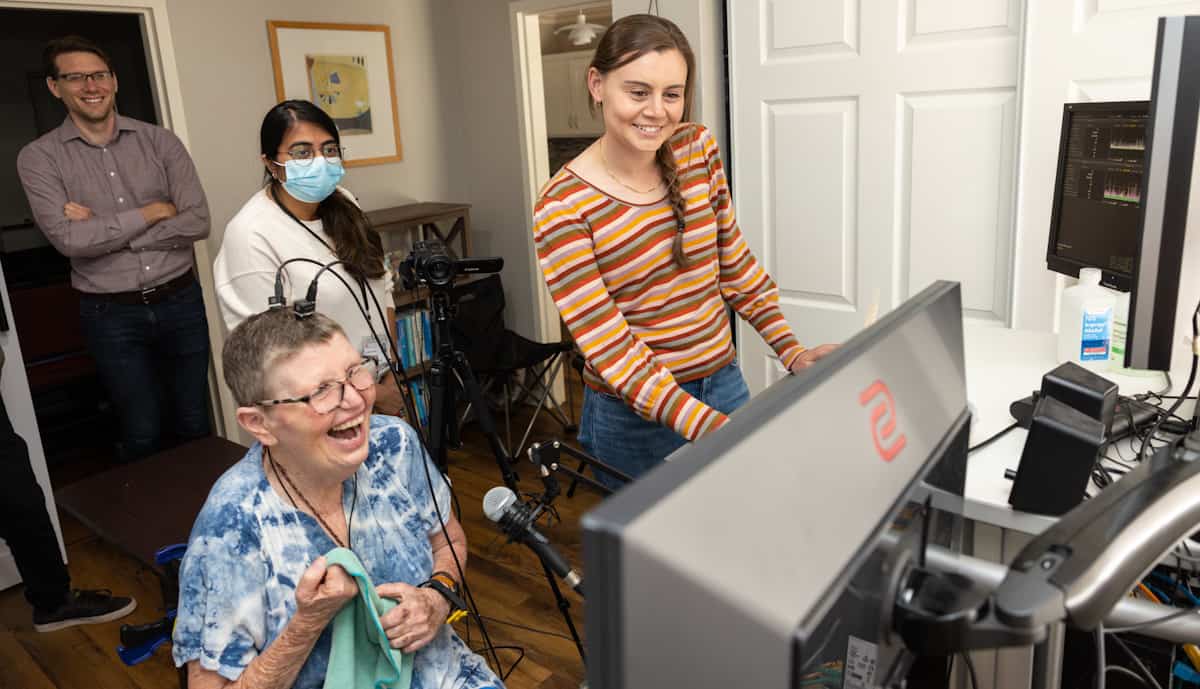
A new digital headset designed to measure alterations in brain function could aid in this decision. Researchers from the University of California San Francisco (UCSF) conducted a study using cranial accelerometry to measure micromovements of the head following cardiac contraction (referred to as the “HeadPulse”). Writing in JAMA Network Open, the team reports that serial measurements of the HeadPulse biometric reveal characteristic changes after concussions, and that these changes continued an average of 14 days longer than reported concussion symptoms.

Led by Cathra Halabi, the researchers evaluated 43 concussed and 59 control athletes from the Adelaide Football League (AFL) in Australia, including 69 males and 32 females aged between 19 and 31 years. The participants played the highest level of amateur Australian rules football, a distinct contact and collision sport in which opposing un-helmeted teams score by running, kicking or punching a ball toward goalposts at either end of a large field. Tackling or jumping on an opponent are common manoeuvres. AFL team members who suffer a concussion are not allowed to resume sports activities for at least 12 days.

The researchers conducted the study in two phases over two seasons, first in 2021 to confirm feasibility and refine methodology, and then in 2022 to validate findings and associate physical activity with brain function measurement patterns. Research coordinators attended games and were alerted to players with a concussion.

The MindRhythm headset

The coordinators performed brain function measurements within an hour of a player’s concussion, using a prototype headset under commercial development by medical technology company MindRhythm. They subsequently travelled to these individuals’ homes every one to three days over the next 30 days to obtain additional recordings. Participants completed a neurobehavioural symptom inventory (NSI) with each recording.

The HeadPulse, a unique physical biomarker, is measured by applying a sophisticated sensor to the patient’s head that detects normal and abnormal forces pulsing through the brain. The HeadPulse effectively indicates any deviation from what is considered healthy and identifies changes in how forces travel through the brain. Highly sensitive cranial accelerometers measure minute pulsations produced by each heartbeat caused by the force of the cardiac cycle. The data are transmitted to a smartphone, with the entire process taking less than 180 s.

During the first study phase, the researchers acquired and analysed 137 recordings of 12 concussions in male athletes only. In the second phase, they utilized a second-generation prototype device that resolved some excess body motion problems to acquire 276 recordings of 29 concussions in both males and females. They also acquired a 262 recordings from 58 control participants.

Twenty-six of the 32 concussed individuals met the biometric abnormality threshold within the first seven days. HeadPulse analysis detected 9% of concussions on day 0, 50% by day 2, and 90% by day 14. Of the 32 participants, 26 had NSI scores that returned to zero within 30 days. In those with symptoms lasting less than one month, half returned to a zero NSI score by day 7. However, compared with resolution of symptoms, only 57% of participants demonstrated biometric resolution by day 30, with 50% achieving this by day 21 – 14 days later than the NSI improvement.

“We found a mismatch between reported symptoms and changes in biometrics recorded by the device,” says Halabi. “This raises concern about relying on symptoms for RTP decisions. Delays could be recommended for those symptom-free athletes if HeadPulse abnormalities persist.”

“Speculative causes of sports-related concussion (SRC) HeadPulse signal changes include alterations in brain parenchymal mechanical resonance (stiffer brain) induced by concussive injury, modulated by vascular response,” the team writes. “Heart rate harmonics are central to head pulse derivation, and SRC-related autonomic dysfunction may contribute to HeadPulse changes.”

The researchers advise that the association between HeadPulse and activity, including exercise, requires additional investigation. They are currently conducting a study at UCSF, in collaboration with the University of California Berkeley, to determine whether student and non-student civilian athletes can self-administer the device. The team is also collecting additional information about clinical features of concussion and activity levels to help characterize the HeadPulse.

  • UCSF researchers will present the results of a recently completed observational clinical trial (EPISODE) evaluating the use of HeadPulse for ischemic stroke detection at the forthcoming 2023 American College of Emergency Physicians (AECP) Scientific Assembly, held in Philadelphia in October.

‘Alice rings’ spotted in a Bose–Einstein condensate

In Lewis Carroll’s novel, Through the Looking-Glass, Alice encounters a mirror-like portal to a world where rules of reality are reversed. In the 1980s, the story inspired the name for a ring-like vortex, which is predicted to emerge as monopoles decay. This “Alice ring” then flips the charges of any other monopoles that pass through it.

Now, for the first time, these Alice rings have been observed in the lab by researchers in the US and Finland. Their experiment involves ultracold atoms and it could shed light on fundamental processes in particle physics and cosmology.

The team’s discovery draws from two lines of research that both emerged about 35 years ago. One is the concept of “cosmic strings”, which describe 1D defects in the fabric of space–time. Although hypothetical, the existence of such strings would have profound implications for cosmology.

“The idea of a cosmic string is that, if you were to travel around it, would turn you from matter to antimatter (or vice versa),” explains David Hall at Amherst College, who headed the experimental part of the project with Alina Blinova as the final part of her PhD thesis. “If it were to exist, such a cosmic string would be known as an ‘Alice string’.”

Singular points of charge

The second line of research involves monopoles, which are singular points of charge in space. Both monopoles and strings could carry conserved topological charges, which could be magnetic, electric, or quark colour charges.

“In the 1980s, we realized that such a monopole could become deformed in a curious way,” Hall explains. “Far from its centre it still looks like a monopole, but if you got in close you wouldn’t see the point singularity but rather an Alice ring, which is a loop of Alice string that is closed on itself.”

One particularly striking property of an Alice ring is that if another monopole somehow managed to pass through its middle, the monopole would transform from a particle into an antiparticle. This means that by looking through the ring, much like Alice and her looking glass, we are essentially viewing a mirrored universe where antimatter dominates over matter.

In 2015, a breakthrough came when a team of Hall’s collaborators created a monopole in a Bose–Einstein condensate. This was a gas of rubidium atoms cooled close to absolute zero, where quantum properties can be observed on the macroscopic scale.

Precision control

“Our technique relied on precision control of magnetic fields to create the initial monopole,” Hall explains.

In their latest study, Hall and Blinova’s team combined this experimental approach with simulation methods developed by Mikko Möttönen at Aalto University and colleagues. These combined techniques allowed the researchers to observe what happens when monopoles are left to evolve in a Bose–Einstein condensate.

“The newest aspect of our research is the ability to create monopoles consistently enough for us to observe their time evolution,” Hall explains. “We need to be able to produce a consistent initial state, and then wait different time intervals before making a measurement to see how the system evolves.”

Since monopoles are inherently short-lived, even the slightest perturbation will knock them out of their stable states, causing them to decay into Alice rings. Through their approach, Hall and colleagues could watch this process unfold. “Specifically, we were able to directly observe several features of the Alice ring as the initial monopole evolves,” he says. “One is that the monopole point singularity vanishes, while at the same time the region ‘far’ from the monopole retains its monopole character.”

Tracking Alice rings

Through their analysis, the researchers discovered that this singularity is replaced with a vortex with the same quantum properties predicted in Möttönen’s simulations. Although their experiments could only track the Alice rings directly for about 10 ms, they persisted for around 10 times longer in the simulated Bose–Einstein condensates.

The team’s findings could have fascinating implications for our understanding of quantum fluids: suggesting that under the right conditions, structures that convert matter into antimatter can emerge spontaneously in response to their environments.

“I find it profoundly interesting that the field theories that are intended to tease some meaning out of the cosmos can often be examined in a context as small as a condensate droplet smaller in diameter than the width of a hair,” Hall says.

Indeed, Hall is confident that their experiment could offer a valuable platform for exploring the inner workings of the universe. “I would hope that the thematic similarities could someday work in the other direction as well, implying that what we find in the laboratory could be relevant for understanding how fundamental processes work in the universe.”

The research is described in Nature Communications.

Towering egos and careening space junk: why the new era of space exploration is a disaster in the making

The list of items the Apollo astronauts left on the Moon is long, surreal and disturbing. In addition to the plaque announcing that Neil Armstrong and Buzz Aldrin “came in peace for all mankind”, it includes six American flags, two golf balls, a Bible and a nauseating 96 bags of faeces, urine and vomit. All told, the one-dozen men who walked on the Moon in the late 1960s and early 1970s left behind an estimated 200,000 kg of rubbish. Throw in a handful of Soviet craft, the Chinese rover Yutu-2, and the (probably) dead tardigrades from a failed 2019 Israeli mission, and the situation becomes clear: the Moon is a mess, and landing more people on it is only going to make it worse.

If you find this state of affairs depressing – if your fascination with the Moon, Mars and other wonders of our solar system is increasingly tempered by concerns that a small but powerful group of people seems hell-bent on mucking them up – then you should run, not walk, to your nearest bookseller for a copy of Astrotopia: the Dangerous Religion of the Corporate Space Race. Written by Mary-Jane Rubenstein, it offers a concise but stinging critique of the current “New Space” era, giving succour to space fans everywhere who are, in Rubenstein’s words, “sick over the decimation of this planet and horrified that this planet isn’t enough for the decimators”.

There is, Rubenstein argues, a direct line connecting NASA’s cavalier attitude towards dirty space nappies to Jeff Bezos’ dream of reducing the Moon to a fuel station – never mind Elon Musk’s quarter-baked scheme to “nuke Mars”

Rubenstein is a professor of religion and science in society at Wesleyan University in the US, and she draws on this background to link “New Space” with previous periods of exploration. There is, she argues, a direct line connecting NASA’s cavalier attitude towards dirty space nappies to Jeff Bezos’ dream of reducing the Moon to a fuel station – never mind Elon Musk’s quarter-baked scheme to “nuke Mars”.

The connection that most interests Rubenstein, though, is older. “There’s not much that’s new about New Space,” she writes in Astrotopia’s introduction. “Rather, the escalating effort to colonize the cosmos is a renewal of the religious, political, economic and scientific maelstrom that globalized Earth beginning in the 15th century.” Over the next two chapters, Rubenstein delves into the mindset of this earlier age, placing special emphasis on how European settlers/invaders used the Judeo-Christian concept of “God’s chosen people” to justify their destruction of Indigenous civilizations and ecosystems.

The brutal theology of Spanish conquistadores may, at first, seem irrelevant to today’s cosmic land-grab. The motives of today’s scientists and space entrepreneurs are, after all, largely not religious; many are aggressively secular. Subsequent chapters, however, make the connection clear. In one of them, Rubenstein tells the story of the man from California who laid claim to the Moon. His name is Dennis Hope, and if you like, you can buy chunks of lunar real estate from him for $25. This arrangement may sound ridiculous – Hope has no more claim to the Moon than you and I – but as Rubenstein observes: “It is no less absurd – and far less destructive – than a pope’s having ‘given’ the so-called New World to Spain.” Space enthusiasts who speak blithely about “conquering the final frontier” should bear in mind how horrific Earth’s frontiers were for the people who got conquered, and consider what their descendants might think of such rhetoric.

There are, of course, no humans on the Moon, Mars or asteroids. There will be no repeat of the genocide of Indigenous peoples in space. But what about other organisms we might find? We barely understand what intelligence looks like in other mammals, let alone how it might manifest in aliens. As Rubenstein writes: “How would we ever know we weren’t interfering with the native biotic processes of Mars?”

Other cautionary examples (though not ones that appear in Astrotopia) concern the Polynesians who populated the Pacific archipelago and the Norse who settled Iceland. By colonial standards, their explorations were benign. Even so, their arrival utterly transformed these previously uninhabited lands. Grazing Norse sheep laid waste to Iceland’s thin, volcanic soils. Polynesian dogs, chickens and pigs decimated Pacific atolls. It was partly for these reasons that American astronomer Carl Sagan – nobody’s idea of a party-pooper when it comes to space exploration – once wrote: “If there is life on Mars, I believe we should do nothing with Mars. Mars then belongs to the Martians, even if the Martians are only microbes.”

Rubenstein, characteristically, takes things a step further. If Mars lacks even microbes, she wonders, might it still “belong” to its own bare and lifeless rocks? As an example of why it might, she cites Australia’s Uluru, the iconic reddish sandstone rock formation in the Northern Territory. While Uluru was an inert resource to the European settlers who called it Ayers’ Rock, it is an object of profound, living value to the Yankunytjatjara and Pitjantjatjara peoples who have lived in its shadow for millennia. Rubenstein also notes (quoting the philosopher Holmes Rolston III) that Mars’ Valles Marineris is “four times as deep as the Grand Canyon and as long as the United States is wide”. Given this grandeur, she writes, “we probably shouldn’t turn it into a parking lot, a garbage pit or the galaxy’s biggest swimming pool”.

There are, of course, plenty of other reasons to dislike how “final frontier” explorations are shaping up, and Astrotopia is pithy about most of them. One example is the circularity of arguments in favour of space colonization (“We need to have a long-term presence in space in order to retrieve and use the resources that will establish a long-term presence in space”). Another is the likely living conditions of ordinary colonists (“Do we really expect that the notoriously inhumane industries of mining, manufacturing and global retail will suddenly establish decent working conditions on literally uninhabitable planets?”).

Finally, there is the problem of space junk. Here, oddly, Rubenstein finds grounds for optimism. While she notes that “the clearest indication of the limits of ‘infinite space’ is the growing pile of garbage around us”, she also speculates that this “shared disaster” might “finally make it clear to the corporate cheerleaders and cosmic nationalists that space is a commons after all… Could the space junk threatening to strangle us actually be our salvation?”.

It’s an intriguing idea, and there are plenty more where it came from. When I review a book, I like to mark important passages and pithy phrases with sticky notes. By the time I finished Astrotopia, my copy had more paper flags than a Jubilee street party. I hope this review illustrates why this was so, and why Rubenstein’s arguments deserve the widest possible hearing among people who dream of exploring space without exploiting it.

  • 2022 University of Chicago Press $45.00hb 224pp

High-performance brain implants restore communication to those who cannot speak

Remarkable leaps in brain–computer interface technology that could restore more naturalistic communication to people living with paralysis have been described in two recent papers in Nature. Both experimental systems have shown the ability to decode brain activity into speech faster, more accurately and with a larger vocabulary than existing alternatives.

Neurosurgeon Edward Chang of the University of California, San Francisco (UCSF) has been working on brain–computer interface technologies for more than a decade. In previous work, his team demonstrated that it was possible, using an implant, to decode into text the brain signals of a 30-year-man who had experienced a brainstem stroke 15 years earlier.

Their latest study has gone a step further, realising a neuroprosthesis that can not only translate brain activity into the full richness of speech, but also the facial movements that would accompany such conversation. Together, these two world-first accomplishments have allowed a woman with severe paralysis – also the result of a brainstem stroke – to talk via a digital avatar. The speech is synthesized via an algorithm, and personalized to sound like she used to, based on a recording from before her stroke.

“Our goal is to restore a full, embodied way of communication, which is really the most natural way for us to talk with others. These advancements bring us much closer to making this a real solution for patients,” says Chang in a press statement.

The researchers’ device takes the form of a paper-thin rectangle of 253 electrodes that they implanted over the region of the patient’s brain that is involved in speech. These electrodes intercept the neural signals that – had it not been for the stroke – would have activated muscles in her face, jaw, larynx and tongue.

The impulses were interpreted via deep-learning models that were trained over the course of several weeks by asking the patient to repeat different phrases from a 1024-word vocabulary. Rather than learning individual words, the systems instead operated on phonemes – the smaller subunits of speech analogous to letters in the written word.

The team found that the AI system only needed to learn 39 phonemes to decipher any word in English – allowing it to operate at 78 words-per-minute (wpm), a significant improvement over alternatives like eye-gaze systems (typically, people tend to speak at around 110–150 wpm; eye-gaze devices tend to enable only 5–15 wpm.)

The system racked up five times fewer errors than the previous state-of-the-art interface at decoding speech – with only a 4.9% word error rate when decoding sentences from a 50-phrase set – although this increased to a 25% error rate with a large vocabulary of over 1000 words. When using the synthetic voice output, a word error rate of 28% was encountered using a set of 529 phrases.

First author Sean Metzger, a bioengineer at UCSF, says: “The accuracy, speed and vocabulary are crucial. It’s what gives a user the potential, in time, to communicate almost as fast as we do, and to have much more naturalistic and normal conversations.”

In fact, the researchers note, the digital avatar can move its jaw, lips and tongue and reproduce a variety of expressions, including happiness, sadness and surprise. “When the subject first used this system to speak and move the avatar’s face in tandem, I knew that this was going to be something that would have a real impact,” says UCSF grad student Kaylo Littlejohn.

At present, the patient needs to be directly connected to the brain–computer interface. For the future, however, the team is working to develop a wireless version.

Converting attempted speech into words on a screen

While Chang and his team decoded speech from a large number of cells across the entire speech cortex using a large array of electrodes, neurosurgeon Jaimie Henderson of Stanford University and his colleagues took a different approach — attaching just four tiny sensors, each containing a square array of 64 electrodes, into two speech-related brain regions in a patient with amyotrophic lateral sclerosis (ALS).

The recipient is Pat Bennett, a former HR director who was diagnosed with the progressive neurodegenerative disease in 2012. While ALS often first manifests in the body’s periphery as a result of deterioration in the spinal cord, for Bennett the condition began in her brain stem, leaving her still able to perform many tasks but unable to use the muscles of her lips, tongue, larynx and jaws to speak clearly.

Four months and 25 four-hour AI-training sessions later, Bennett’s intended speech is converted into words on a computer screen at a rate of 62 wpm. When restricted to a 50-word vocabulary, the system’s error rate was 9.1%, increasing to only 23.8% with a comprehensive vocabulary of 125,000 words.

“We’ve shown you can decode intended speech by recording activity from a very small area on the brain’s surface,” Henderson concludes.

Sumner Norman – a biological engineer at the California Institute of Technology who was not involved in the two studies – tells Physics World that these advances are “a tour de force in technical and clinical excellence”. He added that both studies are a “wonderful demonstration” of how neurotechnologies can restore function capabilities for the impaired.

Gravitational waves could reveal dark matter transforming neutron stars into black holes

A team of theoretical physicists in India has shown that gravitational waves could reveal the role that dark matter could play in transforming neutron stars into black holes.

Dark matter is a hypothetical, invisible substance invoked to explain the curious behaviour of large-scale structures such as galaxies and galaxy clusters – behaviour that cannot be explained by gravity alone.

If it exists, dark matter must interact with ordinary matter via gravity. However, some models predict that dark matter could also interact with ordinary matter through very weak non-gravitational interactions.

Feeble but sufficient

“Non-gravitational interaction means that [dark matter particles] are expected to have some sort of interaction with protons and neutrons,” Sulagna Bhattacharya told Physics World. Bhattacharya is a graduate student at the Tata Institute of Fundamental Research in Mumbai, who adds, “These interactions may be very feeble, but they may be sufficient enough to allow the dark matter particles to become captured inside a neutron star”.

Neutron stars are the dense core remnants of massive stars that have exploded as supernovae. They are very small, perhaps a dozen kilometres across, but with masses greater than the Sun. The core of a neutron star is so dense that it could increase the probability of interactions between normal matter and dark matter.

The maximum theoretical mass that a neutron star can have is 2.5 solar masses, but in practice most are much smaller, around 1.4 solar masses. Neutron stars that are greater than 2.5 solar masses will undergo gravitational collapse to form black holes.

Closing the gap

Stellar mass black holes can also form directly from supernovae (explosions of large stars), but theoretical modelling has suggested that black holes should not exist at 2–5 solar masses. Until recently, this was supported by observational evidence. However, beginning in 2015, observations of gravitational waves from the mergers of black-hole pairs revealed the existence of black holes within this mass gap.

For example, GW 190814 was a gravitational-wave event detected in 2019 that involved an object with between 2.50–2.67 solar masses. Another mystery event was GW 190425, also detected in 2019, wherein the combined object had a mass of 3.4 solar masses. This is a substantially higher total mass than any known binary neutron star system.

Now Bhattacharya, her supervisor Basudeb Dasgupta, plus Ranjan Laha of the Indian Institute of Science and Anupam Ray of the University of California, Berkeley, have suggested that dark matter accumulating within the core of a neutron star would increase the core density to the point that it collapses into a miniature black hole. This black hole would then grow and engulf the neutron star. The result would be a black hole with a lower-than-expected mass. And, the detection of such low-mass black holes would be tantalizing evidence for the dark matter.

“Astrophysically exotic”

“These compact objects would be astrophysically exotic,” says Bhattacharya, who is the lead author of a paper describing this hypothesis in Physical Review Letters. Their paper puts forth GW 190814 and GW 190425 as mergers that could have involved black holes that were made with the help of dark matter.

Whether black holes converted from neutron stars exist or not, Bhattacharya says that searching for them will provide, “some significant constraints on dark matter interactions with nucleons”. As a result, the growing number of mergers being observed could allow physicists to evaluate different models of dark matter.

Another possibility is that the low-mass objects observed in GW 190814 and GW 190425 are primordial black holes that formed in the immediate aftermath of the Big Bang. However, some theories suggest that primordial black holes could be a component of dark matter – so studying mergers could provide even more information about the nature of dark matter.

Indeed, the key advantage of using gravitational waves to search for evidence for dark matter is that it is the most sensitive means we have for detecting the faint non-gravitational interactions of dark matter with normal matter.

This is because observing gravitational waves is not subject to the “neutrino floor”, which limits experiments that aim to directly detect dark matter. The floor refers to the fact that neutrinos are a significant source of background noise in dark-matter detectors such as LUX-ZEPLIN.

“The method suggested by us can probe the regions that are beyond the reach of these terrestrial detectors due to limited exposure and detector sensitivity,” says Bhattacharya.

Copyright © 2026 by IOP Publishing Ltd and individual contributors