Researchers have unearthed a robust physics-based mechanism that dictates the sliding strength, or resistance to slippage, of the most common type of surgical knot. In particular, they have found that for a suturing filament with given elasto-plastic properties, the strength of the knot depends on the pre-tension applied to the knot during tying. This finding could be used to train surgeons to tie stronger, safer sutures – a skill that usually takes years to master. It could also help advance robotic surgery.
Surgeons routinely tie a series of square and “granny” knots in their daily work. These are flat knots tied in monofilaments that capsize into a sliding conformation, typically consisting of a series of half-hitches around a nearly straight, tense filament. Knots are used as ligatures during suturing and represent the weakest link in a stitch. If they fail, this can lead to wound dehiscence, in which a previously sutured incision re-opens and prevents wound healing.
In the new work, researchers led by Pedro Reis of the FLEXLAB at EPFL in Switzerland studied sutures made from commercial polypropylene filaments used in surgery. They analysed 50 to 100 sliding knots tied by Lausanne-based plastic surgeon Samia Guerid. They used a combination of mechanical testing, X-ray micro-computed tomography and computer simulations to mimic how these knots are tied, in a way that enabled them to measure the pre-tension that had been applied during the tying process.
This pre-tension, which permanently deforms or stretches the filament, cannot be quantitatively determined for surgeon-tied knots when tied with their hands, explains Reis. It is critical, however, since too little pre-tension causes the knot to come undone and too much snaps the filament.
A well-defined mechanism
“Our experimental system allowed us to systematically vary all of the important parameters in the knot-tying process,” Reis tells Physics World. “Our numerical model is complex because it needs to include knot topology, its nonlinear geometry, the elasticity of the filament, self-contact of the filament, frictional interactions and plastic deformation of the polymer (yet another nonlinearity). It is remarkable how, out of this ‘soup’ of ingredients, a robust and well-defined mechanism ‘pops’ out.”
What was also surprising, he adds, is that a well-trained surgeon, through much learned empirical experience, is able to target the “sweet-spot” of the ideal working regime of these knots, in between the limits of them being too loose or too tight.
The insight provided by the uncovered mechanism is fundamental, Reis says, since it could aid in surgical training and even advance the functionality of robotic-assisted surgical tools by enabling more effective knot-tying. “By incorporating our results into these devices, one could eventually aspire to a precision and efficiency level akin to an experienced surgeon.”
In their study, which is detailed in Science Advances, the researchers tackled only the simplest of surgical knots. In the future, they plan to investigate a wider variety of surgical knots and develop more formal mathematical models to describe them.
“There are some specific aspects of our findings – for example, regarding the robust exponent of the power-law between knot strength and pre-tension – that we believe may be more general than the specifics of the two topologies (sliding granny knot and sliding square knot) we considered,” says Reis. “In other words, our study opens a very exciting door for future research on the physics of surgical knots. There is indeed a lot more about these structures that needs to be untangled…”
When Nicola Spaldin began studying natural sciences at the University of Cambridge in 1988, she planned on becoming a physicist, but then quickly reconsidered. “After about the second lecture I completely changed my mind,” she recalls. “I thought ‘I’m absolutely not clever enough to be a physicist.’ Everybody was very brilliant and I was not.”
Yet it seems Spaldin was vastly underestimating herself. Now a professor of materials science at ETH Zurich, she won two major awards for physics last year: the EPS Europhysics Prize and the Hamburg Prize for Theoretical Physics. Both accolades cited Spaldin’s pioneering work on the theory of magnetoelectric multiferroics – materials that are both ferromagnetic and ferroelectric. These properties are rarely found together, making it very difficult to engineer substances with both, but they have many exciting potential applications, from microelectronics to medicine.
At first glance, Spaldin’s path to materials science might appear circuitous. After focusing on chemistry and geology at Cambridge, she did a PhD in theoretical chemistry at the University of California, Berkeley – on the optical properties of nanoscale semiconductors – before working as a postdoc on ferromagnetism in the applied physics department at Yale University. But despite apparent changes in discipline, all her projects were to do with materials, which Spaldin points out lie at the intersection of chemistry, physics and engineering. “In that sense I haven’t really changed much,” she says. “I’ve just changed the department I’ve done it in.”
So, although fundamental physics is the basis for her research, she considers herself a materials scientist first and foremost. Her passion for this field shines through when she talks about how eras of human civilization – from the Stone Age onwards – have been defined by and named after the materials we have learned to wield. And she believes that discovering new materials is still the key to shaping our future. “Had I known about materials science at school, I probably would have studied it as an undergraduate,” she says.
Mixing materials
Ferromagnetic materials are substances that can form permanent magnets. Ferroelectric materials, in contrast, can form electric dipoles on a macroscopic scale when exposed to an applied electric field, retaining this polarization even after the field is removed. But when doing her postdoc on ferromagnets at Yale, Spaldin found herself working alongside people studying ferroelectrics and was struck by how different the two types of materials are. She therefore began to wonder if the two properties could co-exist as a “multiferroic” material. Spaldin discovered that both phenomena are the result of different electron configurations in the respective materials.
Ferromagnetic elements – such as iron, cobalt and nickel – have partially filled outermost electron shells and the spins of unpaired electrons contribute to an overall magnetic moment. On the other hand, ferroelectric materials tend to contain ions with empty outer electron shells, enabling strong chemical bonds with neighbouring atoms to create electric dipoles. “Materials that are good at making magnetic moments and materials that are good at being ferroelectric are in different places in the periodic table,” says Spaldin. “There’s no law or rule that they can’t do both, it’s just hard to find the combination of atoms that can.”
Applied curiosity
Having proved that there is no fundamental law of physics keeping ferromagnetism and ferroelectricity separate, Spaldin and her colleagues set about devising materials with both. It’s not easy though and there are two main ways of tackling this challenge. One is to design materials that contain both types of atom. These often have a crystal structure containing magnetic atoms, oxygen and positive metal ions found in ferroelectric materials.
Another approach is to embed magnetic atoms within lattices whose shapes are amenable to creating dipoles. For example, the unusual layered structure of yttrium manganite allows electric dipoles to form from the relative displacements of the yttrium and manganite substructures, despite the presence of the magnetic manganese ions.
Spaldin enjoys the challenge, but that isn’t the only reason this is such exciting research. “They’re hard to make so it’s fun to engineer them,” she says, “but then when you have them it means you can control or tune the magnetic properties using an electric field.”
One potentially transformative application would be in microelectronic technologies, where magnetism is used for data storage. The magnetic properties of components currently have to be controlled with magnetic fields, but these require significantly more energy to generate than electric fields. A material whose magnetic properties could be coordinated instead with an electric field could mean much cheaper and more sustainable electronics.
Multifaceted The blackboard in Spaldin’s office reflects the cross-disciplinary nature of her work. (Courtesy: Nicola Spaldin)
Meanwhile, the reverse capability – of controlling a material’s electrical polarization with a magnetic field – is of great interest in medicine. For instance, researchers are already working on targeted drug-delivery techniques, whereby an external magnetic field guides multiferroic particles through the body, and then changes their electric polarization to release the drug where it is needed.
These innovations notwithstanding, Spaldin is keen to emphasize the importance of purely blue-skies research, which is what originally led her down this path. “When we started playing with multiferroics there were no device physicists waiting for them,” she explains. “It wasn’t that they didn’t exist, it was that nobody had really thought of trying to combine the properties. So I think there has to be a bit of completely, absolutely curiosity-driven work – ‘just give this a try and see what happens’.”
Diverse perspectives
Reflecting on her career path to date, Spaldin speculates that she was initially put off physics thanks to the prevailing inflexible view of what a theoretical physicist should look like. “The way physics was taught, it wasn’t approached with what today we call a ‘growth mindset’ for learning,” she says, explaining that the attitude was that “you were there and you were brilliant or you should go and do something else instead”.
Spaldin takes a different approach with her own research group, aiming to have as diverse a team as possible, not only in terms of gender and background, but also in terms of people’s strengths and potential.
“I want to have a group that has many different perspectives and many different aspects of excellence,” she explains. “There’s still a rather narrow picture of what an excellent scientist is, even a young scientist who still really has time to develop, and that’s not always very diverse or different from the previous picture of what a scientist should be.”
This is also relevant to Spaldin’s science-policy work. She is currently a member of the European Research Council’s Scientific Council, which is required to distribute its allotted budget based only on excellence. “But how to assess excellence is of course an open question.” The council discusses and commissions studies on how to best evaluate the merit of a scientist or their proposals. Changes to evaluation criteria might also help to promote gender parity in the European scientific community, where women continue to be under-represented, particularly in physics.
Spaldin notes that under the traditional ways of assessing researchers, women were more likely to be in a situation where they would be poorly evaluated. For instance, if they had more responsibilities for looking after a family, they might have less freedom to migrate for work. The ERC has therefore removed the question of mobility on applicants’ CVs to try to level the playing field. “These developments would be good for everybody,” Spaldin adds, “but maybe particularly good for women.”
Finding what’s fun
Although Spaldin’s research was ignited by her fascination with multiferroics, her work could have a more far-reaching impact in physics. For example, she is now also looking at the possibility of engineering a room-temperature superconductor. Although it is unlikely that a multiferroic material would exhibit this property, progress could stem from the same underlying theoretical picture.
In another project, more cross-disciplinary still, Spaldin is working with astrophysicists to detect dark matter. There are many proposed theoretical descriptions of this enigmatic substance, and Spaldin is helping to predict how each hypothetical kind of dark-matter particle would interact with electrons within different materials.
I want to have a group that has many different perspectives and many different aspects of excellence
So far, this project has mostly involved whittling down the possible characteristics of dark matter by excluding models that would imply interactions that have not been observed in existing detectors. But Spaldin and her collaborators are also thinking about which materials might make for promising new detectors, depending on the remaining possible descriptions. “This for me is just so much fun because it’s so far from my comfort zone,” Spaldin says. “It’s almost a different language that we speak in the project, so I’m enjoying it very much.”
And this enthusiasm is what she returns to again and again. Of course, achieving a room-temperature superconductor or detecting dark matter would be revolutionary, whether in the infrastructure of our daily lives, or in our fundamental understanding of the cosmos. But even these profound prospects seem to be secondary factors in Spaldin’s motivation. “Mostly I really want to work on problems that are fun,” she says. “Life is short!”
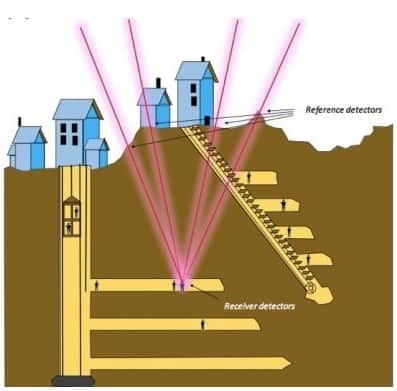
How it works: locating a muWNS receiver using four detectors on the surface. (Courtesy: Hiroyuki Tanaka)
Cosmic muons could provide a practical alternative to global navigation satellite systems (GNSSs) in places where radio signals cannot reach. That is the conclusion of the muPS collaboration, which has created a system that worked deep in the basement of a university building. The muPS team was led by Hiroyuki Tanaka at the University of Tokyo, and its new system could allow users to navigate in indoor, underground and underwater environments.
GNSSs such as GPS work by transmitting radio signals from a group of satellites to a receiver on the ground. While GNSSs have revolutionized how we get around, GNSS signals are rapidly attenuated by materials like metal, concrete, rock and water – limiting its use indoors, underground and underwater.
In 2020 Tanaka’s team introduced an entirely new approach that tracks the position of a receiver using cosmic muons. These particles are created when high-energy cosmic rays collide with Earth’s atmosphere, and they are constantly raining down on us.
Moving through mountains
“Cosmic muons are not intercepted like radio waves, since they can penetrate even through pyramids or mountains, making the technique suitable for universal indoor or underground navigation,” Tanaka explains.
Dubbed the muPS Wireless Navigation System (muWNS) by its inventors, the system replaces satellites with a network of three or more reference muon detectors, which are synchronized with a receiver detector. These reference detectors could be set up on roofs or higher floors for indoor navigation, or at ground or sea level for navigation through underground or underwater environments.
The system works by identifying muons that have passed through one of the reference detectors and then passed through the receiver. These muons travel at close to the speed of light, which allows muWNS to calculate the distance between the reference detector and receiver. By doing this several times using different reference detectors, the system uses triangulation to determine the receiver’s position.
While the concept is simple, Tanaka’s team had to overcome several challenges while developing muWNS. The initial design required the receiver to be wired to each reference detector to guarantee precise time synchronization, which severely restricted the range and usefulness of the system.
Precision timekeeping
To get around this problem, the team fitted the detectors with ultra-precise quartz crystal clocks, which were synchronized to allow them to compare muon arrival times wirelessly.
The researchers also managed to improve the accuracy of their initial system. “When muWNS was demonstrated for the first time about a year ago, the navigation accuracy was only down to 10 m,” Tanaka recalls. “This is far from the satisfactory level for practical implementation.”
By further improving the accuracy of the clocks, the team has now significantly reduced the errors that accumulate in the timings. In the latest demonstration, Tanaka’s team has shown that muWNS is now accurate enough to be useful for indoor navigation.
In a new study, the researchers used muWNS to track a user’s route across the basement floor of the University of Tokyo’s Institute of Industrial Science – an area that cannot be reached by conventional GNSS. This was done using reference detectors placed on the building’s sixth floor.
Noticeable improvement
When the user was in close range with the reference detectors, the system showed a noticeable improvement. “The current accuracy of muWNS is 2–25 m, with a range of up to 100 m, depending on the depth and speed of the person walking,” Tanaka explains. “This is as good as, if not better than, single-point GPS positioning aboveground in urban areas.”
However, Tanaka says there is still much room for improvement. “MuWNS is still far from practical. People need one-metre accuracy, and the key to this is the time synchronization.”
The researchers hope future improvements could be made by using chip-scale atomic clocks for timing. These clocks are an order of magnitude more precise than quartz crystals, but are too expensive today for practical use. Tanaka’s team also intends to miniaturize the system’s components, and believes it could eventually fit onto a handheld device.
While Minecraft is the best-selling video game in history and might have kids glued to their screens more than their parents would like, it does come with some educational benefits. One example is a new cosmic adventure called Our Place in Space. Based on the work of artist Oliver Jeffers and Queen’s University Belfast astronomer Stephen Smartt, the free download allows Minecraft gamers to travel through the solar system and throughout history.
As well as learning about the planets, users will also uncover and learn about issues such as war, famine, slavery and even fake news. The game, which has been downloaded over a million times since it was launched in April, was created as part of the Our Place in Space installation – a recreation of the solar system as a 10 km sculpture trail with an accompanying augmented reality app.
“It can be difficult to visualize and appreciate the scale of the universe,” says Smartt, who features as a Minecraft character in the game. “Our own solar system is only a tiny part of our galaxy, yet its dimensions are colossal.”
Useful potions
In a paper that you would usually expect to see published on 1 April, health scientists Christoph Kurz at the Helmholtz Zentrum München and Adriana König at the Ludwig Maximilian University of Munich investigated whether machine learning could generate useful potion recipes for Hogwarts School of Witchcraft and Wizardry (arXiv: 2307.00036).
They were inspired to do so given the recent interest in the pharmaceutical industry in using artificial intelligence, or AI, in drug discovery. The pair collected 72 potion recipes from the Harry Potter wiki page and then generated 10,000 new potion recipes by randomly picking between three to eight ingredients such as mistletoe berries and, er, unicorn horns.
They then used a neural network to predict the category of each potion, finding that half the recipes were psychoanaleptics – drugs that restore mental health – followed by 15% being dermatologicals – or treatments for the skin. “Two muggles with (presumably) no magical abilities performed the study,” the authors write. “Thus it is difficult to assess the validity and classification quality of the generated recipes.”
A new type of biodegradable ultrasound implant based on piezoelectric nanofibres could improve outcomes for patients with brain cancer.
Researchers led by Thanh Nguyen from the University of Connecticut’s department of mechanical engineering fabricated the devices from crystals of glycine, an amino acid found in the human body. Glycine is not only non-toxic and biodegradable, it is also highly piezoelectric, enabling the creation of a powerful ultrasound transducer that could help treat brain tumours.
Brain tumours are particularly difficult to treat because the chemotherapy drugs that would be effective in tackling them are blocked from entering the brain by the blood–brain barrier (BBB). This barrier is a very tight junction of cells lining the blood-vessel walls that prevents particles and large molecules from making their way through and damaging the brain. However, ultrasound can be safely used to temporarily alter the shape of the barrier cells such that chemotherapy drugs circulating in the bloodstream can pass through to the brain tissues.
Currently, to achieve such BBB opening requires the use of multiple ultrasound transducers located outside the body, together with very-high-intensity ultrasound to enable penetration through the thick human skull bone.
“That strong ultrasound can easily damage brain tissues and is not practical for the multiple-time applications which are required to repeatedly deliver chemotherapeutics,” Nguyen tells Physics World.
By contrast, the team’s new device would be implanted during the tumour removal surgery, and “can generate a powerful acoustic wave deep inside the brain tissues under a small supplied voltage to open the BBB”. The ultrasound would be triggered repeatedly as required to deliver the chemotherapy that kills off the residual cancer cells at tumour sites. After a set period of time following treatment, the implant biodegrades, thereby eliminating the need for surgery to remove it.
The research, reported in Science Advances, demonstrated that the team’s device used in conjunction with the chemotherapy drug paclitaxel significantly extended the lifetime of mice with glioblastomas (the most aggressive form of brain tumour) compared with mice receiving the drugs but no ultrasound treatment.
Nanofibres Fluorescent images of green-stained glycine particles and the red-stained PCL matrix. (Courtesy: Thanh D Nguyen, University of Connecticut)
However, there is a catch when making implantable ultrasound devices from glycine crystals. “The crystals are very brittle and highly water soluble, which makes the handling, fabrication and body implantation extremely challenging,” explains Nguyen. To tackle this problem, the team deliberately shattered the crystals into nanoparticles before encapsulating them inside a matrix of the flexible, biodegradable polymer polycaprolactone (PCL).
The researchers created nanofibres of PCL with encapsulated glycine via electrospinning – in which a polymer solution containing the glycine crystals is jetted out and stretched under a high voltage. Unlike conventional solvent-casting techniques, which randomize the crystal domains and dipoles in the crystals and so reduce their piezoelectric output, this processing creates oriented glycine crystals with high piezoelectric performance.
Next, they made the resulting nanofibres into piezoelectric films and then encased them within a biodegradable polymer that can be tuned to degrade at different rates by varying its thickness or chemistry. Lifetimes ranging from a few days to a few months are achievable, opening up the possibility of the device being useful for a variety of applications. These include enhancing the therapeutic effect of drugs for Alzheimer’s or Parkinson’s disease (which are difficult to get past the BBB), modulating neural signals in the brain, or monitoring brain pressure following traumatic brain injury.
The researchers now plan to test safety and effectiveness in larger animals, while concurrently studying the nanofibre’s piezoelectric and ferroelectric properties to optimize the implant’s performance. Understanding more about these fundamental properties “will enable us to achieve a stable, powerful ultrasound generator with a minimal need of power consumption, minimizing the risk of current leakage and extending the lifetime of the implanted device for broad applications,” says Nguyen.
Building a clock based on a nuclear transition has long been a goal of metrologists. As well as offering the potential of greater accuracy than atomic clocks, such a timekeeper could be more immune to external noise and could also be used to probe new physics beyond the Standard Model.
However, the challenges have been many and until recently researchers had not even managed to make a direct observation of the radiation associated with a potential nuclear-clock transition.
That changed earlier this year, when a team of researchers working at the ISOLDE experiment at CERN made the first direct observation of vacuum ultraviolet light from a transition in thorium-229. This episode of the Physics World Weekly podcast features team member Sandro Kraemer of the Institute for Nuclear and Radiation Physics at Belgium’s Catholic University of Leuven. He explains why physicists are keen on building a nuclear clock, why it has been so difficult, and what the ISOLDE measurement means for the future of timekeeping.
How does the human brain work? It depends on who you ask.
At school, you were likely taught that our brains contain billions of neurons that process inputs and help us form thoughts, emotions and movements. Ask imaging specialists, and you’ll learn about how we can see the brain in different ways using a variety of imaging techniques and about what we can learn from each image. Neuroscientists also will tell you about the interactions between neurons and related chemicals, such as dopamine and serotonin.
If you ask a subgroup of neuroscientists who focus on mathematical frameworks for how the brain’s shape influences its activity – an area of mathematical neuroscience called neural field theory – you’ll begin to understand the relationship between brain shape, structure and function in yet another way.
Neural field theory builds upon our conventional understanding of how the brain works. It uses the brain’s physical shape – the size, length and curvature of the cortex, and the three-dimensional shape of the subcortex – as a scaffold upon which brain activity happens over time and space. Scientists then model the brain’s macroscopic electrical activity using the brain’s geometry to impose constraints. Electrical activity along the cortex, for example, might be modelled as a superposition of travelling waves propagating through a sheet of neural tissue.
“The idea that the geometry of the brain can influence or constrain whatever activity happens inside is not a conventional neuroscience question, right? It’s a very esoteric question…There’s been decades of work in trying to map the intricate wiring of the brain, and we’ve thought that all the activity that comes out of the brain is driven by this intricate wiring,” says James Pang, a research fellow at Monash University’s Turner Institute for Brain and Mental Health.
In a study published in Nature, Pang and his colleagues have challenged this prevailing understanding by identifying a strong relationship between brain shape and functional MRI (fMRI) activity.
The researchers were studying natural resonances called eigenmodes, which occur when different parts of a system vibrate at the same frequency, such as the excitations that occur in the brain during a task-evoked fMRI scan. When they applied mathematical models from neural field theory to over 10,000 activity maps and fMRI data from the Human Connectome Project, the researchers found that cortical and subcortical activity results from excitation of brain-wide eigenmodes with long spatial wavelengths up to and exceeding 6 cm. This result contrasts with a leading belief that brain activity is localized.
“We have long thought that specific thoughts or sensations elicit activity in specific parts of the brain, but this study reveals that structured patterns of activity are excited across nearly the entire brain, just like the way in which a musical note arises from vibrations occurring along the entire length of a violin string, and not just an isolated segment,” says Pang in a press statement.
Pang and his colleagues also compared how geometric eigenmodes, obtained from models of brain shape, performed relative to connectome eigenmodes, which are obtained from models of brain connectivity. They found that geometric eigenmodes imposed greater limits on brain activity than connectome eigenmodes, suggesting that the brain’s contours and curvature strongly influence brain activity – perhaps even to a greater extent than the complex interconnectivity between populations of neurons themselves.
Simply put, the scientists’ results challenge our knowledge of how the human brain works.
“We’re not saying that the connectivity in your brain is not important,” says Pang. “What we’re saying is that the shape of your brain also has a significant contribution. It’s highly likely that both worlds have some synergy…there’s been decades and decades of work from both sides of the research in the neural field theory world and the connectivity world, and both are important, in my opinion. This study opens up so many possibilities – we could study how geometric eigenmodes vary through neurodevelopment or are disrupted by clinical disorders, for example. It’s quite exciting.”
An elastocaloric cooling system that absorbs heat as tension is released in bundles of metal tubes has been developed by a team of researchers in the US and China. Led by Ichiro Takeuchi at the University of Maryland, the team’s scheme achieved a cooling performance on par with other caloric materials, and could pave the way for commercial use in the not-too-distant future.
Conventional refrigeration systems usually employ gases that have powerful greenhouse effects if released into the atmosphere. As a result, researchers are developing alternative solid-state refrigeration technologies based on caloric materials. These materials undergo temperature changes when exposed to external magnetic or electric fields, or in response to mechanical stress or pressure. As well as avoiding harmful chemicals, cooling systems based on caloric materials could also be more energy efficient than existing refrigerators.
So far, this research has focused mainly on magnetocaloric materials – but more recently, elastocaloric materials have emerged as even more promising candidates for commercial caloric cooling. Among these materials is the highly elastic and easily manufactured alloy nickel titanium (NiTi).
Under tension
As Takeuchi’s team first showed over a decade ago, thin wires of this alloy can expel large amounts of heat when under tension, and absorb it when the tension is released. “About 12 years ago, we discovered that NiTi can experimentally display a large span in temperature, which you can feel by hand,” Takeuchi recalls. “At the time, we demonstrated this by adding tension to readily available NiTi wires. This is how we started making elastocaloric devices.”
The researchers then set to work on developing commercially useful cooling applications. However, implementing elastocaloric cooling on a large scale has turned out to be a significant technical challenge. The main problem is that repeated cycles of tension and release damage NiTi wires, limiting their practical lifetimes.
To address this challenge, Takeuchi’s team developed a novel heat exchange system whereby water is pumped through bundles of NiTi tubes. “It took us a long time to overcome various engineering challenges, but with our recent demonstration, we were able to demonstrate what we envisioned 10 years ago. We are using water as heat exchange fluid – making the water colder, so it can be used in turn for refrigeration or air conditioning,” Takeuchi explains.
The team used two quantities to gauge the success of the approach. The first is “delivered cooling power”, which describes the rate of heat removal. The second is “temperature span”, which describes the difference in temperature between the water at each end of the system. “For these two important figures, we have been able to achieve 260 W and 22.5 K, respectively,” says Takeuchi. The researchers maximized each of these values in turn, simply by adjusting the operation sequences of valves in their heat-exchange system.
Catching up
These latest results are an example of how elastocaloric materials are catching up with the cooling performance of their magnetocaloric counterparts, and could soon be feasible candidates for commercial cooling systems.
However, Takeuchi concedes that the practical use of elastocaloric materials may still be some way off, as it will likely require more advanced materials to be developed first. “The high stress required for NiTi is still a problem, but there are materials on the horizon, other superelastic materials, which are known to exhibit elastocaloric effects with much smaller stress,” he says.
“These materials are less developed, and not commercially available yet, but we believe further development of these materials and implementing them in low-stress cooling systems is a really exciting prospect.” Takeuchi’s team has already drawn out plans for a compact, elastocaloric wine cooler, and hopes to demonstrate a successful prototype once these materials are available.
Path to success Sarafina El-Badry Nance is an astrophysicist and science communicator who was named in 2021 by Forbes magazine as one of 30 inspirational women from all walks of life. (Courtesy: Lawrence Berkeley lab)
When I was a girl, I was fascinated by science but had few – if any – female astrophysicists to look up to. As a woman in physics today, I know just how important it is to have a strong, empowering female role model to aspire to. Sarafina El-Badry Nance – currently doing graduate work in astrophysics and cosmology at the University of California, Berkeley – is exactly the kind of person I wish I’d known when I was growing up.
Starstruck: a Memoir of Astrophysics and Finding Light in the Dark describes the challenging – yet often unseen – road that unfortunately all too many women have to journey along to succeed. The path that El-Badry Nance followed to become the powerful and inspirational scientist she is today was fraught with challenges and doubt, yet she never quit or lost sight of her dream. Brilliantly weaving together El-Badry Nance’s personal story with our understanding of astronomy, Starstruck explains how she found freedom and solace in exploring the universe.
The book begins by describing the author’s love and passion for the night sky, which began as a child growing up in Austin, Texas. But the challenges she had to contend with at home and school quickly become apparent. Born to an Egyptian mother and an American father, El-Badry Nance faced both racism and sexism – and, like many women, was repeatedly told that girls were not cut out for science and maths. This bigotry led to huge amounts of anxiety and self-doubt.
While her parents’ relationship with each other caused much of her childhood trauma, El-Badry Nance was privileged to attend a school that helped her deal with her anxiety. The school, which was private, gave her access to opportunities that other people facing similar challenges might not have, letting her pursue her passion for astronomy. Her parents also helped El-Badry Nance to counteract the bigotry she faced from her teachers and peers.
Starstruck is a book that many women will relate to. But it is nonetheless an important tale to tell
Crucially, El-Badry Nance now recognizes her privilege and uses the platform it gave her to communicate the excitement of science – and the simple truth that it is a subject open for everyone. Indeed, despite the traumas of her childhood, the author ended up doing a degree in physics and astrophysics at the University of Texas, Austin, although even there she faced more sexism and misogyny from both her peers and professors.
Starstruck is a book that many women will relate to. But it is nonetheless an important tale to tell for we cannot begin to make progress on sexism in science without raising awareness of just how widespread this issue is. Worse still, the author was also subject to an abusive relationship during her degree. Her abuser took advantage of her insecurities, tormenting her both during their relationship and afterwards too.
This abuse took its toll both physically and mentally on El-Badry Nance, repressing her passion for astronomy. Thankfully, with help from a therapist and her family, she was able to escape this hell and learn how to heal. This part of the book is difficult to read, but it is what makes El-Badry Nance the woman she is today. The strength and resilience she has had to show are extraordinary – and will inspire many others who have faced similar experiences of their own.
El-Badry Nance’s hard work and passion for astronomy eventually saw her accept an offer from Berkeley’s graduate programme. Rewarded after years of anxiety and hard work, she was now able to realize the dream she had harboured since childhood of being a professional scientist. But there was more trouble in store: first, her father was diagnosed with cancer and then she was too.
El-Badry Nance had the misfortune of inheriting a genetic mutation that affected her grandmother, her father and now her. Aged just 23, El-Badry Nance was told she had an 87% chance of developing breast cancer. It was pretty much a case of when – not if – the cancer would appear, and the author was forced to make one of the hardest and bravest decisions of her life: to get a preventative double mastectomy.
Since her double mastectomy, El-Badry Nance has used her position of influence to bring awareness to breast cancer and the importance of self-testing to a wider audience
Since the operation, El-Badry Nance has used her position of influence online to bring awareness to this horrendous disease and the importance of self-testing to a wider audience. However, her inspirational story has only just begun. As well as doing a PhD in astronomy at Berkeley, she is also training as an “analogue astronaut” on a Mars simulation facility in Hawai’i.
Despite the anxiety and self-doubt she has faced, the book is an uplifting tale of passion, resilience and strength. El-Badry Nance is a remarkable young woman, using her past experiences to help others who might be struggling with their own lives. Still healing from her own trauma, she is a force to be reckoned with and I am looking forward to seeing what she will do next. For Sarafina El-Badry Nance, the sky really is the limit.
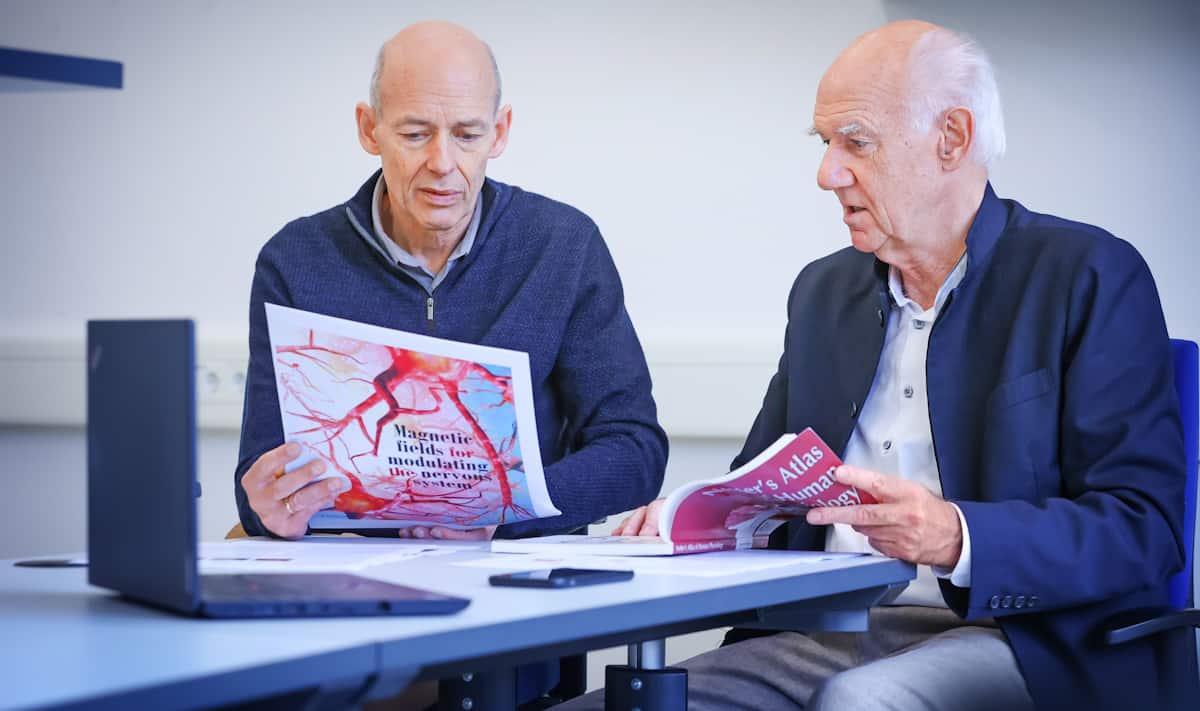
Reactivating damaged motoneurons Thomas Herrmannsdörfer (left) and Richard Funk are investigating the therapeutic effect of magnetic fields on impaired motoneurons. (Courtesy: HZDR/Amac Garbe)
Amyotrophic lateral sclerosis (ALS) is a severe incurable disorder in which motoneurons – nerve cells in the brain and spinal cord that send signals to muscles to control movement – are damaged. Without functioning motoneurons, the muscles do not receive instructions and no longer work, leading to progressive paralysis, muscle atrophy and, eventually, failure of the respiratory system.
Currently, there is no successful treatment for ALS, with drug therapies only having a marginal impact on patient survival. Aiming to address this shortfall, an interdisciplinary research team headed up at Helmholtz-Zentrum Dresden-Rossendorf (HZDR) and TU Dresden is investigating the potential of using magnetic fields to restore impaired motoneurons.
The influence of magnetic stimulation on neuronal diseases has been widely investigated. However, applications in peripheral nerves are scarce. In this latest study, reported in Cells, the researchers assessed whether magnetic stimulation of peripheral motoneurons could restore defects in stem cell-derived motoneurons from ALS patients with mutations in the FUS gene (FUS-ALS).
The team – headed up by physicist Thomas Herrmannsdörfer, cell biologist Arun Pal and physician Richard Funk, and supported by colleagues at TU Dresden and the University of Rostock – generated spinal motoneurons by reprogramming induced pluripotent stem cells obtained from skin biopsies of healthy individuals and patients with FUS-ALS. They designed and fabricated electromagnetic coils that can be operated in cell culture incubators, and used these to expose the motoneurons to tailored magnetic fields.
Each magnetic stimulation comprised four consecutive treatments (several hours in duration) using very low square-wave frequencies of 2 to 10 Hz. The treatments were performed after the cells had matured for 30 to 45 days in vitro, with the coils switched off in between. After the final treatment, the team maintained the cells in culture for two days before assessing the impact of the magnetic stimulation.
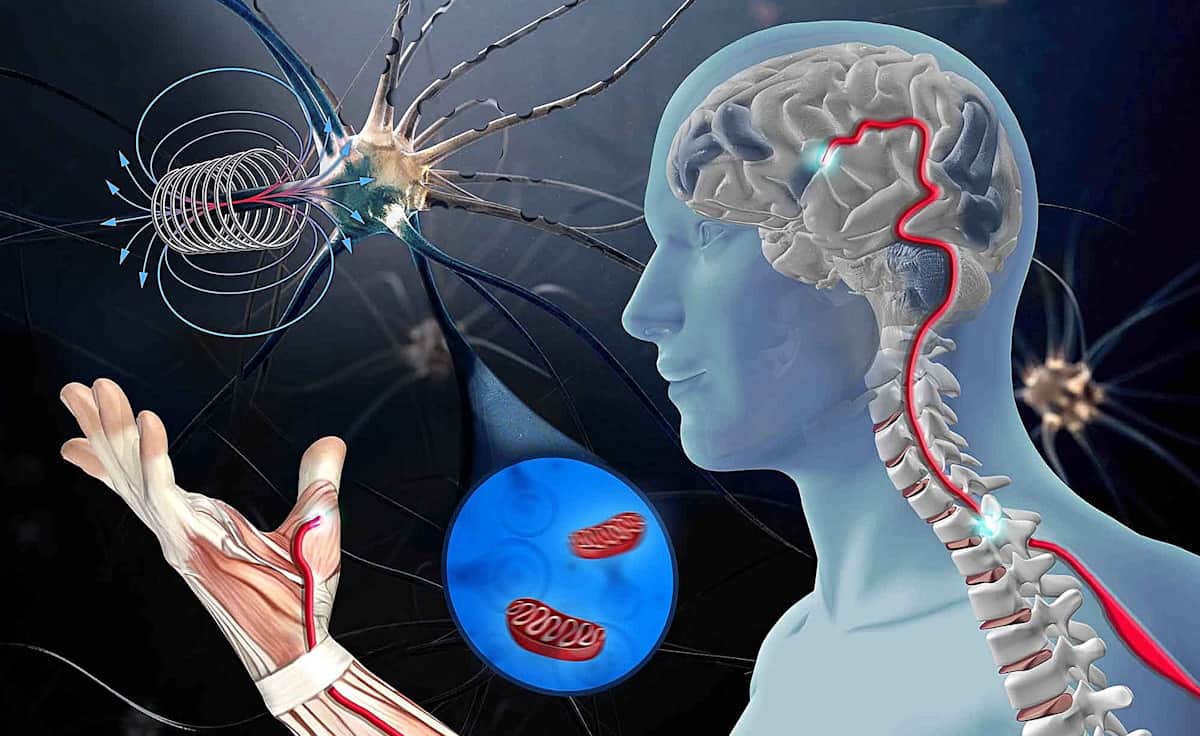
Towards a cure Pulsed magnetic fields could help fight neurodegenerative diseases. (Courtesy: HZDR/Sahneweiß)
Restoring axonal defects
Motoneurons possess lengthy projections called axons, which can measure up to 1 m long, that transport substances and transmit information. Impairments in the transport of axonal organelles such as mitochondria and lysosomes contribute to neuronal degeneration in ALS. Thus the researchers used live cell imaging and immunofluorescent staining to measure the motility of these organelles in motoneurons exposed to magnetic fields.
They first examined the mean organelle speed. Quantitative tracking analysis revealed a decreased distal mean speed for both mitochondria and lysosomes in untreated mutant FUS motoneurons compared with control cells (derived from healthy donors). Exposure to magnetic fields reverted the mean speed in FUS motoneurons back to control levels, with the best effects seen using very low frequencies of about 10 Hz.
Another hallmark of ALS is a diminished ability of axons to grow and regenerate after injuries or during aging. Such growth is crucial for maintaining inter-neuronal connectivity across nerve endings and transmitting information. To study whether magnetic stimulation could improve such defects, the team used live imaging of cells in microfluidic chambers to analyse the new outgrowth of axonal growth cones after axotomy (severing of an axon).
The researchers observed a reduced mean axonal outgrowth speed in untreated FUS motoneurons compared with control cells. Magnetic stimulation of the FUS motoneurons at 10 Hz significantly increased the mean outgrowth speed back to control levels. The magnetic fields did not affect the mean outgrowth speed in control motoneurons.
In numerous experiments, the researchers showed that motoneurons from ALS patients respond to the magnetic fields, with impaired axonal transport of organelles reactivated by stimulation and axonal regeneration restored. Importantly, they also demonstrated that healthy cells were not damaged by the magnetic stimulation.
While these findings appear promising, the team highlights the need for long-term and in vivo studies. “We regard these in vitro results as an encouraging approach on the path to a potential novel therapy for ALS, as well as other neurogenerative diseases,” says Herrmannsdörfer in a press statement. “We also know, however, that detailed follow-up studies are required to corroborate our findings.”
Now working within the ThaXonian project, Herrmannsdörfer and his colleagues are planning further studies to optimize the parameters of the applied magnetic field, understand the cellular response to various magnetic stimuli, and test the treatment on other neurodegenerative disorders, such as Parkinson’s, Huntington’s and Alzheimer’s diseases.