FLASH radiotherapy creates a stir at ESTRO trade show

Valeria Preda and David White

FLASH radiotherapy, in which radiation is delivered at ultrahigh dose rates (40 Gy/s or above), offers promise to spare healthy tissue while still effectively killing cancer cells. This so-called FLASH effect has been demonstrated extensively in preclinical studies over the past few years, with the first patient treatment taking place in 2019 and results from a first in-human trial reported last year.

At the recent ESTRO 2023 congress in Vienna, FLASH featured heavily among the scientific presentations. And the technique was also making an impact at the trade show. “At ESTRO, we noticed that interest in FLASH is really high,” said Valeria Preda from Italian radiotherapy specialist SIT. “Ninety percent of the people who have visited us are more interested in FLASH.”

SIT was showcasing its ElectronFlash system, a dedicated research accelerator for FLASH radiotherapy. Preda noted that the first system was installed at Institut Curie in France (the site at which Vincent Favaudon first reported the FLASH effect back in 2014), with further systems installed in Antwerp University, Pisa University and shortly also in Madrid (where the first patients will be treated with ElectronFlash within the frame of a clinical trial).

Designed for pre-clinical studies on cells, organoids and small animals, the ElectronFlash comes in three versions, with energy ranges of 5–7, 7–9 and 10–12 MeV, and a dose rate adjustable between 0.005 and 10,000 Gy/s. The system allows for modification of the dose-per-pulse, pulse width and pulse repetition frequency, and can be installed in any standard radiotherapy bunker.

Alongside its pre-clinical offering, SIT is also developing a clinical device – the LIAC FLASH – designed for both clinical and research applications. Preda explained that SIT’s LIAC system was originally developed for intra-operative electron radiotherapy (IOeRT), in which radiation is delivered during a tumour excision operation using a beam of electrons.

IOeRT works by delivering a single dose of irradiation, or as a boost to reduce the number of fractions, to a surgically exposed tumour or tumour bed, whilst the normal tissues are protected by retraction or using a temporary inserted shield. The FLASH workflow will be similar to IOeRT with a new developed device, explained SIT/Vertec Scientific’s David White, but much faster, with irradiation times reduced from minutes to milliseconds.

The team is now working on CE certification for the LIAC FLASH, which will offer both conventional IOeRT and FLASH dose rates, and market launch is predicted for the first half of 2025. The new system will address all the IOeRT indications currently included within ESTRO, ASTRO and NCCN guidelines. “I see FLASH technology being the next big step forward for IOeRT,” White told Physics World.

Deep treatment

Also exhibiting its latest FLASH technology offerings was THERYQ, a spin-off of French manufacturer PMB-ALCEN. PMB developed the Oriatron electron linear accelerator, employed for early FLASH studies and used at Lausanne University Hospital (CHUV) for the first FLASH treatment of a patient.

Ludovic Le Meunier

Building on this expertise, THERYQ developed FLASHKNiFE, a mobile treatment system that combines an ultrahigh dose rate (up to 350 Gy/s) electron linac with an interactive robot. The system delivers electron beams with energies of 6 to 10 MeV, and can treat at depths of up to 3 cm. The company released the first prototype machine in 2021 and is soon to start clinical trials in four European centres, including CHUV.

The initial trial is designed to demonstrate the safety of the system when used in external-beam treatments of skin cancer, with CE certification slated for 2025. A second trial next year will study the use of the FLASHKNiFE for intra-operative radiotherapy of head-and-neck and visceral tumours.

Alongside, THERYQ is developing a second system, FLASHDEEP, that will be able to treat solid tumours anywhere in the body. “We are now working in collaboration with CHUV and CERN to develop a FLASH system capable of targeting any tumour at any depth,” explained the company’s CEO Ludovic Le Meunier.

The FLASHDEEP accelerator is based on compact linear collider (CLIC) technology developed by CERN, which generates very high-energy electron (VHEE) beams with energies of 100 to 200 MeV and enables treatment of tumours at depths of up to 20 cm. The VHEE beams are distributed into three beamlines, which converge towards the patient isocentre to provide conformal treatment.

The system will deliver doses of 2 to 30 Gy and employ real-time pulse-to-pulse control to enable treatment times of less than 100 ms. Since the system will not involve a gantry, THERYQ intends to use an upright patient positioning system (from Leo Cancer Care) for treatments.

The system is being developed at CHUV, with full installation expected in mid-2025. After that, the company hopes to install a second machine in Institut Gustave Roussy in Paris, followed in 2027 by a system at IUCT, the Cancer University Institute of Toulouse, and another at a US site. “If we do what we say we’re going to do, I think there will be a big shift,” Le Meunier told Physics World.

Adapting an established platform

Elsewhere on the ESTRO show floor, US electron therapy specialist IntraOp presented the application of its Mobetron electron-beam linear accelerator for preclinical and investigational FLASH radiotherapy studies. The company points out that Mobetron is the first to provide ultrahigh-dose rate electron therapy for FLASH research using an established clinical radiotherapy platform, and the first being used in human clinical trials of FLASH radiotherapy with electrons, with two clinical protocols (IMPulse and LANCE) already approved.
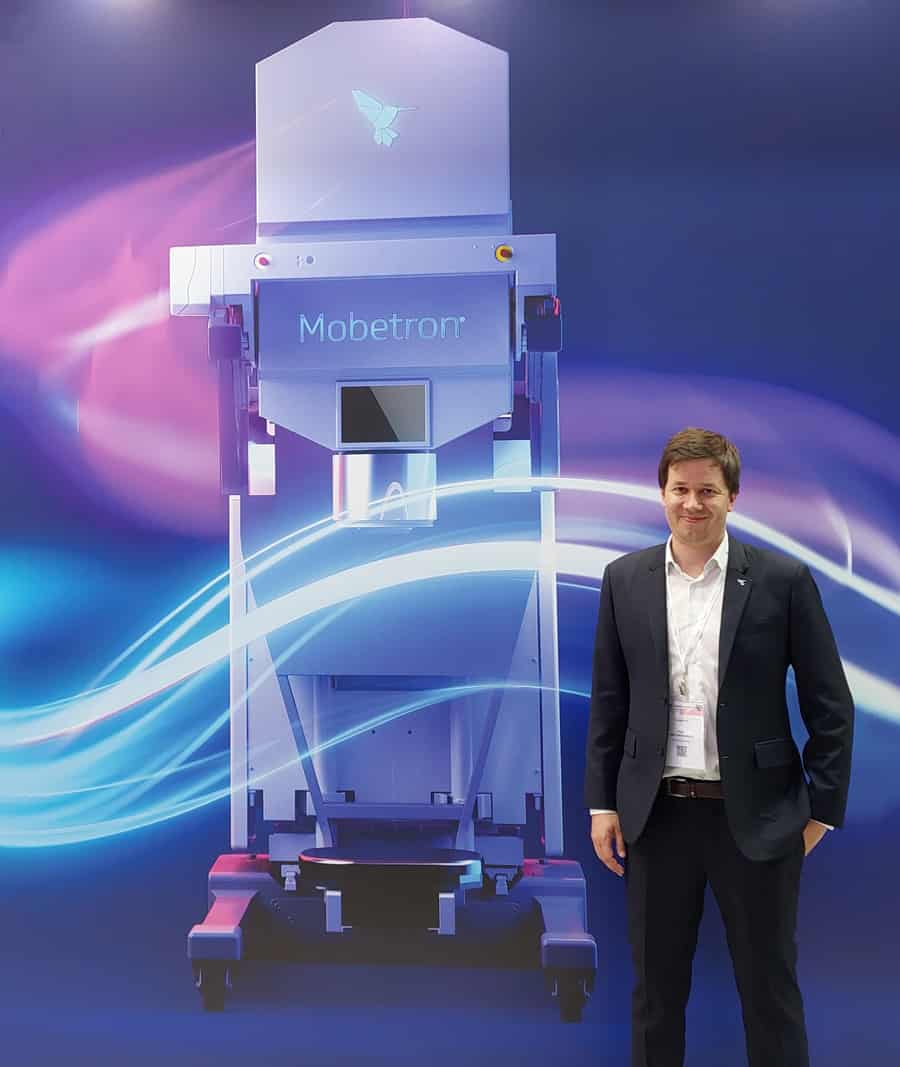
The IntraOp Mobetron is a mobile, self-shielded machine designed to deliver intra-operative radiotherapy (IORT) to cancer patients during surgery. Now in established clinical use at dozens of cancer centres, clinics and teaching hospitals around the world, the system delivers beam energies of 6, 9 and 12 MeV to treat at depths of up to 4 cm.

Philip von Voigts-Rhetz, clinical application specialist at IntraOp, explained that to move to FLASH irradiation, the company used the identical clinical platform but modified key beam parameters.

“It took some time to adjust key parameters and get a stable and reproducible beam, with large field sizes that could be used for patient irradiation,” he said. “Then three years ago we delivered the first FLASH system and we now have 10 installations at leading cancer centres and universities worldwide.”

One major obstacle in the use of FLASH radiotherapy is the difficulty in performing accurate dosimetry at ultrahigh dose rates, where conventional ion chambers exhibit beam perturbation and saturation effects. To overcome this, the Mobetron incorporates two beam-current transformers (BCTs) to provide real-time monitoring of the output and energy of pulsed electron FLASH beams.

A study performed at the MD Anderson Cancer Center demonstrated that BCTs can accurately monitor the FLASH beams, quantify accelerator performance and capture essential physical beam parameters on a pulse-by-pulse basis. In the future, IntraOp proposes that BCTs could also be used for active control of electron FLASH beams.

Von Voigts-Rhetz noted that the modified Mobetron can operate at both conventional and ultrahigh dose rates. “One system can be used for clinical IORT in the day for patient treatments, and then turn into a FLASH system for research, ensuring the fastest path to clinical implementation of FLASH radiotherapy,” he told Physics World.

A co-ordinated measurement system is one of humanity’s greatest achievements – we must stick with it

When I was at primary school in the 1960s, measurements were performed using traditional, or imperial, units. The ounce, pound, stone, inch, foot and so on were combined in multiples of 3, 4, 12, 14, 16 and…1760 (one mile being 1760 yards) and often had strange definitions. The furlong, for example, originated from the length that an ox-drawn plough could cover, being 220 yards.

From 1974 onwards, a welcome change occurred when it became compulsory for UK schools to teach metric units – a measurement system that made sense, based on multiples of 10. The bizarre vocabulary of different units was replaced by prefixes that were the same whether you were measuring length, time, mass or radioactivity. It is a system that is simple and works from the very small to the very large.

For this concept, we can thank the Northamptonshire-born clergyman and natural philosopher Reverend John Wilkins (1614–1672). One of the greatest thinkers of his generation, in 1668 he proposed a system of measurement based on a universal standard of length and a decimal scheme. It was one of the first concrete proposals for the metric system of measurement.

His ideas were not adopted straightaway, but Wilkins knew that, in the words of Ecclesiastes, there is a time for every matter under heaven. For the metric system, that time was the French Revolution. Measurements in France in the 18th century had been a mess, with hundreds of local systems leading to countless frauds. Fair weights and measures were one demand of the revolutionaries.

Indeed, in 1790 Talleyrand, the Bishop of Autun contacted the British Parliament to propose adopting a unified system of measurements. This putative Anglo-French co-operation was rejected by the British parliament but the French pressed ahead anyway. The advantages of the new metric system were clear and on 20 May 1875 an international treaty – the Metre Convention – was signed that established the metric system of measurements.

The convention also established the International Weights and Measures Bureau (BIPM) to co-ordinate the new scheme. One of its first jobs was to construct a standard kilogram – a metal artefact that would serve as the reference point for the world. Countries would hold a copy of the artefact, allowing industry to compare their weights to the copy. Constructing the standard kilogram proved difficult and, in fact, a British engineering firm, Johnson Matthey, was commissioned to help. The first standard kilogram, known as the International Prototype Kilogram, is at the BIPM to this day.

Yet the metric system – known as the Système International d’Unités or simply “SI” – had to expand to meet the needs of industry. It was found that only seven base units were needed (mass, length, time, electrical current, temperature, luminous intensity and amount of substance); everything else could be expressed in terms of these units. Methods were developed to realize standard units that relied only on the underlying physics.

The UK government should realize that the metric system has strong British roots and should applaud the contribution that British scientists have made, rather than perceiving it as something ‘foreign’ 

Although the kilogram remained stubbornly difficult to replace, it was a British scientist – Bryan Kibble – who helped find a solution. Based at the National Physical Laboratory in Teddington, UK, he developed an ingenious balance that linked a measurement of mass to the force produced by an electrical current in a coil, and hence to the Planck constant. The standard kilogram could retire gracefully and, from 20 May 2019, all measurements were based on constants that describe the natural world. Wilkins’ vision had come to pass.

‘Foolishness beyond measure’

I mention all this because tomorrow, 20 May 2023, marks World Metrology Day. It celebrates the anniversary of the signing of the Metre Convention, which the UK signed in 1884, having legalized the use of the metric system several years earlier. The theme this year is metrology to support the global food system. This includes the rapid measurements of mass to ensure pre-packaged foods are labelled correctly, determining the isotopic composition of high-value foods (such as honey) to confirm their origin, and detecting chemical or biological contamination.

Despite the success of the metric system, there remain some politicians in the UK who – in this post-Brexit age – are actually considering whether it would be better for shops to revert to imperial units. The government even conducted a survey to gauge public opinion on a return to historical weights and measures, which received over 100,000 responses. However, existing legislation already allows shops to use traditional units, so long as metric units are also displayed.

Of course, there is nothing wrong with using the old units alongside the SI, and there is nothing in current UK regulations to forbid it. The pound is defined to be exactly 0.45359237 kg and an inch is exactly 2.54 cm, so the two systems are joined. My local pub sells beer in pints, I buy petrol in litres, give my height in feet and inches, and I use centimetres or inches when cutting up wood for DIY projects, whatever is most convenient.

Having the two systems is a compromise that has worked well for decades. Apart from the time and money wasted on the survey, the UK government is simply stirring discontent between those who want to hark back to the “good old days” and a younger generation who want to keep with the times.

The UK government should realize that the metric system has strong British roots and should applaud the contribution that British scientists have made, rather than perceiving it as something “foreign”. It should be celebrating the science of metrology and looking to the opportunities offered by developing innovative instruments based on quantum mechanics and improving productivity by introducing digitization. A harmonized measurement system is one of humanity’s greatest achievements and for any government to promote a return to the old ways is foolishness beyond measure.

In the words of the French mathematician and philosopher Marquis de Condorcet in 1791, the metric system is “for all people, for all time”.

Optical frequency combs in space: ready for take-off

Want to learn more on this subject?

Optical frequency comb technology and its capability to directly measure and convert optical frequencies has revolutionized the field of high-precision metrology. While it is enabling novel technologies such as optical clocks and quantum applications, the demand is growing to exploit these technologies in space missions. To meet the requirements set by the harsh space environment, Menlo Systems has developed the Space Comb, with low size, weight and power (SWAP) characteristics, with high robustness against shock and vibration, radiation-tolerant components, standardized interfaces and autonomous operation.

In this webinar, we will illuminate the technology of optical frequency combs and the path to a space qualified product, including precursor missions on sounding rockets. We will walk you through the characterization of the system and stress the crucial aspects of its development for space-readiness. The designated application of the Space Comb in the COMPASSO project of the German Aerospace Center (DLR) will be presented, with the aim to enhance the precision performance of global navigation satellite systems (GNSS). Finally, we will give an overview over the potential landscape of future space applications for optical frequency combs.

Want to learn more on this subject?

Frederik Böhle joined Menlo Systems in 2017, working as a project manager on the development of space-qualified optical frequency combs.

Matthias Lezius joined Menlo Systems in November 2010, and was senior scientist from 2010–2019. Since 2019 he has been group manager development and custom projects (solutions for space).

Benjamin Sprenger joined Menlo Systems in June 2015, and was sales engineer for frequency combs and optical reference systems from 2015–2019. Since 2020 he has been regional manager in Berlin and quantum technology and metrology expert.

Multilegged robots crawl over rough terrain, building houses with used diapers

First up in this week’s Red Folder are robots that have been inspired by the humble centipede and created by researchers at Georgia Tech in the US. You might be wondering why they have gone to the bother of creating a robot with lots of legs, if many animals are happy having just four – or even two in the case of us humans.

To explore the benefits of many legs, the team developed a new model of multilegged locomotion, which suggested that multilegged robots would be very good at travelling over uneven surfaces. This was predicted to occur even if some of the legs were “redundant” in the sense that they did not have any independent sensing or control capabilities.

They confirmed this by building robots with redundant legs and you can watch one in action in the above video.

Georgia Tech’s Baxi Chong explains, “With an advanced bipedal robot, many sensors are typically required to control it in real time. But in applications such as search and rescue, exploring Mars, or even micro robots, there is a need to drive a robot with limited sensing. There are many reasons for such a sensor-free initiative. The sensors can be expensive and fragile, or the environments can change so fast that it doesn’t allow enough sensor-controller response time.”

Their research is described in Science.

Nappy construction

According to a study led by Siswanti Zuraida at Japan’s University of Kitakyushu, up to 8% of the sand and mortar used to build a house could be made from used disposable diapers that have been cleaned and shredded.

They made their concrete and mortar samples by combining washed, dried and shredded disposable diaper waste with cement, sand, gravel and water. The samples were then cured for one month. The samples contained different proportions of diaper waste, which allowed the researchers to find an optimal blend of materials.

They measured the pressure that the samples could withstand without breaking. This allowed them to calculate the maximum proportion of sand that could be replaced with disposable diapers in a range of building materials that would be needed to build a house.

Today, most disposable diapers are put in landfill or incinerated so this seems like a sustainable use of the material. But as the parent of three (now grown) children, I certainly wouldn’t want to be responsible for washing the diapers.

The team reports its results in Scientific Reports.

Commercializing quantum technologies: the risks and opportunities

This week, the Economist hosted the “Commercialising Quantum Global” conference in the UK and I was very pleased to attend in person on Wednesday. The meeting was held in the heart of the City of London, one of the world’s great financial centres. This was no coincidence, because this was not a conference primarily about science, or even technology – business was at the centre of most discussions.

The conference centre was in a part of the City called Houndsditch, which is just outside of what had been London’s medieval wall. I’m probably making too much of the symbolism of this location, but it seemed appropriate for the upstart quantum industry to be camped just outside of a citadel of commerce, plotting its entry.

After the first few talks at the conference, it became clear to me that most people there believed that quantum computing and other quantum technologies could bring great business opportunities as well as threats. As I scanned the speaker list for the day, I decided that one way of getting a broad understanding of how quantum could affect business was to attend two talks by people in the insurance industry.

Optimizing reinsurance

Those two speakers were Roland Scharrer, who is group chief data and emerging technology officer at AXA, and Andreas Nawroth who is leading expert for artificial intelligence at Munich Re.

Scharrer says that AXA started exploring quantum technologies in 2020. Indeed, many of the speakers at the conference said that their companies have been investigating quantum computing for about two to three years. And like many other companies, one of AXA’s main interests in quantum computing is using it for optimization.

For Scharrer a primary interest is using quantum algorithms to minimize the risk, and maximize the profit, associated with AXA’s use of reinsurance. Reinsurance is a product that one insurance company buys from another insurance company to cover losses in certain circumstances. This allows an insurance company to share risk with others and it is often used to cover so-called “black swan” events. These are very rare events that are extremely difficult to predict and can be very costly for insurers

Heuristic approach

Striking a balance between using reinsurance and insuring risk internally is a classic optimization problem that is very important for an insurance company to get right. Getting things wrong, even by a tiny bit, can be very costly. Scharrer explains that optimization is currently done using a heuristic approach that relies on human expertise.

While reinsurance optimization could be done better on a conventional computer, Scharrer says that it would take decades to do the calculations. And that is where a quantum computer could come in handy – because some quantum computers are predicted to be very good at solving certain optimization problems that could be relative to reinsurance. But like a lot of the technology being discussed at the conference, such a quantum computer does not yet exist.

In his talk, Munich Re’s Nawroth talked about how insurers could use quantum computers to do simulations that could help them better understand a wide range of phenomena that affect risk. These include climate change, green technologies, financial markets, pandemics, cyber security and so on.

Insuring for quantum effects

But for me, the most interesting thing that he spoke about was the need for insurers to understand the risks associated with the peculiar nature of quantum computing itself. This because their customers will want to ensure against these risks. One of these risks is associated with the no-cloning theorem of quantum mechanics, which states that it is impossible to create an exact copy of a quantum state. This, says Nawroth, would make it difficult for a quantum information system to recover after a cyber attack.

Another risk is that quantum algorithms are currently poorly understood, so it is difficult to insure against risks associated with their use. Finally, Nawroth pointed out that a move to quantum computing would mark a shift from deterministic to probabilistic algorithms – which again pose new challenges when it comes to insurance.

The simple fact that I was able to attend two talks on insurance and quantum computing, makes it clear that discussions around quantum technology have “moved beyond physics”. Indeed, I would say that this was an overriding theme of the conference. While I understand why progressing from basic science is a milestone in the commercialization of any technology, I’m not convinced that quantum computing is quite there yet.

Artificial comparison

For example, several speakers compared quantum computing to artificial intelligence (AI) in terms of its potential disruptive effects on business and on society. While it’s tempting to draw parallels between the two, I think it’s important to keep in mind that AI is a fully fledged technology that is already seeing widespread commercial use. And, in the case of ChatGPT, AI can be accessed from any smartphone. In contrast, quantum computing is a much more nascent technology that is only now seeing a few green shoots of commercial application.

Jay Gambetta, who leads IBM’s quantum computing initiative, is one who embraced this idea of moving on. He said that we are beyond the “quantum is cool” phase and have moved into the “utility” phase in the development of quantum computers. IBM’s 2023 generation of quantum processors will have 100–1000 quantum bits or qubits and the company intends to scale this up to 100,000 qubits in the next decade – creating machines that could address a range of practical computing problems. While much of this effort will be focused on engineering, I’m sure physicists will play important roles in making this happen – so perhaps it is a bit early to say that the industry has moved away from physics and into a truly commercial world

Ultrafast imaging sheds light on the earliest stages of vision

Rhodopsin, the protein that enables humans and other vertebrates to sense light, belongs to the family of light-sensitive G protein-coupled receptors (GPCRs). It comes first in the signal transduction pathway for vision to begin. Once it absorbs a photon, an immediate (within 200 fs) conformational change occurs in the retinal, a chromophore located inside rhodopsin. This early structural change initiates the cellular signal transduction processes that set early stages of vision. However, details of the real-time intramolecular events through which the photoactivated retinal induces the activation events inside rhodopsin remain unclear.

To fill this knowledge gap, researchers at the Paul Scherrer Institute (PSI) in Switzerland used ultrafast time-resolved crystallography to study conformational changes in rhodopsin after it absorbs a photon. Their findings, reported in Nature, explain how the retinal only absorbs part of the photon energy, storing the remaining energy to fuel the conformational changes associated with the formation of the G protein-binding signalling state.

To record and analyse the activation mechanism of the retinal chromophore at the atomic scale, and with ultrafast (picosecond) temporal resolution, the team used time-resolved serial femtosecond crystallography (TR-SFX) at room temperature.

For their experiments, the researchers first grew high-quality rhodopsin microcrystals, and then used TR-SFX to generate series of diffraction pattern images of the crystals. More precisely, they used an optical laser pulse to photoactivate the protein molecules in the crystal and then – after a specified time delay – probed the structure with an X-ray pulse from an X-ray free electron laser (XFEL). Recording with the XFEL, effectively a very high-speed camera, the researchers collected serial frames from tens of thousands of crystals oriented in random manner.

PSI researcher Valérie Panneels

The analyses performed by the team included modelling the rhodopsin structure for electron density changes together with structural refinement against crystallography observations. This revealed that light-induced isomerization (in which a molecule switches between two distinct conformations) with a bend in the retinal chromophore persists for 1 ps, given that the first metastable intermediate of rhodopsin appears 200 fs after photoactivation. Then 100 ps later, the rhodopsin structure adopts a more relaxed conformation. Thereby the results suggest that the protein utilizes active (or functional) zones of the GPCR structural pathways for energy dissipation.

One highlight of this new study is that the room-temperature structure reveals electron density for all previously described functional and structural water molecules, including those that have a role later in the photoactivation process. The researchers note that previous structures resolved under cryogenic conditions failed to achieve this. Consequently, the new high-resolution SFX structure of rhodopsin showcases the entirety of the water-mediated hydrogen bond network within the protein.

The investigation sheds light on the earliest stages of vision, revealing that ultrafast energy dissipation in rhodopsin occurs through conserved residues of GPCR activation pathways, paving the way to study the early activation events in this largest family of GPCRs (class A).


Cerca Magnetics bags qBIG Prize for quantum innovation

Earlier this week I had the pleasure of attending the first day of the Economist’s Commercialising Quantum Global conference in London. It was a thoroughly enjoyable experience to be out and about again, rubbing shoulders with people interested in all things quantum.

The conference was also a milestone for my colleagues at the Institute of Physics (IOP), which publishes Physics World, because it was there that they announced the winner of the first IOP qBIG Prize for quantum innovation – which is Nottingham-based Cerca Magnetics.

The inaugural winner bagged the £10,000 prize for their development of first wearable magnetoencephalography scanner, which measures human brain function in health and disease. The prize recognizes small and medium-sized companies that are taking quantum technology products or solutions to market. It is sponsored by Quantum Exponential, which is the UK’s first enterprise venture capital fund focused on quantum technology. The prize also includes access to Quantum Exponential’s business network as well as support from the IOP’s quantum-industry networks and access to its Accelerator workspace in central London.

The IOP also announced two runners up, which will also benefit from greater support from the IOP. These are Aquark Technologies and Quantopticon.

There is much more about Cerca Magnetics in this Physics World feature article by medical-imaging researcher Hannah Coleman and Matthew Brookes, who is chairman of the company.

Charting the evolution of scientific measurement over the past century and looking to the future

In this episode of the Physics World Weekly podcast we celebrate the 100th anniversary of Measurement Science and Technology, which is the world’s first scientific instrumentation and measurement journal. I am joined by the journal’s editor-in-chief Andrew Yacoot to chat about a century of metrology and look forward to the future of the discipline.

Yacoot is principal scientist at the UK’s National Physical Laboratory, where he leads the lab’s dimensional nanotechnology programme. He also talks about his research efforts and about recent changes to the definitions of SI units.

We are running this podcast this week because Saturday 20 May is World Metrology Day, marking the 148th anniversary of the Metre Convention, which began the international standardization of the metre and the kilogram.

Concentrated solar reactor generates unprecedented amounts of hydrogen

A new solar-radiation-concentrating device produces “green” hydrogen at a rate of more than 2 kilowatts while maintaining efficiencies above 20%. The pilot-scale device, which is already operational under real sunlight conditions, also produces usable heat and oxygen, and its developers at the École polytechnique fédérale de Lausanne (EPFL) in Switzerland say it could be commercialized in the near future.

The new system sits on a concrete foundation on the EPFL campus and consists of a parabolic dish seven metres in diameter. This dish collects sunlight over a total area of 38.5 m2, concentrates it by a factor of about 1000 and directs it onto a reactor that comprises both photovoltaic and electrolysis components. Energy from the concentrated sunlight generates electron-hole pairs in the photovoltaic material, which the system then separates and transports to the integrated electrolysis system. Here, the energy is used to “split” water that is pumped through the system at an optimal rate, producing both oxygen and hydrogen.

Putting it together at scale

Each of these processes has, of course, been demonstrated before. Indeed, the new EPFL system, which is described in Nature Energy, builds on previous research from 2019, when the EPFL team demonstrated the same concept at laboratory scale using a high-flux solar simulator. However, the new reactor’s solar-to-hydrogen efficiency and hydrogen production rate of around 0.5 kg per day are unprecedented in large-scale devices. The reactor also produces usable heat at a temperature of 70°C.

The versatility of the new system forms a big part of its commercial appeal, says Sophia Haussener, who leads the EPFL’s Laboratory of Renewable Energy Science and Engineering (LRESE). “This co-generation system could be used in industrial applications such as metal processing and fertilizer manufacturing,” Haussener tells Physics World. “It could also be used to produce oxygen for use in hospitals and hydrogen for fuels cells in electric vehicles, as well as heat in residential setting for heating water. The hydrogen produced could also be converted to electricity after being stored between days or even inter-seasonally.”

Haussener and colleagues are now busy scaling up their system further in an environment where individual reactors are deployed in a modular fashion, like trees in an artificial garden. A LRESE spin-off, SoHHytec SA, is deploying and commercializing the technology, and is working with a Switzerland-based metal production facility to build a demonstration plant on the multi-100-kilowatt scale.

Another future direction for the team could be to develop a similar system to convert CO2 into CO, ethylene or other products plus oxygen. “This would allow us to valorize CO2 and produce other precursors for industrial processes,” Haussener explains. “For example, ethylene could be used in green plastic production, and CO together with hydrogen for liquid fuel production.”

Mechanical nanosurgery attacks aggressive brain cancer

A new nanosurgery technique could help treat glioblastoma, one of the most common and aggressive of all primary brain cancers. The technique, which relies on injecting nanotubes containing iron particles into a tumour site, could be used against cancers that are resistant to existing therapies and those located at vital and currently inoperable regions of the central nervous system.

Glioblastoma is among the most dangerous types of brain cancer. Although it is currently uncommon, affecting between 0.59 and 5 people per 100 000, its incidence is increasing around the world.

Standard techniques for treating glioblastoma are based on removing the tumour surgically, followed by radiotherapy and chemotherapy using drugs such as temozolomide. The problem is that glioblastoma develops resistance to this and other therapeutics that target the tumour’s biomolecule signalling pathways, leading to treatment failure, relapse and – all too often – death for the patient.

A new “Trojan horse” approach

Researchers at the University of Toronto and The Hospital for Sick Children (SickKids) recently made an intriguing discovery: glioblastoma cells respond to external mechanical forces. Led by Yu Sun and Xi Huang, the researchers have now used this insight to develop a new “Trojan horse” approach for treating glioblastoma using magnetic carbon nanotubes (mCNTs). These nanotubes are rolled-up sheets of carbon filled with iron nanoparticles that can be magnetized by applying an external magnetic field.

Sun, Huang and colleagues coated the mCNTs with an antibody that recognizes a specific protein (CD44) on glioblastoma tumour cells. When they inject these coated mCNTs into glioblastoma tumours in mice, the nanostructures “seek out” these proteins and attach to the cells. At this point, the researchers apply a rotating magnetic field that precisely targets the tumour region. This magnetic field mobilizes mCNTs to damage the internal structures of glioblastoma cells and destroy them.

“Our nanomaterials function as swarms of ‘nano-scalpels’ to physically treat tumours by applying mechanical torque and force to the structures of cancer cells,” says study lead author Xian Wang. “These nano-scalpels are precisely controlled to mobilize through the application of a tumour-targeting rotating magnetic field.”

This “mechanical nanosurgery” technique, as the researchers call it, is completely different from conventional approaches. Because it uses brute mechanical force to disrupt tumour cellular structures rather than targeting specific bio-signalling pathways, it could help overcome therapy resistance of this biologically plastic disease, the researchers write in Science Advances.

According to the team, the technique could be adapted for treating brain tumours not usually accessible to resection. “Such tumours not only include primary glioblastoma,” explains Wang, “but also recurrent glioblastoma, multifocal brain tumours, and tumours situated at vital and inoperable central nervous regions – for example, diffuse intrinsic pontine glioma (DIPG) in the brainstem.”

In the present work, the researchers employed mCNTs with iron oxide particles inside the tubes. Their next aim is to tune the percentage of iron in the nanotubes and optimize their protocol to improve treatment efficacy. “Another advantage of mechanically mobilizing mCNTs is that besides physically disrupting cellular structures, they can modulate specific biochemical pathways, based on which we are developing combination therapy to tackle untreatable brain tumours,” Wang concludes.

Copyright © 2026 by IOP Publishing Ltd and individual contributors