Wireless trend demands radiofrequency innovation

The airwaves that were once dominated by radio and television broadcasts are now buzzing with radiofrequency (RF) signals from mobile phones, satellite links, navigation systems, and much more besides. For the scientists and engineers at QinetiQ, a global defence and security company headquartered in the UK, the RF spectrum is much more than a mere information-carrying resource: they are working to understand the nature of radio waves and their propagation, investigate and exploit the effects of unusual RF environments, and find new ways to manipulate radio waves to design and build innovative wireless systems.

One such example is the development of long-range wireless power transfer, which is being explored by QinetiQ’s technical specialists for providing power in emergency response and disaster relief scenarios, topping up the batteries in drones and other mobile equipment, and even for beaming solar energy generated in space back to Earth. Another focus area is the formulation and testing of novel materials that absorb or reflect radio waves, minimizing the radar profile of military equipment and personnel and so reducing their chance of detection.

“We are looking for scientists and engineers who really want to understand and explore the physics of the RF spectrum,” says Richard Hoad, Global Capability Area Leader within QinetiQ’s Group Technology and Operational Excellence function. “Radio waves are the principal way we communicate and interact with remote platforms, and we are looking for people who want to use their technical knowledge and skills to investigate and develop novel wireless solutions.”

QinetiQ's Richard Hoad

QinetiQ’s activities extend across the full range of radio frequencies and signal strengths, ranging from the low-power radio waves typically used for navigation and communications systems through to defensive platforms that exploit high-power electromagnetic beams to disable electronics and explosive devices, or to disrupt fast-moving vehicles such as drones. As well as finding new ways to use radio waves as a transmission medium, work is also focused on protecting critical radio signals from interference or jamming, preventing extreme RF environments from affecting the performance of electronics equipment, and ensuring that novel RF systems can be operated safely and without affecting the signals used by other wireless technologies.

“Going wireless presents lots of extra challenges that we are constantly working to resolve, such as avoiding interference and managing security risks,” says Hoad. “There is also a trend towards using higher frequencies, up into the terahertz regime, which is pushing the technology boundaries and presenting new and exciting problems for us to work on.”

With several hundred RF specialists working across QinetiQ’s sites in the UK, the US and other international locations, there are plenty of opportunities for its technical specialists to get involved with different projects and problems. “QinetiQ is in many ways a collection of small and specialized teams,” comments Barney Petit, who leads a group in Farnborough, UK, that is investigating the physics-related effects of RF waves. “That allows us to collaborate with colleagues working across a diverse range of technical areas, which makes the work incredibly varied and interesting.”

In many cases the key focus for Petit and his team is to protect critical electronic systems from the effects of unusual RF environments, such as those caused by electromagnetic pulses or solar activity. But they are also working to create novel RF environments for applications such as wireless power transfer or directed-energy systems, with a particular focus on ensuring that these high-power platforms can be deployed safely. “The unusual RF environments created by these systems cannot be assessed in the same way as conventional wireless signals,” says Petit. “We have been working with independent organizations to understand the safety of these systems, and how they can co-exist with other communications and safety-critical electronics technologies.”

Indeed, nearly all of the work for Petit and his team involves some form of collaboration. “We have worked with academic research teams to design some of the antennas we use to simulate these RF environments, plus we provide consultancy services to the commercial sector,” he says. “As an example, we have recently been working with an energy company in Scandinavia to understand how the RF radiation generated by space weather becomes coupled into the long electrical cables in the power infrastructure.”

Most of the projects require some form of lab-based testing, often using semi-anechoic test chambers at Farnborough and occasionally a much larger anechoic chamber, managed by QinetiQ and owned by the Ministry of Defence, that can accommodate an entire aircraft. Sophisticated analytical techniques are also routinely used to make sense of the measurements and develop numerical models of different RF effects and systems.

Outdoor experiments are also needed to test and evaluate emerging wireless technologies, requiring lab results and numerical models to be translated into realistic and real-life exercises that address the specific challenges of each customer. In some cases the specialist skills within the team are also called on to address urgent operational needs, such as one recent requirement to understand and mitigate the coexistence hazards of counter drone systems.
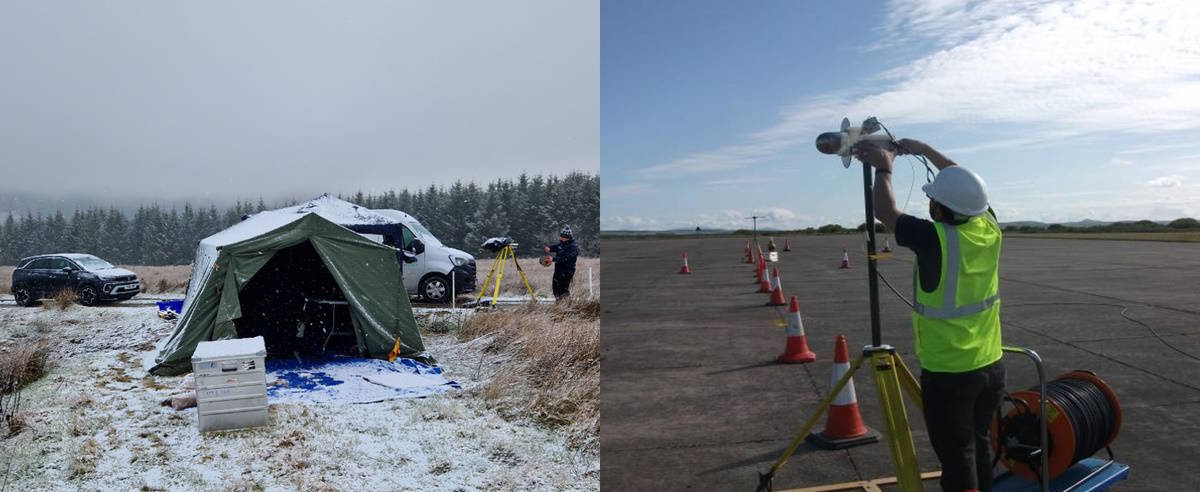
Outdoor experiments translate lab tests and numerical models into real-world scenarios

For many technical specialists like Petit, QinetiQ offers the ideal combination of scientific challenge and the opportunity to get involved in a diverse range of projects and tasks. “It’s always different, it’s always interesting, and it’s always challenging,” he says. “The people within QinetiQ are passionate about science and engineering, and they are all focused on understanding and solving problems to drive technical innovation and solve customer problems.”

With the defence and security sector increasingly moving towards wireless technologies, there is growing demand within QinetiQ for physicists and engineers who can probe, evaluate and manipulate the properties of RF waves. “Our work has continued to expand as the world has become more reliant on both wireless and electronics systems,” says Petit. “We have plenty of work for people to do, and we are looking to fill all types of roles across the RF domain.”

While new recruits are unlikely to have direct experience of the specialist work at QinetiQ, scientists with a background in physics or electrical engineering should have the foundational knowledge needed to develop the required experimental and analytical skills. “Our senior scientists and engineers provide on-the-job training to help early-career staff to learn about specific aspects of the work,” explains Petit. “We have recruited people from industry who have experience of RF testing in a research environment, while anyone who has worked with radar is likely to have transferable knowledge and skills.”

Candidates who are only just setting out on their careers are also welcome, particularly those who have had some training in radar or RF engineering. “They might have just finished an apprenticeship, a degree, a Master’s or PhD, and want to come into an organization where they can develop their skills in RF engineering in a science and innovation environment,” says Hoad. “Within QinetiQ they have the flexibility to follow their own interests.”

Recent graduates have the option of joining QinetiQ’s two-year training scheme, in which they are based in a “home” business while taking a series of six-month placements in other areas, or building their skills and expertise within a specific technical team. But anyone in the company has the opportunity to move between different technical areas as their career progresses. “People can move across our broad spectrum of activity,” says Hoad. “Someone might start in high-power RF systems, for example, and then use that knowledge in a team that is working to understand the propagation of radio signals, or vice versa.”

QinetiQ also offers plenty of opportunities for gaining additional academic qualifications and continuing professional development. Hoad started his career as a technical apprentice, studying part-time to obtain first a Master’s and then a doctorate, while Petit is currently being sponsored by QinetiQ to complete a PhD project on wireless power transfer with Queens University Belfast.

Most technical specialists at QinetiQ also aim to become chartered scientists and engineers, with the company providing the support to fund membership fees, identify suitable mentors, and help staff to gain the required skills and experience. “Within QinetiQ you can be in control of your own destiny,” says Hoad. “You can choose to become a deep specialist in a specific RF technology, or you can expand your core skill set by getting involved with different projects and teams. We provide the support for each individual to find and develop their own pathway.”

Towards combined hypoxia imaging and adaptive radiotherapy

Tumour oxygenation measurements

A rapidly growing tumour can’t deliver oxygen to all its regions. The resulting oxygen-starved tumour regions, however, are difficult to treat with radiation therapy, a technique that relies on free radicals produced in the presence of oxygen to damage DNA in cancer cells.

Clinicians have been tackling this problem with a variety of approaches – from radiosensitizers that enhance the effects of radiotherapy in hypoxic tumours to techniques like proton therapy that deliver high radiation doses. Still, researchers want to be able to identify oxygen-starved tumours so that treatments can be adjusted to target such tumours more effectively. But current techniques to measure tumour oxygen levels are invasive, provide limited spatial information or require radiopharmaceuticals that as yet cannot be obtained in many clinical settings.

In an important step for non-invasive hypoxia imaging and future biology-guided adaptive radiotherapy studies, researchers have integrated a technique to measure tumour oxygenation with an MR-linac, a hybrid MRI scanner and radiotherapy delivery system.

Michael Dubec, a principal scientist in magnetic resonance imaging at The Christie NHS Foundation Trust and an MR research physicist at The University of Manchester, is first author on the study, which was published in Radiotherapy and Oncology.

“In this work we investigated the change in longitudinal relaxation rate (R1) in tumours induced by 100% oxygen gas breathing,” Dubec says. “Based on previous validation work against immunohistochemistry, we can say that the ΔR1 technique can be used to identify tumour regions associated with low oxygen levels.”

During an oxygen-enhanced magnetic resonance imaging (OE-MRI) scan, patients breathe pure oxygen, which initially binds to haemoglobin, maximizing blood oxygen saturation. Any additional oxygen then dissolves in blood plasma and tissues, increasing the concentration of oxygen molecules and leading to faster longitudinal net-magnetization recovery and a greater longitudinal relaxation rate (R1).

The researchers tested the hypoxia imaging technique using a diagnostic MR scanner, in healthy participants and then participants with head-and-neck cancers. They also performed phantom studies. They created images showing change in R1 throughout the head and neck, and used region-of-interest analyses to measure the magnitude of this change in tumours.

Dubec and colleagues repeated the study on an MR-linac system. They conclude that the OE-MRI methods are repeatable and reproducible on MR-linac systems and provide “equivalent quality data” to that acquired on diagnostic MR scanners.

“Oxygen-enhanced MRI offers a practical and readily translatable technique to assess oxygenation in normal tissues and tumours which we have, for the first time, shown can be incorporated onto MR-guided radiotherapy systems with no issues reported from healthy volunteers and patients,” Dubec says.

Though the researchers used an MR imaging sequence that acquires 3D image volumes rapidly, they note that their protocol is still too long to fit into a standard MR linac workflow. Additional work will incorporate a perfusion sequence to identify necrotic regions and will evaluate the reproducibility of methods and results across clinics. Dubec says that validation work should also directly link changes in R1 value to changes in absolute oxygen concentration and then to specific oxygen levels in tumours.

“Essentially, we aim to develop and translate the OE-MRI technique so that it can be used for adaptive radiotherapy-based clinical trials in hospitals in the future,” Dubec says. “Having more institutions investigate, and collaborate on, OE-MRI techniques is important so that we can accumulate more evidence of the limitations and benefits of this technique, and assess its utility in different tumour types.”

Reimagining patient QA: 3D EPID dosimetry leverages Monte Carlo calculations

Ease-of-use and workflow efficiency meet true 3D patient dosimetry and independent radiotherapy QA. That’s the advance billing for VERIQA RT EPID 3D, a suite of 3D EPID dosimetry software that combines phantomless pretreatment and in vivo 3D EPID dosimetry into a single, fully automated QA solution.

Developed by the Netherlands Cancer Institute – Antoni van Leeuwenhoek Hospital (NKI-AVL) in Amsterdam and implemented by dosimetry and QA specialist PTW of Freiburg, Germany, the new software module – which is scheduled for full commercial release in the first quarter of next year – represents the latest extension to the vendor’s VERIQA platform for comprehensive patient QA.

Underpinning the product innovation within VERIQA RT EPID 3D is NKI-AVL’s clinically proven back-projection algorithm, which has been deployed for pretreatment QA and in vivo verification on more than 75,000 patients since 2005 (see “Illuminating 3D back-projection”, below). What’s more, VERIQA RT EPID 3D also uses PTW’s patent-pending Monte Carlo-based inhomogeneity correction. The combination of these two powerful algorithms ensures high-accuracy patient dose reconstruction for all treatment sites (including those – like the lung – characterized by significant density inhomogeneities across their extent).

Collaborate, innovate, automate

Operationally, it helps that PTW has a long-standing collaboration with the NKI-AVL radiation oncology department. From that comes first-hand experience of the latter’s deep domain knowledge and clinical know-how in pretreatment and in vivo EPID dosimetry – insights that will prove crucial for maximizing the long-run clinical benefits and outcomes associated with VERIQA RT EPID 3D.

Julia-Maria Osinga-Blättermann

“The medical physics team at NKI-AVL understands EPID dosimetry inside out – both scientifically and clinically – and is willing to share its knowledge and experience,” explains Julia-Maria Osinga-Blättermann, PTW’s product manager for VERIQA RT EPID 3D. “That sort of engagement makes NKI-AVL a natural fit for PTW and the ideal partner to help us provide a more user-focused EPID dosimetry solution and integrate it into the VERIQA platform.”

Prominent among PTW’s must-have requirements for VERIQA RT EPID 3D is a high degree of automation. That means keeping user interventions to a minimum, says Osinga-Blättermann, with the same standardized and automated workflows used to calculate the 3D patient dose for comparison with the “ground truth” dose prescription from the treatment planning system (TPS). “In the clinic,” she adds, “the user just has to transport the TPS data into VERIQA and acquire the EPID images in vivo during patient treatment or ‘through air’ for the pretreatment QA.”

The name of the game here is 3D patient dosimetry. Put simply, VERIQA RT EPID 3D enables a true 3D dose verification from the acquired EPID images by reconstructing the dose in the patient anatomy. This yields the significant clinical advantage of comparing the EPID-reconstructed dose directly to the planned patient dose as well as the calculation of patient dose–volume histograms (DVHs) for both pretreatment and in vivo dosimetry. “Once a treatment plan has been sent to VERIQA,” explains Osinga-Blättermann, “VERIQA RT EPID 3D will automatically import and assign corresponding EPID images and knows exactly what to do from calculation and evaluation through to notification and documentation.”

A win-win partnership

Reciprocity, of course, provides the framework for all successful collaborations. In this way, the exclusive commercial agreement with PTW also makes sense for the NKI-AVL radiation oncology team – not least in terms of associated licensing revenues, reputation, as well as the wider dissemination and clinical uptake of its proprietary back-projection algorithm and EPID dosimetry know-how.

“Translation of software innovation into clinical impact is part of the operational DNA here,” explains Igor Olaciregui-Ruiz, software physics lead in the NKI-AVL EPID dosimetry group (and therefore instrumental in further enhancing the clinic’s back-projection algorithm). “We want to see the software we’ve built adopted at-scale by the radiation oncology community – but we cannot do that ourselves,” he adds. “It’s much easier to do it in partnership with an established commercial player like PTW.”

In the clinic, meanwhile, VERIQA RT EPID 3D is set to yield significant workflow efficiencies in terms of QA preparation and execution. For starters, the software will give medical physicists the opportunity to streamline and fast-track their pretreatment QA – given that generating EPID images “through air” without the need for a phantom means a lot less effort all round. Those upsides extend to safer treatments, not least because VERIQA RT EPID 3D is able to catch clinically relevant errors through in vivo reconstruction of the actual dose delivered to the patient from EPID images acquired during patient irradiation. This makes it possible to not only detect dose errors that may go unnoticed during pretreatment verification (e.g. changes in the patient position or anatomy), but also to quantitatively assess their dosimetric impact.

“The new VERIQA RT EPID 3D module is like a Swiss army knife: it delivers a fast patient QA solution and provides your radiotherapy treatment chain with an extra safety net,” notes Anton Mans, a medical physicist at NKI-AVL who’s responsible for treatment planning and delivery using EPID dosimetry.

Right now, PTW is finalizing the integration of VERIQA RT EPID 3D into the modular structure of its flagship VERIQA patient QA platform. For the medical physics team, that will ultimately mean verification of each fraction over the course of the patient’s treatment plan – and, at a more granular level, the ability to track the trend of the EPID-reconstructed patient dose over time.

The integration is important along another coordinate, with VERIQA RT EPID 3D also able to leverage VERIQA’s existing Monte Carlo 3D dose engine. The latter is used to calculate an inhomogeneity correction for treatment sites where the back-projection algorithm traditionally falters owing to significant variations in tissue density – for example, dosimetric verification in the lung and oesophagus.

“On top of the EPID back-projected dose,” notes Osinga-Blättermann, “we apply this Monte Carlo inhomogeneity correction to guarantee that we always have the correct 3D patient dose regardless of treatment site.”

Illuminating 3D back-projection

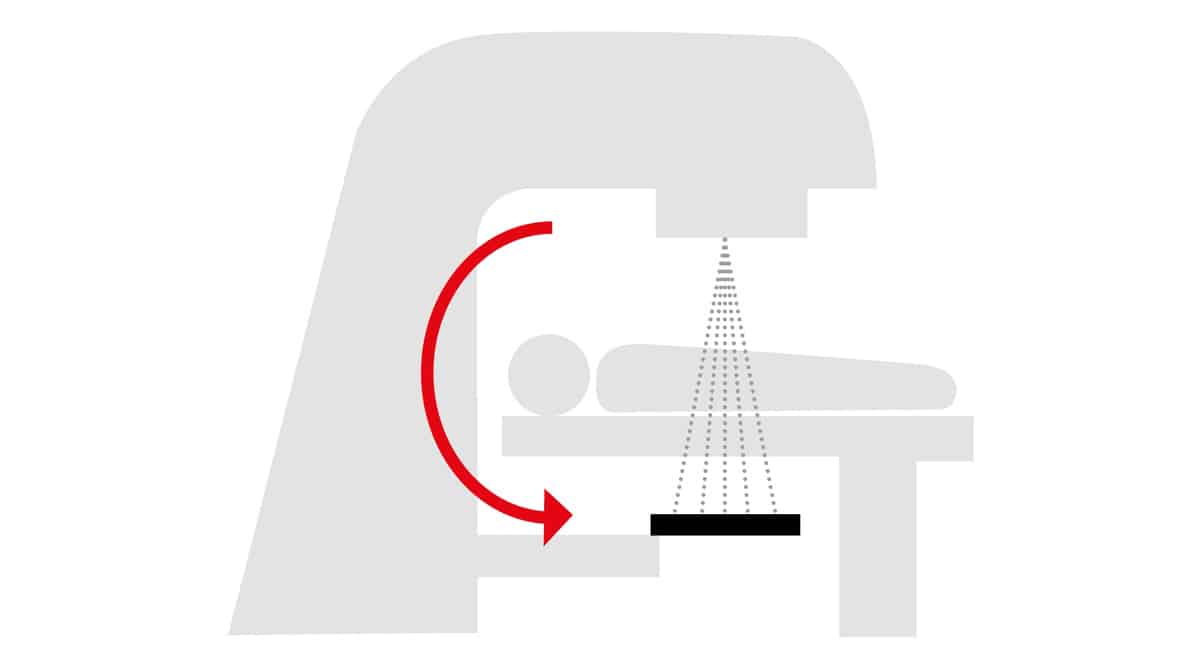
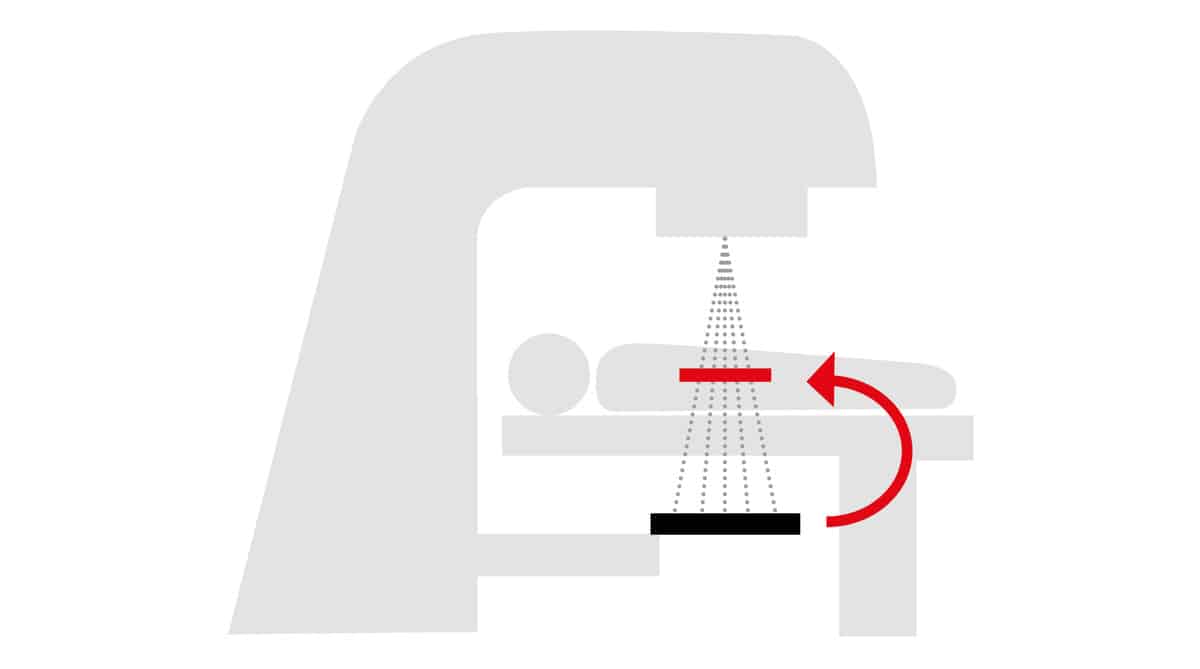
Unlike EPID dosimetry solutions using the so-called “forward approach”, VERIQA RT EPID 3D relies on a back-projection algorithm to enable true 3D dose verification from the acquired EPID images by reconstructing the dose in the patient anatomy. This allows direct comparison with the planned patient dose and the use of clinically relevant comparison metrics such as patient DVHs.

The forward approach for in vivo EPID dosimetry

In the forward approach (shown above for in vivo EPID dosimetry), the EPID images are acquired during patient treatment; the treatment plan is used to forward-calculate (predict) EPID images; the measured images are compared against predicted images.

The back-projection approach

With VERIQA RT EPID 3D’s back-projection approach (shown above for in vivo dosimetry), the EPID images are acquired during patient treatment; the EPID measured dose is back-projected into the patient anatomy; and the reconstructed patient dose is compared against planned dose. Note that the same concept also holds true for EPID-based pretreatment dosimetry.


Qblox is developing innovative technology for quantum computing

Eric Kievit, chief executive of Qblox, talks in this video filmed at the 2023 March Meeting of the American Physical Society in Las Vegas about the firm’s approach to quantum technology . This rapidly growing Dutch company specializes in building quantum-computer control stacks.

Bilal Kalyoncu, lead application scientist, explains how the Qblox control stacks support a range of qubit platforms including superconducting qubits, spin qubits and NV centres. He outlines the new Fast Scalable Feedback system, which is built on top of architecture consisting of 120 cores in a single device, all working together. This cluster mainframe is able to distribute measurement outcomes with auto-connectivity, so that up to 80 output channels are linked to up to 40 input channels for feedback operations. This scalable approach brings feedback applications to a level where many qubit quantum error corrections algorithms are possible.

Kalyoncu goes on to explain that Qblox has an open architecture approach and, as part of the Quantum Internet Alliance, collaborates and innovates with other organizations across Europe to accelerate the path to a quantum internet.


The folklore of the Milky Way and the future of scholarly books publishing

If the Milky Way could talk, what would it tell us about its long existence? That is the premise of The Milky Way: an Autobiography of our Galaxy, by the astrophysicist and folklorist Moiya McTier. In this episode of the Physics World Weekly podcast, McTier talks about how she developed the idea for the book and how she captured the mindset of an entity that has been around for billions of years and stretches across 100,000 light-years.

Also featured in this episode is David McDade, who is head of ebooks at IOP Publishing. He talks about how the physics publisher’s book programme has developed in the decade since it was launched. He also chats about challenges and opportunities in scholarly publishing and looks to the future of scientific books publishing.

Classic telescope design inspires new microscope objective

Researchers in Switzerland have built what they claim is the simplest microscope objective ever constructed. The device, which comprises just two optical components, is based on the classic Schmidt telescope design and works in a variety of immersion liquids as well as air. Because the new objective has a larger field of view and working distance than standard devices, the researchers say it could be used to image large organs and even whole organisms.

“Our work is a first step towards rethinking how future microscope objectives for high-throughput microscopy applications can be built,” says Fabian Voigt, who led the development team at the University of Zurich and is now a postdoctoral researcher at Harvard University in the US.

For the last century and a half, Voigt points out, most microscope objectives used in bio-imaging have been built with lenses. Mirror-based designs have largely been neglected, but they do have one great advantage: unlike conventional lens-based objectives, their behaviour does not depend on refractive index. This means that mirrors can be used to make so-called multi-immersion objectives that can produce a sharp image when immersed in many different liquids.

The Schmidt objective

Voigt and his colleagues at Zurich created their new mirror-based objective by mimicking the design of a much older instrument: the Schmidt telescope. This workhorse of astronomy consists of a spherical mirror and a refractive correction plate that counteracts aberrations introduced by the mirrors, and it delivers excellent images over a large field of view. “We have shrunk this telescope down to the size of a standard microscope,” Voigt explains.

Voigt and his colleagues say the resulting structure resembles the eyes of sea scallops, which use an immersed curved mirror to form images. The team used the new objective to image a variety of objects, including pollen grains in air, neuronal activity in zebrafish larvae in water and various “cleared” biosamples – that is, samples that have been made transparent so they are accessible to light microscopy – in organic solvents such as benzyl alcohol/benzyl benzoate, dibenzyl ether and ethyl cinnamate.

The new objective, which the team call a Schmidt objective, has a high numerical aperture of 1.08 at a refractive index of 1.56, a field of view of 1.1 mm and a working distance of up to 11 mm. This combination of properties is rare in microscope objectives since devices with a high numerical aperture often lack the working distance required to reach features of interest deep inside a sample. This is especially true for cleared samples, which in recent years have increased significantly in size, to the extent that entire mouse bodies and whole human organs can now be cleared.

In principle, the Schmidt objective concept, which the team describe in Nature Biotechnology, could be extended to other imaging techniques such as wide-field, confocal and light-sheet microscopy, say the researchers. “To achieve this, we will have to correct aberrations over the entire visible spectrum,” Voigt acknowledges. “We believe this will be possible by combining the Schmidt objective with a custom tube lens.”

Reconfigurable metasurface steers incoherent light in less than a picosecond

Drawing from the latest advances in metasurfaces and nanophotonics, researchers in the US have designed a new light source that can steer beams of incoherent light over ultrashort timescales. Developed by Igal Brener and colleagues at Sandia National Laboratories in New Mexico, the source features a reconfigurable metasurface that is embedded with quantum dots. With further development, the concept could be used to improve virtual reality displays, sensors for autonomous vehicles and lighting systems.

An optical metasurface comprises a pattern of tiny components, each of which interacts with light. The optical properties of a metasurface arise from the collective effect of these components and metasurfaces can be used to create useful optical components such as flat lenses. Reconfigurable metasurfaces have optical properties that can be changed in controlled ways, opening up even more possible applications.

Recently, researchers have created reconfigurable metasurfaces that can steer laser light into specific directions. This was possible because laser light is coherent – all the light is in phase and at the same wavelength.

However, this beam steering has not been achieved for the incoherent light that is emitted by everyday sources such as LEDs and incandescent bulbs. “Currently, there is no ‘device’ that can emit light like an LED, and dynamically steer the emission into a particular direction at the same time,” Brener explains.

Quantum dots

In their study, the Sandia team addressed this shortcoming by designing a new metasurface. Their design features a quantum dot-embedded metasurface positioned on a refractive Bragg mirror. This is a mirror that is made up of multiple, periodically arranged layers with varying refractive indices. A Bragg mirror reflects light in a narrow band of wavelengths, while allowing other light to pass through.

Each quantum dot emits incoherent light and in their experiments, Brener’s team observed that the metasurface caused the incoherent light from the quantum dots to undergo phase changes. These changes restrain the light from spreading out over a wide range of angles – and instead cause much of the light to propagate in one direction.

The propagation direction of the light is controlled by firing two different laser pulses at the metasurface. One pulse temporarily modifies the refractive index of the metasurface, while the other pulse causes the quantum dots to emit light. It is this modification that steers the emitted light.

“We were able to steer the incoherent emission from quantum dots embedded into the metasurface over a 70-degree range,” Brener explains. What is more, the light can be steered over sub-picosecond timescales.

Brener points out that the design is mostly just a proof of concept for now, with much room for future improvement. “In a final device, this pattern would have to be reconfigured electrically, so that in the end you have a combination of an LED and several other contacts to reprogram the angle of emission,” he says.

More development needed

The team acknowledges that the commercialization of their technology is likely still several years away. Yet based on the results they have achieved so far, they hope that other researchers will start to think about the broad range of technologies that could benefit from controlled manipulation of incoherent light.

“Maybe this type of device could replace steerable lasers,” Brener says, adding that it could be used to reduce energy consumption in lighting systems.

Other possible applications include small displays that can project holographic images directly onto the eye using low-power LEDs. This would be particularly useful for virtual and augmented reality devices — making them far simpler and cheaper than laser-based systems. Elsewhere, the metasurface could be useful in remote sensing. This includes the LIDAR systems used by self-driving vehicles to visualize their surroundings.

The research is described in Nature Photonics.

Beyond the quantum woo-niverse: getting to grips with the fundamentals of quantum mechanics

You can no doubt guess that Chris Ferrie’s Quantum Bullsh*t: How to Ruin Your Life with Advice from Quantum Physics is not a formal, dispassionate academic treatise on the cultural and societal ramifications of quantum physics. And if you’ve already wrinkled your nose at that title, be warned – inside the covers it gets a heck of a lot more sweary. Ferrie’s expletive-laden writing style is not for the faint-hearted, in this universe or any other.

Is the swearing largely gratuitous? F**k, yes. But it is very funny at the same time, and is entirely in line with the informal, colloquial, stream-of-consciousness style of the book. There might be some who feel that there is a “causal obscenity” to the swearing, but they will probably have different views on many of life’s fundamentals – quantum physics included. But I digress, as does Ferrie, regularly and engagingly, throughout his book. (Funnily enough, he too has something to say on the definition of obscenity in chapter 8.)

Down-to-earth explanations of fundamental quantum mechanics, and the pitch-perfect lampooning of the pseudoscience underpinning quantum woo, are at the heart of this book

With chapter titles like “Quantum F**king Energy, We Have No F**king Clue What Is Going On, Faster Than F**king Light, and Infinitely Many Goddamn Worlds”, one can get a good idea of the tenor of his writing. Those profanity-fuelled titles, however, belie the incisive, down-to-earth explanations of fundamental quantum mechanics, and the pitch-perfect lampooning of the pseudoscience underpinning quantum woo, that are at the heart of this book.

As an associate professor at the Centre for Quantum Software and Information at the University of Technology in Sydney, the author certainly has the background and expertise needed to understand quantum mechanical phenomena at a deep level. It takes an accomplished writer of Ferrie’s calibre, however, to put across the essence of topics such as entanglement, superposition and quantum computing without entirely bamboozling a non-physicist.

Ferrie has experience when it comes to entertainingly explaining science to non-scientists. He’s also the author of the “Baby University” series of books, an inspired approach to enthusing toddlers – and, by stealth, their parents – about everything from astrophysics to organic chemistry. I certainly don’t need to explain to the Physics World readership that it takes a prodigiously talented author to bring organic chemistry to life for any audience, let alone the terrible twos. The Baby University collection is hard to miss on bookshop shelves, with Quantum Physics For Babies nestling among more traditional fare like The Very Hungry Caterpillar and The Gruffalo. Breathe easy, by the way – Ferrie forgoes the swearing for these books.

As the foreword of Quantum Bullsh*t (aptly titled “What the f**k is this book?” ) puts it,Quantum healing, quantum mysticism, quantum love, quantum crystals, quantum consciousness, quantum meditation, quantum energy…none of this has anything to do with quantum physics. But now we are at an impasse, for it seems one requires detailed knowledge of the subject to see why this is all crap. Until now.” Ferrie’s goal is to ensure that his audience comes to understand enough quantum physics to “shield yourself from bullshit.” While I applaud his ambition, there’s undoubtedly a big element of preaching to the converted here.

Physicists are certainly not blameless when it comes to the rise of quantum woo

I suspect that the audience for this book is likely to include many of the already more-sceptically-minded (including you, dear reader). It is hugely entertaining and wonderfully cathartic, to grab a metaphorical bag of popcorn and cheer from the side-lines as each quantum of woo is taken down. Given this potential audience, I was pleased that it’s not only the bullshitters that Ferrie targets. Physicists are certainly not blameless when it comes to the rise of quantum woo. Ferrie rightly reserves some of his condemnation for those over-excited scientists who vigorously promote the “many worlds” interpretation of quantum mechanics and the existence of the multiverse in sultry, deep voiceson the basis of zero empirical evidence for either.

But if we really want to engage with those who embrace quantum healing, quantum crystals and quantum nonsense in all its myriad forms, do we really need to tell them they’re dumb, gullible and ripe for exploitation by hucksters? That if they’d only listen to, and be educated by, we ever-so-clever scientists, they’d see the error of their ways and realize just how much they’d been scammed?

The quantum woo universe, and it’s a big one out there (for one, Deepak Chopra, woo-meister extraordinaire, has 3.1 million Twitter followers), is just a microcosm of the much broader 21st century misinformation system. And just as educating flat-Earthers about spherical symmetry and central forces; or referring anti-vaxxers to the substantial body of literature that addresses their MMR-causes-autism claims; very often does nothing to counter their beliefs, no end of careful explanation of the physics of quantum entanglement is going to disabuse true believers that we can influence the universe with our mind.  Indeed, we may well further entrench their views.

I’m being picky, however. I loved Quantum Bullsh*t, read almost all of it in one sitting, and recommend it to all Physics World readers who aren’t squeamish about the f-word. There’s also just a tinge of jealousy on my part – I only wish I’d pitched this book to a publisher. I’d have had so much fun writing it, and I’m confident that I could have given Ferrie a good run for his money in the swearing stakes. But then, quantum mechanics tells us there’s a universe out there where exactly that happened, right?

  • 2023 Sourcebooks 224pp £13.99pb

Private Japanese lunar craft Hakuto-R crashes on landing

The Japanese firm ispace has announced that its Hakuto-R Mission 1 craft has failed in its attempt to land on the Moon. In a statement, the firm said ispace engineers would now carry out a detailed analysis of the telemetry data to find the cause of the crash. If the mission had succeeded, ispace would have become the first private firm to land a craft on the lunar surface.

Hakuto-R was launched aboard a SpaceX Falcon 9 rocket on 11 December 2022. The craft then spent four months travelling to the Moon with the aim of landing in the Atlas crater on the Moon’s nearside. As it approached the Moon, Hakuto-R took several images of the lunar surface before its scheduled touchdown at 16:40 UTC on 25 April.

According to ispace, the lander was in a vertical position as it carried out the final approach to the lunar surface. However, mission controllers lost all communication with the lander after the expected arrival time.

Estimates of the amount of remaining propellant showed it had been falling as Hakuto-R approached the surface. The craft’s descent speed then rapidly increased, which may have been caused by the engines shutting down, resulting in the craft crashing into the surface.

What is important is to feed this knowledge and learning back to Mission 2 and beyond

Takeshi Hakamada, ispace chief executive

Hakuto-R was carrying the United Arab Emirates’ (UAE) first lunar rover, called Rashid. Built by the Mohammed bin Rashid Space Centre, the rover contained a high-resolution camera and a thermal-imaging camera that would have studied the composition of the lunar regolith. If Hakuto-R had succeeded, the UAE would have been the fourth nation, after China, Russia and the US to operate a rover on the Moon.

Hakuto-R was established in 2010 and was one of six finalist teams in the Google Lunar X-prize. The firm says that subsequent missions are in development, with launches expected in 2024 and 2025, dubbed Mission 2 and Mission 3, respectively.

“We have fully accomplished the significance of this mission, having acquired a great deal of data and experience by being able to execute the landing phase,” says Takeshi Hakamada, founder and chief executive officer of ispace. “What is important is to feed this knowledge and learning back to Mission 2 and beyond so that we can make the most of this experience.”

Membrane mirrors take off for use in large space telescopes

Extremely large telescopes in space- or balloon-based observatories will require mirrors that are much larger, more sensitive and lighter than those in operation today. Large membrane mirrors with low areal weight show promise in this context, but they are difficult to manufacture with the required optical quality.

Researchers in Germany have come up with a new way to make very thin polymer mirrors of a high enough quality to serve as the primary mirrors in space telescopes, using an approach that’s very different from conventional mirror production and polishing processes. The technique, developed by a team at the Max Planck Institute for Extraterrestrial Physics, involves depositing a polymer onto the surface of a rotating liquid that forms a perfect parabolic shape. The resulting mirrors are lightweight, measure around 30 cm in diameter and could potentially be scaled up to much larger diameters of metres. They are also flexible enough to be rolled up for transport on a spacecraft and unfolded once it reaches its destination.

In their work, the researchers, led by Sebastian Rabien, made use of a basic physics phenomenon: that a liquid in a spinning container will naturally form a parabolic surface shape. They used this surface as a base on which to deposit a polymer – Parylene, in this case – with the desired thickness. Once coated with a reflecting surface such as aluminium or gold, this membrane can be used as a mirror.

The polymer is grown using chemical vapour deposition. This technique is routinely employed to apply coatings on electronics, but this is the first time that it has been used to create parabolic membrane mirrors. “The entire process takes place in vacuum, free from disturbing winds or particles, which allows for optical quality surfaces,” explains Rabien.

The researchers say that they can locally manipulate the parabolic shape of the mirror using a radiative adaptive optics method, which involves thermally expanding the material by applying a light beam to the front or back surface of the structure.

The new mirrors could be rolled up and stored compactly inside a launch vehicle, and then unfolded and precisely reshaped after deployment – something that helps to solve weight and packaging issues for telescope mirrors, says Rabien.

“While surely more research and engineering is needed, I think that we have a process that is scalable to very large diameters (15–20 m),” he tells Physics World. “The liquid mandrel for the surface shape is also significantly more affordable than conventional optics production methods. Vacuum chambers of the size needed to make these mirrors already exist for other purposes and the growth processes required can be adapted from available technologies.”

One type of astrophysical object that could be imaged and searched for using such mirrors is exoplanets, says Rabien. “The vision of looking at those distant planetary systems at high resolution and sensitivity, resolving weather or continents, or even lights on a coastline, would require many large telescopes with such mirrors to be placed in orbit. Making this dream possible does need a significant reduction in areal weight and cost of the primary mirror, and a way to pack those into a launch vehicle. The techniques described in our work could be a pathway towards such a vision.”

The researchers, who report their work in Applied Optics, say they would now like to use their technique to make mirrors metres in size. “This would allow us to better understand the surface function of the mirrors and how to influence and control it, and quantify the large-scale control parameters required.”

Copyright © 2026 by IOP Publishing Ltd and individual contributors