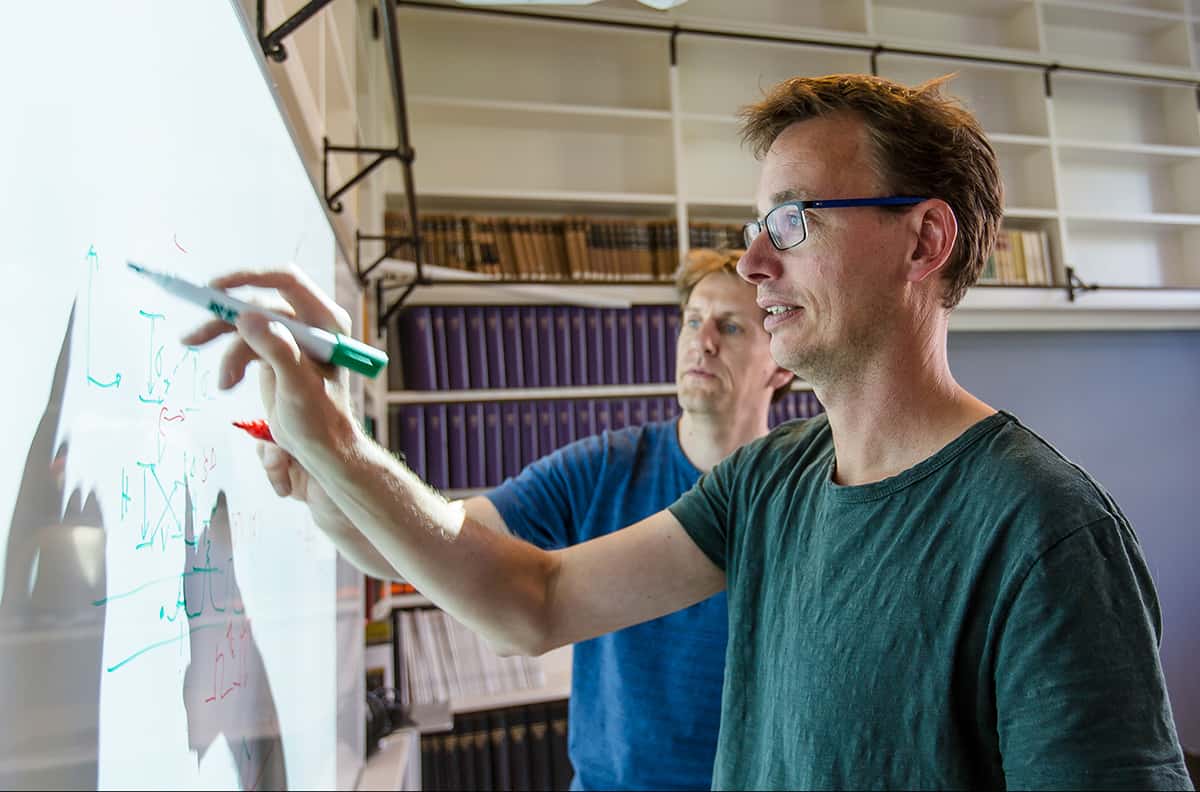
By drawing on ideas first developed by Albert Einstein, researchers in the UK and Poland have created a new theory that explains how organized, counter-flowing lanes of motion can emerge in seemingly disordered systems – including crowds of people. Led by Tim Rogers at the University of Bath, the team verified their model by observing real human crowds.
“Laning” is an example of spontaneous organization in nature, and would be familiar to anyone who has walked along a busy street or corridor. When two groups of people in a large crowd are walking in opposite directions, they often organize themselves into parallel, counterflowing lanes without being given instructions on where they should walk. This reduces the risk of collisions and improves the efficiency of motion for both groups.
This behaviour does not only emerge in systems of sentient beings, it can also be found in situations ranging from the motions of oppositely charged particles in complex plasmas, to counter-propagating electrical signals in elongated nerve cells. However, there are still many aspects of the phenomenon that are poorly understood.
Settling a debate
“Despite its widespread occurrence, there is still no consensus about the physical origin of laning,” says Rogers. “To settle this debate, one needs a quantitative theory, that could be tested against simulations and experiments.”
To build their theory, Rogers’ team – which also included Karol Bacik at the University of Bath, and Bogdan Bacik at the Academy of Physical Education in Katowice – drew from a theoretical approach first taken by Einstein in 1905.
In one of his first major contributions to physics, Einstein examined the random Brownian motion of microscopic particles such as pollen grains as they are jostled around by water molecules. He showed how the motion can be understood by accounting for the cumulative effects of many tiny molecular collisions.
Small adjustments
By applying the same concepts to counterflowing human crowds, the team found they could link the motions of individual people – each making constant small adjustments to their paths to avoid bumping into each other – with the overall motions of a crowd. “Mathematically, it is an exercise in statistical physics – the art of taking averages in systems where the components are too numerous to keep track of individually,” Rogers explains.
As well as doing computer simulations, the team tested their model by doing a series of experiments with real human crowds. These involved 73 participants walking within a square arena.
“Apart from shedding a new light on the old puzzle, our analysis also generated several new hypotheses,” Rogers says. One of these interesting behaviours emerged when the team placed entry and exit gates at the edge of the arena. In this case, they found that lanes tended to curve into parabolic, hyperbolic, or elliptical shapes, depending on the positions of the gates.
Traffic rules
“We also showed that introducing traffic rules for pedestrians may have some undesired effects,” Rogers continues. “For example, when people are told to try to always pass on the right, they form lanes that end up tilting.” This pattern emerged because most pedestrians prefer to turn right as they dodge each other, breaking the chiral symmetry of their lanes (see figure).
The team stresses that their study only applies to systems below a certain density. If people are packed in too tightly, flowing lanes can jam and Einstein’s Brownian motion is no longer relevant.
Having verified their theory, the trio hopes to use it to uncover other patterns in seemingly disordered crowds, which have so far remained hidden by the limitations of previous models.
Their discoveries could also provide deeper insights into crowd dynamics, biology and physics where self-organizing lanes play a key role in the flow of people, particles and information.
Clued up Cosmologist Clare Burrage is trying to understand why ordinary matter only makes up 5% of our universe. (Courtesy: Sebastian Rieger)
What skills do you use every day in your job?
The type of research I do involves spotting connections between apparently unrelated physical systems and phenomena. I often feel like a detective. My colleagues and I are trying to solve a big puzzle – why does ordinary matter make up only 5% of our universe? And to figure out the answer, we look for clues. What is not quite behaving in the way it should? Is the same physics showing up in other physical systems?
Thinking about physics in this way made us realize that theories of dark energy – which have been proposed to explain why the expansion of the universe is accelerating – could be tested with tabletop experiments using cold atoms. That’s because the theories introduce a new force, which small objects like atoms would be particularly sensitive to. With the next generation of these experiments, we should be able to either detect the new force or rule out a popular cosmological theory.
Academic life is really broad, however, and every day is different. It’s not just research – some days are about supporting the people I work with; others are about teaching students; and some are about how to best communicate the work we’ve done. I used to do a lot of figure skating as a child, and I never expected the performance skills I learnt there to turn out to be so useful in my life as a physicist.
What do you like best and least about your job?
The best part of my job is the range of things I get to work on and all of the wonderful people that brings me into contact with. We look for connections between different areas of physics, but it is impossible for anyone to be an expert across it all, so I’m always looking to collaborate with other people. Often they are excited to see if their experiment or observations can be used to tell us something fundamental about the universe, but these collaborations take time to start up. Even within physics, different fields can be very far apart from one another, and feel like they’re speaking different languages. Even the units we use for physical quantities are different. But I really enjoy the process of learning something new and making those connections.
The worst part is that it is an indoor job. I spend a lot of time at the computer or doing calculations on paper or on the whiteboard. I have to make sure I find a balance by spending plenty of time in the hills outside of work. I do a lot of hiking and climbing, and skiing in the winter.
What do you know today that you wish you knew when you were starting out in your career?
I wish I could have known that this career path would work out for me. Each year many more people get PhDs in our field than there are openings for new permanent academic positions. Not everyone wants to go into academia, but there are still many more people who do than there are positions available. No matter how good you are, you need a lot of luck for things to work out.
For me there was a period of about five years between getting my PhD and getting a permanent position in which I was on a series of short-term contracts, and I made three international moves – from the UK to Germany, to Switzerland and then back to the UK. I found it hugely stressful not knowing where I would be living, from one year to the next; and whether these big disruptions to my life would be worth it in the long run.
I also wasn’t sure whether the research that I wanted to do was something the community would find interesting. When I started out, the idea that you could test theories of dark energy with laboratory experiments was seen as either a niche topic or completely crazy, depending on who you asked. I’m really happy to see that change, and that more people are realizing the opportunities that often quite small-scale experiments can provide to help understand our universe.
Targeted radionuclide therapy (TRT) is an emerging cancer treatment in which radiopharmaceuticals travel through the bloodstream and selectively bind to cancer cells. Once within the tumour, the radioactive nuclides emit alpha or beta particles that deposit their energy in a localized region and destroy surrounding cancer cells.
Current TRT approaches rely on the presence of unique receptors on the surface of cancer cells, to which the radiopharmaceutical can bind. This targeting means that the drug is only delivered to the cancer cells, sparing healthy tissue and organs. Tumour heterogeneity and cell mutation, however, can alter the receptor profile, making it difficult to devise effective targeting strategies.
To address this obstacle, researchers at the University of Cincinnati are developing a novel TRT delivery approach that could target and ablate multiple tumour types, irrespective of their receptor phenotype. In a proof-of-concept study, reported in Advanced Healthcare Materials, they show how tumour-colonizing bacteria can attract a bacteria-specific radiopharmaceutical into cancer cells, even those with no receptors to target.
Senior author Nalinikanth Kotagiri and colleagues genetically engineered the probiotic Escherichia coli Nissle (EcN) to overexpress a metal uptake receptor on its surface. The engineered bacteria, which can be delivered into solid tumours, is then used to attract a bacteria-specific radiopharmaceutical comprising yersiniabactin (YbT, a siderophore molecule that binds to metals) labelled with the therapeutic radioisotope 67Cu.
“As long as these engineered bacteria are inside a tumour, these targeted agents, specific to the bacteria, will transport the radioactive metal,” says Kotagiri in a press statement. “They won’t care if there is a cancer cell that is expressing a receptor or not. All they care is that they have identified something that they can recognize, accumulate and retain in.”
What’s more, replacing 67Cu with 64Cu, which can be visualized via positron emission tomography (PET), enables tracking of the bacteria location inside the tumour. “We can make this switch between copper-64 and copper-67 seamlessly to image the tumour, and then once we have imaged, we can introduce another molecule again to do therapy,” Kotagiri explains.
Bacterial accumulation
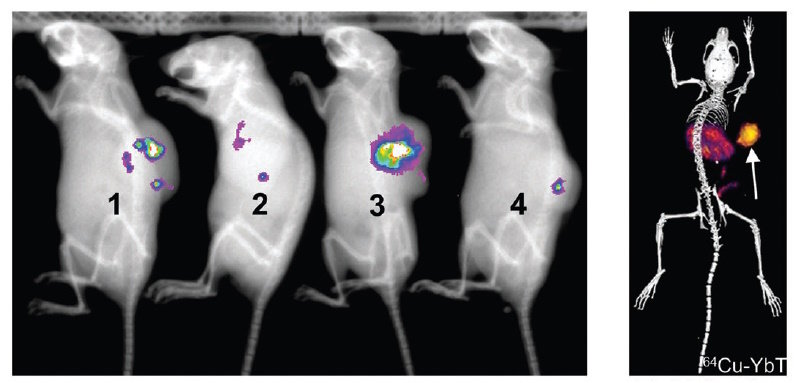
The researchers first used PET/CT to examine the accumulation of the engineered EcN in vivo. They injected the bacteria directly into colon cancer tumours in mice, and then administered 64Cu-YbT. Bioluminescence imaging confirmed bacterial localization in the tumour, while PET/CT revealed significantly higher signals in tumours containing engineered EcN versus a bacteria strain that does not express the metal uptake receptor. They note that the 64Cu-YbT probe was cleared primarily by the liver and kidneys with minimal accumulation in other major organs.
Examining harvested organs revealed significant bacterial presence exclusively in the tumours at one and seven days after administration. Bacterial levels in all major organs were below the limit of detection. In a separate group of mice, two days after bacteria administration, the researchers observed approximately ten times more bacteria in the tumours than the amount injected 48 h earlier.
On day 18, when the tumour was fairly large, both bioluminescence imaging and PET/CT confirmed that the engineered bacteria not only maintained their population inside solid tumours, but also achieved sustained growth, consistent with the growth of the tumour itself.
Bacterial localization Bioluminescence (left) and PET/CT (right) images demonstrate the presence of engineered EcN in colon cancer tumours 18 days after intratumoural injection. (Courtesy: N A Siddiqui et al Adv. Healthcare Mater. 10.1002/adhm.202202870)
Testing the tumour therapy
Next, the researchers switched the 64Cu for the high-energy-beta-emitting isotope 67Cu. In mice with breast or colon cancer, they injected saline or engineered EcN directly into the tumour, followed by administration of 67Cu-YbT one and four days later. For both tumour models, mice treated with the combination of bacteria plus 67Cu-YbT had reduced tumour growth and survived significantly longer than those receiving either saline, bacteria only or 67Cu-YbT only.
In the colon cancer model, the combination treatment extended the median survival of mice with highly aggressive tumours from eight days (after initiation of treatment) in the control groups to 13 days. In mice with breast tumours, the median survival improved from 11 days in the control groups to 18 days in the combination group.
The team also evaluated the immune cell profile of the cancer microenvironment seven days after treatment. Following systemic administration of 67Cu-YbT, infiltration of cytotoxic CD8+ T cells increased significantly. Combined with a reduction in immunosuppressive regulatory T cells (Treg) upon delivery of bacteria, this led to a promising anti-tumour environment, with the CD8+:Treg ratio significantly higher following combination therapy than in the other three groups combined.
Kotagiri tells Physics World that the researchers now plan to express human receptors on the bacterial surface, enabling current FDA-approved targeted probes to be used and providing a quicker pathway towards potential clinical translation.
“For example, 177Lu-labelled DOTATATE and SARTATE are already approved agents that are used to target neuroendocrine tumours expressing somatostatin receptor,” he explains. “What about those patients that do not express this receptor? Can we use this technology to express the receptor on bacteria, and many other receptors, in a plug-and-play manner to accommodate the wide range of radiopharmaceuticals already approved?”
Since they were first observed in 2015, gravitational waves have enabled scientists to detect large numbers of previously unseen black holes and work out some of the objects’ bulk properties – such as their masses and distances from Earth. But a pair of physicists in the UK reckons it should be possible to do much better. The researchers argue in a new paper that gravitational waves could tell us in some detail about how black holes swallow up objects as they grow – and in doing so help resolve the information paradox brought about by Hawking radiation.
Black holes are famous for devouring any object that crosses their event horizons. At the same time, they are thought to continuously leak energy to space in the form of Hawking radiation. Proposed by Stephen Hawking in 1974, this emission is black-body radiation that causes a black hole to shrink and eventually disappear. The only non-random feature about these leaking photons is their energy, which is determined by the black hole’s mass. This emission leads to a paradox – that the black hole will lose all the information it once contained about the objects it captured, contradicting the non-destruction of information as stipulated by quantum mechanics.
Physicists have put forward numerous possible solutions to this puzzle, most involving some subtle encoding of information within Hawking radiation. But Louis Hamaide and Theo Torres of King’s College London reckon that gravitational waves can offer a more natural way out. They have found that almost all of the information about any object sucked into a black hole would be retrievable by measuring the gravitational radiation given off as that object disappears into oblivion.
So far, gravitational waves from black holes have been detected by the LIGO–Virgo observatories. This are kilometre-sized laser interferometers that detect signals that are emitted by pairs of black holes as they spiral in on one another and then coalesce. These black holes are so massive that their gravitational radiation is strong enough to remain detectable after propagating millions of light–years to Earth.
Infalling object
In their new research, Hamaide and Torres instead consider the radiation given off by very small objects falling into Schwarzschild black holes – these are black holes that do not spin and have no electrical charge. The duo’s calculations exploit perturbation theory, which is essentially a correction of a black hole’s properties by the infalling object. This approach yields an exact, analytical expression for the emitted radiation – in contrast to the numerical simulations and curve fitting needed to work out the behaviour of two bodies with similar masses.
Working through the equations, the researchers found that the signature left by an in-falling object is surprisingly simple. While the mass of the black hole is tied to the frequency of the gravitational waves, the mass of the captured object is instead encoded in the waves’ amplitude. The timing of the capture is revealed by the radiation’s phase, while its trajectory can be worked out by observing the emission from multiple vantage points.
Hamaide maintains that these data would be much easier to collect and interpret than the “very spread out” information perhaps obtainable from Hawking radiation. “We are seeing that the information comes in very nice packets,” he adds.
However, other researchers are sceptical about the utility of these gravitational-wave signatures. Robert Mann of the University of Waterloo in Canada argues that what matters is not information about objects falling into a black hole once it has formed but instead knowledge of what created the black hole in the first place. He also says that the authors make a valid point about a black hole being “basically an open quantum system”, but notes that they carry out very little quantum or even semi-classical analysis.
Quantum deficit
Hamaide and Torres acknowledge that the signatures are entirely classical while the object’s complete description would be quantum-mechanical – coming in the form of its wavefunction. They calculate that the classical information would account for well over 99.9% of the total, but point out that only 100% will do when it comes to completely resolving the information paradox. In other words, they say, no matter how accurate the measurements are their analysis will never recover all of the information from a black hole.
In fact, Vitor Cardoso of the University of Lisbon in Portugal and the Niels Bohr Institute in Copenhagen argues that it would not be possible to measure the classical information in all cases – given that matter collapsing with complete spherical symmetry would not generate gravitational waves. Cardoso also doubts that any practical measurements could be made – given what he says would be the need for multiple, infinitely sensitive detectors surrounding the source.
Jorge Pullin of Louisiana State University in the US is also sceptical about the latest work’s practical utility, while praising the authors’ “interesting points about information retrieval”. He notes that current observations of gravitational waves struggle to resolve the colliding objects’ mass and spin (including the latter’s sign). “This is not likely to change too much in the near future,” he adds.
Hamaide acknowledges that the tiny signals from the pertubative system they have considered could not be picked up by any existing or planned detector. Still, he argues that there is one aspect of their work that ought to offer comfort to today’s astrophysicists. This is the fact that it rules out the theoretical possibility (known as degeneracy) that as gravitational wave detectors become more sensitive it will become more (not less) difficult to home in on specific values for black hole masses and other properties. “That won’t happen,” he says.
Do you consider yourself a scientist or an artist? From early on in our lives, we’re taught to distinguish between these two fields – and the people who pursue them. But what if we are all actually a bit of both? What if science and art have more in common than we realize, both requiring a partnership of analytical and imaginative thinking?
As a quantum physicist and professional ballet dancer, Merritt Moore has resisted pressure to categorize herself as one or the other. Indeed, she is walking, talking, dancing proof that you can build a career in both science and art. She has a PhD in quantum optics from the University of Oxford in the UK, and has also danced professionally with numerous world-class ballet companies.
“It’s definitely my north star to prove that science and art aren’t just compatible – which is often already a debate,” she says, “but that it’s actually essential to have a combination of the two.” Moore has faced scepticism towards this idea, but she takes an experimental approach to proving her point, preferring to demonstrate it with actions rather than convince people in theory.
Right now, she is adjunct professor and artist in residence at NYU Abu Dhabi in the United Arab Emirates. Her job involves teaching a course on robotics while exploring dancing with robots. She also dances professionally with the Boston Ballet in the US, despite it being on the other side of the world.
Alternating activities
As a child growing up in Los Angeles, California, Moore loved puzzles, and she credits her parents with presenting maths as a fun game, rather than a chore. She also says they nurtured her curiosity, encouraging her to ask questions about the world around her, and sparking her interest in science. “I gravitated towards physics because it felt like a puzzle and had to do with the real world,” she recalls.
Later, at the age of 13, Moore took her first dance class and discovered a second passion. “It was just so natural moving to music and I loved it,” she says. “It felt so raw and authentic.” From then on, she spent every moment of her free time either dancing or studying. Moore found it helpful to bounce back and forth between them; if she couldn’t sit still, she would dance, and if she got tired moving, she could sit and study.
Yet Moore herself did not always believe that she could continue doing both. When she embarked on a physics degree in 2006 at Harvard University in the US, she assumed that she would have to quit dancing. However, during her first year of university she kept it up as an extracurricular activity, and had second thoughts about her decision to put dance aside. Assuming that if she wanted to have a shot at dancing professionally, it was now or never, Moore started auditioning for ballet companies. In 2008 she was accepted at the Ballett Zürich – the largest professional ballet company in Switzerland – and took a year off university to dance with them.
Dynamics of dance Merritt Moore’s knowledge of physics helped in her training, her visualization and the optimization of her movements. (Courtesy: James Glader)
When she returned to Harvard in 2009 to continue with her undergraduate studies, Moore once again assumed she would quit dance. “I thought ‘okay, I’ve now danced professionally, I’m going to be a good physicist and just do physics’,” she says. But another unmissable opportunity arose in 2010 – this time with the Boston Ballet, performing La Bayadère and The Nutcracker. Moore took a semester off university, but while training, she also did a research project back atHarvard on Majorana fermions with condensed-matter physicist Charles Marcus.
Pursuing a career as either a physicist or a professional dancer is demanding enough alone; achieving both is an even greater challenge. Yet Moore found that, in some ways, they were complementary.
Knowing the actual physics, I could visualize exactly what was going on
She did not have the same hours to train that dancers attending ballet schools full time have, but her knowledge of physics helped her to enhance her practice and make it more effective. After all, dance obeys Newton’s laws of motion. Concepts such as torque, moment of inertia and centre of mass allowed Moore to understand at an analytical level how she could achieve certain types of movement with her body, helping her to perfect dance moves more quickly.
She also found that being able to accurately visualize projectile motion was invaluable for optimizing her leaps. “Knowing the actual physics, I could visualize exactly what was going on, so that was huge.”
The quantum element
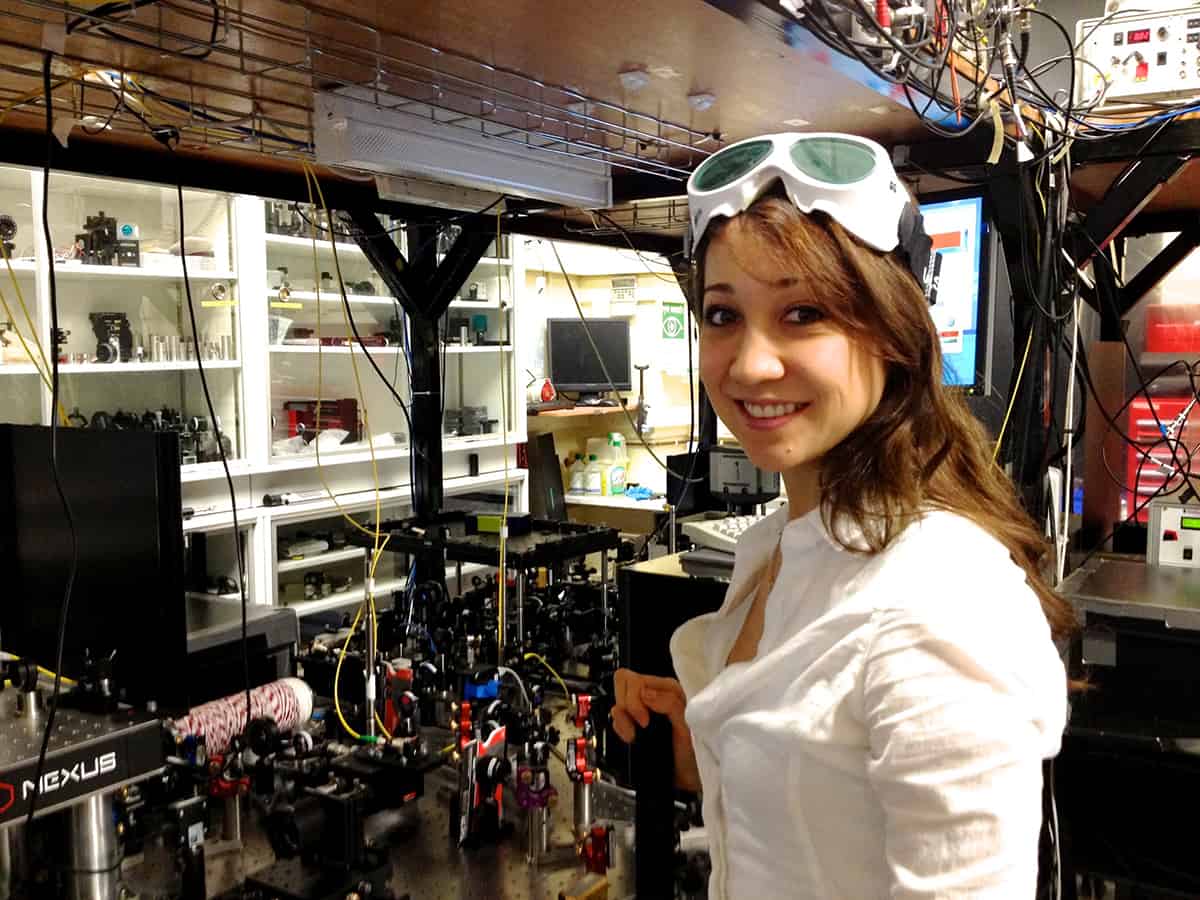
After graduating from Harvard in 2011, Moore joined Ian Walmsley’s ultrafast optics group at the University of Oxford to pursue a PhD in quantum optics. Many applications in quantum information processing and quantum metrology require the ability to generate bright, correlated pairs of light beams. Moore worked on single photon sources and explore multi-photon states for quantum information experiments. Moore’s experimental project involved creating a single-photon source at the telecom wavelength of 1550 nm. Developing and refining tools like this is essential for carrying information securely in potential future networks of quantum computers.
From studio to lab Merritt Moore’s PhD project at the University of Oxford focused on creating a single-photon source at a telecom wavelength, to enable information security in potential future quantum networks. (Courtesy: Merritt Moore)
The system Moore worked with involved a high-powered laser propagating through a nonlinear crystal. This is a material in which the interactions with light do not scale linearly with the light intensity, but exhibit more complex effects, particularly at high intensities. Crucially for Moore’s work, under the right conditions nonlinear crystals can absorb photons of one energy, and then emit two entangled photons of lower energy – and longer wavelength – than the original one. This process is called spontaneous parametric down-conversion (SPDC), and the pairs of photons it generates can then be separated, for example with a polarizing beam splitter, to isolate a single photon. Moore’s work is not only of interest in quantum computing, but also in quantum metrology, where high-precision measurements of physical quantities often rely on precise measurements of the interference between photons.
Dancing with robots
While working on her PhD, Moore also danced with the English National Ballet, and as she approached the end of her studies, she started exploring other interests too. She was even selected as one of 12 candidates to appear in the 2017 BBC programme Astronauts: Do You Have What it Takes? In the show, participants tackled various stages of the astronaut selection process, assessed by experts including astronaut Chris Hadfield.
After submitting her thesis in 2017, however, Moore decided to dedicate a few years to ballet, noting that a dancer’s career is typically shorter than that of a scientist. Then, while she was with the Norwegian National Ballet, a novel idea for merging her two worlds arose when she met Silje Gabrielsen – chief design officer and co-founder of Hiro Futures, which is working on creating artificial social skills for robots.
This serendipitous encounter inspired Moore to experiment with robot movement. The idea led to an artist residency at Harvard ArtLab in January 2020 – in collaboration with artist Alice Williamson – to investigate choreographing a dance duet between a robot and a human. Then the COVID-19 pandemic broke out. “All my dance performances got cancelled,” she recalls, “and I thought: ‘well I can still dance with a robot – robots don’t get COVID!’”
Moore initially thought the work would be a fun, short-term project, but to her surprise, three years later, it is her main job. As adjunct professor and artist in residence at NYU Abu Dhabi, she is continuing to choreograph robot dances and collaborate with robotics researchers. She hopes the work will provide a new creative output and tool for human expression, help improve robotics research, and, ultimately, give her the expertise in robotics that will help her become an astronaut.
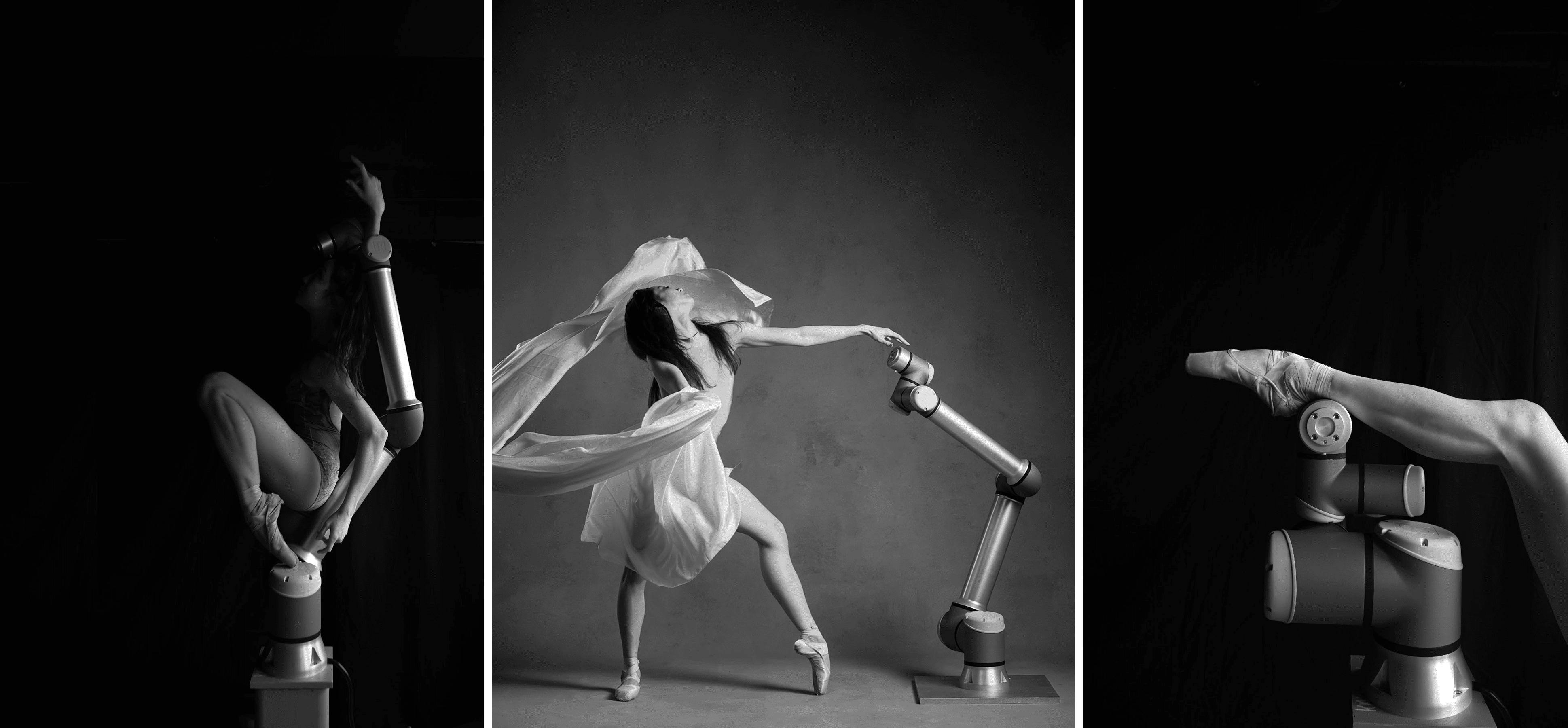
Her dance partner for now though is an industrial robotic arm made by the Danish company Universal Robots, and she finds that the work taps into her childhood love of problem-solving. “The robot is quite elegant in the way it moves,” she says, “but it doesn’t have arms or legs, so it’s been interesting, puzzling through how I am going to make it create the hip movement or the knee movement, and how to have it mimic or parallel the human.”
Dancing machine Merritt Moore uses tracking devices or AI to allow the robot to react to her moves, but for performances she’ll use pre-programmed sequences to avoid accidents. (Courtesy: Alice Williamson (left and right photos) Skjalg Vold (middle photo))
There are multiple ways Moore interacts with her robot dance partner. For a performance, she tends to pre-programme its moves – she likes to know where it will be so they don’t collide mid-routine. Back in the dance studio come research lab, she makes it more interactive. Here she can use devices that track her movement – either motion capture or a virtual-reality tracking system – which allows the robot to react to her moves. There’s also the AI option, where motion capture is used as data to feed to AI, and it comes up with a new routine that can be mapped to a robot.
My dances with this very sterile-looking thing end up being the most personal pieces I’ve ever done
Moore has made some unexpected discoveries through this project, notably that dancing with robots is often more emotional for her than dancing with other humans. She didn’t anticipate this, but she now thinks it makes sense. When dancing with a human, she can see their emotions and personality, and it’s hard to imagine anyone or anything else, whereas the robot is like a blank canvas on to which she can project more personal feelings.
“It can be a different memory of someone special to me who has passed away or a moment in time that I’m remembering, or a fear or excitement about the future,” she explains. “So in a weird way my dances with this very sterile-looking thing end up being the most personal pieces I’ve ever done.”
Leaps of imagination
As a scientist and dancer using technology in art, Moore has a unique perspective of the impact of technology – particularly AI – on creative endeavours. But she is not convinced that robots will replace humans – instead, she thinks they can be new tools of expression.
Moore believes that the rise of AI also highlights the importance of learning how to ask the right questions. After all, we can use technology to help us find answers, but those answers will only be useful if we have the creativity to come up with interesting questions in the first place.
“I think that the freedom to be creative is sometimes lost in the science world these days,” Moore says. “I feel like [in scientific education] we’re given a textbook and told: ‘here’s this equation. Learn this and memorize that.’ But if we look back at the major breakthroughs it was when [people] were being really creative and imaginative and had the freedom to ask outside-the-box questions.”
In this vein, one of Moore’s favourite mottos is “play is the highest form of research”. And while she is still enjoying dancing with robots, she has plenty of other ideas for combining her passions.
Inspired by her experience on Astronauts: Do You Have What it Takes?, Moore even has dreams of dancing on the Moon one day. As Moore advises her students, “I really do believe that if you play and if you’re passionate, then the rest will follow.”
At the heart of the ESS is a linear accelerator – the most powerful proton linac ever built – that will produce, in its final stage, a 5 MW beam of 2 GeV protons. These protons will strike a 2.5 m diameter rotating target wheel – containing three tonnes of tungsten – to generate a beam of neutrons via a process known as nuclear spallation, with the resulting neutrons sent on to a suite of scientific instruments. The ESS, which is expected to turn on in 2027, is a €3bn pan-European project with 13 European nations as members: Czech Republic, Denmark, Estonia, France, Germany, Hungary, Italy, Norway, Poland, Spain, Sweden, Switzerland and the UK.
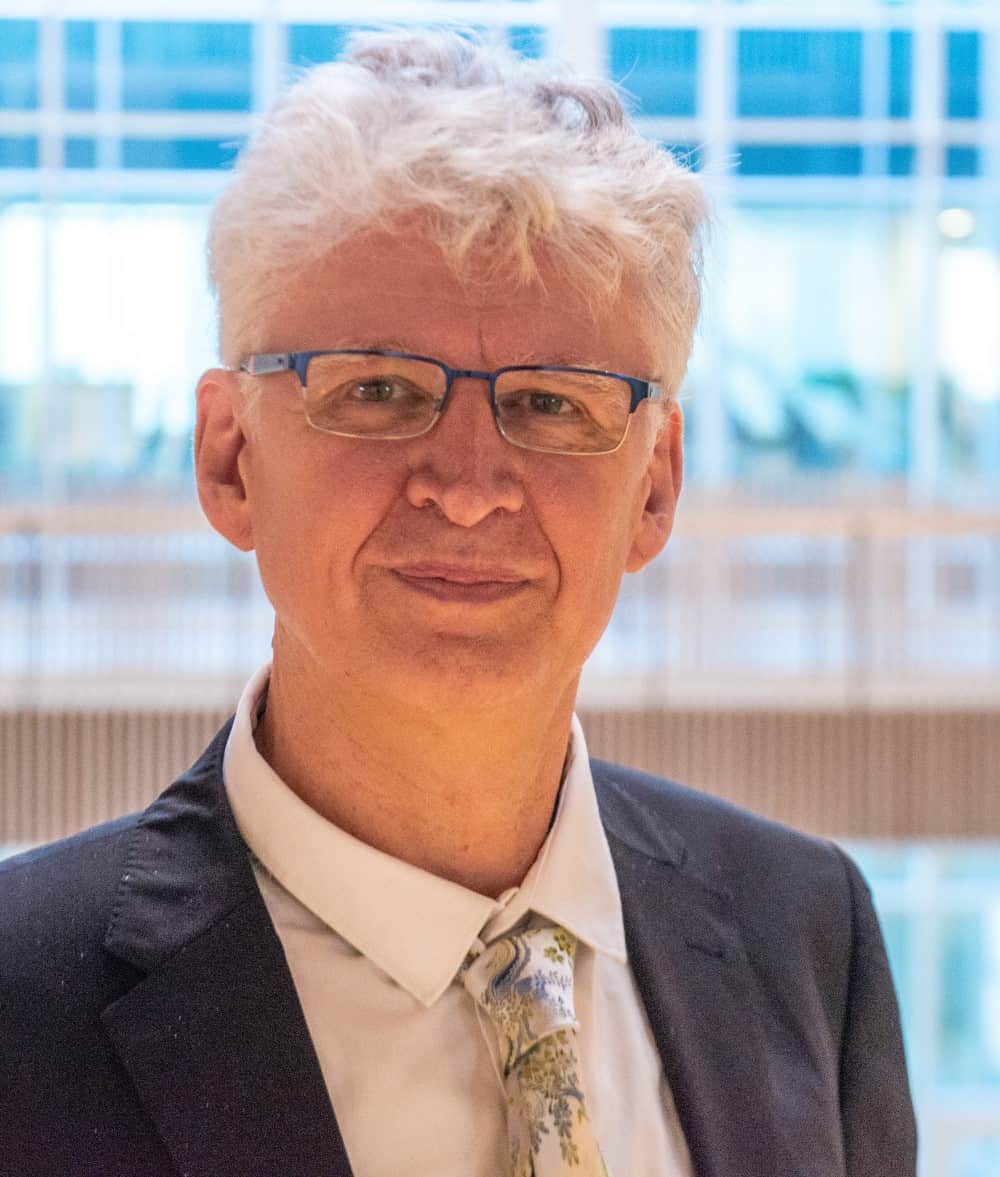
Helmut Schober is director-general of the European Spallation Source. (Courtesy: Roger Eriksson/ESS)
What kind of science will be performed at the ESS?
Initially there will be 15 neutron-science instruments – eight of them available by the end of 2027, with the others following in 2028. These instruments will investigate materials properties on the atomic scale across a broad spectrum of scientific discovery – from clean energy and environmental technology to pharma and healthcare; from structural biology and nanotech to food science and cultural heritage.
You’ve been director-general of the ESS since November 2021. What does your typical working day look like?
One thing I’ve learned is that no two days are the same, so I’m unlikely to get bored anytime soon. I spend most of my time meeting with ESS senior managers and project leaders, ranging across all manner of “issues arising” – whether that’s the quality of welds in our cooling systems or the specifics of the facility’s electrical system design and integration. Of course, we also focus on more eye-catching deliverables like the commissioning and installation of the three-tonne tungsten target wheel within its shielded bunker, which we hope to complete in the first half of this year. Our biggest challenge is to ensure that everything remains on schedule – and on budget.
Why did the ESS undertake a “rebaselining” exercise during the COVID-19 pandemic?
The rebaselining was made necessary by supply-chain disruptions as a result of the COVID-19 pandemic, but equally some technical challenges. Our revised plan will see ESS enter user operation in late 2027, two years later than originally planned. Subject to national ratification, the ESS Council also confirmed its contribution to an anticipated additional project cost of up to €550m, of which €190m is contingency.
How do you ensure that the rebaselined ESS project stays on track?
We can never fully exclude unanticipated technical issues. Last summer, for example, we had problems with the helium cooling circuits of our target wheel and the target inner shielding. However, we must continuously monitor and then quickly react whenever issues arise. Alongside the ESS project and technical directorate, the newly established operations and infrastructure directorate helps to optimize the construction, installation, integration and maintenance of the facility. Equally, we have learned that we must further prioritize the quality of our core components and subsystems, with ESS teams managing sign-off and acceptance alongside our in-kind partners and industry vendors.
What role do other large-scale research facilities play in building the ESS?
We could not have built the ESS without an extensive network of collaborations and in-kind contributions of equipment and personnel from over 40 European partner laboratories. Collaboration is key to delivering the project’s core building blocks – among them the linac, the tungsten target wheel and the scientific instruments. As such, the ESS also has a dedicated in-kind director to manage all of these partnerships.
How are you working with the neutron science user community?
I liken my role to running a business so it’s never too soon to start talking to the “customers”. One of the main priorities for our science directorate is to engage with researchers to ensure their needs are met. A case in point is our biannual user meeting – held last October in collaboration with the Institut Laue-Langevin (ILL), the reactor-based neutron facility in Grenoble, France – where we highlighted all sorts of cutting-edge materials research that will open up once the ESS turns on. When the ESS is fully operational in 2028, early experiments will be crucial in figuring out how best to deploy the facility’s unique capabilities. Based on my three decades at the ILL, including five years as director, the best outcomes arise when the facility’s instrument scientists work with users to accelerate new lines of enquiry.
When do you start planning the transition from construction to operation?
Over the next five years, my task is to manage an efficient transition to scientific operation. That effort is now taking shape and will be crucial to successfully building a post-launch ESS workforce.
What about the long-term roadmap for European neutron science?
The future is all about greater collaboration and co-ordination among Europe’s neutron research labs. Last year, I presented the idea of an umbrella initiative for Europe’s neutron science facilities – provisionally labelled the European Neutron Science Laboratory – to drive neutron science forward. It would, among other things, implement a joint technology roadmap for Europe’s neutron research labs and help us engage in a more unified way with the scientific user community.
In this webinar, Jonathan Koomey and Ian Monroe, editors of the IOP Publishing book Solving Climate Change: A guide for learners and leaders, will identify five technical pillars of climate action needed to stabilize the climate. These include electrifying (almost) everything, decarbonizing the electricity grid, minimizing non-fossil emissions, promoting efficiency and optimization, and removing carbon from the atmosphere, moving beyond the narrow technical and policy focus of most previous climate solutions work by detailing three more “institutional” pillars that require action: aligning incentives, mobilizing money, and elevating truth.
Jonathan Koomey is a researcher, author, lecturer and entrepreneur who is one of the leading international experts on the economics of climate solutions and the energy and environmental effects of information technology. Jonathan holds MS and PhD degrees from the Energy and Resources Group at the University of California at Berkeley, and an AB in history and science from Harvard University. He is the author or co-author of 10 books and more than 200 articles and reports on energy efficiency and supply-side power technologies, energy economics, energy policy, environmental externalities, and global climate change. He has also published extensively on critical thinking skills. Solving Climate Change: A guide for learners and leaders is his latest book. For more on his research, writing and accomplishments go to Koomey.com.
Ian Monroe’s career spans climate science, technology, policy and finance, and has taught at Stanford University for more than a decade and worked on climate challenges in more 30 countries. A pioneer in climate solution investing, Ian co-founded Etho Capital, which runs the ETHO ETF and has helped decarbonize more than $100 billion in assets. He is also a co-founder of the Climate+Positive Investing Alliance and Oroeco, as well as an advisor to many climate programmes. With degrees in earth systems science from Stanford and the University of Oxford Artificial Intelligence Programme, Ian has also been educated by climate-fueled droughts and wildfires on his family’s small farm.
A new type of ultrafast tuneable laser based on low-loss lithium niobate integrated photonics could find application in technologies such as continuous-wave light detection and ranging (LiDAR) systems. The device, made by researchers at the Swiss Federal Institute of Technology Lausanne (EPFL) and IBM Research Europe in Zurich, has a high frequency-tuning rate and outperforms previous such lasers in terms of the laser linewidth.
Current programmable photonic integrated circuits (PICs) can be volatile and suffer from high optical signal losses – both of which prevent them from maintaining their programmed state. The excellent optical and electro-optical properties of lithium niobate, which is often employed in optical modulators (devices that control the frequency or intensity of transmitted light) offer a possible way around this problem.
Lithium niobate has recently emerged as an attractive substrate material for PICs, and it shows promise for making circuits with lower optical losses (a laser light beam can propagate through them without losing as much power). The material can also support high optical power levels and has a high “Pockels coefficient”, which means that its optical properties can be tuned using an electric field.
Hybrid laser diode chip
In their new study, detailed in Nature, the researchers, led by EPFL’s Tobias Kippenberg, assembled a hybrid device by integrating a distributed feedback laser and a silicon nitride–lithium niobate (Si3N4–LiNbO3) photonic integrated chip. The latter consists of a thin layer of lithium niobate placed atop silicon nitride waveguides. While it sounds simple, this assembly took the researchers years to master since it involved perfect bonding of a 4-inch-wide LiNbO3 wafer onto a Damascene Si3N4 wafer of the same diameter.
“This configuration allows these circuits, which have ultralow losses, to be tuned electro-optically,” explains team member Viacheslav Snigirev. It also facilitates injection locking of the laser diode to an optical microresonator – a technique that enhances laser operation at a certain frequency by using narrowband backreflection from a high quality factor optical microresonator. This makes both laser linewidth narrowing and frequency tuning possible.
“These features of the laser make it a favourable candidate for frequency modulated continuous wave (FMCW) LiDAR systems,” he tells Physics World.
Proof-of-concept FMCW LiDAR system
Using transmission and reflection measurements, the researchers found that their Si3N4–LiNbO3 chip has low optical propagation losses of 8.5 dB/m, which allows for an intrinsic laser linewidth of just 3 kHz by self-injection locking to a laser diode. Thanks to the intrinsic electro-optical properties of lithium niobate, the device also has an electro-optical laser frequency tuning speed as high as 12 x 1015 Hz/s, while retaining a narrow linewidth and high tuning linearity. These values are better than seen in previous such devices, allowing the researchers to make a proof-of-concept FMCW LiDAR system that boasts a spatial resolution of 15 cm.
Kippenberg and colleagues say they are now studying more complicated photonic architectures for the feedback chip circuitry. These should further broaden the tuning span of the laser and increase its output power without compromising its bandwidth.
“We are also working on improving the fabrication of these circuits by modifying the processing sequence and the waveguide geometry to achieve better microresonator quality factors and frequency tuning efficiency,” says Snigirev. “Finally, we are eager to expand the spectrum of applications for our novel platform – for high-speed modulators and microwaves-to-optics interfaces.”
Joined-up thinking Hy-Q director Peter Lodahl (foreground) and Anders Sørensen, head of Hy-Q’s theoretical quantum optics group, have a rounded approach to quantum systems that prioritizes theoretical understanding, experimental research, device design and fabrication. (Courtesy: Ola J Joensen, Niels Bohr Institute)
What’s the headline goal at Hy-Q?
As part of the Niels Bohr Institute, Hy-Q comprises a talented and cross-disciplinary team of 50 researchers, working to deliver lasting value and impact in quantum science. Our aim is to create the foundational hardware and platform technologies for the quantum internet, exploiting the interplay between theoretical understanding, experimental systems, device design and fabrication – and pushing along all of these research pathways simultaneously. Operationally, Hy-Q prioritizes three discrete quantum platforms – photons, solid-state emitters and phonons – to enable remote connection, manipulation and storage of quantum information. Think hybrid quantum networks and a “best-of-all-worlds” approach that merges different quantum systems, each with its own pros and cons.
What’s possible as small-scale quantum systems evolve into large and complex quantum network architectures?
The Internet today distributes classical information over global length scales. The future quantum internet will transmit quantum information – single-photon qubits, say, or quantum entanglement – at the same global scale. This capability will, in turn, enable all sorts of unique applications, including quantum-encrypted communications for everything from governments and banks to healthcare providers and the military. Ultimately, we will see the implementation of at-scale parallel quantum computing resources, with remote computing nodes linked quantum mechanically across the network.
The transition from lab to field-deployable quantum technologies is already starting
Peter Lodahl, head of Hy-Q
Presumably it’s still early days for such network-level applications?
Correct, though it’s worth noting that the transition from lab to field-deployable quantum technologies is already starting. Late last year, for example, Hy-Q’s single-photon source technology was deployed as part of a successful field trial to demonstrate secure quantum key distribution (QKD) over an 18 km fibre-optic link on the existing telecoms network to our research partners at the Technical University of Denmark in Lyngby. This is the first time that on-demand single-photon sources have been applied in a real-world quantum communication link. As such, it’s an important first step in extending the technology to the ultimate security level known as “device independence”, where the quantum system is secure versus any hacking attempt, even on the apparatus used for encoding and decoding.
What technical challenges come into play when scaling up from lab-based quantum systems to quantum networks?
One of the biggest obstacles is optical attenuation on the installed fibre network. For starters, we’ll need robust quantum repeaters and quantum memories to send single-photon qubits beyond several hundred kilometres without losing them. Quantum repeaters are the equivalent of the fibre-optic amplifiers in today’s long-haul fibre-optic networks – essentially breaking the transmission link into discrete segments where optical losses are manageable and recoverable. The operational principle, though, is fundamentally different as amplification of quantum states is prohibited by the so-called “no cloning theorem”. But there’s a long way to go and the engineering challenges of these next-generation systems remain daunting.
How is Hy-Q tackling those issues?
Our scientists are exploring several ways to tackle the optical attenuation problem. A promising line of enquiry is what’s called the one-way quantum repeater. Rather than sending a single photon the entire distance, a cluster state consisting of multiple entangled photons – the cluster encoded with a single qubit of quantum information – is sent through a chain of repeater stations. At each repeater, the quantum information undergoes error correction and is transferred onto a “fresh” cluster state to counter the gradual photon loss versus distance. We are very good at producing entangled photons on-demand to evaluate such opportunities.
Building blocks Albert Schliesser (far left) and the Hy-Q optomechanics group are carrying out early-stage R&D on quantum memories. One of their biggest challenges is to make two different physical systems – i.e. wide-bandwidth single photons and narrow-bandwidth mechanical oscillators – mutually compatible. (Courtesy: Ola J Joensen, Niels Bohr Institute)
What about progress on quantum memories to store and convert quantum information across the network?
The Hy-Q optomechanics group, led by Albert Schliesser, is carrying out early-stage R&D on quantum memories – a must-have technology for any quantum communication or distributed quantum computing scheme. Specifically, the team’s focus is on ultracoherent mechanical devices – so-called phononic membrane resonators – which provide long coherence times (about 100 ms) while coupling efficiently to electromagnetic fields (from the radio-frequency to the optical domain, as well as electron and nuclear spins).
These resonators have a unique property – a bandgap that forbids the propagation of motion at certain frequencies. We can therefore “trap” a mechanical resonance in the phononic crystal, creating a well-isolated quantum system to store single single-photon qubits upon optical excitation. The opportunity is compelling: if we can reliably store photons generated with Hy-Q photon sources in the long-lived mechanical oscillations, we’d have a quantum memory that could store quantum information on timescales relevant for long-range quantum network applications.
Hy-Q brings together a wide range of expertise with an emphasis on openness and collaboration rather than competition
Peter Lodahl, head of Hy-Q
How would you pitch Hy-Q to a talented physics graduate considering options for PhD study?
I’m proud of the research culture at Hy-Q. This is a diverse team, bringing together a wide range of expertise to deliver success, plus there’s an emphasis on openness and collaboration rather than competition. That’s the magic: it’s not about who’s got the best CV or the longest publication list. Externally, we have long-standing collaborations with like-minded groups. For example, Arne Ludwig’s team at the University of Bochum, Germany, grows the highest-quality gallium-arsenide quantum-dot materials – the starting point for all our single-photon sources and photon-emitter interfaces at Hy-Q. We also work closely with Richard Warburton and colleagues at the University of Basel, Switzerland, sharing ideas in nanophotonics and semiconductor physics and with regular student exchange between our respective labs.
So the future’s bright for Hy-Q?
Absolutely. Our focus on the fundamental science of quantum networks is backed by the Danish National Research Foundation – we’re midway through a 10-year funding cycle – and that long-term support has enabled us to bring together world-leading expertise under one roof here in Copenhagen. Hy-Q is all about the long game: it’s going to take patience, cross-disciplinary collaboration and a relentless focus on continuous improvement to mix-and-match the enabling platform technologies for the quantum internet.
Translating quantum science into network-ready technologies
On-demand Sparrow Quantum offers a scalable solution for efficient quantum light generation. (Courtesy: Sparrow Quantum)
While Hy-Q’s efforts are skewed towards advances in fundamental quantum science, Peter Lodahl and colleagues are also eyeing the emerging market for quantum photonic technologies and devices. Front-and-centre is Hy-Q spin-out Sparrow Quantum, which designs, develops and manufactures single-photon sources for quantum computing, quantum metrology and distributed quantum networks.
Sparrow focuses on what, it hopes, will be a building block in the quantum-technology supply chain, namely a chip that can generate on-demand (deterministic) and highly coherent (indistinguishable) single-photon streams. The firm has overcome the inherent noise and decoherence processes of its on-chip platform so they exceed the benchmarks on generation efficiency and photon indistinguishability required for scale-up to real-world deployment.
The 3 x 3 mm chip, which has ultra-precise InAs/GaAs quantum-dot structures embedded in photonic-crystal waveguides, emits single photons at specific wavelengths between 920–980 nm. It provides long strings of more than 100 single photons without any observable decrease in the mutual indistinguishability between photons (>96%). The on-chip efficiency is higher than 90%, yielding more than 20 million single photons per second that can be directly deployed in an optical fibre.
Sparrow is targeting R&D customers and “putting a product on the market that simply didn’t exist before”, according to Lodahl, who is also the firm’s founder and chief science officer. “We’re first-movers, evangelizing a new platform technology so that it can mature in a commercial setting,” he says. “While innovation at the device level is mandatory, Sparrow’s remit must now shift to address more applied metrics like scalability, manufacturability, price and performance.”
A trip to the park is always fun, for adult and child alike. One of the most popular pieces of apparatus is often the swing and many children quickly learn how to “pump” a swing by thrusting their legs out on the downswing and then tucking their legs in as they reach the top of the swing.
Previous work looking into the physics of the swing failed to characterize people’s upper body movements, which can be important given that the arms and back can also influence the amplitude of the swing.
They found that if the swinging amplitude is small, like when the activity starts, upper body motion is more effective if the person leans back when the swing is vertical to the ground. But when the swinging amplitude is large, the pumping works best if the person leans back at the cusp of when the swing starts to move forward again.
But every child knew that anyway.
The next entry in the Red Folder is definitely not for children, so if you are under 18 please stop reading now. Two researchers at the UK’s University of Sussex have created what they say is the first mathematical model that describes how people reach sexual climax.
According to a press release from the university, Konstantin Blyuss and Yuliya Kyrychko have “combined decades of data on physiological and psychological arousal to model the optimum conditions to achieve orgasm”.