When will quantum computers finally break into the market?

Hype diagram

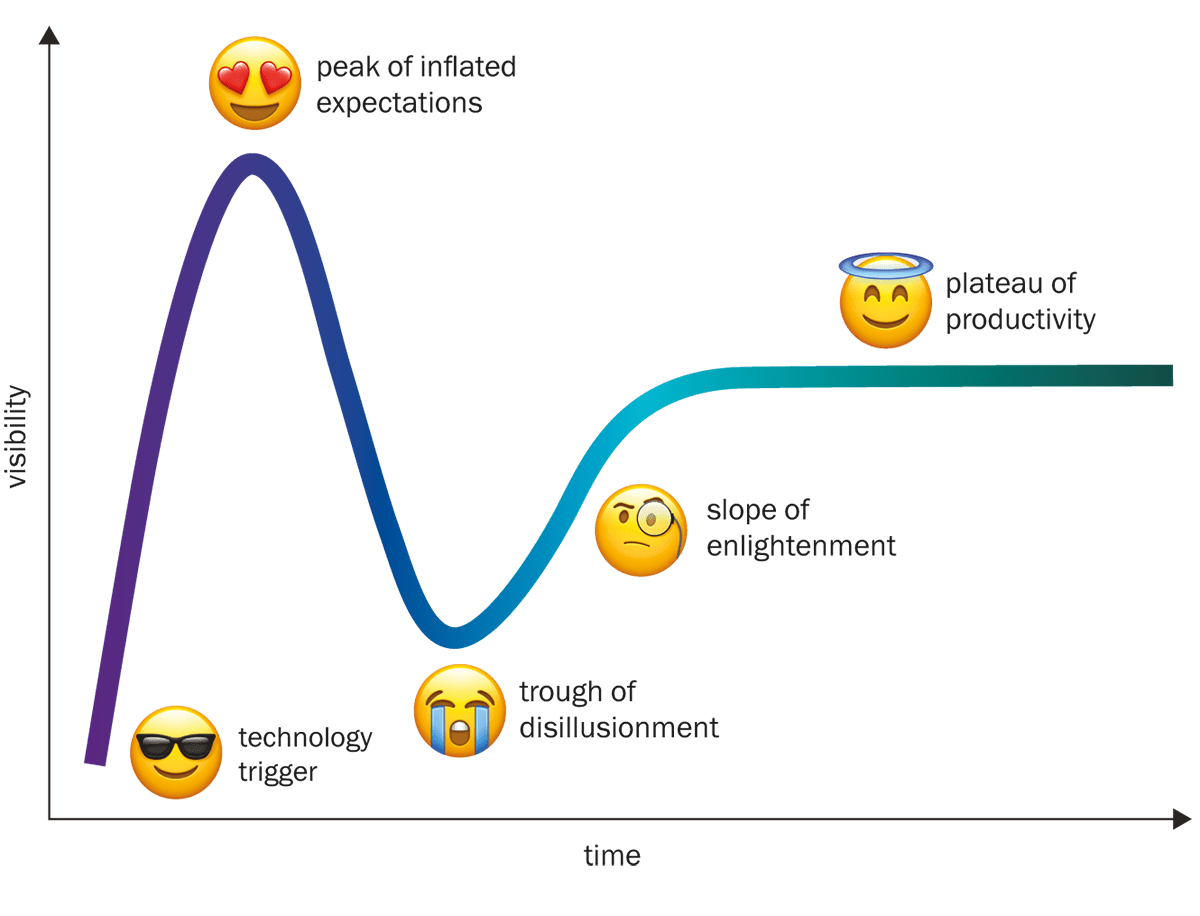
With so much excitement surrounding quantum computing – including a new £2.5bn, decade-long UK programme – how can we attempt to predict what the future will bring? One place to start is a graph devised in 1995 by Jackie Fenn, an analyst from US tech consultants Gartner Inc. Now known as the “Gartner hype cycle”, it shows how the expectation surrounding a particular technology develops over time. Having lived through a fair few technology cycles myself, I can safely say the graph is pretty accurate.

We invariably start with a “technology trigger”, when everyone notices that something big is happening. Interest rises sharply and money starts flowing in. Excitement mounts until we reach a “peak of inflated expectations”. Then interest starts to fall back until we hit a “trough of disillusionment” as people realize things are harder and trickier than imagined. Later, activity picks up again via a “slope of enlightenment” until we reach a “plateau of productivity”, where firms – finally – realize what works and know what customers want.

What the Gartner hype cycle tells us is that there will be plenty of winners in quantum computing but lots of losers too. Some firms will run out of money because they’ve followed approaches that can’t be scaled up as the market expands or because of poor execution, bad timing or management mistakes. Right now, though, there is plenty of money going into quantum computing, with estimates from Quantum Insider putting the figure at £3.2bn in 2022.

Some firms are even getting product orders. They include Universal Quantum, which has bagged a €67m contract with the German Aerospace Center. There’s also ORCA Computing, which won a business start-up award from the Institute of Physics in 2020 and now has an order for its ORCA PT-1 device from the UK’s Ministry of Defence and others from the Israel Quantum Computing Centre. ORCA’s machine (a photonic quantum computer) is the first of its kind that can work at room temperature.

Many potential customers will not understand the benefits of quantum computers until they see working systems solve their problems

But as ORCA boss Richard Murray rightly pointed out in a recent Forbes article, the challenge is working out what quantum computers can best be used for. As with any new tech, there’s no easy answer, with many potential customers not understanding the benefits until they see working systems solve their problems. It’s safe to say, though, that quantum computers will be particularly good at tackling certain problems that are difficult or even impossible for classical computers to solve.

Quantum computer processor

One of the most well-known applications is Shor’s algorithm, which can factor large numbers exponentially faster than classical algorithms. Indeed, the US National Institute of Standards and Technology (NIST) has already said that quantum computers will, by 2029, be able to break existing public key infrastructure like 128-bit AES encryption, which is currently used to protect sensitive information sent over the Internet.

This application is driving the market and the need for large machines with 10,000 quantum bits (qubits) or more. They will mostly be used for intelligence operations to decrypt data that have been stored with relatively low amounts of encryption (although, ironically, such data will probably be old and not that valuable). So if quantum computers become a reality, their ability to crack encryption algorithms will compromise the security of the Internet and damage global security.

It’s an issue recognized by many governments and organizations including NIST itself, which has launched a programme to develop new “post-quantum” cryptography standards that will be resistant to attacks by quantum computers. These new standards will be designed to be secure even if an attacker has a quantum computer.

Make it work

Powerful, cost-effective quantum computers will also be great at using special algorithms to solve complex “optimization” problems, such as scheduling, routing and logistics. These involve seeking the optimal solution from lots of possibilities – the most famous being the “travelling-salesperson problem”, which requires finding the shortest possible route between various cities so that each is visited at least once before returning home. Firms like Amazon, Fedex and UPS, which focus on delivery and logistics, will surely want to get into quantum tech.

Another exciting application would involve simulating quantum systems, which is tricky to do with a classical device. Quantum computers would therefore be perfect for quantum chemistry, which involves simulating the behaviour of molecules and chemical reactions. I can imagine a huge potential market for pharmaceutical companies developing new drugs, manufacturers building new types of battery or firms creating new materials.

Then there’s machine learning and artificial intelligence (AI). Quantum computers should be able to improve machine-learning algorithms – potentially quite dramatically – by providing faster and more efficient optimization routines or by exploring new models and architectures. This could be a massive new market, but it will depend on the quantum-tech sector building practical, large-scale quantum computers and developing the algorithms and applications that can take advantage of their unique capabilities.

In fact, there are many approaches in play at the quantum hardware level. As I have mentioned, companies like Google, IBM, Orca, Rigetti and Universal Quantum are already developing quantum processors with increasing numbers of qubits. There has been a lot of research into developing new types of qubits, such as topological qubits, which are more resistant to noise and errors. But it’s not clear if they will win out or whether superconducting qubits, ion-trap, silicon or optical qubits, will prevail.

We’ll also have to develop operating systems for all these hardware options, while algorithms will have to be built and tested too. In fact, it will take years – if not decades – before potential customers can fully understand the cost-benefit of quantum computers. Why spend money on a new quantum computer if a classical computer can do the job just as well?

Uncertainty surrounding quantum computers will vanish only when someone starts selling a scalable, affordable hardware platform, with 10,000 qubits or more

Sure, a few early applications of quantum computers will reach the market, but the uncertainty surrounding these machines will vanish only when someone starts selling a scalable, affordable hardware platform, with 10,000 qubits or more. That’s when quantum computing will take off and we’ll be sure what they’re good for. Physicists might be in awe of all things quantum, but quite when it’ll reach that “plateau of productivity” is anyone’s guess.

Multimodal optical imaging ready to shine in the early detection of colorectal cancer

Colorectal (bowel) cancer is the second leading cause of cancer deaths in Europe – at around 160,000 deaths each year – and comes with an aggregate economic overhead in the region of €20 billion per annum – half of that relating to the primary healthcare impacts of treatment and follow-up patient care. Those figures – taken from the European Cancer Information System (ECIS), a data repository of cancer indicators and trends – reinforce the importance of early detection. When colorectal cancer is detected early (i.e. before the tumour grows beyond the colon or rectum walls into surrounding tissues), the five-year survival rate for patients increases to 90% (versus only 14% for late-stage diagnosis). Right now, though, only around four out of 10 cases of colorectal cancer are detected during that initial, localized phase of the disease.

Herein lies a clinical and commercial opportunity for biophotonics innovators to deliver early-stage, point-of-care intervention – in short, a paradigm shift when it comes to the screening, diagnosis and treatment of colorectal cancer. Think optical biopsy: the use of complementary optical imaging modalities, delivered endoscopically, to elucidate morphological, functional and molecular insights on cancerous bowel tissue without the need for excision of that tissue.

Front-and-centre within this translational R&D endeavour is Peter Andersen, group leader in biophotonic imaging at DTU Health Tech, the department of health technology at the Technical University of Denmark (DTU) in Kongens Lyngby, north of Copenhagen.

Optical opportunities

For the past three years, Andersen and his DTU Health Tech colleagues have been working to change the narrative on colorectal cancer for the better. As coordinator of the €6 million PROSCOPE initiative – funded as part of the European Union’s Horizon 2020 research and innovation programme – Andersen heads up a cross-disciplinary collaboration of scientists, industry engineers and clinicians drawn from five European countries. Their collective goal: to develop the building blocks of a multimodal fibre-optic imaging platform that paves the way for early diagnosis – at scale – of colorectal cancer, achieving specificity and sensitivity above 90% while halving the number of patients referred for excisional biopsies (which are time-consuming and prone to sampling errors that miss suspect lesions).

“Optical imaging opens up a promising pathway to earlier diagnosis and enhanced localization of disease,” explains Andersen. “By improving cancer diagnosis, we can reduce recurrence and the need for expensive follow-up procedures in the clinic – all of which means better treatment outcomes and improved quality-of-life for patients.”

Today, oncologists inspect the bowel using conventional colonoscopy systems based, for example, on high-resolution white-light video or optical narrow-band imaging. Although such approaches enable clinicians to differentiate and characterize early-stage cancerous lesions, there are limitations in terms of depth-sectioning and sensitivity.

“With this in mind,” adds Andersen, “PROSCOPE is prioritizing a unique combination of label-free [no injected dyes or biomarkers], non-ionizing and proven optical imaging modalities with a spatial resolution, specificity and sensitivity that will complement established clinical imaging procedures and reduce the need for excisional biopsy and histopathology.”

Put another way, the PROSCOPE partners are taking colonoscopy into uncharted territory. In terms of the workflow, standard white-light illumination (with on-board video camera) is used to flag up suspect lesions that merit further investigation by the clinician, at which point a portfolio of advanced optical imaging modalities comes into play. For starters, there’s optical coherence tomography (OCT), which uses low-coherence near-infrared interferometry to map reflections from different depths within tissue (i.e. depth-sectioning). Those reflections yield micron-resolution cross-sectional images of subsurface lesions in the bowel wall, also the growth of new microscopic blood capillaries that feed cancerous tissue.

Peter Andersen

“I liken the PROSCOPE imaging concept to the Google Earth of colonoscopies,” explains Andersen. “We start with a map of the country and then zoom into a town, then a street, then a building.” What Andersen is alluding to here is the fact that cancerous cells have a more active metabolism than adjacent, non-cancerous cells, implying higher blood flow and vessel growth to suspect lesions. As such, the PROSCOPE imaging probe uses multiphoton microscopy (MPM) to image the lesion of interest at cellular length scales – measuring blood flow, for example, and metabolic activity – while Raman spectroscopy zooms in even further to identify cancer biomarkers at the molecular level.

While the PROSCOPE partners are, for now, focusing on design iteration, miniaturization and systems integration aspects of their multimodal colonoscope, the plan is to put a technology demonstrator through its paces early next year in a small-scale clinical trial (a cohort of 20–30 patients) at the Medical University of Vienna, Austria. “The end-game for PROSCOPE is clinical translation,” says Andersen. “We’re not developing this technology because we can; we’re developing it to deliver earlier cancer diagnosis and improved patient outcomes.”

Success breeds success

Yet if PROSCOPE is all about the “what’s next” in biophotonic imaging, the consortium’s progress towards clinical application undoubtedly builds on the successes of a related, and now complete, pan-European project called MIB (Multimodal, Endoscopic Biophotonic Imaging of Bladder Cancer for Point-of-Care Diagnosis). With DTU Health Tech also the project coordinator, the MIB research consortium pioneered a cystoscope-compatible optical imaging system to enhance diagnostic capabilities with respect to bladder cancer – the ultimate goal being improved patient prognosis through early detection, earlier onset of treatment and, in turn, reduced disease recurrence (currently 50% after 12 months of follow-up).

Notable MIB outcomes include the optimization of robust and compact light sources (part of the back-end instrumentation) and the integration of multiple high-speed optical imaging probes (combining OCT, MPM and Raman spectroscopy) into a prototype cytoscopic delivery module (with biocompatible sheathing). Although follow-on R&D continues beyond the MIB framework, the consortium also took the first steps towards validation through laboratory testing (ex vivo and in vitro) and an early-stage in vivo clinical study involving 20 patients.

“There’s a high degree of commonality across MIB and PROSCOPE,” notes Andersen. Both projects address cancers with high levels of incidence, for example, and both rely on endoscopic delivery – factors which enabled extensive knowledge transfer and a portfolio of foundational platform technologies to span the MIB and PROSCOPE programmes of work.

“More than that,” concludes Andersen, “we have also built up a granular understanding of the regulatory environment thanks to our collaboration with the Medical University of Vienna and our industry partners. In fact, PROSCOPE now forms part of a wider innovation ecosystem that will enable us to deliver advanced medical devices to meet the regulatory approvals needed for clinical translation and, ultimately, routine deployment in a diagnostic setting.”

Building the talent pipeline in biophotonics

International Graduate Summer School in Biophotonics

Education, networking and lifelong friendships will, as in previous years, likely prove defining themes for the biomedical optics students lucky enough to make the cut for the 11th International Graduate Summer School in Biophotonics.

The school takes place in June on the small island of Ven, across the water from Helsingborg on the east coast of Sweden, and comprises a week-long programme of lectures, workshops and poster presentations. Attendees will cover a broad-scope brief, spanning the fundamental science, technology and applications of biomedical optics in diagnostic and therapeutic contexts, as well as the translation of optical modalities into life science and clinical applications.

Co-organized by DTU Health Tech’s Peter Andersen and long-time collaborator Stefan Andersson-Engels of the Tyndall National Institute at the University of Cork, Ireland, the school is restricted to a cohort of 60 PhD students and postdoctoral fellows working across diverse subdisciplines in the field of biomedical optics (with a few places allocated to talented undergraduates).

“It’s 20 years since Stefan and I organized the first summer school – a response to the noticeable void in biophotonics education and training at the time,” explains Andersen. Since then, the summer school – which is held every two years – has gone from strength to strength, attracting students and prominent guest lecturers from all the over the world.

“The school is part of the glue that knits the field of biomedical optics together,” adds Andersen. “We’re always significantly over-subscribed with early-career scientists seeking to develop their networks as well as identify future research pathways and prospective collaborators.”

  • For further information, see the project pages of PROSCOPE (grant agreement no. 871212) and MIB (grant agreement no. 667933).

Bacterial enzyme produces energy from atmospheric hydrogen

An enzyme that catalytically converts the hydrogen present in air into energy could find use in applications such as cheap and efficient hydrogen fuel cells. The enzyme, extracted from a bacterium by researchers at Monash University in Australia, is also insensitive to oxygen, unlike all other hydrogen-oxidizing catalysts, including platinum.

“The hydrogenase enzyme, called Huc, has such a high affinity for hydrogen that it is able to oxidize atmospheric concentrations of hydrogen,” explains study team leader Chris Greening. “This is in contrast to all known hydrogen-oxidizing catalysts that are not able to consume ambient levels of hydrogen.”

The Monash team’s studies on Huc date back to Greening’s PhD roughly nine years ago. He and his colleagues were looking into how Mycobacterium smegmatis is able to survive for years on end without having access to any organic food sources. This work led to a surprising discovery, recalls Greening: that the bacterium actually lives on air. “It takes up atmospheric hydrogen and uses this for aerobic respiration.”

A ubiquitous energy source

Given that atmospheric hydrogen is a ubiquitous, diffusible and potent energy source, it provides a dependable lifeline for the survival of many bacteria, especially in nutrient-poor environments such as Antarctic soils, volcanic craters and the deep ocean. Until now, however, the researchers did not know how the bacteria exploit the trace amounts of hydrogen in the air.

In the new work, Greening and colleagues extracted Huc from M. smegmatis. By using advanced microscopy techniques like cryo-electron microscopy to determine its atomic structure and electric pathways, as well as employing electrochemistry, they showed that Huc turns minute concentrations of H2 gas into electrical current with extraordinary efficiency while being insensitive to oxygen (which usually acts as a “poison” for hydrogen-oxidizing catalysts). It does this by coupling oxidation of atmospheric H2 to the hydrogenation of the respiratory electron carrier menaquinone, using narrow hydrophobic gas channels to selectively bind the H2 at the expense of O2.

Huc is also robust to heat and can be heated to 80°C while retaining its ability to generate energy. This allows it to survive in the most extreme conditions. What‘s more, the bacteria that produce enzymes like Huc are common, meaning that researchers have ready access to a sustainable source of the enzyme.

“At the fundamental level, we have discovered the mechanism by which bacteria ‘live on air’,” Greening tells Physics World. “This process is extremely important because it regulates the levels of hydrogen in our atmosphere and also helps to sustain productivity and diversity in soils, oceans, and even some extreme environments, like Antarctica.”

According to the researchers, who detail their study in Nature, there is much potential for this enzyme to be used as the basis for hydrogen fuel cells. And given that the enzyme literally harvests energy from air, there may also be some applications in air-powered devices, they say.

The team is now busy scaling up production of Huc from milligram quantities to much higher. “This will allow us to gain an even deeper understanding of how it works and also develop its industrial applications,” says Greening.

Exploiting physics to impact the economy

What is your role at the Institute of Physics (IOP)?

I lead the IOP’s work to influence and deliver impact on science and innovation matters important to the physics community in the UK and Ireland. I have over 30 years executive and non-executive director experience working in business, government, membership and research and innovation organizations, including 8 years at the IOP.

Anne Crean

What role does physics play in supporting the economy?

The physics sector in the UK accounts for 11% of GDP, 10% of UK employment and performs one-third of all business research and development. Physics-based products and services are critical to advances in aerospace, defence, energy, healthcare, manufacturing, transport and space sectors as well to the photonics, quantum and semiconductors industries.

Can you highlight any examples?

The IOP Business Award winners are perfect examples. Last year, Cerca Magnetics, Zilico, Digistain and Ceryx Medical received awards for their disruptive medical innovations. Also recognized were Porotech for the development of porous semiconductors that enabled the world’s first commercial indium-gallium-nitride red light-emitting diode (LED) epiwafer.  Universal Quantum, meanwhile, bagged an award for its development work towards the world’s first million-qubit quantum computer as did Innovative Physics for the development of neutron detector technology deployed for decommissioning the stricken Fukushima Daiichi Nuclear Power Plant.

How can the IOP help the physics-based economy?

Physics is providing solutions to mitigate climate change and to tackle public-health challenges to help create a better world for the next generation. Without significant investment in R&D, infrastructure, skills and business innovation, however, the physics-based economy is at risk. It is vital that we evidence and champion  the impact that physics has for policy makers and funders.

How does the IOP achieve this?

We have set out research and development blueprints to help create a thriving physics ecosystem. We are now organising community action on topical and pressing issues as well as creating a programme of impact projects to ensure the health of physics discovery and business innovation.

Could you explain what the impact projects are about?

The IOP’s impact projects involve community debates and evidence-gathering to influence science and technology strategies and investment. They also help to create roadmaps to address sector challenges or shape policy to tackle business innovation and growth issues.

What projects did the IOP deliver last year, and what concrete outcomes were obtained?

Working with IOP members and the wider physics community, last year our impact projects influenced national strategies for the quantum and semiconductor sectors. Our quantum work culminated in a report that coincided with the launch of a trade body for quantum businesses called UK Quantum and the UK National Quantum Technologies Programme’s Quantum Showcase. Members also formed a new IOP quantum Business Innovation and Growth network – qBIG group. It will support future roadmap activities, catalyse industry–academia collaborations and represent the quantum community to national and regional policymakers.

The second impact project in 2022 was run in partnership with the Royal Academy of Engineering and set out strategy recommendations around tooling and skills. It was linked to our work with the Compound Semiconductor Catapult on a roadmap for the development of so-called “type II superlattice” infrared detectors.

What impact projects are running this year?

Our flagship project for 2023 is “physics powering the green economy”, which will highlight the role that physics is playing in the green economy. The project will span energy production, transport, buildings and CO2 management applications. Through roadmaps in nuclear, renewables, energy storage, hydrogen and carbon capture, usage and storage it will recommend how to accelerate our transition to net zero. Work will also capture community thinking on recycling, adaptation, and the need for a fair and affordable transition.

We will also be exploring how future advances in positioning, navigation and timing technologies could drive economic growth. Finally, we will be working with venture capitalist firms that are investing in physics-based businesses to better understand their interests and issues. This will hopefully influence strategies to support future investment.

How can the community propose future impact projects?

We want our members and the community to help shape the debate and stimulate our next set of impact projects. We hope to encourage submissions from across academia, business, nations and regions, and from under-represented groups in our community. This is an opportunity for the whole physics community to say what matters most and why, what science and innovation issues are important, what change is needed, and how the IOP can make a difference.

  • Submissions for IOP impact projects can be made here. The deadline is 11 May.

IOP wants to ‘bin the boffin’, Shaun the Sheep comes baaa-ck to Earth, Gwyneth Paltrow’s ski crash story backed by physics

Ever wondered what helium or iron sound like? Well, now you can find out thanks to Walker Smith from Indiana University and colleagues, who have used a technique called data sonification to convert the visible light given off by the elements into audio.

They did this by building a computer code that converted each element’s light spectrum into mixtures of notes. The discrete colour wavelengths became individual sine waves with a frequency corresponding to that of the light and an amplitude matching its brightness. The result is a unique, complex sound for each element. “Simpler elements, such as hydrogen and helium, sound vaguely like musical chords, but the rest have a more complex collection of sounds,” claims Smith.

Calcium, for example, sounds like bells chiming together while zinc, according to Smith, resembles “an angelic choir singing a major chord with vibrato”. Smith presented the results this week at the American Chemical Society spring meeting. You can listen to the sound of the elements in the above video.

Bin the boffin

The Institute of Physics (IOP), which publishes Physics World, launched a new campaign this week catchily titled “Bin the Boffin”. The IOP is calling on the media to ditch damaging stereotypes that could put people off studying science. In particular, it wants to end the use of the term “boffin” as a synonym for scientist as it’s usually associated with old, white men.

The IOP could not have timed its campaign better. On the day of launch, the Daily Star ran a front-page story about space holding the key to beating Earth-based diseases that was headlined: “It’s life-saving boffinry Jim, but not as we know it”.

The campaign clearly hit a nerve with the Star, which the following day ran a front-page headline “Boffins: don’t call us boffins”, with the paper claiming that the “eggheads” were out to ban what it said was the Star’s favourite word. They even kicked off a readers’ campaign to “save the boffin”.

Rachel Youngman, deputy chief executive of the IOP, hit back in a blog post, reiterating that the IOP “will continue to argue our case for media reporting of science that is fun, lively and engaging but that doesn’t resort to out-dated caricatures and stereotypes which should be despatched to the twilight home for hackneyed tabloid jargon”.

The good news is that the campaign, which was part of a wider effort to draw attention to the IOP’s new guidelines on science reporting, has already had some success. Alison Phillips, editor of the Daily Mirror, told UK Press Gazette that the Mirror will not be using the term anymore. Sun and Star – your move.

Baaa-ck to Earth

A Shaun the Sheep mascot finally made its way baaa-ck home this week following a daring trip to the Moon last year. The 16 cm-tall stop motion figure was strapped to NASA’s Artemis 1 mission that blasted off in November 2022.

The Orion craft, with Shaun onboard, spent 25 days in space travelling to the Moon, performing a flyby, before splashing back to Earth on 11 December.

Shaun was a mascot on the mission from the European Space Agency, with David Parker, its director of human and robotic exploration, visiting Aardman studios in Bristol – where all of Shaun’s TV programmes and films are produced – to formally congratulate the sheep.

The moment was also marked with the unveiling of Shaun’s astronaut portrait, complete with a commemorative plaque that will be on permanent display at the studio. Shaun will now be going on a tour of space centres across Europe.

And finally…

In case you missed this week’s big celeb news, Hollywood actor Gwyneth Paltrow was found by a jury of not being liable for a ski accident that she was involved in. Retired optometrist Terry Sanderson had alleged that Paltrow crashed into him when skiing in 2016 and sued her for over $300 000, while Paltrow countersued for $1 plus legal fees alleging that he collided with her.

It seems that physics may have helped Paltrow’s case as biomechanical engineer Irving Scher, who charges $500 an hour for his services, was brought in as an expert witness. “Ms Paltrow’s version of events is consistent with the laws of physics, and how people move and rotate,” he told the court. The jury took three hours of deliberation to unanimously find Sanderson entirely at fault for the incident.

What does ChatGPT really know about physics?

The art of conversation may be dead, but you wouldn’t know it from the attention being paid to ChatGPT. It’s not a person with sparkling repartee, but a chatbot that accesses a terabyte-sized database of words drawn from the Internet. Type in anything and ChatGPT (using an AI language model called Generative Pre-trained Transformer 3) selects the words that are most likely to follow. It then forms thematically linked words into responsive, coherent and grammatical sentences and paragraphs.

ChatGPT was put online in November 2022 for people to try. Having had a go myself, I’ve found the real-time experience is like texting with a person, enhanced by our human tendency to project personality and consciousness onto things that have neither. As ChatGPT itself will tell you, it is not sentient, although its facility with language can make you think you’re engaging with a conscious being.

But is the algorithm that powers ChatGPT able to present scientific ideas and facts with accuracy?

Informal testing by the millions of people who have tried out ChatGPT suggests that it could be used for educational purposes even if unscrupulous users might present its work as their own. But is the algorithm that powers ChatGPT able to present scientific ideas and facts with accuracy? How, in other words, does ChatGPT cope with a subject as specialized and complex as physics?

When I asked it, for example, what goes on inside a black hole, I was told the situation is “extremely extreme” and was then given accurate information about its density, the event horizon and other physical properties. In response to the question “What did LIGO measure?” I was given a long detailed answer about gravitational waves and LIGO’s facilities.

I also tried a few higher-level questions, first asking ChatGPT to tell me the main problem in combining general relativity with quantum physics. “They are based on fundamentally different principles,” I was told. “General relativity…describes gravity as the curvature of space–time…Quantum physics…describes the behaviour of matter and energy at the subatomic level…they make different predictions…in certain regimes.”

To the query “Is condensed-matter physics the same as solid-state physics?” ChatGPT replied that, unlike solid-state physics, condensed-matter physics includes research on liquids and complex fluids, and described the properties studied. I even got a balanced and meaningful response when I asked it if “understanding dark matter is more important than having artistic ability”, being told, in part, that it “depends on one’s personal values and goals”.

If real physics undergraduates had handed in these mini essays, I would have rated them as more than acceptable

I found no misinterpretations of physical concepts in any of these answers. Except for the catchy phrase “extremely extreme”, the writing was not particularly lively although it was perfectly clear and logically laid out. Overall, if real physics undergraduates had handed in these mini essays, I would have rated them as more than acceptable (had I not known where they came from).

ChatGPT also responds to equations. When I asked if “F=mv” and “R=VI” are correct, I was informed that these are the wrong forms of Newton’s and Ohm’s laws and was given the right equations and an explanation for them. Entering “E=mc2” generated a response that correctly identified the equation, but mistakenly stated that a small energy can be converted into a large mass.

Similarly, there are reports that ChatGPT isn’t so good at turning problems given in written form into mathematics, even if it can numerically solve problems in algebra and calculus. What’s more, ChatGPT doesn’t always get its facts right. When I entered my name, for example, it accurately described my writing and career, but got a book title wrong and granted me two awards I have never received.

ChatGPT did well, however, in expressing the lighter side of physics. When I asked it to tell me a physics joke, it replied: “Why don’t scientists trust atoms? Because they make up everything!” It can even do poetry. When I asked it to put the three laws of thermodynamics into verse, it came up with four stanzas. They weren’t great, but they rhymed and got the idea across. Here’s the first one:

The first law’s a balance that we must hold,
Energy’s constant, it can’t be bought or sold.
It flows like a river, in and out,
A never-ending cycle, without a doubt.

Getting more confident, I decided to ask what I thought was a trick question. “Could one build LIGO with LEGO?” The response: “It is unlikely…LIGO is a highly complex scientific instrument [that would be] difficult, if not impossible, to achieve using LEGO…LIGO requires advanced technology, such as lasers…that would not be available in a LEGO set.” I could almost believe that ChatGPT was slyly telling me how dumb I am. But no, the algorithm was just following its rules and being literal.

My adventures with ChatGPT show that it can deliver valid physics knowledge and lore in readable form but needs human oversight before its output can be fully trusted. Real human feedback to its responses also helps train the ChatGPT language model, while its Internet database arises from human knowledge and wisdom, so the chatbot inevitably reflects our own biases and errors. Perhaps the objectively verifiable facts and theories of science mean that chatbots can be improved more quickly here than in fields where answers are less definite or more controversial.

In 1950 when Alan Turing first wrote about thinking machines, he reckoned that it would be as difficult to train a machine as it is to educate a child. That may be so, but I think, with ChatGPT, we have taken the first steps in machine education.

Laser-accelerated proton irradiation: simulating physical and chemical effects

Queen's University Belfast team

Laser-accelerated proton (LAP) beams may offer a delivery mechanism for proton therapy that has a smaller physical and financial footprint than cyclotron accelerators. LAP irradiation, which is produced when a high-intensity laser beam hits a thin metallic foil, may also cut down proton therapy treatment times from minutes to nanoseconds.

With this potential in mind, researchers are hard at work to confirm how – and if – LAP irradiation differs from conventional proton therapy in other ways.

When the spatial separation between individual proton tracks is small enough, reactive chemical species from individual proton tracks can migrate across tracks. There, chemical species may interact and recombine. For example, hydroxyl radicals commonly associated with indirect DNA damage could recombine into hydrogen peroxide, affecting their availability for reactions with tumour DNA.

In clinical proton therapy, the temporal separation between protons is large enough that physical and chemical interactions between individual proton tracks aren’t possible. Studies on the FLASH effect, however, which occurs on much shorter (0.1–1 s) timescales, suggest that there could be some inter-track interactions in FLASH radiotherapy. Inter-track interactions are therefore also possible with LAP irradiation, which might occur on even shorter timescales than the FLASH effect.

“We need to be sure these different delivery mechanisms do not change the quality of the treatment, so we wanted to investigate the possibility of interactions between protons in such short pulses,” says Shannon Thompson, a final year PhD student at the Patrick G Johnston Centre for Cancer Research at Queen’s University Belfast.

In a study appearing in Physics in Medicine & Biology, Thompson and her collaborators modelled nanosecond laser pulse deliveries and examined inter-track interactions between protons.

Monte Carlo simulations

Thompson used Monte Carlo simulations to explore the physical and chemical interactions that happen immediately after LAP irradiation. She followed chemical species over time for a range of proton energies (0.5 to 100 MeV) and doses and identified the circumstances required for inter-track interactions to occur with LAP.

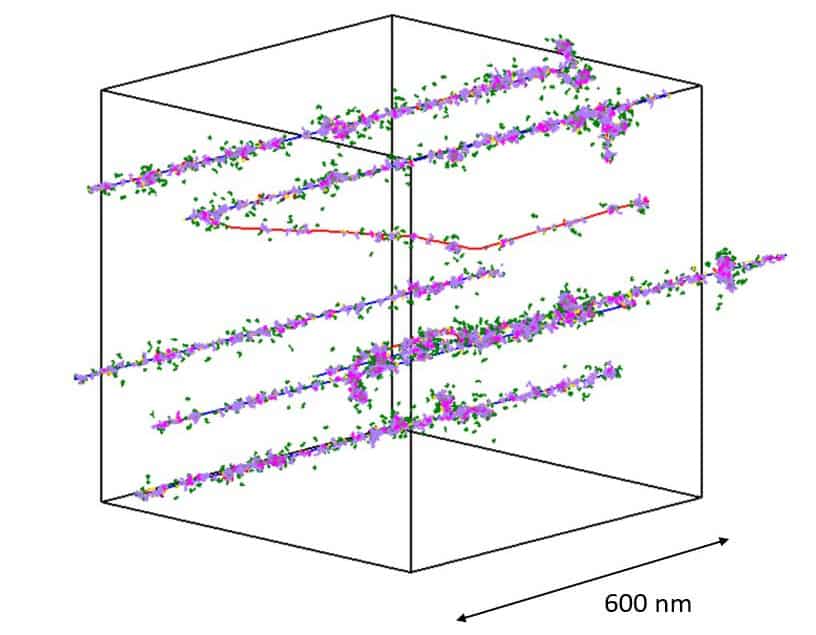
Proton track simulation

She observed negligible track overlap for all biologically relevant timepoints and proton energies when a clinical 2 Gy radiation dose was delivered. The probability of inter-track interactions increased with time after irradiation, proton energy and dose, with a minimum dose of 23 Gy required before significant track overlap occurred. Thompson also observed no changes in radical yields up to 8 Gy for independently and instantaneously delivered tracks.

“Our results indicate that despite the protons being present at the same time in laser-accelerated delivery, in terms of distance they are too far apart to interact with each other, either directly or indirectly through reactive chemical products,” says Thompson. “This means the initial physical and chemical interactions occurring a few nanoseconds after irradiation would be the same for both laser-accelerated and cyclotron proton therapy delivery. These results suggest there would be no initial differences in DNA damage, a key player in overall cell survival in radiotherapy.”

Results largely agreed with other early experiments on inter-track interactions, which suggest no difference between conventional proton and LAP delivery.

Open questions

Additional research is needed. Cyclotrons accelerate protons for clinical proton therapy up to 250 MeV, while Thompson and her collaborators simulated LAP deliveries up to 100 MeV. Proton beams at higher energies are more likely to experience inter-track interactions, especially with the short temporal distances between pulses in potential LAP deliveries. The simulated water environment also may not mimic inter-track interactions in cells.

Thompson says that other research teams are working to simulate LAP beams at higher energies. Researchers are also simulating more detailed chemical reactions in a cell alongside reactions with oxygen.

“There is a long way to go before laser-accelerated proton therapy could be applied within the clinic,” says Thompson. “But it requires a strong inter-disciplinary approach working with physicists, engineers, biologists and clinicians. Such collaborative efforts will enable the greatest advancement in this field to obtain the earliest patient benefit.”

Quantum memories in space: experiments in Earth orbit push the limits of physics

Quantum science and technology have been developing by leaps and bounds over the past few decades, so it is not surprising that quantum experiments are now being done in space. In this episode of the Physics World Weekly podcast Lisa Wörner and Jan-Michael Mol of the Institute of Quantum Technologies of the German Aerospace Center in Ulm explain why physicists are launching quantum memories and other devices into space and talk about the challenges of doing experiments in Earth orbit.

If this podcast has piqued your interest in quantum technologies in space there is much more in an open-access paper by Mol, Wörner and colleagues. It is called “Quantum memories for fundamental science in space” and is published in Quantum Science and Technology.

Sponsor logo

This episode is sponsored by Pfeiffer Vacuum. The company provides all types of vacuum equipment, including hybrid and magnetically-levitated turbopumps, leak detectors and analysis equipment, as well as vacuum chambers and systems. You can find about Pfeiffer Vacuum’s impact in space research in this video, and explore all its products on the Pfeiffer Vacuum website.

‘Trojan horse’ injection method enables ultracompact X-ray free-electron laser

X-ray free-electron lasers (XFELs) are used to create extreme matter conditions, enabling fundamental research in areas such as materials science, hot-dense-matter research and drug development. Currently, such lasers are behemoths, requiring kilometre-scale set-ups costing billions. Researchers at Strathclyde University in the UK have now put forward a new blueprint for a miniaturized XFEL based on a plasma wakefield accelerator (PWFA). The device, which would be just a few metres in size, could herald the advent of next-generation ultracompact XFELs, they say.

“FELs contain a relativistic electron beam swinging on a sinusoidal path inside an ‘undulator’ with an alternating magnetic field,” explains lead researcher Fahim Habib. “As a result of the wiggling motion, the electron beam emits bursts of photons and a positive feedback effect structures the electron beam into micro-bunches at the radiation wavelength.”

The result of this bunching is that the radiation power grows exponentially along the undulator and becomes highly coherent. However, this self-organizing effect can only occur if the electron beam is of a high quality at relativistic energies. Such high beam quality is achieved today using linear accelerators (linacs), which make the XFELs kilometres long.

Plasma-based accelerators

Plasma-based accelerators could produce such multi-gigaelectronvolt (GeV) beams on much shorter distances, of just centimetres, with beam qualities approaching those required for XFELs. Habib and colleagues have now shown that electron beams from plasma photocathodes may be much brighter than those produced in linacs and can be produced in a PWFA.

Wakefield accelerators operate by firing a dense beam of charged particles like electrons into a stationary plasma (essentially a gas of ionized particles). The electron beam separates negative charges (electrons) from the stationary background ions in the target creating a short trailing plasma wave. The electric field associated with this plasma wave accelerates charged particles that trail in its wake, which is where the term wakefield comes from. If a trailing bunch of charged particles is timed properly, it can surf this wave and be accelerated steeply – to kinetic energies of GeV over distances of just few centimetres. Yet, the beam quality is far from that required for XFELs

The advanced PWFA developed by Habib and colleagues is equipped with a novel electron injection method called a plasma photocathode (aka the “Trojan horse”) and can produce electron beams 100,000 times brighter than those in linacs thanks to the beams’ low momentum spread distribution.

Entire system is just a few metres in size

In their work, which is detailed in Nature Communications, the researchers studied how to extract, transport, isolate and inject the ultrahigh-brightness electron beams from the plasma photocathode PWFA into an undulator without charge and quality loss. “Focused into an undulator, the ultrahigh-quality electron beam produces powerful coherent photon pulses at Angstrom wavelengths on the fly with a pulse duration at the attosecond level,” explains Habib. “The fascinating part is that the entire system is just a few metres in size compared with state-of-the-art kilometre-size XFEL machines.”

“While there is much work ahead, our results are the first milestones towards the next-generation ultracompact XFELs. Our vision is to advance this technology to a standard tool for university-level labs or even hospitals,” Habib tells Physics World.

“The first experimental evidence for plasma photocathode injection in PWFA was obtained in our Trojan horse collaboration at our strategic partner Stanford’s SLAC FACET facility,” adds team leader Bernhard Hidding. “Now, with our programme at the successor facility, SLAC FACET-II, we aim to exploit the true potential of the scheme in terms of beam quality and stability.”

Machine learning sharpens images from scanning transmission electron microscopes

STEM images

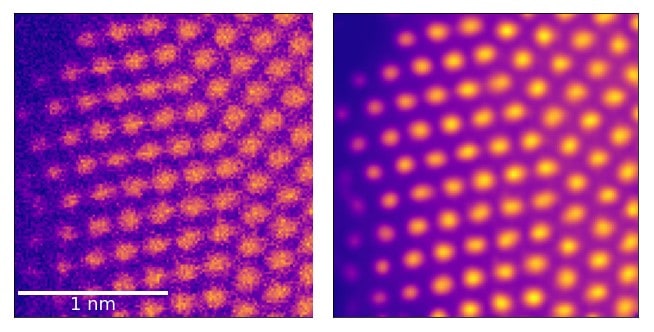
A new machine-learning technique has significantly reduced noise in images taken by scanning transmission electron microscopy (STEM). Developed by researchers in Ireland, the algorithm could make it far easier for researchers to use weak electron beams to study sub-nanoscale details in delicate samples.

STEM is one of the most powerful tools available to researchers who study the atomic-scale structure and chemical composition of material samples. A focused electron beam is scanned across a thin sample and the electrons that pass through the sample are detected to create an image. Modern STEM techniques have now achieved imaging resolutions below 0.1 nm, so the technique is capable of seeing individual atoms.

However, achieving high resolutions comes at a cost. One is that higher resolutions are often achieved by using higher-intensity electron beams, which can damage or even destroy samples. A common example is knock-on damage, whereby an intense electron beam can shift the positions of atoms in a sample.

Damage or resolution

“Reducing the electron dose would limit the sample damage, but also the chance to extract useful information from the images, which will have worse resolution,” explains Laura Gambini of Trinity College Dublin, who led the research. “This is due to the presence of Poisson noise, the effect of which increases when reducing the number of incident electrons.”

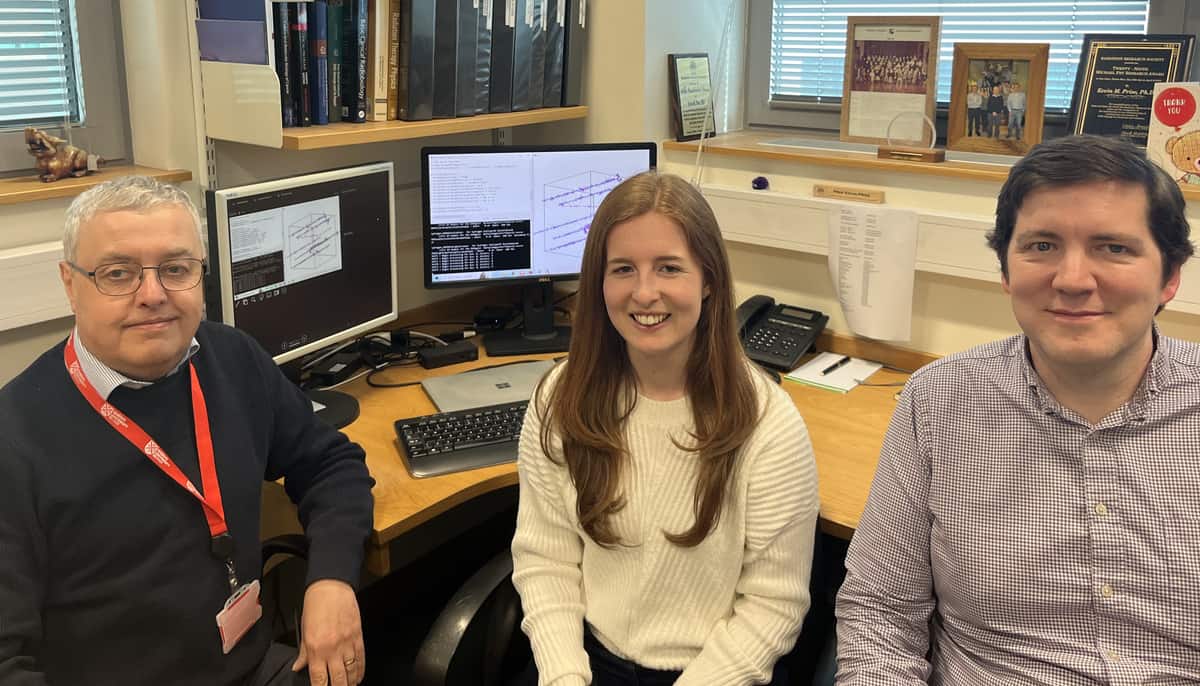
Laura Gambini and Tiarnan Mullarkey

Since Poisson noise is a fundamental property of electron beams, it cannot simply be corrected by adjusting a STEM instrument, as is the case with some other types of noise. In their study, Gambini and her colleagues looked to machine-learning algorithms, systems that learn to perform tasks by processing training data.

In this case, the team explored whether machine learning algorithms could be trained to reduce the noise in STEM images that have been scanned with low-dose electron beams. “Specifically, we trained an autoencoder on a dataset made of simulated STEM images, being careful in reflecting proper microscope settings and specimen variety in our dataset,” Gambini explains.

In particular, the researchers took care to ensure these data included a broad range of electron beam intensities, and that their training data were not biased towards samples with periodic crystal structures. After training their autoencoder, Gambini and colleagues tested its ability to reduce Poisson noise by using the system to process an extensive set of both real and artificial STEM images.

When they visually compared the images before and after processing, they noticed a clear reduction in noise. To quantify this improvement more precisely, they developed a benchmarking protocol based on atom localization – which estimates the positions of atoms within a sample.

By comparing these benchmarked data with their experimental results, the researchers demonstrated a greatly enhanced performance when using their autoencoder. “In a nutshell, we have demonstrated that our de-noised images contain more precise information than that in the original ones, and in those processed with other methods,” Gambini says.

Along with noise removal, the team’s approach offers a host of advantages that would make it easy to integrate with existing STEM techniques. “Our algorithm doesn’t require any human input or prior knowledge of the data, it can be implemented with no need to buy any additional expensive equipment for the microscope, and it can run at a speed compatible with live data acquisition,” Gambini says.

The team now hopes that the autoencoder will lead to new opportunities to examine organic materials and other delicate samples in unprecedented levels of detail, without the risk of damaging them.

The research is described in Machine Learning: Science and Technology.

Copyright © 2026 by IOP Publishing Ltd and individual contributors