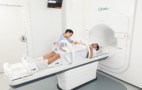
Adaptive fractionation pushes the boundaries of MR-guided radiotherapy

With MR-linacs, radiation therapy clinics can monitor and account for organ motion by imaging a patient and modifying their treatment plan while the patient is on the treatment table. This type of radiation therapy, called adaptive radiotherapy, delivers the same prescription dose in each treatment fraction. Researchers at the University Hospital of Zurich (USZ) are among several groups that have studied how to optimize the amount of dose delivered to a patient in each fraction – an approach they’ve dubbed adaptive fractionation.

Traditionally, clinicians have accounted for inter-fraction motion with treatment margins and by adjusting contours. Jan Unkelbach, a professor of medical physics research at USZ, says that when USZ installed an MR-linac in 2019, he wanted to push the boundaries of adaptive radiotherapy. In treatments of abdominal lesions, the USZ clinic observes inter-fraction motion on the order of a few millimetres, which can compromise tumour coverage and is accounted for using current adaptive radiotherapy techniques.

“We wanted to make use of the new imaging information that the MR-linac gives us every day, and we wanted to pursue something that goes beyond adaptive radiotherapy as performed in the clinics today,” Unkelbach says. “Adaptive fractionation is one approach to exploit inter-fraction motion rather than only compensating for it.”

The researchers say that they take advantage of inter-fraction motion by upscaling or downscaling the prescribed dose on each day’s treatment plan. A patient receiving adaptive fractionation treatments would be prescribed a larger radiation dose on days when the separation between a tumour and organs-at-risk (OARs) is large. Correspondingly, they would receive a smaller radiation dose on days with smaller tumour–OAR separation.

One of the challenges of adaptive fractionation is that while clinicians know the inter-fraction motion on a given day and the dose that has been delivered so far, they don’t know what will happen on subsequent days and fractions.

“This is exactly the big problem we tried to solve by using methods from the field of stochastic optimal control. By using patients from the same population [in our studies], we can model what we expect to see in the future, and we can compute this optimal dose based on the probability distribution of future organ and tumour anatomy,” explains Yoel Pérez Haas, previously a graduate student in Unkelbach’s group when he led their first adaptive fractionation studies.

Patient data analysis

The algorithm developed by the researchers assumes that a classic biologically equivalent dose (BED) model can be extended to an adaptive fractionation application, and that cumulative BED at the end of treatment is given by the sum of BED values in individual fractions. Parameters of the probability distribution are updated in each fraction following a patient’s daily MRI scan.

Pérez Haas used the algorithm to retrospectively analyse 16 five-fraction abdominal stereotactic body radiotherapy (SBRT) treatments delivered on the MR-linac system. Inter-fraction motion was modelled by sparing factors that describe how much dose a dose-limiting organ receives compared with the tumour and which the researchers used to adjust prescription dose on a fraction-by-fraction basis. BED metrics were used to quantify benefits to escalating tumour dose on a large separation day and suggest improvements over standard fractionation.

The researchers’ preliminary results suggest that only a few patients might show enough motion to significantly benefit from adaptive fractionation. But integrating adaptive fractionation into clinical workflows is worthwhile if it improves treatment outcomes in even a small number of patients, Unkelbach says.

Important issues remain to be addressed. For example, patients who would have benefited most from the group’s adaptive fractionation scheme would have received larger doses of radiation in a single fraction (more than 20 Gy) than clinicians would be comfortable delivering. The researchers’ algorithm also does not account for uncertainties in dose delivery. It’s also not yet known how patients who might benefit from adaptive fractionation would be identified.

The researchers are currently exploring ways to identify such patients, and they are extending their algorithm to include clinical constraints, including the maximum and minimum dose that can be delivered in a single fraction. They are also conducting a larger retrospective study to see if their results hold in a larger cohort.

For more information, read the study in Physics in Medicine & Biology.

Quasiparticles appear in a classical setting, surprising physicists

Experimental measurement of colloidal particles that form stable, hydrodynamically coupled pairs moving at the same velocity in a thin microfluidic channel

Researchers have observed quasiparticles in a classical system at room temperature for the first time, challenging the view that quasiparticles can only exist in quantum matter. The discovery, made in a thin fluidic channel containing flowing microparticles, suggests that the basic concepts of quantum matter physics might be applicable to classical settings.

The particles in many solids and liquids find themselves very close to each other and therefore strongly interact. This makes such “many-body” systems, as they are called, difficult to study and understand. In 1941 the Soviet physicist Lev Landau put forward a solution to this complicated situation: instead of considering the complex idea of strongly interacting particles, why not instead think instead about the excitations of the system?

“If these excitations are localized and rarely collide with each other, we can consider them as weakly interacting ‘effective particles’, or quasiparticles,” explains Tsvi Tlusty of the Institute for Basic Science (IBS) in Korea, who led the new study. “Landau’s conceptual breakthrough has been immensely useful in quantum matter research, providing insight into many emergent phenomena, such as electron-pairing in superconductivity and superfluidity, and recently electron flow in graphene.”

Too many collisions

Until now, quasiparticles have only been considered as quantum-mechanical objects. In classical condensed matter, the collision rate of excitations is typically much too high to allow for long-lived particle-like excitations. “Our findings are a breakthrough because, in contrast to this paradigm, we observed ‘Dirac quasiparticles’ in a classical hydrodynamic system,” Tlusty tells Physics World.

In the new work, Tlusty together with colleague Hyuk Kyu Pak and student Imran Saeed studied ensembles of microparticles driven by water flow in a very thin microfluidic channel. The researchers found that the motion of the particles perturbs the streamlines of the water flow surrounding them. The particles thus induce hydrodynamic forces on each other.

“Anti-Newtonian” particles

“Peculiarly, the forces between two particles are ‘anti-Newtonian’ – that is, they are equal in magnitude and direction in contrast to Newton’s law, which states that the mutual forces should oppose each other,” explains Tlusty. “The immediate consequence of this symmetry is the emergence of stable pairs that flow together at the same velocity.”

The result implies that the pairs are classical quasiparticles, or long-lived excitations in the hydrodynamic system. The researchers confirmed their hypothesis by analysing the vibrations (or phonons) in hydrodynamic two-dimensional crystals containing a periodic array of thousands of particles. They found that the phonons exhibit “Dirac cones”, much like those observed in graphene (a sheet of carbon just one atom thick) in which pairs of particles emerge.

Dirac cones are quantum features in the electronic band structure of a 2D material where the conduction and valence bands meet in a single point at the Fermi level. The bands approach this point in a linear way, which means that the effective kinetic energies of the conduction electrons (and holes) are directly proportional to their momenta. This unusual relationship is normally only seen for photons, which are massless, because the energies of electrons and other particles of matter at non-relativistic velocities usually depend on the square of their momenta. The result is that the electrons in Dirac cones behave as though they are relativistic particles with no rest mass, travelling through the material at extremely high speeds.

Strongly correlated flat bands

The IBS team also observed “flat bands” – another quantum phenomenon in which the electron energy spectrum contains ultra-slow phonons that are correlated extremely strongly. Flat bands were recently discovered in bilayers of graphene twisted with respect to each other at a certain angle. These bands are electron states in which there is no relationship between the electrons’ energy and velocity and they are especially interesting for physicists because electrons become “dispersionless” in them – that is, their kinetic energy is suppressed. As the electrons slow down almost to a stop, their effective mass approaches infinity, leading to exotic topological phenomena as well as strongly correlated states of matter associated with high-temperature superconductivity, magnetism and other quantum properties of solids.

“Our results suggest that emergent collective phenomena – like quasiparticles and strongly correlated flat bands – that so far were thought to be limited to quantum systems may be observed in classical settings, such as chemical systems and even living matter,” says Tlusty. “Perhaps these phenomena are much more common that we realized before.”

Such phenomena may help to explain various complex processes in classical systems too, he adds. “In this work, detailed in Nature Physics, we explain the non-equilibrium melting transition in the hydrodynamic crystal we studied as being the result of ‘quasiparticle avalanches’. These occur when the pairs of quasiparticles propagating though the crystal stimulates the creation of other pairs through a chain reaction.

“The quasiparticles pairs travel faster than the speed of phonons and thus every pair leaves behind an avalanche of newly-formed pairs – rather like the Mach cone generated behind a supersonic jet plane. Finally, all those pairs collide with each other, which eventually leads to the crystal melting.”

The researchers say there should be many more examples of quantum-like phenomena in other classical systems. “I feel that our findings are only the tip of the iceberg,” says Tlusty. “Revealing such phenomena may be very useful in advancing the understanding of emergent modes and phase transitions.”

Short electrical pulses switch superconductivity on and off in magic-angle graphene

Superconductivity can be switched on and off in “magic-angle” graphene using a short electrical pulse, according to new work by researchers at Massachusetts Institute of Technology (MIT). Until now, such switching could only be achieved by sweeping a continuous electric field across the material. The new finding could help in the development of novel superconducting electronics such as memory elements for use in two-dimensional (2D) materials-based circuits.

Graphene is a 2D crystal of carbon atoms arranged in a honeycomb pattern. Even on its own, this so-called “wonder material” boasts many exceptional properties, including high electrical conductivity as charge carriers (electrons and holes) zoom through the carbon lattice at very high speeds.

In 2018, researchers led by Pablo Jarillo-Herrero of MIT found that when two such sheets are placed on top of each other with a small angle misalignment, things become even more fascinating. In this twisted bilayer configuration, the sheets form a structure known as a moiré superlattice, and when the twist angle between them reaches the (theoretically predicted) “magic angle” of 1.08°, the material begins to show properties such as superconductivity at low temperatures – that is, it conducts electricity without any resistance.

At this angle, the way in which electrons move in the two coupled sheets changes because they are forced to organize themselves at the same energy. This leads to “flat” electronic bands, in which electron states have exactly the same energy despite having different velocities. This flat band structure makes electrons dispersionless – that is, their kinetic energy becomes completely suppressed and they cannot move in the moiré lattice. The result is that the particles slow almost to a halt and become localized at specific positions along the coupled sheets. This enables them to interact strongly with one another, forming the pairs that are a hallmark of superconductivity.

The MIT team has now discovered a new way to control magic-angle graphene by paying attention to its alignment when sandwiched between two layers of hexagonal boron nitride (hBN, a 2D insulator). The researchers aligned the first layer of hBN exactly with the top graphene sheet, while the second layer was offset by an angle of 30° with respect to the bottom graphene sheet. With this arrangement, they could engineer bistable behaviour in which the material can sit in one of two stable electronic states, allowing its superconductivity to be switched on or off with a short electrical pulse.

“Surprisingly, this bistability coexists without disrupting the behaviour of the magic-angle graphene,” explains lead author Dahlia Klein. “This system is a rare example of a discrete switch to turn superconductivity on and off with just an electrical pulse – something that could allow it to be used as a non-volatile superconducting memory device.”

Such a memory element could be incorporated into future 2D material-based circuits, she adds.

While the researchers are unsure as to exactly what enables this switchable superconductivity, they suspect that it is related to the special alignment of the twisted graphene to both the hBN layers. The team has seen similar bistabilities before in untwisted bilayer graphene aligned to its sandwiching hBN layers and therefore hopes to solve this puzzle in future work. “There is an ongoing effort between both experimentalists and theorists to pinpoint exactly how these hBN–graphene alignments give rise to the unexpected behaviour we have observed,” Klein tells Physics World.

The work is detailed in Nature Nanotechnology.

New single-photon detector targets high-speed quantum communications

A new photon detector called PEACOQ can register the arrival times of individual photons with the best timing resolution to date. Developed by Matthew Shaw and colleagues at NASA’s Jet Propulsion Laboratory, the detector achieved a maximum count rate of some 1.5 billion photons per second, while maintaining high efficiency and low noise.

Many schemes for quantum communications rely on the ability to detect and process light at the single-photon level, while logging the arrival times of each photon with pinpoint precision. As researchers seek to transmit quantum information at ever higher rates, the ability of detectors to register incoming photons will need to keep pace, without sacrificing low noise and high efficiency.

Superconducting nanowires are one of the most promising platforms for achieving ultra-high photon count rates. Cooled close to absolute zero, a nanowire will absorb a photon and heat up slightly. This reduces the nanowire’s the electrical resistance, which can be detected by measuring a drop in the current passing through the device. By recording the timing of this disruption, detectors can log photon arrival times with extreme accuracy.

Dead time limit

Nanowires have numerous advantages over other detection approaches. They detect photons across wavelengths across the mid-infrared to ultraviolet. Detection is done at efficiencies exceeding 98%, and at photon count rates up to 800 million photons per second. However, nanowires have one drawback that stops them from achieving even higher counting rates. The obstacle is the time taken for heat to dissipate from a nanowire after it has detected a photon. While a nanowire cools, a detector experiences a dead time where no new photons can be registered – limiting the count rate.

Now Shaw’s team has developed an advanced detector that offers a significant reduction in dead time. Dubbed the Performance-Enhanced Array for Counting Optical Quanta – or PEACOQ – the detector features an array of 32 straight, superconducting nanowires, which fan out like a peacock’s tail.

If any of PEACOQ’s nanowires absorb a photon, the resulting electrical signal is read out independently, then fed into a time-to-digital converter. This device records photon arrival times for all 32 nanowires simultaneously, to within a timing resolution of less than 100 ps. In the team’s experiments, PEACOQ achieved a maximum count rate of 1.5 billion photons per second – nearly double the rate of conventional nanowire detectors.

While the independent readout of each nanowire makes the device more complicated, the team was able to achieve low-noise operation and a detection efficiency of up to 78% – even when the detector was pushed to its limits. Shaw’s team is now trying to boost the efficiency. The researchers hope their design could pave the way for new advances in quantum key distribution cryptography.

The detector is described in Optica.

Why today’s PhD students are feeling the blues

Illustration of student with overwhelming pile of work and timer running out

If you’ve ever done a PhD in physics, you’ll know it can be a tough experience. You’re learning the art of research and trying to get real scientific results for the first time in your career. There are theories to understand, experimental techniques to master and software codes to learn. You might even be in a different country, coping with a new language or culture. And then there can be workplace problems to contend with: difficult colleagues, unpleasant discrimination and unseen hierarchies.

But life has been especially hard for today’s PhD students, whose work has been hit by the COVID-19 pandemic. They’ve had to cope with labs being shut, experiments stopping and contact with supervisors and colleagues being disrupted. As Physics World contributing columnist Karel Green describes in a feature article, many students have, not surprisingly, fallen behind with their work and struggled to get enough results. Sure, PhDs students have always faced such problems, but they’ve been exacerbated by the restrictions imposed during the pandemic.

Green, who is doing a PhD in astrophysics, has based her article not just on her own experiences but also those of others in a similar position to her own. As she discovered, some students have simply been left to sink or swim. Despite the COVID disruption, they’ve not necessarily been given extra money or enough extra time to write up their PhDs. And even if they have received additional support, they’ve often had to fight for the funding or track it down under their own steam. Students feel their problems are either being ignored or swept under the carpet.

Green’s article underlines wider concerns over the very nature of PhDs, which were once seen as a door into a permanent academic research career for a select band of top students. These days, however, universities too often see PhD students as a form of cheap labour, with not enough consideration given to the reality that many will go on to work outside academia. What’s worse, PhD projects aren’t always well thought out or supervised, with some students collecting data without proper direction, structure or hypothesis.

For those students who successfully jump all these hurdles and submit a thesis, there are further concerns over the nature of the PhD viva, as Physics World contributing columnist Pruthvi Mehta explains. In the UK, there is no standard length for this oral exam, while the subject knowledge of the examiner can vary wildly from one student to the next, putting some at a disadvantage through no fault of their own.

Trouble is, those who end up in academic posts have no reason to question what went wrong for those who struggled. If you’ve got your PhD, why worry about anyone who hasn’t? But those whom the system has failed are in danger of being left with a sour a taste in their mouths, potentially quitting physics altogether. And that cannot be good for anyone concerned about the future of the subject.

Virtual brain helps improve the outcome of epilepsy surgery

Epilepsy is one of the most common neurological disorders. While many patients can control epileptic seizures using drugs, almost one-third don’t respond to medication. Patients with such drug-resistant epilepsy are instead treated by removing the brain regions from which seizures originate. Before such surgery, however, it’s essential to identify these epileptogenic zones with extreme precision.

To maximize the success of epilepsy surgeries, researchers from the Institut de Neurosciences des Systèmes (INS) at Aix-Marseille Université have developed the virtual epileptic patient (VEP), a digital workflow for estimating a patient’s epileptogenic zone networks (EZNs) based on MR imaging and electrical activity recordings.

“There is a clinical need for this: surgery success rate in epilepsy has not significantly improved in the past 40 years,” says lead author Viktor Jirsa, INS director and a lead scientist in the Human Brain Project and The Virtual Brain.

“Epilepsy is a network disease and it is thus perfectly suited to be addressed by a network approach as we have developed in The Virtual Brain,” Jirsa explains. “In the Human Brain Project, we have developed the methods to personalize brain networks, thus clinical applications using digital twins for network disorders are the next natural step.”

The VEP, described in Science Translational Medicine, works by constructing a whole-brain model personalized for each particular patient. The model comprises a network of regions, each representing a node in the brain network. It uses the patient’s anatomical T1-weighted MRI data to define the structural scaffold of the brain and diffusion-weighted MRI to estimate connection strengths between brain regions – creating a patient-specific structural connectivity matrix.

The neural dynamics of each network node are defined using a neural mass model, a set of equations that represent the dynamics in that brain region. To estimate the locations of the EZNs, the model uses data from the patient’s stereo-electroencephalography (SEEG) recordings, along with CT scans to localize the implanted SEEG electrodes, to simulate the spread of abnormal activity during epileptic seizures.

Assessing patient data

After validating the model using synthetic data, Jirsa and colleagues applied the VEP workflow to data from a 29-year-old female patient with left frontal epilepsy. Using SEEG recordings from four of the patient’s seizures, the VEP identified three brain regions as EZNs, two of which had also been identified by clinicians based on SEEG signal analysis.

The patient had undergone surgical resection of the clinically defined EZNs. This reduced her seizure frequency but a couple of weeks later, the seizures returned. “Five months ago, she underwent surgery again, removing also the third EZN identified by VEP,” Jirsa tells Physics World. “Since then, she is seizure free.”

Estimation of epileptogenic brain areas

In addition to EZN estimation, the personalized brain models can also be used to predict the outcomes of different surgical interventions – a process referred to as “virtual surgery”. This could be used, for example, to determine the minimum number of brain regions that can be treated to provide seizure control while optimizing functional outcome.

For the abovementioned patient, the team used VEP simulations to predict the outcome of two virtual surgery schemes: removing the two brain regions identified by the clinicians; and removing the brain regions as performed in her actual surgery. Both virtual surgeries predicted seizure reduction but not elimination, consistent with the actual post-surgical outcome, reinforcing the potential clinical relevance of the VEP toolset.

To further evaluate the performance of the VEP workflow, the researchers retrospectively assessed the predicted EZNs for 53 patients with drug-resistant focal epilepsy. The VEPs reproduced the clinically defined EZNs (based on pre-surgical assessments) with a mean precision of 0.613 and a small mean physical distance (5.6 mm) between VEP-identified and clinically defined epileptogenic regions.

They also examined the VEP’s false discovery rate (FDR) in 25 patients who underwent epilepsy surgery. For those who were seizure-free following resection, the VEP showed a small mean FDR of 0.028. With these seizure-free patients, it is likely that the EZN was completely removed and that thus a false-positive estimate most likely falls outside the EZN.

In patients who were not seizure-free after treatment, a false-positive estimate has a high possibility of corresponding to non-resected epileptogenic regions. In this group, the VEP results had a larger mean FDR of 0.407, suggesting that it may be possible to exploit the predictive power of the VEP to improve surgical planning.

The researchers conclude that this personalized whole-brain network modelling could play an important role in both diagnostics and treatment of patients with drug-resistant epilepsy. “We are currently working on virtual surgery approaches optimizing surgical effectiveness, as well as non-invasive stimulation for diagnostic and therapeutic purposes,” says Jirsa.

The VEP is now being evaluated prospectively in an ongoing clinical trial (EPINOV) recruiting 356 patients from 11 epilepsy centres in France.

Science needs structural reform to tackle racism, says report

US educational institutions and workplaces must be pro-active in combatting racism and supporting people from minority groups. That’s the conclusion of a new report from the US National Academies of Sciences, Engineering and Medicine (NASEM) that was initiated in response to the Black Lives Matter protests in 2020 that followed the murder of George Floyd.

Written by an 18-strong committee, the report was instigated by Eddie Bernice Johnson, former chair of the House Committee on Science, Space and Technology, who called on the national academies to examine anti-racism and inclusion in science, technology, engineering, mathematics and medicine (STEMM).

Surveying historic cases of discrimination and including interviews with minority STEMM professionals, the report lays out measures for leaders and managers to make STEMM more inclusive of people from Black, Indigenous, Latine, Asian-American and other communities. Fay Cobb Payton from North Carolina State University, who co-wrote the report, says it also provides “a comprehensive vision for the future of diversity science”.

One recommendation is for STEMM centres to attract minoritized individuals and improve their sense of inclusion by integrating the principles of minority-serving institutions (MSIs). They include “historically black” colleges and universities (those set up before the Civil Rights Acts of 1964 to serve African Americans) as well as “tribal colleges and universities”, run by American Indian tribes. The report adds that “predominantly white institutions” should seek sustainable partnerships with all MSIs.

Positive environments

The report also says that STEMM “gatekeepers” – such as university deans, administrators and lab directors who control resources, recruitment and workplace atmospheres – often cannot assess their own biases. Such gatekeepers, it adds, usually have “attitudinal biases, cognitive mechanisms, and social motives that keep the white status quo intact”. People in gatekeeper positions must ensure that all member of their group feel psychologically safe, the report says, and also “promote equal status among team members”.

Susan Fiske, a social psychologist from Princeton University who co-chaired the report, told Physics World that despite scientists striving for objectivity in their data, they can be full of biases. “The problem is structural,” she says. “The pressures on people and the positions they are in determine their behaviour.”

That view is echoed by NASEM president Marcia McNutt. “We must move beyond simply promoting numeric diversity,” says McNutt. “That is insufficient to achieve inclusive excellence in STEMM.”

How ChatGPT can help physicists in their daily work

Matt Hodgson

What are large language models or chatbots?

A large language model (LLM) is a type of artificial intelligence. The goal of the model is to generate human-like text in response to prompts from a user. This could be answering questions, writing e-mails and even writing poems and stories. One LLM that has been making headlines recently is ChatGPT. It is highly advanced as it is trained on an enormous amount of data, with the current version using Internet data up to 2021. 

How did you become interested in chatbots? 

I have been using neural networks – a type of artificial intelligence – to look at complex mathematical relationships. Similarly, chatbots learn language-based relationships and I became recently aware of the potential of chatbots, and specifically ChatGPT, thanks to a collaborator who specializes in AI. I then began experimenting with ChatGPT and discovered that it could be useful in many of my daily tasks.

Any examples? 

I use them to write e-mails or summarize a long e-mail if I don’t have the time to read it. If I’m rushing off to give a lecture, and I get an important but long e-mail, I could ask the chatbot to summarize it in just a couple of bullet points. If I write an abstract for a conference and I realize it is actually limited to 500 characters, not 1000, and if I have left it to the last minute, I can give it to a chatbot and say “make this into 500 characters”. Of course, I always reread the output just to make sure the chatbot hasn’t introduced anything I don’t like.

Can chatbots be used for maths? 

Chatbots are language-based models, so you can’t expect it to solve advanced mathematical expressions. However, it has been trained on examples where people have performed mathematical derivations, so although not what it is designed to do, it can do basic maths. I would always favour tools designed for mathematics, like Wolfram Alpha, which has a proven track record.

What about computer code? 

Yes. I found it particularly useful for writing computer code. You could ask ChatGPT to look over your code and identify mistakes. It is almost like having a private tutor who can spot your mistakes and tell you how to improve your code. 

Do you have any examples? 

I was writing a lecture on solving Schrödinger’s equation and I gave the mathematical form of my solution to ChatGPT and asked it to write a Python code that generates a GIF. It was able to write a code in a few seconds. It is not that I couldn’t have written the code myself, but it is time-consuming. What would have taken me 30 minutes before, now takes less than five minutes, and saving that time has given me the opportunity to improve the quality of my lectures and introduce more interesting examples to my students.

Are chatbots widely used in academia?

They are not used as much as they should be. I feel that we have been caught off guard a little bit by the explosion of ChatGPT. We’re now playing catch-up, part of which is trying to protect the academic integrity of our courses. In physics we don’t have the same problem that disciplines with more essay writing have. Yet we already deal with advanced tools capable of assisting the work a physicist does on a daily basis. For example, Wolfram Alpha has been around for a long time, and for a physics student that is a more effective cheating tool because it can perform quite advanced mathematical derivations. But we shouldn’t become too complacent and underestimate what chatbots can do. 

Is it good for students to use them? 

It is really important that we stress to our students that they have to practise fundamental skills before they can use something like ChatGPT. Understanding the underlying concepts and principles is necessary to use these tools effectively and interpret their results. This is as true for written work as it is for mathematics. That includes writing papers and performing a literature review. If you get a chatbot to do it for you, you never learn what a good literature review is. We also need to think hard about how we are going to change the way we assess things like lab reports. Do we now start looking at closed-book lab reports or do we assess higher-level skills so we’re looking for the deep analysis that a chatbot cannot do?

What role can chatbots play in scientific publishing? 

I think there shouldn’t be a lot of concern around this, but again, we shouldn’t become too complacent. Every tool is designed to make work more productive, and we shouldn’t rely entirely on the tool to do the job. The tool is there for people to use and to create something beyond what they could do without it. However, it could be that because these chatbots are so accessible, journals might see an enormous increase in bogus papers that are written entirely by chatbots and that could be a real problem. You then run this risk that the chatbot writes the paper and the chatbot reads the paper, and humans are bypassed entirely. Like with anything, if it’s abused to that extent, then it is a problem. 

Do you think it’s a good idea that some science publishers have introduced policies requiring authors to document how they’ve used the chatbots? 

We never declare a computer did the calculations, so why should it matter if you have a tool that helps you with writing? If the peer-review process works correctly, it should be able to identify, say, a literature review that’s been entirely written by AI. If a conscientious scientist declares in their paper that they have used a chatbot to help improve their introduction, I don’t really know what the reader is supposed to think when reading the author’s declaration other than, well good, I’m glad it’s improved the accessibility of the paper. 

Could chatbots be a good leveller for people who don’t have English as their first language? 

Absolutely. That is definitely a positive and I would hope that it improves accessibility for scientists who are in a country where they can’t get a good English education. It could also help native speakers who are just poor communicators. After all, it’s always a shame for someone to have a brilliant idea, but then it fails to be communicated properly. I think it’s recognized in academic writing, certainly in physics, that the accessibility of papers is poor compared to the quality of the research.

Could chatbots also help interdisciplinary research? 

Yes. If I speak to a chemist about my work, because there is some overlap in our interests, but I use words that they don’t understand, it can be a real slog for them to try and understand what I’m doing. So I could say to the chatbot “I have written this abstract for a physics conference, can you rewrite it in language that a chemist could easily understand”. I would be always cautious, however, because it might change the meaning of what I’ve written. 

Could there be diversity issues with chatbots? 

In principle, yes, but we have to be careful about this. It depends on the data from which the model is trained and whether that dataset has implicit biases. But that is not to say it doesn’t have potential uses. For example, if you were sloppy and didn’t write using inclusive language, you could just give it to the chatbot and say “make this inclusive”. I would always remain wary and avoid relying entirely on the chatbot to do this for you. We all have unconscious biases and not addressing them in favour of relying on AI to address them for you is not a good idea because the chatbot won’t always be there to assist. 

Are you positive about the future of chatbots? 

Yes. I think the biggest advantage is improving the clarity of academic writing. You could write lab instructions and give it to a chatbot and ask whether the instructions are clear or whether they need improving. It’s kind of like running it past 100 or 1000 people before giving it to your students. Hopefully, by doing this it increases the accessibility of the instructions and the students can focus on the physics. It’s also important to remember that we are only in the early days of these chatbots and more sophisticated chatbots will certainly come. 

Doomed to explode in a kilonova, rare star system is discovered by astronomers

The first observation of a stellar system that is destined to explode as a kilonova has been made by astronomers in the US and New Zealand. The evolution of the rare binary star is described as a “one in 10 billion” event and could help astronomers develop a better understanding of how heavy elements are created in the universe.

A kilonova is a huge explosion caused by the merger of two neutron stars. Although kilonovas are believed to be a significant source of the universe’s heavy elements – including gold and platinum – they appear to be very rare events. Indeed, only ten kilonova progenitor systems are believed to exist amongst the 100 billion stars in the Milky Way, making this a rare and significant observation.

Designated CPD-29 2176, the system was first discovered by NASA’s Neil Gehrels Swift Observatory. Now, it has been studied in much greater detail by Noel Richardson of Arizona’s Embry-Riddle Aeronautical University and colleagues. They used data from the SMARTS telescope at the Cerro Tololo Inter-American Observatory in Chile in their study.

Gentle supernova

The team concludes that CPD-29 2176 contains two stellar objects that are in a tight orbit with each other. One object is a neutron star that was created in an ultra-stripped supernova. This is a relatively gentle stellar explosion that ejects much less material than a typical supernova. The neutron star is believed to be in a close orbit with a massive “Be” type star. Matter is being transferred from the Be star to the neutron star, which means that the Be star is in the process of becoming an ultra-stripped supernova itself.

When the Be star does explode, it will also become a neutron star. Because the explosion will be relatively mild, the binary system is expected to endure. The two tightly orbiting neutron stars will then lose orbital energy by radiating gravitational waves and eventually merge in a kilonova explosion.

Richardson explains why they became interested in CPD-29 2176. “We discovered an unusual orbit for such a binary that was oddly circular compared to other stars of this type with neutron star companions, so we began to investigate its evolution. Our team found that there had to be a rich history of binary interactions to explain the system as observed today and that it should interact again in the future.”

Tables turned

The team believes that the system had previously existed as the Be star and a larger companion star. The Be star stripped material from its companion, which then exploded in an ultra-stripped supernova to create the current neutron star. Then, the tables turned, and the neutron star began stripping the Be star, setting the Be star up for an ultra-stripped supernova.

“CPD-29 2176 is fairly close to us, only 11,400 light-years away, and reasonably bright,” Richardson explains. “This allowed us to obtain good parameters on the system and then use them to work out the evolution of such a binary. Having example systems like CPD-29 2176 allows us to piece together how to form the binary neutron stars that fuel kilonovae.”

The circular orbit of the system was key to understanding its evolution and marked CPD-29 2176 as a kilonova progenitor system. Also integral to this prediction was the fact that the Be is rotating rapidly, a relic of its time stripping mass from its companion.

Surprising circular orbit

“I was most surprised when we found the orbit was circular. We were not expecting that. Once we confirmed the orbit and our measurements, the modelling and other results were interesting,” Richardson explains.

“The [Be] star we see today needs to explode as a supernova, which will probably take a few million years,” said Richardson. “Then, in a few billion years, the two neutron stars will merge.” The long timescale associated with this process means it will be up to future astronomers to observe CPD-29 2176 going kilonova.

In the meantime, the team intends to study other binaries containing stars and neutron stars, investigating their orbital properties so they can be compared to the unusual orbits of this system. This could help identify more kilonova progenitor systems, thus potentially unlocking the secrets of these violent events.

Jillian Rastinejad is an astronomer at Northwestern University who studies kilonovae and was not involved in this study of CPD-29 2176. She is excited about the results.

This discovery is an exciting snapshot of a previously unobserved state of these systems, lending a new eye to how they form. This leaves plenty of unknowns in how these binaries form and evolve, and how common they are in our universe.”

Richardson is the lead author of a paper published in the journal Nature that describes CPD-29 2176.

Why it’s time to rethink how PhDs are examined

The end of my PhD on supernova neutrino interactions is approaching at an alarming rate. I expect to submit my thesis by the end of March and the write-up so far has been largely without any hiccups. But that hasn’t stopped me from worrying about what will come soon after I submit: the PhD oral viva. For PhD students, the viva is meant to be the culmination of several years of hard work – or the “living voice” of their work, hence its name viva voce.

A physics PhD viva usually consists of an oral examination where an external examiner is brought in to question the student on their work and on physics in general. That person sits alongside “internal” examiners. For any PhD student nearing the end of their programme, the prospect of having to defend their thesis is a huge source of anxiety, eclipsed only by the thought of what to do after their PhD is over.

Many would expect such an important and final part of a doctoral student’s journey to be rigorously planned, and often, especially on the student’s end, it is. Yet having seen many of my colleagues go through the process, it is concerning how widely procedures differ from student to student even from those within the same department.

The very concept of a several-hours-long oral examination has its faults, especially for students who are neurodivergent or have mental-health issues. Even for neurotypical students, many enter the examination room with their stomach in knots. Giving a 20-minute presentation on their research may be daunting enough for someone who has, for example, severe social anxiety – let alone undertaking a thesis defence lasting potentially several hours.

You might think then that an institution would plan ahead –yet there are many examples of the opposite. One student at Liverpool who had schizophrenia entered a viva examination room and neither the external nor internal examiners knew about this student’s disorder. After a while, due to the stress of the procedure, the student understandably had an acute psychotic episode and was failed by the examiners. The student eventually passed after their disorder became known, but one has to ask how this was allowed to happen in the first place.

Language barrier

One of the main issues about oral vivas is that the remit of the exam is not standardized. The level of expertise of an examiner in relation to the student’s field can differ greatly. For some it may be the spokesperson of the very experiment their research is on, while for others it could be someone only tenuously linked to the field. Who you get could substantially impact the variety and depth of the questions you’ll face.

There is not even a standard length for vivas. I know of one former PhD student in my department who had a viva examination that was six hours long while another’s test was a mere 90 minutes. This is clearly unfair, and in some cases can cause understandable resentment when the outcome or qualification at the end is just the same but the process to get there much more gruelling.

A more radical solution may be to scrap vivas entirely and instead validate the academic rigour of a student’s thesis by using a grading system

So, what can be done about it? One option would be to insist that vivas last for a fixed length of time, just as with written examinations. A more radical solution may be to scrap vivas entirely and instead validate the academic rigour of a student’s thesis by using a grading system. It’s an approach already used in countries such as Germany and Finland.

If that is a step too far, given that oral examinations have been in use for centuries, then perhaps we should change the very nature of the viva itself. Rather than several hours of grilling, perhaps a presentation by the student is enough followed by a few pertinent questions. This would help those whose minds go blank when in a stressful face-to-face meeting. Having a practice viva could also ease any nervousness that anxious students may have, while it should be compulsory to let examiners know if there are any mental-health issues, which could threaten the student’s wellbeing during and after the exam.

There are also aspects of the viva that seem to smack of institutionalized Anglo-centrism, notably the insistence that exams should be carried out in English and the fact that examiners don’t always appreciate that non-native English speakers can face language barriers. Of course, this isn’t unique to vivas, but rather science as a whole.

Professors aren’t always sympathetic or kind to international students for whom English is not their first language. I once even helped a student whose supervisor cited her English-language skills as a reason to discontinue her PhD and put her on a Master’s programme instead. The stress of having to communicate your research verbally in a language that isn’t your mother tongue seems to be an extra layer of pressure for an already anxiety-ridden student.

Another change could be to allow students’ whose first language is not English to carry out all or some of their viva in a different language. There are experts in all fields around the world and it is lazy not to find an examiner who can converse in the student’s preferred tongue.

The viva voce should be allowed to live up to its name – if a student’s thesis defence is supposed to be its living voice, let’s try not to stifle it.

Copyright © 2026 by IOP Publishing Ltd and individual contributors