The dark heart of the lithium-ion battery revolution

In a book about batteries, you might not expect the author to be detained by Congolese secret police because he attempted to meet a rebel warlord whose militia has been linked with cannibalism. But that’s exactly what happened when journalist Nicolas Niarchos was doing research for The Elements of Power: a Story of War, Technology and the Dirtiest Supply Chain on Earth.

In his debut book, Niarchos dives into the global supply chain of critical metals for lithium-ion (Li-ion) batteries. Nowadays Li-ion technology powers electric vehicles, laptops and smartphones, and provides backup for renewable energy when the Sun stops shining and the wind stops blowing. The critical metals in these batteries come from all corners of the Earth. In 2024 Australia, Chile and China were the top three producers of lithium; Indonesia produced over half of the world’s nickel; and the Democratic Republic of Congo (DRC) dominated the cobalt mining industry.

Building on his earlier reporting for The New Yorker and other outlets, Niarchos shines a light on the dark underbelly of green tech. He takes the reader from the underprivileged mining communities extracting the raw materials, to the global superpowers profiting from Li-ion technology.

This is a story of geopolitics, deep-rooted inequality, and history repeating itself. In recent decades, governments, corporations and opportunistic intermediaries have jostled for the lion’s share of resources in mineral-rich countries. As in colonial times, wealth has again concentrated in the hands of a few, while communities near the resources bear the costs of greed and corruption.

“The world is facing the biggest supply–demand dislocation in living memory with critical metals,” writes Niarchos.

The race to develop and commercialize

In The Elements of Power, Niarchos includes the history of Li-ion batteries and their commercialization. Key scientific figures include British chemist Stanley Whittingham, US solid-state physicist John Goodenough, and Japanese chemist Akira Yoshino, who all shared the 2019 Nobel Prize in Chemistry for their breakthroughs that led to commercial Li-ion batteries.

Whittingham laid the foundations in the 1970s when his work on fast ionic transport in solids led to a cathode made from titanium disulphide that could house (or “intercalate”) lithium ions. Goodenough then introduced a lithium cobalt oxide cathode – raising the battery voltage and making it less explosive – before Yoshino took the final step to a commercially viable battery by adding a carbon-based anode in 1985.

Niarchos highlights how Japan failed to capitalize on this early lead. Although Japanese firm Sony released the first Li-ion battery in 1991, production and commercial impetus soon switched to China and South Korea. In fact, at the turn of the millennium, Japan controlled 90% of the Li-ion market, but by 2012 Sony’s value had dropped to one-ninth of Samsung’s in South Korea.

The electrification of transport has been a key application of China’s push for Li-ion batteries – it drives economic growth and tackles air pollution. The speed of progress is striking. In 2018 China produced 1.26 million electric cars over the course of the whole year. By 2024 it was producing a million in a month.

To fuel battery demand, Beijing has steadily strengthened its foothold in places like the DRC and Indonesia. Niarchos highlights the 2007/2008 Sicomines “minerals-for-infrastructure” deal, which was a major, yet controversial, partnership made between the DRC government and a group of Chinese investors. It swapped massive copper/cobalt mining rights in the DRC for $6bn in Chinese-financed infrastructure, which has been slow to materialize.

Niarchos shows how China’s economic miracle has been fuelled by ruthless geopolitical pragmatism in strengthening its mining deals over decades, but also how the US administration’s manoeuvrings in places like Greenland are an unsubtle sign that it intends to catch up.

Inevitably, Elon Musk and Tesla make several appearances in the book. For example, Niarchos includes how a futuristic Tesla Gigafactory near Berlin, Germany, was attacked by protestors. The episode reveals the conundrum facing progressives in the West who want to go green but in the right way, led by the right people.

The people behind the metal

While Niarchos looks at how global superpowers profit from Li-ion technology, it’s his reporting on the sources of critical metals that reveals the truly dark side of the supply chain.

Cobalt, often used in Li-ion battery cathodes, is perhaps the starkest example of the problem, and the book gives particular attention to its production and the mining practices in the DRC. More than 70% of global supply comes from the DRC, with most mined in the mineral-rich Katanga region, comprising of the provinces Tanganyika, Haut-Lomami, Lualaba and Haut-Katanga. Extreme poverty is rife, cholera outbreaks are common, and conflict has displaced hundreds of thousands.

One of the book’s strengths is how Niarchos weaves the story of Li-ion batteries with the social history of the DRC. In works like this, the human sections often provide light relief from dense scientific explanations. Here, the opposite is true, as the cycles of violence and exploitation against the Congolese people – which goes back centuries – make for grim reading.

What is now the DRC was colonized in the 1870s by Belgium, and forced labour, starvation, violence and mass death were inflicted on the Congolese people in relation to the ivory and rubber trade. While the country gained its independence from Belgium in 1960, the turbulence of power struggles and civil war has led to deeper corruption, opaque webs of international finance, and foreign magnates whose dealings raise eyebrows among global watchdogs. Today the country seems haunted by its past, trapped by the cruelty of power dynamics and the corrupting influence of promised wealth.

The most resonant pages of The Elements of Power describe modern daily life in the Katanga region. Most people see barely a trickle of the vast mineral wealth they help dig up. In 2020 some 74 million Congolese lived below the poverty line of $2.15 a day, and 43% of children in the country were malnourished.

Many adults and children resort to digging for mineral seams using rudimentary tools and minimal safety gear. Referred to as “artisanal” miners by multinational corporations but known as creuseurs (French for digger or burrower) in the DRC, they often come from the very poorest stratum of society and do not have the education or the contacts to get jobs with the mining corporations that have official permits to extract the cobalt. Just in Kolwezi – the capital city of the Lualaba Province with a population of nearly 600,000 – an estimated 170,000 of these unofficial miners dig for the black ores, which they then sell to unscrupulous intermediaries.

One of the saddest passages is when Kolwezi resident Françoise Ilunga describes how her husband was crushed and suffocated, along with at least 150 other creuseurs, after a tunnel collapsed in the city. Unable to get official jobs, the miners had entered a secluded part of a cobalt mining site without permits or safety gear to find ore to sell so they could support their families. The mine was run by the Anglo-Swiss multinational Glencore (which incidentally had to pay $700m in 2022 relating to bribery offences in several African nations). Françoise and her family spent two days digging up her husband’s body.

It is easy to see how cycles of poverty have been sustained in the DRC. Niarchos interviews children who say they mined out of necessity for food and clothes. In their villages and towns, conflict still bubbles under. When Niarchos is detained by the DRC’s secret police, he had planned to meet a man called Gédéon, whose militia group, Bakata Katanga, has agitated for a separate Katanga state. Niarchos had heard a rumour that Gédéon was funding himself through artisanal mines. You’ll need to read the book for the full story, but it’s fair to say Niarchos won’t be returning to the DRC anytime soon.

Save solutions for another day

While The Elements of Power touches upon some solutions – such as recycling batteries, and sodium and sulphur-based alternatives to Li-ion batteries – no fully scalable solution is presented. And at times, I found the web of organizations and individuals hard to follow. I’m also a bit of a geology geek so I wish there was a bit more on why the DRC is blessed with so many critical minerals in the first place.

That said, the book feels incredibly timely given the current state of geopolitics. It is essential reading for anyone who cares about the origins of materials powering their phones, cars and many other aspects of daily life in wealthy nations. It shines a light on how difficult it is to know what percentage of critical minerals in your devices has come from ethical sources, despite what tech companies might say.

If there is a key takeaway, it’s that any system-wide solution for greener, ethical mining must consider the entire supply chain. Above all, we should listen to people on the ground sourcing the raw materials that make our shiny new technology possible. A supply chain is only as clean as its grubbiest link.

  • 2026 William Collins 480pp £25 hb
A new explanation for negative thermal expansion

Most materials expand when heated because increased atomic vibrations push atoms slightly farther apart. However, some unusual materials, such as α‑Cu₂V₂O₇, instead shrink when heated, a phenomenon known as negative thermal expansion. Although this behaviour had been observed before, its underlying mechanism was not well understood. In this study, the researchers examined α‑Cu₂V₂O₇ from 5 K to 800 K using neutron diffraction, synchrotron X‑ray diffraction, Raman spectroscopy, and first‑principles calculations. They found that the material exhibits three distinct thermal‑expansion regimes: almost no expansion below 35 K, strong negative thermal expansion between 35 K and 550 K, and normal positive expansion above 550 K.

The origin of this behaviour lies in how copper atoms move within distorted CuO₆ like octahedra. At the lowest temperatures, a quantum effect called the second‑order Jahn-Teller effect pushes the copper atoms off‑centre, but this motion is partly suppressed by the onset of antiferromagnetic ordering, which stabilises the structure and produces near‑zero thermal expansion. As the temperature increases, the second‑order Jahn-Teller effect weakens, allowing the copper atoms to shift back toward the centre of their octahedra, but in opposite directions along different structural chains. This anti‑off‑centering motion compresses the Cu-Cu zigzag chains and also reduces the spacing between neighbouring chains, pulling the structure inward and producing the observed negative thermal expansion.

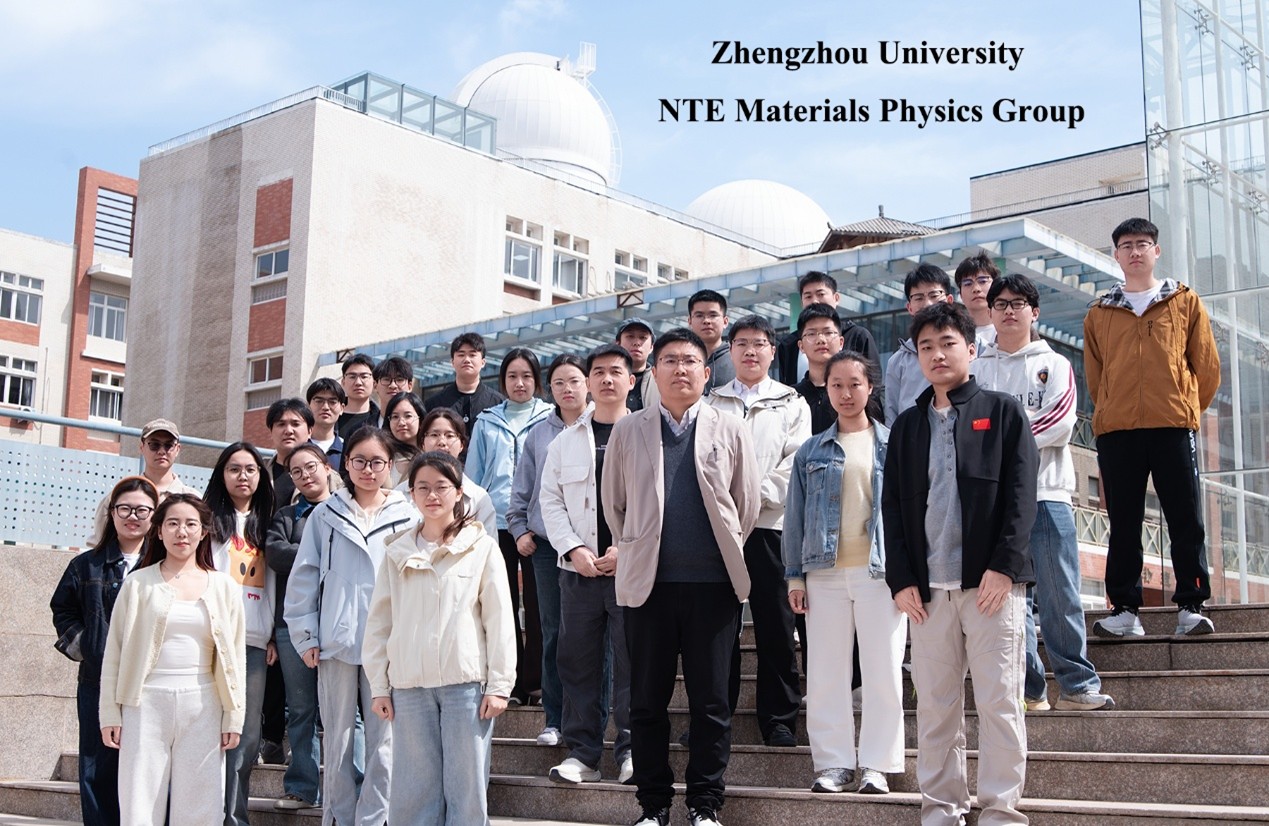
The Negative Thermal Expansion Materials Physics Group at Zhengzhou University

The researchers also found that the copper atoms have unusually large vibrational freedom along one axis, which helps enable this motion. Raman spectroscopy revealed an anomalous broadening of a low‑frequency vibrational mode, providing evidence for electron-phonon coupling that further supports the proposed mechanism. Together, these effects explain the unusual thermal behaviour of α‑Cu₂V₂O₇ and offer valuable insight for designing materials with controlled thermal expansion, which is important for precision engineering, electronics, and composite materials that must remain dimensionally stable across temperature changes. Meanwhile, this mechanism, centered on the Jahn–Teller effect, can be extended to a wide range of transition metal oxide systems, providing a universal theoretical foundation for systematically explaining the anomalous thermal expansion behavior of such materials.

Read the full article

Jahn–Teller distortions induced strong negative thermal expansion in α-Cu2V2O7

Xiangkai Hao et al 2026 Rep. Prog. Phys. 89 018005

Do you want to learn more about this topic?

Negative thermal expansion and associated anomalous physical properties: review of the lattice dynamics theoretical foundation by Martin T Dove and Hong Fang (2016)

How topological surfaces strengthen magnetism

In this work the researchers explore what happens when a topological insulator is placed next to a two‑dimensional ferromagnetic insulator. Experiments have shown that this arrangement dramatically increases the ordering temperature of the ferromagnet. The theoretical study demonstrates that the surface electrons of the topological insulator mediate interactions between the magnetic moments in the neighbouring ferromagnetic material, strengthening its overall magnetism.

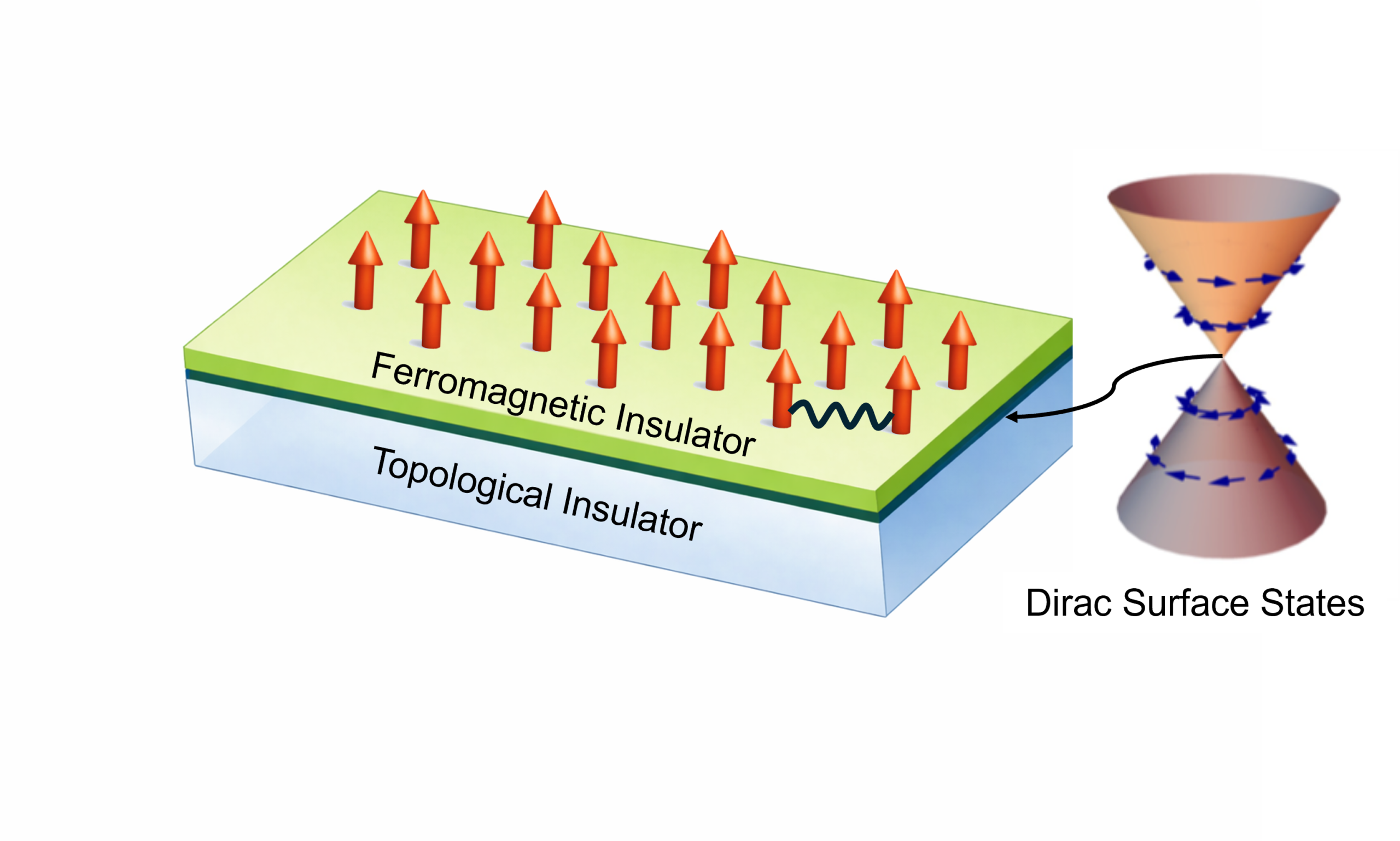
There are two main ways electrons in a nearby material can act as messengers between magnetic moments. The first is the well‑known Ruderman-Kittel-Kasuya-Yosida interaction, which arises in a metal from electrons at the Fermi level that produce long‑range, oscillatory coupling, typically in a regime when magnetic moments are sparse. The is the often overlooked Bloembergen-Rowland interaction, which in fact turns out to dominate in this system. This mechanism comes from virtual transitions between the valence and conduction bands of the topological insulator surface states and leads to strong, short‑ranged ferromagnetic interactions between the dense magnetic moments.

Schematic showing the Bloembergen-Rowland interaction (clack wavy line) between the local moments of a ferromagnetic insulator that is mediated by the Dirac surface states of a proximate topological insulator.

Identifying the Bloembergen-Rowland interaction is significant because it naturally enhances ferromagnetism: it is strong, it does not oscillate, and it keeps the magnetic moments aligned. Due to the spin-momentum locking of the topological insulator’s surface states, this interaction also has a built‑in anisotropy that favours out‑of‑plane magnetic alignment. The researchers show that the increase in the magnetic ordering temperature is directly proportional to the Van Vleck susceptibility of the topological insulator’s surface electrons.

The study also examines how hybridisation between the top and bottom surfaces of a thin topological‑insulator film modifies the mediated interaction and affects the magnetic ordering temperature. This analysis helps explain recent experimental results in heterostructures made from chromium telluride and bismuth-antimony telluride. Overall, the work clarifies how topological surface states influence magnetism in these layered systems and provides a foundation for designing improved devices in spintronics, magnonics, and quantum technologies.

Read the full article

Enhancement of Curie temperature in ferromagnetic insulator-topological insulator heterostructures

Murod Mirzhalilov et al 2026 Rep. Prog. Phys. 89 018004

Do you want to learn more about this topic?

Characteristics and controllability of vortices in ferromagnetics, ferroelectrics, and multiferroics by Yue Zheng and W J Chen (2017)

‘Nano-aquariums’ deliver atomic-resolution imaging

Graphene liquid cells have been used to study atoms dissolved in organic solvents at atomic-scale resolution. Through a combination of smarter material choices and machine learning techniques, a team led by Sarah Haigh at the University of Manchester showed how these graphene “nano-aquariums” can work with virtually any type of solvent – offering deeper insights into the atomic-scale properties of solids left behind when solvents dry out.

To understand the atomic interactions taking place at solid–liquid interfaces, researchers will often start by sandwiching liquid samples between pairs of transparent films. In most cases, they will then use transmission electron microscopy (TEM) to create atomic-scale images of these interactions. This involves irradiating the sample and films with a tightly focused electron beam.

“These windows need to be as thin as possible to get the best resolution,” explains Manchester’s Nick Clark. “Graphene is just about the thinnest window possible, and over the past decade or so it’s enabled atomic-resolution imaging of solid nanoparticles inside liquids.”

Uncontrollable evaporation

So far, however, these graphene liquid cells have proven difficult to work with. While sealing liquid samples inside these cells, the solution will often evaporate uncontrollably, creating significant variability in the sample’s concentration. In addition, most organic solvents are incompatible with the soft polymer membranes used to support the graphene films during the sealing process, limiting previous studies to mild aqueous solutions.

To address these challenges, Haigh’s team replaced the polymeric supports with stiff ceramic cantilevers. These offer similar levels of mechanical stability while being far more chemically inert. As a result, the cells can be sealed mechanically while fully immersed in liquid. This prevents the sample from drying out during sealing, while also making the process compatible with virtually any solvent.

The resulting graphene cells are remarkably stable, which allows the team to collect large numbers of images via repeated irradiation by the TEM electron beam.

“We combined this with neural-network based denoising to minimize the signal to noise ratio required to extract atomic coordinates, and a fully automated analysis workflow,” Clark adds. “This enabled us to collect enough atomic coordinates to draw representative conclusions.”

Individual gold atoms

With this combination of techniques, the team could resolve individual gold atoms and the graphene lattice beneath them, and examine how the behaviour of gold atoms at the graphene-liquid interface varied with their choice of organic solvent.

With their rapid TEM imaging, they could track over one million gold adatoms – single atoms which adsorb to a solid surface – and account for the dynamic, interconnected behaviours of structures formed from pairs, triplets, and larger clusters of adatoms.

Chemists have long known that these behaviours are strongly connected to the catalytic properties of the solid material left behind when the solvent dries out. For the first time, however, this approach allowed Haigh’s team to explore in detail how these properties depend on the choice of solvent.

“We were able to decouple the actual liquid phase dispersion from the drying process, and showed how both must be controlled to generate isolated atoms on the final dried support – which we know gives the most active catalytic materials,” Clark explains.

Through further improvements to their technique, Haigh, Clark and their colleagues are confident it could drive advances across a range of real-world technologies. “We hope that our new characterisation approach will allow us to help those working on catalysis, or batteries, or liquid filtration to understand what’s happening at the solid-liquid interfaces in their devices at atomic scale,” Clark says.

The research is described in Science.

Pollen dispersion study offers hope for hay fever sufferers

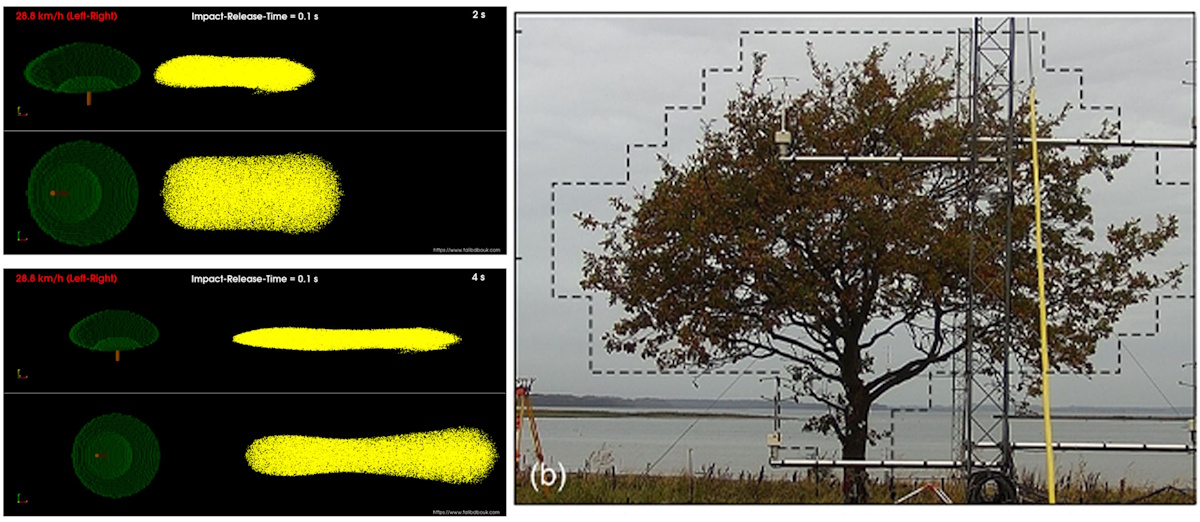
Oak tree and simulated pollen dispersion

Researchers in France have developed a novel method to investigate how pollen is dispersed from trees when the wind blows – paving the way for new approaches to urban planning that could help alleviate the symptoms of seasonal hay fever.

A project team headed up at the University of Rouen Normandy has discovered for the first time that different trees can exhibit different local dynamics for the transport of pollen grains – for example, when pollen is dispersed by wind – and that that this behaviour depends on the local detachment force of pollen grains occurring at the scale of each flower inside the tree.

As part of the project, outlined in the paper Flow and plants: On the dispersion of wind-induced tree pollen, published in Physics in Fluids, the researchers developed an innovative direct-forcing porous immersed boundary method (DF-PIBM) to explore the wind-driven pollen dispersion and transport phenomena from green trees.

“The research investigates, through advanced physics-based modelling and simulations, the impact of tree types and their interaction with wind on the local dispersion of pollen grains in the surrounding environment,” says lead author Talib Dbouk, a researcher in the CORIA Lab, CNRS, at the University of Rouen Normandy.

As Dbouk explains, the team’s approach involved the use of a range of advanced computational fluid dynamics (CFD) modelling and simulation techniques to solve the local air flow around and within the trees, taking into account the interaction between the air flow and the pollen grains in and/or on the tree flowers.

“The DF-PIBM is an advanced numerical technique developed in order to accurately solve the local resistance of a tree to wind by assuming the tree leaves lead to the fact that a tree can [act] as a porous medium, where the local porosity inside the tree will depend on its leaf area density,” he adds.

According to Dbouk, this method was “derived, implemented and validated in an in-house CFD code”, first by testing different flow configurations around and within porous spherical particles – and then by extending and applying it to different types and structures of trees.

A digital twin

In Dbouk’s view, the key advantage of using DF-PIBM compared with other approaches is that it allows researchers to accurately solve the local air flow velocity and the local pressure inside the tree.

“DF-PIBM has a number of current and potential applications – including prediction of the behaviour of airborne pollen grains and support for future applications involving vegetation–flow interactions in urban settings,” he says. “The currently developed DF-PIBM allows us to accurately predict all the phenomena of the detachment, dispersion, resuspension and local transport of airborne pollen grains when emitted from a green space – for example, trees and grass – and thus any vegetation zones inside urban environments under different weather conditions.”

Meanwhile, co-author Julien Reveillon confirms that the next steps for the research team will involve the integration of all its physics-based models into a new advanced digital twin of the Rouen-Normandy Metropolitan region in Normandy, France.

“This is with the intention of developing a new advanced multi-risk assessment digital platform that can help our local public authorities in their future territorial management and planning strategies – for example, to better anticipate and fight climate change phenomena, especially those related to local heat islands and aero-allergens like pollen, in addition to environmental pollution of air, water and soil,” he says.

“Moreover, huge efforts are also [being] made in order to develop and integrate advanced models related to predicting and simulating airborne pollutant particle dispersion in our region, for example those related to emissions from both natural fires and industrial accident fires,” co-author Béatrice Patte-Rouland tells Physics World.

Stoichiometric iron telluride is a superconductor: magnetic mystery is solved

Pristine iron telluride is a superconductor, with the natural material’s superconductivity suppressed by excess iron in the crystal lattice, researchers in the US have shown. This resolves a long-standing puzzle about why, when other materials with similar structures showed superconductivity at low temperatures, iron telluride had always retained an antiferromagnetic order. The results provide a secure platform for further exploration of iron-based superconductivity, and could open the door to the study of interesting physics such as potential topological superconductivity in iron telluride itself.

Much like the cuprates, iron-based superconductors such as chalcogenides like iron selenide often exhibit complex phase diagrams in which antiferromagnetic ground states compete with superconducting ones. Although tellurium sits directly underneath selenium in the periodic table, superconductivity has never been observed in pure iron telluride. It can behave as a “parent compound” for inducing superconductivity via chemical substitution with selenium, for example.

“One thing that’s always been a puzzle in the field is that the magnetic structure of iron telluride is fundamentally different from that of all other iron-based superconductors,” says condensed matter physicist Pengcheng Dai of Rice University in Texas; “People say ‘Oh, it’s more correlated’ – but the problem with that is that when you dope it with selenium and it does become superconducting, all the electric and magnetic properties occur at the exact same wave vector as other iron-based superconductors.”

Barely discussed

Condensed matter experimentalist Cui-Zu Chang of Pennysylvania State University in the US and colleagues had conducted multiple experiments involving the growth of tellurium compounds on iron telluride substrates, and reliably found that these produced supercondivity. Nevertheless, says Chang, the possibility that iron telluride itself might have a superconducting state was barely discussed by theorists.

Following Chang’s philosophy that “for superconductivity, if you follow theory and try to do something, 99% of the time you will fail,” the researchers set out to ascertain the state of pristine iron telluride experimentally. They bombarded a strontium titanate substrate with high purity beams of gaseous iron and tellurium atoms to produce 40-layer-thick films of iron tellurium. When they examined these using a scanning tunnelling microscope, they found that the films showed antiferromagnetic order. However, electron microscopy showed that the structures contained excess iron atoms clustered together periodically.

The researchers therefore performed multiple cycles of post-growth annealing, bombarding the structure with pure tellurium. These reacted with the interstitial iron, removing it from the structure by forming more iron telluride on the surface. The researchers monitored the electrical behaviour of the sample in tandem with its structural evolution, finding that, as regions approached stoichiometric FeTe, the antiferromagnetic order disappeared. After five cycles of annealing, the material was pure iron telluride, and the researchers showed that it behaved as a robust superconductor with a critical temperature of around 13.5 K. They confirmed this with the observation of the Josephson effect, Cooper-pair tunnelling and other related phenomena.

The researchers now intend to study the specific properties of stoichiometric iron telluride in more detail: “Because tellurium is heavier than selenium you have stronger spin-orbit coupling, so iron telluride should be a topological insulator at the same time as it’s a superconductor,” says Chang;  “We call these topological superconductors.” Such topological superconductors – the first of which was uranium ditelluride – are of great interest in quantum computing thanks to their potential to host protected Majorana qubits. More broadly, the researchers believe it is important to study whether other materials may host “hidden” superconducting states suppressed by disorder.

Dai, who was not involved in the research, is impressed: “It’s surprising, in the sense that it solves a fundamental puzzle that’s been in the field for some time,” he says. He notes that definitive proof is not achieved because the material is on a substrate, so techniques such as neutron diffraction traditionally used to probe the magnetic structure of bulk materials are impossible. It is also possible to question whether the substrate is influencing the material. Nevertheless, he is persuaded: “At least to me, it really unifies the picture that the magnetism is probably universal for all the iron-based superconductors,” he concludes; “In the same way that in the cuprates, the parent compounds are basically Mott insulators, from this experiment we can basically say that in iron-based superconductors the parent compounds are basically simple stripes, and this oddball is because of the excess iron that stabilizes the particular structure.”

The research is described in Nature.

Gravitational effects could shed more light on the Hubble tension

There are today two main ways to measure the Hubble constant, which is a parameter that describes the rate at which the universe is expanding. However, these two techniques produce conflicting results This discrepancy is called the Hubble tension and it suggests that we may be missing something fundamental about how the universe works. Now, two independent groups of astronomers, one in the US and the other in Germany, are developing two new methods to measure the Hubble constant. One uses gravitational waves; and the other uses gravitationally-lensed supernovae. Their work could help resolve the Hubble tension.

We know that the universe has been expanding ever since the Big Bang nearly 14 billion years ago – in part, thanks to observations made in the 1920s by the American astronomer Edwin Hubble. By measuring the redshift of various galaxies, he discovered that galaxies further away from Earth are moving away faster than galaxies that are closer to us. The linear relationship between this speed and the galaxies’ distances is defined by the Hubble constant, H0.

While there are many techniques for measuring H0, the problem is that different techniques yield different values. One main approach involves the European Space Agency’s Planck space telescope, which measures the Cosmic Background Radiation (CMB) “left over” from the Big Bang. This produces a value of H0 of about 67km/s/Mpc, where 1 Mpc is 3.3 million light–years. The other main approach is the “cosmic distance ladder” measurement, such as that made by the SH0ES collaboration involving observations of type Ia supernovae, which says H0 is about 73 km/s/Mpc.

Much brighter than typical supernovae

Now, astronomers at the Technical University of Munich, the Ludwig Maximilians University and the Max Planck Institutes for Astrophysics and Extraterrestrial Physics have observed an extremely rare type of supernova – or stellar explosion – that was gravitationally lensed, which by itself is also a very rare phenomenon. The supernova, which is called SN 2025wny (or more affectionately “SN Winny”), is superluminous and therefore much brighter than most gravitationally lensed supernovae discovered to date. This means that it can be studied using ground-based telescopes. Indeed, the researchers, led by Sherry Suyu and Stefan Taubenberger observed it with the Nordic Optical Telescope and the University of Hawaii 88-inch Telescope.

“It was an extraordinary coincidence that the first well-resolved lensed supernova found from the ground turned out to be a superluminous supernova,” says Taubenberger. “Its initial spectrum did not match the types of supernova we expected (that is, Type Ia or Type IIn), so determining its redshift was also difficult without this clear classification. We eventually measured the redshift to be equal to two so the observed optical light had actually been emitted as energetic UV radiation. The extraordinary UV brightness then allowed us to identify the object as being a superluminous supernova.”

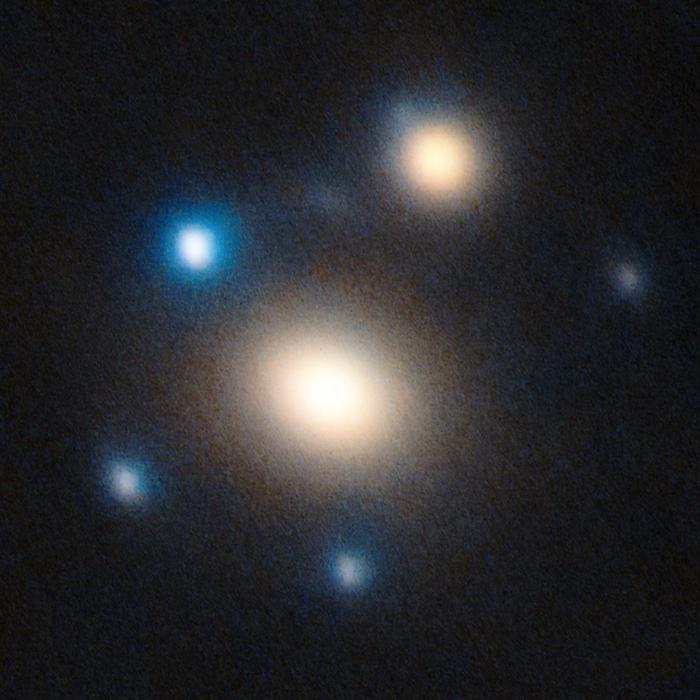
The fact that the supernova can be clearly observed from here on Earth makes it useful for a technique called time-delay cosmography. This method, which dates from 1964, exploits the fact that massive galaxies can act as lenses, deflecting the light from objects behind them so that from our perspective, these objects appear distorted. “This is called gravitational lensing and we actually see multiple copies of the objects,” Taubenberger explains. “The light from each of these will have taken a slightly different pathway to reach us, so we see them at different times. In the case of SN 2025wny, we observed five copy objects that had been deflected by two galaxies in the foreground.”

If we measure the difference in the arrival times of these objects and combine these data with estimates of the distribution of the mass of the deflecting lens galaxies, we can calculate the so-called time-delay distance, he explains. “From the time-delay distance and the redshift, we can then infer H0. Unlike the cosmic distance ladder, which involves many calibration steps and can accumulate errors with each step, this is a one-step technique with fewer and completely different sources of systemic uncertainties.”

Making the observations was not without a number of challenges, he remembers. “Initially, we had secured observing time at southern hemisphere telescopes (in particular, the ESO [European Southern Observatory] in Chile). However, the object we discovered was in the northern sky, making this secured time unusable. This meant we had to quickly find alternative observatories and write new proposals for northern hemisphere follow-up observations.”

Using undetectable black hole collisions

Meanwhile, a team of astrophysicists at The Grainger College of Engineering at the University of Illinois Urbana-Champaign and the University of Chicago has developed a way to determine the Hubble constant using gravitational waves and in particular the gravitational-wave background. Gravitational waves are generated when compact astrophysical objects, such as black holes, collide. These collisions, which are extremely energetic, produce tiny ripples in the fabric of space–time that travel at the speed of light, eventually reaching us here on Earth where they are detected by the LIGO–Virgo–KAGRA (LVK) Collaboration.

Individual black hole collisions have been observed by the LVK, which allows us to determine the rates of those collisions happening across the universe, explains study leader Bryce Cousins, who is at Illinois. “Based on those rates, we expect there to be a lot more events that we can’t observe. This is called the gravitational-wave background.”

Their approach uses a unique, previously unexplored relationship between the gravitational-wave background and H0.  This relationship is not found in other astrophysical phenomena, meaning that the method is complementary to existing electromagnetic and gravitational-wave measurements of H0.

An upper limit on the background can provide a lower limit on the Hubble constant

The strength of this gravitational-wave background scales directly with the density of gravitational waves in the universe, he says. “For example, if the universe were expanding more slowly, then it would have a smaller total physical volume and a correspondingly higher density of gravitational waves, leading to a stronger background. Thus, an upper limit on the background can provide a lower limit on the Hubble constant.”

The researchers demonstrated their hypothesis by analysing gravitational-wave data from the LVK Collaboration’s third observing run. They have dubbed their method the “stochastic siren” since the gravitational waves (the “sirens”) composing the background arise randomly.

The LVK network is not yet sensitive enough to detect the gravitational-wave background, but researchers expect it will be able to within the next six years or so. However, when Cousins and colleagues’ new work is combined with existing “spectral siren” measurements, the result is a more accurate value of H0 – even without a detection of the gravitational-wave background. As a result, the new technique should only improve as gravitational-wave detectors become more sensitive. The spectral siren approach measures the Hubble constant by considering the redshift of gravitational-wave signals.

Cousins says he is “hopeful” that the findings of gravitational-wave cosmology will be able shed more light on the Hubble tension as gravitational-wave data collection continues.

The researchers are now extending their method to consider other dark energy models, in light of ongoing findings that the standard “cosmological constant” interpretation of dark energy may be incorrect. Cousins is also applying the existing analysis to the latest gravitational-wave dataset and working with other collaborators to modify the stochastic siren procedure so that it can be applied to the next-generation of gravitational-wave detectors.

Two different but complementary techniques

Taubenberger says that Cousins and colleagues’ technique is trying to measure the Hubble constant in a completely different way to his group’s – and also without relying on the cosmic distance ladder. “Since some gravitational waves have no optical counterpart, you cannot take an optical spectrum of them and measure their redshift, so methods like theirs allow us to measure distances in a statistical sense by analysing multiple objects and glean information about the Hubble constant in this way.

“Every independent approach to measure the Hubble constant is welcome, of course.”

Cousins, for his part, says that Taubenberger and colleagues’ work effectively supports an existing method with new data, while his group’s work involves creating a new method that can use existing data. “Taubenberger and his team exclusively use electromagnetic data, which differs from our gravitational wave method, but our approaches are ultimately complementary since they are independent takes on the same underlying question.

“It is interesting and important work since they have found a unique candidate for time-delay cosmography. I am excited to find out what new Hubble constant constraints will come from using this new lensed supernova.”

Quiz of the week: how long will NASA’s Artemis II mission to the Moon last?

Fancy some more? Check out our puzzles page.

Biomedical optics play crucial roles across medicine

PMB 70th anniversary logo

This episode of the Physics World Weekly podcast features Brian Pogue, who is professor of biomedical engineering at Dartmouth College in the US. He is also the co-founder of several start-up companies that are developing optics-based systems for medicine.

In conversation with Physics World’s Tami Freeman, Pogue explains that optical technologies underlie many of today’s routine medical procedures. The field of optics is also converging with the world of medical physics, and Pogue talks about exciting new techniques for guidance, dosimetry and in vivo verification of radiation therapy cancer treatments.

This podcast is supported by One Physics, your trusted, local partner in medical physics and radiation safety.

NASA launches crewed Artemis II mission to the Moon

NASA has successfully launched four astronauts on a 10-day mission to the Moon. The crew – Reid Wiseman, Victor Glover, Christina Koch and Jeremy Hansen – were aboard the Orion spacecraft that was launched yesterday by a Space Launch System rocket from NASA’s Kennedy Space Center in Florida.

The mission is the first crewed lunar flyby in more than 50 years but it also represents a number of significant firsts with Koch, Glover and Hansen set to be the first woman, Black person and Canadian, respectively, to travel to the Moon.

Following launch, the Orion capsule was put into Earth orbit and after five hours into the flight, the craft deployed four CubeSats – from Argentina’s Comisión Nacional de Actividades Espaciales; the German Aerospace Center; the Korea AeroSpace Administration; and the Saudi Space Agency – that will conduct scientific investigations and technology demonstrations.

The craft is now set to carry out a six-minute rocket firing that will send the spacecraft towards the Moon.

During a lunar flyby on 6 April, the astronauts will take photographs and provide observations of the Moon’s surface being the first people to see some areas of the far side.

Some four days later, the craft will then return to Earth and splash down in the Pacific Ocean.

This mission follows the Artemis I mission, which carried a simulated crew of three mannequins wired with sensors, that completed a flyby of the Moon in 2022.

Artemis III, meanwhile, is currently ear-marked for launch in 2027, planning to be the first crewed lunar landing since the Apollo missions in the 1960s and 70s.

Will the Artemis programme instil the same sense of awe as the Apollo missions?

In the summer of 1969 I was four years old and I have a very distinct memory of my mother calling me and my brother in from the garden to watch something on television. That something had to do with NASA’s Apollo 11 mission to the Moon.

For years, I thought that I had watched Neil Armstrong take his first steps on the Moon on live TV. I now realize that the timing was all wrong. I was in Montreal and it was daytime – whereas the walk occurred at about 11 p.m. EDT, well after my bedtime. So I was (probably) not one of the estimated 500 million people worldwide (including Pope Paul VI) who witnessed this momentous event as it happened.

Regardless of whether I watched it live or not, the first human steps on the Moon made a great impression on me – and who knows, maybe that early exposure to the cutting edge of science and technology encouraged me to pursue a career in physics.

I could be wrong, but I don’t think that the Artemis missions will instil the same awe in people as did the Apollo missions. I didn’t watch the Artemis II launch and I had a distinctly “been there, done that” feeling when I heard about its success.

Indeed, I have been left wondering exactly why the US has decided to return to the Moon now. Is it for reasons of science and exploration (possibly setting the scene for a human mission to Mars), or is this more about nationalism and colonialization? I hope it is the former, because for me sending humans to the Moon and beyond is akin to blue-sky research in physics – probing the universe to expand knowledge, with the confidence that this will result in a better world.

Hamish Johnston is an online editor of Physics World

Copyright © 2026 by IOP Publishing Ltd and individual contributors