Quantum error correction could help astronomers image stars

Space is not a studio: when studying stars, astronomers have no control over the objects they are trying to image. Instead, they rely on improvements to telescopes and analysis techniques to create higher-resolution images from whatever light they receive, however faint or noisy it may be. Now, a team of scientists has proposed a way of using quantum error correction to combat noise in the starlight captured by telescopes. According to the team, even the simplest error-correction protocols run on near-term quantum devices could offer a significant advantage for astronomical imaging.

Imaging resolution is typically limited by diffraction. Quantum sensing techniques can surpass this limit if the imaged object can be manipulated or illuminated, but this is not possible in astronomy. Researchers at Macquarie University in Australia and the National University of Singapore (NUS) have, however, found a workaround: they showed that quantum error correction can protect fragile captured starlight from being degraded by unwanted interactions with its environment.

Alice and Bob rewrite the stars

The idea behind the team’s proposed method is that information carried by the starlight could be spread out over a large quantum system in a so-called error-correcting code. Then even if some parts of the system have errors, the correct information can be reconstructed from the rest.

To understand how the new technique works, imagine two astronomers, Alice and Bob. Both have telescopes, and if they want to produce a clearer image than is possible from each telescope individually, they can combine the light they collect using a method called optical interferometry. In principle, the further apart their telescopes are, the greater the image resolution they can jointly achieve. However, in practice, noise and transmission losses degrade the quality of Alice’s and Bob’s signals, limiting how far apart their telescopes can be.

Photos of Gavin Brennen, Zixin Huang and Yingkai Ouyang

The Macquarie-NUS team propose that quantum technologies could bypass this restriction by replacing the physical link (typically an optical fibre) between telescope sites with entangled qubits. Qubits are systems that store quantum information, and when entangled, the states of these systems share correlations that are stronger than those allowed in classical systems. When Alice and Bob receive light at their telescopes, a light-matter interaction transfers information from the light to a stable state of their qubits. Then they each apply suitable operations to the qubits that store the starlight information. Since their qubits are entangled, the information becomes stored in a quantum error-correcting code within the larger set of both their qubits.

“The resulting state shared by Alice and Bob is now the … equivalent of the starlight that went in,” explains Zixin Huang, the lead author of a paper in Physical Review Letters on the research. Because the overall state of the starlight is shared in a protected form across Alice and Bob’s qubits, it is robust to noise from the environment. By performing specific measurements, Alice and Bob can detect and then correct any errors on their qubits before they retrieve the starlight information, which they then use to construct their image.

Super-resolution experiments on the horizon

The researchers showed that this quantum error-correction technique for imaging is helpful even with near-term quantum devices by investigating one of the simplest error-correction protocols. In this protocol, starlight information is stored in sets of three identical qubits. This is known as the repetition code because the protection against errors comes from literally repeating information three times. While larger codes provide better protection, even this small code provided useful protection against the dominant type of error. Furthermore, unlike quantum computing, which requires error rates of much less than 1%, the protocol for imaging can tolerate error rates of up to 50% using just the repetition code. “Super-resolution” imaging beyond the diffraction limit is therefore an unexpected near-term use-case for noisy quantum devices, though technological challenges remain before scientists can implement the different parts of the protocol.

Because the researchers’ framework enables quantum error correction techniques to be applied to any imaging task where the experimenter is not able to prepare the object, its applications could extend beyond astronomy. “One potential application that some of us are considering is in magnetometry, where we use quantum error correction to enhance the performance of quantum sensors for magnetic field sensing,” explains Yingkai Ouyang, a senior research fellow at NUS who was involved in the work. “We are also working with experimentalists to implement our previous protocols for super-resolution imaging onto real telescopes.”
First UK space launch fails to reach orbit

The first space launch from UK soil ended in failure last night when the rocket suffered an anomaly preventing it from reaching orbit. The mission, if successful, would have been the first time that orbital satellites had taken off from Europe and a landmark moment for the UK space industry.

Unlike traditional vertical launches, where a rocket is fired into the sky from the ground, the UK’s “Start Me Up” project consisted of a modified Boeing 747-400, dubbed Cosmic Girl, carrying a 31-tonne rocket named LauncherOne under the left wing. Dropped by the jumbo jet in flight, the rocket was supposed to fire a series of engines to take it into orbit.

Cosmic Girl took off successfully at 10.01 p.m. local time on 9 January from Cornwall Airport Newquay. The craft then flew to a “drop zone” roughly 10,500 m above the Atlantic off the south-western tip of Ireland where it released the LauncherOne rocket.

Seconds later, the rocket’s first-stage NewtonThree engine fired as planned, propelling it up to 8000 mph. About three minutes later, the second-stage NewtonFour engine ignited, with everything seemingly in order.

However, nearly two hours after take-off – just as Cosmic Girl was returning to land safely at Newquay – Virgin Orbit’s Christopher Relf announced on a live stream of the event that the mission had failed. “It appears that LauncherOne has suffered an anomaly which will prevent us from making orbit for this mission.”

Pressing on

After four successful launches from Mojave Air and Space Port in California, US, the LauncherOne failure is the first since the very first launch attempt in May 2020. As well as the rocket being lost, also missing are several satellites that had been stowed in LauncherOne and were intended to be deployed in low Earth orbit.

One of the lost satellites is AMAN, which was to be Oman’s first Earth-observation satellite and technology demonstrator for a planned future constellation. Another is STORK-6, the sixth cubesat in the Polish company SatRevolution’s 14-strong Earth observation satellite constellation serving the agricultural sector. The remaining seven small satellites had either been developed or built in the UK.

Spaceport Cornwall – the consortium behind the launch – had hoped the event would showcase the UK’s new space-launch capabilities, with a further six UK spaceports either in development or under construction. The consortium is made up of Cornwall Council, Virgin Orbit, Goonhilly Earth Station and the UK Space Agency.

Mission success was expected to catalyse investment, growth and jobs in the nascent sector as well as inspire the next generation of scientists and engineers.

“Over the coming days there will be an investigation by the government and various bodies, including Virgin Orbit,” notes Matt Archer, director of commercial spaceflight at the UK Space Agency. “But we will continue to press on and we will get there in the end.”

Chemists use synthetic protein to produce quantum dots at room temperature

Researchers in the US have created quantum dots using room-temperature biochemical reactions that are catalysed by an synthetic protein. Developed by Leah Spangler, Michael Hecht and colleagues at Princeton University, the technique could lead to more sustainable methods for manufacturing quantum dots on industrial scales.

Quantum dots are nanocrystals of semiconductor materials that have useful quantum properties that fall between those of bulk materials and individual atoms. With exciting applications including solar cells, LED displays and quantum technologies, research into quantum dots is a hot topic. However, the manufacture of these tiny semiconductor structures often requires both high temperatures and toxic solvents – so researchers are on the look-out for ways of making quantum dots that are more environmentally friendly.

In the study, the team investigated how quantum dots could be made using finely tuned biochemical reactions that involve a protein that does not exist naturally in biological systems. Instead, the protein was made in the lab by combining naturally-occurring amino acids.

Making metals safe

That protein is called Construct K (ConK) and it was first synthesized in 2016. Previous work has shown that ConK allows E Coli bacteria to survive toxic concentrations of copper. Although the chemical mechanisms that boost bacterial survival are not fully understood, scientists suspect that it involves catalysis processes that cause metal atoms to bind to molecules – rendering the atoms less toxic. In nature, a similar process is achieved by natural proteins found in some types of bacteria that can live in high concentrations of metals.

Quantum dots are often made from compound semiconductors such as cadmium sulphide – which includes the toxic metal cadmium. As a result, Hecht and colleagues predicted that ConK could be used in the synthesis of cadmium sulphide quantum dots. The team found that ConK was able to catalyse the breakdown of the amino acid cysteine, creating by-products including hydrogen sulphide. This compound can then react with cadmium to create the cadmium sulphide nanocrystals.

When compared to natural proteins, Hecht’s team found that its new approach has two key advantages that are related to the slower growth of the nanocrystals when created using ConK. One advantage is that the cadmium sulphide nanocrystals are created mostly with the same crystal structure, rather than with a mixture of two different crystal structures. The second is that the nanocrystals stabilize at sizes of roughly 3 nm, albeit in slightly irregular shapes.

“The quantum dots we’re making aren’t great quality yet, but that can be improved by tuning the synthesis,” says Spangler. “We can achieve better quality by engineering the protein to influence quantum dot formation in different ways.”

In the future, they hope this technique could lead to the industrial-scale manufacture of stable, high-quality quantum dots at room temperature – ensuring a more sustainable future for the rapidly-growing quantum dot industry.

The research is described in Proceedings of the National Academy of Sciences.

Progress could be slowing down in science and technology, finds study

Big jumps forward in science often come in the form of surprising discoveries that break with preceding work – but this kind of disruptive activity is declining over time. That is according to a new analysis, which suggests that creativity is being stymied by the “publish or perish” culture in science and by the sheer amount of work needed to reach the frontier of knowledge.

Led by sociologist Russell Funk from the University of Minnesota, the study analysed 45 million papers from the Web of Science database that were published between 1945 and 2010. His team also examined 3.9 million patents published between 1976 and 2010.

Each work was assigned a score indicating whether it was “consolidating” – in other words, refining existing work and filling in the details – or was more disruptive, such as introducing something unexpected that propels a field in new directions.

Citation records were used to quantify the disruptiveness of a piece of work. A disruptive study is likely to make prior research obsolete, so subsequent papers are less likely to cite the earlier research. If a work is consolidating, on the other hand, then later papers citing it are also likely to cite the sources that the work itself cites.

With scores ranging from -1 (maximum consolidation) to +1 (maximum disruption), the researchers found that the average scores across all fields of science in recent years have plummeted. The physical sciences saw the largest percentage decline with the average score dropping from 0.36 in 1945 to just 0 today.

A long way to go

This slowing innovation has led to speculation that the “low-hanging fruit” in science has already been taken and that scientific theories are getting closer to being “correct”. But the authors are not convinced this can account for the steep decline seen in their work. Funk emphasizes, for example, that there are many phenomena that science has yet to get to grips with such as the emergence of consciousness.

Another possible explanation for the drop in innovation is the greater mountain of accumulated knowledge, which means that researchers spend longer training to reach the boundary of their field with their expertise tending to be deeper and narrower. This could inhibit innovation, the researchers say, as it often springs from making cross-field connections.

The authors also note that the “publish or perish” culture in science could be deterring scholars from embarking on riskier, longer-term projects. Academic institutes and funders, they suggest, could tackle this by giving researchers more time to expand their breadth of knowledge, rather than focusing on the quantity of publications.

“A healthy ecosystem of science and technology is likely to require a balance of different types of contributions,” Funk told Physics World. “The dramatic declines that we observe in disruptive work suggests that this balance may be off, and that encouraging more disruptive work could help to push scientific understanding forward.”

Challenging questions, practical benefits and financial rewards: why medical physics has it all

I recently attended an event at the Institute of Physics (IOP) in London that reminded me of the huge commercial opportunities of so many developments in physics. The event was held to honour the winners of the IOP’s business awards for 2022, with the successful firms presented with their prizes and trophies by Anne Crean, the IOP’s head of science and innovation. A big congratulations from me to all the winners.

As John Bagshaw – the IOP’s vice-president for business – reminded delegates, the IOP’s business awards have been running since 2012. During that time, more than 70 physics-powered businesses have been recognized in a huge range of endeavours. They stretch from aerospace, automotive, communications, defence, energy, the environment, food and imaging to magnetics, medical, microscopy, nanotechnology, nuclear, petrochemical, quantum, rail and space.

At the event, I started chatting to Tom Grinyer, who took over as group chief executive of the IOP last year after moving over from the British Medical Association. He was intrigued that four of the seven award winners in 2022 were businesses operating in medical physics. Indeed, a growing number of medical firms have been winning IOP business awards in recent times, particularly since the Lee Lucas award was launched in 2019.

Presented alongside the IOP’s business-innovation and business start-up awards, the Lee Lucas award is given to very-early-stage companies in the medical and healthcare sectors, who win £5000 in prize money. Created following a generous donation by Mike and Ann Lucas (née Lee), the award is a boon for medical-physics start-ups. They need all the support, time and money they can get given the many challenging regulatory requirements in the medical sector.

Wide applications

It’s astonishing how big the medical sector is as a whole

Medical physics, as I’m sure you know, involves applying the concepts and methods of physics to prevent, diagnose and treat human diseases. Of particular importance is medical imaging, which uses everything from visible light, ultrasound and X-rays to magnetic fields, single photons and positrons. Medical imaging is a huge global market worth $28bn in 2021 according to Grand View Research and it’s set to grow by 5.7% year on year.

Indeed, it’s astonishing how big the medical sector is as a whole. According to Fortune Business Insights, the market for medical devices – everything from dentistry and surgery to diagnostics and cancer treatment – was worth a staggering $489bn in 2021. What’s more, it’s set to grow to $719bn by 2029 at a combined annual growth rate of 5.5%.

The firms that have won IOP business awards give a sense of the breadth of applications. They include Cerca Magnetics, which won a business-innovation award for developing the world’s first wearable magnetoencephalography scanner. Using optically pumped room-temperature magnetometers, each sensor element is no larger than a LEGO brick and can measure human brain function with a sensitivity rivalling that of cryogenic superconducting devices.

The company has already built a lightweight 3D-printed head-mounted scanner cap and has been installing systems around the world in magnetically shielded rooms. Cerca Magnetics’ device can measures human brain function in health and disease, providing what the company says is unprecedented accuracy and unparalleled practicality.

Then there’s Zilico, which received a business-innovation award for its products based on Electrical Impedance Spectroscopy (EIS). Based on our understanding of tissue bioimpedance, its devices can analyse the structure of tissue in real time – distinguishing between normal, pre-cancerous and cancerous tissue. At the IOP event, the company showed its ZedScan flagship product, which several NHS Trusts are now routinely using to monitor cervical cancer.

Also working in oncology is Digistain, which received a 2022 business start-up award for solving treatment delays in breast cancer by using a biomedical implementation of infrared vibrational spectroscopy. Digistain technology is based on more than a decade of work carried out by physicists at Imperial College London, who worked with Nicholas Wright from Cancer Research UK.

After a landmark NHS trial involving more than 800 breast-cancer patients, its technology has been approved by the UK’s Medicines and Healthcare products Regulatory Agency, which is great news for patients. Essentially, the firm’s technology takes the guesswork out of cancer diagnosis by measuring the chemical changes that accompany the disease, thereby allowing physicians to decide quickly and easily who needs chemotherapy.

I was also intrigued by Ceryx Medical, which received a 2022 business start-up award for developing a unique bioelectronic technology that could change the way diseases such as heart failure are treated by reinstating natural communication between the heart and lungs. Its technology mimics cell membranes, ion channels and action potentials using analogue circuitry, allowing signals to be interpreted directly with the body in real-time and generate realistic, biological output signals.

These artificial neurons are then combined into neural networks that mimic neural structures called central pattern generators, which the body uses to control processes ranging from walking to swallowing to breathing. These bioelectronic devices can help restore the lost physiological functions within the body.

With huge practical benefits, challenging scientific questions and lots of money to be made, surely medical physics is one of the best part of physics in which to work?

  • The deadline for entries to the IOP’s 2023 business awards is 16 January: full information is at bit.ly/3uOQFQB.

Revived photon entanglement could enhance quantum communication and imaging   

Researchers in India have shown that photon entanglement in a certain continuous-variable basis revives itself as the photons propagate away from their source. The discovery could prove useful for securely transmitting quantum information over long distances and for quantum imaging in turbulent media.

Quantum entanglement between photons is being explored extensively by physicists, often with the aim of developing new quantum technologies for computing, communication, sensing and imaging. Some potential applications require sending entangled photons over long distances or through turbulent environments without loss. However, it is currently very tricky to preserve certain types of entanglement under these circumstances – and success can depend on many factors, including how the quantum information is encoded in the photons.

Now Anand Jha and colleagues at the Quantum Optics and Entanglement Laboratory at the Indian Institute of Technology Kanpur have provided a possible solution by using the angular positions of photons to encode information. They observed that entanglement seems to disappear as the photons propagate, but then oddly reappears. They also showed that the revival of entanglement happens even after the photons travel through turbulent air, which would normally destroy entanglement. They describe their research in Science Advances.

Photon entanglement

Photons have many different degrees of freedom that can be used to encode quantum information. The choice depends on the kind of information that has to be encoded. For qubits, discrete properties such as the polarization or the orbital angular momentum of a photon can be used. But sometimes, especially for sensing and imaging purposes, it is better to encode quantum information in a more continuous manner. In such applications, the most explored entangled property – or “basis” – is the position of a photon given by its cartesian coordinates.

The phenomenon of quantum entanglement imparts to particles a closer relationship than is allowed by classical physics and is independent of which particular basis is used to encode quantum information. However, the way entanglement is used or measured in an experiment may not be basis-independent. This applies to an entanglement “witness”, which is a mathematical quantity that determines whether a system is entangled. Witnesses are basis-dependent for continuous bases and this dependence means that some types of continuous entanglement can be more useful than others.

For the position-momentum basis, the entanglement, as seen through the witness, dies out very quickly as the photons propagate away from their source. To get around this, scientists usually image the source itself to use entanglement between photons. Any turbulence in the path also rapidly destroys the entanglement, requiring complex solutions like adaptive optics to revive it. These additional corrective steps limit the utility of these entangled photons.

This latest research by Jha and colleagues explores how entanglement can be preserved by using a closely related alternative basis – the angular position of a photon.

Generating, losing and reviving entanglement

In their experiment, the researchers generated entangled photons by sending light from a high-power “pump” laser into a nonlinear crystal. Under conditions where the photons’ energies and momenta are conserved, one pump photon will produce two entangled photons in a process called spontaneous parametric down conversion (SPDC). The two photons are entangled in all their properties. If a photon is detected at one location, for example, the position of the other entangled photon is automatically determined. The correlation exists for other quantities as well, such as momentum, angular position and orbital angular momentum.

As seen through the witness without any corrective measures, the researchers observed that position entanglement between photons disappears after about 4 cm of propagation. On the other hand, something interesting happens for angular-position entanglement. It disappears after about 5 cm of propagation, but after the photons have travelled another 20 cm, entanglement appears again (see figure). The researchers corroborated their experimental results qualitatively with a numerical model.

The same trend was observed when the team created a turbulent environment in the path of the entangled photons. This was done using a blow heater to stir up air and change its refractive index. In this case entanglement was revived after the light had propagated for a longer distance of about 45 cm.

It is not yet fully known what causes the entanglement in the angular-position basis to reappear. The basis is special because it wraps around after a full circle. That is one of its distinguishing factors, according to Jha.

Even though the study demonstrates robustness over distances of less than a metre, Jha and colleagues claim that the revival is possible over kilometre distances as well. This could make it possible to transmit quantum information through atmospheric turbulence without destroying entanglement. Robustness through turbulence could also allow for the quantum imaging of objects in fuzzy biochemical environments with minimal invasion or destruction.

Phasons boost thermal conductivity of incommensurate crystals

New insights into the exotic thermal behaviour of phasons – quasiparticles that can be found in incommensurate crystals – have been gained by physicists in the US. Experiments done by Michael Manley and colleagues at Oak Ridge National Laboratory in Tennessee have shown how these quasiparticles play an in important role in transporting heat through these unusual materials.

Phasons are phonon-like quasiparticles that arise from the collective motions of atoms in incommensurate crystals. These are materials that can be described using two or more sublattices, where the ratios between the periodic spacings of the sublattices are not integers. The creation and propagation of a phason involves a shift in the relative orientation (or phase) of the sublattices, hence the name of the quasiparticle.

In crystalline materials, quasiparticles called phonons are created when energy deposited in the material causes atoms to vibrate. Phonons can then travel through the lattice, carrying heat with them. As a result, phonons play a role in how heat is transferred in materials – particularly in insulators where little heat is conducted by electrons.

For some time, physicists have predicted that phasons should play a key role in enhancing the flow of heat through incommensurate crystals. Indeed, unlike phonons, phasons can travel faster than the speed of sound inside materials and should scatter less than phonons – both of which should enhance their heat-carrying abilities.

Unknown lifetimes

However, incommensurate crystals are rare in nature, so several key phason characteristics are still poorly understood. This includes the lifetimes of the quasiparticles and, consequently, the average distance they can travel before scattering off each other.

To explore these properties, Manley’s team examined an incommensurate crystal called fresnoite. They performed inelastic neutron scattering experiments using the HYSPEC spectrometer on Oak Ridge’s Spallation Neutron Source (see figure). Neutrons are an ideal probe for such a study because they interact with both phasons and phonons. The team also made measurements of the material’s thermal conductivity. Their experiments confirmed that phasons make a major contribution to the flow of heat through fresnoite. Indeed, they found that the phasons’ contribution to the material’s thermal conductivity is about 2.5 times greater than that of phonons at room temperature.

The team found that the phason mean free path is about three times longer than the phonon mean free path – which they relate to the supersonic speed of the phasons. Furthermore, the phason contribution to fresnoite’s thermal conductivity peaks close to room temperature, which is much higher than the temperature at which the phonon contribution peaks.

Manley and colleagues hope their discoveries could open new opportunities for fresnoite and other incommensurate crystals in advanced heat management and temperature control applications. The materials could even see use in thermal logic circuits, which could convey information via the flow of heat. If integrated with conventional electronics, such hybrid systems could be used to recycle heat lost through dissipation, thereby boosting the efficiency of modern computing systems.

The research is described in Physical Review Letters.

Escape-room game is inspired by UK space centre, potato-shaped stones bounce across the water

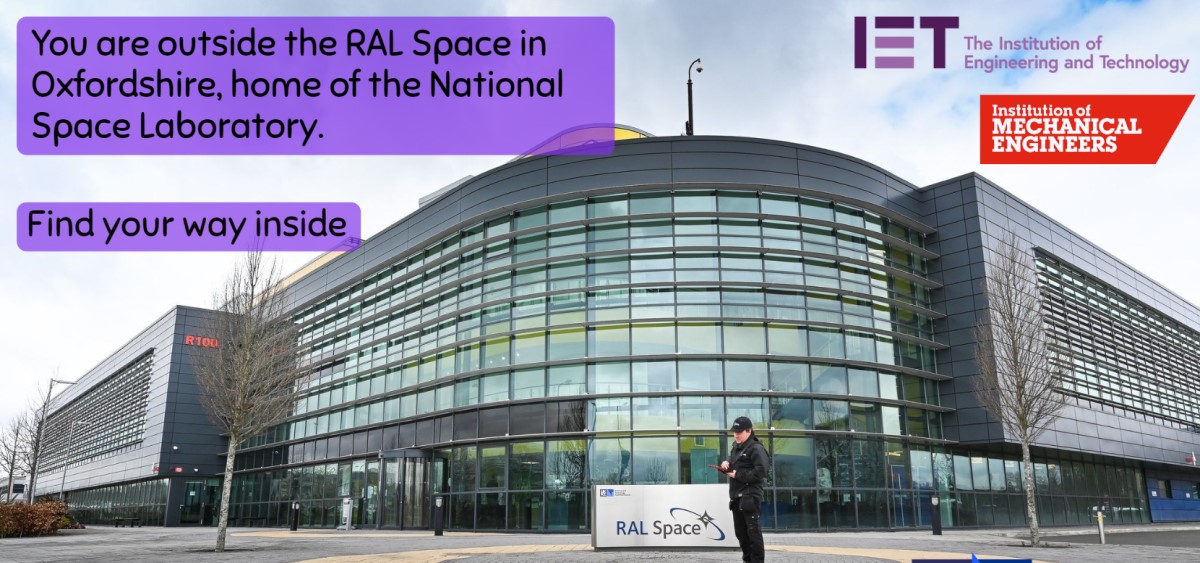
RAL Space escape room

Dan Cooper, a chemistry teacher from southwest England, has released a new physics-based escape-room-style online game. The project, which is funded by the Institution of Engineering and Technology and the Institution of Mechanical Engineers, is free to play and based at the Rutherford Appleton Laboratory in Oxfordshire, UK.

The aim of the game is to navigate around the RAL Space centre and tackle a series of challenges – such as calculating the kinetic energy of an Ariane rocket just after launch – to reveal a lost password that will enable engineers to launch the latest mission. Along the way, players meet several people – including software developer Nijin Thykkathu and senior project manager Melissa Lee – who work at the lab and discuss their careers to date.

Cooper says that the game challenges are based on the specification of a GCSE physics course and that the main aim of the project is to showcase careers in engineering to physics students. “It will hopefully increase interest in physics and engineering beyond GCSE level,” Cooper adds. Check out the game here.

Not the first

This isn’t the first game to be inspired by a research facility in Oxfordshire. Last year, three scientists with connections to the Diamond Light Source created a board game that simulates how science is done at the synchrotron. We were so impressed that we invited the trio onto our podcast and you can listen to that conversation here.

Everyone knows that the best stones for skipping across the surface of water are flat and thin, right? Wrong, according to two mathematicians in the UK who have done calculations which show that more of a potato shape can sometimes be better. Writing in Proceedings of the Royal Society A, Ryan Palmer at the University of Bristol and Frank Smith at University College London describe how chunkier stones can achieve surprisingly high bounces off the water if their shapes have the right sort of curvature.

Palmer told The Guardian, “If you’ve got a heavier rock, you can get a super-elastic response, where you get a single mega-bounce rather than lots of little bounces…There’s this almighty leap out of the water.” He explains that this involves some of the horizontal motion of the stone being converted into vertical motion. As a result, stones that are too heavy to skim will bounce up and continue their flight over the water.


Scaling and diversifying the talent pipeline will accelerate quantum opportunities

As quantum technology companies shift gears to translate their applied research endeavours into commercial opportunities – at scale – they’re going to need ready access to a skilled and diverse quantum workforce of “all the talents”. A case study in this regard is Oxford Instruments NanoScience, a division of parent group Oxford Instruments, the long-established UK provider of specialist technologies and services to research and industry.

The NanoScience business unit, for its part, designs and manufactures research tools to support the development, scale-up and commercialization of next-generation quantum technologies. Think cryogenic systems (operating at temperatures as low as 5 mK) and high-performance magnets that enable researchers to harness the exotic properties of quantum mechanics – entanglement, tunnelling, superposition and the like – to yield practical applications in quantum computing, quantum communications, quantum metrology and quantum imaging.

Here Stuart Woods, managing director of Oxford Instruments NanoScience, reflects on the current status of the talent pipeline into the quantum technology sector – as well as the steps being taken to enhance the diversity of the workforce shaping this emerging industry.

Why should a talented undergraduate or PhD physicist consider quantum science as a career pathway?

The quantum realm represents the next frontier in applied science and technology innovation, with a clear path to commercialization and “productization” – whether that’s quantum sensors to measure gravitational gradients very precisely or next-generation quantum computing systems for drug discovery and therapeutic optimization. Here at Oxford Instruments NanoScience, for example, we have technology roadmaps going out as far as 2040 – part of a collective global effort to translate the fundamental properties of quantum physics into the technology and commercial mainstream. Put simply: quantum represents a long-term bet on a long-term career path for young scientists and engineers.

How do you pitch the quantum programme at Oxford Instruments NanoScience to attract the brightest and best technical candidates?

We have a back-story beginning in 1959 – Oxford Instruments was the first successful technology spin-out from the University of Oxford – which gives us legacy, credibility and an established customer base. That accumulated corporate DNA around technology creation and evolution is now being put to work in the quantum regime. Whether you’re an apprentice technician, a quantum physicist, a mechanical engineer, an electrical engineer or a cryogenics specialist, you’ll be developing products at Oxford Instruments NanoScience that are fundamentally changing the way science views the world. It’s exciting stuff.

Stuart Woods Oxford Instruments NanoScience

What is the current status of the talent pipeline into the quantum supply chain?

The quantum ecosystem is already brimming with opportunity for ambitious early-career scientists and innovators. Alongside established technology providers like Oxford Instruments NanoScience and our peers, there’s a growing wave of technology start-ups – among them customers of ours like Oxford Quantum Circuits (a UK company pioneering a “quantum-computing-as-a-service” business model); Quantum Motion (a UK firm developing fault-tolerant quantum processors); and Rigetti Computing (a US venture that’s building quantum computers and the superconducting quantum processors that power them).

Meanwhile, at the applications sharp-end, we’re seeing companies like IBM offer cloud-based quantum computing services, while financial powerhouses such as Goldman Sachs and Bloomberg build dedicated quantum groups to address high-performance computing problems in quantitative finance. The bottom line: there’s a broad-scope requirement for quantum companies to recruit across the core physical sciences and engineering disciplines. The task is to fill not only sector-specific roles – for example, error-correction scientists and quantum algorithm developers – but more general positions such as test and measurement engineers, data scientists, cryogenic technicians and circuit designers.

It sounds like there’s also a need for commercially savvy types to join the dots between basic R&D, platform technologies and cutting-edge quantum applications?

Correct. We need creative, commercially minded people who understand how to fuel the emerging market for quantum applications – from quantum equivalency in a few key verticals at the outset to quantum supremacy across multiple industries over time. In this way, the quantum sector offers all sorts of pathways for talented scientists and engineers to evolve from mainstream technical roles into business development activities if they choose. Adaptability, reinvention, a multidisciplinarian mindset: all are going to be mandatory in quantum.

Where are the biggest skills gaps just now?

While many commercial entities in the quantum sector are seeing significant growth, those same companies are struggling to fill essential technical roles needed to accelerate, and ultimately sustain, that growth. Right now, Oxford Instruments NanoScience has upwards of 30 positions open across a range of functions – among them technicians, cryogenics engineers, early-career quantum physicists as well as senior product scientists and engineers. I’d say that’s a typical profile across the quantum supply chain – whether for the technology start-ups or established equipment manufacturers like us. It’s the path from academic research into industry that we need to scale and encourage near term, shifting the centre of gravity for quantum towards industry and technology innovation.

What sort of initiatives will encourage that rebalancing?

I do maintain that a diverse workforce – from junior technicians right through to senior management – is fundamental for long-term commercial success in quantum. Vocational training will certainly be front-and-centre here in the UK as the sector scales, leveraging government programmes around apprenticeships and T-levels (technical qualifications for 16–18 year-olds) to enhance the quantum skills base. Industry is also getting creative on this front – for example, the paid summer internship scheme offered by Quantum Motion – while greater emphasis on role models will encourage more women and minorities into STEM subjects at tertiary level, and subsequently into STEM careers. Our Working in Quantum video series (a collaboration with the Quantum Insider market intelligence programme) is a case in point. Ultimately, diversity is all about driving creativity and exchange – creating a healthy environment for the growth and expansion of next-generation industries like quantum.

How important is a joined-up approach – government, industry, academia – in scaling the talent pipeline for quantum?

Quantum is a growth industry and it’s going to be around for the long term. We’re seeing encouraging efforts to coordinate activities between national initiatives like UK Quantum, the Quantum Economic Development Consortium (QED-C) in the US, and Japan’s Quantum STrategic industry Alliance for Revolution (Q-STAR). The goal: to enhance the visibility of the quantum industry and associated commercial and career opportunities – not just regionally, but globally.

At the same time, we need to do more to position quantum as a central building block of science and technology policy. From the perspective of Oxford Instruments NanoScience – and a view shared by many of our peers and customers – we feel there’s a strong case for the free movement of science and engineering talent between like-minded nations with a strategic interest in quantum technology – the UK, US, Japan, Australia and Canada spring to mind. That could well be a game-changer, yielding collective upsides for recruitment and professional development across the quantum industry.

  • Find out more about careers at Oxford Instruments NanoScience here.

Quantum: driving visibility, recognition, impact

Recognition and role models are key to raising the profile of the emerging quantum sector and associated career pathways. With this in mind, Quantum Exponential, a venture-capital fund focused exclusively on quantum technology companies, has teamed up with the Institute of Physics (IOP), the UK-based professional society for physicists in research, education and industry (also the publisher of Physics World), to sponsor the latter’s newly launched quantum Business Innovation and Growth (qBIG) Group award.

The qBIG award is designed to recognize technology innovation and commercialization by small and medium-sized enterprises (SMEs) within the quantum sector. The award winner will be selected by IOP’s qBIG Group committee, which includes business leaders from a diverse network of industry partners – among them Airbus, BAE Systems, Coherent, Oxford Instruments and Quantum Exponential. Winners of the qBIG award will receive a £10,000 cash prize, 10 months of mentoring from Quantum Exponential’s investment team, as well as access to quantum innovators and entrepreneurs within the fund’s investment network.

  • Find out more about the IOP’s qBIG Group award here.

Liquid metal disintegrates implanted medical devices on demand

Liquid metals are used in everything from thermostats and barometers to wearable devices.  Scientists say that these metals may also eliminate some surgical or endoscopic procedures – by dissolving implantable devices made from solid metals on command.

“Because of their excellent mechanical strength, metals are very useful for making medical devices that need to resist large forces, like long-term drug delivery systems. For these kinds of devices to be broadly accessible to patients, we also need non-invasive methods of removing them from the body,” says Vivian Feig, a postdoctoral research fellow at MIT and Brigham and Women’s Hospital.

Feig is the lead author on a recent study demonstrating how gallium alloys, which are in liquid state at body temperature, can break down aluminium-based devices. In the future, the researchers hope that they can trigger more clinically relevant metals, such as titanium, to break down upon exposure to gallium.

Intentional metal failure

Liquid metal embrittlement, a phenomenon that leads to fractures in metal, is the key to the researchers’ method for dissolving metal implantable devices. “Liquid metal embrittlement is a fairly well-studied phenomenon that has been historically treated as a failure mechanism meant to be avoided,” Feig explains.

But Feig and the team were looking for ways to build medical devices out of tough, durable materials that can also be prompted to break down after use. Most actively triggerable materials to date have been made from polymers, which aren’t as strong as metals. What if, the researchers reasoned, a liquid metal like gallium could be used as a biocompatible trigger “that leverages embrittlement in a productive manner to address a clinically-important challenge”.

The result: repurposing an alloy of gallium called eutectic gallium indium (EGaIn).

Scientists have already explored EGaIn for a variety of applications in biomedicine, energy and flexible electronics. Feig and her team tested whether EGaIn could be formulated for targeted breakdown of aluminium in the body. In their recent study, described in Advanced Materials, they performed experiments to initiate embrittlement in EGaIn and control its breakdown. They also demonstrated potential biomedical uses of EGaIn and performed some biocompatibility studies.

Dissolvable device

The researchers’ functional formulation of EGaIn weakens aluminium by diffusing through a metal’s grain boundaries – border lines between crystals that make up the metal – which causes pieces of the metal to break off. EGaIn also prevents aluminium from forming a protective oxide layer on its surface, which increases the aluminium’s exposure to water and enhances its degradation.

Aluminium devices painted with EGaIn disintegrate within minutes, experiments showed. The researchers also created nanoparticles and microparticles of gallium-indium and demonstrated that these particles, suspended in fluid, could also break down aluminium structures.

Feig says that EGaIn could be painted onto staples used to hold skin together, causing the staples to disintegrate on-demand and preventing damage that can occur during procedures to remove them. EGaIn could also be used to break down stents implanted in oesophageal tissue. To date, stents are left in the body permanently or removed endoscopically.

Next, the researchers will perform extensive biocompatibility testing, exploring applications for EGaIn in different physiological environments and studying how different metals respond to EGaIn. The team is also working to address changes in liquid metal performance arising when metal surfaces are coated by proteins and other endogenous materials.

“We hope this work can inspire others to think about failure mechanisms like embrittlement in a different way – as processes that can actually be beneficial for addressing certain biomedical challenges,” Feig says. “Now, we are delving deeper into understanding how we can make metals more susceptible to embrittlement. This knowledge will help us apply our work to a wider range of clinically relevant metals, beyond aluminium.”

Copyright © 2026 by IOP Publishing Ltd and individual contributors