Deflection of a near-Earth asteroid by DART is the Physics World 2022 Breakthrough of the Year

The pioneering work done by the DART team could, sometime in the future, help save us from the catastrophic consequences of an asteroid that is on a collision course with Earth. We know that asteroids have struck Earth in the past with deadly effect and it could very well happen again. Indeed, planetary scientists know of more than 2000 potentially hazardous near Earth objects (NEOs) that could threaten Earth.

It is to deal with the humanity-ending consequences of future impacts that NASA and other space agencies have been developing ways to deflect NEOs that might otherwise strike our planet. Launched in November 2021, DART was the first mission to investigate whether we could do this by crashing a spacecraft into an asteroid, thereby changing its motion.

Its target was a binary NEO system consisting of a 160-metre-diameter body called Dimorphos, which orbits a larger 780-metre-diameter asteroid called Didymos. Dimorphos is significant because it is larger than 140 m in diameter, with scientists believing that an NEO of this size would wreak destruction on a regional scale if it struck land, or create a dangerous tsunami if it fell into the ocean.   

Following an 11-million-kilometre journey to the asteroid system, the 570 kg spacecraft successfully impacted Dimorphos on 26 September while travelling at about 6 km/s. NASA later confirmed that DART had shortened Dimorphos’ orbit around Didymos from 11 hours and 55 minutes to 11 hours and 23 minutes. This change was some 25 times greater than the 73 seconds that NASA had defined as a minimum successful orbit period change. The impact is now being analysed to work out the best way using the kinetic impact technique for defending Earth.

Tough decision

In choosing the Physics World Breakthrough of the Year for 2022, one of the toughest decisions we had to make related to the James Webb Space Telescope (JWST). The deployment of the telescope was a huge achievement, and its first images were stunning. Nevertheless, we stopped short of awarding our top prize to the JWST because we firmly believe that for this amazing instrument, the best is yet to come.

Sure, simple Newtonian mechanics makes it clear that nudging an asteroid out of its orbit is perfectly possible in principle. But the fact that DART succeeded beyond the team’s expectations was an audacious feat and a technological wonder, making DART a worthy winner, we felt, for the Breakthrough of the Year in 2022.

As anyone who has read about the fate of the dinosaurs will know – or who has watched the Hollywood movie Don’t Look Up – an asteroid striking our planet could be cataclysmic. So congratulations to those involved in the mission – and indeed to all those teams whose work appears in the Physics World Top 10 Breakthroughs of the Year for 2022.

The Physics World 2022 Breakthrough of the Year was selected  by a panel of Physics World editors, who sifted through hundreds of research updates and news stories published on the website this year across all fields of physics. In addition to having been reported in Physics World in 2022, the winner must meet the following criteria:

  • Significant advance in knowledge or understanding
  • Importance of work for scientific progress and/or development of real-world applications
  • Of general interest to Physics World readers

The nine runners up to complete our Top 10 Breakthroughs for 2022 are listed below in no particular order.

Cubic boron arsenide is a champion semiconductor  
Cubic boron arsenide

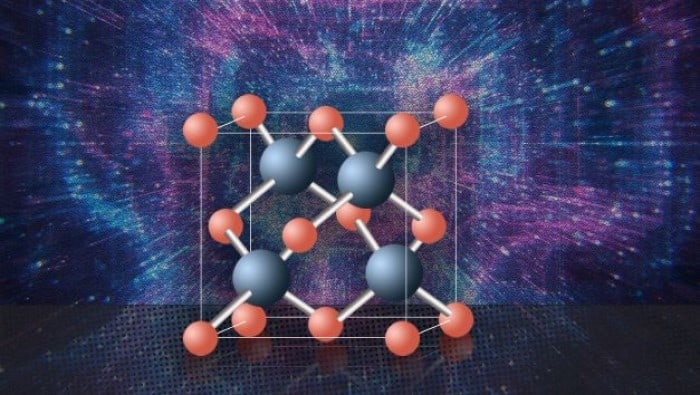
To two independent teams, one led by Gang Chen at the Massachusetts Institute of Technology and Zhifeng Ren at the University of Houston in the US; and the other led by Xinfeng Liu of the National Center for Nanoscience and Technology in Beijing, China and Jiming Bao and Zhifeng Ren at the University of Houston, for showing that cubic boron arsenide is one of the best semiconductors known to science.

The two groups did experiments that revealed that small, pure regions of the material have a much higher thermal conductivity and hole mobility than semiconductors such as silicon, which forms the basis of modern electronics. Silicon’s low hole mobility limits the speed at which silicon devices operate, while its low thermal conductivity causes electronic devices to overheat.

Cubic boron arsenide, in contrast, had long been predicted to outperform silicon on these measures, but researchers had struggled to create large enough single-crystal samples of the material to measure its properties. Now, however, both teams have now overcome this challenge, bringing the practical use of cubic boron arsenide one step closer.    

First-in-human FLASH proton therapy

To Emily Daugherty from the University of Cincinnati in the US and collaborators working on the FAST-01 trial for performing the first clinical trial of FLASH radiotherapy and the first-in-human use of FLASH proton therapy.

FLASH radiotherapy is an emerging treatment technique in which radiation is delivered at ultrahigh dose rates, an approach that is thought to spare healthy tissue while still effectively killing cancer cells. Using protons to deliver the ultrahigh-dose-rate radiation will allow treatment of tumours located deep inside the body.

The trial included 10 patients with painful bone metastases in their arms and legs, who received a single proton treatment delivered at 40 Gy/s or greater – some 1000 times the dose rate of conventional photon radiotherapy. The team demonstrated the feasibility of the clinical workflow and showed that FLASH proton therapy was as effective as conventional radiotherapy for pain relief, without causing unexpected side effects. 

Perfecting light transmission and absorption

To a team led by Stefan Rotter of Austria’s Technical University of Vienna and Matthieu Davy of the University of Rennes in France for creating an anti-reflection structure that enables perfect transmission through complex media; along with a collaboration headed up by Rotter and Ori Katz from the Hebrew University of Jerusalem in Israel, for developing an “anti-laser” that enables any material to absorb all light from a wide range of angles.

In the first investigation, the researchers designed an anti-reflection layer that’s mathematically optimized to match the way waves would reflect from the front surface of an object. Placing this structure in front of a randomly disordered medium completely eliminates reflections and makes the object translucent to all incoming light waves.

In the second study, the team developed a coherent perfect absorber, based around a set of mirrors and lenses, that traps incoming light inside a cavity. Due to precisely calculated interference effects, the incident beam interferes with the beam reflected back between the mirrors, so that the reflected beam is almost completely extinguished. 

Opening a new window on the universe

Carina Nebula

To NASA, the Canadian Space Agency and the European Space Agency for the deployment and first images from the James Webb Space Telescope (JWST).

Following years of delays and cost hikes, the $10bn JWST finally launched on 25 December 2021. For many space probes, launch is the most dangerous part of the mission, but the JWST also had to survive a series of hazardous deep-space unpacking manoeuvres, which involved unfolding its 6.5 m primary mirror as well as unfurling its tennis-court-sized sunshield.

Prior to launch, engineers identified 344 “single-point” failures that could have hampered the observatory’s mission, or worse, make it unusable. Remarkably, no issues were encountered and following the commissioning of the JWST’s science instruments, the observatory soon began taking data and capturing spectacular images of the cosmos.

The first JWST picture was announced by US president Joe Biden at a special event at the White House and many dazzling images have since been released. The observatory is expected to operate well into the 2030s and is already on course to revolutionize astronomy. We were very tempted to name the JWST as our 2022 Breakthrough of the Year,  but we held off this year because we firmly believe that for this amazing instrument, the best is yet to come. 

Detecting an Aharonov–Bohm effect for gravity

To Chris Overstreet, Peter Asenbaum, Mark Kasevich and colleagues at Stanford University in the US for detecting an Aharonov–Bohm effect for gravity.

First predicted in 1949, the original Aharonov–Bohm effect is a quantum phenomenon whereby the wave function of a charged particle is affected by an electric or magnetic potential even when the particle is in a region of zero electric and magnetic fields. Since the 1960s, the effect has been observed by splitting a beam of electrons and sending the two beams on either side of a region containing a completely shielded magnetic field. When the beams are recombined at a detector, the Aharonov–Bohm effect is revealed as an interference between the beams.

Now, the Stanford physicists have observed a gravitational version of the effect using ultracold atoms. The team split the atoms into two groups that were separated by about 25 cm, with one group interacting gravitationally with a large mass. When recombined, the atoms displayed an interference that is consistent with an Aharonov–Bohm effect for gravity. The effect could be used to determine Newton’s gravitational constant to very high precision.

Ushering in a new era for ultracold chemistry 
Cooling light

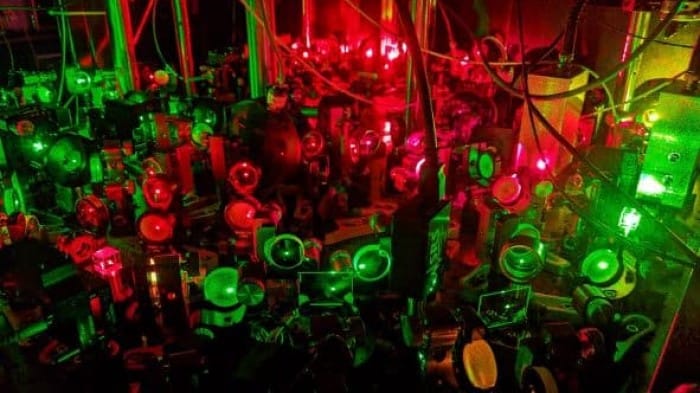
To Bo Zhao, Jian-Wei Pan and colleagues at the University of Science and Technology of China (USTC) and the Chinese Academy of Sciences in Beijing; and independently to John Doyle and colleagues at Harvard University in the US, for creating the first ultracold polyatomic molecules.

Although physicists have been cooling atoms to a fraction above absolute zero for more than 30 years, and the first ultracold diatomic molecules appeared in the mid-2000s, the goal of making ultracold molecules containing three or more atoms had proved elusive.

Using different and complementary techniques, the USTC and Harvard teams produced samples of triatomic sodium-potassium molecules at 220 nK and sodium hydroxide at 110 µK, respectively. Their achievement paves the way for new research in both physics and chemistry, with studies of ultracold chemical reactions, novel forms of quantum simulation, and tests of fundamental science all closer to being realized thanks to these multi-atom molecular platforms. 

Observing the tetraneutron

To Meytal Duer at the Institute for Nuclear Physics at Germany’s Technical University of Darmstadt and the rest of the SAMURAI Collaboration for observing the tetraneutron and showing that uncharged nuclear matter exists, if only for a very short time.

Comprising four neutrons, the tetraneutron was spotted at the RIKEN Nishina Centre’s Radioactive Ion Beam Factory in Japan. The tetraneutrons were created by firing helium-8 nuclei at a target of liquid hydrogen. The collisions can split a helium-8 nucleus into an alpha particle (two protons and two neutrons) and a tetraneutron.

By detecting the recoiling alpha particles and hydrogen nuclei, the team worked out that the four neutrons existed in an unbound tetraneutron state for just 1022 s. The statistical significance of the observation is greater than 5σ, putting it over the threshold for a discovery in particle physics. The team now plans to study the individual neutrons within tetraneutrons and look for new particles containing six and eight neutrons. 

Super-efficient electricity generation 

To Alina LaPotin, Asegun Henry and colleagues at the Massachusetts Institute of Technology and the National Renewable Energy Laboratory, US, for constructing a thermophotovoltaic (TPV) cell with an efficiency of more than 40%.

The new TPV cell is the first solid-state heat engine of any kind to convert infrared light into electrical energy more efficiently than a turbine-based generator, and it can operate with a broad range of possible heat sources. These include thermal energy storage systems, solar radiation (via an intermediate radiation absorber) and waste heat as well as nuclear reactions or combustion. The device could therefore become an important component of a cleaner, greener electricity grid, and a complement to visible-light solar photovoltaic cells. 

The fastest possible optoelectronic switch 

To Marcus Ossiander, Martin Schultze and colleagues at the Max Planck Institute for Quantum Optics and LMU Munich in Germany; the Vienna University of Technology and the Graz University of Technology in Austria; and the CNR NANOTEC Institute of Nanotechnology in Italy, for defining and exploring the “speed limits” of optoelectronic switching in a physical device.

The team used laser pulses lasting just one femtosecond (1015 s) to switch a sample of a dielectric material from an insulating to a conducting state at the speed needed to realize a switch that operates 1000 trillion times a second (one petahertz). Although the apartment-sized apparatus required to drive this super-fast switch means it will not appear in practical devices any time soon, the results imply a fundamental limit for classical signal processing and suggest that petahertz solid-state optoelectronics is, in principle, feasible. 

Physics must tackle class prejudice to be truly inclusive

During Boris Johnson’s resignation speech as UK prime minister on 7 July 2022, he referenced his “levelling-up” agenda – one of his government’s key domestic policies. “If I have one insight into human beings,” he said, “it is that genius and talent and enthusiasm and imagination are evenly distributed throughout the population. But opportunity is not. And that is why we must keep levelling up.”

Social mobility – the potential for people to achieve success regardless of their background – remains worryingly low in the UK and science is not immune. In 2014, for example, the educational charity the Sutton Trust and the advisory body the Social Mobility Commission published a reportElitist Britain? – that confirmed those educated at independent schools and at the universities of Oxford or Cambridge are “over-represented among Britain’s elite”.

In 2015, meanwhile, the Social Mobility and Child Poverty Commission reported that less than 30% of new recruits to leading accountancy firms had attended non-selective state schools despite accounting for almost 90% of the population. A year later, the Social Mobility Commission published research stating that people from more privileged backgrounds are over-represented in scientific roles in the life sciences.

Then, in July 2022 the University and College Union published its first survey on social class in post-16 education, which revealed that people from working-class backgrounds feel they have been denied job opportunities and had their careers limited because of their background. The report also found that people who are already at the greatest risk of being discriminated against, such as disabled, Black, LGBTQ+ and female staff, are also more likely to face class-based discrimination. Simply put: those from under-represented groups in physics have even greater problems if they are from a working-class background.

One shortcut that people often use to identify someone’s class is the accent they speak with, even though there’s no link between accent and intelligence. Indeed, accent prejudice – or “accentism” – is commonplace. As George Bernard Shaw famously complained in the preface to his 1913 play Pygmalion, “it is impossible for an Englishman to open his mouth without making some other Englishman despise him”.

The unfortunate truth is that, in Britain, people speaking with a “received pronunciation” are perceived by those aged 40 and above as higher-class and more intelligent. And making that assumption can be incredibly quick. A study by Yale School of Management in 2019 found that even during the briefest interactions, a person’s speech patterns shape the way people perceive them, including assessing their competence and fitness for a job. Those from higher social classes are more likely to be assigned higher salaries, which perpetuates class stratification.

The way ahead

Despite the long-standing knowledge that class prejudice exists, it is not among the protected characteristics under the UK’s Equality Act 2010. However, while positive discrimination enshrined in law may be required to reduce all forms of discrimination, even the law can be subtly circumvented. Someone with an impressive CV could be invited to interview (to comply with the Equality Act) only to be unsuccessful, fobbed off with a trumped-up excuse to conceal discrimination.

It is not even as simple as moving from one class to another. Shunned by the class you leave, you can end up encountering hostility from the class you join. In fact, people from a working-class background are more likely than those from other social classes to suffer impostor syndrome, which undermines confidence and stymies career progression. They can also end up suffering from micro-aggressions (insults).

Victims of micro-aggressions are usually told they are just imagining the slight, or that they are overly sensitive or paranoid, or that they simply need to develop a sense of humour. Indeed, even the anticipation of micro-aggressions can cause an enormous amount of mental and emotional stress.

A rush to identify the most discriminated against characteristic will be doomed to failure and could even inspire conflict between marginalized groups

So, are there solutions? The international law firm Clifford Chance has adopted a “CV blind” policy to break its Oxford and Cambridge recruitment bias. There is also software available that changes a speaker’s accent to eliminate unconscious bias during online interviews. But we need more research to find out if the different levels of the academic pyramid reflect the socio-economic diversity of the population at large.

We already know that academia does not authentically reflect ethnic or gender diversity. Yet a rush to identify the most discriminated against characteristic (class versus colour, for example) will be doomed to failure and could even inspire conflict between marginalized groups. A better approach is to identify the source of class discrimination and find ways to address it.

In prehistoric times, it made sense to be wary of outsiders, who might attack us or steal our food. That’s why people formed “in-groups” of family and friends to compete for finite resources. The trouble is that although we no longer face the same existential threat, our “ethnocentric” behaviours persist.

Education is the key to tackling the problem. In a study by Sohad Murrar and colleagues at the University of Wisconsin at Madison, students were shown five-minute videos that suggested most peers at their university support diversity and try to behave in an inclusive manner. Almost immediately, attitudes toward out-groups and appreciation for diversity improved (Nature Behaviour 4 889).

Physics has one of the largest disadvantage gaps within science, with high achievers from disadvantaged backgrounds – as measured by free school meals – much less likely to do physics at A-level and less likely to gain top grades if they do A-levels than those from more privileged backgrounds.

Despite the portrayal of physics as rational and objective, physicists are not immune from human frailties. It’s time we did better to tackle all forms of discrimination and that includes class prejudice.

National Ignition Facility demonstrates net fusion energy gain in world first

Physicists working at a laser-fusion facility in the US have announced a world first – the generation of more energy from a controlled nuclear fusion reaction than was needed to power the reaction. They achieved this using the $3.5bn National Ignition Facility (NIF) – a football-stadium sized system of lasers based at the at the Lawrence Livermore National Laboratory (LLNL) in California. The laser shot, performed on 5 December, released 3.15 million joules (MJ) of energy from a tiny pellet containing two hydrogen isotopes – compared to the 2.05 MJ that those lasers delivered to the target.

Speaking yesterday at a press conference in Washington DC organized by the Department of Energy to announce the achievement, Mark Herrmann, head of weapons physics and design at LLNL, noted that the breakthrough has a dual importance. While more immediately it should improve the US’s ability to monitor its stockpile of nuclear weapons without testing – NIF’s primary objective – it could, in the longer term, lead to a new clean, sustainable form of energy. The result, he said, had left his colleagues “really pumped”.

For Michael Campbell at the University of Rochester in the US, the surpassing of “energy breakeven” – a goal of scientists for decades – constitutes a “Wright brothers moment” for fusion research. Steven Rose of Imperial College London argues that the result “shows conclusively that inertial fusion works at the megajoule scale”.

‘Something big’

NIF triggers fusion reactions by aiming nearly 200 high-powered laser beams at the inside of a 1 cm-long hollow metal cylinder. The intense X-rays generated in the process converge on a 2 mm-diameter spherical capsule placed in the middle of the cylinder that contains deuterium and tritium. As the outer portion of the capsule is blasted off, the deuterium and tritium are forced inwards and for a brief moment experience enormous pressures and temperatures – high enough that the nuclei overcome their mutual repulsion and fuse, yielding heat, helium nuclei and neutrons.

Having switched NIF on in 2009, researchers originally envisaged achieving breakeven (or “ignition”, as the milestone is often referred to) three years later. But problems caused by instabilities in the plasma generated during fusion and asymmetries in the capsule implosions limited the facility’s fusion output.

It’s been a 10-year slog of problem solving in-steps to get to this point

Omar Hurricane

It took until early 2021 for scientists to understand the implosions sufficiently that they could create a “burning plasma” and generate more heat from the helium nuclei than was supplied by the laser. Then later that year they finally obtained a self-sustaining fusion reaction in which the generated heat outflanked losses due to cooling – achieving an energy yield of 1.37 MJ.

LLNL physicist Annie Kritcher says that the latest result was achieved by slightly increasing the laser energy – some 8% up compared to the 1.92 MJ employed last year – while making the capsules a bit thicker, and so slightly more resilient to defects. In addition, they improved implosion symmetry by transferring energy between laser beams during the fusion process.

Kritcher’s colleague Alex Zylstra noted that the record-breaking shot was made at just after 1am local time on 5 December. The shot generated copious amounts of neutrons, suggesting that “something big had happened”, as lab director Kim Budil put it. Nevertheless, adds Budil, plenty of other measurements were carried out to confirm the unprecedented haul, with a team of independent experts being brought in to peer-review the results before they were announced yesterday.

Decade long ‘slog’

According to Omar Hurricane, chief scientist of Livermore’s fusion programme, there was no doubt that breakeven would be achieved given the observation of a burning plasma a couple of years ago. The only question for him was exactly when the landmark would occur. “It’s been a 10-year slog of problem solving in-steps to get to this point,” he told Physics World. “Ten years feels long but in reality I think it’s a relatively short time for such a hard scientific challenge.”

As to where the latest result leaves inertial fusion compared to a rival scheme that relies on magnets to contain plasma for relatively long periods of time (as will be exploited at ITER in France), Livermore’s Tammy Ma says that both approaches have their “pros and cons”. While magnetic confinement has yet to achieve breakeven, she says it is more advanced when it comes to technology development. Indeed, she points out that NIF was not designed to demonstrate practical fusion energy – consuming as it does some 300 MJ of electricity for each 2 MJ laser shot.

Both Ma and Campbell believe there is plenty of scope for improvement. Whereas NIF’s 1990s-era technology is only 0.5% efficient, Campbell says that modern lasers can get as high as 20%. When combined with further improvements to the energy gain on the target, he maintains that inertial fusion could become a commercial reality. But he reckons that point is still likely decades away with “many challenges” first being needed to be overcome.

LIDAR sensors and tunable lenses could create autofocus glasses

It’s long been a dream of people whose ageing eyes cannot focus clearly on close-up objects to have a pair of glasses that automatically adjust to provide optical clarity for whatever they are looking at. Presbyopia, the gradual deterioration of the lens’s ability to focus light correctly on the retina, is a natural condition of ageing. But because of this deterioration, many people aged 60 and above can no longer clearly see anything within a radius of a metre. An estimated two billion people live with this condition.

Viable commercialization of a “tunable” lens with automated focus is years away, but researchers at the University of Tuebingen have now demonstrated the capabilities of a liquid-membrane-based tunable lens controlled with a solid-state LIDAR camera feedback system, reporting their findings in Biomedical Optics Express.

Liquid-membrane-based lenses have a membrane that changes shape as a liquid is pumped in and out of a chamber; the curvature of the membrane defines the lens. The researchers evaluated this type of tunable lens for its visual acuity and contrast sensitivity for their use in presbyopia correction, as well assessing its aberration properties. First author Rajat Agarwala and colleagues also demonstrated the feasibility of using a feedback mechanism to operate the lenses, based on a portable sold-state LIDAR camera with a processing time of 40 ms.

The study included 15 eye-healthy adults, who participated after having ophthalmology examinations. Prior to testing, a cycloplegic agent was administered to block their eyes’ ability to change optical power. The participants wore a custom spectacle-like frame prototype housing the tunable lenses, and had a LIDAR camera strapped on their foreheads to determine distances in their visual fields.

The researchers evaluated visual acuity when participants viewed an external display at three distances and provided feedback using a keyboard. They also assessed contrast sensitivity and refocusing tasks using the lenses, with gaze tracking and depth sensor data driving the lens. The LIDAR camera with tunable lenses proved to be technically feasible as a 3D distance estimator for the development of tunable spectacles for presbyopia. The team observed low wavefront errors and fast switching of powers, along with a wide field-of-view, demonstrating significant potential of the lenses for ophthalmic applications.

Eye-tracking expertise

Elsewhere, Nitish Padmanaban is also working on the problem. Padmanaban is co-founder and head of research at Zinn Labs, established in 2020 to develop autofocals as a viable product for consumers. In a TEDx talk attracting more than 2.2 million views, he explained the complexity of building intelligence around the autofocus lenses.

His prototypes borrow technology from virtual and augmented reality systems to estimate focusing distances, with the earliest prototypes incorporating a distance sensor and focus-tunable lenses into a goggles-like device. An eye tracker conveys the direction in which the eyes are focused, and a camera serves as a distance sensor. Newer prototypes remove the need for a camera, relying solely on eye tracking and reducing some of the bulk of the device.

Nitish Padmanaban

“Our core expertise is with eye tracking-related imaging and algorithms, and we have expanded our work to develop a broader set of uses for eye tracking,” Padmanaban tells Physics World. “In addition to autofocals, these uses include eye-based health monitoring and virtual- and augmented-reality headsets. Each of these application areas benefit from lower power, lower-latency eye tracking, though the timelines and specific challenges for bringing them to market differ.”

“Our work at Zinn Labs specifically aims to make the eye tracking good enough such that the vergence estimation alone is sufficient to set lens power, without the need for a depth sensor,” he adds. “More sensors require more energy and more computation. When you want to create a device that people will wear, size and weight need to be minimized. Eye tracking alone can in theory provide sufficient information to estimate a wearer’s gaze distance, and so we believe the best approach is to perfect it.”

As for when autofocus lenses could become a commercial reality, Padmanaban notes that much research is under way, involving several, often orthogonal solutions. He predicts that the most viable option will be some form of low-power eye tracker coupled with a liquid crystal lens.

“It’s hard to predict when the next big leap in focus-tunable lenses will be, but it wouldn’t surprise me if it takes another five to ten years before there is a market-ready product that appeals to consumers,” he concludes.

The space industry’s image problem (and what to do about it)

Space exploration is widely seen as exciting and inspirational. It captures the public imagination in ways that other scientific endeavours do not, to the extent that kids dream of becoming astronauts and rocket scientists when they grow up. They do not, by and large, dream of becoming condensed matter physicists or materials engineers, worthy and interesting though those fields are.

Yet when it comes to recruiting people into the space industry, it seems the “cool factor” of space is not enough. According to Joseph Dudley, who leads a UK-based think tank called the Space Skills Alliance, around 50% of the UK’s 1300 space companies are struggling to fill vacancies. How can this be if space is so popular?

Dudley was speaking during a “skills session” at this year’s Appleton Space Conference, which is organized by RAL Space and took place on 1 December. Based on my previous experience of such sessions, I fully expected Dudley to cite the UK’s supposed shortage of STEM graduates as a prime cause of the sector’s recruitment struggles, and perhaps to complain about how terrible it is that Kids These Days™ want to be TikTok influencers rather than physicists.

It didn’t happen.

A losing game

Instead, Dudley summed up the space sector’s skills shortage in a single word: tech. “The core skills we are looking for are the same as everyone else,” he told conference attendees gathered online and in person at the Rutherford Appleton Laboratory near Harwell, Oxfordshire. “We are competing with the tech sector, we are competing with Silicon Valley, and we are losing.”

Part of the problem, Dudley argued, is that the wider tech sector has responded to shortages by setting up flexible online coding “boot camps” for new trainees and career-changers. The space industry, meanwhile, generally expects applicants to have four-year degrees (or beyond) in physics, engineering or related subjects. This means that anyone who didn’t choose science subjects as a 14-year-old schoolchild is out of luck. “Where is our 16-week boot camp for Earth observation, for satellite ops?” Dudley asked rhetorically.

Another difficulty is that the roles most closely associated with space’s “cool factor” – astronaut and rocket scientist – are uncommon and seldom open to UK applicants. After flashing up a slide showing children’s clothing from UK stores branded with NASA’s iconic “meatball” logo, Dudley quipped, “Good luck finding the same for the European Space Agency or the UK Space Agency.”

Best and brightest

A further source of the space sector’s recruitment problems, Dudley suggested, is that many young people (especially young women and others from under-represented backgrounds) are convinced they’re not clever enough to do space science. For them, job adverts that scream, “Come work with the best and brightest people in the world!” are a deterrent, not a draw.

Finally, Dudley argued that the rise of the “new space” industry – dominated as it is by billionaire-run firms like Elon Musk’s SpaceX, Richard Branson’s Virgin Galactic and Jeff Bezos’ Blue Origin – has taken some of the shine off the industry’s image. “Our sector is being associated with environmental damage and space tourism for the rich,” Dudley warned. “We have to take swift action to make sure the brand of the space sector does not become toxified.”

Solving problems

Another speaker in the skills session, Anne-Marie Imafidon, reported seeing some of this “brand toxification” in action. As the co-founder of the Stemettes charity, which encourages girls, young women and non-binary folks aged 5-25 into STEM careers, Imafidon recently ran a workshop on science and sustainability. “The number of projects on space rubbish [from the students] was actually quite telling,” she observed. Among young people, she added, the attitude tends to be that going to space creates problems rather than solving them.

As for how to fix these issues, Dudley and Imafidon offered several proposals. These included alternative training programmes (boot camps, apprenticeships and the like); better recruitment practices and working conditions (40% of women in the space sector have experienced workplace harassment); more competitive pay; and raising awareness of other paths into the industry (including other space agencies besides NASA).

But alongside these practical steps, it seems the space industry could also do with re-thinking certain aspects of its image. Going into space, Imafidon said, is “not purely about following Elon [Musk] to the skies to create another population with all sorts of weird whims and ways”.  It also helps solve problems down here on Earth. Moreover, X-Factor style competitions like the one for ESA’s latest astronaut class are wildly unrepresentative of the application process for, well, every other role in the industry.

If space firms can incorporate messages like these into their job adverts, perhaps they will find it easier to recruit people to help them reach for the stars.

Superconductor spin-correlation measurement is claimed as a first

An experiment has shown that the spins of two electrons in a Cooper pair have a negative correlation – that they tend to point in opposite directions as predicted by the quantum theory of superconductivity. The observation was made by physicists in Switzerland and Italy and is claimed to be the first experimental confirmation of this effect.

Led by Arunav Bordoloi at the University of Basel, the team measured the spin correlation using a new spin-filter setup, which uses two quantum dots to extract Cooper pairs from a tiny piece of superconductor.

In the conventional description of superconductivity, electrons form Cooper pairs below a critical temperature. Unlike individual electrons, the pairs obey Bose–Einstein statistics and can therefore condense to form a collective superconducting state in which the charge-carrying electrons can flow without resistance.

Negative correlation

In a conventional superconductor, Cooper pairs have zero spin. This means that the two constituent electrons have individual spins pointing in opposite directions. This negative correlation between the spins is an example of quantum entanglement, whereby the relationship between the particles is stronger than that allowed in classical physics.

Entangled particles play important roles in quantum technologies such as computing and sensing, and the ability to extract negatively correlated entangled pairs of electrons from a superconductor could lead to the development of new quantum technologies.

For several years now, Bordoloi and colleagues have been able to extract Cooper pairs from a superconductor and separate them. Until now, however, they had not been able to show that the spins of the electrons are negatively correlated.

Bordoloi’s team observed this negative correlation by building a new experiment that can filter individual electrons according to their spins. Like their previous experiments, the set-up comprises a small piece of superconductor that is sandwiched between two quantum dots.

Spin filters

By adjusting the electric and magnetic fields applied to the system, a Cooper pair in the superconductor can be split. The constituent electrons then go their separate ways into the two different quantum dots and then into two normal conductors. Using tiny magnets, each quantum dot can be made to operate as a spin filter that only allows electrons with a specific spin orientation to pass though. By setting the filters in opposite directions, the set-up should only be able to extract Cooper pairs with electron spins that are negatively correlated. Likewise, if the filters are set in the same direction, then only Cooper pairs with positively correlated spins will be extracted.

As predicted by theory, the current of Cooper pairs extracted from the superconductor was greatest when the spin filters were set in the opposite direction – and the lowest current was observed when the spin filters were set in the same direction. However, the team did not see a perfect negative correlation because quantum-tunnelling effects reduced the ability of the quantum dots to operate as spin filters. Also, the experiment is not a complete observation of the negative correlation because the filters only operate in one direction.

Bordoloi and colleagues are hopeful that their new technique will be used to study a wide variety of spin correlations in solids. As well as boosting our understand of phenomena such as superconductivity and magnetism, the method could be used to develop new spin-based quantum technologies such as magnetic sensors.

The research is reported in Nature.

Biological model reveals best way to deliver thermoradiotherapy

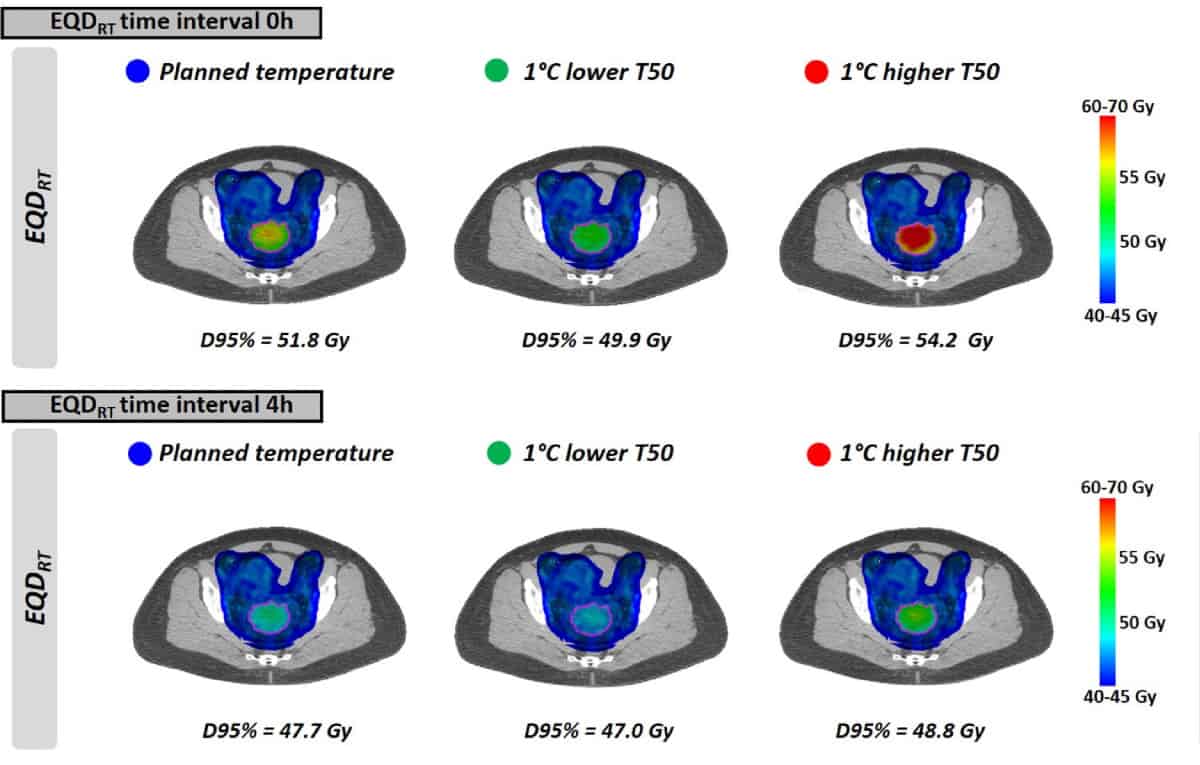
Predicted equivalent dose distributions

Thermoradiotherapy is a cancer treatment in which hyperthermia – heating the tumour to above body temperature – is used to enhance the efficacy of radiotherapy. The amount of this enhancement is expressed as EQDRT, the equivalent radiation dose needed to achieve the same therapeutic effect without heating.

Clinical trials have shown that this approach can substantially improve treatment outcomes in several tumour types, without increasing normal tissue toxicity. Previous studies also demonstrated that both the achieved temperature and the time interval between radiotherapy and hyperthermia impact the clinical outcome.

To understand this process in more detail and help optimize treatments, researchers at Amsterdam UMC have used biological modelling to investigate the impact of maximum temperature and time interval on EQDRT. Describing their findings in the International Journal of Radiation Oncology Biology Physics, they report that both high temperatures and short time intervals are essential to maximize therapeutic enhancement.

Biological model

To perform thermoradiotherapy, clinicians use a radiofrequency or microwave device to apply heat to the tumour once or twice a week, either before or after a radiotherapy session. Tumour temperature is kept below 45°C to prevent heating normal tissue, but sometimes unwanted (and painful) hot spots can occur, which limit the maximum tolerable power level that can be used during a hyperthermia treatment.

First author Petra Kok and colleagues developed software to model the biological effects of radiotherapy plus hyperthermia in terms of equivalent dose distributions. The model, which accounts for DNA-repair inhibition by hyperthermia, as well as direct heat-induced cytotoxicity, enables evaluation of the quality of combined treatment plans using standard dose–volume histograms.

To obtain basic insight into the impact of hyperthermia parameters, the team first calculated the enhancement of a standard 23 × 2 Gy dose distribution by homogeneous temperatures of between 37 and 43 °C, for time intervals between 0 and 4 h.

The model showed that EQDRT increased significantly with both increasing temperature and decreasing time interval. For a 1 h time interval, for example, it predicted an EQDRT increase of 2–15 Gy for temperatures from 39 to 43°C. These findings emphasize the importance of achieving the highest tolerable tumour temperature to optimize clinical outcome.

The impact of time interval was most pronounced at higher temperatures (above 41°C). At a typical hyperthermic temperature of 41.5°C, an EQDRT increase of about 10 Gy was achieved with a 0 h time interval. This decreased to around 4 Gy enhancement with a 4 h interval, indicating that as the time interval increases, a higher temperature is needed to realize the same effect.

Clinical cases

Next, the researchers evaluated realistic treatment scenarios based on inhomogeneous temperature distributions and clinical radiotherapy plans. They calculated the EQDRT for 10 patients with locally advanced cervical cancer. All patients had received 23 × 2 Gy volumetric-modulated arc therapy (VMAT), with hyperthermia applied weekly during the treatment course.

As seen with the uniform temperatures, EQDRT was largest for the smallest time interval. When hyperthermia was applied immediately before or after radiotherapy (0 h time interval), the mean EQDRT to 95% of the volume (D95%) was 51.7 Gy – a gain of 6.3 Gy over radiation alone. Increasing the time interval to 4 h reduced this gain to 2.2 Gy.

The model predicted that most of the dose enhancement is lost within the first hour. For clinical use, therefore, the time between radiotherapy and hyperthermia delivery should be as short as possible – ideally by patients receiving both treatments in the same hospital. The team note that while the order of the two treatments is not clinically relevant, as it takes time to heat up the tumour, applying hyperthermia first could enable significantly shorter time intervals, even close to 0 h.

Finally, the researchers modelled the impact of achieving slightly lower tumour temperatures than planned, due to the occurrence of treatment-limiting hot spots. The effect on EQDRT was most pronounced for a short time interval between radiotherapy and hyperthermia. For a 1°C lower temperature and a 0 h time interval, for example, the mean predicted EQDRT(D95%) decreased by 1.8 Gy (from 51.7 to 49.9 Gy); for a 4 h interval, the decrease was about 0.7 Gy.

In cases where no hot spots appear, it may be possible to increase the output power and reach a higher temperature than planned. Once again, the benefit of achieving a higher temperature was greatest for shorter time intervals, with the exact gain dependent upon the actual temperatures reached.

“Biological modelling provides relevant insight into the relationship between treatment parameters and expected EQDRT,” Kok and colleagues conclude. “Both high temperatures and short time intervals are essential to maximize EQDRT.

Sun Nuclear: an expanded portfolio for quality management at ASTRO 2022

In this short video, filmed at ASTRO 2022, Sun Nuclear’s Erin Schesny introduces the company’s quality assurance (QA) portfolio, designed to optimize workflows and provide patient safety within radiation oncology. She explains that Sun Nuclear, now part of the Mirion Medical family of companies, aims to provide a complete end-to-end QA solution for the diagnostic space through to the end of radiation treatment. Sun Nuclear’s Luis Rivera also highlights the newly released SunScan 3D, a next-generation cylindrical water scanning system that offers 0.1 mm accuracy for commissioning and QA of stereotactic treatments, and describes the SunCHECK platform for integrated patient and machine QA.

LAP showcases patient-centric radiation therapy at its best at ASTRO 2022

In this short video, filmed at ASTRO 2022, LAP’s Drew Bullock introduces the company’s RadCalc software system for patient quality assurance (QA), including 3D Collapsed Cone and Monte Carlo algorithms for plan validation and the 3D EPID module for both pre-treatment phantom-free QA workflows as well as in vivo delivered dose QA for the patient. We also hear from LAP’s Jennifer Beckford, who presents the Thales 3D MR scanner, an MR-compatible motorized water phantom for commissioning and QA of bore-type linacs, including both the MRIdian and Halcyon treatment systems.

Mentor and student: how Ernest Rutherford and Mark Oliphant changed nuclear physics

Eighty-five years after his death, and more than a century after the discoveries that made him famous, Ernest Rutherford’s reputation as one of history’s greatest experimental physicists is undiminished. His scientific achievements – the studies of radioactivity that earned him the 1908 Nobel Prize for Chemistry; the discovery of the atomic nucleus the following year; and the observation of the first artificial nuclear reaction in 1917 – stand out even in an era that produced many notable physicists.

Rutherford was a larger-than-life character, given to bellowing the hymn “Onward Christian Soldiers” as he strode through the lab, and possessed of a prodigious talent for swearing at recalcitrant equipment. He has, accordingly, been well-served by biographers: a volume dedicated to his life and letters came out shortly after his death in 1937, and numerous other studies have been published since.

Mark Oliphant also has a place in physics history. As Rutherford’s student-turned-colleague at the University of Cambridge’s Cavendish Laboratory, Oliphant had a hand in the discovery of tritium, a heavy isotope of hydrogen that proved vital to the later development of nuclear weapons. As head of the physics department at the University of Birmingham during the Second World War, he led a high-priority programme to improve radar systems, giving Britain’s defenders a crucial edge over their Nazi foes.

Also, like many physicists of his generation, Oliphant was involved in the Manhattan Project that built the first atomic weapons. Initially he was a go-between, conveying scientific information from bombed-out Britain to the US. Later, he was second-in-command to Ernest Lawrence, whose cyclotrons helped separate fissionable uranium-235 from the more plentiful uranium-238.

Yet as important as these accomplishments are, there is an air of “always the deputy, never the sheriff” about Oliphant’s career. This makes him an unusual choice to counterbalance Rutherford in Andrew Ramsey’s The Basis of Everything: Rutherford, Oliphant and the Coming of the Atomic Bomb. The pairing is also surprising given that Rutherford died just as Oliphant was starting to make an independent name for himself. The senior physicist is therefore absent in the final, necessarily Oliphant-focused, third of the book, which gives it a rather anticlimactic feel.

Moreover, while Ramsey argues convincingly that Rutherford and Oliphant were unusually close, more like father and son than mentor and student, Oliphant was neither the only nor even the most talented young scientist to fall under the sway of the charismatic and gregarious Rutherford. As Ramsey points out, a dozen of Rutherford’s students, from Frederick Soddy in 1921 to Peter Kapitza in 1978, went on to win Nobel prizes. Why not write about one of them?

The answer – a good one – lies in the pair’s shared experiences growing up. Ramsey describes their respective upbringings in parallel in the book’s early chapters before switching to a conventional chronological structure. Rutherford, a New Zealander, was raised in a series of ramshackle frontier towns where his semi-literate father eked out a living in the flax trade. Thirty years later, the Australia-born Oliphant was little better off.

Both struggled mightily to obtain (and pay for) the kind of education that would enable them to make a living as a scientist. Neither slotted easily into the semi-aristocratic and deeply Eurocentric “club” of late 19th and early 20th-century physics. And Oliphant, especially, learned the hard way that winning a coveted 1851 Research Fellowship (the same prize that took Rutherford to the Cavendish a generation before) was no guarantee of financial stability – particularly since he, unlike Rutherford, brought his wife, Rosa, with him to Cambridge.

While The Basis of Everything deals competently with the technical aspects of its subjects’ careers, Ramsey – a journalist for Cricket Australia – is not a science specialist. Readers new to nuclear physics or the history of the atomic bomb would be better served by the science-focused accounts in the book’s bibliography. Ramsey does, however, have a good feel for the practicalities of research and a journalist’s eye for details.

One theme that comes across most vividly – and, for this reader, enjoyably – is the frankly dangerous nature of experimental physics during the 1920s and 1930s. Early nuclear physicists from the Curies onwards were famously (and sometimes fatally) indifferent to the hazards of working with radioactive materials. However, as Ramsey shows, lax radiation safety wasn’t the half of it. While in Australia, Oliphant devoted considerable time to purifying samples of mercury, spending “hours boiling and distilling the metal while its toxic vapour rolled down the stairs and seeped into the university’s basement workroom”. At the Cavendish, he was once knocked unconscious by a 20 kV shock that melted the soles of his shoes to the laboratory floor. The fact that Oliphant lived to be an old man, dying in 2000 at the age of 99, is little short of astonishing.

A further welcome strength of the book is its focus on the mundane hardships of academic life. In 1927 Oliphant’s fellowship at the Cavendish was worth just £250 a year, or about £12,000 in today’s money. Worse, Rutherford was incredibly tight-fisted when it came to laboratory funds, and his students regularly had to pay for their own equipment and consumables to make up the shortfall. In Oliphant’s case, this meant shelling out nearly 10% of his annual salary on a mercury diffusion pump vital to his research – a sum he and Rosa could ill afford.

Another of the Cavendish’s star students, James Chadwick, attributed Rutherford’s extreme parsimony to modesty: the bluff old Kiwi simply could not believe his ideas and work were worth spending money on. Whatever the cause, though, Rutherford’s penny-pinching ways were desperately hard on Oliphant. After paying £80 in college fees, £20 for textbooks and £2 per week for a flat consisting of a bedroom, living area and combined kitchen-bathroom, he and Rosa (who lacked qualifications that would have allowed her to get a paying job) could barely afford to eat, never mind keep warm.

In this respect, The Basis of Everything, which was first published in Australia in 2019 but only released in the UK this year, feels uncomfortably timely. Lab safety has improved since Oliphant left the Cavendish in 1936, but as the UK heads into an energy crisis, some readers may find unwelcome parallels with other aspects of the experiences described in this engrossing and well-observed book.

  • 2022 HarperCollins £20.00 384pp
Copyright © 2026 by IOP Publishing Ltd and individual contributors