Radiation therapy is an essential component of cancer care and is used in the treatment of roughly half of all cancer patients. To ensure that these treatments are both safe and effective, it’s critical that the linear accelerators, or linacs, that deliver the radiation are as reliable, efficient and accurate as possible.
The US-based medical physics consultancy One Physics aims to help hospitals and cancer centres meet these goals by bringing together a team of highly-trained expert medical physicists to provide a wide range of radiotherapy and diagnostic imaging physics services.
This episode of the Physics World Weekly podcast features James Giltz, director of commissioning services at One Physics. In a wide-ranging conversation with Physics World’s Tami Freeman, Giltz explains how the company provides comprehensive medical-physics support for radiotherapy – from planning new centres through to ongoing clinical operations.
Congratulations to Margaret Harris for winning the “Feature of the Year – specialist audience” award from the Association of British Science Writers (ABSW). The Physics World online editor was cited for her article “The physics Nobel prizes you’ve never heard of”. The ABSW describes the article as: “A refreshing angle to Nobel prize reporting. It was an eye-opener, told a great story and gave some deep historical context to the murky world of who wins the Nobels and why.”
In the run-up to each year’s Nobel prize announcements, Physics World editors explore aspects of the award that have often been neglected. As well as her award-winning article from 2025, Harris has argued the case that Lise Meitner should have won a Nobel for her work on nuclear fission (“Overlooked for the Nobel: Lise Meitner”). On a lighter note, Harris has described an e-mail exchange with physics laureate Brian Josephson about his tongue-in-cheek “paper” on mattress rotation (“How to rotate your mattress like a physics Nobel prizewinner”).
Physicists headed up by a team at the University of Tennessee, Knoxville, and the Radioactive Isotope Beam Factory (RIBF) at RIKEN in Japan say they have measured the alpha decay of tellurium-104 for the first time. The feat could help us better understand how alpha particles form inside atomic nuclei, which is one of the least understood problems in nuclear science.
Alpha radioactivity was discovered over 125 years ago and it is the process whereby an atomic nucleus emits an alpha particle, which is a helium nucleus consisting of two protons and two neutrons that are strongly bound. The alpha particle exits the nucleus by quantum-mechanical tunnelling through the energy barrier surrounding the nucleus. While this model broadly explains the lifetimes of radioactive nuclei, a big question remains, however, says study lead Robert Grzywacz at the University of Tennessee, Knoxville. This is: how do alpha particles form in the nucleus and where can they exist as “pre-formed” structures inside it before they leave?
Tellurium-104 is particularly suited to studying alpha radioactivity, he says, because it is predicted to have the highest chance of pre-forming alpha particles of all heavy nuclei. “Such a strong enhancement of preformation shouldn’t be possible in theory because the matter in heavy nuclei is uniformly distributed,” Grzywacz explains. “There must, therefore, be an extra mechanism that causes alpha particles to locally ‘clump’ or ‘cluster’.”
In their experiments, he and his colleagues set about measuring the alpha particles produced by tellurium-104. This was no easy task because this isotope of tellurium can only be observed during the decay of xenon-108, which itself is extremely difficult to make in the laboratory.
Pulses of alpha particles
The researchers did their work at Japan’s RIKEN accelerator complex, which consists of four coupled cyclotrons that accelerate a beam of xenon-124 onto a beryllium production target. The collisions between the two produces xenon-108 and then tellurium-104. The tellurium-104 finally decays into tin-100.
Grzywacz and co-workers say they succeeded measuring pulses of alpha particles produced in short succession by the tellurium-104. They measured the half-life of the radioisotope as being 7.2 ns, which is the shortest known alpha decay half-life for alpha particle emission from a heavy nucleus. More importantly, when corrected for the tunnelling effect – using a parameter known as the reduced width, which separates quantum tunnelling from inherent alpha particle emission from the nucleus – they were able to confirm that the probability of an alpha particle pre-forming in the nucleus was much higher than expected from theory calculations.
The possibility that tellurium-104 could show such “superallowed” alpha decay was first put forward more than 60 years ago, but it has been impossible to observe experimentally, says Grzywacz. “We started our search for this decay more than 20 years ago at Oak Ridge National Laboratory and later at JAEA in Tokai (Japan). We proposed the present experiment in 2018 at RIKEN but because of the covid-19 pandemic, we had to repeat the proposal in 2022. The experiment was deemed to be of ‘very high priority’ and we performed our experiments almost exactly two years ago, in June 2024.”
The work, which is detailed in Nature, will be important for understanding how alpha particle form in nuclei and will push the theory to explain where and how nuclear cluster can form, says Grzywacz. “More than 300 nuclei – and importantly, almost all superheavy nuclei – decay via alpha particle emission. Lighter nuclei may also naturally form ‘alpha condensates’, but in heavier nuclei, it is not obvious how this happens.”
Grzywacz told Physics World that he and his colleagues will now need to measure alpha particle energies with better precision in order to constrain the preformation they have observed.
An artificial buffer composed of a photoionizing material released into space at the edge of Earth’s magnetic field could hold off powerful solar storms that potentially pose a risk to modern civilization.
The plan to put a buffer in place is called StormWall, proposed by space plasma dynamicist Brian Walsh of Boston University, and Dan Welling and Zhenguang Huang of the University of Michigan.
Solar storms are triggered when a coronal mass ejection (CME) on the Sun launches a vast cloud of charged particles towards us. If this cloud hits us, the charged particles can overwhelm Earth’s magnetic field. Magnetic reconnection, the process of magnetic-field lines snapping under pressure from the solar storm and joining back together, inputs much of the CME’s energy into Earth’s magnetosphere, where it can make its way down to the surface via charged particles stored in Earth’s radiation belts.
“Magnetic reconnection is the gateway by which energy comes from the Sun into Earth’s space environment,” Walsh tells Physics World.
The efficiency with which magnetic reconnection accomplishes this is governed by the magnetic field’s strength and direction, plus the density of plasma – ionized atoms and molecules – in Earth’s magnetosphere. The stronger the field strength and the lower the plasma density, the more energy reconnection deposits on the Earth.
Bolstering our defences
Although we cannot change the magnetic-field strength, “we can increase the plasma density by depositing material into space that can be photoionized,” says Walsh.
Nature already does this to a modest extent. Atoms and molecules leak from the upper atmosphere and are photoionized by solar ultraviolet light. This involves knocking an electron off an atom or molecule, thereby giving it an electric charge that allows it to interact with the magnetic field. The ionized materials follow natural “drift paths” along magnetic-field lines to the edge of the magnetosphere.
StormWall intends to bolster these natural defences by adding large quantities of material. In their work, Walsh, Welling and Huang suggest that a group of six spacecraft placed in geosynchronous orbit and each carrying the equivalent of a dozen fuel tankers’ worth of material would provide enough of a shield to ward off a solar storm. However, Walsh says that ultimately a greater number of smaller spacecraft might be more efficient.
“There is an economy of scale and the potential for international collaboration when the number of spacecraft becomes bigger,” he says. “The beautiful thing is that there’s not a lot of complicated technology in it.”
The key component is the material, and Walsh and his team have looked at a range of materials, particularly alkalines such as lithium and sodium.
“The most important thing is that it has to photoionize relatively quickly, and alkaline materials are great for that,” says Walsh, who highlights salt water, which is rich in sodium, as one possibility.
Simulations indicate that such a plasma buffer could cut the intensity of a solar storm by half as the bulk of the solar plasma is diverted around us, in the same way that stream-water flows around a stone.
Expensive problems
StormWall would not be a perfect solution. For one thing, it would be mightily expensive to launch – Walsh’s estimate is in the same region as the $4 billion Artemis II mission, maybe a little less. Furthermore, StormWall is a one-shot deal. After the photoionizing material is released, the space tankers will be left dry and more spacecraft will have to be launched to replace them.
StormWall would also require perfect timing. The photoionizing material would only remain in Earth’s magnetosphere for about six hours before dissipating into space. Releasing it at the right time to coincide with the arrival of the CME is paramount. This would require consistent accuracy in predicting space weather, which would be dependent on better modelling and more spacecraft observing the Sun in stereo so that CMEs can be tracked.
Walsh’s team is currently exploring ways to bring the cost down and make the process more efficient, such as a staged release of material that lasts longer in the magnetosphere, or a more suitable orbit that enables a more targeted release of material.
The Carrington Event revisited
In 1859, a solar storm of such ferocity hit Earth that it prompted telegraph wires to catch fire from the energy that it dumped into electrical systems. This storm is known as the Carrington Event and, if it took place today, the total damage could exceed $2.4 trillion. Our entire modern way of life, revolving around electrical grids, data centres, banking systems, the Internet, satellite GPS and communications, would be affected. Following the powerful solar storms of May 2024, which saw the Northern Lights visible for several nights as far south as the Bahamas and the Canary Islands, the cost to farmers in the US alone who lost GPS signal for their precision tractor farming was at least $500 million. So while several billion dollars to launch StormWall is expensive, the cost of not launching could be far higher, argues Walsh.
Unfortunately, Walsh does not see a great deal of movement from governments or businesses to try and protect ourselves.
“There is a very small United Nations group that thinks about this, but there’s little action,” says Walsh. “In 2018 the US’s Department of Homeland Security reported on the most likely threats that we are not paying attention to. Number one was a pandemic, and number two was a solar storm.”
With private companies now owning more assets in space than governments, the onus is increasingly on both billionaires and politicians to take pre-emptive action to mitigate the effects of a catastrophic solar storm.
“We are vulnerable, but StormWall would be in a good position to do something about it,” says Walsh.
Walsh, Welling and Huang report their proposal in Space Weather.
Meet the family Demons come in four types: one-off, law-governed, instructional and place-holder. (Courtesy: iStock/ringo sono)
Demons might be mythical, but for hundreds of years these imaginary creatures have been fantastically useful for thinking about science and the humanities. For physicists, the most famous demon was dreamed up by James Clerk Maxwell in 1867. His creature appeared to violate the second law of thermodynamics by letting hot molecules in a box of gas go in one direction through a trap door, leaving cold molecules behind.
Inspired by the rich history of demons, my Stony Brook University colleague Elyse Graham and I created what we believe is the first university course that both studies demons and teaches students to code them. We taught the course, entitled “Demons to think with”, for the first time in spring 2025 and again in spring 2026, each time to almost 100 students. The course proved to be a great way of getting students in the humanities and sciences to talk to, work with, and learn from each other.
We surveyed demons from ancient times to the present and discussed their presence throughout art, literature and religion, where they prey on human vulnerabilities to steal souls. We also taught students about what computer engineers call “daemons”, whose malicious members prey on human vulnerabilities via clickbait and other temptations to steal passwords and social-security numbers. But what struck Graham and me most was the sheer number, variety and ambition of scientifically informed demons.
Fictional and frictional
One species was what we might call one-off demons, which explain puzzles about a specific phenomenon. Back in the early 1950s, explanations that rely on this kind of demon were parodied by the American psychologist Wendell Johnson in his 1946 book People in Quandaries: the Semantics of Personal Adjustment.
Once upon a time, Johnson wrote, people were puzzled by the fact that they could rarely find a lead pencil when they needed one – and when they did, its sharpener was sure to be filled with pencil shavings. A committee was appointed to develop a theory to explain this conundrum.
According to this made-up theory, there are lots of little people called plogglies who live underground. “At night, when people are asleep,” Johnson wrote, “the plogglies come into their houses. They scurry around and gather up all the lead pencils, and then they scamper over to the pencil sharpener and grind them all up. And then they go back into the ground.”
Even though it was impossible to know when, where and on what the plogglies will act, Johnson pointed out, this was a brilliant theory as it accounted for two mysteries at once.
Another species of demon comprises law-governed demons. The Princeton University physicist Eric Rogers gave an example in his 1960 book Physics for the Inquiring Mind. Demons cause friction, in this explanation, because they “stand in front of things and push to stop them from moving”. These demons are transparent and too small to see, and the more demons there are, the greater the friction.
Oil reduces friction because it drowns the demons, while heavy objects crush their bones. The laws of friction spring from the fact that the demons have strict habits in the way they rush out of the pores of a surface and get crushed or drowned, and multiply and return to duty at a steady rate.
Law-governed demons play what I think of as a metaphysical role, for they explain the agency behind the regularities of a phenomenon in a way that can be divorced from the regularities themselves. Scientists can study and apply the laws of friction, for example, independently of the demons that cause it. The laws can be studied in what philosophers call the “immanent frame”, apart from whatever transcendent features are involved in putting them in that frame. That lets philosophers and scientists go their separate ways.
Stand-ins and tutors
A third category of demons are what we might call placeholder demons. In 1959 the US physicist David Pines proposed the existence of a massless, chargeless quasiparticle that is an out-of-phase collective excitation of electrons. With a nod to Maxwell, he named it Pines’ demon, reinforcing the term with an improvised acronym (Distinct Electron Motion + on).
Back in 2023 a team of researchers at the University of Illinois Urbana-Champaign discovered the particle – a kind of plasmon – using specialized electron spectroscopy in strontium ruthenate. Pines’ creature was a placeholder demon because it simply gave a name for something that we know is lurking in the immanent frame and only have to find it.
The emergence of quantum physics at the start of the 20th century spawned a new generation of instructional demons
Physicists, finally, use instructional demons. Its most famous member is Maxwell’s demon, mentioned at the beginning of this article. Even a century and a half later it still teaches theorists about the intersection of energy, entropy and information. But the emergence of quantum physics at the start of the 20th century spawned a new generation of instructional demons, including two from Nobel-prize-winning physicists.
In 1911 Marie Curie wondered about a demon that could manipulate quantized packets of energy, while in 1935 Arthur Compton imagined a demon that could open a door for “good” photons and slam the door on “bad” photons that might trigger a stick of dynamite. Working out how far these demons could get – whether law-abiding, law-breaking or law-bending – teaches physicists much about the intersection of information, entropy and quantum mechanics. Instructional demons teach theorists not so much about pieces of the immanent frame as about the structure of the frame itself.
The critical point
As the science historian Jimena Canales showed in her 2020 book Bedeviled: A Shadow History of Demons in Science, demons inhabit even the most methodical and evidence-based thinking. Scientific demons are like other kinds of demons in that they are wily supernatural creatures with superhuman powers. They are unlike other kinds of demons, however, in that they don’t try to take advantage of human vulnerabilities to change us but try to take advantage of nature’s vulnerabilities to change it.
Postulating demons with supernatural powers is a way that scientists have used to explore nature. Studying scientific demons therefore not only tells us about nature but scientific thinking itself.
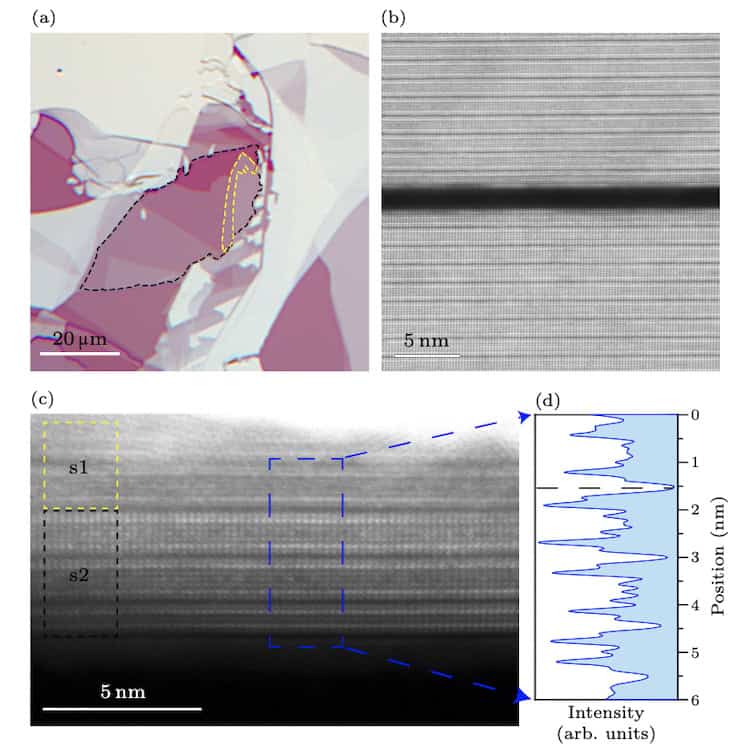
Surface preservation (a) Optical image of MBT-on-MBT sample, with the capping flake s1 and target flake s2 outlined in yellow and black, respectively. (b) TEM image of a homojunction interface with a thick capping layer, showing a substantial interface gap. (c) TEM image of an optimized interface using a thin capping flake s1 on the target s2. (d) The intensity profile extracted from the blue dashed box confirms that both the bottom surface of s1 and the top surface of s2 maintain a distinct seven-atom septuple-layer structure, demonstrating effective surface preservation. (Courtesy: Luo et al., Chin. Phys. Lett.43 050713)
Thanks to a novel encapsulation technique, researchers at Fudan University in Shanghai, China, have succeeded in imaging the surface structure of the atomically thin topological quantum material MnBi2Te4 (MBT) for the first time. The work could help advance our understanding of the intrinsic properties of this technologically important class of materials and enable their use in novel devices.
The electronic, magnetic and topological properties of materials thinned down to atomic-scale thicknesses are very different to those of their bulk counterparts. They can, for example, be employed to study exotic quantum states that could prove useful for a host of advanced applications, such as next-generation spintronics and dissipationless electronics.
Before such devices see the light of day, however, we need to understand these emergent properties, which means accurately determining the surface atomic structure of these materials. This is no easy task because these surface structures are extremely sensitive to their environment. What is more, the most common technique used to study them, transmission electron microscopy (TEM), requires samples to be prepared as lamellae, which degrades them, changing their structure. The high-energy electron irradiation beam in the microscope does them no good either.
In the new work, a team led by Yuanbo Zhang of the State Key Laboratory of Surface Physics and department of physics at Fudan University, studied the topological quantum material MBT. This is the only intrinsic magnetic topological insulator made in the laboratory so far and can be used to study novel topological states – such as the quantum anomalous Hall effect and axion-insulator physics – many of which are fundamentally governed by surface states.
MBT’s surface is exceptionally vulnerable
Like other sensitive 2D materials, explains study co-author Jingjing Gao, MBT’s surface is exceptionally vulnerable to external perturbations, such as ambient air exposure, heat or standard electron microscopy preparation. These degrade the surface layer and irreversibly alter its structure. Indeed, a previous TEM study also revealed that the septuple-layer structure of an MBT flake transforms into a Bi2Te3-like quintuple layer configuration under ambient conditions.
To overcome this problem, Gao and colleagues developed a protective encapsulation technique that successfully shields the delicate surface structure of MBT from its environment and protects it during TEM sample preparation.
The researchers examined two types of encapsulating materials. The first was hexagonal boron nitride (hBN), which is chemically inert and already routinely employed to protect 2D materials. The second was a thin flake of MBT itself, which provides a “homomaterial” capping layer. They encapsulated the MBT in one of these two materials immediately after they had exfoliated (or shaved off) flakes of MBT from a bulk sample. They did this inside an inert argon-filled glovebox.
An atomic-scale barrier
The protective layer acts like an atomic-scale barrier that isolates the MBT surface from oxygen, moisture, ion-beam damage and other environmental disturbances produced during the focused-ion beam processing used to prepare the samples for TEM. It also protects the MBT from the high-energy electron irradiation in the imaging microscope.
The researchers found that the homomaterial encapsulation is especially protective because the atomically similar layers can intimately contact with a minimal interfacial gap.
The technique strongly reduces defect formation, so the original lattice structure remains stable throughout the entire TEM workflow, explains Gao. “We therefore succeeded in safeguarding the ‘true’ surface throughout, allowing us to visualize the intrinsic septuple-layer structure at atomic resolution for the first time.”
The work will be important for both understanding intrinsic magnetic topological insulators and for developing quantum devices from these materials in the future, she tells Physics World. “Making such devices will demand exceptionally stringent requirements for sample surface and interface quality. This is because the MBT’s unique topological and magnetic properties are hosted by its surface states and even minor atomic reconstruction can distort its intrinsic quantum behaviour.”
Looking ahead, the researchers, who detail their work in Chinese Physics Letters, say they will now be looking to construct heterostructure devices with high-quality intrinsic surfaces and interfaces based on MBT. They will also make use of their encapsulation strategy to fabricate and study magnetic topological heterostructures.
“We will also explore topological superconductivity by interfacing MBT with superconductors, thereby advancing the development of topological quantum computing platforms,” reveals Gao.
Even though it is the bedrock of modern measurements, the International System of Units (SI) is not set in stone. As science advances, the SI’s stewards are committed to changing the system for the better, replacing definitions based on objects to ones reliant on unchanging universal constants of nature.
The most famous recent example came in 2019, when the kilogram was redefined in terms of the Planck constant, replacing the standard platinum-iridium mass stored for more than 100 years at the Bureau International des Poids et Mesures (BIPM) in France. The next base unit of measurement likely to be redefined is the second, with modern atomic (and potentially nuclear) clocks offering more precision than those based on the stalwart caesium atom, which has defined the unit of time since 1967.
But as the SI continues to evolve, it has also retained its share of quirks, some that arose from the practical limitations of technology and others due to our human biology.
Not just a gram
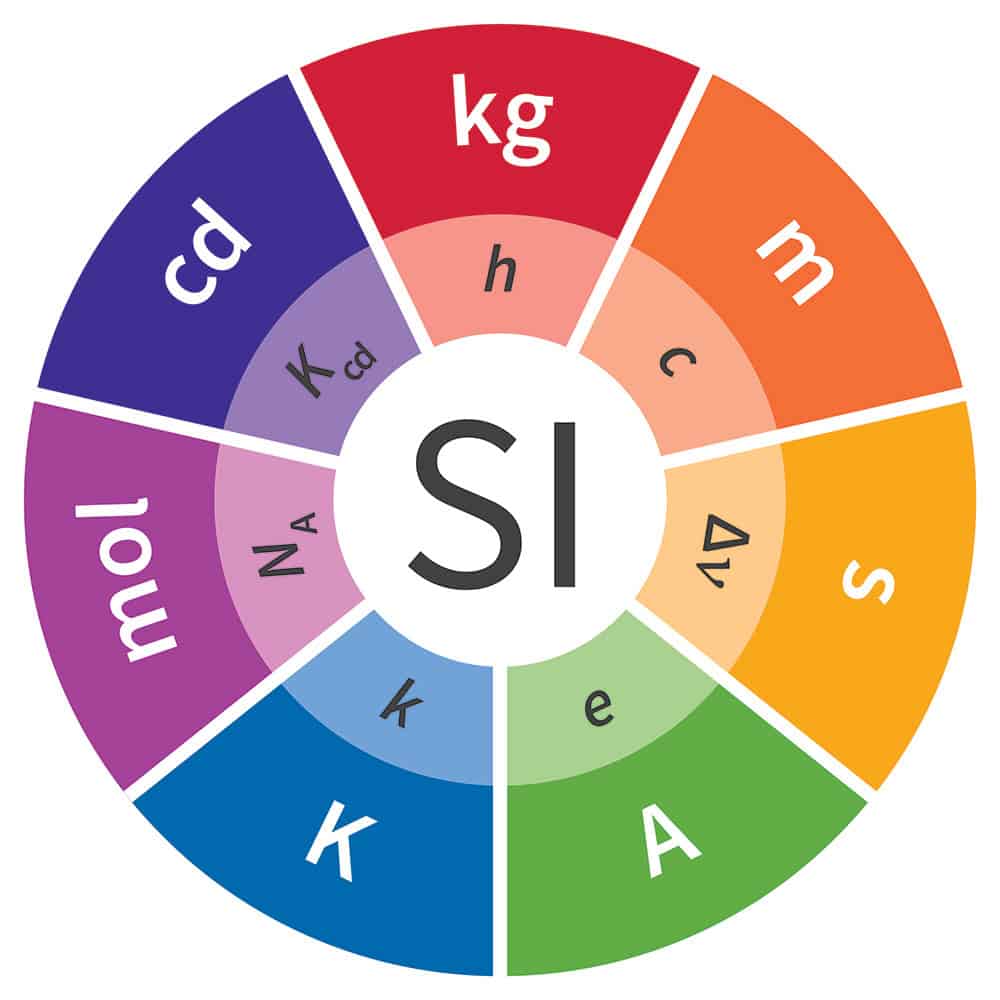
Today’s SI has seven fundamental base units of measurement (see box below), including metres for length, amperes for electric current and kelvins for thermodynamic temperature. So why is the base unit of mass not one gram (g) but a thousand grams (kg)?
The reason is quite simple: it was once hard to make objects that are exactly one gram. Kilograms – which are roughly two bags of flour – were much easier to make accurately and more useful in day-to-day trade.
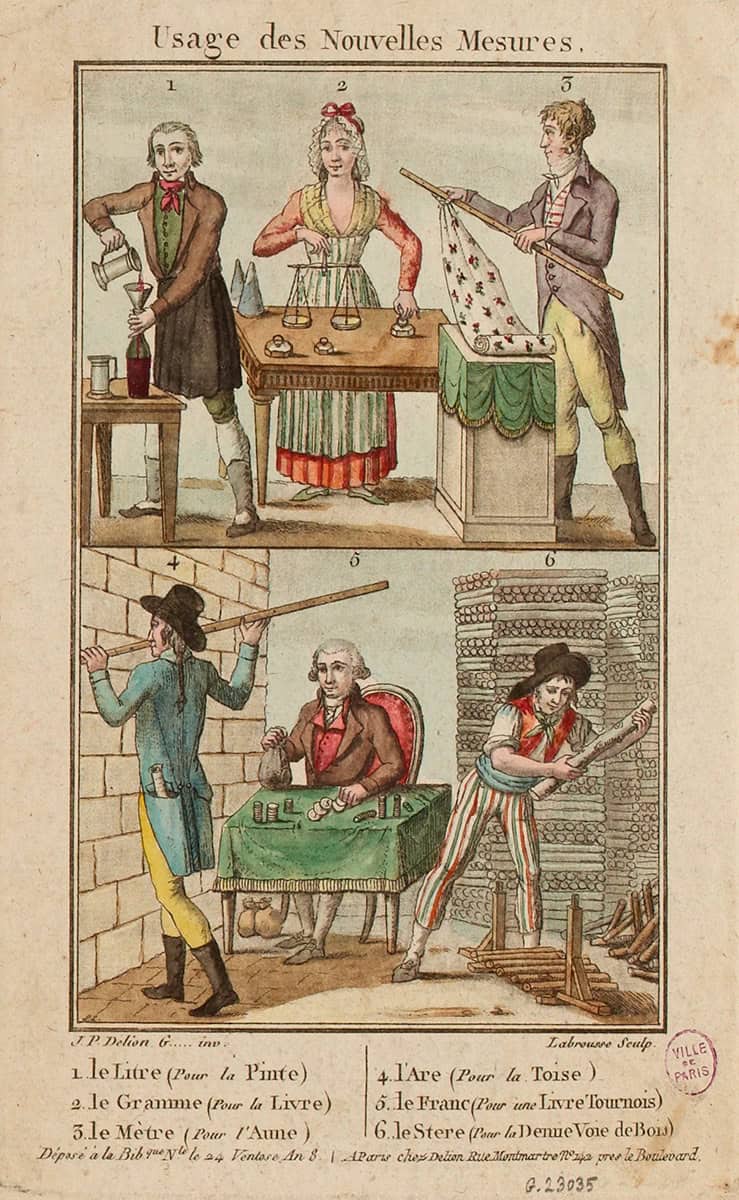
Revolutionary systemUsage des Nouvelles Mesures (1800) by L Labrousse illustrates the 1795 decree of the French revolutionary government that a decimal measurement system would replace old measures. (CC0 Musée Carnavalet, Histoire de Paris)
In 1795 the French revolutionary government, working off the country’s Commission on Weights and Measures, formally defined the gram as the mass of a one centimetre cube of water at 4 °C. But that’s about the size of five green peas and the weight of five raisins – it doesn’t make for a very practical definition for commerce.
So they simultaneously commissioned the making of a standard that was 1000 times heavier. Following years of careful calculations by a scientific committee, a metallurgist named Étienne Lenoir crafted a solid platinum cylinder in 1799 that represented the original prototype kilogram. By 1875 the kilogram took hold internationally when 17 countries signed the Metre Convention – an international treaty establishing agreed-upon references for length and mass. The UK signed on in 1884, and nowadays there are 65 member states and 35 associate states and economies.
In 1889 “Le Grand K” – a new platinum and iridium prototype for the kilogram – was declared the official definition of the unit. Stored in an underground vault at BIPM, it served as the international standard of mass until as recently as 2019.
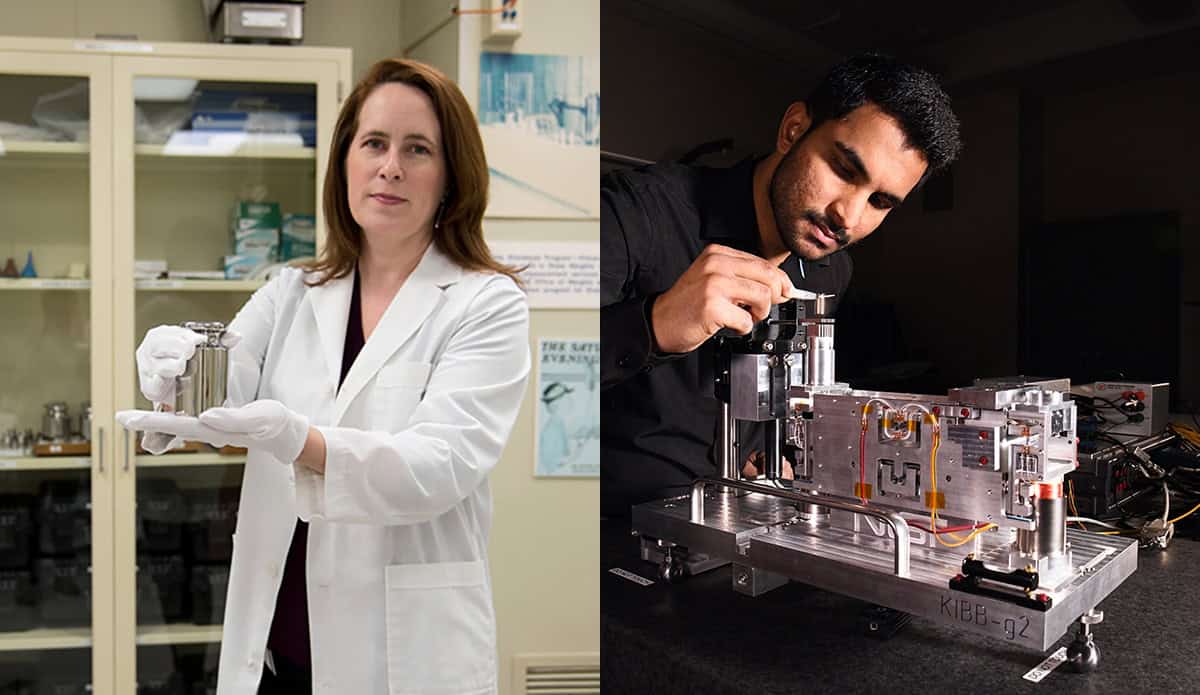
The new definition for the kilogram relies on a fixed Planck constant h. To measure this value as precisely as possible, metrologists used two techniques: X-ray crystal density (XRCD, also known as the Avogadro experiment), and the Kibble balance. The latter uses electromagnetic forces provided by a coil of wire immersed in a magnetic field to balance a mass. The equipment let metrologists obtain accurate values of current and voltage, from which the Planck constant could be derived. But as of 20 May 2019, when the constant was set in stone and the kilogram was redefined, the Kibble balance could be used to measure mass with high precision instead.
Redefined (Left) Until 2019 the kilogram was defined by physical test weights – such as the one held here by NIST metrologist Elizabeth Benham – that were all based on a platinum-iridium mass stored in France. (Right) The new definition of the kilogram is based on the Planck constant, and is reproduced using tabletop Kibble balances – such as this one being examined by NIST engineer Kumar Arumugam. (Courtesy: F Webber/NIST; J Lee/NIST)
While the kilogram is still the official international unit of mass, researchers are using tabletop Kibble balances and other instruments to directly measure the gram in terms of the Planck constant. Improving our ability to measure the gram is useful for pharmaceutical manufacturers, who want to dispense drug doses accurately, and for the military and companies that need to make precision parts for electronics, aerospace and other critical applications.
But there is one place where the gram has long been a shining star: the classroom. As my NIST colleague Elizabeth Benham points out, educational companies make one-gram cubes that are one centimetre on each side, and one millilitre in volume. These “centimetre cubes” excel at showing the relationships between mass, length and volume. Students can build 10 by 10 layers (1000 cubes) to create a “supercube” that is a kilogram in mass and a litre in volume. So if you’re sad about the gram not being a base unit, you can take solace in the fact that for school students, it is the mass measurement unit of choice.
The base seven: how we measure our world
(Courtesy: BIPM; CC BY-ND 4.0)
There are seven base units in the International System of Units (SI). Over the centuries since they were adopted globally, each has evolved from their original definition so they can be applied and measured more consistently and accurately. In 2019 the latest definitions of these units took effect. Not only are all seven base units defined by fundamental constants like the Planck constant, but the values of these constants are locked as exact numbers based on the best scientific measurements available at the time.
Unit for time: second
The second (s) was once simply reliant on the length of a day, but is currently defined by the unperturbed ground-state hyperfine transition frequency of the caesium-133 atom, ΔνCs. In 2019 the frequency was fixed as an exact unchanging value. It is likely that the definition will be refined further using atomic or nuclear clocks.
Unit for length: metre
Historically, the metre (m) was 1/10,000,000 of the distance from Earth’s equator to the North Pole. Today, it is the distance that light travels through a vacuum in 1/299,792,458 seconds, where the denominator is the exact value of the speed of light in vacuum, c.
Unit for mass: kilogram
The kilogram (kg) used to be defined by the mass of a platinum-iridium cylinder called the International Prototype Kilogram, or Le Grand K. It is now defined in terms of the Planck constant, h.
Unit for electric current: ampere
The ampere (A) was once defined by an imaginary and impossible experiment involving the force between two infinite parallel, current-carrying wires. It is now defined in terms of the elementary charge, e.
Unit for amount of substance: mole
The mole (mol) used to be defined by the number of atoms in 0.012 kg of carbon-12. To avoid it depending on the mass of a sample, it is now defined in terms of a specific number of atoms or molecules, the Avogadro constant, NA.
Unit for thermodynamic temperature: kelvin
Previously, the kelvin (K) was defined by the thermodynamic triple point of water, but it is now tied to an exact value of the Boltzmann constant, k, which relates thermodynamic temperature to energy.
Unit for luminous intensity: candela
The candela (cd) was simply based on the light emitted by a burning candle. The current definition is reliant on a fixed numerical value for the luminous efficacy of monochromatic radiation of frequency 540 × 1012 Hz, Kcd.
The most human unit
In today’s SI, the base units are defined by fundamental constants of nature, such as the Planck constant and the charge of the electron. As best as we can tell, these constants appear to be the same everywhere in the universe, so extraterrestrials would measure the same values for these constants as we do.
But there is one base unit that is very specific to humans: the candela, which means “candle” in Latin, Spanish and Italian. It stems from the UK parliament introducing a unit known as “candlepower” in 1860 so the country could achieve uniform street lighting. Initially, scientists defined the unit in terms of a single candle made from whale fat, with a bit of beeswax to improve the burn. Inevitably, this standard was abandoned because no two objects are exactly alike: one candle shines light at a slightly different rate than another.
By the middle of the 20th century, scientists tried to define the unit in terms of a more universal property – namely, blackbody radiation, the electromagnetic energy from an object that is a perfect absorber and emitter. In 1946 the International Committee for Weights and Measures in France proposed a “new candle” based on the intensity of radiation from platinum at its freezing point (2041.4 K). In 1948 the General Conference on Weights and Measures (CGPM) ratified this standard and named it the “candela”. The new definition also specified that the candela was a measure of intensity as perceived by the human visual system.
This is a very practical addition because researchers can actually quantify human visual perception. In the early 20th century, scientists carefully measured how sensitive the eye is to visible light and established a “photopic curve” – average levels of human sensitivity to different colours. To cite a contemporary example, green laser pointers appear brighter to us than red laser pointers with the same power as a result of our human biology.
Candela In the 1990s NIST used this silicon diode photodetector, which included a filter that spectrally matched the accepted human visual response, to realize the candela. This was the first use of a detector device to realize the candela for the US. (Courtesy: NIST)
In 1979 the CGPM eliminated blackbodies from the definition. Even this fundamental concept was problematic, since no object can be a perfect blackbody. Instead, the group defined the candela directly in terms of a single colour of visible light, with a frequency of 540 × 1012 Hz.
This reference colour is a shade of yellow-green to which the human eye is most sensitive in a well-lit room, and from it, scientists use the photopic curve to determine the luminous intensity of other colours. Scientists think our eyes adapted to this chartreuse hue because it lines up with the peak spectral irradiance of sunlight that strikes the Earth’s surface. Early humans’ sensitivity to this colour could have helped them spot different types of vegetation when foraging, with yellow-green leaves indicating younger, more calorie-dense food, while greener leaves signify that a plant’s nutrients have moved to other places such as the roots and stems.
In 2019 the candela was officially redefined yet again. It is now expressed by fixing the luminous efficacy of 540 × 1012 Hz light as a constant of 683 lumens per watt – a sort of conversion factor between the physical intensity of visible light and human perception of its intensity.
If extraterrestrials have plant-like food, they might be more sensitive to another colour in the spectrum based on the star (or stars) that shines over their home planets. For example, at least one scientist has speculated that plants in a red-dwarf star system might look black to us because they might need to absorb as much light as possible from this cooler star. But a native creature may have evolved to see lower-frequency light, which would make the plant appear intensely infrared to them. If we ever make contact, measurement scientists from our planet will likely be very interested in knowing how aliens might define their own candela.
Time’s unusual unit
As all physicists know, the SI centres on the number 10, whether measuring molecules at nanometre (nm or 10–9m) scales or a nuclear power plant with a gigawatt (GW or 109 W) of power.
Whereas older measurement systems often had complicated conversions involving different units – such as 16 ounces in a pound and 14 pounds in a stone – the metric system sticks with the same unit and helpfully adds prefixes to indicate quantities on the mindbogglingly wide scale of 10–30 to 1030. In fact, the expansion of the prefixes from 48 to 60 orders of magnitude is another recent SI improvement (made in 2022) to accommodate the latest needs in computing and other scientific fields. We now have ronna (R) for 1027, quetta (Q) for 1030, ronto (r) for 10–27 and quecto (q) for 10–30.
Second NIST-F4, NIST’s current primary frequency standard, is one of fewer than 20 caesium fountain clocks worldwide that provide the ultimate foundation for universal time. (Courtesy: R Eskalis/NIST)
Despite all this, we count time a bit differently. We still express decimal fractions of a second the metric way – we call a thousandth of a second a millisecond, and a billionth of a second is a nanosecond – but on the scale of seconds and minutes, timekeeping becomes a base-60 system. When we reach 60 seconds, it becomes one minute, and then 60 minutes equal one hour, and we call 24 hours a day. Minutes, hours and days are not official SI units, but they are accepted for use within the metric system.
Humans have good reasons to use base-10 system – scientists believe that our affinity for base-10 has to do with the number of fingers we have for counting. However, the origin of our base-60 system is more complicated.
People living in one of the earliest civilizations, the Sumerians, first developed base-60 around 3000 BCE. While the reasons they chose 60 are unknown, scientists speculate that 60 is a convenient number for arithmetic – it is evenly divisible by many numbers, including 1 through 6, 10, 12, 15, 20 and 30. And going back to human fingers, we can count to 60 pretty easily by using our knuckles. Knuckles split each finger (excluding the thumb) into three parts, so four fingers add up to 12 parts. If you use the thumb and fingers of your other hand to count by 12s, the total is 60.
Starting around 2000 BCE, the Babylonians used base-60 for astronomical observations, splitting the sky into that many sectors. In medieval times, the Persian scholar Al-Bīrūnī used this system in his writings to split the hour into 60 minutes, and the minute into 60 seconds. By the time of the Renaissance, clocks and watches began to display this base-60 logic. To this day, even our smart watches continue to use the ancient Babylonian system.
But why didn’t minutes and hours get updated into a base-10 system like the other scales? It wasn’t for lack of trying. In 1793 the revolutionary French government passed a decimal time system. It split the day into 10 decimal hours, an hour into 100 decimal minutes, and a minute into 100 decimal seconds. The French public swiftly rejected this new system, so the idea was suspended just 17 months later. It was a hassle to use new decimal clocks, let alone try to sync their timekeeping devices to the rest of Europe.
No unit of rotation
The SI is very straight-edged, with the metre as our base unit for length. However, there is no base unit for geometrical angles. In our round world and curved universe, why isn’t there a base unit devoted to rotation?
It’s more than a philosophical question. An SI without a base unit for angles creates real-world issues. For example, measurements of an object’s torque (such as when you twist a screwdriver) have the same units as work (like when lifting a weight straight up from the ground). The units for both are “Newton metres”. So if you see a measurement in Newton metres, you may not know if it’s a measure of torque or work.
Go back to the French revolution and it turns out we were en route to a very metric definition of angle. The grade, later known as the gradian, was proposed as the angular unit of measurement. A circle would be divided into 400 grads, with 100 grads representing a right angle. On the Earth’s surface (very slightly curved from our ant-like vantage point) a hundredth of a grad would represent 1 km of arc length along the Earth’s surface.
But the grade eventually became overshadowed by the radian, a concept that was introduced by British mathematician Roger Cotes, a colleague of Isaac Newton. (A similar unit was proposed in the 1400s by Persian mathematician Al-Kashi.) Because its angular measurements were expressed in terms of π, proportional to the actual circumference of a circle, the radian was considered a more mathematically useful unit. Look no further than calculus: with sine and cosine as a function of x in radians (instead of degrees) it’s a piece of cake (or pie?) to take derivatives and integrals, without having to worry about ugly conversion factors such as π/180 when working with degrees. Similarly, approximating trigonometric functions by expanding them into Taylor series is easy when you work in radians.
While mathematically convenient, the radian can also be metrologically terrifying. The radian, as defined, is a dimensionless unit: the arc length (in metres) divided by the length of the radius (also in metres), cancels out the metres. So it’s “just a number” as some might say.
To remedy this, the National Institute of Standards and Technology (NIST)’s Peter Mohr and Bill Phillips (building upon suggestions from others) proposed in 2015 that the radian become a base unit of measurement.
Radian The Electronic NIST Torque Realizer (ENTR) being compared against the present standard torque calibration processes to verify performance. (Courtesy: NIST)
Elevating the radian to a base unit would bake in the idea of a dimension along the arc of a circle. By expressing an angle in terms of radians as a base unit, you’d be specifying not only the amount of the angle but also that the dimension is circular.
This would solve the real-world problem that we mentioned earlier. Torque could now be defined in terms of Newton metres per radian. With this new definition, you’d be able to show torque as the amount of energy per rotation of an object, perhaps a more physically accurate concept than what we had before. And more generally, making the radian a unit would allow the SI to more fundamentally communicate concepts such as rotation and the angle at which an object is oriented.
But a radian base unit also has major problems, creating dimensional headaches of its own. If you were measuring the power of a rotating system, you would need a new dimensional constant (1/radians) to convert “rotational power” into linear power. Another complication is that the widely used “h-bar” in quantum mechanics, h/2π, would become expressed in units of J·s/radians, which would require changes in quantum mechanics textbooks and software that performs quantum mechanics calculations.
For these and other reasons, an international metrology group exploring this issue decided in 2024 to keep the radian a dimensionless “quantity with the unit one” but also added special notes for the latest version of the official SI brochure. It now says that radians should be “written explicitly where appropriate” to clarify a measurement, an improvement that would finally help to distinguish torque from linear work.
The SI’s more “quirky” features remind us that it is not a perfectly logical or consistent system. If we someday communicate with intelligent extraterrestrials, and learn about their measurement systems, will their otherworldly metrology contain as many oddities? While this is an answer we are not likely to learn during our lifetimes, one thing is for sure: the SI reflects our history and identity as humans, down to our chartreuse-sensitive eyes and our base-60 hands.
Proton Exchange Membrane Water Electrolysis is a method to split water into its components, hydrogen (H₂) and oxygen (O₂), using electricity typically sourced from renewables. It is one method for producing so-called green hydrogen. Key benefits are that it can easily start and stop, fitting well with fluctuating renewable energy sources; it produces high purity hydrogen suitable for fuel cells and industrial use; and it has a smaller carbon footprint than some alternatives.
This work explores how much water is used in Proton Exchange Membrane Water Electrolysis, which is significant in regions with low water availability, where hydrogen plants could stress supplies. The researchers looked at all lifecycle stages: manufacturing (building the electrolyser and producing materials), operation (water splitting, cooling, and purification), and end-of-life (disposal or recycling).
Electric Hydrogen’s 100MW PEM electrolyser plant utilizing dry cooling at Infinium’s Project Roadrunner e-SAF facility in Pecos, Texas (USA). The project reached financial investment decision in May, 2025 and is planned for 2027 commercial operation. (Courtesy: Parikhit Sinha/Electric Hydrogen Co.)
Their main conclusion was that most water use occurs during the operational phase, where the greatest opportunity to save water lies. Dry cooling uses much less water than wet cooling, reducing consumption by about a factor of three. In a best-case scenario with dry cooling, about 13 litres of water per kg H₂ is used, of which around 3.5 litres is lost in water treatment. This loss can be reduced by about 50% using a brine recovery system, depending on location and infrastructure.
Proton Exchange Membrane Water Electrolysis has a similar lifecycle water use to fossil hydrogen production, therefore switching to green hydrogen does not significantly increase water demand. Although hydrogen plants use comparable water to agriculture (e.g. corn farming), they generate much higher economic value per unit of water (~700×), making them an efficient use of water.
This research is significant because it shows that while green hydrogen can reduce carbon emissions, its water use must be carefully managed to ensure it is sustainable at scale.
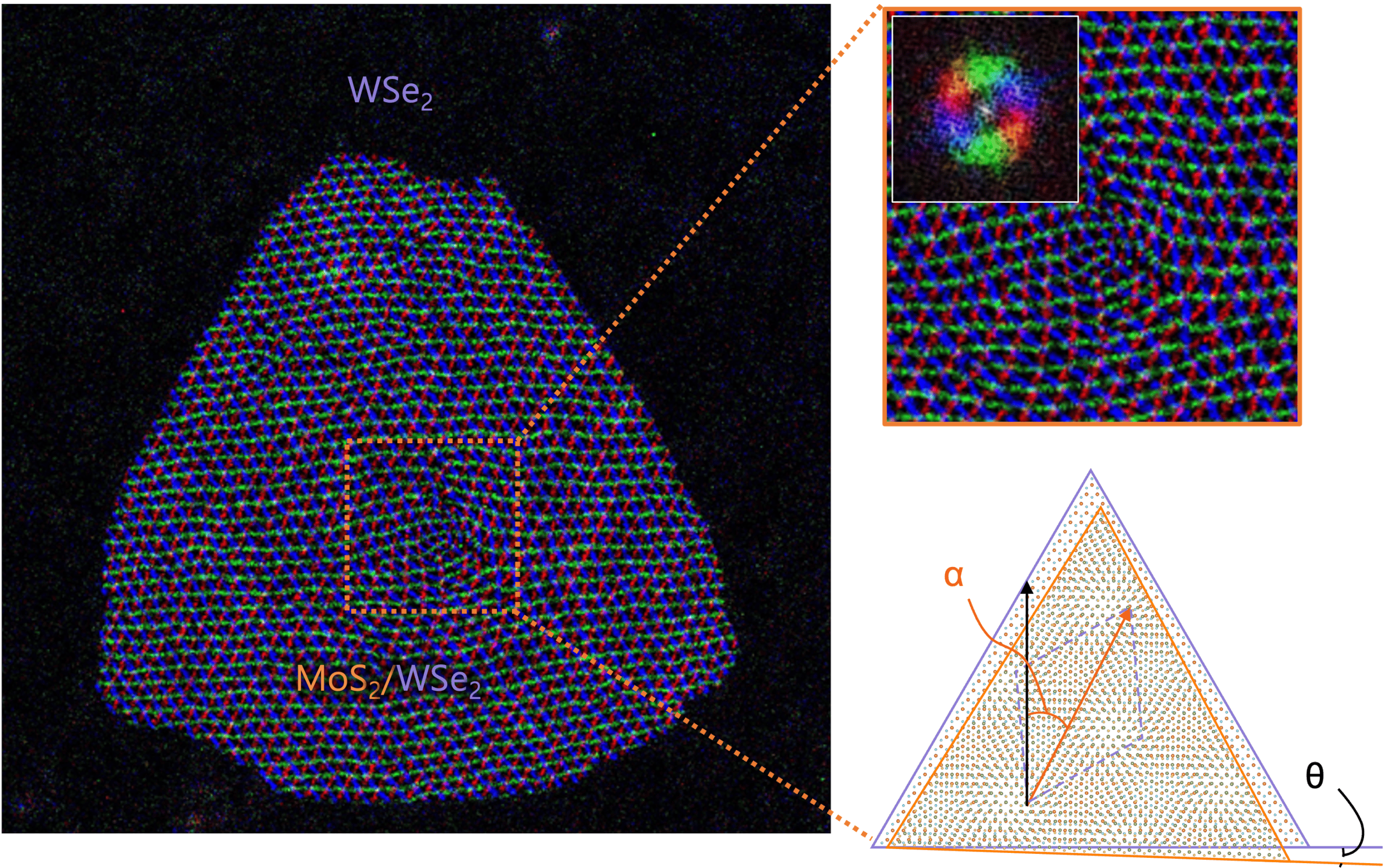
In 2‑dimensional physics, atomically thin materials (e.g. MoS₂, WS₂, WSe₂) are useful for next‑generation electronics such as flexible devices. Using these materials, scientists can create van der Waals heterostructures, where different 2D materials are stacked in layers and held together by weak intermolecular forces called van der Waals forces. Heterostructures combine different materials to optimise their properties. Unlike single crystals, van der Waals heterostructures are more flexible and less prone to defects. They can also tolerate lattice mismatch, where atoms between layers do not perfectly line up, although this must be controlled to avoid building up strain.
In this work, the researchers studied two systems: MoS₂ on WS₂, where the lattice spacing matches closely, and MoS₂ on WSe₂, where there is a larger mismatch. When the layers fit well together (MoS₂/WS₂), the top layer slightly compresses and the structure remains well aligned. However, when the layers do not fit well (MoS₂/WSe₂), moiré patterns appear, which are large-scale patterns caused by mismatched lattices, and these patterns become bent and irregular. The researchers found that instead of forming defects, the material relieves strain through local rotations and distortions of the lattice.
Image showing local rotations between atomically thin MoS₂ on WSe₂ layers (Courtesy: Jinwoo Kim/Seoul National University)
Previous studies had not clearly explained how strain is relieved at the atomic scale, whether it leads to defect formation or alternative mechanisms, or how these distortions vary across nanoscale regions. This research helps scientists better understand and control the behaviour of stacked 2D materials, which is important for designing future ultra-thin electronics, quantum devices, and optoelectronic technologies.