Biohybrid microrobots, which combine the motility of natural micro-organisms with the multifunctionality of synthetic components, are being studied as an alternative to purely synthetic microrobots. Designs based on biocompatible and deformable materials serve as novel platforms for use in vivo, enhancing the potential of microrobots for biomedical applications. In a recent study reported in Nature Materials, researchers describe a bioinspired microrobot platform consisting of nanoparticle-modified algae for active delivery of antibiotics to treat lung disease.
Nanoengineers at the UC San Diego Jacobs School of Engineering modified microalgae, a natural organism, by covering its surface with drug-loaded polymer nanoparticles (NPs) coated with the membranes of neutrophils (a type of white blood cell). The researchers named their new design the “algae-NP-robot”.
The work is a joint effort between the labs of Joseph Wang, an expert in micro- and nanorobotics research, and Liangfang Zhang, whose expertise lies in developing cell-mimicking nanoparticles for treating infections and other diseases. The researchers chose to first test the algae-NP-robot for in vivo antibiotic delivery to treat bacterial lung infections.
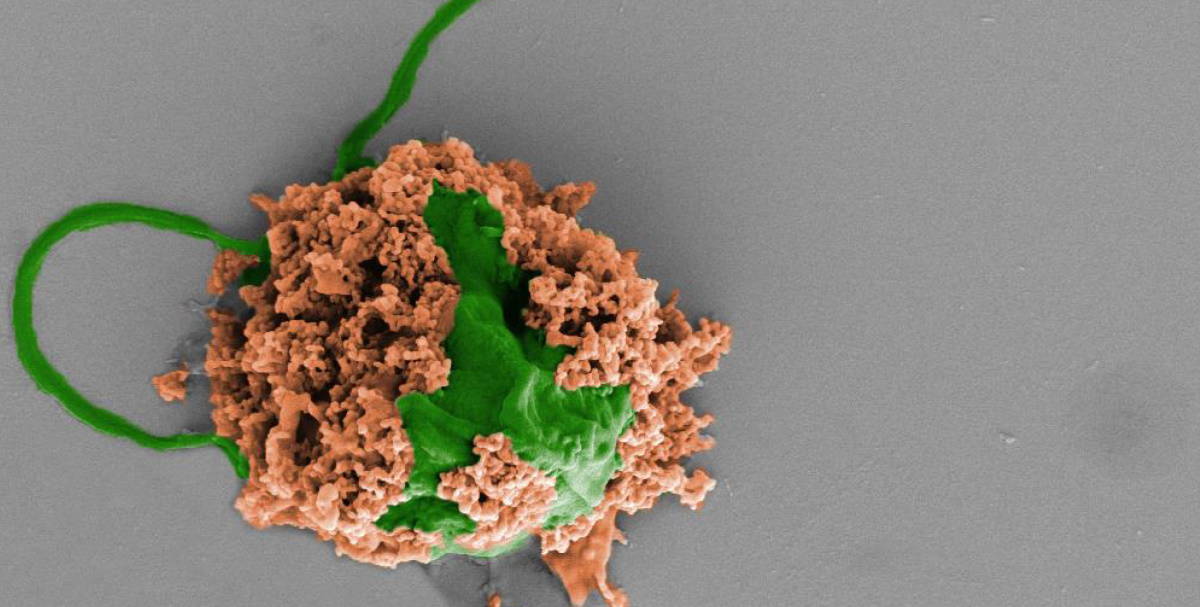
Pneumonia-fighting microrobot Coloured SEM image of a microrobot made of an algae cell (green) covered with antibiotic-loaded polymer nanoparticles (brown). (Courtesy: Fangyu Zhang and Zhengxing Li)
The researchers modified the algae by using click chemistry (which won the 2022 Nobel Prize for Chemistry) to couple the algal surface with antibiotic-loaded polymer NPs. Next, they administered the algae-NP-robot directly into the lungs of mice with bacterial pneumonia, via a tube inserted in the trachea.
The algae provide swimming motion in the lungs, allowing the microrobots to move around and deliver antibiotics directly to bacteria in the animals’ lungs. The algae-NP-robots safely eliminated pneumonia-causing bacteria, with all treated mice surviving past 30 days. In contrast, untreated mice died within three days. The team noted that treatment with microrobots was more effective than injection of antibiotics into the bloodstream.
The presence of neutrophils on the microrobot surface helps neutralize inflammatory molecules produced by the bacteria in the lungs of the mice, as well as by the animal’s immune system. This method of delivery, using live algae microrobots, effectively inhibits phagocytosis by macrophages (another type of white blood cell) and prolongs the retention of algae-NP-robots inside the infected lungs. This is a significant achievement since macrophages like to engulf and digest any foreign substances inside the immune system.
To gain further insight into the clearance mechanism, the researchers studied the motion and cargo-carrying behaviour of the algae-NP-robots in simulated lung fluid. The simulation study combined with in vivo drug delivery highlights the platform’s potential to safely provide therapeutic efficacy with drug-loaded algae-NP-robots.
“With an IV injection, sometimes only a very small fraction of antibiotics will get into the lungs. That is why many current antibiotic treatments for pneumonia do not work as well as needed, leading to very high mortality rates in the sickest patients,’’ says co-author Victor Nizet.
This research is still at the proof-of-concept stage. Future steps involve understanding the mechanisms underlying the interaction of microrobots with the immune system. However, Zhang believes that the new design will push the boundaries in the field of targeted drug delivery.
As we turned around in our lecture theatre seats during a session at this year’s Conference for Undergraduate Women and Non-binary Physicists (CUWiP) one thing struck us: physics is for everyone. Irrespective of gender, ethnicity, religious faith or socioeconomic background, studying physics satisfies a curiosity that is fundamental to understanding the world. A physics education not only fulfils this but also cultivates inquisitive mindsets, encourages critical thinking and problem solving, and opens doors to exciting and diverse careers.
Yet frustratingly, physics is still heavily dominated by white hetero cis men. Traditionally under-represented groups have a hard time claiming their space. While varying levels of aptitudes or interests have been widely debunked as reasons for the disparity in participation, there are many reasons for it. This includes a shortage of qualified and inspirational physics teachers; harmful social gender stereotypes and unconscious bias in schools and society; absence of mentors and role models; and a lack of belonging.
CUWiP showcases inspirational women and non-binary physicists, highlighting exciting career opportunities and, of course, providing professional and social networking opportunities. It creates a much-needed space for minoritized undergraduate students to combat the feeling of isolation or alienation, to foster a sense of belonging, as well as bolster confidence in their capabilities to succeed, and remove the limits of their aspirations by simply re-igniting an enjoyment of physics.
Physics for all
When planning the three-day conference, which was jointly held at the universities of Glasgow and Strathclyde in April, we wanted it to be diverse, inclusive and accessible. Our campaign therefore contained several key elements to reach the widest possible audience for the conference. This included fostering strategic partnerships as well as deliberately inclusive messaging and targeted advertisements to traditionally under-represented groups. We also made sure that our application procedure did not require applicants to demonstrate “ambition” or “excellence”. Instead, we asked how they would benefit from attending. This personal statement together with only a graduation year and demographic data was used to select the 100 participants for CUWiP.
We joined forces with the Blackett Lab Family, a collective of UK-based Black physicists, to reach Black students and deliver a panel discussion to explore “intersectionality” – a term that refers to the interconnected and overlapping nature of all factors that apply to an individual – and how one can bring their whole self into a physics environment. They also put us in touch with a member interested in serving remotely on what was at the time an entirely white organization committee. We got in touch with Pride in STEM, a UK charity for LGBTQIA+ in science, where we were given a long list of speakers as well as travel support for one of our keynote speakers.
Intersectionality allows us to understand how different aspects of an individual’s identity combine to create different forms and levels of discrimination or privilege. Non-binary physicists and trans women were explicitly encouraged to apply – a message that was strengthened by consistent use of pronouns and inspirational LGBTQ+ speakers and panellists. In acknowledgement of intersectionality, we therefore ringfenced applications from trans women and Black students.
Inclusive messaging is important to create a safe space where traditionally marginalized backgrounds, identities and demographics feel confident and welcome to take part. We put an enforceable code of conduct in place, which defined how participants were expected to behave and a mechanism for reporting breaches. We were very clear about the minimal costs of participation at CUWiP to ensure that students from socioeconomically deprived areas could afford to come, and allowed delegates to apply for additional travel funds. Participants observing Ramadan were accommodated by providing a meal before dawn, for example. Taking all questions for panels and talks through an online system such as Slido also reduced potential barriers to participation during the event.
The atmosphere over the three days was buzzing with excitement, passion and a sense of community.
For those with disabilities and mental-health concerns there is simply no “one size fits all” approach. The many challenges faced by people with disabilities can only be tackled if appropriate support structures are in place. By removing barriers to participation, we ensured that people with disabilities could fully participate but that requires increased awareness as a minimum first step.
We experienced various requests for accessibility to CUWiP and offered solutions including taxi coupons to commute between conference venues for participants with reduced mobilities, as well as offers of mobility scooters, additional accommodation and conference capacity for carers to accompany participants, and large print information. Undoubtedly, restrictions during the pandemic have led to limited travel by students and we found that generally there was a high level of anxiety ahead of the conference. We frequently obtained requests for early communication of venues, transportations methods, maps and any further information on accommodation, quiet spaces to decompress and water fountains.
Following these considerations, CUWiP Glasgow had one of the most diverse cohorts of participants of any CUWiP conference, and the atmosphere over the three days was buzzing with excitement, passion and a sense of community. It is well documented that individuals from minoritized groups are more likely to experience impostor syndrome and a reduced sense of belonging, an effect that can be compounded by intersectional inequalities. Such strategies are therefore vital to counteract these effects to attract and retain a diverse range of people to our field.
We are grateful to the organizations that shared their expertise, experience and networks, and to all CUWiP presenters, organizers and participants who could bring their whole selves to Glasgow. We feel inspired by their passion and compassion, and are optimistic for the future. By sharing our experience, we hope we can in turn lower the barrier for organizers seeking to embed inclusion in future events.
Disordered materials can “remember” deformations they have previously experienced – and they can be made to forget them, too. This is the finding of researchers at Penn State University and Cal Poly San Luis Obispo in the US, whose experiments on erasing material memories could improve the design of foams and emulsions employed in the food and pharmaceutical industries.
Disordered solids are commonplace in food science. Ice cream, for example, is made up of ice crystals, fat droplets and air pockets combined in an erratic way. Emulsions such as mayonnaise also contain particles arranged in a random fashion, and many cosmetics and pharmaceutical products share similar characteristics.
Inscribing a memory of the deformation
In the latest work, researchers led by physicist Nathan Keim studied a two-dimensional disordered material made by pouring oil on top of water in a dish, then spreading a closely packed layer of 25,000 microscopic plastic particles at the boundary between the liquids. The particles are electrostatically charged and thus repel each other, which allows them to form a soft mayonnaise-like solid. This soft solid can be deformed in a controlled fashion, and the motion of the particles is tracked using a microscope.
“We deform our material by shearing, which involves moving one side of the material relative to the other, like pulling the corner of a rectangle to the side so it becomes a parallelogram,” Keim explains. This type of deformation is known as mechanical annealing, and performing it lowers the overall energy of the structure. By repeating this annealing at the same magnitude many times, Keim says, “you can essentially inscribe a memory of the deformation” that subtly affects how the material responds to deformation of other magnitudes in the future.
After the researchers prepared their material, they performed experiments designed to show that the annealing had indeed formed a memory. “Without knowing its past, we can probe a sample to reveal the strain amplitude γa that was used to anneal it,” they explain. To do this, they applied a series of cycles with increasing amplitude γread, starting with a small value and ending at a value higher than γa.
At the end of each readout cycle, the researchers compared the positions of the particles with those at the end of annealing. For small γread, the average change in the particles’ positions – the mean squared displacement – grows, but it drops near γread = γa when the annealed state of the system is recovered. This observation and others show that the material approximates a generic behaviour known as “return point memory”, which appears to be a property of annealed samples.
“Ring down” erasing
The researchers also found a new way to erase this memory. To do this, they used a method called “ring down” that involves applying distortions of smaller and smaller magnitudes until the memory has been removed. This is somewhat similar to the method for removing memories in ferromagnets, where a strong magnetic field is applied and its direction alternated while gradually making the field weaker, Keim says.
Keim hopes that some of the advances made in this work and other recent research will find their way into applications. “When a material has been deformed cyclically, it is possible to recover one or more of the past strains it has been subjected to,” he tells Physics World. “There may be a role for this kind of test alongside established techniques like failure analysis. There may also be a use for mechanically erasing the effects of past loading or for estimating a sample’s capacity to form memories.”
Erasing a memory could provide materials scientists with a way to essentially start from a clean state and then prepare a material in the most advantageous way, he adds.
The researchers, who detail their work in Science Advances, say their technique could be used to probe mechanical annealing and memory formation in a wide variety of disordered solids and other forms of glassy matter. “In the future, we’d like to verify these properties of material memory in three-dimensional disordered solids – the equivalent of mayonnaise or ice cream,” says Keim.
By combining experiments with calculations and simulations, researchers in Germany have gained new insights into why placing transparent microspheres on a sample improves the resolution of an interferometry-based microscopy technique. By examining how light interacts with the microspheres, Lucie Hüser and colleagues at the University of Kassel have opened the door to understanding the mysterious enhancement.
A Linnik interferometer microscope is designed to take high-resolution images of the surface topography of a sample. The device works by splitting a beam of illuminating light in two, with one beam sent to the sample and the other to a mirror. The reflected beams are recombined at a detector, creating an image of the interfering light. By scanning the height of the sample, an accurate representation of the 3D topography of the sample is obtained.
However, like all microscopy techniques, this method faces a fundamental limit in the size of features it can resolve. This is a result of the diffraction limit, which means that the technique cannot resolve features that are smaller than half the wavelength of the imaging light.
Mysterious effect
However, microscopists have known for some time that the diffraction limit can be overcome by simply placing micron-sized transparent spheres on the surface of a sample. This has proven to be a very useful technique, but despite its efficacy, researchers do not fully understand the physics behind the enhancement. Explanations include the creation of highly focused photonic nanojets as light passes between the microspheres and the sample; an increase in the numerical aperture of the microscope that is caused by the microspheres; near-field (evanescent) effects; and the excitation of whispering-gallery modes of light within the microspheres.
To gain a better understanding of why microsphere enhancement works for interference microscopy, Hüser’s team combined rigorous experimental measurements with new computer simulations. These included ray tracing calculations that use simple mathematics to track changes in the paths of light beams travelling through the spheres.
The study suggests that evanescent and whispering-gallery effects are negligible when it comes to resolution enhancement. Instead, the researchers found that the microspheres increase the effective size of the numerical aperture of the microscope – which improves the resolution of the instrument. The research also suggests that photonic nanojets may be involved in the improvement of the resolution.
This result brings a robust theoretical basis for microsphere-enhanced optical interference microscopy a step closer. Hüser and colleagues hope that their work may soon lead to better methods for the rapid and non-invasive imaging of the surfaces of microscopic structures. This could be especially useful for probing delicate samples, such as biological systems, that cannot be studied with high-resolution techniques such as electron microscopy and atomic force microscopy.
Astronomers at Johns Hopkins University have produced a new map of the universe that spans the entire known cosmos with unprecedented accuracy.
To create the map, which depicts the position and real colours of 200,000 galaxies, the researchers mined some two decades’ worth of data from the Sloan Digital Sky Survey located in New Mexico, US.
Each dot on the map is a galaxy, which contains billions of stars and planets, with the Milky Way being one of these dots at the bottom of the map.
The top of the map, meanwhile, reveals the first flash of radiation emitted soon after the Big Bang, some 13.7 billion years ago.
“From this speck at the bottom, we are able to map out galaxies across the entire universe, and that says something about the power of science,” says Johns Hopkins astronomer Brice Ménard.
The interactive map is available online and can be downloaded free.
Kigali, Rwanda by night. (Courtesy Haileselassie Medhin)
Africa’s role in the global energy transition is undeniable as the least electrified, yet fastest-growing continent on the globe, crucially in need of investment in climate resilience. Delivering climate-proofed prosperity to this growing population will require paying major attention to the continent’s energy systems, which remain underdeveloped and severely under resourced. In this live webinar, we will hear presentations from authors published in our Energy Transitions and Sustainable Transformations in Africa special issue, to discuss how the very latest findings are helping address the key challenges faced.
Left to right: Rebekah Shirley, Haileselassie Medhin, Monkgogi Otlhogile, Lefu Maqelepo, Charles Van-Hein Sackey
Speakers
Rebekah Shirley is the director of research, data and innovation at the World Resources Institute, Africa, and former chief of research at Power for All. Rebekah earned her PhD in energy resources from the University of California, Berkeley, and leads applied research on power systems and clean energy integration, working across Southeast Asia, Africa, and the Caribbean. Hailing from the West Indies, Rebekah now lives in Nairobi, Kenya. Rebekah is a board member of UK climate charity Ashden, and an ERIS founding editor.
Haileselassie Medhin is Africa director of strategy and partnerships at WRI, and also leads WRI’s work on institutions and economic transformation in Africa. He previously worked as WRI’s country director for Ethiopia, as the director of the Environment and Climate Research Center in Addis Ababa, and research fellow in the University of Gothenburg in Sweden. Haileselassie’s own research has focused on the application of behavioural and experimental economics on issues of environment and development, and on the challenges and opportunities for achieving green and climate resilient growth in developing countries. Haileselassie received his doctoral and master’s degrees in economics from the University of Gothenburg, and his bachelor degree from Addis Ababa University, Ethiopia.
Monkgogi Otlhogile has a master’s from the Energy and Resources Group at UC Berkeley and a bachelor’s in environment, economics and politics from Scripps College. Her work leverages data and knowledge management for energy access and development in Africa. From 2018–2020, she worked as a data manager for Power for All and launched an open access data hub, the Platform for Energy Access Knowledge (PEAK), in 2018. She also established the Distributed Renewable Energy Data Network alongside CLASP, AMDA and GOGLA in 2020. She is currently an energy and data management consultant and has worked with the United Nations Development Programme and the government of Botswana on energy and climate-focused projects. Her interests include understanding the energy transition within the African context, improving data and knowledge-sharing practices and furthering open access data for development.
Lefu Maqelepo is a PhD student in sustainability at Rochester Institute of Technology’s Golisano Institute for Sustainability. His research interests are at the intersection of electricity access and sustainable development. Prior to graduate school, he worked in the electricity sector in Lesotho, developing distributed off-the-grid electricity systems for rural communities.
Charles Van-Hein Sackey is a PhD candidate in engineering and public policy at Carnegie Mellon University. His research uses optimization methods and decision science to determine sustainable and just pathways to universal electrification in sub-Saharan Africa.
The US Department of Energy (DOE) has approved a $590m upgrade to the Advanced Light Source (ALS) that will see the “brightness” of the facility increase by a factor of a 100. When complete in 2026, the ALS-U, which is located at the Lawrence Berkeley National Laboratory, will include building two new beamlines as well as a new storage ring that will reduce the width of the X-rays beams from the current 100 microns to just a few microns.
Synchrotrons work by accelerating electrons to high energies and then injecting them into a circular storage ring where they emit powerful beams of X-rays. The X-rays act as a microscope and can be used to study the structure and properties of materials.
An upgrade to the ALS was first proposed to the DOE in 2016. Three years later, one element of that upgrade – a second ring known as the accumulator that will prepare electrons for the upgrade’s new storage ring – received a special advance approval from the DOE.
Now that the full project has received the green light, the ALS is expected to cease operations in October 2025 to make way for the installation and commissioning of the new ring.
When complete in September 2026, the ALS-U will become one of the most intense sources of coherent soft X-rays in the world. ALS interim director Andreas Scholl told Physics World that the facility’s focus will enable studies of reactions and processes at very small scales.
“Our greatest strength is nanoscale imaging using ptychography, which relies on bright X-ray beams,” says Scholl. “We see ourselves as world-leading and we think that we’ll be very competitive with European and Asian light sources.”
High performance
ALS is one of roughly 70 synchrotron radiation sources worldwide and is expected to operate for at least 25 years. Its potential areas of application will include improving batteries and clean-energy technologies, creating new materials for sensors as well as studying biological matter to develop improved medicines.
“We will also use X-ray spectroscopy to study dynamics,” Scholl adds. “We have interest in studying quantum materials for computing [that involves] interrogating much, much smaller systems. The upgrade will allow us to give the scientific community access to the highest performance for their experiments.”
As Scholl sees it, each synchrotron has one or two areas in which they can invest their main efforts. But alongside an inevitable amount of competition, there is also complementarity. US facilities, for example, are collaborating in the development of technologies that have broad application to new light sources.
“We compete in science but we collaborate heavily in technology,” says Scholl. “We are working with other US light sources to develop optics for new light sources and data tools.”
Christmas Day 2021 was a happy occasion for most astronomers around the world, as it was when the much-delayed James Webb Space Telescope (JWST) was finally launched. However, the fanfare surrounding its unfurling in space over the next month, as well as the subsequent jubilation over its first images, has masked a troubling problem in observational astronomy – which is that much of the rest of NASA’s fleet of space-based orbiting observatories is ageing. The Hubble Space Telescope has been working since 1990, while the Chandra X-ray Observatory was launched nearly a decade later. Meanwhile, their infrared compatriot, the Spitzer Space Telescope, launched in 2003, is no longer operating, having been shut down in 2020.
That’s why astronomers are worried that should something happen to one or more of these increasingly rickety telescopes, they could be cut off from whole swathes of the electromagnetic spectrum. With the shutdown of Spitzer, the far-infrared (160 μm) is already out of reach as the JWST only ventures into the mid-infrared at 26 μm. Similarly, the JWST is not optimized for observing visible or ultraviolet wavelengths like Hubble does. Sure, the forthcoming Nancy Grace Roman Space Telescope – formerly the Wide Field InfraRed Survey Telescope (WFIRST) – is an optical and near-infrared telescope, but its field of view is much wider than Hubble’s, meaning it is not geared for close-up, detailed work; nor does it have Hubble’s ultraviolet coverage.
Great observatories
To ensure our view of the universe across the spectrum remains bright, US astronomers are currently picking and choosing the next cohort of space telescopes. The prime recommendation of the latest astronomical decadal survey from the US National Academies of Sciences, Engineering and Medicine – the 614-page report Pathways to Discovery in Astronomy and Astrophysics for the 2020s (Astro2020) – is for plans to be put in place for a new generation of “great observatories” to begin launching in the 2040s. This echoes when Chandra, Hubble, Spitzer and the Compton Gamma-Ray Observatory (which operated between 1991 and 2000 and was succeeded in 2008 by the Fermi Space Telescope) were being developed, and which were heralded as the “great observatories”.
Working alongside each other to study the universe, these telescopes have spearheaded NASA’s astrophysics research for decades. The reuse of this phrase “great observatories” in the new decadal survey is deliberate, says the survey’s co-chair, Fiona Harrison of the California Institute of Technology. “It’s to get across the point that panchromatic observations, from X-rays to infrared, are really essential for modern astrophysics,” she says. “A lot of the success of the [original] great observatories is that they were developed and launched one after the other, with overlapping observations.”
Building a successful space telescope is a long process, typically taking 25 years from the start of development to launch. Concept work for Hubble began in the 1960s, while plans for the JWST first came together in 1995, after the Hubble Deep Field images showed that the first galaxies are within reach of a larger telescope. The next generation of such space-based probes therefore won’t launch until the 2040s, at the earliest. But they will include the survey’s number one recommendation: a flagship mission to replace Hubble, drawing inspiration from two concepts – the Habitable Exoplanet Observatory (HabEx) and the Large UltraViolet, Optical and InfraRed (LUVOIR) telescope. Also on the drawing board are an X-ray mission and a telescope that can observe in the far-infrared.
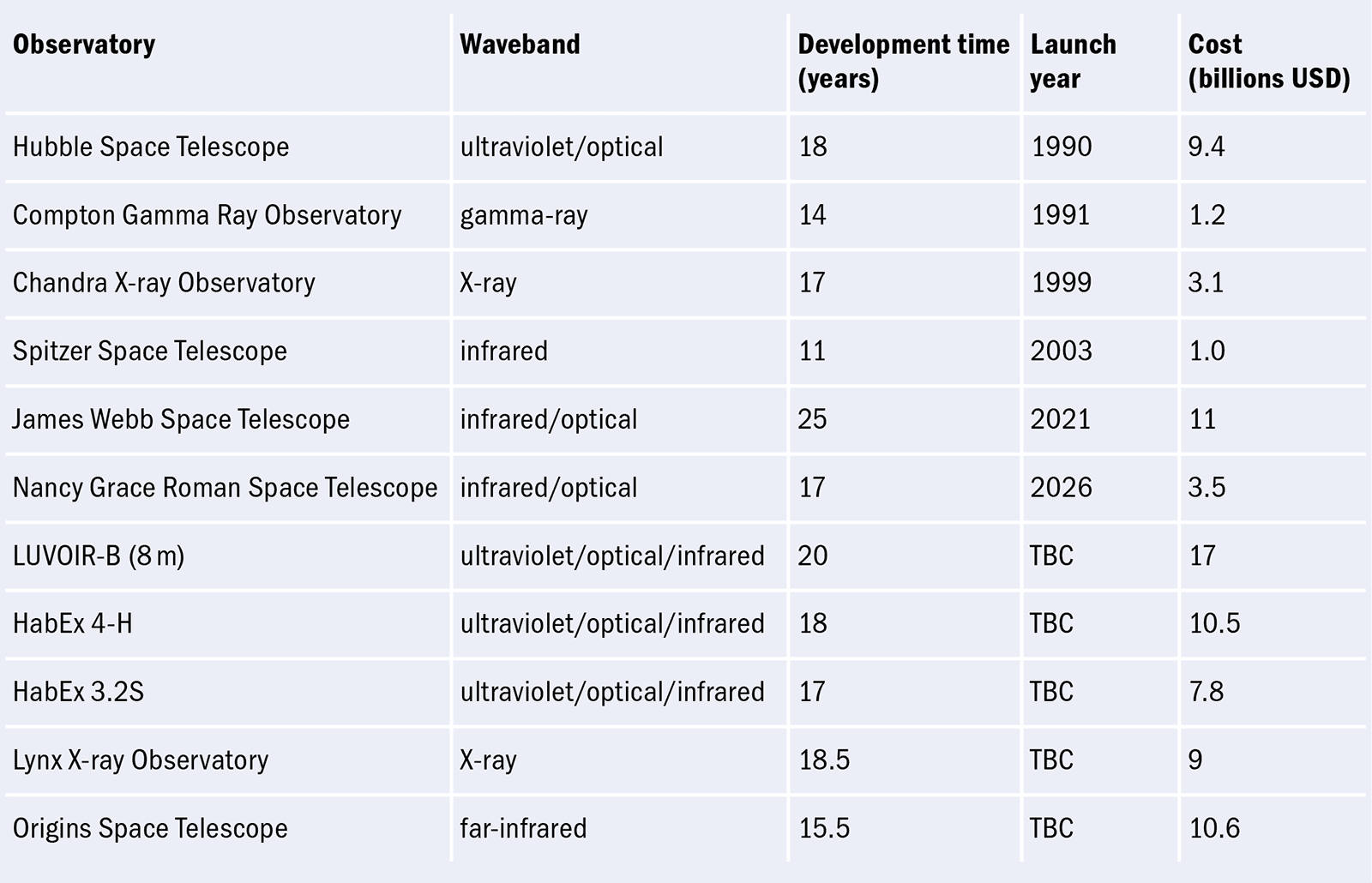
Flagship missions Costs and timescales of past, current and future NASA missions. Cost is at launch, i.e. does not include servicing missions. Development timescale indicates time from survey recommendation to launch. For future missions, the estimated cost is a minimum, assuming immediate start and optimum budget profile. (Data taken from the NASA Astro2020 decadal survey)
But given the precarious health of our current crop of space telescopes, and knowing the new missions won’t launch for another 20 years, shouldn’t astronomers have started planning for new great observatories years ago? “For sure,” says Steven Kahn of Stanford University, who chaired one of the panels in the decadal survey looking at future space telescopes. He cites the Constellation-X observatory – an X-ray space probe that was recommended as a follow-up to Chandra in the 2000 decadal survey, but never came to fruition because of the drawn-out development of the JWST, which sucked up all the astrophysics budget. “The JWST basically dominated the great observatory programme at NASA for two-and-a-half decades,” explains Kahn. “As a result, there wasn’t room to do a follow-on X-ray mission, or the kind of pioneering far-infrared mission that we’re envisaging.”
Winner takes it all
Indeed, the JWST’s development saw many issues, including huge overruns in cost and development time, which almost saw the project cancelled. The memory of these mistakes looms large over the new decadal survey, influencing some of the recommendations made to restore balance to astrophysics in the US. But it wasn’t always like this. Kahn laments how, prior to the 2000 survey, just getting on the list of recommendations in a decadal survey was enough to virtually guarantee that your project or mission would happen. But in the modern era of $10bn telescopes, “you have to be number one or you’re not going to get it done” says Kahn. “The problem is that in this winner-takes-all environment, everybody wants to throw all the bells and whistles they can onto a project because if you think you’re only going to get one shot at a big mission in the next 50 years, you want to make it count.”
It’s this way of thinking that can lead to the problems the JWST both faced and caused. The more complex a mission design becomes, the more instruments and capability that you want it to have to make it worthwhile – which means that it grows more expensive and takes longer to develop. “All of which gets us back into this vicious cycle of winner takes all,” continues Kahn.
Harrison agrees, emphasizing that this new decadal survey is an attempt to try and change US astronomy’s approach. “For a decadal survey to say, this is the number-one thing, we need to do it no matter what, at whatever cost it ends up being, is not a responsible approach,” she says. In an attempt to counter this, the recent survey makes a number of new proposals. Among them is the idea that missions should be designed in tune with specific science priorities, rather than allowing the mission concept to run away with itself, with all the “bells and whistles”, to quote Kahn.
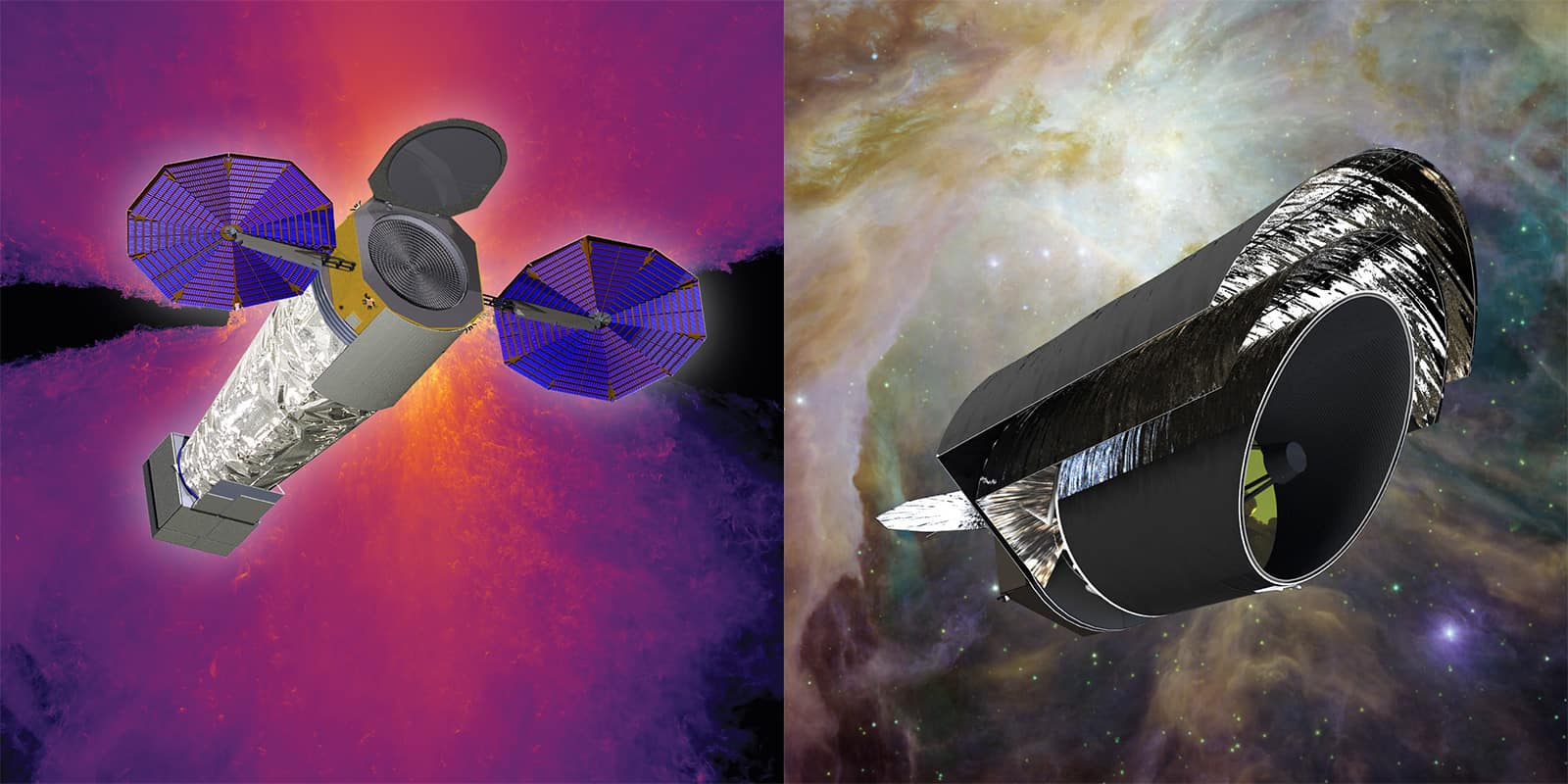
Out with the old The NASA decadal survey concluded that neither the Lynx X-ray Observatory (left) nor the Origins Space Telescope (right) fit the requirements that the panel was looking for. (Courtesy: NASA)
For example, one of the key science questions that Kahn’s panel looked at was the way in which active supermassive black holes in distant, dusty galaxies influence star formation. The accretion of matter onto such black holes would be detectable to a high-angular-resolution X-ray telescope, while a far-infrared spectroscopic mission would be able to peer through the dust and probe specific spectral lines related to star formation and feedback from black-hole winds. The hope is that the two missions could be launched within a few years of one another, and operate in unison. However, what shape those missions will take is still up in the air.
Prior to the decadal survey there were two mission concepts – the Lynx X-ray Observatory and the Origins Space Telescope – that would operate at mid- to far-infrared wavelengths, with a telescope mirror between 6 and 9 m in diameter. Each was estimated to cost about $5bn, but the decadal survey concluded that these costs were being underestimated and that their science capabilities didn’t quite fit into the requirements that the panel was looking for.
Flagship missions
And here enters one of the decadal survey’s other innovations – namely, a new class of space telescope referred to as “probe-class”, with budgets of a few billion dollars. “We have to acknowledge that if things were all going to be as expensive as JWST, it would be difficult to have all the great observatories operating at the same time,” says Marcia Rieke of the University of Arizona, who led the second panel on space telescopes, focusing on the optical and near-infrared regime. “The best way instead might be to have one flagship mission, and then have the other parts of the electromagnetic spectrum covered by probe missions.”
Indeed, any possible X-ray and far-infrared probe-class missions could also be joined by a probe-class ultraviolet telescope. Improvements in mirror coatings and detectors over the last few decades mean that a 1.5 m telescope could actually be more sensitive than Hubble at ultraviolet wavelengths. “That would provide some robustness against Hubble out-and-out failing,” says Rieke.
Projected plan Timeline for the medium and large programmes and projects recommended by the Astro2020 decadal survey. The location of the logos shows the projected start of science operations for a range of missions and observatories – from space- and ground-based observatories across the spectrum, to multimessenger probes as well as telescopes to study key phenomena such as exoplanets and the cosmic microwave background – or the start date of the programme. The survey has three broad science themes, each of which requires a range of facilities and programmes. (Adapted from original by NASA)
To help develop these future space telescopes, whether they proceed as $10bn behemoths or go forward as more modest (but still ambitious) probe missions, the decadal survey recommends that NASA creates a new Great Observatories Mission and Technology Maturation Programme. It would not just develop the technology, but also “mature the mission concepts”, says Harrison. For its part, NASA is already holding workshops as part of this new programme and has produced a draft call for probe missions.
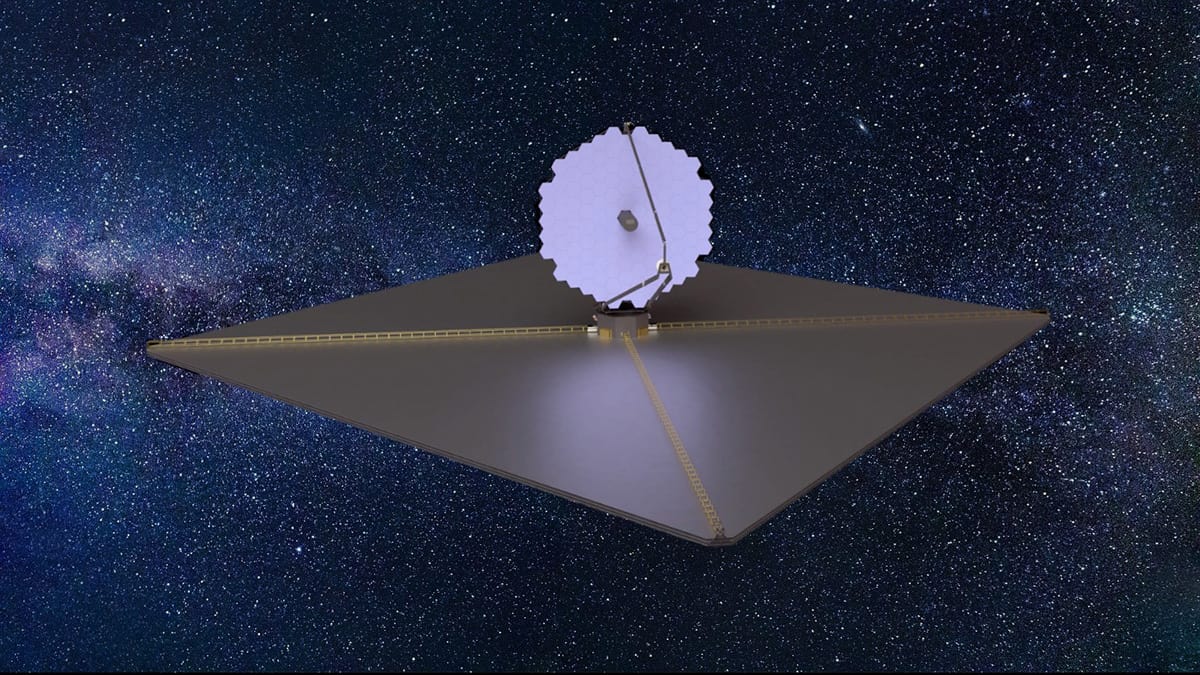
If the X-ray and far-infrared missions – nicknamed “Fire” and “Smoke” for now – are to be probe-class, then the flagship great observatory will be the long-awaited direct replacement for the Hubble Space Telescope. The concept that leads the way is LUVOIR, and two versions of the telescope have been proposed: either a wildly ambitious 15 m telescope, or an 8 m telescope, the latter of which would still be the largest space telescope ever launched.
Other Earths
For cost and practicality reasons, the decadal survey recommended that the 15 m version fall by the wayside, and that the final design meld the best parts of both LUVOIR and HabEx. The key science goal of this telescope, explains Rieke, is that it has to be able to detect Earth-mass planets in the habitable zone of stars. To that end, Rieke’s panel engaged in a discussion with the exoplanet community about how many potentially habitable planets could be detected as a function of the size of the telescope.
Just the one The original 15 m design (A) for the LUVOIR (Large UV/Optical/IR Surveyor) observatory. The Astro2020 decadal survey recommends combining the LUVOIR and HabEx concepts into a single large telescope. (Courtesy: NASA GSFC)
“As a group, you ask: what are the key science goals? What level of sensitivity is needed? What’s the smallest telescope that will do the job?” says Rieke. The answer she got back was that a 6–8 m-aperture telescope is about as small as you dare go if you want to find potentially habitable exoplanets.
Success isn’t just about the size of the telescope though; its instruments have to be up to scratch too. Successfully imaging Earth-sized planets close to their stars will require a coronagraph as part of its design. Exoplanets the size of Earth normally cannot be imaged because the glare of their star is too overpowering. A coronagraph blocks the light of the star, making it easier to see any planets in attendance. They have been a staple of studies of the Sun for decades – their name comes from blocking the Sun’s disc so astronomers can see the solar corona. But devising a coronagraph that can precisely block the bright light of a star, which appears as essentially a point source, while allowing planets just milliarcseconds from the star to be visible by reducing the contrast between the star’s glare and the planets’ light to 10–10, is “quite a step beyond anything that we’ve done before”, says Rieke.
Beyond space, telescopes on the ground
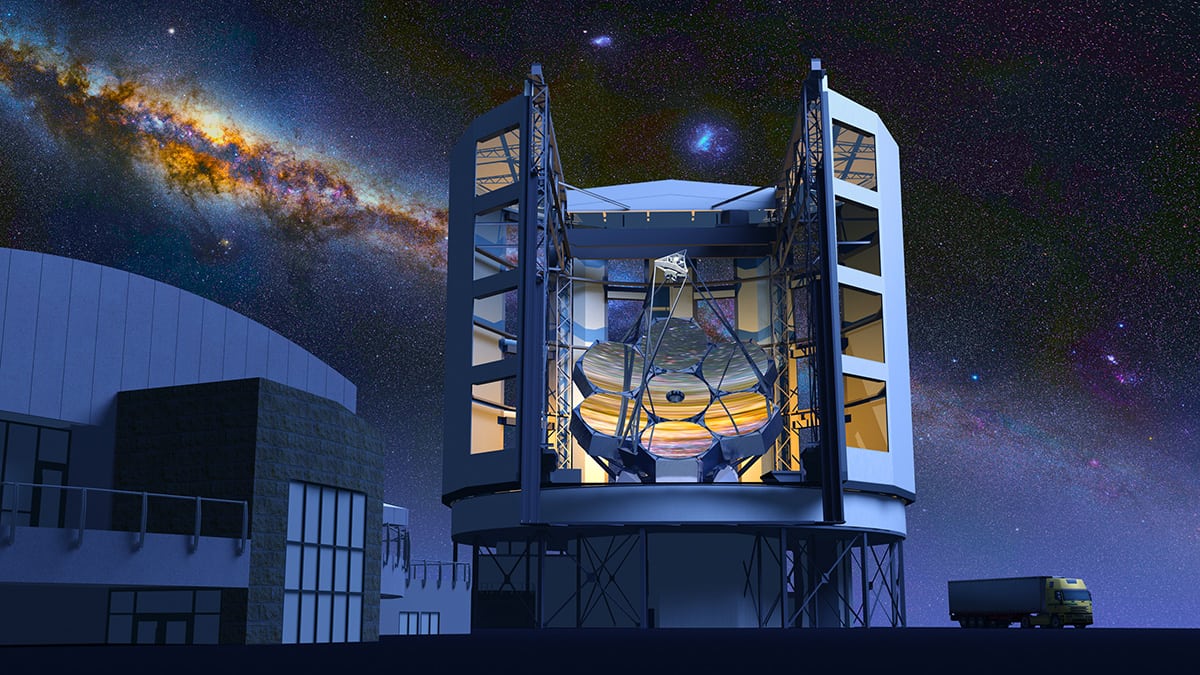
Earth-bound Artist’s concept of the completed Giant Magellan Telescope which will be situated in the Atacama Desert, Chile. (Courtesy: GMTO Corporation)
Not all of the decadal survey’s recommendations are related to giant telescopes in space. Indeed, some of them are giant telescopes firmly rooted on Earth. For example, the controversial Thirty Meter Telescope to be built on Mauna Kea in Hawaii, despite the protests of some native Hawaiians, continues to move forward. So too is the Giant Magellan Telescope, which is under construction in Chile and will feature seven 8.4 m telescopes to give an effective diameter of 25.4 m.
The survey also recommends that the Next Generation Very Large Array – 244 radio dishes of 18 m diameter and 19 dishes of 6 m diameter spread across the US south-west – should start being built by the end of the decade. It will replace the ageing Very Large Array in New Mexico and the Very Long Baseline Array of dishes across the US. Upgrades to the Large Interferometer Gravitational-wave Observatory (LIGO) and plans for an eventual successor are also recommended.
Meanwhile, cosmologists will be heartened to hear that the survey also calls for a new ground-based observatory, dubbed the CMB Stage 4 observatory, to detect polarization in the cosmic microwave background radiation to search for evidence of primordial gravitational waves that resulted from cosmic inflation in the earliest moments of the universe.
Finally, back in space, the highest priority for medium-scale missions is a fast-response time-domain and multimessenger programme to replace NASA’s Swift spacecraft and detect supernovae, gamma-ray bursts, kilonovae and various other kinds of astronomical transients. Crucially, the missions in this new programme need to be able to work with and support the ground-based observations of LIGO, the Cherenkov Telescope Array and the IceCube neutrino detector, for which a “Generation 2” detector has also been recommended.
The next step is to convince politicians to part with the funds that will be needed to make the great observatories possible
Fiona Harrison, California Institute of Technology
“Certainly a focus now for myself and Robert Kennicutt [Harrison’s fellow co-chair from the University of Arizona and Texas A&M University] is to try and articulate to Congress the excitement of the compelling projects recommended by the survey,” she says. “It was a positive response from NASA, and it wants to make the recommendations happen, but the budget has to be there.”
Should that money be forthcoming, then Rieke estimates the funding required to mature the technology for the optical telescope to be about half a billion dollars. “We would then be poised, near the end of this decade, to have all the technology ducks sitting in a row and we’ll be able to enter the construction phase,” she says.
The timescales involved are phenomenal. If Hubble and Chandra are anything to go by, the next-generation telescopes launched in the 2040s could still be operational in the 2070s or beyond. The decadal survey’s recommendations are therefore not just important for the next 10 years of astronomy, but for their impact on much of this century. There was therefore tremendous pressure on the survey to have got it right.
“That’s where it’s important to pick ambitious goals,” says Rieke. “You have to identify something that’s so important that everyone agrees, and is enough of a step forward that something else isn’t going to overtake you while you’re doing it.” History will judge whether this decadal survey got its key decisions correct, but from today’s perspective, the future of astrophysics promises to be an exciting one.
The genetic material inside viruses cannot survive for long without a protective coating of proteins. However, the process by which these proteins assemble to encapsulate (and therefore protect) the viral genome is not well understood – especially for coronaviruses, which have very large RNA genomes. A pair of researchers at the University of California in Riverside, US and Songshan Lake Materials Laboratory in China have now identified the interactions at play during the assembly of SARS-CoV-2, the coronavirus that causes COVID-19, and explored how these interactions lead to the genome being packaged into a new virion. The work could aid the design and development of drugs to fight this and other coronaviruses.
SARS-CoV-2 contains four structural proteins: envelope (E); membrane (M); nucleocapsid (N); and spike (S). The M, E and S proteins are vital for assembling and forming the virus’ outermost layer, or envelope, which helps the virus enter host cells as well as protecting it from damage.
Compact ribonucleoprotein complex
In the new work, UC-Riverside physicist Roya Zandi and her former graduate student Siyu Li (who is now a postdoc at Songhan Lake) used computational tools known as coarse-grained models to simulate how SARS-CoV-2 forms from these constituent parts. These models mimic viral components at large length scales and provide precious information on virus assembly processes.
Using these models, the pair calculated that the N proteins condense the viral RNA to form a so-called compact ribonucleoprotein complex, which is an assembly of molecules consisting of both protein and RNA. This assembly then interacts with the M proteins embedded in the lipid membrane. Finally, a process known as the “budding” of the ribonucleoprotein complex takes place, completing the viral formation.
Interaction between N proteins is very important
The researchers based the shape of the N protein in their model on a well-known structure described in the literature. “RNA is a negatively-charged polymer and there are a lot of positive charges in the N proteins,” Zandi explains. “The interaction between the positive charges on N proteins and negative charges on RNA results in the condensation of RNA.”
Zandi tells Physics World that the interactions between N proteins turned out to be very important in RNA condensation. “We didn’t know about this effect before performing our simulations,” she adds.
The pair also modelled the M proteins based on their structure and function as described in the literature. They designed these proteins such that they interact with the N proteins and also bend the membrane. “The coarse-grained model has allowed us to understand the mechanisms of protein oligomerization, RNA condensation by structural proteins and the membrane-protein interactions, predicting the factors that control the virus assembly,” Li explains.
In the past, Zandi notes that understanding the factors that contribute to virus assembly has often led to new therapeutic strategies. In her view, the findings from this research, which is detailed in the journal Viruses, could similarly help provide the means to combat SARS-CoV-2. “The assembly mechanism we have unearthed could inform the design and development of small molecules that target the viral structure proteins, modifying their functions to disrupt the fidelity of the assembly process,” she says.
In the longer term, Zandi thinks the new work could even become a benchmark for experiments and microscopic all-atom simulations. “We are currently collaborating with experimental and computational groups for the next stage of our investigations,” she reveals. “Ultimately, we aim to connect multiscale research to further the continued development of antiviral drugs to arrest coronaviruses in their assembly stage.”
A beam of “twisted” neutrons with a well-defined orbital angular momentum (OAM) has been created by researchers in Canada and the US. This was done by passing a neutron beam from a nuclear reactor through a special array of diffraction gratings. Described as the first observation of a neutron beam with a well-defined OAM, the experiment is the culmination of several years of work by some of the team members, who first reported tentative observations of twisted neutrons in 2015.
According to quantum mechanics, subatomic particles such as neutrons behave like both waves and particles. This wave–particle duality has given rise to the broad and fruitful field of neutron scattering, whereby the interior structures of materials are probed using beams of neutrons from nuclear reactors and accelerators. While such experiments have long used the intrinsic angular momentum (spin) of the neutron, physicists are also keen on creating and detecting beams of twisted neutrons that carry OAM.
Researchers have already been able to create beams of twisted light and twisted electrons in which the wavefronts rotate about the direction of propagation, thereby carrying OAM. These beams have a wide range of current and potential applications including studying chiral molecules and boosting the capacity of optical telecoms systems.
Experimental challenges
So far, however, physicists have struggled to create beams of twisted neutrons. In 2015, Dmitry Pushin and colleagues at the University of Waterloo, along with physicists at the Joint Quantum Institute in Maryland and Boston University published a paper in Nature that described a technique for creating twisted neutrons by passing a beam of neutrons through a spiral phase plate (SPP) – a device that has been used to create twisted light and twisted electrons.
They did this by splitting a neutron beam into two and sending one beam through the SPP. The two beams were then recombined and the researchers measured an interference effect related to orbital angular momentum. However, in 2018 an independent team of physicists published calculations that showed that the interference effect measured by Pushin and colleagues was not related to orbital angular momentum.
Undeterred, Pushin and colleagues have taken a new approach and are now claiming success. Instead of using a SPP, the researchers used a holographic technique that involves an array of millions of special gratings made from silicon. Each grating has a “fork dislocation” whereby one of the lines in the grating splits into four lines, creating a fork-like structure (see figure).
Six million gratings
Each grating measures one micron square and comprises silicon structures that are 500 nm tall and separated by about 120 nn. The array covers an area of 0.5×0.5 cm2 and includes over six million individual gratings.
The team tested their system on a small angle neutron scattering (SANS) beamline at the High Flux Isotope Reactor at Oak Ridge National Laboratory in Tennessee. The researchers say that the SANS set-up offered several advantages, including the ability to map the neutron beam in the far field – which meant that a holographic technique could be used to create the twisted neutrons. Also, the instrumentation on the beamline could be adapted to measure the orbital angular momentum of neutrons.
After passing through the array, the neutron beam travelled a distance of 19 m to a neutron camera. Images taken by the camera show the distinctive doughnut-shaped pattern that is expected from a beam of twisted neutrons that is in a specific state of orbital angular momentum. The doughnut-shaped patterns were about 10 cm in diameter.
The team says that their setup could be used to study the topological properties of matter – properties that could prove useful in developing new quantum technologies. It could also be used in fundamental studies of how orbital angular momentum affects how neutrons interact with matter.