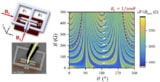
Half-light, half-matter quasiparticle appears in a van der Waals magnet

A new quasiparticle that is part matter, part light has emerged in experiments by researchers at the City College of New York, US, who observed it by coupling light to a stack of ultrathin two-dimensional antiferromagnets. The work could have implications for devices like lasers or for digital data storage.

Coupling light strongly to matter is a well-known way of engineering properties such as magnetism, superconductivity and ferroelectricity in quantum materials. One way to do this is by setting up interactions between elementary particles and optical microcavities, which are structures in which light is reflected back and forth between two or more mirrors.

Strongly coupling photons with spin-correlated excitons

In the new work, researchers led by Vinod Menon studied a material with the chemical formula NiPS3. This material belongs to a chemical family known as the transition metal thiophosphates, and condensed-matter physicists know it as a van der Waals (vdW) magnetic insulator – that is, a two-dimensional material containing strongly correlated particles that give rise to a variety of electronic and magnetic phases.

When the researchers placed a stack of ultrathin NiPS3 layers within an optical microcavity, they observed a strong coupling between spin-correlated excitons (quasiparticles made of electron-hole pairs) in the material and photons trapped between the cavity’s mirrors. This photon-exciton coupling gave rise to a previously unobserved type of quasiparticle known as an exciton-polariton that has properties of excitons, photons and spins.

Part light, part matter

As these new quasiparticles are, in effect, “part light”, they behave like photons in many respects, says Florian Dirnberger, who is the lead author of a paper in Nature Nanotechnology on the work. “Their matter part, however, stems from a magnetic material, so its properties are strongly tied to the antiferromagnetic order of the material,” he adds. “This gives rise to strong linear polarization.”

According to the researchers, this approach of interfacing light with magnetic materials is a promising path toward efficient magneto-optical effects that could have applications in lasers and in digital data storage. What is more, the new class of magnetic quasiparticles could be used for quantum transduction through interactions between low frequency magnons (collective oscillations of the spin magnetic moments of a material), high frequency excitons and visible light.

Members of the team say they now plan to extend their study in an attempt to better understand the role of the quantum electrodynamic vacuum when quantum materials are placed into optical cavities. They hope to realize novel quantum phases of matter that have no counterpart in the classical (thermodynamic equilibrium) regime.

Humane solutions for the massive human migration caused by climate catastrophe

Dhaka, the capital city of Bangladesh, is home to 10 million climate refugees – people who have been internally displaced as monsoons and flooding destroy homes and farmland. With another 2000 arriving in the city every day, it’s proof that human migration caused by climate catastrophe is already a reality and accelerating fast.

In Nomad Century, environmental-science journalist Gaia Vince explains that climate migration is going to happen on a huge scale this century and that the world needs to work together to manage it financially, safely and humanely. As she leads us through the climate scenarios detailed by the Intergovernmental Panel on Climate Change (IPCC), it is clear that even if we limit global heating to 2 °C (an outcome she deems unlikely), vast swathes of the Earth will be uninhabitable by 2050, displacing hundreds of millions of people. With a 4 °C temperature rise, billions of people will be affected in this way.

Such a scenario sounds catastrophic, but Vince argues that, properly managed, it needn’t be. She explains how we can use the little time we have left to start planning – and begin moving people before disaster strikes them. Vince shares examples of where this is already happening on small scales and her text is packed with references to the studies behind her suggestions.

Concentrating a growing world population into a smaller liveable area will be a massive social, political and technological challenge. New mega cities will have to be built in places like Canada, Greenland and Scotland. Sudden growth provides the opportunity to scale up sustainable housing, infrastructure and farming. Vince’s solutions always put people first, acknowledging that the world’s poorest will be hardest hit and that they must be helped not only to find safe new homes, but also new livelihoods.

Managing large-scale migration is only part of the solution. We also need to decarbonize – remove some of the carbon dioxide already in our atmosphere – and fix damage done by climate change. This is the hard-science part of the book, with whirlwind tours of green energy generation, habitat restoration and geo-engineering. Every option is considered, and Vince suggests that ultimately most will be needed – there is no single solution to this crisis.

Nomad Century deftly led me from the terror of what humans have done to sincere belief that we can and must create a better world that is liveable for every person.

  • 2022 Penguin Books 288pp £20.00hb £9.99ebook

Proton therapy planning: how to minimize LET in organs-at-risk

Proton therapy can deliver highly conformal dose distributions to a tumour target while minimizing dose to tissues outside the target volume. Creating treatment plans that realize this strength is a top priority for dosimetrists and medical physicists.

Protons deposit dose in a fundamentally different way to X-rays, another type of external-beam radiation therapy. As a proton reaches the end of its trajectory, the rate at which its energy is transferred to tissue – its linear energy transfer (LET), expressed in keV/µm – increases.

The relative biological effectiveness (RBE) captures the biological implications of increasing LET, and a fixed RBE value of 1.1 is often applied for clinical proton treatments. But proton RBE is dependent on many other factors, including clinical endpoints, tissue type, fractionation scheme, patient-specific radiosensitivity, physical dose, and uncertainties in experimental measurements. As a result, using a fixed RBE value in proton therapy likely underestimates RBE in high-LET locations, which could result in an increased risk of radiation-induced toxicities.

Still, LET is strongly correlated with RBE and is a key factor for determining variable RBE in proton therapy. As such, researchers are investigating approaches for calculating and evaluating LET during treatment planning. These biological treatment planning tools are limited, however, and until they are developed and studied further, clinics must identify their own treatment planning practices to minimize LET outside of target volumes, says Austin Faught, a medical physicist at St Jude Children’s Research Hospital in Tennessee.

“How to influence the [LET distribution] is an active area of research, and there are some great methods under development,” Faught explains. “The problem that we face is that those are not readily available without custom software developed in-house or through special research versions of vendor-provided applications … [and there are] few studies providing quantitative guidance on what we should aim for.”

Treatment planning strategies

In a step toward LET-based plan evaluation and optimization for photon therapy, Faught and his team performed a survey of planning strategies that are commercially available to clinical teams for intensity-modulated proton therapy (IMPT). Their study, reported in the Journal of Applied Clinical Medical Physics, introduces some guidance for proton therapy treatment planners. “We wanted to look at some readily available treatment planning techniques and how they may affect LET,” Faught explains.

The researchers evaluated the differences in dose-weighted LET (LETd) between eight forward-based treatment planning approaches applied to a cylindrical water phantom and four paediatric brain tumour cases (Faught notes that radiation-induced toxicities are a focus area for the team). They compared these planning strategies to a plan using opposed lateral beams (for the phantom) or to the original clinical plan (for patients), using Monte Carlo secondary calculations to evaluate both the dose and LETd.

The researchers found that treatment field geometry was the biggest contributor to the location of high-LET areas. To mitigate the potential impact of biologic uncertainties associated with high LETd, they suggest that treatment planners use large intersection angles between treatment beams and avoid beams that stop immediately proximal to critical structures.

“This is great news as it means careful selection of the number of treatment fields and their orientation with respect to nearby health tissues can be effective,” Faught says. “With some conscious, upfront thought, that’s something all treatment planners can take into consideration during the planning process.”

The researchers also found that using a range shifter significantly reduced the mean LETd in the clinical target volume. As a result, they recommend using range shifters and alternative strategies of spot-placement restrictions sparingly, and only when clinics can calculate the resulting LETd to evaluate against alternate planning strategies.

Because of the study’s small sample size, the researchers couldn’t establish a clear trend in LETd variations in the clinical cases. They did not evaluate the relationship between changes in LET and a change in the probability of tumour control or normal tissue complications.

While the effects of each planning approach on high-LET regions were modest, Faught says it’s important to recognize that the team’s treatment planning strategies and recommendations are evidence-based and can readily be worked into clinical practice.

“I hope that one of the takeaways is that we, as a field, would benefit from commercial tools that allow for the calculation of LET within the treatment planning system. Even better, we would love to have ways to optimize with LET in mind. This study was a good bridge until those tools are more widely available,” Faught says.

Responding to extraterrestrials, better lab coats for all, space shuttle debris found off Florida

If extraterrestrials ever got in touch, what would you say in return? It’s not clear as there are no procedures in place if a radio signal from ET ever did get picked up. The only agreed “contact” protocols, which were originally drawn up in 1989 by the SETI community, were last revised in 2010.

That document, however, focused entirely on general scientific conduct and fell short of being useful for managing the full process in practice, which includes searching, handling candidate evidence, confirming detections, post-detection analysis and interpretation – as well as a potential response.

In future, however, this endeavour will be carried out by a new international research group – the SETI Post-Detection Hub – based at the University of St Andrews in the UK.

Better prepared

“Will we ever get a message from ET? We don’t know,” admits computer scientist and hub co-ordinator John Elliott. “But we cannot afford to be ill prepared for an event that could turn into reality as early as tomorrow and which we cannot afford to mismanage.”

Do you like your lab coat? If not. You are not alone. A survey of 1000 chemists and life scientists has revealed that about 90% of respondents are not happy with their lab attire. According to Chemistry World, common complaints included poor fit, lack of appropriate pockets, and no choice of colour.

The survey was done by US-based Genius Lab Gear, which aims to improve the working lives of lab-based scientists. The company’s founder Derek Miller is developing a prototype lab coat that addresses the problems highlighted in the survey. Instead of taking a one-design-for-all approach, the new lab coats will be available in men’s and women’s cuts. Miller says the garments will be tailored for a better fit at the waist, cuffs and collar. The lab coats will also have a plethora of pockets (external and internal) and loops for carrying a range of objects including tweezers, pipettes, pens – and, of course – mobile phones.

The lab coats should be available next year and are expected to cost $50.

Horrific event

Many people of a certain age can remember where they were when they heard about the horrific break-up of the space shuttle Challenger. Just after lift-off from Florida on 28 January 1986, the spacecraft disintegrated, killing all seven crew members. The presidential commission into the disaster found that cold temperatures on the launch day caused the failure of O-rings – which led to the escape of hot gases. This was famously demonstrated by physicist, commission member and Nobel laureate Richard Feynman.

Now, divers have found previously unknown wreckage of Challenger off the coast of Florida. According to the BBC this is the first time in 25 years that remains of the shuttle have been discovered. The discovery was made earlier this year, but video of the find has just been released. In it, two divers investigate a patch of the seafloor that appears to be covered in tiles. Presumably, these are the heat-resistant tiles that were used to protect shuttles from the high temperatures that build-up as the spacecraft descends through Earth’s atmosphere. It was damage to some of these tiles that led to the disintegration of the space shuttle Columbia in 2003, which also led to the death of all seven crew members.

You can read more about the discovery and watch the video on the BBC website.

Early stages of an ancient supernova observed using gravitational lensing

Light from a supernova that was emitted just six hours after the initial stellar explosion has been observed along with light emitted two and eight days later. The observation was made by an international team using the Hubble Space Telescope (HST). The supernova is also notable for having occurred around 11.5 billion years ago when the universe was in its relative infancy. The faint light could only be seen because of the gravitational-lensing effect of a galaxy that lies between Earth and the supernova.

The scientists, whose research is described in Nature, spotted the supernova in archival images from the HST. Light from the supernova was gravitationally lensed by the galactic cluster Abell 370, causing it to appear three times in the same image. The supernova occurred in a dwarf galaxy behind Abell 370.

“We found a distant supernova explosion in a single snapshot by NASA’s HST showing three different moments in its early stage of the explosion,” says Wenlei Chen, lead author of the Nature paper who is based at the University of Minnesota in the US. He tells Physics World, “Core-collapse supernovae like this one mark the death of massive stars, which are short-lived because they burn up quickly compared to stars with less mass.”

Red supergiant

When the core of the star exploded, a shockwave launched that heated the outer part of the star, causing it to expand and cool along the way. This gives rise to a light curve (how a star’s brightness changes over time) with a distinct shape that depends on the size of the star that exploded. From this, the team estimates that the radius of the progenitor star was around 530 times larger than that of the Sun, a size that is consistent with a red supergiant. The significant redshift of the star’s light curve means that the universe was just 2.2 billion years old when the supernova occurred.

This is the first time that scientists have been able to measure the size of a dying supergiant star as it was more than 10 billion years ago,” Chen explains. “Usually, distant supernovae are too faint to be detected and identified using existing telescopes.”

Team member Jose Maria Diego of Spain’s Instituto de Física de Cantabria explains why this detection is so significant. “What makes this supernova special is that we are witnessing the first instants after the explosion,” Diego told Physics World. “Supernovae are also normally found much closer to us. This one is perhaps in the top five or so most distant supernovae ever observed.”

Diego also points out that these types of core-collapse supernovae are referred to as “standard candles” by astronomers because their light curves are so well-defined that they can be used to measure cosmic distances. This means that finding more early examples like this one could help test models of cosmic evolution.

Einstein’s theory

Indeed, this supernova is only visible because of a gravitational phenomenon that arises from Albert Einstein’s 1915 general theory of relativity. The theory says that a massive object such as a galaxy causes a significant deformation in nearby space–time and this deformation will bend the trajectory of light that passes near to the galaxy.

As a result, a galaxy can act as a gravitational lens that can focus light from a distant star towards Earth, giving astronomers a magnified view of the star. A gravitational lens can also create multiple images of the same star that are separated in space.

The massive lensing object responsible for making the distant supernova appear three times in the Hubble image is the galactic cluster Abell 370, which is located almost 5 billion light-years from Earth in the constellation of Cetus.

Time sequence

The light in each of the three images took different paths to Earth and these paths were of different lengths. This means that the images show the star at a sequence of three different times within eight days after the explosion.

“The fact that one of the images corresponds to just a few hours after the explosion is a remarkable discovery,” Diego adds. “We usually see supernovae days or weeks after they explode. Only supernovae that exploded near to us have been observed hours after the explosion. We have never before seen an early supernova at this distance.”

Chen says that the team plans to use the James Webb Space Telescope to further investigate the supernova and to search for more gravitationally lensed supernovae in the early universe. He adds that discovering more distant core-collapse supernovae should enable astronomers to gain a better understanding of star formation in the early universe.


Making graphene nanoribbons stable

Graphene nanostructures with zigzag-shaped edges show much technological promise thanks to their excellent electronic and magnetic properties. Unfortunately, the highly reactive edges of these so-called graphene nanoribbons (GNRs) degrade quickly when exposed to air, limiting their practical applications. A team in Spain and the Czech Republic have now come up with two new strategies for protecting them. These strategies could also be extended to other types of technologically important carbon-based nanostructures.

GNRs are special because the behaviour of their electrons can be tuned from metal-like to semiconducting simply by adjusting the length or width of the ribbons, modifying the structure of their edges or doping them with non-carbon atoms. The materials can also be made magnetic using these techniques. The versatility of GNRs makes them promising building blocks for numerous applications, including quantum technologies.

The problem is that the exceptional properties of GNRs rely on the presence of zigzag-shaped segments along their edges, and these segments (unlike armchair-shaped edges) are unstable in air. This means that GNRs need to be kept in vacuum, making it hard to employ them in real-world applications.

sp3 configuration increases air stability

In the new work, three research groups – led by Dimas G de Oteyza of the Nanomaterials and Nanotechnology Research Center (CINN) in El Entrego, Spain; Diego Peña from CiQUSUniversidade de Santiago de Compostela; and Pavel Jelinek at the Institute of Physics, Czech Academy of Sciences – studied narrow strips of graphene nanoribbons with a large density of zigzag-shaped edges. They found that when hydrogenated, the carbon atoms in the nanostructures rehybridize into a sp3 configuration, which increases their stability in air. The structures can be converted back to their original state simply by heating them up. Alternatively, the researchers found that they could make the nanostructures stable by functionalizing them with ketone side-groups. This oxidized form of the material is stable to a variety of other chemicals, too, and can be converted back to the pristine form by hydrogenation and annealing under vacuum conditions. In both cases, the protected GNRs retain the electronic properties of the pristine nanostructures.

“Our protection strategies allow us to take these molecules out of the inert vacuum environment without degrading them,” Oteyza tells Physics World. “These techniques may be extrapolated to different GNRs and carbon-based nanostructures, as well as to different functional groups, allowing these zigzag-edged carbon materials to be used in scalable real-world applications.”

Before this becomes possible, however, Oteyza and colleagues acknowledge there are challenges to overcome. “For one, the ‘deprotection’ steps still require vacuum conditions,” explains Peña. “This means that while we can place our molecules of interest into the appropriate device structures for scalable applications, the devices must still work in vacuum.”

An additional step will therefore be required, namely protecting the structure of the whole GNR-based device in a way that does not affect the molecule’s chemistry. “This is one of the main challenges that we need to tackle,” Jelinek says.

The study is published in Nature Chemistry.

Superconductors strengthen signals in scanning-tunnelling microscopy

The sensitivity of a scanning-tunnelling microscope improves by up to a factor of 50 when the microscope’s usual tip is replaced by a superconducting one. The technique, developed by researchers at Christian-Albrechts-University in Kiel, Germany, could provide unprecedented levels of detailed data about molecules on the surface of a material. Such data could help scientists test and improve theoretical methods for understanding and even predicting a material’s properties.

Although vibrational spectroscopy is routinely employed to probe molecular properties and interactions, most techniques lack the spatial resolution and sensitivity to probe single molecules, explains team leader Richard Berndt. While inelastic tunnelling spectroscopy (IETS) with a scanning tunnelling microscope (STM) does not suffer from this problem, the small signal size of conventional IETS has so far limited the number of vibrational modes that can be observed in a molecule, with 1 or 2 modes out of 3N (where N is the number of atoms in the molecule) being a typical maximum.

Plenty of modes

“Our new technique increases the sensitivity of the STM, so far by factors up to 50, and as a result we see plenty of modes,” Berndt tells Physics World. “It simultaneously circumvents the resolution limit of conventional IETS, allowing us to provide detailed data on the vibrational modes of a molecule and how these modes change when they interact with their molecular environment.”

The researchers carried out their experiments in ultra-high vacuum with STMs operating at 2.3 and 4.2 K. For their sample material, they chose to study lead-phthalocyanine (PbPc) on a surface of superconducting lead. This sample provides a sharp feature known as a Yu-Shiba-Rusinov (YSR) resonance that arises when a localized spin, which the researchers prepared in their molecule, interacts with a superconductor – in this case, the lead substrate. Since the tip is also superconducting, it contributes an additional fairly sharp signal peak – the so-called coherence peak.

Electrons cross a “forbidden” region

When Berndt and colleagues applied a suitable voltage to the microscope, electrons from the peak in the tip inelastically tunnelled to the YSR peak on the sample. To do so, the electrons had to cross a so-called “forbidden” region as they tunnelled between the tip and the substrate, and they arrived with less energy than they started with. This energy difference comes from the excitation of vibrations of the PbPc molecule and it can be determined from changes in the conductance of the system. Using this technique, the researchers were able to enhance the signal (relative to tunnelling between two normal, non-superconducting surfaces) by a factor that is related to the product of the two peak heights.

Since the experiments take place at cryogenic temperatures, the technique’s initial applications will be in basic science, says Berndt. “The technique will be able to provide detailed data on molecules at surfaces in an unprecedented fashion,” he explains. “It will also help us better understand the interactions between molecules, which are important for processes like self-assembly and properties like magnetism.”

The team is now trying to extend its method to other classes of molecules. “We will be attempting to understand the spectral intensities of the various vibrational molecules in these molecules,” Berndt says. “Currently, modelling can reproduce the mode energies fairly well, but the intensities hardly match the experimental data. We think that the time an electron spends on the molecule during the tunnelling process may play a role – but so far that is speculation.  In any event, explaining the intensities will be a tantalizing nut to crack.”

The researchers report their work in Physical Review Letters.

Artificial intelligence boosts multimessenger astronomy, ‘Quantum on the Clock’ winners  

In this episode of the Physics World Weekly podcast, Elena Cuoco of the European Gravitational Observatory (EGO) explains how multimessenger astronomy will benefit from artificial intelligence.

Multimessenger astronomy involves studying an object using a variety of different signals such as gravitational waves, light, neutrinos, X-rays and more. Cuoco, who is the EGO’s Head of Data Science explains how machine learning will help astronomers makes sense out of this deluge of information.

Also in this podcast we speak to three winners of the inaugural “Quantum on the Clock” competition, which challenged pre-university students from across the UK and Ireland to create short videos that explain an aspect of quantum science and technology in just three minutes.

The videos could be solo or team efforts. Solo champion Hannah Chapman along with the winning team of May Cui and Margaret Liu explain how they came up with ideas for their videos and talk about the challenges of making quantum mechanics accessible to a broad audience.

ESO marks 60th anniversary with release of dramatic star factory image

This year sees the 60th anniversary of the formation of the European Southern Observatory (ESO), a ground-based astronomy facility with telescopes located in the Atacama Desert in Chile. To mark this milestone, ESO has released a spectacular new image of the Cone Nebula, captured earlier this year by its Very Large Telescope (VLT) and selected by ESO staff.

The image shows the Cone Nebula, part of the larger star-forming region of space designated as NGC 2264. Discovered by William Herschel in 1785, the horn-shaped Cone Nebula is seven light-years in length and located in the constellation Monoceros (the unicorn).

The appearance of the Cone Nebula is a prime example of the pillar-like shapes that develop in giant clouds of cold molecular gas and dust, and which are believed to act as incubators for developing stars.

Such pillars arise when massive, newly formed bright blue stars give off stellar winds and intense ultraviolet radiation that blow material away from their vicinity. As this gas and dust is pushed away from the young stars, it gets compressed into dense, dark and tall pillar-like shapes.

The image, which was captured with the FORS2 (focal reducer and low dispersion spectrograph 2) optical instrument on the VLT, shows hydrogen gas represented in blue and sulphur gas in red. The filters used make the bright blue stars, which indicate recent star formation, appear almost golden.

As the Cone Nebula is relatively close to Earth, less than 2500 light-years away, it has been studied extensively. ESO notes, however, that this new view is more dramatic than any obtained previously, showcasing the nebula’s dark and impenetrable cloudy appearance.

Rubidium vapour makes a good quantum memory

Finding a reliable way to store quantum information is at the heart of efforts to build a quantum­ Internet. Unlike classical data, quantum information cannot be copied or amplified, and while the classical Internet transmits data via mature technologies like routers and switches that link cobwebs of wires and cables, the building blocks of the quantum Internet are still under construction. Similarly, every piece of a classical electronic system has a buffer where information can stay temporarily before it is processed, but finding a way to “remember” fragile quantum states is a long-standing challenge.

Researchers at the University of Basel, Switzerland have now demonstrated such a quantum memory. In their experiment, a glass bulb filled with rubidium gas (a vapour cell) receives incoming photons transporting quantum information, stores that information temporarily and then produces new photons to carry the information away. What is more, unlike many quantum systems, the vapour cell quantum memory can operate at or above room temperature and is relatively simple to assemble – making it a perfect candidate for deployment in quantum networks.

Photons in transit

The key feature that makes quantum communication so challenging is also a big part of its appeal. Because information stored in the quantum states of photons cannot be copied (unlike electronic signals passing through a cable), a malicious third party cannot intercept quantum data without alerting the sender or the receiver.

However, since quantum data cannot be copied, it also cannot be readily amplified. Without amplification, the signal travelling along a fibre-optic cable grows weaker over distance. This limits data transmission to a few hundred kilometres at best.

One way of avoiding this problem is to introduce repeaters between the sender and the recipient. Any two repeaters can exchange photons to entangle their respective memories. The shared entanglement can then be used to teleport information from one end to another.

Storing and retrieving photons

As the routers relay the quantum information, they need a way to store the information temporarily before passing it securely to the next station. This is where quantum memories come in.

For the experiment in Basel, the researchers began by initializing the rubidium atoms in their vapour cell into a ground state. When incoming photons from a single-photon source interact with a rubidium atom in this cell, the atom enters a superposition of quantum states. This process can be reversed to make the vapour cell emit photons containing the information it just absorbed.

While quantum memories have been a popular object of study, there hasn’t previously been a way to operate them reliably at or above room temperature. According to Gianni Buser, the lead author of a paper in PRX Quantum about the research, devices based on cold atoms have demonstrated an efficient interface between photon sources and memories. These experiments, however, are slow and have low bandwidth. Plus, it is cumbersome to set up cold atom memories outside a laboratory. Using a vapour cell ensures that the device can be used above room-temperature in a wide range of use cases – something that is important when you “consider how ubiquitously memory is used in classical networking and communication,” Buser adds, noting that such a fundamental building block also needs to be very robust.

A further challenge with memories based on vapour cells is reading out photons after storage. A memory is only meaningful if the information stored in it can be read out reliably, but in a vapour cell, the atoms collide with each other and with the walls of the cell, degrading the quality of released photons. By developing techniques to mitigate read-out noise, Buser and his team managed to read photons stored for several hundred nanoseconds – a tiny duration on a human scale, but a long time for the photon pulses used in the experiment, which are themselves only a few nanoseconds long.

According to Buser, there are straightforward ways to improve his team’s result. “The published experiment relies on a pretty ordinary, commercially available, rubidium cell. A collaboration with vapour cell specialists could go a long way towards making the heart of the experiment more suited to its purpose,” he says. Coating the cell with substances like paraffin also mitigates quantum information being lost as atoms crash against the walls of the cell. In fact, Buser is optimistic that storage times for the memory could reach values on the order of a second, which he notes “is truly an eternity for a photon”.

Copyright © 2026 by IOP Publishing Ltd and individual contributors