To unleash the full potential of photonic quantum technologies we are urged to miniaturize and integrate our systems. One crucial building block is quantum light sources.
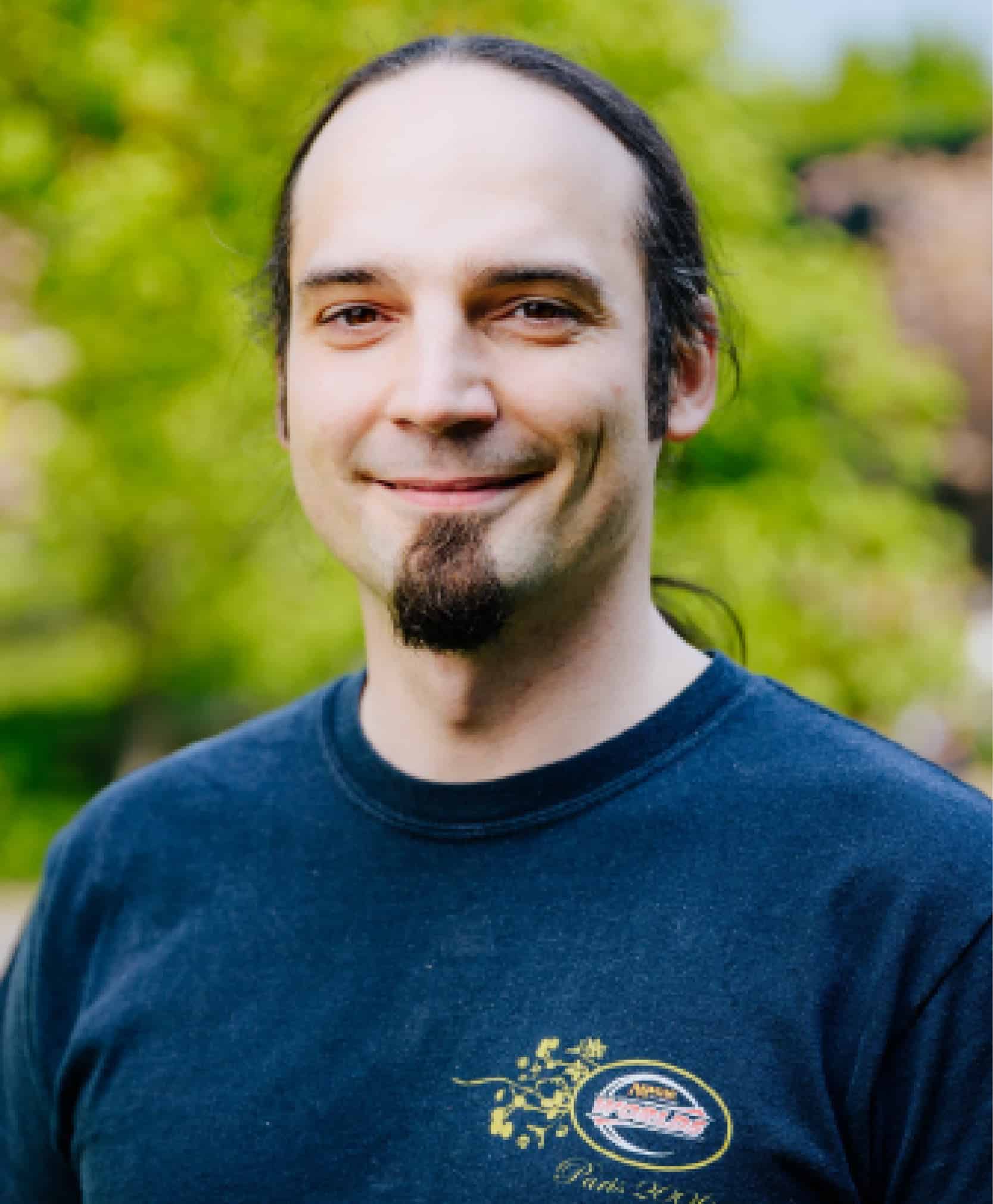
Prof. Dr Klaus Jöns will discuss the route to photonic integration and give an overview on quantum emitter integration approaches.
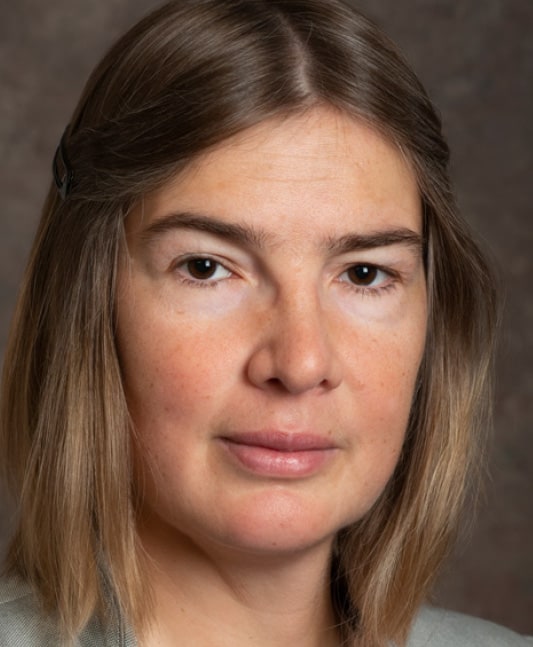
Prof. Dr Klaus Jöns. (Courtesy: Besim Mazhiqi, Paderborn University)
Prof. Dr Klaus Jöns obtained his doctoral degree in physics from the University of Stuttgart in 2013. Afterwards, he joined the Kavli Institute of Nanoscience Delft, the Netherlands. In 2015, he received a Marie Sklodowska-Curie postdoctoral individual fellowship to move to KTH Stockholm, Sweden. Since then he received has numerous fellowships and prizes, including the Göran Gustafsson Prize and an ERC starting grant. In 2020, he was appointed a full professor at Paderborn University. Jöns is leading the Research Group Hybrid Quantum Photonic Devices (hqpd), developing quantum photonic circuits for quantum technology applications. His group is part of the Center of Optoelectronics and Photonics Paderborn (CeOPP) and the newly founded institute, Photonic Quantum Systems (PhoQS).
We erase information every day: rubbing out a pencil scribble, deleting a paragraph from a word processor, or wiping a whiteboard clean. Erasing information has an inescapable work cost – a discovery that proved crucial to save the revered second law of thermodynamics from being violated by the “Maxwell’s Demon” thought experiment.
A hypothetical demon, using a “quantum Szilard engine”, can erase quantum information. Maria Violaris will introduce a surprising potential link between quantum erasure and a novel reformulation of irreversibility, providing a new angle on the growing field of quantum thermodynamics.
Maria Violaris is a quantum information PhD student working with Chiara Marletto and Vlatko Vedral at the University of Oxford, UK. Her research links fundamental questions, such as whether there is an exact arrow of time, with understanding the limits of future quantum technologies. She is a PhD student contributor to Physics World, initiated the Quantum on the Clock schools video competition with the IOP Quantum Optics, Quantum Information and Quantum Control Group, and creates videos about coding quantum paradoxes with the IBM Quantum Qiskit video team. She founded Oxford University Quantum Information Society and has also interned at quantum software company Riverlane, where she built a Raspberry Pi quantum computing lab.
Speaker relationship with IOP Publishing
Maria is a student contributor to Physics World.
This focus issue is a next-decade roadmap on developing a wide range of quantum sensors and new technologies towards discoveries of new physics. The webinar will also briefly introduce new opportunities for fundamental physics studies with quantum sensors in space, which are a part of the forthcoming Focus Issue on Cold Atoms in Space, also published in Quantum Science and Technology.
Dmitry Budker leads the Matter-Antimatter Section of the Helmholtz Institute Mainz. He is also a university professor at the Johannes Gutenberg University and a professor of graduate school at the University of California at Berkeley. His research interests span several subfields of physics. He is a (co-)author of more than 400 publications, including review papers and three textbooks. Budker is a co-recipient of the 2021 Erwin Schrödinger Award for work in zero- to ultralow-field nuclear magnetic resonance and the recipient of the 2021 Norman F Ramsey Prize in Atomic, Molecular and Optical Physics, and in Precision Tests of Fundamental Laws and Symmetries.
Marianna Safronova
Marianna S Safronova obtained a PhD in physics from the University of Notre Dame, USA. She is a professor of physics at the University of Delaware, USA. Her diverse research interests include applications of quantum technologies to search for physics beyond the standard model of elementary particles and fields, development of atomic and nuclear clocks and their applications, ultra-cold atoms and quantum information, studies of fundamental symmetries, dark matter searches, quantum many-body theory and development of high-precision relativistic atomic codes, development of the online atomic data portal, highly charged ions, superheavy atoms, and other topics. She is a fellow of the American Physical Society and the 2018–2019 chair of the American Physical Society Division of the Atomic, Molecular, and Optical Physics. She was a member of the Committee on a Decadal Assessment and Outlook Report on Atomic, Molecular, and Optical Science (AMO2020), National Academy of Sciences, Engineering and Medicine. She is a member of the Quantum Science and Technology journal editorial board.
Speaker relationship with IOP Publishing
Marianna S Safronova is an editorial board member for the IOP Publishing journal Quantum Science and Technology, 2021 Impact Factor 6.568, 2021 CiteScore 11.5.
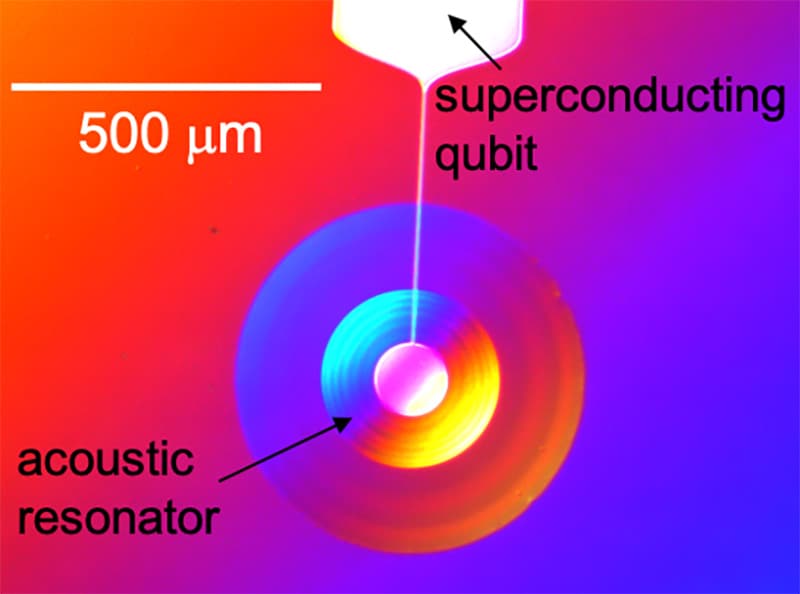
In this webinar, Yiwen Chu will give an overview of the field of opto- and electromechanical systems in the quantum regime, with a focus on their various applications in quantum information processing.
Chu will share with you some examples from her research on storing, manipulating and transducing quantum information in mechanical systems.
Yiwen Chu is currently an assistant professor in the physics department at ETH Zürich. She leads the Hybrid Quantum Systems Group, which was established in 2019. The group focuses on using mechanical resonators in combination with other quantum systems for a variety of purposes ranging from quantum information processing to studies of fundamental physics.
Yiwen did her bachelor studies at MIT and her PhD in the group of Prof. Mikhail Lukin at Harvard. She was then at Yale for a postdoc in the group of Prof. Rob Schoelkopf before moving to Zürich.
An international team of physicists has created a small interferometer-based motion sensor that could be used to boost the performance of gravitational-wave detectors. The centimetre-sized device can measure the displacement of test masses at sub-picometre precision at low frequencies. The researchers believe that their technical innovations could lead to new opportunities in gravitational wave detection – allowing astronomers to observe events that have so far remained obscured by noise. It could also be used in other fields including seismology and metrology.
The LIGO and Virgo observatories are kilometre-sized interferometers that detect gravitational waves by monitoring the positions of large mirrors, which undergo exceptionally tiny displacements when a gravitational wave passes through Earth. So far, they have picked up dozens of signals of gravitational waves – largely originating from the mergers of pairs of stellar-mass black holes. Based on this initial success, astronomers are now hoping to detect the lower-frequency gravitational waves generated by the mergers of much larger intermediate-mass black holes, which are hundreds, or even thousands, of times the mass of the Sun.
Unfortunately, seismic and other noise currently prevents LIGO and Virgo from reaching the required sensitivity needed to measure these low-frequency signals. The effect of this noise can be controlled to a certain extent by monitoring and damping the motions it causes in the mirrors and other components of the observatories.
Commercial components
Now, Jiri Smetana at the University of Birmingham and colleagues have used commercially available optical components to create a displacement detector that they say is suitable for these noise suppression systems.
The sensor comprises two Michelson interferometers that are driven by a single laser. Each interferometer comprises a sensing head and a mirror. One of the sensing heads is part of a feedback loop that stabilizes the frequency of the laser, thereby boosting the performance of the system.
The team used a technique called deep frequency modulation to calculate the displacement of the mirrors from the measured interferometer fringes. This technique allows tiny motions across a wide range of frequencies to be detected. Indeed, the system had a sensitivity of 0.3 pm/√Hz at a frequency of 1 Hz and is 300 times better than one type of sensor that is currently used in LIGO.
The sensor is only several centimetres in size, which makes it a suitable candidate for future upgrades to existing gravitational wave detectors – upgrades that could be implemented with minimal impact to their existing infrastructure.
With these improvements in place, the researchers suggest that astronomers may be able to detect mergers between intermediate-mass black holes for the first time. Having the ability to measure lower-frequency signals would also be useful for multimessenger astronomy, allowing signals to be detected further in advance of merger events. The sensor could also find use in other instruments that detect tiny displacements – such as torsion balances and seismometers.
While the mercury was hitting record highs in the UK over the summer, development engineers at ICEoxford were bunkered down in the cool of the R&D laboratory, putting the finishing flourishes to the company’s latest offering for ultralow-temperature regimes. The product in question, the DRY ICE DYAD, is a closed-cycle cryostat system capable of cooling to a 1.7 K base temperature whilst providing cutting-edge vibration isolation and flexible optical-access options to the sample space.
For context, ICEoxford’s core competency is the design and development of high-end cryogenic systems to support experimental studies across diverse applications within the physical sciences – from quantum computing and quantum optics to high-temperature superconductivity and scanning probe microscopy (SPM). What sets the company apart, though, is a relentless focus on customer service and collaborative innovation, claims Paul Kelly, chief technical officer at ICEoxford. “Put another way,” he adds, “we work directly with scientists to understand their requirements at a granular level, giving them confidence that we can deliver the optimum system versus their budget and technical specifications.”
Prioritizing stability and flexibility
That collaborative model of product development underpins the technical specifications of the DRY ICE DYAD – not least when it comes to ultralow-vibration performance (at <10 nm). Key to success here is the sample unit being held separately on an optical table, such that it is isolated from the cold head and the main body of the cryostat (and connected only by a soft thermal link to further reduce vibration). “Our design approach is to decouple the cryostat completely from the sample environment,” explains Kelly. “The cryostat sits on the laboratory floor, with the sample space located on the adjacent optical table.”
In fact, stability provides one of the over-arching design themes of the DRY ICE DYAD. “While our scientific customers all have unique requirements,” notes Kelly, “they’re all ultimately looking for stability along three main coordinates. Think vacuum stability – a clean, reliable vacuum. Think temperature stability – from the very low base temperature up to 300 K. Think mechanical stability – because in quantum research even the smallest vibrations can cause the quantum effects to fail.”
Operational flexibility is another design consideration that’s front-and-centre in the DRY ICE DYAD. A case in point: the end-user can switch the sample-space environment between a top-loading exchange-gas module and a vacuum module within a couple of hours – an arrangement that ensures versatile cryogenic cooling to align with the often-conflicting research priorities in busy laboratories.
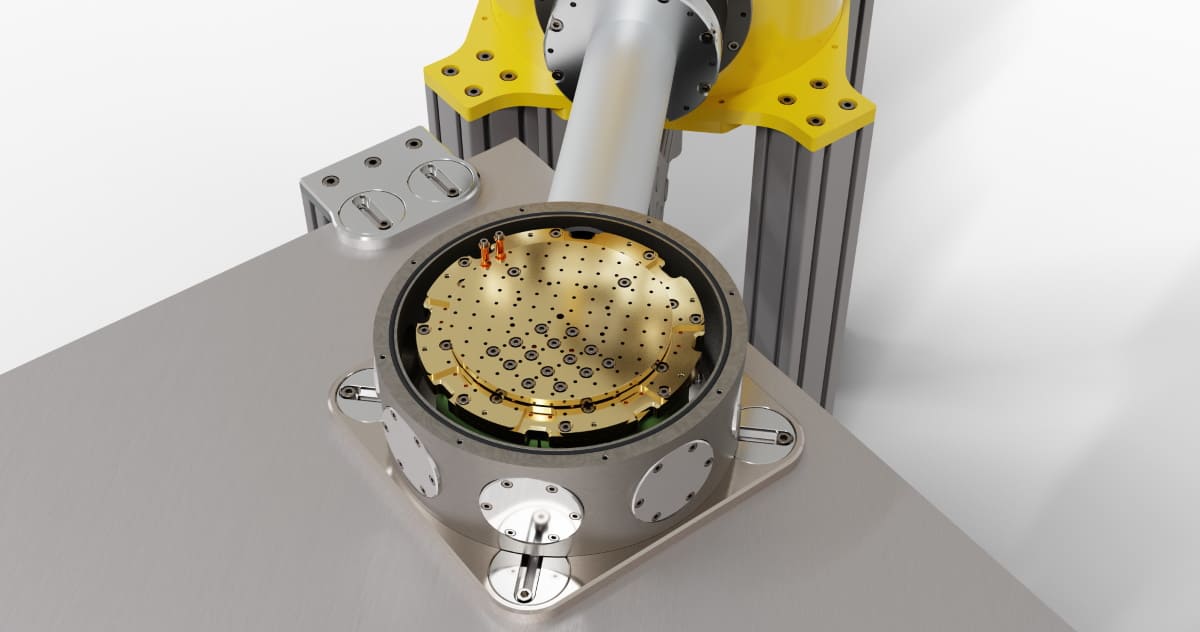
Stable solution: The cryostat is separated from the sample space (shown above) and connected only by a soft thermal link to isolate vibrations from the cold head. (Courtesy: ICEoxford)
In terms of specifics, the top-loading exchange-gas module is a patented design that allows the sample to be changed without warming the main body of the cryostat, thereby enabling a 2 h sample cooldown time. Sample manipulation and rotation are also possible in up to six axes along with high-numerical-aperture optical access and magnetic fields up to 9 T.
Meanwhile, the sample-in-vacuum module includes a 150 mm diameter cold plate onto which the sample is mounted (with a direct thermal link to the cryostat). The sample space is accessed by lifting the outer vacuum plate and radiation shield, while the top-loading sample module (a probe-based unit) enables sample changes without heating up the entire system. Integration of low-temperature nanopositioners and up to three objectives facilitates sample movement and manipulation.
“The cryostat is really set up to handle two different types of experiment – under exchange gas and under vacuum,” notes Kelly. “The exchange gas allows fast turnaround and preliminary sample studies that are, more often than not, a precursor to longer-duration experiments [days or even weeks] under vacuum.”
Made-to-measure magnetism
Cooling aside, superconducting magnets are an integral part of the DRY ICE DYAD system, with ICEoxford offering a range of solenoid, split-pair and vector-rotate magnets up to 9 T field strength. While studies of magnetic properties at ultralow temperatures are a given, many scientists also want to carry out simultaneous optical investigations of their materials – not so easy if the sample is sat within the large coil of a solenoid magnet.
One option, for example, is to load the sample into the bore of a split-pair magnet to allow laser spectroscopy experiments in transmission or reflection mode. The use of two- or three-way vector-rotate magnets provides further flexibility, with the latter able to generate a magnetic field in three discrete directions. In this way, it is possible to keep the sample stationary while the magnetic field is varied around it – a key feature when studying a specific plane within a crystal lattice or if the heat generated by sample rotation is a source of interference for small-scale electrical conductivity measurements.
Another notable feature of the DRY ICE DYAD is the emphasis on automation, with LabVIEW-based software used to control and monitor temperature. “This has been developed with the customer in mind,” concludes Kelly, “to reduce the set-up and turnaround time of the system while increasing laboratory productivity.” What’s more, it’s possible to add features to the software such as integrated control for the superconducting magnet as well as automating the top-load and probe cool-down.
Specific customizations include an option for up to six additional ports around the optical system to enable end-users to integrate DC wiring, coax cables or optical fibres on an as-needed basis. Users can also request up to five optical windows of varying diameter in a range of materials.
“Product innovation is ongoing with the DRY ICE DYAD,” concludes Kelly. “We already have 1.6 K and 1.5 K base temperatures in our sights on the development roadmap.”
Quantum steering – a strange, non-local phenomenon similar to quantum entanglement – cannot be perfectly replicated by any joint operation between the system being steered and an external system. This new “no-cloning” theorem is the result of work by researchers in China who studied the situation that arises when one of two parties sharing a quantum state does not trust the source of quantum particles being used to create that state. As well as being important for fundamental physics, the finding could have implications for quantum cryptography and quantum computing.
Conventional computers store information as “bits” that have a value of either 1 or 0. Quantum computers, in contrast, store information in two-level quantum systems such as the horizontal and vertical polarization states of photons or the “spin up” and “spin down” states of electrons. The states of these quantum bits, or qubits, are not limited to 0 and 1; they can also exist in an intermediate combination known as a superposition. However, the complete state of a quantum system can never be fully known, meaning that perfect duplication of qubits is forbidden. This is the so-called “no-cloning” theorem, and it forms the basis of quantum cryptography.
Another important principle is that two or more qubits can become entangled, meaning that they have a much closer relationship than is allowed by classical physics. When two qubits are entangled, measuring the state of one of them automatically tells you the state of the second, no matter how far apart they may be. For example, if you know the spin of one particle, you can determine that of the other.
Albert Einstein found this aspect of entanglement unsettling, as it implied that entangled particles could affect each other’s state in a non-local way – something he called “spooky action at a distance”. In a paper published in 1935, he and his colleagues Boris Podolsky and Nathan Rosen argued against this form of nonlocality, and it became known as the EPR paradox after their initials. Later research, however, showed that their argument is incorrect: the 2022 Nobel Prize for Physics went to a trio of experimentalists who, building on work by the late theorist John Stewart Bell, demonstrated that entanglement (and thus nonlocality) is indeed part of our physical world.
The “steering no-cloning principle”
Quantum entanglement is not the only form of nonlocality in quantum theory, though. Another type, known as quantum steering, was first introduced by Erwin Schrödinger as a generalization of the EPR paradox. In quantum entanglement, the two parties involved in a quantum transaction (known traditionally as Alice and Bob), both trust the source of quantum particles used to generate their respective states. Quantum steering introduces an asymmetry to this set-up: now only one source (Alice’s, for example) is trustworthy. This enables Alice to “steer” the state of the particles observed by Bob, which means that measurements she makes on her half of the entangled particle pair affect the state of Bob’s half in a way that cannot be explained classically.
The “steering no-cloning principle” demonstrated in the new work adds to our understanding of this form of nonlocality. “The original no-cloning theorem states that no physical operation can perfectly copy an unknown quantum state,” explains Fu-Lin Zhang, who led a team of researchers at the Department of Physics at Tianjin University and the Chern Institute of Mathematics at Nankai University. “Our finding indicates that the quantum steering in a known state cannot be perfectly copied if the state is ‘too quantum’.”
The researchers also found that a closely related type of quantum correlation called EPR steering can be partially cloned. EPR steering exists in states that can be used to convincingly demonstrate quantum steering even if the observer of the steered states does not the trust the measurer. It can therefore be regarded as a “stronger” quantum property than quantum steering, Zhang explains. “In quantum information tasks between Alice and Bob attacked by a third party, ‘Charlie’, using a cloning machine, our result sets thresholds on the EPR steering between Alice and Bob to exclude EPR steering between Alice and Charlie,” he tells Physics World.
“The no-cloning of quantum steering is a consequence of quantum superposition, as are the original no-cloning and no-go theorems,” he adds, “and our proof is based on the so-called no-broadcasting theorem, which is an extended no-cloning system of ‘mixed’ states (in composite systems).”
The researchers are now examining how degrees of “quantumness” affect other no-go theorems. “We are studying protocols of sharing nonlocality and other types of quantum information among multiple observers in the framework of quantum cloning,” Zhang reveals. “Such a topic of sharing nonlocality and information is fundamental in quantum information science.”
Teams of airborne 3D-printing drones could one day be used to complete construction projects in dangerous or hard-to-reach environments – thanks to new technologies developed by researchers led by Mirko Kovac at Imperial College London. The team was inspired by flying animals such as bees, which collaborate to build complex structures.
3D printing is driving a rapid transformation in the construction industry. Using robots to build up structures layer by layer can improve the safety and productivity of building sites. It can also make complex geometrical structures more feasible to build, while reducing material costs and boosting efficiency.
In their study, Kovac’s team looked at how the technique could be taken one step further by combining 3D printing with the latest advances in drone technology. The idea is that unmanned flying vehicles could mimic the behaviour of collaborative builders in nature: including groups of bees, wasps, or termites.
Information gathering
By continually gathering information about the state of a building project, while communicating this data between each other, these creatures can adapt to changing environments to build complex structures across a wide range of size scales.
To mimic these insect builders in a technological system, Kovac and colleagues created four key technologies for unifying the advantages of natural builders with engineering principles. First, they created BuilDrones, which are aerial drones that are adapted to deposit materials to within an accuracy of 5 mm; second, they programmed these drones to use a wireless system to tell other drones what they are doing.
Their third innovation was to use separate ScanDrones to create navigation and task-planning systems. Rather than building themselves, these robots distribute manufacturing tasks between the BuilDrones, assess the quality of their work, and use path-finding algorithms to calculate how these tasks could be completed as efficiently as possible. Finally, Kovac’s team identified lightweight materials that could be easily carried and deposited by the BuilDrones.
Simple building projects
To demonstrate their system, the researchers used a group of drones to carry out a series of simple building projects in the lab: including creating a roughly 2 m-high cylinder, printed from a rapid-curing insulation foam; and making an 18 cm-high cylinder from a lightweight, cement-like material.
Throughout these builds, the team showed that their system could readily adapt to variations in robot numbers and print geometry. What is more, just one person was required to supervise the drones’ activities – ensuring that minimal mistakes were made.
Kovac and colleagues now hope that the flexibility of their technology could soon see 3D-printing drones applied in real construction projects. This could be particularly useful for building in hard-to-access, potentially dangerous locations including remote mountain sites and the upper floors of skyscrapers.
Rental electric scooters arrived here in Bristol a few years ago and I have found them both useful and enjoyable to ride. One thing I try to do is wear a helmet, because I am conscious that an accident could have dire consequences, even if Bristol’s e-scooters are limited to 25 km/h. Now, researchers in Germany have used a crash test dummy to show just how dangerous e-scooter accidents can be.
Matthias Boljen and colleagues at the Fraunhofer Institute for High-Speed Dynamics in Freiburg looked at accident scenarios where an e-scooter crashes into a kerb at several different angles and at speeds up to 30 km/h. Not surprisingly, they found that the dummy was catapulted over the e-scooter’s handle bars – flying through the air for several metres (depending on the speed) and landing with a thud.
Serious injuries
The research – which also included finite-element computer simulations – showed that collisions can result in serious injuries, even at 10 km/h, which was the lowest speed tested. What is more, there was a significant danger of head injury in all of the tested scenarios.
While the team suggests that some injuries could be avoided by wearing a helmet and other protective gear, Boljen says “no helmet can prevent the accelerations acting on the head in the event of a direct impact; they can only reduce some components of these to a certain extent. Strictly speaking, the risk of traumatic brain injury exists whether the driver wears a helmet or not.”
I wear my bicycle helmet when I take out an e-scooter, but according to this study that does not afford enough protection for higher speed collisions. This is because the EN 1078 European standard for bicycle helmets applies to speeds up to about 20 km/h. So maybe next time, I will pass on an e-scooter and walk instead.
But it’s not all bad news, because other researchers at the institute are developing hi-tech materials for helmets and other safety gear. You can read more here.
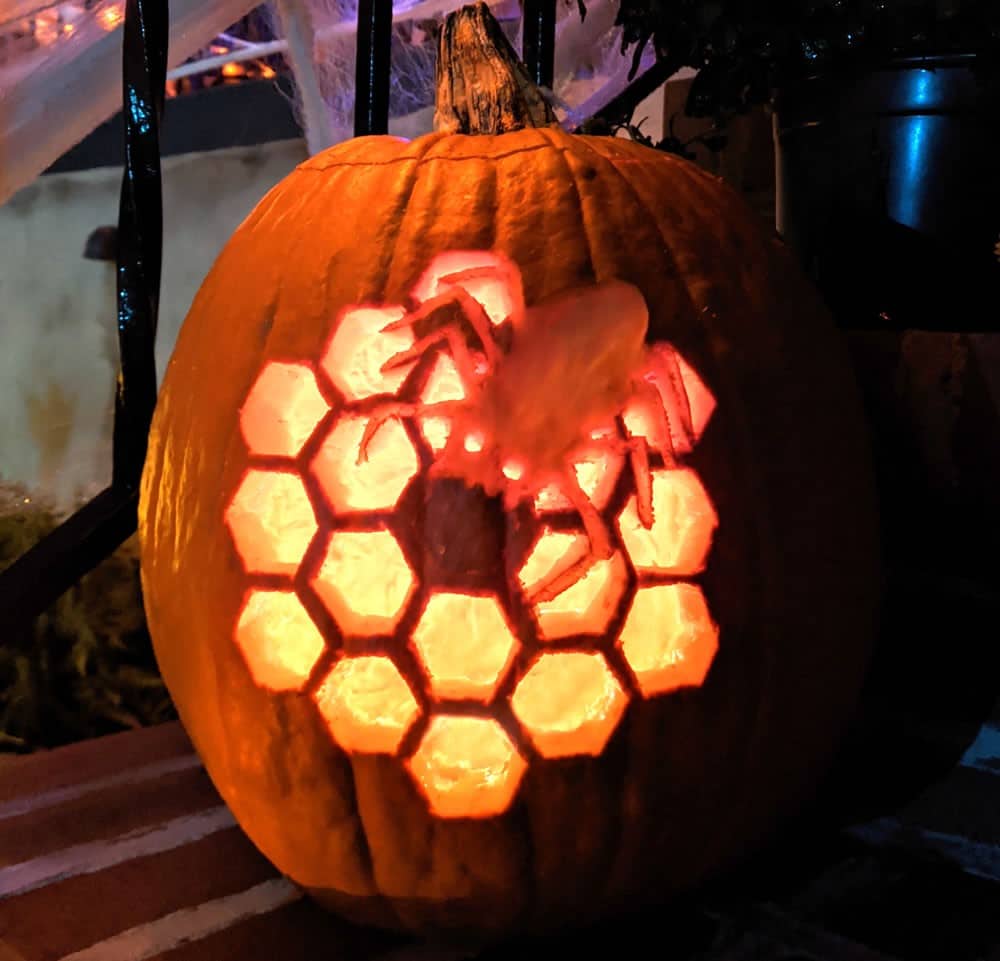
Scary stuff: the Spider Webb pumpkin. (Courtesy: NASA)
Pumpkin season has almost arrived in the UK and so what better way to celebrate the harvest than to create your very own James Webb Space Telescope (JWST) inspired carving. For the past few months, the JWST has been sending back spectacular images of the cosmos and now NASA and partners have released four designs that all feature the telescope’s iconic 18 hexagonal segment mirror. The pumpkin templates were made by Leah Hustak and instructions come in English and French. The easiest one to carve is a simple outline of the telescope itself while perhaps the spookiest – and most difficult to do – is the “Spider Webb” design that features a large spider crawling across the mirror.
Conventional methods of characterizing and troubleshooting plasma-based thin-film processes frequently lack the ability to capture the full intricacies of the plasma system. Often, efforts rely on manual methods, use low-resolution data, and don’t have advanced analytics capabilities, making it difficult to identify root causes of process instabilities.
This webinar describes how new IoT software expands data resolution, access and analysis — enabling improvements to key measures of process success, including stability, cost, throughput and yield. High-resolution data (up to 40 MHz for event capture), historical data recording, browser-based dashboards, customized algorithms and advanced analytics support provide a window into actual conditions in the plasma system, in real time.
Presenters will provide demonstrations, discuss compatible platforms and offer studies into how this IoT software can enable plasma process operators in the semiconductor and industrial-coating industries to make data-driven decisions, proactively solve root cause and visualize previously unidentified optimization opportunities.
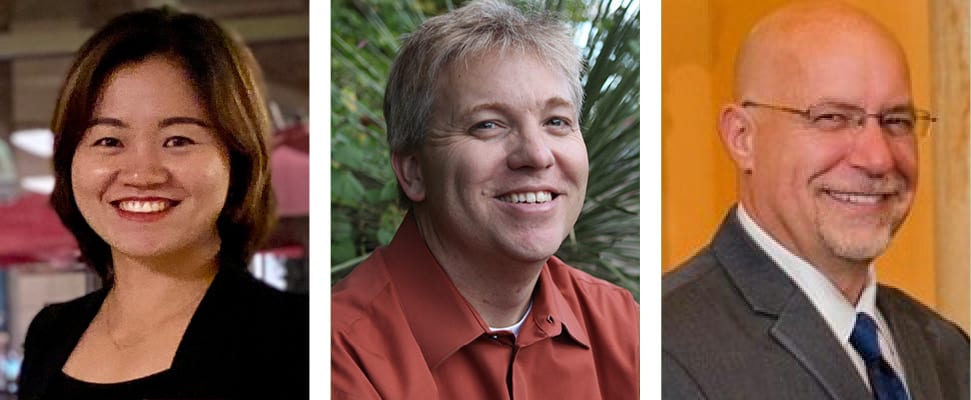
Left to right: Jing Li, Andrew Merton, Craig Rappe
Jing Li is Advanced Energy’s business develop manager for IoT solutions. She has 12 years’ experience in engineering and business development for the mining, metals, semiconductor, industrial coating and horticultural industries. She holds an MBA from USC, as well as a master’s of engineering degree in metallurgy from the University of Science and Technology in Beijing.
Andrew Merton is the lead data scientist for the PowerInsight by Advanced Energy™ team. In this role, he develops algorithms and metrics to create actionable intelligence from field data to guide diagnostics and estimate asset performance. He holds a PhD in statistics from Colorado State University and an MS in mechanical engineering from the University of Colorado Boulder.
Craig Rappe joined Advanced Energy in 2017 as a field applications engineer. With more than 30 years’ experience in industrial coatings, he helps architect and implement creative power-delivery solutions for a variety of thin-film applications.