Pressure quench increases superconducting transition temperature

Could a new pressure quenching technique help researchers move forward on the road to reaching room-temperature superconductivity? Researchers at the University of Houston are pinning their hopes on this approach and say they have already used it to achieve a record-high superconducting transition temperature (Tc) of 151 K at ambient pressure in a metastable phase of HgBa2Ca2Cu3O8+δ (or HBCCO) The phase remains stable for around at least three days when held at 77 K, although its Tc degrades when heated to above 200 K.

Achieving ambient-pressure room-temperature superconductivity remains the holy grail for scientists working in this field. This is because superconductors that work at ambient temperatures and pressures could revolutionize a host of application areas, including increasing the efficiency of electrical generators and transmission lines through lossless electricity transmission. They would also greatly simplify technologies such as magnetic resonance imaging (MRI) that rely on the generation or detection of magnetic fields.

While much progress has been made in the last decades, increasing the Tc often relies on squashing materials at extremely high pressure – usually in a device known as a diamond anvil cell (DAC). Some examples include the sulphide material H3S, which has a Tc of 203 K when compressed to pressures of 150 GPa and the cerium hydrides, CeH9 and CeH10, which boast high-temperature superconductivity at lower pressures of about 80 GPa with a Tc of around 100 K.

HBCCO is a high-temperature superconducting cuprate that has a Tc of 133 K at ambient pressure. This can be pushed to 164 K by applying a pressure of 31 GPa to it.

High-pressure-induced metastable superconducting phase

The high Tc of HBCCO is thought to come from the high electron density of states of a possible “van Hove singularity” associated with the two-dimensional CuO2 planes in it. In the new work, a team led by Ching-Wu Chu and Liangzi Deng of the Department of Physics and Texas Center for Superconductivity at the University of Houston decided to study a high-pressure-induced metastable superconducting phase in the material that they think might be able to form at ambient pressure as a result of this singularity (which leads to strong interactions between electrons) and/or other anomalies in the electronic energy spectrum.

To investigate further, the researchers developed a pressure-quench protocol to stabilize this metastable phase at ambient pressure. Their process involves first identifying the target phase in a DAC under high pressures of between 10–30 GPa. Next, the material is quenched (that is, the pressure is rapidly removed) at 4.2 K.

Chu and Deng confirmed that they had indeed isolated this phase and not another using synchrotron X-ray diffraction (at the 16-ID-B beamline of the Advanced Photon Source) before removing it from the cell. These measurements also show that the pressure-quenched phase at ambient pressure retains its original crystal structure, but possibly contains defects, generated under pressure and during quenching. The researchers think that these defects might help preserve the metastable high- Tc phase.

Thanks to their technique, they say they have achieved a hitherto unreported ambient-pressure Tc of 151 K.

Tiny samples

The experiments were far from easy, however, they say. The samples were extremely small (around just 50–80 microns in size), so handling them in high-pressure experiments is inherently challenging, explains Chu. Another major difficulty was preventing the electrical leads used for the resistivity measurements from breaking during the pressure-quenching process. Recovering the samples after quenching for more detailed analyses at ambient pressures was technically demanding too.

Looking ahead, the researchers say they would now like to better understand where the high Tc in HBCCO comes from – both under pressure before quenching and at ambient pressure after quenching. “We would also like to elucidate the mechanisms that lock in the high Tc phase at ambient pressure after quenching,” says Chu.

The impact of the new work, which is detailed in PNAS, might even extend beyond superconductivity, adds Deng. “Indeed, our approach could allow us stabilize quantum metastable states at ambient pressure that have enhanced or unique properties that only emerge under pressures. Based on our experimental results, using theoretical modelling and AI-driven approaches, we would like to identify different types of quantum materials that are suitable for pressure quenching.”
Researchers at CERN transport antiprotons by truck in world‑first experiment

Researchers at the CERN particle-physics lab have successfully transported antiprotons in a lorry across the lab’s main site. The feat, the first of its kind, follows a similar test with protons in 2024. CERN says the achievement is “a huge leap” towards being able to transport antimatter between labs across Europe.

Antimatter is almost identical to ordinary matter except that the electric charge and magnetic moment are reversed. But if equal amounts of matter and antimatter were created in the Big Bang, as is widely believed, they would have annihilated each other, leaving an empty universe. Physicists therefore suspect there are hidden differences that may explain why matter survived and antimatter all but disappeared.

CERN’s Baryon-Antibaryon Symmetry Experiment (BASE) experiment focuses on measuring the magnetic moment (or charge-to-mass ratio) of protons and antiprotons to search for such differences.

These measurements need to be extremely precise but this is difficult at CERN’s “Antimatter Factory”, which produces the antiprotons, due to inference from nearby equipment. To carry out more precise measurements, the team therefore needs a way of transporting the antiprotons to labs further afield.

To do so, in 2020 the BASE team began developing a device, known as BASE-STEP (for Symmetry Tests in Experiments with Portable Antiprotons), to store and transport antiprotons.

It works by trapping particles in a Penning trap composed of gold-plated cylindrical electrode stacks made from oxygen-free copper that is surrounded by a superconducting magnet bore operated at cryogenic temperatures.

The device, which also contains a carbon-steel vacuum chamber to shield the particles from stray magnetic fields, is then mounted on an aluminium frame. This allows it to be transported using standard forklifts and cranes and withstand the bumps and vibrations of transport.

In 2024, BASE researchers used the device to transport a cloud of about 105 trapped protons across CERN’s Meyrin campus for four hours.

After that feat, the researchers began to adjust BASE-STEP to handle antiprotons and yesterday the team successfully transported a trap containing a cloud of 92 antiprotons around the campus for 30 minutes, travelling up to 42 km/h.

With further improvements and tests, the team now hope to transport the antiprotons further afield. The first destination on the team’s list is the Heinrich Heine University (HHU) in Düsseldorf, Germany, which would take about eight hours.

“This means we’d have to keep the trap’s superconducting magnet at a temperature below 8.2 K for that long,” says BASE-STEP’s leader Christian Smorra. “So, in addition to the liquid helium , we’d need to have a generator to power a cryocooler on the truck. We are currently investigating this possibility.”

If possible to transport to HHU, physicists would then use the particles to search for charge-parity-time violations in protons and antiprotons with a precision at least 100 times higher than currently possible at CERN.

Heavier cousin of the proton discovered at the LHC

Researchers at the Large Hadron Collider (LHC) have discovered a new particle, the Ξcc⁺, (“Xi cc plus”), a heavier cousin of the proton. The particle’s fleeting existence had made it invisible for decades, but the upgraded LHCb detector captured it in just one year of data, opening a new window into the forces that hold quarks together.

Quarks are the fundamental building blocks of protons and neutrons, which in turn combine to form atomic nuclei. Protons themselves are made from two up quarks and one down quark, held together by the strong force. This is described by a sophisticated theory known as quantum chromodynamics (QCD). The Ξcc⁺ is unusual because it replaces the two up quarks with heavier charm quarks, keeping just one down quark.

“Up and down quarks are labels we give to distinguish the different types of quark,” Tim Gershon of the University of Warwick, told Physics World in an email. “In the Ξcc⁺, both up quarks are replaced by the heavier charm quark. Since the charm and up quarks differ only by their mass – in particular having the same charge – this provides an ideal way to test QCD,” explains Gershon who is spokesperson-elect for LHCb.

This quark content change makes the Ξcc⁺ roughly four times heavier than a proton. Its extremely short lifetime, less than a trillionth of a second, is why previous experiments could not detect it, despite the particle being produced frequently in LHC collisions.

Upgrade was crucial

“The key development that made the observation possible was the upgrade of the LHCb detector,” Gershon says. “We could observe the Ξcc⁺ in one year of data-taking, while we had not been able to do so in a decade of data collected with the original LHCb detector.”

The Ξcc⁺ appears briefly in proton–proton collisions before decaying into three lighter particles: a Λc⁺ baryon, a K⁻ meson, and a π⁺ meson. These decay further into five final particles, including a proton, two K⁻ mesons, and two π⁺ mesons. By reconstructing the trajectories of these particles, researchers saw a sharp signal corresponding to the existence of the Ξcc⁺ particle.

This observation also settles a long-standing question. Over twenty years ago, the SELEX experiment at Fermilab in the US reported hints of the particle. However, the signal could not be confirmed. The LHCb measurement provides a clear, unambiguous detection.

“Studies of particles containing two heavy quarks are very interesting for tests of the QCD binding mechanisms, and this observation provides important new data in that direction,” Gershon says.

The discovery relied on upgrades to the LHCb detector. A silicon pixel system called the Vertex Locator tracks particle paths with incredible precision, while a Ring Imaging Cherenkov system identifies particle types based on the light they emit. These improvements allow the detector to collect much larger amounts of data than before, making rare particle discoveries possible.

The discovery of the Ξcc⁺ is just the beginning. Physicists now aim to measure its properties in detail, including its lifetime and additional decay channels. Beyond this, they hope to find even heavier cousins, where one or both charm quarks are replaced by a beauty quark – called Ξbc and Ξbb respectively.

“These may be out of reach with the current LHCb detector – although we will try our best!” Gershon says. “But we do expect to be able to observe them with a future upgrade called LHCb Upgrade II. Unfortunately, the UK funding for this upgrade has recently been put in doubt due to decisions made at the UKRI funding agency. This latest result reiterates the uniqueness of LHCb – no other experiment can make these measurements – and the importance of finding a solution to be able to fund LHCb Upgrade II.”

Diamond films cool down electronics precisely where needed

A new technique for directly growing diamond layers in selected areas on technologically relevant substrates could help remove heat precisely where it is needed in electronic devices, improving their performance. The scalable technique, which relies on microwave plasma chemical vapour deposition, can create diamond patterns on silicon and gallium nitride across length scales ranging from microns to full 2-inch wafers.

Unwanted heat is a major problem in electronics, and the issue only gets worse as devices become smaller. Synthetic polycrystalline diamond could come into its own here, thanks to the material’s high thermal conductivity, which allows it to efficiently dissipate heat. The problem, however, is that diamond is very hard and chemically resistant. This makes it difficult to shape using the conventional “top-down” techniques employed to carve fully-grown diamond layers to the sizes required.

In the new work, a team of researchers led by materials scientists Xiang Zhang and Pulickel Ajayan and electrical and computer engineer Yuji Zhao of Rice University in the US turned to a bottom-up approach in which they build up diamond layer-by-layer using a plasma chemical vapour deposition technique. Their process, which is detailed in Applied Physics Letters, involves using microwave energy to ionize methane gas (CH4) so that it breaks down into its constituent carbon and hydrogen atoms. The carbon atoms then settle onto the substrate and assemble via a process that begins with nucleation. “Here, individual carbon atoms act as ‘seeds’ that other carbon atoms can latch on to,” explains Zhao.

Under these conditions, the researchers are able to control the thickness of the diamond by varying the growth time.

Controlling the seed location

To control the precise location of the carbon seeds, the team employed two techniques. The first was photolithography – a routine method in microelectronics that involves passing a light beam through a transmission mask to project an image of the mask’s light-absorption pattern onto a (usually silicon) wafer. The wafer itself is covered with a photosensitive polymer called a resist. Changing the intensity of the light leads to different exposure levels in the resist-covered material, making it possible to create small, finely detailed structures.

The approach, explains Zhao, is akin to using light to create a precise stencil, with the resulting structure acting as a mould for the diamond seeds. “Once the substrate wafers have been prepped, we spread a liquid containing nanodiamonds over their surface. These tiny specks then act as the starters for the diamond growth.”

The particle size of the nanodiamond seeds was 5–10 nm, which ensured a high nucleation density (estimated to be around 1011–1012 cm-2) for subsequent diamond growth, Zhao adds. High-magnification scanning electron microscopy revealed that the diamond films consisted of densely packed grains that were smaller than a micron and that the patterned diamond films were around 2.5–3.5 µm thick. Raman spectroscopy confirmed that a diamond film had formed across the entire patterned region and that it was highly crystalline.

To prove how versatile this approach was, the team decided to selectively fabricate complex geometries – for example, a diamond structure in the shape of an owl, which is the mascot of Rice University – on a gallium nitride substrate.

A different technique for larger wafers

This technique worked well for small-area patterns, but for larger wafers, a different approach was required, explains Zhao. Instead of conventional photoresist lithography, the team laminated a commercially available lapping film onto a silicon wafer that served as a removable masking layer. A standard laser cutter was then used to define the boundaries of the desired pattern by selectively cutting through the film.

Next, the engraved regions were peeled off, exposing the underlying substrate only in the predefined areas. “We then carried out nanodiamond seeding by spin-coating a nanodiamond suspension over the entire wafer,” says Zhao. “After solvent evaporation, we mechanically lifted off the remaining lapping film, removing the nanodiamond seeds from the masked regions to leave a patterned seed layer on the exposed substrate that diamond can then grow on.”

This approach allowed the researchers to scale up to a full 2-inch wafer.

“The key result is that we can grow diamond on selected, predefined areas on technologically relevant substrates,” Zhao tells Physics World. “This will allow diamond – the best bulk thermal conductor known – to be placed precisely where heat removal is needed in a device, making practical integration much more feasible. Indeed, we showed that our films when employed as heat spreaders on a silicon substrate can reduce the operating temperature by more than 23 °C compared to bare silicon.”

The team also discovered that smaller diamond islands were better at dissipating heat than a continuous diamond coating. “We found that the 50-micron diamond patterns achieved the most effective cooling because of their higher perimeter-to-area ratio,” Zhang explains. “These geometric features increase the density of the edge regions and help the heat dissipate more efficiently in three dimensions down into the silicon substrate.”

Thermal management is now a universal challenge – and is needed everywhere from AI GPUs and advanced logic (for example, FinFET technologies) to power electronics and photonics, Zhang adds. “As the global demand for AI accelerates, the associated power consumption and heat generation are becoming critical limits. Selective diamond integration offers a pathway to more efficient heat spreading across a broad range of technologies.”

Looking ahead, the researchers say they will now be working on direct device-level integration and making quantitative thermal measurements. They will also further optimize the material quality and interface engineering.

Superconductivity’s new contender

Researchers have experimentally observed a new kind of particle in transition‑metal dichalcogenide bilayers called doubly charged excitons, or quaternions. A single exciton is an electron bound to a hole, and combining an even number of fermions can create a boson with integer spin. In this system, one electron and three holes (or one hole and three electrons) bind together into a stable, doubly charged bosonic complex. Because bosons can occupy the same quantum state, these quaternions could in principle form a Bose-Einstein condensate, a collective phase in which all particles share a single macroscopic wavefunction. For charged bosons, such a condensate could carry electrical current with zero resistance, opening a pathway to a new kind of superconductivity.

The researchers confirmed the existence of quaternions through two key measurements. By continuously tuning the electron and hole densities, they observed the expected population behaviour of the bound state, and by applying magnetic fields, they identified the complex as a spin‑triplet. These signatures match theoretical predictions for a doubly charged exciton.

Unlike exciton or polariton condensates, a quaternion condensate is not expected to emit coherent light, and the experiments indeed show no signs of spectral narrowing or other coherence effects. Achieving condensation will require overcoming practical challenges, including heating from the optical pump and nonradiative Auger recombination at high densities, both of which raise the critical density for condensation. Better cooling and possible lateral confinement could help reach the required regime.

Although true Bose-Einstein condensation is not possible in an infinite two‑dimensional system, finite 2D systems can still undergo a transition that is effectively indistinguishable from condensation if the coherence length exceeds the system size. This makes it reasonable to search for superfluidity, and potentially superconductivity, in this platform. The strong long‑range Coulomb repulsion between quaternions also raises the possibility of entirely different quantum phases, such as a bosonic Wigner crystal or even a supersolid.

The establishment of these doubly charged exciton complexes in screened transition‑metal dichalcogenide bilayers opens a promising new direction in quantum materials research, with the real prospect of discovering a non‑BCS form of superconductivity (one that does not rely on the conventional Cooper‑pair mechanism) and other exotic states of matter.

Read the full article

Light-induced electron pairing in a bilayer structure

Qiaochu Wan et al 2026 Rep. Prog. Phys. 89 018003

Do you want to learn more about this topic?

Bose–Einstein condensation and indirect excitons: a review by Monique CombescotRoland Combescot and François Dubin (2017)

A single theory for complicated quantum systems

Open quantum systems appear in quantum computers, quantum magnets and spintronics, but their behaviour is extremely difficult to model. The environment introduces memory effects (non‑Markovian dynamics) and strong system-bath interactions (non‑perturbative regimes), where most existing methods fail or require switching between entirely different techniques depending on the parameters. This research presents a single unified framework that can handle all these regimes for interacting quantum spins coupled to bosonic environments.

The approach combines Schwinger-Keldysh field theory with the two‑particle‑irreducible (2PI) effective action and crucially uses a 1/N expansion of Schwinger bosons rather than a perturbative expansion in the system-bath coupling. This allows the method to remain accurate even in strongly non‑perturbative regimes. The framework can compute advanced quantities such as multitime spin correlations, which are essential for understanding quantum phase transitions and nonequilibrium transport in quantum materials.

The authors benchmark their method against quasi‑exact tensor‑network simulations of the spin‑boson model, showing excellent agreement in the regimes where tensor‑network methods are applicable, and then apply it to more complex spin‑chain models with multiple baths where no other method currently works. Because it supports arbitrary spin value, geometry, dimensionality, and bath spectral function, the framework offers a general and computationally tractable route to simulating many‑body open quantum systems.

Overall, this work provides a powerful field‑theoretic tool for studying driven‑dissipative quantum systems, with applications ranging from quantum computing to quantum magnonics and spintronics.

Do you want to learn more about this topic?

Keldysh field theory for driven open quantum systems by L M SiebererM Buchhold and S Diehl (2016)

Sunken nuclear submarine is leaking radioactive material intermittently

In April 1989 the Soviet Navy’s nuclear submarine Komsomolets caught fire while cruising 335 m beneath the surface of the Norwegian Sea. It was able to surface and 27 of 69 crew members survived the ordeal. The vessel then sank and now lies in 1680 m of water about 180 km off the coast of Norway’s Bear Island.

As well as being powered by a nuclear reactor, the Komsomolets is believed to contain two torpedo-mounted nuclear warheads. Not surprisingly, people are very concerned about the wreck and the possibility of radioactive materials leaking from the vessel.

Indeed, a Russian expedition in 1994 revealed that plutonium was leaking from one of the warheads. The following year, fractures in the hull and the torpedo tubes was sealed. Since then measurements taken near the Komsomolets suggest that any radioactive leakage is rapidly diluted by the surrounding water.

Now, scientists in Norway led by Justin Gwynn and Hilde Elise Heldal, have completed a comprehensive analysis of data taken by a 2019 survey of Komsomolets. The wreck’s marine environment was explored using Ægir 6000, which is a remote-controlled vehicle that is equipped with an array of cameras and other instruments and is capable of diving to 6000 m.

Writing in the Proceedings of the National Academy of Sciences, the team says analysis of seawater and sediment samples collected near the torpedo compartment reveals no evidence of plutonium being released from the warheads. However, analysis of samples from near a ventilation pipe show that radioactive material is being released intermittently from the nuclear reactor. By measuring the ratio of plutonium to uranium in the region, the team concluded that the fuel in the reactor is corroding.

Despite releases over the past three decades, Ægir 6000 found little evidence that radionuclides were accumulating in the region of the wreck – most likely because of the diluting effect of seawater.

The research is described in PNAS, where the team concludes, “Considering the global increase in military activities and geopolitical tensions, the fate of Komsomolets and the nuclear material within it can provide us with important insights as to impacts of any future accident involving nuclear powered vessels and nuclear weapons at sea”.

Electrosolvation force can act over long distances

Electrosolvation experiment

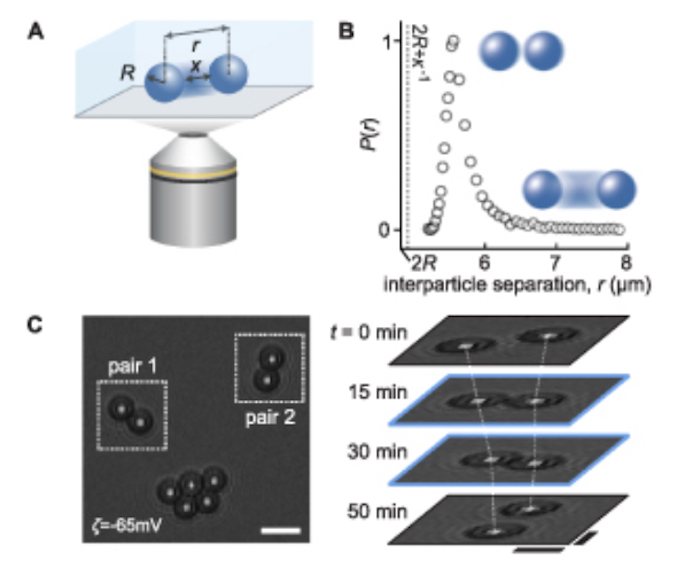
Two particles carrying electrical charge with the same sign should not attract each other, but in recent years, researchers have found that they can do this when they are dispersed in a liquid. A team at the University of Oxford in the UK has now discovered that the distance over which this counterintuitive “electrosolvation” force acts is much longer than theoretical models currently predict. They have also shown that the range of the force can depend on particle properties such as size and surface chemistry.

“The new finding reveals a missing piece in our understanding of electrostatic forces in liquids,” says physical chemist Madhavi Krishnan, who led this research study. “It is likely to reshape our understanding of how biological matter may self-organize and how molecules like DNA, RNA and proteins may naturally condense and cluster inside cells.”

In their work, Krishnan and colleagues used optical imaging to observe how pairs of charged micron-sized spheres with various surface coatings, such as DNA, polypeptides and anionic lipid bilayers (which make up cell membranes) interact in water.

Not a uniform medium

“Conventional electrostatic models treat the solvent as a uniform medium with a dielectric constant, but real liquids (such as water) cannot be described in this way because they form hydrogen bond networks and orient themselves around surfaces. Liquids also exhibit long-range correlations. All these properties may play a role in giving rise to an additional force which we call the electrosolvation force,” explains Krishnan.”

To be able to come up with a comprehensive understanding of the electrosolvation interaction, we have to dissect and carefully examine the phenomenology in question, she explains. A key feature of an interaction is its range. To measure the range of the attractive electrosolvation force accurately, Krishnan says that the students who carried out the experiments – her graduate student Sida Wang in particular – performed careful microscopy measurements on particles interacting with each other, observing individual pairs for periods of up to an hour and sometimes longer.

“We also performed exhaustive computer simulations to vet the measurements and estimate their accuracy,” Krishnan adds.

The researchers observed that DNA-coated particles exhibit particularly long-range attraction, which implies that the interaction depends not only on the solvent but also on the chemical and physical structure of the particles’ surface. This contrasts with the long-held view that the (Debye) screening length governing the interaction of charged particles in solutions depends only on the properties of the solvent medium.

Krishnan explains that the measured range of the attractive electrosolvation force can significantly exceed the nominal Debye length is to our knowledge not readily accounted for within any existing theoretical view and points to major gaps in our understanding of this very basic and fundamental question of how two charged particles interact in a liquid.. Indeed, it highlights the need for a more sophisticated view of the intervening medium than that offered by standard continuum electrostatics models.

“Current electrostatic models are incomplete”

“In short, anionic matter seems poised to attract; and the ability to either attract or repel in water, depending on the conditions, appears to be an intrinsic feature of negatively charged matter,” she tells Physics World. “It is entirely possible that the underlying mechanisms behind this process are broadly exploited in biology.”

The new work, which is detailed in Reports on Progress in Physics is the most recent in a series of investigations on the physics of interparticle interactions in the fluid phase, she says, and once again shows that current electrostatic models are incomplete – even under conditions in which they are expected to work well.

Looking ahead, the researchers say they would now like to examine the same interactions in bulk solution and compare these observations in the sedimented colloids studied in the present work.

Spectroscopic OCT plus AI detects high-risk plaque in coronary arteries

AI-based OCT detection of lipid-rich plaque

Identifying lipid-rich plaques inside coronary arteries is critical to assess a patient’s risk of having a heart attack. These fatty deposits adhere to the walls of blood vessels and, if they rupture, can trigger adverse cardiovascular events.

Currently, physicians use near-infrared spectroscopy and intravascular ultrasound (NIRS-IVUS) to quantitatively assess plaque lipid burden. Optical coherence tomography (OCT) is another intravascular imaging modality used during catheter-based procedures and provides micrometre-resolution visualization of plaque structure. But its diagnostic accuracy is limited by imaging artefacts and signals originating from non-lipid plaque components.

Researchers in Korea are developing a different approach: combining the biochemical specificity of spectroscopic OCT (S-OCT) with artificial intelligence (AI). This combination enables automated, composition-aware tissue characterization, and offers interpretable and annotation-efficient lipid mapping.

“By enabling efficient lipid screening and spatial interpretation, [the technique] establishes a scalable foundation for downstream assessment of lipid burden and clinically relevant plaque characterization, with potential utilization for automated risk stratification,” the researchers explain in Biomedical Optics Express.

Model training and validation

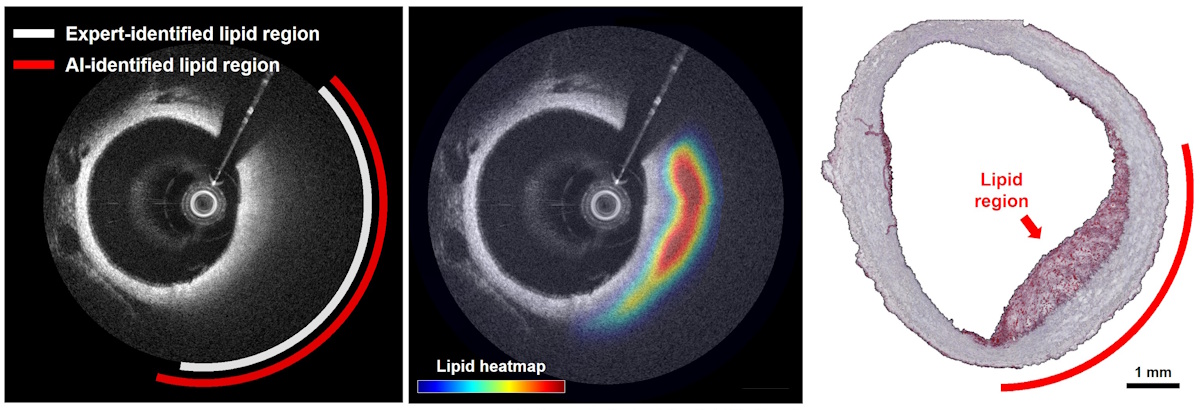
The AI-enhanced S-OCT system, which utilizes existing OCT systems without requiring hardware modification, incorporates an AI model developed by researchers at the Korea Advanced Institute of Science and Technology (KAIST) and the Multimodal Imaging and Theranostic Lab of the Korea University Guro Hospital. The AI model receives wavelength-dependent information from the OCT images and, by recognizing signal patterns associated with lipid-rich tissue, automatically highlights any suspicious regions in the image.

Team leader Hyeong Soo Nam from KAIST and collaborators created a dataset to train the AI model, using 848 lipid-positive and 622 non-lipid frames acquired from images of five rabbits with induced atherosclerotic plaques. They manually annotated each OCT frame to indicate lipid presence, and employed complex calibrated interferometric signals obtained through standard OCT processing to extract depth-resolved spectroscopic information for S-OCT. Finally, they applied a vessel region selection procedure with a depth range selected to focus the analysis on biologically relevant vessel regions with potential lipid content.

After training the deep-learning model, the researchers evaluated its performance in classifying lipid presence and spatial localization of lipid-associated regions, on both lipid-positive and non-lipid image frames. They also conducted histopathological validations to validate the predictions against ground truth, and compared the performance of the trained S-OCT model with an identically trained greyscale OCT-only model to assess the benefit of incorporating spectroscopic identification.

When assessing the relative importance of distinct spectral regions for lipid detection, the researchers discovered that training the model on a short-wavelength spectral subset (below 1300 nm) resulted in a higher lipid localization Dice score (a similarity metric) than a model trained on the long-wavelength band (above 1300 nm).

“This performance difference suggests the network relies more on spectroscopic features in the short-wavelength region, where lipid absorption shows a more pronounced spectral gradient,” they write. “The superior performance with short-wavelength data implies that the model effectively utilizes this spectral gradient, rather than relying on shared morphological features, to enhance lipid detection.”

The researchers validated their approach by imaging two rabbits with atherosclerotic plaques, and comparing the AI-generated predictions against histopathology results using lipid-specific tissue staining. The proposed model accurately localized lipid regions with strong spatial correspondence to histology, achieving a lipid localization Dice score of 83.9%.

“The results showed strong classification performance along with good spatial agreement with the pathological findings,” says Nam in a press statement. “By analysing wavelength-dependent information hidden in the OCT signal and combining it with AI, we were able to identify the presence and distribution of lipids within the vessel wall.”

“During a coronary intervention, this method could provide clinicians with additional information to support risk assessment, procedural planning and evaluation of treatment response,” Nam emphasizes. “Ultimately it has the potential to contribute to safer clinical decision making, more individualized treatment strategies and improved long-term management of patients with coronary artery disease.”

The team is currently working to improve the processing speed and robustness of their approach to make it more practical for real-time clinical use, and plan to perform validation studies using data from human coronary arteries. In addition, they aim to create a seamless method for integrating data reporting (the presence or absence of lipid plaque) into the clinical workflow.

Rocket re-entry pollutes the upper atmosphere

Thanks to new resonance lidar measurements, researchers in Germany, the UK and Peru have successfully measured and traced a lithium plume created by a rocket stage as it uncontrollably re-entered and broke up in the upper atmosphere. The work represents the first time that upper-atmospheric pollution from space debris re-entry has been directly detected, they say. Such pollution is a growing concern and is only likely to worsen as more and more satellites are being launched into space, and in particular into low-Earth orbit.

The number of satellite and rocket launches has increased dramatically over the last decade and this number is set to increase as ever more commercial mega-constellations are deployed. For example, the Starlink constellation is planned to consist of over 40 000 satellites, each with a mass of between 305 and 960 kg. Given their typical operational lifetimes of five years, these satellites are expected to re-enter Earth’s atmosphere through uncontrolled decay within the next several years.

Previous studies in this domain have mainly focused on the dangers of space debris falling to the ground, but we still know little about the environmental effects that the debris can have on our atmosphere. We do know, however, that the upper atmosphere is today host to many exotic atomic and molecular species that cannot be explained as having naturally come from meteors. This is worrying since the upper atmosphere is crucial for shielding life on Earth from meteoroids and UV radiation.

An intense fireball

At roughly 03:42 UTC on 19 February 2025, the upper stage of a SpaceX Falcon 9 rocket uncontrollably re-entered the atmosphere at an altitude of around 100 km, off the western coast of Ireland. This event produced an intense fireball that many people (and radar systems) were witness to, as well as a persistent high-altitude plume of lithium vapour. It also made headline news when fragments of the debris, including a fuel tank, were recovered near Poznań in Poland.

A team of researchers led by Robin Wing of the Leibniz Institute of Atmospheric Physics in Germany measured the concentration of lithium atoms in the mesosphere (which lies between 50 and 85 km in altitude) and the lower thermosphere (between around 85 and 120 km in altitude). They detected the lithium plume in the latter, using a resonance fluorescence lidar in Kühlungsborn in Germany. They also used locally measured winds from the SIMONe Germany meteor radar and global winds from the Upper Atmosphere ICON (UA-ICON) model to determine the path the lithium plume took and where it had originated.

Lidar is a laser-based remote sensing instrument that can be used to measure conditions in the atmosphere. The researchers chose to focus on lithium because it is routinely employed in spacecraft components, such as lithium-ion batteries and lithium-aluminium (Li-Al) alloy hull plating, but it is only naturally present in trace amounts at the altitudes studied. The flux of natural lithium (which comes from meteoric sources) is estimated to be around 80 g per day, while the amount of lithium contained in a single rocket stage is about 30 kg. This large disparity therefore makes lithium a sensitive tracer of man-made input from space debris re-entries, explain the researchers.

Vaporization of lithium begins at approximately 98 km altitude

Scientists already know that lithium rapidly vaporizes when a Li-Al structure ablates and it appears in the atmosphere as the aluminium matrix melts at 933 K. In their work, Wing and colleagues estimated the altitudes at which a Li-Al hull will begin to melt using the Leeds Chemical Ablation Model. For the hull thickness of the Falcon 9, they expect melting and vaporization of lithium to begin at approximately 98 km.

The strong atomic resonance fluorescence line of lithium at 670.7926 nm allows lidar to detect very trace amounts of lithium, both in the mesosphere and lower thermosphere. This enabled the researchers to perform altitude- and time-resolved measurements of the amount of lithium during and after re-entry events. Thanks to their measurements during six hours on the night of 19-20 February, they detected a sudden increase in the signal at about 96 km altitude, by a factor of 10 from the baseline value, just after midnight UTC on 20 February.

The results from this work, which is detailed in Communications Earth & Environment, also back up a recent study of the lower stratosphere conducted by Daniel Murphy at the NOAA and colleagues, which attributed significant middle-atmospheric pollution to space debris.

Potential harm to the ozone layer

Analysing the impact of re-entering space debris on the atmosphere is quite new, says Wing. “The paper by Murphy and colleagues, which was published in 2023, showed that 10% of stratospheric aerosols are already contaminated by materials from space debris. This previous work really motivated us to build a lidar capable of measuring what is left behind when rockets or satellites disintegrate in the atmosphere.”

The primary concern surrounding how space debris impacts the atmosphere is currently potential harm to the ozone layer, he tells Physics World. “Our work shows that we can now measure emissions from re-entering space objects and can use winds from radar observations and models to identify potential sources. By applying similar or improved setups to ours around the globe, the scientific community could provide the space industry with solid findings so we can all optimize the use of space.”

The researchers say they are now working on building a new and improved system to measure lithium and sodium. “We would also like to conduct the first survey of various metals such as copper, titanium and lead in the atmosphere that could be connected to space debris,” says Wing.

Copyright © 2026 by IOP Publishing Ltd and individual contributors