16 key skills and attributes for a successful career in physics

Applying for a job, a placement or an internship can be a challenging and stressful task. Even if you’re successful, you’ll still have to face an interview, where a potential employer will hope to quickly appraise your talents and abilities. Of course, your technical prowess is indispensable, but you’ll need much more than scientific knowledge to secure the position.

That’s because today’s employers are looking for a host of additional skills to determine how you will fit into their workplace. From being able to manage your time and sort out conflict to knowing how to communicate, these so-called “soft skills” are as important as your subject-specific knowledge that you developed during your degree.

The “hard” skills you gained while studying – whether it’s knowing how to solve a differential equation or line up mirrors on an optics bench – are easy to provide evidence for, from the modules you took or the lab work you did. But the other more nuanced and practical skills – such as presenting in front of your peers, writing reports or keeping to deadlines – are just as crucial. After all, they show how you work with others, how you communicate and how you organize yourself.

Developing and understanding how your practical experiences have already led you to build these skills is an important step in your career planning and job hunting.  Despite being categorized as “hard” or “soft”, both of these skill sets are invaluable when it comes to your employability. If you’ve worked part-time in the hospitality industry, for example, and had to communicate effectively with an irate customer, you’ll know that it definitely isn’t easy to use soft skills.

And just in case you don’t believe that soft skills are really that important for a career in physics, just look at a recent job advert for an applied laser physicist at the UK defence company AWE that I spotted on Physics World Jobs. The company said it was looking for candidates to have the following attributes, where the first three are hard skills and the last two are soft skills:

  • A degree in physics
  • Some experience of working with lasers or optics in an undergraduate laboratory setting would be advantageous
  • Experience conducting empirical scientific research and drawing sound conclusions
  • Ability to plan and manage the delivery of own work
  • Ability to work as part of a team with a range of stakeholders

As a former physics teacher and now director of NUSTEM, an outreach and research group at Northumbria University in the UK, I regularly help schools showcase careers in science, technology, engineering and mathematics (STEM) subjects to young people. We often talk about soft skills that people who work in STEM require. And as a recent student or graduate, you should think about which of these skills you may already have developed. You might surprise yourself. At Northumbria, for example, we feature a “STEM Person of the Week” – a short profile that showcases three attributes that are important to that person’s success in their job. These profiles, we hope, will help students to identify where they might have demonstrated such qualities themselves.

16 attributes for a career in STEM

To further support our work at NUSTEM, we recently undertook a research project to look into the skills and attributes that people who work in STEM have. We already had a list of 16 skills (see graphic above), that we developed using previous research into employability skills and in collaboration with teachers and the Institute of Physics, but we wanted to find out what qualities STEM professionals would think were important, and if they matched the ones we used.

Using an online survey, we asked more than 200 STEM professionals from across the UK – including physicists, engineers, data scientists and technicians – to note six key attributes that they felt were essential to being successful in their job. We then looked at all of the terms and grouped them into broader categories. The table below shows the attributes given by at least 30% of the STEM professionals.
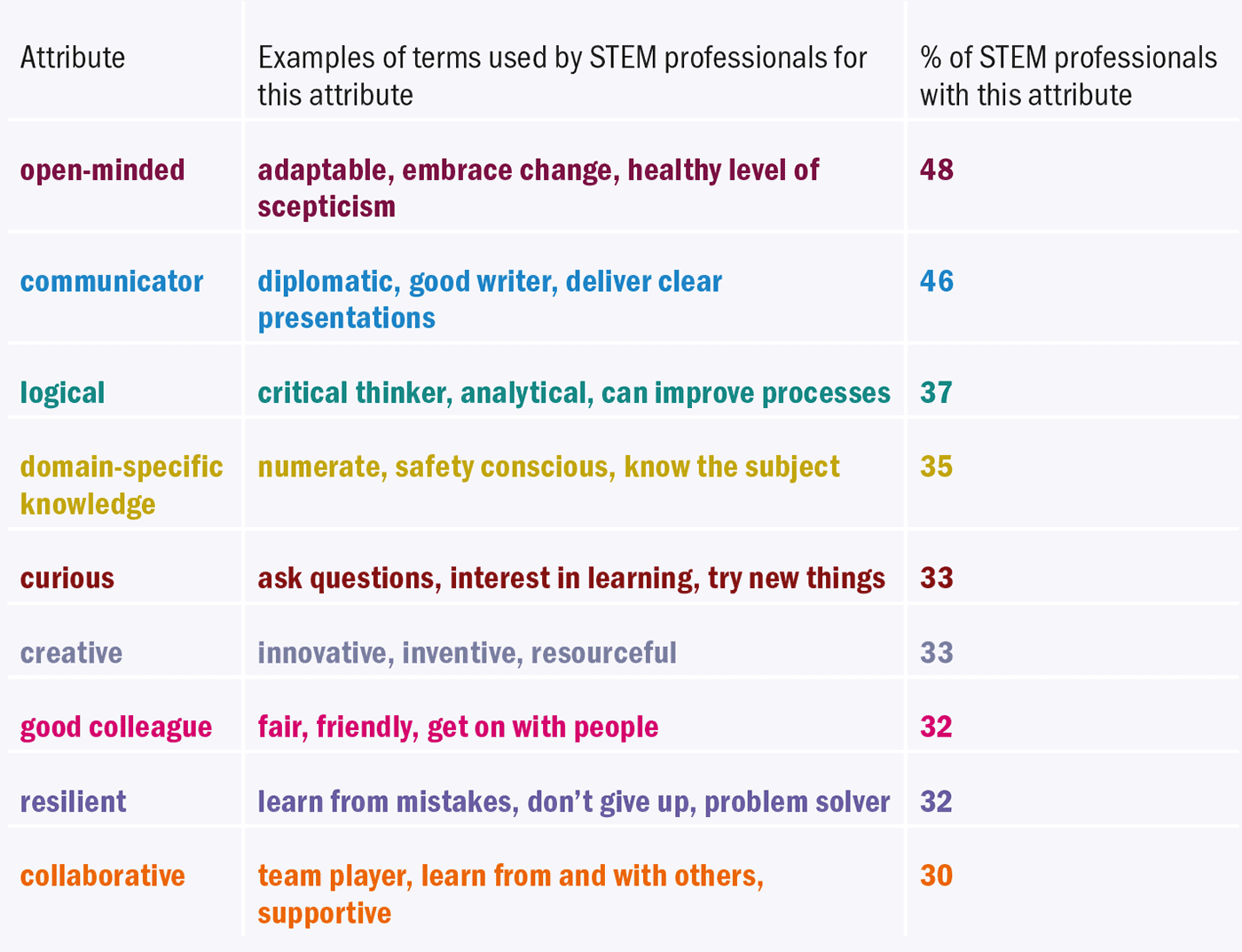
Table of attributes for STEM professionals

Looking at these nine attributes, there are just two that could actually be categorized as hard skills: logical and domain-specific knowledge. All of the rest are soft skills. When looking more broadly, our analysis identified 19 attributes in total: 13 are soft skills, four are hard skills and two are a combination of both.

These attributes are ones that STEM professionals think help make them successful in their jobs, which brings us back to job applications.  Imagine you’ve applied for the laser physicist role mentioned earlier and got an interview. You may be asked something like “Can you give me an example of a project or situation where you’ve had to work as part of a team, and how did you contribute to the effectiveness of the team?” Well, if you’ve collaborated on a group project then that shows teamwork, and if you’ve already reflected on those attributes, you’ll be able to answer the question more easily and in detail.

Case studies

Recently, I asked two physics undergraduates to look at the original 16 NUSTEM attributes and consider which three they thought they had developed most during their degree so far.

Bethany Willis – who has completed a BSc (Hons) in physics at Northumbria University and is about to start a PhD in product-integrated photovoltaics – chose:

Committed A degree is a long-term commitment and parts of it are long, hard, boring or difficult. You need to be motivated and try your hardest to get the best out of your education and you sometimes end up enjoying the things you didn’t previously like.

Tenacious Physics can be complicated at first and being tenacious means you are able to overcome any challenges that come your way. This could be problem-solving or even working on a longer project.

Communicator In physics it is important to share your ideas and inspire others. This is why being a good communicator is important – particularly for tutoring other students or doing outreach and motivational presentations in public.

Rosie Wainwright – a 3rd year BSc (Hons) student in physics with astrophysics at Northumbria University – chose different attributes:

Passionate I would say that my passion has developed throughout my degree. As my knowledge has grown, I have enjoyed becoming more enthusiastic to obtain a greater understanding of physics.

Logical I believe I have become more logical because of the work my degree has required so far, and that the evolution of this attribute is helping me with my degree as it progresses. It is now a strong attribute as I find myself better at managing and solving problems in calmer and more successful ways in most aspects of my life. I find this an invaluable skill to have developed.

Hard-working I’ve found hard work is an essential attribute in my degree. Working consistently with maximum effort means that more is achievable and more success can be found. Working hard is enjoyable to me when it is related to what I find interesting. This is why it has thrived within my degree and I like to think working hard is becoming a general attribute of mine.

The good news is that you can improve such soft skills just as you can get better at analysing data or implementing good health and safety practice. You can identify an attribute you’d like to develop – such as your communication skills – and try to find situations where you could develop it. Perhaps by volunteering to provide verbal feedback during a group task. It doesn’t always have to be during your studies; it could be in your social activities or part-time job.

Have a look at the NUSTEM attributes and reflect on which ones you already have used during your degree, and which ones you could develop. You’ll then have great examples to use in application forms and interviews – and hopefully line up the dream job you’ve been after.
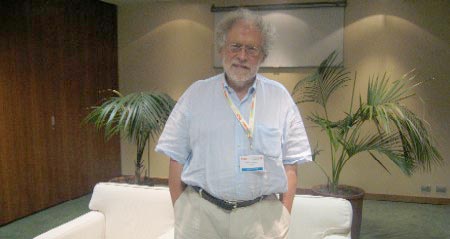

Alain Aspect, John Clauser and Anton Zeilinger win the 2022 Nobel Prize for Physics

Alain Aspect, John Clauser and Anton Zeilinger have won the 2022 Nobel Prize for Physics. The trio won “for their experiments with entangled photons, establishing the violation of Bell’s inequalities and pioneering quantum information science”.

The prize will be presented in Stockholm in December and is worth 10 million kronor ($900,000). It will be shared equally between the winners.

Working independently, the three laureates did key experiments that established the quantum property of entanglement. This is a curious effect whereby two or more particles display much stronger correlations than are possible in classical physics. Entanglement plays an important role in quantum computers, which in principle could outperform conventional computers at some tasks.

Bell’s inequality

All three of the experiments measured violations of Bell’s inequality, which places a limit on the correlations that can be observed in a classical system. Such violations are an important prediction of quantum theory.

The first experiment was done in 1972 at the University of California at Berkeley by Clauser, who measured the correlations between the polarizations of pairs of photons that were created in an atomic transition. He showed that Bell’s inequality was violated – which meant that the photon pairs were entangled.

However, there were several shortcomings or “loopholes” in this experiment, making it inconclusive. It is possible, for example, that the photons detected were not a fair sample of all photons emitted by the source – which is the detection loophole.  It is also possible that some aspects of the experiment that are thought to be independent were somehow causally connected – which is the locality loophole.

Ten years later, in 1982, Aspect and colleagues at the Université Paris-Sud in Orsay, France, improved on Clauser’s experiment by using a two-channel detection scheme. This avoided making assumptions about the photons that were detected. They also varied the orientation of the polarizing filters during their measurements. Again, they found that Bell’s inequality was violated.

Third loophole

The locality loophole was closed in 1998 by Zeilinger and colleagues at the University of Innsbruck in Austria. They used two fully independent quantum random-number generators to set the directions of the photon measurements. As a result, the direction along which the polarization of each photon was measured was decided at the last instant, such that no signal travelling slower than the speed of light would be able to transfer information to the other side before that photon was registered.

As well as confirming a fundamental prediction of quantum mechanics, the three experiments laid the groundwork for the development of modern quantum technologies.

Speaking at the press conference when the prize was announced, Zeilinger said he was “very surprised” to receive a call from the Nobel committee. “This prize is an encouragement to young people and the prize would not be possible without more than 100 young people who have worked with me over the years. I alone could not have achieved this.”

Zeilinger also said he hoped the prize would encourage young researchers.

“My advice to young people would be do what you find interesting and don’t care too much about possible applications. On the other hand, this recognition is very important for the future development of possible applications. I am curious what we will see in the next 10–20 years.”

A profound impact

Sheila Rowan, president of the Institute of Physics, which publishes Physics World, congratulated the trio on their “well-deserved” recognition. “This is an area of physics with ongoing, profound impact, at a fundamental level to help understand the world around us and being explored for use in highly novel technologies for sensing and communication today,” she added.

Quantum physicist Artur Ekert from the University of Oxford says that while he is “happy” to see the field and the trio being recognized with this year’s Nobel,  he adds that it is a “pity” that John Bell, who formulated the inequalities, missed out given that he died in 1990 and Nobel prizes are not awarded posthumously.

Ekert adds that the advent of quantum cryptography has provided an additional motivation to push the Bell inequality experiments to their limits. “From the foundations of science perspective, I think the Bell inequality experiments simply had to be done — they refute a certain world view and so they are important,” adds Ekert. “Fixing all the loopholes in such experiments is another story. This is probably more important for the quantum cryptography perspective as if we want to use Bell inequalities to detect eavesdropping we have to close the loopholes.”

Indeed, congratulations also came from those who are trying to use the work of Aspect, Clauser and Zeilinger for practical applications. In a joint statement, Ilyas Khan and Tony Uttley, chief executive and president, respectively, of the quantum technology firm Quantinuum, noted they were thrilled” by the announcement.

“This recognition of the power of quantum information systems is timely on many counts, but above all is a wonderful acknowledgement of the fact that experimental advances underpin the quantum technologies revolution that we are embarking upon.”

A life in science

Aspect was born in Agen, France, on 15 June 1947. He passed the “agrégation” – the national French exam – in physics in 1969 and received his Master’s degree from the Université d’Orsay two years later. He then embarked on a PhD at Orsay, working on experimental tests of Bell’s inequalities, which he completed in 1983.

Following a lectureship at the Ecole Normale Supérieure de Cachan, which Aspect held while he was doing his PhD, in 1985 he worked at Collège de France in Paris. In 1992 he then moved to the Laboratoire Charles Fabry de l‟Institut d’Optique at the Université Paris-Saclay.

Clauser was born in Pasadena, California, on 1 December 1942. He received his Bachelor’s degree in physics from California Institute of Technology in 1964 and a Master’s in physics two years later. In 1969 he received a PhD in physics from Columbia University.

From 1969 to 1975 Clauser was a researcher at Lawrence Berkeley National Laboratory and from 1975 to 1986 worked at the Lawrence Livermore National Laboratory. Following a stint as a senior scientist at the US firm Science Applications International Corporation, in 1990 he moved to the University of California, Berkeley until 1997 where he then focused on his research and consultancy firm J F Clauser & Associates.

Zeilinger was born in Ried im Innkreis, Austria, on 20 May 1945. In 1963 he began studying physics and mathematics at the University of Vienna and in 1971 completed his PhD in atomic physics. He then worked at the Atomic Institute in Vienna until 1983 before heading to the Vienna University of Technology.

In 1990 Zeilinger moved to the University of Innsbruck and in 1999 worked at the University of Vienna where he also became director of the Vienna-based Institute for Quantum Optics and Quantum Information from 2004 to 2013. In 2013 he served as president of the Austrian Academy of Sciences, a position he held until this year.

Oxford Instruments logo

Physics World‘s Nobel prize coverage is supported by Oxford Instruments Nanoscience, a leading supplier of research tools for the development of quantum technologies, advanced materials and nanoscale devices. Visit nanoscience.oxinst.com to find out more.

Quantum science laboratories: architects create the platform for research impact

Joe Gibbons is someone with a unique perspective on the quantum world. A principal at HGA, a US firm rooted in architecture and engineering, Gibbons specializes in science and technology facilities for academic and corporate clients and, as such, finds himself in the vanguard of his profession’s efforts to design quantum research facilities today that will meet the needs of scientists and engineers in the decades to come. Here he talks to Physics World about HGA’s work with the quantum science community and the custom-built laboratories that will open the way to practical applications in quantum computing, quantum communications and quantum metrology.

What does your role involve at HGA?

I’m a principal within HGA’s science and technology market sector. Based in the Boston office, I specialize in the planning and design of laboratory environments to support fundamental and applied research across the physical sciences. It’s a broad-scope remit that covers the design and commissioning of new-build facilities as well as the refurbishment and repurposing of existing buildings.

Why this specialism?

My background is in the fine arts and architecture, though there are parallels between the sciences and the work we do here at HGA. In architecture, for example, there’s always a problem that we’re trying to solve, or a thesis that we’re testing, in the course of the design process. That’s the same whether we’re designing a laboratory or an entire research institute. The secret in every case is to understand the end-user’s requirements for an optimum research environment – both now and in the future.

As an outsider looking in, how do you track emerging research priorities in the physical sciences?

HGA’s science and technology team keeps a close eye on the high-level trends in research funding across government and industry sources. Right now, quantum science represents a significant growth opportunity for us – chiefly because top-tier academic institutions and technology companies are investing heavily in the creation of dedicated quantum facilities to encourage interdisciplinary and multi-institutional research collaboration. Quantum is a race in every sense: a race to attract the best scientific and engineering talent; a race to design and construct new research centres; and a race to retrofit existing laboratory spaces to house quantum science and technology programmes.

That presumably means turnaround is all-important when it comes to the planning, design and construction of quantum science facilities?

Speed of delivery is key from the architect’s perspective, but so too is adaptability. Often universities seek to recruit the best scientists with the promise of a dedicated quantum research centre that is still very much in the works (and possibly several years from completion). In the meantime, of course, those scientists cannot just put their research activities on hold – they need a working laboratory upon arrival so that they can maintain their scientific output while building a new team. Put simply, the architect needs to come up with a transitional pathway and appropriate workarounds in such circumstances.

Does that mean a twin-track approach is often needed?

Correct. A case study in this regard is Matteo Mitrano, an experimental condensed-matter physicist who joined Harvard University in summer 2019. Matteo and his team are investigating the fundamental physics of quantum materials, as well as controlling their nonequilibrium properties with light. Turns out the laboratory space originally allocated to Matteo within the physics department didn’t meet the required performance criteria through existing mechanical systems alone – i.e. in terms of ultralow vibration, temperature and relative humidity stability, or an adequate level of “clean class”.

Joe Gibbons

I was therefore tasked with converting a basement space within the 120-year-old Jefferson Hall building into a quantum-research-ready physics laboratory. The job was basically to start from scratch and put in place all the infrastructure needed for Matteo and his team to be self-sufficient within an existing building (see “Granular thinking is better by design”, below).

What’s more, given that the lab continues to exceed its performance specifications, it now seems likely that what started out as a bridging solution will become a permanent base, with scope for further expansion of the Mitrano team into Harvard’s planned quantum research centre at a later date.

How do you and your HGA colleagues “design for change” to accommodate the evolving needs of quantum researchers?

The process starts with a series of workshops involving the principal investigator (PI) and key research colleagues – essentially a granular requirements-gathering exercise. In the first instance, the goal is to figure out the environmental and infrastructure requirements of the laboratory on day one of operation, whether that’s clean class, vibration and acoustic specifications, or the extent and location of major equipment. Following consensus on baseline requirements, we focus on providing flexibility within design to accommodate a variety of future equipment set-ups requiring minimal or no lab downtime.

We’re always iterating along conflicting coordinates in any case: the “what do you want?” versus “what do you need?” versus “what does it take?” trade-offs. The only certainty is that the answers to these questions will necessarily evolve over time – and sometimes rapidly so in an emerging field like quantum science.

What else can the architect do to ensure the laboratory environment is geared for maximum scientific impact?

At HGA, we are always willing to ditch design based on precedent and subjective paradigm in favour of “out-of-the-box” thinking. That matters because often the things we focus on as architects are never thought of by the scientific end-user. While my main responsibility is designing the laboratory and its physical environment, I find that if I have a voice in the customization of the research equipment – and associated workflows – I can deliver a better project.

As an example, that could mean working directly with the manufacturer of a dilution refrigerator to enhance the system’s vibration isolation and performance. Our engineers can also strip back the laboratory space to its essentials by removing compressors, vacuum pumps and the like to adjacent equipment rooms, while the increasing use of remote control means that scientists no longer need to be in the lab when sensitive measurements or fabrication procedures are under way.

Ultimately, the secret of success is a collective conversation that involves the PI, the design team and the equipment vendors. The end-game: optimized scientific toolsets and workflows aligned versus the laboratory’s long-term research objectives.

Granular thinking is better by design

Matteo Mitrano and colleagues at Harvard University are using ultrafast optical methods to investigate the dynamics of collective electron behaviour in quantum materials. Underpinning that research effort is a custom-designed laboratory (2500 sq. ft) comprising a Class 1000 cleanroom with a “high-volume, low-velocity” mechanical distribution set-up to minimize airborne vibration and noise.

A remote equipment support room provides space for dedicated process chilled water, high-vacuum systems and helium compressors. Meanwhile, sample preparation and remote monitoring/control occur in dedicated spaces adjacent to the main laboratory – an arrangement that minimizes foot traffic through the clean facility while maintaining internal environmental stability.

The laboratory also includes an overhead structural grid with movable and removable service carriers. In this way, infrastructure is routed strategically via a network of isolated take-offs to ensure long-term flexibility and the installation of future equipment without significant downtime and disruption.

Laboratory performance to date is exceeding specifications. “The project was designed to meet a temperature delta of 1 °F over 24 hours,” explains lead architect Joe Gibbons. “We have confirmed that the space is holding steady with a 0.25 °F delta over 14 days using information from the building management system. Relative humidity shifts, vibration [airborne and structural transmission], and magnetic field flux are all treated with the same care.”

The Swarm is coming: Tim Peake adventures into science fiction

Maybe it’s the massive rockets shooting out of the atmosphere, or the idea of floating in zero gravity while travelling in space. Or perhaps it’s the futuristic thought of visiting far-flung planets and meeting aliens. Whatever it is, there’s something about being an astronaut that is awe-inspiring, especially for children. So perhaps that’s why the covers for Swarm Rising and Swarm Enemy have “From astronaut Tim Peake” emblazoned across them. It’s definitely a great hook to get kids’ attention.

With the help of bestselling children’s author Steve Cole, these books are Peake’s first forays into fiction. Aimed at ages 8–11, they are written from the point of view of 14-year-old Danny Munday as he and his best friend, Jamila al-Sufi, try to save the world from aliens intent on conquering the human race. While this is a common sci-fi trope, the books are replete with science facts and sincere moral messaging – albeit with both often featured in quite a heavy-handed way.

The books take place “five years from now”, when there’s 6G, self-driving taxis and delivery drones. The story begins in Swarm Rising when Danny’s mum – a researcher in radio astronomy at the Lovell Telescope at Jodrell Bank in the UK – rushes home from work to analyse some unusual fast radio bursts (FRBs). Plugging in her data-filled USB device, she unwittingly releases an “alien digital intelligence” called Adi that gets into Danny’s devices, and (rather creepily) befriends him by claiming she’s a friend’s cousin.

Just when Danny clocks that Adi is not a teenage girl who likes the same computer games as him, she kidnaps him, “prints” herself a body and reveals she’s part of “the Swarm” – an alien race that gave up their physical form millions of years ago, and now travels through space as a single hive mind of intelligence. The Swarm has sent Adi to scout out Earth after intercepting the Arecibo radio message, which was transmitted in 1974 carrying basic information about Earth and the human race (that bit’s fact, not fiction). Having determined that humans are destroying the planet, the Swarm has decided that the only way to save Earth and all other life on it is to upload humanity to the hive mind (which for Star Trek fans, may make the Swarm seem like distant cousins to the Borg Collective).

Naturally, chaos ensues, and the race to save the world includes superpowers related to quantum physics, aliens trying to understand the concept of individualism, and the protagonists travelling across space as digital intelligences transmitted via radiowaves. It’s a whirlwind – and educational – adventure, and I enjoyed the fact that it wasn’t your stereotypical alien invasion.

Fast forward to book two, Swarm Enemy, which takes place five months later. This story kicks off with Jamila exhibiting some alien powers on the athletics field. Her actions draw the attention of a group of researchers studying some Swarm tech Adi left behind in Swarm Rising. Not only do these people kidnap Jamila, but they use Swarm-based powers to remove all trace of her from existence – except it doesn’t work on Danny’s memory. He attempts a rescue mission but falls into multiple traps along the way and ends up being rescued himself by Swarm agents, including a newly programmed Adi.

This second book has a lot more twists and turns than the first, which is one of the reasons why I preferred it. Goodies are baddies, enemies become allies, and somewhere along the way the original Adi returns. But in brief, another alien race has come to Earth on the back of the teenagers’ trip across space in book one, and they don’t have good intentions. The journey to defeat the “Malusonians” is action packed and features a lot of sci-fi hallmarks, including zombies, teleporting, DNA hacking, an antimatter bomb, cryogenic suspension and a trip to the International Space Station (ISS).

Science, superpowers and lack of subtlety

As Peake is an astronaut and a science-outreach ambassador, I did have faith that the science in the books would be factual – which is just as well, because there’s a lot of it. They cover everything from radio astronomy and biosynthesis to computing and quantum physics, and there’s even a glossary of “science stuff” at the back to help. Unfortunately, the information comes in huge chunks that somewhat interrupt the flow of the narrative, and because the books are written entirely in the first person, the authors often try and explain it through conversations that are some of the most stilted I’ve ever read, despite it being aimed at children.

The first chapter of Swarm Rising is a prime example of this style. For instance, when Danny’s mum is talking about some previously detected signals, the conversation with Danny goes like this: “ ‘…the radio waves were being thrown out by a stellar remnant.’ ‘The last remains of a star, you mean?’ Yeah, you can call me a geek, but growing up with two astronomers means it’s hard to miss this stuff. ‘There are different types, aren’t there?’ ” It is however worth persevering through the information-heavy sections, and the authors are less prone to them in the second book.

Thankfully, the supernatural elements of the books blend neatly with the science. Take Adi’s powers, which allow her to do things like drive a car on water, bend buildings and walk through walls. She compares it to rolling a dice with an infinite number of sides, explaining how she simply rolls it enough times to get the outcome she desires, no matter how improbable it is. “At the quantum level, Danny, everything comes down to chance and probability.”

As well as science and aliens, these books also feature some moral messages. Peake and Cole are often too overt with these for my taste, but they are incorporated well into the plotline. Pivotal to the story in Swarm Rising, for example, is our destruction of the planet, which is the reason aliens have arrived. “Humanity is too divided. You are incapable of working together to make change,” retorts a member of the Swarm when Danny tries to argue that we can fix it. But as Adi points out: “The children of Earth hold the hope for the planet’s redemption.”

The notion that children – the target readers in other words – will have to fix the mess of previous generations runs strong throughout the books, and, although I think the environmental foreboding is perhaps repeated too often, the plotline is a clever way of inspiring action. There are other, more subtle messages skilfully woven into the stories that are more delicately handled. These include the fight to be an individual in a society that expects you to be a certain way, the importance of empathy and understanding, and the realistic mental-health impacts of being thrown into a world of aliens.

What grates, however, is the fact that the books are so obviously written by two grown men desperately trying to sound like teenagers – for example, they repeatedly use words like “cos” and “obvs” in Danny’s monologuing, which comes off as tired and trite.

Peake is far better when he draws on his own experience as an astronaut. In Swarm Enemy, when Danny and Adi leave the Earth in a bubble of air to reach the ISS, the description of Danny’s emotions, the physical process, and the view of space and Earth is mesmerizing. You can tell that Peake is feeding off his own journey to the ISS, especially when he writes “I felt myself smiling through my soul”. It’s a beautiful touch to the story and feeds the imagination.

I’m obviously not the target audience for Swarm Enemy and Swarm Rising, so perhaps younger minds wouldn’t see the flaws I saw. The books might not become classics, but I would definitely recommend them for any child who’s interested in – or yet to discover – space, science or aliens. Peake and Cole have managed to pack them full of adventure and imagination, and I wish I’d read them with the wide-eyed fascination of a child.

  • Swarm Rising 2022 Hodder Children’s Books 304pp £12.99hb/£7.99pb/£7.99ebook
  • Swarm Enemy 2022 Hodder Children’s Books 352pp £12.99hb/£12.99ebook

Xenon-enhanced ventilation CT protects the lungs during radiotherapy

Radiation therapy for patients with lung cancer may be less toxic using a functional lung avoidance treatment plan guided by xenon-enhanced ventilation CT (XeCT). In a clinical study at the National Taiwan University Hospital, only 17% of patients developed radiation pneumonitis, the most severe radiation-induced adverse effect, a significant improvement compared to historic norms.

Chemoradiotherapy is the recommended treatment for inoperable or locally advanced non-small cell lung cancer (NSCLC), but toxicities from this treatment are a significant concern. Approximately 30% of patients develop grade 2 or higher radiation pneumonitis (lung inflammation), which seriously affects their quality-of-life.

Currently, radiotherapy treatment planning is based on anatomic imaging and the premise that all lung tissues are equally important. But for lung cancer patients with chronic pulmonary disease, dose may be more accurately delivered based on functional, rather than anatomical, lung volume – a hypothesis that is now being investigated worldwide.

Yu-Sen Huang and Yeun-Chung Chang

Principal investigators Yu-Sen Huang and Yeun-Chung Chang, also at the National Taiwan University College of Medicine, and colleagues tested this approach in a phase 2 clinical trial of 36 patients with NSCLC. They investigated whether radiotherapy planning guided by XeCT, which has been proven feasible and safe for visualizing lung ventilation, could reduce the rate of grade 2 or higher radiation pneumonitis. The idea is to use the XeCT images to minimize radiation dose to regions of functional lung, while favouring radiation deposition in areas of non-functioning lung.

For the study, patients initially underwent pre-treatment XeCT and pulmonary function tests to determine lung ventilation. Each subject had an unenhanced baseline CT scan of the whole thorax, followed by a five-cycle respiration with a xenon gas rebreathing system (during which they inhaled a mixture of 30% nonradioactive xenon and 70% oxygen) and then a XeCT scan during breath-hold at full inspiration. Finally, patients inhaled 100% oxygen for 1 min, and underwent a post-washout XeCT at full inspiration. The total time for the XeCT exam was 20–25 minutes.

The XeCT images displayed the ventilated areas of lung enhanced by xenon in colour, and areas with poor or no enhancement as black. After subtracting baseline CT images from the xenon wash-in images, the researchers generated xenon-enhanced functional lung volumes and imported them into the treatment planning system for registration with the planning CT.

The researchers created a standard plan without reference to XeCT, and a functional-lung-avoidance plan (fAP) optimized to lower dose to functional lung without compromising target volume coverage and organ-at-risk dose constraints. They treated all patients with fAP, using intensity-modulated radiotherapy or volumetric-modulated arc therapy to deliver 60 Gy of thoracic irradiation in 30 fractions. The patients were followed up with chest CT and clinical examinations at 90-day intervals.

Writing in the International Journal of Radiation Oncology Biology Physics, the researchers report that total functional lung sparing was significantly better in the fAP treatments. The total functional lung volume receiving more than 20 Gy decreased from 23.3% to 20.6% and the mean lung dose from 14.3 to 12.4 Gy. Importantly, the predicted risk of grade 2 or greater radiation pneumonitis reduced from 5.7% to 4.0%, while the predicted risk of developing symptomatic radiation pneumonitis within six months of treatment decreased from 6.3% to 4.4%.

Five of the 36 patients developed grade 2 radiation pneumonitis and one developed grade 3 radiation pneumonitis, significantly lower than expected from historical controls. There were no grade 4 or greater toxic effects. The researchers point out, however, that the advantage of providing better sparing of the functional lung was counterbalanced by a higher maximal dose within the targets and less conformal target dose distributions.

Despite its benefits, XeCT is expensive and limited in availability, and requires strong cooperation between the radiology and radiation oncology departments. The researchers also acknowledge that recent technological advances in modern radiotherapy may outweigh the expected benefits of fAP treatments. But they believe that their study provides robust evidence for the benefit of XeCT-guided functional lung avoidance in radiotherapy, and are continuing their research.

Climate change expected to reduce the quality of ground-based astronomical observations

Climate change will negatively impact the quality of ground-based astronomical observations and is likely to increase time lost due to deteriorating site conditions. That is the conclusion of an analysis of changing trends in observing conditions across eight worldwide sites. The authors say it is now vital that astronomers consider long-term climate projections when selecting sites to host future telescopes (Astronomy and Astrophysics 665 A149).

The quality of astronomical observations by ground-based telescopes is significantly influenced by climate conditions. Sites for observatories are often placed at high altitude to take advantage of increased atmospheric clarity and such locations are carefully selected for favourable climate conditions such as low temperature and water vapour.

Astrophysicist Caroline Haslebacher from the University of Bern and colleagues say that site selections do not currently account for changing conditions due to climate change and that they often only consider the climate over a short period, usually the past five years.

The researchers argue that this is not enough time to capture possible long-term changes in observing conditions such as those caused by anthropogenic climate change. This is particularly important as observatories take many years to plan and build, and have lifespans that last decades.

Better seeing

To explore this issue, the researchers used an ensemble of high-resolution global climate models to analyse future trends in observing conditions at eight major astronomical observatories. The sites – based in Hawaii in the US, Chile, the Canary Islands in Spain, Australia, South Africa and Mexico – are all likely to experience increases in temperature, specific humidity and precipitable water vapour by 2050.

These trends, the study found, will reduce the quality of astronomical observations and will likely lead to reductions in observing time due to poor site conditions. Increases in temperature and specific humidity, for example, can increase condensation on equipment due to an increased dew point as well as impact cooling systems that prevent air turbulences inside the telescope dome. Increases in atmospheric water vapour, meanwhile, impact observations by absorbing light from an astronomical object, particularly infrared light.

Such issues can be particularly acute for modern observatories that are often designed to work under specific conditions. The Paranal Observatory in Chile, for instance,  is designed for a maximum surface air temperature of 16 °C, while the William Herschel telescope in the Canary Islands cannot operate if the mirror temperature is above the dew point by 2 °C or less.

The analysis predicts no changes in relative humidity, cloud cover or “seeing” – a measure of the distortion of light wavefronts due to atmospheric turbulence that results in image distortion. The researchers caution that changes in seeing are hard to project, adding that rises in surface temperature and changes in the jet stream will likely impact seeing.

“Anthropogenic climate change must be taken into account in the site selection for next-generation telescopes, and in the construction and maintenance of astronomical facilities,” explains Haslebacher. The team say that each telescope site should now conduct their own analysis to evaluate the severity of possible future impacts.

Breaking boundaries: how the nuclear physicist Joseph Rotblat won the Nobel Peace Prize

Physics has an uneasy relationship with nuclear weapons. During the Second World War many physicists worked on the Manhattan Project that had the aim to create the first atomic bomb. The plan was to develop the bomb before Hitler and the Nazis did, but many physicists wrestled with their conscience in doing so, knowing they were developing a weapon that had devastating consequences.

One of those who grew sceptical of such efforts was the Polish–British nuclear physicist Joseph Rotblat. Rotblat was born on 4 November 1908 to a Jewish family in Poland and would later become assistant director of the Atomic Physics Institute of the Free University of Poland in 1937.

When war broke out in 1939, Rotblat was in the UK and he soon realized that he could make a contribution to the development of the atomic bomb. In 1944 he then joined the Manhattan Project, doing so in part because he believed that if the Allies developed their own atomic bomb it could stop Hitler.

Yet after less than a year in the project, after seeing at first-hand how difficult it was proving to make a bomb, Rotblat resigned. He convinced himself that the Nazis had no chance of building their own device. In his mind, work on a nuclear bomb was, from then onwards, no longer purely a defensive act.

Highlighting the dangers

Upon returning to the UK, Rotblat devoted his scientific career to studying the effects of radiation on living organisms. In 1949 he moved to St Bartholomew’s Hospital, London – a teaching hospital associated with the University of London– where he remained for the rest of his career.

He also led efforts to communicate the perils of atomic weapons. In 1955 Rotblat joined forces with Albert Einstein, Bertrand Russell and others to issue the Russell–Einstein Manifesto that alerted world leaders to the dangers of nuclear weapons and warfare. This led to the founding in 1957 of the Pugwash Conferences on Science and World Affairs.

For this pioneering endeavour, Rotblat and Pugwash shared the 1995 Nobel Peace Prize “for their efforts to diminish the part played by nuclear arms in international politics and, in the longer run, to eliminate such arms”.

Writing for Physics World in 1999 just a few years before his death in 2005 aged 96, Rotblat noted how he believed that the scientific community could make a direct contribution towards the elimination of nuclear weapons or other weapons of mass destruction.

“Nuclear weapons cannot be disinvented; we cannot erase from our memories the knowledge of how to make them,” he wrote. “Ultimately we have to tackle the seemingly Utopian concept of a war-free world…This is truly a task fit for the next century.”

Oxford Instruments logo

Physics World‘s Nobel prize coverage is supported by Oxford Instruments Nanoscience, a leading supplier of research tools for the development of quantum technologies, advanced materials and nanoscale devices. Visit nanoscience.oxinst.com to find out more.

Physicists collide over the merits of particle theory, preprint server offers stylish merchandise

On Monday the physicist and author Sabine Hossenfelder caused quite a stir in the particle-physics community. She penned a piece for the Guardian about how the race to create new particles is “useless” and that since the 1980s physicists have invented an “entire particle zoo” that experimentalists have failed to spot.

“Talk to particle physicists in private, and many of them will admit they do not actually believe those particles exist,” she writes. “As a former particle physicist, it saddens me to see that the field has become a factory for useless academic papers.”

Peter Woit from Columbia University wrote his own blog post to disagree, noting that Hossenfelder is “going after a small group of stragglers, not the centre of theoretical activity”. He added that experimentalists on CERN’s Large Hadron Collider have blown “huge holes” in dubious high-energy theories “by doing exactly what Hossenfelder complains about”.  “In this story they’re not the problem, they’re the solution,” Woit wrote.

“Boringly predictable”

Given the reaction to the opinion piece, notably on Twitter, Hossenfelder put out a separate blog post responding to the responses. “My recommendation is that theory development should focus on resolving inconsistencies, and stop wasting time on pseudo-problems,” she wrote. “Particle physicists, rather unsurprisingly, don’t like the idea that they have to change. Their responses are boringly predictable.”

Indeed, one tweet suggested that Hossenfelder wrote the Guardian piece to help sell her latest book, a comment that received a swift rebuke. “If you want to sell books, I recommend you don’t write them about theoretical high-energy physics,” she said. “It’s not a topic that has a huge market.”

Staying on the theme of physics-related promotions, you can now support the arXiv preprint server by buying their stylish hoodies, t-shirts and mugs. Described as “an open research sharing platform reinventing scientific communications,” arXiv is home to preprints of many of the papers that Hossenfelder derides. What is more, you can read them free of charge and come to your own conclusions.

You can the find the merchandise at Bonfire, and all proceeds go supporting arXiv.

Correcting an historical failure in women’s health

How did you become interested in applying materials science to challenges in women’s health?

When I was a PhD student in orthopaedic biomechanics, I took a phone call from an obstetrician who wanted to know if there was anyone in my lab who could measure forces. He was interested in preterm birth, and he wanted to know whether a medical procedure he was doing might change the properties of the foetal membrane to make it prone to rupturing prematurely. We collaborated on a study to examine that question, then started collaborating more generally, and by the time I finished my PhD, I was funded and working in the obstetrics and gynaecology (OB/GYN) department and doing my PhD in bone and biomaterials on the side.

We can tailor everything we’re doing from a materials standpoint to gives us the chance to test what’s important

How do you use materials science in your research today?

My current focus is on reproduction, so I’m interested in premature birth and how to prevent it, how to diagnose it, how to get away from the fact that one in 10 babies worldwide are born early, which can lead to a whole bunch of knock-on effects. One of the challenges with human pregnancy is that there are no good animal models for studying it, because placentas have evolved to be weirdly different in different mammalian species. This means that in vitro models, where we combine human cells with biomaterials, and in silico models, where we make computer models of material systems, are vital because they allow us to study things like the early development of the placenta that would otherwise be impossible due to the ethical issues of studying vulnerable populations.

What types of biomaterials are involved?

Natural tissues consist of cells plus an extracellular matrix (ECM), which is made up of things like collagen, proteins and sugars in a complex network involving molecules that communicate with the cells. If we make an artificial ECM out of, say, hydrogels or polymeric materials, then we can put the cells into an environment where we can control things like the stiffness of the material or its pore size, which affects diffusion. We can tailor everything we’re doing from a materials standpoint to try to make a system that interacts with the cells in a way that doesn’t just replicate the natural system, but also gives us the chance to test what’s important. For example, is the stiffness of the matrix important? Is diffusion important? Are there chemical signals we can get by adding molecules to our artificial ECM that are important?

What are the applications of this research?

We’re interested in a couple of things. One is pre-term rupture of foetal membranes, which happens in about 3% of all pregnancies, but is becoming more prevalent due to the rise of foetal surgery. Procedures to correct malformations in the foetus prior to delivery, or to fix something about the placenta, necessarily involve cutting through the bag of “waters” containing amniotic fluid that grows in both pressure and volume throughout pregnancy. This leads to a greater risk of the waters rupturing prior to term, so we’ve been looking at making a patch, using a tissue engineering approach to mechanically bolster the region where the surgeon has cut through.

We’re also interested in the early development of the placenta. We’ve been making hydrogel materials that mimic the internal lining of the uterus, materials that can act as an ECM for the cells of the early placenta as we try to understand how that development happens. Things that go wrong at this early stage, in the first trimester of pregnancy, tend to show up in the third trimester in conditions such as preeclampsia and foetal growth restriction. Both can lead to significant foetal morbidity and mortality, and preeclampsia can also lead to maternal morbidity and mortality. Basically, the placenta’s trying to kill you when you’re pregnant, and the placenta belongs to the foetus. It doesn’t come from the mother’s tissue; it’s completely the foetus’s, but it has all these endocrine signalling functions that can affect the mother’s blood pressure. This is what happens in preeclampsia, where the woman’s blood pressure can become dangerously high.

What are some other ways that materials science and women’s health overlap?

Women’s health is a very large, diverse field. I work on pregnancy, but there are also areas connected to non-pregnancy aspects of the female reproductive system (such as certain cancers), and areas that relate to medical issues that are more prevalent in women (such as osteoporosis) or that present differently due to a hormonal component (such as heart disease).

Diseases and conditions that primarily or exclusively occur in women have been underfunded relative to their burden on society

The ways that materials science comes into this are multifold. One of the most mature areas, although people don’t necessarily think of it that way, is contraception. Condoms are made of materials, diaphragms are made of materials, intra-uterine devices and implants like Norplant that release hormones – all these things are made of materials.

Another way that materials science and women’s health interact that’s been in the news recently involves vaginal mesh implants used to treat urinary incontinence and pelvic floor issues. The materials in these implants had been successfully used for hernia surgeries, but when they were repurposed for use in the vagina, they did not match the properties needed. They were too stiff, and in a number of high-profile cases, the implants caused a great deal more pain than they corrected.

Group of women

But the problem is that the original condition is a horrible one. Many women, not just those who’ve given birth, experience prolapse of the pelvic organs as they get older, and in some cases the uterus drops down into the vagina to the point where it actually starts to exit the body and you can see and feel it. This is an appalling thing that used to not be discussed, and part of shining the light on women’s health issues is talking about things we used to think of as icky. It’s about getting people to say, “Actually, this probably happened to my grandmother and she didn’t talk about that because of the shame and because this was ‘women’s problems’ and we kept that in the closet.” Bringing these things into the light and talking about them is a big part of the solution.

Today, new approaches to pelvic floor problems are being considered, mostly using materials that have very different mechanical properties and geometries than the ones that had been developed for hernias. So I think there is a very hopeful future for this field, but on top of all of the other challenges to do with regulation and medical devices and getting new products to market, the people working in it are going to have to overcome the stigma of the previous failures. In addition to the material sciences and the engineering side, there’s a whole social aspect to it.

You’ve recently been named the inaugural director of Washington University’s new Center for Women’s Health Engineering. Why is it important to have a centre like this?

Women’s health is really understudied. This is partly because, historically, scientists were mostly men, but there’s also ethical challenges related to studying people who could be pregnant. As a result, for a very long time there were no mandates to require medical research to include female participants, female tissues, or even female cells. Practically the whole professional study of biology over the last 100 years has focused on male cells and male tissues, and the excuse for this was, “Oh, well, females are too complicated” because we have hormonal signals that change over the course of a 28-day cycle. The research establishment decided to keep it “simpler” by using men’s cells – that was the gold standard until quite recently.

This meant that certain things, like the fact that women present different symptoms when they have cardiovascular disease than men do, were not very well known. Osteoporosis is another under-studied topic; this isn’t my area of expertise, but there are interactions between hormones and what’s known as bone equilibrium (bone is constantly “remodelling”, creating new bone and removing the old) that make women more prone to osteoporosis. Women also tend to load their bones less. One of the best pieces of advice I ever gave to my mother was that when she got into her 60s, I told her it was a good idea to start lifting weights. She looked at me like I was crazy, but she’s now a very buff, nearly 70-year-old woman with arms I would absolutely die for because she has been lifting weights and trying to bulk up in order to help fight against osteoporosis.

What are some consequences of this failure to study women’s health?

There was a fantastic paper that came out last year in Science showing that because most inventors are men, whereas people who invent things to do with women’s health are mostly women, there have been fewer medical devices targeted at women’s health. Another paper that came out about two years ago found that if you take away all other factors, diseases and conditions that primarily or exclusively occur in women have been underfunded relative to their burden on society, while those in men have been vastly overfunded.

To fix this, you need research funding, you need companies to invent and market new devices, and you need people. The Center for Women’s Health Engineering is focusing on the last of these. We’re aiming to train the next generation, so that whereas once you might have had an entire group of young engineers who didn’t realize they could have a career in women’s health engineering, now we’ll have people doing research, working in companies and overall just bolstering this new and developing field.

What does success look like, either for the new centre or for the overall effort to get materials scientists to focus more on problems related to women’s health?

I hope that by shining a light on this topic, we get everybody interested in it. What I don’t want to happen is to end up with a field that’s exclusively female, such that it gets put into a box of “Oh, those are women’s problems and only women are interested in solving them.” Because pregnancy affects everybody. Reproduction affects everybody. Women’s health affects everybody. Regardless of whether you are male or female, you should care deeply about this subject, and that is why we want to really invest in this in a new and exciting way for the 21st century. My long-term goal is to have more people working in this area, because obviously, the more people we have, the more likely we are to find solutions.

  • You can listen to Michelle Oyen in conversation with Margaret Harris in the Physics World Weekly podcast.

Breaking boundaries: how erstwhile physics teacher Alexandr Solzhenitsyn won the Nobel Prize for Literature

Solzhenitsyn teaching at Kok-Terek

The Russian writer Alexandr Solzhenitsyn won the 1970 Nobel Prize for Literature “for the ethical force with which he has pursued the indispensable traditions of Russian literature”. As far as I can tell, he never wanted to be a physicist, but his knowledge of physics and mathematics defined his stint in the Red Army and may have saved his life when he was exiled to Kazakhstan in the 1950s.

Born in southern Russia in 1918, Solzhenitsyn had aspired to be a writer from an early age. However, he was unable to pursue a university education in literature and instead enrolled in the department of mathematics at Rostov State University. While he excelled at mathematics, he decided that he wasn’t going to devote his life to it, choosing to write instead.

However, events soon overtook this ambition. Solzhenitsyn graduated from university in 1941, just a few days before Germany attacked the Soviet Union. After several months of driving horse-drawn vehicles for the army, his background in mathematics led to his command of a company that calculated the positions of enemy artillery from the sound of their gunfire. So, I think it’s safe to say Solzhenitsyn spent three years working as an applied physicist and he was decorated for the accuracy of his work.

Criticizing Stalin

Solzhenitsyn was still serving in 1945 when he was arrested for making disparaging remarks about Soviet leader Josef Stalin in letters to a childhood friend. Further “evidence” of Solzhenitsyn’s sedition was found in his unpublished early writings, and he was sentenced to eight years in a detention camp.

After he completed his sentence in 1953, he was “exiled for life” and sent to Kok-Terek, an isolated village in Kazakhstan,  thousands of kilometres east of Moscow. There he taught physics and mathematics, something that he would later write “helped to ease my existence and made it possible for me to write”. He goes on to say that if he had the literary education that he so desired as a youth, “it is quite likely that I should not have survived these ordeals but would instead have been subjected to even greater pressures”.

Solzhenitsyn was diagnosed with cancer while in Kazakhstan and was successfully treated in Tashkent before his exile ended in 1956 and he returned to the western Soviet Union.

Writing in exile

Solzhenitsyn wrote secretly in exile, and it wasn’t until after the public repudiation of Stalin that his first work was published in 1962. This was the novella One Day in the Life of Ivan Denisovich, which like much of his work chronicles life in the Soviet Union’s Gulag forced labour camps.

Denisovich was published with the blessing of Nikita Khrushchev, who had replaced Stalin. However, when Khrushchev was ousted in 1964 Solzhenitsyn’s books were banned. He didn’t travel to Sweden in 1970 to accept his Nobel prize because he feared being barred from returning home. Indeed, in 1974 he was expelled from the Soviet Union – only returning to Russia in 1994. He died in 2008.

While Solzhenitsyn would probably not have considered himself a physicist, we should be grateful that teaching physics gave him succour and allowed him to tell the world about the immense hardships suffered by the many Soviet citizens who were oppressed by their own government.

Oxford Instruments logo

Physics World‘s Nobel prize coverage is supported by Oxford Instruments Nanoscience, a leading supplier of research tools for the development of quantum technologies, advanced materials and nanoscale devices. Visit nanoscience.oxinst.com to find out more.

Copyright © 2026 by IOP Publishing Ltd and individual contributors