A new technique that completely prevents waves from being reflected off surfaces could improve wireless signal reception and biomedical imaging techniques. Developed by researchers in Austria and France, the technique involves first sending the waves through a special anti-reflective structure tailored to match the way waves would normally reflect from the front surface of an object. Notably, it does not require any knowledge of the object’s internal structure, broadening its potential applications.
Electromagnetic waves scatter – that is, they are deflected and reflected – off disordered media as they propagate through them. This scattering is a serious limitation for many applications, including telecommunications, biomedical imaging, seismology and materials engineering. Everyday effects of it include poor wireless reception, a fading radio signal and poor visibility when it is foggy.
In developing a way around it, the team led by Stefan Rotter of the TU Wien’s Institute of Physics and Matthieu Davy of the University of Rennes took inspiration from the anti-reflection coatings on pairs of eyeglasses. These coatings are designed to reduce the back-reflection of light, ensuring that whatever you are looking at is transmitted to your eyes as fully as possible.
The difference is that the Wien-Rennes team achieved this ability not for simple geometrical objects like lenses, but for “truly complex systems” like objects that scatter light in all directions, Rotter explains. “The anti-reflection structure we designed therefore also has a very complex shape, which results from an optimization procedure that notably does not require any knowledge of the obstacle’s internal structure,” he tells Physics World. “Instead, we only need to know how waves are reflected from its front surface. Indeed, this anti-reflection structure is a disordered medium itself, with the special property that it is perfectly matched to the fixed medium one aims to transmit across.”
A very complex shape
In their work, Rotter and colleagues sent microwaves through a metallic waveguide containing 17 Teflon cylinders and three metallic cylinders randomly distributed through a region 0.2 metres long. The waves scatter off objects in this multi-cylinder “obstacle course” to the extent that only about half reach the other side of the waveguide, while the other half get reflected.
The researchers then measured precisely how the waves were scattered by the waveguide using a mathematical model based on a two-dimensional scalar Helmholtz equation. This approach allowed them to calculate the additional scattering needed to form a perfect anti-reflective layer for this system.
Reflection reduced to almost zero
They found that when waves pass through this anti-reflective layer with its mathematically optimized scattering points before propagating though the region with the randomly-arranged scatterers, 100% reach the other side. Reflection is therefore reduced to almost zero.
“We think that our technique, which compensates for wave scattering with additional scattering, will be very useful for all applications in which wave fields need to be transmitted across complicated environments,” Rotter says. “In particular, we think here of wireless signals that need to be transmitted across a wall to a receiver located in another room or wavefront correction in biomedical imaging.”
Rotter notes that wave dynamics and wave scattering are due to play a major role in 6G, the next generation of mobile communications after 5G. A technology like the one the Wien-Rennes team developed could reduce the intensity of mobile radio signals if such signals are sent along paths from the transmitter to the receiver that are designed to incorporate as little reflection as possible.
The researchers, who report their work in Nature, say they now intend to transfer their proof-of-principle experiment to applications such as wireless communications. “We believe that considerable potential lies in automating the design of the anti-reflection structure – a task for which techniques from machine-learning, for example, could be very useful,” Rotter says. He adds that it would also be helpful to identify ways that such metasurfaces, as they are known, could be made to self-adapt in a way that offers the desired anti-reflection functionality.
Topological defects in liquid crystals are mathematically analogous to quantum bits, researchers in the US have shown theoretically. If a system based on this principle could be implemented in practice, many of the advantages of quantum computers could be realized in a classical circuit – avoiding the considerable challenges facing those trying to develop practical quantum computers.
Nematic liquid crystals are rod-shaped molecules that tend to line up with one another and whose alignment can be manipulated by electric fields. They are used in display systems that are found widely in mobile phones, watches and other electronic gadgets. Topological defects occur in nematic liquid crystals where the alignment changes. The similarity of these systems to the quantum world has been known for some time. In 1991, Pierre-Gilles de Gennes won the Nobel Prize for Physics for his realization that the physics of superconductors could also be applied to defects in liquid crystals.
Now, applied mathematicians Žiga Kos and Jörn Dunkel of Massachusetts Institute of Technology have looked at whether nematic liquid crystals could prove useful as a novel computing platform.
Higher dimensional state space
“We all know and use digital computers, and for a very long time know people have been talking about alternative strategies like liquid-based computers or quantum systems that have a higher dimensional state space so you can store more information,” says Dunkel. “But then there’s the question of how to access it and how to manipulate it.”
Google and IBM have produced quantum computers using superconducting quantum bits (qubits), which need cryogenic temperatures to prevent decoherence, whereas Honeywell and IonQ have used trapped ions, which require ultra-stable lasers to perform gate operations between ions in electrical traps. Both have made remarkable progress, and other protocols such as neutral atom qubits are at earlier stages of development. All of these, however, employ highly specialized, delicate protocols that are not implemented in liquid crystal systems.
In their new work, the researchers demonstrate that, although the physics are different, one can draw a mathematical analogy between the behaviour of a topological defect in a liquid crystal and the behaviour of a qubit. It is therefore theoretically possible to treat these “n-bits” (nematic bits), as the researchers have called them, as though they were qubits – and to use them to execute quantum computing algorithms, even though the actual physics governing their behaviour can be explained classically.
Beyond classical computing
Or at least, that’s the plan. The researchers demonstrated that single n-bits should behave exactly like single qubits, and therefore that single n-bit gates were theoretically equivalent to single qubit gates: “There are other gates in quantum computing that operate on multiple qubits,” explains Dunkel, “and these are needed for universal quantum computing. These are something we do not have at the moment for the liquid crystal gates.” Nevertheless, says Dunkel, “we can do things that go beyond classical computing.”
The researchers are continuing their theoretical work in the hope of gaining a better understanding of the mathematical mapping between multiple qubits and multiple n-bits to ascertain how close the analogy really is. They are also working with soft matter physicists who are attempting to create the gates in the laboratory. “We hope that will happen over the next one or two years,” says Dunkel.
Dunkel and Kos describe their study in a paper in Science Advances. Theoretical and computational physicist Daniel Beller of Johns Hopkins University in the US is cautiously impressed: “I really like this paper,” he says; “I think it’s potentially very significant.” He notes the claims that have been advanced for the abilities of quantum computers to run algorithms using far too many resources or much too long to make them feasible on a classical computer and says that “this work proposes that those concepts might be testable and those computational speedups achievable in a system that doesn’t depend on very cold temperatures or preventing quantum decoherence”. He adds “it’s a great theoretical and computational demonstration that, because physics is at heart an experimental science, should next be checked by experiment.” He cautions, for example, that realizing some of the assumptions used in the model, such as that the defects stay still while the liquid crystal flows around them will require “some design considerations in the experiments”.
The most useful skill I learnt during my studies, other than technical physics knowledge, was definitely programming. It comes into everything I do now; even simple every-day tasks often involve a small amount of programming. You don’t have to be a master coder to do research, but it really helps to learn a little bit of programming at least.
In terms of other skills, communication and project management are both very important in what I do day to day. Researchers are often involved in big collaborations with people all over the world, which means communicating with them via e-mail, web conferencing and at meetings. Managing your time and the project is also key. Project management is not often taught to physics undergraduates but is actually extremely useful.
Another skill that might not be expected when choosing a career in research is proofreading and copy editing. I spend a lot of my time writing and then reading through and checking papers and research proposals, so good writing and editing skills are very helpful.
Science is inherently the study of new and unknown things, so you should not be afraid of not knowing the answer to a new research question
What do you like best and least about your job?
Other than getting to participate in space missions, which is fantastic, I love the flexibility of being able to work how and when I want. Working from home and with flexible hours is very important for me. I also love travelling to international conferences, which are always fun and interesting. This has become a bit more difficult with COVID-19 (and a seven-month-old baby!), and may not appeal to everyone, but I always find it very enjoyable.
The worst thing about research is the unpredictability and the job insecurity. Postdoctoral research positions are fixed term, generally for two or three years, so every few years you have to consider your career options carefully. Because the subjects researchers work in are very specific and positions are limited, it often means moving cities and countries. Although it can be very interesting to live in different places and experience different cultures, it is also quite tiring after a while to have to keep moving. The biggest improvement I could see to academia would be more job security, such as longer term contracts for researchers.
What do you know today, that you wish you knew when you were starting out in your career?
Something I wish I’d realized earlier is that nobody knows anything! By which I mean that science is inherently the study of new and unknown things, so you should not be afraid of not knowing the answer to a new research question. With the basic toolkit of physics techniques and some thorough background reading on the subject, you can approach any new research areas and begin to solve problems that nobody has solved before.
When you are an undergrad, your professors seem like they know everything, but when you start research, you’ll quickly find that you know more than them about your specific scientific problem and they defer to your knowledge.
In May 2022 the long-awaited Facility for Rare Isotope Beams (FRIB) opened its doors to scientists who are eager to experiment with exotic atomic nuclei that in many cases have never before existed on Earth. The FRIB, built over the last eight years at Michigan State University in the US, is expected to shed new light on fundamental questions in nuclear physics, including how most of the elements in the universe are created in stars and supernova explosions, while also enabling important innovations in fields as diverse as medicine, materials discovery, and environmental science.
All of this will be made possible by the world’s most powerful heavy-ion accelerator, capable of propelling atomic nuclei of any stable element to half the speed of light. By colliding ions with energies of up to 200 MeV with a target, the FRIB promises to produce rare isotopes at a rate orders of magnitude higher than is possible at other similar facilities, while also providing scientists with access to isotopes that have not yet been synthesized or detected here on Earth.
The accelerating power of the facility is achieved with 324 superconducting radio-frequency cavities distributed around a 500 m linear structure. Inside these resonators a low-level RF signal is boosted by a series of power amplifiers from a signal strength of just a few milliwatts up to a maximum beam intensity of 400 kW – about 1000 times greater than the accelerator the FRIB is designed to replace, the National Superconducting Cyclotron Laboratory.
Unlike its predecessor, and most other existing large-scale facilities, the FRIB exploits solid-state power amplifiers to accelerate the beam. “Over the last few years there have been big improvements in transistor technology, which means that each chip can deliver more power,” says Marcus Lau of TRUMPF Hüttinger, a power-electronics specialist that designed and produced the power amplifiers for the FRIB. “At frequencies from around 80 MHz to those approaching the gigahertz regime, it is possible to obtain more than 1 kW from each transistor.”
That improvement in power output has made solid-state systems a viable alternative to traditional vacuum-tube technologies, such as klystrons, active output tubes and tetrodes. These established devices can generate a few megawatts of power from a single tube, but reliability can be an issue: their performance gradually deteriorates from the moment they are switched on, reducing the amount of electrical power that is converted into a microwave signal. They also introduce a single and unpredictable point-of-failure into the system, occasionally forcing a facility to shut down for repairs during the time allocated to scientific experiments. “Both technology suppliers and end users are moving away from tube technology,” says Lau. “Both the initial investment and the operating costs have increased, particularly for klystrons, and it’s becoming more difficult to access service and maintenance.”
In contrast, the power delivered by solid-state amplifiers remains constant throughout their lifetime. The availability of the accelerator for scientific experiments can also be maximized by building redundancy into the design, with TRUMPF Hüttinger exploiting a fully modular architecture that integrates multiple transistor modules into rack-mountable power-amplifier units. “We don’t operate the units at 100% of their capability. If one transistor fails, we can compensate with other amplifiers in the system while the accelerator is still running, ” explains Lau. “We know the mean time between failure for the devices, so we can calculate the redundancy that should be built into the system to enable the power amplifiers to operate throughout an experimental run.”
In the worst-case scenario, an entire power-amplifier unit can even be replaced while the facility is still operating – a process called “hot swapping”. Each of the transistor modules, or “pallets”, are also continuously monitored during operation to enable predictive maintenance. “It’s really an advantage to see the status of the different pallets,” comments Lau. “If we see any deviations, for example in the power emission, we can choose to exchange an amplifier unit during scheduled downtime rather than having it fail during the next operating period.”
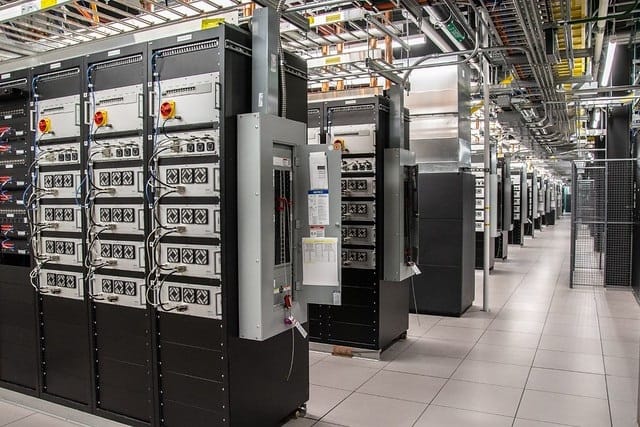
Power play: solid-state amplifier units supplied by TRUMPF Hüttinger provide the FRIB with a flexible and reliable solution that facilitates uninterrupted experimental time for scientific users (Courtesy: FRIB)
The engineers at TRUMPF Hüttinger have been developing the power-amplifier system for the FRIB for a number of years. The contract was originally awarded to HBH Microwave, a company founded in 1999 to develop microwave systems for radar and communications, but also capable of developing transistor-based amplifier technology for particle accelerators, and it was acquired by TRUMPF Hüttinger in January 2020. “Historically TRUMPF Hüttinger has focused on producing power generators for driving CO2 lasers and other electronic products,” explains Lau. “The merger with HBH Microwave allowed us to extend our product portfolio into high-frequency power electronics, and gives our ongoing development of power amplifiers for particle accelerators the backing and commitment of a major technology supplier.”
The modular design of the TRUMPF Hüttinger system offers maximum flexibility for large facilities like the FRIB, since it allows different amplifier units to be combined together to meet the power and frequency demands of each type of resonator. For the FRIB the amplifiers also need to be protected from energy that is reflected back into the electronic units, which in some extreme cases can reach four times the power emitted by a single pallet. To meet this requirement the company’s engineers designed a circulator circuit to isolate the transistors from the reflected signal, but they found it challenging to make the circulator work properly at the FRIB’s lowest operating frequency of 80.5 MHz. “At this frequency small changes in temperature affected the performance of the circulator,” explains Lau. “Within the project we developed software to track the optimized performance of the circuit, which made it possible to adapt its operation at low frequencies just by applying a voltage.”
To check that the transistors could withstand the intense reflected energy, each amplifier unit was subjected to rigorous burn-in tests before they were sent for installation at the FRIB. A small rack-based set-up was built to allow different power-amplifier units to be combined together, and then a phase shifter was used to replicate the reflection conditions inside the accelerator. For the “worst-case phase”, equivalent to the most reflected power, the emission from the power amplifiers was tested continuously for at least 24 hours.
Close communication with the project team was essential throughout the project, all the way from the initial design proposals through to final installation of the power-amplifier units. “We have bi-weekly meetings for each of our ongoing projects, which allows us to get feedback from the customer and to talk about any particular issues,” says Lau. “There is always something we haven’t thought about, and that needs to be adapted, even if it’s something simple such as whether the cooling water is supplied from the top or the bottom of the system.”
That ongoing dialogue enabled the FRIB project team to install and configure several hundreds of amplifier units for powering the different types of resonator deployed in the accelerator. “They were engaged and familiar with the system, plus we had sent them the first evaluation units,” adds Lau. “The intense exchange we had with the FRIB engineers helped the whole project to stay on time and within budget.”
TRUMPF Hüttinger is now applying its know-how in high-frequency power electronics to several other large-scale projects, driven in part by ongoing upgrades at synchrotron light sources around the world. Longer term, Lau sees an opportunity for developing turnkey solutions for medical applications that rely on accelerator-based systems, including the growing trend towards proton and ion-beam therapy. “It’s an expanding field and it’s definitely moving towards transistor technology,” he says.
Such innovative approaches generally don’t happen in isolation, which has prompted TRUMPF Hüttinger to organize a conference to explore the use of different accelerator systems for applications in science, industry and medicine. Taking place on 15–16 November 2022 in Freiburg, Germany, the Power Amplifiers for Particle Accelerators (PA2) conference aims to provide a forum for both end users and a range of industry partners to discuss emerging technology solutions as well as future directions for research and innovation. “We want to bring industry together with the scientific community,” says Lau. “In my experience it is always important not to stay in your own field but to talk to other experts to seed new ideas. We hope it will allow a fruitful exchange.”
Yummy: a composite resin suitable for making wind turbine blades could be recycled into a variety of products, including these gummy bears. (Courtesy: John Dorgan)
Wind power is great success story, particularly in breezy countries like the UK. However, turbine blades do not last forever and disposing of them has become an environmental concern. Last year I reported how researchers in Germany have come up with a way of separating the balsa wood and fibreglass that makes up the blades. The team then used the wood to create a lightweight yet strong foam that they then used to make a paddle board.
Now, John Dorgan at Michigan State University and colleagues have developed a new composite fibre resin that can be recovered from old turbine blades and made into gummy bear sweets. The new turbine material is made by combining glass fibres with a plant-derived polymer and a synthetic polymer. The team showed that panels made of this thermoplastic resin were strong and durable enough to be used in turbines or in cars.
The panels could then be dissolved in a monomer, allowing the glass fibres to be separated from the resin. The constituents can then be recast to make another panel. Alternatively, the resin can be “upcycled” into higher-value materials. These include food-grade potassium lactate, which Dorgan and colleagues used to make gummy bear sweets.
I was surprised to learn that balsa wood is used to make wind turbine blades, but I shouldn’t have been because there seems to be a renaissance in using wood as a building material. However, one thing that is preventing wood from being used in some circumstances is the material’s flammability.
Now, Aravind Dasari and colleagues at at Nanyang Technological University in Singapore have devised a fire-resistant coating for wood. The coating is just 0.075 mm thick and is highly transparent – so the team says that invisible to eye. However, when a flame is applied to coated wood, the coating chars and puffs up to 30 times its original thickness. This char was designed to be extremely heat resistant and it creates an insulating layer that protects the underlying wood from the flames.
The researchers are talking to several companies about commercial applications. Singapore-based Venturer Timberwork, for example, is exploring the use of the coating on their mass engineered timber elements.
A team of UK researchers has designed a novel endoscope that uses sound and light to image tissue samples on molecular scales, based around a detector that’s small enough to fit inside a medical needle. In their study, Wenfeng Xia and colleagues at King’s College London and University College London improved several key aspects of the photoacoustic imaging technique – ensuring fast imaging times without sacrificing the size of the equipment required.
Photoacoustic endoscopy is a cutting-edge technique that combines ultrasound with optical endoscopic imaging to build up 3D medical images. It works by sending out laser pulses through an endoscope’s optical fibre, which are absorbed by microscopic structures inside the body. As they absorb the light’s energy, these structures generate acoustic waves – which are themselves picked up by a piezoelectric ultrasound detector and converted into images.
The technique allows researchers to pick out a wide range of microscopic structures: from individual cells to strands of DNA. It already addresses many limitations of purely optical endoscopes, including their inability to penetrate through more than a few layers of cells. Yet despite these advantages, photoacoustic endoscopy still faces a trade-off: in order to achieve higher imaging speeds, it requires bulkier, more costly ultrasound detectors, limiting its applicability in minimally-invasive surgery.
To address this challenge, Xia’s team has introduced a new approach. The design – reported in Biomedical Optics Express – first features a “digital micromirror” containing an array of nearly one million microscopic mirrors, whose positions can each be rapidly adjusted. The researchers used this setup to precisely shape the wavefronts of laser beams used to scan over samples.
Instead of a piezoelectric ultrasound detector, the researchers introduced a far less bulky optical microresonator. Fitting onto the tip of an optical fibre, this device contains a deformable epoxy spacer sandwiched between a pair of specialized mirrors. The incoming ultrasound waves deform the epoxy, altering the distance between the mirrors. This leads to changes in the microresonator’s reflectivity changes as the endoscope is raster-scanned over samples.
When interrogated with a second laser, delivered to the tip of the endoscope along a separate optical fibre, these variations alter the amount of light reflected back along the fibre. By monitoring these changes, an algorithm developed by the team can build up images of the sample and use them to calculate how the scanning laser’s wavefront can be adjusted to produce more optimal images. With this information, the digital micromirror is adjusted accordingly, and the process repeats.
High-resolution imaging: Red blood cells imaged using the new photoacoustic probe. (Courtesy: Tianrui Zhao from King’s College London)
By adjusting the focal length of the scanning laser beam, the endoscope can also scan samples from their surfaces down to depths of 20 µm – allowing Xia’s team to build up optimized 3D images in real time.
To demonstrate these unique capabilities, the researchers used their device to image a cluster of mouse red blood cells, spread across an area roughly 100 µm across. By stitching together a mosaic of photoacoustic scans, the endoscope produced 3D images of the cells, at speeds of around 3 frames per second.
Based on their success, Xia and colleagues now hope that their endoscope could inspire new advances in minimally-invasive surgery – allowing clinicians to assess the molecular and cellular-scale makeup of tissues in real time. In future studies, the team will aim to explore how artificial intelligence could help to enhance photoacoustic imaging speeds even further.
In this episode of the Physics World Weekly podcast, we meet a trio of scientists who are involved in different projects at the Fraunhofer Centre for Applied Photonics in Glasgow, UK.
David Stothard, co-head of lasers and laser systems at Fraunhofer, talks about the challenges of creating a device to detect leaks of hydrogen gas. Senior researcher Anne-Marie Haughey describes a device that identifies the types of bacteria present in a clinical sample. Finally, principal researcher Adam Polak explains the science behind a device that uses laser light to identify the contents of pharmaceutical pills.
Science faces a reproducibility crisis. As the total number of research outputs continue to grow, researchers need a reliable indicator of what and who to trust. The peer review process remains the bastion of research integrity, and in this special IOP Peer Review Excellence webinar, we’ll give you an introduction to what we do at IOP Publishing and what you can do as a reviewer to support it. We’ll address topics including types of research misconduct, peer review ethics, whistleblowing as a reviewer, and what further training and certification is available to you.
White blood cells can be harnessed as natural, biocompatible microrobots through the use of lasers, researchers from China have reported. The finding, which the team demonstrated in living zebrafish, could pave the way towards a new method of targeted drug delivery for precision treatment of diseases.
Medical microrobots have attracted considerable attention for their potential to deliver drugs to particular sites in the body and to help clear pathogens from the circulatory system.
In most medical microrobot concepts, the tiny tools are fabricated outside of the body and then either injected into the patient or packaged up in capsules and then swallowed. Trials in small animals, however, have revealed a problem – namely that these foreign objects have a tendency to trigger an immune response in their host body, with the result that the microrobots end up being removed from the body before they can fulfil their intended purpose.
To get around this, an alternative approach lies in taking cells that are already present in the body – and are therefore not at risk of setting off an immune response – and press ganging them into service as natural microrobots.
In their latest study, bioengineers Xianchuang Zheng and Baojun Li of China’s Jinan University and their colleagues have been experimenting with the co-option of neutrophils – a type of white blood cell that plays a key role in the body’s immune system – into microrobots. These neutrophils are ideal candidates for use as microrobots, as they already naturally capture both nanoparticles and dead red blood cells, and are capable of migrating out of blood vessels into the surrounding tissue – two of the key functions needed for targeted drug delivery.
The team explains: “As the first line of host defence against invading pathogens, neutrophils have an inherent phagocytosis capability for the elimination of foreign agents and target loading upon activation, as well as the ability to transmigrate across blood vessels to the infected tissue, making them natural candidates to execute various medical tasks in vivo.”
Previous research has shown that it is possible to use laser light to move neutrophils around as desired in vitro. However, information was lacking as to whether the same approach would also work within living organisms.
In a series of experiments, the researchers used focused laser beams as optical tweezers to manipulate and manoeuvre neutrophils within the tails of living zebrafish. The team succeeded in driving the white blood cells at velocities of up to 1.3 µm/s, around three times faster than a neutrophil naturally moves.
Zheng, Li and colleagues also demonstrated the ability to accurately and precisely control the functions that neutrophils normally perform as part of the zebrafish immune system. For example, one operation saw the team guide a “neutrobot” out of a blood vessel into the surrounding tissue, while another saw one of the white blood cells used to pick up and transport a plastic nanoparticle – a capability that has the potential to be exploited for targeted delivery of nanomedicines within the body.
Furthermore, the team also found that pushing a neutrobot towards the debris from a dead red blood cell prompted it to engulf the pieces. What came as a surprise, however, is that as they did this, the researchers also witnessed another neutrophil, this one not under their control, also try to naturally remove the cellular debris.
The researchers conclude: “This concept of a native neutrophil microcraft, coupled with the intelligent control of multiplexed assignment execution, could hold great promise for the active execution of complex medical tasks in vivo, with great potential utility in the treatment of inflammatory diseases.”
Early-career researchers are more likely to drop out of academia if they are working with successful mentors who lead large groups. That is according to an international team of researchers who suggest that the effect could be due to mentees having greater competition for a mentor’s time (arXiv: 2208.05304).
Running a large group is often considered a sign of academic success. Indeed, previous studies have shown that academics who are trained in large groups by successful mentors are more likely to be successful and to have more future mentees themselves. However, those studies often looked only at individuals who continued in academia, so it was unclear how “survivor bias” was affecting results.
The latest work quantitatively investigates the advantages and disadvantages of being mentored in large or small groups as an early-career scientist. The authors analysed information on academic genealogy from the Academic Family Tree website and publication data from Microsoft Academic Graph.
Comparing these datasets, they matched the genealogical data of 309,654 scientists with 9,248,726 papers that were published between 1900 and 2021 in physics, chemistry and neuroscience.
After examining the numbers of co-mentees that individuals had, the authors labelled 25% as having been mentored in “big groups” and 25% in “small groups”. They then found that, from the 1950s to the present day, the “survival rate” – or the percentage of those that stayed in academia – was significantly lower for those mentored in large groups compared to small groups. In 1990, for example, the survival rate in physics was 61% for small-group mentees, but only 33% for large-group mentees.
When the researchers considered only individuals who remained in academia, they saw the same effect as in previous research. Large-group mentees, in other words, were more likely to achieve greater academic success, in terms of publications, citations and the number of mentees they went on to supervise.
Making connections
Data scientist and co-author Roberta Sinatra from the Univeristy of Copenhagen suggests that the latest findings, which have yet to be peer-reviewed, could prompt an important discussion.
“The common narrative is that we should increase retention, especially of graduate students, and improve their wellbeing,” Sinatra told Physics World. “Yet the scientific enterprise implicitly promotes high impact, high productivity and publications in top-tier journals. If we truly believe in our stated goals, then we should inspect the reasons for these high dropout rates and promote a more equal distribution of early-career researchers.”
Network theorist Iris Wanzenböck from the University of Utrecht, who was not involved with the latest work, says the results are consistent with her own observations. “These findings confirm that science is a social endeavour, influenced by networks and the quality of connections,” she says. “I think we should be more aware that academics have long-lasting effects on the system by training the next generation. For most, this impact will be much more direct than through their publication or citation numbers.”