Successful treatment of brain tumours remains a challenge. Surgical removal is often the best option, but the inability to entirely remove all of the cancer cells can lead to recurrence and metastasis. Tumour treating fields (TTFs), which use alternating electric fields to interrupt cancer cells’ ability to divide, provide a potential new treatment option for brain tumours. For glioblastoma patients, TTFs are delivered following surgical resection and completion of chemotherapy and radiotherapy. Clinical trials have shown that the technique can notably extend survival for some patients.
Commercially approved TTF devices in clinical use, however, are cumbersome to use. Patients with shaved heads wear a cap-like device containing transducer arrays that deliver the TTFs to the brain for a recommended 18 h daily, for a prescribed number of days. The cap is used with an electric field generator, a power source and a connection cable.
Researchers in China’s Guangdong Province have now developed a promising alternative: an implantable ultrasound-powered tumour treating device (UP-TTD). The chip-sized wireless TTF system could be of huge benefit, making the treatment easier for patients to undergo, and potentially also reducing costs.
Principal investigator Bingzhe Xu, of Sun Yat-sen University in Shenzhen, and co-researchers successfully tested the UP-TTD in vitro with human cancer cells and in vivo with laboratory rats. Writing in Science Advances, they note that the device inhibited the growth rate of human tumour cells by around 58%, and reduced the size of malignant tumours in rat brains by 78% compared with controls.
Cell cycle arrest
TTFs work by disrupting mitosis, the process of cell division, which occurs more frequently in cancer cells than in healthy cells. The TTFs do not affect normal neural cells, but rather act upon specific highly charged proteins in the cancer cells that are essential to cell division, thereby slowing tumour growth and its ability to spread.
To create their implantable device, Xu and colleagues integrated all of the components into a single flexible membrane chip with a thickness of less than 500 µm, capable of adapting to the irregular surfaces inside the brain. The core component is a wireless ultrasonic energy converter that couples ultrasonic mechanical vibrations with a triboelectric generator to convert mechanical to electrical energy. The UP-TTD is packed within a thin layer of biocompatible material for biosafety, and is designed to maintain a stable output under varying environmental conditions.
Upon external ultrasound excitation, the UP-TTD generates a tunable alternating electric field. For patient safety, the team recommends an ultrasound power density of 0.2 to 0.4 W/cm2 and intermediate frequency electric fields of 100 to 300 kHz.
The researchers first analysed the impact of the UP-TTD on glioblastoma cells in vitro. After 12 h exposure to the UP-TTD, the tumour proliferation rate was significantly inhibited. They then implanted the device in the brains of tumour-bearing rats. Compared with control animals that received no treatment, the treated rats showed much smaller areas of cancer, indicating a significant tumour-inhibiting effect in vivo.
Safety check
High levels of ultrasound energy can exert unexpected thermal and mechanical effects that can cause necrosis, apoptosis and abnormal cell behaviour. For this reason, the researchers recorded temperature changes in real time after device implantation and in a control group of tumour-bearing rats treated only with ultrasound. None of the rat brains in either group experienced significant temperature rise, and there were no inflammatory responses during a 21-day observation period.
As well as alleviating the need to use bulky equipment and to wear a cap, the UP-TTD only requires a minimally invasive technique to implant. In addition, multiple devices can be implanted to increase the therapeutic effect. In contrast to traditional TTFs that treat the head as a whole, the implantable device enables a controllable volume as small as 1 cm3 – more than 1000 times better spatial resolution than existing techniques. The UP-TTD is compatible with most commercial ultrasound devices, expanding the feasibility for general application.
“The encouraging results of the UP-TTD raise the possibility of a new modality for brain cancer treatment,” write the authors. “This device not only provides a safe, effective, and reliable implantable solution for the treatment of brain tumours, but also provides new hope for the rescue of patients with brain tumours.”
A team in Sweden, Iran and India has developed a new way to produce artificial corneas, out of a purified by-product of the food industry. The researchers were led by Mehrdad Rafat at LinkoCare Life Sciences and Linköping University. They showed that their implants were strong and resistant to degrading and could fully restore patients’ sight through minimally invasive surgery.
The cornea is a transparent, dome-shaped layer at the front of the eye, responsible for focusing incoming light through the pupil. When its structure becomes damaged or diseased, its resulting loss in transparency and refractive capabilities will often cause blindness.
These defects are now estimated to affect some 12.7 million people worldwide. One million new cases emerge each year and these disproportionately affect people in low and middle-income countries. Although these conditions can be treated through transplants, there is currently just one cornea available for every 70 patients who need them, creating an urgent need for improved access.
Rigid, transparent structures
Corneas are mainly composed of collagen. This is a protein made from strong molecular fibres, each just around 100 nm in diameter. By forming strong chemical bonds, or “cross-links”, with neighbouring fibres, they pack themselves closely together, forming rigid, transparent structures.
In one previous study, Rafat’s team aimed to recreate these cross-links using loose human collagen. However, this approach has drawbacks. The implants could only be produced in small quantities, and they were mechanically weak, degraded quickly and could only be implanted with invasive surgery, which took a long time to heal.
In their latest study, the researchers addressed these limitations using medical-grade collagen sourced from pig skin: a purified by-product of the food industry. To treat this loose collagen, they used a combination of chemical and photochemical techniques to establish robust cross-links between the fibres.
Strong and stable
Their approach improved the material’s strength, stability and resistance to degradation, without sacrificing its ability to transmit and refract visible light. This meant that their artificial corneas could be stored for up to two years before being implanted. This provides plenty of time to transport the corneas into less developed regions, where the demand is often highest. What is more, the implant could be inserted into a patient’s existing cornea through a small incision, making the procedure far less invasive.
After initial tests, the technique was implemented by surgeons in Iran and India, who implanted the treated collagen into the eyes of 20 patients with diseased or damaged corneas. Over the next two years, not a single patient reported any adverse effects from the surgery. Not only had the implants been readily accepted by their bodies, they had also restored the thickness and curvature of their corneas to normal.
After two years, all 14 patients who had been completely blind before the surgery were completely cured, and three had even gained perfect 20/20 vision. Based on this success, Rafat’s team hopes that the new approach could lead to a breakthrough in treatment options for the many people in urgent need of new corneas – restoring sight to millions of people in the developing world.
Quantum research today means big business. What was once seen as a scientific curiosity, quantum computing now promises to transform many aspects of everyday life from cybersecurity to drug development and weather forecasting. In recent years work in quantum computing has begun to move out of universities and into corporate research labs, with large multinationals as well as start-ups and venture capitalists entering the race to commercialize quantum technologies. But for all the record funding announcements and hype, some warn that this is fostering a “quantum bubble” that may soon pop.
The heart and soul of a quantum computer are quantum bits, or qubits. These are different from standard computer bits, which can be either 0 or 1. Qubits, on the other hand, can be both. Using this feature for complex computational problems means it could be possible to calculate solutions much faster than today’s fastest computers by scaling computing to calculate with many qubits, resulting in exponential increase in computing power. Qubits can be made from different hardware platforms, such as superconducting qubits or trapped ions. Other upcoming methods are photonic quantum processors that use light instead.
Experts say that a real “quantum advantage” can only be expected when quantum computers operate with a million qubits. And with the current record still below 100 qubits there is still some way to go. But what is mostly hindering progress is the decoherence of the qubits themselves. To avoid this, they usually have to be operated at near 0 K and shielded from each other and the environment. Scientifically, however, there is nothing stopping the creation of large-scale quantum computers, but there are some tough engineering problems to solve.
Some of those challenges are being met by huge government programmes. In the US, the government is putting $1.2bn into its National Quantum Initiative programme that is aimed at both academia and the private sector, while the UK government is nearing the end of its 10-year £1bn National Quantum Technology Programme, which began in 2013. Meanwhile, the Netherlands funnelled €615m last year into the umbrella organization Quantum Delta NL to foster the development of quantum technologies. This all stands in the shadow, however, of China’s $10bn estimated funding for its national programme.
From big tech to small tech
Quantum computing is currently dominated by tech giants such as IBM, Amazon, Hewlett Packard, Honeywell, Google and Microsoft, with some of these investing heavily in quantum initiatives. Google has a 53-qubit quantum processor named Sycamore while IBM unveiled its plans to produce a 433-qubit chip later this year and a 1121-qubit chip in 2023. IBM quantum devices have already been made available for use by more than 200,000 clients via a cloud-based service.
Indeed, many large corporations are exploring quantum applications. Goldman Sachs is developing quantum optimization algorithms to price assets based on the inherent risk associated with, for example, different options or stocks. It says that financial operations could already benefit from quantum computers in the next five years. Car manufacturer Daimler, meanwhile, is investigating how quantum computers can simulate new materials for the development of higher-performing and lower-cost car batteries. HSBC bank announced last April a partnership with IBM to study the potential of quantum computing in banking.
And it is not just the big players that are in the game. The number of quantum-based start-ups has been on the rise for several years, with 265 according to the latest estimate from Quantum Computing Report. And some are making big steps forward. US-based start-up ColdQuanta launched a 100-qubit processor based on cold atoms this year and hopes to upgrade to 1000 qubits in the next three years. Another US company – IonQ – was the first quantum start-up that began trading publicly on the New York Stock Exchange last year, which allowed it to raise well over $600m in investment funding. Another significant deal features PsiQuantum, which secured a $450m round this year, based on its promise to build a full-scale photonic-based quantum computer by 2025.
Given that there is a solid scientific foundation underpinning the potential of quantum technology, the question is not if it will happen but when
Freeke Heijman
Quantum-based start-ups are also attracting the interest of venture capitalists. This is slightly counterintuitive as venture capitalists typically bet on “safe horses”, which is not the case with commercial products that are expected to hit the market a decade or so from now. Nonetheless, according to the consultancy firm McKinsey, venture capital and other private capital now make up more than 70% of quantum technology investments. And where only $93.5m was invested in 2015, in 2021 that figure had risen to a staggering $3.2bn.
The danger of all this investment is that it leads to a bubble, but that it not worrying some, at least for now. “I don’t believe there will be a general crash of investment, because in the next few years we will see successes being announced, and organizations using quantum computing for real-world commercial or scientific applications,” says Doug Finke who runs Quantum Computing Report.
Freeke Heijman, director of ecosystem development at Quantum Delta NL adds that a little bit of hype is not necessarily bad as it will help to excite people to go into quantum technologies. “Given that there is a solid scientific foundation underpinning the potential of quantum technology, the question is not if it will happen but when,” she adds.
Worldwide, solar panels are being installed on rooftops at an astonishing rate. But so far, high-efficiency panels only come in one colour, black, which might put off people who would like a more colourful roof.
Now, Tao Ma and Ruzhu Wang at Shanghai Jiao Tong University and colleagues in China have created solar panels that come in a number of different colours – rather than just the monotonous black of normal panels. They did this using structural colour, which involves placing a disordered film of tiny spheres over the panels. This reflects light over a narrow range of wavelengths, and the colour of the reflected light can be adjusted by changing the size of the spheres.
Structural colour was used because it allows most of the incoming light to pass into the active area of a solar panel. However, previous attempts to use the phenomenon were either too expensive to be practical – or resulted in iridescence, whereby the colour of the panel changes depending on the viewing angle.
Reduced efficiency
Of course, the cost of reflecting some of the light is a reduction in efficiency – with the team’s blue, green and purple panels achieving 21.5% efficiency, whereas an uncoated panel achieved 22.6%. On the upside, the researchers say that the coated panels are robust and that the coating process could be scaled up for commercial production. The panels are described in a paper in ACS Nano.
Now, Ashlee Lillis and Aran Mooney of Woods Hole Oceanographic Institution in the US have found that the loud popping sounds of snapping shrimp increase both in amplitude and frequency as warm temperature increases.
Sizzling bacon
The tiny crustaceans are found in temperate and tropical coastal marine environments around the world. The sound they produce is likened to sizzling bacon and can be so loud that it can interfere with sonar systems.
In a study done on the North Carolina coast, Lillis and Mooney found an increase of 1–2 dB in loudness, as well as a 15–60% increase in snapping frequency, for every Celsius degree rise in temperature. As a result, the researchers expect that local marine soundscapes will change significantly as the oceans warm because of climate change. This could affect creatures that rely on sound to communicate or navigate – including whales and dolphins, which some scientists believe use the snapping sound to orient themselves with coastlines. The duo is also concerned that physiological changes associated with louder and higher frequency snapping could harm the shrimp.
Helium ion beam therapy is a re-emerging radiotherapy modality for the treatment of cancer, initially studied in the mid-20th century alongside other charged particle beams. Shutdown of these clinical trials was followed by decades of research and clinical silence on the topic while proton and carbon ion therapy made debuts at research facilities and academic hospitals worldwide. Now, there is rising interest to establish both clinical and research programmes using helium ion beams. Considering the intermediate physical and radio-biological properties between the two major clinical beams proton and carbon ion beams, helium ions may provide a streamlined economic steppingstone towards an era of widespread use of different particle species in light and heavy ion therapy.
This webinar will feature talks from clinical and physics leads on the helium ion therapy programme recently started at the Heidelberg Ion-beam Therapy Center (HIT). Covering the various topics from the recent publication Roadmap: helium ion therapy, the speakers will address the prospective tasks and challenges that will direct the clinical introduction of active scanning helium ion beams, calling for interdisciplinary collaboration between physicians, physicists and radiobiologists within the scientific community to realize the full clinical potential of this technology.
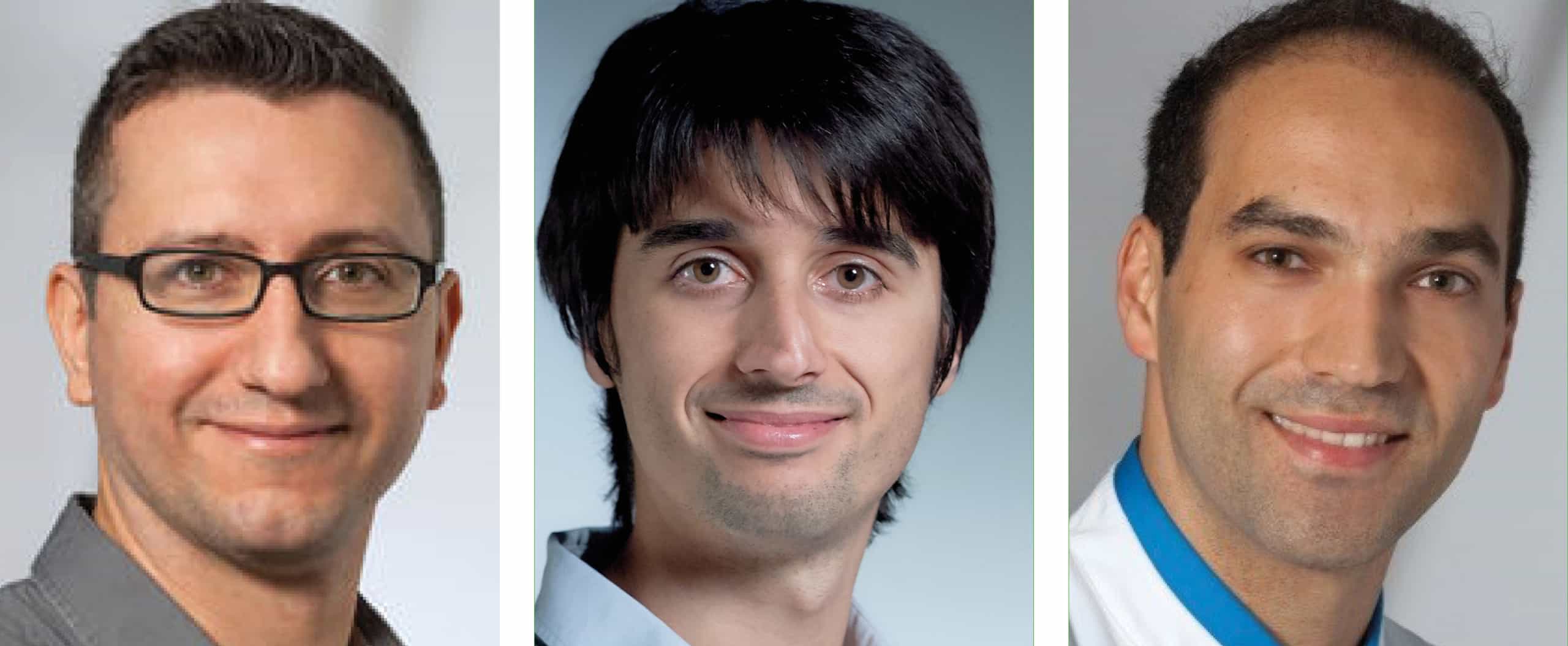
Left to right: Andrea Mairani, Thomas Tessonnier and Semi Harrabi
Speakers
Andrea Mairani obtained his degree in nuclear physics at the University of Milan followed by a PhD in medical physics from the universities of Pavia and Houston. He subsequently worked for the establishment of the Heidelberg Ion-Beam Therapy (HIT) as postdoc then he moved to the National Center for Oncological Hadrontherapy (CNAO) as responsible of Monte Carlo calculations for the commissioning and the start-up of the clinical operation at CNAO. He returned in 2016 to HIT establishing the BioPT (Biophysics in Particle Therapy) group. His main research interests lie in the development of Monte Carlo methods, advanced biological models and new treatment modalities (helium-ions, multi-ions, ion arc and FLASH) for particle therapy. He is the author or co-author of more than 140 peer reviewed papers.
Thomas Tessonnier is a medical physicist/scientist (BioPT group), Heidelberg Ion-Beam Therapy Center (HIT), Department of Radiation Oncology, Heidelberg University Hospital (UKHD), Heidelberg, Germany. From 2017–2022 he was medical physicist, Proton Centre CYCLHAD/ARCHADE, Centre François Baclesse (Caen, France).
Semi Harrabi is a radiation oncologist at University Hospital Heidelberg and primary responsible for the Heidelberg Ion Beam Therapy Centre (HIT). His field of interest and expertise lie in pediatric cancers, neuro-oncology, sarcoma and the application of high-precision radiotherapy with charged particles. His research aims to develop innovative treatment options with protons, helium and carbon ions to improve outcome and decrease the burden of treatment related sequelae. He is an active member of both national and international working groups related to particle therapy or pediatric oncology and serves on the steering committees for osteosarcoma (COSS), rhabdomyosarcoma (CWS) and the SIOPE radiation oncology working group. Further, he is co-founder of the consortium reference radiotherapy for the German pediatric oncology society and head of the national radiotherapy reference institution for pediatric low-grade glioma.
Scientists in the US have found evidence that the surface of liquid water, even at room temperature, has a structure that looks more and more like ice as the water–air interface is approached. Phillip Geissler and Nathan Odendahl of the University of California, Berkeley, performed computer simulations of the uneven interface between air and water and identified ordered motifs, which they argue share significant commonalities with ice.
From the atmosphere to human lungs, many of the most important processes on the planet happen at the surface of a water droplet, giving this research potential implications across physics, chemistry and biology.
“The things that we’ve worked so many decades to understand about water in its bulk environment just become wrong at interfaces,” said Geissler, who used simulations to study water on a molecular level not accessible in experiments. Spectroscopic measurements of the air–water interface have produced surprising results, suggesting ordered hydrogen bonding at the surface. Geissler and Odendahl were curious about previous simulations, which suggested ice as the reference point for interfacial water’s structure, but they did not think these results were conclusive. As a result, they devised a way to search for these patterns in greater detail.
Searching for structure in disorder
Liquid water is disordered, so the researchers knew that the structures they were looking for would be hard to find, extending over only a few molecules and buried under noise. They had the idea that previous researchers were missing details because they had treated the interface as a flat plane, when it is actually soft and bumpy. Work on soft air–water interfaces was pioneered over 10 years ago and revealed layers parallel to the surface, but Geissler and Odendahl were the first to use this to look for a link with ice.
Ordered molecules: the diagram on the left shows the sublayers at the basal face of ice. L0 is the surface. The diagram on the right shows the orientations at the air–water and air–ice interfaces (Courtesy: N Odendahl and P Geissler Journal of the American Chemical Society144 25 11178)
Geissler said he was surprised when Odendahl showed him the first results superimposing the ice and water–air interfaces. They argue that, with the extra detail of the instantaneous interface, the layers at the surface of water can be split into sublayers (see above figure). Parallel sublayers are a feature of the basal face of ice, and they present what the duo is convinced is a striking resemblance between these layers in the ice and water–air interfaces.
Using these sublayers as a reference point, Geissler and Odendahl compared the orientations of the molecules, knowing that this is well defined for tetrahedral water molecules in ice. When the researchers mapped the favoured direction of the oxygen–hydrogen bonds near the water’s surface, they observed ordering, which they again argued, seems to correspond to a face of ice. These patterns hold over a few molecular diameters, which is larger than the transient tetrahedral structures expected in bulk water.
Broken symmetry forces water to organize
Arguing for their conclusions, Odendahl said “Having that flexible interface really gave us the confidence to say, it’s not just a couple of chance metrics. If you look at the density, if you look at the orientation, if you look the multiple layers just everything that we looked at, there seemed to be a match.”
However, interpreting research on the statistical mechanics of liquids is always contentious. The continued debate over the water–air interface will come down to the fundamental question of how ice is defined, and whether a structure that extends over only a few molecules can be said to have crystal-like properties. Reflecting on their results, Geissler said “We now have this structural reference point for thinking about these structural motifs, and I think that that will, in the end prove to be a very useful conceptual tool.”
Much of your research career has focused on using optics to measure tiny variations in gravity, including gravitational waves. Can you describe your academic work?
My primary research interests are in optical metrology and I have worked on the LIGO and LISA gravitational-wave detectors. I’m a very goal-oriented person and I was very much attracted to the great measurement challenges of gravitational wave detection when I started working in the field as a postgraduate student in 1996. It seemed like an impossibly difficult problem:how do you make the world’s most sensitive measurement device? I was working with hundreds of other researchers, which I think made us all feel a little bit less crazy. It was very gratifying when gravitational waves were detected by LIGO in 2015.
During my early career, I became very interested in the problem-solving aspects of measurement. We had spent so much time and effort building LIGO technology, and I began to think about how we could share it with the rest of the world to solve other measurement challenges. That is what drove me to look deeper into understanding measurement technology at a very fundamental, scientific level.
You founded Liquid Instruments in 2014 because you were frustrated with the lack of innovation in the test and measurement industry. What were the problems with kit on offer at the time?
It is one of those industries that hasn’t changed in many, many decades. People who used an oscilloscope back in the 1970s or even the 1960s would find modern instruments familiar. Test equipment had not kept up with how we interact with technology – it was not fun to use. So many other industries had improved and adapted their products in light of modern digital technologies it made me realize that if we improved how people interact with their equipment it would improve their lives in the lab.
Around that time my gravitational-wave research was moving away from ground-based detectors like LIGO to space-based detectors like LISA Pathfinder. This meant that we had to change the way that we made measurements. LIGO has something like 100,000 measurement channels and requires an army of graduate students and postdocs to keep it humming. You can’t do that in space so the challenge was to create a new type of measurement system that you could launch on a rocket and operate remotely for a decade. We realized that we had to move from a physical, hard-wired approach to test and measurement towards a computer-based system that used intelligent software.
Is that when you started using field-programmable gate array (FPGA) computer chips?
Yes. The problem with trying to do test and measurement with a conventional computer is that it does not have the physical connections to the real world that are needed to make accurate measurements. But there was a new type of computer chip that I’d heard about while at Caltech back in the late 1990s – the FPGA. An FPGA is a computer that can be completely reconfigured and rewired in a fraction of a second. The FPGA seemed like a useful platform for merging the world of computers with the world of hardware and making something that is greater than the sum of its parts.
We realized that we could use the FPGA to replace a large swathe of conventional instrumentation including oscilloscopes, spectrum analysers, signal generators and lock-in amplifiers. There are tens, or maybe even more than 100 different types of devices that can be created using FPGAs.
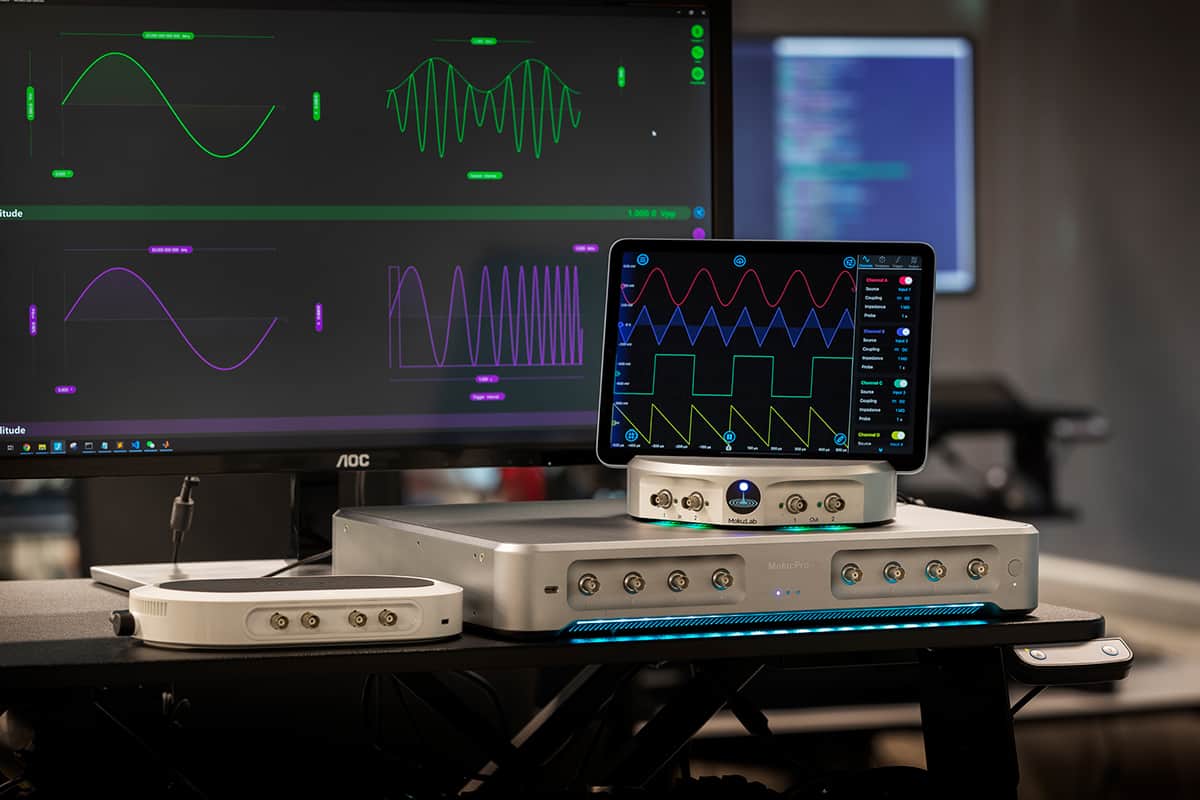
Moku-Pro can run many instruments at once, which are able to communicate with each other
What are the benefits of the FPGA approach?
We had started using FPGAs to create a phasemeter for the LISA gravitational-wave detector. We didn’t choose an FPGA-based architecture because of its flexibility. We chose it at the time because it was the only way we could get the performance that was required by LISA.
However, we quickly realized that we could reconfigure the FPGA to run as an oscilloscope, or perhaps as a spectrum analyser. Crucially, we noticed that this approach had a lot of advantages. It meant we didn’t have to go and fight for equipment with the other researchers in a lab where we only had one spectrum analyser. It also meant that we could run experiments remotely because we didn’t have to physically plug in or unplug cables to switch instruments.
Another important benefit of our FPGA approach is that we could use software to customize the instruments to do exactly what we wanted. If we wanted to change the filter on our lock-in amplifier, for example, we didn’t have to crack open the box and get out a soldering iron.
We could create an enormous variety of instruments with a single device. And because that device was incredibly useful, we made the effort to engineer it to a high standard. We started loaning our instruments out to our colleagues around the world, and we noticed that they would never give them back. They would refuse to return them. And we thought, “Oh, that’s interesting.”
Is that when you realized the commercial potential of the FPGA approach?
Yes, our software-defined approach gave us flexibility, scalability and upgradeability. The technology was improving rapidly, and it was clear to me that it would dominate the test and measurement industry in five or 10 years. At the same time, the computing industry was focused on improving user experience and this made us realize that we had a really compelling product.
Launch product Liquid Instruments released Moku:Lab in 2016. (Courtesy: Liquid Instruments)
So you launched your first product, Moku:Lab in 2016. What was it like?
We released Moku:Lab as our minimum viable product and had three instruments on it: an oscilloscope; a spectrum analyser; and a waveform generator. Today those first customers can now run 12 instruments by simply updating an app on an iPad. This approach is becoming common throughout the technology sector – products that get better over time. This is unlike conventional test equipment, which cannot be easily upgraded once you buy it.
How was Moku:Lab first received?
When we started the company my team and I had a pretty good reputation for developing instrumentation. So rather than being dismissed, people thought, “There are some pretty serious people behind Liquid Instruments, and if they think it’s a good idea, then it’s probably worth having a second look”. Our initial reputation was particularly strong in the university market because I was a professor of physics at the ANU, which is a top-ranked university.
We found that experimental physicists and engineers are a forward leaning bunch and are willing to try out new technologies. These tend to be the people who are the first to adopt new personal technologies amongst their friends – or as a kid they were probably in charge of programming the family’s VCR timer. We had a large number of supporters in the early days who immediately saw the potential benefits of our approach and realized that our first attempt was not going to be perfect.
As we pushed into new markets, we found that different sectors have different appetites for risk when adopting new technologies. Also, there is some very interesting psychology involved when people encounter new technologies. We discovered this when we released the first new instruments for Moku:Lab – which included a phasemeter and a lock-in amplifier. We were selling the device at the time for $5000 and we were hearing two very different things. The first was, “Well, I don’t use all these instruments, so I’d like a discount.” A second group of people said to us, “Oh my goodness, this is just amazing value. If you’re really providing all these instruments at that price, they can’t be very good. They must all be rubbish.”
So, we ended up making a cheaper version of Moku:Lab, which had fewer instruments, and we made a more expensive version, which now comes with 12 instruments. Commercially, this turned out to be one of the best decisions that we made.
One of those versions is designed for use in undergraduate labs. How did that market emerge?
We noticed that a lot of people were using the original Moku:Lab in undergraduate labs, but it was never really designed for that application – it was far too expensive and far too high performance. But universities found that students really enjoyed using it. They found it engaging, compelling and unintimidating to use because it spoke to the way they interacted with personal technology devices. Another plus was that Moku:Lab simplified measurement in the lab and therefore allowed students to focus on the concepts that they were meant to be learning.
However, the original version was too expensive so we came out with Moku:Go last year. It costs around $600 and it replaces an entire undergraduate bench top in a typical electrical engineering or physics lab. It’s been a real hit and we have already sold more Moku:Gos than we have sold Moku:Labs in the history of the company. We believe it has the potential to democratize scientific education around the world and improve the student experience. Indeed, students have written to us saying that they didn’t enjoy or understand their lab work until they started using Moku:Go – which is very gratifying.
You have also released a high-end version of Moku:Lab
Since 2016 we have gained a lot of experience, we’re a much larger company, and we have a lot more engineering prowess in the team. That has allowed us to launch our new flagship product, Moku:Pro. It’s the product that we wish we could have made at the beginning, but it just took us a little bit of time to get there. It can compete with high-end instruments including oscilloscopes and it has really shown people what the future holds for test and measurement.
We have taken advantage of the fact that FPGAs are getting bigger and bigger over time. Moku:Lab was designed to run as one instrument at a time – and at best it may be able to run a couple of instruments concurrently in the future. The FPGA in Moku:Pro is 10 times the size of the chip in Moku:Lab and this means that we can divide it up into several sections. Instead of having just one instrument running, it can run many instruments at once.
What’s more, these instruments can communicate with each other using high bandwidth, lossless and low-latency signals that never leave the chip. Moku:Pro is effectively an alternative to the large PXI and VXI systems that are currently ubiquitous in high-end labs and engineering and manufacturing facilities around the world.
Another first for us is that Moku:Pro users can program the FPGA with their own instruments using simple tools that we provide. All you need is a web browser – there’s no software to install – and you can build your own instrument from scratch, and then have it running in the lab in a matter of minutes. That has really opened up people’s eyes to possibility that they can use Moku:Pro to build exactly the measurement solution that they need.
Chile, or roasted chilli, is a culinary speciality of New Mexico that is made by roasting the red and green chilli peppers that are grown in the US state. Commercial production usually involves propane burners and has a significant carbon footprint. In this episode of the Physics World Weekly podcast we meet the engineer Ken Armijo, who has created a green way of making chile using solar energy.
Armijo grew up on a chilli farm and now works at the National Solar Thermal Test Facility at Sandia National Laboratories in New Mexico. He used the facility’s solar concentrator to roast an heirloom variety of pepper supplied by his father and then did a taste test. He chats with Physics World‘s Margaret Harris about the experience.
Also in this episode, we meet three people who have created a board game based on the Diamond Light Source, which is the UK’s national synchrotron lab. Diamond’s Mark Basham and Claire Murray and the games designer Matthew Dunstan explain how “Diamond: The Game” simulates how science is done at the facility. They also chat about how the game is being used at secondary schools to inspire students to pursue careers in science – and about the challenges of making the game as accessible as possible.
Basham, Murray, Dunstan and colleagues have written a paper about their game which can be read here (open access).
Magneto-optical effects (magnetically induced changes in light intensity or polarization upon reflection from or transmission through a magnetic sample) were discovered more than a century and a half ago. Initially they played a crucially relevant role in unveiling the fundamentals of electromagnetism and quantum mechanics. But since then, there has been an enormous expansion of magneto-optical measurement techniques and applications that continues to this day.
Based on the forthcoming ‘The 2022 Magneto-Optics Roadmap’, this webinar will comprise three of the leading researchers highlighting some the cutting-edge research currently being conducted in the field. This will be followed by a panel discussion that will attempt to outline the future direction of research and what challenges remain in this exciting area. All speakers and panellists are authors on the aforementioned roadmap.
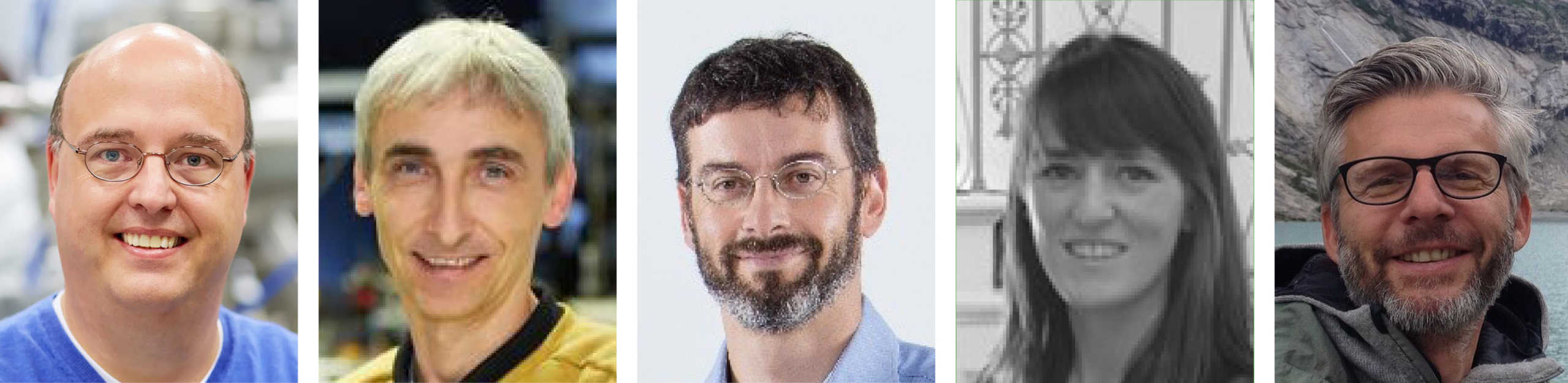
Left to right: Andreas Berger, Paolo Vavassori, Pietro Gambardella, Claire Donnelly and Markus Münzenberg
Chairs
Andreas Berger has, since 2007, been the research director of CIC nanoGUNE in San Sebastian, Spain. He received his PhD in 1993 from the Technical University Aachen for his work on surface magnetism. Subsequently, he worked at the University of California and Argonne National Laboratory on topics related to thin film magnetism and magneto-optics.
Paolo Vavassori is an Ikerbasque research professor and co-leader of the Nanomagnetism Group at CIC nanoGUNE (San Sebastian, Spain). He has more than 20 years of experience in the field of magneto-optics and magnetism at the nanoscale. The current focus of his research encompasses the study of light-matter interaction at the nanoscale, magnetoplasmonic nanostructured metamaterials for nanophotonic and sensing applications, and the physics of geometrically frustrated networks of magnetic nanostructures.
Speakers
Pietro Gambardella obtained his PhD from the Ecole Polytechnique Fédérale de Lausanne (EPFL), Switzerland, with a thesis on the growth, electronic, and magnetic properties of metallic nanowires. Since 2013, he has been a full professor of magnetism and interface physics at ETH Zurich. His research interests are in the areas of magnetism, spintronics, and novel techniques to probe solid-state interfaces.
Claire Donnelly completed her PhD in 2017 for her work on 3D systems. After her postdoc at ETH Zurich, she moved to the University of Cambridge and the Cavendish Laboratory where she was awarded the L’Oreal For Women in Science Fellowship, and the European Magnetism Association Young Scientist Award. Since September 2021, she is a Lise Meitner group leader of Spin3D at the Max Planck Institute for Chemical Physics of Solids.
Markus Münzenberg completed his PhD in 2000 and now leads a research group at the University of Greifswald as a professor of interface and surface physics. In recent years, he has opened new research fields in ultrafast magnetism, THz spintronics and novel THz emitters, and contributed to the emerging fields of magnonics and spin caloritronics. Recently, he joined work on topological spin-textures (skyrmions) and bio-nanomechanics 3D laser lithography for medical applications.
About this journal
Journal of Physics D: Applied Physics is an international journal publishing high-quality work concerned with all aspects of applied physics research, from biophysics, magnetism, plasmas, semiconductors, energy materials and devices to the structure and properties of matter.
Editor-in-chief: Huiyun Liu University College London – UCL, UK
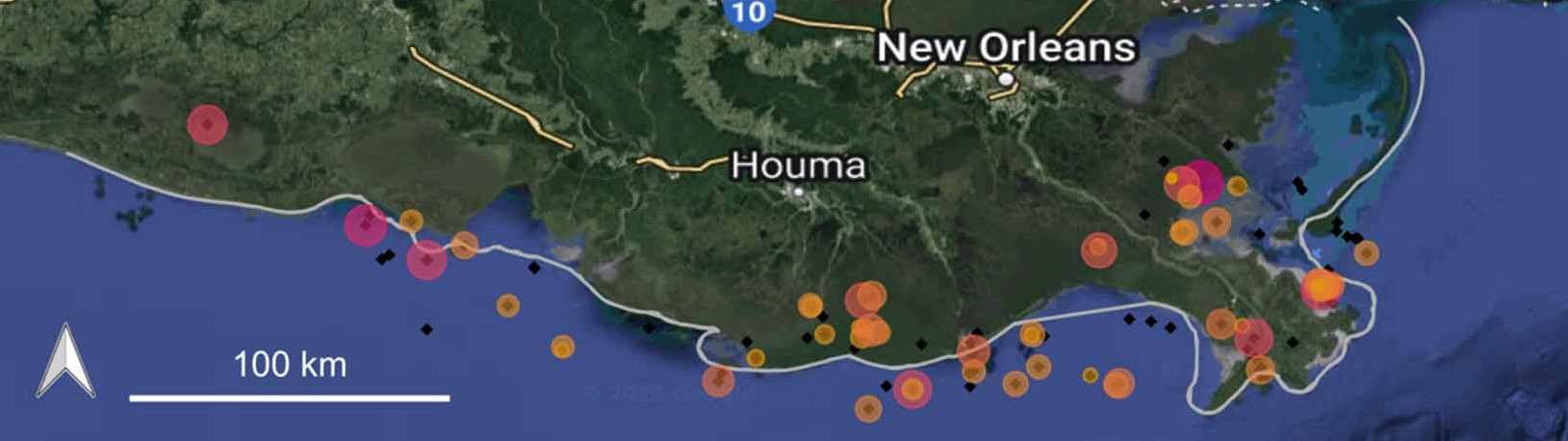
Offshore emissions: the locations of targeted platforms are shown as diamonds. The average persistence adjusted emission rate for each source is shown in terms of both the circle radii and infill colours (yellow and the smallest circles correspond to a 500 kg/h emission rate, while cerise and the largest circles correspond to 2000 kg/h and higher). (Courtesy: AK Ayasse et al 2022 Environ. Res. Lett.17 084039).
Methane emissions from offshore oil and gas platforms can be systematically mapped using a sun-glint-based remote sensing method, researchers from the US have shown. Their new approach could help inform efforts to reduce methane release and improve national emissions inventories.
A powerful greenhouse gas, methane is a significant contributor to climate change. Previous research has established that at least 20% of human-related methane emissions are from oil and gas production. These can stem both from normal operations and malfunctions or leaks.
While methane release from onshore oil and gas facilities are well studied, emissions from offshore platforms are poorly understood, despite these facilities contributing to some 30% of all oil and gas production. Current estimates of methane emissions tend to be unreliable – and they fail to account for skewed emissions where a small fraction of equipment is responsible for a large proportion of emissions.
Offshore challenges
Observational studies, meanwhile, are difficult given the remote locations of offshore platforms. Boats are often unable to get close enough to platforms and lack the ability to accurately detect elevated emissions plumes. Aircraft equipped with gas analysers can detect methane but tend to be unable to locate sources with the required accuracy. Aircraft and satellites armed with imaging spectrometers offer higher spatial resolution – but they struggle with trace gas detection over the ocean because water is a very dark surface in the methane absorption bands.
To address these shortcomings atmospheric scientist Alana Ayasse of the University of Arizona and Carbon Mappers and colleagues have demonstrated the potential of a remote sensing method that works by capturing the glint of the Sun on the water’s surface. This provides sufficient reflected radiance to discern a methane signal.
“We achieve this by banking the aeroplane at the right time and place, so that the angle of the sensor – mounted to the plane – is at the same angle as the Sun and is in alignment with the target,” Ayasse explains.
Louisiana study
In 2021 the team used this technique to analyse over time the emissions from more than 150 offshore, shallow water oil/gas wells and production platforms in the Gulf of Mexico, off the coast of Louisiana. The survey covered around 8% of all such facilities in the region.
Not only did the researchers demonstrate the efficacy of the sun glint method for the remote detection of methane release, but they were also able to reveal that the emissions from the offshore platforms appear generally to be both higher relative to production and more persistent than those from onshore oil and gas basins. Furthermore, the emissions were highly skewed, the team noted, with most being derived from storage tanks and vent booms.
This work is a big step towards full-scale operational monitoring of offshore productions over large areas globally
Alana Ayasse
“While there have been a few previous one-off experimental detections of methane over the ocean, this work is a big step towards full-scale operational monitoring of offshore productions over large areas globally,” explains Ayasse. This capacity, she says, is vital for informing emissions reduction efforts. For example, the researchers point out that the normal operation of a pressure relief valve could be responsible for intermittent methane emissions from a storage tank – but a more persistent release could be indicative that a valve is stuck and needs repair.
“We have demonstrated with pilot programmes in California that sharing high-resolution methane data with onshore oil and gas operators can directly lead to voluntary leak repair action,” says Ayasse. “Long-term mitigation requires many actors and many moving parts, but having good data is fundamental to it all.”
Satellite deployment
Atmospheric physicist Debra Wunch of the University of Toronto, who was not involved in the study, says the research provides further evidence that, in order to make progress on reducing methane release, reported emissions need to be verified and monitored. “Using glint measurements over water will allow us to use the next generation of methane satellites to include offshore oil and gas production in our atmospheric monitoring, a previously difficult source of emissions to monitor.”
Grant Allen, an atmospheric physicist at the University of Manchester says, “The study confirms the findings of previous measurement-led field projects, which have consistently found that a small number of facilities (onshore and offshore) typically account for the large majority of methane emissions – so-called super-emitter facilities. Often, the reasons for this may be due to poor operational practice, or some potentially unidentified or unwanted venting (called fugitive emission). Identifying super emitters in this way can help to target fast interventions to prevent further emissions and lead to more targeted emissions policy and regulation.”
Accurate inventories
Allen also points out that directly measuring methane emissions can help us identify errors in national greenhouse gas emissions inventories and operator-reported emissions estimates. The former is important for holding governments to account on climate emissions reduction targets and allowing us to accurately model emission and climate change trajectories. He concludes, “Measurement-led studies such as this help to keep our emissions inventories as honest as possible”.
With their initial study complete, the researchers are now looking to return to the Gulf of Mexico to survey a larger population of offshore infrastructure in order to improve assessments of methane loss rates in the region. This includes deep-water platforms, whose production is different to their shallow-water counterparts.
“We are also looking forward to launching the first two Carbon Mapper satellites in 2023,” Ayasse adds. These, she explains, “are designed to provide more complete and resistant global monitoring of methane emissions from major offshore oil and gas production areas which otherwise remain largely invisible”.