Wearable MEG system evaluates epilepsy in children

Optically-pumped magnetometers (OPMs) are a promising emerging technology that could make magnetoencephalography (MEG) more accurate and tolerable for patients who have difficulty remaining motionless while the exam is performed – such as young children.

MEG, an established clinical tool used to non-invasively measure brain activity, records the magnetic field generated by the electrical activity of cortical neurons. One key application of MEG is detecting the region of the brain from which epileptic seizures originate. Locating this epileptogenic zone is essential for evaluation of patients with focal drug-resistant epilepsy prior to brain surgery to alleviate or minimize seizures.

MEG is currently performed using a bulky neuromagnetometer containing hundreds of superconducting quantum interference device (SQUID) sensors that need cryogenic cooling. OPMs, on the other hand, are lightweight, wearable and use magnetic sensors that do not require cryogenics. In contrast to SQUID-based MEG systems that use a rigid, one-size-fits-all helmet, a wearable OPM-MEG device can be optimized for an individual’s head shape and size, making its use with paediatric patients more feasible.

Optically pumped magnetometer

A team headed up at Université Libre de Bruxelles has now conducted a prospective pilot study comparing the ability of OPM-based and cryogenic MEG data to detect and localize focal interictal epileptiform discharges (IEDs), the large intermittent electrophysiological events observed between epileptic seizures. The researchers found that an OPM-based MEG device, developed by the team in collaboration with researchers at the University of Nottingham, was better at identifying IED neural sources than a conventional SQUID-based MEG.

The study’s findings, reported in Radiology, pave the way for further development of a wearable whole-head, motion-tolerant OPM-MEG device to record whole-brain signals in children with focal epilepsy. This type of device could potentially also be used to record motor, sensory, language, visual and auditory evoked fields, to localize the areas of the brain that control these functions in a pre-surgical setting.

The study included five children (aged between five and 11 years) receiving treatment at either the CUB Hôpital Erasme or the Hôpital Universitaire des Enfants Reine Fabiola. Each child wore a conventional flexible EEG cap adapted to their individual head circumference, onto which 3D-printed plastic sensor mounts to affix 32 sensors were sewn. The mount design allowed digitization of the OPM position on the child’s scalp using an electromagnetic tracker. The sensors only partially covered the scalp, and were placed on and around the presumed location of the epileptogenic zone as determined by a previous scalp EEG.

For the OPM-MEG exams, the children sat in a comfortable chair at the centre of a compact magnetically shielded room, with no constraints on head position or movement, watching a short movie as data were acquired. The OPM localization procedure took approximately 10 min for each child. The team subsequently performed SQUID-MEG exams on the same day, using a 306-channel, whole-scalp neuromagnetometer with 102 magnetometers.

First author Odile Feys and colleagues report that both MEG devices identified IEDs with comparable spike-wave indexes (the ratio between the number of seconds with IEDs and the time of the total recording) in all five children. Because the OPM-MEG cap enabled a 3 cm smaller brain-to-sensor distance than the SQUID-MEG, IED peak amplitudes were 2.3–4.6 times higher with OPM-MEG than with the conventional device.

Although the OPM signals were generally noisier than SQUID signals, the signal-to-noise ratio was 27–60% higher with OPM-MEG in all participants but one (whose head movements created pronounced artefacts), thanks to the increase in signal amplitude. The researchers suggest that motion-related artefacts could be reduced with OPM denoising algorithms and extra hardware solutions, such as field nulling coils.

“Future studies based on larger numbers of patients with epilepsy and greater numbers of OPMs to allow whole-head coverage (including the development of triaxial OPM sensors) are needed to position OPM-MEG as a reference method for the diagnostic evaluation of focal epilepsy and to replace cryogenic MEG,” the team writes.

Feys advises that the next steps of the OPM-MEG research performed in Brussels will investigate an automated and fast (1–2 min) way to localize the OPM positions relative to the scalp. The team also plan to study wearable OPM-MEG for seizure detection and localization of the seizure onset zone, and investigate the clinical interest in OPM-MEG for pre-surgical assessment of refractory focal epilepsy compared with cryogenic MEG.

In an accompanying commentary in Radiology, paediatric neuroradiologist Elysa Widjaja from the Hospital for Sick Children in Toronto discusses the benefits that this further-developed technology could provide, such as allowing data collection of whole-brain signals during movement.

“Such technology would be groundbreaking for conducting MEG in young children and those with developmental challenges who have difficulty remaining still,” Widjaja writes. “Whole head coverage could improve detection of more extensive or secondary epileptogenic zone that may have been missed with limited OPM coverage and allow for more sophisticated functional connectivity analysis.”

New ‘wonder material’ graphyne synthesized in two labs

Two new processes for producing different types of graphyne – a 2D allotrope of carbon that includes triple bonds – have been reported in independent papers. One paper – from researchers in the US and China – reports the first experimental synthesis of a bulk crystal of the most stable form of graphyne, which could potentially have multiple uses. The second – from researchers in South Korea – describes the discovery and synthesis of a hitherto unpredicted “holey graphyne”. However, some scientists are not convinced of the existence of this second type of graphyne.

Carbon is known for its ability to form numerous different allotropes, such as graphite, diamond and fullerene, by bonding together in different configurations. Graphite, for example, comprises 2D layers of carbon atoms held together by van der Waals forces, whereas diamonds consist of a 3D cubic lattice. Graphene is essentially a single layer of the carbon atoms that comprise graphite. Predictions about graphene’s properties date back to 1962, and when it was first exfoliated in 2004 it was confirmed to have remarkable strength, electronic mobility, flexibility and other qualities.

Researchers first predicted that graphynes could be stable back in 1987. Unlike graphene, there are several potential graphyne structures depending on the proportion of triple bonds and how they are distributed around the lattice. Various researchers have suggested graphynes could have remarkable properties of their own, such as highly directional electrical conductivity or ion mobility – which is extremely important for battery electrodes.

Bottom-up approach

However, it has previously proved impossible to produce a bulk sample of any graphyne. The mechanical exfoliation technique used to produce the first samples of graphene from graphite is impracticable, as no 3D material contains layers of graphyne. Instead, a bottom-up approach is needed to synthesize the material from precursor molecules.

Several researchers have proposed synthesis protocols for γ-graphyne – predicted to be the most stable isomer. In 1997, for example, materials chemist Michael Haley of the University of Oregon in the US proposed that γ-graphyne could be produced through alkyne metathesis. This is a coupling reaction between phenyl alkynes, squeezing out a small “co-product” and leaving aromatic rings connected by triple bonds. The problem is that defects inevitably form: “The co-product that you normally get from a typical alkyne metathesis is 2-butyne, which is a gas that bubbles out of solution and goes away,” explains Haley. “Well if you’ve got an error, how the hell do you correct for that error if the other piece has gone?”

Scientists led by Wei Zhang of the University of Colorado in the US and Yingjie Zhao of Qingdao University of Science and Technology in China solved this problem by adding a larger, less-volatile substitute to the reaction mixture that can also break the triple bond. It can break any triple bond, defective or not, but the defective bonds have higher energy, so these are more unstable. Moreover, says Zhang, “when the higher-energy bonds break open, they are more likely to form lower energy bonds”.

Making and breaking bonds

By allowing both bond making and bond breaking, therefore, the researchers drove the reaction towards the thermodynamically favoured product – perfectly crystalline γ-graphyne. The researchers say that, to the best of their knowledge, they have produced the first demonstration of any graphyne with long-range crystalline order, although other groups have previously reported tiny fragments of carbon that contained triple bonds.

Haley is impressed with the team’s paper, which is published in Nature Synthesis. He believes the door is now open to find out what the material is useful for. “There have been all of these predictions: it’s going to be an exceptionally strong material; it’s going to be great for batteries because you’ll be able to move lithium ions through it – who knows?” he says. “Anybody anywhere should be able to replicate what they’ve reported, and that to me is the strength now: you finally have the material in more than sub-milligram quantities, and you can go and begin to fully investigate all these predicted properties.”

Jeffrey Moore of the University of Illinois Urbana-Champaign in the US agrees and sees two obvious follow-up studies: “One is to understand how this perfect or near-perfect structure is being made by the interplay of kinetics and thermodynamics – there’s some deep mechanistic questions that, if understood, would allow us to make more similar kinds of materials like this more predictably,” he says; “The second is to do chemical modifications, where you introduce defects deliberately to create structures that bring new function.”

Unexpected structure

The second graphyne paper is published in Matter and reports a previously unexpected graphyne structure that comprises networks of benzene rings connected by strained, triple-bonded eight-membered rings. A molecule comprising two linked benzene rings was first reported in 1974, and the researchers decided to investigate whether polymers comprising multiple linkages – creating ring-shaped networks of benzene rings with nanometre-sized pores – could be stable.

Computational modelling established that it could be stable, says Hyoyoung Lee of Sungkyunkwan University in South Korea, so his team set out to develop a synthesis protocol. “We made the intermediate from six steps of organic synthesis, and then started from that,” he says. Spectroscopic analysis suggests that the material has an electronic bandgap of 1.1 eV, say the researchers: “We are going to use this material for sensors, or if possible for photodetectors, and also as a channel material for a thin-film transistor,” says Lee.

Some researchers, however, are sceptical that the material even exists: “Everything in the literature to date suggests this should not do what the authors are claiming it does,” says Haley; “Whereas the description of how they made the monomer is beautifully detailed, the description of how they made the polymer has essentially no detail.”

Lee says, “People are trying to understand ‘How can you make this?’ – That’s still something of a black box…But the bottom line is we made it. We have the simulations, and we have the transmission electron microscopy. Our molecular structure conforms with the spectroscopic measurements”. The researchers also support their claim using several other imaging techniques.

Haley, however, is cautious: “I’m finding now that we can take lots of pictures through STM, AFM, whatever form of microscopy you want, but the devil in the details is not there as it should be,” he says; “Is it what they claim it to be? I remain to be convinced.”

Update: The journal Matter published a paper in February 2024 describing a failed attempt to replicate the 2022 “holey graphyne” synthesis, alongside a response from the authors in which they stand by their work.

Neptune’s blue hue, magnetic cities, space cakes

Ever wondered why Neptune and Uranus have slightly different hues of blue despite having similar masses, sizes and with comparable atmospheric compositions? Well, wonder no more thanks to research led by Patrick Irwin from the University of Oxford.

By combining simulations with observations from Hubble, the NASA Infrared Telescope Facility as well as the Gemini North telescope, the team modelled the aerosol layers in the atmospheres of each planet, focusing on three haze layers that occur at different heights in the planets. This included a middle layer of haze particles where methane ice condenses to form a shower of methane snow that acts to pull the haze particles deeper into the atmosphere.

Neptune has a more active, turbulent atmosphere than Uranus, and the researchers found that Neptune is more efficient at churning up more gaseous methane where it can then produce snow.

Given that this action removes the haze, it results in a thinner haze layer than on Uranus. The result being that Neptune appears bluer than Uranus. So, now you know.

Sound of the underground

Cities are well known for their extremely noisy characteristics, but could they also have their own unique magnetic footprint too? Researchers from the US and Germany think so and they used a network of sensitive magnetometers to collect magnetic field data over a four-week period in two US cities: Berkeley in California and the Brooklyn borough of New York City.

They discovered that several magnetic signatures were indeed specific to each city, and now hope that their system can be used to discover similar characteristics in other cities. On top of that they also found that Berkeley reaches a near-zero magnetic field activity during the night, while Brooklyn’s magnetic activity continues both day and night.

“Again, not too surprisingly, we discovered that New York never sleeps,” says Vincent Dumont from Lawrence Berkeley National Laboratory.

And finally, if you fancy making some science-based cakes then check out these fun bakes from Sweetology, which include a volcano cake, a 3D Earth cake and a solar system decorating kit.

Quantum-computing company focuses on quantum simulation for industry, celebrating the International Year of Glass

In this episode of the Physics World Weekly podcast, Jenni Strabley and Simon McAdams of Quantinuum explain how quantum computers could be used to simulate industrially relevant quantum systems such as the large molecules used in pharmaceuticals and the materials used in hydrogen fuel cells.  Quantinuum offers quantum computing hardware and software and Strabley and McAdams talk about the company’s new quantum computational chemistry software platform and the firm’s roadmap for the future.

Also in the podcast, we chat about the June issue of Physics World magazine, which celebrates 2022 as the International Year of Glass. Physics World’s Sarah Tesh talks about some of the highlights of this glass-themed issue – including a feature article about the role that archaeology is playing in the development of glasses for the vitrification of nuclear waste. Tesh also explains how the toughened glass used in mobile-phone screens was discovered by accident.

Pairing of Cooper pairs helps protect qubits against noise

A research team at the Laboratoire de Physique de l’Ecole Normale Supérieure (LPENS) in France has developed a new way to protect superconducting quantum bits (qubits) from noise. Thanks to a novel superconducting circuit element that effectively “spreads out” the qubit’s quantum state, the team reduced the qubit’s sensitivity to an external magnetic flux by a factor of 10. This improvement could lead to the development of next-generation superconducting qubits that are less prone to errors.

Quantum information stored in qubits is fragile to noise from the surrounding environment, and this remains a major challenge for building large-scale quantum computers. One prominent approach to protecting qubits from noise is to delocalize their quantum information: because noise is typically local, quantum information that is stored non-locally is less likely to be spoiled. For example, certain types of quantum error correction encode information in a network of many spatially separated qubits.

Interestingly, this delocalization approach can also be applied to a more abstract form of space known as the Hilbert space of a qubit. One popular example is the superconducting transmon qubit, the states of which are greatly spread over many charge values, providing some immunity against charge noise.

Cooper-pair pairing

The quantum states of a superconducting circuit can be described in terms of paired electrons known as Cooper pairs (the primary charge carrier in superconductors) or the superconducting phase (technically, the phase of the complex superconducting order parameter). When individual Cooper pairs tunnel across a so-called Josephson junction, which commonly consists of two superconductors sandwiching a thin insulator, the current flowing through the junction depends nonlinearly on its superconducting phase. This phenomenon, termed the Josephson effect, is a key element in almost all superconducting qubits.

The LPENS researchers designed a new superconducting qubit in which the quantum states are delocalized over a wide range of values of the superconducting phase. They achieved this by creating a generalized version of a Josephson junction in which two Cooper pairs tunnel through the junction simultaneously – that is, a pairing of Cooper pairs.

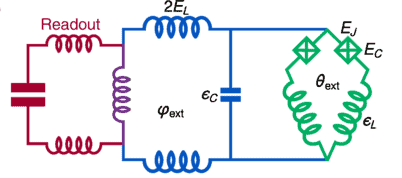
A circuit diagram for the new superconducting qubit

The new junction was realized in a superconducting loop interrupted by two Josephson junctions and two superinductors, which are large inductors with small accompanying capacitances. This arrangement, which the team dubs a kinetic interference co-tunnelling element (KITE), was inspired by a 20-year-old proposal that suggests observing the Cooper-pair-pairing effect in a superconducting loop of four Josephson junctions. “The difference is that the KITE trades two of those junctions for superinductors, which gives better resilience to offset charge noise and some other desirable properties,” says Clarke Smith, the lead author of a Physical Review X paper describing the research.

The team carefully controlled the KITE loop by using destructive interference to suppress the tunnelling of single Cooper pairs over the two Josephson junctions, allowing co-tunnelling of two Cooper pairs to dominate. This magnifies the fluctuations of the superconducting phase by more than a factor of two – a considerable increase in the spreading of the qubit states. The team then observed experimentally a 10-fold reduction in the qubit’s sensitivity to an external magnetic flux, rendering it more resilient to flux noise.

Towards protected superconducting qubits

The researchers say that their generalized Josephson junction is a vital circuit element in making superconducting qubits that are intrinsically resilient to noise. By combining such a junction with another element known as quantum phase-slip, it might become possible to implement a so-called Gottesman-Kitaev-Preskill qubit in which qubit states are delocalized over both the charge and phase spaces and thus even more robust against noise. According to Smith, one follow-up project would be to develop effective quantum phase-slip junctions and build qubits that are intrinsically protected from noise without resorting to quantum error correction. Such qubits would significantly ease the hardware complexity required to build a fault-tolerant quantum computer.

Lunar explorer: Thomas Smith on studying the Chang’e-5 Moon samples

How did you get into space science?

I’m a geochemist by training and after I did my PhD at the University of Bordeaux, France, in 2010, my supervisor inspired me to study materials from space. I went to Paris for my first postdoc position where I analysed the composition of particles returned from a comet by NASA’s Stardust mission. Then I moved to the University of Bern in Switzerland where I measured and analysed a variety of meteorites for five years until 2017.

Why did you move to China?

I really wanted to continue my research with meteorites, so I reached out to colleagues including a geochemist from China with whom I had worked in Bern. He put me in touch with He Huaiyu, who was studying meteorites at the Institute of Geology and Geophysics (IGG) while waiting for Moon rocks to be brought back by the planned Chang’e-5 mission. I thought studying new lunar samples would be exciting and He invited me to visit Beijing for a week where I was even invited to a wedding. He asked if I wanted to move to China and I joined the IGG in May 2018.

Why are meteorites interesting?

Most meteorites are from the asteroid belt between Mars and Jupiter, a region full of rock fragments that have existed since the beginning of the solar system but failed to form any planet. Bombarded by cosmic radiation, they usually contain noble gases such as helium and neon. Therefore, records of noble gases can be used as a tool to reconstruct the history of a meteorite in space before it landed on Earth. An important part of my work is to measure the concentration of these gases in meteorites to estimate their “exposure age”, which is how long meteorites have been travelling in space before landing on Earth, as well as their size before they entered the Earth’s atmosphere.

What else can we discover about meteorites?

We can also estimate a meteorite’s terrestrial age, or how long it has been here on Earth, by measuring the decay of other radioactive elements in the meteorite. I’ve done such measurements with meteorites found in farmland in Switzerland, and more recently with a meteorite that fell in Xishuangbanna and is believed to have come from a near-Earth object instead of the asteroid belt due to its remarkably shorter exposure age.

How will you use your expertise in meteorites to study lunar samples?

Samples returned from the Moon by the Apollo, Luna and now Chang’e missions are different from lunar meteorites because they don’t go through atmospheric entry and can maintain all the original information. On the Chang’e-5 samples, I proposed a comprehensive analysis of the noble gas “budget” on the Moon, which is understood to involve a mixture of processes including cosmic radiation, comet impacts, solar wind and Earth wind – ionized particles that travelled from the Earth’s atmosphere to the Moon. The results will hopefully tell us which mechanisms dominated and add to what we’ve learned from the Apollo and Luna samples.

What types of samples have you received? What was the application process like?

I received 400 mg of soils as well as two particles – 1 mg and 4.5 mg – as part of the third batch of Chang’e-5 samples distributed to labs in China. I’m very happy with this, as particle samples are rare and hard to get. The proposal for the sample was submitted in Chinese, so I wrote an English draft and asked my Chinese colleagues to translate it. Then I carried out the oral defence in English with slides in Chinese.

How do you go about studying the Moon samples?

The Chang’e-5 lunar samples are stored in a dedicated clean room in one of the IGG buildings. In that clean room, we can do basic, non-destructive characterization of the materials. The soil powder will first be sieved into different grain size bins, handpicked, before non-destructive analyses such as microscopic observations and computed tomography (CT) are performed. CT is important to determine mineral abundances and chemical composition. The handpicked grain particles will then be treated separately and taken to our own lab where we will measure the noble gas compositions of handpicked grain particles. This will be done by firing a laser beam to melt them and in the process release the noble gases.

Have you done this yet?

We are currently testing the lab facilities with standard materials and making sure it’s all ready. Noble gas measurements are challenging because they are in trace amounts, about 10–8 cm3/gram. Our lab is the only lab in China that has all the facilities required to do this kind of measurement. We plan to finish all the experiments by next year.

For Chang’e-7 we are looking at possible in situ measurements of volatiles such as water and nitrogen in the lunar regolith, using a French–Chinese instrument 

So that will keep you busy over the next year?

Yes. My priority will be the Chang’e-5 samples, including making measurements, interpreting data and publishing papers. Our team is also involved in the upcoming Chang’e-7 mission that will go to the Moon’s south pole. For that mission we are looking at possible in situ measurements of volatiles such as water and nitrogen in the lunar regolith, using a French–Chinese instrument that has already been approved.

What’s it like to work and live in Beijing?

Beijing is a huge city compared to my hometown or even Bern. I live in a community a few metro stops from IGG but the trains usually become too packed to get on after 7 a.m. so I get to the office around 6:30 a.m. I’ve got used to a few other things. For example, my Chinese colleagues like to take a short nap after lunch and now I’m used to having post-lunch naps. Otherwise, I’m impressed by the work ethic – there are always experiments going on in the labs.

How have you dealt with the pandemic?

I was in Beijing in January 2020 after spending Christmas with my family in France. My colleagues and I soon heard about the situation in Wuhan. He told me I could go back to France – and keep my job – as most foreigners at IGG chose to leave China. I was among the few who decided to stay and I worked from home, focusing on writing papers with previous data. By mid-March we were allowed to return to the institute, but it was almost empty. Those were a few stressful months.

And what has life in China been like more generally?

The Chinese government got the situation under control pretty quickly. I remember going to parks without a mask in May 2020, while France was experiencing the peak of the first wave. China has been sticking to its zero-COVID policy for over two years now. I feel quite safe here, although code-scanning for tracking (Jiankang Bao) can be tedious sometimes. You have to scan in when you enter a mall, and scan again if you eat at a restaurant inside the mall.

Do you plan to stay in China?

My current contract with IGG ends in May 2024 so I need to think about what happens after that but I will apply for a tenure position at IGG so I hope to stay in China.

MRI’s ‘forgotten’ contrast agent makes dramatic reappearance

© AuntMinnieEurope.com

After decades of dormancy, deuterium is surging in research use as a contrast agent for MRI. Researchers discussed deuterium’s potential in a talk at the International Society for Magnetic Resonance in Medicine (ISMRM) meeting.

In their presentations, Joseph Ackerman from Washington University in St. Louis and Robin de Graaf from Yale University talked about the history of deuterium and how it can be used as a safe, effective contrast agent in a method called deuterium metabolic imaging (DMI).

“It [DMI] provides unique imaging contrast that’s not available with any other technique,” de Graaf said. “It’s easy to implement and really robust. I think it has a role in the clinic … and the future looks bright.”

The ISMRM meeting was held in conjunction with the European Society for Magnetic Resonance in Medicine and Biology and the International Society for MR Radiographers and Technologists.

Heavy hydrogen

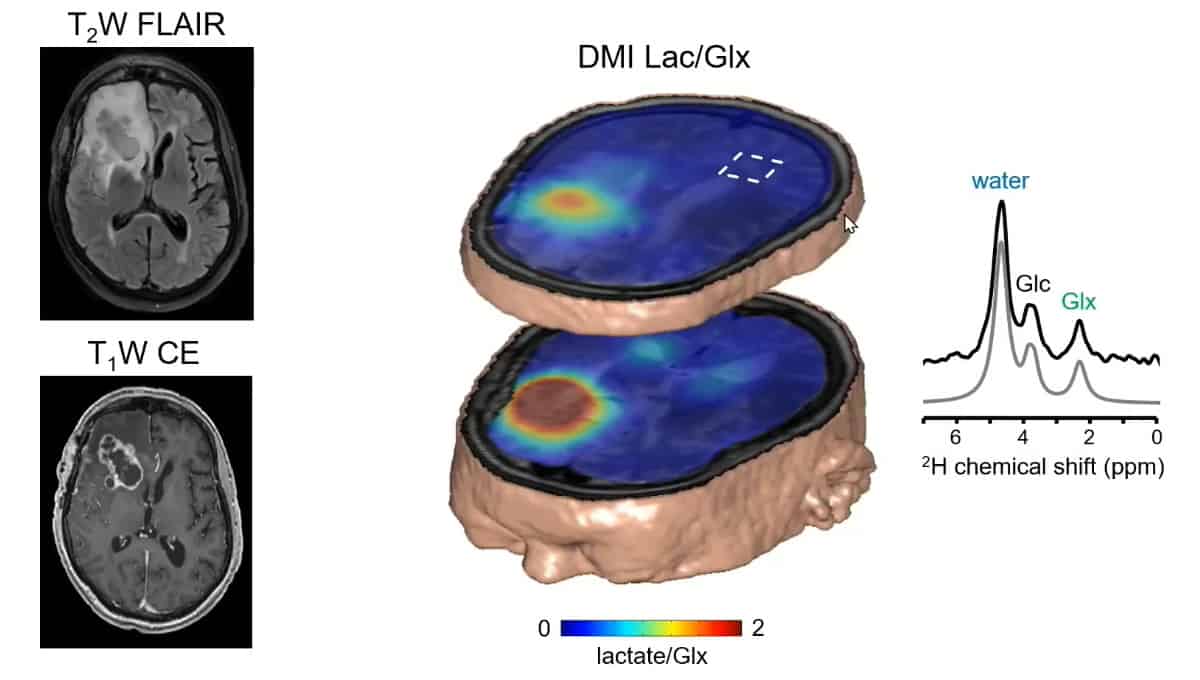
Deuterium is a stable, nontoxic hydrogen isotope, sometimes called “heavy hydrogen”. For radiology, deuterium metabolic imaging (DMI) can image active metabolism noninvasively for metabolic rate mapping or detecting unusual metabolism found in tumours or stroke cases.

Deuterium was first proposed for use as a contrast agent in 1982 and was used in vivo as a perfusion tracer for heavy water throughout the 1980s and 1990s. A 1987 research article also showed that deuterium resonances from metabolic products such as glucose and acetate can be observed in vivo. Previous research using animal models also showed that perfusion could be measured quantitatively and had high agreement with standard measures.

However, research on deuterium went mum as the world entered the 21st century. Ackermann said this was because of focus on proton MRI, which has high signal-to-noise resolution, speed and multiple contrasts.

“Most MRI scanners were and still are only proton-enabled,” he said.

Ackerman added that DMI could “greatly” benefit from ultrahigh-field scanners, which weren’t available in the early days of deuterium’s early research. However, these scanners are expensive and generally found at major MRI research centres.

Deuterium metabolic imaging

De Graaf said DMI has strong potential to become a dominant MR research tool and imaging modality. He added that its advantages include high sensitivity, powerful acquisition methods, availability and time efficiency.

He also echoed the sentiment of a 1992 quote by Robert London saying that the major advantage of using deuterium as an in vivo tracer is the “extreme technical ease” with which studies can be carried out.

“I think this is one of the reasons that deuterium metabolic imaging seems to be taking off. Almost any study will succeed,” de Graaf said.

That take off, de Graaf said, was highlighted by studies in 2014 and 2017 showing DMI’s high performance when used with high magnetic field scanners. Acquisition time for these studies took about one minute, but animal models were used.

However, in 2018, DMI’s use on humans was demonstrated with a study of two patients showing imaging could be done in vivo. The study yielded 3D images of the human brain after patients consumed deuterated water containing glucose, glutamate and lactate.

De Graaf also led studies showing DMI’s performance across multiple magnetic fields and how they affect voxel size, a component of image quality. At a field strength of 4 T, DMI gives a voxel size of 8 ml, 3 ml at 7 T, and 2 ml at 9.4 T. With more conventional 3 T measurements, though, a voxel size of 14 ml is seen, though these results have been seen in healthy study cohorts.

“DMI has the potential, even at [3 T],” de Graaf said. DMI can also be done in parallel with MRI, which could shorten image acquisition time from one hour, when the two are done back-to-back, to 30 minutes, he added.

  • This article was originally published on AuntMinnieEurope.com ©2022 by AuntMinnieEurope.com. Any copying, republication or redistribution of AuntMinnieEurope.com content is expressly prohibited without the prior written consent of AuntMinnieEurope.com.

Laser cooling of polyatomic molecules brings ultracold chemistry into the spotlight

Physicists in the US have created ultracold polyatomic molecules by trapping and cooling them directly in three dimensions. Led by John Doyle at Harvard University, the team used a standard device known as a magneto-optical trap (MOT), plus additional laser cooling techniques, to reduce the temperature of a sample of calcium hydroxide (CaOH) molecules to just 110 µK. By showing that direct laser cooling is possible, the result opens the door to experiments in molecule-based quantum simulation and studies of chemical reactions involving polyatomic molecules.

Chemical reactions are complex processes. At temperatures close to 0 K, however, their complexity is greatly reduced, as the atoms and molecules involved can only exist in their lowest-energy quantum ground states. So far, studies of ultracold chemistry have focused on simple interactions between atoms and diatomic molecules or between pairs of diatomic molecules. Introducing polyatomic molecules to this mix would make it possible to study more intricate interactions, but it also introduces additional challenges, as polyatomic molecules are not easily cooled.

Creating ultracold molecules

Ultracold molecules are generally created in one of two ways. The first is to apply laser pulses to a sample of cold atoms and thereby cause them to associate into ultracold molecules. Researchers have used this laser association method on several species of atoms, and recent experiments showed that it can also be used to create triatomic molecules out of diatomic ones. The second approach is to produce the molecules by chemical means in a beam of buffer gas cooled to cryogenic temperatures, then use lasers to cool the molecules further.

Laser cooling has already been successfully applied to diatomic molecules in 3D and triatomic molecules in 1D. Achieving 3D control over triatomic molecules is far more difficult, however, because the molecules must absorb and emit a large number of laser photons before the accumulated momentum “kicks” from each photon slow them down enough that they can be trapped. Each absorption and emission event can also induce rotational or vibrational motion, leaving the molecule in a new quantum state that is no longer resonant with the cooling laser beam. For this reason, additional laser frequencies must be employed to “repump” the molecule back to the correct state – a requirement that rapidly increases the complexity of the experiment.

Some molecules such as SrF and CaOH, however, have electronic transitions that are nearly closed, meaning that their rotational and vibrational modes are excited relatively infrequently. These molecules can therefore be laser cooled by adding only a limited number of repump lasers to close off the remaining transitions.

Cooling stages

In the present study, which is described in Nature, Doyle and colleagues began by producing CaOH molecules in a two-stage buffer gas cell cooled to around 2 K. The CaOH molecules were then slowed to approximately 10 m/s by counter-propagating laser beams before entering the MOT. There, they are simultaneously trapped and cooled as they scatter thousands of photons from six laser beams that are tuned in or out of resonance depending on the molecules’ position in a quadrupole magnetic field. As a final step, the researchers turned off the magnetic field and performed further cooling on the molecules via a so-called “optical molasses” phase. In this phase, the cooled molecules experience forces that slow their movement in 3D, like a person wading through a vat of molasses or other viscous fluid.

Doyle says that the biggest challenge in going from 1D laser cooling to 3D was tuning the source of the slowed beam to optimize the production of the molecules and their velocity. In comparison to previously reported association experiments with triatomic molecules, Doyle adds that his team’s CaOH molecular sample is in its electronic ground state and therefore amenable to single quantum state control (into any rotational or vibrational state). Another advantage, he says, is that CaOH can be detected optically with high fidelity using traditional photon cycling methods, in which thousands of photons are scattered from each molecule and detected on a camera.

A milestone in ultracold chemistry

Bo Zhao, a physicist from the University of Science and Technology of China who was not involved in this research, says that the most important part of the work is that the researchers confined their triatomic molecules in a 3D magneto-optical trap. This, he says, is a milestone because it makes it possible to study ultracold collisions and reactions involving polyatomic molecules rather than just diatomic ones, greatly enriching the field of ultracold chemistry. This is important since studying collisions and reactions involving cold polyatomic molecules is very difficult even for molecular beam experiments.

Doyle says that the team’s next goal is to load an optical tweezer array with CaOH molecules and measure the quantum gate coupling between two of them. “Triatomic molecules have a qualitatively different property, namely the existence of angular momentum-bearing vibrational bending modes,” he tells Physics World. These modes, he adds, are “a tremendous new tool for science” because they should make it possible to perform experiments with polyatomic molecules in quantum simulation and quantum computation.

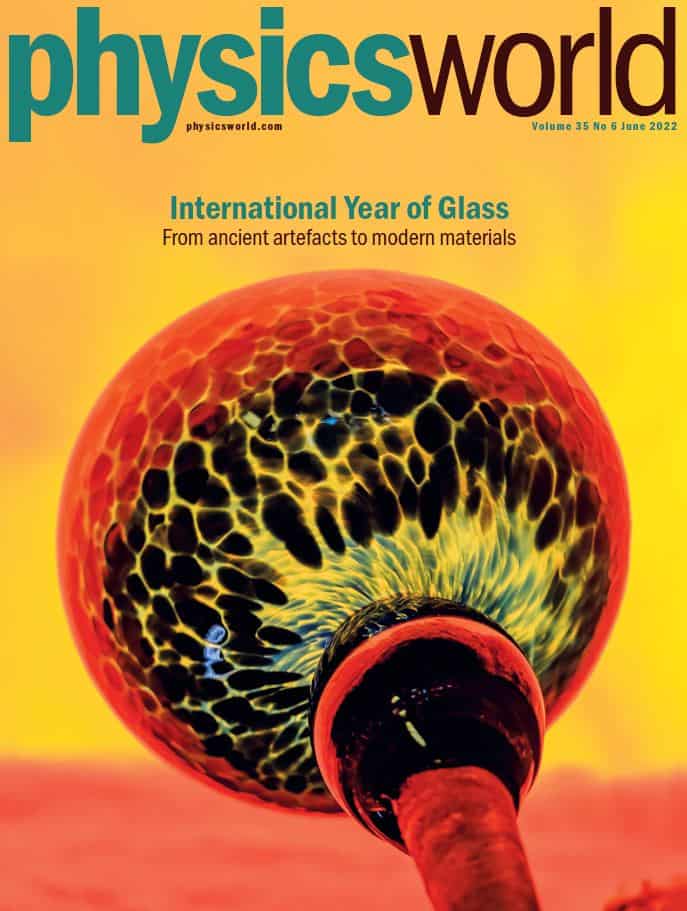
Celebrating the International Year of Glass: the June 2022 issue of Physics World

Glass blowing photo on the cover of the June 2022 isue of Physics World

From windows to cookware, from biological implants to telescope optics and from telecoms to robots in space, we’re surrounded by glass. So could this transparent material best epitomize the world we live in today?

The United Nations certainly thinks so, having declared 2022 the International Year of Glass. And to celebrate the year, the June issue of Physics World magazine, which is now out in print and digital formats, is devoted to all things glass.

James Dacey kicks things off in “A transparent tool for a fairer planet”, going behind the scenes of the celebrations to contemplate the versatility of this wonder material and how it underpins many innovations – from smartphones to vials for vaccines.

In fact, you may be reading these words on a smartphone or tablet with a screen made from Gorilla Glass – a seemingly indestructible material manufactured by US company Corning. As James McKenzie discovers in “The unsung hero of the smartphone”, the glass hinged on an unanticipated but fortuitous invention many years before.

Don’t forget either that the Internet is brought to you via hair-thin strands of glass. We talk to Christine Tremblay – one of many physicists to have spent a lifetime optimizing these fibre-optic cables, paving the way to better communication across the globe.

But despite glass being first used by humans 4500 years ago, not everything is clear. As Jon Cartwright explores in “The many secrets of glass”, physicists are still trying to work out how, for example, a cooling liquid can form a hard glass without any distinct structural changes.

And as Rachel Brazil investigates in “A glassy solution to nuclear waste”, nuclear researchers are teaming up with historians and archaeologists to study ancient glasses and how they hold up over time, hoping to understand the stability of vitrified nuclear waste.

Finally, Robert Crease explores the arty side of glass by visiting the famous Corning Museum of Glass in upstate New York, where he is “Blown away by the wonders of glass”. And even in the darkest of times, glass art can shine a light on what it means to be human, as Ukrainian stained-glass artist Oksana Kondratyeva describes in “The glass that offers hope”.

Remember that if you’re a member of the Institute of Physics, you can read the whole of Physics World magazine every month via our digital apps for iOSAndroid and Web browsers. Let us know what you think about the issue on TwitterFacebook or by e-mailing us at pwld@ioppublishing.org.

For the record, here’s a full rundown of what is in the issue, which also has a set of full-page colour images presenting various eye-catching aspects of glass.

• Milky Way black hole revealed at last – The first picture of the glowing surroundings around Sagittarius A* – the black hole at the centre of the Milky Way – could offer clues to the inner workings of supermassive black holes. Will Gater explains

• US calls for ice-giants missions – The “decadal survey” of US planetary science  prioritizes large-scale probes to Uranus and Saturn’s moon Enceladus. Peter Gwynne reports

• Lunar explorer – Thomas Smith from the Institute of Geology and Geophysics, Chinese Academy of Sciences, talks to Ling Xin about living in China and being the first foreign national to study Chang’e-5 Moon samples

• Physics is something that girls fancy – Jess Wade says that recent high-profile comments by Katharine Birbalsingh, chair of the UK government’s social mobility commission, that girls don’t like physics perpetuate false gender stereotypes and limit young people’s aspirations

• A transparent tool for a fairer planet – Glass-based technologies are shaping the modern world, from enabling green tech to delivering the Internet. James Dacey describes how  the 2022 International Year of Glass will celebrate the universality of this see-through super material

• The many secrets of glass – Glasses are much more mysterious than their crystalline counterparts, yet have a wealth of practical uses, says Jon Cartwright

• Blown away by the wonders of glass – Robert P Crease visits the Corning Museum of Glass in upstate New York, which claims to house the largest collection of glass art and artefacts in the world

• A glassy solution to nuclear waste – Ancient glass is not just of interest to historians and archaeologists, it may also hold the key to understanding the durability of vitrified nuclear waste. Rachel Brazil investigates

• The unsung hero of the smartphone – James McKenzie reflects on the wonders of Gorilla Glass, an invention that protects billions of smartphones, tablets and laptops around the world from unwanted damage

• Commanding missions, making history – Andrew Glester reviews Through the Glass Ceiling to the Stars: the Story of the First American Woman to Command a Space Mission by Eileen M Collins with Jonathan H Ward

• We are living in a material world – Susanne Klein reviews Handmade: a Scientist’s Search for Meaning Through Making by Anna Ploszajski

• Using physics to fuel fibre-optic innovation: Engineering physicist Christine Tremblay talks to Joe McEntee about the joys of a career spent making fibre-optic networks cheaper, smarter and more resilient, opening the way for telecommunications firms to send voice, data and video streams down hair-thin strands of glass at ever-increasing bit rates

• The glass that offers hope – James Dacey talks to Ukrainian stained-glass artist and architect Oksana Kondratyeva


Sarah Tesh and Tushna Commissariat are features editors of Physics World

Fixing our bodies with glass

From windows and bottles, to optical fibres and solar cells, glass is an incredibly versatile material that underpins many technologies. In the June episode of the Physics World Stories podcast, Andrew Glester explores a lesser known application of glass – bioglass in healthcare.

First you will hear from Julian Jones at Imperial College London, who explains how glass putty can help to heal broken bones by stimulating tissue growth. Jones has previously worked with the inventor of bioglass, Larry Hench, a materials engineer whose 1969 breakthrough was inspired by a chance conversation with an army major recently returned from the Vietnam War. Jones is currently developing “bouncy bioglass” that can stimulate bone growth while simultaneously sharing the load placed on bones – making it particularly useful for bad traumas where bones struggle to re-join.

Later in the episode, Glester is joined by Martyna Michalska, a nanotechnology researcher at University College London. As part of her research, Michalska designs glass surfaces patterned with nanoscale features that can be tuned to resist unwanted bacteria. In hospital settings, surfaces could be fitted with the technology as an alternative to chemicals that bacteria can evolve to resist. Michalska is working with industrial partners and they are looking at the option of retrofitting windows and other surfaces with thin films of her nanopatterned glass.

To learn more about glass-based technologies, take a look at the June issue of Physics World, a special issue inspired by the International Year of Glass (IYOG2022).

Copyright © 2026 by IOP Publishing Ltd and individual contributors