In this episode of the Physics World Weekly podcast we look at some of the big questions in physics from biological and philosophical points of view.
Katie Robertson is a philosopher of science at the UK’s University of Birmingham and she explains why philosophers are interested in physics and how they approach some of the big questions in the field. Robertson also talks about her research on the microscopic origins of the second law of thermodynamics.
Keeping to our philosophical theme, the molecular geneticist Johnjoe McFadden talks about his latest book Life Is Simple: How Occam’s Razor Set Science Free and Unlocked the Universe. Based at the UK’s University of Surrey, McFadden also chats about the burgeoning field of quantum biology and how scientists are discovering that quantum mechanics can play important roles in living organisms.
Katie Robertson and Johnjoe McFadden are speaking at the HowTheLightGetsIn festival. The event is being held in Hay-on-Wye, UK, on 2–5 June. If you cannot be in Hay, the festival will be streamed online.
Quantum computers have incredible potential, but world-changing applications are still n years away. For some value of n, everyone in the quantum community agrees with this statement. Today’s quantum computers are noisy, with gate fidelities generally below 99%. They are also intermediate in scale, incorporating a little over 100 qubits at most. Getting from these noisy, intermediate-scale quantum (NISQ) devices to the multi-million qubit, super-high-fidelity system required to model, say, a cytochrome P450 enzyme could take 10–15 years. A quantum computer capable of cracking RSA encryption (and thus breaking Internet commerce as we know it) is likely even further in the future.
Beneath the surface of this consensus, though, a definite split emerged among the luminaries at last week’s Commercialising Quantum conference, which took place in London under the auspices of The Economist newspaper. Perhaps surprisingly, the biggest point of disagreement within the event’s blue-chip list of speakers wasn’t the estimated value of n. Instead, it was the relative emphasis they placed on “incredible potential” versus “still n years away”.
Optimists and realists
In the realists’ corner were speakers like IBM Quantum vice president Jay Gambetta, who used his talk to lay out a roadmap full of challenging yet limited milestones: 2023 for solving a problem faster than it can be simulated classically; 2025 for building a chip with 4158 qubits, and so on. Meanwhile, on the optimists’ side, Catriona Campbell, the chief technology and innovation officer for EY in the UK and Ireland, touted a recent survey in which a whopping 48% of UK companies reported that quantum computing would play a role in their business by 2025.
Which of these views is closest to reality? The words “play a role in the business” are broad enough to cover many possibilities, and Campbell acknowledged in her talk that EY’s survey (carried out in partnership with the Financial Times) focused on a small number of innovative firms. Still, 2025 is only two and a half years away. Even if NISQ devices are – per Gambetta’s roadmap – somewhat less NISQ-y by then, Campbell’s timeline for incorporating them en masse into UK plc seems extraordinarily tight.
During a panel discussion at the same conference, Quantinuum president and chief operating officer Tony Uttley offered a way of squaring the circle. While Uttley estimated that only 12 companies will use quantum computing in their day-to-day operations this year, he also suggested that fully 69% are thinking of heading in that direction. If having someone in the C-suite thinking hard about a topic constitutes “playing a role in the business”, then Campbell may not be far off the mark.
Peak quantum hype?
The conference’s award for starry-eyed quantum optimism went to Haim Israel, the managing director of research at Bank of America. Midway through the in-person day on 17 May, Israel got up in front of a packed hotel ballroom and declared with a straight face that quantum computing will be “bigger than fire” – a statement that surely marks the pinnacle of quantum hype, if only because it would be difficult to top it.
For my money, the more interesting views about quantum’s commercial future came from representatives of the 69% of businesses that are thinking seriously about it, but not using it day-to-day. One of Uttley’s fellow panellists was Bijoy Sagar, chief information technology and digital transformation officer at the pharmaceutical firm Bayer AG. While Sagar worried aloud about the quantum “hype cycle” and warned that he was “not seeing commercial value yet on the scale of the investment”, he quickly added that this is not a criticism. “It takes time,” he observed. “That does not mean we don’t continue to invest.”
In Sagar’s opinion, the first use cases for quantum computing in pharma will include in silico clinical trials of new drugs. Identifying candidate molecules is, he said, “an imperfect science” with today’s methods, and bringing in a quantum computer to assist with this task would offer “tremendous value to humankind” even if the benefits were initially marginal. Another biotech expert, Amgen vice president for biologics Alan Russell, drove the point home. “Patients die while we wait, inventing new science,” Russell told a session focused on quantum applications and the enterprise journey. “There is no Schrödinger equation for biology.”
I last wrote about quantum hype in November 2019, as part of a Physics World supplement on classical as well as quantum computing. Since then, enthusiasm for quantum technologies has gone up several gears: although Israel’s “bigger than fire” comment was extreme, he is hardly alone in talking up this promising field. But the involvement of people like Sagar, Russell, and Peter Clark of Janssen, who spoke about using D-Wave Systems’ quantum annealer to solve a 14-amino-acid peptide problem, gives me reason to believe that there is indeed a “plateau of productivity” beyond the peak of quantum hype. I just hope I get the chance to see it – ideally by the glow of a few dozen bigger-than-fire quantum computers, standing in for candles on my birthday cake n years in the future.
Are you seeing a blotch on your microscope slide, or a cell? Have you discovered a new astronomical object or is it just light bouncing off a support structure in your telescope? Is your clock telling you that neutrinos are travelling faster than the speed of light, or do you have a loose connection between your GPS receiver and the clock?
There’s no more common, or fundamental, question in experimental science than whether what you are looking at is an artefact or a signal. “The cornerstone of experimental knowledge,” writes the Virginia Tech philosopher of science Deborah Mayo in Error and the Growth of Experimental Knowledge, “is the ability to discriminate backgrounds: signal from noise, real effect from artefact.”
Trickster
Like many others, I met my first artefact in a high-school physics lab. I had followed the lesson plan carefully, but my results indicated that what I had measured didn’t agree with Coulomb’s law. I took several readings, and was careful to measure and re-measure the distance between the two charged conductive spheres that were repelling each other, and the amount of twist in the torsion wire suspending one of them. My strange result had staying power.
Like many others, I met my first artefact in a high-school physics lab.
So did I think I had discovered a fifth force of nature? No. I figured that I must have screwed up. Why was I sure? Because I knew better from the teacher, the textbook and the results of other students in the class. But I couldn’t figure it out. The teacher came over and after a few puzzled moments realized that the standard-issue power supply was faulty.
That was my first artefact. My experimental set-up had tricked me. It looked like it was telling me something about nature, but instead it was telling me about itself. The teacher used my mishap as the occasion for an admonition about how to avoid getting artefacts. Measure everything twice. Double-check your equipment. Substitute parts if you can. Don’t necessarily trust the factory-built elements.
Researchers, though, have to judge whether what they have is an artefact or signal without the benefit of teachers like that; they are trying to come up with what will appear in the next generation of textbooks, and know that experiments to follow will show whether their work is right or not. These researchers are susceptible to what I think of as “experimentalist’s anxiety”.
I came away from my high-school lab with the notion that an experiment is like a little performance. You collect a set of props or “performers”, make sure you understand them and what you do, set them to working together, and if you set them up just right their performance shows the audience something they didn’t know before. But if you don’t set the performers up just right, the performance isn’t very good and they tell you nothing new.
Offbeat and tantalizing
Defining an artefact is easy – it’s something that your instrument is showing you with no counterpart in reality; it’s produced by your equipment or your techniques rather than by nature. I think there are at least two kinds of artefacts. The kind that haunted me I’d call a “klutzy” artefact – caused by your misunderstanding or overlooking some behaviour in the equipment. But there’s another kind that I’d call a “tantalizing” artefact – produced by something truly novel in the experiment’s performance that you can’t quite make out.
An example of such an artefact – one that involved the “real” ghost of a fifth force – occurred at Brookhaven National Laboratory in 1961, just a few years before my experience in the high-school physics lab. At Brookhaven, a group led by Yale University physicist Robert Adair accelerated bunches of protons, smashed them into a steel target, used electromagnetic fields and other means to sweep away everything but long-lived neutral kaon particles. Known as “K-longs”, these particles were directed into a bubble chamber where their decays could be imaged.
The experimentalists rebuilt and improved every part of the equipment to try to eliminate the impossible two-pion decays, but could not.
The results showed an impossible number of two-pion decays, at least according to a fundamental part of the prevailing theory known as CP symmetry. The experimentalists rebuilt and improved every part of the equipment to try to eliminate the impossible two-pion decays, but could not. The only thing the group members could not rule out was a fifth force of nature, which they hinted at in their published paper.
Another group from Princeton University, whose leaders – James Cronin and Val Fitch – had the office next to Adair’s, noted the baffling result, mounted an experiment structured so that the performance would show whether CP symmetry was violated or not, and led the audience to conclude that it was. That conclusion earned Cronin and Fitch the Nobel Prize for Physics in 1980.
No doubts were ever expressed about the quality of the Yale experiment. Yet its result was ambiguous, and it was only the Princeton experiment that cleared things up. By staging an experiment to look just at the role of CP symmetry in K-long decays, the Princeton experiment changed the structure of elementary particle theory, and was able to “parse” the Yale result, showing what part was due to CP violation.
But because the Yale result had only a hint of CP violation, mixed in with other things, some science historians have insisted it was an artefact. “It was an artefact,” declared the US physicist and philosopher Alan Franklin. “A spurious result stimulated the work of the Princeton group.” But since the ambiguity of the Yale result was at least partly due to CP violation, it was at least a tantalizing artefact.
The critical point
But experimentalists must have encountered more types of artefacts than klutzy and tantalizing. Let me know what artefacts you’ve run in to and I’ll write up your amusing – or disastrous – experiences in a future column. Let’s hope the collective experiences of Physics World readers will help you avoid mistakes of your own.
Physicists in the Netherlands have shown for the first time that quantum information can be reliably teleported between network nodes that are not directly connected to each other. According to the researchers, who created the world’s first three-node quantum network at QuTech (a collaboration between the Delft University of Technology and TNO) in 2021, the latest work marks a further step towards a scalable quantum Internet.
Quantum networks offer a super-secure way of transferring information between different locations, or nodes. While these nodes can be connected using ordinary optical fibres, photon losses within the fibres limit the quality, or fidelity, of the connection: when a photon is lost, its quantum information is lost, too. Using quantum entanglement to teleport information directly from one node to another removes this loss mechanism, making it desirable for a future quantum Internet.
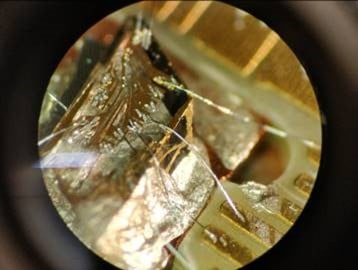
The three-node network demonstrated at QuTech in 2021 used quantum bits, or qubits, made from nitrogen-vacancy (NV) centres, which are defects within diamond’s lattice of carbon atoms. Each node contained a communication qubit, and one node also incorporated a memory qubit (made from an adjacent carbon atom) that could store the node’s quantum information. The building blocks for entangling three nodes were thus already present, but the system was far from reliable at teleporting states consistently.
Quantum teleportation
The first step in teleporting quantum information from a sender to a receiver is to establish entanglement between their respective qubits. Performing a so-called Bell state measurement (BSM) on the sender’s qubit causes its quantum state to teleport – meaning that it disappears from the sender’s node and appears, in encrypted form, at the receiver’s node. The quantum state can then be decrypted using the BSM outcome that is sent to the receiver via a classical channel (such as an optical fibre).
Previously, this had only been done with two adjacent network points, traditionally called Alice and Bob. Adding a third point, Charlie, is no easy task, as the entanglement between Alice and Charlie needs to be created via Bob, the intermediate node. It also requires a high fidelity to make the teleportation functional.
Optimization steps
To achieve this high fidelity, the QuTech researchers carried out several upgrades. In their previous system, the “heralding” signals that indicate entanglement came from the same photodetectors that detected the photons used for entanglement. This, however, can lead to false heralding signals due to various undesired processes generating a second photon. To avoid this, the team set up an additional detection path that flags the false heralding signals by catching the second photon.
Qubits up close: Nitrogen-vacancy centres within a diamond sample are used as qubits in the teleportation experiment. (Courtesy: QuTech)
Another problem the researchers addressed is spectral diffusion, which causes the qubits to come out of phase, lowering the fidelity of transmission. This process has more impact for photons emitted at later times, so the team shortened the detection window.
A final set of improvements concerned the memory used to store quantum information. First, the team protected the memory qubit from interactions with neighbouring nuclear spins. To do this, they integrated a magnetic field pulse into the entangling sequence that flips the memory qubit at set time intervals, thereby averaging out the effects of these unwanted interactions. They also improved their ability to read the memory qubit. Because one of the memory qubit’s states has a more favourable fidelity, its readout is not symmetric. By repeating the readout process, the team filtered out “bad” readouts, ultimately increasing the fidelity.
Beam me up
Following these improvements, the researchers were able to teleport quantum information between the non-adjacent nodes of Charlie and Alice. First, they entangled Alice’s qubit and Charlie’s via Bob’s. Charlie then stored its part of the entangled state at its memory qubit and prepared the quantum state to be teleported. Applying the BSM at Charlie teleports the state to Alice. The researchers then sent the BSM outcome to Alice and retrieved the state with a fidelity of 71% – higher than the classical bound of ⅔, proving that the teleportation was successful.
Ronald Hanson, the QuTech researcher who led the study, says that the team’s next step will be to expand the number of memory qubits, making it possible to run more complex protocols. Another objective is to get the technology working outside a lab environment, for example by using already-deployed optical fibres within a real network. “We are also cooperating with computer scientists to develop the quantum network control stack – a similar stack of control layers that currently run the Internet we all use today,” he tells Physics World.
Hugues de Riedmatten, a researcher at ICFO in Barcelona, Spain, who was not involved in the study, says that quantum teleportation over non-neighbouring nodes is a significant milestone. In his view, the team’s biggest achievement was to combine several challenging experiments – all of which need to be fully optimized to reach the required fidelity for quantum teleportation – into a single demonstration. de Riedmatten notes that the current set-up can use only a small percentage of the emitted photons, which limits its remote entanglement rate. However, he adds that this could be fixed by embedding the NV centres in an optical cavity to collect more photons, or by using other emitters.
Rodney Van Meter at Japan’s Keio University also praises the work, describing it as the fundamental difference between a simple channel connecting two parties and an actual network. One of the difficulties, he notes, will be to scale up to large numbers of qubits at each node, but other teams around the world have been working on this problem for NV-centre qubits. With the Delft team already planning to increase the number of nodes in its network, he is, he says, “looking forward to seeing what they produce next”.
Portable MRI (pMRI), a new type of very low-field MRI scanner that does not require dedicated shielding, can effectively diagnose stroke and detect blood clots in the brain as small as 4 mm in size. In a study of 50 patients with ischaemic stroke treated at Yale New Haven Hospital, intracranial imaging with pMRI detected ischaemic infarcts in 90% of patients. The prospective study, described in Science Advances, is the first to demonstrate that the 0.064 T Swoop portable MRI system can be used to definitively diagnose and assess stroke at a patient’s bedside.
The ability to rapidly distinguish ischaemic stroke, where a blockage cuts off the blood supply to the brain, from haemorrhagic stroke, in which there is bleeding in the brain, is critical to expedite effective clinical treatment. Ischaemic stroke, the most common type of stroke, is usually treated with thrombolytic “clot busting” treatment. This approach, however, is not appropriate for haemorrhagic strokes.
As such, both the European Society for Cardiology and American Heart Association advise that all stroke patients receive rapid brain imaging on hospital arrival to rule out intracranial haemorrhage. CT is the imaging method of choice for diagnosing haemorrhagic stroke, with radiation-free MRI becoming increasingly popular; but access to stationary MRI machines can be limited.
Portable MRI: The Hyperfine Swoop. (Courtesy: Hyperfine)
Low-field pMRI scanners could prove the ideal approach for point-of-care diagnosis. The Swoop pMRI scanner, which incorporates an eight-channel radiofrequency head coil, operates from a standard electrical outlet, does not require cryogenics and integrates electromagnetic interference rejection, removing the need for a shielded room.
Its compact size (140 cm high and 86 cm wide) enables use in inpatient or emergency department settings, and it does not require a specialized MRI technician for operation. Importantly, the pMRI is not affected by and does not compromise the functionality of nearby hospital equipment.
“A mobile, bedside solution for portable MRI-based imaging opens the doors for re-imagining how we can deliver high-quality care, reach patients and communities across the globe, and further understand the basis for neurological injury and health,” says principal investigator Kevin Sheth from Yale School of Medicine.
For the study, the researchers used low-field pMRI to perform bedside intracranial imaging for 50 patients with ischaemic stroke. The pMRI scans were performed an average of 37±60 hr after the patient’s last known normal time (unknown for five patients). Six patients underwent pMRI in the emergency department, 40 in a neuroscience intensive care unit (ICU) and four in a COVID-19 ICU.
The team acquired a total of 50 T2-weighted, 51 fluid-attenuated inversion recovery (FLAIR) and 56 diffusion-weighted imaging (DWI) images, with a mean exam time of about 25 min. Each of the 50 patients had an ischaemic infarct detected by standard-of-care neuroimaging – high-field MRI or non-contrast CT – within 36 hours of the pMRI exam.
Sheth and colleagues evaluated and compared each low-field pMRI with the conventional MRI or CT scan acquired closest to the time of the pMRI exam. The pMRI was considered to have correctly detected an ischaemic infarct (which appeared as a hyperintense region) if at least one sequence showed the same infarct as seen on the standard exam.
The pMRI detected infarcts in 45 patients across cortical, subcortical and cerebellar structures. The researchers report that “stroke volume measurements were consistent across pMRI structural sequences and pMRI measurements were in agreement with conventional MRI measurements”. They also note that pMRI stroke volumes significantly correlated with stroke severity at the time of exam and functional outcome at patient discharge.
Sheth believes that the team’s results are just the beginning for pMRI. “Hardware and software improvements, algorithm development and image quality improvements, and the science of interpretation and utility must be developed urgently in order to unlock the potential of this approach,” he tells Physics World. “That development needs careful validation from the clinical and scientific community.”
“We’ve seen progressive improvement in imaging resolution and scan times, which will expand access to timely neuroimaging,” adds co-author W Taylor Kimberly from Massachusetts General Hospital. “Due to the portability, this technology can be considered for a variety of scenarios where MR imaging was not previously available. We’re looking forward to continuing to advance the clinical application and validate its use for stroke.”
Writing in an accompanying commentary, Peter Basser from the National Institutes of Health describes pMRI as a milestone in medical imaging. “Owing to their reduced cost and portability, these scanners could be deployed in a myriad of new settings, such as sporting events or rock concerts, rural health care centres, emergency rooms and assisted living facilities,” he writes.
Basser notes that the portability and ease-of-use of this type of device could make medical imaging more widely available in resource-limited environments. “If urgent care facilities or local hospital emergency rooms offered portable low-field brain MRI as readily as they offer ultrasound imaging, for instance, then it would help bridge this gap in patient access to emergency medical care,” he explains. “Overall, deploying portable, low-cost and easy-to-use brain imaging systems could democratize the delivery of critical medical imaging services and resources.”
Nobody is perfect and errors do, inevitably, creep in to even the best publications. In the February issue of Physics World, David Marshall was right to highlight this problem in the context of school textbooks, but these mistakes are as nothing compared with the persistent misinformation that floods the Internet. The problem is particularly acute at the intersection between science and popular culture.
A few months back, my year 8 students (13–14 year olds) were trying to get to grips with energy in food. Teenagers are far more familiar with calories than joules in the context of food, but they were thrown into confusion by the bombshell that what people often call “calories” are actually kilocalories. “So does that mean somebody who eats a thousand calories is really eating a million calories?” a student asked. “That’s so wrong,” another countered. “If you ate a million calories you would be huge.”
To explore this issue, we turned to the Internet. Our first search told us that an apple contains 14 calories. I said that’s way too low and the class told me my mistake was to use Bing (the school’s default search engine): apparently I have to look on Google. Here the top hits revealed that an apple typically contains around 50 calories. The students were much happier with the higher number, but I pointed out that’s hardly any better and the right answer is probably 50 kcal. As it happens, the NHS website gives 47 kcal (196 kJ).
My heart sank when another student asked, “Aren’t calories and kilocalories the same thing?” Thankfully, a few of them were starting to correct this error among themselves, and I reiterated that the two units – as written on the side of the cereal box I was showing them – are not the same thing and that the problem is with our everyday language.
“The whole Internet can’t be wrong,” insisted one pupil, trying to resolve what had become a very animated debate. Then another student joined in to ask, “What about a McDonald’s chicken mayo?” We turned again to the great god Google and the first hit told us that this favoured treat contains 413 calories. I scrolled down because a link to McDonald’s own website had caught my eye, where a mayo chicken is declared to contain 319 kcal. “So McDonald’s has got it right,” somebody observed, to my great relief. But with so much inconsistency and inaccuracy online, is it any wonder that students struggle to separate true facts from accepted norms?
Try searching for diagrams showing “the dispersion and recombination of white light through a pair of prisms”. Sadly, the vast majority of images returned are fundamentally flawed
This was a particularly productive classroom debate, and there would be a good case for saying that a lot of learning took place in that lesson, but try searching for diagrams showing “the dispersion and recombination of white light through a pair of prisms”. That’s pretty specific, so you would expect to get a suitable calibre of hits showing a symmetrical arrangement of prisms and spectra, separated by a biconvex lens, as sketched by Isaac Newton in part II of his First Book of Opticks, Proposition XI. Sadly, the vast majority of images returned are fundamentally flawed.
A lot of the diagrams show the two prisms pointing in opposite directions, relatively close to each other with no lens in between. While this set-up can appear to recombine the light, close inspection would reveal that the “recombined” light is actually a rainbow. In some of the images, the spectrum between the two prisms has beams of parallel colours, which at least provides the symmetry expected from the reversibility of ray diagrams in geometric optics. Other diagrams correctly show the emerging spectrum diverging from the first prism, as is the common result when searching for the effect of a single prism, but then have some colours magically refracting beyond the normal to achieve recombination inside the second prism. Contrary to my student’s suggestion, the Internet clearly can be wrong – and overwhelmingly so.
One answer would be to direct students towards reliable websites, such as BBC Bitesize and NASA, but this is akin to running a library based on books from only two publishers, which would be unhealthy. Encouraging students to look at the domain name of a website before accepting its information as accurate is a good step forward but this requires a certain level of web literacy (which most have) and a willingness to look past the first few results (which is rarer).
Adding inurl:ac.uk can be a very useful filter for A-level students who are seeking high-quality sources but this isn’t often helpful for those who are just starting out on their voyages of scientific discovery. Dedicated search engines and portals that return hits from reliable and accessible sources are very thin on the ground (refseek.com being one) but they are not Google so, no matter how good such services may be, few students will remember to use them.
Of course, there are many cases where learning has to be simplified to make it accessible. Nevertheless, there is a difference between simplification and persistent errors. I am curious to know how prevalent these problems are and I would therefore be interested to hear if other readers have their own examples of common online misinformation.
As for the numerous incorrect representations of the dispersion and recombination of white light, maybe they all stem from Pink Floyd’s cover for Dark Side of the Moon and somebody deciding to flip a mirror image? Whatever the reason, Isaac Newton would surely be turning in his grave, if only he had access to the Internet.
New physics, in the form of a “fifth force”, could be responsible for the odd and unexplained arrangement of dwarf galaxies orbiting the Milky Way and other large galaxies – according to new research done it the UK. The new force could also shed light on the nature of dark matter, a mysterious substance that accounts for about 85% of the matter in the universe.
The Standard Model of cosmology describes the universe in terms of three components: dark energy, dark matter and normal matter. The model says that large galaxies like the Milky Way were formed in a flurry of mergers of smaller galaxies that occurred inside an immense halo of dark matter.
Some of these dwarf galaxies remain distinct to this day and they surround the Milky Way and other large galaxies. But rather than being distributed throughout the dark-matter halo, the dwarfs preferentially orbit the centre of the Milky Way in a plane. Similar planes exist around other nearby large galaxies, such as Andromeda. How long-lived these planes are, and whether the Standard Model can explain their existence, has been a source of great debate among researchers.
New scalar field
Now, astrophysicist Aneesh Naik and particle physicist Clare Burrage at the University of Nottingham propose that a new scalar field and associated fifth force could be the cause of these planes of satellite dwarf galaxies.
Our current understanding of particle physics involves four fundamental forces: electromagnetism, gravity, the strong force and the weak force. However, this model is known to be incomplete – it has no adequate description of dark matter, for example. As a result, researchers are developing “new physics” to attempt to create a better understanding of nature.
In this latest work, Naik and Burrage have delved into the world of scalar fields to develop their new physics. A scalar field refers to an energy field where every point in space can have a unique value. For example, a temperature map of the Earth, where different locations have different temperatures, is a familiar example of a scalar field.
When the universe began, the duo’s scalar field would have adopted the same minimum energy level everywhere. But, as the universe expanded, the density of the matter distribution in space became greatly reduced. Naik and Burrage’s scalar field is tightly coupled to matter, so below some critical density threshold, the scalar field changes and adopts two possible minimum energy solutions. These solutions are described as positive and negative, although their exact values depend upon the parameters of the scalar-field model, which have yet to be nailed down.
Symmetry breaking
“This is what we call symmetry breaking,” Naik tells Physics World. “In different regions of the universe the scalar field will adopt the positive solution and in other regions it will adopt the negative solution.”
The boundary between these positive and negative regions is referred to as a domain wall, and Naik and Burrage propose that domain walls have sliced through the Milky Way and other galaxies, creating the planes of satellites.
A domain wall would act as a fifth force, attracting satellite galaxies to the plane. Although they admit that their model is simplified at the moment, the duo was able to broadly replicate the Milky Way’s plane of satellites, and even the Andromeda galaxy’s bi-modal plane, where some of the dwarfs orbit within a plane, while others are randomly distributed off the plane.
Geraint Lewis, who is an astrophysicist at Australia’s University of Sydney, describes the work as “interesting,” and he agrees that it provides a “possible mechanism for shaping satellite distributions into planes”. However, he cautions that the idea is only at the proof-of-concept stage. “It is a limited exploration and while it makes something that looks like a plane, it’s hard to assess how generic this result is and whether the resultant planes match those observed in galaxies.”
Short-lived and coincidental
Meanwhile, proponents of the Standard Model of cosmology still believe it can explain dwarf-galaxy planes. Earlier this month, a preprint was posted that argues that the Milky Way’s plane of satellites is consistent with the Standard Model. The authors’ simulations suggest that the plane is short-lived and coincidental, but Lewis is not convinced by it. “This is another ‘post-diction’ and so I am not too swayed, especially if the planes are long-lived structures.”
Naik and Burrage’s scalar-field model and fifth force could also have something to say about the nature of dark matter. Naik explains, “It’s a new fundamental force because it’s a force that’s mediated by a new scalar particle, in the same way that the electromagnetic force is mediated by the photon”. This particle goes by numerous names in the various scalar field models developed by researchers, but one common name is the symmetron.
The models suggest that the symmetron would be a massive particle. “It could – potentially – be dark matter,” says Naik.
Naik and Burrage will now finesse their model and perform more sophisticated N-body simulations.
A preprint of the duo’s paper is available on arXiv.
Ultrathin carbon sheets known as “graphene drums” can pick up vibrations created by the nanoscale movements of individual bacteria, giving researchers a sensitive new way of probing their behaviour. As well as advancing our understanding of the mechanobiology of bacterial cells, the technique might be used to screen the effectiveness of antibiotics in a rapid and simple way, say the researchers at TU Delft in the Netherlands who developed it.
Graphene – a sheet of carbon just one atom thick – has many unique properties, including high mechanical strength and exceptional electrical conductivity. It is also extremely sensitive to external forces, explains nanomechanical engineer Farbod Alijani, who led the research. When an object such as a bacterium sticks to the surface of a graphene drum – which is made from graphene sheets – it generates oscillations with amplitudes as small as nanometres. These oscillations can be detected using laser light.
In the case of bacteria, the oscillations predominantly come from the motion of flagella<, which are tail-like structures on the microorganisms’ surface that help propel them through the aqueous environments in which they live. These flagella beat on the graphene drums with a force of up to 6 nN – around 10 billion times less than the force of a boxer’s punch on a bag, Alijani says. These beats can then be converted into “soundtracks” that researchers can monitor.
Detecting antibiotic resistance
The researchers performed their experiments in a cuvette containing live E. coli bacteria in growth medium. They used laser light to determine how the bacteria deflected off the surface of the graphene drum. “The outcome of our first measurements was striking,” Alijani tells Physics World. “We were able to detect the babbles from individual bacteria.”
These “bacteria babbles” appeared as a noisy signal with a spectrum that suggested contribution from biological processes occurring at different times scales, with a major input from bacterial flagella, he says. This is the first time a technique has been shown to be capable of detecting the sound generated by a single bacterium in its aqueous growth environment.
The technique could be used to detect antibiotic resistance, say the researchers. If the bacteria are resistant to an antibiotic, the oscillations would continue at the same level. If they were killed by the drug, however, the vibrations would decrease over a period of one or two hours before completely disappearing. This is fast compared to conventional antibiotic sensitivity tests that require at least 24-48 hours, explains Alijani. The graphene drums are also sensitive enough to detect such phenomena in just a single bacterium.
Alijani says the team is now optimizing its single-cell graphene antibiotic sensitivity platform to validate it against a variety of pathogenic samples, with the aim of bringing the technology closer to market. The research is detailed in Nature Nanotechnology.
Semiconducting nanoparticles can become trapped along structures called quantized vortices in superfluid helium-4, allowing them to act as “tracers” in studies of vortex dynamics. This finding, from researchers at Osaka University and Osaka Metropolitan University in Japan, could improve our understanding of quantum fluids and materials, including superconductors, while also shedding more light on turbulence.
When helium-4 is cooled to about 2 K, it transforms from a liquid into a quantum state of matter with zero viscosity. In this supercooled state,the material can, in principle, flow forever without losing any kinetic energy, which gives it several curious properties.It can climb up the walls of a container, for one, and it also supports the existence of excitations known as vortices. These structures, which are created by turbulence, look like tiny cyclones and occur over large scales in the superfluid. Importantly, they are quantized, meaning that each vortex carries a fixed amount of angular momentum.
The quantized nature of the vortices means that a system that is initially chaotic will become more ordered and structured as increasing amounts of energy are supplied to it. This result is somewhat counterintuitive, yet vortices of this type have been observed in systems ranging from soap films to atmospheric flow on planets, with the best-known example being Jupiter’s Great Red Spot. Visualizingthem in experiments has, however, proved difficult.
Nanoparticles as tracers
Researchers led by Yosuke Minowa of Osaka University’s Graduate School of Engineering Science have now succeeded in doing just that by using silicon nanoparticles as tracers, with the vortices revealing themselves through the behaviour of nanoparticles trapped along their cores. The researchers also used their technique to study vortex reconnection, which is a process in which vortices coalesce and exchange parts of their structures.
Minowa and colleagues prepared their silicon nanoparticles using a technique called laser ablation, which involves directinga high-energy laser pulse onto the surface of a piece of solid silicon material located within the superfluid helium. In this fashion, they were able to suddenly melt, vaporize and cluster the material. “This drastic process leads to the immediate ejection of the melted vaporized/clustered materials,” explains Minowa. “The ejected particles are then quickly cooled and we end up with many nanoparticles distributed in the superfluid helium.”
The researchers observed that the nanoparticles clustered along a curved line, confirming that they were trapped inside the vortices. They also compared the patterns they observed with theoretically expected vortex dynamics and saw an excellent agreement between the two.
“We have developed a new tool for studying quantized vortex properties that will help us better understand the science of turbulence,” Minowa tells Physics World. “Our technique could also be applied to different materials and different sizes of nanoparticles to investigate the details of the nanoparticle-vortices interactions.”
Minowa says he and his colleagues are now planning to manipulate quantized vortices using optical forces. They detail their present work in Science Advances.
A new paper-based semiconductor could herald the advent of sustainable electronics made entirely from plant-based materials. The material, developed by researchers at the universities of Osaka, Tokyo, Kyushu and Okayama in Japan, could be used to make sensors for wearable devices or as an electrode in a glucose biofuel cell, and could even power a small light bulb.
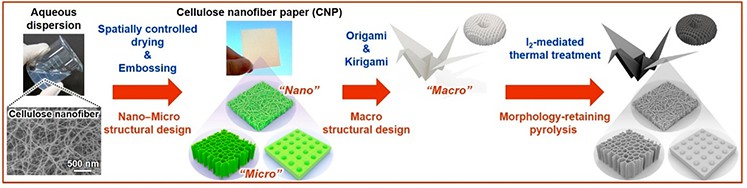
Led by Hirotaka Koga, the researchers crafted three-dimensional-network-structured semiconducting materials using cellulose nanofibres derived from wood pulp as building blocks. The result is a semiconducting paper that could be made with surface areas of more than 20 cm in diameter.
According to the team, the new semiconducting cellulose nanopaper (CNP) can be tailored for a variety of applications. The paper itself can be shaped into different designs and the material’s electrical conduction properties can be tuned from 1012 to 10–2 Ω cm – values that exceed those of previously-reported 3D semiconducting materials – by changing the concentration of charge carriers (electrons and holes) in it. This means it is suitable for use in many devices, from water vapour sensors to electrodes in enzymatic biofuel cells.
The wood nanocellulose-derived nano-semiconductor with customizable electrical properties and 3D structures. (Courtesy: 2022 Koga et al. Nanocellulose paper semiconductor with a 3D network structure and its nano−micro−macro trans-scale design. ACS Nano)
Paper folding cutting
Koga and colleagues fabricated their nanocellulose paper semiconductor from a nanocellulose/water dispersion using a combination of paper folding (origami) and paper cutting (kirigami) techniques. They also applied an iodine treatment to their material to protect its nanostructure.
To demonstrate the material’s capabilities, the researchers fabricated several differently-shaped structures, including a bird and a box by folding and an apple and snowflakes by punching out pieces of the paper. They also produced more intricate structures using laser cutting.
The team say that the electrical and chemical properties of the CNP semiconductor might be altered further by modifying its molecular structure using techniques such as doping with other species of atoms. “We will be further tuning the electrical and chemical properties of the new semiconductor as well as its fine patterning,” Koga tells Physics World.
In their paper, which is published in ACS Nano, the researchers say that their study is a milestone in manipulating the functionality and practicality of semiconducting nanomaterials for various electronic applications. “As such CNP semiconductors can be prepared from ubiquitous and abundant biological resources, our strategy might be used to produce sustainable electronics,” they write.